The thought of an interview can be nerve-wracking, but the right preparation can make all the difference. Explore this comprehensive guide to Thesis Writing interview questions and gain the confidence you need to showcase your abilities and secure the role.
Questions Asked in Thesis Writing Interview
Q 1. Explain the different stages involved in the thesis writing process.
The thesis writing process isn’t a linear sprint; it’s more like a marathon with several well-defined stages. Think of it as building a house: you wouldn’t start painting before laying the foundation!
- Topic Selection & Research Proposal: This initial phase involves identifying a compelling research question, reviewing existing literature to establish a gap in knowledge, and formulating a robust research proposal outlining your methodology and expected outcomes. For example, if you’re interested in climate change, you might narrow your focus to the impact of deforestation in a specific region.
- Literature Review: A comprehensive review of existing scholarly work relevant to your topic. This isn’t just summarizing; it’s critically analyzing and synthesizing information to build a foundation for your own research. Think of it as building your understanding of the existing landscape before building your own contribution.
- Research & Data Collection: This stage involves gathering data through various methods, depending on your research design (qualitative or quantitative). This might involve surveys, experiments, interviews, or archival research. Rigor is key here to ensure data reliability and validity.
- Data Analysis & Interpretation: Analyzing the collected data to identify patterns, trends, and insights that answer your research question. This step often involves statistical analysis for quantitative data and thematic analysis for qualitative data. This phase is about making sense of what you’ve collected.
- Thesis Writing: This involves structuring your findings into a coherent narrative, following a clear and logical flow, typically including an introduction, literature review, methodology, results, discussion, and conclusion. The writing process itself is iterative, meaning it often involves multiple drafts and revisions.
- Revision & Editing: Crucial for polishing your work. This involves proofreading for grammar and style, ensuring clarity and coherence, and addressing feedback from your supervisor or committee. It’s the final step to ensuring a high-quality product.
Q 2. Describe your experience with literature reviews; what strategies do you employ?
Literature reviews are the cornerstone of any strong thesis. My approach is systematic and rigorous. I don’t just randomly search; I develop a clear search strategy. I start by identifying key terms and concepts related to my research question. Then, I use a combination of databases (like JSTOR, Web of Science, Scopus) and search engines (like Google Scholar) to locate relevant articles and books.
I employ several strategies: I use Boolean operators (AND, OR, NOT) to refine my searches; I critically evaluate the credibility and relevance of each source; I organize my findings using a systematic approach like thematic analysis or a chronological approach, depending on the literature.
For example, in my work on the social impact of technology, I used a thematic approach to organize the literature on the effects of social media on mental health, grouping articles based on themes such as depression, anxiety, and body image. This systematic approach helped me identify gaps in the existing research and to form the basis for my own contribution.
Q 3. How do you manage research data effectively and ensure its integrity?
Data management is paramount for maintaining research integrity. My approach involves meticulous organization from the outset. I use a combination of tools and strategies.
- Version Control: I employ version control systems (like Git) to track changes to my data and analyses, ensuring reproducibility and traceability. This allows me to revert to earlier versions if needed.
- Data Storage: I use secure cloud storage services (like university-provided cloud space or reputable services) with appropriate access controls to protect my data. This ensures data safety and prevents accidental loss.
- Data Documentation: I maintain comprehensive documentation of my data collection methods, cleaning procedures, and analysis techniques. This includes detailed metadata (information about the data) and codebooks (descriptions of variables and their values).
- Data Security: I adhere to ethical guidelines and regulations, ensuring informed consent and data anonymization where necessary. This protects participants’ privacy and upholds research ethics.
For instance, in a recent project involving sensitive participant data, I meticulously documented each step of the data cleaning and analysis process, including the rationale behind any decisions made during these processes. This careful documentation made my analysis fully transparent and verifiable.
Q 4. What methods do you use to identify and overcome writer’s block?
Writer’s block is a common challenge, but manageable. My strategies focus on breaking the cycle and getting back on track.
- Step Away: Sometimes, the best approach is to step away from the writing for a while. A walk, a change of scenery, or even a short break can refresh your perspective.
- Freewriting: Writing continuously for a set period without worrying about grammar or structure can help unlock ideas and get the words flowing. Think of it as a brainstorming session on paper.
- Outline: Developing a clear and detailed outline before starting to write can help provide a roadmap and prevent getting lost in the writing process.
- Talk it Out: Discussing your ideas with a colleague or supervisor can help clarify your thoughts and identify areas needing further development.
- Change Your Environment: Sometimes a change of scenery can make all the difference. Try writing in a different location like a coffee shop or library.
For example, during my master’s thesis, I found that freewriting for 15 minutes each morning helped me overcome initial resistance and generate ideas for each day’s writing.
Q 5. How familiar are you with various citation styles (e.g., APA, MLA, Chicago)?
I am proficient in various citation styles, including APA, MLA, and Chicago. I understand the nuances of each style and can adapt my writing accordingly. Each style has its own specific requirements for formatting citations, references, and in-text citations. Proficiency in these styles ensures the academic integrity of the work.
The choice of style depends on the specific requirements of the institution or publication. For instance, social sciences often utilize APA, while humanities might prefer MLA, and historical research could use Chicago.
Q 6. Explain your approach to ensuring the originality and avoiding plagiarism in your work.
Originality and avoiding plagiarism are non-negotiable. My approach is proactive and multi-faceted.
- Proper Citation: I meticulously cite all sources using the appropriate style guide. This means not only citing direct quotes but also paraphrased information and ideas.
- Paraphrasing and Summarizing: I focus on expressing concepts in my own words to avoid accidental plagiarism. This involves understanding the source material deeply and then re-expressing it using my own vocabulary and sentence structure.
- Plagiarism Detection Software: I use plagiarism detection software (like Turnitin) to screen my work for unintentional similarities and ensure originality. This provides an extra layer of verification.
- Academic Integrity Training: I’ve undergone extensive training on academic integrity and understand the consequences of plagiarism. I treat this aspect with utmost seriousness.
For example, when writing my dissertation, I used a detailed citation management software to track and manage my sources, ensuring that every reference was correctly cited, which helped me avoid any unintentional plagiarism.
Q 7. Describe your experience with qualitative and quantitative research methods.
I have experience with both qualitative and quantitative research methods. My understanding of both approaches allows me to choose the most appropriate methodology for each research question.
Quantitative research involves collecting and analyzing numerical data to identify patterns and relationships. This might involve statistical analysis, surveys, experiments, etc. For example, using statistical software like SPSS or R to analyze survey data on student learning outcomes.
Qualitative research focuses on in-depth understanding of experiences, perspectives, and meanings. This involves methods such as interviews, focus groups, ethnography, and textual analysis. For example, conducting semi-structured interviews to explore students’ experiences with online learning.
The choice between qualitative and quantitative approaches, or a mixed-methods approach, depends on the research question and the nature of the phenomenon being studied. Sometimes a combination of both is most effective.
Q 8. How do you prioritize tasks and manage time effectively during thesis writing?
Effective time management and task prioritization during thesis writing are crucial for success. I employ a combination of strategies, starting with a detailed project plan that breaks down the entire thesis into manageable tasks with realistic deadlines. Think of it like building a house – you wouldn’t start painting before laying the foundation!
- Prioritization Matrix: I utilize a prioritization matrix (like Eisenhower’s Urgent/Important matrix) to categorize tasks based on urgency and importance. This helps me focus on high-impact activities first, avoiding getting bogged down in less critical tasks.
- Time Blocking: I allocate specific time blocks in my day for dedicated writing, research, analysis, and editing. This structured approach prevents procrastination and ensures consistent progress.
- Pomodoro Technique: The Pomodoro Technique – working in focused bursts with short breaks – helps maintain concentration and prevents burnout. It’s like giving your brain mini-vacations to recharge.
- Regular Review and Adjustment: I regularly review my progress against the project plan and adjust deadlines as needed. Flexibility is key; unexpected challenges will arise, and adapting the plan is essential.
For example, if I find myself spending too much time on literature review, I might adjust my schedule to allocate more time to data analysis or writing a chapter, to ensure a balanced workload and timely completion.
Q 9. How do you handle feedback and incorporate suggestions into your work?
Handling feedback is a vital part of the thesis writing process. I approach feedback constructively, viewing it as an opportunity for improvement rather than criticism.
- Active Listening: I actively listen to the feedback, taking notes and asking clarifying questions to fully understand the suggestions.
- Reflective Consideration: I take time to reflect on the feedback, considering its validity and relevance to my work. Not all feedback is equally valuable, and careful consideration is necessary.
- Strategic Incorporation: I strategically incorporate the suggestions, ensuring they enhance the quality and clarity of my thesis without compromising my original arguments. Sometimes, a small tweak can make a big difference.
- Justification for Changes or Non-Changes: If I decide not to incorporate a particular suggestion, I clearly document the reasons behind my decision, demonstrating a thoughtful engagement with the feedback.
For instance, if a reviewer suggests restructuring a chapter, I might try the suggested structure, and if it doesn’t flow as well as the original, I can explain why I reverted to the previous format while addressing the reviewer’s concerns in a different way.
Q 10. What software and tools are you proficient in for writing and research?
Proficiency in various software and tools is essential for efficient research and writing. I’m highly proficient in:
- Zotero/Mendeley: For managing and citing references, ensuring accuracy and avoiding plagiarism. These are like supercharged filing cabinets for your research.
- Microsoft Word/LaTeX: For writing and formatting the thesis, adhering to specific style guidelines.
- Statistical Software (R/SPSS/Stata): For data analysis and visualization, depending on the nature of the research. These are the tools that bring your data to life.
- EndNote/RefWorks: For efficient literature management and citation formatting.
- Various online databases (e.g., JSTOR, Web of Science, Scopus): For accessing relevant research articles and journals.
Additionally, I am adept at using cloud storage services like Google Drive or Dropbox for collaborative work and version control. These ensure seamless collaboration and prevent data loss.
Q 11. Describe a challenging research project you overcame. What was the challenge, and how did you solve it?
During my master’s thesis, I encountered a significant challenge when my initial research methodology proved insufficient to answer my research question. My study focused on the impact of social media on political polarization, and my initial approach relied solely on quantitative analysis of social media posts. However, this approach failed to capture the nuances of online interactions and the complexities of political discourse.
The challenge was that the quantitative data, while extensive, lacked the contextual depth needed to support robust conclusions. To overcome this, I adopted a mixed-methods approach, incorporating qualitative data through semi-structured interviews with social media users. This allowed me to gain a deeper understanding of the motivations and perceptions behind their online behavior. The combined quantitative and qualitative analysis provided a richer and more nuanced interpretation of the data, leading to a more robust and comprehensive thesis.
This experience highlighted the importance of adaptability and the value of choosing appropriate research methods. Sometimes, the best-laid plans need adjustment to meet the specific demands of the research.
Q 12. Explain your understanding of ethical considerations in research and writing.
Ethical considerations are paramount in research and writing. I am acutely aware of the need to maintain the highest ethical standards throughout the entire research process, from conception to dissemination.
- Informed Consent: When working with human subjects, I ensure that participants provide informed consent, fully understanding the purpose of the study and their rights.
- Data Privacy and Confidentiality: I protect the privacy and confidentiality of participants and their data, complying with relevant data protection regulations. Anonymization and secure data storage are critical.
- Plagiarism and Academic Integrity: I strictly adhere to academic integrity standards, appropriately citing all sources and avoiding plagiarism in all forms. Proper citation is not just about avoiding penalties; it’s about giving credit where credit is due.
- Transparency and Honesty: I maintain transparency and honesty in all aspects of the research process, openly acknowledging limitations and potential biases in the study.
- Responsible Data Handling: I follow best practices for data management, ensuring the accuracy, completeness, and integrity of the data throughout the research lifecycle.
Ethical lapses can severely damage a researcher’s reputation and undermine the credibility of their work. My commitment to ethical conduct is unwavering.
Q 13. How do you ensure your thesis adheres to the required formatting and style guidelines?
Adherence to formatting and style guidelines is essential for a professional thesis. I meticulously follow the specified style guide (e.g., APA, MLA, Chicago) throughout the writing process.
- Style Guide Mastery: I am proficient in the chosen style guide, understanding the rules for citations, formatting, headings, and other stylistic elements.
- Consistent Application: I maintain consistency in applying the style guide throughout the thesis to ensure a unified and professional presentation.
- Software Assistance: I use citation management software (e.g., Zotero, Mendeley) and word processing features (e.g., built-in style checkers) to help maintain consistent formatting.
- Careful Proofreading: Before submission, I meticulously proofread the entire thesis to ensure compliance with all formatting and style requirements.
- Template Utilization: I often start with a pre-formatted template provided by my institution to streamline the formatting process and minimize errors.
Failure to adhere to formatting guidelines can lead to rejection or significant delays in the approval process. Careful attention to detail is crucial.
Q 14. Discuss your experience with working independently and collaboratively on research projects.
I have extensive experience working both independently and collaboratively on research projects.
- Independent Work: My thesis involved significant independent research, requiring self-motivation, discipline, and effective time management. I thrive in independent settings, demonstrating the ability to work autonomously and meet deadlines.
- Collaborative Work: I have also collaborated on various research projects, working effectively as part of a team. This involved sharing responsibilities, coordinating efforts, and integrating diverse perspectives to achieve common goals. I’m comfortable with collaborative tools such as shared online documents and communication platforms.
- Effective Communication: In collaborative projects, I ensure clear and concise communication with team members, regularly sharing updates and seeking feedback.
- Conflict Resolution: I have experience resolving conflicts constructively, ensuring that team dynamics remain positive and productive even in the face of disagreement.
The ability to work effectively in both independent and collaborative settings is essential for success in academic research. I am comfortable and proficient in both environments.
Q 15. How do you stay up-to-date with the latest research trends and methodologies in your field?
Staying current in thesis writing requires a multi-pronged approach. It’s not just about knowing the latest citation styles; it’s about understanding evolving research methodologies and theoretical frameworks. I actively engage with several key strategies:
Regularly reviewing leading academic journals: I subscribe to and regularly scan journals relevant to my areas of expertise, such as Methods in Ecology and Evolution, Qualitative Inquiry, and American Psychologist. This allows me to see emerging trends and innovative research designs in action.
Attending conferences and workshops: Conferences provide invaluable opportunities to network with other researchers, learn about groundbreaking studies, and engage in discussions about cutting-edge methodologies. I make a point of attending at least two relevant conferences annually.
Following key researchers and institutions online: Platforms like Google Scholar, ResearchGate, and Twitter allow me to track publications, presentations, and discussions by leading researchers in my fields. I actively follow prominent figures and university research centers.
Engaging with online resources and databases: I regularly explore databases like Web of Science and Scopus to identify highly cited articles and emerging research areas. This helps me identify influential publications and understand the broader context of my own work.
This combined approach ensures I’m not just aware of the latest research, but I can also critically assess its methodologies and implications for my own work and the work of my students.
Career Expert Tips:
- Ace those interviews! Prepare effectively by reviewing the Top 50 Most Common Interview Questions on ResumeGemini.
- Navigate your job search with confidence! Explore a wide range of Career Tips on ResumeGemini. Learn about common challenges and recommendations to overcome them.
- Craft the perfect resume! Master the Art of Resume Writing with ResumeGemini’s guide. Showcase your unique qualifications and achievements effectively.
- Don’t miss out on holiday savings! Build your dream resume with ResumeGemini’s ATS optimized templates.
Q 16. Describe your experience with data analysis and interpretation.
My experience with data analysis and interpretation is extensive. I’m proficient in both qualitative and quantitative methods. For quantitative data, I’m adept at using statistical software like R and SPSS to conduct descriptive statistics, inferential tests (t-tests, ANOVA, regression analysis), and more complex analyses depending on the research question. For instance, in a recent project involving student achievement data, I employed multiple regression to determine the predictive power of various factors on academic performance. The results were then carefully interpreted and contextualized within the relevant literature.
In qualitative research, I’m experienced in thematic analysis, grounded theory, and narrative analysis. For example, I’ve analyzed interview transcripts using NVivo software to identify recurring themes and patterns related to student learning experiences. This involves meticulous coding, constant comparison, and careful interpretation to construct meaningful narratives.
My approach to data interpretation emphasizes rigorous methodology, transparent reporting, and critical reflection on limitations. I always consider the potential biases present in the data collection and analysis process and strive to present findings in a clear, concise, and accessible manner.
Q 17. How do you construct a compelling and persuasive argument in academic writing?
Constructing a compelling argument in academic writing is akin to building a strong case in a court of law. It requires careful planning, rigorous evidence, and a clear narrative structure. I employ the following strategies:
Establishing a clear thesis statement: The thesis statement is the cornerstone of the argument, articulating the central claim that will be defended throughout the paper. It needs to be specific, arguable, and supported by evidence.
Presenting robust evidence: This involves gathering and analyzing data from reliable sources, including empirical studies, theoretical frameworks, and case studies. Each point should be substantiated with clear evidence.
Employing logical reasoning: Arguments should flow logically from premise to conclusion, using sound reasoning and avoiding fallacies. This often involves utilizing inductive and deductive reasoning appropriately.
Addressing counterarguments: A strong argument anticipates opposing viewpoints and addresses them directly. Acknowledging counterarguments strengthens the overall persuasiveness of the argument.
Writing clearly and concisely: The language used should be precise, avoiding jargon and ambiguity. The argument should be easy to follow and understand, even for readers unfamiliar with the specific topic.
For instance, when arguing for a particular pedagogical approach, I would not only present research supporting its effectiveness but also address potential drawbacks and compare it to alternative approaches, ultimately demonstrating its superiority based on the available evidence.
Q 18. What is your approach to defining a clear and concise research question?
Defining a clear and concise research question is crucial. It guides the entire research process and determines the scope and feasibility of the study. My approach involves several steps:
Identifying a broad area of interest: This often involves reviewing existing literature and identifying gaps in knowledge or unresolved debates.
Narrowing the focus: The initial broad interest needs to be refined into a more specific and manageable research question. This requires critical thinking and a clear understanding of the available resources.
Formulating a question that is answerable: The research question must be formulated in a way that allows for data collection and analysis. It should be feasible within the constraints of time, resources, and methodology.
For example, instead of asking the broad question “How does social media affect adolescents?”, a more focused and answerable question might be “What is the relationship between daily social media use and self-esteem among teenage girls aged 13-15 in urban environments?” This narrower question is more specific, operationalizable, and easier to research.
Q 19. How familiar are you with different types of research designs (e.g., experimental, correlational)?
I’m familiar with a wide range of research designs, including:
Experimental designs: These involve manipulating an independent variable to observe its effect on a dependent variable, allowing for causal inferences. This includes randomized controlled trials (RCTs), which are considered the gold standard for establishing causality.
Correlational designs: These examine the relationships between variables without manipulating them. Correlation does not equal causation; however, correlational studies can identify potential relationships that can then be explored further through experimental designs.
Quasi-experimental designs: These are similar to experimental designs but lack random assignment to conditions. This is often necessary when random assignment is impractical or unethical.
Qualitative designs: These focus on in-depth understanding of complex social phenomena through methods such as interviews, focus groups, and observations. This approach is particularly useful for exploring subjective experiences and generating hypotheses for future quantitative research.
Mixed methods designs: These combine quantitative and qualitative approaches to leverage the strengths of both methodologies. This can provide a more comprehensive and nuanced understanding of the research problem.
The choice of research design depends heavily on the research question and the feasibility of different approaches. I always carefully consider the strengths and limitations of each design before making a decision.
Q 20. How do you approach editing and proofreading your own work, and that of others?
Editing and proofreading are integral to producing high-quality academic work. My approach is systematic and thorough. For my own work, I employ a multi-stage process:
Initial self-review: I first review the work for overall coherence, clarity, and argumentation. This involves checking the flow of ideas, the strength of evidence, and the overall persuasiveness of the argument.
Grammar and style check: I then meticulously check for grammatical errors, stylistic inconsistencies, and adherence to the chosen citation style (e.g., APA, MLA, Chicago).
Second review (with fresh eyes): After a break, I review the work again, looking for any remaining errors or areas for improvement. This helps to catch mistakes that were missed in the initial review.
When editing others’ work, I adapt my approach to the individual’s needs. I provide constructive feedback focusing on both macro-level issues (argumentation, structure) and micro-level issues (grammar, style). My feedback emphasizes clarity, precision, and accuracy.
I utilize grammar and style checking tools such as Grammarly as a support, but always prioritize a careful manual review to ensure accuracy and contextual understanding.
Q 21. Explain your experience with creating tables, figures, and other visual aids for a thesis.
Creating effective visual aids is essential for communicating research findings clearly and concisely. My experience includes designing a wide variety of visuals, tailored to the specific needs of the thesis:
Tables: I use tables to present quantitative data in an organized and easily understandable format. Each table is clearly labeled with a descriptive title and captions explaining the data presented.
Figures: These include graphs, charts, and diagrams. Graphs are chosen based on the type of data being presented (e.g., bar charts for categorical data, scatter plots for correlational data). All figures are clearly labeled with titles and captions.
Images and Photographs: Where appropriate, I incorporate relevant images and photographs to enhance understanding or illustrate key concepts. Sources of all images are always clearly cited.
Software Proficiency: I’m proficient in various software packages for creating visual aids, including Microsoft Excel, PowerPoint, and specialized statistical software like R and SPSS which create publication-ready figures directly.
I understand that visual aids are not merely decorative; they are integral to the communication of research findings. My goal is to create visually appealing and informative visuals that enhance the reader’s understanding and engagement with the research.
Q 22. How do you manage and organize large volumes of research materials?
Managing a large volume of research materials effectively is crucial for a successful thesis. It’s like organizing a massive library – without a system, you’ll be hopelessly lost. My approach involves a multi-faceted strategy combining digital and physical organization.
- Digital Organization: I rely heavily on reference management software like Zotero or Mendeley (more on this later). These tools allow me to store PDFs, notes, and citations, tag them with keywords, and create searchable databases. I also use cloud storage services for backups and easy access across devices. Think of this as creating a meticulously organized digital card catalog.
- Physical Organization: For hard copies, I use a color-coded filing system, grouping materials by theme or subtopic. I also annotate extensively, using highlighting and sticky notes to pinpoint key information. This complements the digital system, providing a tangible reference point.
- Note-Taking Strategies: I employ a structured note-taking method, often summarizing articles or books into concise outlines. This prevents information overload and allows for easy retrieval of key concepts. I regularly review and synthesize these notes to avoid redundancy and ensure a cohesive understanding.
This combined approach ensures that I can quickly locate any piece of research material when needed, promoting efficiency and reducing stress during the writing process. For example, when writing a section on a specific theory, I can quickly search my digital database for all relevant articles and notes using keywords, saving valuable time and effort.
Q 23. Discuss your understanding of the peer-review process and its importance.
The peer-review process is the cornerstone of academic rigor, acting as a quality control mechanism for research. It’s like having a team of expert editors meticulously scrutinize your work before it’s released to the public. Reviewers, usually experts in the relevant field, assess the methodology, originality, significance, and clarity of a research paper.
- Importance: Peer review ensures the credibility and validity of published research. It identifies flaws in methodology, highlights potential biases, and ultimately elevates the quality of academic discourse. It’s a safeguard against poorly conducted research or unsubstantiated claims.
- Process: Typically, authors submit their manuscript to a journal. The editor assesses the suitability of the work and, if appropriate, sends it to two or three anonymous reviewers. These reviewers provide detailed feedback, suggesting improvements and indicating whether the paper should be accepted, rejected, or revised. This iterative process, involving revisions and resubmissions, aims to produce a high-quality, reliable publication.
My understanding of this process is crucial because it informs my approach to writing. I aim to produce manuscripts that are robust and clear, anticipating potential critiques and addressing them proactively. The feedback received during peer review, even if negative, is invaluable for improving the research and enhancing one’s writing skills.
Q 24. Describe your experience with presenting research findings (e.g., conferences, presentations).
I have presented research findings at both national and international conferences, as well as in smaller departmental seminars. Presenting research is crucial for disseminating findings and engaging with other experts in the field. It’s like having a conversation with colleagues, exchanging ideas and receiving feedback.
- Conference Presentations: I’ve crafted presentations tailored to the specific audience and time constraints, focusing on clarity and visual aids. I’ve utilized slides with concise bullet points, impactful visuals, and data visualizations to effectively communicate complex information. Practicing beforehand is crucial for a smooth delivery, ensuring a confident and engaging presentation.
- Seminar Presentations: These are typically more informal, allowing for interactive discussion. I focus on highlighting key findings and encouraging questions, turning the presentation into a collaborative learning experience. In these settings, responding to spontaneous questions and engaging in open discourse is paramount.
Throughout these experiences, I’ve learned to adapt my presentation style based on the audience and the context. Effective communication is key; whether it’s through visually appealing slides or engaging discussions, the goal is to clearly and accurately convey the research’s significance and implications.
Q 25. How familiar are you with academic publishing practices and processes?
I’m thoroughly familiar with academic publishing practices and processes. It’s a multifaceted system that, while sometimes complex, is essential for disseminating knowledge and furthering research.
- Journal Selection: Understanding the scope and impact factor of different journals is crucial for effective publication. Each journal has its specific guidelines and target audience; careful selection maximizes the research’s reach and impact.
- Manuscript Preparation: Adhering to specific formatting guidelines, ensuring clarity, and properly citing sources are fundamental steps. These aspects are essential for a smooth review process.
- Submission and Review: Navigating the submission process, responding to reviewer comments, and managing revisions requires patience and attention to detail. Understanding the different stages of the review process and responding accordingly are critical for successful publication.
- Open Access vs. Subscription: I understand the implications of choosing between open-access and subscription-based journals, considering factors like publication fees and accessibility to a wider audience.
My experience includes preparing manuscripts for submission, responding to reviewer feedback, and navigating the complexities of the publication process in various journals. Knowing the nuances of the system allows for a more efficient and successful publication journey.
Q 26. Explain your understanding of intellectual property rights and copyright laws.
Intellectual property rights (IPR) and copyright laws protect the rights of creators and researchers, ensuring they receive credit and control over their work. It’s essentially a legal framework safeguarding your creative output.
- Copyright: This protects original works of authorship, including written works, images, and software code. It grants the creator exclusive rights to reproduce, distribute, display, and adapt their work. Understanding copyright is crucial to avoid plagiarism and ensure proper attribution.
- Intellectual Property: This encompasses a broader range of rights, including patents (for inventions), trademarks (for brands), and trade secrets (for confidential information). In the context of research, copyright is the most relevant aspect, particularly when dealing with publications and data.
- Attribution and Citation: Proper citation is essential to avoid plagiarism and acknowledge the contributions of other researchers. Different citation styles (e.g., APA, MLA) exist, each with its own set of rules. Understanding and correctly applying these styles is critical for maintaining academic integrity.
I am well-versed in copyright laws and best practices for attribution, ensuring that I both protect my own work and properly acknowledge the intellectual property of others. This includes understanding the nuances of fair use and obtaining necessary permissions when using copyrighted material in my research.
Q 27. Describe your experience with using reference management software (e.g., Zotero, Mendeley).
Reference management software is indispensable for organizing and citing research materials. Think of it as a sophisticated filing system and citation generator combined. I’ve extensively used both Zotero and Mendeley, and my preference depends on the specific project’s needs.
- Zotero: I find Zotero particularly useful for its flexible organizational features and browser integration. It seamlessly collects citations from websites and databases, making the process of gathering references incredibly efficient.
- Mendeley: Mendeley’s collaborative features are excellent for working on group projects. Its streamlined interface and ability to share libraries with collaborators make teamwork more efficient.
- Features: Both programs offer key features such as PDF annotation, note-taking, citation management (with various citation styles), and the ability to create bibliographies automatically. These features significantly improve efficiency and reduce the risk of errors in citation.
The use of these tools has dramatically improved my workflow, saving countless hours that would otherwise be spent manually managing references and formatting citations. This allows me to focus more on the analysis and writing aspects of my research.
Q 28. How would you approach a situation where you encounter conflicting research findings?
Encountering conflicting research findings is a common challenge in academic research. It’s like finding two maps that show different routes to the same destination. The key is to critically analyze the conflicting evidence and understand the potential reasons for the discrepancy.
- Critical Analysis: I would carefully examine the methodology, sample size, data analysis techniques, and potential biases of each study. Identifying differences in these areas can help explain the conflicting findings.
- Literature Review: A comprehensive literature review helps to contextualize the conflicting results. Are there other studies that support one finding over the other? This provides a broader perspective and helps assess the weight of evidence.
- Qualitative Factors: Considering qualitative factors, such as the context in which the research was conducted, can shed light on apparent inconsistencies. Different settings and populations might yield different results.
- Meta-Analysis (if applicable): If appropriate, performing a meta-analysis can help synthesize the findings from multiple studies, potentially revealing a more nuanced understanding of the phenomenon under investigation.
Ultimately, the goal is not to simply dismiss one set of findings, but rather to develop a more comprehensive and nuanced understanding of the research question. Acknowledging the limitations of individual studies and highlighting areas requiring further investigation enhances the robustness of the overall analysis. This approach reflects the iterative nature of scientific inquiry.
Key Topics to Learn for Thesis Writing Interview
- Research Methodology: Understanding qualitative and quantitative research methods, appropriate data collection techniques, and ethical considerations.
- Literature Review: Critically evaluating existing research, synthesizing findings, and identifying gaps in knowledge to justify your own research.
- Thesis Structure & Argumentation: Developing a clear and compelling thesis statement, structuring chapters logically, and presenting a coherent argument throughout the thesis.
- Data Analysis & Interpretation: Selecting appropriate statistical methods (if applicable), analyzing data rigorously, and interpreting results in the context of your research question.
- Writing Style & Clarity: Employing academic writing conventions, ensuring clarity and precision in language, and adhering to style guides.
- Time Management & Project Planning: Developing a realistic timeline, managing resources effectively, and adapting to unforeseen challenges during the research process.
- Problem-Solving & Critical Thinking: Identifying and addressing research limitations, interpreting ambiguous data, and formulating solutions to research challenges.
- Presentation & Communication: Effectively communicating your research findings orally and visually, both in written and presentation formats.
Next Steps
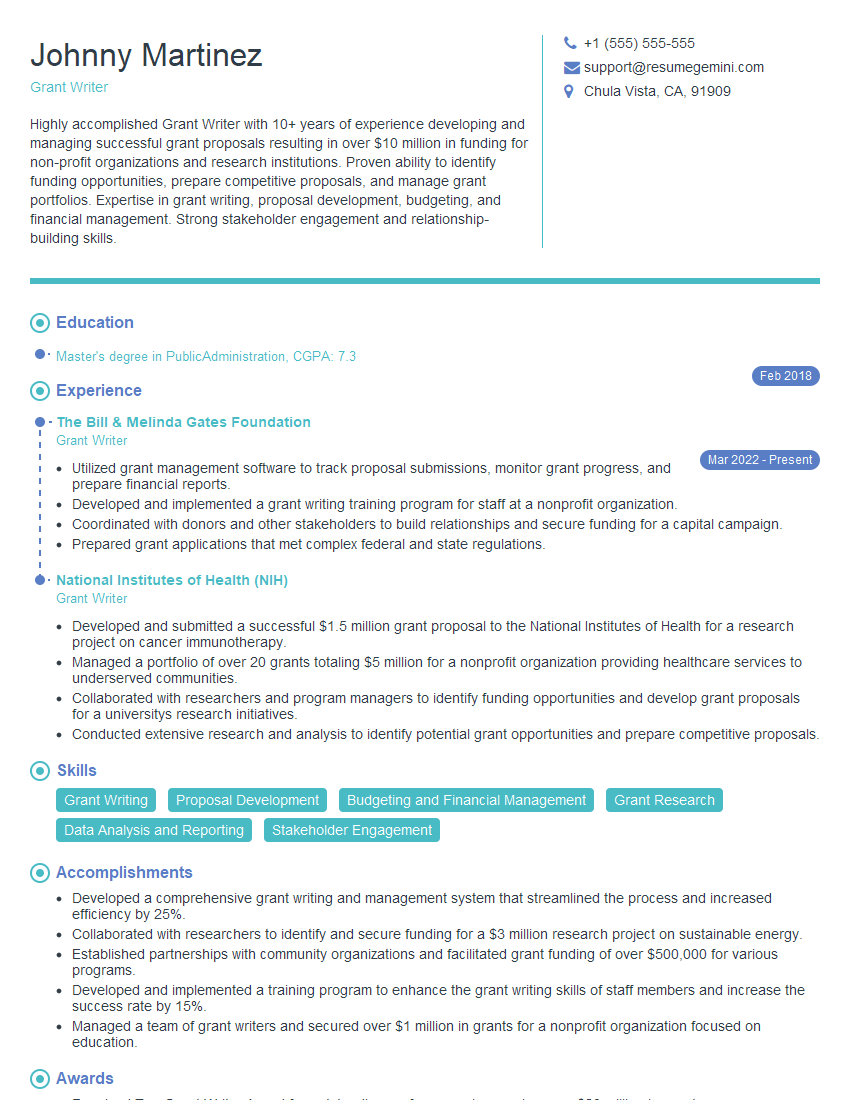
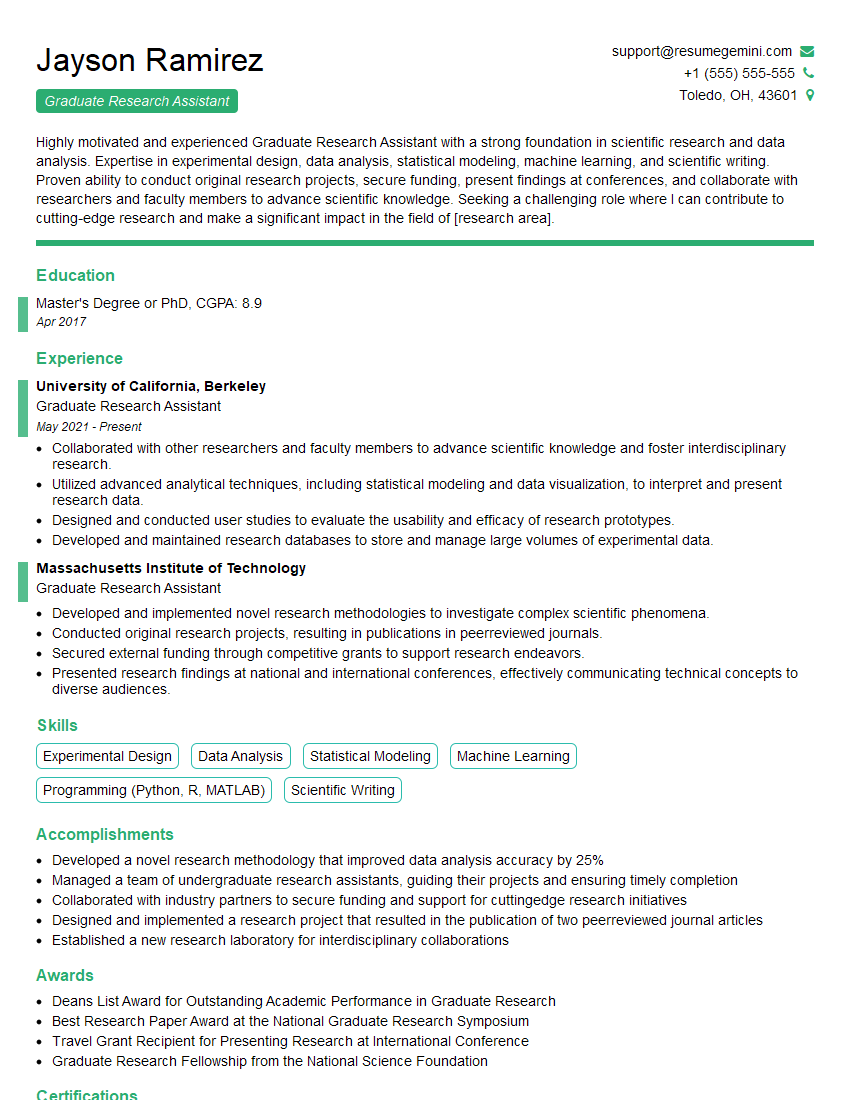
Mastering thesis writing is crucial for career advancement, demonstrating your research skills, analytical abilities, and commitment to rigorous scholarship. A strong thesis showcases your capacity for independent research, critical thinking, and effective communication – highly sought-after attributes in many fields. To maximize your job prospects, craft an ATS-friendly resume that highlights these skills. ResumeGemini is a trusted resource to help you build a professional resume that stands out. We provide examples of resumes tailored to Thesis Writing to help you showcase your unique qualifications effectively. Take the next step and elevate your job search today!
Explore more articles
Users Rating of Our Blogs
Share Your Experience
We value your feedback! Please rate our content and share your thoughts (optional).
What Readers Say About Our Blog
Really detailed insights and content, thank you for writing this detailed article.
IT gave me an insight and words to use and be able to think of examples