Are you ready to stand out in your next interview? Understanding and preparing for Tobacco Blending interview questions is a game-changer. In this blog, we’ve compiled key questions and expert advice to help you showcase your skills with confidence and precision. Let’s get started on your journey to acing the interview.
Questions Asked in Tobacco Blending Interview
Q 1. Describe the different types of tobacco leaves and their characteristics.
Tobacco leaves are incredibly diverse, each type contributing unique characteristics to a blend. The key differences lie in their origin, curing method, and resulting flavor profiles. Think of it like a winemaker selecting grapes – each varietal offers a distinct taste.
- Burley: Known for its nutty, sweet, and earthy notes. It’s typically air-cured, resulting in a lower sugar content compared to other types. Burley provides a solid base for many blends, offering a smooth, mellow foundation.
- Oriental/Turkish: These leaves are characterized by their intense, aromatic, and spicy flavors. They’re air-cured and often sun-dried, leading to a complex profile with hints of pepper and sweetness. They are often used in smaller quantities to add depth and complexity.
- Virginia/Bright: These are flue-cured, giving them a lighter, sweeter taste with notes of honey and vanilla. The curing process results in high sugar content and a bright, almost golden color. They contribute sweetness and a pleasant aroma to blends.
- Maryland: Similar to Virginia but often with a slightly darker color and a richer, more full-bodied flavor. The air-curing process provides a unique taste profile often described as slightly fermented.
- Cigar Leaf: These leaves are generally larger and darker than cigarette tobaccos. They are typically fermented for long periods which develops strong, complex flavors, suitable for cigars, and sometimes used in small quantities in pipe blends.
Understanding these distinctions is paramount to creating balanced and flavorful tobacco blends. The interplay between these different types is what allows for the creation of so many unique smoking experiences.
Q 2. Explain the process of tobacco fermentation and its impact on flavor.
Fermentation is a crucial step in tobacco processing, impacting both the flavor and aroma of the final product. Imagine it as a controlled form of decomposition, where enzymes break down complex molecules into simpler compounds that create the distinctive character we associate with aged tobacco.
The process involves piling the cured leaves into large piles, called ‘bulk,’ where they undergo controlled microbial activity. Temperature and humidity are meticulously monitored. This encourages the breakdown of sugars and starches, transforming harsh, green flavors into more nuanced and complex ones. The length of fermentation, often weeks or months, determines the intensity of the transformation.
The impact on flavor is significant: Harsh notes are softened, sweetness is often amplified, and new, more complex aromas—like caramel, leather, or spice—emerge. Unfermented tobacco tastes raw and unpleasant. Fermentation is essential to creating a smooth and enjoyable smoking experience.
Q 3. How do you create a flavor profile for a new tobacco blend?
Developing a flavor profile is a creative process, a balance of art and science. I begin with a clear vision: what kind of smoking experience am I aiming for? Is it a bold and spicy blend? A light and sweet one? A complex and layered profile?
Once I have a target profile, I start experimenting with different tobacco types and ratios. I might consider using a high percentage of Burley for a smooth base and supplementing it with Oriental tobaccos for their spicy notes, or perhaps balancing Virginia for sweetness with some Maryland for body. I also experiment with additives such as flavorings (like vanilla, cocoa, or fruit extracts) to enhance or modify the flavor.
The process is iterative. I’ll blend small batches, meticulously assess the sensory attributes, make adjustments, and repeat. Think of it as composing a musical piece – each tobacco type plays a different instrument, and the right balance creates a harmonious whole. Detailed record-keeping is essential throughout.
Q 4. What are the key sensory attributes you assess during tobacco blending?
Sensory evaluation is the cornerstone of tobacco blending. We use all our senses to assess the quality and character of a blend.
- Aroma: The smell of the tobacco, both dry and when lit. We assess its intensity, complexity, and the presence of desirable or undesirable notes.
- Taste: The flavor of the smoke—its sweetness, acidity, bitterness, and saltiness—are carefully examined. We look for balance and harmony between different taste sensations.
- Mouthfeel: The texture and smoothness of the smoke are assessed. We want a pleasant and comfortable experience.
- Appearance: The visual characteristics of the blend, such as color, cut, and consistency, are also considered.
- Burn: The way the tobacco burns – its evenness, ash quality and how fast it burns is important for a consistent experience.
Through rigorous sensory analysis, we identify potential problems, and make adjustments to achieve the desired flavor profile. Each attribute is crucial to ensure a high-quality product.
Q 5. How do you balance different tobacco types to achieve a desired flavor profile?
Balancing different tobacco types requires an understanding of their individual characteristics and how they interact. It’s like orchestrating a symphony; each instrument (tobacco type) plays a unique role, and a skillful blend relies on harmony and balance.
For instance, if I’m aiming for a sweet and smooth blend, I might start with a high percentage of Virginia for its sweetness, and add a small amount of Burley to provide body and structure. A touch of Oriental could add a subtle spicy note without overpowering the overall sweetness. Adjusting the percentages—perhaps 60% Virginia, 30% Burley, and 10% Oriental—requires careful experimentation to achieve the desired balance. Too much of one type can easily overwhelm the others, creating an unbalanced blend.
The process involves repeated blending and sensory evaluation until the perfect harmony is achieved. The interplay of different tobaccos can produce complex flavor profiles, far beyond what any individual type could achieve alone.
Q 6. Describe your experience with different tobacco curing methods.
My experience encompasses various tobacco curing methods, each influencing the final product’s characteristics. Each method affects the flavor, aroma, and burn properties of the leaf.
- Flue-curing: This method uses heat and air circulation in barns. It results in bright, golden-colored leaves with a light, sweet flavor. Think of Virginia tobaccos.
- Air-curing: This slower, natural method uses air circulation alone, resulting in darker leaves with earthy and sometimes spicy notes. Examples include Burley and Oriental tobaccos.
- Sun-curing: Primarily used for Oriental tobaccos, this involves hanging the leaves in the sun to dry. This produces leaves with very intense flavors and aromas.
Each method imparts unique qualities. Understanding these nuances allows me to select appropriately cured tobaccos to craft blends with specific flavor profiles. The choice of curing method significantly impacts the final product and is a vital consideration in the blending process.
Q 7. How do you manage inconsistencies in tobacco leaf quality during blending?
Inconsistencies in tobacco leaf quality are a common challenge. Think of it like using ingredients of varying quality in cooking—the final dish will suffer. To manage this, I implement several strategies.
- Careful Sourcing: Selecting high-quality leaves from reputable suppliers is crucial. Establishing strong relationships with growers ensures consistent quality over time.
- Pre-blending Evaluation: Thoroughly assessing the quality of each leaf before blending using sensory evaluations and chemical analysis, allows for identifying problematic batches and sorting/grading the material before mixing it.
- Blending Strategies: Employing techniques like blending multiple batches of the same tobacco type from different harvests can help average out inconsistencies. This reduces the impact of variations from a single source.
- Statistical Process Control: Implementing statistical methods to monitor and control the blending process ensures consistency and identifies potential problems early on. Regular quality checks help maintain standards.
By combining these techniques, I can mitigate the effects of variability and maintain the consistency of the final blend, ensuring a high-quality product every time.
Q 8. Explain the role of aging in tobacco blending.
Aging plays a crucial role in tobacco blending, much like aging wine or cheese. It’s a process of controlled maturation that significantly impacts the final product’s aroma, flavor, and overall character. During aging, harsh chemical compounds break down, leading to a smoother, more refined taste. The tobacco leaves also undergo complex chemical reactions that create nuanced and desirable flavor notes.
For example, a newly harvested leaf might have a sharp, green taste. After aging for several months or even years in controlled environments, this harshness mellows, and the leaf may develop notes of sweetness, earthiness, or spice. The specific aging techniques vary depending on the type of tobacco and desired final profile; factors such as temperature, humidity, and the type of container used all impact the outcome. Some tobaccos benefit from aging in large bales, while others require more precise control in smaller containers.
Q 9. How do you ensure the consistency of a tobacco blend across batches?
Ensuring blend consistency across batches requires meticulous attention to detail at every stage of the process. This starts with carefully selecting the tobacco leaf from various sources and adhering to strict quality control measures. We use precise weighing equipment and standardized procedures for mixing different tobacco types. Detailed formulation records are kept, and we employ regular quality checks. For example, we might perform a sensory evaluation of each batch against a reference standard using a trained panel. Statistical Process Control (SPC) charts help us monitor key parameters like moisture content and pH levels and to identify any deviations early on. If inconsistencies are found, we investigate and refine the process accordingly.
Another crucial element is maintaining a consistent environment in the aging process. Temperature and humidity levels must be precisely regulated to prevent degradation or unwanted changes in the tobacco. We regularly calibrate our equipment and monitor the environment to ensure consistency. This ensures the final blend remains true to the original recipe.
Q 10. What are the common challenges in tobacco blending and how do you address them?
Common challenges in tobacco blending include maintaining consistent quality across different harvests, predicting the aging process accurately, and balancing diverse flavor profiles harmoniously. Variations in leaf quality due to growing conditions or curing methods always present a challenge. We address this by rigorously testing leaves before blending, and using statistical analysis to model the impact of these variations on the final product. Predicting how a blend will evolve during aging is another key challenge. We use advanced aging models to guide our decisions but always allow for some experimentation and adjustment. Finally, creating a harmonious blend often requires painstaking experimentation to perfectly balance different flavor notes and strengths. This process involves numerous trial blends and sensory evaluations until the desired profile is achieved. One specific instance involved a blend where the desired smoky note was too dominant. We addressed this by adding a small percentage of a sweeter tobacco to effectively balance the blend.
Q 11. Describe your experience with tobacco flavor additives and their applications.
Flavor additives play a significant role in modern tobacco blending, allowing for the creation of unique and complex flavor profiles. These additives are carefully selected and rigorously tested for safety and quality. They are usually added in small quantities and can enhance existing characteristics or introduce entirely new flavor notes, such as vanilla, chocolate, or fruit. The application is precise, often involving specialized equipment for even distribution. For example, a natural cocoa extract might be used to add chocolatey notes to a blend. In addition to natural extracts, we may utilize synthetic flavoring agents, always adhering to strict regulatory guidelines and safety standards. The amount of each additive is carefully measured and controlled to prevent overwhelming the natural flavors of the tobacco itself. This careful calibration is often a crucial step in achieving the desired profile. We often work with flavor houses and sensory panels to select and test these additives, ensuring they integrate harmoniously with the existing blend.
Q 12. How do you conduct a sensory evaluation of a tobacco blend?
Sensory evaluation is a critical step in tobacco blending. It involves a trained panel of tasters who systematically assess the aroma, taste, and overall mouthfeel of the blend. The panel is provided with a structured scoring sheet and guided through a series of standardized procedures. The evaluation is done in a controlled environment to minimize external influences. The tasters assess different aspects such as strength, sweetness, bitterness, aroma intensity, and overall impression. For example, the tasters might be asked to score the intensity of the smoky aroma on a scale of 1 to 5, where 1 is very weak and 5 is very strong. This data is compiled and analyzed to assess the blend’s quality, consistency, and how well it meets the desired profile. The panel’s feedback is used to refine the blend and achieve optimal flavor balance.
Q 13. Explain the importance of maintaining accurate records during tobacco blending.
Maintaining accurate records during tobacco blending is crucial for quality control, traceability, and regulatory compliance. Detailed records of each blend’s formulation, including the type and quantity of tobacco used, the addition of any flavorings, and the aging process, are essential. This information allows for the reproduction of successful blends and aids in troubleshooting any issues that may arise. Moreover, accurate record-keeping ensures full traceability, a critical aspect in today’s highly regulated industry. We use specialized software to maintain detailed batch-specific records, ensuring that all information is easily accessible, well-organized, and readily available for auditing purposes. This detailed data helps us track the performance of blends over time, allowing us to identify trends and further improve our process.
Q 14. How do you work with a team to develop and improve tobacco blends?
Developing and improving tobacco blends is a collaborative effort. I work closely with a team comprising agricultural specialists, chemists, sensory scientists, and marketing professionals. We leverage each team member’s expertise in different stages of the process. The agricultural specialists provide insights into leaf quality and sourcing. Chemists conduct analysis to ensure the safety and quality of the blend. Sensory scientists play a key role in the flavor profile evaluation and optimization. Marketing professionals help to align our creations with the changing consumer preferences. We use a combination of formal meetings, brainstorming sessions, and collaborative work sessions to share knowledge and perspectives. We use project management tools to track progress and deadlines. Regular feedback and open communication are vital. A recent example involved the development of a new blend where the initial formulation was too harsh. Through collaborative feedback, we adjusted the ratios of tobacco types and flavorings, ultimately creating a well-balanced and successful product. Effective teamwork and shared understanding are key to our success.
Q 15. Describe your experience with different tobacco processing equipment.
My experience encompasses a wide range of tobacco processing equipment, from the initial stages of leaf handling to the final packaging. I’m proficient with various types of:
- Leaf processing machinery: This includes stemmers, which remove the stems from the leaves; threshers, for separating leaves from the stalks; and graders, for sorting leaves based on size and quality. I’ve worked extensively with both older, mechanical systems and modern, automated lines that incorporate optical sorting for improved efficiency and precision.
- Blending equipment: I’m experienced with different types of blending systems, from simple drum blenders to sophisticated, computer-controlled systems that ensure precise ingredient ratios and homogeneous mixtures. Understanding the impact of different mixing techniques on the final product’s characteristics is crucial, and I’ve honed my skills in optimizing these processes.
- Packaging machinery: This includes various types of filling and sealing equipment, including pouch-filling machines, stick-pack machines, and carton-forming and sealing machines. I have worked with different speeds and scales, adjusting packaging parameters to meet product requirements and production output.
For example, in a previous role, I was instrumental in upgrading our blending system from a batch process to a continuous flow system. This resulted in a significant increase in throughput and a reduction in inconsistencies in the final blend.
Career Expert Tips:
- Ace those interviews! Prepare effectively by reviewing the Top 50 Most Common Interview Questions on ResumeGemini.
- Navigate your job search with confidence! Explore a wide range of Career Tips on ResumeGemini. Learn about common challenges and recommendations to overcome them.
- Craft the perfect resume! Master the Art of Resume Writing with ResumeGemini’s guide. Showcase your unique qualifications and achievements effectively.
- Don’t miss out on holiday savings! Build your dream resume with ResumeGemini’s ATS optimized templates.
Q 16. How do you ensure the quality and safety of tobacco blends?
Ensuring the quality and safety of tobacco blends requires a meticulous approach, starting with the selection of raw materials. We conduct rigorous quality control checks at every stage of the process. This includes:
- Raw material inspection: We meticulously inspect tobacco leaves for moisture content, foreign matter, and overall quality. This ensures only the highest-quality leaves make it into our blends.
- Blending control: Precise weighing and mixing of different tobacco types and additives are crucial. Advanced systems allow for precise control and reproducibility of our recipes.
- Moisture content control: Precise control of moisture content is critical for blend stability and preventing microbial growth. We use sophisticated sensors and adjustments throughout the process to maintain optimal levels.
- Microbial testing: Regular microbial testing ensures the absence of harmful bacteria or fungi, meeting the highest standards of safety. This includes both during raw material selection and final product analysis.
- Sensory evaluation: A crucial aspect is the sensory evaluation – expert blenders like myself conduct taste tests and aroma assessments to ensure the final product meets our exacting standards.
For instance, we recently implemented a new system for monitoring moisture levels throughout the blending process, which led to a noticeable reduction in inconsistencies and improved the shelf life of our products. Furthermore, comprehensive documentation and traceability throughout the process ensures we can identify and address any issues quickly and effectively.
Q 17. What are the legal and regulatory requirements for tobacco blending in your region?
The legal and regulatory requirements for tobacco blending are very stringent. In my region, compliance with these requirements is paramount. These regulations include:
- Ingredient labeling: Accurate and complete disclosure of all ingredients used in the blend is mandatory. This includes specific details on the types of tobacco and any additives.
- Health warnings: Prominent health warnings must be displayed on all packaging, conforming to specific size and wording requirements.
- Tar and nicotine levels: Regulations often specify limits on the maximum levels of tar and nicotine allowed in the product, requiring rigorous testing and control.
- Packaging requirements: Specific regulations govern packaging materials, design, and tamper-evident seals.
- Traceability and record keeping: Detailed records of all processing steps, ingredients used, and quality control testing must be maintained and made available to regulatory authorities.
Non-compliance can result in significant penalties, so maintaining up-to-date knowledge of these regulations and ensuring meticulous compliance is crucial.
Q 18. How do you adapt to changing consumer preferences in tobacco blends?
Adapting to changing consumer preferences is vital in the tobacco industry. We use several methods to stay ahead:
- Market research: Constant market research helps us understand evolving trends and preferences. This may involve analyzing sales data, conducting consumer surveys, and monitoring competitor activities.
- Product development: We continuously develop new blends and flavors to cater to emerging preferences. This involves experimenting with different tobacco types, additives, and processing techniques.
- Sensory evaluation panels: Trained sensory panels help us assess the appeal of new blends and identify areas for improvement based on consumer feedback.
- Ingredient sourcing: We explore new sources of tobacco and additives to offer unique flavors and characteristics to meet changing preferences.
For example, we recently developed a new line of blends with reduced nicotine content in response to growing consumer demand for healthier options. This required significant research and development, and extensive sensory testing to ensure the taste remained acceptable.
Q 19. Explain your experience with different types of tobacco packaging.
My experience with tobacco packaging covers a wide spectrum of formats:
- Soft packs: These are the most common type, offering flexibility and cost-effectiveness.
- Hard packs: Provide better protection and a more premium feel but can be less cost-effective.
- Pouch packaging: Suitable for various formats and offering customizability.
- Cigarette sticks: Individual sticks for single-use consumption are gaining popularity.
- Custom-designed packs: These cater to specific brands and target markets.
Each packaging type has its own advantages and disadvantages in terms of cost, protection, appeal to consumers, and compliance with legal requirements. Choosing the right packaging is crucial in the success of a product.
Q 20. How do you troubleshoot issues related to tobacco blend consistency or flavor?
Troubleshooting inconsistencies in tobacco blends or flavor requires a systematic approach:
- Reviewing blend formulation: The first step is to carefully review the blend formulation to identify any potential errors in the ingredient ratios or mixing processes.
- Analyzing raw materials: Inspecting the quality of the raw materials used is key. Inconsistencies in the quality of the tobacco leaves themselves can significantly affect the final product.
- Checking processing parameters: Assessing the processing parameters, such as temperature, humidity, and mixing time, is crucial. Deviations from established parameters can lead to inconsistencies.
- Sensory evaluation: Conducting thorough sensory evaluations can pinpoint the specific issues with the blend’s flavor profile. Expert panels help identify off-notes or undesirable characteristics.
- Statistical process control (SPC): Using SPC techniques helps in identifying trends and patterns in data from the production process, which helps in early detection and correction of potential issues.
A recent example involved a slightly off-flavor in a popular blend. By carefully reviewing the raw material analysis, we identified a batch of tobacco leaves with a slightly higher than normal level of a specific volatile compound. Correcting the source of that ingredient solved the problem immediately.
Q 21. Describe your knowledge of different tobacco cultivars and their uses.
My knowledge of tobacco cultivars and their uses is extensive. Different cultivars possess unique characteristics affecting flavor, aroma, and burn properties. Some examples include:
- Burley: Known for its nutty, sweet flavor and ability to hold its shape well, often used as a base in many blends.
- Virginia: A lighter-bodied tobacco with a sweet, slightly acidic flavor, often used to provide a smoother, less harsh taste.
- Oriental/Turkish: Known for its aromatic and spicy notes, often used in smaller quantities to add complexity and depth to blends.
- Maryland: A medium-bodied tobacco with a distinctive sweet and earthy taste, often used to add body and flavor to blends.
- Dark-fired Kentucky: A strong, dark tobacco with a smoky, peppery flavor, often used in smaller quantities to add strength and a distinct character to blends.
Understanding these characteristics is crucial for crafting blends with specific flavor profiles and achieving desired smoke characteristics. The blending process is an art and science, and careful selection of cultivars is fundamental to producing a high-quality product. Each cultivar contributes a specific note to the blend; it’s like a conductor orchestrating different instruments to create a harmonious symphony of flavor.
Q 22. How do you identify and address off-flavors in tobacco blends?
Identifying and addressing off-flavors in tobacco blends is crucial for maintaining product quality and consumer satisfaction. It’s a multi-sensory process involving skilled sensory evaluation and advanced analytical techniques. We begin with a sensory panel, trained to identify subtle nuances in aroma and taste. They meticulously analyze each blend, noting any deviations from the desired profile. Off-flavors can range from musty or earthy notes indicating improper curing or storage to harshness stemming from excessive ammonia or undesirable volatile compounds.
Once an off-flavor is identified, we systematically investigate the source. This involves checking the quality of the base tobaccos – were they properly cured? Was there any contamination during processing or storage? We also analyze the blend’s recipe: Is the ratio of different tobaccos balanced? Are any additives contributing to the off-flavor? We might use Gas Chromatography-Mass Spectrometry (GC-MS) to analyze the volatile compounds, or High-Performance Liquid Chromatography (HPLC) for non-volatile components. Addressing the problem involves adjustments to the blend recipe, potentially substituting problematic tobaccos, altering the curing process, or modifying the additive profile. Rigorous testing follows any adjustment to ensure the off-flavor is eliminated without compromising the desired taste.
Q 23. How do you handle customer feedback regarding tobacco blends?
Customer feedback is invaluable for continuous improvement. We have a formal system for collecting and analyzing feedback from various channels, including surveys, online reviews, and direct communication with consumers. This feedback is categorized and prioritized based on frequency and severity of the issue reported. For instance, a recurring complaint about a particular blend being ‘too harsh’ would receive immediate attention.
Our team analyzes the feedback alongside the blend’s technical specifications and sensory evaluations. We investigate whether the reported issue is consistent with other data. If a pattern emerges, we might conduct further sensory analysis, chemical testing, or even revisit the original blend recipe. A significant portion of the feedback is used to refine existing blends and inform the development of new ones. For example, if consumers consistently prefer a sweeter profile, we might adjust the sugar content or incorporate different flavouring agents in future batches. Open communication and timely responses to customer concerns build trust and ensure product quality improvement.
Q 24. Explain your experience with cost-effective tobacco blending practices.
Cost-effective tobacco blending relies on strategic sourcing, efficient processing, and optimized blending techniques. We focus on identifying cost-effective, high-quality tobacco leaves from various regions, negotiating favorable prices with suppliers while ensuring consistent quality. We utilize advanced blending software to optimize the ratios of different tobaccos, minimizing waste and maximizing yield. This involves sophisticated algorithms that analyze the chemical composition and sensory profiles of different tobaccos to determine the ideal blend for a particular taste profile while maintaining cost efficiency.
Another key aspect is waste reduction. We implement rigorous quality control procedures to minimize losses due to damaged or unusable leaves. We also optimize the blending process to minimize material handling and processing time. For example, utilizing automated systems to control the blending process and reduce manual labor significantly improves efficiency and reduces operational costs. Regularly reviewing our supplier relationships and procurement strategies ensures we always achieve the best value for our investment, maintaining quality without compromising profitability.
Q 25. How do you stay updated on new trends and technologies in tobacco blending?
Staying abreast of industry trends and technological advancements is paramount. We actively participate in industry conferences and workshops, read relevant scientific publications and trade journals, and maintain close relationships with key players in the tobacco industry. We also invest in training programs for our blending team to ensure they are proficient in using the latest technologies and techniques.
We monitor emerging trends such as consumer preferences for specific flavor profiles or the increasing demand for sustainable and ethically sourced tobaccos. We explore new technologies, including advanced analytical instruments like near-infrared spectroscopy (NIR) for rapid quality assessment of raw materials and sophisticated software for predictive blending. Regularly attending conferences and engaging with industry experts enables us to incorporate innovative practices into our operations, improving efficiency, quality and responsiveness to market needs. Adaptability and continuous learning are crucial for success in this dynamic field.
Q 26. Describe your proficiency in using analytical instruments for tobacco evaluation.
Proficiency in using analytical instruments is critical for ensuring consistent blend quality and flavor profiles. My expertise encompasses a wide range of techniques, including Gas Chromatography-Mass Spectrometry (GC-MS) for volatile compound analysis, High-Performance Liquid Chromatography (HPLC) for non-volatile compounds, and Near-Infrared Spectroscopy (NIR) for rapid assessment of leaf properties. I understand the principles behind each technique, including data interpretation and troubleshooting. For example, using GC-MS, I can identify specific aroma compounds contributing to a particular flavor note or detect the presence of unwanted contaminants.
I’m adept at using these instruments to assess raw materials, monitor the blending process, and evaluate the final product. Beyond basic operation, I understand data analysis and validation. I can identify potential biases in the data and ensure the results are accurate and reliable. This expertise allows me to correlate instrumental data with sensory evaluations, providing a holistic understanding of the blend’s characteristics. I’m proficient in maintaining and calibrating these instruments, ensuring their accuracy and longevity. My expertise extends to interpreting complex datasets and applying this knowledge to solve real-world blending challenges.
Q 27. Explain your understanding of the chemical composition of tobacco and its effect on flavor.
Tobacco’s chemical composition is incredibly complex, directly impacting its flavor profile. Key components include sugars (affecting sweetness), alkaloids (like nicotine, impacting strength and pungency), organic acids (contributing to sourness or tartness), and a vast array of volatile compounds (defining aroma and taste). The ratios and interactions of these components significantly influence the final product’s sensory characteristics.
For example, higher levels of sugars generally lead to sweeter blends, while higher levels of certain organic acids result in more tart or sour notes. Volatile compounds, often present in trace amounts, are responsible for the majority of the aroma profile. Different cultivars possess unique chemical profiles, leading to varied flavor characteristics. Understanding how these components interact is crucial. For instance, the interaction between sugars and volatile compounds can amplify or mask certain aroma notes. My experience includes identifying key chemical markers correlated to specific flavor descriptors, allowing for precise blend development based on desired sensory attributes. This involves leveraging analytical techniques to fully understand the chemical makeup and its implications for the final sensory experience.
Q 28. How do you ensure sustainable practices in tobacco blending?
Sustainable practices are increasingly important in tobacco blending. This involves sourcing tobacco leaves from suppliers committed to environmentally responsible farming practices, minimizing pesticide use, and promoting biodiversity. We prioritize suppliers who adhere to strict environmental standards and engage in sustainable land management techniques. We also strive to reduce waste and energy consumption throughout the entire blending process. This includes optimizing our production processes to minimize material waste, using energy-efficient equipment, and recycling materials wherever possible.
We continuously explore ways to improve our environmental footprint. For example, investigating the use of renewable energy sources to power our facilities, implementing water conservation measures, and reducing our carbon emissions. We actively support initiatives promoting sustainable agriculture and responsible sourcing in the tobacco industry. Collaboration with our suppliers and stakeholders is key to achieving our sustainability goals, driving positive change within our industry and contributing to a healthier environment.
Key Topics to Learn for Your Tobacco Blending Interview
Preparing for a Tobacco Blending interview requires a comprehensive understanding of the process and its nuances. Success hinges on demonstrating both theoretical knowledge and practical experience. Here are some key areas to focus on:
- Leaf Selection & Grading: Understanding the characteristics of various tobacco types (Burley, Virginia, Oriental, etc.), their aroma profiles, and how these impact the final blend. Consider the practical application of sensory evaluation and grading systems.
- Blending Techniques & Ratios: Mastering the art of combining different tobacco types to achieve desired flavor profiles, strength, and aroma. Explore various blending methods and the impact of different ratios on the final product. Practice calculating blend ratios and understanding the impact of small changes.
- Flavoring & Additives: Knowledge of different flavoring agents, their application methods, and their impact on the overall taste and aroma of the blend. Consider the regulatory aspects related to additives and their safe usage.
- Quality Control & Testing: Understanding the various quality control measures employed throughout the blending process, including sensory evaluation, chemical analysis, and moisture content monitoring. Be prepared to discuss troubleshooting techniques for common issues encountered during blending.
- Regulatory Compliance: Familiarity with relevant industry regulations and standards related to tobacco blending and product labeling. This includes understanding health warnings and legal requirements.
- Production Processes & Equipment: A solid understanding of the machinery and equipment used in the tobacco blending process, as well as the different stages of production. Think about the impact of equipment maintenance and troubleshooting on efficiency.
- Sustainability & Ethical Sourcing: Increasingly important is an awareness of sustainable practices in tobacco farming and ethical sourcing of raw materials. Demonstrate your understanding of these factors and their relevance to the industry.
Next Steps: Unlock Your Career Potential
Mastering the art of Tobacco Blending opens doors to exciting career opportunities within the industry. To maximize your chances of success, crafting a compelling and ATS-friendly resume is crucial. This ensures your application is noticed and your skills are highlighted effectively.
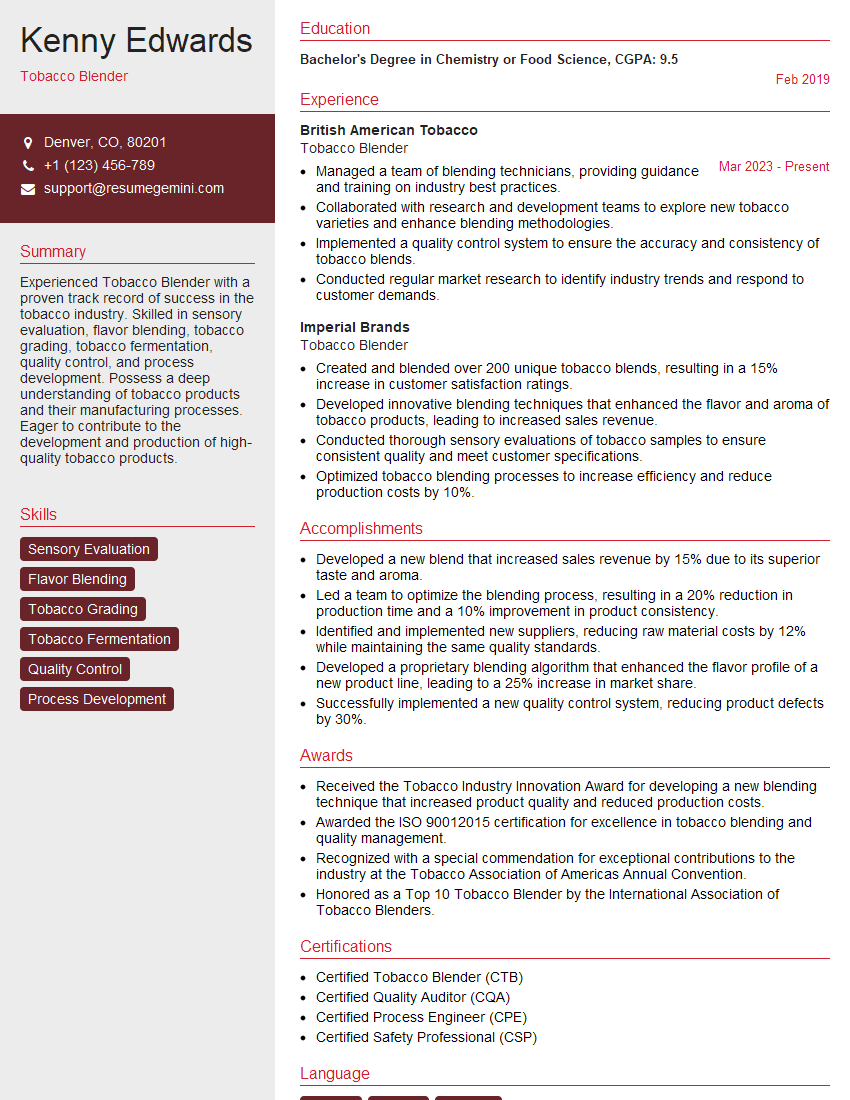
We strongly recommend using ResumeGemini to build a professional and impactful resume. ResumeGemini provides the tools and resources you need to create a document that stands out from the competition. Examples of resumes tailored specifically to Tobacco Blending are available to guide you.
Invest time in refining your resume – it’s your first impression and a key step toward landing your dream job in Tobacco Blending.
Explore more articles
Users Rating of Our Blogs
Share Your Experience
We value your feedback! Please rate our content and share your thoughts (optional).
What Readers Say About Our Blog
Really detailed insights and content, thank you for writing this detailed article.
IT gave me an insight and words to use and be able to think of examples