Are you ready to stand out in your next interview? Understanding and preparing for Tools Management interview questions is a game-changer. In this blog, we’ve compiled key questions and expert advice to help you showcase your skills with confidence and precision. Let’s get started on your journey to acing the interview.
Questions Asked in Tools Management Interview
Q 1. Explain your experience with CMMS (Computerized Maintenance Management System) software.
My experience with CMMS software spans several years and various systems, including both cloud-based and on-premise solutions. I’m proficient in using CMMS to manage the entire lifecycle of tools, from procurement and inventory tracking to maintenance scheduling and disposal. For example, in my previous role, we implemented a CMMS system to track over 5,000 tools across multiple workshops. This allowed us to significantly reduce downtime due to tool unavailability and improve the efficiency of our maintenance operations. My expertise includes data entry, report generation, work order management, and system configuration. I’m also familiar with integrating CMMS with other systems like ERP (Enterprise Resource Planning) for a holistic view of operations. I’m comfortable working with various CMMS platforms, adapting quickly to new software and maximizing their potential to improve tool management.
Specifically, I’ve used software like UpKeep, Fiix, and Hippo CMMS, gaining experience with features such as preventive maintenance scheduling, inventory management, asset tracking, and reporting functionalities. I understand the importance of choosing the right CMMS based on the organization’s needs and size, and I have experience customizing reports to meet specific requirements. This involved creating reports to monitor tool usage, identify trends in maintenance needs, and predict future equipment failures.
Q 2. Describe your process for tracking tool inventory and identifying shortages.
My process for tracking tool inventory and identifying shortages is multi-faceted and relies on a combination of technology and manual processes. It begins with a comprehensive tool inventory database, ideally within a CMMS. Each tool is assigned a unique identifier (barcode or RFID tag) for accurate tracking. Regular physical inventories are conducted, comparing the physical count against the database. Discrepancies trigger an investigation to determine the cause – whether it’s a data entry error, tool loss, or theft. This process often involves using mobile scanning devices to expedite the inventory process.
To identify shortages, the CMMS system generates reports flagging tools that fall below predetermined thresholds. These reports highlight tools requiring immediate replenishment, prompting procurement actions. We also employ a system of tool check-out and check-in, using the CMMS to register the user, date, and time of tool usage. This allows us to track tool location and identify potential bottlenecks or prolonged tool usage that might lead to shortages for others. For example, if a particular tool is consistently checked out for extended periods, it flags the need for additional tools or improved workflow planning.
Q 3. How do you ensure tools are properly maintained and calibrated?
Ensuring proper tool maintenance and calibration is critical for safety and accuracy. We establish a preventative maintenance (PM) schedule for each tool, based on manufacturer recommendations and usage frequency. This schedule is integrated into our CMMS. The system generates automated alerts reminding technicians when specific tools need maintenance or recalibration. Calibration is performed by authorized personnel using certified equipment, and records of calibration dates and results are meticulously documented and stored within the CMMS, often linked to the tool’s unique identifier. This allows easy access to calibration history for audits or regulatory compliance purposes.
For instance, we might schedule a monthly calibration for precision measuring tools and an annual inspection for power tools. The CMMS automatically tracks the status of each tool, flagging those overdue for maintenance. Visual inspection of tools is also integral to this process. Tools showing signs of wear or damage are immediately removed from service and sent for repair or replacement. This preventative approach minimizes downtime, ensures accuracy, and promotes a safer work environment.
Q 4. What methods do you use to optimize tool storage and organization?
Optimizing tool storage and organization is crucial for efficiency and safety. We use a combination of methods to achieve this, starting with a well-designed storage system. This may involve shadow boards, labeled drawers, or cabinets, tailored to the specific tools used. Tools are organized logically, by type, size, or usage frequency, making them easy to locate. A well-lit and clearly marked storage area further improves efficiency. We employ 5S methodology (Sort, Set in Order, Shine, Standardize, Sustain) to maintain a clean and organized workspace. The goal is to eliminate clutter and reduce the time spent searching for tools.
For example, shadow boards are excellent for frequently used tools, ensuring quick retrieval and easy identification of missing items. Color-coding tool handles or storage containers can also aid in organization and quick identification. Furthermore, we regularly review and update the storage system based on usage patterns and evolving needs. This might include rearranging tools based on workflow changes or adding new storage units if the existing space becomes insufficient.
Q 5. Explain your experience with implementing a new tool management system.
Implementing a new tool management system requires a phased approach. It starts with a thorough needs assessment to identify the organization’s specific requirements and choose the appropriate system. This includes evaluating different CMMS software options, considering factors like scalability, integration capabilities, and user-friendliness. Once the system is selected, a detailed implementation plan is developed, outlining timelines, responsibilities, and training schedules. Data migration from existing systems is meticulously planned and executed to minimize disruption.
The next step involves user training. Hands-on training sessions familiarize users with the new system’s functionalities, ensuring they can effectively utilize its features. During implementation, it’s important to address any user concerns or resistance proactively. Post-implementation, ongoing monitoring and evaluation are essential to ensure the system meets its objectives. Regular system updates and adjustments may be required based on user feedback and operational changes. In one project, we successfully transitioned from a manual tool tracking system to a cloud-based CMMS, resulting in a 20% reduction in tool-related downtime and a 15% increase in overall productivity.
Q 6. How do you handle damaged or lost tools?
Handling damaged or lost tools involves a clear process. Upon discovery of damage or loss, an incident report is filed, documenting the details, including the tool’s identifier, the date and time of discovery, and a description of the damage or circumstances surrounding the loss. For damaged tools, an assessment is made to determine the feasibility of repair. If repair is cost-effective, the tool is sent for repair, and the repair process is tracked within the CMMS. Otherwise, the tool is disposed of according to company policy, and a replacement is ordered.
In cases of loss, an investigation is conducted to determine the cause. If theft is suspected, appropriate action is taken, including reporting to authorities. The CMMS is updated to reflect the tool’s status (damaged, lost, or disposed of), and the cost of repair or replacement is recorded. This detailed process helps prevent future losses or damage, tracks expenses, and ensures compliance with regulations. A regular review of loss/damage reports allows us to identify patterns and implement corrective measures, such as improved tool storage or enhanced security protocols.
Q 7. Describe your experience with preventative maintenance schedules for tools.
Preventative maintenance schedules for tools are crucial for extending their lifespan, ensuring their accuracy, and promoting a safe working environment. These schedules are typically developed based on manufacturer recommendations, industry best practices, and usage patterns. The schedules detail the type of maintenance required (e.g., cleaning, lubrication, inspection, calibration), the frequency of maintenance, and the responsible personnel. This information is integrated into our CMMS, which automatically generates alerts to remind technicians when maintenance is due.
For instance, a pneumatic drill might require a monthly inspection of air hoses and fittings and an annual lubrication, while a precision measuring device requires a more frequent calibration. The CMMS ensures that all scheduled maintenance tasks are completed, tracking the maintenance history of each tool. Records of maintenance activities are diligently kept, providing a valuable dataset for analysis and identifying any potential issues or trends. This allows us to proactively address problems, preventing costly breakdowns or unexpected downtime. We also conduct regular reviews of the PM schedules, adjusting them as needed based on actual tool performance and usage data.
Q 8. How do you prioritize tool maintenance tasks based on urgency and criticality?
Prioritizing tool maintenance hinges on a risk assessment considering both urgency and criticality. We use a matrix system. Urgency refers to how quickly a tool needs attention to prevent immediate harm or downtime. Criticality signifies the tool’s importance to overall operations. A high-urgency, high-criticality tool (like a critical piece of machinery’s specialized wrench) needs immediate attention. A low-urgency, low-criticality item (like a rarely used hand drill) can be scheduled for later maintenance.
- High Urgency, High Criticality: Immediate maintenance. This could involve a shutdown to fix a safety hazard or a critical component failure.
- High Urgency, Low Criticality: Expedited maintenance. While not crucial to immediate production, addressing these issues promptly prevents future problems.
- Low Urgency, High Criticality: Scheduled maintenance. These are critical tools requiring preventative maintenance to avert significant future problems.
- Low Urgency, Low Criticality: Routine maintenance. This is where we might utilize a longer maintenance cycle, focusing on inspection and minor repairs.
For example, in a construction project, a malfunctioning crane would be high urgency/high criticality, while a slightly dull hand saw would be low urgency/low criticality. We use a computerized maintenance management system (CMMS) to track all this and generate prioritized work orders.
Q 9. What metrics do you use to measure the effectiveness of your tool management program?
Measuring the effectiveness of a tool management program requires a balanced scorecard approach. We track several key metrics:
- Tool Availability: Percentage of tools readily available for use. Low availability signals potential issues with maintenance or procurement.
- Tool Downtime: Time tools spend out of service due to repair or maintenance. This helps pinpoint maintenance bottlenecks.
- Maintenance Costs: Tracking costs per tool, tool type, and overall program costs helps optimize budgeting and identify areas for cost reduction.
- Safety Incidents Related to Tools: Number and severity of accidents linked to tool malfunctions or improper use. A reduction here is a critical success factor.
- Compliance Rate: The percentage of tools that meet regulatory standards and internal maintenance schedules. A high compliance rate demonstrates effective management.
- Tool Life Cycle Cost: This metric considers the initial purchase price, maintenance costs, and disposal costs to determine the overall cost of ownership for each tool.
By monitoring these metrics and analyzing trends, we can identify areas for improvement and demonstrate the return on investment (ROI) of our tool management program.
Q 10. How do you ensure compliance with safety regulations related to tool use and maintenance?
Ensuring compliance with safety regulations is paramount. Our approach is multi-faceted:
- Regular Training: All personnel receive comprehensive training on safe tool use, maintenance, and handling procedures. This includes proper PPE use and emergency response protocols.
- Tool Inspections: We conduct frequent inspections of tools to identify wear and tear, damage, and any potential safety hazards. Inspection checklists are used to ensure consistency.
- Documentation: Meticulous record-keeping is crucial. We maintain a detailed history of each tool’s maintenance, inspections, and repairs. This documentation is essential for audits and investigations.
- Regular Audits: Internal audits and, where applicable, external regulatory inspections, ensure compliance with all relevant safety standards. Any identified non-compliances are addressed immediately.
- Lockout/Tagout Procedures: Strict lockout/tagout procedures are followed for maintenance and repairs to prevent accidental starts and injuries.
- Regular Calibration: Tools requiring calibration, such as measuring instruments, are calibrated at set intervals by certified technicians.
We stay updated on the latest safety regulations and incorporate them into our procedures. Non-compliance is addressed swiftly and decisively, prioritizing the safety of our workers.
Q 11. Explain your experience with budgeting and forecasting tool-related expenses.
Budgeting and forecasting tool-related expenses involve a combination of historical data analysis, projected needs, and risk assessment. We typically use a bottom-up budgeting approach, starting with individual tool needs and then aggregating to the overall budget.
- Historical Data Analysis: We analyze past spending on repairs, maintenance, replacements, and new acquisitions to establish a baseline.
- Projected Needs: This involves anticipating future projects, equipment expansions, and potential tool replacements based on expected lifespan and wear and tear.
- Risk Assessment: We consider potential risks, such as unexpected equipment failures or the need for emergency repairs, and include contingency funds in the budget.
- Software and Reporting: We utilize CMMS to generate reports on historical tool usage, maintenance costs, and failure rates. This provides valuable data for accurate forecasting.
For example, if we notice a trend of increased repairs on a particular type of tool, we might allocate more funds for preventative maintenance or explore alternative, more durable options. Forecasting allows us to make strategic decisions to optimize spending.
Q 12. Describe your experience with negotiating contracts with tool suppliers.
Negotiating contracts with tool suppliers requires a strategic approach. My experience encompasses:
- Market Research: Thorough research of available suppliers and their pricing structures.
- Request for Proposals (RFPs): Issuing detailed RFPs to multiple suppliers to ensure fair competition.
- Comparative Analysis: Carefully comparing proposals based on price, quality, delivery timelines, and terms and conditions.
- Negotiation Strategy: Employing effective negotiation tactics to secure favorable pricing, payment terms, and service-level agreements.
- Contract Review: Meticulously reviewing contracts to identify and address potential risks and ambiguities.
- Relationship Building: Cultivating strong relationships with key suppliers to foster trust and collaboration.
For instance, I successfully negotiated a bulk discount with a major supplier by demonstrating our consistent, high-volume purchasing needs. This resulted in significant cost savings over the contract period.
Q 13. How do you manage tool procurement and ensure timely delivery?
Managing tool procurement and ensuring timely delivery involves several key steps:
- Inventory Management: Maintaining an accurate inventory of all tools, tracking their usage and condition. This helps determine when to order replacements or additional tools.
- Purchase Orders: Issuing clear and concise purchase orders to suppliers, specifying quantity, quality, delivery address, and payment terms.
- Supplier Relationship Management: Building and maintaining strong relationships with reliable suppliers to ensure timely deliveries and address any potential delays.
- Tracking and Monitoring: Closely tracking orders from placement to delivery, proactively addressing any potential issues or delays.
- Receiving and Inspection: Upon delivery, thoroughly inspecting tools to ensure they meet specifications and are in good condition before releasing them for use.
- Automated Procurement Systems: Utilizing integrated CMMS with inventory and purchasing capabilities automates the procurement process, enhances tracking and eliminates manual errors.
For example, using a CMMS, we can automatically generate purchase orders when stock levels drop below a predetermined threshold, ensuring we always have the necessary tools on hand to prevent production delays.
Q 14. How do you handle tool disposal and recycling?
Tool disposal and recycling is environmentally responsible and cost-effective. Our process follows these steps:
- Assessment: We assess the condition of each tool to determine whether it can be repaired, refurbished, or needs to be disposed of.
- Repair and Refurbishment: Repairable tools are repaired or refurbished to extend their lifespan, reducing waste and costs.
- Recycling and Disposal: Tools beyond repair are disposed of responsibly in accordance with environmental regulations. This includes separating materials for recycling whenever possible (e.g., metal components, plastics).
- Vendor Partnerships: We partner with certified recycling vendors that specialize in responsible electronics and tool recycling, ensuring proper handling of hazardous materials.
- Documentation: Detailed records are maintained of all disposal activities to ensure compliance with environmental regulations.
- Continuous Improvement: We continuously seek ways to improve our tool disposal and recycling process to minimize environmental impact and maximize resource recovery.
For example, we’ve implemented a program where worn-out cutting tools are recycled, the metal being reclaimed and reused, decreasing waste and improving our environmental footprint.
Q 15. What is your experience with RFID or barcode technology for tool tracking?
My experience with RFID and barcode technology for tool tracking is extensive. Both technologies offer significant improvements over manual tracking systems, but they have different strengths. Barcodes, being more mature and less expensive, are great for basic tracking. Think of them as a simple, reliable way to scan tools in and out of inventory, providing a digital record of location and usage. I’ve used barcode systems successfully in smaller workshops where budget was a constraint. The data capture is straightforward, often involving a simple handheld scanner and a database.
RFID, on the other hand, offers a much more powerful and flexible solution. Because RFID tags don’t require line-of-sight scanning, they are ideal for tracking tools in large warehouses or on busy construction sites. I implemented an RFID system in a large manufacturing plant, where it dramatically improved our accuracy in locating tools, even within cluttered storage areas. The system automatically tracked tools as they were moved, providing real-time location information and insights into usage patterns. This capability enabled proactive maintenance scheduling and reduced downtime. The higher upfront cost is justified by the increased efficiency and reduced losses through improved tracking accuracy.
Career Expert Tips:
- Ace those interviews! Prepare effectively by reviewing the Top 50 Most Common Interview Questions on ResumeGemini.
- Navigate your job search with confidence! Explore a wide range of Career Tips on ResumeGemini. Learn about common challenges and recommendations to overcome them.
- Craft the perfect resume! Master the Art of Resume Writing with ResumeGemini’s guide. Showcase your unique qualifications and achievements effectively.
- Don’t miss out on holiday savings! Build your dream resume with ResumeGemini’s ATS optimized templates.
Q 16. Describe a situation where you had to troubleshoot a tool-related problem.
During a major plant overhaul, a critical pneumatic wrench went missing right before a crucial assembly stage. This caused significant delays and threatened to impact project timelines. The initial search was fruitless, relying solely on memory and manual inventory logs. To troubleshoot, I first implemented a rigorous search protocol using both physical and digital means. We cross-referenced tool checkout logs, examined security footage, and conducted a thorough physical search of the facility. This involved dividing the workspace into zones and systematically checking each one. Simultaneously, I leveraged our existing barcode system to check against the inventory database for discrepancies.
Ultimately, we discovered the wrench had been inadvertently stored in a rarely used toolbox after its last use. This incident highlighted the limitations of our existing system and spurred us to implement RFID tags for all critical tools. This enhanced system offers real-time location and alerts for missing equipment, greatly reducing the chance of future incidents. The lesson learned was the critical need for a robust, technology-driven tracking system for critical tools to minimize disruptions and ensure timely project completion.
Q 17. How do you handle conflicting priorities in tool management?
Conflicting priorities are common in tool management. For instance, I might need to balance the urgent need to repair a broken tool with the long-term goal of implementing a new inventory system. My approach is to prioritize tasks based on a combination of urgency and impact. I use a prioritization matrix, often represented visually, to map out tasks based on their urgency and importance.
For example, repairing a critical tool that is essential for immediate production is obviously high urgency and high impact. Implementing a new inventory system is high impact but may have a lower urgency. I communicate this matrix to stakeholders, making transparent how decisions are made. It also helps me delegate or adjust tasks to accommodate the various priorities while ensuring that all crucial activities are addressed.
Furthermore, proactive planning and communication are essential. Regular meetings with stakeholders allow for collective decision-making and ensure that everyone is aligned with the priorities. This allows flexibility and collaboration to better manage resources and prevent conflicts from escalating.
Q 18. How do you communicate effectively with technicians and other stakeholders regarding tools?
Effective communication with technicians and other stakeholders is paramount. I utilize a multi-faceted approach to ensure clear and timely information flow. This includes regular team meetings, both formal and informal, allowing for open discussion and feedback. For urgent matters, direct and immediate communication, perhaps through instant messaging, is crucial. However, for less time-sensitive updates, email or internal communications platforms are more appropriate.
I strive to use clear, concise language, avoiding technical jargon unless absolutely necessary. If specialized terms are used, I ensure clear definitions are provided. Visual aids, such as diagrams or charts illustrating tool usage or maintenance schedules, significantly improve comprehension and engagement. For example, a visual representation of tool location within a facility, using a color-coded map, can quickly communicate information about tool availability and prevent unnecessary searches.
Finally, active listening is critical to understanding concerns and addressing any issues or questions promptly. By fostering an open and communicative environment, I ensure that everyone feels heard, understood, and informed.
Q 19. Describe your experience with data analysis related to tool usage and maintenance.
My experience with data analysis in tool management is significant. I regularly analyze data from our tool tracking systems (barcode and RFID) to identify patterns in tool usage, maintenance needs, and potential areas for improvement. This involves using software tools such as Excel, specialized CMMS (Computerized Maintenance Management System) software, and data visualization tools like Tableau.
For example, by analyzing tool checkout data, I can identify frequently used tools that might require more frequent maintenance or replacements. Similarly, analyzing tool failure data can reveal recurring issues or potential design flaws. This data-driven approach helps in optimizing inventory levels, reducing downtime, and making informed decisions about tool acquisition and maintenance strategies. For example, a simple query could be: SELECT tool_id, COUNT(*) FROM tool_checkouts GROUP BY tool_id ORDER BY COUNT(*) DESC; This SQL query would show the most frequently checked-out tools.
Q 20. How do you identify opportunities for improving tool management processes?
Identifying opportunities for improving tool management processes is an ongoing process. I use a systematic approach that combines data analysis with direct observation and feedback from technicians. I regularly review key performance indicators (KPIs) such as tool downtime, maintenance costs, and inventory accuracy. Significant deviations from established benchmarks trigger a deeper investigation.
Additionally, I conduct regular walkthroughs of the workshop or facility to observe tool usage and storage practices. This often reveals inefficiencies or safety hazards that data analysis might miss. For instance, I might observe that tools are not being stored correctly, leading to damage or loss. Lastly, soliciting feedback from technicians who use the tools daily is essential, as they have valuable insights into practical challenges and areas for improvement.
Using this multi-pronged approach allows for a holistic view of the tool management system and makes it possible to identify improvement opportunities across various aspects – from processes to technology to overall efficiency.
Q 21. What is your experience with different types of tools and their applications?
My experience encompasses a wide range of tools and their applications across various industries, including manufacturing, construction, and maintenance. I have worked with hand tools, power tools, measuring instruments, specialized equipment, and software tools integral to managing tool inventory and maintenance. I possess a deep understanding of different tool types, their functionalities, and the safety protocols associated with their usage.
For example, I’m familiar with various types of wrenches (torque wrenches, socket wrenches, open-end wrenches), drills (impact drills, hammer drills, cordless drills), and measuring devices (calipers, micrometers, levels). Beyond the physical tools, I am adept at utilizing software for CMMS, inventory management, and data analysis relevant to optimizing tool usage and extending their lifespan. This broad understanding allows me to effectively manage the complete lifecycle of tools – from acquisition to disposal, ensuring optimal efficiency and safety.
Q 22. How do you ensure that tools are available when and where they are needed?
Ensuring tool availability hinges on a robust tool management system that integrates planning, tracking, and proactive replenishment. It’s like having a well-stocked and organized pantry – you always know where to find what you need when you need it.
- Demand Forecasting: Accurately predicting tool usage based on historical data, project schedules, and anticipated workload helps preemptively order and stock necessary tools.
- Centralized Storage & Organization: A clearly defined system, potentially employing 5S methodologies (discussed later), ensures tools are readily located and easily returned after use.
- Real-time Tracking: Utilizing barcodes, RFID tags, or dedicated software allows for monitoring tool location and usage patterns, flagging low stock or missing items immediately.
- Kanban Systems: Visual management tools like Kanban boards can track tool inventory and trigger replenishment orders when stock falls below a predefined threshold, preventing delays.
- Designated Tool Cribs/Carts: Providing easily accessible and localized tool storage points for frequently used tools minimizes search time and ensures tools are always within reach.
For example, in a construction project, forecasting the number of drills needed based on the number of holes required and the daily progress allows us to ensure sufficient drills are available at the job site without creating unnecessary inventory.
Q 23. Explain your knowledge of different tool maintenance techniques.
Tool maintenance is crucial for ensuring safety, maximizing tool lifespan, and maintaining productivity. Neglecting it is like ignoring your car’s engine – it’ll eventually break down.
- Preventative Maintenance: Regular cleaning, lubrication, and inspection prevent minor issues from escalating into major repairs. This includes scheduled checks, sharpening blades, and replacing worn parts.
- Corrective Maintenance: Addressing immediate problems as they arise, such as repairing damaged parts or calibrating measuring tools. This requires quick identification of faulty tools and efficient repair or replacement processes.
- Predictive Maintenance: Utilizing data analysis and sensors to predict when tools are likely to fail, allowing for proactive repairs or replacements before downtime occurs. This advanced method uses technology like vibration sensors or runtime analysis.
- Calibration and Verification: Ensuring measuring tools (calipers, micrometers) maintain accuracy through regular calibration against known standards. Failure to calibrate can lead to errors and costly rework.
A practical example is the regular lubrication of pneumatic tools to prevent wear and tear, extending their lifespan and minimizing the frequency of repairs.
Q 24. How do you stay updated on new tool technologies and best practices?
Staying current in tool technologies and best practices is a continuous process that requires active engagement.
- Industry Publications and Trade Shows: Subscribing to relevant magazines, attending industry conferences, and participating in online forums provide insights into emerging trends and new tool technologies.
- Manufacturer Websites and Training: Directly engaging with tool manufacturers through their websites, attending their training sessions, and reading their technical documentation provides in-depth knowledge of their products.
- Online Courses and Certifications: Pursuing specialized online courses or certifications in areas such as tool management, lean manufacturing, or specific tool technologies enhances professional expertise.
- Networking with Peers: Engaging with other professionals through industry groups, professional organizations, or online communities allows for sharing of knowledge, best practices, and experiences.
For instance, attending a conference on advanced manufacturing might reveal the use of robotic tools or the benefits of integrating IoT sensors into tool management systems.
Q 25. Describe your experience working within a team to manage tools.
Teamwork is vital in effective tool management. It’s like a well-oiled machine where each part plays a crucial role.
- Clear Roles and Responsibilities: Defining individual roles and responsibilities within the team ensures accountability and prevents duplication of effort. This includes tool custodians, maintenance personnel, and inventory managers.
- Collaborative Tool Tracking: Employing shared databases or software allows team members to access and update tool information in real-time, improving transparency and collaboration.
- Regular Team Meetings: Scheduled meetings provide a platform for sharing updates, discussing challenges, and identifying areas for improvement in tool management processes.
- Open Communication: Fostering open communication and feedback channels enables efficient problem-solving and ensures everyone feels heard and valued. This is vital for implementing changes smoothly.
In a previous role, we implemented a system where each team member was responsible for maintaining their designated set of tools, and we used a shared spreadsheet to track their condition and availability.
Q 26. How do you deal with resistance to change when implementing new tool management processes?
Resistance to change is common when implementing new processes, but it can be overcome through effective communication and collaboration. It’s like introducing a new recipe – you need to convince people it’s better than the old one.
- Explain the ‘Why’: Clearly communicate the benefits of the new tool management processes, emphasizing how they improve efficiency, safety, or reduce costs.
- Involve the Team: Engage team members in the process of implementing the new system, seeking their input and feedback. This fosters a sense of ownership and reduces resistance.
- Pilot Program: Implement the new system on a smaller scale initially to test its effectiveness and address any concerns before full-scale implementation.
- Provide Training and Support: Offer comprehensive training and ongoing support to ensure team members are comfortable using the new system.
- Address Concerns Directly: Actively listen to and address any concerns or objections raised by team members, demonstrating empathy and understanding.
For instance, when implementing a new software system, we started by training a small group of key users and then gradually rolled it out to the rest of the team, addressing their feedback as we went.
Q 27. Describe your experience with implementing a 5S system for tool organization.
Implementing 5S (Sort, Set in Order, Shine, Standardize, Sustain) for tool organization creates a highly efficient and safe workspace. It’s like organizing your closet – suddenly you know where everything is!
- Sort: Identify and remove unnecessary tools, keeping only those essential for current operations.
- Set in Order: Organize the remaining tools in a logical and easily accessible manner, using clearly labeled storage locations.
- Shine: Keep the workspace clean and free of clutter, ensuring tools are well-maintained and easily visible.
- Standardize: Develop standard procedures for tool storage, maintenance, and retrieval, ensuring consistency and efficiency across the team.
- Sustain: Maintain the 5S system through ongoing effort, regularly reviewing and updating procedures to ensure efficiency and effectiveness.
In a previous project, we implemented 5S in our workshop, resulting in a 20% reduction in tool search time and a significant improvement in overall workspace safety.
Q 28. What is your understanding of Lean principles as applied to tool management?
Lean principles applied to tool management aim to eliminate waste and improve efficiency. It’s about streamlining processes to get the most out of your resources.
- Value Stream Mapping: Identifying and analyzing the entire process of tool acquisition, usage, maintenance, and disposal to identify and eliminate waste (muda).
- Just-in-Time Inventory: Maintaining only the necessary tools in the required quantities, minimizing storage costs and reducing the risk of obsolescence.
- Kaizen (Continuous Improvement): Regularly reviewing and improving tool management processes to identify areas for optimization and waste reduction.
- Poka-Yoke (Error-Proofing): Designing systems and processes that prevent errors in tool usage, maintenance, and tracking. This could include using color-coded tools or implementing double-checking procedures.
- Visual Management: Using visual aids such as Kanban boards, shadow boards, or color-coding to improve organization, visibility, and communication.
By implementing lean principles, we can significantly reduce the time spent searching for tools, improve tool utilization, and minimize downtime due to tool failures or shortages.
Key Topics to Learn for Tools Management Interview
- Inventory Management: Understanding inventory control systems, optimizing stock levels, and minimizing waste. Practical application: Implementing a system to track tool usage and predict future needs.
- Tool Maintenance & Calibration: Developing and implementing preventative maintenance schedules, ensuring tools are calibrated accurately, and understanding relevant safety regulations. Practical application: Creating a detailed maintenance plan for a specific toolset, including frequency and required actions.
- Tool Selection & Procurement: Criteria for selecting appropriate tools for specific tasks, understanding different tool types and their applications, and managing the procurement process efficiently. Practical application: Justifying the purchase of a new tool based on cost-benefit analysis and ROI.
- Cost Control & Budgeting: Tracking tool expenses, developing and managing budgets, and identifying cost-saving opportunities. Practical application: Analyzing tool usage data to identify areas for cost reduction.
- Safety & Compliance: Understanding and adhering to relevant safety regulations, implementing safety protocols for tool usage and storage, and managing risk associated with tool use. Practical application: Developing a safety training program for tool operators.
- Data Analysis & Reporting: Using data to track tool performance, identify trends, and inform decision-making. Practical application: Creating reports to demonstrate the effectiveness of implemented tools management strategies.
- Technology Integration: Understanding and utilizing software and technology to optimize tools management processes. Practical application: Implementing a computerized maintenance management system (CMMS).
Next Steps
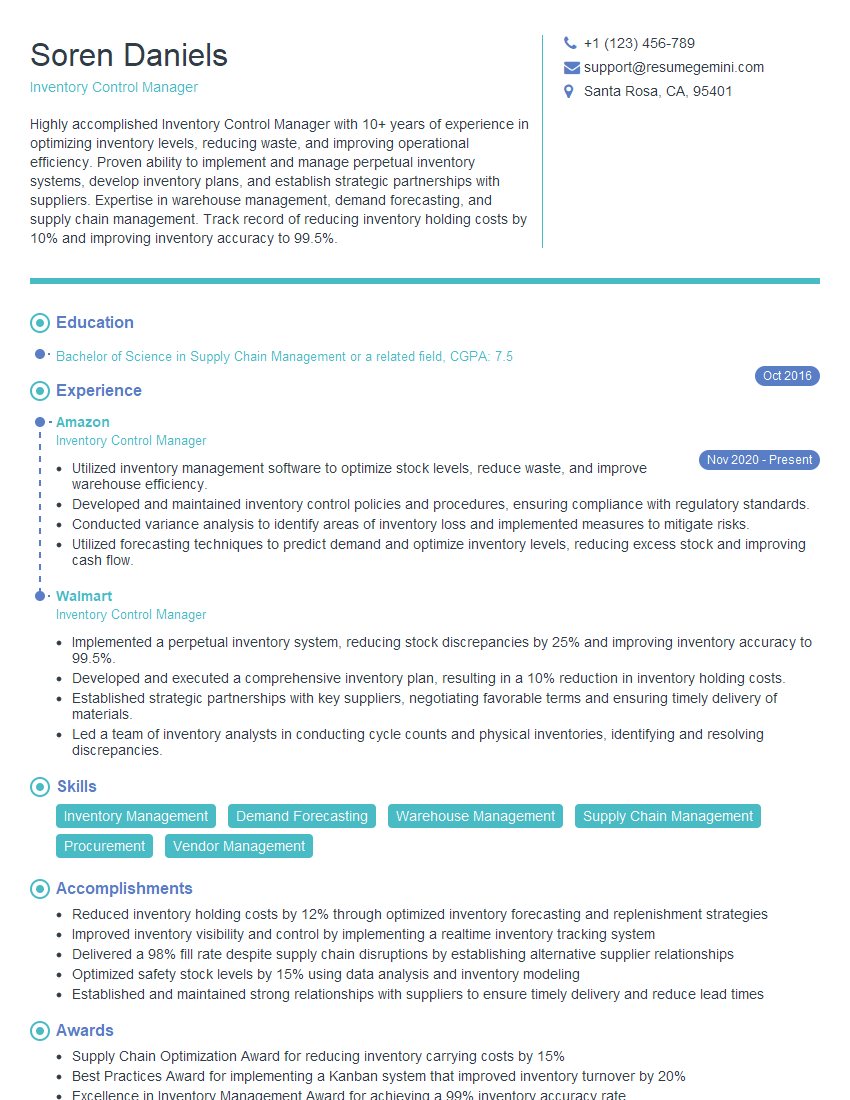
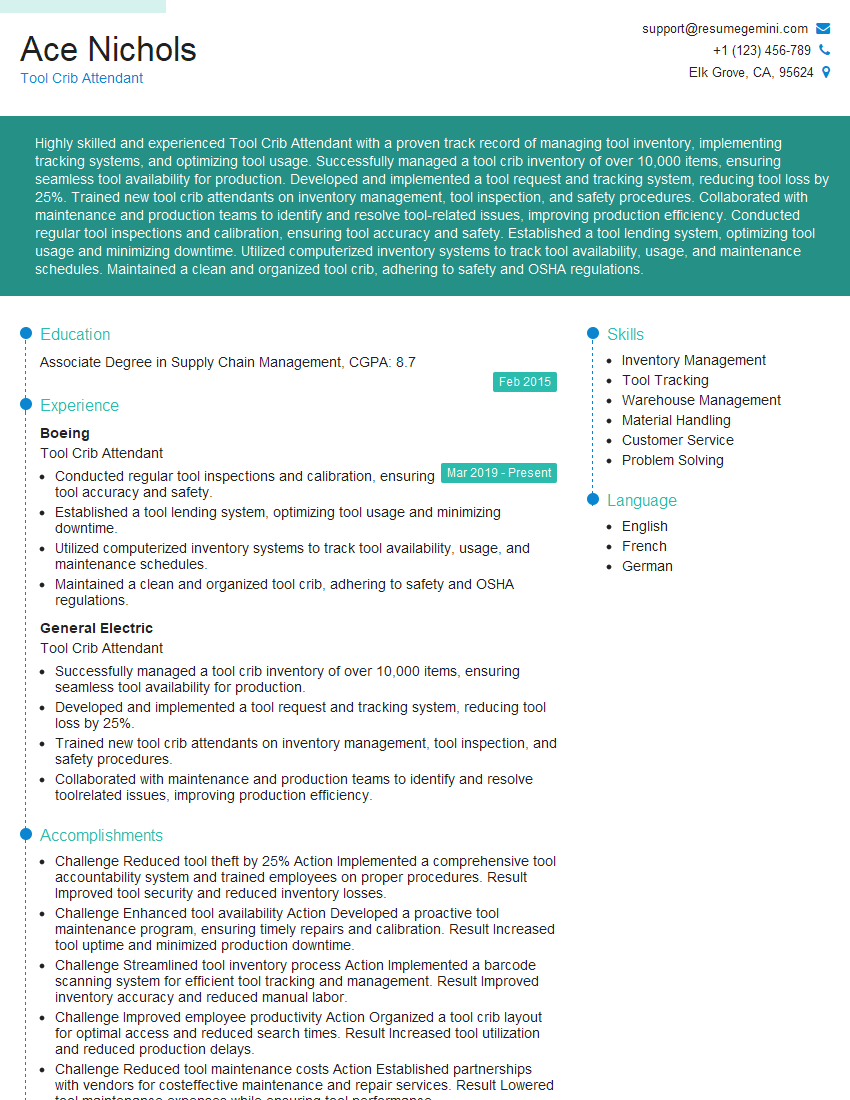
Mastering Tools Management is crucial for career advancement in many industries, opening doors to leadership roles and increased earning potential. A well-crafted resume is your key to unlocking these opportunities. Creating an ATS-friendly resume ensures your application gets noticed by recruiters. To build a professional and effective resume that highlights your skills and experience in Tools Management, leverage the power of ResumeGemini. ResumeGemini provides a trusted platform and valuable resources, including examples of resumes tailored to Tools Management, to help you present yourself in the best possible light. Invest the time to create a standout resume – it’s an investment in your future.

Explore more articles
Users Rating of Our Blogs
Share Your Experience
We value your feedback! Please rate our content and share your thoughts (optional).
What Readers Say About Our Blog
Really detailed insights and content, thank you for writing this detailed article.
IT gave me an insight and words to use and be able to think of examples