Unlock your full potential by mastering the most common Topographic Map Preparation interview questions. This blog offers a deep dive into the critical topics, ensuring you’re not only prepared to answer but to excel. With these insights, you’ll approach your interview with clarity and confidence.
Questions Asked in Topographic Map Preparation Interview
Q 1. Explain the difference between contour lines and spot elevations on a topographic map.
Contour lines and spot elevations are both used to represent elevation on a topographic map, but they do so in different ways. Think of it like describing a landscape: contour lines show the overall shape, while spot elevations pinpoint specific heights.
Contour lines are lines connecting points of equal elevation. Imagine walking along a path that always stays at the same height – that path would trace a contour line. They depict the shape of the terrain, with closely spaced lines indicating a steep slope and widely spaced lines indicating a gentle slope.
Spot elevations, on the other hand, are single points on the map with their precise elevation noted. These are usually located at significant features like mountain peaks, valley bottoms, or road intersections. They provide specific elevation values at key locations, complementing the general elevation information provided by the contour lines.
For example, a mountain might be represented by many tightly packed contour lines showing its steep slopes, while its summit would have a spot elevation indicating its exact height.
Q 2. Describe the various methods used in topographic map creation.
Topographic map creation utilizes several methods, each with its own advantages and disadvantages. The choice often depends on the desired accuracy, scale, and budget.
- Traditional Surveying: This involves field measurements using instruments like theodolites and levels to determine the elevation of points across the area. It’s highly accurate but labor-intensive and time-consuming, making it costly for large areas.
- Photogrammetry: This technique uses overlapping aerial photographs to create a 3D model of the terrain. Specialized software analyzes the images to extract elevation data, creating a highly detailed map. Photogrammetry is efficient for large areas but requires specialized equipment and expertise.
- LiDAR (Light Detection and Ranging): This uses laser pulses to measure distances to the Earth’s surface from an aircraft or ground-based system. LiDAR provides high-resolution elevation data, even in densely vegetated areas, and is increasingly popular for its speed and accuracy.
- GPS (Global Positioning System): While not solely used for topographic mapping, GPS receivers can measure elevation in conjunction with other techniques. It’s useful for collecting spot elevations to supplement other data sources.
Often, a combination of these methods is employed to achieve the best possible results. For instance, LiDAR data might be used to create a DEM, which is then used to generate contour lines and spot elevations for a final topographic map.
Q 3. How do you interpret contour intervals and their significance?
The contour interval is the vertical distance between adjacent contour lines. It’s crucial in understanding the map’s scale and interpreting the terrain’s relief. Imagine the contour interval as the ‘step size’ in elevation.
A small contour interval (e.g., 1 meter) indicates a detailed map showing subtle changes in elevation, ideal for precise engineering projects. A larger contour interval (e.g., 10 meters) indicates a more generalized map, suitable for broader planning or less detailed analyses.
For example, closely spaced contour lines with a 10-meter interval indicate a steep slope, while widely spaced lines with the same interval show a gentle slope. Understanding the contour interval is key to accurately interpreting the steepness and overall relief of the mapped area.
Q 4. What are the common sources of error in topographic data acquisition?
Errors in topographic data acquisition can stem from various sources, impacting the accuracy and reliability of the resulting map.
- Instrument errors: Malfunctioning or poorly calibrated surveying equipment can introduce systematic errors in measurements.
- Human error: Mistakes in data entry, reading instruments, or identifying points on the ground are common sources of error.
- Atmospheric conditions: Refraction of light in the atmosphere can affect measurements in photogrammetry and LiDAR.
- Environmental factors: Vegetation, snow cover, or other obstacles can obstruct measurements and create inaccuracies, especially in LiDAR data.
- Data processing errors: Mistakes in the software used to process data from various sources can lead to systematic errors.
Careful calibration, quality control procedures, and robust data processing techniques are crucial to minimize these errors and improve the accuracy and reliability of topographic maps.
Q 5. Explain the concept of vertical exaggeration in topographic maps.
Vertical exaggeration is the scaling up of the vertical dimension relative to the horizontal dimension in a topographic map. This is often done to emphasize the relief of the terrain, making it easier to visualize subtle changes in elevation.
It’s expressed as a ratio (e.g., 2x vertical exaggeration means the vertical scale is twice the horizontal scale). While helpful for visualization, excessive vertical exaggeration can distort the true representation of the landscape, leading to a misinterpretation of slope angles and terrain features.
For example, a gently sloping hill might appear much steeper with significant vertical exaggeration. Cartographers carefully choose the level of vertical exaggeration to balance the need for visual clarity with the need for accurate representation.
Q 6. How are digital elevation models (DEMs) used in topographic mapping?
Digital Elevation Models (DEMs) are digital representations of the terrain’s surface, providing elevation data in a grid or point cloud format. They are fundamental to modern topographic mapping.
DEMs are used to:
- Generate contour lines: Algorithms process DEM data to create contour lines automatically, greatly speeding up map production.
- Create 3D models: DEMs form the basis for visualizing the terrain in 3D, useful for various applications like urban planning and environmental management.
- Analyze terrain characteristics: Slope, aspect, and watershed delineation can be derived from DEMs, providing valuable information for hydrological modeling, geotechnical engineering, and other applications.
- Create shaded relief maps: DEMs are used to generate shaded relief maps that simulate the effect of light on the terrain, enhancing visual interpretation.
In essence, DEMs are the digital backbone of modern topographic mapping, providing a foundation for generating a wide range of map products and performing complex terrain analyses.
Q 7. Describe the process of creating a topographic map from aerial photographs.
Creating a topographic map from aerial photographs involves a process called photogrammetry. It’s a multi-step process that leverages overlapping images to extract three-dimensional information.
- Image acquisition: Aerial photographs are taken with overlapping coverage to allow for stereoscopic viewing and 3D reconstruction.
- Orientation: The photographs are oriented in space using ground control points (GCPs) – points with known coordinates on the ground – and tie points (points common to multiple images). This establishes the geometric relationship between the photographs and the real world.
- Stereoscopic viewing: Overlapping photographs are viewed stereoscopically (using specialized software or instruments) to create a 3D model of the terrain.
- Digital elevation model (DEM) generation: Software automatically extracts elevation data from the 3D model to create a DEM.
- Contour line generation: The DEM is then used to automatically generate contour lines based on the chosen contour interval.
- Map compilation: Other map features like roads, buildings, and vegetation are added using other data sources, like GIS databases, and interpreted from the aerial photographs.
The final product is a detailed topographic map representing the terrain’s shape and features, all derived from the initial aerial photographs. This method is highly efficient for mapping large areas.
Q 8. What is the role of GPS technology in modern topographic surveying?
GPS technology has revolutionized modern topographic surveying, providing a highly accurate and efficient method for determining the three-dimensional coordinates of points on the Earth’s surface. Before GPS, surveyors relied heavily on traditional methods like triangulation and traversing, which were time-consuming and less precise. GPS receivers use signals from a constellation of satellites to pinpoint location, drastically reducing fieldwork time and improving accuracy.
For example, in creating a topographic map of a hilly region, a surveyor can use a GPS receiver with differential correction (DGPS) or Real Time Kinematic (RTK) GPS to quickly and accurately determine the elevation and horizontal position of numerous points. This data is then used to create a digital elevation model (DEM) and contour lines, forming the basis of the topographic map. The improved accuracy allows for more detailed and reliable mapping, particularly in challenging terrain.
Furthermore, GPS data can be easily integrated with GIS software, enabling efficient data processing, analysis, and visualization. This integration streamlines the workflow from data acquisition to map production, resulting in significant time and cost savings.
Q 9. How do you handle data inconsistencies in topographic data sets?
Data inconsistencies in topographic datasets are a common challenge. These can arise from various sources, including errors in data acquisition, processing inconsistencies, or differences in data formats. Handling these inconsistencies requires a systematic approach.
Firstly, a thorough data quality check is essential. This involves visually inspecting the data, checking for outliers or unrealistic values, and comparing the data with other reliable sources. Statistical analysis can also help identify unusual patterns. For example, you might discover unexpectedly high elevation values in a flat area, indicating a potential error.
Secondly, different techniques can be employed to resolve inconsistencies. Outliers might be removed or corrected based on their context. Inconsistent data formats can be addressed by data conversion and standardization. Interpolation techniques, like kriging or spline interpolation, can be used to fill gaps in the data or smooth out irregularities. However, interpolation needs careful consideration to avoid introducing further biases.
Finally, documentation is crucial. A detailed record of all the corrections and data manipulations performed is essential to maintain data integrity and traceability. This enables future users to understand the data’s history and limitations.
Q 10. Explain different map projections and their suitability for topographic mapping.
Map projections are mathematical transformations that represent the three-dimensional surface of the Earth onto a two-dimensional plane. This inevitably introduces distortions, and the type of distortion varies with different projections. The choice of projection for topographic mapping depends on the area’s extent, shape, and the desired level of accuracy for different attributes like area, distance, or shape.
- Conic projections are suitable for mid-latitude regions with an east-west extent, minimizing distortion along the central meridian. The Lambert Conformal Conic projection is a common example used for topographic mapping.
- Cylindrical projections, like the Universal Transverse Mercator (UTM), are best for areas with a north-south extent. UTM divides the globe into 60 longitudinal zones, minimizing distortion within each zone.
- Azimuthal projections are suitable for mapping polar regions or small areas around a central point. They preserve direction from the central point.
For example, mapping a large country might necessitate using a conic projection to minimize distortion across the entire area, while mapping a small region could use a UTM zone or even a simple plane coordinate system.
The selection of a projection is a critical decision, as it directly impacts the accuracy and reliability of the map. It’s crucial to choose a projection that best balances the different types of distortions for the specific mapping application.
Q 11. What are the key elements of a well-designed topographic map?
A well-designed topographic map conveys detailed information about the Earth’s surface in a clear and unambiguous manner. Key elements include:
- Title and Legend: Clearly identifies the map’s content and explains the symbols and conventions used.
- Scale: Indicates the relationship between the map’s dimensions and the real-world distances. This allows users to measure distances directly on the map.
- Contour Lines: Represent lines of equal elevation, giving a three-dimensional view of the terrain. The contour interval (the vertical distance between contour lines) is crucial for interpreting the relief.
- Spot Elevations: Precisely marked elevations, usually at significant points like peaks or valleys, to supplement the contour lines.
- Drainage Features: Rivers, streams, lakes, and other water bodies are shown, providing hydrological context.
- Cultural Features: Roads, buildings, towns, and other human-made features are depicted, indicating human activity in the area.
- North Arrow: Indicates the direction of north, essential for orientation.
- Grid System: A coordinate system enables precise location referencing of features on the map.
A good topographic map should be visually appealing, uncluttered, and easy to interpret. The selection of appropriate colors, symbols, and text sizes all contribute to its effectiveness.
Q 12. How do you identify and correct errors in topographic data?
Identifying and correcting errors in topographic data requires a multi-faceted approach combining visual inspection, statistical analysis, and ground truthing.
Visual Inspection: This involves carefully examining the data for inconsistencies or anomalies, such as unrealistic elevation values, unrealistic road networks, or overlapping features. Software tools can aid this process by highlighting potential errors. For instance, sudden changes in elevation along a contour line could indicate a data error.
Statistical Analysis: This helps identify outliers or unusual patterns in the data. Techniques like histogram analysis, outlier detection, and spatial autocorrelation analysis can reveal potential errors. Unexpectedly high standard deviations in elevation could indicate systematic error in data acquisition.
Ground Truthing: This involves physically verifying the data in the field. This might involve using GPS measurements to confirm the location and elevation of specific points. Comparing the map data with aerial photos or satellite imagery can also provide valuable verification. Discrepancies between the data and ground observations can pinpoint specific errors that need correction.
Correction Methods: Errors might be corrected by replacing erroneous data points with accurate measurements, adjusting the data using smoothing techniques or applying interpolation methods. It’s vital to document each correction made.
Q 13. Discuss the application of GIS software in topographic map analysis.
GIS (Geographic Information System) software plays a vital role in topographic map analysis, enabling efficient data management, analysis, and visualization. It provides a platform to integrate diverse data sources, including topographic data, imagery, and attribute data.
GIS allows for various analytical operations:
- Spatial analysis: Calculate slope, aspect, and other terrain parameters from elevation data. This is essential for understanding hydrological processes, planning infrastructure projects, and assessing environmental impacts.
- Overlay analysis: Combine topographic data with other datasets, such as soil type, land cover, or population density, to analyze their spatial relationships. This is helpful for land use planning and environmental impact assessment.
- 3D visualization: Create realistic 3D models of the terrain, enabling better understanding of the landscape and aiding in decision-making.
- Data management: Efficiently store, manage, and update topographic data, ensuring data integrity and accessibility.
For example, a GIS can be used to model the potential impact of flooding by overlaying flood hazard data with topographic information to identify vulnerable areas. Or, it could help determine suitable locations for wind turbines by combining elevation data with wind speed data to assess optimal placement.
Q 14. Explain the importance of scale and accuracy in topographic mapping.
Scale and accuracy are fundamental aspects of topographic mapping, directly impacting the map’s usability and reliability.
Scale represents the ratio between the map’s distance and the corresponding distance on the ground. A large-scale map (e.g., 1:10,000) shows a smaller area with greater detail, while a small-scale map (e.g., 1:100,000) shows a larger area with less detail. The choice of scale depends on the map’s purpose and the level of detail required. A detailed urban map might use a large scale, whereas a regional overview might require a small scale.
Accuracy refers to how closely the map’s representation matches the real-world features. High accuracy is critical for many applications. Errors in elevation, position, or feature representation can lead to significant consequences in engineering projects, environmental planning, or navigation. The accuracy standards are often specified according to the mapping purpose and the available technology.
For instance, a topographic map used for engineering design requires higher accuracy than a recreational map. The interplay of scale and accuracy is crucial. A large-scale map needs higher accuracy to justify the level of detail shown. Low accuracy in a large-scale map renders the increased detail meaningless.
Q 15. Describe the different types of topographic maps and their uses.
Topographic maps are visual representations of Earth’s surface, showing elevation, landforms, and features. Different types cater to specific needs.
- Large-scale maps: These cover smaller areas with high detail, ideal for engineering projects or urban planning. Imagine planning a new road – a large-scale map would show the precise elevation changes.
- Small-scale maps: These show larger areas with less detail, useful for regional planning or understanding broad geographical patterns. Think of a map showing the entire Appalachian mountain range; you’d see the overall shape but not individual trails.
- Planimetric maps: These focus solely on the horizontal position of features, omitting elevation data. Useful for basic location and navigation, but lack the three-dimensional context of a topographic map. A simple city map highlighting streets is an example.
- Contour maps: These are the most common type of topographic map, utilizing contour lines (lines of equal elevation) to represent terrain. The spacing between these lines indicates the slope – closely spaced lines mean steep slopes, while widely spaced lines represent gentle slopes.
- Digital elevation models (DEMs): These are digital representations of elevation data, often used as the base for creating various types of maps, including contour maps. DEMs are increasingly used in GIS (Geographic Information Systems) for analysis and modeling.
The choice of map type depends heavily on the intended use and scale of the project. For instance, hikers might use a large-scale contour map, while geologists might work with a DEM to analyze geological features.
Career Expert Tips:
- Ace those interviews! Prepare effectively by reviewing the Top 50 Most Common Interview Questions on ResumeGemini.
- Navigate your job search with confidence! Explore a wide range of Career Tips on ResumeGemini. Learn about common challenges and recommendations to overcome them.
- Craft the perfect resume! Master the Art of Resume Writing with ResumeGemini’s guide. Showcase your unique qualifications and achievements effectively.
- Don’t miss out on holiday savings! Build your dream resume with ResumeGemini’s ATS optimized templates.
Q 16. How do you ensure the accuracy and reliability of topographic map data?
Accuracy and reliability in topographic map data are paramount. We achieve this through a multi-faceted approach:
- Precise Surveying Techniques: Employing techniques like GPS (Global Positioning System), Total Stations (electronic theodolites), and LiDAR (Light Detection and Ranging) to collect highly accurate elevation and positional data. LiDAR, in particular, provides incredibly dense point clouds, leading to detailed terrain representation.
- Data Validation and Quality Control: Rigorous checks and balances are implemented at every stage, from data acquisition to final map production. This involves internal consistency checks within the data itself, comparison against existing data sets where available, and field verification to ensure accuracy on the ground. Imagine double-checking elevation readings at key points to ensure consistency.
- Error Propagation Modeling: Understanding and mitigating the accumulation of errors during the mapping process is crucial. This includes understanding the limitations of the instruments used and incorporating error estimates into the final map. Knowing the error margin of your equipment is critical to interpreting results.
- Data Integration and Fusion: Combining data from multiple sources – aerial photography, satellite imagery, and ground surveys – can improve overall accuracy and fill in gaps. This is like assembling a jigsaw puzzle, using different pieces (data sources) to create a complete and accurate picture.
- Use of Appropriate Standards: Adherence to established national and international standards (e.g., those set by the USGS in the US) ensures consistency and comparability across different maps and projects. This promotes consistency and ease of interpretation across different projects.
The ultimate goal is to produce a map that accurately reflects the real-world terrain, minimizing errors and biases.
Q 17. What are the challenges of topographic mapping in mountainous terrain?
Mountainous terrain presents unique challenges for topographic mapping due to its ruggedness, inaccessibility, and steep slopes:
- Difficult Access: Steep slopes, dense vegetation, and unstable ground can make ground surveys difficult, time-consuming, and potentially dangerous. This requires careful planning and potentially the use of specialized equipment like helicopters or drones.
- Obstructed Visibility: Tall peaks, deep valleys, and dense forests can obstruct the line of sight, hindering data acquisition using traditional surveying methods. Techniques like LiDAR, which can penetrate vegetation, are particularly useful in such conditions.
- Increased Error Potential: The steep slopes and varied terrain increase the chance of errors in elevation measurements, particularly when using less sophisticated methods. Careful data processing and quality control are vital to mitigate these errors.
- Shadowing Effects: Shadows cast by hills and mountains can affect the quality of aerial photographs and satellite imagery, making it difficult to accurately interpret ground features. Specialized image processing techniques are needed to compensate for these effects.
- Cost and Time: Mapping mountainous terrain is inherently more expensive and time-consuming compared to mapping flat areas due to the increased logistical challenges and data acquisition difficulties. This needs to be factored into project budgets and timelines.
Addressing these challenges often involves employing a combination of techniques, including LiDAR, ground surveys in accessible areas, and advanced data processing methods.
Q 18. How do you interpret and utilize contour patterns to understand landforms?
Contour lines are the key to understanding landforms on a topographic map. They represent lines of equal elevation.
- Contour Spacing and Slope: Closely spaced contour lines indicate a steep slope, while widely spaced lines suggest a gentle slope. Think of it like climbing a hill: closely packed switchbacks indicate a steep climb, while a long gentle incline would have widely spaced contour lines.
- Contour Patterns and Landforms: Concentric circles indicate hills or mountains (the center being the summit). V-shaped contours pointing uphill show a valley, while those pointing downhill indicate a ridge. Uniformly spaced parallel lines represent a uniform slope. A series of closely-spaced contours followed by a sudden drop represents a cliff face.
- Depressions: Depressions or closed depressions (like crater lakes) are shown with hachures (short lines pointing downslope) inside the closed contours.
- Spot Elevations: Numbers on the map indicating the exact elevation of specific points provide additional context and help clarify the overall topography. These act as checkpoints to ensure correct interpretation of contour lines.
By carefully observing the spacing, patterns, and shapes of contour lines, one can accurately interpret the three-dimensional shape of the land, understand the drainage patterns, and identify key features like hills, valleys, ridges, and saddles.
Q 19. Explain the concept of map metadata and its importance.
Map metadata is crucial information about the map itself, describing its content, source, creation, and limitations. It’s akin to a map’s passport, documenting its origins and characteristics. Key aspects include:
- Source Data: Details about the data used to create the map (e.g., survey techniques, satellite imagery, aerial photography).
- Projection and Datum: The coordinate system and reference surface used to locate geographic features accurately. This ensures that coordinates are correctly referenced to their geographic location.
- Accuracy and Precision: Information about the level of error in the map data. This is crucial for understanding the reliability of the data.
- Date of Creation and Revision: Indicates when the map was created and last updated, crucial for assessing the timeliness of the information.
- Responsible Party: Contact information for the organization or individual responsible for creating and maintaining the map. Important for traceability and liability purposes.
- Scale and Extent: The map’s scale and the area it covers.
Metadata’s importance lies in ensuring the map’s usability and trustworthiness. Without this critical information, users cannot assess the data’s reliability or interpret it accurately. It’s essential for transparency, accountability, and appropriate use of the map.
Q 20. How are topographic maps used in environmental impact assessments?
Topographic maps are essential for environmental impact assessments (EIAs) because they provide the crucial spatial context for understanding the interaction between a project and its surroundings.
- Identifying Sensitive Areas: Topographic data allows the identification of sensitive habitats (e.g., wetlands, steep slopes), areas prone to erosion or flooding, and proximity to water bodies. This assists in planning to minimize environmental damage.
- Analyzing Drainage Patterns: The understanding of slopes, watersheds, and drainage patterns is crucial for predicting the impact of development on water quality and flow. Topographic data will show potential runoff paths.
- Modeling Potential Impacts: Topographic data forms the base for various spatial models used to simulate potential environmental impacts, such as landslide risk, flooding, and air pollution dispersion. For example, a DEM helps model how rainwater will flow through a development site.
- Visualizing Impacts: The visual representation of topography helps communicate potential impacts effectively to stakeholders and decision-makers. A 3D representation of terrain allows for better visualization than just data alone.
- Mitigation Planning: Understanding topography is key for planning and implementing effective mitigation measures to minimize adverse environmental impacts. The map provides a framework for planning infrastructure to avoid sensitive areas.
In essence, topographic maps provide the baseline spatial data necessary to comprehensively assess the potential environmental consequences of a project.
Q 21. What are the ethical considerations in topographic map creation and usage?
Ethical considerations in topographic map creation and usage are crucial. Several key areas are:
- Data Accuracy and Transparency: Ensuring the accuracy and completeness of data, and providing clear metadata about data limitations and uncertainties, are paramount. Misrepresenting data or withholding relevant information is unethical.
- Data Ownership and Access: Respecting intellectual property rights and ensuring fair and equitable access to topographic data are essential. Data should not be withheld inappropriately or used without permission.
- Environmental Responsibility: Topographic maps should be used responsibly to protect the environment, minimizing the environmental impact of data acquisition and ensuring that map information is not used to facilitate environmentally damaging activities.
- Social Equity: Map creation and usage should not unfairly disadvantage or marginalize particular communities. Ensuring the equitable distribution of map information and its use for community benefit are important.
- Conflicts of Interest: Avoiding conflicts of interest when creating and using topographic data. Maintaining objectivity and independence in data collection and interpretation is essential.
Upholding ethical standards ensures that topographic maps contribute to informed decision-making and benefit society while minimizing harm.
Q 22. Describe your experience with specific GIS software (e.g., ArcGIS, QGIS).
My experience with GIS software is extensive, encompassing both ArcGIS and QGIS. I’ve used ArcGIS Pro extensively for tasks ranging from advanced spatial analysis to creating high-quality cartographic products. My proficiency includes data management, geoprocessing using model builder, creating custom map layouts with dynamic elements, and performing 3D analysis. For example, I recently used ArcGIS Pro to analyze landslide susceptibility in a mountainous region, leveraging its spatial statistics tools and integrating LiDAR data for high-resolution terrain modeling. QGIS, on the other hand, has been invaluable for its open-source nature and flexibility, particularly for tasks involving raster processing and custom plugin development. A recent project involved using QGIS to process satellite imagery to generate orthorectified mosaics for a large-scale mapping project. I’m comfortable working with both platforms and select the best tool for each specific job.
Q 23. How do you create a contour map from a point cloud dataset?
Creating a contour map from a point cloud dataset involves several steps. Think of a point cloud as a massive collection of 3D points representing the terrain’s surface. First, the point cloud needs to be pre-processed to remove noise and outliers, ensuring data quality. Then, using GIS software like ArcGIS or QGIS, we employ interpolation techniques to estimate elevations at locations not directly measured by the point cloud. Common interpolation methods include Inverse Distance Weighting (IDW) and Kriging. IDW is simpler and faster, while Kriging provides more statistically rigorous results, considering spatial autocorrelation. Once interpolation is complete, the software generates a raster surface representing elevation. Finally, we extract contour lines from this raster surface by specifying a contour interval (the vertical distance between consecutive contour lines). The resulting contour lines visually represent the terrain’s topography, showing elevation changes across the area. For instance, in a recent project involving LiDAR data, we used Kriging interpolation within ArcGIS to generate a high-resolution elevation model and then derived contour lines at a 1-meter interval to create a detailed topographic map for a construction project.
Q 24. What’s the difference between planimetric and topographic maps?
Planimetric maps and topographic maps differ primarily in their representation of elevation. A planimetric map shows only the horizontal positions of features—think of it as a bird’s-eye view of the landscape, ignoring elevation changes. It depicts features like roads, buildings, and rivers as they appear on a flat plane. A topographic map, on the other hand, displays both the horizontal and vertical positions of features, accurately representing the three-dimensional shape of the land. Contour lines are the key to this, showing elevation changes. Imagine comparing a simple street map (planimetric) to a hiking map (topographic) with contour lines highlighting hills and valleys. The topographic map gives a much more complete picture of the terrain and is crucial for activities like land planning, engineering projects, and outdoor recreation.
Q 25. Explain the process of georeferencing a topographic map.
Georeferencing a topographic map is the process of assigning geographic coordinates (latitude and longitude) to the map’s features, aligning it with a known coordinate system. This is crucial to integrate the map into a GIS environment and allow for spatial analysis. The process typically involves identifying control points—locations on the map that have known coordinates. These coordinates might come from GPS data, other georeferenced maps, or survey data. GIS software then uses these control points to transform the map from its original, unreferenced coordinate system to a geographic coordinate system (e.g., WGS84). A transformation model (e.g., polynomial transformation) is used to mathematically adjust the map’s geometry. The accuracy of georeferencing depends on the number and distribution of control points; more points, particularly those spread across the map, lead to better accuracy. For example, when working with historical topographic maps often lacking geospatial information, we carefully identify landmarks such as intersections and use high-resolution modern imagery as a base for identifying control points in a step-by-step approach, making sure we have enough control points to adequately account for any geometric distortions in the scanned historical map.
Q 26. Describe your experience with different surveying instruments.
My experience with surveying instruments is broad, encompassing both traditional and modern technologies. I’m proficient in using total stations—instruments that measure distances and angles to determine the precise coordinates of points. I understand their operation, data collection protocols, and data processing procedures. I’ve also used GPS receivers extensively, understanding different GPS techniques (e.g., RTK, PPK) and their impact on accuracy. Experience with leveling instruments ensures accurate elevation determination. In addition to these, I am familiar with LiDAR scanners and their applications for acquiring high-density point cloud data. Each instrument has unique strengths and weaknesses, making the selection dependent on the specific task and required accuracy. For instance, a recent project utilized RTK-GPS for rapid, accurate positioning during field surveys, while a later project needing extremely high-accuracy elevation data involved LiDAR scanning followed by intensive point cloud processing.
Q 27. How do you manage large topographic datasets efficiently?
Managing large topographic datasets efficiently requires a multifaceted approach. First, data compression techniques can significantly reduce storage space, particularly for raster data. Second, data organization using a well-structured file system and metadata management is critical. Metadata provides crucial information on data source, projection, quality, and any other relevant information for future users. Third, utilizing database management systems (DBMS) like PostGIS, which is a spatial extension of PostgreSQL, is essential for storing and querying large amounts of spatial data effectively. Using DBMS allows for efficient searching, retrieval, and analysis through spatial queries. Fourth, cloud-based storage and processing (e.g., cloud computing platforms such as AWS or Azure) can provide scalable and cost-effective solutions for managing and processing massive datasets, especially when dealing with large point clouds. Finally, using tile-based data structures can improve speed and efficiency when dealing with large raster datasets because it loads and displays only necessary portions of the dataset at any given time.
Q 28. How do you ensure the sustainability of geospatial data?
Ensuring the sustainability of geospatial data is paramount. This involves several key strategies. First, employing robust metadata standards (like ISO 19115) is crucial for documenting data provenance, accuracy, and limitations, enhancing long-term discoverability and usability. Second, data should be stored in open, widely accepted formats to ensure interoperability and prevent vendor lock-in. Third, regular data backups and disaster recovery plans are essential to protect against data loss. Fourth, data quality control procedures, including validation and verification steps, should be built into every stage of the data lifecycle, starting from data acquisition all the way to the final product. Fifth, using well-documented and standardized workflows for data processing ensures reproducibility and facilitates collaboration among multiple users over time. Sixth, actively promoting open data principles and making data readily available to the public (when appropriate and permissible) promotes wider use and helps to maintain its value in the long run. A commitment to these strategies ensures that valuable geospatial data remains accessible and useful for years to come, supporting informed decision-making and contributing to a sustainable future.
Key Topics to Learn for Topographic Map Preparation Interview
- Data Acquisition and Sources: Understanding the various methods used to gather data for topographic maps (e.g., LiDAR, photogrammetry, GPS surveys), their strengths and limitations, and data preprocessing techniques.
- Contour Lines and Elevation: Mastering the interpretation and creation of contour lines, understanding vertical exaggeration, and calculating gradients and slopes from contour data. Practical application: Analyzing terrain features and determining suitable locations for infrastructure projects.
- Map Projections and Coordinate Systems: A thorough understanding of different map projections (e.g., UTM, State Plane) and their impact on map accuracy. Practical application: Transforming data between different coordinate systems and ensuring compatibility with various software packages.
- Symbology and Cartographic Design: Creating clear and effective maps using appropriate symbols, labels, and legends. Understanding the principles of visual communication and map design best practices. Practical application: Producing maps that are easily understood and interpreted by a wide range of users.
- Digital Terrain Modeling (DTM) and GIS Software: Working with DTMs in GIS software (e.g., ArcGIS, QGIS) to perform spatial analysis and create various map products. Practical application: Analyzing terrain characteristics, modeling hydrological features, and creating 3D visualizations.
- Map Accuracy and Error Analysis: Understanding sources of error in topographic map preparation and methods for error assessment and mitigation. Practical application: Evaluating the quality of existing maps and ensuring the accuracy of newly created maps.
- Data Management and Workflow: Efficiently managing large datasets, implementing effective workflows, and employing quality control measures throughout the map-making process.
Next Steps
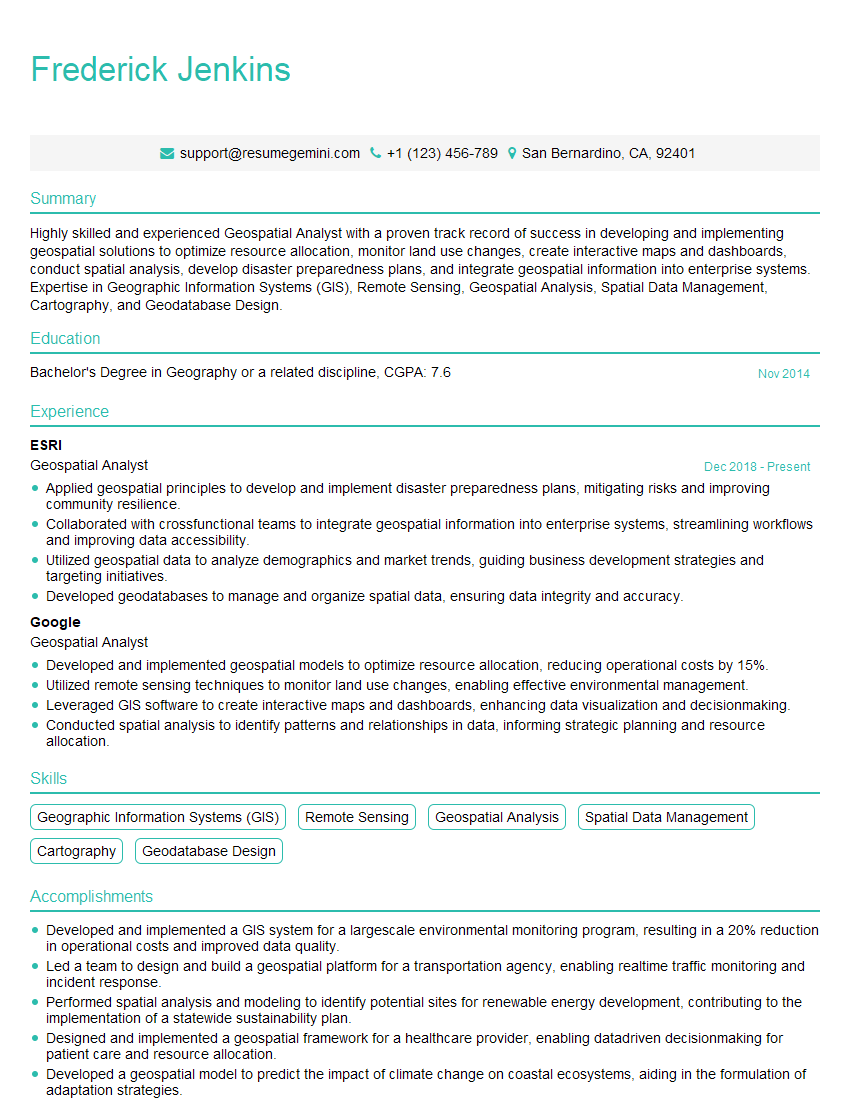
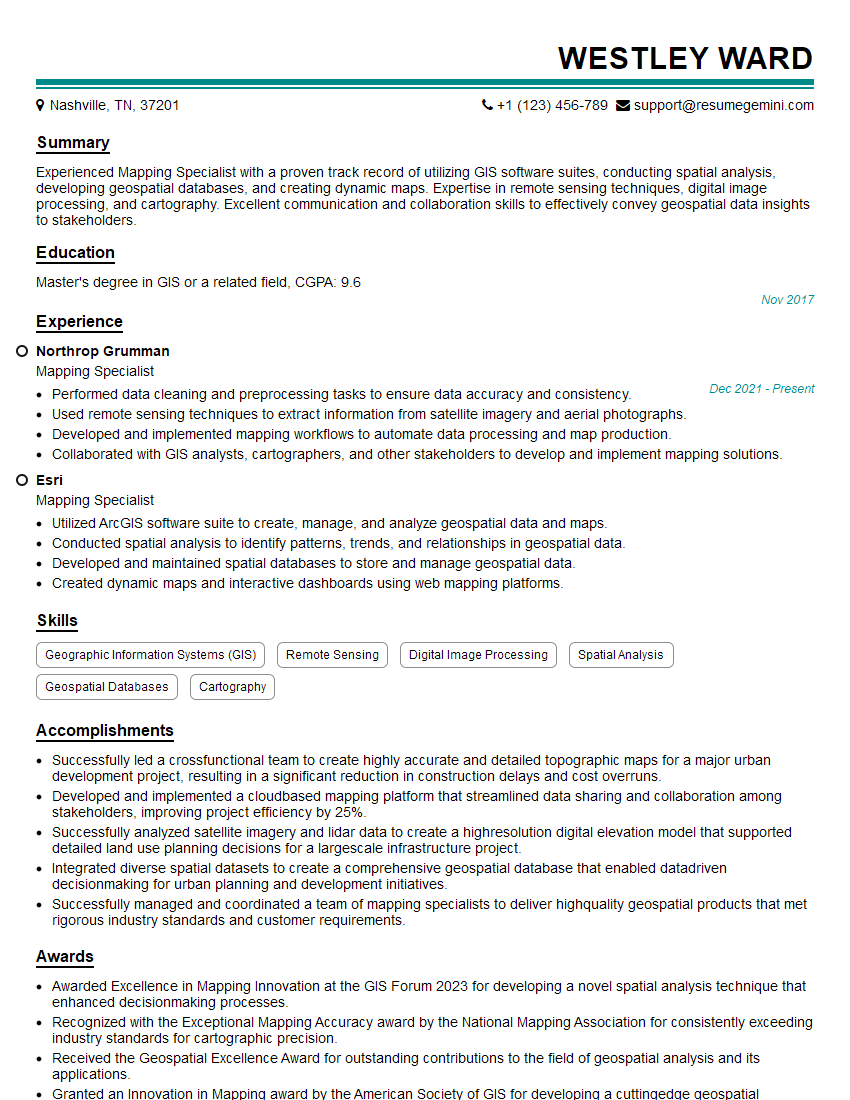
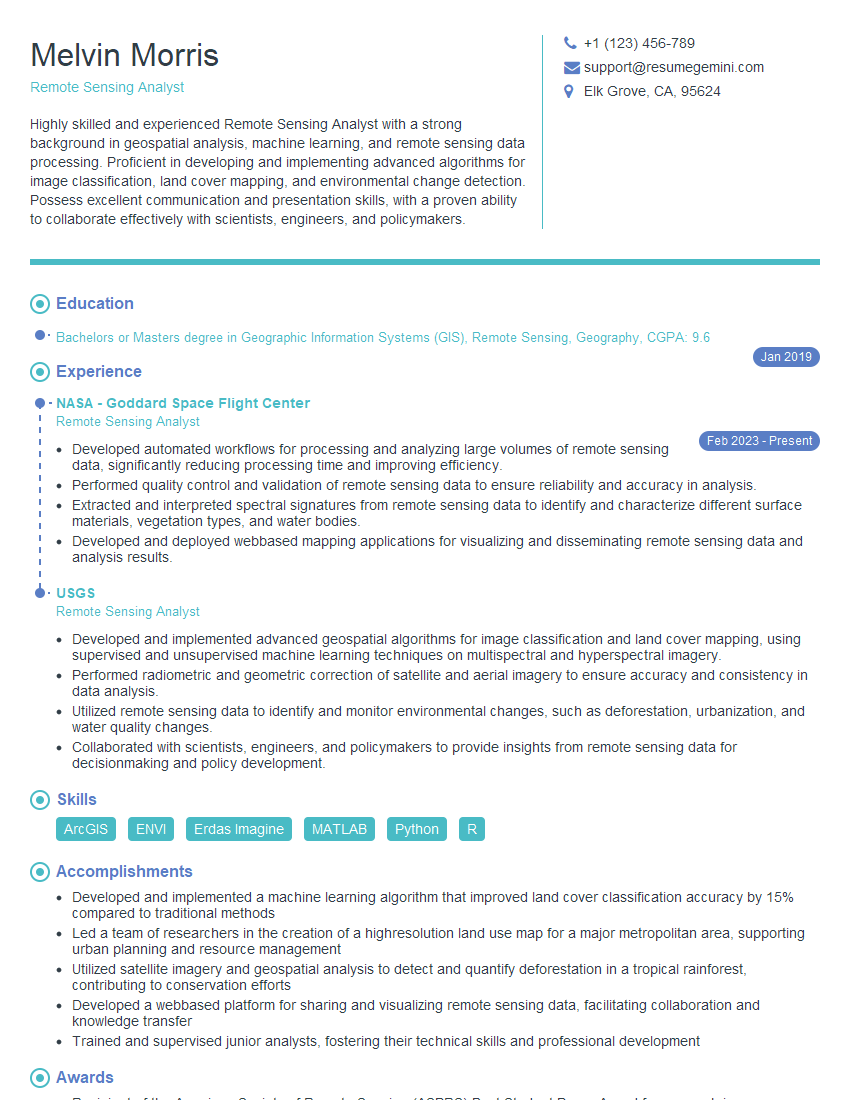
Mastering Topographic Map Preparation opens doors to exciting and rewarding careers in surveying, GIS, engineering, and environmental science. A strong understanding of these concepts is highly valued by employers. To maximize your job prospects, creating an ATS-friendly resume is crucial. ResumeGemini is a trusted resource to help you build a professional and impactful resume that highlights your skills and experience effectively. Examples of resumes tailored to Topographic Map Preparation are available to guide you in showcasing your expertise. Invest time in crafting a compelling resume – it’s your first impression on potential employers.






Explore more articles
Users Rating of Our Blogs
Share Your Experience
We value your feedback! Please rate our content and share your thoughts (optional).
What Readers Say About Our Blog
Really detailed insights and content, thank you for writing this detailed article.
IT gave me an insight and words to use and be able to think of examples