Cracking a skill-specific interview, like one for Towing Procedures, requires understanding the nuances of the role. In this blog, we present the questions you’re most likely to encounter, along with insights into how to answer them effectively. Let’s ensure you’re ready to make a strong impression.
Questions Asked in Towing Procedures Interview
Q 1. Describe the different types of towing equipment and their applications.
Towing equipment varies greatly depending on the vehicle’s size, condition, and the type of recovery needed. Think of it like choosing the right tool for a job – you wouldn’t use a screwdriver to hammer a nail!
- Wheel-lift tow trucks: These are common for smaller cars. They lift the vehicle’s front wheels, leaving the rear wheels on the ground. They’re efficient and relatively fast for straightforward tows.
Example: Perfect for a minor breakdown on a highway. - Integrated tow trucks (hook and chain): These use a hook and chain to secure the vehicle’s frame. They’re versatile but can cause damage if not used carefully.
Example: Often used for damaged vehicles that can’t be safely lifted by the wheels. - Flatbed tow trucks: These offer the safest and most secure option, especially for damaged or luxury vehicles. The vehicle is loaded entirely onto the flatbed, minimizing any risk of further damage.
Example: Ideal for cars involved in accidents or those with mechanical issues that prevent them from being driven. - Heavy-duty tow trucks: For larger vehicles like trucks, buses, and heavy machinery. These often employ specialized winches and heavy-duty straps.
Example: Used for recovering large vehicles from accidents or difficult terrain. - Rotator tow trucks: These are powerful trucks equipped with a rotating boom that can lift and position vehicles in various ways, often used for recovering vehicles from difficult situations such as ditches or inclines.
Example: Essential for rescuing vehicles trapped in ditches or those that have overturned.
Q 2. Explain the proper procedures for securing a vehicle to a tow truck.
Securing a vehicle improperly can lead to damage and accidents. Think of it like tying a package – you need to do it securely to prevent it from falling apart during transport. The process depends on the type of tow truck and the vehicle’s condition. Always:
- Inspect the vehicle: Note any pre-existing damage before securing. Document this thoroughly with photos and notes.
- Choose the appropriate attachment points: Consult the vehicle’s owner’s manual for recommended attachment points. Avoid delicate areas like bumpers or flimsy parts.
- Use proper straps and chains: Ensure they are in good condition and rated for the vehicle’s weight. Never use worn or damaged equipment.
- Distribute the weight evenly: Ensure the vehicle is balanced on the tow truck to prevent swaying or damage during transport.
- Securely fasten the straps and chains: Double-check all connections to ensure they’re tight and won’t come loose. Use proper locking mechanisms to secure all attachments.
- Perform a final check: Before driving, ensure everything is securely fastened, and check that the vehicle is stable on the truck.
For wheel-lift trucks, ensure the wheels are properly cradled. For flatbeds, ensure the vehicle is evenly positioned and secured with chains or straps to prevent it from shifting during transport.
Q 3. How do you assess the damage to a vehicle before towing?
Assessing damage before towing is crucial to avoid liability issues and prevent further damage. It’s like performing a pre-flight check on an airplane before takeoff.
- Visual Inspection: Look for dents, scratches, broken lights, and tire damage.
- Mechanical Assessment: Check for fluid leaks, steering damage, and any signs of mechanical failure. Is the vehicle drivable? Does it exhibit any unusual noises?
- Documentation: Take detailed photos and notes of all visible damage. Note the license plate number, vehicle make, model, and any other identifying features.
- Consider the cause of damage: Was it a collision? Mechanical failure? Understanding the cause guides the assessment and safe towing practices.
If the damage is significant, it might be necessary to contact law enforcement and potentially request a specialized towing service equipped to handle extensive damage.
Q 4. What safety precautions do you take when operating a tow truck?
Safety is paramount. A tow truck operator is responsible not only for the vehicle being towed but also for the safety of other drivers and pedestrians. Think of it as being a responsible pilot – safety procedures are followed meticulously.
- Following traffic laws: Obey all traffic signals and speed limits. Never exceed the safe load capacity of the truck.
- Using appropriate lights and signals: Ensure all lights are functioning correctly, especially hazard lights and turn signals. Use appropriate warning signals when necessary.
- Securing the load properly: Use proper straps, chains, and other equipment to secure the load. Regular inspection and maintenance of equipment are essential.
- Maintaining a safe following distance: Keep a safe distance from other vehicles, especially during bad weather conditions.
- Performing pre-trip inspections: Check lights, brakes, tires, and all equipment before each tow.
- Being aware of surroundings: Maintain awareness of pedestrians, other vehicles, and road conditions.
- Using appropriate personal protective equipment: Gloves and safety glasses should be standard.
Q 5. How do you handle difficult towing situations, such as a vehicle stuck in a ditch?
Difficult situations require a methodical approach, like solving a complex puzzle. Think before you act!
- Assess the situation: Determine the vehicle’s position, the terrain, and any potential hazards. Is it stuck in mud, snow, or a ditch?
- Choose the appropriate equipment: A vehicle stuck in mud might require a winch and recovery straps. One stuck in a ditch might need specialized equipment like a rotator.
- Develop a recovery plan: Determine the safest and most efficient way to remove the vehicle. This may involve winching, using recovery boards, or calling for additional assistance.
- Communicate with others: Alert other drivers, and if necessary, call for assistance from other tow trucks or emergency services.
- Take safety precautions: Set up warning devices, ensure the area is safe, and wear appropriate personal protective equipment.
For a vehicle in a ditch, for instance, careful assessment of the angle and terrain is crucial before attempting a recovery. Improper techniques could cause further damage or injury.
Q 6. What are the legal requirements for towing vehicles?
Legal requirements for towing vary by location. Always check your local and state regulations. Common requirements often include:
- Licensing and permits: Tow truck operators often require specific licenses and permits.
- Insurance: Comprehensive insurance coverage is typically mandated.
- Proper signage and markings: Tow trucks should be clearly marked and identifiable.
- Following traffic laws: Tow truck operators must follow all traffic laws and regulations.
- Impoundment procedures: There are specific legal procedures for impounding vehicles. A tow truck driver must adhere to proper protocol and procedures for impounding vehicles.
- Proper documentation: All towing activities must be documented, including the time, location, vehicle information, and customer details.
Ignorance of these laws can lead to hefty fines and legal repercussions. Staying up-to-date on all local regulations is critical for responsible operation.
Q 7. Explain the process of winching a vehicle.
Winching is a crucial skill for recovering vehicles from difficult situations. It’s like using a powerful rope to pull a heavy object. Safety and proper technique are paramount.
- Secure the winch cable: Attach the cable to a secure point on the vehicle, avoiding any fragile components. Ensure the cable is correctly routed and free from any obstructions.
- Secure the vehicle: Use chocks or other methods to prevent the vehicle from rolling while winching.
- Engage the winch slowly: Start the winch slowly, keeping the cable taut to prevent jerking or snapping.
- Monitor the cable: Keep a close eye on the cable for any signs of damage or wear. Use gloves to avoid getting caught in the cable during operation.
- Maintain tension: Keep the cable taut to ensure a smooth and efficient recovery. Release tension carefully to avoid sudden movements.
- Use appropriate safety equipment: Wear gloves, safety glasses, and any other necessary protective equipment.
Never stand in line with the winch cable, as a snapping cable can cause severe injuries. Always use a spotter to guide the winch operation and maintain safety.
Q 8. How do you determine the appropriate towing method for a specific vehicle?
Choosing the right towing method depends on several factors: the vehicle’s type, size, drivability, damage, and the distance to the destination. Think of it like choosing the right tool for a job – you wouldn’t use a hammer to screw in a screw!
- Drivable Vehicles: A simple wheel lift tow is ideal for vehicles that can still be driven, even if only a short distance. This is the most cost-effective and causes the least stress on the vehicle.
- Non-Drivable Vehicles: For vehicles that cannot be driven, a flatbed tow is generally preferred, as it ensures the vehicle’s safety and minimizes the risk of further damage. This method is more expensive but safer for the vehicle.
- Heavy Vehicles or Specialized Cars: Heavier vehicles or those with low ground clearance might require a specialized tow truck, such as a heavy-duty wrecker or a rollback tow truck, capable of handling the weight and type of vehicle.
- Vehicle Damage: The extent of vehicle damage greatly influences the towing method. A vehicle with significant undercarriage damage requires a flatbed, while minor front-end damage might still allow for a wheel lift if drivable.
For example, I once towed a classic Mustang with significant front-end damage. A flatbed was the only safe option to prevent further damage during transport. Conversely, a slightly damaged minivan that could be driven was easily towed using a wheel lift.
Q 9. Describe your experience with different types of tow dollies and flatbeds.
My experience spans various tow dollies and flatbeds. Tow dollies are cost-effective for front-wheel-drive vehicles, but they require the vehicle to have a functioning drivetrain. I’ve used them extensively for cars needing minor repairs or short-distance transport. However, they’re not ideal for all-wheel-drive or rear-wheel-drive vehicles due to the potential for drive-train damage.
Flatbeds offer superior safety and versatility. I frequently utilize them for non-drivable vehicles, vehicles with extensive damage, or those with low ground clearance. I’m comfortable securing various vehicles onto flatbeds, ranging from compact cars to large SUVs, using appropriate straps and chains. The difference is crucial – imagine trying to tow a motorcycle on a dolly versus a flatbed; the flatbed ensures the safe and secure transport of the bike.
In my experience, the quality and features of flatbeds vary greatly. Some are equipped with winch systems, making loading easier, especially for heavier vehicles. Others include wheel chocks and additional safety features to prevent movement during transport. This variation shapes my choices depending on the specific job and vehicle being transported.
Q 10. How do you handle a situation where a towed vehicle is damaged during transport?
Documenting everything is key. If a towed vehicle is damaged during transport, the first step is to thoroughly document the damage with photos and a detailed written description. This includes noting pre-existing damage, if any. I then immediately contact the customer to inform them of the situation. Open communication is critical here.
Next, I carefully review my procedures to identify potential causes of the damage. Was the vehicle secured properly? Was the route appropriate for the vehicle’s condition? It’s important to be objective and honest. Depending on the insurance coverage and the cause of the damage, I’ll work with the customer and potentially the insurance company to resolve the issue fairly. In some instances, this might involve filing an incident report, and in others, it might necessitate working directly with a repair shop.
Transparency and prompt action are crucial. By immediately addressing the situation, documenting the damage thoroughly, and maintaining open communication, I’ve successfully resolved several situations involving vehicle damage during towing, ensuring a positive outcome for everyone involved.
Q 11. What is your experience with heavy-duty towing?
Heavy-duty towing demands specialized equipment and expertise. I have extensive experience operating heavy-duty wreckers and recovery vehicles capable of handling large trucks, buses, and other heavy machinery. This includes working with winches, specialized lifting gear, and other heavy-duty equipment.
Safety is paramount in heavy-duty towing. Proper weight distribution, secure load placement, and adherence to traffic regulations are non-negotiable. I’ve been involved in recovering vehicles from difficult locations – ditches, accidents, etc. This requires a detailed understanding of recovery techniques, including the use of slings, chains, and winches, to ensure both the vehicle and the recovery crew’s safety.
One particular experience involved recovering a semi-truck that had overturned on a highway. This required a coordinated effort with other recovery professionals, thorough planning, and the use of heavy-duty equipment to safely upright the vehicle and tow it away. The complexity and potential danger underscore the need for meticulous planning and advanced skills in heavy-duty towing.
Q 12. How do you communicate effectively with customers during a tow?
Effective communication is the cornerstone of excellent customer service in towing. I begin by identifying myself and the company clearly and professionally. I provide upfront, honest estimates and answer all the customer’s questions thoroughly and patiently. This includes explaining the towing process, the expected timeframe, and the associated costs.
Throughout the towing process, I keep the customer updated on my location and progress, especially during delays. I use clear and concise language, avoiding technical jargon unless absolutely necessary and making sure to explain any unfamiliar terms. I always maintain a courteous and respectful demeanor, regardless of the circumstances. Customer satisfaction is my priority.
For example, in one situation, a customer was understandably upset about a breakdown. By actively listening to their concerns, offering reassurance, and maintaining a calm, professional attitude, I was able to alleviate their stress and provide a positive towing experience despite a challenging situation.
Q 13. Explain your knowledge of different types of wheel lifts.
Wheel lifts, also known as ‘integrated wheel lifts,’ are used for towing drivable vehicles. There are several types, each with its own strengths and weaknesses:
- Underlift Wheel Lifts: These lifts secure the vehicle’s front wheels and lift them off the ground. They are best suited for front-wheel-drive vehicles.
- Overlift Wheel Lifts: These lifts secure the vehicle’s rear wheels and lift them off the ground. They are typically used for rear-wheel-drive vehicles. They can often handle both front and rear.
- Combination Wheel Lifts: This offers more versatility. They are equipped to lift both the front and rear wheels, making them a good option for all-wheel-drive or four-wheel-drive vehicles and provide flexibility for different towing scenarios.
The choice of wheel lift depends on the type of vehicle and its drive train. It’s crucial to select the correct type to avoid damage during towing. Incorrect usage can lead to drive-train damage. For example, using an underlift on a rear-wheel-drive vehicle can strain the drivetrain. Always prioritize safety and match the wheel lift to the vehicle’s specific configuration.
Q 14. How do you manage your time efficiently when handling multiple towing requests?
Efficient time management is crucial when juggling multiple towing requests. I use a dispatch system to prioritize calls based on urgency and location. This helps me optimize routes, minimizing travel time between jobs. I communicate clearly with customers about estimated arrival times, keeping them informed of any potential delays.
I also prioritize tasks and delegate where possible. This ensures that each step, from answering the initial call to securing the vehicle, is handled swiftly and efficiently. I might utilize technology, such as GPS navigation and mobile communication devices, to track progress and manage resources efficiently. By adhering to a systematic approach and staying organized, I’m able to effectively handle a high volume of towing requests and provide timely service.
Careful route planning is a significant factor. Knowing traffic patterns and choosing optimal routes saves valuable time. I also keep my equipment well-maintained to avoid breakdowns. Proactive maintenance ensures that my trucks are always ready for service, minimizing downtime and maximizing efficiency.
Q 15. Describe your experience with GPS tracking and dispatch systems.
GPS tracking and dispatch systems are integral to efficient and safe towing operations. My experience encompasses utilizing various platforms to track vehicle locations in real-time, receive dispatch requests, and provide estimated time of arrival (ETA) updates to clients. This ensures optimal route planning, minimizing delays, and enhancing customer satisfaction.
For example, I’ve used systems like Fleetmatics and Samsara, which allow me to monitor vehicle speed, engine performance, and even driver behavior. This data is crucial for improving operational efficiency, identifying potential mechanical issues early, and ensuring driver safety. The dispatch functionality is seamless, allowing me to accept or decline jobs based on availability and location, and to instantly communicate with dispatchers and clients.
In one instance, I was able to quickly reroute around a major traffic accident thanks to real-time traffic updates integrated into my GPS tracking system, ensuring I delivered the towed vehicle on time despite the unexpected road closure. This highlights the critical role technology plays in efficient towing operations.
Career Expert Tips:
- Ace those interviews! Prepare effectively by reviewing the Top 50 Most Common Interview Questions on ResumeGemini.
- Navigate your job search with confidence! Explore a wide range of Career Tips on ResumeGemini. Learn about common challenges and recommendations to overcome them.
- Craft the perfect resume! Master the Art of Resume Writing with ResumeGemini’s guide. Showcase your unique qualifications and achievements effectively.
- Don’t miss out on holiday savings! Build your dream resume with ResumeGemini’s ATS optimized templates.
Q 16. What is your experience with roadside assistance procedures?
Roadside assistance procedures require a calm and methodical approach, prioritizing safety and efficiency. My experience covers a wide range of situations, from flat tires and jump starts to lockouts and fuel deliveries. The process always begins with assessing the situation and the client’s needs, confirming their location, and determining the best course of action.
I am proficient in using various tools and techniques, including tire changing equipment, jump starters, and lockout kits. I follow safety protocols rigorously, always ensuring the safety of both the client and myself by using appropriate safety equipment like warning triangles and reflective vests. I’m also trained in handling hazardous situations, such as downed power lines, and know when to call for additional support from emergency services.
For instance, I once assisted a stranded motorist on a busy highway at night. By setting up appropriate safety measures and communicating clearly with other drivers, I was able to safely change the flat tire and get the motorist back on the road quickly and safely.
Q 17. How do you deal with challenging weather conditions while towing?
Towing in challenging weather conditions demands extra caution and expertise. My approach involves assessing weather forecasts before each job and adjusting my procedures accordingly. This includes using appropriate winter tires in snowy or icy conditions, reducing speed significantly, and increasing following distances.
I always prioritize safety, making sure the towed vehicle is properly secured to avoid slippage or accidents. In heavy rain or snow, I use additional safety lights and reflectors to increase visibility to other drivers. If conditions become too dangerous, I am comfortable and prepared to postpone or cancel a tow for the safety of everyone involved.
One time, during a blizzard, I successfully towed a disabled vehicle over several miles of icy roads. By driving slowly and methodically, using appropriate tire chains, and maintaining constant communication with the dispatcher and the client, we were able to safely navigate the challenging conditions. The safety of all involved was my paramount concern throughout.
Q 18. Describe your experience with accident recovery.
Accident recovery requires a specialized skill set and careful adherence to safety procedures. My experience includes recovering vehicles from various accident scenarios, ranging from minor fender benders to major collisions. This includes assessing the damage, ensuring the safety of the scene, and carefully securing and transporting the damaged vehicles.
I’m proficient in using specialized equipment such as heavy-duty wreckers and recovery straps. Safety is paramount; I always coordinate with emergency services personnel and follow all safety protocols to prevent further injuries or damage. Accurate documentation of the accident scene is also crucial, including taking photos and recording details for insurance purposes.
In one instance, I safely recovered a vehicle that had rolled over onto its side on a busy highway. By working closely with emergency responders, I stabilized the vehicle, preventing further damage and ensuring the safety of everyone at the scene before carefully righting and towing the vehicle. Precision and safety were crucial in that high-pressure situation.
Q 19. How do you ensure the safety of yourself and others during a towing operation?
Ensuring the safety of myself and others during a towing operation is my top priority. This involves following established safety protocols, using appropriate safety equipment, and maintaining situational awareness at all times. Before each tow, I inspect my equipment, ensuring it’s in proper working order and I wear appropriate safety gear like high-visibility clothing and work gloves.
I utilize warning lights, reflective triangles, and traffic cones to alert other drivers to my presence, especially during roadside assistance or accident recovery. I also communicate clearly with both the client and other drivers, keeping everyone informed about the process and potential hazards. Moreover, I follow all traffic laws and regulations, and I am always aware of my surroundings, paying attention to pedestrians, other vehicles, and environmental conditions.
For example, during a nighttime roadside assistance call, I carefully positioned my vehicle and warning lights to maximize visibility and safety, ensuring a clear and safe work zone on the side of the road. This methodical approach minimizes risks and ensures both the client and I reach home safely after the incident.
Q 20. Explain the process of completing towing documentation and paperwork.
Completing towing documentation and paperwork is a crucial aspect of the job, ensuring accurate records of every operation. The process usually starts with obtaining the client’s information and the details of the vehicle being towed, including its make, model, license plate number, and VIN. I then record the pickup and drop-off locations, the date and time, and the mileage.
I carefully document any damage to the vehicle before and after towing, taking photos as evidence. The payment details, including the method of payment and the amount, are also recorded. All this information is meticulously entered into standardized forms or digital systems, depending on the company’s policy. Copies of the completed documentation are typically provided to the client and retained for company records, providing transparency and a clear record of the service rendered.
Accuracy is paramount; a single error can lead to billing disputes or insurance complications. I’ve always taken pride in ensuring my paperwork is meticulously complete and accurate, maintaining clear and detailed records which have proved invaluable in various situations.
Q 21. What is your experience with handling different types of cargo securement?
Handling different types of cargo securement requires understanding the specific needs of each type of load. My experience involves securing various types of cargo, from cars and motorcycles to boats and construction equipment. The approach always begins with assessing the cargo’s size, weight, and shape, as well as its center of gravity to prevent shifting during transit.
I’m proficient in using different methods of securement, including winches, straps, chains, and tie-downs. I carefully consider the type and condition of the securement equipment, ensuring it’s appropriate for the load and weather conditions. I always double-check the securement before starting the tow to prevent accidental shifting or damage during transport. Different vehicles, like flatbeds or wheel lifts, require specific securement techniques.
For example, while towing a classic car on an open trailer, I used soft straps to avoid damaging the paintwork, while also ensuring they were firmly secured to prevent shifting. Careful consideration of the vehicle and the securing methods is key to safe and successful transportation of diverse cargo.
Q 22. How do you maintain and perform basic maintenance on a tow truck?
Maintaining a tow truck is crucial for safety and operational efficiency. It’s like regularly servicing your car – preventative maintenance is key. My routine includes daily checks of fluids (engine oil, transmission fluid, brake fluid, power steering fluid), tire pressure, and lights. Weekly, I inspect the winch cable for fraying or damage, lubricate moving parts, and check the condition of the tow hooks and straps. Monthly, I perform a more thorough inspection, checking the brakes, steering, and suspension components. I also keep detailed maintenance logs, recording every service and repair, ensuring compliance with all relevant safety regulations.
For example, I once noticed a small crack in a tow hook during a weekly inspection. Replacing it prevented a potentially dangerous situation during a tow. Ignoring such seemingly minor details can lead to serious consequences.
- Fluid Levels: Regularly check and top off all essential fluids.
- Tire Pressure: Maintain correct tire inflation for optimal performance and safety.
- Winch Cable: Inspect for wear and tear; replace if necessary.
- Brakes and Steering: Regularly test for functionality and responsiveness.
- Lights and Signals: Verify all lights are functioning properly.
Q 23. Describe your understanding of load capacity and weight distribution.
Understanding load capacity and weight distribution is paramount in safe towing. Load capacity refers to the maximum weight a tow truck can safely tow, considering the vehicle’s specifications and the type of towing equipment used. Weight distribution involves ensuring the weight of the towed vehicle is balanced across the tow truck’s axles to maintain stability and prevent overloading. Improper weight distribution can lead to accidents, damage to the tow truck, or instability.
Imagine towing a large SUV. If the weight is distributed unevenly, the tow truck’s rear axle might be overloaded, causing it to become unstable and difficult to control, especially during turns. Always consult the tow truck’s specifications and use appropriate equipment for the weight and type of the towed vehicle. I always carefully assess the weight of the vehicle before initiating the tow and ensure that the weight is appropriately distributed on the tow truck. Using weight scales or estimating the weight and using appropriate straps and equipment is also important.
Q 24. How do you handle complaints or negative feedback from customers?
Handling customer complaints is a critical aspect of the job. I always listen empathetically to the customer’s concerns, taking notes and asking clarifying questions. My goal is to understand their perspective and the root cause of their dissatisfaction. Once I have a clear understanding of the issue, I explain the situation from a professional standpoint, offering a sincere apology if necessary. I then discuss possible solutions, whether it’s a refund, a discount on future services, or a more detailed explanation of the procedures followed. Documenting the entire interaction is crucial for future reference.
For example, I once received a complaint about a slight scratch on a customer’s car after a tow. I apologized, explained the circumstances, and offered a detail to resolve the situation. Transparency and a customer-centric approach go a long way in resolving conflicts amicably.
Q 25. What is your experience with using specialized towing equipment, such as a rotator?
I have extensive experience operating specialized towing equipment, including rotators. A rotator is a powerful piece of equipment used for recovering vehicles from difficult situations, such as those involved in accidents or stuck in ditches. It allows for precise control and positioning of the vehicle, minimizing further damage. Operating a rotator requires specific training and certification, which I possess. This includes understanding the mechanics of the equipment, its limitations, and safe operating procedures. I am proficient in various recovery techniques using a rotator, including lifting, rotating, and stabilizing vehicles.
One memorable instance involved recovering a car from a steep embankment after an accident. The rotator’s ability to precisely position and lift the vehicle safely prevented further damage and ensured the safety of both the vehicle and the occupants.
Q 26. How do you handle emergency situations, such as a vehicle fire or accident?
Emergency situations demand quick thinking and decisive action. In case of a vehicle fire, my immediate priority is ensuring the safety of myself and others. I’d immediately call emergency services (fire department and police) and secure the area, keeping a safe distance. If possible, and only if safe to do so, I would attempt to disconnect the towed vehicle from my equipment to prevent the fire from spreading. In the case of an accident, I would prioritize first aid to any injured individuals, call emergency services, and secure the accident scene to prevent further incidents.
Clear communication with emergency personnel and careful documentation are critical in such situations. Following established safety protocols and using appropriate safety equipment is essential.
Q 27. Describe your understanding of traffic laws and regulations related to towing.
I have a thorough understanding of all relevant traffic laws and regulations related to towing. This includes knowledge of permits, licensing requirements, safe towing procedures, and regulations regarding lights and signals while towing. I am familiar with local and state regulations, ensuring compliance in every operation. This knowledge extends to understanding rules about parking restrictions, accident scenes, and safe driving practices, especially when operating a large vehicle with a heavy load.
For instance, I am aware of the specific regulations for towing disabled vehicles on highways and the correct procedures to follow in accident situations. Understanding and adhering to these laws is crucial for maintaining a safe and legal operation and avoiding potential penalties.
Q 28. What is your experience working under pressure and meeting tight deadlines?
I thrive under pressure and consistently meet tight deadlines. The towing industry often involves urgent situations requiring immediate response and efficient problem-solving. I am adept at prioritizing tasks, managing multiple requests simultaneously, and working effectively under time constraints. My experience has equipped me with the skills to remain calm and focused, even during stressful situations, and to find creative solutions to overcome challenges and deliver results efficiently.
For instance, during a busy period, I successfully coordinated multiple tows efficiently, ensuring timely pickup and delivery while maintaining safety standards.
Key Topics to Learn for Towing Procedures Interview
- Vehicle Assessment and Safety: Understanding how to safely assess a vehicle’s condition before, during, and after towing, including identifying potential hazards and damage.
- Towing Equipment Selection and Operation: Knowing which type of towing equipment is appropriate for different vehicle types and situations, and how to operate it safely and efficiently. This includes understanding weight limits and appropriate hook-up procedures.
- Legal and Regulatory Compliance: Familiarity with local, state, and federal regulations concerning towing procedures, including licensing, permits, and insurance requirements.
- Roadside Assistance and Emergency Procedures: Understanding how to handle emergency situations during a tow, such as accidents, breakdowns, or hazardous material spills. This includes communication protocols and first response procedures.
- Damage Prevention and Mitigation: Implementing best practices to minimize the risk of vehicle damage during the towing process. This includes proper securing techniques and route planning.
- Customer Service and Communication: Developing excellent communication skills to interact professionally with clients, law enforcement, and other stakeholders involved in the towing process.
- Documentation and Reporting: Maintaining accurate records of towing operations, including incident reports, damage assessments, and billing information.
- Problem-solving and Troubleshooting: Ability to identify and resolve problems that may arise during towing operations, such as equipment malfunctions or unexpected challenges.
Next Steps
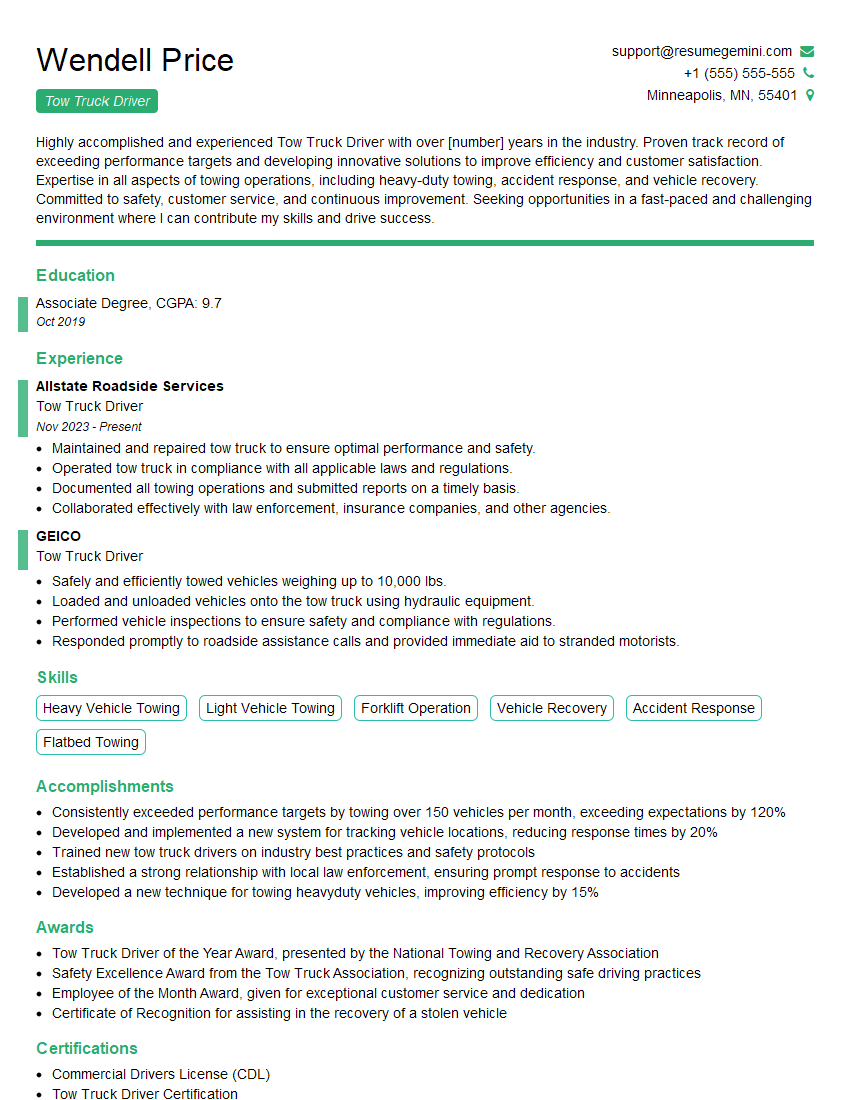
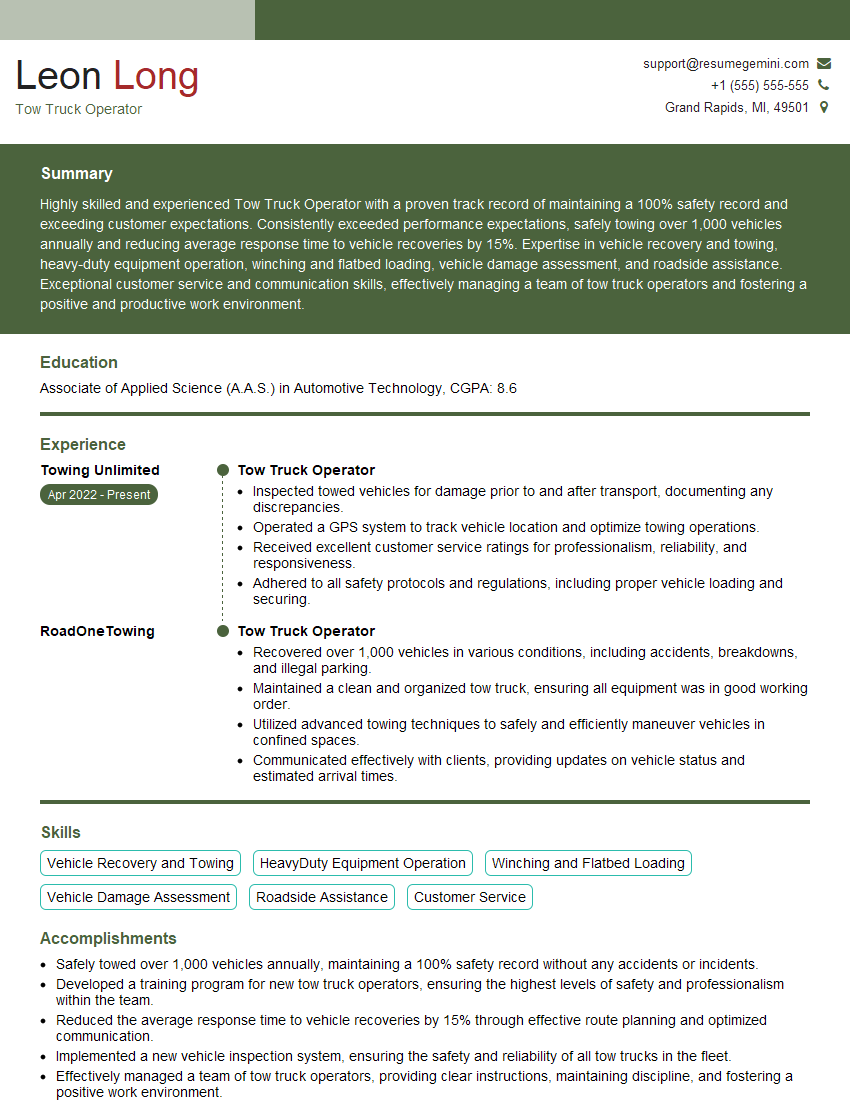
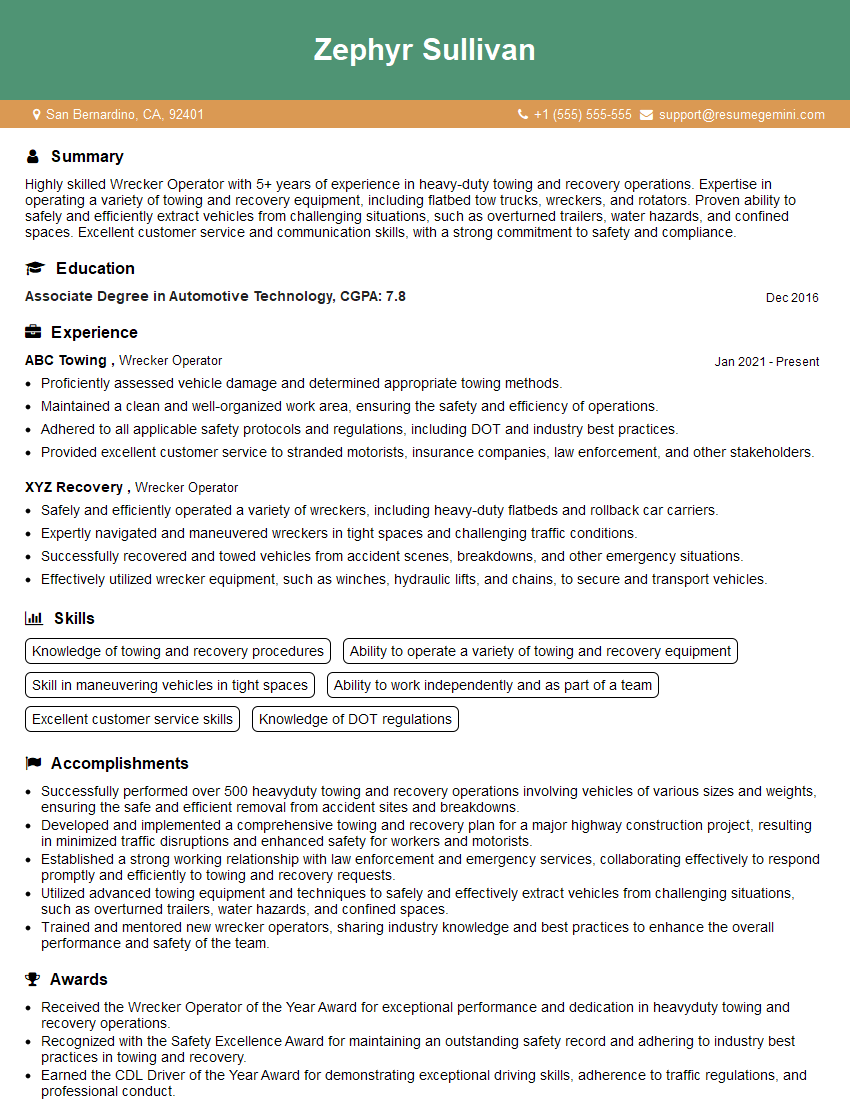
Mastering towing procedures is crucial for career advancement in this field. A strong understanding of safety protocols, legal requirements, and efficient operational practices will significantly enhance your job prospects and demonstrate your commitment to professionalism. To maximize your chances of landing your dream role, creating an ATS-friendly resume is vital. This ensures your qualifications are effectively communicated to hiring managers. We recommend using ResumeGemini, a trusted resource, to build a compelling and professional resume tailored to the towing industry. Examples of resumes specifically designed for Towing Procedures roles are available to help you get started.
Explore more articles
Users Rating of Our Blogs
Share Your Experience
We value your feedback! Please rate our content and share your thoughts (optional).
What Readers Say About Our Blog
Really detailed insights and content, thank you for writing this detailed article.
IT gave me an insight and words to use and be able to think of examples