Cracking a skill-specific interview, like one for Tractor Driving, requires understanding the nuances of the role. In this blog, we present the questions you’re most likely to encounter, along with insights into how to answer them effectively. Let’s ensure you’re ready to make a strong impression.
Questions Asked in Tractor Driving Interview
Q 1. Describe your experience operating different types of tractors.
My experience encompasses a wide range of tractors, from smaller, agile models like the Kubota BX series, ideal for smaller farms and landscaping, to larger, more powerful machines such as John Deere 8R series, perfect for large-scale operations. I’ve also worked with specialized tractors like those equipped with GPS-guided systems for precision agriculture. Each tractor presents unique operational characteristics; for example, the Kubota requires a more delicate touch, while the John Deere’s power demands a firm but controlled hand. My familiarity extends to both two-wheel-drive and four-wheel-drive models, understanding the applications best suited to each. I am comfortable operating tractors with various transmission types, including manual, semi-automatic, and fully automatic.
Q 2. What safety procedures do you follow when operating a tractor?
Safety is paramount in tractor operation. My routine begins with a thorough pre-operation inspection (detailed below). I always wear appropriate safety gear: seatbelt, hearing protection, and sturdy, closed-toe footwear. I am mindful of the tractor’s blind spots, particularly when turning or maneuvering in tight spaces. I never operate a tractor while fatigued or under the influence of drugs or alcohol. Before engaging implements, I ensure they are properly secured and adjusted. I also maintain a safe distance from other personnel and equipment on the farm. I’m especially cautious around ditches, slopes, and bodies of water, always assessing potential hazards and adjusting my driving accordingly. Regular awareness of surroundings prevents accidents.
Q 3. How do you perform pre-operation checks on a tractor?
Pre-operation checks are crucial for safe and efficient operation. My procedure involves a systematic approach: I begin by visually inspecting the tractor for any leaks, loose parts, or damage. I check fluid levels – engine oil, coolant, hydraulic fluid, and transmission fluid – ensuring they are within the recommended ranges. I then examine tires for proper inflation and any signs of wear or damage. The brakes are tested thoroughly, both the service and parking brakes. I also check the lights, turn signals, and other operational systems. Finally, I test all implements to ensure proper functioning and safe operation before starting any work. This systematic approach has consistently prevented potential issues before they arise, ensuring smooth and safe operations.
Q 4. Explain your experience with tractor maintenance and repairs.
My experience with tractor maintenance and repairs is extensive. I’m proficient in performing routine maintenance tasks such as oil changes, filter replacements, greasing, and lubrication. I’m capable of diagnosing and resolving common mechanical issues such as replacing belts, hoses, and hydraulic components. I’m familiar with various tractor systems, including electrical systems, engine repair, and hydraulic systems. I also understand basic welding and fabrication, enabling me to handle minor repairs on-site. While I’m skilled in tackling most repairs, I know when to seek professional assistance for major overhauls or specialized repairs, prioritizing both safety and efficiency. For example, I once diagnosed a faulty fuel injector on a John Deere, preventing further damage. Thorough records are kept on all maintenance and repairs for efficient future reference.
Q 5. How do you handle challenging terrain while operating a tractor?
Navigating challenging terrain requires a combination of skill, experience, and careful planning. I adjust my speed according to the terrain’s difficulty, selecting a lower gear for steep inclines or uneven surfaces to maintain control. I use the tractor’s differential lock when necessary to ensure traction on slippery or muddy surfaces. I am particularly cautious on slopes, avoiding sharp turns and maintaining a steady speed. I always assess the terrain before commencing operations, choosing the most suitable route to avoid potential hazards. When dealing with obstacles, I proceed with caution, always maintaining a safe distance and adapting my approach accordingly. My experience allows me to anticipate potential issues and react appropriately, ensuring both safety and efficiency, even in difficult conditions.
Q 6. Describe your experience with different types of farming implements.
I have extensive experience operating various farming implements. My experience includes using ploughs for tillage, cultivators for weed control, seed drills for planting, and harrows for soil preparation. I’m also proficient in operating balers for hay production, mowers for cutting grass, and sprayers for pesticide application. Each implement requires a unique operating technique and adjustment; for instance, the depth of ploughing needs to be adjusted based on soil type and desired results. I understand the importance of proper implement maintenance and adjustments for optimal performance and longevity. I’m able to adjust settings on implements to match the specific needs of the crop or task at hand. For example, adjusting the seed drill based on seed spacing and depth for optimal germination.
Q 7. What are the common causes of tractor malfunctions, and how do you troubleshoot them?
Common tractor malfunctions range from simple issues like low fluid levels to more complex problems such as engine troubles or hydraulic failures. Low fluid levels, for instance, are often easily rectified with a fluid top-up. Engine problems may manifest as lack of power or unusual noises – these frequently require a more in-depth diagnosis, potentially involving checking the spark plugs, fuel system, or even the engine itself. Hydraulic failures, which can impact implement operation, might necessitate a check of the hydraulic fluid levels and pressure, or potentially repair of damaged lines or components. My troubleshooting involves systematic checking, using both visual inspection and diagnostic tools as needed. For instance, I’d use a multimeter to check electrical components or a pressure gauge for the hydraulic system. I always prioritize safety during troubleshooting, ensuring the tractor is safely shut down and secured before attempting repairs. Thorough record-keeping helps me track common issues and prevent future malfunctions.
Q 8. How do you ensure the efficient use of fuel while operating a tractor?
Efficient fuel use in tractor operation is crucial for both economic and environmental reasons. It’s not just about saving money; it’s about minimizing our impact on the environment. Several key strategies contribute to this goal.
Proper Maintenance: Regularly servicing the tractor, including checking air filters, ensuring tire pressure is optimal, and keeping the engine properly tuned, significantly impacts fuel efficiency. Think of it like maintaining your car – regular check-ups prevent unnecessary fuel consumption.
Appropriate Gear Selection: Choosing the right gear for the task at hand is paramount. Using too low a gear causes the engine to lug, wasting fuel, while too high a gear puts excessive strain on the engine and again, reduces efficiency. Finding the ‘sweet spot’ for engine RPM is key. I always match the gear to the load and terrain.
Driving Techniques: Avoid aggressive acceleration and braking. Smooth, controlled movements conserve fuel. Imagine driving a car – gentle acceleration and coasting whenever possible reduces fuel consumption.
Load Management: Avoid overloading the tractor. An overloaded tractor requires more power and consumes more fuel. This is common sense – a heavier load requires more effort from the engine.
Engine RPM Management: Monitoring and maintaining the engine within its optimal RPM range maximizes efficiency. Each tractor has a recommended operating speed for optimal fuel consumption; I always refer to the operator’s manual.
Q 9. What are your knowledge of GPS guidance systems in agriculture?
GPS guidance systems have revolutionized agriculture, increasing precision and efficiency significantly. My experience encompasses several systems, including RTK (Real-Time Kinematic) and others offering varying degrees of accuracy. These systems use satellite signals to guide the tractor along pre-planned paths, enabling automated steering.
Increased Accuracy: GPS guidance ensures consistent overlap between passes, reducing the risk of double-working or missing areas. This leads to reduced input costs (seeds, fertilizers, pesticides) and improved crop yields. In my experience, RTK systems are particularly precise.
Reduced Operator Fatigue: Automated steering reduces the physical demands on the operator, allowing for longer and more efficient workdays. This is especially beneficial during long hours in the field.
Data Collection and Analysis: Modern GPS systems often integrate with data management platforms, allowing for the collection of various data points (e.g., speed, location, fuel consumption). This data is invaluable for optimizing future operations. I utilize this data to optimize future field operations.
Variable Rate Technology (VRT): Many GPS systems can integrate with VRT, enabling the precise application of inputs based on variable soil conditions or crop needs. This is a game changer for precision agriculture, allowing targeted application of inputs, saving resources and ensuring optimal crop growth.
Q 10. How do you maintain the safety of yourself and others while operating a tractor?
Safety is my top priority when operating a tractor. It’s a powerful machine with the potential for serious accidents if not handled correctly. My approach to safety is multifaceted.
Pre-Operational Checks: Before starting work, I always conduct a thorough inspection of the tractor, including tires, lights, brakes, PTO, and safety features. It’s a routine I never skip. This ensures all systems are functioning as intended.
Personal Protective Equipment (PPE): I always wear appropriate PPE, including a seatbelt, safety glasses, hearing protection, and sturdy boots. Safety is not optional.
Awareness of Surroundings: Maintaining constant awareness of my surroundings is critical. I am vigilant about the presence of other people, animals, and obstacles in the field. This includes being extra cautious around other farm equipment.
Safe Operating Practices: I follow safe operating procedures, including never leaving the tractor unattended while the engine is running or the PTO is engaged. I also ensure that all guards and shields are in place.
Weather Conditions: I am acutely aware of weather conditions and adjust my operations accordingly. In poor visibility or during severe weather events, I cease operations and seek safe shelter. Safety is paramount.
Q 11. Describe your experience with different types of tillage equipment.
My experience encompasses a variety of tillage equipment, each suited for different soil types and farming practices.
Moldboard Plows: These are traditional implements for deep tillage, inverting the soil layer. I’ve used them extensively on heavier clay soils to improve drainage and aeration.
Disc Harrows: These are used for shallower tillage, creating a fine seedbed. I’ve found them effective for preparing the land for planting various crops.
Chisel Plows: These are ideal for deep tillage in compacted soils, breaking up hardpan layers without excessive inversion. They are particularly useful in no-till systems.
Subsoilers: These implements penetrate deep into the soil to break up compaction layers, improving root penetration. I often use these to address soil compaction issues and improve drainage.
Rotary Tillers: These create a very fine seedbed and mix organic matter into the soil. I’ve used these for preparing seedbeds for smaller seeds.
My experience allows me to select the appropriate tillage equipment based on soil conditions, crop requirements, and conservation goals. Each tool has a specific purpose; choosing the right one significantly affects the quality of the soil and the success of the crop.
Q 12. Explain your understanding of crop protection and application techniques.
Crop protection involves safeguarding crops from various threats, including pests, diseases, and weeds. My understanding of application techniques is grounded in ensuring optimal efficacy and minimizing environmental impact.
Pest and Disease Management: I’m familiar with various pesticides and fungicides, and their safe and effective application. This involves understanding the target pest or disease, choosing the appropriate product, and following label instructions meticulously.
Weed Control: I have experience with herbicide application, including pre-emergent and post-emergent treatments. This includes understanding herbicide selectivity to minimize damage to the desired crop.
Calibration and Application Techniques: Accurate calibration of application equipment (sprayers, spreaders) is crucial for consistent and efficient delivery of crop protection products. I always ensure accurate calibration before each application. Different nozzle types and pressures impact droplet size and coverage.
Integrated Pest Management (IPM): I embrace IPM principles, prioritizing preventative measures and minimizing reliance on chemical controls. This includes scouting for pests and diseases, monitoring their populations, and using natural controls where feasible.
Safety Precautions: Safe handling and application of crop protection products are paramount. I strictly adhere to label instructions, wear appropriate PPE, and follow all safety guidelines. This is non-negotiable.
Q 13. How do you adapt your driving techniques to different weather conditions?
Adapting driving techniques to different weather conditions is crucial for both safety and efficiency. Poor conditions demand a cautious and measured approach.
Wet Conditions: In wet conditions, I reduce speed significantly to minimize soil compaction and prevent wheel slippage. I may also consider using wider tires or dual wheels to distribute weight more effectively.
Dry Conditions: In dry conditions, I am mindful of potential dust clouds, ensuring adequate visibility and potentially adjusting speed to minimize dust generation. Dry soil can be easily compacted.
Cold Conditions: In cold conditions, I allow the tractor engine to warm up properly before engaging in heavy work. I also monitor fuel levels and tire pressure more frequently.
Hot Conditions: In hot conditions, I take frequent breaks to avoid overheating and dehydration. This also allows for monitoring of both the tractor and the machinery for potential overheating.
Adverse Weather: In severe weather (e.g., thunderstorms, high winds, heavy snow), I cease operations immediately and seek safe shelter. Safety is paramount.
Q 14. How do you manage your time effectively while operating a tractor?
Effective time management is vital in tractor operation to maximize productivity and meet deadlines. My approach involves careful planning and execution.
Prioritization: I prioritize tasks based on urgency and importance, focusing on time-sensitive operations first. I often utilize a checklist to organize my tasks.
Planning and Scheduling: I plan my work schedule in advance, taking into account weather forecasts, soil conditions, and crop requirements. This ensures I am prepared for the day’s tasks and can organize resources efficiently.
Efficient Workflows: I optimize workflows to minimize downtime and maximize efficiency. This includes careful planning of field routes and ensuring that all necessary equipment and supplies are readily available.
Regular Maintenance: I schedule regular maintenance to prevent unexpected downtime. Proactive maintenance reduces the likelihood of unexpected equipment failure that could delay operation.
Breaks and Rest: I take regular breaks to avoid fatigue and maintain focus. This also prevents accidents, and ensures I am alert and perform my job safely and accurately.
Q 15. Describe your experience with harvesting equipment, like combines or balers.
My experience with harvesting equipment encompasses a wide range of machinery, including both combines and balers. I’ve operated various models of combines, from smaller self-propelled units ideal for smaller fields to larger, more powerful machines capable of handling vast acreages. My responsibilities extended beyond simply driving; I also managed the pre-harvest checks (ensuring proper cutterbar height and reel speed settings), monitored the combine’s performance (grain loss, moisture content), and made necessary adjustments on the go. With balers, I’m proficient in operating both round and square balers. I understand the importance of consistent bale density and size for efficient storage and handling, and I’m adept at adjusting the baler’s settings based on crop conditions. For example, during a particularly wet harvest, I had to adjust the baler’s density setting to prevent the bales from becoming too wet and spoiling. I also have experience troubleshooting common issues like clogged augers or jammed rollers, minimizing downtime and maximizing efficiency.
Career Expert Tips:
- Ace those interviews! Prepare effectively by reviewing the Top 50 Most Common Interview Questions on ResumeGemini.
- Navigate your job search with confidence! Explore a wide range of Career Tips on ResumeGemini. Learn about common challenges and recommendations to overcome them.
- Craft the perfect resume! Master the Art of Resume Writing with ResumeGemini’s guide. Showcase your unique qualifications and achievements effectively.
- Don’t miss out on holiday savings! Build your dream resume with ResumeGemini’s ATS optimized templates.
Q 16. How familiar are you with different tractor hitch types and their applications?
I’m thoroughly familiar with different tractor hitch types and their applications. The three main types are Category 1, Category 2, and Category 3, categorized by their size and the implements they can handle. Category 1 hitches are suited for smaller implements used on smaller tractors, while Category 3 is for much larger and heavier implements on larger tractors. Understanding the correct hitch type is critical for safe and efficient operation. Improper hitching can lead to damage to both the tractor and the implement. I’ve worked extensively with quick-attach hitches, which allow for rapid changing of implements, saving valuable time between tasks. For instance, quickly switching from a plow to a cultivator or seed drill is crucial for maximizing productivity. I also understand the differences between three-point hitches (the most common), drawbar hitches (for pulling trailers or other heavy loads), and front-end loaders (for lifting and moving materials). Knowing which hitch type to utilize for a specific task is vital for safe and effective operation.
Q 17. What are the signs of tractor hydraulic system problems?
Recognizing signs of tractor hydraulic system problems is crucial for preventing costly repairs and ensuring safe operation. Some common indicators include slow or sluggish implement movement – this could point to low hydraulic fluid levels, leaks, or filter blockages. Unusual noises emanating from the hydraulic system, such as whining, groaning, or banging sounds, often signal problems within the pump, valves, or cylinders. Leaks are another obvious sign – check all hydraulic lines and connections for leaks. Overheating hydraulic fluid can indicate restricted flow, a failing pump, or a lack of adequate cooling. Finally, if an implement fails to respond to the hydraulic controls, it’s a strong indication of a problem somewhere within the system – from a simple electrical fault to a more complex hydraulic failure. I’ve learned through experience to always pay close attention to these warning signs and perform regular maintenance checks to prevent any major hydraulic system issues.
Q 18. How do you handle emergency situations while operating a tractor?
Handling emergency situations requires quick thinking and decisive action. My approach always begins with prioritizing safety. If I encounter a mechanical failure, I immediately disengage the PTO, turn off the engine, and apply the brakes securely. I then assess the situation: Is there an immediate danger (fire, leaking fluids)? If so, I take appropriate actions to address the danger. If there’s a need to call for assistance, I’ll use my radio to notify the appropriate personnel, providing a clear description of the situation and my location. For example, during a sudden tire blowout, I maintained control of the tractor by slowing gradually and pulling over to a safe location away from traffic and obstacles. I never attempt to perform repairs myself unless it’s a minor issue and I’m certain of the process; otherwise, I wait for professional assistance. Safety is my absolute top priority in any emergency situation.
Q 19. Explain your experience with loading and transporting materials with a tractor.
My experience with loading and transporting materials with a tractor is extensive. I’ve used both front-end loaders and trailers for various tasks, including moving hay bales, transporting grain, and hauling construction materials. When loading, I always prioritize safe loading techniques to prevent instability. This involves evenly distributing weight, ensuring the load is secured, and carefully assessing the tractor’s weight capacity. I’m familiar with using various attachments for different materials. For instance, I use forks for palletized materials, buckets for loose materials, and specialized attachments for specific needs. During transportation, I strictly adhere to all traffic laws, using appropriate signaling and maintaining safe speeds, especially on public roads. I always conduct pre-trip inspections, verifying that the load is secured and that all lights and brakes are functioning properly. For example, during the transport of hay bales, I made sure that they were evenly stacked and securely bound to prevent shifting and potential accidents.
Q 20. How do you ensure the proper storage and maintenance of tractor implements?
Proper storage and maintenance of tractor implements is essential for extending their lifespan and ensuring efficient operation. After each use, I thoroughly clean all implements, removing any mud, debris, or crop residue. This prevents corrosion and extends the life of the equipment. I then store the implements in a dry, sheltered area, protecting them from the elements. Regular lubrication of moving parts is also vital to prevent wear and tear. I keep a detailed maintenance log for each implement, noting when servicing is performed, and any repairs or replacements are made. This helps in tracking the overall condition of the equipment and allows for proactive maintenance to prevent unexpected breakdowns. For instance, I lubricate the pivot points of my cultivator every time I store it after use, and check the condition of the tines, ensuring that no damage has occurred during use.
Q 21. What are the different types of tractor transmissions and their benefits?
Tractors utilize various transmission types, each offering distinct advantages. Manual transmissions are the most basic and provide great control but require more operator skill. They give the operator precise control over gear selection, which is beneficial in varied terrain or when precise speed control is required. Power-shift transmissions offer a more automated experience. They offer smooth and rapid gear changes under load without interrupting power, enhancing productivity. However, they are often more complex and expensive to maintain. Continuously variable transmissions (CVTs) provide infinite speed options within a range, giving even greater control and efficiency by enabling the engine to operate at its optimal RPM regardless of ground speed. CVTs are generally smoother and easier to operate. The choice of transmission depends on the specific needs of the operation and the operator’s preference and skill level. A manual transmission might be best for someone who is comfortable and efficient using a clutch pedal, whilst a CVT would provide easier and more efficient operation for repetitive tasks.
Q 22. What is your understanding of PTO (Power Take-Off) operation?
The Power Take-Off (PTO) is a vital component of a tractor, essentially a transmission shaft that allows the tractor’s engine power to be used to drive implements like mowers, balers, or tillers. Think of it as an extra output shaft, separate from the wheels, that powers attached machinery. It’s usually engaged and disengaged using a clutch mechanism.
Understanding PTO operation involves several key aspects: Firstly, knowing how to safely engage and disengage the PTO, ensuring that the implement is properly connected and secured before activation. Secondly, being aware of the different PTO speeds (usually 540 RPM and 1000 RPM) and selecting the appropriate speed for the attached implement. Using the incorrect speed could damage the implement or even cause injury. Finally, understanding the importance of regular maintenance and lubrication of the PTO shaft is crucial for its longevity and safe operation. For example, I’ve personally experienced a PTO failure due to lack of lubrication, highlighting the critical role of regular maintenance.
Q 23. Describe your experience with precision agriculture techniques.
My experience with precision agriculture techniques includes using GPS-guided tractors for tasks like planting and spraying. This allows for precise application of inputs such as seeds, fertilizers, and pesticides, minimizing waste and maximizing yields. I’m proficient in using auto-steering systems and variable rate technology (VRT). VRT allows for adjusting the application rate based on soil conditions or crop needs, as determined by sensors and mapping software. For instance, I’ve used VRT to apply fertilizer at higher rates in areas of the field that showed nutrient deficiencies, while reducing rates in areas with sufficient nutrients. This translates to significant cost savings and environmental benefits by reducing unnecessary chemical usage.
Furthermore, I have experience using yield mapping, which involves collecting data on crop yields across the field. This data is then used to analyze field performance and make informed management decisions for future seasons, such as adjusting planting density or fertilizer application in specific zones.
Q 24. How do you comply with all safety and environmental regulations related to tractor operation?
Compliance with safety and environmental regulations is paramount in tractor operation. This begins with regular pre-operational checks, including verifying that all safety devices (lights, brakes, seatbelts) are functioning correctly. I’m meticulous about ensuring proper visibility, especially when operating near roads or other people. I always adhere to speed limits and follow all traffic rules. Furthermore, I am familiar with and abide by regulations pertaining to pesticide and fertilizer application, including proper handling, storage, and disposal. I strictly avoid operating the tractor under the influence of drugs or alcohol. I understand the importance of preventing soil erosion and protecting water quality, and employ practices such as no-till farming whenever applicable.
Regarding environmental concerns, I am careful about fuel spillage and always follow proper procedures for refuelling. Regular maintenance of the tractor helps to minimize emissions. My commitment to responsible operation is driven by both personal safety and environmental stewardship.
Q 25. Describe your experience working with various types of soil and terrain.
My experience encompasses a wide range of soil types and terrains, from heavy clay soils that require significant power and careful maneuvering to sandy loam soils that are easier to work with. I’ve operated tractors in hilly terrain requiring careful control and awareness of the tractor’s stability and limitations. I understand the importance of adjusting the tractor’s settings and techniques based on the specific soil conditions and terrain. For example, I’ve utilized different tire pressures and ballasting techniques to optimize traction on various soils, preventing slippage and ground compaction. Working in challenging conditions like wet fields necessitates careful planning and awareness of potential risks to avoid getting stuck or causing damage to the land.
In mountainous regions, I’ve had to adapt my driving style to account for steep slopes and uneven surfaces, utilizing low gears and slow speeds for better control. This involved anticipation of the terrain changes and adapting the tractor settings to suit each situation.
Q 26. What is your experience with using a tractor’s 3-point hitch system?
The 3-point hitch system is a crucial aspect of tractor operation, allowing for the attachment and control of implements like ploughs, harrows, or cultivators. I have extensive experience using this system, including understanding the different hitch types (categories) and how they match with various implements. I am proficient in adjusting the hitch’s top link and lower links to ensure the implement is properly aligned and working at the optimal depth. This requires an understanding of the three-point hitch’s hydraulic system which controls the implement’s lift and tilt.
For instance, I know how to accurately level a plough for consistent ploughing depth, which is essential for uniform crop growth. I’ve also experienced the importance of correctly setting the hitch for different implements, ensuring they are secure and balanced to prevent damage or accidents. The adjustment of the implement’s height and angle often requires fine-tuning and practical experience to obtain the ideal working condition.
Q 27. How familiar are you with different types of tractor tires and their uses?
Tractor tires are critical for traction, soil compaction, and overall performance. I’m familiar with various types, including radial and bias-ply tires. Radial tires generally offer better fuel efficiency and ride quality, while bias-ply tires are sometimes preferred for specific applications requiring more aggressive tread patterns. Furthermore, the tread patterns themselves vary: lugged tires provide excellent traction in muddy conditions, while turf tires minimize soil compaction in sensitive areas. I also know the importance of selecting appropriate tire sizes and pressures for different tasks and soil conditions. Using incorrect tire pressure can lead to poor traction, increased soil compaction, and premature tire wear.
For instance, I’ve used low-pressure, wide tires on wet, heavy clay to minimize compaction, whilst using narrow, high-pressure tires for row cropping to reduce damage to the plants. The choice of tire is very much dependent on the specific application and the conditions in which the work will be done.
Q 28. How do you ensure the accurate calibration and operation of tractor-mounted equipment?
Accurate calibration and operation of tractor-mounted equipment are essential for optimal performance and efficiency. This involves several steps, beginning with a thorough understanding of the equipment’s specifications and operational guidelines. Before operation, I conduct a careful check of all components, verifying proper function. Calibration often involves using reference points or measuring tools to ensure settings are precisely adjusted. For instance, when calibrating a planter, I carefully measure seed spacing and depth to guarantee uniform seeding.
Similarly, when calibrating a sprayer, I’d check nozzle output and adjust the pressure to ensure uniform distribution and the correct application rate. Throughout the operation, I regularly monitor the equipment’s performance and make any necessary adjustments. This might involve checking the flow rate, observing the spray pattern, or assessing the evenness of the work. The process also incorporates the use of technology like GPS and sensors for more precise calibration and monitoring.
Key Topics to Learn for Your Tractor Driving Interview
- Tractor Operation & Maintenance: Understanding different tractor types, their functionalities, and routine maintenance procedures. This includes pre-operational checks, identifying potential mechanical issues, and basic troubleshooting.
- Safe Operating Practices: Knowing and applying all relevant safety regulations and procedures. This encompasses pre-trip inspections, hazard awareness, and emergency response protocols. Practical application includes demonstrating an understanding of safe operating speeds, weight distribution, and terrain awareness.
- Agricultural Techniques: Familiarity with various farming techniques involving tractors, such as plowing, seeding, fertilizing, and harvesting. Demonstrate your understanding of the principles behind these operations and their impact on crop yields.
- GPS & Precision Farming: Understanding the use of GPS technology in modern agriculture and precision farming techniques. This includes knowledge of GPS-guided machinery and data interpretation for optimized farming practices.
- Environmental Considerations: Awareness of environmentally responsible farming practices and the impact of tractor operation on soil health, water management, and overall sustainability.
- Problem-Solving & Troubleshooting: Demonstrating the ability to identify, analyze, and effectively resolve mechanical issues that may arise during operation. This involves practical problem-solving skills and the ability to think critically under pressure.
Next Steps: Drive Your Career Forward
Mastering tractor driving opens doors to a rewarding career with opportunities for advancement and specialization. A strong resume is your key to unlocking these opportunities. To maximize your job prospects, create an ATS-friendly resume that highlights your skills and experience effectively. ResumeGemini is a trusted resource that can help you build a professional, impactful resume tailored to the agricultural industry. We provide examples of resumes specifically designed for Tractor Driving positions to help you get started. Invest in your future – invest in your resume.

Farm Manager Resume Sample

Agricultural Engineer Resume Sample
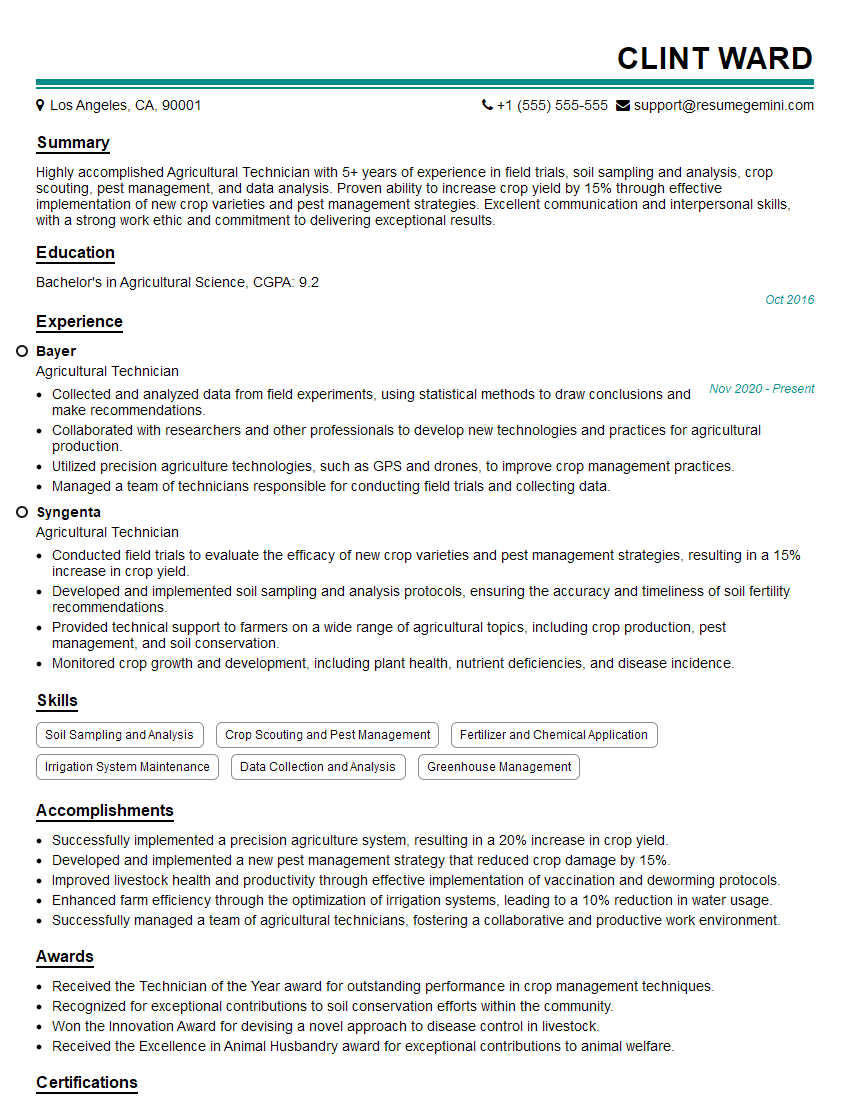
Agricultural Technician Resume Sample

Precision Agriculture Technician Resume Sample

Tractor Operator Resume Sample

Agricultural Equipment Operator Resume Sample

Baler Operator Resume Sample

Combine Operator Resume Sample
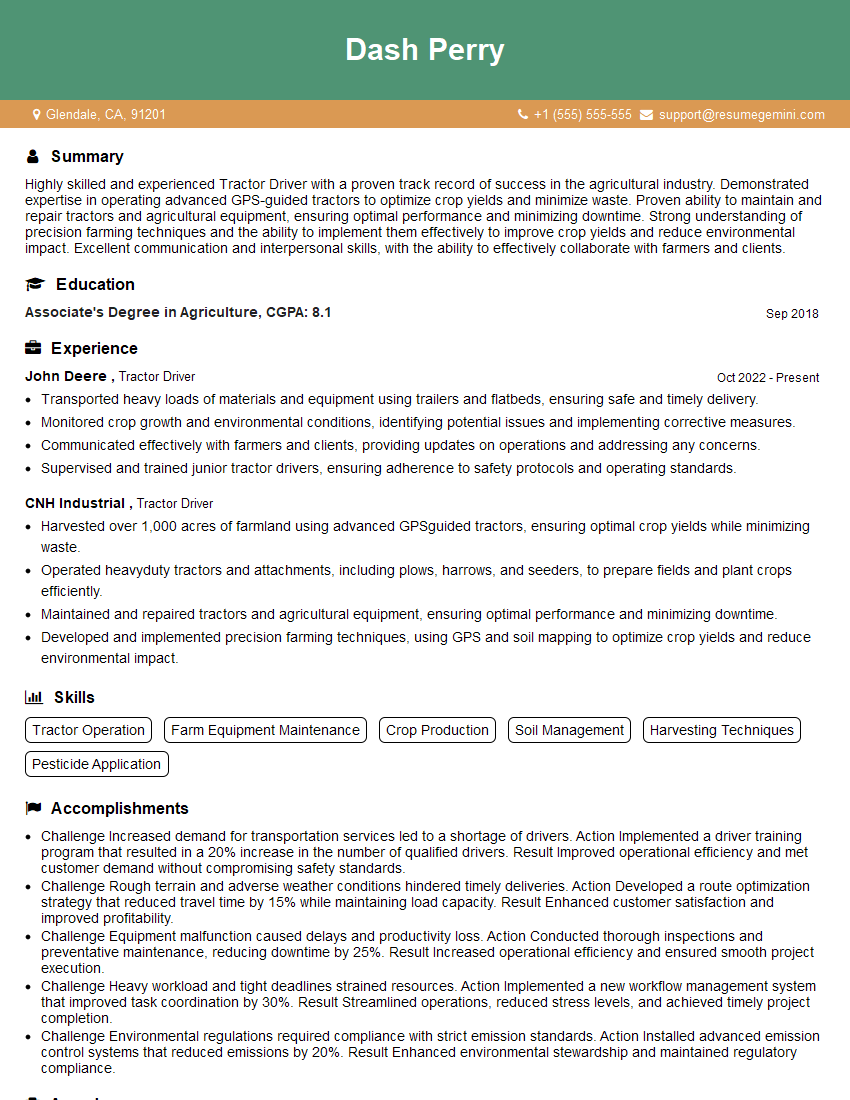
Tractor Driver Resume Sample

Ranch Hand Resume Sample

Heavy Equipment Operator Resume Sample

Farm Equipment Mechanic Resume Sample

Heavy Equipment Mechanic Resume Sample

Sprayer Operator Resume Sample
Explore more articles
Users Rating of Our Blogs
Share Your Experience
We value your feedback! Please rate our content and share your thoughts (optional).
What Readers Say About Our Blog
Really detailed insights and content, thank you for writing this detailed article.
IT gave me an insight and words to use and be able to think of examples