The right preparation can turn an interview into an opportunity to showcase your expertise. This guide to Tree Inventory Management interview questions is your ultimate resource, providing key insights and tips to help you ace your responses and stand out as a top candidate.
Questions Asked in Tree Inventory Management Interview
Q 1. Explain the different methods used for tree inventory data collection.
Tree inventory data collection employs various methods, each with strengths and weaknesses depending on the scale and objectives of the project. Imagine needing to count the trees in a small park versus a vast national forest – the approach would differ significantly.
Field Surveys: This is the most common method, involving direct observation and measurement of individual trees. We use specialized tools like diameter tapes (to measure diameter at breast height, or DBH), clinometers (to measure tree height), and rangefinders (to measure distance). Data is recorded manually or using handheld data loggers. This is labor-intensive but provides high-accuracy data for smaller areas.
Remote Sensing: Techniques like aerial photography, LiDAR (Light Detection and Ranging), and satellite imagery allow for large-scale inventory across extensive areas. LiDAR, for instance, uses laser pulses to create highly detailed 3D models of the forest canopy, providing information on tree height, density, and crown cover. This method is cost-effective for large areas, but processing the data requires specialized software and expertise.
Ground-Based LiDAR: Similar to aerial LiDAR, but uses ground-based scanners to acquire highly detailed point clouds of trees in specific areas. This is often used for detailed assessments of individual trees or small stands.
Image Analysis: Utilizing high-resolution imagery (aerial or ground-based) coupled with computer vision techniques to automatically identify and classify trees, measuring key parameters like crown diameter and height. This method can be efficient but requires robust image quality and advanced algorithms for reliable results. This is a rapidly developing field.
Q 2. Describe your experience with GIS software for tree inventory management.
I have extensive experience using GIS (Geographic Information Systems) software like ArcGIS and QGIS for tree inventory management. GIS is crucial for spatial analysis and visualization of tree data. Think of it as a map that allows you to not only see the location of each tree but also analyze its attributes in relation to other features, such as soil type, proximity to buildings, or even disease prevalence.
My experience includes:
Data input and georeferencing: Importing tree data (DBH, species, health assessments) and accurately linking it to its geographic location using GPS coordinates.
Spatial analysis: Conducting analyses such as proximity analysis to identify trees at risk from infrastructure or calculating tree density across different areas.
Map creation and visualization: Generating thematic maps depicting tree species distribution, health status, or risk levels. This allows for easy communication of findings to stakeholders.
Data management and maintenance: Using GIS to manage and update the tree inventory database efficiently.
For example, in a recent project involving a municipal tree inventory, I used ArcGIS to create interactive maps showing the location of all trees, their species, and their health assessments. This allowed the municipality to prioritize maintenance efforts and make informed decisions about tree planting and removal.
Q 3. How do you assess the health and risk of individual trees?
Assessing tree health and risk involves a multi-faceted approach, combining visual inspection with more detailed analyses when necessary. Imagine you’re a doctor examining a patient; you’d use a combination of observation and more specific tests.
Visual Assessment: This involves observing visible signs of stress or disease, such as crown dieback, leaf discoloration, presence of pests or diseases, and physical damage from weather events or human activity. We use standardized scoring systems to rate the severity of these observations.
Instrumentation: Tools like resistographs can measure the wood density and detect internal decay, while specialized instruments can assess the soil conditions around a tree’s root system. This provides more objective data beyond visual observations.
Risk Assessment: We evaluate the potential for a tree to cause damage. Factors include tree species, size, location (proximity to buildings, power lines), lean, and structural defects. We use specialized software and risk assessment matrices to quantitatively assess these factors.
For instance, a large oak tree with significant crown dieback located near a school building would be flagged as high-risk due to its potential to cause damage during a storm.
Q 4. What are the key factors to consider when developing a tree inventory management plan?
Developing a comprehensive tree inventory management plan requires careful consideration of multiple factors. It’s like creating a blueprint for caring for a valuable asset.
Objectives: Clearly define the goals of the inventory. Are you assessing tree health, planning for future maintenance, or evaluating environmental impact? This will shape the data collection methods and analyses.
Scope and Boundaries: Define the area to be inventoried. Are you focusing on a specific park, a whole city, or a larger region? This influences the choice of data collection technologies and the overall scale of the project.
Data Collection Methods: Select the most appropriate methods based on the objectives, scope, and budget. A combination of methods often yields the best results.
Data Management and Analysis: Develop a system for organizing, storing, and analyzing the collected data. This typically involves using GIS software and databases.
Budget and Resources: Allocate adequate resources (personnel, equipment, software) to successfully implement the plan.
Maintenance and Updates: Establish a schedule for regular updates to the inventory to ensure the data remains current and accurate.
Q 5. How do you ensure the accuracy and reliability of tree inventory data?
Ensuring accuracy and reliability is paramount in tree inventory management. It’s like ensuring the foundation of a building is strong.
Quality Control: Implement rigorous quality control procedures throughout the data collection and analysis process. This includes regular checks on equipment calibration, data entry validation, and double-checking measurements.
Data Validation: Use statistical methods to identify and correct errors in the data. This might involve comparing data from different sources or identifying outliers that require further investigation.
Training and Expertise: Ensure that field crews and data analysts have the necessary training and expertise to collect and process data accurately. Proper training is crucial for consistent data quality.
Standardized Procedures: Develop and follow standardized protocols for data collection and analysis to reduce variability and improve consistency.
Data Backup and Security: Implement a secure system for storing and backing up data to prevent data loss.
For example, in a large-scale project, we might conduct a subsample re-measurement to validate the accuracy of initial measurements, ensuring that our conclusions are dependable.
Q 6. What are the common challenges in managing large-scale tree inventories?
Managing large-scale tree inventories presents unique challenges. It’s like managing a complex ecosystem.
Data Volume: The sheer volume of data collected can be overwhelming, requiring efficient data management systems and powerful computing resources for analysis.
Cost and Time: Large-scale inventories are expensive and time-consuming, requiring careful planning and resource allocation.
Data Integration: Integrating data from multiple sources (field surveys, remote sensing) can be challenging, requiring careful coordination and standardization of data formats.
Accessibility and Sharing: Ensuring data accessibility and sharing among stakeholders can be complex, particularly when dealing with large datasets.
Technological Limitations: Technological limitations of certain equipment can affect data accuracy in challenging environments (e.g., dense forests).
Q 7. Describe your experience with different tree inventory data analysis techniques.
My experience with tree inventory data analysis techniques encompasses a range of statistical and spatial methods. We analyze data to understand the “story” the trees are telling us.
Descriptive Statistics: Calculating summary statistics (mean, median, standard deviation) to describe the characteristics of the tree population (e.g., average DBH, tree density).
Spatial Statistics: Using geostatistical methods to analyze spatial patterns in tree distribution, health, and growth.
Regression Analysis: Developing predictive models to relate tree growth or health to environmental factors (e.g., soil conditions, climate).
Classification and Clustering: Grouping trees based on their characteristics (e.g., species, size, health) using statistical clustering techniques.
Species Distribution Modeling: Predicting the potential distribution of tree species under different climate change scenarios.
For example, I’ve used regression analysis to model the relationship between tree growth and rainfall, allowing for predictions of future growth based on climate projections. This helps in making informed management decisions.
Q 8. How do you communicate tree inventory data to stakeholders?
Communicating tree inventory data effectively to stakeholders requires tailoring the information to their specific needs and understanding. I typically use a multi-faceted approach.
Interactive Dashboards: For quick overviews and trend analysis, I leverage dashboards that visually represent key metrics like tree health, species distribution, and risk assessments. These dashboards often include interactive maps, charts, and graphs, allowing stakeholders to easily explore the data.
Targeted Reports: For more detailed analysis or specific stakeholder inquiries, I generate custom reports. These could focus on a particular area, species, or risk factor. Reports are formatted for clarity, employing concise language and clear visuals.
Presentations and Meetings: Direct communication is vital. I utilize presentations to explain the findings from the inventory, answering questions and facilitating discussions. This allows for a two-way exchange of information and ensures the data is properly understood.
Data Sharing Platforms: Secure online platforms enable stakeholders to access the data directly, facilitating continuous monitoring and collaboration. This could involve sharing data in formats like CSV, shapefiles, or through a dedicated GIS web application.
For example, I once presented inventory data showing a high concentration of disease-susceptible trees in a specific park area to the city’s Parks and Recreation department. This led to the timely implementation of a preventative treatment program, preventing a major outbreak.
Q 9. How do you prioritize tree maintenance and removal based on inventory data?
Prioritizing tree maintenance and removal is crucial for optimizing resource allocation and ensuring public safety. My approach integrates risk assessment with inventory data to create a prioritized list.
Risk Assessment: I use a structured system to assess the risk posed by each tree. This considers factors such as species, size, location (proximity to structures or utilities), health (disease, decay, structural defects), and environmental factors (soil conditions, wind exposure). Each factor receives a weighted score, creating an overall risk level.
Prioritization Matrix: This risk level, coupled with the tree’s value (aesthetic, ecological, etc.), is plotted on a matrix. This allows me to easily visualize and categorize trees requiring immediate attention (high risk, high value), those needing scheduled maintenance (moderate risk, high/moderate value), and those that may be candidates for removal (high risk, low value).
Cost-Benefit Analysis: For more complex decisions, a cost-benefit analysis is conducted, comparing the cost of maintenance or removal against the potential costs of inaction (e.g., property damage, injury, or loss of ecological value).
Imagine a large oak tree with significant decay near a playground. Its high risk and high value (due to its age and ecological importance) would place it at the top of the priority list for immediate assessment and potential remediation.
Q 10. What software or tools do you have experience using for tree inventory management?
Throughout my career, I’ve gained experience with a variety of software and tools for tree inventory management. My expertise spans both dedicated tree inventory software and GIS platforms.
ArcGIS: I’m proficient in using ArcGIS for geospatial analysis, data visualization, and map creation. This allows for the creation of detailed maps showing the location, species, and condition of each tree.
TreePlotter: This specialized software streamlines data collection, analysis, and report generation specifically for tree inventories.
i-Tree: I have utilized i-Tree software for ecological assessment and valuation of trees, quantifying environmental benefits like carbon sequestration and air pollution removal.
Databases (e.g., MS Access, SQL): I’m also experienced with using databases for data management, ensuring efficient data storage, retrieval, and analysis.
The choice of software depends heavily on the project scope and the client’s needs. For large-scale inventories, a GIS coupled with dedicated tree inventory software is usually preferred, while smaller projects may only require a spreadsheet program and GPS technology.
Q 11. Explain your understanding of tree species identification and classification.
Accurate tree species identification and classification are fundamental to effective tree inventory management. My expertise encompasses both field identification techniques and the use of taxonomic keys and databases.
Field Identification: I possess strong field identification skills, relying on observable characteristics such as leaf shape, bark texture, branching patterns, bud arrangement, flower and fruit morphology, and overall tree form. Experience allows for quick and accurate identification, even in challenging conditions.
Taxonomic Keys: I’m proficient in using dichotomous keys (step-by-step identification guides) and other taxonomic resources to verify species identification and resolve ambiguous cases.
Databases and Online Resources: I leverage online resources like plant databases (e.g., the USDA PLANTS database) to confirm identifications and gather additional information about species characteristics, distribution, and ecological requirements.
For example, distinguishing between similar oak species (e.g., red oak vs. white oak) requires close examination of leaf lobes, acorn shape, and bark texture. A strong understanding of these subtle differences ensures accuracy in the inventory data.
Q 12. How do you handle data discrepancies or inconsistencies during tree inventory?
Data discrepancies and inconsistencies are inevitable in any large-scale data collection effort, and tree inventories are no exception. My approach to handling these involves a multi-step process.
Data Validation: Implementing rigorous data validation checks during data entry is crucial. This includes range checks, consistency checks, and cross-referencing with existing data. For example, checking that tree heights are within reasonable limits for the species in question.
Field Verification: If discrepancies are detected, I return to the field to re-examine the trees in question. This may involve taking additional measurements or consulting with other experts.
Data Reconciliation: After field verification, discrepancies are resolved by using the most reliable data. A clear record is kept of all adjustments made, along with the reasons for the changes.
Quality Control: Regular quality control checks are implemented throughout the entire process to minimize errors and ensure data accuracy.
One instance involved a discrepancy in tree diameters recorded for a specific species. Field verification revealed that measurement protocols were inconsistently applied, necessitating recalibration and re-measurement of a portion of the inventory.
Q 13. Describe your experience with developing and implementing tree inventory protocols.
Developing and implementing tree inventory protocols is a key aspect of my work. A well-defined protocol ensures data consistency, accuracy, and efficiency.
Defining Objectives: The first step involves clearly defining the objectives of the inventory. This includes specifying the geographic area, species of interest, data parameters to be collected, and the intended uses of the data.
Methodology Selection: Appropriate methodologies are selected based on the objectives, resources, and available technology. This may involve choosing between various data collection methods (e.g., ground-based surveys, remote sensing, LiDAR).
Data Collection Forms and Procedures: Standardized data collection forms and procedures are developed to ensure data consistency and accuracy. This includes clear instructions on data fields, measurement techniques, and data quality control measures.
Training and QA/QC: Field crews are provided with thorough training on the use of the data collection forms and equipment, as well as data quality control procedures.
Data Management and Analysis: Procedures for data entry, cleaning, analysis, and reporting are defined to ensure efficiency and accuracy.
In a recent project, I developed a protocol for a large-scale urban forest inventory. This involved the creation of a detailed GIS-based mapping system, field data collection forms, and training materials for the field crews. The standardized protocol ensured the project’s success and led to a consistent, reliable dataset.
Q 14. How do you integrate tree inventory data with other relevant datasets?
Integrating tree inventory data with other relevant datasets enhances the value and utility of the inventory. This allows for a more comprehensive understanding of the urban forest or other ecosystem.
GIS Integration: Tree inventory data is typically integrated with GIS platforms (e.g., ArcGIS). This allows for spatial analysis, linking tree data with other geospatial layers, such as land use maps, soil data, and infrastructure information.
Environmental Data: Integration with environmental datasets (e.g., weather data, air quality data) provides context for assessing the ecological impact of the tree population.
Utility Data: Integrating with utility data (e.g., locations of underground utilities) can help in planning tree maintenance and removal activities to avoid damage to underground infrastructure.
Demographic Data: Integrating with demographic data can help assess the relationship between tree cover and human health and well-being.
For example, integrating tree inventory data with a city’s storm water management system data can help identify areas where tree cover can improve water infiltration and reduce flooding. This holistic approach to data integration provides a more comprehensive understanding of the urban forest’s function and value.
Q 15. What are the benefits of using remote sensing technologies for tree inventory?
Remote sensing technologies, such as LiDAR (Light Detection and Ranging) and aerial photography, offer significant advantages in tree inventory. They provide a cost-effective and efficient way to collect data over large areas, reducing the need for extensive fieldwork. This is particularly beneficial in challenging terrains or areas with dense vegetation.
- Increased Accuracy: Remote sensing can capture detailed information about tree height, crown diameter, and density with greater precision than traditional ground surveys, leading to more accurate estimations of forest biomass and carbon storage.
- Time Efficiency: Data acquisition is significantly faster than ground-based methods. A single LiDAR flight can survey hundreds of hectares in a day, compared to weeks or months of ground-based measurements.
- Data Completeness: Remote sensing can access even the most inaccessible areas, ensuring complete data coverage for the entire inventory area, eliminating sampling bias.
- Monitoring Changes Over Time: By repeating surveys over time, remote sensing allows for the monitoring of forest growth, mortality, and other dynamic changes, providing valuable insights into forest health and management effectiveness. For example, comparing LiDAR data from two different years can clearly show the impact of a forest fire or disease outbreak.
For instance, in a recent project, we used LiDAR data to accurately map over 10,000 hectares of forest in a mountainous region, identifying areas with high risk of wildfire due to dense undergrowth, something that would have been incredibly time-consuming and expensive using only ground-based methods.
Career Expert Tips:
- Ace those interviews! Prepare effectively by reviewing the Top 50 Most Common Interview Questions on ResumeGemini.
- Navigate your job search with confidence! Explore a wide range of Career Tips on ResumeGemini. Learn about common challenges and recommendations to overcome them.
- Craft the perfect resume! Master the Art of Resume Writing with ResumeGemini’s guide. Showcase your unique qualifications and achievements effectively.
- Don’t miss out on holiday savings! Build your dream resume with ResumeGemini’s ATS optimized templates.
Q 16. How do you ensure the long-term sustainability of tree inventory data management?
Long-term sustainability of tree inventory data requires a robust and well-planned data management strategy. This includes careful consideration of data storage, accessibility, metadata management, and data quality control.
- Data Storage: Utilizing a secure, cloud-based storage system allows for easy access and backup of data, minimizing the risk of data loss due to hardware failure or other unforeseen events. We often employ redundant systems to ensure data redundancy.
- Data Formats and Standards: Adopting open and standardized data formats (e.g., GeoTIFF, shapefiles) enhances data interoperability and ensures long-term accessibility. This facilitates data sharing and collaboration with other organizations.
- Metadata Management: Comprehensive metadata, including data acquisition methods, processing techniques, and quality control measures, is crucial for understanding and interpreting the data accurately over time. Think of it like a detailed instruction manual for your data.
- Regular Data Quality Control: Periodic checks and validation of data are essential to ensure accuracy and identify potential errors. We employ automated quality checks and manual validation of specific data points.
- Data Archiving: Establishing a robust data archiving strategy, including regular backups and migration to newer storage technologies, is essential to ensure the long-term preservation of the data. We follow a tiered archiving approach, keeping frequently used data online, less frequently used data on a near-line system and older data on offline storage.
For example, we implemented a system using a combination of cloud storage and local servers with regular backups to a separate geographical location, guaranteeing data accessibility and resilience against various potential threats.
Q 17. Explain your experience with budget management in relation to tree inventory projects.
Budget management is crucial for successful tree inventory projects. It involves careful planning, cost estimation, and monitoring of expenses throughout the project lifecycle. I have extensive experience in developing and managing budgets, from small-scale local projects to large-scale national inventories.
- Detailed Cost Estimation: Accurate cost estimation involves factoring in all aspects, including personnel costs, equipment rentals or purchases, data processing expenses, software licenses, travel costs, and contingency funds. We utilize detailed spreadsheets and project management software to track these costs.
- Resource Allocation: Efficient resource allocation ensures that funds are distributed optimally across different project phases, such as data acquisition, processing, analysis, and reporting. We carefully prioritize tasks to maximize efficiency and meet project deadlines within budget.
- Regular Monitoring and Reporting: Regular monitoring of expenditures against the budget is crucial to identify potential overruns or underspending early on. I usually generate monthly reports comparing actual costs to the budget forecast.
- Contingency Planning: Including a contingency fund is essential to handle unforeseen expenses or delays, avoiding project failure due to budgetary limitations. We generally allocate 10-15% of the total budget as a contingency fund.
In one project, by carefully optimizing data acquisition techniques and negotiating favorable contracts with vendors, we managed to complete the inventory within budget while improving the quality of the data obtained.
Q 18. Describe a situation where you had to troubleshoot a problem related to tree inventory data.
During a large-scale urban tree inventory project, we encountered a significant issue with inconsistent data regarding tree species identification. Field crews used different methods for species identification, leading to discrepancies and inaccuracies in the final dataset.
To troubleshoot this, we implemented a three-step process:
- Data Analysis: We performed detailed analysis of the data to identify the extent and nature of the inconsistencies. This involved visualizing the data geographically and statistically examining the frequency of different species classifications.
- Improved Training and Standardization: We developed a standardized species identification protocol with detailed images and descriptions of each species, providing enhanced training for field crews to improve consistency. This included field-based workshops to ensure that everyone had the skills to accurately identify local tree species.
- Data Reconciliation: We used a combination of automated data cleaning techniques and manual validation to correct inconsistencies in the dataset. We employed GIS tools to visually verify the species classifications and manually adjust them where necessary, ensuring consistency with verified reference data.
This systematic approach effectively resolved the data inconsistency problem, delivering a more reliable and accurate tree inventory dataset.
Q 19. How do you ensure the security and confidentiality of tree inventory data?
Security and confidentiality of tree inventory data are paramount. This requires a multifaceted approach, encompassing physical security, access control, data encryption, and compliance with relevant regulations.
- Access Control: Implementing strict access control measures, including user authentication and authorization, ensures that only authorized personnel can access sensitive data. We employ role-based access control, granting permissions based on individuals’ roles and responsibilities.
- Data Encryption: Encrypting data both in transit and at rest protects data from unauthorized access even if a security breach occurs. We use industry-standard encryption algorithms to safeguard the data.
- Secure Data Storage: Storing data in secure servers with appropriate firewalls and intrusion detection systems protects against external threats. Our data is stored on secured cloud platforms and backed up regularly to multiple locations.
- Compliance with Regulations: We comply with all applicable data privacy regulations, such as GDPR (General Data Protection Regulation) or other local laws, ensuring ethical and legal data handling practices.
- Regular Security Audits: Conducting regular security audits and penetration testing help to identify potential vulnerabilities and ensure the ongoing security of the data.
For example, all our data is encrypted using AES-256 encryption, and access is controlled through multi-factor authentication.
Q 20. What are the ethical considerations related to tree inventory management?
Ethical considerations in tree inventory management are crucial. They involve responsible data collection, transparent data sharing, and equitable use of information.
- Informed Consent: When collecting data on private land, obtaining informed consent from landowners is essential. This ensures that data is collected ethically and legally.
- Data Transparency and Sharing: Making data openly accessible, subject to appropriate access restrictions, promotes transparency and encourages collaboration amongst stakeholders. We adhere to open data principles where possible.
- Avoiding Bias: Minimizing bias in data collection and analysis is critical to ensure equitable outcomes. This includes considering the potential impact of data on different groups of stakeholders and addressing any potential disparities.
- Data Privacy and Confidentiality: Protecting the privacy and confidentiality of individuals and organizations involved in the inventory is critical, ensuring compliance with all relevant privacy regulations.
- Environmental Sustainability: Conducting tree inventories in a sustainable manner minimizes environmental impact. This includes considering the impacts of fieldwork on ecosystems and using environmentally friendly equipment and methods whenever possible.
For example, in our work we always prioritize minimizing disturbance to the environment during fieldwork, using low-impact survey methods and adhering to all relevant environmental regulations.
Q 21. Explain your experience with using tree inventory data for decision-making.
Tree inventory data is essential for informed decision-making in various fields, such as urban planning, forest management, and environmental conservation.
- Urban Planning: Tree inventory data can inform decisions about urban green space planning, identifying areas needing tree planting or areas vulnerable to tree loss. For example, we’ve used data to identify locations for new urban forests to mitigate the urban heat island effect.
- Forest Management: Inventory data allows for sustainable forest management by providing insights into forest growth, health, and composition, guiding decisions about timber harvesting, reforestation, and pest control. This includes assessing forest carbon stocks and developing strategies for carbon sequestration.
- Environmental Conservation: Data informs conservation efforts by identifying areas of high biodiversity, guiding protected area establishment and species conservation programs. We used inventory data to highlight areas with significant habitat for endangered bird species.
- Risk Assessment: Tree inventory data can assist in assessing risks associated with trees, such as identifying trees at risk of falling or causing damage, enabling proactive measures for public safety. This is crucial for managing risks in urban areas.
In one project, our analysis of tree inventory data revealed a significant decline in the health of a particular tree species due to a newly introduced pest. This information was critical for implementing timely intervention strategies and preventing widespread damage to the forest ecosystem.
Q 22. How do you stay current with the latest technologies and advancements in tree inventory management?
Staying current in the rapidly evolving field of tree inventory management requires a multi-pronged approach. I actively participate in professional organizations like the International Society of Arboriculture (ISA) and attend their conferences and webinars, which often feature the latest technological advancements. I also subscribe to relevant journals and online publications, keeping abreast of new research and best practices. Furthermore, I actively seek out and participate in training courses focused on emerging technologies, such as LiDAR analysis, drone imagery processing, and advanced GIS software applications. Finally, I regularly network with other professionals in the field, sharing knowledge and staying informed about industry trends through online forums and professional communities.
For example, I recently completed a training course on using drone imagery to assess tree health and canopy cover, significantly improving the efficiency and accuracy of our inventory processes. This has allowed us to identify potentially hazardous trees far more quickly than using traditional methods.
Q 23. Describe your experience with using tree inventory data to support urban planning initiatives.
Tree inventory data is invaluable in supporting urban planning initiatives. In a recent project, we used our inventory to inform the development of a new park. By analyzing tree density, species distribution, and overall canopy cover, we were able to identify areas that needed more trees to meet the city’s urban forestry goals. This data directly impacted the park’s design, ensuring it would provide significant environmental benefits such as improved air quality and reduced urban heat island effect. We also used the data to identify potential conflicts with existing mature trees and incorporate their preservation into the park’s layout. This collaborative approach resulted in a park design that was both aesthetically pleasing and environmentally responsible. Additionally, tree data can inform transportation planning (e.g., selecting tree species appropriate for street planting that can withstand salt and vehicle impact), infrastructure planning (e.g., avoiding root damage during utility installations), and even public health initiatives (e.g., mapping areas with high tree cover, which correlates to improved mental and physical well-being).
Q 24. How do you incorporate community input and engagement in tree inventory projects?
Community engagement is crucial for successful tree inventory projects. We actively seek input through various methods, starting with public forums and meetings where we explain the project’s goals and solicit feedback. We use easily understandable visuals, maps, and interactive displays to help the public understand the data and its implications. Online surveys and feedback forms are also used to gather information more broadly. Importantly, we actively seek out input from diverse community groups, including neighborhood associations, environmental organizations, and local businesses, to ensure that all perspectives are considered. For instance, during a recent inventory, we collaborated with a local school to get students involved in data collection, helping them understand the importance of urban forestry and fostering a sense of ownership. This collaborative process ensures that the inventory reflects the community’s needs and values, leading to greater acceptance and support for the project’s outcomes.
Q 25. Describe your experience in utilizing tree inventory data for risk assessment and mitigation.
Tree inventory data is critical for risk assessment and mitigation. By identifying trees with structural defects, diseases, or that are located in hazardous areas (e.g., near power lines or buildings), we can prioritize mitigation efforts. We use the data to create risk maps, visualizing potential hazards and their severity. This allows for proactive measures such as pruning, removal, or relocation of high-risk trees, preventing property damage or injury. For instance, we recently used our inventory to identify a group of mature oaks with signs of decay. This allowed us to implement a targeted pruning program, reducing the risk of branch failure during storms. The combination of condition assessment, location data, and species-specific vulnerability factors aids in creating a comprehensive risk profile for each tree and the entire urban forest.
Q 26. What is your experience with tree inventory data visualization and reporting?
Data visualization and reporting are crucial for communicating the findings of a tree inventory. We use Geographic Information Systems (GIS) software to create interactive maps showing the location, species, size, and condition of each tree. These maps can be easily shared with stakeholders and the public, making complex data accessible and understandable. We also create reports with summary statistics, charts, and graphs, highlighting key trends and findings. For example, we might create a report showing changes in tree canopy cover over time, or a map showing areas with high concentrations of a specific tree species. These data visualizations are essential for informing decision-making, advocating for tree protection, and tracking the effectiveness of management strategies. We also employ 3D modeling techniques to simulate the growth and change in the urban forest over time, adding another layer of visual representation for improved comprehension.
Q 27. How do you handle conflicts between tree preservation and development projects?
Balancing tree preservation and development is often challenging. Our approach involves careful planning and communication. We work closely with developers and city planners to identify trees of significant ecological or aesthetic value. We explore options to minimize tree removal, such as adjusting building designs, relocating structures, or implementing tree protection measures during construction. We advocate for compensatory planting where trees need to be removed, ensuring a net gain in tree canopy cover. For example, in a recent development project, we worked with the developer to redesign the landscaping, incorporating existing mature trees into the design, which saved several mature specimens and increased the project’s overall environmental benefit. We also consider using detailed tree root mapping to guide construction and prevent root damage.
Q 28. Describe your proficiency in using different types of tree measurement tools.
Proficiency in using various tree measurement tools is essential for accurate data collection. I’m experienced with traditional tools like diameter tapes (for measuring DBH – diameter at breast height), clinometers (for measuring tree height), and hypsometers (for more precise height measurements). I also utilize advanced technology, such as laser rangefinders, providing efficient and precise measurements, especially in difficult-to-access areas. Furthermore, I’m skilled in using specialized software to process data from LiDAR (Light Detection and Ranging) and drone imagery, enabling more comprehensive and accurate assessments of tree size, health, and density. My experience extends to the use of specialized software for data analysis and integration with GIS platforms to enhance the overall efficiency and accuracy of the inventory process.
Key Topics to Learn for Tree Inventory Management Interview
- Data Collection Methods: Understanding various techniques for gathering tree data, including field surveys, remote sensing (LiDAR, aerial imagery), and GIS integration. Consider the strengths and weaknesses of each method and their applicability in different scenarios.
- Data Analysis & Interpretation: Mastering the analysis of collected data to assess tree health, species identification, growth rates, and overall forest health. This includes familiarity with relevant software and statistical methods.
- Inventory Software & Databases: Gain proficiency in using specialized software for managing tree inventory data. Understand database structures, data entry protocols, and data querying techniques.
- Tree Measurement Techniques: Familiarize yourself with accurate methods for measuring tree diameter, height, and crown spread. Understand the importance of precision and the impact of measurement errors on overall inventory accuracy.
- Spatial Data Management (GIS): Develop a strong understanding of Geographic Information Systems (GIS) and their application in visualizing and analyzing spatial patterns of tree distribution and characteristics. This includes map creation, spatial analysis, and data visualization.
- Reporting & Communication: Practice presenting inventory data clearly and concisely through reports, maps, and presentations. Develop your skills in communicating complex information to both technical and non-technical audiences.
- Risk Assessment & Management: Understand how tree inventory data informs risk assessments related to tree failure, disease outbreaks, and other hazards. Explore practical applications in urban forestry and forest management.
Next Steps
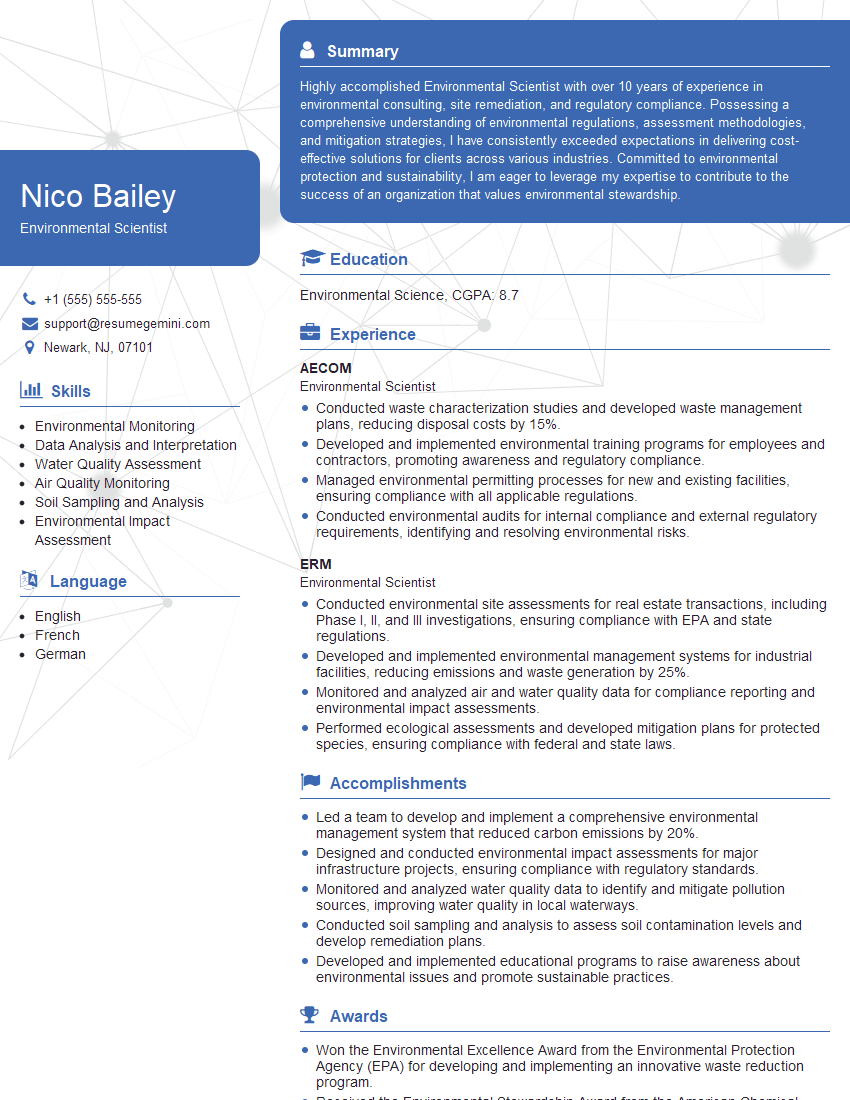
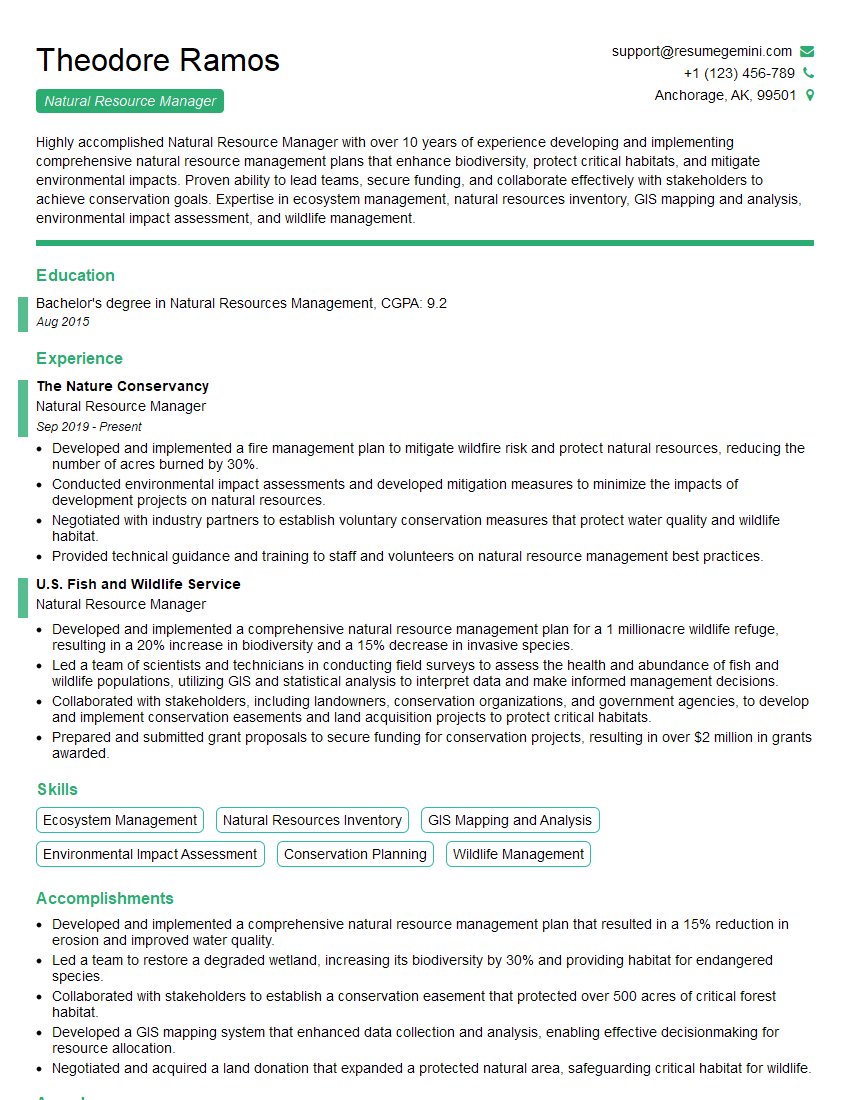
Mastering Tree Inventory Management opens doors to exciting career opportunities in arboriculture, forestry, urban planning, and environmental consulting. A strong understanding of these principles is highly valued by employers. To significantly boost your job prospects, create an ATS-friendly resume that highlights your skills and experience effectively. ResumeGemini is a trusted resource that can help you build a professional and impactful resume. Examples of resumes tailored to Tree Inventory Management are provided to guide you in creating your own compelling application materials.


Explore more articles
Users Rating of Our Blogs
Share Your Experience
We value your feedback! Please rate our content and share your thoughts (optional).
What Readers Say About Our Blog
Really detailed insights and content, thank you for writing this detailed article.
IT gave me an insight and words to use and be able to think of examples