Unlock your full potential by mastering the most common Tree Removal and Pruning interview questions. This blog offers a deep dive into the critical topics, ensuring you’re not only prepared to answer but to excel. With these insights, you’ll approach your interview with clarity and confidence.
Questions Asked in Tree Removal and Pruning Interview
Q 1. Describe the different pruning techniques used for different tree species.
Pruning techniques vary greatly depending on the tree species, its age, and the desired outcome. Some species, like maples, respond well to heading cuts (cutting back a branch to a lateral bud), while others, like oaks, are better suited to thinning cuts (removing entire branches at their origin). Improper pruning can lead to disease, decay, or even death.
- Thinning: Removing entire branches back to their point of origin. This improves air circulation and light penetration, reducing the risk of disease. This is ideal for oaks, elms, and many fruit trees.
- Heading: Cutting back a branch to a lateral bud or a smaller branch. This is often used to reduce the height or size of a branch but can lead to multiple weak shoots growing from the cut (the “witch’s broom” effect). It’s best used sparingly and on species that readily respond well, like maples or some flowering trees.
- Raising the crown: Removing lower branches to increase ground clearance. This is common around buildings or driveways. It’s important to avoid creating a large, open wound at the base of the remaining branches.
- Reduction: Shortening longer branches to balance the crown or reduce overall size. This requires precise cuts to avoid damaging the branch collar (the swollen area at the base of the branch).
For example, a young oak tree might benefit from thinning to establish a strong branch structure, while an older maple might need reduction pruning to manage its size near a house.
Q 2. Explain the proper procedures for safely removing a large tree.
Removing a large tree is a complex, high-risk operation requiring meticulous planning and execution. Safety is paramount. The process typically involves:
- Assessment: Thoroughly assess the tree’s size, location, surrounding obstacles (buildings, power lines), and soil conditions. We use specialized tools like climbing gear and visual inspection to identify potential hazards.
- Planning: Develop a detailed plan outlining the felling direction, escape routes, and the sequence of cuts. We must always consider the prevailing wind direction.
- Preparation: Clear the area around the tree, removing any obstacles that could cause injury or damage. We also establish a safety zone to keep people and property out of harm’s way.
- Felling: Using specialized saws and techniques, the tree is carefully felled in the planned direction. We use a combination of undercut and back cuts to control the fall.
- Debranching and Bucking: Once the tree is down, the branches are removed and the trunk is cut into manageable sections for easier removal or transport.
- Cleanup: All debris is removed from the site, leaving it clean and safe.
For instance, if a large oak is close to a house, we’d meticulously plan the fall to direct it away from the structure, perhaps using ropes and winches for added control. Every step is meticulously documented to ensure compliance and insurance purposes.
Q 3. What are the common signs of tree diseases and how are they addressed?
Tree diseases manifest in various ways. Early detection is key to effective treatment. Common signs include:
- Leaf discoloration: Yellowing, browning, or unusual spots can indicate fungal or bacterial infections.
- Dieback: Branches or twigs dying back from the tips is a symptom of several diseases, including cankers and root rot.
- Cankers: Sunken, discolored areas on the bark often signify fungal infections.
- Galls: Abnormal growths on branches or leaves may be caused by insects or diseases.
- Fruiting bodies: Mushrooms or conks growing on the tree can indicate advanced decay.
Addressing these issues depends on the specific disease. Sometimes, pruning infected branches, improving tree vigor through fertilization and watering, or applying fungicides are effective. In severe cases, removal of the tree might be necessary to prevent the spread of disease to other plants.
For example, a sudden wilting of leaves in a young tree might indicate verticillium wilt, a soil-borne disease that requires different management strategies than a fungal leaf spot.
Q 4. How do you assess tree health and stability?
Assessing tree health and stability involves a combination of visual inspection and sometimes specialized tools. We look for:
- Crown condition: Assess the density, symmetry, and overall vigor of the crown. Sparse or unbalanced crowns can indicate stress or disease.
- Trunk and branch structure: Check for cracks, cavities, decay, leaning, or other structural defects.
- Root system: Examine the root flare (the area where the roots transition from the trunk to the soil) to assess the root health and structural integrity. Exposed roots can indicate instability.
- Site conditions: Consider factors like soil type, drainage, and proximity to structures or utilities.
We might use tools like a resistograph to measure the internal wood decay, or a inclinometer to measure lean. It’s like giving the tree a thorough physical. Based on these assessments, we can determine the tree’s overall health and the risk of failure.
For example, a tree with significant decay in its lower trunk, combined with a shallow root system and a leaning trunk, is considered high-risk and would need immediate attention or removal.
Q 5. Describe your experience with various tree climbing techniques.
My experience encompasses various tree climbing techniques, including:
- Traditional climbing: Utilizing climbing spurs and ropes to ascend trees. This is a time-tested method but requires significant skill and experience.
- Saddle climbing: Employing a climbing saddle and ropes for more efficient and comfortable climbing. This is a common and safer method for many tasks.
- Throwline technique: Throwing a weighted line over a high branch to establish an initial anchor point for rope systems. This is crucial for reaching tall trees.
- Aerial lifts: Utilizing specialized equipment for larger jobs where climbing is impractical or dangerous. This offers better access for large crown pruning.
I am proficient in all these techniques and choose the most appropriate method based on the tree’s size, condition, and the task at hand. Safety is the top priority when choosing a method. For instance, I’d use aerial lifts for a large, high tree near power lines, but for a smaller tree with delicate branches, traditional climbing with precise movements might be best.
Q 6. What safety equipment and procedures do you utilize during tree removal?
Safety is our top priority. We use a comprehensive range of equipment and procedures, including:
- Personal Protective Equipment (PPE): Helmets, eye protection, gloves, high-visibility clothing, and chainsaw chaps are essential for every job.
- Climbing equipment: Ropes, harnesses, ascenders, descenders, and carabiners are meticulously inspected before each climb.
- Chainsaws: Properly maintained chainsaws with sharp chains are crucial for efficient and safe cutting. We also use safety wedges to control the direction of the fall.
- First aid kit: A fully stocked first aid kit is always on hand.
- Communication: We use radios to maintain clear communication between ground crew and climbers.
- Safety briefings: Pre-job briefings cover the specific hazards, safety procedures, and emergency plans for the task at hand.
Regular equipment maintenance and rigorous adherence to safety protocols are critical to minimizing risks. For example, we never work in high winds and always have spotters on the ground.
Q 7. How do you handle emergency situations involving falling trees or equipment malfunctions?
Emergency situations demand swift and decisive action. Our procedures include:
- Evacuation: Immediate evacuation of the danger zone if a tree or equipment malfunctions.
- Emergency communication: Contacting emergency services (911) if necessary.
- First aid: Providing first aid to any injured personnel.
- Damage control: Attempting to minimize further damage to property or the environment.
- Post-incident investigation: Thoroughly investigating the cause of the incident to prevent similar occurrences in the future.
For example, if a chainsaw malfunctions during a cut, the climber will immediately stop, secure themselves to the tree, and signal the ground crew for assistance. We have practiced these protocols extensively in training simulations. A thorough post-incident investigation identifies corrective actions so we learn from our experiences.
Q 8. Explain your understanding of different types of saws and their applications in tree care.
Choosing the right saw for a tree care job is crucial for safety and efficiency. Different saws are designed for different tasks and wood types.
- Chainsaws: These are workhorses for larger branches and tree felling. We use them for various cuts, including undercut, back cut, and hinge cuts, all requiring precise technique to control the fall. There are different bar lengths and power outputs to suit various diameters. For example, a smaller chainsaw might suffice for pruning smaller branches while a larger, more powerful model is necessary for felling large trees.
- Hand Saws: These offer more control and precision for intricate pruning work, especially in delicate situations where a chainsaw might be too aggressive. Bow saws, pruning saws, and folding saws all have their specific applications. For instance, a pruning saw is ideal for creating clean cuts on smaller branches to promote proper healing.
- Reciprocating Saws: These are useful for cutting through thicker branches or removing stubborn stumps, especially where there’s limited space for a chainsaw. Their versatility is a major advantage.
- Pole Saws: Extension poles allow for reaching higher branches without the need for a ladder, improving safety and efficiency significantly. They’re particularly useful for removing high branches or those difficult to access safely.
The selection of the appropriate saw depends heavily on factors like branch size, tree species, access, and the specific task. Safety is paramount, so proper training and the use of safety equipment (protective gear, etc.) are always essential.
Q 9. How do you identify different tree species?
Identifying tree species involves a combination of observation and knowledge. I utilize a multi-pronged approach:
- Leaves: Leaf shape, size, arrangement (alternate, opposite, whorled), edge (toothed, smooth, lobed), and texture are key identifiers. For instance, the palmate lobes of a maple leaf are very different from the needle-like leaves of a pine.
- Bark: Bark texture (smooth, rough, furrowed, scaly), color, and pattern are distinctive characteristics. For example, the peeling bark of a birch is easily recognizable.
- Twigs and Buds: Twig shape, lenticel patterns, and bud arrangement (opposite, alternate) give valuable clues. The arrangement of buds can be a decisive factor in identifying several species.
- Fruit and Flowers: The type of fruit (acorn, cone, samara) or flowers (shape, color) provides strong identification cues. The presence of acorns points towards an oak tree, while the cones are characteristic of conifers.
- Overall Shape and Growth Habit: The tree’s overall silhouette (pyramidal, weeping, rounded), branching pattern, and height can help distinguish species. For example, a weeping willow has a dramatically different growth habit compared to a columnar poplar.
Field guides, tree identification apps, and online resources are valuable tools, but having hands-on experience and understanding the local flora are paramount. I’ve personally been involved in identifying hundreds of species through years of practical experience.
Q 10. What are the legal requirements and permits needed for tree removal in your area?
Legal requirements for tree removal vary significantly depending on location. In my area, it’s critical to understand local ordinances and regulations before commencing any work. Generally, this involves:
- Permits: A permit might be required for the removal of trees exceeding a certain diameter or located within protected areas, especially if they are considered significant or are part of a protected landscape.
- Notice to Neighbors: In many areas, I am required to notify adjacent property owners about planned tree removal work, especially if the tree is near a property line or might affect their property.
- Environmental Impact Assessments: For larger-scale tree removal projects, a more comprehensive environmental assessment might be necessary to determine the impact and potential mitigation strategies.
- Utility Locating: Before any excavation or tree removal near underground utilities (power lines, gas lines, water pipes), contacting the local utility companies to locate these lines is mandatory to prevent damage and potential hazards.
I am thoroughly familiar with local regulations and ensure all necessary permits and approvals are obtained before any work starts. This proactive approach minimizes legal risks and ensures projects are conducted ethically and responsibly.
Q 11. Describe your experience with stump grinding and removal.
Stump grinding and removal are integral components of tree removal operations. Stump grinding uses a specialized machine with a rotating cutting head to pulverize the stump and roots below ground level. The resulting wood chips can be used as mulch or removed from the site. This is a considerably less invasive and disruptive process compared to total excavation. I have extensive experience operating various stump grinders, ranging from smaller, towable models for residential use to large, self-propelled units capable of handling significant stump sizes.
In situations where stump grinding isn’t feasible or desired (due to size, location, or client preference), I utilize excavation techniques to remove the entire stump and root system. This requires careful planning and execution to minimize soil disturbance and landscape disruption. I have extensive experience in both methods, choosing the optimal approach based on site conditions, client needs, and the specific characteristics of the stump.
Q 12. How do you manage tree debris and waste after a tree removal operation?
Managing tree debris and waste after a tree removal operation is crucial for environmental responsibility and site cleanup. Our process typically includes:
- Debris Sorting: We sort the debris into different categories, such as large logs, branches, small twigs, and leaves. This allows for efficient processing and disposal.
- Chipping: Branches and smaller pieces of wood are processed using chippers, creating wood chips that can be used as mulch or soil amendment on the site, reducing waste and providing a beneficial byproduct.
- Disposal: Larger logs and portions unsuitable for chipping may be disposed of responsibly at a licensed recycling facility or landfill, adhering to all local regulations.
- Recycling: Whenever possible, we prioritize recycling wood waste, turning it into reusable materials such as mulch or biomass fuel.
We always aim to minimize landfill waste and promote sustainable disposal practices. Our thorough cleanup ensures the site is left tidy and safe following the completion of the project.
Q 13. Explain your knowledge of tree planting and transplanting techniques.
Proper tree planting and transplanting are vital for successful tree establishment and long-term growth. My approach encompasses various factors:
- Site Assessment: Careful consideration of sunlight, soil type, drainage, and proximity to structures is crucial to choose an appropriate location and ensure the tree’s needs are met. Poor site selection often leads to poor growth or tree failure.
- Planting Techniques: Correct planting involves digging a hole twice as wide as the root ball, ensuring the root flare is visible above the ground level, and backfilling with suitable soil. I avoid overwatering and ensure proper soil compaction.
- Watering and Mulching: Regular watering and application of a layer of mulch helps retain soil moisture, suppress weeds, and regulate soil temperature, promoting healthy root development. The mulch should be organic, not touching the tree’s trunk.
- Transplanting: Transplanting involves carefully digging around the tree’s root ball, minimizing damage to the root system. Using a tree spade or specialized equipment is important for larger trees to maintain the root ball’s integrity. Careful planning and execution are critical to maximize the tree’s chances of survival after transplantation.
My experience includes handling a wide variety of tree sizes and species, adapting techniques to optimize survival rates and ensure the long-term health of each tree.
Q 14. What is your experience with aerial lifts and other specialized equipment?
Aerial lifts and other specialized equipment are vital for safe and efficient tree care, especially when dealing with tall trees or difficult-to-access areas. My experience includes the safe and proficient operation of:
- Aerial Lifts (Bucket Trucks): I am fully certified and experienced in operating bucket trucks, ensuring stability and safety at heights. This equipment allows for precise pruning and removal of high branches, enhancing both safety and efficiency.
- Crane Operations: For very large trees or complex removals, crane assistance might be necessary. I collaborate with qualified crane operators to ensure a safe and controlled process.
- Winches and Ropes: Utilizing ropes and winches to lower large branches or sections of a tree to the ground safely and efficiently. This requires proficiency in knot tying and rigging techniques.
Safety is always the top priority. I strictly adhere to all safety regulations and procedures when operating any specialized equipment, ensuring both personal safety and the protection of the surrounding environment.
Q 15. How do you mitigate risks associated with working near power lines?
Mitigating risks near power lines is paramount in tree work. It’s not just about avoiding contact; it’s about understanding the potential for electricity to arc across distances, especially in wet conditions. Our protocol always begins with contacting the local power company. They’ll typically mark the lines, de-energize them if necessary, or advise on safe working distances. We never assume anything. We use specialized equipment like insulated tools and bucket trucks with enhanced safety features.
For example, on a recent job near a high-voltage line, we didn’t just rely on the power company’s markings. We employed a qualified spotter to continuously monitor the lines and our equipment’s proximity. This constant vigilance, combined with our use of non-conductive tools, ensured everyone’s safety. We also have detailed pre-job planning that maps out safe pathways and includes contingency plans in case of unexpected events.
Essentially, working near power lines is a highly regulated and safety-critical operation. We meticulously follow all regulations and maintain a zero-tolerance policy for risky shortcuts.
Career Expert Tips:
- Ace those interviews! Prepare effectively by reviewing the Top 50 Most Common Interview Questions on ResumeGemini.
- Navigate your job search with confidence! Explore a wide range of Career Tips on ResumeGemini. Learn about common challenges and recommendations to overcome them.
- Craft the perfect resume! Master the Art of Resume Writing with ResumeGemini’s guide. Showcase your unique qualifications and achievements effectively.
- Don’t miss out on holiday savings! Build your dream resume with ResumeGemini’s ATS optimized templates.
Q 16. Describe your experience with cable bracing and other tree support systems.
Cable bracing and tree support systems are crucial for protecting trees from damage, particularly during storms or when dealing with weak or declining specimens. My experience includes installing a variety of systems, from simple guy wires to more complex systems involving multiple cables and anchors. We carefully assess each tree’s unique needs and select the most appropriate support method. For example, we’ve used dynamic cable systems that allow for some tree movement without causing damage to the structure. These are particularly useful for larger trees in high-wind areas. We also regularly utilize specialized techniques, like installing root bracing systems that help prevent soil erosion and enhance root stability. This preventative work goes a long way toward ensuring tree longevity. The selection of the right materials is also crucial. We carefully select high-strength materials that are resistant to the elements and are designed for long-term use. Proper installation and regular inspections are vital to guarantee the effectiveness of these systems.
Q 17. How do you address customer concerns and complaints related to tree work?
Addressing customer concerns is a critical part of our work. Transparency and open communication are key. When a complaint arises, we listen carefully, understanding their perspective and concerns without being defensive. We then clearly explain our process, our rationale behind any decisions made, and how we address their specific concerns. For instance, if there’s a concern about damage to the property, we immediately assess the situation, document the findings, and outline a plan to rectify the situation, whether it involves repair or compensation. We believe in empowering our customers with information and understanding, and follow up to ensure their satisfaction. Building trust is important; maintaining a positive relationship with our customers is paramount. Sometimes this might involve revisiting the site to reassure the customer or make small adjustments to exceed their expectations.
Q 18. Explain your understanding of tree biology and physiology.
Understanding tree biology and physiology is fundamental to our work. We need to know how trees grow, what stresses affect them (disease, pests, environmental factors), and how to identify those stresses through visual cues. For instance, leaf discoloration might indicate nutrient deficiency or disease. Understanding growth patterns allows us to predict potential problems and design pruning strategies that promote healthy growth. Knowledge of the tree’s vascular system helps us avoid damaging vital tissues during pruning or removal. We are familiar with common tree diseases and pests, allowing us to assess a tree’s health and recommend appropriate treatment or preventative measures. This understanding informs every decision we make, from pruning techniques to site preparation to hazard tree identification. We also consider the impact of environmental stressors, such as drought or extreme weather, on tree health.
Q 19. What is your experience with hazard tree identification and risk assessment?
Hazard tree identification and risk assessment are crucial aspects of our work. We use a combination of visual inspection and specialized tools to assess the risk presented by a tree. We carefully examine the tree’s overall structure, looking for signs of decay, structural weakness, or disease. We utilize instruments like resistographs to assess the internal condition of the wood, allowing us to determine the extent of decay, even if it’s not outwardly visible. We then assess the surrounding environment, considering factors like proximity to structures, power lines, and people. Based on this comprehensive assessment, we develop a detailed risk assessment that identifies potential hazards and outlines appropriate mitigation strategies. This could range from pruning or cabling to complete removal, depending on the level of risk. We follow established industry best practices and guidelines to ensure the accuracy and reliability of our risk assessments.
Q 20. Describe your experience working with different soil types and their impact on tree health.
Different soil types significantly impact tree health. For example, poorly drained clay soils can lead to root rot and oxygen deprivation, while sandy soils may lack sufficient nutrients and water retention. My experience encompasses working with a wide range of soil types, from heavy clays to loose sandy loams. We assess the soil conditions before any project to determine the best approach. This often includes soil testing to determine its composition, pH, and nutrient levels. Understanding the soil conditions helps us choose appropriate planting techniques and support structures, and informs our recommendations for fertilization and ongoing tree care. We are experienced in soil amendment techniques to improve drainage or nutrient availability, and we understand the importance of selecting tree species appropriate for the specific soil type to enhance tree survival and growth.
Q 21. How do you create a safe work plan for a complex tree removal project?
Creating a safe work plan for a complex tree removal is a multi-stage process. It starts with a thorough site assessment to identify all potential hazards, including nearby structures, utilities, and obstacles. Then, we develop a detailed plan that outlines the steps involved in removing the tree safely and efficiently. This includes selecting the appropriate equipment and techniques, establishing safe work zones, and assigning specific roles and responsibilities to each team member. We might utilize specialized rigging techniques and equipment for large, complex trees. For example, a large tree near a building might necessitate a phased approach, carefully removing sections to avoid damage. We document the entire plan, including detailed diagrams and risk assessments, and communicate it clearly to the entire team. Regular safety briefings and a strong emphasis on communication are crucial throughout the process. The plan is dynamic – we adapt it as needed throughout the project, responding to changing conditions or unforeseen circumstances.
Q 22. Explain your understanding of OSHA regulations concerning arboriculture.
OSHA (Occupational Safety and Health Administration) regulations are crucial in arboriculture to ensure worker safety and prevent accidents. They cover a wide range of aspects, from personal protective equipment (PPE) like harnesses, helmets, and eye protection, to safe work practices like proper rigging techniques and hazard communication. Specific standards relevant to tree work include fall protection requirements, which mandate the use of appropriate fall arrest systems when working at heights; requirements for using and maintaining equipment like chainsaws, ensuring they’re properly sharpened and maintained to prevent kickbacks; and lockout/tagout procedures for power equipment, preventing accidental starts. For example, before climbing a tree, I always ensure my harness is correctly fitted and inspected, my climbing ropes are free from damage, and that I’ve communicated the work plan with my crew. Failure to comply with OSHA regulations can lead to significant fines and, more importantly, serious injuries or fatalities.
Q 23. How do you maintain and care for your equipment?
Equipment maintenance is paramount for safety and efficiency. My routine includes daily inspections of all equipment before use, checking for wear and tear, loose bolts, or damage. Chainsaws, for instance, require regular sharpening, lubrication, and cleaning of the air filter. Ropes are inspected for fraying, damage, and proper knot integrity. I maintain a detailed log of all maintenance performed, including dates, equipment specifics, and any repairs or replacements. This log is invaluable for tracking equipment life and ensuring timely maintenance. Furthermore, all equipment undergoes a thorough, professional service at least annually, often more frequently for high-use items like chainsaws. This ensures compliance with manufacturer recommendations and optimal performance. This preventative maintenance not only reduces downtime but drastically reduces the risk of equipment failure during crucial operations.
Q 24. Describe your experience with using different types of ropes and rigging techniques.
My experience encompasses a wide range of ropes and rigging techniques. I’m proficient with static ropes for climbing and dynamic ropes for lowering limbs. I understand the importance of using appropriately rated ropes for specific loads and the risks associated with overloading. I regularly employ various rigging techniques, including the use of mechanical advantage systems (e.g., blocks and tackles) for larger limbs or trees, and specialized knots like the bowline, clove hitch, and arborist’s hitch, chosen based on the specific application and risk assessment. For example, when dealing with a large, heavy limb, I might use a 3:1 mechanical advantage system to reduce the strain on the rope and increase control during lowering. Knowing the strengths and weaknesses of different knots and rigging methods is critical for safely managing potential hazards during tree removal.
Q 25. How do you ensure the safety of your crew and the public during tree removal operations?
Ensuring crew and public safety is my top priority. Before any operation, we conduct a thorough risk assessment, identifying potential hazards and developing a detailed safety plan. This includes establishing safe zones, using appropriate signage and barriers to control public access, and employing clear communication protocols among the crew. We regularly use spotters to monitor the work area and ensure that no one is in harm’s way, especially during felling operations. All crew members are trained in proper safety procedures, including emergency response protocols. We utilize appropriate PPE, including hard hats, safety glasses, gloves, and hearing protection. For example, before felling a tree near a road, we’ll close the road and use traffic cones and signage to direct traffic away from the danger zone. We continuously assess risks throughout the operation and adapt our procedures as needed, prioritizing everyone’s safety.
Q 26. What is your experience with using herbicide for tree management?
I have extensive experience using herbicides for tree management, specifically for targeted removal of unwanted species or for controlling the size and growth of existing trees. I always follow the label instructions and local regulations. My work includes applying herbicides using various methods, including basal bark treatments, cut stump treatments, and foliar applications, selecting the method based on the target species and the desired outcome. I am also knowledgeable about the environmental impacts of herbicide use and always strive to minimize harm to non-target plants and wildlife. For instance, when dealing with an invasive species, I might use a systemic herbicide applied to the base of the tree, ensuring targeted removal with minimal impact on surrounding vegetation. Safe and responsible herbicide application requires a thorough understanding of the chemicals used and precise application techniques. I maintain all necessary certifications for proper herbicide use and disposal.
Q 27. Explain your approach to dealing with difficult or challenging trees.
Challenging trees require careful planning and execution. This might involve trees with compromised structural integrity, difficult access locations, or proximity to structures. My approach starts with a thorough assessment of the tree’s condition, identifying any potential hazards, and developing a detailed plan that addresses these challenges. This often includes using specialized equipment like aerial lifts or advanced rigging techniques to access and safely manage the tree. For example, I once had to remove a large, leaning oak near a house. Due to the proximity, I used a highly controlled felling technique, employing specialized ropes and rigging to direct the tree’s fall away from the house. The key is patience, meticulous planning, and an understanding of the tree’s biology and mechanics, always prioritizing safety.
Q 28. How do you stay up-to-date with the latest advancements in arboriculture?
Staying current in arboriculture requires continuous learning. I regularly attend industry conferences and workshops, participating in continuing education courses to stay informed on new techniques, technologies, and safety standards. I also subscribe to industry journals and publications, and actively participate in professional organizations, networking with other arborists and exchanging best practices. Furthermore, I actively seek out opportunities to work on diverse projects, allowing me to enhance my skills and learn from new challenges. Keeping abreast of advancements ensures I provide the safest and most effective services, constantly improving my proficiency in this dynamic field.
Key Topics to Learn for Tree Removal and Pruning Interview
- Tree Biology and Identification: Understanding different tree species, their growth patterns, and vulnerabilities is crucial for safe and effective pruning and removal.
- Pruning Techniques: Mastering various pruning methods (crown reduction, thinning, raising, etc.) and their applications based on tree health and desired outcomes.
- Safety Procedures and Regulations: Deep understanding of OSHA standards, proper use of safety equipment (harnesses, chainsaws, etc.), and risk assessment protocols for working at heights.
- Equipment Operation and Maintenance: Proficiency in operating and maintaining various tools and equipment used in tree care, including chainsaws, chippers, and aerial lifts.
- Tree Removal Techniques: Knowledge of different felling techniques, rigging procedures, and safe handling of large branches and felled trees.
- Pest and Disease Identification: Ability to identify common tree pests and diseases, and understand appropriate treatment or removal strategies.
- Site Assessment and Planning: Developing safe and efficient work plans, considering factors like terrain, proximity to structures, and potential hazards.
- Customer Communication and Client Relations: Effectively communicating with clients about project scope, potential risks, and post-service care.
- Problem-Solving and Decision-Making: Analyzing complex situations, adapting to unforeseen challenges, and making sound judgments in high-pressure environments.
- Legal and Insurance Aspects: Basic understanding of liability issues, insurance requirements, and relevant regulations pertaining to tree removal and pruning.
Next Steps
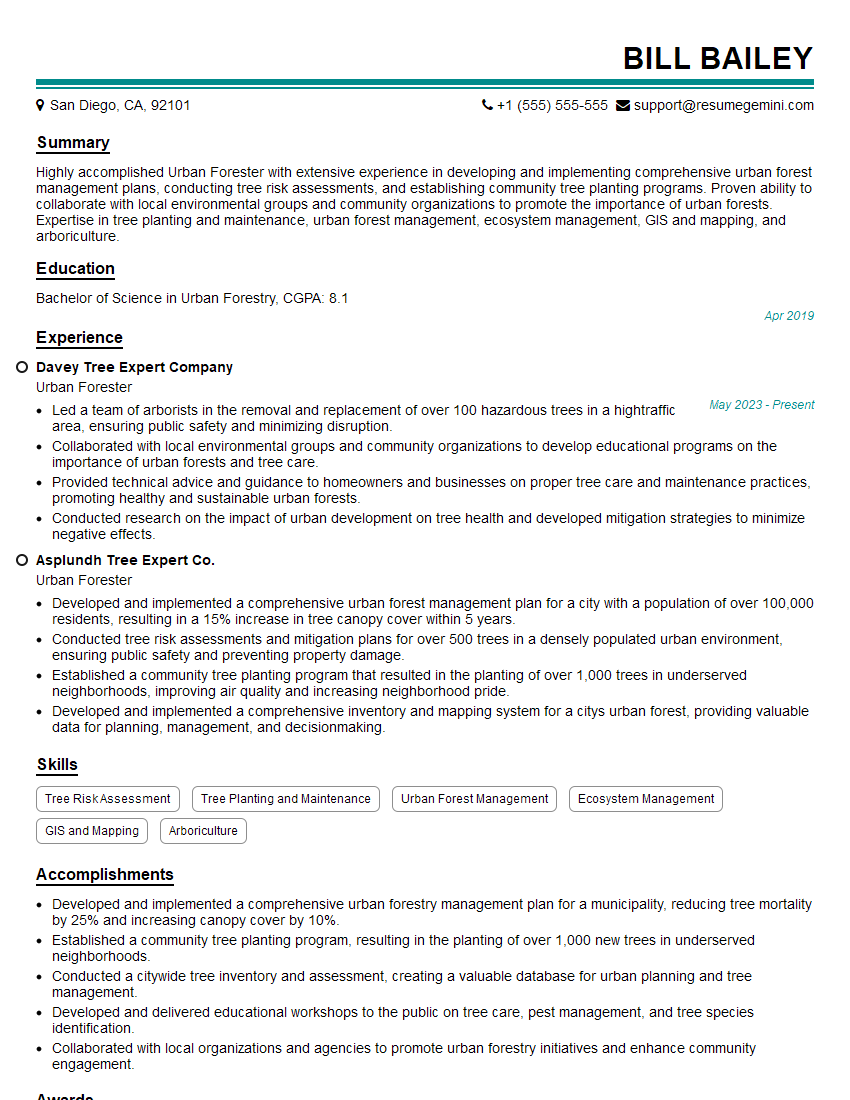
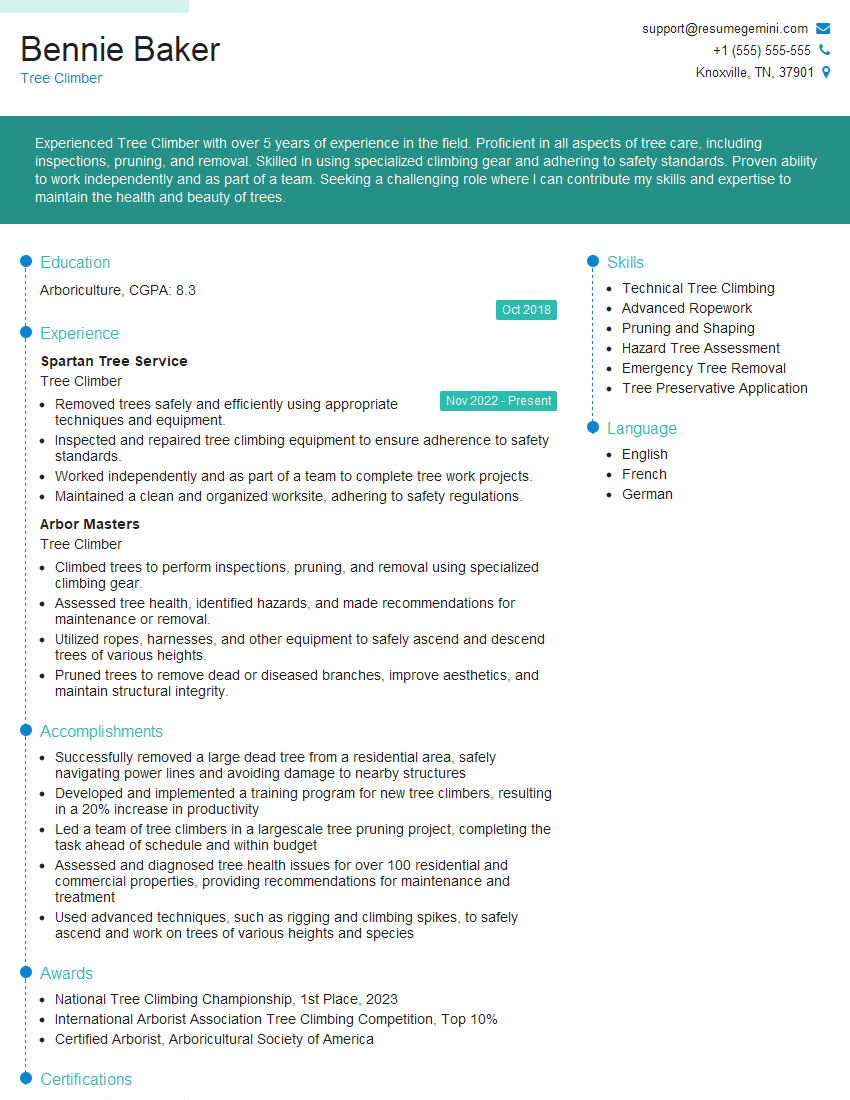
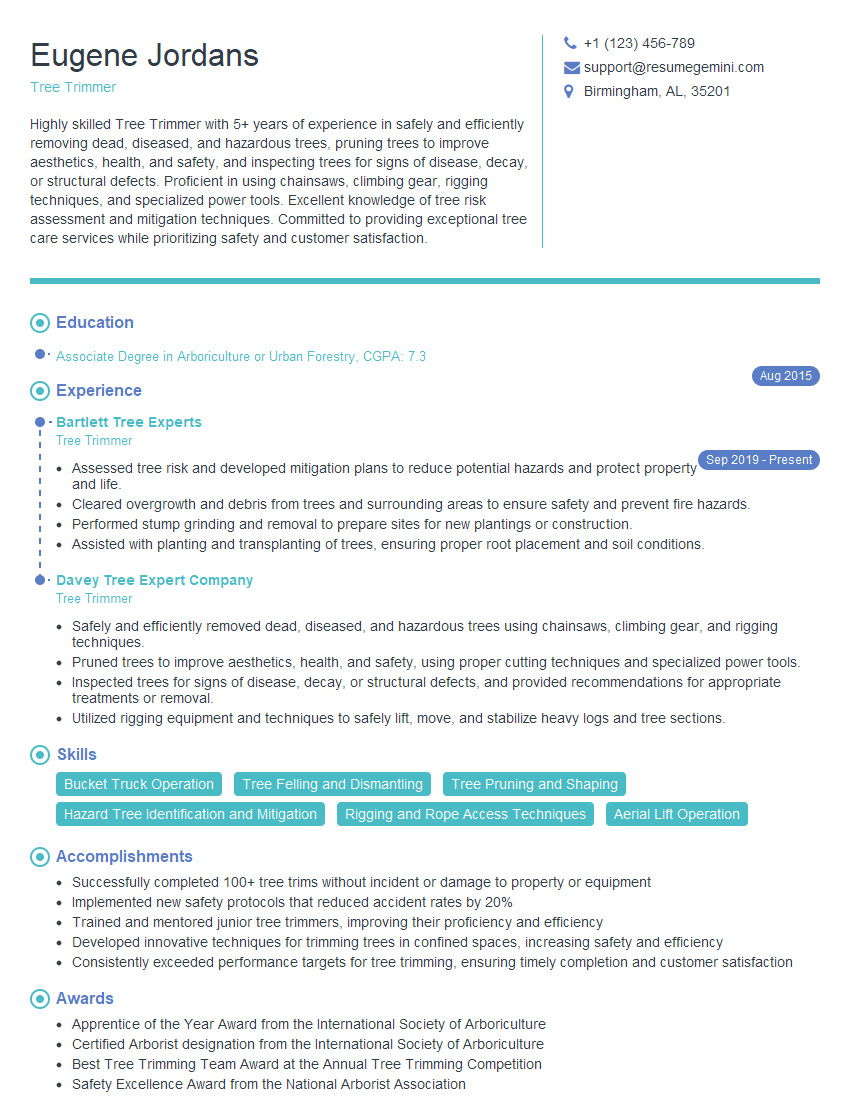
Mastering tree removal and pruning opens doors to a rewarding career with excellent growth potential. This specialized skillset is highly sought after, offering opportunities for advancement and increased earning capacity. To maximize your job prospects, crafting an ATS-friendly resume is critical. ResumeGemini is a trusted resource to help you build a professional and impactful resume that showcases your skills and experience effectively. Examples of resumes tailored to the Tree Removal and Pruning industry are available to guide you through the process.



Explore more articles
Users Rating of Our Blogs
Share Your Experience
We value your feedback! Please rate our content and share your thoughts (optional).
What Readers Say About Our Blog
Really detailed insights and content, thank you for writing this detailed article.
IT gave me an insight and words to use and be able to think of examples