Interviews are opportunities to demonstrate your expertise, and this guide is here to help you shine. Explore the essential Trenching and Excavation interview questions that employers frequently ask, paired with strategies for crafting responses that set you apart from the competition.
Questions Asked in Trenching and Excavation Interview
Q 1. Describe your experience with different types of trenching methods.
My experience encompasses a wide range of trenching methods, each chosen based on factors like soil conditions, trench depth, and proximity to utilities. These include:
- Hand Excavation: Ideal for shallow trenches in areas with limited access or where precision is paramount. I’ve used this method extensively for delicate utility work, ensuring minimal disturbance to surrounding infrastructure. For example, carefully hand-digging around a gas line to avoid damage.
- Mechanical Excavation: This involves using equipment like excavators, backhoes, and trenchers. My proficiency extends to various sizes and types of these machines, adapting techniques based on soil characteristics. A recent project involved using a mini-excavator to create a narrow trench through compacted soil near a building foundation, requiring careful maneuverability.
- Hydraulic Trenching: This method utilizes a specialized machine that uses a rotating chain or wheel to cut the trench, increasing efficiency on large-scale projects. I’ve been responsible for overseeing the use of hydraulic trenchers on highway construction sites, ensuring safe and efficient trenching operations.
- Directional Boring: For crossing obstacles like roads or other utilities without extensive open trenching, directional boring is a crucial technique. I’ve supervised several projects using this method, minimizing surface disruption and environmental impact.
The selection of the most appropriate method requires a thorough understanding of the project specifics and a keen eye for safety.
Q 2. What safety measures do you implement when working near underground utilities?
Safety is my top priority when working near underground utilities. My approach involves a multi-layered strategy:
- One-Call Notification: Before any excavation begins, I always ensure a ‘one-call’ notification is made to the local utility companies to locate and mark all underground lines. This is non-negotiable, preventing accidental damage and potential hazards.
- Potholing: After locating the utilities, I always conduct potholing—carefully excavating a small test hole to visually confirm the exact location and depth of each utility line before further excavation. This minimizes the risk of striking a line.
- Hand Excavation Near Utilities: When working within a specific distance of a utility line, hand excavation is always preferred to prevent accidental damage caused by heavy machinery.
- Spotters and Communication: On larger projects, I implement a system of spotters to monitor the excavator’s operation, ensuring it maintains a safe distance from marked utilities. Clear and constant communication is critical to prevent accidents.
- Specialized Equipment: In some cases, employing vacuum excavation or other non-destructive digging methods proves necessary to avoid utility damage, especially in sensitive areas.
This comprehensive approach helps create a safe working environment and avoids costly repairs or service disruptions.
Q 3. Explain your understanding of OSHA regulations regarding trenching and excavation.
My understanding of OSHA regulations concerning trenching and excavation is extensive. I’m intimately familiar with 29 CFR Part 1926, Subpart P, which outlines detailed requirements for protecting workers in trenches and excavations. Key aspects I consistently adhere to include:
- Soil Classification: Accurate soil classification is crucial in determining the appropriate protective systems (shoring, sloping, or benching).
- Protective Systems: Understanding the requirements for shoring, sloping, and benching based on soil type and trench depth is paramount. I ensure proper installation and inspection of these systems to meet OSHA standards.
- Emergency Action Plans: Developing and implementing emergency action plans, including procedures for rescue operations in case of a trench collapse, is a crucial aspect of compliance.
- Competent Person: I understand the role and responsibilities of a Competent Person, who is responsible for identifying and mitigating hazards in the trenching and excavation process. I routinely serve in this capacity.
- Inspection and Documentation: Regular inspection of trenches and protective systems is crucial, along with proper documentation of inspections, ensuring compliance with regulations.
Staying updated on OSHA updates and attending relevant safety training programs is essential to maintain compliance and ensure worker safety.
Q 4. How do you determine the appropriate shoring or sloping requirements for a trench?
Determining appropriate shoring, sloping, or benching requirements for a trench is a critical aspect of safe excavation. This depends on several factors, primarily:
- Soil Type: The soil’s classification (e.g., Type A, B, or C) is determined through visual observation and, when necessary, soil testing. Type A soils are stable and require less protection, whereas Type C soils are unstable and require more robust protection.
- Trench Depth: OSHA mandates protective systems when a trench exceeds a certain depth (typically 5 feet). The required system becomes more complex with increased depth.
- Surrounding Conditions: Factors like groundwater, vibrations from nearby construction, and the presence of utilities influence the choice and design of the protective system.
I use engineering tables and charts provided in OSHA regulations and other industry standards to determine the specific requirements based on these factors. For example, a deep trench in unstable Type C soil would necessitate a robust shoring system, likely trench boxes or a shield system, whereas a shallower trench in stable Type A soil might only require sloping.
I always consult with qualified engineers when dealing with complex soil conditions or deeper trenches, ensuring the selected protective system is adequate for the job.
Q 5. What types of excavation equipment are you proficient in operating?
My experience in operating excavation equipment is extensive and includes:
- Excavators (various sizes): I’m proficient in operating mini-excavators for precise work in confined spaces, as well as larger excavators for major earthmoving tasks. I have a strong understanding of their operational limitations and safety protocols.
- Backhoes: Experienced in using backhoes for trenching, loading materials, and other excavation activities. I understand how to utilize different bucket sizes and attachments efficiently and safely.
- Trenchers: Proficient in operating both chain trenchers and wheel trenchers for creating various trench widths and depths, always prioritizing accuracy and safety.
- Loaders: Experience in operating loaders for moving excavated materials, ensuring efficient site cleanup and material management.
I am certified in the safe operation of all equipment I use, and I regularly undergo refresher training to stay up-to-date on best practices and safety procedures.
Q 6. Describe your experience with soil classification and its impact on excavation techniques.
Soil classification is fundamental to excavation. Accurate classification determines the appropriate excavation methods and protective systems required. I’m familiar with the Unified Soil Classification System (USCS) and can identify various soil types such as:
- Gravelly Soils: These typically are well-drained and relatively stable, requiring less robust protection.
- Sandy Soils: Can be relatively stable but can become unstable when saturated with water.
- Silt and Clay Soils: These are cohesive soils, meaning they stick together. However, their stability varies significantly based on moisture content. They can become very unstable when saturated, requiring robust protection.
Impact on Excavation Techniques:
The soil type dictates the equipment and methods used. For example, cohesive soils might require hand excavation near utilities to avoid damage, while well-drained gravelly soils can be excavated more easily using mechanical equipment. The stability of the soil also dictates the need for protective systems—sloping, benching, or shoring—to prevent cave-ins. I always conduct thorough soil assessments before determining the appropriate excavation plan.
For instance, on a recent project involving clay soil, we used a slower, more methodical approach with careful monitoring of moisture content to avoid collapse.
Q 7. How do you handle unexpected ground conditions during excavation?
Handling unexpected ground conditions is a crucial skill in excavation. My approach involves:
- Immediate Stoppage: If any unexpected conditions are encountered, such as encountering unstable soil, encountering unexpected utilities, or encountering excessive groundwater, excavation is immediately stopped to allow for assessment.
- Re-evaluation: The unexpected condition is carefully assessed. This may involve taking soil samples, additional utility locating, or lowering the water table.
- Revised Plan: A revised excavation plan is developed based on the new information. This may involve adjusting the excavation method, using different equipment, or implementing additional protective systems.
- Consultation: If the unexpected condition is complex, I consult with geotechnical engineers or other specialists to obtain guidance on safe procedures.
- Documentation: All unexpected conditions and corrective actions are meticulously documented for future reference and to ensure compliance.
For example, during a recent project, we unexpectedly encountered a high water table. We had to implement a dewatering system and revise the shoring system to maintain safety before continuing. Thorough documentation ensured we could effectively manage similar situations in future projects.
Q 8. Explain your process for ensuring site safety during trenching and excavation activities.
Site safety during trenching and excavation is paramount. My process begins with a thorough pre-excavation assessment, identifying potential hazards like underground utilities, unstable soil conditions, and proximity to existing structures. This involves reviewing site plans, contacting utility companies for locates, and possibly conducting soil testing.
Next, I implement a comprehensive safety plan that includes:
- Engineering Controls: This is the most effective approach. We use shoring, sloping, or trench boxes appropriate for the soil type and depth to prevent collapses. I ensure all these are installed and inspected regularly by a qualified professional. The specifics depend on the soil classification (e.g., Type A, B, or C), and I meticulously follow OSHA regulations.
- Administrative Controls: This includes daily toolbox talks emphasizing safety procedures, proper equipment use, and hazard identification. We maintain detailed records of inspections, training, and any incidents. A clear communication hierarchy ensures prompt responses to any safety concerns.
- Personal Protective Equipment (PPE): Hard hats, safety glasses, high-visibility clothing, and appropriate gloves are mandatory. We also use safety harnesses and lifelines for workers in deeper trenches.
- Emergency Procedures: A clear emergency action plan is in place, including procedures for rescue and contacting emergency services. Workers are trained on the plan, and we conduct regular drills.
Finally, I ensure continuous monitoring of the site throughout the excavation process to promptly address any emerging safety issues. Regular inspections are documented, and any necessary corrective actions are taken immediately. A safety-first culture is crucial; I actively foster this through consistent training and open communication.
Q 9. What are the common causes of trench collapses and how can they be prevented?
Trench collapses are tragically common, often stemming from a failure to properly account for soil conditions and implement appropriate protective systems. Common causes include:
- Unstable Soil: Soil types like Type C (cohesive soils with poor internal strength) are particularly prone to collapse, especially when wet. Ignoring the soil classification is a significant risk factor.
- Insufficient Shoring or Sloping: Failing to adequately support the trench walls is a major cause. Improperly installed or inadequate shoring systems can fail under pressure.
- Vibration or Ground Movement: Nearby construction activities, heavy machinery, or even traffic can destabilize the trench walls, leading to collapse.
- Water Infiltration: Water significantly weakens soil, increasing the risk of collapse. Proper drainage measures are essential.
- Overburden Pressure: The weight of the soil above the trench exerts pressure on the walls. Insufficient support leads to failure.
Preventing trench collapses requires a multi-pronged approach, beginning with a thorough site assessment. Appropriate shoring, sloping, or trench boxes must be used based on the soil type and trench depth. Regular inspections, proper drainage, and controlled site activities are crucial. We avoid working near the edge of trenches. I always emphasize that worker safety supersedes schedule pressures. Adhering to OSHA regulations and best practices is not just about compliance; it’s about saving lives.
Q 10. Describe your experience with trench box installation and inspection.
My experience with trench box installation and inspection is extensive. I am familiar with various types of trench boxes, from aluminum to steel, and understand the importance of selecting the right box for the specific soil conditions and trench depth. The process begins with confirming the trench box specifications align with the design and engineering calculations, ensuring adequate capacity for the anticipated loads and soil pressures.
Installation involves meticulous attention to detail. The trench box must be properly seated on a stable base, ensuring it’s level and plumb. Any gaps between the box and the trench walls must be minimized to prevent soil from penetrating. We use appropriate bracing and anchoring systems to secure the trench box in place, particularly in less stable ground. Once installed, a thorough inspection is crucial, checking for any signs of damage, deformation, or instability. This includes verifying that all bolts are tight and that the box’s structural integrity is sound. Regular inspections throughout the excavation process are vital to ensure ongoing safety. Documentation is key; I meticulously record each step of the installation and inspection processes.
Q 11. How do you manage potential hazards associated with working near traffic or other construction activities?
Managing hazards near traffic or other construction activities requires a layered approach. First, a thorough risk assessment identifies potential hazards, including vehicle traffic, pedestrian movement, falling objects from other construction sites, and the proximity of active equipment. Based on this assessment, we implement a robust traffic control plan. This often includes:
- Traffic Barriers: Using appropriate barricades, cones, and signage to delineate the work area and redirect traffic away from the excavation.
- Flag Persons: Employing flag persons to guide traffic, especially in areas with limited visibility.
- Warning Lights and Signals: Utilizing warning lights, flashing beacons, and other signals to alert drivers and pedestrians to potential hazards.
- Reduced Speed Limits: Implementing temporary speed restrictions in the vicinity of the work zone to reduce the risk of accidents.
- Coordination with Other Contractors: Maintaining clear communication and coordination with other construction activities to ensure safe working distances and avoid conflicts.
Regular monitoring of the traffic control measures is crucial to ensure effectiveness. We also consider alternative approaches if necessary – for example, conducting work outside peak hours or using different equipment to minimize the disruption to traffic. The safety of both workers and the public is always my top priority.
Q 12. Explain your knowledge of different types of backfilling materials and techniques.
Backfilling materials and techniques vary depending on the site conditions and project requirements. Common materials include:
- Compacted Soil: This is often the most economical and readily available material, but its suitability depends on the soil’s properties. It needs to be properly compacted to prevent settlement.
- Select Material: This involves carefully grading and classifying soil to ensure optimal compaction and drainage. It’s often preferred for critical applications.
- Granular Materials: Materials like sand and gravel offer superior drainage and compaction characteristics, often used where settlement is a major concern.
- Recycled Materials: In sustainable construction, recycled materials like crushed concrete or asphalt are increasingly used, offering environmental benefits.
Backfilling techniques also vary. We typically use layered compaction, with each layer being compacted to the required density before the next layer is added. This ensures uniform settlement and stability. The specific compaction equipment used (e.g., vibratory rollers, plate compactors) depends on the material and site conditions. For utilities, we employ careful hand-backfilling to avoid damage.
Q 13. How do you ensure proper compaction of backfill material?
Proper compaction is crucial for the long-term stability and integrity of the backfilled area. It prevents settlement, which can damage structures or utilities. We achieve proper compaction through a combination of techniques:
- Layered Compaction: Backfill is placed in layers, typically 6-12 inches, and each layer is compacted thoroughly before adding the next. This ensures uniform density.
- Appropriate Equipment: We select compaction equipment based on the material being used, ensuring the right level of compaction energy for optimal density. This might include vibratory rollers, plate compactors, or hand tampers for smaller areas.
- Moisture Content Control: The moisture content of the soil impacts compaction significantly. Too much or too little moisture will reduce compaction efficiency. We control this through pre-wetting or pre-drying when needed.
- Density Testing: In-situ density tests, such as nuclear density gauges or sand cone methods, are used regularly to verify that the compaction requirements are met. This ensures that the backfill meets the specified density standards.
Proper compaction isn’t just about following the steps; it’s about understanding the soil’s behavior and using the right techniques to ensure a stable, long-lasting result. I always maintain meticulous records of the compaction process, including the type of equipment used, the number of passes, and the measured density of the backfill.
Q 14. What are the signs of potential ground instability?
Recognizing signs of potential ground instability is critical for preventing accidents. These signs can be subtle or obvious, and careful observation is essential. Key indicators include:
- Visible Cracks or Settlements: Cracks in the ground, pavement, or nearby structures can indicate underlying instability. Settlement, even minor, could be a warning sign.
- Changes in Water Drainage: Sudden changes in water flow or the appearance of new springs or seeps can suggest changes in the ground’s subsurface conditions.
- Vegetation Changes: Unusually lush or wilted vegetation can be an indicator of changes in soil moisture or subsurface stability.
- Soil Behavior: During excavation, unusual soil behavior (e.g., excessively soft or loose soil, or unexpected moisture levels) is a clear warning sign.
- Recent Earthworks or Fill: Areas with recent earthworks or fill are often more prone to instability and require more careful assessment.
- Past History of Slides or Failures: Checking for past incidents of ground movement in the area helps assess risk.
Whenever these signs are observed, immediate action is necessary, often involving halting work until a thorough geotechnical assessment is conducted and appropriate mitigation measures implemented. Ignoring these signs can have severe consequences, so vigilance and proactive action are always paramount.
Q 15. Describe your experience with using ground penetrating radar (GPR) or other utility detection methods.
Ground Penetrating Radar (GPR) is an invaluable tool for subsurface utility engineering (SUE) before any excavation begins. It uses electromagnetic pulses to create a subsurface image, revealing the location of buried utilities like pipes, cables, and tanks. My experience includes operating various GPR units, interpreting the resulting data, and creating accurate maps of underground infrastructure. For instance, on a recent project involving the installation of a new water main, we used GPR to identify the precise location of existing gas lines and fiber optic cables, preventing accidental damage during excavation. This prevented costly repairs and downtime, ensuring a safe and efficient project. Beyond GPR, I’m also proficient in using other utility detection methods such as electromagnetic locators and ground-penetrating radar which are vital to preventing accidents.
The process involves careful survey planning, proper equipment calibration, and meticulous data interpretation. Understanding the different signal characteristics of various utilities is crucial for accurate mapping. For example, metal pipes generate a stronger signal than plastic pipes, and the depth and size of the utility also affect the signal strength. Experience allows one to distinguish between true positives and potential false positives that can arise from ground conditions or other interferences.
Career Expert Tips:
- Ace those interviews! Prepare effectively by reviewing the Top 50 Most Common Interview Questions on ResumeGemini.
- Navigate your job search with confidence! Explore a wide range of Career Tips on ResumeGemini. Learn about common challenges and recommendations to overcome them.
- Craft the perfect resume! Master the Art of Resume Writing with ResumeGemini’s guide. Showcase your unique qualifications and achievements effectively.
- Don’t miss out on holiday savings! Build your dream resume with ResumeGemini’s ATS optimized templates.
Q 16. How do you communicate effectively with other members of the construction crew?
Effective communication on a construction site is paramount for safety and efficiency. I believe in fostering a collaborative environment through open and clear communication. I regularly use a combination of verbal and written communication methods, ensuring everyone understands the task at hand. For instance, before starting a trenching operation, I hold a pre-job briefing with the crew, outlining the plan, highlighting potential hazards, and clarifying each team member’s role and responsibilities.
I use clear and concise language, avoiding technical jargon unless it’s essential and defined. If there are any misunderstandings or concerns, I facilitate open discussion and ensure everyone has a chance to contribute. I also maintain a daily log to document any changes, issues, or updates, which helps maintain clarity and transparency within the team. This promotes a safety culture where everyone feels comfortable voicing concerns without hesitation.
Q 17. Explain your experience with completing daily safety inspections.
Daily safety inspections are a non-negotiable aspect of my work, forming the bedrock of a safe work environment. My process begins with a visual inspection of the trenching site, paying close attention to the trench box integrity, the stability of the soil, the presence of any hazards such as standing water or unstable materials, and ensuring proper shoring is in place and functioning as designed.
I check the equipment, ensuring that all machinery and tools are in good working order and that Personal Protective Equipment (PPE) is readily available and being used correctly. I document all observations in a daily safety inspection report, flagging any potential hazards or deficiencies. Any issues identified are immediately addressed, and I communicate these to the relevant personnel. For example, if I notice soil instability, I’ll immediately halt work and implement corrective measures such as additional shoring before resuming operations. This proactive approach helps prevent accidents before they happen.
Q 18. How do you address concerns about worker safety?
Addressing worker safety concerns is my top priority. I create a safe and open environment where workers feel comfortable raising any concerns without fear of retribution. I actively listen to their concerns, investigate thoroughly, and take immediate action. This may involve providing additional training, modifying procedures, or replacing defective equipment. For example, if a worker expresses concern about the stability of a trench wall, I would immediately stop the work, re-evaluate the situation, and implement additional shoring or other safety measures as needed.
Furthermore, I regularly reinforce safe work practices through training sessions and toolbox talks, emphasizing the importance of hazard recognition, risk assessment, and the proper use of PPE. I believe that a proactive approach to safety, involving continuous improvement and open communication, is crucial for creating a hazard-free work environment.
Q 19. What is your experience with emergency procedures related to trench collapses?
Emergency procedures for trench collapses are critical and well-rehearsed. My training includes detailed knowledge of emergency response protocols, including immediate evacuation of the trench, securing the area to prevent further collapse, and contacting emergency services. We have practiced emergency response drills regularly, ensuring everyone knows their roles and responsibilities.
This includes identifying and using emergency rescue equipment, coordinating with emergency responders, and providing vital information about the trench’s dimensions, soil conditions, and the location of trapped workers. We emphasize immediate action to preserve life and mitigate further risk. A key part of our training includes understanding the importance of preventing secondary collapses, ensuring that the rescue operation itself does not put rescuers at risk.
Q 20. Describe your understanding of site-specific safety plans.
Site-specific safety plans are crucial for adapting general safety guidelines to the unique characteristics of each job site. These plans take into consideration specific hazards, soil conditions, and the nature of the work. My understanding involves reviewing and contributing to the creation of these plans, ensuring that they incorporate best practices and comply with all relevant regulations.
For example, a site-specific safety plan would detail the type of shoring or trench protection needed based on soil type and trench depth, and it would outline procedures for dealing with potential hazards specific to that site, like the presence of underground utilities or the risk of groundwater. I actively participate in the development and review of these plans, ensuring that all potential hazards are considered, and appropriate control measures are implemented.
Q 21. How do you monitor atmospheric conditions within a trench?
Monitoring atmospheric conditions within a trench is essential to prevent incidents caused by hazardous atmospheres. This primarily involves testing for oxygen deficiency and the presence of toxic gases like methane or hydrogen sulfide, which can accumulate in confined spaces. I utilize specialized gas detectors to monitor oxygen levels and identify the presence of potentially dangerous gases.
The frequency of monitoring depends on factors like soil type, depth of the trench, and the presence of any known sources of hazardous gases. If unsafe conditions are detected, the trench must be immediately ventilated or work must be halted until safe levels are restored. Continuous monitoring and regular testing, combined with robust ventilation strategies, are crucial for ensuring a safe working environment within the trench.
Q 22. What are the limitations of different excavation methods?
Different excavation methods each have their own set of limitations, heavily influenced by factors like soil type, project scope, and environmental concerns. For example, hand excavation, while precise and suitable for delicate work near utilities, is slow and labor-intensive, impractical for large-scale projects. Mechanical excavation, using excavators or backhoes, is much faster but can be less precise, potentially causing damage to underground utilities if not carefully managed. Blast excavation, used for extremely hard rock, carries significant safety risks and environmental concerns due to vibrations and potential airborne debris. Finally, hydraulic excavation, using high-pressure water jets, is excellent for delicate work near utilities but is less efficient in hard or rocky soils and can cause soil erosion.
- Hand Excavation Limitations: Time-consuming, physically demanding, limited depth and reach.
- Mechanical Excavation Limitations: Potential for utility damage, ground instability, noise pollution.
- Blast Excavation Limitations: Safety hazards, environmental impact, potential damage to nearby structures.
- Hydraulic Excavation Limitations: Inefficient in hard soils, potential for soil erosion, high initial investment.
Q 23. How do you select appropriate personal protective equipment (PPE) for trenching and excavation work?
Selecting appropriate PPE for trenching and excavation is crucial for worker safety. The choice depends on the specific hazards present. This includes, but isn’t limited to, hard hats to protect against falling objects, high-visibility clothing to improve visibility, safety glasses or goggles to protect eyes from flying debris, steel-toe boots to protect feet from dropped objects or impacts, and appropriate gloves for hand protection against cuts, abrasions, and chemical exposure. In situations with potential for cave-ins, personal fall arrest systems may be necessary. For example, in a project involving a deep trench in unstable soil, I would ensure all workers used hard hats, high-visibility vests, safety glasses, steel-toe boots, and a full-body harness with a lifeline anchored securely to a stable point outside the trench. The specific PPE needed also depends on the tools used. Working with a jackhammer would require hearing protection, while working with chemicals would require specialized chemical-resistant gloves and clothing.
Q 24. Explain your experience with different types of soil and their properties.
My experience encompasses a wide range of soil types, each possessing unique properties impacting excavation methods and safety. I’ve worked extensively with clay soils, which are cohesive but can become very slippery when wet and prone to collapse if not properly supported. Sandy soils are generally well-drained but can be unstable and susceptible to erosion and collapse, requiring careful shoring. I’ve also worked with rocky soils, requiring specialized techniques like blasting or rock breaking, and silty soils which exhibit characteristics of both clay and sand, leading to unpredictable behavior. Understanding the soil’s shear strength, cohesion, and angle of repose is critical for determining appropriate excavation and shoring methods. For instance, a project involving a deep trench in clay soil would demand the use of trench boxes or other robust shoring systems, while a sandy soil site might necessitate sloped excavation to mitigate collapse risk.
Q 25. How do you ensure compliance with environmental regulations during excavation?
Ensuring environmental compliance during excavation is paramount. This involves understanding and adhering to local, state, and federal regulations concerning soil erosion and sediment control, groundwater protection, and hazardous waste management. Before any excavation begins, I’d conduct a thorough site assessment to identify any potentially sensitive environmental areas, such as wetlands or protected habitats. This assessment informs the development of a comprehensive environmental protection plan that includes measures like installing silt fences, using erosion control blankets, and implementing proper stormwater management practices. Proper handling and disposal of excavated materials are crucial. Contaminated soil must be managed according to regulations, potentially involving specialized disposal methods. Accurate record-keeping of all environmental activities is vital for demonstrating compliance with regulatory agencies. I always ensure that any excavation work is performed in a way that minimizes environmental impact, including the efficient use of water and the proper disposal of waste materials.
Q 26. Describe your experience with documenting excavation work.
Thorough documentation is critical for any excavation project. My experience involves creating detailed site plans showing the location of utilities, excavation boundaries, and any encountered unforeseen obstacles. I maintain daily logs detailing the excavation progress, soil conditions, and any safety incidents. Photographs and videos are taken regularly to document the site conditions and excavation methods used. Detailed records of all materials removed from the site, including the type and quantity of soil and any potential contaminants, are meticulously kept. This documentation serves as a safety record, a record for regulatory compliance purposes and a reference for future work on the site. It also helps to prevent misunderstandings or disputes related to the excavation work and provides a historical record of what was encountered during the excavation process. For example, a photographic record of unexpected utility lines found during excavation becomes a critical piece of evidence for insurance purposes or for dispute resolution.
Q 27. How do you calculate the required depth and width of a trench?
Calculating the required depth and width of a trench depends on several factors, including the purpose of the trench (e.g., utility installation, foundation work), the type of soil, and applicable safety regulations. Depth is primarily determined by the project requirements, such as the depth of the pipeline or cable being installed. Width must accommodate the workers, equipment, and the installed utilities, while also considering necessary space for shoring or other support systems. OSHA regulations, for example, provide specific guidance on trench safety and minimum dimensions based on soil type and depth. Typically, calculations consider the size of the equipment being used, the number of workers in the trench, and any additional space needed to allow for the installation of the utilities and the shoring systems. In practice, it involves understanding the relevant standards and codes, considering soil stability, and planning for unforeseen circumstances.
Q 28. What is your experience with using different types of trench supports?
My experience with trench supports encompasses a variety of methods chosen based on soil conditions, trench depth, and project specifics. Trench boxes offer excellent protection in unstable soils and are readily available in various sizes. Shoring systems, including timber shoring, aluminum hydraulic shoring, and sheet piling, provide support for deeper and more challenging trenches. Sloped excavations are used in stable soils where the angle of repose of the soil allows for a safe slope to be created. Soldier piles and lagging are a more advanced shoring system often used in deeper excavations where the soil is unstable. Selecting the appropriate support system is critical for ensuring worker safety and preventing trench collapses. For example, in a project involving a very deep trench in loose soil, a soldier pile and lagging system would be necessary to provide the required stability and protection. The choice involves a risk assessment and an engineering analysis to determine the most appropriate and safe option.
Key Topics to Learn for Trenching and Excavation Interview
- Occupational Safety and Health Administration (OSHA) Regulations: Understand and be able to discuss relevant OSHA standards for trenching and excavation, including soil classification, shoring methods, and personal protective equipment (PPE).
- Soil Mechanics and Classification: Know how to identify different soil types (e.g., Type A, B, C) and their implications for excavation stability and the selection of appropriate shoring or support systems.
- Trenching and Excavation Methods: Be prepared to discuss various excavation techniques, such as hand excavation, machine excavation, and the use of specialized equipment (e.g., excavators, backhoes).
- Shoring and Sloping Techniques: Demonstrate understanding of different shoring methods (e.g., shoring boxes, sheet piling, hydraulic shoring) and sloping techniques to prevent cave-ins. Explain the selection criteria for each based on soil conditions.
- Site Preparation and Planning: Discuss the importance of site surveys, utility locating, and developing a safe excavation plan before commencing work.
- Hazard Recognition and Mitigation: Explain how to identify potential hazards (e.g., underground utilities, unstable soil, weather conditions) and implement appropriate control measures to ensure worker safety.
- Emergency Response Procedures: Be familiar with emergency procedures in case of cave-ins or other accidents, including rescue techniques and communication protocols.
- Blueprint Reading and Interpretation: Showcase your ability to read and interpret construction plans, identifying excavation requirements and potential challenges.
- Equipment Operation and Maintenance: Discuss your experience operating relevant equipment and performing basic maintenance checks to ensure optimal functionality and safety.
- Environmental Considerations: Demonstrate awareness of environmental regulations and best practices related to excavation, including soil erosion control and waste management.
Next Steps
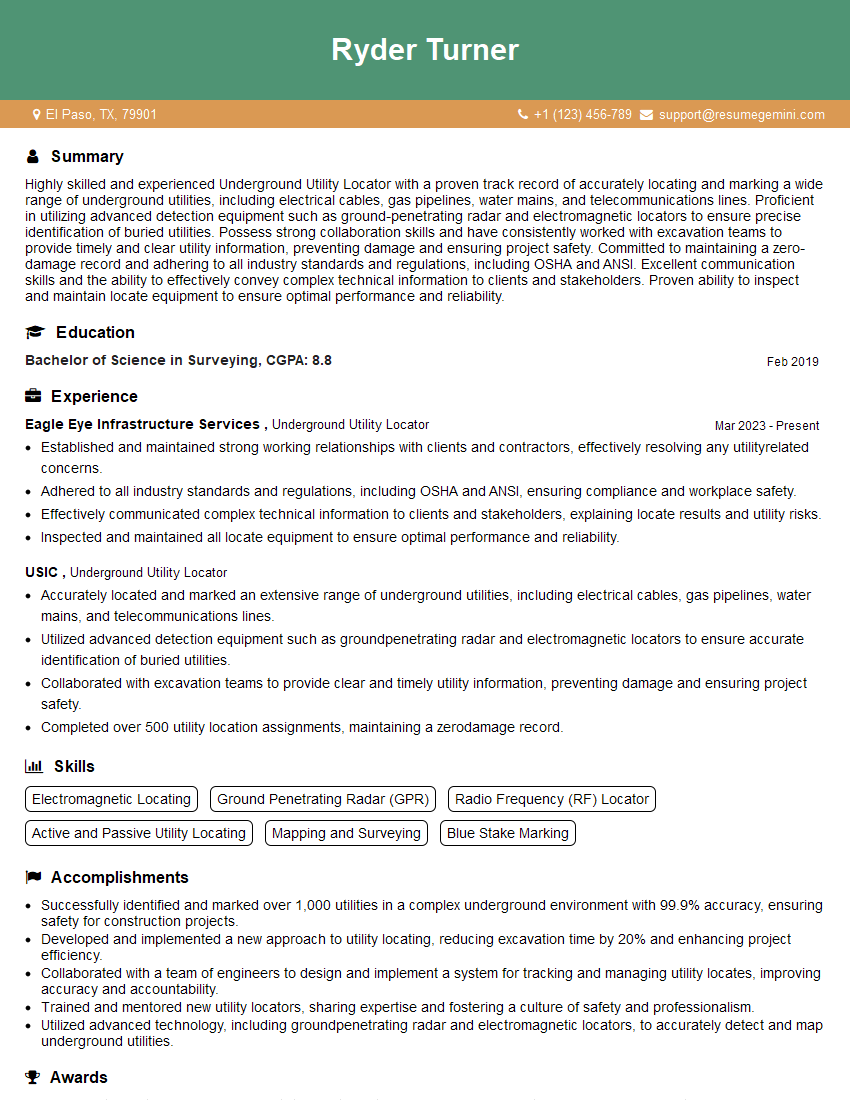
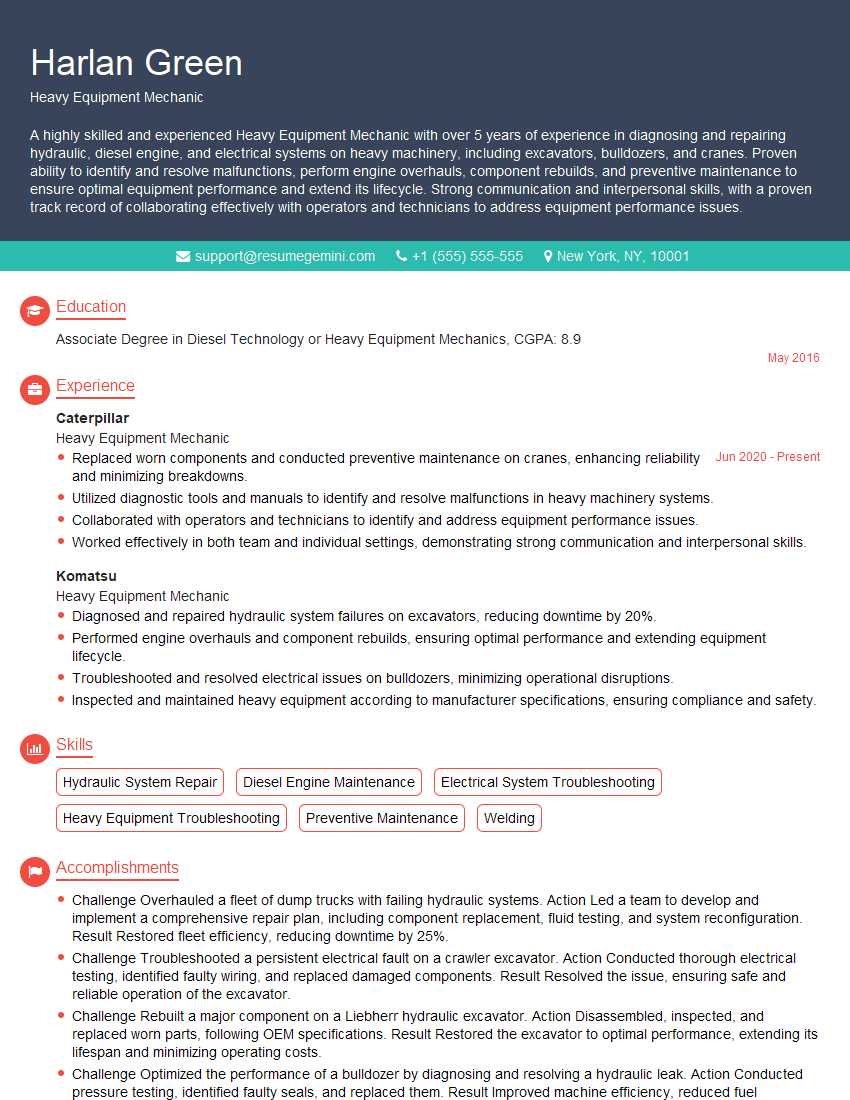
Mastering trenching and excavation techniques is crucial for career advancement in the construction industry, opening doors to higher-paying roles and greater responsibility. To stand out to potential employers, crafting a strong, ATS-friendly resume is paramount. This ensures your qualifications are effectively communicated to hiring managers and applicant tracking systems. ResumeGemini is a trusted resource for building professional and effective resumes. They offer examples of resumes tailored specifically to the Trenching and Excavation field, helping you showcase your skills and experience in the best possible light.



Explore more articles
Users Rating of Our Blogs
Share Your Experience
We value your feedback! Please rate our content and share your thoughts (optional).
What Readers Say About Our Blog
Really detailed insights and content, thank you for writing this detailed article.
IT gave me an insight and words to use and be able to think of examples