Interviews are opportunities to demonstrate your expertise, and this guide is here to help you shine. Explore the essential UAS Mapping interview questions that employers frequently ask, paired with strategies for crafting responses that set you apart from the competition.
Questions Asked in UAS Mapping Interview
Q 1. Explain the difference between orthomosaics and digital surface models (DSMs).
Orthomosaics and Digital Surface Models (DSMs) are both valuable products derived from UAS imagery, but they represent different aspects of the terrain. Think of it like this: an orthomosaic is a detailed, georeferenced image mosaic, like a perfectly flat photograph of the ground, while a DSM is a 3D model showing the surface elevations including buildings and trees.
An orthomosaic is essentially a stitched-together collection of aerial images that have been geometrically corrected to eliminate distortions, creating a seamless, map-like view. It’s like taking many individual pictures of a landscape and merging them into a single, accurate, and visually appealing image where all the pixels represent their true location on the Earth. It’s primarily used for visual interpretation, feature extraction, and change detection.
A Digital Surface Model (DSM), on the other hand, is a 3D representation of the earth’s surface including all objects on it – buildings, trees, vehicles, etc. It shows the elevation of every point on the surface. Imagine a detailed topographical map, not just showing contours but the height of every point. DSMs are critical for applications requiring volumetric analysis, 3D modeling, and calculating volumes.
The key difference lies in what they represent: orthomosaics show the surface as seen from above, while DSMs show the surface’s elevation.
Q 2. Describe the process of georeferencing UAS imagery.
Georeferencing UAS imagery is the process of assigning real-world geographic coordinates (latitude and longitude) to each pixel in the images. This allows the images to be accurately overlaid onto maps and integrated with other geospatial data. Think of it as adding location information to your photos so they can be precisely positioned on a map.
The process typically involves these steps:
- Ground Control Points (GCPs): These are precisely surveyed points on the ground with known coordinates. They act as reference points for aligning the imagery to the real world. Using a GPS receiver with high accuracy is crucial here.
- Image Acquisition: High-resolution images are acquired using the UAS.
- GCP Identification: The GCPs are identified in the UAS imagery. Software is used to help automate this process, but manual checking and validation are always recommended.
- Georeferencing Software: Specialized photogrammetry software (like Pix4D, Agisoft Metashape, or RealityCapture) is used to process the images and link them to the GCPs using various mathematical models. This software employs algorithms to mathematically transform the image coordinates to geographic coordinates based on the GCPs’ locations.
- Orthorectification: The software corrects for geometric distortions due to lens distortion, terrain relief, and camera position and orientation. This ensures that the final products (orthomosaics and DSMs) are geometrically accurate.
Accurate georeferencing is essential for the usability and reliability of any UAS mapping project. The accuracy directly depends on the quality and distribution of the GCPs, as well as the accuracy of the GPS equipment.
Q 3. What are the common challenges in UAS mapping data processing?
Processing UAS mapping data presents several challenges. Some of the most common ones include:
- Image overlap and alignment: Insufficient overlap between images can lead to gaps or misalignments during the processing, and this makes it difficult to create seamless products. Proper flight planning is crucial to ensure sufficient overlap.
- Atmospheric conditions: Haze, fog, or clouds can significantly affect image quality and accuracy, leading to less accurate 3D models and orthomosaics.
- Occlusions and shadows: Trees, buildings, or other objects can cast shadows or block the view of the ground, leading to data gaps or inaccurate surface models. Processing methods to fill the gaps are needed.
- Data volume and processing time: UAS missions often generate massive amounts of data. Processing these datasets can be computationally intensive and time-consuming, especially with low-end computing systems. This requires efficient processing workflows.
- Accuracy of GCPs: Inaccurate or poorly distributed GCPs can propagate errors throughout the georeferencing and orthorectification processes, resulting in inaccurate maps and 3D models.
Overcoming these challenges involves careful planning, using appropriate equipment and software, employing robust processing techniques, and potentially, multiple data acquisition sessions to mitigate atmospheric effects.
Q 4. How do you handle data gaps or missing data in UAS datasets?
Data gaps or missing data in UAS datasets are a common problem, often caused by occlusions, shadows, or poor flight planning. Several techniques can be used to handle them:
- Replanning the flight: If the gaps are significant, reflying the mission with improved planning to capture the missing areas might be necessary.
- Interpolation techniques: Software uses interpolation algorithms (e.g., linear interpolation, kriging) to estimate the missing values based on the surrounding data. This isn’t ideal for critical applications but can be useful for minor gaps.
- Inpainting: This is a more advanced technique that uses surrounding image information to fill in the missing areas more intelligently. It provides visually plausible results but is computationally more demanding.
- Data fusion: Combining data from multiple sources (e.g., UAS imagery with lidar data) can provide a more complete picture and fill in gaps using the complementary data source.
- Manual editing: In some cases, manual editing in GIS software may be necessary to fill in small gaps, but this can be time-consuming and may introduce subjective biases.
The choice of technique depends on the size and nature of the gaps, the accuracy requirements, and the available resources.
Q 5. Explain different types of UAS sensors and their applications in mapping.
Various UAS sensors cater to different mapping applications. Here are some common types:
- RGB Cameras: These capture color images in the visible spectrum (red, green, blue). They are widely used for creating orthomosaics, visual inspections, and general mapping. Example: mapping urban areas for infrastructure assessments.
- Multispectral Cameras: Capture images in multiple wavelengths beyond the visible spectrum, including near-infrared (NIR), red-edge, and others. Used for precision agriculture (crop health assessment), vegetation mapping, and environmental monitoring. Example: assessing crop health conditions in fields for targeted fertilizer application.
- Hyperspectral Cameras: Acquire images in hundreds of narrow, contiguous spectral bands, providing highly detailed spectral information about the ground. Used for mineral exploration, environmental monitoring, and advanced vegetation analysis. Example: identifying specific types of minerals based on their unique spectral signatures.
- Thermal Cameras: Capture images in the infrared spectrum, measuring surface temperature. Useful for detecting heat signatures, monitoring building energy efficiency, and locating leaks in infrastructure. Example: identifying areas with heat loss in a building to optimize energy use.
- LiDAR Sensors: Use lasers to measure distance to the ground, creating highly accurate 3D point clouds. Excellent for high-precision topography, generating digital elevation models (DEMs), and modeling complex terrain. Example: creating precise elevation models for construction projects or flood risk assessments.
The choice of sensor depends heavily on the project’s objectives and required data resolution and accuracy.
Q 6. What are the key considerations for flight planning in UAS mapping?
Flight planning is critical for successful UAS mapping. Key considerations include:
- Area of Interest (AOI): Precisely defining the area to be mapped is crucial. This determines flight lines, altitude, and image overlap.
- Altitude and Ground Sampling Distance (GSD): The altitude dictates the GSD – the resolution of the resulting imagery. Lower altitudes provide higher resolution but require more flight time and images.
- Image Overlap: Sufficient side and forward overlap is necessary for successful image stitching and 3D model generation. Typically, 60-80% overlap is recommended.
- Flight Lines: Parallel flight paths are generally used, ensuring consistent coverage and minimizing gaps. Flight planning software helps design optimal flight paths.
- Wind conditions: Strong winds can affect flight stability and image quality. Planning flights during calm conditions is essential.
- Battery life: Flight time is limited by the UAS battery. Missions are often planned to maximize coverage within battery limits, including buffer time for return.
- Regulatory compliance: Adhering to all relevant airspace regulations and obtaining necessary permits is paramount for safe and legal operation.
- Safety considerations: A thorough risk assessment should be conducted prior to any flight to identify and mitigate potential hazards.
Utilizing flight planning software simplifies this process considerably, allowing for detailed mission design and automated flight execution.
Q 7. Discuss the impact of weather conditions on UAS mapping accuracy.
Weather conditions significantly impact UAS mapping accuracy. Adverse conditions can severely degrade image quality and affect data processing. Here’s how:
- Clouds and Haze: Clouds and haze obscure the ground, leading to missing data, reducing image clarity, and potentially introducing unwanted artifacts in the processed data. Clear skies are ideal.
- Rain and Snow: These conditions make flying dangerous and prevent image acquisition. Wet surfaces can also alter spectral signatures measured by multispectral cameras.
- Wind: Strong winds can affect the stability of the UAS, leading to blurry images and inaccurate positioning. Calm or low-wind conditions are essential for high-quality data acquisition.
- Temperature: Extreme temperatures can impact battery performance, sensor calibration and overall operation of the UAS.
Therefore, careful weather monitoring and planning are crucial for successful UAS mapping. It’s often necessary to postpone missions until favorable conditions prevail to ensure the highest possible quality data. Accurate weather forecasting and real-time monitoring are key to mitigating these risks.
Q 8. How do you ensure the accuracy and precision of UAS mapping data?
Ensuring the accuracy and precision of UAS mapping data is paramount. It’s a multi-faceted process that begins even before flight. We need to meticulously plan our mission, considering factors like weather conditions, appropriate flight altitude, and image overlap. The accuracy hinges on several key aspects:
- Proper Calibration and Maintenance: Regular calibration of the UAS’s sensors (camera, IMU, GPS) is crucial. Any drift or malfunction can significantly impact the data. I always perform pre-flight checks and maintain a log of all calibration activities.
- Ground Control Points (GCPs): These are strategically placed points on the ground with known coordinates, serving as reference points for accurate georeferencing. The more GCPs, the better the accuracy. I typically use high-precision GPS receivers to survey GCPs, ensuring minimal error.
- Sufficient Image Overlap: This allows for robust photogrammetric processing. Optimal overlap (typically 60-80% forward and 20-30% sidelap) ensures that enough common features are present between consecutive images for accurate point cloud generation and model building.
- Post-Processing Techniques: Rigorous processing in photogrammetry software is key. This includes techniques like bundle adjustment, which iteratively refines the camera positions and orientations to minimize errors. I carefully inspect the generated point cloud and orthomosaic for any artifacts or inconsistencies.
- Accuracy Assessment: Finally, I always assess the accuracy of the final product, often using independent measurements or comparing the results against known ground truth data. This allows for quantitative assessment of the achieved precision and identifies potential sources of error.
For example, in a recent project mapping a construction site, the use of strategically placed GCPs and a high image overlap resulted in a final orthomosaic with sub-centimeter accuracy, allowing for precise volume calculations and progress monitoring.
Q 9. What software packages are you proficient in for UAS data processing?
My proficiency in UAS data processing software encompasses a range of industry-standard packages. I’m highly skilled in Pix4Dmapper, Agisoft Metashape, and DroneDeploy. Each has its strengths and weaknesses, and my choice depends on the specific project requirements and desired outputs.
- Pix4Dmapper: Excellent for large datasets and automated processing workflows, ideal for large-scale mapping projects.
- Agisoft Metashape: Offers a powerful, flexible, and manual processing workflow, suitable for projects requiring more fine-tuned control and complex data.
- DroneDeploy: A user-friendly platform with strong cloud-based processing capabilities, perfect for simpler mapping tasks and efficient collaboration.
I’m comfortable using the full functionality of each software, from image import and pre-processing to point cloud generation, orthomosaic creation, DSM/DTM generation, and 3D model creation. I can also tailor processing parameters based on the specific demands of the project, optimizing for accuracy, speed, or specific output formats.
Q 10. Explain your experience with different UAS platforms and their capabilities.
My experience spans a variety of UAS platforms, each offering unique capabilities suitable for different applications. I’ve worked extensively with platforms from DJI (e.g., Phantom 4 RTK, Matrice 300 RTK), 3DR Solo, and Autel EVO II series.
- DJI Matrice 300 RTK: A heavy-lift platform with robust RTK positioning and excellent flight stability, ideal for large-scale mapping projects requiring high accuracy and long flight times.
- DJI Phantom 4 RTK: A more compact and cost-effective option suitable for smaller mapping projects where portability and ease of use are important.
- Autel EVO II series: Known for their image quality and user-friendly features, these are great for projects requiring high-resolution imagery and ease of operation.
My selection of a platform depends critically on factors like the project’s size, required accuracy, terrain complexity, and budget constraints. For example, for a large agricultural mapping project, the Matrice 300 RTK would be my preferred choice due to its longer flight time and superior RTK accuracy. However, for a smaller site survey, a Phantom 4 RTK might suffice.
Q 11. Describe your experience with Ground Control Points (GCPs) and their importance.
Ground Control Points (GCPs) are the bedrock of accurate georeferencing in UAS mapping. These are points on the ground whose precise coordinates are known, measured using high-accuracy survey-grade GPS equipment. Their importance cannot be overstated, as they provide the essential link between the UAS-captured imagery and the real-world coordinate system.
My experience involves planning GCP placement strategically across the survey area, ensuring good distribution and visibility in the imagery. I use robust GPS receivers, typically with sub-centimeter accuracy, for surveying the GCPs. The number of GCPs used depends on the project area and desired accuracy. More GCPs generally improve accuracy, but there are diminishing returns beyond a certain point. I also meticulously document the GCP coordinates and their locations with photographs for easy identification during post-processing.
In practice, using GCPs during the photogrammetric processing significantly improves the accuracy of the final deliverables (orthomosaics, Digital Surface Models (DSMs), Digital Terrain Models (DTMs)), often reducing errors by several orders of magnitude compared to using only on-board GPS data. Without GCPs, the final output might be geometrically distorted and unsuitable for accurate measurements or analysis.
Q 12. How do you manage large UAS datasets efficiently?
Managing large UAS datasets efficiently requires a strategic approach. This involves careful planning during data acquisition and employing efficient processing techniques.
- Data Organization: I use a consistent and well-organized file naming convention during data acquisition, which helps me easily identify and retrieve specific files. Furthermore, storing the data on external hard drives or cloud storage provides a readily accessible archive.
- Efficient Processing Techniques: Processing large datasets necessitates powerful hardware. I leverage multi-core processors and large amounts of RAM to speed up the processing times. Using cloud computing resources (e.g., Amazon Web Services, Google Cloud Platform) can be particularly helpful for extremely large datasets.
- Optimized Software Settings: The choice of software and its settings play a significant role. I carefully select the processing parameters (e.g., point cloud density, mesh resolution) to balance accuracy and processing time. I might opt to use a multi-stage processing approach, beginning with a lower-resolution processing to create a preview and then conducting a high-resolution processing only on areas requiring more detail.
- Data Compression: Once the processing is complete, I compress the large output files (e.g., orthomosaics, point clouds) to minimize storage space and enhance data transfer efficiency. This usually involves the use of lossless compression techniques such as TIFF LZW for orthomosaics and LAS for point clouds.
For instance, during a large-scale infrastructure project, I managed a multi-terabyte dataset by utilizing cloud-based processing, efficient file management, and optimized software settings, completing the processing in a timely and efficient manner.
Q 13. What are the regulations and safety procedures you follow when operating UAS?
Safety and regulatory compliance are of paramount importance in UAS operations. I strictly adhere to all applicable local, national, and international regulations, including those issued by the FAA (in the US) or equivalent authorities in other countries. This involves:
- Pre-Flight Checklists: I meticulously follow pre-flight checklists to ensure the UAS is in good working order and that all safety protocols are in place.
- Flight Planning and Risk Assessment: I thoroughly plan each flight mission, identifying potential hazards and mitigating risks before flight. This includes considering weather conditions, airspace restrictions, and potential obstacles.
- Visual Observers: Whenever required by regulations, I use visual observers to assist during flight operations, enhancing safety and situational awareness.
- Airspace Restrictions: I carefully check for and avoid restricted airspace using appropriate tools and resources. I always maintain awareness of other air traffic.
- Emergency Procedures: I’m familiar with all emergency procedures, including loss of control scenarios and battery failures, and am well-prepared to handle such events safely.
- Data Logging and Record Keeping: I maintain detailed logs of all flight operations, including flight plans, flight data, maintenance records, and any incident reports.
For example, before each flight, I always check the NOTAMs (Notices to Airmen) and ensure I have the necessary permissions for operating in the designated airspace. I prioritize safe practices and responsible operation to maintain public safety and regulatory compliance.
Q 14. Explain your understanding of different coordinate systems and datums.
Understanding different coordinate systems and datums is fundamental in UAS mapping. It directly impacts the accuracy and usability of the produced geospatial data. A coordinate system defines how locations on the Earth’s surface are represented numerically, while a datum is a reference surface used for measuring locations.
- Geographic Coordinate Systems (GCS): These use latitude and longitude to define locations on the Earth’s surface, utilizing a spherical or ellipsoidal model of the Earth (e.g., WGS 84). WGS 84 is a common datum.
- Projected Coordinate Systems (PCS): These transform the spherical coordinates of a GCS into a flat, planar representation suitable for map projections. Examples include UTM (Universal Transverse Mercator) and State Plane Coordinate Systems. The choice of PCS depends on the area being mapped and the desired level of distortion.
- Datums: A datum defines the position and orientation of the coordinate system on the Earth. Different datums use different models of the Earth’s shape, which can lead to discrepancies in coordinate values. For example, NAD83 (North American Datum 1983) and WGS84 are commonly used datums, but they have slight differences.
In a practical setting, it’s critical to know the coordinate system and datum of the project area. During data processing, I carefully define the appropriate projection parameters to ensure that the output data is correctly georeferenced and can be integrated seamlessly with other geospatial datasets. Incorrectly handling coordinate systems and datums can lead to significant errors and inconsistencies in the final mapping product.
Q 15. How do you assess the quality of UAS mapping data?
Assessing the quality of UAS mapping data is crucial for ensuring the accuracy and reliability of the final product. It involves a multi-faceted approach, checking various aspects throughout the workflow.
- Geometric Accuracy: This refers to how well the mapped features align with their real-world positions. We assess this using ground control points (GCPs) – known points with precise coordinates – to perform georeferencing and evaluating the Root Mean Square Error (RMSE). A lower RMSE indicates better accuracy.
- Radiometric Accuracy: This focuses on the consistency and fidelity of the color and brightness values in the images. We check for issues like vignetting (darkening at image edges), sensor noise, and atmospheric effects that might distort the true color representation. Software solutions offer tools to analyze radiometric consistency.
- Completeness and Coverage: We need to ensure the entire area of interest is covered adequately with overlapping imagery, vital for generating a seamless 3D model or orthomosaic. Gaps in data can hinder analysis.
- Data Resolution and Scale: The resolution of the imagery directly impacts the level of detail captured. Higher resolution allows for greater precision in measurements and feature identification. The scale is crucial to match the requirements of the project.
- Data Processing Validation: After processing (orthorectification, mosaicking, etc.), a visual inspection is essential. We look for artifacts, seams, inconsistencies, and areas that require further refinement. We also compare the final product to reference data if available.
For example, in a recent agricultural mapping project, we used a combination of GCPs and check points to achieve an RMSE of under 5 cm, ensuring high precision for yield estimation.
Career Expert Tips:
- Ace those interviews! Prepare effectively by reviewing the Top 50 Most Common Interview Questions on ResumeGemini.
- Navigate your job search with confidence! Explore a wide range of Career Tips on ResumeGemini. Learn about common challenges and recommendations to overcome them.
- Craft the perfect resume! Master the Art of Resume Writing with ResumeGemini’s guide. Showcase your unique qualifications and achievements effectively.
- Don’t miss out on holiday savings! Build your dream resume with ResumeGemini’s ATS optimized templates.
Q 16. Describe your experience with post-processing kinematic (PPK) GPS.
Post-Processing Kinematic (PPK) GPS is a highly accurate method for georeferencing UAS imagery. It involves recording raw GPS data from the UAS during flight and then processing it afterward with base station data. This post-processing significantly reduces the effects of atmospheric delays and multipath errors, leading to centimeter-level accuracy.
My experience with PPK involves using various software packages like RTKLIB and others, that process the raw data files (RINEX format). This requires careful planning for base station placement to ensure adequate signal reception and sufficient overlap with the UAS flight path. Careful attention is needed to the timing synchronization between the base station and the rover (the UAS). The processed data then provides highly accurate latitude, longitude, and altitude coordinates for each image, crucial for accurate georeferencing and 3D modeling.
In a recent project involving a precise topographic survey, PPK was instrumental in achieving an accuracy of under 2 cm, far exceeding the capabilities of real-time kinematic (RTK) GPS in challenging environments with dense vegetation.
Q 17. What are the advantages and disadvantages of using UAS for mapping compared to traditional methods?
UAS mapping offers several advantages over traditional methods like ground surveying or manned aircraft.
- Cost-effectiveness: UAS operations are generally cheaper than traditional methods, particularly for smaller areas, due to lower personnel and equipment costs.
- Speed and Efficiency: Data acquisition is significantly faster with UAS, reducing project timelines considerably. For instance, mapping a large area could take days using traditional ground surveys, but UAS can accomplish this in hours.
- Accessibility: UAS can access difficult-to-reach areas, such as steep slopes, dense forests, or disaster zones, where traditional methods are impractical or hazardous.
- High Resolution Data: UAS offer the capability of capturing high-resolution imagery and LiDAR data, resulting in highly detailed maps and models.
However, there are also disadvantages:
- Weather Dependency: UAS operations are highly dependent on weather conditions. Strong winds, rain, or fog can significantly impact data quality or prevent flight operations.
- Regulatory Restrictions: Operating UAS is subject to regulations that vary by region, requiring appropriate licenses, permits, and adherence to strict safety guidelines.
- Data Processing Complexity: Processing the large volumes of data generated by UAS requires specialized software and expertise. It’s more computationally intensive than processing data from traditional surveys.
- Battery Life Limitations: The flight time of UAS is limited by battery capacity, often requiring multiple flights to cover large areas.
For example, a bridge inspection project would benefit greatly from UAS mapping due to its safety and efficiency advantages. However, a large-scale forestry survey might be challenging due to the large area and weather dependency.
Q 18. How do you address issues related to image distortion and geometric correction?
Image distortion and geometric correction are critical aspects of UAS mapping. Distortion can stem from lens characteristics (radial and tangential distortion), atmospheric effects, or camera tilt. Geometric correction aligns the images to a common coordinate system, removing these distortions and ensuring accurate measurements.
We address these issues using software like Agisoft Metashape or Pix4D, which employ sophisticated algorithms for:
- Camera Calibration: Determining the intrinsic parameters of the camera (focal length, principal point, lens distortion coefficients) is a first step. This usually involves processing a series of images of a known target.
- Bundle Adjustment: This process simultaneously optimizes the camera positions, orientations, and 3D point cloud coordinates, minimizing errors and correcting geometric distortions.
- Orthorectification: This step uses the Digital Elevation Model (DEM) to remove relief displacement and project the image onto a flat, map-like surface. This results in an orthomosaic, a geo-referenced image that is free from geometric distortion.
- Ground Control Points (GCPs): Strategically placed GCPs are essential for accurate georeferencing, providing known coordinates that the software uses during processing to ensure accurate alignment with real-world coordinates.
In essence, we use a combination of software algorithms and precise ground control to ensure the final product is geometrically accurate and suitable for use in various applications. For instance, in a mining project, precise geometric correction is crucial for accurate volume calculations.
Q 19. Explain your experience with different types of image processing techniques.
My experience encompasses a wide range of image processing techniques used in UAS mapping. These techniques are crucial for transforming raw imagery into usable data products.
- Structure from Motion (SfM): This technique is fundamental in creating 3D models and orthomosaics from overlapping images. It automatically identifies matching features across images to estimate camera positions and orientations and reconstruct 3D points.
- Multispectral and Hyperspectral Image Processing: I have experience processing data from multispectral and hyperspectral sensors for applications like vegetation analysis, precision agriculture, and mineral exploration. These techniques involve atmospheric correction, band ratioing, and vegetation indices calculations.
- Orthorectification: As mentioned earlier, this is vital for geometric correction, ensuring that the final image is free from distortions caused by terrain relief. This is achieved using DEM data.
- Mosaicking: Creating seamless mosaics from multiple overlapping images requires careful blending to minimize seams and discontinuities. This often involves advanced image registration and stitching techniques.
- Image Classification: Utilizing techniques like supervised and unsupervised classification to categorize pixels into different classes based on their spectral signatures. This is valuable for land cover mapping and change detection.
For instance, in a recent environmental monitoring project, we employed SfM and multispectral image processing to create a detailed 3D model and vegetation maps for evaluating deforestation rates.
Q 20. What is your experience with LiDAR data acquisition and processing?
My experience with LiDAR data acquisition and processing involves using UAS equipped with LiDAR sensors to collect high-density point cloud data. LiDAR offers exceptional accuracy and detail for terrain modeling, vegetation analysis, and infrastructure assessment.
The process involves:
- Data Acquisition: Planning flight paths to ensure adequate point cloud density and coverage of the area of interest. This often requires careful consideration of the LiDAR sensor’s specifications and the desired level of detail.
- Data Processing: Utilizing software like LAStools or TerraScan to process the raw LiDAR data. This involves steps like noise filtering, point cloud classification, georeferencing, and creating various deliverables, such as Digital Terrain Models (DTMs), Digital Surface Models (DSMs), and intensity images.
- Data Analysis: Extracting meaningful information from the processed point cloud data for specific applications, such as calculating volumes, identifying features, and creating 3D models.
In a recent project involving a pipeline inspection, the LiDAR data provided exceptionally accurate measurements of the pipeline’s elevation and surrounding terrain, enabling precise identification of potential risks.
Q 21. How do you handle data security and confidentiality in UAS mapping projects?
Data security and confidentiality are paramount in UAS mapping projects. We employ robust procedures to protect sensitive information at every stage of the project, from data acquisition to final delivery.
- Data Encryption: All data is encrypted both during storage and transmission using industry-standard encryption protocols (e.g., AES-256).
- Access Control: Access to the data is restricted to authorized personnel only, using secure password management and access control lists.
- Secure Storage: Data is stored on secure servers with regular backups and disaster recovery plans in place. We utilize cloud storage with robust security measures or secure on-site servers.
- Data Anonymization: When necessary, we anonymize data to protect individual privacy, such as blurring images of private property or removing identifying features.
- Compliance with Regulations: We adhere to all relevant data protection regulations, such as GDPR (General Data Protection Regulation) and CCPA (California Consumer Privacy Act) where applicable.
- Data Destruction: Upon project completion and after a specified retention period, data is securely destroyed according to established protocols.
In all our projects, a detailed data security plan is developed and implemented to ensure compliance and safeguard client data.
Q 22. Describe your experience with project management in UAS mapping.
My experience in UAS mapping project management encompasses all phases, from initial client consultation and project scoping to data processing, analysis, and final product delivery. I utilize agile methodologies, breaking down large projects into smaller, manageable tasks with clearly defined deliverables and timelines. This allows for better tracking of progress, efficient resource allocation, and proactive risk management. For example, on a recent infrastructure inspection project, I implemented a Kanban board to visually track progress on data acquisition, processing, and report generation, ensuring tasks remained on schedule and within budget. I’m proficient in using project management software like Asana and Trello to facilitate collaboration and maintain transparent communication among team members.
A crucial aspect of my approach is risk assessment. Before initiating any flight operation, I conduct a thorough pre-flight check including weather conditions, airspace restrictions, and potential hazards on the site. This ensures safety and prevents project delays. I also establish contingency plans to address potential issues like equipment malfunctions or unexpected weather changes, minimizing disruptions to the project timeline.
Q 23. Explain your experience with client communication and project delivery.
Effective client communication is paramount to successful project delivery. I begin by actively listening to the client’s needs, clarifying their requirements, and establishing clear expectations regarding deliverables, timelines, and budget. This includes providing regular project updates, both written and verbal, using clear and concise language avoiding technical jargon. I utilize various communication channels such as email, video conferencing, and project management software to maintain constant and transparent communication.
For example, when presenting a final product, I avoid overwhelming the client with technical details. Instead, I focus on delivering clear, visually appealing results that directly address the initial project objectives. I strive to build strong client relationships based on trust and mutual understanding, ensuring that they feel involved and informed throughout the project lifecycle. Feedback is actively solicited and incorporated to ensure client satisfaction. Post-project follow-up is also crucial to assess overall satisfaction and identify areas for improvement.
Q 24. What are some common sources of error in UAS mapping, and how can they be minimized?
Several sources of error can affect the accuracy and reliability of UAS mapping data. These can be broadly categorized as:
- Sensor-related errors: These include issues with the camera calibration, lens distortion, and sensor noise. Regular sensor calibration and image processing techniques such as geometric correction can mitigate these errors.
- Environmental factors: Weather conditions like wind, temperature, and atmospheric refraction can significantly impact data quality. Careful flight planning, choosing optimal weather windows, and incorporating atmospheric correction models in post-processing are crucial.
- Processing errors: Inaccurate georeferencing, incorrect parameter settings in processing software, and errors in stitching multiple images together can lead to significant distortions. Using validated processing software and careful quality control checks at each step of the workflow are essential.
- GPS errors: GPS signal blockage, multipath effects, and atmospheric delays can affect the accuracy of positioning data. Using RTK (Real-Time Kinematic) GPS or PPK (Post-Processed Kinematic) techniques can greatly improve positional accuracy.
Minimizing these errors requires a multi-faceted approach including meticulous pre-flight planning, use of high-quality equipment, rigorous data processing and quality control, and the implementation of robust error correction techniques.
Q 25. How do you ensure the compliance of UAS operations with relevant regulations?
Ensuring compliance with all relevant UAS regulations is a top priority. This involves understanding and adhering to rules set by the FAA (or equivalent regulatory body in other countries) including obtaining necessary permits and licenses for operation, registering the drone, complying with airspace restrictions, and maintaining flight logs.
I always conduct thorough pre-flight checks to ensure the flight plan complies with all regulations. This includes consulting airspace maps to identify restricted areas and checking weather conditions to ensure safe operation. Flight logs are meticulously maintained, recording all flight parameters, including date, time, location, and any anomalies encountered during the flight. I also stay updated on changes to regulations through regular review of official publications and industry news. Safety is paramount, and compliance is not just about avoiding penalties; it’s about responsible operation and protecting the public.
Q 26. Describe your experience with different types of terrain and their impact on UAS mapping.
Different types of terrain significantly impact UAS mapping operations. Flat, open areas are ideal for efficient data acquisition, while challenging terrains like steep slopes, dense forests, or urban canyons present unique difficulties.
Challenges: Steep slopes can lead to image occlusion and uneven terrain sampling, requiring careful flight planning with overlapping flight lines and potentially the use of oblique imagery. Dense vegetation can obscure ground features, requiring higher resolution sensors or alternative data acquisition techniques. Urban canyons can cause signal reflection and multipath errors, affecting GPS accuracy and requiring careful consideration of flight altitudes and paths.
Solutions: To overcome these challenges, I adapt flight parameters and employ specific techniques. This might include adjusting flight altitude and speed, selecting appropriate camera settings, using advanced processing techniques for data correction, or employing multiple sensors (e.g., LiDAR in combination with RGB cameras) for comprehensive data acquisition.
Q 27. How do you stay current with the latest advancements in UAS mapping technology?
Staying current with advancements in UAS mapping technology is crucial. I actively participate in industry conferences and workshops, read relevant journals and publications (such as ISPRS International Archives of the Photogrammetry, Remote Sensing and Spatial Information Sciences), and engage in online communities and forums. I also follow leading manufacturers of UAS and sensor technology to keep abreast of new developments.
Moreover, I regularly experiment with new software and processing techniques. Continuous learning ensures that I can leverage the latest technologies to improve data quality, efficiency, and overall project outcomes. Continuous Professional Development (CPD) is a key part of my ongoing career development.
Q 28. Describe a challenging UAS mapping project you completed and how you overcame the challenges.
One challenging project involved creating a high-resolution topographic map of a rugged mountainous region with dense vegetation. The project presented several obstacles: challenging terrain limiting access for ground control points (GCPs), unreliable GPS signals in the canyons, and limited flight time due to the aircraft’s battery capacity.
To overcome these challenges, I implemented a multi-stage approach. Firstly, I used a combination of RTK-GPS and PPK techniques to optimize positional accuracy despite the challenging GPS environment. Secondly, I strategically placed GCPs in accessible areas and used image matching techniques to extend the georeferencing across the entire area. Thirdly, I planned multiple flight missions with shorter flight times to account for battery limitations. Finally, I employed advanced post-processing techniques such as Structure from Motion (SfM) and Multi-View Stereo (MVS) to generate a highly accurate 3D model and orthomosaic. The final product met the client’s requirements and demonstrated successful problem-solving skills in a demanding environment.
Key Topics to Learn for UAS Mapping Interview
- UAS Platforms & Sensors: Understanding different types of drones, their capabilities, and the various sensors used (RGB, multispectral, LiDAR, thermal) for data acquisition.
- Flight Planning & Mission Design: Practical application involves designing efficient flight paths using appropriate software, considering factors like battery life, wind conditions, and regulatory compliance.
- Data Processing & Post-processing: This includes familiarizing yourself with photogrammetry software (Agisoft Metashape, Pix4D) and techniques for creating orthomosaics, 3D models, and digital elevation models (DEMs).
- Data Analysis & Interpretation: Understanding how to extract meaningful information from processed data, such as identifying features, measuring distances, and calculating areas. This often involves GIS software integration.
- Accuracy & Error Assessment: Knowledge of sources of error in UAS mapping (e.g., GPS drift, atmospheric effects) and methods for assessing and minimizing their impact on data quality.
- Regulations & Safety: Understanding relevant airspace regulations (FAA Part 107 in the US, or equivalent in other countries) and safe operating procedures for UAS operations.
- Project Management & Workflow: Familiarity with the stages involved in a typical UAS mapping project, from initial planning to final data delivery, including client communication and project timelines.
- Advanced Techniques: Explore topics like Structure from Motion (SfM), Multi-View Stereo (MVS), and point cloud classification for more advanced interview discussions.
Next Steps
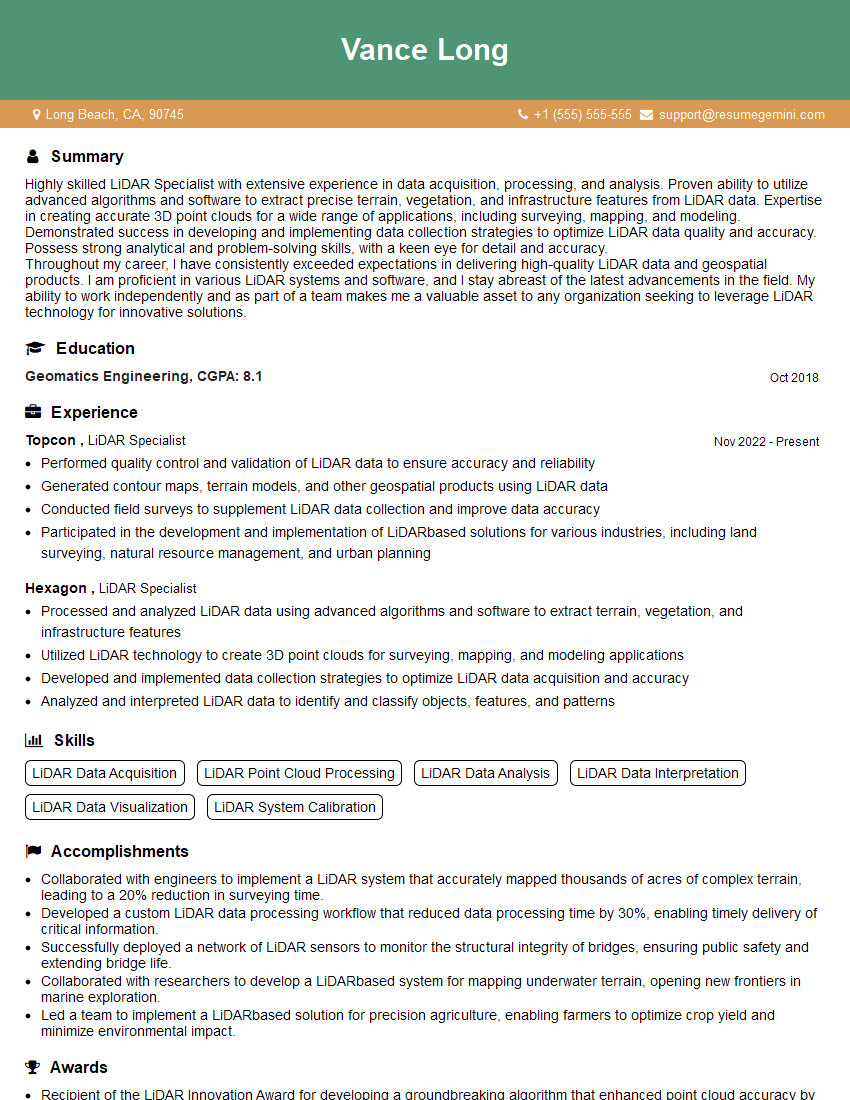
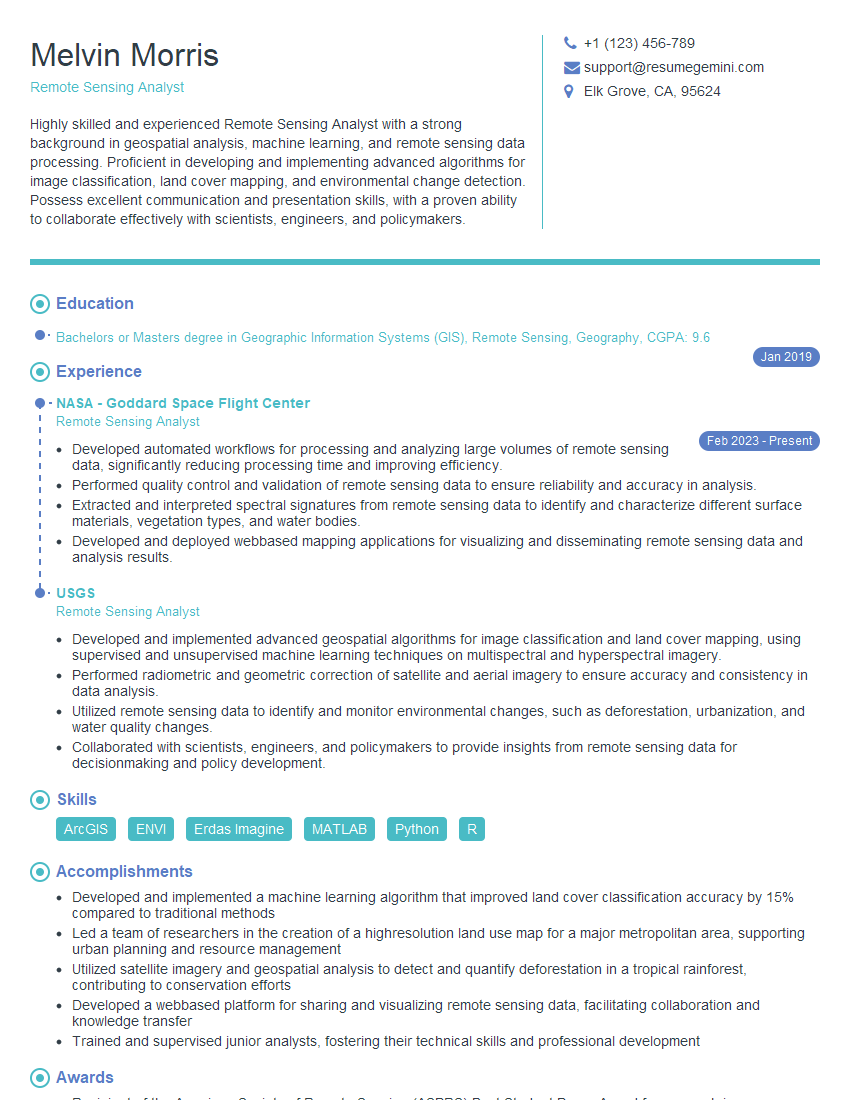
Mastering UAS Mapping opens doors to exciting careers in various fields, including surveying, construction, agriculture, and environmental monitoring. A strong understanding of these techniques is highly sought after, making you a competitive candidate in this rapidly growing industry. To maximize your job prospects, create an ATS-friendly resume that effectively highlights your skills and experience. ResumeGemini is a trusted resource to help you build a professional and impactful resume that gets noticed. We even provide examples of resumes tailored to UAS Mapping to help you get started.
Explore more articles
Users Rating of Our Blogs
Share Your Experience
We value your feedback! Please rate our content and share your thoughts (optional).
What Readers Say About Our Blog
Really detailed insights and content, thank you for writing this detailed article.
IT gave me an insight and words to use and be able to think of examples