Preparation is the key to success in any interview. In this post, we’ll explore crucial Understanding of Grain Market Regulations interview questions and equip you with strategies to craft impactful answers. Whether you’re a beginner or a pro, these tips will elevate your preparation.
Questions Asked in Understanding of Grain Market Regulations Interview
Q 1. Explain the role of the USDA in regulating the grain market.
The United States Department of Agriculture (USDA) plays a crucial role in regulating the grain market, ensuring fair practices and protecting both producers and consumers. Its influence spans several key areas. Firstly, the USDA establishes and enforces quality standards for grains through the Grain Inspection, Packers and Stockyards Administration (GIPSA). This ensures consistent quality across the market, facilitating fair trading. Secondly, the USDA collects and disseminates market information, providing crucial data on supply, demand, and pricing trends. This transparency helps participants make informed decisions. Thirdly, the USDA administers various farm programs that impact grain production and pricing, such as crop insurance and price support mechanisms. Finally, the USDA conducts research and development related to grain production and handling, continuously improving efficiency and sustainability within the industry.
For example, the USDA’s market reports on corn production forecasts significantly impact futures prices, influencing planting decisions for farmers and hedging strategies for grain traders.
Q 2. Describe the key provisions of the Grain Standards Act.
The Grain Standards Act is a cornerstone of grain market regulation in the US. Its key provisions focus on establishing and maintaining uniform standards for grain quality. This involves defining specific grades and classes for various grains like wheat, corn, soybeans, etc., based on factors like moisture content, damaged kernels, foreign material, and test weight. The Act mandates the use of official grain standards in interstate commerce, preventing fraudulent practices and promoting fair competition. It also authorizes the USDA to license and regulate grain inspectors to ensure consistent application of these standards.
Imagine a farmer selling wheat. The Grain Standards Act ensures that the grade of the wheat – say, No. 1 Hard Red Winter Wheat – is objectively assessed and understood by buyers across the country, regardless of location. This transparency builds trust and facilitates efficient trading.
Q 3. What are the implications of the Agricultural Marketing Act on grain trading?
The Agricultural Marketing Act empowers the USDA to regulate various aspects of agricultural marketing, impacting grain trading significantly. It allows for the establishment of marketing orders, which are industry-wide agreements covering various aspects of production, handling, and marketing of agricultural commodities, including grains. These orders can establish quality standards, promote research, regulate supply management, and even limit production. The Act also supports the creation of marketing services and facilities to enhance the efficiency of marketing activities.
A practical example is a marketing order that might control the supply of a specific type of grain to stabilize prices and prevent market fluctuations that could harm both producers and consumers. This act provides a framework for collaboration between producers and the government to maintain market stability.
Q 4. How do futures contracts impact grain market prices?
Futures contracts are standardized agreements to buy or sell a specific quantity of grain at a predetermined price on a future date. They are traded on exchanges like the Chicago Mercantile Exchange (CME). These contracts play a vital role in price discovery, hedging, and speculation within the grain market. They act as a barometer of future supply and demand, influencing current spot prices. Buyers and sellers use futures to lock in prices, protecting themselves against price volatility. Speculators, on the other hand, take positions based on their market outlook, further influencing prices.
For instance, if futures contracts for corn indicate a future price increase, farmers might delay selling their corn, hoping to capitalize on the higher price. Conversely, grain buyers might purchase futures contracts to hedge against potential price rises, securing a known price for future purchases.
Q 5. Explain the concept of basis in the grain market.
Basis is the difference between the local cash price of a grain and the price of a related futures contract. It reflects the local market conditions specific to a particular location, such as transportation costs, storage fees, and local supply and demand dynamics. Understanding basis is crucial for accurately determining the net price a farmer receives or a buyer pays for grain. The basis can fluctuate based on seasonal factors, transportation issues, and local market conditions.
For example, if the futures price for corn is $6 per bushel, and the local cash price is $5.70 per bushel, the basis is -$0.30. This negative basis indicates that the local market is trading at a discount compared to the futures price, possibly due to abundant local supply.
Q 6. What are the different types of grain storage facilities and their regulatory considerations?
Grain storage facilities vary widely, ranging from on-farm storage (bins, silos) to large commercial elevators. Regulatory considerations differ depending on the size and type of facility. On-farm storage is generally less regulated, while commercial elevators face stringent regulations concerning safety, capacity, and grain quality maintenance. Regulations often address issues such as fire prevention, pest control, and the prevention of grain spoilage. Government inspections are more common for larger facilities to ensure compliance with safety and quality standards.
For instance, a commercial grain elevator must adhere to strict rules about aeration systems to prevent mold growth, while a small farmer’s on-farm bins may have less stringent regulations, though they are still responsible for maintaining the quality of their stored grain.
Q 7. Describe the process of grain inspection and weighing.
Grain inspection and weighing are critical steps in ensuring fair and accurate trading. Licensed inspectors, often overseen by the USDA’s GIPSA, assess the quality of grain using official standards. This involves determining the grade and class of the grain based on factors like moisture, damage, and foreign material. Weighing is performed using certified scales to accurately determine the quantity of grain. Both inspection and weighing certifications are crucial to ensure accuracy and prevent disputes between buyers and sellers.
The process typically involves sampling the grain, conducting laboratory analyses, and generating an official inspection certificate detailing the grade, class, and weight. This certificate is crucial documentation for trade transactions and can be used to resolve disputes if inconsistencies arise.
Q 8. Explain the role of warehousing in grain marketing and its regulatory framework.
Warehousing plays a crucial role in grain marketing, acting as a bridge between harvest and consumption. It allows farmers to store their grain, avoiding immediate sale at potentially low prices, and provides buyers with a consistent supply throughout the year. The regulatory framework surrounding grain warehousing is designed to ensure fair practices and protect both producers and consumers.
Regulations typically cover aspects like:
- Licensing and Registration: Warehouses must be licensed and adhere to specific standards for storage capacity, infrastructure, and safety.
- Weight and Grade Certification: Independent inspectors certify the quantity and quality of grain stored, protecting against fraud and disputes.
- Pests and Disease Control: Regulations mandate measures to prevent infestation and maintain grain quality, safeguarding food safety.
- Insurance and Liability: Warehouses are often required to carry insurance to cover losses due to fire, theft, or damage.
- Financial Stability: Regulations may require warehouses to maintain sufficient capital to meet their obligations.
For example, the US has the Warehouse Act, which establishes standards for licensed grain warehouses, ensuring accountability and transparency in the handling of grain.
Q 9. What are the main challenges in ensuring the quality and safety of grain?
Ensuring grain quality and safety presents several challenges throughout the supply chain. These include:
- Storage Conditions: Improper storage can lead to spoilage, infestation, and mycotoxin contamination. Maintaining appropriate temperature, humidity, and ventilation is vital.
- Transportation and Handling: Rough handling during transportation can damage grain, leading to quality deterioration. Proper cleaning and handling equipment are needed.
- Pest and Disease Management: Insects, rodents, and fungal diseases can significantly affect grain quality and safety. Regular inspections and fumigation are crucial.
- Testing and Inspection: Reliable testing methodologies are needed to detect contaminants, mycotoxins, and other quality issues. Independent inspections provide credibility.
- Traceability: Effective traceability systems are essential to identify the origin of contaminated grain and prevent widespread issues. This involves tracking the grain from farm to consumer.
Imagine a scenario where a shipment of grain is contaminated with aflatoxins (a dangerous mycotoxin). Without proper testing and traceability, this could lead to a major food safety crisis.
Q 10. How do government subsidies affect grain production and pricing?
Government subsidies significantly influence grain production and pricing. They can either stimulate production or artificially lower prices, depending on the nature of the subsidy and the market dynamics.
Direct Payment Subsidies: These payments are directly given to farmers based on acreage or production, encouraging more planting and potentially leading to larger harvests and lower prices. However, they can also lead to overproduction and market instability.
Price Supports: Governments may set a minimum price for grain. If the market price falls below the support price, the government buys the surplus to maintain the higher price. This protects farmers but can distort the market and lead to excess grain stockpiles.
Input Subsidies: Subsidizing inputs like fertilizer or seeds can lower farmers’ costs, making production more profitable. This leads to increased production but may also have environmental consequences depending on the inputs subsidized.
For instance, the European Union has historically used various subsidy programs for its grain farmers, impacting both the EU grain market and the international market through export competitiveness.
Q 11. What are the major export regulations for grain?
Export regulations for grain vary significantly by country but generally aim to ensure food security, maintain quality standards, and generate revenue. These regulations commonly include:
- Export Licenses and Quotas: Many countries require export licenses for grain, sometimes imposing quotas to control the amount exported.
- Phytosanitary Regulations: These regulations ensure grain is free from pests and diseases, protecting importing countries from agricultural threats.
- Quality Standards: Exporting countries often set minimum quality standards for grain to maintain their reputation and avoid trade disputes.
- Inspection and Certification: Independent inspections verify that exported grain meets quality and phytosanitary standards. These certificates are necessary for customs clearance.
- Tariff and Non-Tariff Barriers: Tariffs, import duties, and other non-tariff barriers, such as complex customs procedures, can restrict grain exports.
A nation might impose a temporary export ban on wheat during a period of drought or domestic shortage to ensure its own food security, highlighting the importance of national interests.
Q 12. Explain the impact of international trade agreements on grain markets.
International trade agreements significantly impact grain markets by influencing tariffs, quotas, and market access. These agreements aim to reduce trade barriers and promote free trade, but their effects can be complex and multifaceted.
Reduced Tariffs: Agreements like the WTO’s Agreement on Agriculture have reduced tariffs on grain, leading to increased international trade and potentially lower consumer prices. However, this can also negatively impact domestic producers in some countries.
Market Access: Agreements can open up new markets for grain exporters, increasing their sales and profits. Conversely, it could lead to increased competition for domestic producers.
Sanitary and Phytosanitary Standards: Agreements establish harmonized standards, facilitating trade, but can also be challenging to implement and enforce, leading to trade disputes.
For example, the North American Free Trade Agreement (NAFTA, now USMCA) significantly influenced the grain trade between the US, Canada, and Mexico, leading to increased integration and trade flows.
Q 13. What are the key risk management strategies in the grain market?
Grain market participants employ various risk management strategies to mitigate price fluctuations, production uncertainties, and other market risks. These include:
- Hedging: Using financial instruments like futures and options contracts to lock in prices and protect against price volatility.
- Insurance: Purchasing crop insurance to cover losses from adverse weather events, disease, or other unforeseen circumstances.
- Diversification: Planting a variety of crops or engaging in multiple agricultural activities to reduce reliance on a single commodity.
- Forward Contracts: Agreeing on a price and delivery date for grain in advance, providing price certainty for both buyers and sellers.
- Storage Management: Optimizing grain storage to minimize losses and maintain quality, allowing for strategic selling when prices are favorable.
Imagine a farmer who anticipates a significant wheat harvest. To mitigate the risk of falling prices, they could use hedging strategies to secure a minimum price for their production, ensuring profitability even if market prices decline.
Q 14. How do you analyze grain market trends and predict future price movements?
Analyzing grain market trends and predicting future price movements involves a combination of quantitative and qualitative methods. A holistic approach is crucial.
Quantitative Analysis: This uses statistical tools and historical data to identify trends and patterns. Techniques include:
- Time Series Analysis: Examining historical price data to identify trends, seasonality, and volatility.
- Regression Analysis: Modeling the relationship between grain prices and other factors such as weather, economic conditions, and global supply and demand.
- Econometric Modeling: Using more sophisticated models that incorporate various economic factors to predict price movements.
Qualitative Analysis: This involves considering non-numerical factors that influence grain prices:
- Geopolitical events: Wars, political instability, and trade policies can significantly impact grain production and trade.
- Weather conditions: Droughts, floods, and other extreme weather events can dramatically affect crop yields.
- Technological advancements: New technologies can improve efficiency and yields, influencing supply and prices.
- Consumer demand: Changes in consumer preferences and dietary habits can affect demand and prices.
A thorough analysis combines both quantitative and qualitative aspects to gain a comprehensive understanding of the market and anticipate future price movements. It is important to note that even with sophisticated analysis, predicting future prices with complete accuracy is nearly impossible due to inherent market uncertainties.
Q 15. What are the ethical considerations in grain trading?
Ethical considerations in grain trading are paramount, ensuring fair practices and market integrity. They revolve around transparency, honesty, and avoiding manipulative actions that could harm producers, consumers, or the market as a whole.
- Price Manipulation: It’s unethical to artificially inflate or deflate prices through activities like hoarding, spreading false information, or engaging in coordinated trading to gain an unfair advantage. For example, spreading rumors of a crop failure to drive up prices before buying is unethical and often illegal.
- Transparency and Disclosure: Full disclosure of information regarding grain quality, quantity, and contracts is crucial. Hiding defects or misrepresenting information to gain an advantage is a serious ethical breach.
- Fair Competition: Grain traders should engage in fair competition, avoiding anti-competitive practices such as price fixing or market allocation agreements. Such practices restrict market freedom and harm consumers.
- Sustainable Practices: Ethical considerations increasingly include promoting sustainable agricultural practices, ensuring fair treatment of farmers, and minimizing environmental impact. This includes supporting environmentally friendly farming methods and reducing waste.
- Compliance with Regulations: Adherence to all relevant regulations and laws governing grain trading is not just legally mandatory but also ethically necessary to maintain a level playing field.
Ultimately, ethical grain trading fosters trust, stability, and efficiency in the market, benefiting all stakeholders.
Career Expert Tips:
- Ace those interviews! Prepare effectively by reviewing the Top 50 Most Common Interview Questions on ResumeGemini.
- Navigate your job search with confidence! Explore a wide range of Career Tips on ResumeGemini. Learn about common challenges and recommendations to overcome them.
- Craft the perfect resume! Master the Art of Resume Writing with ResumeGemini’s guide. Showcase your unique qualifications and achievements effectively.
- Don’t miss out on holiday savings! Build your dream resume with ResumeGemini’s ATS optimized templates.
Q 16. Describe your understanding of hedging in the grain market.
Hedging in the grain market is a risk management strategy employed by producers, processors, and traders to mitigate price fluctuations. It involves using financial instruments, such as futures contracts, to offset potential losses from price changes in the physical grain market.
Imagine a farmer who has just harvested a large crop of wheat. They are uncertain about future wheat prices and want to protect against a price drop. They can hedge by selling wheat futures contracts, locking in a price for their crop at a future date. If the market price falls below the futures price, the farmer still makes a profit from the futures contract. If prices rise, they may lose on the futures, but this is often offset by the higher prices they get when they sell their physical wheat.
Hedging doesn’t eliminate risk entirely, but it significantly reduces the exposure to price volatility. It’s a proactive approach to risk management that allows businesses to plan and budget more effectively.
Q 17. What are the common methods used for price discovery in the grain market?
Price discovery in the grain market is the process of determining fair market prices. Several methods contribute to this process:
- Futures Markets: Futures exchanges, like the Chicago Board of Trade (CBOT), provide a centralized platform where buyers and sellers trade standardized grain contracts for future delivery. These trades establish a benchmark price influenced by supply, demand, and other market factors.
- Cash Markets: Physical grain trades between buyers and sellers in the spot market (immediate delivery) also influence price discovery. These trades directly reflect the current supply and demand dynamics in specific geographic locations.
- Government Reports and Data: Government agencies (e.g., USDA in the US) regularly release reports on crop production, supply and demand estimates, and other market indicators. This data significantly informs market participants’ price expectations.
- Private Market Information: Market analysis from private firms, agricultural consultancies, and trade publications contributes to shaping market sentiment and price expectations. This analysis often builds upon public data but also includes proprietary insights.
The interplay of these methods leads to a dynamic price discovery process, although it’s important to note that prices are often influenced by speculation and investor sentiment.
Q 18. How do weather patterns influence grain production and pricing?
Weather patterns are a dominant force shaping grain production and pricing. Unfavorable conditions can significantly reduce yields, impacting supply and driving prices up. Conversely, favorable conditions can lead to abundant harvests, depressing prices.
Examples:
- Drought: A prolonged drought can severely damage crops, leading to reduced yields and higher prices. This can cause significant economic hardship for farmers and impact food security.
- Floods: Excessive rainfall and flooding can destroy crops, leading to similar consequences as drought.
- Extreme Temperatures: Heat waves or unexpected freezes can damage crops at critical stages of development, reducing yields and boosting prices.
- Pests and Diseases: While not directly weather-related, weather patterns can influence the spread of pests and diseases, further impacting crop yields and prices.
Weather forecasting and risk management techniques are crucial for navigating these uncertainties. Insurance, hedging, and diversification can help mitigate the financial risks associated with weather-related events.
Q 19. Explain the impact of transportation costs on grain prices.
Transportation costs are a significant factor influencing grain prices. The cost of moving grain from the farm to processing facilities, ports, and ultimately to consumers adds to the overall price. Several factors affect these costs:
- Distance: The longer the distance, the higher the transportation cost, impacting prices in distant markets.
- Mode of Transportation: The choice of transport (truck, rail, barge, ship) affects costs. Rail transport, for example, can be more efficient for long distances, while trucks are more flexible for shorter distances.
- Fuel Prices: Fuel costs are a major component of transportation expenses, significantly influencing overall grain prices, especially during periods of high fuel prices.
- Infrastructure: The quality and efficiency of transportation infrastructure (roads, railways, ports) directly impact transportation costs. Bottlenecks and inefficiencies can lead to higher costs.
High transportation costs can make grain more expensive in certain markets, particularly those farther from production centers, creating regional price differences. This is especially relevant for countries with underdeveloped transportation networks.
Q 20. Discuss the role of technology in the grain market.
Technology plays an increasingly important role in the grain market, boosting efficiency, transparency, and market access.
- Precision Agriculture: GPS-guided machinery, sensor technology, and data analytics help optimize planting, fertilization, irrigation, and pest control, leading to improved yields and reduced costs.
- Remote Sensing and Satellite Imagery: Satellite data provides insights into crop health, yield potential, and weather patterns, allowing for better forecasting and risk management.
- Electronic Trading Platforms: Online platforms facilitate efficient and transparent trading of grain, connecting buyers and sellers globally and enhancing price discovery.
- Blockchain Technology: Blockchain can improve traceability and transparency in the grain supply chain, verifying the origin and quality of grain products.
- Data Analytics and AI: Advanced data analysis and AI algorithms help predict market trends, optimize trading strategies, and manage risk more effectively.
The adoption of these technologies is transforming the grain market, making it more efficient, sustainable, and resilient.
Q 21. How does supply and demand affect grain pricing?
The fundamental principle of supply and demand dictates grain pricing. A simple analogy is the relationship between how much lemonade you make and the price you can charge for it.
High Supply, Low Demand: If a bumper crop leads to a surplus of grain (high supply) but demand remains relatively low, prices will tend to fall. This is because sellers are competing to offload their excess product, forcing prices downward.
Low Supply, High Demand: Conversely, a poor harvest leading to lower supply combined with strong demand (perhaps due to population growth or increased demand for biofuels) will push prices higher as buyers compete for the limited available grain.
Other Factors: While supply and demand are primary drivers, other factors also influence grain prices, including government policies (e.g., subsidies, export controls), geopolitical events, storage costs, and speculative trading.
Understanding the interplay of these elements is vital for making informed decisions in the grain market, whether you are a producer, trader, processor, or consumer.
Q 22. What are the different types of grain contracts?
Grain contracts are legally binding agreements outlining the terms of a grain sale or purchase. They vary significantly depending on the specifics of the transaction, but several common types exist.
- Cash Contracts: These involve immediate delivery and payment. Think of it like buying groceries – you pay and receive the goods right away. Pricing is usually based on the prevailing market price at the time of the transaction.
- Forward Contracts: These specify a future delivery date and price. This allows buyers and sellers to lock in a price and avoid potential price fluctuations between the contract signing and delivery. For example, a farmer might agree to sell their corn harvest in six months at a pre-determined price, protecting them from potential price drops.
- Futures Contracts: These are standardized contracts traded on an exchange, such as the Chicago Mercantile Exchange (CME). They specify a quantity, quality, and delivery month for a specific commodity, allowing parties to hedge against price risk. These are highly liquid and are frequently used by large players to manage their exposure.
- Options Contracts: These give the buyer the right, but not the obligation, to buy or sell grain at a specific price on or before a certain date. This provides flexibility to capitalize on favorable price movements while limiting potential losses.
The choice of contract depends on factors like market volatility, the buyer’s and seller’s risk tolerance, and the timing of the transaction. Each type offers a different level of risk and reward.
Q 23. Explain the role of derivatives in managing risk in the grain market.
Derivatives, such as futures and options contracts, play a crucial role in managing risk within the grain market. They act as a safety net, allowing participants to offset potential losses from price fluctuations.
Imagine a farmer expecting a large corn harvest. They could use futures contracts to ‘lock in’ a price for their anticipated yield several months in advance. If the market price falls before harvest, they’re still guaranteed the price specified in the contract. Conversely, if prices rise, they’ve missed out on potential gains but are protected from losses.
Similarly, grain processors or exporters can use derivatives to manage their input costs. By purchasing futures contracts for the grains they need, they can hedge against price increases, ensuring consistent profitability. This is particularly important in volatile markets, where price swings can significantly impact profit margins.
Essentially, derivatives allow market participants to transfer risk to other parties willing to assume it, providing stability and predictability to otherwise uncertain market conditions. It’s like buying insurance— you pay a premium (potential loss of upside), but you’re protected from significant losses.
Q 24. What are the key regulatory bodies overseeing grain trade in your region?
(Note: This answer will need to be customized based on your specific region. The following is a general example using the United States.)
In the United States, several key regulatory bodies oversee grain trade. The United States Department of Agriculture (USDA) plays a central role, particularly through agencies like the Agricultural Marketing Service (AMS) and the Federal Grain Inspection Service (FGIS). The AMS focuses on market news, statistics, and regulations promoting fair trade practices, while the FGIS ensures the accuracy and uniformity of grain inspections and grading, ensuring quality standards are met. Additionally, the Commodity Futures Trading Commission (CFTC) regulates futures and options markets, overseeing the integrity and transparency of trading on exchanges. State-level agencies may also have regulations concerning grain storage, transportation, and handling within their jurisdictions.
Q 25. How do you stay up-to-date on changes in grain market regulations?
Staying abreast of changes in grain market regulations requires a multi-faceted approach.
- Subscription to Regulatory Updates: I subscribe to newsletters and updates from relevant agencies like the USDA and CFTC. This provides direct access to official announcements and changes in policy.
- Industry Publications and Trade Journals: Regularly reading specialized trade publications keeps me informed about regulatory developments and their implications for market participants. These often provide insightful analysis and commentary alongside the official announcements.
- Networking and Conferences: Attending industry conferences and networking with other professionals enables me to discuss regulatory changes and their practical impact with experienced colleagues. This informal exchange of information is invaluable.
- Legal Counsel: When dealing with complex or unclear regulatory matters, I consult with legal experts specializing in grain market regulations. This ensures compliance and minimizes potential legal risks.
This proactive approach ensures that my knowledge base remains current and allows me to adapt my practices to comply with evolving regulations.
Q 26. Explain a time you had to navigate a complex regulatory issue in a related field.
During my time at a previous company, we faced a complex issue involving the mislabeling of organic soybeans. A shipment destined for the European Union was incorrectly labeled, potentially violating EU regulations regarding organic certification. This could have resulted in significant financial penalties and reputational damage.
To address this, I collaborated with our legal team, quality control department, and the exporting partner. We initiated a thorough investigation to trace the source of the error, determining the exact extent of the mislabeled product. We then worked with the EU authorities to develop a remediation plan that included detailed documentation, testing of the affected batches, and a transparent explanation of the incident. This proactive and collaborative approach resulted in a favorable outcome, avoiding substantial penalties and preserving our company’s reputation. We subsequently implemented stricter internal control measures to prevent similar occurrences in the future. The key was meticulous documentation, open communication, and a willingness to cooperate fully with regulatory authorities.
Q 27. Describe your experience with grain quality control and testing procedures.
My experience encompasses all aspects of grain quality control and testing. This includes overseeing the sampling process, ensuring representative samples are taken from various points within a shipment. These samples then undergo rigorous testing for parameters such as moisture content, protein levels, foreign material contamination, and the presence of mycotoxins (fungal toxins) using standardized methods such as those defined by the Association of Official Analytical Chemists (AOAC).
I am proficient in interpreting test results, ensuring compliance with relevant regulations and contractual specifications. This includes the use of sophisticated analytical equipment and the application of statistical analysis to assess the overall quality of the grain. For example, using near-infrared spectroscopy (NIRS) for rapid analysis of various grain properties. I also have experience with developing and implementing quality control procedures, including documentation and record-keeping. A detailed audit trail is essential for traceability and to ensure compliance with quality and safety standards.
Q 28. How would you handle a situation where a grain shipment fails to meet regulatory standards?
If a grain shipment fails to meet regulatory standards, a structured approach is crucial. The initial step involves a thorough investigation to determine the cause of the non-compliance. Was it due to improper handling, storage, or contamination? We would then gather all relevant documentation, including test results, shipping manifests, and any other relevant records.
Next, we would need to determine the severity of the non-compliance. For minor issues, perhaps remediation or reprocessing might be feasible. However, for significant violations, such as the presence of harmful mycotoxins exceeding permissible limits, the shipment might need to be rejected or disposed of according to established protocols.
Open communication with all relevant parties—the buyer, the seller, and the regulatory authorities—is paramount. We would provide complete transparency regarding the situation and collaboratively develop a plan to address the issue. This might involve negotiating with the buyer for a price adjustment or replacement of the substandard goods. Depending on the violation, it might also involve reporting the issue to the regulatory body and undertaking corrective actions to prevent future incidents. The ultimate goal is to mitigate losses, maintain relationships, and ensure compliance with regulations.
Key Topics to Learn for Understanding of Grain Market Regulations Interview
- Domestic and International Grain Trade Regulations: Understand the legal frameworks governing grain production, storage, transportation, and trade within a country and internationally. Consider the impact of tariffs, quotas, and trade agreements.
- Quality Standards and Grading Systems: Learn the various grading systems used to assess grain quality (e.g., protein content, moisture levels, foreign material). Understand how these standards impact pricing and market access.
- Risk Management in Grain Markets: Explore various risk management strategies employed by grain producers, traders, and processors, including hedging, insurance, and futures contracts. Analyze how these strategies mitigate price volatility and other market risks.
- Government Intervention and Price Supports: Familiarize yourself with government policies aimed at stabilizing grain prices, supporting farmers, and ensuring food security. Analyze the potential impacts of these interventions on market dynamics.
- Food Safety Regulations and Traceability: Understand the regulations related to food safety, including traceability systems and recall procedures. Know how these regulations impact grain handling and processing.
- Contract Law and Dispute Resolution: Understand the legal aspects of grain contracts, including terms, conditions, and dispute resolution mechanisms. This includes understanding the implications of breaches of contract.
- Market Analysis and Forecasting: Develop your ability to analyze grain market data, identify trends, and make informed predictions about future price movements. This includes understanding supply and demand dynamics and the impact of various factors on prices.
Next Steps
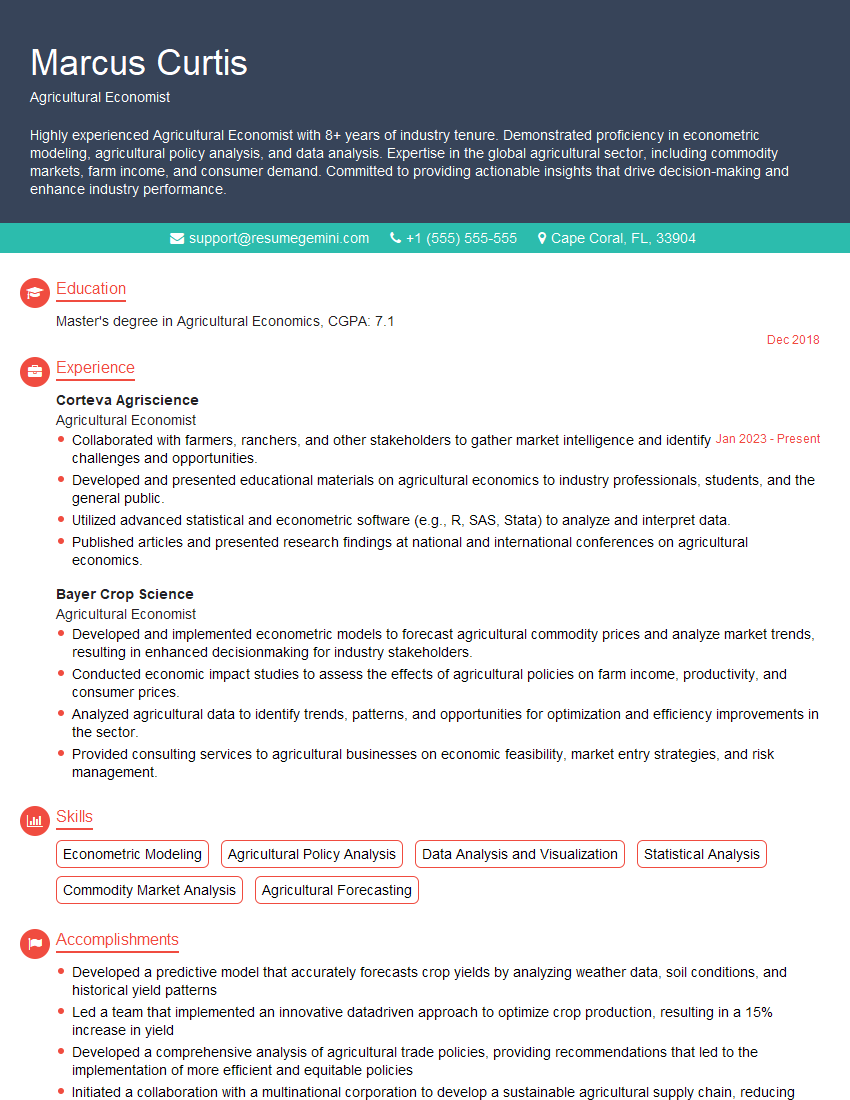
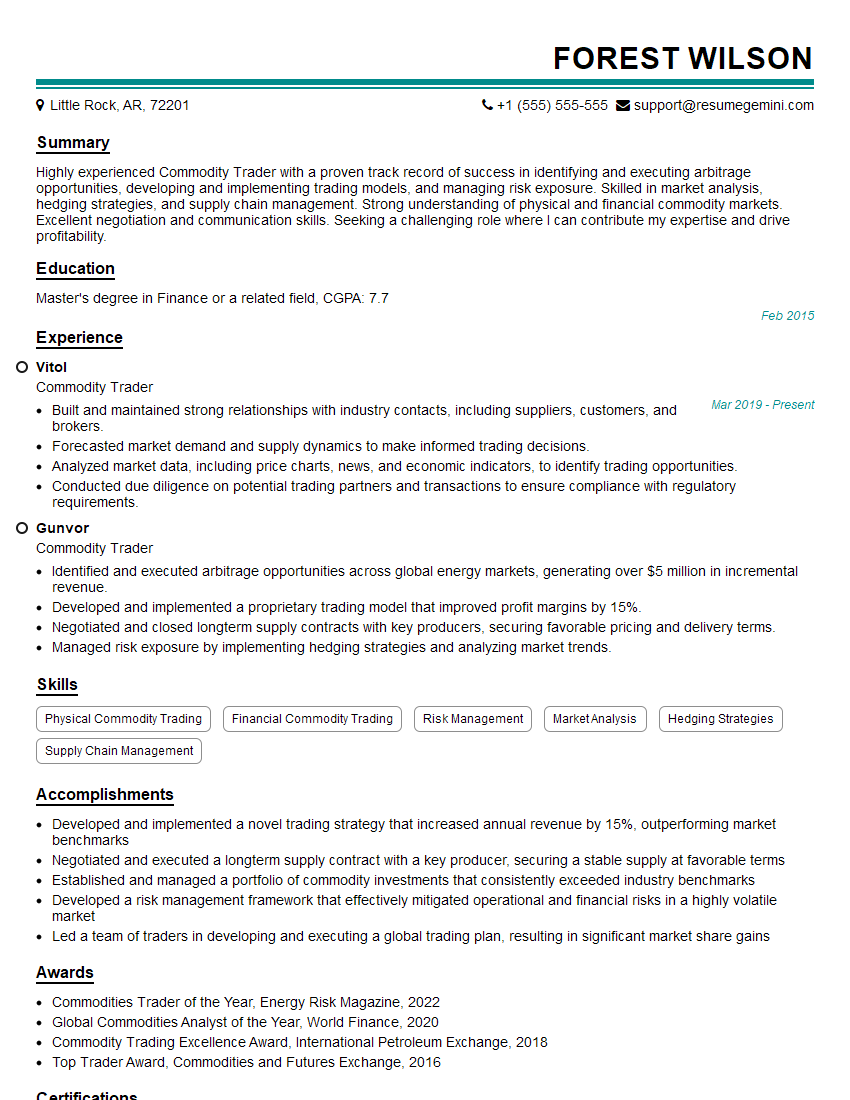
Mastering the intricacies of grain market regulations is crucial for career advancement in the agricultural sector, opening doors to specialized roles with increased responsibility and earning potential. To enhance your job prospects, creating a compelling and ATS-friendly resume is essential. ResumeGemini offers a trusted platform to build a professional resume that showcases your skills and experience effectively. We provide examples of resumes tailored to highlight expertise in Understanding of Grain Market Regulations, helping you present yourself as the ideal candidate. Take advantage of this resource to build a standout resume and secure your dream job.

Explore more articles
Users Rating of Our Blogs
Share Your Experience
We value your feedback! Please rate our content and share your thoughts (optional).
What Readers Say About Our Blog
Really detailed insights and content, thank you for writing this detailed article.
IT gave me an insight and words to use and be able to think of examples