Preparation is the key to success in any interview. In this post, we’ll explore crucial V-Welding interview questions and equip you with strategies to craft impactful answers. Whether you’re a beginner or a pro, these tips will elevate your preparation.
Questions Asked in V-Welding Interview
Q 1. Explain the different types of V-groove weld preparations.
V-groove weld preparations are crucial for achieving strong, sound welds. The type of preparation depends on factors like material thickness, weld position, and desired weld profile. Common types include:
- Single V-groove: A single bevel is prepared on one side of the joint, suitable for thinner materials. Think of it like cutting a single slanted edge on a piece of wood before gluing it to another.
- Double V-groove: Bevels are prepared on both sides of the joint, allowing for better penetration and stronger welds in thicker materials. It’s like cutting slanted edges on both pieces of wood for a stronger joint.
- Single U-groove: Similar to a single V-groove but with a wider groove angle, offering improved penetration and reduced weld metal volume. This is more efficient for very thick materials.
- Double U-groove: Combines the advantages of the double V-groove and U-groove for maximum penetration in very thick sections.
- V-groove with backing strip: A backing strip is added to the back of the joint to support the weld metal and improve penetration. This is helpful for welding in vertical or overhead positions.
The choice of V-groove preparation impacts weld time, cost, and the overall weld quality. Proper preparation is key for achieving the desired weld strength and geometry.
Q 2. Describe the factors influencing V-weld penetration.
Several factors influence V-weld penetration, the depth to which the weld extends into the base material. These include:
- Welding current (amperage): Higher amperage generally leads to deeper penetration. It’s like using a hotter flame for better melting.
- Arc voltage: Higher voltage typically increases penetration but also widens the weld bead. It’s like adjusting the distance between the flame and the material.
- Travel speed: Slower travel speed allows for deeper penetration as the heat is concentrated in a smaller area. Going too fast results in a shallower weld.
- Electrode type and size: The diameter of the electrode and its chemical composition affect penetration and weld bead shape.
- Joint design and preparation: A properly prepared V-groove with the correct angle and root opening promotes consistent penetration.
- Material properties: The thermal conductivity and melting point of the base material impact how easily the material melts and the depth of penetration.
- Welding position: Penetration can be more challenging in vertical and overhead positions compared to flat or horizontal positions.
Optimizing these parameters is crucial for producing strong, reliable welds with the desired penetration. Improper control can lead to incomplete fusion or excessive penetration.
Q 3. What are the common welding defects found in V-welds and how are they prevented?
Common welding defects in V-welds include:
- Incomplete penetration (IP): The weld metal doesn’t fully fuse with the base material, creating a weak point. Prevention involves using correct parameters and ensuring proper groove preparation.
- Undercut: A groove melted into the base metal at the edge of the weld. It can be caused by excessive current or improper travel speed. Adjusting welding parameters and using proper technique helps prevent this.
- Porosity: Gas pores within the weld metal. This is often caused by contamination or insufficient shielding gas. Careful cleaning and proper shielding gas coverage are essential.
- Inclusion: Foreign material, like slag or tungsten from TIG welding, trapped in the weld. Thorough cleaning and correct welding technique minimize this.
- Lack of fusion (LOF): Insufficient bonding between the weld metal and the base metal. This can occur due to inadequate cleaning or improper welding parameters. Careful preparation and proper welding technique are crucial.
Regular inspection and skilled welding techniques, along with proper equipment maintenance, are vital in preventing these defects and guaranteeing weld quality and structural integrity.
Q 4. How do you determine the correct welding parameters (voltage, amperage, travel speed) for a V-weld?
Determining the correct welding parameters for a V-weld requires careful consideration of several factors. There’s no single formula; it’s an iterative process. A good starting point often involves:
- Consulting the Welding Procedure Specification (WPS): This document specifies the optimal settings based on the base material, filler metal, and welding process.
- Using a Weld Parameter Chart or Calculator: Many resources provide charts or online calculators to estimate appropriate parameters based on material thickness and type.
- Performing test welds: Conducting test welds with varying parameters and assessing the results (penetration, bead shape, etc.) is crucial for optimization.
- Considering Material Properties: The thermal conductivity and thickness of the base metal heavily influence the required current and travel speed. Thicker sections need higher amperage and slower speeds.
- Using a Visual Inspection Technique: The appearance of the weld bead is an indicator of good parameter settings. A well-formed, fully penetrated weld bead indicates correct settings.
Experienced welders use their expertise and visual cues to fine-tune parameters during the welding process. Remember that safety is paramount, always use appropriate safety equipment.
Q 5. Explain the importance of preheating and post-weld heat treatment in V-welding.
Preheating and post-weld heat treatment (PWHT) are crucial steps in V-welding, particularly with high-carbon steels or those prone to cracking.
- Preheating: Lowers the cooling rate during welding, reducing the risk of cracking in high-carbon steels. Think of it as gradually warming the metal to prevent sudden temperature shocks. The temperature depends on the material and WPS.
- PWHT: This involves heating the entire welded assembly to a specific temperature for a certain time and then slowly cooling it. This relieves internal stresses generated during welding, improving weld toughness and reducing the risk of cracking. The specific temperature and time are dictated by the material and WPS.
Both preheating and PWHT are designed to improve the microstructure and mechanical properties of the weld, resulting in a more robust and reliable weldment. Neglecting these steps can lead to premature weld failure in critical applications. Always follow the guidelines in the WPS.
Q 6. What are the different types of filler metals used in V-welding and their applications?
The choice of filler metal in V-welding is vital for ensuring compatibility and achieving the desired weld properties. Common filler metal types include:
- Mild steel filler metals: Used for welding mild steel structures. Their chemical composition is carefully balanced for strength and weldability.
- Low-alloy steel filler metals: Offer improved strength and toughness compared to mild steel filler metals, making them suitable for high-strength applications. They might have added elements like molybdenum or chromium.
- Stainless steel filler metals: Used for welding stainless steel components, maintaining corrosion resistance. Different grades exist based on the specific alloying elements in the base metal.
- Aluminum filler metals: Used for welding aluminum alloys. They need specific fluxes or shielding gases to prevent oxidation.
Selecting the correct filler metal is crucial to maintaining the integrity of the base metal. Using an incompatible filler metal could compromise the weld’s strength, corrosion resistance, or other key properties. Always refer to the Welding Procedure Specification (WPS) for guidance.
Q 7. Describe the process of V-weld inspection, including visual inspection and NDT methods.
V-weld inspection is crucial for ensuring quality and safety. It generally involves:
- Visual inspection: This initial step checks for obvious defects like cracks, porosity, undercut, or incomplete penetration. Good lighting and magnification are essential for thorough examination.
- Non-destructive testing (NDT): More advanced methods like radiographic testing (RT), ultrasonic testing (UT), and magnetic particle testing (MT) can detect internal flaws not visible to the naked eye.
- RT (Radiographic Testing): Uses X-rays or gamma rays to detect internal defects. It’s a highly sensitive method for detecting porosity, cracks, and inclusions.
- UT (Ultrasonic Testing): Uses high-frequency sound waves to locate defects. It’s efficient for detecting both surface and internal flaws.
- MT (Magnetic Particle Testing): Detects surface and near-surface cracks in ferromagnetic materials. A magnetic field is applied, and iron particles reveal any discontinuities.
The choice of NDT method depends on the weld’s size, type, and the potential severity of defects. A qualified inspector interprets the results, determining whether the weld meets the required standards.
Q 8. How do you interpret welding symbols related to V-welds?
Welding symbols for V-welds provide crucial information about the weld preparation and execution. They’re essentially a shorthand language understood by welders and engineers. The symbol itself shows the type of weld (V-groove), and accompanying reference lines indicate details such as the groove angle, root opening, and any required reinforcement. For instance, a symbol might show a ‘V’ indicating a V-groove weld, then a dimension indicating the angle of the V-groove (e.g., 60°), and another dimension indicating the root opening (e.g., 2mm). Furthermore, other elements of the symbol might define the weld size and the leg length, and whether the weld needs to be made on one or both sides.
Imagine a blueprint: the symbol acts as a concise summary of the instructions, avoiding lengthy textual descriptions. The key is understanding the conventions; standard welding symbol references provide comprehensive guidance. Misinterpreting a symbol could lead to incorrect weld preparation and, ultimately, a faulty weld.
Q 9. What are the safety precautions to be taken while performing V-welding?
Safety is paramount in V-welding. The primary hazards stem from the intense heat, bright light, and potential for fumes and sparks. Therefore, the following precautions are critical:
- Personal Protective Equipment (PPE): This includes a welding helmet with appropriate shade lenses to protect the eyes from intense UV radiation and the arc flash. Welding gloves protect hands from burns and sparks. A welding jacket made of flame-resistant material shields the body, and safety boots protect feet. Respiratory protection, such as a respirator, is essential when welding materials that produce toxic fumes.
- Work Area Safety: The welding area should be well-ventilated to dispel fumes. Flammable materials should be kept far away from the work area. A fire extinguisher must be readily accessible, and a fire watch is crucial for large projects. The floor should be free from tripping hazards. The area should be adequately lit so the welder can see clearly.
- Electrical Safety: If using electric welding equipment, ensure proper grounding and insulation to prevent electric shock. Always check the welding equipment for damage before use.
- Proper Technique: Maintaining the correct welding parameters (amperage, voltage, and travel speed) is crucial to prevent overheating and ensure the weld’s integrity. Avoid distractions and focus on the welding process.
Failing to adhere to these safety guidelines can lead to serious injuries, including burns, eye damage, respiratory problems, and even electric shock.
Q 10. Explain the difference between single-V and double-V groove welds.
The difference between single-V and double-V groove welds lies in the preparation of the joint edges. In a single-V groove weld, a V-shaped bevel is prepared on only one side of the joint. The welder deposits the weld metal into this single groove to join the parts. In contrast, a double-V groove weld involves preparing a V-shaped bevel on both sides of the joint. This allows for deeper penetration and a more substantial weld deposit. Double-V grooves are often preferred for thicker materials where a single-V groove would require an excessive amount of weld metal.
Think of it like making a sandwich: a single-V is like putting filling only on one side of the bread, whereas a double-V is like spreading filling on both sides for a more substantial result. The choice depends on material thickness and the desired strength and penetration of the weld.
Q 11. How does the angle of the V-groove affect weld quality?
The angle of the V-groove significantly influences weld quality and penetration. A narrower V-groove (e.g., 60°) requires less weld metal but might be harder to achieve complete penetration, especially in thicker materials. A wider V-groove (e.g., 80°) requires more weld metal, making it potentially less efficient, but it allows for easier penetration and provides better access for weld metal deposition. It also allows for better heat dissipation during welding.
The optimal angle depends on factors like material thickness, welding process, and desired weld properties. An improperly chosen angle can result in incomplete fusion (lack of proper joining of the base metal), porosity (holes within the weld), or insufficient strength. Therefore, careful selection and consistent adherence to specified angles are essential to achieve the desired weld quality.
Q 12. What is the significance of root opening in V-welding?
Root opening refers to the gap between the two pieces of metal at the bottom of the V-groove, before welding. This small gap is essential for proper penetration and fusion during the welding process. An inadequate root opening (too narrow or closed) can prevent the weld metal from reaching the root of the joint, leading to incomplete fusion and reduced strength. Conversely, an excessive root opening (too wide) can cause undercut (a groove at the base of the weld) and may make filling the groove with weld metal more difficult. Thus, proper root opening ensures good penetration and a strong, sound weld. In practice, the optimal root opening is often dictated by the material thickness and the welding process being employed.
Maintaining the right root opening is akin to ensuring a proper foundation for a building; a poorly designed foundation would jeopardize the building’s stability, just as an inappropriate root opening would compromise the weld’s integrity.
Q 13. Describe your experience with different V-weld joint designs.
Throughout my career, I’ve worked extensively with various V-weld joint designs, including single-V, double-V, and variations like U-grooves and J-grooves for specialized applications. For instance, I’ve used single-V welds on thinner sheet metal sections in automotive fabrication, where speed and efficiency are prioritized. In contrast, I’ve employed double-V welds in thicker steel structures for construction projects, requiring greater strength and weld penetration. My experience extends to adjusting the V-groove angles to suit different materials (e.g., stainless steel versus mild steel), welding processes (e.g., gas metal arc welding (GMAW) versus shielded metal arc welding (SMAW)), and joint configurations.
One project involved using a modified single-bevel V-groove for a high-pressure pipeline, requiring precise control over the root opening and penetration to ensure the weld’s integrity under extreme operational conditions. Another involved working with double-V welds on pressure vessels using specific preheating and post-weld heat treatment procedures to achieve the necessary mechanical properties.
Q 14. How do you manage weld spatter during V-welding?
Weld spatter, those tiny molten metal droplets that escape the weld pool and land on the surrounding surfaces, can be a nuisance during V-welding. Effectively managing spatter not only improves the weld’s appearance but also ensures safety and prevents potential damage to the workpiece and equipment. Several strategies contribute to minimizing spatter:
- Proper Welding Parameters: Using the correct welding current, voltage, and travel speed reduces spatter. Too high of an amperage often increases spatter significantly.
- Cleanliness: A clean welding surface and properly prepared groove are essential. Removing rust, paint, oil, and other contaminants helps reduce spatter.
- Gas Flow: For GMAW, ensuring the shielding gas flow rate is correct helps to shield the weld from the air, decreasing spatter.
- Electrode Selection (SMAW): In shielded metal arc welding (SMAW), using the right electrode type and diameter can minimize spatter. Some electrodes have coatings that reduce spatter.
- Post-Weld Cleaning: While prevention is key, post-weld cleaning methods such as wire brushing or chipping can remove any remaining spatter.
In my experience, combining these techniques generally results in a significant reduction in spatter. I’ve found that meticulously preparing the workpiece is half the battle. A well-prepared joint usually leads to a cleaner weld and less spatter.
Q 15. What is the impact of improper groove preparation on V-weld strength?
Improper groove preparation significantly weakens a V-weld. Think of it like trying to glue two pieces of wood together with a gap – the bond won’t be strong. The weld’s strength depends on the complete fusion of the base metal and the weld filler material. A poorly prepared groove can lead to several issues:
- Incomplete Penetration: If the groove isn’t deep or wide enough, the weld metal won’t fully penetrate to the bottom of the groove, creating a weak point. Imagine a poorly constructed bridge – parts aren’t fully connected, making it unstable.
- Undercutting: An improperly prepared groove can lead to undercutting during welding, where the weld metal doesn’t completely fill the groove, leaving a groove at the weld toe. This weakens the weld and creates stress concentration points.
- Porosity and Inclusion: An unclean groove can trap contaminants, resulting in porosity (gas bubbles) and inclusions (solid particles) in the weld, both severely reducing strength.
Proper groove preparation, including consistent angle, depth, and root opening, is crucial for a strong, reliable V-weld. Using proper techniques like grinding or machining to achieve the correct dimensions and removing contaminants ensures optimum weld integrity.
Career Expert Tips:
- Ace those interviews! Prepare effectively by reviewing the Top 50 Most Common Interview Questions on ResumeGemini.
- Navigate your job search with confidence! Explore a wide range of Career Tips on ResumeGemini. Learn about common challenges and recommendations to overcome them.
- Craft the perfect resume! Master the Art of Resume Writing with ResumeGemini’s guide. Showcase your unique qualifications and achievements effectively.
- Don’t miss out on holiday savings! Build your dream resume with ResumeGemini’s ATS optimized templates.
Q 16. How do you ensure proper weld reinforcement in V-welds?
Proper weld reinforcement in V-welds is vital for strength and fatigue resistance. It’s about ensuring the weld metal slightly protrudes above the base metal surface, creating a convex shape. Too little reinforcement weakens the weld, making it prone to cracking, while excessive reinforcement is prone to stress cracking and can hinder proper fit up for subsequent welds. A good rule of thumb is to aim for reinforcement that is between 30% and 50% of the weld thickness. However, this percentage may vary depending on design codes and application requirements.
Ensuring proper reinforcement involves careful control of welding parameters. Techniques such as adjusting the welding current, travel speed, and filler metal deposition rate, alongside using proper welding techniques, allow for consistent and appropriate reinforcement.
Monitoring the weld profile during welding is important. Visual inspection is the first step, and using precision measuring tools like calipers or weld gauges ensures consistent, reliable reinforcement throughout the weld.
Q 17. Describe your experience with different welding processes suitable for V-welds (e.g., SMAW, GMAW, GTAW).
I have extensive experience with SMAW (Shielded Metal Arc Welding), GMAW (Gas Metal Arc Welding), and GTAW (Gas Tungsten Arc Welding) for V-welds. Each process presents unique advantages and challenges.
- SMAW: Suitable for various thicknesses and positions, SMAW offers good penetration and is relatively inexpensive. However, it can be slower than GMAW and GTAW, and the slag removal can be more demanding for high quality V-welds.
- GMAW: Highly productive for V-welds, particularly in thicker sections, due to its high deposition rate. It’s well-suited for both horizontal and vertical welding positions, offering excellent penetration with consistent bead formation. The choice of wire type and gas mixture is crucial for optimal weld quality. I’ve successfully used this method on numerous large-scale projects.
- GTAW: Ideal for high-quality applications requiring excellent penetration and precise control. It’s preferred when superior metallurgical properties are needed, though it is slower and more complex to master than SMAW or GMAW, making it more suited for smaller projects or those where high precision is paramount.
The choice of process depends on factors such as material, thickness, accessibility, and required weld quality. For example, in a recent project involving stainless steel pipelines, GTAW was chosen for its ability to produce high-quality, corrosion-resistant welds.
Q 18. What are the limitations of V-welding compared to other weld joint designs?
While V-welds are versatile and commonly used, they have certain limitations compared to other joint designs such as butt welds or lap welds.
- Higher Preparation Cost: Preparing the V-groove requires more time and effort compared to simpler joint designs. This translates to higher preparation costs and potentially longer production times.
- More Complex Welding Procedure: Achieving complete penetration and avoiding defects such as lack of fusion or undercutting requires more skill and control compared to other joint configurations.
- Potential for Increased Distortion: The geometry of the V-groove can lead to higher levels of weld distortion than some other joint types. Careful control of the welding process is needed to minimize this. This may necessitate additional steps in the manufacturing process to correct it.
- Limited Joint Strength in Certain Cases: While capable of producing strong welds, the V-joint’s inherent geometry could be a disadvantage in some specialized applications where other joint designs provide superior strength or fatigue life.
The selection of an appropriate weld joint design depends on several factors, including material properties, loading conditions, and cost considerations. The choice often involves trade-offs between weld strength, manufacturing cost, and potential for distortion.
Q 19. How do you address undercut or lack of fusion in V-welds?
Undercut and lack of fusion are serious weld defects in V-welds that compromise strength and integrity. They are usually caused by improper welding techniques, insufficient heat input, or poor groove preparation.
Addressing Undercut: Undercut is addressed by re-welding the affected area, paying close attention to the welding parameters, to ensure the weld metal properly fills the groove and to use proper techniques to avoid undercutting. Proper groove preparation is essential. Grinding or machining the undercut to achieve a proper weld surface prior to re-welding can help.
Addressing Lack of Fusion: Lack of fusion, where the weld metal doesn’t fuse with the base metal, is a more critical defect. It typically requires more extensive repair. The weld area may need to be ground out completely, ensuring removal of the defective metal. A proper weld preparation is essential before re-welding. Careful control of parameters, especially heat input and travel speed are crucial to ensure proper fusion.
In both cases, thorough post-weld inspection is vital to ensure the repairs are effective. Visual inspection followed by non-destructive testing (NDT) techniques such as radiographic testing or ultrasonic testing confirm the weld’s integrity after repair.
Q 20. Describe your troubleshooting experience related to V-welding problems.
My troubleshooting experience with V-welding problems often involves a systematic approach. I start by identifying the visual defects: cracks, porosity, undercutting, lack of fusion, and excessive reinforcement. Then, I examine the welding process parameters: current, voltage, travel speed, filler metal type, and shielding gas. I also evaluate the groove preparation quality, including the angle, depth, and cleanliness.
For example, I once encountered excessive porosity in a V-weld. By analyzing the process, I discovered moisture contamination in the shielding gas, which was resolved by replacing the gas cylinder and thoroughly drying the welding equipment. In another instance, I addressed undercutting by adjusting the welding current and travel speed to increase the heat input and metal flow, ensuring complete filling of the groove.
Root cause analysis is key. I use a combination of visual inspection, NDT techniques, and historical data analysis to understand the reason for the defect. This detailed approach ensures effective corrective and preventative measures.
Q 21. What are your preferred methods for verifying weld quality in V-welds?
Verifying weld quality in V-welds involves a multi-step process employing both visual inspection and non-destructive testing (NDT) methods. Visual inspection assesses the weld’s appearance, looking for obvious flaws such as cracks, porosity, undercutting, or excessive spatter. This is the first, and crucial, step. Dimensions such as reinforcement height are checked with gauges. Visual inspection is complemented by the following:
- Radiographic Testing (RT): RT uses X-rays or gamma rays to detect internal flaws like porosity, inclusions, and lack of fusion. It provides detailed internal images of the weld.
- Ultrasonic Testing (UT): UT uses high-frequency sound waves to detect internal flaws. It’s particularly useful for detecting lack of fusion and cracks. The technique is especially good for thick materials.
- Magnetic Particle Testing (MT) and Dye Penetrant Testing (PT): These are surface inspection methods, which detect surface cracks and discontinuities. MT is suited for ferromagnetic materials while PT can be used on a wider range of materials.
The choice of NDT method depends on the material, weld thickness, accessibility, and the required level of inspection detail. Documentation of all inspection results is crucial for traceability and quality control. These methods, along with a thorough understanding of the welding process itself, ensures consistent and reliable weld quality.
Q 22. Explain the relationship between the heat input and the weld bead profile in V-welding.
Heat input in V-welding, essentially the amount of energy delivered to the weld joint per unit length, directly influences the weld bead profile. Think of it like cooking – a low heat input is like simmering, resulting in a narrow, deep weld bead with potentially slower cooling and increased risk of defects like porosity. A high heat input is like blasting the heat – leading to a wider, shallower bead, potentially with better penetration but also a higher risk of undercut or excessive spatter.
Specifically, a lower heat input leads to a narrower, more convex bead profile due to the more rapid cooling and solidification. Higher heat input results in a wider, flatter, or even concave profile due to the slower cooling rate and greater molten metal pool area. This relationship is crucial because the bead profile directly affects the weld’s mechanical properties and its ability to withstand stress and fatigue.
For example, in a high-stress application, you might prefer a slightly wider bead to ensure complete fusion and penetration while mitigating the risk of cracks during cooling. In thinner materials, lower heat input is vital to avoid burn-through.
Q 23. How do you select appropriate welding consumables for different base materials in V-welding?
Selecting the right welding consumables is paramount. The choice depends entirely on the base material’s chemical composition and desired weld properties. Think of it as choosing the right ingredients for a recipe – the wrong ones will ruin the dish.
- Base Material: For example, if the base material is mild steel, you’d typically use a mild steel electrode or wire with a similar chemical composition to ensure good weldability and avoid issues like cracking or porosity.
- Weld Strength Requirements: If high strength is needed, you’d select consumables with higher tensile strength, possibly using low-hydrogen electrodes to minimize hydrogen cracking.
- Welding Process: The choice also depends on the welding process itself – Gas Metal Arc Welding (GMAW), Gas Tungsten Arc Welding (GTAW), or Shielded Metal Arc Welding (SMAW) each requires specific consumables tailored to its characteristics.
Consider a scenario involving stainless steel. You wouldn’t use a mild steel electrode; you’d need a stainless steel filler metal with appropriate alloying elements to match the base metal’s corrosion resistance and prevent intergranular corrosion in the weld.
Q 24. How do you maintain consistent weld quality over long periods?
Maintaining consistent weld quality requires a multi-pronged approach – it’s not just about the welder’s skill but also rigorous process control.
- Pre-weld Inspection: Careful inspection of the base material for surface defects, cleanliness, and proper fit-up is crucial. This is akin to prepping your ingredients before cooking.
- Regular Equipment Calibration and Maintenance: Welding machines, torches, and other equipment must be regularly calibrated and maintained to ensure consistent output. This prevents issues like inconsistent heat input.
- Qualified Welders: Employing certified and experienced welders is essential. Regular welder qualification tests are needed to ensure ongoing skill proficiency.
- Process Monitoring and Documentation: Tracking parameters like voltage, current, travel speed, and heat input allows for identifying and correcting variations. Maintaining detailed records ensures traceability and helps in troubleshooting.
- Environmental Control: Consistent environmental conditions – temperature, humidity, etc. – are critical. Extreme temperature fluctuations can affect arc stability and weld quality.
Imagine a production line; inconsistent weld quality could lead to catastrophic failure and huge losses. Through consistent, meticulous monitoring and adherence to procedures, we can ensure that the weldments meet the specified quality standards consistently.
Q 25. Explain your knowledge of different welding codes and standards relevant to V-welding (e.g., ASME, AWS).
Welding codes and standards provide a framework for ensuring weld quality and safety. They dictate requirements for welder qualification, procedures, materials, and inspections. Two prominent organizations are the American Welding Society (AWS) and the American Society of Mechanical Engineers (ASME).
- AWS D1.1: This standard covers structural welding codes, specifying requirements for various welding processes, including V-welding, and provides guidelines for materials, welder qualification, and inspection.
- ASME Section IX: This section deals with welding and brazing qualifications, providing detailed requirements for welder qualification and procedure qualification records (PQRs) in pressure vessel applications. This is crucial for high-pressure applications where failure can have serious consequences.
- Other Codes: Other relevant codes exist based on industry and application, such as those for pipelines, offshore structures, and nuclear applications. Each defines specific requirements tailored to the application’s unique demands.
Understanding these codes is not just about compliance – it’s about ensuring safety and reliability. Imagine the consequences of a substandard weld in a critical structure like a bridge or a pipeline. Compliance with these standards ensures that our work meets the highest safety and quality standards.
Q 26. What are the key aspects of a welding procedure specification (WPS) for V-welds?
A Welding Procedure Specification (WPS) is a detailed document outlining the parameters for a specific welding process. It’s like a recipe for a perfect weld.
- Base Material Specification: This includes the type, grade, and thickness of the base material.
- Filler Metal Specification: Details about the type, size, and manufacturer of the filler material used.
- Welding Process: This clearly specifies the welding process – GMAW, GTAW, SMAW, etc. – including the type of shielding gas (if applicable).
- Welding Parameters: Crucial parameters such as voltage, current, travel speed, and pre-heat temperature are meticulously specified.
- Joint Design: This defines the joint geometry – V-joint, U-joint, etc. – including the angle of the bevel.
- Post-Weld Heat Treatment (PWHT): If required, the details of the PWHT process are included.
- Inspection and Testing: The WPS specifies the required inspection and testing methods to ensure quality, such as visual inspection, radiographic testing (RT), or ultrasonic testing (UT).
A well-defined WPS is essential for reproducibility. Following a standardized WPS ensures consistent weld quality, reducing the risk of defects and ensuring the integrity of the weldment.
Q 27. How do you manage variations in base material thickness when performing V-welding?
Managing variations in base material thickness requires careful consideration of several factors. Think of it as adjusting your cooking time based on the size of the dish.
- Joint Design Modification: For significant thickness variations, the joint design might need modification, potentially requiring a more complex joint geometry to ensure complete penetration and avoid issues like lack of fusion.
- Welding Technique Adjustment: The welder might need to adjust their welding technique, such as travel speed and current, to ensure proper penetration and fusion without burning through thinner sections.
- Preheating and Interpasses: Preheating the base material can help equalize the temperature and improve weldability. Multiple passes (interpasses) might be required to gradually build up the weld, allowing each layer to cool and preventing the formation of defects.
- Root Pass Control: Careful control of the root pass, the first weld bead, is particularly critical in thicker materials. It establishes the foundation for the rest of the weld.
For instance, if one side of a V-joint is considerably thicker than the other, the welder might use a weave technique or multiple passes to ensure complete penetration on the thicker side while avoiding burn-through on the thinner side. This meticulous attention to detail is essential for creating a sound weldment, regardless of thickness variation.
Q 28. Describe your experience with automated or robotic V-welding systems.
My experience with automated and robotic V-welding systems encompasses several projects using both GMAW and GTAW processes. Automated systems provide remarkable repeatability and high-quality welds, especially in high-volume production environments. Think of it as a highly skilled welder working tirelessly, consistently producing flawless welds.
- Programming and Setup: Setting up and programming robotic systems requires precise knowledge of the welding process, joint design, and material properties. Creating the correct weld paths and parameter settings is critical for success.
- Monitoring and Control: Effective monitoring and control systems are crucial during automated welding to detect and correct any deviation from the specified parameters. This includes monitoring arc voltage, current, and wire feed speed.
- Quality Assurance: Even with automation, quality assurance procedures are essential to ensure that the welds meet the specified quality standards. This may involve real-time monitoring, post-weld inspection, and periodic testing.
In one project, we successfully automated the V-welding of large steel structures using a six-axis robotic arm. The automation increased production efficiency by 30%, significantly reducing lead times while consistently meeting rigorous quality standards. This experience underscored the significant advantages of automated systems in achieving high-quality, consistent welds in large-scale industrial settings.
Key Topics to Learn for V-Welding Interview
- V-Groove Preparation: Understanding different groove designs (including included angle, root opening, and land), their impact on weld penetration and quality, and appropriate preparation techniques.
- Welding Parameters: Mastering the relationship between amperage, voltage, travel speed, and filler material selection to achieve optimal weld bead geometry and mechanical properties in V-welds. Practical application includes understanding how to adjust these parameters based on base material thickness and type.
- Weld Defects and Prevention: Identifying common defects in V-welds (porosity, undercut, lack of fusion, etc.) and understanding the root causes and preventative measures. This includes understanding the role of proper joint fit-up and preheating.
- Filler Metal Selection: Knowing which filler metals are appropriate for different base materials and welding processes. Understanding the impact of filler metal selection on weld properties and the ability to justify choices based on specific project requirements.
- Welding Codes and Standards: Familiarity with relevant welding codes and standards (e.g., ASME Section IX) and their application to V-welding procedures and quality control.
- Non-Destructive Testing (NDT): Understanding the common NDT methods used to inspect V-welds (visual inspection, radiography, ultrasonic testing) and interpreting the results to assess weld quality.
- Safety Procedures: Demonstrating a thorough understanding of safety protocols and procedures related to V-welding, including personal protective equipment (PPE) and hazard identification.
- Root Pass Techniques: Understanding the critical importance of the root pass in achieving a sound and defect-free weld. This includes techniques for controlling penetration and preventing root defects.
Next Steps
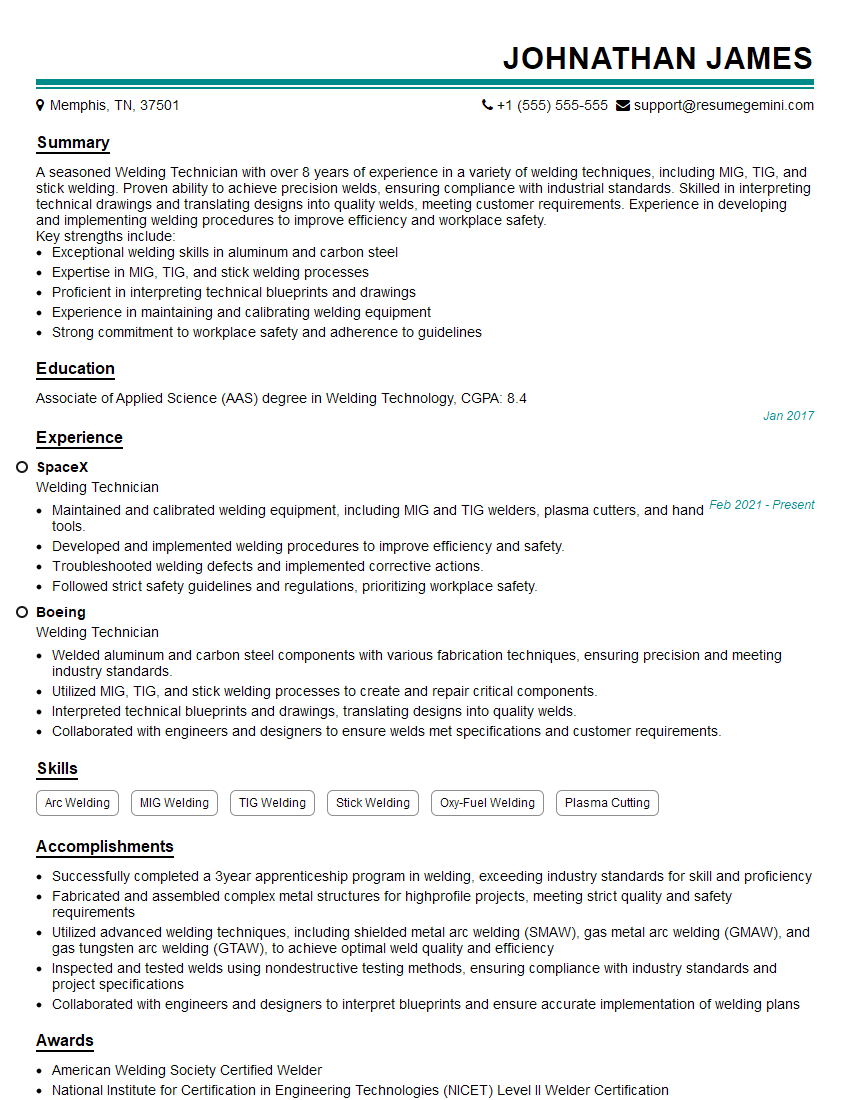
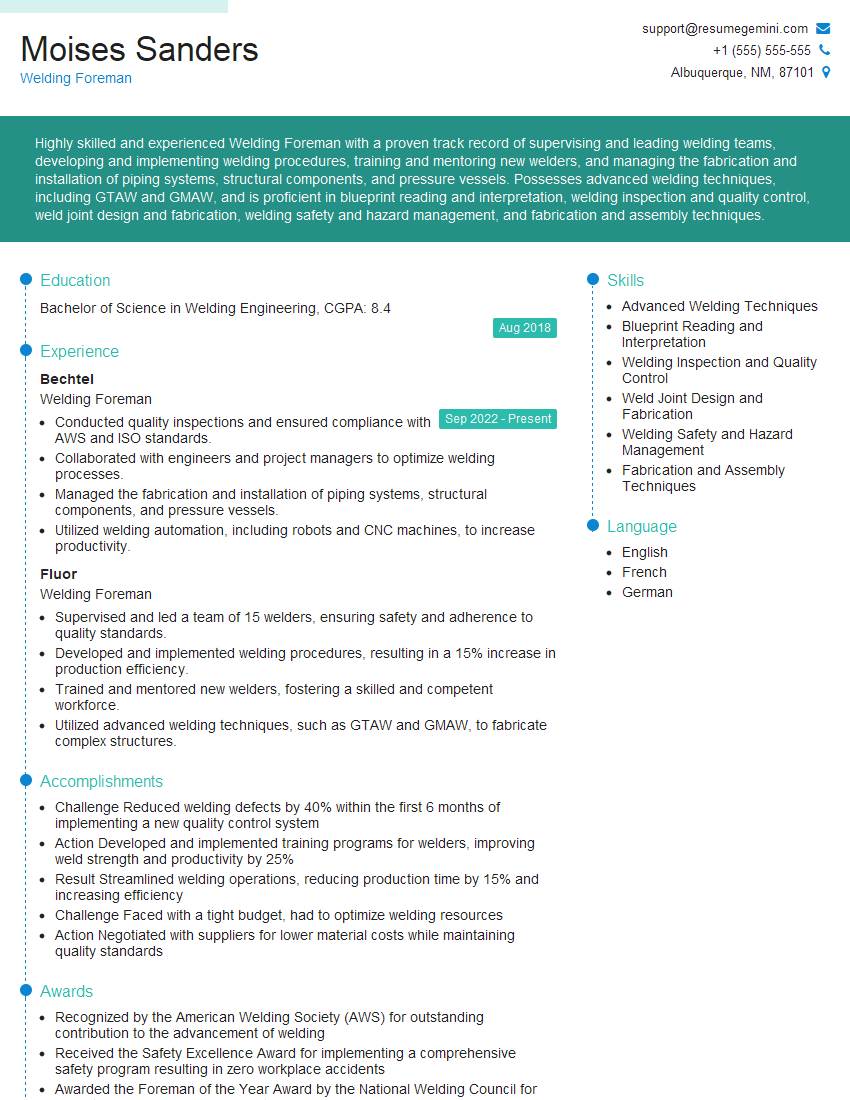
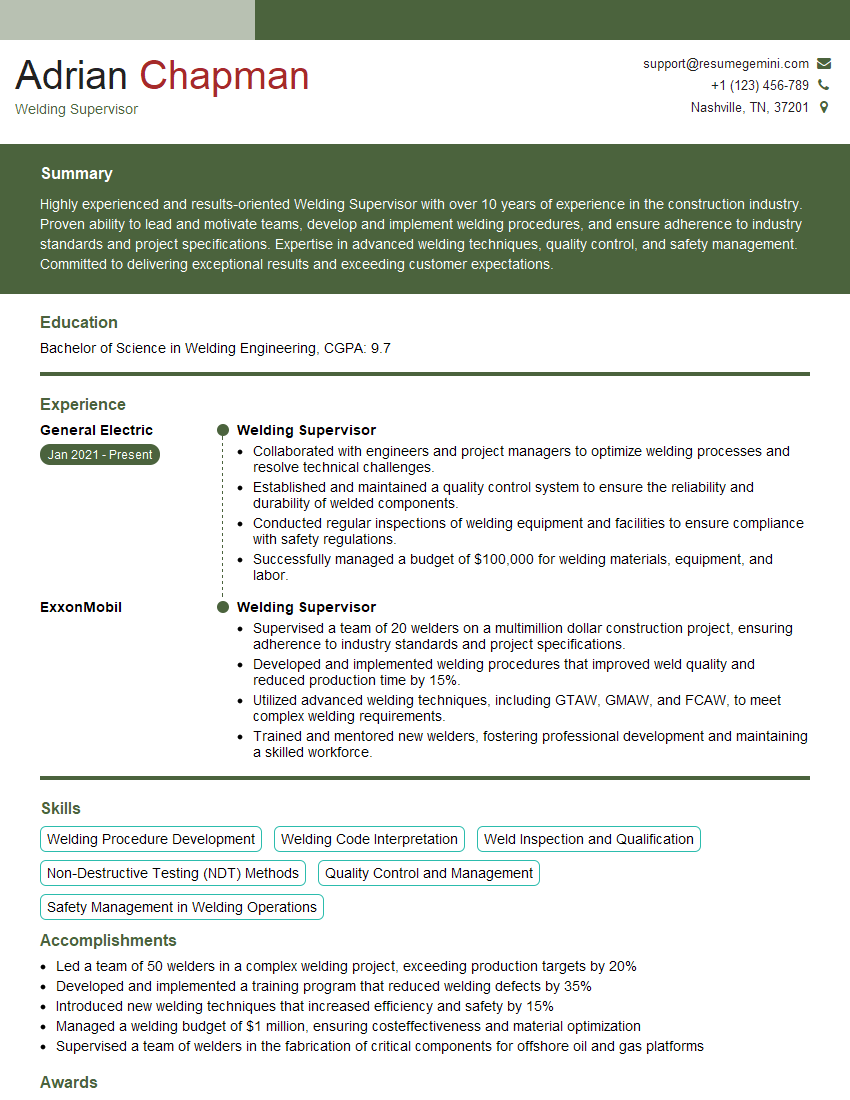
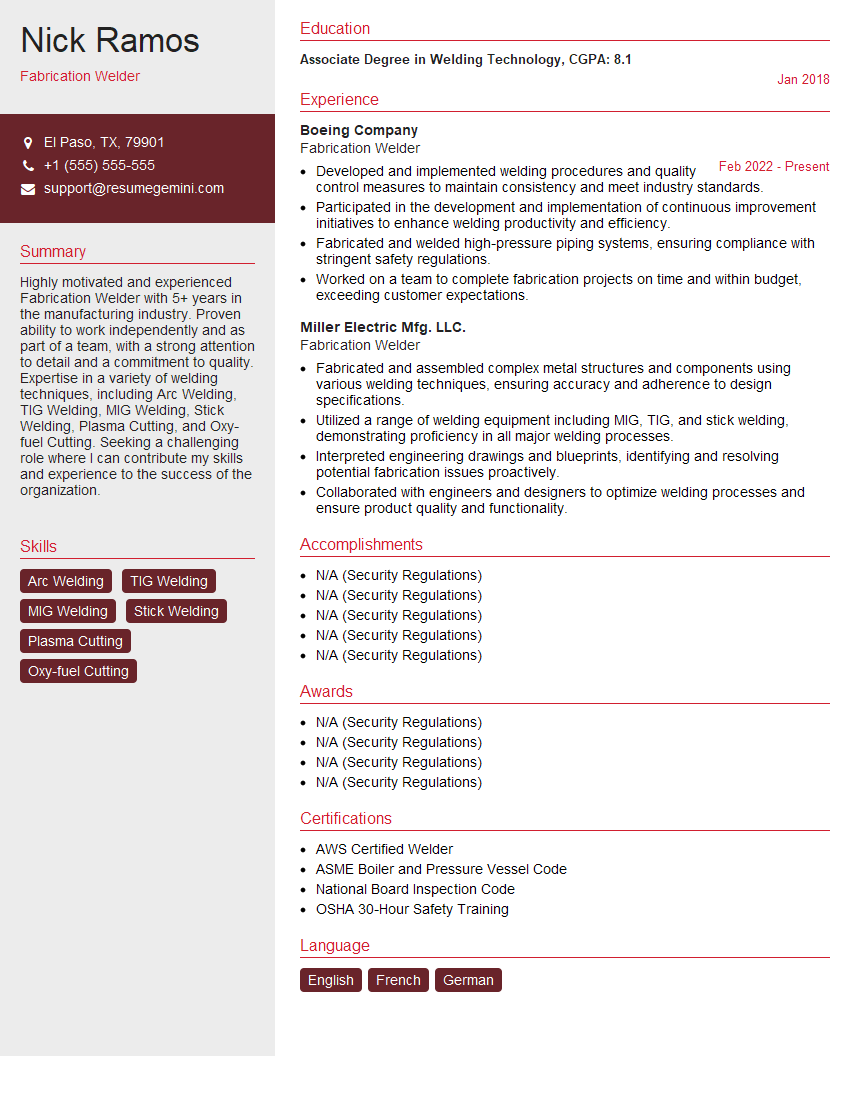
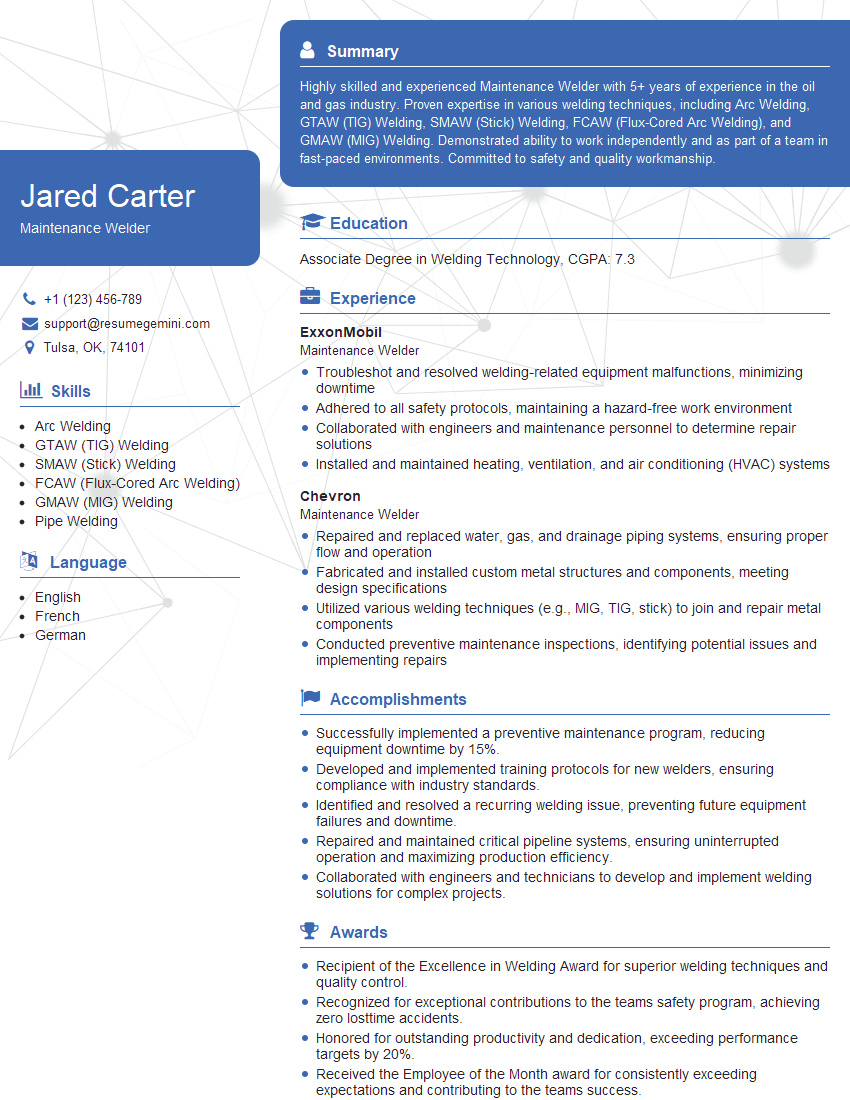
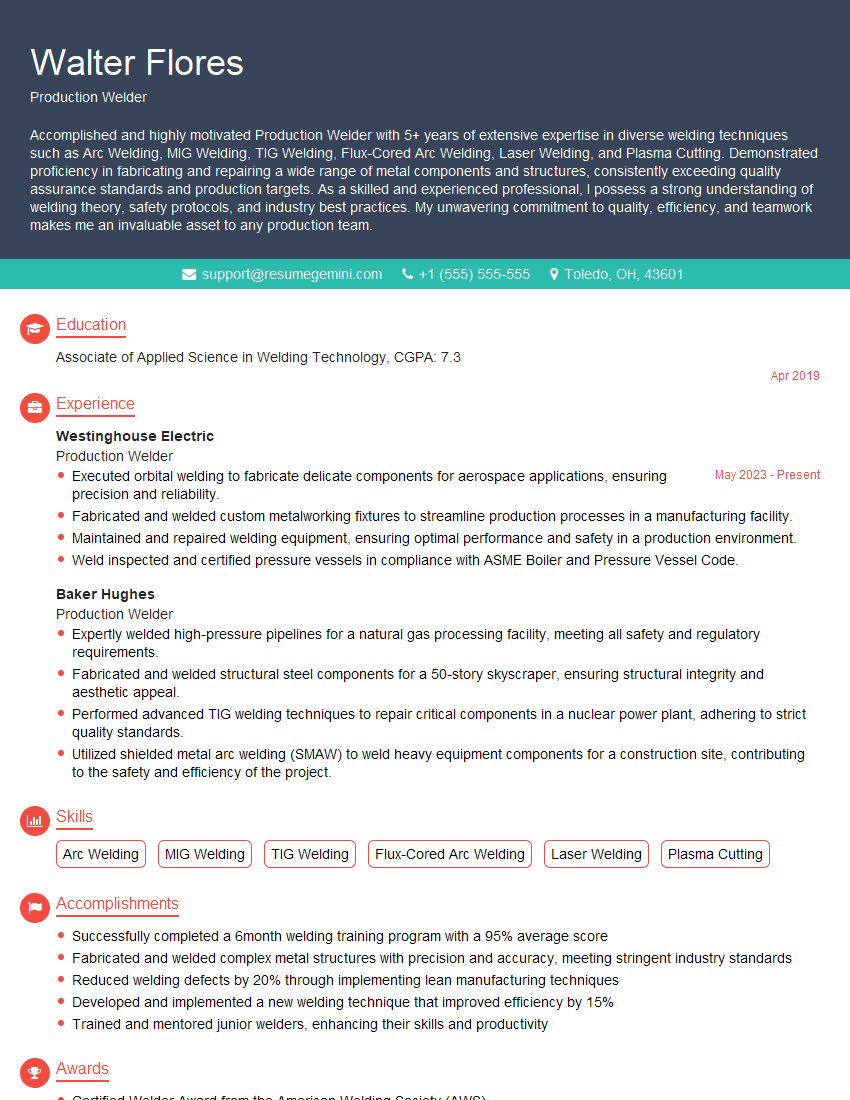
Mastering V-welding opens doors to exciting career opportunities in diverse industries, offering excellent potential for growth and specialization. To maximize your chances of landing your dream job, creating an ATS-friendly resume is crucial. This ensures your application gets noticed by hiring managers. We highly recommend using ResumeGemini to build a professional and impactful resume. ResumeGemini provides a user-friendly platform and offers examples of resumes tailored specifically to V-Welding professionals, giving you a head start in showcasing your skills and experience effectively.


Explore more articles
Users Rating of Our Blogs
Share Your Experience
We value your feedback! Please rate our content and share your thoughts (optional).
What Readers Say About Our Blog
Really detailed insights and content, thank you for writing this detailed article.
IT gave me an insight and words to use and be able to think of examples