Every successful interview starts with knowing what to expect. In this blog, we’ll take you through the top Wagon Washing interview questions, breaking them down with expert tips to help you deliver impactful answers. Step into your next interview fully prepared and ready to succeed.
Questions Asked in Wagon Washing Interview
Q 1. What are the different types of cleaning agents used in wagon washing?
The choice of cleaning agent in wagon washing depends heavily on the type of soil and the material being cleaned. We avoid harsh chemicals whenever possible, prioritizing environmentally friendly solutions.
- Alkaline Cleaners: These are commonly used for general cleaning and removing grease and oil. They’re effective, relatively inexpensive, and readily available. Think of them like strong dish soap, but formulated for industrial use.
- Acid Cleaners: Used for removing mineral deposits, rust, and other stubborn inorganic soils. These are more specialized and require careful handling due to their corrosive nature. We use them sparingly and only when necessary.
- Solvent Cleaners: Effective for removing specific types of contaminants like paint or adhesives. We select solvents based on the specific contaminant, ensuring compatibility with the railcar material to avoid damage.
- Enzymatic Cleaners: These are biological cleaners that break down organic matter like food residue or animal waste. They are environmentally friendly and particularly useful for cleaning food-grade tank cars.
- Water: Believe it or not, high-pressure water alone can be surprisingly effective for removing loose dirt and debris. It’s often used as a pre-wash or in conjunction with other cleaning agents.
The selection process involves careful consideration of factors such as environmental regulations, the type of wagon being cleaned (tank car, hopper car, etc.), and the nature of the contamination. We always prioritize safety and minimize environmental impact.
Q 2. Describe the process of washing a tank car.
Washing a tank car is a multi-stage process that requires specialized equipment and trained personnel. Safety is paramount at every step.
- Pre-inspection: We thoroughly inspect the tank car to identify any damage, leaks, or unusual contaminants. This step is crucial for safety and to determine the appropriate cleaning method.
- Preparation: This involves isolating the tank car, ensuring all valves are closed and secured, and connecting the washing system.
- Pre-wash (optional): A high-pressure water rinse removes loose debris, reducing the amount of cleaning agent needed later.
- Cleaning agent application: The chosen cleaning agent is introduced into the tank car, typically through specialized nozzles. The agent is allowed to dwell for a specified time to effectively break down the contaminants.
- Washing/Agitation: High-pressure water jets are used to agitate the cleaning agent and remove loosened contaminants. We might use different nozzle types depending on the tank car’s internal configuration and the type of soil.
- Rinse: Multiple thorough rinses with clean water ensure complete removal of the cleaning agent and any remaining contaminants. We monitor the rinse water for clarity to ensure complete cleaning.
- Post-inspection: A final inspection checks for any remaining contamination or damage. This ensures the tank car meets cleanliness standards before being returned to service.
- Wastewater treatment: The wastewater generated is carefully treated to meet environmental regulations before disposal.
The entire process is meticulously documented to ensure traceability and compliance.
Q 3. What safety precautions are necessary when operating a wagon washing system?
Safety is our number one priority. We adhere to strict safety protocols during all stages of the wagon washing process.
- Personal Protective Equipment (PPE): Workers always wear appropriate PPE, including safety glasses, gloves, protective suits, and respiratory protection, depending on the cleaning agents used.
- Lockout/Tagout Procedures: Before any work begins on a tank car, we implement strict lockout/tagout procedures to prevent accidental activation of any valves or systems.
- Confined Space Entry Procedures: If personnel need to enter a tank car for cleaning or inspection, they must follow strict confined space entry protocols, including atmospheric monitoring and rescue standby.
- Emergency Response Plan: A comprehensive emergency response plan is in place to handle spills, leaks, or other accidents. All personnel are trained on emergency procedures.
- Regular Equipment Inspections: Our equipment undergoes regular maintenance and inspections to prevent malfunctions and ensure safety.
- Training and Competency: All personnel involved in wagon washing receive comprehensive training on safe operating procedures and emergency response.
We regularly conduct safety audits and training sessions to reinforce safe work practices and ensure continuous improvement.
Q 4. How do you handle different types of soil and contamination on railcars?
Handling diverse soil and contamination types requires a tailored approach. We don’t use a ‘one-size-fits-all’ method.
- Identifying the Contaminant: The first step is to accurately identify the type and nature of the contamination. This might involve visual inspection, laboratory analysis, or consultation with the railcar owner.
- Selecting the Appropriate Cleaning Agent: Based on the contaminant identified, we select the most effective and environmentally friendly cleaning agent. For example, an alkaline cleaner would be suitable for grease, while an acid cleaner might be needed for mineral deposits.
- Adjusting Cleaning Parameters: We adjust the water pressure, temperature, and cleaning agent concentration to optimize cleaning effectiveness for the specific soil type. For delicate surfaces, we may use lower pressure and gentler agents.
- Multiple Cleaning Stages: In cases of heavy or complex contamination, we may employ multiple cleaning stages, using different agents and techniques.
- Specialized Equipment: For particularly stubborn contaminants, we may utilize specialized cleaning equipment such as high-pressure rotating nozzles or specialized brushes.
Our experience allows us to effectively handle a wide range of contaminants, from simple dirt and grime to hazardous materials. We always prioritize safety and environmental protection.
Q 5. What are the common problems encountered during wagon washing, and how do you troubleshoot them?
Common problems during wagon washing are usually related to equipment malfunctions, inadequate cleaning, or environmental factors.
- Nozzle Clogging: Clogged nozzles reduce cleaning efficiency. We address this through regular inspections and cleaning of nozzles, using appropriate techniques to avoid damage.
- Pump Malfunction: Pump failures can halt the washing process. Preventive maintenance and quick response to issues minimize downtime.
- Inadequate Cleaning: If a railcar isn’t adequately cleaned, we review the cleaning agent selection, water pressure, and dwell time. Sometimes, a repeat cleaning with a different approach is necessary.
- Water Supply Issues: Insufficient water pressure or interruptions in the water supply disrupt operations. We have backup systems and procedures to manage this.
- Wastewater Treatment Issues: Problems with the wastewater treatment system require immediate attention to maintain environmental compliance. We troubleshoot the issue and notify the relevant authorities if necessary.
Our troubleshooting approach is systematic, involving careful inspection, data analysis, and a phased approach to addressing the problem. We maintain detailed records to help identify recurring issues and prevent future problems.
Q 6. Explain the importance of proper water pressure and temperature in wagon washing.
Proper water pressure and temperature are critical for effective and efficient wagon washing. They directly impact cleaning effectiveness and operational safety.
- Water Pressure: Sufficient pressure is needed to dislodge and remove contaminants. Too little pressure will result in inadequate cleaning, while excessive pressure can damage the railcar or cause safety hazards. We carefully monitor and adjust pressure based on the railcar type and the nature of the soil.
- Water Temperature: Temperature affects the cleaning agent’s effectiveness. Warmer water often enhances the action of many cleaning agents, improving their cleaning power. However, excessively high temperatures can damage the railcar material or cause safety concerns. Optimal temperature is determined by the cleaning agent used and the material of the railcar.
Balancing pressure and temperature is essential. We carefully monitor these parameters to ensure efficient cleaning while maintaining safety and avoiding damage.
Q 7. How do you ensure the environmental compliance of the wagon washing process?
Environmental compliance is a top priority. We adhere to all relevant local, regional, and national environmental regulations.
- Wastewater Treatment: We employ a robust wastewater treatment system to remove contaminants before discharge. This typically involves filtration, chemical treatment, and sometimes biological treatment, depending on the contaminants present.
- Spill Prevention and Response: We have procedures to prevent spills of cleaning agents or wastewater. In case of a spill, we have a plan for containment and cleanup, following established protocols.
- Hazardous Waste Management: If hazardous materials are involved, we handle them according to strict regulations, ensuring proper disposal or treatment.
- Regular Monitoring: We continuously monitor the quality of our wastewater and our compliance with environmental regulations. Regular reports are submitted to the relevant authorities.
- Environmental Audits: Periodic environmental audits are conducted to verify our compliance and identify areas for improvement.
Our commitment to environmental responsibility is demonstrated through proactive measures and strict adherence to regulations. We actively seek ways to minimize our environmental footprint and improve our sustainability practices.
Q 8. What is your experience with different types of cleaning equipment?
My experience encompasses a wide range of cleaning equipment used in wagon washing, from basic pressure washers to sophisticated automated systems. I’m proficient with various types, including:
- High-pressure washers: These are the workhorses of the industry, varying in pressure (PSI) and flow rate (GPM), impacting cleaning efficiency and the type of cleaning agent used. I’ve worked with both electric and diesel-powered models.
- Rotary jet washers: These utilize rotating nozzles to achieve more thorough cleaning, particularly effective in removing stubborn grime and build-up. I’m experienced in operating and maintaining these specialized units.
- Undercarriage cleaning systems: These systems are designed for cleaning the underside of railcars and require specialized knowledge of their operation and safety protocols. I have extensive experience with both stationary and mobile undercarriage washing systems.
- Chemical dispensing systems: Precise control of cleaning chemicals is crucial. My experience includes working with automated systems that accurately measure and dispense detergents, degreasers, and other cleaning agents based on the type of wagon and level of soiling.
- Vacuum systems: These are essential for removing the wastewater and cleaning residue after washing. I’m familiar with various vacuum systems, from simple wet/dry vacuums to high-capacity industrial units.
This broad experience allows me to select and utilize the most appropriate equipment for each cleaning task, optimizing efficiency and minimizing environmental impact.
Q 9. Describe your experience with high-pressure washing systems.
High-pressure washing systems are the backbone of efficient wagon cleaning. My experience includes operating and maintaining a variety of these systems, from smaller, portable units to large, stationary installations. I understand the importance of selecting the correct nozzle, pressure, and cleaning agent for different surfaces and levels of soiling. For instance, a higher pressure might be needed for removing baked-on grease from tank cars, but a lower pressure might be preferred for delicate painted surfaces to prevent damage.
I’m also familiar with the safety protocols associated with high-pressure washing, including proper PPE (Personal Protective Equipment) usage, understanding the risks of water jet recoil, and safe handling of chemicals. I’ve successfully troubleshooted numerous issues, including pump failures, nozzle blockages, and pressure regulator malfunctions, ensuring minimal downtime. For example, once we experienced a sudden drop in pressure; my diagnostic skills quickly identified a clogged filter, enabling a swift fix and avoiding costly delays.
Q 10. How do you maintain cleaning equipment to ensure optimal performance?
Maintaining cleaning equipment is crucial for optimal performance, safety, and longevity. My approach involves a multi-faceted strategy:
- Regular Inspections: Daily visual inspections check for leaks, damage, and wear and tear. This proactive approach prevents small problems from becoming major breakdowns.
- Preventative Maintenance: Following manufacturer’s recommendations for scheduled maintenance is crucial. This often includes replacing filters, lubricating moving parts, and checking fluid levels.
- Cleaning and Storage: After each use, equipment is thoroughly cleaned and stored correctly to prevent corrosion and damage.
- Record Keeping: Detailed logs document all maintenance activities, facilitating troubleshooting and identifying patterns of wear or failure.
- Operator Training: Proper operator training is essential to ensure the equipment is used correctly and safely, prolonging its lifespan.
This systematic approach minimizes downtime and maximizes the lifespan of our cleaning equipment, saving the company money in the long run. Think of it like regular car maintenance – preventative measures are far more cost-effective than emergency repairs.
Q 11. What are the different types of railcars and their specific cleaning requirements?
Railcars come in various types, each with specific cleaning requirements. For example:
- Tank cars: These require thorough cleaning to remove residual chemicals and prevent contamination. The cleaning process often involves specialized techniques and chemicals depending on the substance previously carried.
- Hopper cars: Used for bulk materials, these require cleaning to remove any residue left behind, ensuring the next load isn’t contaminated. Special attention is paid to the discharge gates and internal surfaces.
- Boxcars: These generally require less intensive cleaning than tank or hopper cars, focusing on removing debris and general dirt.
- Refrigerated cars: These have specific cleaning requirements to maintain food safety standards. This includes using approved cleaning agents and paying attention to areas prone to bacteria growth.
Understanding these variations is crucial for efficient and effective cleaning. Failure to meet the specific cleaning needs of each car type can lead to costly delays, product contamination, and safety hazards.
Q 12. How do you prioritize tasks in a busy wagon washing environment?
Prioritizing tasks in a busy wagon washing environment requires a strategic approach. I typically use a combination of methods:
- Urgency and Criticality: Immediate needs, such as cars with hazardous materials or those scheduled for urgent transport, take precedence.
- Scheduled Maintenance: Regular cleaning schedules are followed to prevent build-up and maintain efficiency.
- First-In, First-Out (FIFO): A FIFO system ensures fair processing of all wagons. However, priority tasks override the FIFO system.
- Communication: Clear communication with dispatchers and other stakeholders helps ensure all critical needs are met.
This multi-pronged approach ensures all tasks are addressed efficiently and effectively, minimizing delays and optimizing resource allocation.
Q 13. How do you handle emergency situations, such as equipment malfunction?
Handling emergency situations, such as equipment malfunction, requires a calm and methodical approach. My process involves:
- Immediate Assessment: Quickly assess the situation to determine the extent of the problem and any safety hazards.
- Safety First: Ensure the safety of all personnel involved by isolating the affected area and following appropriate safety protocols.
- Troubleshooting: Systematically troubleshoot the problem based on my knowledge of the equipment, using diagnostic tools and available documentation.
- Communication: Report the incident to the supervisor and coordinate any necessary repairs or replacements.
- Alternative Solutions: If necessary, explore alternative cleaning methods or equipment to minimize operational downtime.
Effective communication, quick thinking, and a systematic approach are key to mitigating the impact of emergency situations. For example, during a high-pressure pump failure, we promptly switched to a backup system, minimizing production downtime and preventing a significant backlog.
Q 14. What are the regulations and standards related to wagon washing in your region?
Regulations and standards related to wagon washing vary by region but generally focus on environmental protection and worker safety. In my region, key regulations include:
- Wastewater Discharge Regulations: Strict limits are placed on the amount and type of pollutants discharged into the environment. This often involves using specific cleaning agents and wastewater treatment systems.
- Occupational Safety and Health Administration (OSHA) Standards: Strict adherence to OSHA guidelines for working with high-pressure equipment, hazardous chemicals, and confined spaces is mandatory.
- Environmental Protection Agency (EPA) Regulations: Compliance with EPA guidelines regarding hazardous waste disposal and environmental protection is crucial.
- Specific Industry Standards: The railway industry itself has specific standards relating to car cleaning, ensuring the safe transportation of goods.
Staying current with these regulations is essential, requiring ongoing training and meticulous record-keeping to ensure full compliance. Non-compliance can result in hefty fines and operational shutdowns.
Q 15. How do you ensure the safety of yourself and your colleagues during wagon washing operations?
Safety is paramount in wagon washing. We adhere to a strict safety protocol that begins with comprehensive training on identifying and mitigating hazards. This includes understanding the proper use of Personal Protective Equipment (PPE) like safety boots, gloves, high-visibility vests, and eye protection. Before starting any operation, we perform a thorough inspection of the wagon and the washing area for potential hazards such as leaks, spills, or damaged equipment. We also utilize lockout/tagout procedures to ensure equipment is safely secured before maintenance or cleaning. For example, if working with high-pressure hoses, we always check for leaks and ensure the nozzle is securely fastened. Furthermore, maintaining clear communication with colleagues is crucial, particularly in noisy environments, where hand signals or designated communication systems are used.
- Pre-shift inspection: Checking for leaks, debris, and damaged equipment.
- PPE usage: Consistent and correct use of safety gear.
- Lockout/Tagout Procedures: Safeguarding machinery before maintenance.
- Communication protocols: Utilizing hand signals or designated communication in noisy areas.
Career Expert Tips:
- Ace those interviews! Prepare effectively by reviewing the Top 50 Most Common Interview Questions on ResumeGemini.
- Navigate your job search with confidence! Explore a wide range of Career Tips on ResumeGemini. Learn about common challenges and recommendations to overcome them.
- Craft the perfect resume! Master the Art of Resume Writing with ResumeGemini’s guide. Showcase your unique qualifications and achievements effectively.
- Don’t miss out on holiday savings! Build your dream resume with ResumeGemini’s ATS optimized templates.
Q 16. Describe your experience with documentation and record-keeping related to wagon washing.
Detailed documentation is essential in wagon washing. We maintain comprehensive records of every cleaning operation, including the wagon identification number, date, time, cleaning agents used, any identified issues, and the condition of the wagon both before and after the cleaning process. This is typically done using digital forms or a dedicated software system. We meticulously document any safety incidents or near misses, following the established reporting procedures. This ensures accountability, allows for continuous improvement, and provides a history of maintenance for future reference. For instance, if a particular type of cleaning agent proves ineffective or causes damage, this information is recorded to inform future cleaning strategies. This diligent record-keeping is crucial for complying with industry regulations and ensuring the long-term safety and efficiency of the operation.
Q 17. How do you identify and report potential safety hazards?
Identifying and reporting potential safety hazards is an ongoing process. We regularly inspect our work area for anything that could pose a risk, such as spills, damaged equipment, or unsafe working conditions. This proactive approach goes beyond just looking for obvious issues; it involves a thorough assessment of the entire process. For example, if I notice a leak in a high-pressure hose, I immediately report it and stop the operation until the issue is resolved. Reporting is done through the established channels, usually a supervisor or designated safety officer, and detailed notes are taken, often including photos, to facilitate investigation and remediation. We’re also encouraged to report near-misses, which allows us to address potential problems before they result in accidents. Our safety culture emphasizes that everyone has a role to play in maintaining a safe work environment.
Q 18. What is your understanding of hazardous materials and their handling during cleaning?
Understanding hazardous materials is critical. We receive comprehensive training on the identification, handling, and disposal of various chemicals used in wagon washing. This includes knowledge of their safety data sheets (SDS) which provide crucial information on potential risks, handling procedures, and emergency responses. We are trained to properly mix and apply cleaning solutions, ensuring the right concentration to maximize effectiveness while minimizing environmental impact. Improper handling can lead to serious consequences like skin irritation, respiratory problems, or even environmental contamination. For example, when handling corrosive cleaning agents, we use appropriate PPE and ensure the area is well-ventilated. We also follow strict protocols for the disposal of chemical waste, adhering to all environmental regulations.
Q 19. How do you contribute to a team-oriented work environment?
I strongly believe in teamwork. In wagon washing, collaboration is essential for efficient and safe operations. I actively participate in team discussions, sharing my knowledge and experience to assist colleagues. I also willingly help my teammates when needed, ensuring that tasks are completed efficiently and to a high standard. For example, if a colleague is struggling with a particular aspect of cleaning, I will offer assistance and guidance. A collaborative approach helps maintain morale and fosters a positive and productive work environment. Open communication and mutual respect are essential for a successful team dynamic.
Q 20. What are your strengths and weaknesses as a wagon washer?
My strengths include meticulous attention to detail and a commitment to safety. I’m proficient in using various cleaning equipment and chemicals, and I’m always keen to learn new techniques and improve my skills. One of my weaknesses is occasionally being too detail-oriented, which can sometimes slow down my workflow. I’m actively working on improving my time management skills to overcome this. Despite this, my focus on accuracy ensures a high quality of work and minimizes the risk of errors. I believe continuous learning and self-improvement are crucial in this field.
Q 21. Describe a time you had to resolve a difficult problem during wagon washing.
During a particularly challenging wagon cleaning operation, we encountered a stubborn build-up of a corrosive substance that was resistant to our usual cleaning methods. Initially, our standard cleaning solutions were ineffective. I proactively researched alternative cleaning agents, consulting the SDS sheets for compatibility and safety. After careful consideration, I proposed a two-step process, combining a specific degreaser followed by a neutralizing agent. We implemented this new strategy with the supervisor’s approval, ensuring all safety protocols were followed. This approach proved successful, removing the stubborn build-up without damaging the wagon. This experience highlighted the importance of problem-solving, resourcefulness, and careful adherence to safety regulations.
Q 22. How do you ensure the quality of your work?
Ensuring quality in wagon washing relies on a multi-pronged approach. It starts with a thorough pre-wash inspection to identify specific areas needing attention – think stubborn grease build-up or particularly caked-on debris. We then select the appropriate cleaning agents and techniques based on this assessment. During the washing process, we meticulously monitor water pressure, chemical concentration, and dwell time to optimize cleaning efficiency and prevent damage. A post-wash inspection is crucial; we visually check for cleanliness and thoroughly document our findings. We also utilize checklists and quality control measures to maintain consistent standards across all washes, and this data allows for ongoing process improvements.
For instance, if we notice persistent difficulty cleaning a certain type of residue, we might investigate new cleaning agents or adjust our cleaning protocols. We maintain detailed records of every wash, which helps us track our performance and identify areas for improvement – a bit like a doctor keeping patient records to monitor their health.
Q 23. What is your experience with different types of cleaning chemicals and their safe usage?
My experience encompasses a wide range of cleaning chemicals, from biodegradable detergents to specialized solvents for removing specific types of contaminants like oil and grease. I am proficient in understanding the Material Safety Data Sheets (MSDS) for each chemical, which is critical for safe handling and disposal. This includes understanding potential hazards, proper Personal Protective Equipment (PPE) requirements (like gloves, eye protection, and respirators), and emergency response procedures. We strictly adhere to all safety regulations and company protocols when using these chemicals. For example, I know that mixing certain chemicals can create dangerous reactions, so we’re very careful to follow precise mixing instructions.
Safe usage is paramount. We use proper dilution techniques, ensuring chemicals are correctly mixed before application. We also follow strict protocols for storage, labeling, and disposal to minimize environmental impact and protect both workers and the environment. Regular training on chemical safety is vital; it’s not just about following rules, but also about understanding the ‘why’ behind those rules – making sure everyone feels confident and safe.
Q 24. What are the environmental impacts of wagon washing, and how do we mitigate them?
Wagon washing, while essential for maintaining railcar integrity and safety, can have environmental consequences. The primary concerns are water usage, chemical runoff, and the generation of wastewater containing cleaning agents and potential pollutants picked up from the railcars themselves (like oil, grease, and dust). To mitigate these impacts, we utilize water-efficient technologies like high-pressure, low-volume systems and water recycling techniques. We also choose biodegradable and environmentally friendly cleaning agents whenever possible. Wastewater is treated before discharge to meet regulatory standards; this often involves filtration and neutralization processes.
We regularly monitor water consumption and chemical usage, aiming for continuous improvement. Further, implementing best practices such as leak detection and repair helps to minimize water loss. By embracing sustainability, we not only meet environmental regulations but also reduce operational costs. We view environmental responsibility as an integral part of our operational excellence.
Q 25. How do you manage your time effectively during a busy shift?
Managing time effectively during a busy shift requires a structured approach. We prioritize tasks based on urgency and the number of railcars waiting to be cleaned. This often involves a combination of visual inspection, assessing the degree of soiling, and prioritizing those with the most significant cleaning needs. I create a mental schedule, anticipating potential delays and allocating sufficient time for each task. This includes factoring in downtime for equipment maintenance or unexpected issues. Effective communication with my team is crucial, ensuring everyone understands their roles and responsibilities, promoting collaboration and efficient workflow.
Using time management techniques like time blocking and prioritizing helps to stay on track. For example, I might allocate specific time slots for certain types of cleaning jobs, optimizing resource utilization. Regularly reviewing the schedule helps to identify bottlenecks and adjust accordingly. This proactive approach ensures that we maximize our efficiency and minimize delays.
Q 26. Describe your experience with different types of railcar undercarriages and their cleaning needs.
My experience encompasses a variety of railcar undercarriages, each presenting unique cleaning challenges. Tank cars, for instance, often require specialized cleaning procedures to remove residual chemicals and prevent cross-contamination. Hopper cars, with their complex designs and multiple compartments, necessitate careful attention to ensure thorough cleaning of all areas. Similarly, flatcars carrying various loads require customized cleaning approaches depending on the type of cargo previously transported. The cleaning needs vary considerably depending on the type of material and its potential to impact the rails or the next cargo.
For example, cleaning a tank car that previously transported hazardous materials involves stricter procedures and the use of specialized cleaning agents compared to cleaning a standard boxcar. This requires a deep understanding of different railcar designs and the potential contaminants associated with them. Proper cleaning is critical to ensure safety and prevent damage to both the railcar and the railway infrastructure.
Q 27. What are the different types of waste generated during wagon washing and how is it disposed of?
Wagon washing generates several types of waste, primarily wastewater containing cleaning agents, sediments, and potential contaminants from the railcars. Solid waste might include rags, filters, and any debris removed during the cleaning process. The disposal method varies depending on local regulations and the nature of the waste. Wastewater is generally treated to remove contaminants before being discharged, often adhering to strict environmental guidelines. Solid waste is typically disposed of through proper recycling or landfill routes, depending on its composition.
We meticulously track the types and quantities of waste generated to help optimize waste management strategies and meet regulatory requirements. This includes proper labeling and segregation of different waste streams. Proper waste management is not just a regulatory requirement, but also a way to improve operational efficiency and reduce our environmental footprint.
Q 28. How do you stay updated on new technologies and best practices in wagon washing?
Staying updated in the dynamic field of wagon washing involves continuous professional development. I regularly attend industry conferences and workshops to learn about new technologies and best practices. I also actively participate in professional organizations and subscribe to industry publications to keep abreast of the latest advancements. Online resources and training programs provide further opportunities to enhance my knowledge and skills. This continuous learning approach ensures I remain proficient and adapt to the ever-evolving demands of the industry.
For example, I recently learned about new water filtration systems that significantly reduce water consumption and improve cleaning efficiency. By embracing continuous learning, I can contribute to a more efficient, sustainable, and safe wagon washing process, improving the overall quality of my work.
Key Topics to Learn for Wagon Washing Interview
- Wagon Cleaning Techniques: Understanding various washing methods, including high-pressure washing, chemical cleaning agents, and specialized cleaning tools for different wagon types and materials.
- Safety Procedures: Mastering safe handling of chemicals, equipment operation, and adherence to all relevant safety regulations to prevent accidents and injuries.
- Wagon Inspection and Maintenance: Identifying potential damage or wear and tear on wagons during the washing process; reporting any maintenance needs to supervisors.
- Waste Management and Disposal: Understanding and complying with environmental regulations regarding wastewater treatment and disposal of cleaning chemicals.
- Efficiency and Productivity: Optimizing washing techniques to maximize throughput while maintaining high standards of cleanliness and safety.
- Teamwork and Communication: Collaborating effectively with colleagues, supervisors, and potentially clients to ensure smooth workflow and achieve common goals.
- Problem-Solving: Developing the ability to identify and resolve issues related to equipment malfunctions, unexpected challenges during the washing process, and ensuring timely completion of tasks.
- Record Keeping and Reporting: Maintaining accurate records of washing activities, materials used, and any issues encountered.
Next Steps
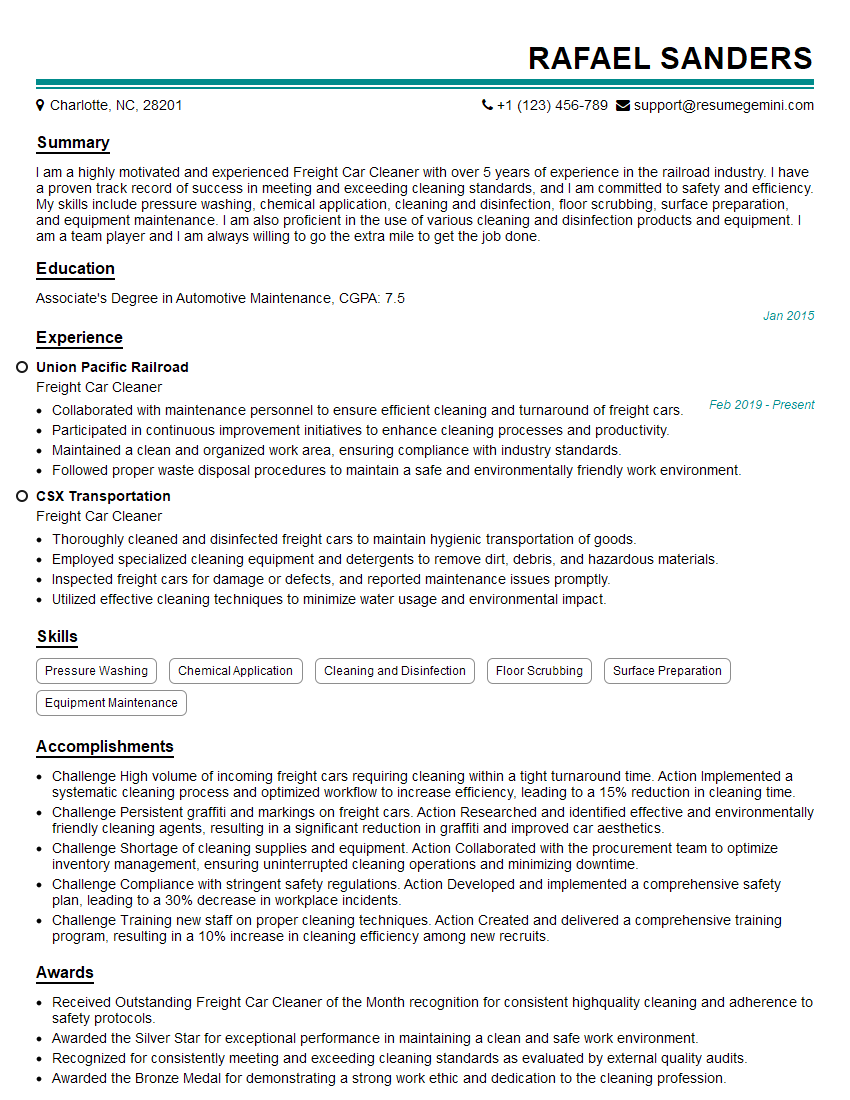
Mastering the art of Wagon Washing opens doors to a rewarding career with opportunities for advancement and specialization. A strong foundation in these key areas showcases your commitment to safety, efficiency, and environmental responsibility. To maximize your job prospects, it’s crucial to present your skills effectively. Creating an ATS-friendly resume is essential to get your application noticed. We highly recommend using ResumeGemini, a trusted resource for building professional and impactful resumes. Examples of resumes tailored specifically for Wagon Washing positions are available to help guide you.
Explore more articles
Users Rating of Our Blogs
Share Your Experience
We value your feedback! Please rate our content and share your thoughts (optional).
What Readers Say About Our Blog
Really detailed insights and content, thank you for writing this detailed article.
IT gave me an insight and words to use and be able to think of examples