Unlock your full potential by mastering the most common Warehouse Optimization and Logistics Management interview questions. This blog offers a deep dive into the critical topics, ensuring you’re not only prepared to answer but to excel. With these insights, you’ll approach your interview with clarity and confidence.
Questions Asked in Warehouse Optimization and Logistics Management Interview
Q 1. Explain the difference between FIFO and LIFO inventory management systems.
FIFO (First-In, First-Out) and LIFO (Last-In, First-Out) are two fundamental inventory management methods that dictate the order in which items are sold or used. They significantly impact the cost of goods sold (COGS) and the value of ending inventory on your balance sheet.
FIFO: Imagine a bakery. The first loaves of bread baked are the first ones sold. This is FIFO. The oldest items are used or sold first. In accounting, this leads to a COGS calculation reflecting the cost of the oldest inventory. During inflationary periods, FIFO results in lower COGS and higher net income because older, cheaper items are sold first.
LIFO: Now imagine a stack of pallets. With LIFO, you’re always using the top pallet – the newest arrival. The last items received are the first ones used or sold. This method, generally permitted only under US GAAP, results in a COGS reflecting the cost of the newest inventory. During inflation, this means higher COGS and lower net income.
The Key Difference: The core difference lies in the order of inventory usage and its impact on financial statements. FIFO is more intuitive and often preferred for perishable goods, while LIFO can be beneficial in tax optimization during periods of inflation (though it can distort the true picture of profitability).
Q 2. Describe your experience with Warehouse Management Systems (WMS).
My experience with Warehouse Management Systems (WMS) spans over ten years, encompassing both implementation and optimization phases. I’ve worked with various systems, including Oracle WMS, Manhattan Associates WMS, and Blue Yonder WMS, across diverse industries such as retail, manufacturing, and e-commerce.
My expertise extends to configuring these systems to meet specific client needs, including customizing workflows, integrating with ERP systems, and developing reporting dashboards for key performance indicators (KPIs). I’ve also been involved in troubleshooting system issues, performing system upgrades, and providing ongoing support to warehouse staff. For instance, in a recent project, I optimized a client’s WMS to reduce order picking time by 15% by implementing a dynamic slotting algorithm that considered item popularity and pick frequency.
Moreover, I possess a strong understanding of WMS functionalities such as inventory management, order management, labor management, and yard management. This allows me to create efficient and effective warehouse operations tailored to each client’s unique requirements.
Q 3. How would you improve warehouse efficiency using data analysis?
Data analysis is crucial for improving warehouse efficiency. By analyzing data from various sources, including WMS, ERP systems, and sensor data (e.g., RFID, IoT), we can identify bottlenecks and optimize various processes.
- Identifying Slow-Moving Items: Analyzing sales data helps identify slow-moving items that occupy valuable warehouse space. These items can be relocated to less expensive areas or considered for promotional activities.
- Optimizing Picking Routes: Data analysis can reveal inefficient picking routes. Using algorithms like WMS-driven optimization or even simple heatmaps to visualize order frequency can help create more efficient picking paths, minimizing travel time.
- Predictive Inventory Management: Forecasting demand based on historical data can improve inventory levels, reducing stockouts and minimizing overstocking. This enables better space utilization and reduces carrying costs.
- Labor Optimization: Analyzing labor data can highlight staffing issues, such as insufficient personnel during peak hours or uneven workload distribution. This allows for better scheduling and resource allocation.
For example, I once used data analysis to identify a pattern of excessive time spent on a particular picking zone. After further investigation, we discovered an issue with the aisle layout that was causing congestion. By simply rearranging the shelving, we reduced picking time by 10%.
Q 4. What metrics do you use to evaluate warehouse performance?
Several key metrics are vital for evaluating warehouse performance. These can be broadly categorized into inventory management, order fulfillment, and operational efficiency.
- Inventory Accuracy: Measured as the percentage of inventory records that accurately reflect physical inventory levels.
- Order Fulfillment Rate: Represents the percentage of orders fulfilled on time and in full.
- Order Cycle Time: Time elapsed between order placement and shipment.
- Inventory Turnover Rate: How many times inventory is sold and replenished within a specific period.
- Storage Utilization Rate: Percentage of available storage space being used effectively.
- Labor Productivity: Units picked, packed, or shipped per labor hour.
- Damage Rate: Percentage of damaged goods.
By tracking these metrics, we can monitor warehouse performance, identify areas for improvement, and demonstrate the impact of implemented changes. Regular reporting and analysis of these KPIs are essential for continuous optimization.
Q 5. Describe a time you had to optimize a warehouse layout. What were the results?
In a previous role, I was tasked with optimizing the layout of a distribution center experiencing significant throughput issues. The warehouse was using a random slotting system, resulting in excessive travel time during order picking.
My approach involved a multi-step process:
- Data Collection: We gathered data on item popularity, order frequency, and product dimensions.
- Analysis and Planning: We analyzed the data to identify fast-moving items and cluster them strategically for efficient picking. We also considered the weight and size of products for safe handling and optimized aisle widths.
- Implementation: We implemented a new slotting system based on our analysis, relocating items to optimal locations.
- Monitoring and Adjustment: After the relocation, we continuously monitored key metrics such as picking time and travel distance to make necessary adjustments.
Results: The new warehouse layout resulted in a 20% reduction in order picking time, a 15% decrease in travel distance, and a 10% improvement in order fulfillment rate. This optimization not only improved efficiency but also reduced labor costs and increased customer satisfaction.
Q 6. How do you handle inventory discrepancies?
Inventory discrepancies, the difference between recorded inventory and physical inventory, need to be addressed promptly and systematically. My approach involves a multi-pronged strategy:
- Regular Cycle Counting: Implement a robust cycle counting program, verifying inventory levels frequently rather than relying on full-scale annual physical inventories. This allows for early detection and resolution of discrepancies.
- Root Cause Analysis: Investigate the reasons behind discrepancies. This might involve reviewing picking, packing, and receiving processes, assessing equipment malfunctions, and identifying potential human errors.
- Improved Data Entry: Ensure accurate data entry practices during receiving, shipping, and inventory adjustments to minimize data-related inaccuracies. Implementation of barcode scanning or RFID systems can dramatically reduce manual errors.
- Improved Warehouse Organization: Implement clear labeling, designated storage locations, and robust warehouse organization to make inventory tracking more efficient and reduce the chances of misplaced items.
- Inventory Reconciliation: Regularly reconcile inventory data with physical counts to identify and resolve any remaining discrepancies.
By systematically addressing discrepancies and implementing preventive measures, we can maintain inventory accuracy, prevent financial losses, and improve overall warehouse efficiency.
Q 7. Explain your experience with different types of inventory tracking systems.
My experience encompasses a variety of inventory tracking systems, each offering unique advantages and disadvantages.
- Barcode Systems: Relatively inexpensive and widely adopted, barcodes provide quick and accurate identification of individual items. However, they require line-of-sight scanning and are susceptible to damage or smudging.
- RFID (Radio-Frequency Identification): RFID tags offer contactless tracking, enabling real-time inventory monitoring without line-of-sight. This technology is more expensive than barcodes but offers superior accuracy and efficiency, particularly in high-volume environments. It’s excellent for tracking pallets and larger containers.
- Manual Systems: While simple and cost-effective for small operations, manual tracking systems are prone to errors and inefficiency. They become extremely impractical as inventory volume increases.
- WMS-Integrated Systems: Modern WMS systems typically incorporate multiple tracking methods, combining barcode scanning with real-time data capture and analysis. This offers the best balance of accuracy, efficiency, and cost-effectiveness for many organizations.
The choice of system depends on various factors including budget, inventory volume, complexity, and the specific needs of the organization. I have successfully implemented and managed each of these systems in diverse warehouse settings.
Q 8. How do you manage peak season demands in a warehouse?
Managing peak season demands requires proactive planning and a flexible approach. It’s like preparing for a marathon, not a sprint. We begin by forecasting demand well in advance, using historical data and market trends. This allows us to anticipate the surge and take necessary steps.
- Staffing: We increase our workforce through temporary hires or overtime, ensuring sufficient personnel to handle the increased workload. For example, during the holiday season, we might increase our picking and packing staff by 50%.
- Inventory Management: We optimize inventory levels to avoid stockouts and overstocking. This might involve pre-positioning fast-moving items closer to packing stations or negotiating with suppliers for expedited deliveries.
- Process Optimization: We streamline our warehouse processes to maximize efficiency. This could include implementing new technologies like automated guided vehicles (AGVs) or improving our warehouse layout to reduce travel times. We might also consider extending warehouse operating hours.
- Technology Integration: Utilizing Warehouse Management Systems (WMS) becomes crucial. A robust WMS can handle the increased order volume, track inventory in real-time, and optimize order fulfillment.
Regular monitoring and adjustments are key. We continuously track key performance indicators (KPIs) such as order fulfillment rates and inventory accuracy to identify bottlenecks and make necessary adjustments throughout the peak season.
Q 9. What strategies do you use to minimize warehouse damage and loss?
Minimizing warehouse damage and loss is paramount for profitability and customer satisfaction. Think of it like protecting your most valuable assets. We employ a multi-pronged strategy:
- Proper Handling Procedures: We implement strict procedures for handling goods, emphasizing careful lifting, stacking, and transportation. Regular training for all staff on proper techniques is crucial. We use appropriate handling equipment, like forklifts and pallet jacks, ensuring operators are properly certified.
- Safe Storage Practices: We organize the warehouse effectively, using proper racking systems, ensuring adequate spacing between pallets to prevent damage. We clearly label storage locations and implement FIFO (First-In, First-Out) inventory management to minimize the risk of product expiration or spoilage.
- Environmental Controls: Maintaining optimal temperature and humidity levels is vital for certain products. Climate-controlled areas are essential for goods sensitive to temperature fluctuations.
- Security Measures: Implementing robust security measures, including CCTV surveillance, access control systems, and regular security patrols, is vital in deterring theft and vandalism. Inventory tracking systems and regular stocktaking help identify discrepancies and potential losses.
- Damage Reporting and Analysis: We have a comprehensive system for reporting and investigating damage. This helps identify recurring issues and implement corrective actions. For example, if a specific type of packaging is consistently damaged, we investigate and potentially switch to a more robust option.
By combining these strategies, we significantly reduce the risk of damage and loss, protecting our assets and maintaining customer trust.
Q 10. How do you ensure compliance with safety regulations in a warehouse?
Ensuring warehouse safety compliance is not just about avoiding fines; it’s about creating a safe and productive work environment for everyone. It’s like building a strong foundation for a successful operation.
- Regular Safety Audits: We conduct regular safety audits to identify potential hazards and ensure compliance with all relevant regulations (OSHA, for example). This includes inspecting equipment, walkways, and storage areas.
- Employee Training: Comprehensive safety training is provided to all employees, covering topics such as hazard identification, proper equipment use, and emergency procedures. Refresher training is conducted periodically.
- Emergency Preparedness: We have well-defined emergency procedures in place, including evacuation plans, fire safety protocols, and first-aid response. Regular drills ensure employees are familiar with these procedures.
- Personal Protective Equipment (PPE): Appropriate PPE, such as safety shoes, gloves, and high-visibility vests, is provided and mandated for employees in relevant areas. We enforce the proper use and maintenance of PPE.
- Maintaining Equipment: Regular maintenance of all equipment, including forklifts, conveyors, and racking systems, is crucial to prevent accidents. We adhere to strict maintenance schedules and conduct regular inspections.
Maintaining a culture of safety, where employees feel empowered to report hazards and participate in safety initiatives, is paramount. We treat safety not as a checklist, but as a core value.
Q 11. What are your preferred methods for forecasting demand?
Accurate demand forecasting is crucial for efficient warehouse operations. It’s like predicting the weather – the more accurate the forecast, the better prepared we are. We use a combination of methods:
- Time Series Analysis: We analyze historical sales data to identify trends and seasonality. This involves techniques like moving averages and exponential smoothing to predict future demand.
- Regression Analysis: We use regression models to identify relationships between demand and other factors, such as marketing campaigns, economic indicators, or competitor actions. For example, we might find a correlation between advertising spend and product sales.
- Qualitative Forecasting: We incorporate expert opinions from sales and marketing teams. Their insights, based on market knowledge and upcoming promotions, can provide valuable context.
- Causal Modeling: This involves identifying factors that influence demand and building a model to predict their impact. This is particularly useful in situations where demand is driven by external factors.
- Machine Learning: Advanced techniques using machine learning algorithms can analyze vast datasets, including social media trends and web traffic, to provide more accurate predictions.
We typically use a combination of these methods to create a more robust and accurate forecast. The specific techniques employed depend on the product, market conditions, and data availability.
Q 12. Describe your experience with different transportation modes and their cost-effectiveness.
Selecting the right transportation mode is key to cost-effective logistics. It’s like choosing the right vehicle for a journey – a bicycle for short distances, a car for longer ones, and a plane for really long journeys. Each mode has its own strengths and weaknesses:
- Truck (Road): Highly flexible and versatile, suitable for most goods and distances. Cost-effective for shorter to medium distances. However, it can be slower than other modes and subject to traffic delays.
- Rail: Cost-effective for large volumes over long distances. More environmentally friendly than trucking. However, it lacks the flexibility of trucking and requires access to rail infrastructure.
- Sea (Ocean): Most economical for extremely large volumes over very long distances. Ideal for international shipments. However, it’s the slowest mode and can be vulnerable to weather delays.
- Air: Fastest mode, ideal for time-sensitive goods and smaller, high-value shipments. However, it’s the most expensive option.
The cost-effectiveness of each mode depends on several factors: the distance, volume, weight, value, and time sensitivity of the goods. We carefully analyze these factors to select the optimal transportation mode for each shipment.
Q 13. How do you select the optimal shipping carrier for a given shipment?
Selecting the optimal shipping carrier requires careful consideration of several factors. It’s like choosing the best mechanic for your car – you want someone reliable, efficient, and affordable. We consider:
- Reliability and On-Time Delivery Performance: We assess the carrier’s historical on-time delivery rates and track record. Customer reviews and industry ratings can be helpful here.
- Cost and Service Level Agreements (SLAs): We compare prices and SLAs offered by different carriers, ensuring the chosen option aligns with our budget and required service levels (e.g., expedited shipping).
- Coverage Area and Network: We ensure the carrier has a reliable network covering both the origin and destination points. This is particularly important for international shipments.
- Tracking and Visibility: We prefer carriers offering robust tracking capabilities, providing real-time updates on shipment location and status.
- Insurance and Liability: We consider the carrier’s insurance coverage to protect against potential losses or damages during transit.
We use a scoring system to compare carriers based on these criteria, ensuring we select the most suitable option for each shipment, balancing cost and service quality.
Q 14. Explain your understanding of Lean principles in warehouse management.
Lean principles, applied to warehouse management, aim to eliminate waste and maximize efficiency. Think of it as streamlining your workflow to make it smoother and more efficient. Key elements include:
- Value Stream Mapping: We visually map the entire flow of materials and information within the warehouse, identifying bottlenecks and areas for improvement. This helps us visualize where waste is occurring.
- 5S Methodology (Sort, Set in Order, Shine, Standardize, Sustain): We organize the warehouse to improve efficiency and safety. This involves eliminating unnecessary items, creating a clear and organized layout, and establishing standardized procedures.
- Kaizen (Continuous Improvement): We foster a culture of continuous improvement, encouraging employees to identify and suggest improvements to processes and workflows. Small, incremental changes over time can result in significant overall gains.
- Pull System (Just-in-Time): We avoid overstocking by implementing a pull system, where goods are only produced or moved when needed. This minimizes storage costs and reduces the risk of obsolescence.
- Waste Reduction (Muda): We focus on eliminating all forms of waste, including excess inventory, unnecessary movement, waiting time, and defects.
Implementing Lean principles reduces operational costs, improves productivity, and enhances customer satisfaction by ensuring faster and more reliable order fulfillment. It’s about creating a more efficient and streamlined warehouse operation, ensuring we deliver maximum value with minimal waste.
Q 15. How do you manage warehouse space effectively to maximize storage capacity?
Effective warehouse space management is crucial for maximizing storage capacity and minimizing operational costs. It’s like optimizing a puzzle – you need to fit all the pieces together efficiently. This involves a multi-pronged approach.
Space Optimization Techniques: This includes utilizing vertical space (high-bay racking, mezzanine floors), optimizing aisle widths (considering forklift turning radius and traffic flow), and implementing slotting optimization strategies (placing frequently accessed items in easily accessible locations).
Inventory Management: Accurate inventory tracking and forecasting are paramount. Overstocking leads to wasted space, while understocking leads to lost sales and dissatisfied customers. Implementing ABC analysis (categorizing inventory by value and frequency of use) helps prioritize storage locations for high-value, frequently moved items.
Technology Integration: Warehouse Management Systems (WMS) provide real-time visibility into inventory levels and location, enabling better space allocation and minimizing wasted space due to misplaced or forgotten items. Automated storage and retrieval systems (AS/RS) can also significantly increase storage density in high-throughput warehouses.
Regular Audits and Reviews: Periodic space audits identify areas for improvement. This could involve re-evaluating slotting strategies, identifying obsolete or slow-moving inventory, or addressing inefficient layout issues.
For example, in a previous role, we implemented a slotting optimization project that resulted in a 15% increase in storage capacity without expanding the warehouse footprint. We achieved this by analyzing item velocity and grouping similar items together, reducing travel time for order pickers.
Career Expert Tips:
- Ace those interviews! Prepare effectively by reviewing the Top 50 Most Common Interview Questions on ResumeGemini.
- Navigate your job search with confidence! Explore a wide range of Career Tips on ResumeGemini. Learn about common challenges and recommendations to overcome them.
- Craft the perfect resume! Master the Art of Resume Writing with ResumeGemini’s guide. Showcase your unique qualifications and achievements effectively.
- Don’t miss out on holiday savings! Build your dream resume with ResumeGemini’s ATS optimized templates.
Q 16. Describe your experience with implementing new technologies in a warehouse setting.
I have extensive experience implementing various technologies to enhance warehouse efficiency and productivity. My focus has always been on choosing technology that aligns with the specific needs and scale of the operation.
WMS Implementation: I led the implementation of a new WMS in a large distribution center, resulting in a 20% reduction in order fulfillment time and a 10% decrease in picking errors. This involved thorough planning, staff training, data migration, and ongoing system optimization.
RFID Technology: I’ve worked with RFID tagging for real-time inventory tracking, eliminating manual counts and improving inventory accuracy. This drastically reduced stock discrepancies and improved cycle counting efficiency.
Automated Guided Vehicles (AGVs): In another project, we integrated AGVs to automate material handling, reducing labor costs and improving throughput. The key here was careful planning of the warehouse layout to optimize the AGV routes and minimize congestion.
Warehouse Control System (WCS): I have experience with WCS integration with AS/RS systems to automate the movement of goods, which significantly boosts productivity in high-volume operations. Careful consideration of system interoperability is crucial for a smooth integration.
In all these instances, successful implementation relied on strong change management practices, thorough staff training, and a data-driven approach to evaluate performance and make adjustments as needed.
Q 17. How do you handle returns and reverse logistics?
Effective reverse logistics is critical for maintaining customer satisfaction and minimizing losses. It’s more than just accepting returns; it’s about efficiently processing them and minimizing their impact on forward logistics.
Clear Return Process: Establishing a clear and easy-to-follow return process is fundamental. This includes providing customers with pre-paid shipping labels, clear instructions, and easy-to-access return information.
Inspection and Sorting: Upon receiving returns, a thorough inspection process is vital to assess the condition of the returned goods. This involves sorting items based on their condition (resaleable, repairable, or scrap).
Inventory Management: Returned items must be accurately tracked and managed within the inventory system. This requires integration with the WMS to ensure accurate stock levels and prevent confusion with new inventory.
Disposition Strategy: A well-defined disposition strategy is necessary for dealing with returned items. This might involve reselling, repairing, refurbishing, or disposing of the returned goods, depending on their condition and value.
Supplier Collaboration: Efficient reverse logistics often involves close collaboration with suppliers, particularly in managing defective goods or warranty returns.
For instance, in a previous role, we implemented a streamlined return process that reduced processing time by 30% and improved customer satisfaction ratings.
Q 18. How do you train and manage warehouse staff to improve productivity?
Training and managing warehouse staff effectively is crucial for boosting productivity and maintaining a safe and efficient work environment. It’s about fostering a culture of continuous improvement.
Structured Training Programs: Implementing structured training programs that cover safety procedures, equipment operation, WMS usage, and picking/packing techniques is key. Regular refresher courses maintain competency and adapt to changes in technology or procedures.
Performance Monitoring and Feedback: Regular performance monitoring, using key performance indicators (KPIs) like picking accuracy, order fulfillment time, and error rates, provides valuable insights. Constructive feedback and coaching sessions help improve individual performance.
Cross-Training and Skill Development: Cross-training employees allows for flexibility and reduces bottlenecks. Offering opportunities for skill development, such as forklift certification or advanced WMS training, enhances employee morale and capabilities.
Incentive Programs: Implementing incentive programs, such as bonuses or recognition awards, can significantly boost motivation and productivity.
Teamwork and Communication: Fostering a strong team environment and promoting effective communication are vital for efficient collaboration and problem-solving.
In one project, we implemented a comprehensive training program that led to a 15% increase in productivity within six months. This included both classroom-based training and on-the-job mentoring.
Q 19. Describe your experience with implementing a new warehouse management system.
Implementing a new WMS is a significant undertaking requiring meticulous planning and execution. It’s like building a new operating system for your entire warehouse.
Needs Assessment: The process begins with a thorough assessment of the warehouse’s current operations and future needs. This determines the required functionalities of the new system.
Vendor Selection: Choosing the right WMS vendor is crucial. This involves evaluating different vendors based on their functionality, scalability, integration capabilities, and reputation.
Data Migration: Migrating existing data into the new system is a critical step and often involves data cleansing and validation to ensure data accuracy.
System Configuration and Customization: The system needs to be configured and customized to meet the specific requirements of the warehouse.
Staff Training: Comprehensive staff training is necessary to ensure effective system utilization. This involves both classroom training and hands-on practice.
Go-Live and Post-Implementation Support: A well-defined go-live plan minimizes disruptions, and post-implementation support addresses any issues and optimizes the system’s performance.
During a recent implementation, we used a phased rollout approach, starting with a pilot area before expanding to the entire warehouse, minimizing disruption and allowing for adjustments based on early feedback.
Q 20. What is your experience with different types of warehouse layouts (e.g., U-shaped, I-shaped)?
Warehouse layout significantly impacts efficiency. The choice of layout depends on the specific operational needs, including product flow, storage density requirements, and order fulfillment strategy. Imagine designing a city – you need to consider traffic flow, residential areas, and commercial zones.
U-shaped Layout: This layout is effective for high-volume order fulfillment, facilitating efficient movement of goods and minimizing travel distances. It’s particularly beneficial for operations with high picking volume.
I-shaped Layout: Suitable for smaller warehouses or operations with a linear product flow. It’s simpler to implement but may not be as efficient for high-throughput operations.
L-shaped Layout: Offers a compromise between U-shaped and I-shaped layouts, providing flexibility and suitability for moderate-volume operations.
Other Layouts: Other layouts such as multi-level, combined layouts (combining features from multiple layouts), or specialized layouts (e.g., for specific industries) are also used. The best layout depends on the specific needs.
In my experience, I’ve worked with all these layouts, adapting the design to the unique requirements of each warehouse. Careful analysis of workflow, product characteristics, and space constraints is key to making the right choice.
Q 21. How do you ensure timely order fulfillment?
Ensuring timely order fulfillment requires a well-coordinated system integrating various aspects of warehouse operations. It’s like conducting an orchestra – each section needs to play its part in perfect harmony.
Accurate Order Processing: Efficient order processing is the first step. This involves quickly receiving, verifying, and prioritizing orders.
Optimized Picking and Packing: Efficient picking strategies (e.g., batch picking, zone picking) reduce travel time and improve picking accuracy. Proper packaging techniques ensure goods arrive safely.
Effective Shipping and Transportation: Partnering with reliable carriers and utilizing efficient shipping methods (e.g., optimized routes, consolidated shipments) is critical for on-time delivery.
Real-time Inventory Management: Accurate real-time inventory tracking avoids delays caused by stockouts or misplaced items.
Proactive Problem Solving: Having systems in place to identify and resolve potential delays proactively is essential. This might involve monitoring KPIs, identifying bottlenecks, and having contingency plans.
In one project, we implemented a new order fulfillment system that reduced order cycle time by 25%. This involved optimizing picking routes, improving communication between departments, and investing in better shipping software.
Q 22. How do you handle stockouts and overstocking?
Stockouts and overstocking represent two sides of the same coin – both significantly impacting profitability and customer satisfaction. Stockouts lead to lost sales, unhappy customers, and potential damage to brand reputation. Overstocking, on the other hand, ties up capital in inventory, increases storage costs, and risks obsolescence or spoilage.
Effective inventory management hinges on accurate demand forecasting and robust inventory control systems. I employ a multi-pronged approach to mitigate these issues. This includes:
Demand Forecasting: Utilizing sophisticated forecasting techniques, such as time series analysis and machine learning, to predict future demand with greater accuracy. This allows for proactive adjustments to inventory levels.
Safety Stock Optimization: Calculating optimal safety stock levels to account for unforeseen fluctuations in demand or supply chain disruptions. This requires a deep understanding of lead times, variability, and service level targets.
Inventory Control Systems: Implementing robust inventory management software (WMS – Warehouse Management System) to track inventory in real-time, providing alerts for low stock levels or approaching expiration dates. This facilitates timely replenishment and prevents overstocking.
Supplier Relationship Management: Developing strong relationships with suppliers to ensure reliable and timely delivery. This can include negotiating flexible contracts and collaborating on demand planning.
Regular Inventory Reviews: Conducting periodic reviews of slow-moving or obsolete items to identify opportunities for clearance sales, returns to suppliers, or write-offs.
For instance, in a previous role, we implemented a new forecasting model that reduced stockouts by 15% and overstocking by 10%, resulting in significant cost savings and improved customer satisfaction.
Q 23. What is your experience with cross-docking?
Cross-docking is a highly efficient logistics strategy that minimizes storage time by directly transferring goods from receiving to shipping docks. It’s ideal for high-volume, fast-moving items where storage is unnecessary or impractical.
My experience with cross-docking includes designing and implementing cross-dock operations for a large retail distribution center. This involved optimizing dock layouts, implementing efficient receiving and shipping processes, and leveraging technology like warehouse management systems (WMS) and barcode scanning to streamline the flow of goods.
Key considerations in successful cross-docking include:
Precise Forecasting: Accurate demand prediction is crucial to ensure sufficient inbound shipments arrive at the right time to match outbound orders.
Efficient Sorting and Consolidation: A well-planned cross-dock facility with efficient sorting systems (e.g., conveyors, sorters) is essential for rapid consolidation of shipments for different destinations.
Real-time Tracking: WMS systems are crucial to track inbound and outbound shipments, enabling efficient routing and avoiding bottlenecks.
Effective Labor Management: Training and efficient deployment of warehouse personnel are critical to the success of the cross-docking process.
In my experience, a well-executed cross-docking operation can significantly reduce warehousing costs, lead times, and improve overall supply chain efficiency.
Q 24. How do you use technology to improve warehouse communication and collaboration?
Technology plays a vital role in enhancing warehouse communication and collaboration. I’ve used various tools to improve transparency, coordination, and efficiency. These include:
Warehouse Management Systems (WMS): WMS provide a centralized platform for managing all warehouse operations, including inventory tracking, order fulfillment, and labor management. This ensures everyone has access to real-time data, fostering better collaboration.
Transportation Management Systems (TMS): TMS optimize transportation routes and schedules, improving communication between the warehouse and carriers. Real-time tracking of shipments ensures visibility and proactive problem-solving.
Enterprise Resource Planning (ERP) Systems: ERP systems integrate data from across the entire organization, including the warehouse, providing a holistic view of operations and enabling seamless communication between departments.
Mobile Devices and Scanners: Using handheld scanners and mobile devices connected to the WMS allows for real-time data capture, reducing errors and improving efficiency. This empowers workers with the information they need at their fingertips.
Communication Platforms: Utilizing collaboration tools like instant messaging, email, and project management software helps foster quick communication and problem-solving across different teams and departments within the warehouse and with external partners.
For example, in a previous role, we integrated a new WMS with our existing ERP system, leading to a 20% reduction in order fulfillment errors and a 10% increase in overall warehouse efficiency.
Q 25. Describe your experience with vendor managed inventory (VMI).
Vendor-Managed Inventory (VMI) is a collaborative inventory management approach where the vendor takes responsibility for managing the inventory levels of their products at the customer’s warehouse. This often involves the vendor having access to the customer’s inventory data and making replenishment decisions based on real-time demand.
My experience with VMI includes working with several key suppliers to implement VMI programs. This involved negotiating contracts, setting up data sharing agreements, and establishing clear communication protocols. Successful VMI requires trust and collaboration, as both parties share responsibility for inventory management.
The key benefits of VMI include:
Reduced Inventory Costs: The vendor optimizes inventory levels, reducing the customer’s holding costs.
Improved Service Levels: By anticipating demand, the vendor can ensure sufficient stock is always available.
Reduced Stockouts: Proactive inventory management minimizes the risk of stockouts.
Freed-up Resources: The customer can free up internal resources previously dedicated to inventory management.
However, implementing VMI requires careful planning and strong communication. It’s essential to establish clear KPIs and performance metrics to track the success of the program. For example, one VMI initiative I managed resulted in a 12% reduction in inventory carrying costs and a 5% increase in on-time delivery performance.
Q 26. How do you measure the return on investment (ROI) of warehouse improvements?
Measuring the ROI of warehouse improvements requires a careful analysis of both costs and benefits. It’s not just about quantifying cost savings but also considering improvements in efficiency, productivity, and customer satisfaction.
I typically use a multi-faceted approach to measure ROI, focusing on key metrics such as:
Reduced Labor Costs: Improvements in warehouse layout, technology, and processes can lead to significant reductions in labor costs.
Lower Inventory Holding Costs: Optimized inventory management reduces storage costs, obsolescence, and spoilage.
Increased Order Fulfillment Rate: Improvements in efficiency can lead to faster order processing and higher fulfillment rates.
Improved On-Time Delivery: More efficient operations improve delivery times and on-time performance.
Reduced Error Rates: Technology and process improvements can significantly decrease error rates in picking, packing, and shipping.
Increased Customer Satisfaction: Faster delivery and fewer errors lead to happier customers.
The ROI is calculated by comparing the total costs of the improvements (e.g., technology investments, consulting fees, training) to the total benefits (e.g., cost savings, increased revenue). A simple formula could be: ROI = (Total Benefits - Total Costs) / Total Costs. It’s vital to quantify these benefits using concrete data to accurately assess the return on investment.
Q 27. How familiar are you with different barcode and RFID technologies?
I am very familiar with various barcode and RFID technologies and their applications in warehouse management. Barcodes, particularly 1D and 2D barcodes (like QR codes), provide a cost-effective method for tracking individual items, while RFID (Radio-Frequency Identification) offers more advanced capabilities.
Barcodes: These are widely used for tracking individual items and pallets, facilitating efficient inventory management, receiving, and shipping processes. They are relatively inexpensive and easy to implement but limited in their data capacity and require line-of-sight scanning.
RFID: RFID tags contain microchips that transmit data wirelessly. This allows for real-time tracking of multiple items simultaneously, without the need for line-of-sight, providing greater flexibility and accuracy. RFID is particularly useful for tracking high-value items or in environments where manual barcode scanning is challenging.
Choosing the right technology: The choice between barcodes and RFID depends on factors such as the volume of items to be tracked, the required level of accuracy, the cost constraints, and the specific application needs. In many cases, a hybrid approach, combining both barcode and RFID technologies, offers the best solution. For example, barcodes might be used for individual items, while RFID tags are used for pallets or containers.
I have extensive experience integrating both barcode and RFID systems into warehouse management systems (WMS) to optimize inventory tracking, order fulfillment, and overall warehouse efficiency.
Q 28. Describe a challenging logistics problem you solved and how you approached it.
One challenging logistics problem I faced involved a significant increase in order volume during a peak season that overwhelmed our existing warehouse capacity and processes. This led to delays in order fulfillment, increased error rates, and growing customer dissatisfaction.
My approach involved a multi-step solution:
Analysis and Data Gathering: I first analyzed the bottlenecks in our existing processes by gathering data on order volume, processing times, error rates, and resource utilization. This highlighted areas needing immediate improvement.
Short-Term Solutions: To address the immediate crisis, we implemented temporary solutions like extending warehouse operating hours, hiring additional temporary staff, and prioritizing high-priority orders. This helped alleviate some of the immediate pressure.
Long-Term Strategies: For long-term solutions, we focused on improving process efficiency, technology upgrades, and capacity expansion. This included implementing a new WMS with advanced features like slotting optimization and automated picking, investing in new material handling equipment, and exploring options for additional warehouse space.
Collaboration and Communication: Throughout the process, maintaining open communication with all stakeholders—from warehouse staff to customers—was critical. Transparency and regular updates helped to manage expectations and build confidence.
The combination of short-term fixes and strategic long-term planning allowed us to navigate the crisis, meet customer demands, and ultimately emerge stronger with a more resilient and efficient warehouse operation. The project resulted in a significant improvement in order fulfillment times, reduced error rates, and improved overall customer satisfaction.
Key Topics to Learn for Warehouse Optimization and Logistics Management Interview
- Inventory Management: Understanding inventory control techniques like FIFO, LIFO, and JIT, and their impact on warehouse efficiency and cost. Practical application: Analyzing inventory data to identify slow-moving items and propose strategies for optimization.
- Warehouse Layout and Design: Analyzing warehouse space to maximize storage capacity and workflow efficiency. Practical application: Designing a warehouse layout to minimize travel time for order fulfillment using slotting optimization techniques.
- Supply Chain Management: Understanding the entire supply chain process from procurement to delivery, including forecasting demand and managing supplier relationships. Practical application: Developing strategies to mitigate supply chain disruptions and ensure timely delivery.
- Warehouse Management Systems (WMS): Familiarity with WMS software and its role in automating warehouse operations. Practical application: Describing how a WMS can improve accuracy in picking, packing, and shipping.
- Logistics Optimization Techniques: Understanding concepts like route optimization, transportation management, and last-mile delivery strategies. Practical application: Analyzing delivery routes to minimize transportation costs and delivery times.
- Metrics and KPIs: Understanding key performance indicators (KPIs) such as order fulfillment rate, inventory turnover, and warehouse operating costs. Practical application: Interpreting warehouse performance data and identifying areas for improvement.
- Lean Principles and Six Sigma: Applying these methodologies to eliminate waste and improve efficiency within warehouse operations. Practical application: Implementing a Kaizen event to streamline a specific warehouse process.
- Technology and Automation: Understanding the role of emerging technologies like robotics, AI, and automated guided vehicles (AGVs) in modern warehouse management. Practical application: Discussing the potential benefits and challenges of implementing automated systems in a warehouse.
Next Steps
Mastering Warehouse Optimization and Logistics Management opens doors to exciting career opportunities with significant growth potential. A strong understanding of these concepts is highly valued by employers in today’s competitive market. To maximize your chances of landing your dream role, crafting a compelling and ATS-friendly resume is crucial. ResumeGemini is a trusted resource that can help you build a professional resume tailored to highlight your skills and experience. Examples of resumes specifically designed for Warehouse Optimization and Logistics Management professionals are available to guide you. Invest time in creating a strong resume – it’s your first impression and a key step toward securing your next opportunity.
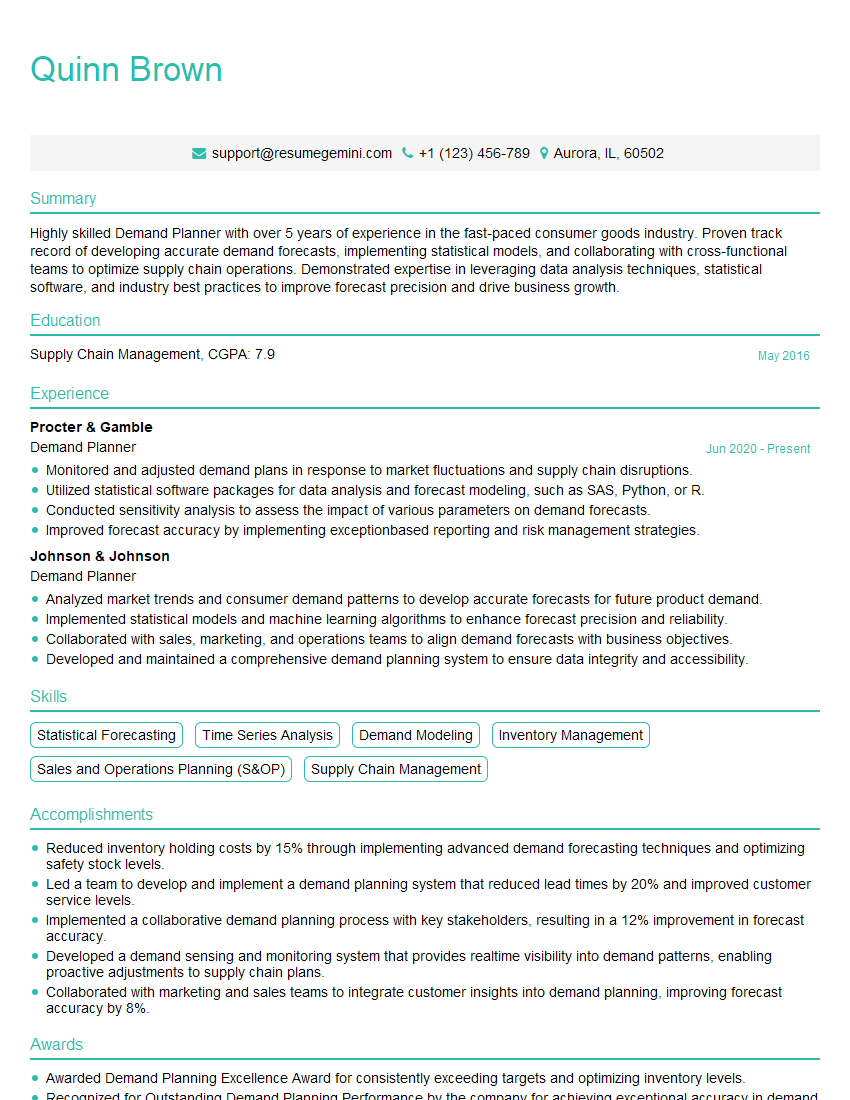
Demand Planner Resume Sample
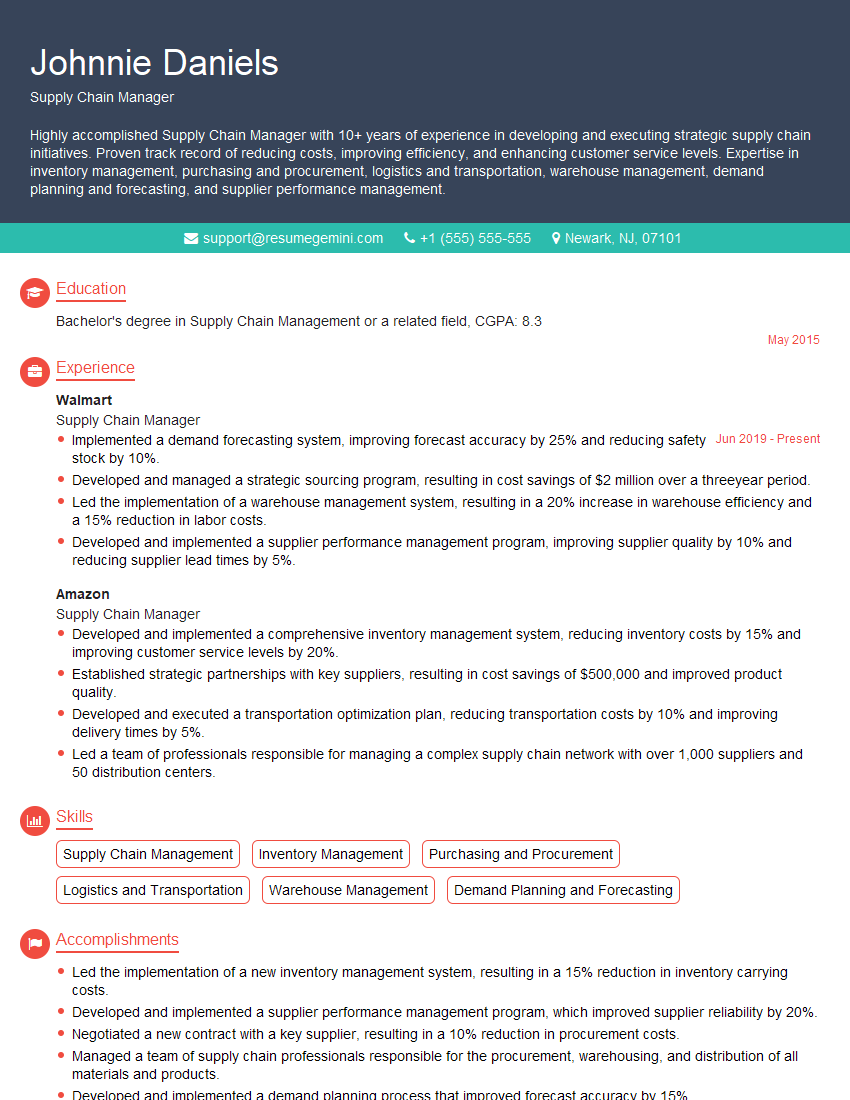
Supply Chain Manager Resume Sample
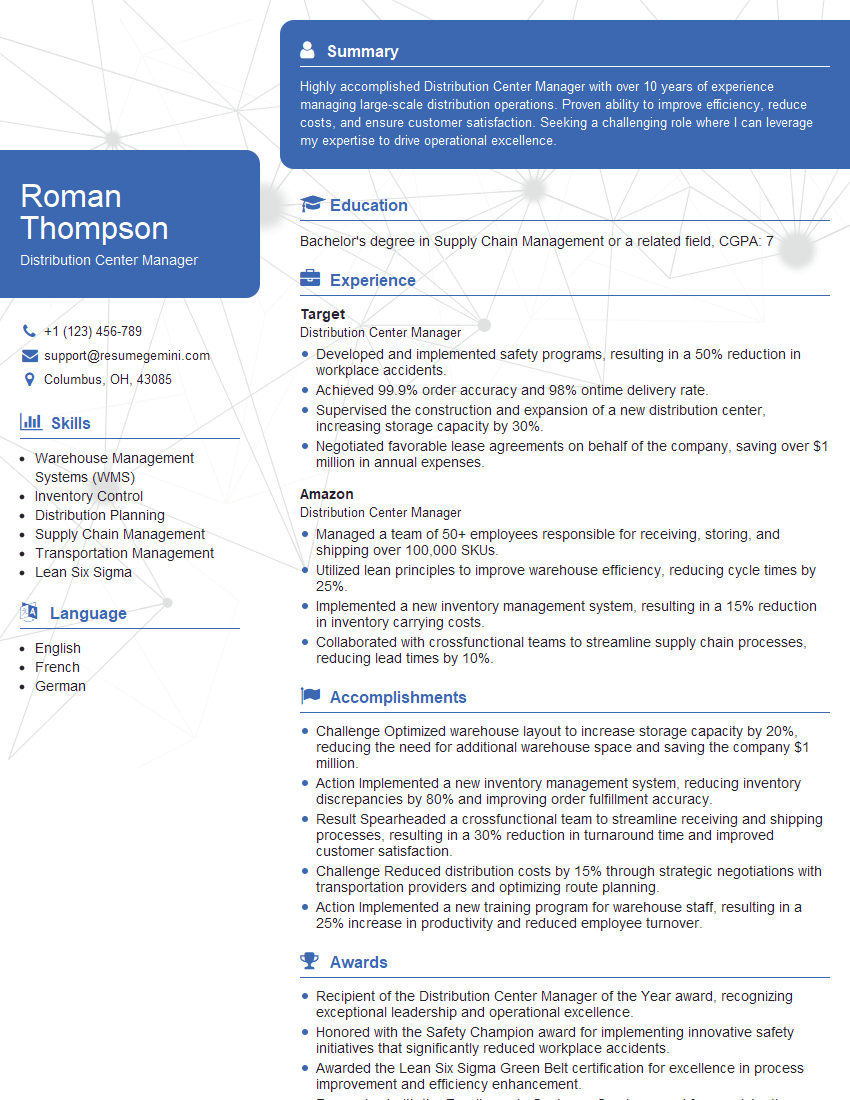
Distribution Center Manager Resume Sample
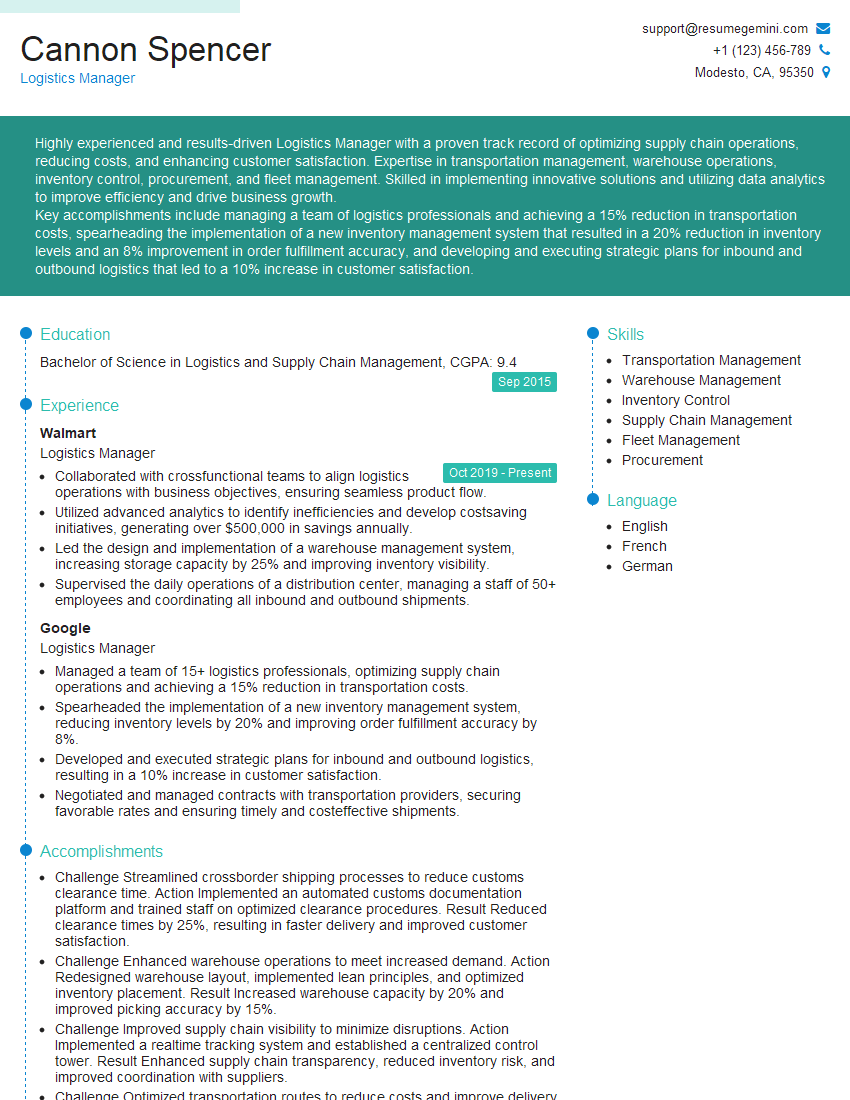
Logistics Manager Resume Sample
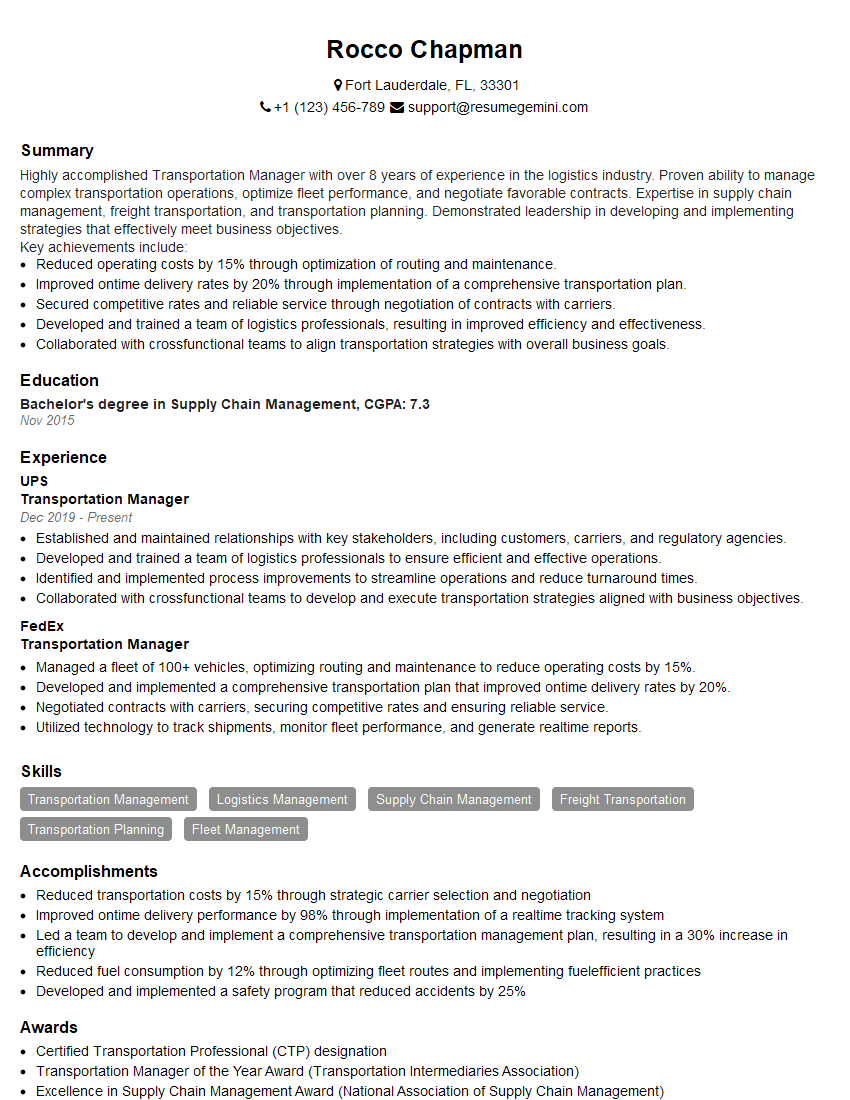
Transportation Manager Resume Sample
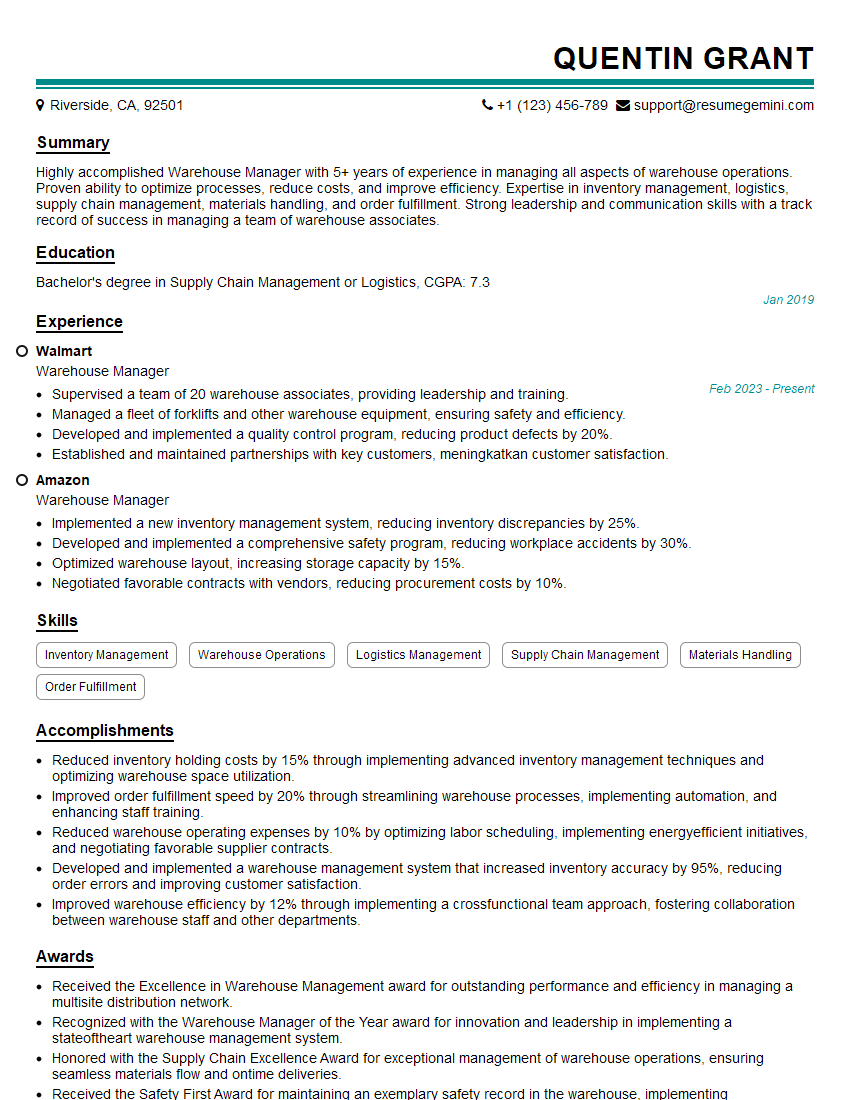
Warehouse Manager Resume Sample
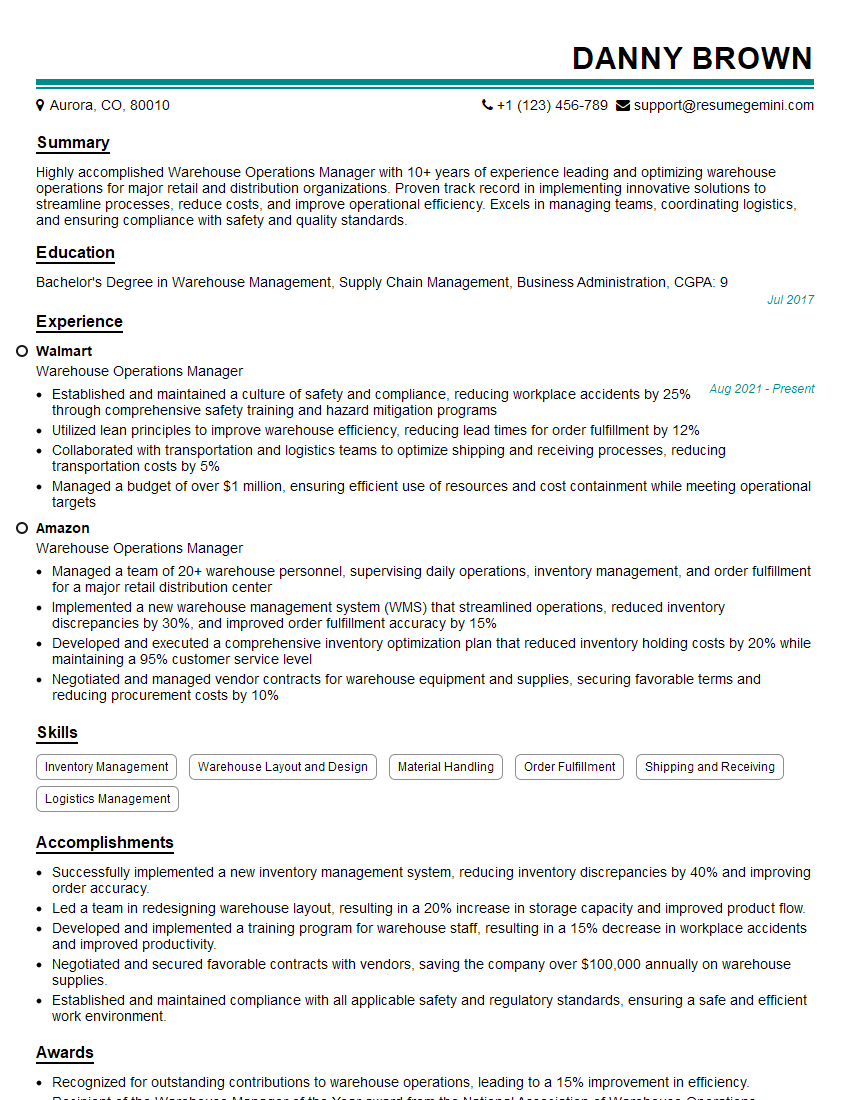
Warehouse Operations Manager Resume Sample
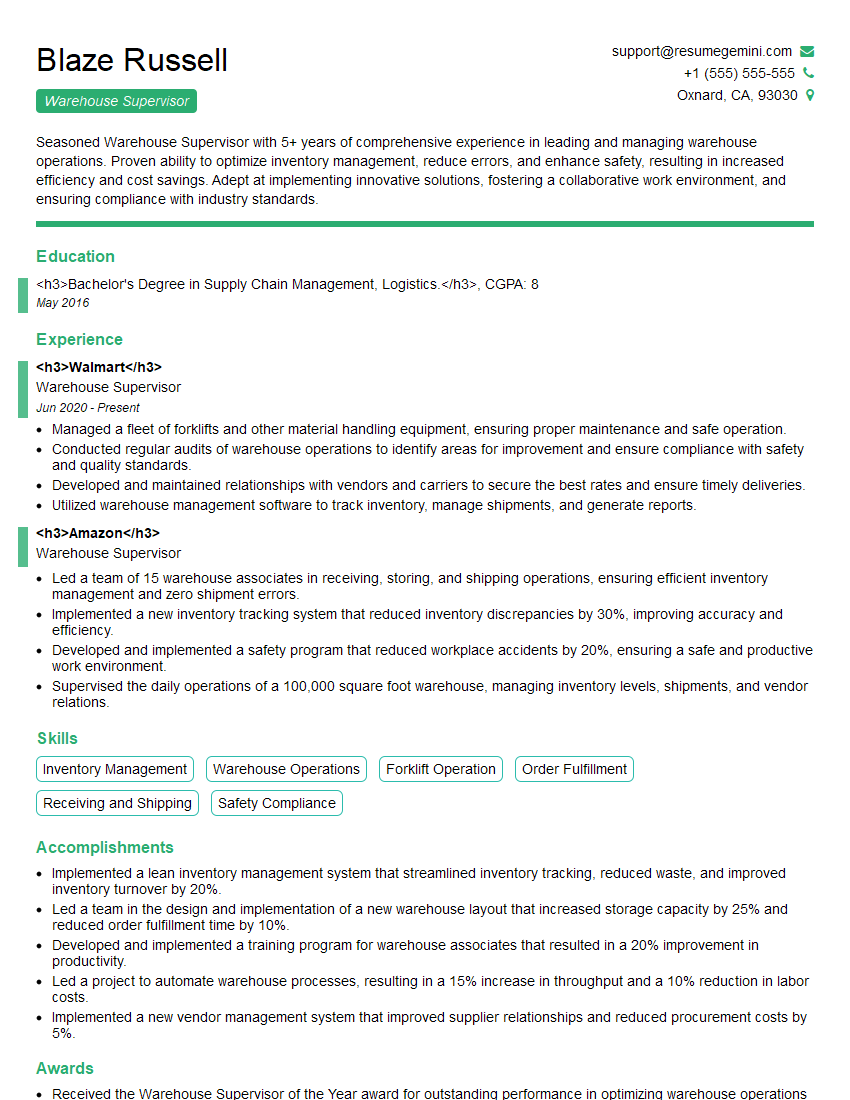
Warehouse Supervisor Resume Sample
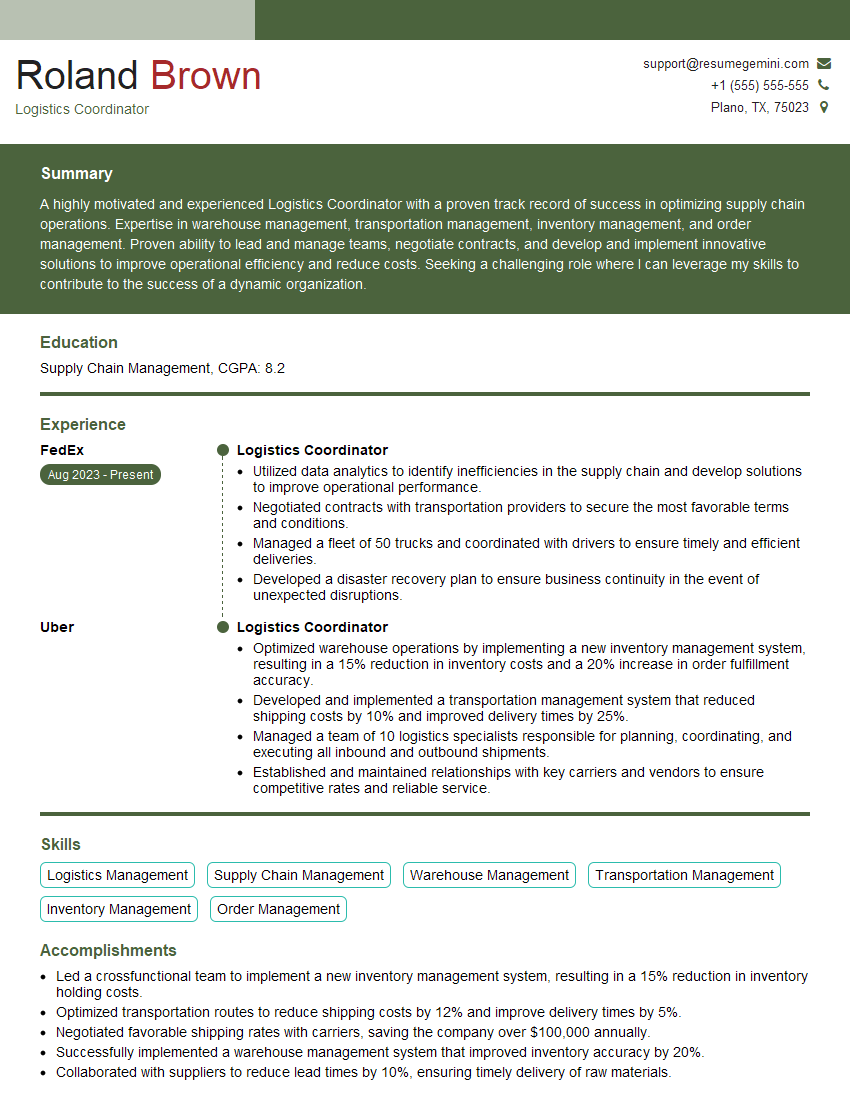
Logistics Coordinator Resume Sample
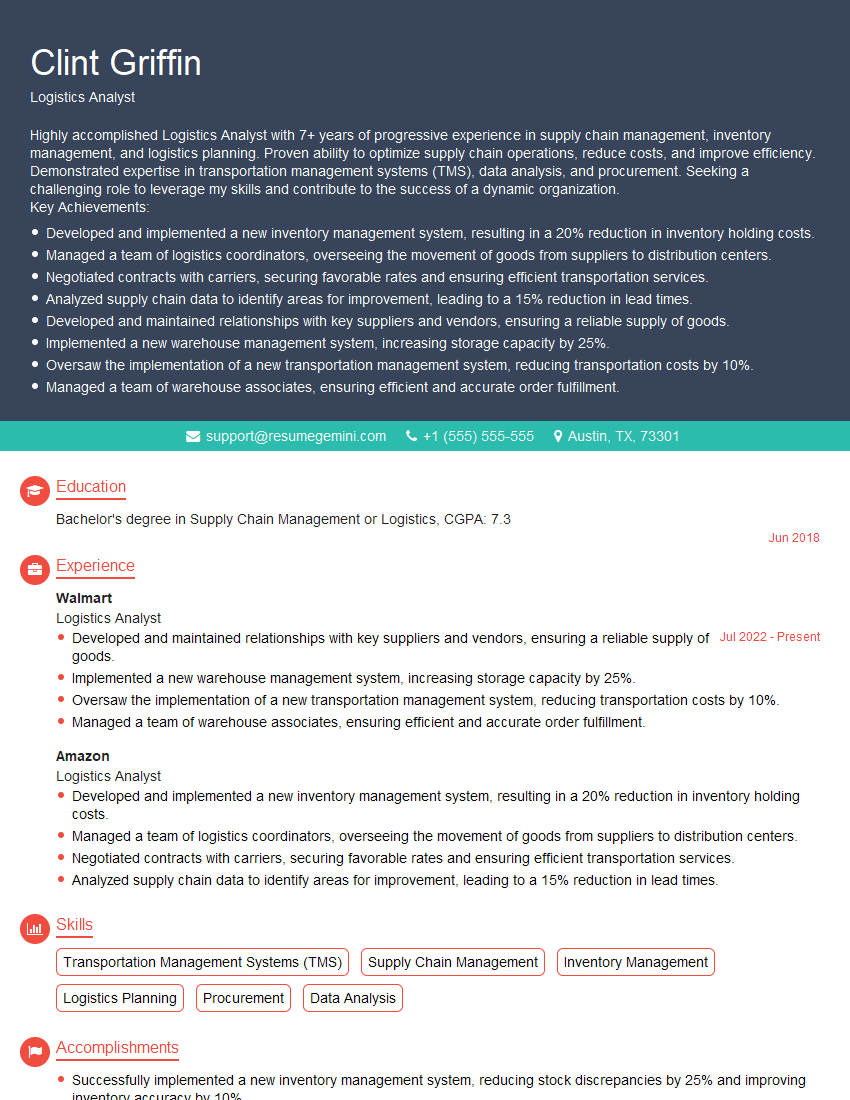
Logistics Analyst Resume Sample
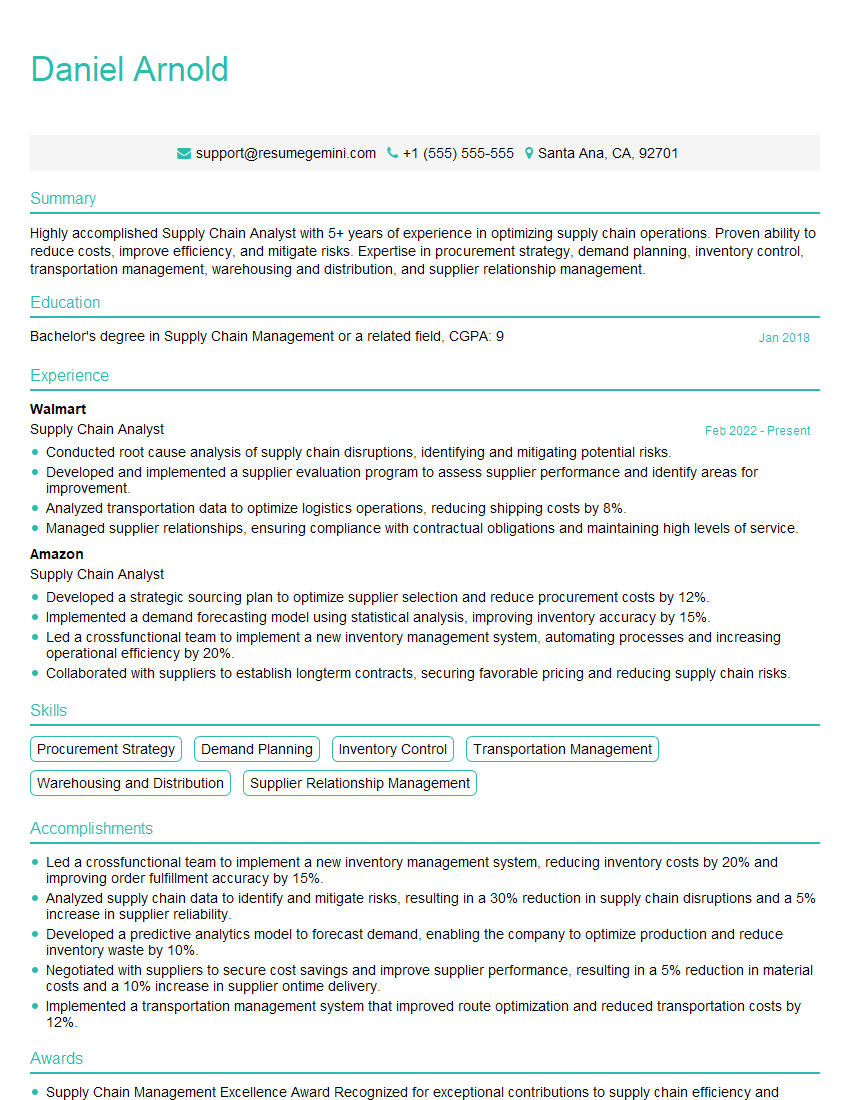
Supply Chain Analyst Resume Sample
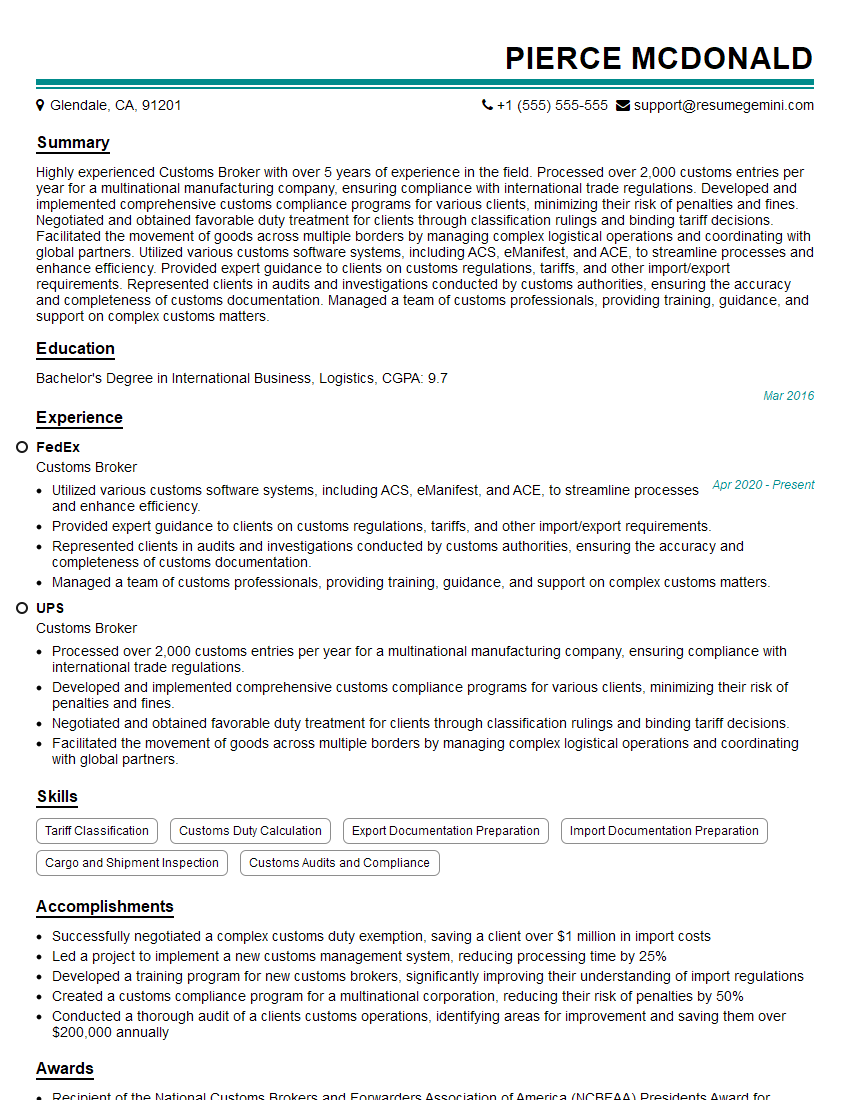
Customs Broker Resume Sample
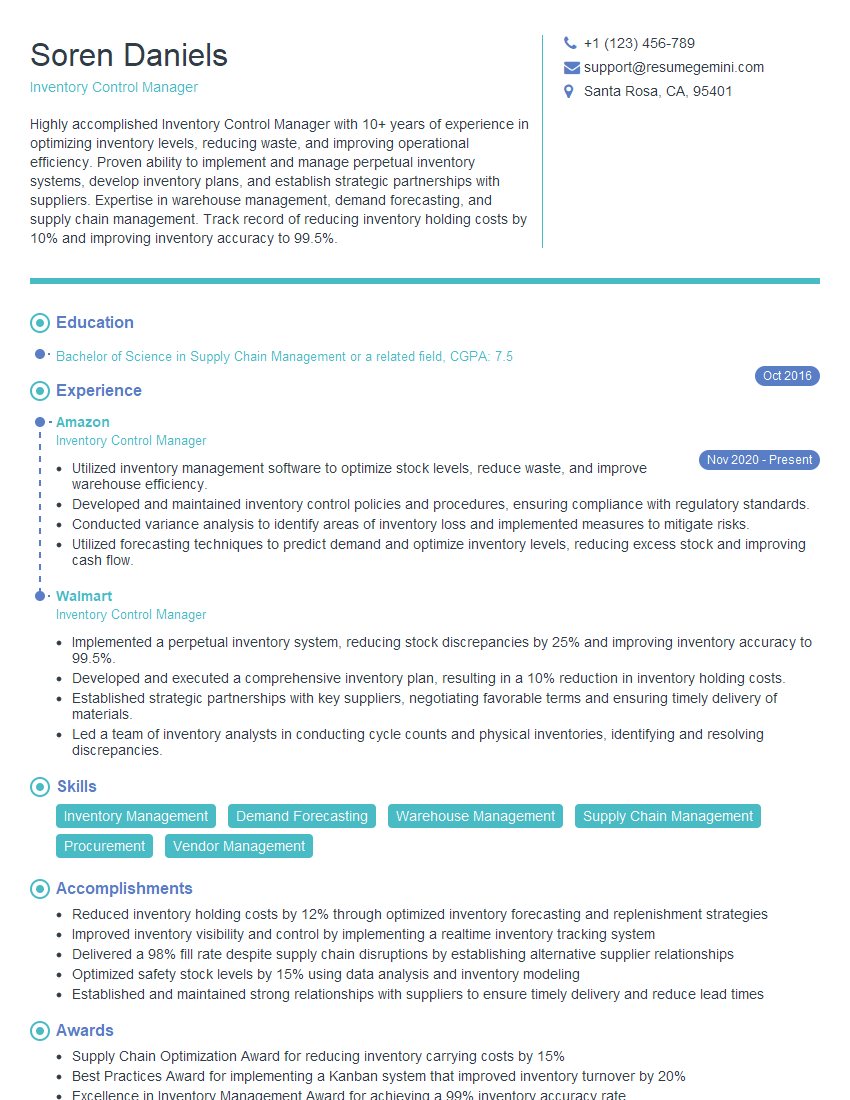
Inventory Control Manager Resume Sample
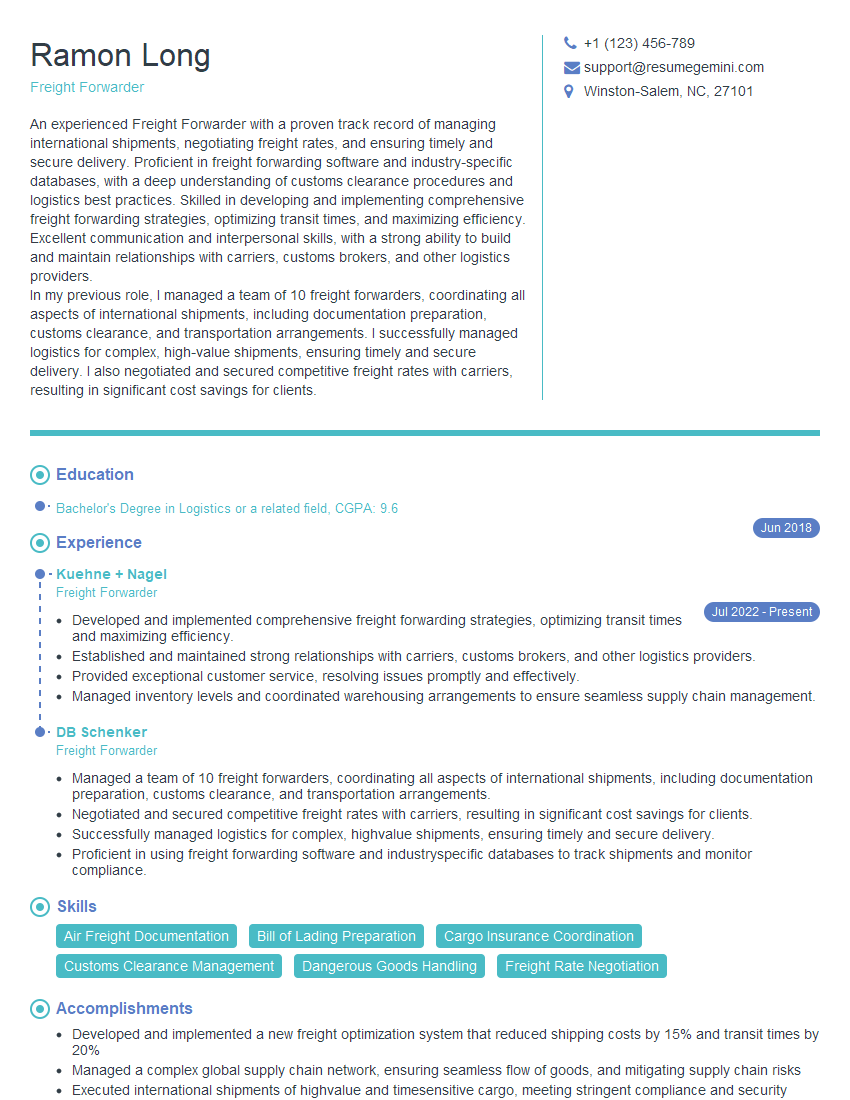
Freight Forwarder Resume Sample
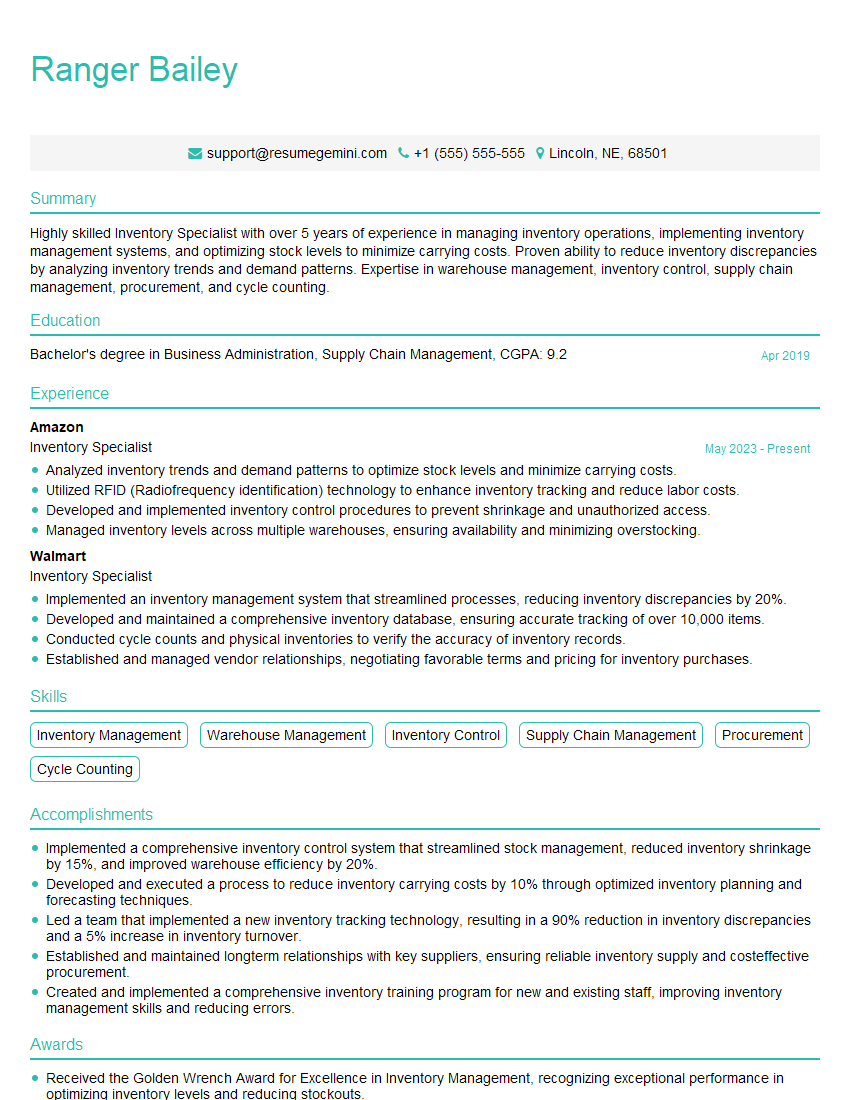
Inventory Specialist Resume Sample
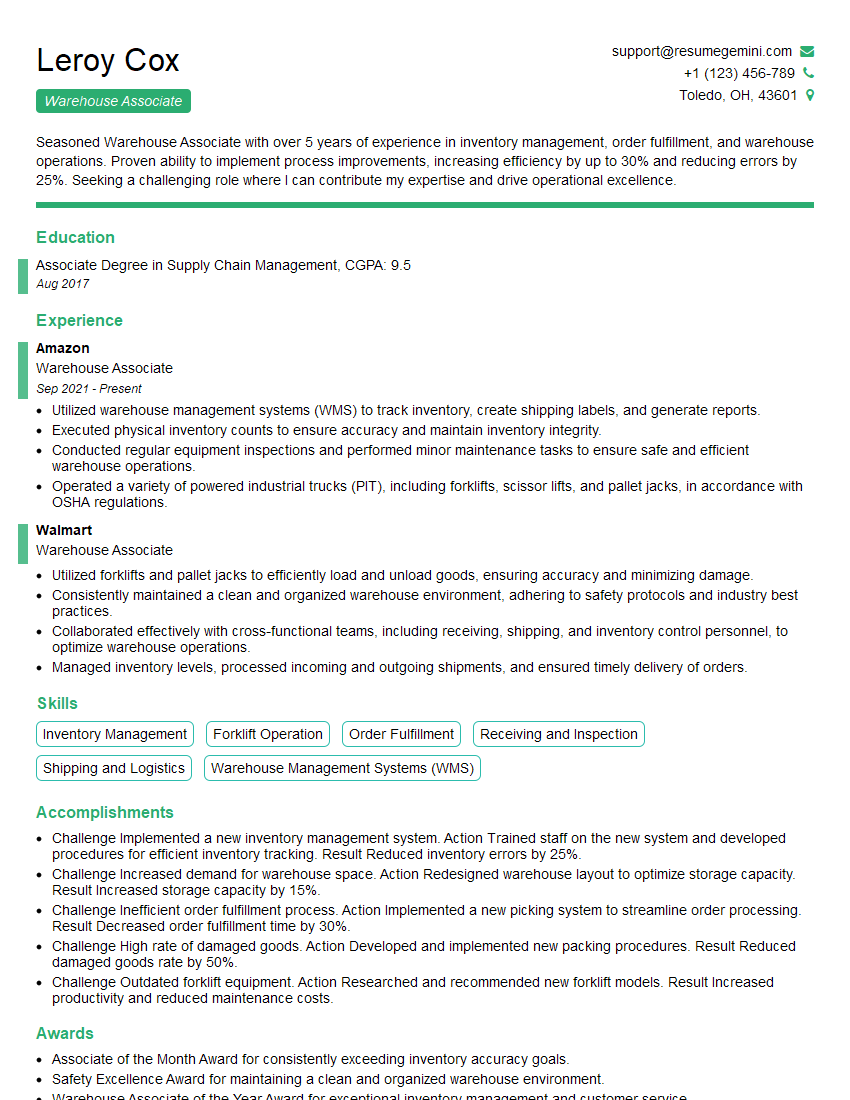
Warehouse Associate Resume Sample
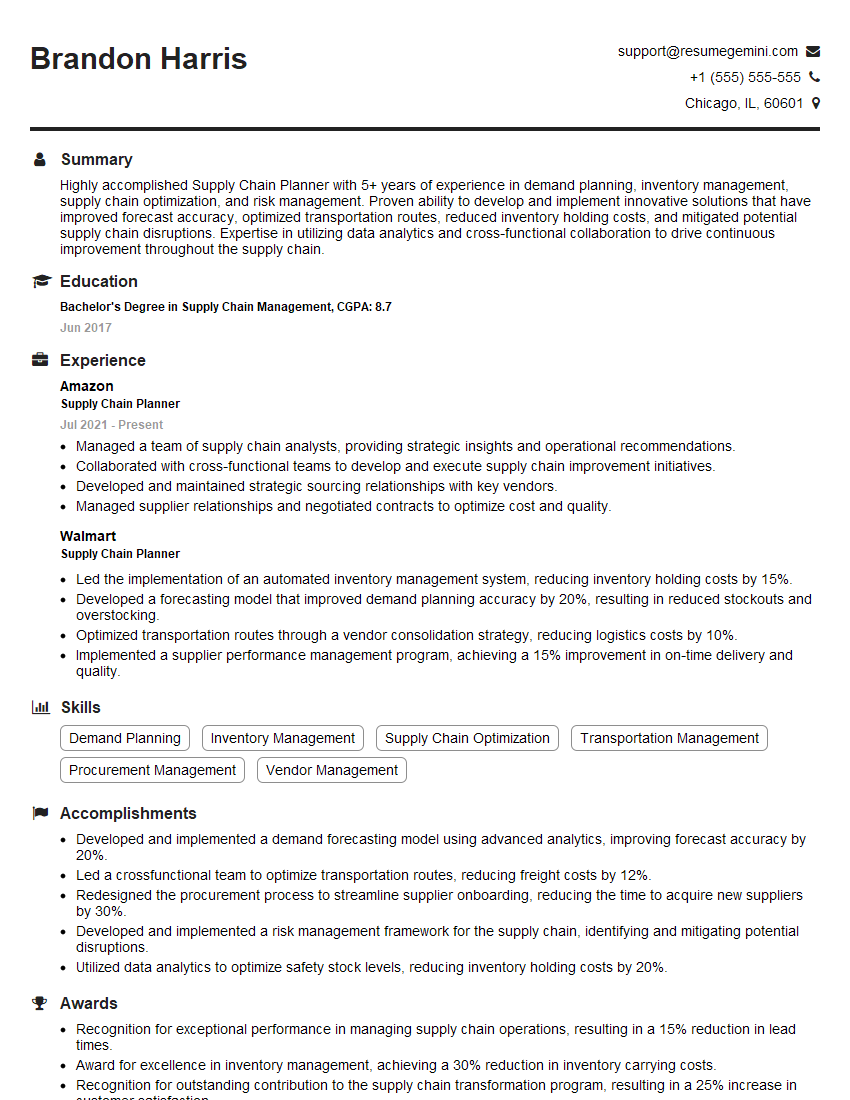
Supply Chain Planner Resume Sample
- Demand Planner
- Supply Chain Manager
- Distribution Center Manager
- Logistics Manager
- Transportation Manager
- Warehouse Manager
- Warehouse Operations Manager
- Warehouse Supervisor
- Logistics Coordinator
- Logistics Analyst
- Supply Chain Analyst
- Customs Broker
- Inventory Control Manager
- Freight Forwarder
- Inventory Specialist
- Warehouse Associate
- Supply Chain Planner
Explore more articles
Users Rating of Our Blogs
Share Your Experience
We value your feedback! Please rate our content and share your thoughts (optional).
What Readers Say About Our Blog
Really detailed insights and content, thank you for writing this detailed article.
IT gave me an insight and words to use and be able to think of examples