Are you ready to stand out in your next interview? Understanding and preparing for Welding Equipment Setup and Maintenance interview questions is a game-changer. In this blog, we’ve compiled key questions and expert advice to help you showcase your skills with confidence and precision. Let’s get started on your journey to acing the interview.
Questions Asked in Welding Equipment Setup and Maintenance Interview
Q 1. Describe your experience with different types of welding equipment (MIG, TIG, Stick, etc.).
My experience spans across various welding processes, including Gas Metal Arc Welding (MIG), Gas Tungsten Arc Welding (TIG), Shielded Metal Arc Welding (Stick), and even some experience with Flux-Cored Arc Welding (FCAW). Each process has its own nuances and demands different equipment setup and skillsets. For example, MIG welding, known for its speed and ease of use, requires understanding wire feed speed, voltage, and shielding gas flow rate. TIG welding, on the other hand, necessitates precise control of the welding current and torch manipulation for superior quality welds, requiring a more steady hand and refined technique. Stick welding is more forgiving in terms of setup but demands a high degree of skill in arc control and managing spatter. FCAW is often used in outdoor conditions where shielding gas is less crucial. I’ve worked extensively with Lincoln Electric, Miller Electric, and Hobart welders across these processes, gaining a comprehensive understanding of their operational characteristics and maintenance needs.
In my previous role, I was responsible for overseeing a team of welders across multiple projects – from structural steel fabrication to intricate automotive repairs – and ensuring they used the right equipment effectively and safely for each specific job. This involved regular equipment checks, operator training, and troubleshooting various welding issues.
Q 2. Explain the process of setting up a MIG welder for steel welding.
Setting up a MIG welder for steel welding involves several key steps. Think of it like preparing a recipe – you need the right ingredients in the right proportions. First, you select the appropriate wire diameter and type, usually solid wire for steel. Then, you choose the right shielding gas, typically 75/25 Argon/CO2 mix, and check that the gas cylinder is adequately filled and the flow is properly regulated. Next, you adjust the voltage and wire feed speed settings based on the thickness of the steel; thicker steel generally requires higher voltage and feed speed. This is where experience plays a crucial role – you learn to fine-tune these parameters through practice and recognizing the visual cues of a good weld, such as consistent penetration and minimal spatter. Finally, you ground the welder properly to avoid voltage fluctuations and ensure a safe and stable arc. Improper grounding can lead to inconsistent welds or even electrical hazards. Before striking the arc, it’s essential to test your settings on a scrap piece of similar material to verify consistency and avoid issues on the actual workpiece.
For instance, welding 1/8 inch steel might require a voltage around 22V and a wire feed speed of approximately 150 inches per minute, but these will vary based on the machine, the wire and the gas used. Remember to always consult the welder’s manual for specific recommendations.
Q 3. How do you troubleshoot a welder that is not producing a consistent arc?
Troubleshooting an inconsistent arc in a welder is a systematic process. It’s like detective work – you need to identify the culprit. First, I’d check the most common issues: Is the gas cylinder empty or the gas flow obstructed? A low gas flow will result in an unstable arc and poor weld quality. Next, I’d inspect the wire feed; is the wire feeding smoothly? Kinks, obstructions, or a faulty wire feeder can interrupt the arc. Then, I’d verify the electrode contact tip condition; a worn or damaged tip can cause poor arc initiation and inconsistent welding. Next, check the ground clamp connection – a poor connection leads to erratic voltage and an unstable arc. Finally, I’d inspect the power supply; any voltage drops or fluctuations will negatively impact the arc. I’d use a multimeter to test voltage and ground continuity, comparing them with the manufacturer’s specifications.
For example, if the arc is sputtering frequently, it often indicates insufficient shielding gas. If the arc is difficult to start, it may be due to a worn contact tip or a poor ground connection. A thorough visual inspection and systematic testing will usually pin-point the problem.
Q 4. What safety precautions do you take when setting up and using welding equipment?
Safety is paramount in welding. Before even touching the equipment, I ensure I have appropriate Personal Protective Equipment (PPE), including a welding helmet with appropriate shade lens, welding gloves, a fire-resistant jacket, and long pants. The work area must be well-ventilated to prevent buildup of harmful fumes. I ensure there are no flammable materials near the welding area, and I use fire blankets or fire extinguishers as a precaution. Proper grounding of the equipment is essential to prevent electrical shocks. I check for any gas leaks using a leak detector before starting any welding operation. If working in a confined space, I use proper ventilation to reduce exposure to harmful gases. Before leaving the welding area, I make sure the equipment is switched off, and the work area is safe and free from any hazards.
Once, I had to work in a confined space which wasn’t well ventilated. It was a situation where I had to prioritize safety first; I used a respirator and ensure proper ventilation system was in place before even starting the job.
Q 5. Explain the importance of regular maintenance for welding equipment.
Regular maintenance is crucial for ensuring the safety and efficiency of welding equipment. It’s akin to regular servicing of a car – preventative maintenance prevents costly breakdowns and extends the equipment’s lifespan. Regular maintenance includes cleaning the contact tip, wire feeder, and the welding gun. Inspecting for wear and tear and replacing worn components like nozzles, liners and drive rolls prevents issues. Checking for gas leaks and ensuring proper gas flow prevents accidents and ensures weld quality. Lubricating moving parts ensures smooth operation. Keeping accurate records of maintenance procedures is crucial for tracking performance and identifying potential issues before they escalate. Regular servicing helps to maintain warranty conditions and keep the welder operating at its optimum performance.
Ignoring maintenance can lead to costly repairs, downtime, and safety hazards. A simple thing like a clogged gas nozzle can render the equipment unusable. Regular preventative checks are far less expensive than expensive repairs.
Q 6. What are common causes of equipment malfunctions in welding?
Common causes of welding equipment malfunctions include: wear and tear of components like contact tips, liners, and drive rolls; improper gas flow due to leaks or obstructions; power supply issues such as voltage fluctuations or insufficient amperage; problems with the wire feeder mechanism such as jams or malfunctions; and poor grounding causing arc instability. Environmental factors like excessive moisture or dust can also contribute to malfunctions. Another common issue is improper operator technique which can lead to premature wear on the equipment.
For instance, a worn contact tip leads to erratic arcing, poor weld quality, and eventually, complete arc failure. I have personally encountered instances where improper cleaning resulted in the build-up of spatter causing wire feed issues.
Q 7. How do you identify and rectify gas leaks in a welding system?
Identifying and rectifying gas leaks involves several steps. First, you visually inspect all connections and fittings for any signs of leakage, such as bubbles in soapy water (if using a leak detection solution) or audible hissing sounds. A specialized electronic leak detector is highly recommended. Next, if a leak is detected, tighten the connections carefully, ensuring they are secure but not over-tightened. If the leak persists, replace the faulty component, such as a damaged hose or fitting. Remember to always turn off the gas supply before attempting any repairs or maintenance. After repairs are made, always test again using the leak detection methods to ensure the issue is fully resolved. Proper gas handling is paramount not only for equipment performance but most importantly for operator safety. Gas leaks can be dangerous, both in terms of fire hazards and health risks.
I recall an incident where a seemingly minor leak in a gas hose was discovered only during routine maintenance. Had it not been for that check, it could have potentially resulted in a severe accident.
Q 8. Describe your experience with different shielding gases and their applications.
Shielding gases are crucial in welding because they protect the weld pool from atmospheric contamination, ensuring a strong and clean weld. The choice of gas depends heavily on the welding process and the materials being joined. Common shielding gases include Argon, Helium, Carbon Dioxide (CO2), and mixtures of these.
- Argon (Ar): A very common inert gas used in TIG and MIG welding, especially for aluminum and stainless steel. Its low thermal conductivity helps to control the weld pool. Think of it as a protective blanket, keeping the weld pool free from oxygen and nitrogen that could cause porosity (tiny holes) or embrittlement.
- Helium (He): Another inert gas, Helium offers higher thermal conductivity than Argon, leading to a hotter weld pool and faster welding speeds. It’s often used in applications where higher heat input is required, such as welding thicker materials or certain alloys.
- Carbon Dioxide (CO2): An active gas primarily used in MIG welding of mild steel. It’s relatively inexpensive but reacts with the molten metal, affecting weld quality. It produces a higher deposition rate (meaning you can weld faster) but may require specialized techniques to mitigate potential problems like porosity or spatter.
- Gas Mixtures: Many welding applications utilize gas mixtures to combine the beneficial properties of different gases. For instance, an Argon/CO2 mix might be used in MIG welding of mild steel to improve weld penetration and reduce spatter, offering a compromise between the speed of CO2 and the cleaner weld of pure Argon.
Selecting the correct shielding gas is paramount for achieving a high-quality weld. The wrong choice can lead to defects and compromise structural integrity.
Q 9. How do you maintain the proper gas flow rate during welding?
Maintaining the proper gas flow rate is critical for effective shielding and a successful weld. An insufficient flow rate allows atmospheric contamination, while an excessive flow rate wastes gas and can create turbulence disturbing the weld pool.
The optimal flow rate is usually specified by the manufacturer of the welding equipment or the welding procedure specification (WPS). It’s typically measured in cubic feet per hour (CFH) or liters per minute (LPM).
To maintain the correct flow rate:
- Use a calibrated flow meter: This is the most accurate method and allows for precise adjustments.
- Follow the WPS: Always adhere to the specified flow rates outlined in the welding procedure.
- Regularly check for leaks: Leaks in the gas lines can drastically reduce the flow rate, potentially leading to poor weld quality. Use leak detection solution to identify and fix any leaks.
- Monitor the weld appearance: Experienced welders can often visually assess the adequacy of shielding gas flow based on the weld pool appearance. A properly shielded weld pool will have a smooth, consistent surface.
Remember, consistency is key. Fluctuations in gas flow can negatively impact the weld, leading to inconsistencies in penetration, porosity, or spatter.
Q 10. How do you perform preventative maintenance on a TIG welder?
Preventative maintenance is crucial for extending the lifespan and ensuring the reliable operation of a TIG welder. Think of it like regularly servicing your car—it’s far better to prevent problems than to deal with costly repairs later.
A regular preventative maintenance schedule includes:
- Visual Inspection: Check all cables, connections, and components for damage, wear, or loose connections. Look for any signs of overheating, corrosion, or damage to the insulation.
- Cleaning: Clean the welder’s exterior and interior, removing dust, debris, and spatter. A build-up of spatter can lead to overheating and malfunction.
- Gas Line Inspection: Inspect gas lines and regulators for leaks using a leak detection solution. Ensure proper connections and check for any signs of damage or corrosion.
- Torch Cleaning and Maintenance: Clean the collet body, nozzle, and contact tip, and replace these components as needed (more on this in a later answer). Inspect the gas flow and ensure it’s operating correctly.
- Cooling System Check: Check the cooling system, if applicable, ensuring adequate airflow and no blockages. Overheating is a common cause of TIG welder failure.
- Periodic Testing: Perform periodic voltage and current tests to ensure the welder is functioning within its rated parameters. Consult the welder’s manual for specific instructions.
Maintaining a log of maintenance activities helps track performance and assists in identifying potential problems early on.
Q 11. How do you select the correct welding rod or wire for a given application?
Selecting the correct welding rod or wire is crucial for achieving a strong, sound, and aesthetically pleasing weld. The wrong choice can lead to porosity, cracking, poor penetration, or even a completely failed weld.
The selection depends on factors such as:
- Base Metal: The type of metal being welded (e.g., steel, aluminum, stainless steel) dictates the type of filler material required.
- Welding Process: The welding process being used (e.g., TIG, MIG, SMAW) will influence the type and diameter of the filler metal.
- Weld Joint Design: The design of the joint affects the required filler metal properties, such as strength and ductility.
- Application Requirements: Certain applications require filler metals with specific properties, such as corrosion resistance or high strength.
Welding rod and wire manufacturers provide detailed specifications, including the chemical composition and mechanical properties. These specifications should be carefully reviewed to select the appropriate filler metal for the given application. Always refer to the manufacturer’s data sheets and relevant welding codes for the correct selection.
Example: Welding mild steel might use ER70S-6 wire in MIG welding, while welding stainless steel might utilize 308L stainless steel filler wire in TIG welding. The choice needs to be precise for an optimal weld.
Q 12. Explain the process of setting up a TIG welder for aluminum welding.
Setting up a TIG welder for aluminum welding requires attention to detail. Aluminum is a challenging material to weld due to its high thermal conductivity and tendency to oxidize rapidly.
The setup process includes:
- Select the correct filler metal: Choose an aluminum filler wire with a compatible alloy designation. The specific alloy will depend on the base metal being welded.
- Choose the appropriate shielding gas: Pure Argon is typically the preferred shielding gas for aluminum TIG welding. Helium can be used, but Argon provides better arc stability and a cleaner weld pool.
- Set the gas flow rate: A high enough flow rate is essential to prevent oxidation. Typical flow rates range from 15 to 25 cubic feet per hour (CFH).
- Adjust the machine settings: Use AC current, as DC current is prone to producing excessive porosity in aluminum welds. Adjust the frequency, balance, and amperage according to the material thickness and desired penetration.
- Prepare the base metal: Clean the aluminum thoroughly, removing any grease, paint, or oxide layer. Use a wire brush, solvent, and possibly a specialized aluminum cleaner.
- Use a sharp tungsten electrode: The correct tungsten electrode size and type should be used, along with careful grinding and sharpening to ensure proper arc initiation and stability. The tungsten electrode needs to be very clean.
- Practice proper technique: Aluminum welding requires a relatively slow and steady welding speed to prevent burn-through and maintain good fusion.
Proper setup is critical for success when TIG welding aluminum. Poor preparation and improper settings will directly impact the quality and integrity of the weld.
Q 13. How do you clean and maintain welding nozzles and contact tips?
Cleaning and maintaining welding nozzles and contact tips is essential for optimal performance and longevity of the TIG torch. Regular maintenance ensures proper gas flow, arc stability, and minimizes weld defects.
The process includes:
- Remove the nozzle and contact tip: Carefully unscrew the nozzle and contact tip from the torch body. Use the correct tools and be careful not to damage the threads.
- Clean the nozzle: Remove spatter and debris using a wire brush, preferably one specifically designed for cleaning welding nozzles. Compressed air can be used to remove stubborn particles, but be cautious not to damage the nozzle.
- Clean the contact tip: This is crucial for arc initiation and stability. Lightly grind the contact tip using a fine grit grinding stone to remove any buildup. Be sure to maintain the proper contact tip geometry.
- Inspect for wear and damage: Check both the nozzle and contact tip for any cracks, deformation, or significant wear. Replace these components when necessary, as continued use with damaged parts can compromise weld quality and arc stability.
- Reassemble the torch: Carefully reassemble the nozzle and contact tip, ensuring that they are properly tightened and aligned.
How often you clean depends on the usage, but a thorough cleaning after each welding session is recommended for best practice. Regular cleaning will extend the life of your consumable parts and help prevent defects.
Q 14. What are the signs of a worn-out welding torch?
A worn-out welding torch exhibits several telltale signs that indicate it’s time for replacement or repair. Ignoring these signs can compromise weld quality and potentially lead to safety hazards.
Signs of a worn-out welding torch include:
- Difficulty in arc starting: A worn contact tip often leads to difficulty in arc initiation and an unstable arc.
- Excessive spatter: A worn nozzle or improper gas flow can cause increased spatter and poor weld bead formation.
- Inconsistent arc length: Problems with the contact tip or a worn gas lens can make it hard to maintain a consistent arc length.
- Gas leaks around the collet body: Gas leaks around the collet body indicate a need for replacement of seals or components.
- Cracks or damage in the torch body or components: Any signs of cracking or physical damage on the torch body or its components should warrant immediate replacement of the parts.
- Overheating: Frequent overheating suggests problems with the gas flow, or potentially a problem with the torch body itself.
Regular inspection and prompt replacement of worn components are essential for ensuring optimal welding performance, safety, and to prevent costly downtime from torch-related problems.
Q 15. How do you calibrate a welding machine to ensure proper weld quality?
Calibrating a welding machine ensures consistent weld quality by verifying its output matches the set parameters. This usually involves using a calibrated ammeter and voltmeter to check the actual voltage and amperage against the machine’s display. For example, if the machine is set to 100 amps, the ammeter should read very close to that value. Discrepancies indicate a need for adjustment, often through internal potentiometers or adjustments within the machine’s control system. Different machines have different calibration procedures, so consulting the manufacturer’s manual is crucial. Regular calibration prevents inconsistent welds, avoids wasted materials, and ensures safety. Think of it like tuning a musical instrument – you need accurate calibration to produce the desired sound (weld).
Step-by-step calibration (general):
- Consult the manufacturer’s manual for specific instructions.
- Prepare a test piece of the material you typically weld.
- Set the desired voltage and amperage on the welding machine.
- Use a calibrated ammeter and voltmeter to measure the actual output.
- Compare the measured values to the set values. Allowable tolerances vary depending on the machine and application.
- Adjust internal settings (as per the manual) to correct any discrepancies.
- Repeat steps 3-6 until the measured values are within acceptable tolerance.
- Document the calibration date and results.
Career Expert Tips:
- Ace those interviews! Prepare effectively by reviewing the Top 50 Most Common Interview Questions on ResumeGemini.
- Navigate your job search with confidence! Explore a wide range of Career Tips on ResumeGemini. Learn about common challenges and recommendations to overcome them.
- Craft the perfect resume! Master the Art of Resume Writing with ResumeGemini’s guide. Showcase your unique qualifications and achievements effectively.
- Don’t miss out on holiday savings! Build your dream resume with ResumeGemini’s ATS optimized templates.
Q 16. What is the significance of amperage and voltage in welding?
Amperage and voltage are fundamental parameters in welding, directly influencing the heat input and penetration depth. Amperage (A) represents the electrical current flowing through the welding arc, determining the intensity of the heat generated. Higher amperage means more heat, leading to deeper penetration and faster welding. Voltage (V) is the electrical potential difference across the welding arc, influencing the arc length and stability. Higher voltage typically results in a longer arc, providing better penetration in thicker materials but making it more difficult to control on thinner materials. Think of it like a water hose: amperage is like the water pressure (how much water comes out), while voltage is like the nozzle size (how far the water sprays).
For example, welding thin sheet metal requires lower amperage and voltage to avoid burning through the material, whereas welding thick steel plates requires higher amperage and voltage to achieve sufficient penetration. Finding the optimal balance between amperage and voltage is crucial for producing quality welds.
Q 17. How do you adjust parameters (voltage, amperage, wire speed) for different materials and thicknesses?
Adjusting parameters for different materials and thicknesses is crucial for achieving optimal weld quality and avoiding defects. The required amperage, voltage, and wire feed speed vary significantly depending on material properties (e.g., thermal conductivity, melting point) and thickness. Thicker materials necessitate higher amperage and voltage to achieve sufficient penetration, while thinner materials require lower settings to prevent burn-through. Different metals also have varying melting points and require adjustments to compensate. For example, aluminum requires lower settings than steel due to its lower melting point and higher thermal conductivity. The wire feed speed should be adjusted to match the amperage to ensure a stable arc and consistent weld bead. Experience and well-documented welding procedures are essential for determining appropriate parameter settings for various materials and thicknesses.
Example: Welding 1/8-inch mild steel would require significantly higher amperage and voltage compared to welding 1/16-inch aluminum.
Q 18. How do you troubleshoot a welder that is producing excessive spatter?
Excessive spatter in welding is a common problem that can be attributed to several factors. Troubleshooting involves systematic investigation of potential causes and adjustments to mitigate the issue.
- Improper shielding gas flow rate: Insufficient gas flow allows atmospheric contamination of the weld pool, resulting in spatter. Increase gas flow, check for gas leaks, and ensure the gas nozzle is clean and properly positioned.
- Incorrect wire stick-out: Too long a wire stick-out (distance between the contact tip and the workpiece) can lead to increased spatter. Shorten the stick-out to the recommended length.
- Contaminated contact tip or wire: Worn or contaminated contact tips restrict current flow and cause spatter. Replace worn tips and clean the wire.
- Incorrect welding parameters: Too high an amperage or voltage can create instability and increase spatter. Adjust the settings downwards.
- Incorrect ground connection: A poor ground connection hinders current flow, resulting in unstable arc and spatter. Ensure a clean and secure ground connection.
By systematically checking each of these aspects, you can usually pinpoint and correct the cause of excessive spatter.
Q 19. What are the different types of welding power sources and their characteristics?
Welding power sources vary widely, each with unique characteristics impacting weld quality and application. Some common types include:
- Constant Current (CC) Power Sources: Maintain a consistent amperage regardless of arc length fluctuations. Ideal for SMAW (stick welding) and other processes requiring stable current.
- Constant Voltage (CV) Power Sources: Maintain a consistent voltage, allowing the amperage to vary with arc length. Commonly used in GMAW (MIG welding) and FCAW (flux-cored arc welding) where wire feed speed controls the heat input.
- Constant Potential (CP) Power Sources: Similar to CV sources, these provide a nearly constant voltage, suitable for a wide range of welding processes. They often feature additional controls for fine-tuning the arc characteristics.
- Pulse Power Sources: Deliver current in short pulses, enabling precise control over heat input and weld bead characteristics. Beneficial for controlling penetration, reducing spatter, and improving weld quality in critical applications.
- AC/DC Power Sources: These sources can supply both alternating current (AC) and direct current (DC), offering versatility across different welding processes and materials. AC is often used for welding aluminum and magnesium due to its cleaning action.
The choice of power source depends on the specific welding process, material, and desired weld characteristics. Each type has advantages and limitations that dictate its suitability for particular tasks.
Q 20. Explain your understanding of different welding joints and their preparation.
Welding joints represent the connection between two or more pieces of metal. Proper joint design and preparation are essential for achieving strong and reliable welds. Different joint types offer various strengths and are suited to different applications. Some common joint types and their preparation include:
- Butt Joint: The simplest joint, where the edges of two pieces are butted together. Preparation might involve beveling the edges to achieve better penetration.
- Lap Joint: One piece overlaps the other. Requires minimal preparation, but strength is less than other types.
- T-Joint: One piece is perpendicular to another. The preparation often involves beveling both the vertical and horizontal members for complete fusion.
- Corner Joint: Two pieces meet at a corner. Preparation might involve beveling one or both pieces depending on thickness.
- Edge Joint: Similar to a butt joint, but typically used for thinner materials.
Preparation generally involves cleaning the joint surfaces to remove any contaminants like rust, paint, or oil. Achieving proper fit-up is crucial, ensuring consistent gap and alignment. Beveling or other edge preparations are frequently required to facilitate complete penetration and weld metal fusion. Improper joint preparation can lead to weakened welds, porosity, and other defects.
Q 21. Describe your experience with robotic welding systems.
My experience with robotic welding systems spans several years, encompassing programming, setup, maintenance, and troubleshooting. I’ve worked with various robotic arms and controllers from leading manufacturers, programming them using industry-standard software. My expertise includes developing and implementing robotic welding programs for a variety of applications, including automotive parts, structural components, and complex assemblies. This involves creating weld paths, selecting appropriate welding parameters, and integrating sensors for real-time process monitoring and adjustment. I’m proficient in troubleshooting robotic systems, diagnosing faults in both the robotic hardware and software, and performing preventative maintenance to ensure optimal performance and uptime. I have also been involved in the integration of robotic welding cells into existing production lines, ensuring seamless integration with other automated systems.
Example: In a recent project, I programmed a robotic welding cell to automate the welding of a complex automotive part. This involved optimizing the weld path to minimize cycle time and improve weld quality. I also integrated a vision system to ensure accurate part positioning before welding, significantly enhancing the consistency of the final product. This project showcased my skills in robotic programming, system integration, and process optimization.
Q 22. How do you ensure compliance with safety regulations when using welding equipment?
Safety is paramount in welding. Ensuring compliance begins with a thorough understanding of all relevant safety regulations, including OSHA guidelines (in the US) or equivalent standards in other regions. This involves knowing and adhering to rules concerning personal protective equipment (PPE), such as wearing appropriate welding helmets with correct shade lenses, flame-resistant clothing, gloves, and safety footwear. It also means understanding and applying safe work practices. This includes proper ventilation to mitigate exposure to harmful fumes, ensuring a clean and organized workspace free of trip hazards, and using fire extinguishers readily accessible should a fire occur.
Before starting any welding operation, I always conduct a pre-weld inspection of the equipment, checking for any damage or leaks. I then establish a safe working radius, ensuring no flammable materials are nearby, and clearly communicate safety procedures to any other personnel in the area. Regular training and refresher courses on safety regulations keep my knowledge current and my practices sharp. For instance, I recently completed a training course on confined space welding, emphasizing specific safety protocols for such environments. My commitment to safety is reflected in my spotless safety record over my 15 years of experience.
Q 23. Describe your experience with troubleshooting electrical problems in welding equipment.
Troubleshooting electrical problems in welding equipment requires a systematic approach. I start by visually inspecting all connections, looking for loose wires, damaged insulation, or corrosion. A multimeter is my essential tool for checking voltage, amperage, and resistance at various points in the circuit. For example, I once encountered a welding machine that wouldn’t arc. By systematically checking the power supply, I discovered a blown fuse in the main power circuit. A simple fuse replacement resolved the issue. In other cases, more in-depth analysis is required. If a component like a contactor fails to engage, I might need to check for internal shorts or burned contacts.
I’m comfortable working with various types of electrical diagrams and schematics to trace the flow of current and identify the faulty component. My experience includes working with both AC and DC welding machines, and I’m proficient in using specialized testing equipment like high-voltage testers, where appropriate. Always remember: safety first! Before working on any electrical component, I always de-energize the system and properly ground myself to prevent electrical shock.
Q 24. Explain your experience with hydraulic systems in welding equipment.
Hydraulic systems in welding equipment are often found in robotic welding systems or advanced automated welding setups. My experience with these systems includes understanding hydraulic pumps, cylinders, valves, and fluid lines. Regular maintenance is crucial to prevent leaks and ensure smooth operation. This includes checking fluid levels, inspecting for leaks, and ensuring proper lubrication. I’m familiar with troubleshooting hydraulic system issues, such as identifying leaks using dye penetrant, understanding pressure drops within the system, and diagnosing problems with valves or cylinders.
One particular challenge involved a robotic welder with a hydraulic leak. After systematically checking each component, I identified a faulty seal within the hydraulic cylinder. Replacing the seal restored the system’s functionality. My approach is always methodical, starting with a visual inspection, progressing to pressure testing, and finally, component replacement if needed. I’m also familiar with the safety precautions required when working with high-pressure hydraulic systems, including proper pressure relief procedures.
Q 25. How do you diagnose and repair problems with welding power supply circuits?
Diagnosing and repairing welding power supply circuits requires a strong understanding of electronics and electrical principles. I typically begin by checking the input power supply to ensure correct voltage and amperage are reaching the machine. Then, I move to inspect the control circuits, checking for proper operation of components such as rectifiers, thyristors, or transistors. A multimeter is essential for measuring voltage, current, and resistance at different points in the circuit. If the problem isn’t readily apparent, I might use an oscilloscope to examine waveforms and identify irregularities.
For example, I once dealt with a welding machine that had inconsistent arc output. Using an oscilloscope, I identified irregular voltage spikes in the output waveform, pointing towards a faulty thyristor. Replacing the faulty component solved the problem. Troubleshooting these circuits also requires careful consideration of safety. Always remember to de-energize the circuit before working on any components and to double-check your work to avoid potential hazards. My background in electronics combined with years of hands-on experience makes this a routine aspect of my work.
Q 26. Describe your experience with arc starting techniques.
Arc starting techniques vary depending on the type of welding process and equipment used. For example, with SMAW (Shielded Metal Arc Welding), I typically use a striking technique involving touching the electrode to the workpiece and then quickly separating them to establish the arc. For GTAW (Gas Tungsten Arc Welding), I’d use a high-frequency arc starter or a slight tap of the tungsten electrode to initiate the arc. In GMAW (Gas Metal Arc Welding), the arc initiation process is usually controlled by the welding machine’s parameters, such as voltage and wire feed speed.
Understanding the nuances of each process is crucial. Incorrect arc starting techniques can lead to electrode sticking, excessive spatter, or poor weld quality. I’ve trained numerous welders on proper arc starting techniques, emphasizing the importance of consistent and controlled starting motions to reduce defects and improve efficiency. My understanding extends beyond simple starting procedures; I can tailor the approach based on the material being welded, electrode type, and the desired weld quality.
Q 27. What are the symptoms of a faulty welding transformer?
A faulty welding transformer can manifest in several ways. One common symptom is inconsistent arc performance, where the arc might be weak or intermittent. Another indication is overheating of the transformer itself, often accompanied by a burning smell. You might also observe a significant drop in welding current output, even with the machine’s settings unchanged. Finally, an audible humming or buzzing sound emanating from the transformer is a clear sign of a potential problem.
These symptoms are often caused by problems such as shorted windings, damaged insulation, or overheating of the core. Diagnosing the problem often involves meticulous checks of the transformer windings for continuity and insulation resistance using a multimeter. Identifying the precise issue requires a good understanding of transformer operation, and sometimes may require specialized testing equipment. A faulty transformer is a significant safety hazard, so if there are any doubts, it should be immediately removed from service and professionally inspected or repaired.
Q 28. How do you maintain and replace parts in a welding machine?
Maintenance and part replacement in welding machines are essential for ensuring longevity and safe operation. Regular maintenance includes checking and cleaning the contact points, checking and cleaning the cooling fans, and regularly inspecting hoses and cables for any signs of damage. Specific maintenance routines depend on the type of welding equipment. For example, MIG welders require periodic cleaning of the wire feed mechanism and regular checks on the gas flow and pressure. TIG welders may necessitate more frequent tungsten electrode changes and monitoring of gas purity.
Part replacement involves identifying the faulty component, locating the correct replacement part, and carefully following the manufacturer’s instructions for installation. This often requires the use of specialized tools and may necessitate proper grounding and safety precautions depending on the component being replaced. I’ve personally managed comprehensive maintenance schedules and trained teams on carrying out preventative and corrective maintenance. I’m skilled in sourcing parts, including finding suitable replacements from diverse manufacturers, ensuring compatibility and longevity. My commitment to precise and efficient maintenance ensures minimal downtime and enhances the overall performance of the welding equipment.
Key Topics to Learn for Your Welding Equipment Setup and Maintenance Interview
- Safety Procedures and Regulations: Understanding and adhering to all relevant safety protocols, including lockout/tagout procedures, personal protective equipment (PPE) requirements, and emergency response plans. This demonstrates a commitment to workplace safety, a crucial aspect of the role.
- Equipment Familiarization: Demonstrate comprehensive knowledge of various welding equipment types (MIG, TIG, stick, etc.), their components, and operational parameters. Be prepared to discuss the differences between various models and their suitability for different applications.
- Setup and Calibration: Explain the process of setting up different welding machines, including gas flow adjustments, voltage/amperage control, and wire feed speed regulation. Discuss techniques for calibrating equipment to ensure consistent weld quality.
- Preventive Maintenance: Detail your understanding of regular maintenance tasks, such as cleaning, lubrication, and replacing consumables (e.g., nozzles, contact tips, shielding gas). Explain how preventative maintenance prevents costly downtime and ensures equipment longevity.
- Troubleshooting and Repair: Discuss common welding equipment malfunctions, their causes, and effective troubleshooting strategies. Highlight your problem-solving skills and ability to diagnose and repair issues efficiently.
- Welding Processes and Metallurgy: Show your understanding of the underlying principles of different welding processes and their impact on weld quality. Knowledge of basic metallurgy and material properties will showcase a deeper technical understanding.
- Documentation and Record Keeping: Explain the importance of maintaining accurate records of maintenance activities, repairs, and equipment inspections. This highlights your organizational skills and commitment to compliance.
Next Steps: Unlock Your Career Potential
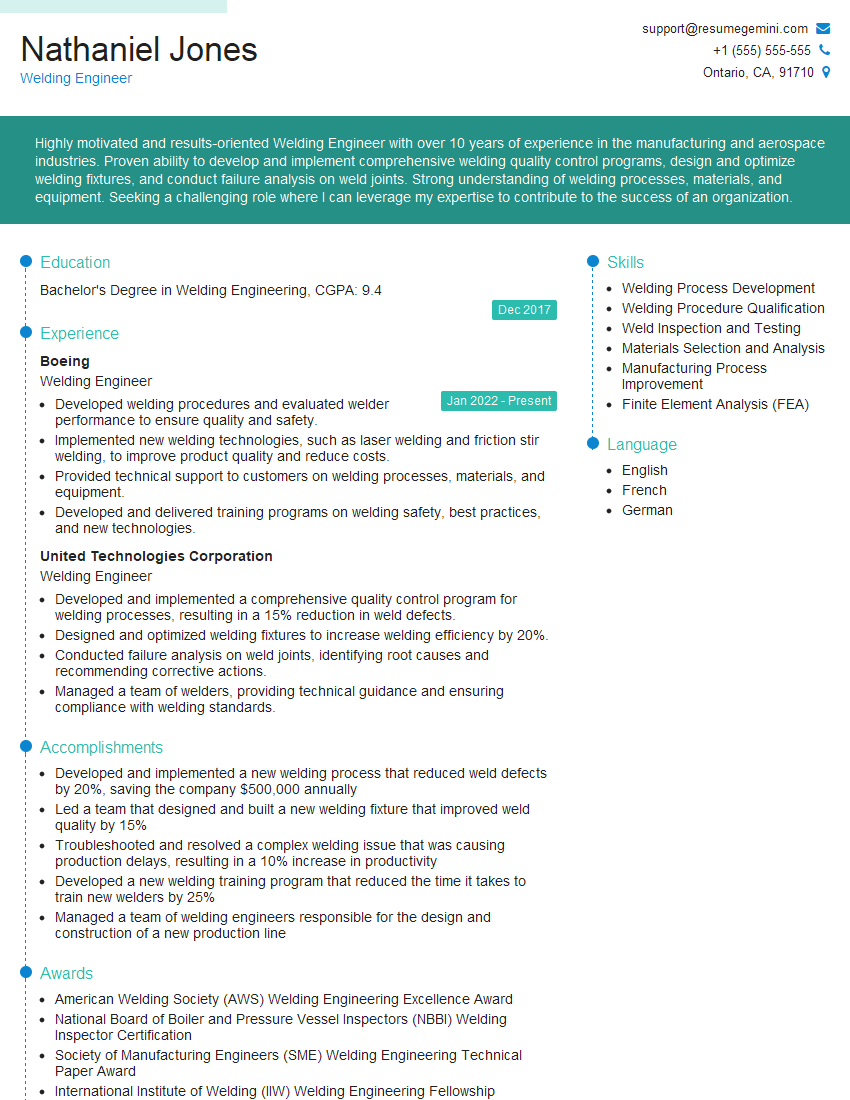
Mastering Welding Equipment Setup and Maintenance is crucial for career advancement in this in-demand field. A strong understanding of these topics demonstrates your technical expertise and commitment to safety, making you a highly desirable candidate. To significantly boost your job prospects, create an ATS-friendly resume that showcases your skills and experience effectively. ResumeGemini is a trusted resource that can help you craft a professional and impactful resume tailored to the specific requirements of the welding industry. We provide examples of resumes tailored to Welding Equipment Setup and Maintenance positions to give you a head start. Invest in your future – build a winning resume with ResumeGemini today.

Explore more articles
Users Rating of Our Blogs
Share Your Experience
We value your feedback! Please rate our content and share your thoughts (optional).
What Readers Say About Our Blog
Really detailed insights and content, thank you for writing this detailed article.
IT gave me an insight and words to use and be able to think of examples