Feeling uncertain about what to expect in your upcoming interview? We’ve got you covered! This blog highlights the most important Welding Production Management interview questions and provides actionable advice to help you stand out as the ideal candidate. Let’s pave the way for your success.
Questions Asked in Welding Production Management Interview
Q 1. Describe your experience with different welding processes (MIG, TIG, Stick, etc.).
My experience spans a broad range of welding processes, including Gas Metal Arc Welding (MIG), Gas Tungsten Arc Welding (TIG), Shielded Metal Arc Welding (Stick), and Flux-Cored Arc Welding (FCAW). Each process has its strengths and weaknesses, making it suitable for different applications and materials.
- MIG welding is known for its speed and efficiency, ideal for mass production and joining thicker materials. I’ve extensively used MIG in automotive manufacturing, producing robust and consistent welds. For example, I managed a project where we switched to a pulsed MIG process, resulting in a 15% increase in deposition rate without compromising quality.
- TIG welding offers superior precision and control, perfect for intricate welds and joining thin materials. I’ve employed TIG welding in aerospace projects, where high-quality welds with minimal distortion are critical. A recent project involved TIG welding titanium components, requiring meticulous attention to detail and precise parameter settings.
- Stick welding, while less precise, is highly versatile and works well in challenging outdoor environments due to its portability. I’ve relied on stick welding during field repairs and maintenance, showcasing its robustness in less controlled settings.
- FCAW provides high deposition rates and good penetration, particularly useful for outdoor applications and welding thicker sections. I’ve utilized FCAW in pipeline construction, valuing its efficiency and suitability for various positions.
My experience with these processes includes not only the practical application but also the understanding of various filler metals, gas shielding, and power source settings to achieve optimal weld quality.
Q 2. How do you manage production schedules and deadlines in a welding environment?
Managing production schedules and deadlines in a welding environment requires meticulous planning and effective communication. I use a combination of techniques, including:
- Project Breakdown: Deconstructing large projects into smaller, manageable tasks, allocating resources and timeframes accordingly. This allows for better tracking and identification of potential bottlenecks.
- Prioritization: Establishing a clear priority list based on deadlines and project criticality. This ensures that the most time-sensitive tasks are addressed first.
- Resource Allocation: Efficiently allocating welders, equipment, and materials to different tasks, considering skill sets and workload capacity. I utilize software tools to optimize resource allocation and minimize idle time.
- Regular Monitoring & Communication: Implementing a system for regular progress tracking, identifying potential delays early on, and proactively communicating with stakeholders. Daily stand-up meetings are crucial for this, fostering transparency and collaboration.
- Contingency Planning: Developing backup plans to address unforeseen delays, such as equipment malfunctions or material shortages. This is crucial for maintaining project momentum and preventing significant schedule disruptions.
For example, during a recent project with a tight deadline, I identified a potential bottleneck in the pre-fabrication stage. By reorganizing the workflow and reallocating resources, we successfully completed the project on time and within budget.
Q 3. What are your methods for ensuring welding quality control and compliance with relevant standards (e.g., AWS D1.1)?
Ensuring welding quality control and compliance with standards like AWS D1.1 is paramount. My approach involves a multi-faceted strategy:
- Procedure Qualification: Developing and qualifying Welding Procedure Specifications (WPS) in accordance with AWS D1.1, ensuring consistency and repeatability of welds. This includes documenting the parameters used and conducting weld testing to verify the quality of the weld produced.
- Welder Qualification: Implementing a welder qualification program, ensuring that welders possess the necessary skills and certifications to perform the required welds. Regular performance assessments are essential to maintain consistent quality.
- Visual Inspection: Implementing a robust visual inspection process to identify any surface defects. This is a crucial first step in quality control.
- Non-Destructive Testing (NDT): Utilizing various NDT methods like radiographic testing (RT), ultrasonic testing (UT), and liquid penetrant testing (PT) to detect internal flaws. The choice of NDT method depends on the application and the type of weld.
- Documentation & Record Keeping: Maintaining comprehensive records of WPSs, welder qualifications, inspection results, and NDT reports. This is crucial for traceability and compliance audits.
For instance, in a recent project, we implemented a stricter visual inspection protocol, which resulted in a noticeable reduction in the number of defective welds detected during the NDT process. This ultimately saved time and resources.
Q 4. Explain your experience with implementing and managing welding safety procedures.
Welding safety is a top priority. My experience includes developing and implementing comprehensive safety procedures, encompassing:
- Hazard Identification & Risk Assessment: Conducting thorough risk assessments to identify potential hazards associated with welding operations, such as fire, electric shock, and exposure to harmful fumes.
- Personal Protective Equipment (PPE): Ensuring that all welders use appropriate PPE, including welding helmets, gloves, clothing, and respiratory protection. Regular PPE inspections and training are essential.
- Fire Prevention & Control: Establishing fire safety procedures, including fire extinguisher placement and training, ensuring a safe working environment. This includes proper housekeeping, removing flammable materials, and using fire blankets.
- Emergency Response Plan: Developing and regularly practicing an emergency response plan to deal with accidents or injuries, including first-aid procedures and emergency contact information.
- Lockout/Tagout Procedures: Implementing lockout/tagout procedures to prevent accidental energization of equipment during maintenance or repairs, preventing electrical hazards.
- Regular Safety Training: Providing regular safety training to welders on safe welding practices, hazard identification, and emergency procedures. This involves both initial training and ongoing refresher courses.
I’ve successfully implemented a safety program that resulted in a significant reduction in workplace accidents, exceeding safety standards set by OSHA and other relevant regulations. A key element was fostering a strong safety culture through open communication and employee engagement.
Q 5. How do you handle welding material procurement and inventory management?
Efficient welding material procurement and inventory management are crucial for smooth operations. My approach involves:
- Supplier Selection: Selecting reliable suppliers who can provide high-quality materials at competitive prices and meet delivery schedules. This often involves establishing strong relationships with suppliers.
- Inventory Control System: Implementing an inventory control system to track material levels, minimize waste, and ensure timely procurement. This might involve using software to manage inventory and trigger automatic purchase orders when stock levels fall below a certain threshold.
- Demand Forecasting: Predicting future material needs based on production schedules and project requirements. This helps optimize inventory levels and reduce storage costs.
- Material Storage: Properly storing materials to prevent damage or degradation. This involves maintaining appropriate environmental conditions and utilizing suitable storage racks or containers.
- Regular Inventory Audits: Conducting regular inventory audits to verify stock levels and identify any discrepancies. This ensures accuracy in inventory management.
For instance, I implemented a just-in-time (JIT) inventory system, reducing storage costs by 20% while maintaining adequate material availability. This was achieved through close collaboration with suppliers and accurate demand forecasting.
Q 6. What strategies do you use to optimize welding production efficiency and reduce costs?
Optimizing welding production efficiency and reducing costs requires a holistic approach:
- Process Optimization: Identifying and eliminating bottlenecks in the welding process. This could involve streamlining workflows, optimizing welding parameters, or improving material handling.
- Automation: Exploring automation opportunities, such as robotic welding, to improve efficiency and reduce labor costs. This is especially effective for repetitive tasks.
- Lean Manufacturing Principles: Implementing lean manufacturing principles, such as 5S, to eliminate waste and improve workflow efficiency. This focuses on minimizing unnecessary movements and optimizing the use of space.
- Preventive Maintenance: Implementing a preventive maintenance program for welding equipment to minimize downtime and reduce repair costs. This ensures equipment reliability and prolongs its lifespan.
- Training & Skill Development: Investing in training and skill development for welders to improve their efficiency and reduce defects. Skilled welders can produce higher-quality welds faster.
- Cost Analysis & Benchmarking: Regularly analyzing costs and benchmarking against industry best practices to identify areas for improvement. This helps in identifying and addressing inefficiencies.
For example, by implementing a lean manufacturing approach, we reduced production lead times by 15% and improved overall equipment effectiveness (OEE).
Q 7. Describe your experience with troubleshooting welding defects and implementing corrective actions.
Troubleshooting welding defects requires a systematic approach. My experience includes:
- Defect Identification & Classification: Accurately identifying and classifying welding defects based on their appearance and location. This usually involves using visual inspection and NDT techniques.
- Root Cause Analysis: Conducting a thorough root cause analysis to determine the underlying causes of the defects. This might involve analyzing welding parameters, material properties, or welding procedures.
- Corrective Actions: Implementing appropriate corrective actions to prevent the recurrence of defects. This might involve adjusting welding parameters, modifying welding procedures, or improving welder training.
- Preventive Measures: Implementing preventive measures to avoid future occurrences of similar defects. This could involve improved quality control procedures or preventative maintenance schedules.
- Documentation & Reporting: Documenting all defects, root causes, and corrective actions for future reference and continuous improvement.
For instance, I once encountered a series of porosity defects in a particular weld. Through root cause analysis, we discovered that the issue was due to moisture contamination in the shielding gas. By implementing a desiccant filter in the gas line, we completely eliminated the problem.
Q 8. How do you manage and motivate a team of welders?
Managing and motivating a welding team requires a multifaceted approach that goes beyond simply assigning tasks. It’s about fostering a collaborative environment where each welder feels valued and empowered. I begin by understanding each welder’s individual skills and experience levels, then tailor assignments accordingly. This ensures everyone is challenged appropriately, preventing boredom and fostering a sense of accomplishment.
Regular communication is key. Daily briefings, team meetings, and one-on-one check-ins help address concerns, celebrate successes, and maintain open lines of dialogue. I also actively listen to their feedback – their insights are invaluable for improving processes and identifying potential problems. Positive reinforcement, both verbal and through performance-based rewards, is crucial for maintaining morale and motivating the team to exceed expectations. For example, recognizing a welder who consistently meets deadlines and maintains high-quality welds through a ‘Welder of the Month’ award can significantly boost team spirit and productivity.
Finally, I believe in investing in my team’s professional development. This might involve sponsoring relevant training courses, workshops, or certifications to improve their skill sets and broaden their knowledge. A skilled and confident team is a productive team.
Q 9. Explain your familiarity with different types of welding fixtures and their applications.
Welding fixtures are essential for ensuring consistent weld quality and repeatability. My experience encompasses a wide range, from simple jigs and clamps to complex, automated systems. Simple fixtures, like jigs, are used for holding smaller components in place during welding. Clamps provide a quick and easy way to secure parts for various welding processes. For more intricate assemblies, I’ve utilized specialized fixtures like rotating positioners, which allow for efficient welding of large or complex parts by manipulating their orientation. These are especially crucial for large-scale projects where maintaining consistent weld quality and minimizing distortion is paramount.
Furthermore, I’m familiar with the use of magnetic clamps, which are ideal for quick setups and are particularly useful for smaller components or when dealing with delicate materials. In larger-scale production, we might use dedicated welding tables which provide a robust base and mounting points for more complex fixturing systems. The choice of fixture is dictated by the specific application, the size and complexity of the part, and the welding process being used. For example, a robotic welding cell might require a highly specialized and automated fixture to ensure precise positioning and repeatability for high-volume production runs.
Q 10. How do you ensure compliance with OSHA regulations in a welding shop?
OSHA compliance is non-negotiable in a welding shop. My approach centers around proactive measures to ensure the safety of all personnel. This includes regular inspections of the workplace to identify and rectify any potential hazards. We strictly adhere to the use of appropriate Personal Protective Equipment (PPE), including welding helmets with proper shade numbers, gloves, jackets, and respiratory protection. These measures are reinforced through ongoing training and reminders.
Proper ventilation is crucial to mitigate the risk of exposure to harmful fumes. We ensure that our ventilation systems are regularly maintained and inspected, and that they are adequately sized for the volume of welding activities. Fire safety is also paramount. We maintain readily accessible fire extinguishers, designated fire-safe zones, and we conduct regular fire drills to prepare for emergency situations. All welders are trained in proper fire prevention and suppression techniques. Furthermore, we maintain detailed records of safety inspections, training, and any incidents, ensuring full transparency and compliance with all OSHA regulations.
Finally, I foster a safety-conscious culture where reporting safety concerns is encouraged without fear of reprisal. Open communication and a proactive approach to safety are pivotal in maintaining a compliant and safe working environment.
Q 11. Describe your experience with welding equipment maintenance and repair.
My experience in welding equipment maintenance and repair is extensive, encompassing both preventative maintenance and troubleshooting. Preventative maintenance involves regularly scheduled inspections and servicing of equipment, including cleaning, lubrication, and replacement of worn parts. This proactive approach minimizes downtime and extends the lifespan of our equipment. For example, I’ve established a detailed schedule for inspecting and maintaining our MIG welders, ensuring that gas flow regulators are calibrated, contact tips are replaced regularly, and wire feeds are properly adjusted. This preventative strategy helps to avoid unexpected breakdowns during peak production times.
Troubleshooting malfunctioning equipment requires a systematic approach. I begin by identifying the symptoms of the problem, then use my knowledge of the equipment’s mechanics and electrical systems to pinpoint the cause. I’m proficient in diagnosing issues related to power supply problems, gas leaks, faulty wire feeds, and other common malfunctions. I’m also adept at performing minor repairs, such as replacing worn components or repairing electrical circuits. For more significant repairs or specialized equipment, I collaborate with qualified technicians and vendors to ensure timely and efficient repairs. Maintaining detailed logs of equipment maintenance and repairs helps to track performance, identify recurring issues, and guide our preventative maintenance strategies.
Q 12. What is your experience with utilizing welding software or ERP systems for production management?
My experience with welding software and ERP systems is substantial. I’ve utilized various software packages for production scheduling, inventory management, and quality control. These systems have been crucial for streamlining our welding processes and optimizing resource allocation. For example, using an ERP system, we can track material usage, manage work orders efficiently, and monitor the progress of individual projects. This allows us to forecast resource needs, manage inventory levels effectively, and improve overall production efficiency.
Welding-specific software has also played a significant role. I have experience using CAM (Computer-Aided Manufacturing) software for programming robotic welding systems, which significantly enhances precision and increases output. Furthermore, data analysis capabilities within these systems allow us to identify bottlenecks in the production process and make informed decisions to optimize workflows. The integration of these software systems provides a comprehensive overview of our operations, allowing for improved decision-making and enhanced overall productivity. Data collected through the ERP and welding software allows us to track key performance indicators (KPIs), such as production rates, weld quality, and overall costs, which are crucial for continuous improvement.
Q 13. How do you develop and implement training programs for welders?
Developing and implementing effective welder training programs is critical for maintaining a skilled workforce and ensuring consistent weld quality. My approach is multifaceted, combining classroom instruction with hands-on training. Classroom sessions cover theoretical aspects of welding, including safety procedures, different welding processes, metallurgy, and blueprint reading. The curriculum is tailored to the specific needs of the welders and the types of welding projects we undertake.
Hands-on training is just as important, where welders practice their skills on various materials and using different techniques under the guidance of experienced instructors. We start with basic techniques, gradually progressing to more complex welds. Regular assessments and evaluations are conducted to track progress and identify areas for improvement. We use both written and practical tests to evaluate their understanding and proficiency. Furthermore, I leverage industry certifications such as AWS (American Welding Society) to ensure welders meet recognized industry standards. Ongoing training, whether through refresher courses or specialized training in new welding techniques, is crucial for maintaining skill levels and adapting to new technologies and industry best practices. This commitment to continuous improvement ensures a highly skilled and capable welding team.
Q 14. How do you handle unexpected production delays or equipment failures?
Handling unexpected production delays or equipment failures requires a calm and systematic approach. My strategy involves first identifying the root cause of the delay or failure. This often involves collaborating with the welding team to understand the nature of the problem. If it’s an equipment failure, I immediately initiate the troubleshooting process, leveraging my experience in equipment maintenance and repair. If the issue is beyond my capabilities, I promptly contact the relevant technicians or vendors.
Meanwhile, I work to mitigate the impact of the delay on the overall production schedule. This could involve prioritizing other tasks, reassigning welders to different projects, or adjusting the production schedule to compensate for the lost time. Open and transparent communication with relevant stakeholders is crucial during such situations. Keeping everyone informed of the progress and expected timelines helps manage expectations and minimizes disruptions. Post-incident reviews are conducted to analyze the cause of the delay or failure and implement preventive measures to avoid similar situations in the future. This might involve improving maintenance schedules, investing in backup equipment, or refining our production planning processes. A proactive approach and a robust problem-solving process are key to minimizing the impact of unexpected events.
Q 15. What is your experience with lean manufacturing principles in welding production?
Lean manufacturing principles, like eliminating waste and maximizing efficiency, are crucial in welding production. My experience involves implementing various lean tools such as 5S (Sort, Set in Order, Shine, Standardize, Sustain) to optimize the welding shop layout, reducing movement and improving workflow. I’ve also used Kaizen events, engaging the welding team in identifying and eliminating bottlenecks in the production process. For example, in a previous role, we identified a significant delay caused by inefficient material handling. By implementing a Kanban system for consumable supplies and rearranging the workstation layout, we reduced lead times by 20%. Furthermore, I’ve successfully applied Value Stream Mapping to visualize the entire welding process, pinpoint areas of waste (like excessive rework or idle time), and implement improvements to increase overall productivity and reduce costs.
Career Expert Tips:
- Ace those interviews! Prepare effectively by reviewing the Top 50 Most Common Interview Questions on ResumeGemini.
- Navigate your job search with confidence! Explore a wide range of Career Tips on ResumeGemini. Learn about common challenges and recommendations to overcome them.
- Craft the perfect resume! Master the Art of Resume Writing with ResumeGemini’s guide. Showcase your unique qualifications and achievements effectively.
- Don’t miss out on holiday savings! Build your dream resume with ResumeGemini’s ATS optimized templates.
Q 16. Describe your experience with creating and managing welding budgets.
Creating and managing welding budgets requires a detailed understanding of all associated costs. This includes material costs (welding wire, electrodes, shielding gas), labor costs (welder wages, overtime), equipment maintenance and repair, safety equipment, and overhead expenses. I begin by forecasting production volume and then meticulously break down each cost category. For example, I analyze historical data on consumable usage to predict future needs and leverage bulk purchasing to achieve cost savings. I also use project management software to track expenses against the budget, allowing for proactive adjustments as needed. Regular monitoring and variance analysis help identify potential cost overruns early and allow for corrective actions, such as negotiating better supplier contracts or adjusting labor allocation.
Q 17. How do you track key performance indicators (KPIs) in a welding production environment?
Tracking KPIs in welding production is essential for continuous improvement. Key metrics I focus on include: Production Rate (units per hour/day), measuring the efficiency of the welding process; Defect Rate (percentage of defective welds), indicating weld quality; Lead Time (time from order to completion), highlighting process efficiency; Labor Costs per Unit, assessing the efficiency of labor utilization; and Material Consumption per Unit, monitoring efficient use of consumables. I utilize data analytics tools and spreadsheets to collect and analyze this data, regularly generating reports that showcase performance trends. These reports enable me to identify areas needing improvement and track the effectiveness of implemented changes. For example, a high defect rate might prompt a review of welder training or a change in welding parameters.
Q 18. What is your experience with implementing and monitoring welding quality control plans?
Implementing and monitoring welding quality control plans requires a multi-faceted approach. This starts with establishing clear welding procedures (WPS) that specify the exact parameters for each weld joint. These WPS are then rigorously followed by the welders. We use various quality control methods, including visual inspection, dimensional checks, and destructive/non-destructive testing (NDT) techniques like radiographic testing (RT) or ultrasonic testing (UT) where necessary. Regular audits are conducted to ensure compliance with the WPS and quality standards. I maintain detailed records of all inspection results, identifying trends and root causes of defects. If defects are found, corrective actions are implemented immediately, which might include retraining welders, adjusting equipment settings, or revising the WPS. A robust quality control plan is vital for ensuring customer satisfaction and preventing costly rework or recalls.
Q 19. How do you ensure the proper selection and use of welding consumables?
Proper selection and use of welding consumables are paramount for weld quality and cost-effectiveness. This begins with a thorough understanding of the materials being welded and the required weld properties. I work closely with suppliers to choose the right consumables, considering factors like wire diameter, chemical composition, and shielding gas type. We maintain a well-organized inventory system to ensure timely availability and prevent waste from spoilage or obsolescence. Regular checks are performed to ensure consumables are stored correctly to prevent damage or degradation. Furthermore, we provide welders with comprehensive training on proper consumable handling and usage techniques to optimize performance and minimize waste. Tracking consumption rates helps to identify potential inefficiencies and optimize our purchasing strategies.
Q 20. Describe your experience with managing welding projects from start to finish.
Managing welding projects from start to finish involves several key stages. It begins with a thorough review of project specifications, including drawings, material requirements, and timelines. Next, I develop a detailed project plan, outlining tasks, resource allocation, and schedules. This includes identifying and securing all necessary resources, including welders, equipment, and consumables. Throughout the project, I monitor progress against the plan, addressing any potential issues proactively. This often involves regular communication with the client and the welding team. Upon completion, a final inspection is performed to ensure compliance with specifications before project handover. Effective project management software aids in tracking progress, managing resources, and maintaining accurate documentation throughout the entire lifecycle.
Q 21. How do you handle employee performance issues within your welding team?
Handling employee performance issues requires a fair and consistent approach. I begin by documenting the specific issue, including dates, times, and witnesses if applicable. A private meeting is then scheduled with the employee to discuss the issue, allowing them to provide their perspective. I focus on providing constructive feedback and outlining expectations for improvement. This may involve additional training, mentoring, or adjusting work assignments. A performance improvement plan (PIP) might be developed with specific goals and timelines. Regular follow-up meetings are crucial to monitor progress and provide support. If performance doesn’t improve despite these interventions, more serious disciplinary actions may be necessary, always in accordance with company policy and labor laws. My aim is always to foster a supportive environment while maintaining high standards of performance.
Q 22. Explain your experience with root cause analysis of welding defects.
Root cause analysis (RCA) of welding defects is crucial for preventing future issues and improving overall weld quality. It involves systematically investigating a defect to identify the underlying cause, not just the immediate symptom. My approach typically follows a structured methodology, often using techniques like the 5 Whys or Fishbone diagrams.
For example, if we find porosity in a weld, simply saying ‘there’s porosity’ isn’t sufficient. We’d ask ‘Why is there porosity?’ Perhaps the answer is ‘because there was insufficient shielding gas coverage’. Then we’d ask ‘Why was there insufficient shielding gas coverage?’ Maybe the answer is ‘because the gas flow rate was too low’. We continue this process until we reach the root cause, such as a malfunctioning flow meter or incorrect settings. This allows us to address the problem at its source, preventing similar defects in the future.
Another helpful technique is the Fishbone diagram, which helps visually organize potential causes categorized by factors like materials, equipment, personnel, methods, environment, and measurements. This provides a holistic view of the potential root causes and facilitates brainstorming within a team.
Q 23. How do you utilize data to improve welding process efficiency?
Data is the lifeblood of efficient welding production. I leverage data from various sources – weld parameters (voltage, amperage, speed), defect rates, production times, material consumption, and even equipment maintenance logs – to optimize processes. This involves using statistical process control (SPC) charts to monitor weld quality and identify trends, and also predictive maintenance techniques using machine learning for early detection of potential equipment failures.
For instance, by analyzing historical data on weld parameters and defect rates, we can identify optimal settings that minimize defects while maximizing production speed. Let’s say we notice a correlation between increased amperage and higher porosity rates. We can adjust the welding parameters accordingly and monitor the results, making data-driven adjustments to maintain optimal efficiency and quality.
Moreover, integrating sensors and data loggers into the welding process allows for real-time monitoring and automated adjustments, minimizing human error and further enhancing efficiency. This real-time feedback loop is essential for achieving peak performance and consistency.
Q 24. Describe your experience with different types of welding inspection techniques.
My experience encompasses a wide range of welding inspection techniques, both destructive and non-destructive. Non-destructive methods include visual inspection (VI), which is the most common first step; radiographic testing (RT) to detect internal flaws; ultrasonic testing (UT) for detecting subsurface defects; magnetic particle testing (MT) for surface and near-surface flaws in ferromagnetic materials; and liquid penetrant testing (PT) for surface-breaking defects in most materials. Destructive testing methods involve cutting samples from the weld and conducting tensile, bend, or impact tests to assess its mechanical properties.
The choice of inspection technique depends on factors such as the weld type, material, required quality level, and accessibility. For example, RT is often used for pressure vessels to detect internal voids, whereas PT is suitable for inspecting surface cracks in smaller components. I am proficient in interpreting the results from each technique and in using these results to make informed decisions regarding weld quality and corrective actions.
Q 25. How do you ensure proper documentation and record keeping for welding operations?
Meticulous documentation and record-keeping are paramount for compliance, traceability, and continuous improvement in welding operations. This includes maintaining detailed records of welder qualifications, welding procedures (WPS), procedure qualification records (PQRs), inspection reports, material certifications, and equipment maintenance logs. We utilize a combination of physical files and digital databases to ensure easy access and efficient tracking.
A robust system for managing welding procedures is essential, ensuring all procedures are current, properly documented, and followed consistently. This system should incorporate version control to prevent accidental use of obsolete procedures. Moreover, a clear, accessible system for storing and retrieving inspection reports allows for easy traceability of weld quality and facilitates audits.
Implementing a digital system with barcode or RFID tracking of materials and components further enhances traceability and reduces the risk of using incorrect materials.
Q 26. What is your experience with robotic welding or automated welding systems?
I have extensive experience with robotic welding and automated welding systems, including programming, setup, and troubleshooting. This includes experience with various robotic systems and their associated software. Robotic welding offers significant advantages in terms of consistency, speed, and precision, particularly for high-volume production of repetitive welds.
My experience also encompasses integrating robotic systems with other automated processes, such as material handling and quality control systems. This requires a strong understanding of both the robotic systems and the overall production flow to optimize integration and performance.
Troubleshooting robotic welding systems involves using diagnostic tools to pinpoint the source of errors, from software glitches to mechanical malfunctions. This can involve analyzing sensor data, error logs, and even conducting visual inspections of the robotic arm and welding equipment. This necessitates a thorough knowledge of both hardware and software aspects of the robotic system.
Q 27. How do you prioritize tasks in a fast-paced welding production environment?
Prioritizing tasks in a fast-paced welding production environment requires a structured approach. I utilize a combination of techniques including Kanban boards for visualizing workflow, critical path analysis to identify bottlenecks, and a prioritization matrix based on urgency and importance.
The Kanban board helps visualize the workflow, highlighting tasks that are in progress, waiting for approval, or completed. This allows for a clear overview of the production flow and identification of any potential delays. Critical path analysis helps to focus efforts on the most crucial tasks that directly affect project completion timelines.
The prioritization matrix (using urgency and importance as axes) allows for a more strategic approach to task allocation, making sure urgent tasks that impact production don’t get overlooked. This is often combined with regular team meetings to adjust priorities based on changing circumstances.
Q 28. Describe a time you had to make a difficult decision related to welding production.
In one instance, we faced a significant delay in a critical project due to a supplier failing to deliver a batch of certified welding wire on time. This threatened to halt production and jeopardize the project deadline. My decision was to explore alternative suppliers, even though it meant potentially compromising on the originally specified wire type.
After thorough research, we identified a suitable alternative supplier who could meet the expedited delivery timeframe. We initiated rigorous testing to ensure the alternative wire met our quality standards before integrating it into production. This involved conducting weld tests and comparing the mechanical properties to those of the originally specified wire. It was a calculated risk, but it ensured the project stayed on track while minimizing the potential impact on quality.
This experience highlighted the importance of having contingency plans and readily available alternative resources to mitigate potential risks. It also underscored the importance of proactive supplier relationship management.
Key Topics to Learn for Welding Production Management Interview
- Welding Processes & Techniques: Understanding various welding methods (MIG, TIG, SMAW, etc.), their applications, and limitations is crucial. Consider the practical implications of choosing the right process for different materials and projects.
- Production Planning & Scheduling: Mastering techniques for optimizing production workflows, managing resources effectively, and meeting deadlines. Think about how to handle unexpected delays or material shortages.
- Quality Control & Assurance: Deep understanding of welding codes, standards (AWS D1.1, etc.), and inspection procedures. Explore practical approaches to ensuring consistent weld quality and minimizing defects.
- Safety Procedures & Regulations: Demonstrate knowledge of OSHA regulations and industry best practices for workplace safety in welding environments. Discuss practical measures for mitigating risks and preventing accidents.
- Team Management & Leadership: Highlight your experience in leading and motivating welding teams, delegating tasks effectively, and fostering a collaborative work environment. Consider case studies showcasing your leadership skills.
- Cost Control & Budgeting: Discuss strategies for optimizing material usage, minimizing waste, and managing labor costs within budget constraints. Explore methods for analyzing production costs and identifying areas for improvement.
- Troubleshooting & Problem-Solving: Showcase your ability to identify and resolve issues related to welding processes, equipment malfunctions, or quality defects. Practice articulating your problem-solving approach in a structured manner.
- Advanced Welding Technologies: Familiarity with robotic welding, automation, and other advanced welding techniques demonstrates a forward-thinking approach. Explore the benefits and challenges of implementing these technologies.
Next Steps
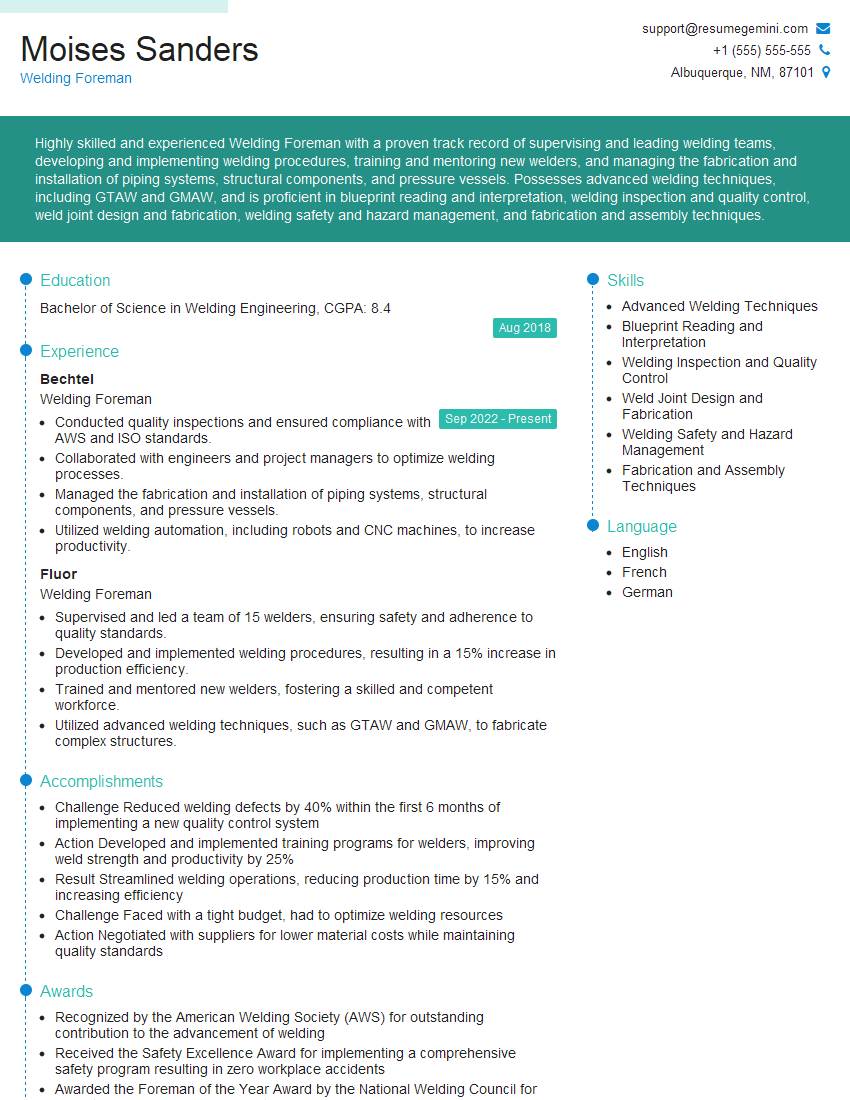
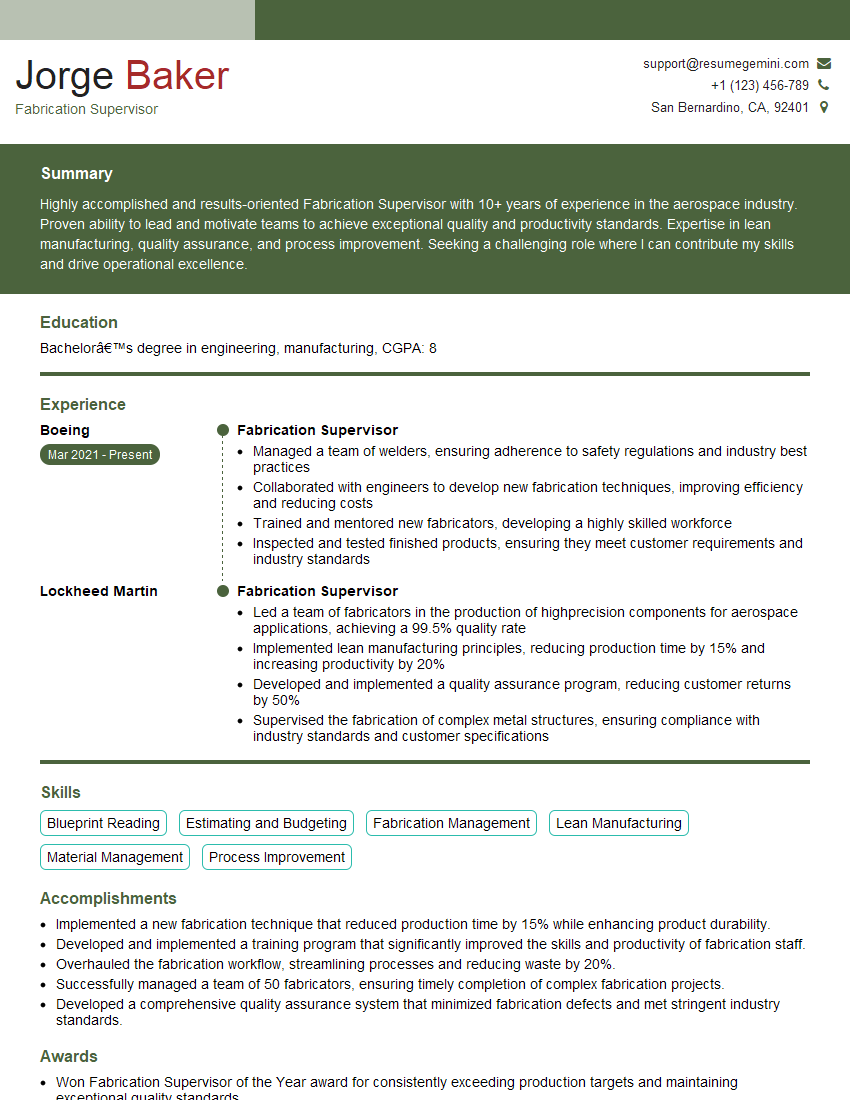
Mastering Welding Production Management opens doors to exciting career advancements, higher earning potential, and greater leadership responsibilities. To maximize your job prospects, it’s essential to create an ATS-friendly resume that highlights your skills and experience effectively. ResumeGemini is a trusted resource to help you build a professional and impactful resume, ensuring your application stands out from the competition. We provide examples of resumes tailored to Welding Production Management to guide you in creating a winning application.
Explore more articles
Users Rating of Our Blogs
Share Your Experience
We value your feedback! Please rate our content and share your thoughts (optional).
What Readers Say About Our Blog
Really detailed insights and content, thank you for writing this detailed article.
IT gave me an insight and words to use and be able to think of examples