The thought of an interview can be nerve-wracking, but the right preparation can make all the difference. Explore this comprehensive guide to Welding Reporting interview questions and gain the confidence you need to showcase your abilities and secure the role.
Questions Asked in Welding Reporting Interview
Q 1. What are the key elements of a comprehensive welding report?
A comprehensive welding report acts as a permanent record of the welding process, crucial for quality control, traceability, and legal compliance. It’s much more than just a list of welds; it’s a detailed account of everything that happened during the welding operation.
- Welder Identification: The report must clearly identify the welder(s) involved, ensuring accountability for the work performed. This often involves welder certification numbers and qualifications.
- Procedure Specification: The specific welding procedure (WPS) followed must be documented, along with any deviations or special instructions. This establishes the parameters under which the welds were created, ensuring consistency and quality.
- Base Material Information: The type, grade, and thickness of the base materials being joined need to be precisely recorded. This is essential for ensuring the weld’s compatibility and structural integrity.
- Weld Details: This section details the type of weld (e.g., fillet, groove, butt), the dimensions (size, length), and the welding process employed (e.g., MIG, TIG, SMAW). Detailed drawings or sketches are often included for clarity.
- Inspection Results: The results of any visual or non-destructive testing (NDT), such as radiographic testing (RT) or ultrasonic testing (UT), are meticulously recorded, along with any identified defects and their remediation.
- Date and Time: Accurate date and time stamps are vital for tracking progress and maintaining a chronological record of the welding operations.
- Equipment Used: Specific equipment used – including the make, model, and settings of welding machines and other relevant tools – should be documented.
Think of it like a meticulous recipe: every ingredient (material), cooking method (welding process), and the final product inspection (NDT results) are documented to ensure reproducibility and quality control.
Q 2. Describe your experience with different types of welding reports (e.g., daily, weekly, final).
My experience spans various reporting frequencies, each serving a unique purpose within the overall welding project management.
- Daily Welding Reports: These reports provide real-time tracking of welding progress, identifying any immediate issues or delays. They often include a simple summary of welds completed, materials used, and any challenges encountered. I’ve used these extensively in fast-paced projects requiring daily monitoring.
- Weekly Welding Reports: Weekly reports consolidate the daily information, offering a broader perspective on project progress. They often include summaries of completed tasks, resource utilization, and any potential risks or concerns identified during the week. These are useful for higher-level project management and identifying trends.
- Final Welding Reports: The final report is a comprehensive document summarizing the entire welding project. This includes all relevant documentation from the project lifecycle, including WPS, material certifications, NDT results, defect records, and final weld acceptance criteria. It’s the ultimate record of the project’s success or areas needing improvement. I’ve prepared several of these for large-scale projects and client submissions.
The key difference lies in the level of detail and the purpose of the report. Daily reports focus on immediate issues, weekly reports on progress and trends, and final reports provide the complete audit trail.
Q 3. How do you ensure accuracy and completeness in your welding reports?
Accuracy and completeness are paramount in welding reports. To ensure this, I employ a multi-layered approach.
- Standardized Forms: Using pre-designed forms ensures all necessary information is captured consistently, reducing the risk of omissions. These forms often include checklists for completeness.
- Real-time Data Entry: Recording data directly on-site minimizes reliance on memory and reduces transcription errors. I always carry a tablet or laptop for efficient data recording.
- Cross-checking: Regular cross-checking of entries against original documentation and NDT reports helps identify and correct any discrepancies. This is especially important for crucial information such as material identification and weld dimensions.
- Peer Review: Having another qualified person review the reports before finalization adds another layer of quality control and helps catch any overlooked errors. A second pair of eyes can identify potential mistakes before they become serious problems.
- Digital Record Keeping: Storing reports electronically using a secure system allows for easy access, version control, and prevents loss or damage of physical documents.
Think of it as building a house – you wouldn’t skip any steps or make assumptions. Each component needs precise measurements and careful documentation to ensure the structure is stable and reliable. Welding reports provide that same level of precision and traceability.
Q 4. Explain the importance of proper documentation in welding processes.
Proper documentation in welding is crucial for several reasons, encompassing legal, safety, and quality aspects.
- Legal Compliance: Many industries have strict regulations concerning welding processes and quality control. Detailed records are often required to demonstrate compliance with these regulations and avoid legal repercussions.
- Quality Assurance: Documentation allows for traceability of materials, processes, and personnel, enabling efficient identification of issues and implementation of corrective actions. This is crucial for maintaining high standards and preventing defects.
- Safety: Comprehensive records of weld parameters and inspections can help identify potential safety hazards and prevent accidents. This is especially important for high-risk applications such as pipelines or pressure vessels.
- Traceability: Complete documentation enables tracking of specific welds throughout the project’s lifespan, simplifying maintenance, repairs, and future inspections. This is vital for managing the life cycle of welded structures.
- Continuous Improvement: Analyzing welding reports over time helps identify trends and recurring issues. This data provides valuable insights for refining welding procedures and enhancing the overall quality of welds.
Imagine an airplane – every weld, every component is meticulously documented and tracked. Failure to do so could have catastrophic consequences. The same principle applies to other critical applications where welding plays a vital role.
Q 5. What are the common welding defects and how are they documented?
Common welding defects can significantly compromise structural integrity and safety. Accurate documentation of these defects is vital for corrective action and preventing recurrence.
- Porosity: Small gas pores within the weld metal. Documented using visual inspection, radiography, or ultrasonic testing. The report will include the location, size, and quantity of pores.
- Cracks: Fractures in the weld metal or heat-affected zone (HAZ). These are usually detected via visual inspection, dye penetrant testing, or magnetic particle inspection. The report details crack type, location, length, and orientation.
- Incomplete Penetration: The weld does not fully penetrate the joint. Detected via visual inspection or radiography. The report will specify the location and extent of incomplete penetration.
- Undercut: A groove melted into the base metal at the weld toe. Detected through visual inspection. The report includes location, depth, and length of the undercut.
- Slag Inclusion: Presence of non-metallic inclusions (slag) within the weld. Detected visually or via radiography. The report details the location and extent of slag inclusion.
Documentation includes photographs, sketches, and precise location markings on drawings. Severity is usually categorized (e.g., minor, major, critical) to determine appropriate corrective measures, such as grinding, re-welding, or repair.
Q 6. How do you interpret welding symbols and specifications?
Interpreting welding symbols and specifications is fundamental to ensuring correct weld execution and documentation. Welding symbols provide a concise and standardized way to convey complex weld geometry and requirements.
I’m proficient in interpreting welding symbols according to the ASME and AWS standards. These symbols communicate information such as:
- Weld type: Butt, fillet, groove, etc.
- Weld size: Leg length for fillet welds, throat thickness for groove welds.
- Weld location: Which side of the joint the weld is located on.
- Weld process: SMAW, GMAW, GTAW, etc.
- Surface finish requirements: Grind, machine, etc.
Example: A simple weld symbol might look like this: ⇌ (Arrow pointing to the weld location) | ∕ 1/4” (weld size) This indicates a fillet weld, 1/4 inch leg size, on the side indicated by the arrow.
Specifications, often provided in drawings or separate documents, offer detailed information supplementing the symbols, such as material grades, tolerances, and required quality control procedures. I thoroughly examine both the symbols and specifications to understand the complete weld requirements before commencing work.
Q 7. Describe your experience with various welding processes and their respective reporting requirements.
My experience encompasses several welding processes, each with specific reporting requirements. These requirements stem from the inherent characteristics of each process and the resulting weld quality.
- Shielded Metal Arc Welding (SMAW): Reporting emphasizes electrode type, current, voltage, and travel speed. Visual inspection and occasionally radiography are standard for quality control.
- Gas Metal Arc Welding (GMAW): Reports focus on shielding gas type, wire feed speed, current, and voltage. Reports might also include information on wire type and diameter. NDT methods such as UT are often used.
- Gas Tungsten Arc Welding (GTAW): Reports emphasize gas flow rate, current, voltage, and electrode type (tungsten size). Inspection commonly includes visual inspection, with radiography or other NDT methods applied depending on the application’s requirements.
- Flux-Cored Arc Welding (FCAW): Reports typically document the flux core wire type and shielding gas used. Similar to GMAW, NDT might be implemented.
The reporting needs vary because each process produces welds with unique characteristics that require tailored inspection and documentation. For instance, GTAW often produces high-quality welds with minimal defects, while SMAW might require more thorough inspection due to higher chances of slag inclusions.
Q 8. How do you manage and track welding procedure specifications (WPS)?
Managing and tracking Welding Procedure Specifications (WPS) is crucial for ensuring consistent and high-quality welds. Think of a WPS as a recipe for a perfect weld – it outlines all the parameters needed to achieve a successful weld, such as the type of filler metal, preheat temperature, welding process, and more. We use a robust system involving both physical and digital records.
Physical Records: All WPSs are stored in a clearly labeled, organized filing system, easily accessible to authorized personnel. This ensures we have readily available hard copies if digital systems fail. We often include a revision history for each WPS.
Digital Records: A dedicated database manages digital versions of WPSs, allowing for efficient searching, version control, and easier updating. This database may be integrated with our Quality Management System (QMS).
Tracking: Each WPS is uniquely identified, and we meticulously track its usage on each project. This involves creating a detailed log documenting the WPS number, welder’s qualifications, date of use, and the specific weld joint it was applied to. This traceability is vital for auditing and problem-solving.
Example: Let’s say we’re working on a pipeline project. We’ll have a specific WPS for the girth welds and another for the root pass. Our database will track which welder used which WPS on which pipe section, ensuring full traceability.
Q 9. How do you handle discrepancies or inconsistencies in welding reports?
Discrepancies in welding reports are addressed promptly and systematically. This involves a multi-step process to ensure accuracy and compliance. Think of it like a detective investigation – we need to find the root cause to prevent future issues.
- Identify and Document: The first step is to clearly identify the discrepancy, noting the specific differences or inconsistencies between expected results and the actual findings. We document everything thoroughly.
- Root Cause Analysis: We conduct a thorough investigation to understand why the discrepancy occurred. This often involves reviewing the WPS, welder’s qualifications, equipment settings, and environmental conditions. Sometimes, a visual inspection of the weld is necessary.
- Corrective Action: Once the root cause is identified, we implement corrective actions to prevent similar issues from occurring in the future. This might involve retraining welders, recalibrating equipment, or revising the WPS itself.
- Reporting and Documentation: All findings, corrective actions, and their effectiveness are documented and reported to relevant stakeholders. This documentation helps ensure continuous improvement and helps meet quality assurance requirements. This might involve issuing a non-conformance report (NCR).
Example: If a weld fails a radiographic test (RT), we’ll thoroughly review the welder’s performance, the WPS used, and the equipment settings. If we discover the welder didn’t adhere to the preheat temperature specified in the WPS, we’ll address the issue through retraining and stricter monitoring.
Q 10. What software or tools do you use for creating and managing welding reports?
Several software tools and technologies enhance the creation and management of welding reports. The choice depends on project size and complexity.
- Spreadsheet Software (Excel): For smaller projects, spreadsheets can suffice for basic data entry and report generation. However, for larger projects, it becomes cumbersome.
- Dedicated Welding Software: Specialized software packages are available that streamline welding data management, from WPS creation and tracking to report generation and analysis. These usually offer features such as automated report generation and data visualization tools.
- Database Management Systems (DBMS): For larger organizations, a relational database (like MySQL or SQL Server) is frequently used to centralize and manage all welding-related data. This provides robust data organization, security, and scalability.
- QMS Software: Integrating welding data management within a broader Quality Management System (QMS) platform allows for seamless interaction between various quality control processes.
Example: In a large construction project, we might use a combination of a DBMS for storing WPSs and welding data and dedicated welding software for generating customized reports with advanced analytics.
Q 11. Explain your knowledge of relevant welding codes and standards (e.g., AWS, ASME).
My expertise encompasses a wide range of welding codes and standards, primarily AWS (American Welding Society) and ASME (American Society of Mechanical Engineers) codes. These codes provide the guidelines and requirements for safe and reliable welding practices across various industries.
- AWS D1.1: Structural Welding Code – Steel – This code dictates the requirements for welding in structural steel construction, including procedures and qualifications.
- AWS D1.2: Structural Welding Code – Aluminum – Similar to D1.1, but specific to aluminum structures.
- ASME Section IX: Welding and Brazing Qualifications – This code outlines the procedures and qualifications for welders and welding procedures in pressure vessel applications. It is highly rigorous and critical for safety.
- Other Codes: I’m also familiar with other relevant codes and standards, including those specific to piping (ASME B31 series), aerospace, and other industries. The specific codes used will vary depending on the project’s scope.
Understanding these codes is not just about following rules; it’s about ensuring safety and the structural integrity of the welded components. I regularly update my knowledge of these codes and attend relevant training courses to stay current with the latest revisions and industry best practices.
Q 12. How do you ensure the confidentiality and security of welding reports?
Confidentiality and security of welding reports are paramount. We use a multi-layered approach to protect sensitive information.
- Access Control: Access to welding reports and associated data is strictly controlled using password-protected systems and role-based access controls. Only authorized personnel have access.
- Data Encryption: Sensitive data, such as WPSs and test results, is encrypted both at rest and in transit. This safeguards data from unauthorized access, even if the system is compromised.
- Secure Storage: Both physical and digital records are stored securely. Physical records are kept in locked cabinets, and digital records are stored on secure servers with regular backups.
- Regular Audits: We conduct regular security audits to identify and address any potential vulnerabilities in our systems and procedures.
- Data Retention Policy: We adhere to a clear data retention policy, securely archiving data as required by regulatory bodies and internal guidelines.
Example: A particular project may involve proprietary welding procedures. We would ensure these are only accessible to authorized personnel and use robust encryption to protect them.
Q 13. How do you prioritize tasks when managing multiple welding projects?
Prioritizing tasks across multiple welding projects requires a structured approach. I typically use a combination of techniques to manage this effectively.
- Project Prioritization Matrix: I use a matrix that considers factors like project deadlines, urgency, resource availability, and potential impact of delays. This allows me to visually rank projects based on their importance.
- Work Breakdown Structure (WBS): Each project is broken down into smaller, manageable tasks. This helps in assigning resources and tracking progress efficiently.
- Resource Allocation: I consider the skills and availability of welders and inspectors when assigning tasks. This ensures optimal resource utilization and minimizes conflicts.
- Regular Progress Reviews: Regular meetings and progress reviews help monitor progress and identify potential roadblocks, allowing for proactive adjustments to the schedule and resource allocation.
- Agile Methodology: In some cases, using an agile methodology with iterative progress reviews allows for greater flexibility and adaptability in response to changing project demands.
Example: If I have a high-priority project with a tight deadline alongside a lower-priority project, I will prioritize the resources and focus on the high-priority project first, ensuring its completion within the timeframe, then shift resources to the secondary project.
Q 14. Describe your experience with data analysis related to welding reports.
Data analysis of welding reports plays a crucial role in improving welding processes and ensuring quality. I use various techniques to extract meaningful insights from this data.
- Statistical Process Control (SPC): SPC charts (e.g., control charts) are used to monitor key parameters like weld strength, penetration depth, and the occurrence of defects. This allows us to identify trends and potential problems early.
- Defect Analysis: We analyze the types and frequency of weld defects to identify root causes. This information guides corrective actions and prevents similar issues from occurring.
- Welder Performance Tracking: We analyze welder performance data to identify high-performing welders and those who might need additional training or support.
- Data Visualization: Using tools like spreadsheets or specialized welding software, we create charts and graphs to visually represent data and highlight trends or outliers, making complex information easy to understand.
- Predictive Modeling: In some advanced cases, we can use predictive modeling techniques to predict the probability of weld defects based on various parameters. This can help in proactive quality control.
Example: If we consistently see a higher-than-acceptable rate of porosity in a particular weld joint, we’ll analyze the data to identify the root cause, which might be related to inadequate shielding gas coverage or improper welding parameters. We would then use this data to adjust our procedures and improve welder training.
Q 15. How do you identify trends or patterns in welding defects based on report data?
Identifying trends in welding defects starts with meticulous data collection and analysis. We utilize welding reports, which ideally include detailed information such as the type of weld, base material, welding process, welder qualifications, and importantly, a precise description and location of any defects found. I then leverage data visualization tools and statistical methods to uncover patterns.
For example, if a high percentage of porosity defects are consistently reported in welds performed by a specific welder using a particular welding process on a certain type of steel, we can infer a potential issue with either welder technique, process parameters, or material properties. Similarly, a recurring pattern of cracks in a specific joint type might indicate a design flaw or an issue with pre-weld preparation.
I use various techniques such as control charts (e.g., Shewhart charts), histograms, and scatter plots to visualize the data and identify trends. Software like Excel, Minitab, or specialized welding data management systems can greatly aid in this analysis. By identifying these trends, we can proactively address potential problems before they lead to major issues.
Career Expert Tips:
- Ace those interviews! Prepare effectively by reviewing the Top 50 Most Common Interview Questions on ResumeGemini.
- Navigate your job search with confidence! Explore a wide range of Career Tips on ResumeGemini. Learn about common challenges and recommendations to overcome them.
- Craft the perfect resume! Master the Art of Resume Writing with ResumeGemini’s guide. Showcase your unique qualifications and achievements effectively.
- Don’t miss out on holiday savings! Build your dream resume with ResumeGemini’s ATS optimized templates.
Q 16. How do you use welding reports to improve processes and prevent future defects?
Welding reports are critical for continuous improvement. They provide the raw data necessary to identify areas needing optimization. Once trends are established (as discussed in the previous answer), we can implement corrective actions.
For instance, if analysis reveals a high incidence of undercut in a specific fillet weld, we might review the welding procedure specification (WPS) to ensure the parameters (current, voltage, travel speed) are correctly set and consistently applied. Further, welder retraining might be needed, focusing on proper technique and consistent weld bead formation. We can also explore using different consumables or improving the joint design to mitigate the risk of undercut.
Beyond addressing immediate problems, reports help us build a historical record of welding performance. This allows us to track the effectiveness of implemented changes and to identify recurring issues that require more significant, perhaps systemic, solutions. Regular review and analysis of these reports are crucial for continuous improvement and defect prevention.
Q 17. Describe your experience with NDT methods and their role in welding reporting.
Non-destructive testing (NDT) methods are integral to welding quality control and reporting. My experience encompasses various NDT techniques, including visual inspection (VT), radiographic testing (RT), ultrasonic testing (UT), and magnetic particle testing (MT). Each method plays a distinct role in detecting different types of defects.
For example, VT is often the first step, providing a visual assessment of surface imperfections. RT is excellent for detecting internal flaws like porosity and cracks. UT is particularly useful for identifying subsurface defects and measuring weld thickness. MT is suitable for detecting surface and near-surface cracks in ferromagnetic materials.
NDT results are documented in the welding reports, providing crucial evidence of weld quality. The reports will typically include details about the NDT method used, the specific areas inspected, the detected defects (if any), their sizes and locations, and interpretations of the results. This detailed information is essential for determining the overall weld acceptability and identifying areas for process improvement.
Q 18. How do you communicate technical information effectively in welding reports?
Effective communication of technical information in welding reports is paramount. The reports must be clear, concise, and easily understood by all stakeholders, including welders, inspectors, engineers, and management. I achieve this through several strategies:
- Clear and consistent terminology: Using standardized terms and avoiding jargon unless clearly defined.
- Visual aids: Including detailed diagrams, photographs, and schematics to illustrate the weld geometry, defect location, and NDT results.
- Well-structured format: Employing a logical layout with clear headings, subheadings, and sections for different aspects of the report (e.g., weld details, inspection procedures, defect findings, conclusions).
- Data tables and graphs: Presenting quantitative data in a concise and visually appealing way to highlight trends and patterns.
- Concise summaries and conclusions: Clearly stating the overall weld acceptability and any recommendations for corrective actions.
Using a template ensures consistency and clarity across all reports, making it easier to identify trends and patterns over time.
Q 19. Explain your understanding of root cause analysis related to welding defects.
Root cause analysis (RCA) is crucial for preventing future welding defects. When defects are identified, we use a systematic approach to understand the underlying causes, not just the symptoms. I’ve employed several RCA methodologies, including the ‘5 Whys’ technique and Fishbone diagrams.
For instance, if we find excessive spatter in a welding operation, simply noting ‘excessive spatter’ in the report isn’t sufficient. Using the ‘5 Whys’, we might ask:
- Why is there excessive spatter? (Answer: Incorrect welding parameters)
- Why were the parameters incorrect? (Answer: Inadequate welder training)
- Why was the training inadequate? (Answer: Lack of updated training materials)
- Why were the materials outdated? (Answer: Lack of regular review and updates of training programs)
- Why is there a lack of regular review? (Answer: Insufficient management oversight)
By tracing the chain of events back to the root cause, we can implement targeted corrective actions, such as revising training materials, updating WPS, or improving management oversight. This prevents the same issue from recurring.
Q 20. How do you ensure compliance with safety regulations in welding operations and reporting?
Ensuring compliance with safety regulations is paramount in welding operations and reporting. This begins with adhering to relevant safety standards (e.g., OSHA, ANSI, etc.) and incorporating those regulations into our Standard Operating Procedures (SOPs). Welding reports play a crucial role in documenting compliance.
Reports should include details about the use of appropriate Personal Protective Equipment (PPE), such as welding helmets, gloves, and clothing. They must document that the welding environment is properly ventilated and that safety precautions are followed, such as fire watch during welding operations and proper handling of hazardous materials. Any safety incidents or near misses must be meticulously recorded.
Regular audits and inspections are conducted to ensure ongoing compliance. Training programs for welders and inspectors are designed to reinforce safety awareness and best practices. The welding reports serve as a valuable record demonstrating adherence to safety regulations and highlighting areas requiring further attention.
Q 21. What is your experience with different types of welding joints and their associated reports?
My experience encompasses a wide variety of welding joints, including butt joints (single bevel, double bevel, V-butt, etc.), fillet welds, lap joints, tee joints, and corner joints. Each joint type has specific requirements regarding weld preparation, welding procedures, and defect inspection. The reports reflect these differences.
For instance, a report on a butt weld might focus on aspects such as penetration, fusion, and root concavity, while a report on a fillet weld might emphasize leg length, convexity, and undercut. The choice of NDT method also depends on the joint type and the potential defect locations. For example, ultrasonic testing might be preferred for thick butt welds to detect internal flaws, while magnetic particle testing might be used for surface cracks in a fillet weld.
Regardless of the joint type, the reports maintain a consistent structure to ensure clarity and comparability. They include detailed drawings of the weld joint, photos showing the weld preparation and the completed weld, and a detailed description of the inspection procedures and findings. This consistency is crucial for trend analysis and continuous process improvement.
Q 22. Describe your familiarity with different welding techniques and their reporting implications.
My familiarity with welding techniques is extensive, encompassing various processes like Gas Metal Arc Welding (GMAW), Gas Tungsten Arc Welding (GTAW), Shielded Metal Arc Welding (SMAW), and others. Each technique has unique reporting implications. For instance, GMAW, known for its speed, requires reports detailing wire feed speed, voltage, and amperage to ensure consistent weld quality. GTAW, prized for its precision, needs reports emphasizing tungsten electrode size, gas flow rate, and travel speed. SMAW, often used in field applications, necessitates clear documentation of electrode type, welding position, and pre/post-weld heat treatment. These parameters are crucial because they directly influence the weld’s mechanical properties, such as tensile strength and ductility, which are key elements of any comprehensive welding report. Incomplete or inaccurate data can lead to misinterpretations and potentially compromise the structural integrity of a weld.
- GMAW Report Example: A report might include parameters like:
Wire Feed Speed: 10 inches/minute, Voltage: 25V, Amperage: 150A, Gas Type: Argon - GTAW Report Example: A report could detail:
Electrode Size: 1/16 inch, Gas Flow Rate: 15 CFH, Travel Speed: 6 inches/minute
The type of report also varies depending on industry standards and project specifications. Some projects might demand detailed metallurgical testing alongside the welding parameters, while others might focus primarily on visual inspection results and welder qualifications.
Q 23. How do you handle situations where welding reports are incomplete or missing information?
Incomplete or missing information in welding reports is a serious issue. My approach involves a multi-step process:
- Identify the Gaps: First, I meticulously review the existing report to pinpoint missing data points. This might involve checking for missing parameters, incomplete visual inspection notes, or absent welder certifications.
- Source Missing Information: I then actively seek to obtain the missing information. This could involve contacting the welder, reviewing work orders, inspecting the weld itself (if possible), or consulting relevant project documentation.
- Document the Discrepancy: If information cannot be readily obtained, I meticulously document the missing data, noting the reasons for its absence and any potential implications. This ensures transparency and accountability.
- Escalate if Necessary: In cases of significant missing information that compromises the report’s integrity, I escalate the issue to the relevant project manager or supervisor, recommending corrective actions.
- Mitigation Strategies: Depending on the nature of the missing information and its impact on the project, I’d explore mitigation strategies, potentially suggesting additional non-destructive testing (NDT) to supplement the incomplete report.
For instance, if a report lacks the pre-heat temperature for a weld, I might try to find this information in the welder’s logbook or work instructions. If this fails, I’d document the missing pre-heat temperature and its potential implications for weld quality, while also suggesting additional NDT testing such as ultrasonic testing to ensure soundness.
Q 24. How do you contribute to a culture of continuous improvement in welding processes through reporting?
I believe robust welding reporting is the cornerstone of continuous improvement. My contribution involves:
- Data Analysis: I analyze welding reports to identify trends and patterns. For example, consistently low penetration in certain welds might suggest a need for adjustments to amperage or wire feed speed. I use statistical process control (SPC) charts to visualize this data.
- Defect Tracking: I meticulously track welding defects, categorizing them and investigating their root causes. This involves utilizing Pareto charts to identify the most frequent types of defects and focusing improvement efforts on them. Defect tracking leads to proactive measures to eliminate those issues.
- Process Optimization: Based on the analysis, I recommend changes to welding procedures, equipment settings, or training programs to minimize defects and improve efficiency. This might include suggesting changes in the order of weld passes or introducing new welding consumables for better outcomes.
- Sharing Best Practices: I actively share my findings and recommendations with the welding team, fostering a culture of learning and improvement. This promotes a team effort toward enhancing welding quality and safety.
For instance, by consistently tracking the occurrence of porosity defects, I might discover a correlation with specific welding positions or environmental conditions. This data allows us to modify our procedures or add better environmental controls to eliminate that defect type.
Q 25. Explain your understanding of the relationship between welding parameters and report outcomes.
Welding parameters are directly reflected in the report outcomes. These parameters – amperage, voltage, travel speed, gas flow rate, and pre-heat/post-weld heat treatment – dictate the weld’s microstructure and subsequently, its mechanical properties. For example, insufficient amperage can lead to incomplete penetration, shown in a report as a defect. Similarly, excessive amperage can cause excessive spatter or burn-through. The relationship can be understood through the welding process’s physics. Heat input, determined by parameters like amperage and travel speed, affects the weld’s cooling rate, which, in turn, impacts the grain size and hardness. A report should accurately record these parameters and correlate them with any observed defects or measured mechanical properties. This correlation helps identify the root causes of any inconsistencies in the weld quality.
Consider a situation where the tensile strength of a weld is lower than expected. By carefully analyzing the welding parameters recorded in the report—such as amperage, voltage and travel speed—we could deduce that insufficient heat input might be the cause. The report also becomes a critical tool in tracing and remediating such defects.
Q 26. How do you stay current with the latest advancements in welding technologies and reporting practices?
Staying current is vital in this field. I utilize several strategies:
- Professional Organizations: Active membership in organizations like the American Welding Society (AWS) provides access to the latest standards, research papers, and educational opportunities.
- Industry Publications: I regularly read trade magazines and journals dedicated to welding technology and advancements in NDT methods for weld inspection.
- Conferences and Workshops: Attending industry conferences and workshops allows me to network with experts and learn about emerging technologies and best practices firsthand.
- Online Resources: I utilize online resources, such as reputable websites and webinars, to access updated information on welding procedures, materials, and reporting standards.
- Certifications and Training: I regularly update my welding-related certifications and participate in continuing education courses to enhance my knowledge and skills.
This multifaceted approach ensures I am aware of new techniques, improved reporting methods, and evolving safety standards, ensuring the reports I generate are aligned with the latest industry advancements.
Q 27. How do you effectively collaborate with other professionals involved in welding projects (e.g., engineers, inspectors)?
Effective collaboration is crucial. I prioritize clear communication and proactive engagement:
- Regular Meetings: I participate in regular meetings with engineers, inspectors, and welders to discuss project requirements, challenges, and findings. This promotes shared understanding of goals and expectations.
- Data Sharing: I utilize collaborative platforms to share welding reports and other relevant data, ensuring everyone has access to the latest information.
- Feedback Incorporation: I actively solicit feedback from other professionals to refine the welding reports and improve their usefulness. This could include suggestions on additional data points to record or alterations to the report format to better suit their needs.
- Joint Problem Solving: I work collaboratively to identify and resolve issues related to welding quality, parameters and report integrity. This teamwork fosters a culture of responsibility and shared ownership.
For example, during a project, I might collaborate with an engineer to define specific parameters to be included in the report to ensure it aligns with design requirements and the engineer’s expectations. I might also work closely with an inspector to clarify any discrepancies and to ensure the reports meet the inspection standards and requirements.
Q 28. Describe a challenging situation involving welding reports and how you resolved it.
In a recent project involving the construction of a large pressure vessel, we encountered a discrepancy between the welder’s reported welding parameters and the results of the subsequent non-destructive testing (NDT). The welder’s report indicated that all parameters were within the specified range; however, the NDT revealed several porosity defects. This initially created a major concern as it could have compromised the integrity of the vessel.
To resolve this, I took the following steps:
- Thorough Re-examination of the Weld: We conducted a thorough re-examination of the weld area, carefully inspecting the weld bead and surrounding metal.
- Review of Welding Procedures and Parameters: We meticulously reviewed the welding procedure specifications and compared them to the welder’s reported parameters.
- Interviews with Welder and Supervisor: We interviewed the welder and their supervisor to understand the circumstances during the welding process and to verify the reported parameters’ accuracy.
- Additional NDT Methods: We employed additional NDT methods, including radiographic testing, to get a more comprehensive understanding of the weld’s internal structure.
- Root Cause Analysis: Through a thorough root cause analysis, we discovered that a minor leak in the shielding gas system had led to inconsistent shielding, resulting in the porosity defects despite the welder adhering to the specified parameters.
- Corrective Actions: Based on our findings, we implemented corrective actions including repairing the gas leak and re-welding the affected sections. A new, detailed report documenting all findings and corrective measures was produced.
This experience highlighted the importance of consistent data collection, thorough NDT, and a rigorous approach to problem-solving in ensuring the integrity of welding work.
Key Topics to Learn for a Welding Reporting Interview
- Welding Processes and Terminology: Understanding different welding techniques (MIG, TIG, Stick, etc.), their applications, and associated terminology is crucial. Be prepared to discuss the strengths and weaknesses of each process.
- Weld Defect Identification and Reporting: Mastering the identification of common weld defects (porosity, cracks, undercut, etc.) and accurately documenting them using standardized reporting methods is essential. Practice describing defects clearly and concisely.
- Quality Control and Assurance in Welding: Familiarize yourself with quality control procedures, including visual inspection, non-destructive testing (NDT) methods, and relevant industry standards (e.g., AWS D1.1). Understand how these contribute to accurate reporting.
- Data Collection and Analysis for Welding Reports: Practice collecting relevant data during welding operations (e.g., amperage, voltage, travel speed) and analyzing this data to identify trends and potential problems. Understanding statistical process control (SPC) is beneficial.
- Software and Documentation for Welding Reports: Become proficient in using relevant software for creating and managing welding reports. Understand the importance of clear, concise, and accurate documentation, adhering to company standards.
- Safety Procedures and Regulations: Demonstrate a thorough understanding of safety regulations and procedures related to welding and reporting. This shows responsibility and commitment to workplace safety.
- Problem-Solving and Troubleshooting: Be prepared to discuss scenarios where you had to identify and solve a problem related to welding or reporting. Highlight your analytical and problem-solving skills.
Next Steps
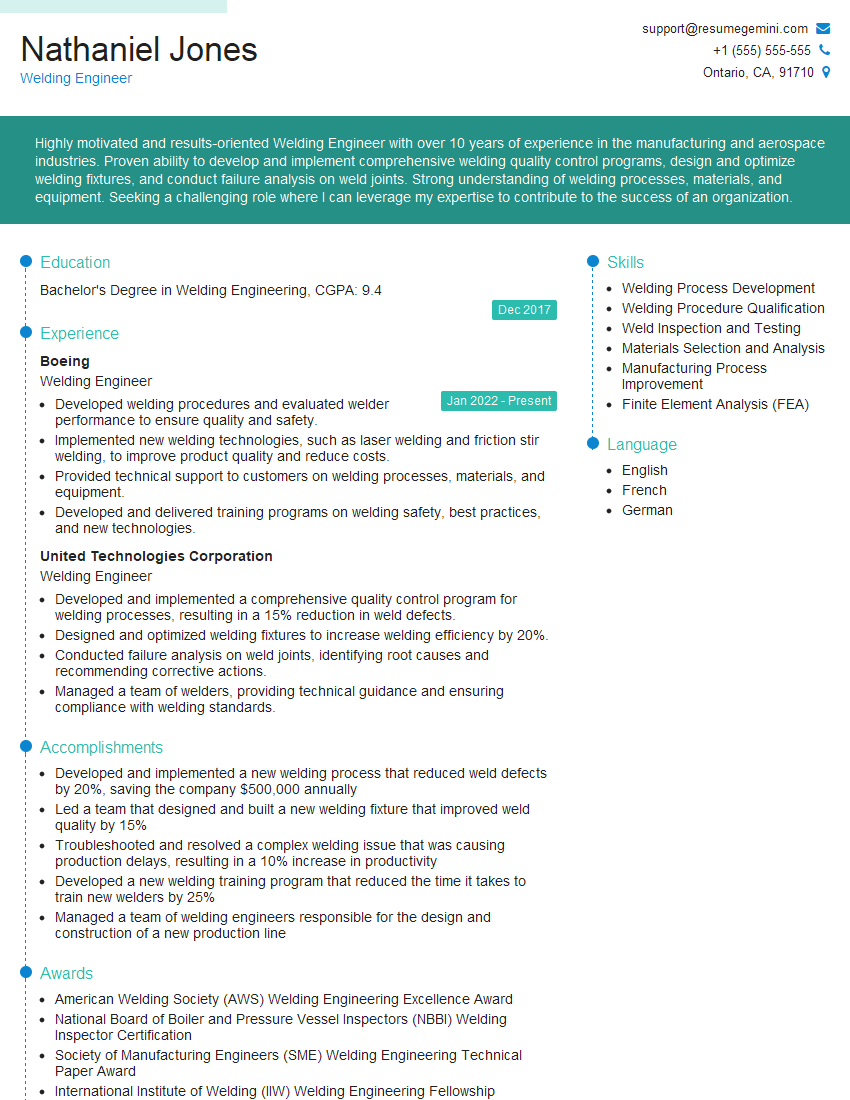
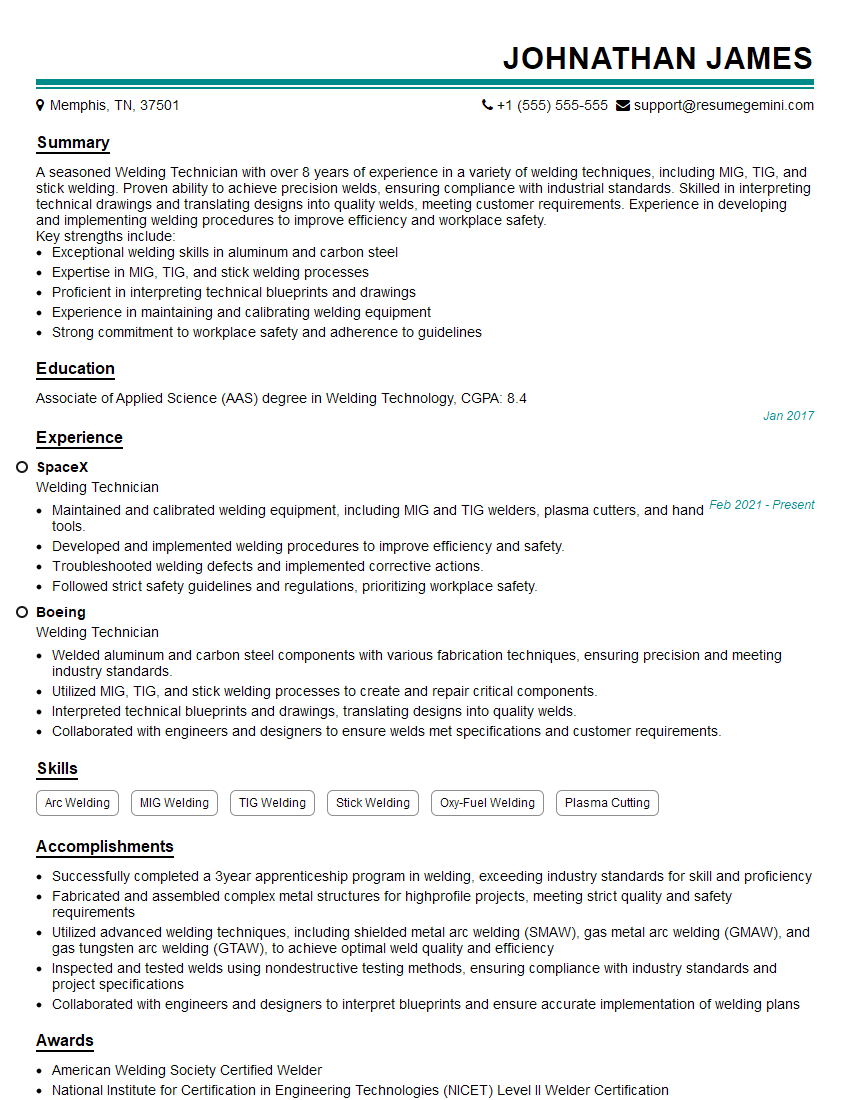
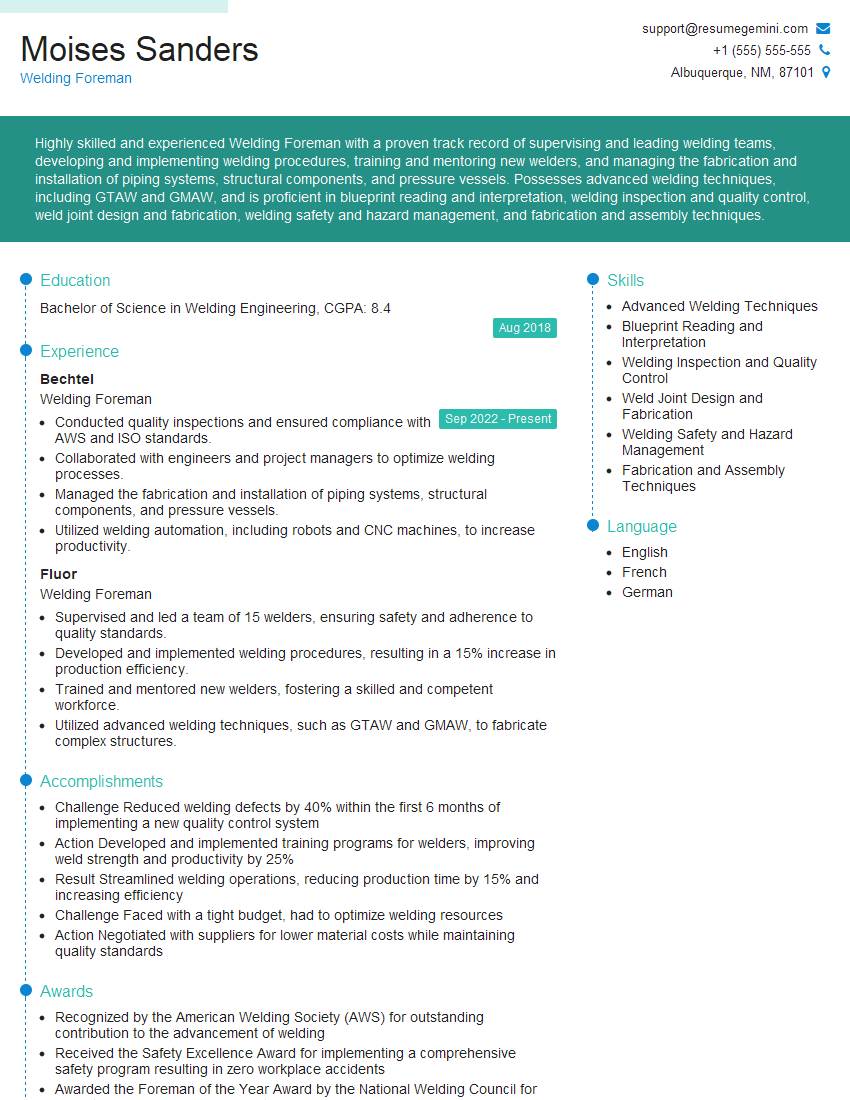
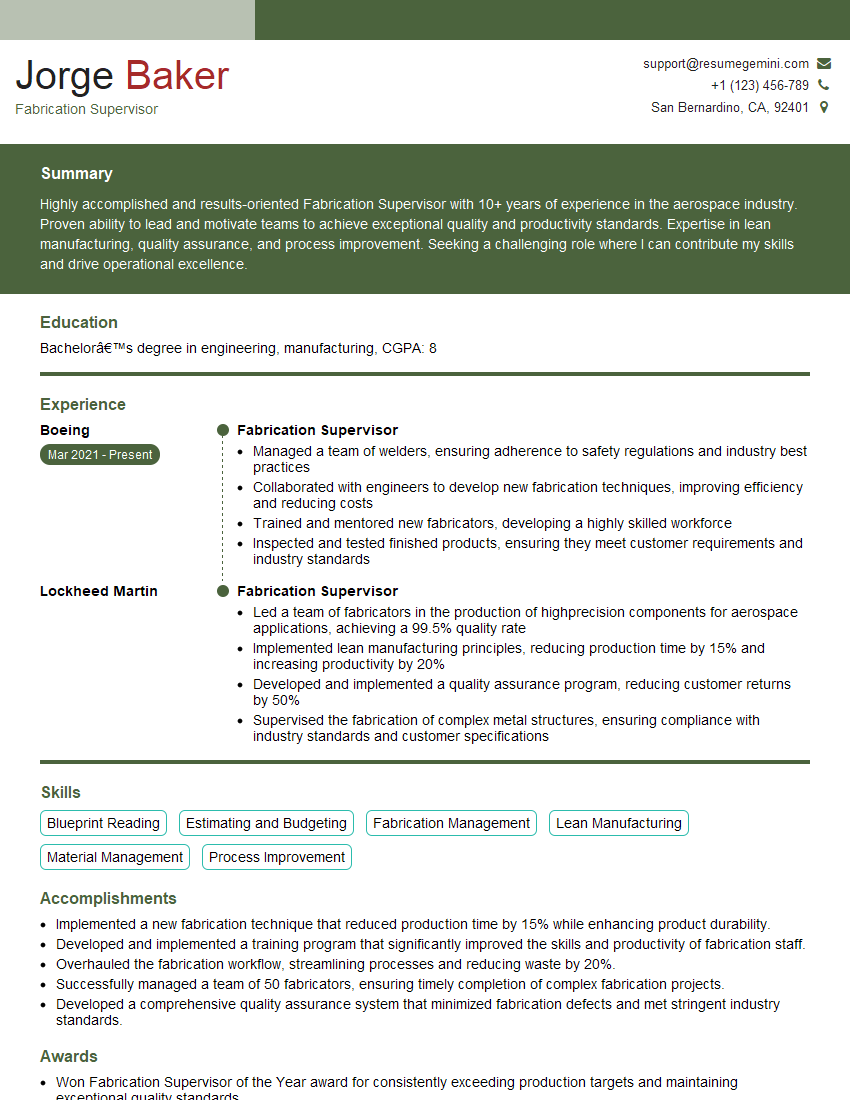
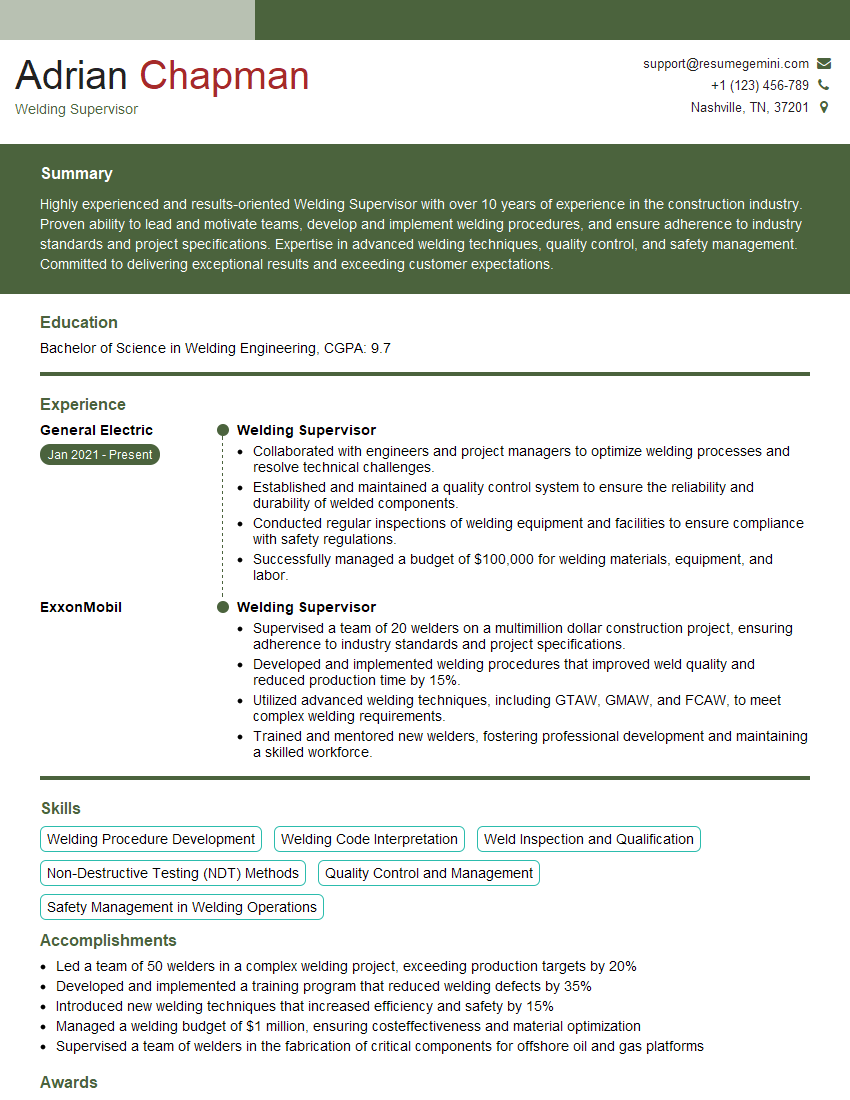
Mastering Welding Reporting is key to advancing your career in the welding industry. It demonstrates a high level of skill, attention to detail, and commitment to quality. To stand out, create an ATS-friendly resume that highlights your relevant skills and experience. ResumeGemini is a trusted resource that can help you build a professional and impactful resume, ensuring your application gets noticed. Examples of resumes tailored to Welding Reporting are available, providing valuable guidance in showcasing your expertise effectively.
Explore more articles
Users Rating of Our Blogs
Share Your Experience
We value your feedback! Please rate our content and share your thoughts (optional).
What Readers Say About Our Blog
Really detailed insights and content, thank you for writing this detailed article.
IT gave me an insight and words to use and be able to think of examples