Cracking a skill-specific interview, like one for Welding Risk Management, requires understanding the nuances of the role. In this blog, we present the questions you’re most likely to encounter, along with insights into how to answer them effectively. Let’s ensure you’re ready to make a strong impression.
Questions Asked in Welding Risk Management Interview
Q 1. Describe your experience conducting welding risk assessments.
Conducting a welding risk assessment involves a systematic process to identify, analyze, and control hazards associated with welding operations. My approach begins with a thorough site survey, observing the work area, equipment, and procedures. I interview welders to understand their tasks and identify any potential shortcuts or unsafe practices. Next, I utilize established risk assessment methodologies, like HAZOP (Hazard and Operability Study) or a simple risk matrix, to evaluate the likelihood and severity of each identified hazard. This involves considering factors such as the type of welding process, materials used, confined spaces, and the proximity of other workers or flammable materials. Finally, I document my findings in a comprehensive report, including proposed control measures and a prioritized action plan. For example, during an assessment at a shipyard, I identified a high risk of arc flash due to inadequate screening and uncovered electrical connections. The report detailed this hazard, its potential consequences, and recommended installing appropriate arc flash protection and implementing a lockout/tagout procedure before commencing work.
Q 2. Explain the hierarchy of controls for managing welding hazards.
The hierarchy of controls for managing welding hazards follows a prioritized approach, aiming to eliminate hazards first, then substitute them, engineer controls, use administrative controls, and lastly, rely on personal protective equipment (PPE). Think of it like a ladder; you start at the top (elimination) and work your way down.
- Elimination: This is the most effective control. If possible, eliminate the welding process entirely or replace it with a safer alternative. For example, replacing welding with adhesive bonding.
- Substitution: Replace hazardous materials or processes with less hazardous ones. Using a lower-amperage welding process or switching to a less toxic filler metal would fall under this category.
- Engineering Controls: These are physical changes to the work environment or equipment to reduce hazard exposure. This could involve installing fume extraction systems, using shielded welding enclosures, or implementing interlocks to prevent accidental activation of welding equipment.
- Administrative Controls: These are changes to work practices, training, and supervision. Examples include implementing safe work permits, establishing standardized operating procedures, providing regular safety training, and rotating workers to limit exposure to hazards.
- Personal Protective Equipment (PPE): This is the last line of defense. PPE includes welding helmets, gloves, clothing, and respiratory protection. It’s crucial to remember that PPE should only be used in conjunction with other control measures, not as the primary method of hazard control.
Q 3. What are the common welding hazards and how do you mitigate them?
Welding presents numerous hazards, including:
- Arc Flash: A sudden, high-intensity arc of electricity that can cause severe burns, blindness, and even death. Mitigation involves using proper personal protective equipment (PPE), such as arc-rated clothing and face shields, and implementing electrical safety procedures.
- Fumes and Gases: Welding generates fumes and gases containing hazardous substances like chromium, nickel, and manganese. Mitigation includes using local exhaust ventilation (LEV) systems, ensuring adequate ventilation, and providing respirators when necessary. Regular monitoring of air quality is essential.
- Fire Hazards: Welding can easily ignite flammable materials. Mitigation requires identifying and removing all combustible materials from the work area, using fire blankets and extinguishers, and having a fire watch present.
- Burns: Contact with hot metal, sparks, or arc radiation can cause serious burns. Mitigation involves proper PPE, including welding gloves, sleeves, and aprons, and safe work practices.
- Ultraviolet (UV) and Infrared (IR) Radiation: These can cause eye damage and skin burns. Mitigation necessitates using appropriate eye and face protection.
- Noise: Some welding processes generate considerable noise, leading to hearing loss. Mitigation requires using hearing protection and engineering controls to reduce noise levels at the source.
Effective mitigation strategies frequently involve a combination of these control methods described above in the Hierarchy of Controls.
Q 4. How do you identify and assess potential hazards related to different welding processes (e.g., MIG, TIG, stick)?
The specific hazards associated with different welding processes vary. My assessment considers these differences:
- MIG (Metal Inert Gas): MIG welding often involves higher amperage and faster welding speeds, increasing the risk of burns and arc flash. The shielding gas used might also pose specific hazards depending on its composition.
- TIG (Tungsten Inert Gas): TIG welding generally produces less spatter and fumes compared to MIG, but still poses risks of arc eye and burns. The tungsten electrode can also fragment and create a hazard.
- Stick (Shielded Metal Arc Welding): This process generates significant fumes and spatter, increasing the risk of respiratory issues and burns. Slag removal also introduces a risk of eye and skin injuries.
To identify and assess hazards, I carefully examine the welding parameters (voltage, amperage, shielding gas), the materials being welded (base metal, filler metal), the work environment (confined space, ventilation), and the welder’s experience. I also consider the presence of any flammable or combustible materials near the work area and the proximity to other workers or equipment. For example, when assessing a job using stick welding on stainless steel, I would focus on the risk of chromium and nickel fume inhalation, necessitating the use of appropriate respiratory protection and LEV systems.
Q 5. What are the relevant safety regulations and standards for welding in your region?
Relevant safety regulations and standards vary by region. In many jurisdictions, regulations are based on standards issued by organizations such as OSHA (Occupational Safety and Health Administration) in the United States or equivalent national bodies in other countries. These standards typically cover areas such as:
- Personal Protective Equipment (PPE): Requirements for specific types of PPE based on the welding process and hazards involved.
- Ventilation and Respiratory Protection: Guidelines for controlling welding fumes and gases.
- Fire Prevention and Protection: Measures to prevent and control fires in welding operations.
- Electrical Safety: Procedures for preventing electric shock and arc flash hazards.
- Confined Space Entry: Regulations for working in confined spaces where welding is performed.
- Training and Certification: Requirements for welder qualification and training.
Specific standards might also address hazard communication, emergency procedures, and the safe handling and storage of welding materials.
Q 6. How do you ensure compliance with welding safety regulations?
Ensuring compliance involves a multifaceted approach:
- Regular Inspections: Conducting frequent inspections of welding equipment, work areas, and PPE to ensure they meet safety standards and are in good working order.
- Safety Training Programs: Providing comprehensive safety training for all welders and those working near welding operations. This should include both theoretical knowledge and practical demonstrations of safe work practices.
- Safe Work Permits: Implementing a system of safe work permits for high-risk tasks or work in hazardous environments.
- Record Keeping: Maintaining accurate records of inspections, training, incidents, and near misses. This data allows for continuous improvement of safety programs.
- Incident Investigation: Thoroughly investigating all welding-related incidents or near misses to identify root causes and implement corrective actions.
- Regular Audits: Conducting internal and external audits to assess the effectiveness of the welding safety program and ensure compliance with all applicable regulations and standards.
In my experience, a proactive approach that emphasizes preventative measures and continuous improvement is far more effective than a reactive approach that only addresses issues after accidents occur.
Q 7. Describe your experience developing and implementing welding safety programs.
I have extensive experience in developing and implementing welding safety programs. My approach involves the following steps:
- Hazard Identification and Risk Assessment: Conducting thorough risk assessments to identify all potential hazards and evaluate their severity and likelihood.
- Development of Safety Procedures: Creating detailed safe work procedures for all welding processes and tasks, tailored to specific hazards and work environments.
- Training and Competency Assessment: Developing and delivering comprehensive training programs to ensure welders and related personnel are competent in safe welding practices. This often includes practical demonstrations and competency assessments.
- PPE Selection and Provision: Selecting and providing appropriate PPE based on the identified hazards and ensuring its correct use.
- Emergency Preparedness: Developing and implementing emergency response plans to handle accidents and incidents effectively.
- Monitoring and Evaluation: Regularly monitoring the effectiveness of the safety program, evaluating data, and making improvements as needed. I use key performance indicators (KPIs) to track incidents, near misses, and overall safety performance.
For example, in one project, I developed a comprehensive safety program for a large construction site, reducing welding-related incidents by 40% within the first year. This involved integrating the entire safety program with the project’s overall management system, facilitating a collaborative and proactive safety culture.
Q 8. How do you train welders on safe welding practices?
Training welders on safe practices is paramount to preventing accidents and ensuring a productive work environment. It’s not a one-time event but a continuous process of education and reinforcement. My approach involves a multi-faceted strategy combining classroom instruction, hands-on demonstrations, and regular competency assessments.
Classroom instruction covers topics like hazard identification (electrical hazards, fire hazards, radiation exposure), safe work procedures, emergency response plans, and the proper use of PPE. Hands-on training is crucial, allowing welders to practice techniques in a controlled setting under the supervision of experienced instructors. This includes practical demonstrations of proper equipment setup, electrode handling, and safety checks before starting any welding task.
Regular competency assessments are vital to ensure welders maintain their skills and understanding of safety protocols. These assessments could include written tests, practical demonstrations, and observation of welders performing tasks in real-world scenarios. Continuous feedback and refresher training are essential components of the process. For instance, we might conduct regular safety audits to identify areas for improvement in the training program itself.
Q 9. What are the key elements of a comprehensive welding safety training program?
A comprehensive welding safety training program must incorporate several key elements to be effective. These include:
- Hazard Identification and Risk Assessment: Thorough identification of all potential hazards, from electrical shock to fire and fume inhalation, followed by a robust risk assessment to determine control measures.
- Welding Processes and Equipment: Detailed training on various welding processes (MIG, TIG, stick, etc.), including the safe operation and maintenance of the equipment. This includes understanding the specific hazards associated with each process.
- Personal Protective Equipment (PPE): Comprehensive instruction on the selection, proper use, inspection, and maintenance of all necessary PPE, as discussed further in the next question.
- Emergency Procedures: Training on emergency procedures, including fire prevention and response, handling electrical shocks, and dealing with burns. This usually involves regular fire drills and emergency response simulations.
- Confined Space Entry (if applicable): If welders will work in confined spaces, specific training on the hazards and safety precautions associated with these environments is essential, encompassing aspects like atmospheric monitoring and rescue procedures.
- Regulatory Compliance: Knowledge of all applicable OSHA and other relevant regulations concerning welding safety is a must. This ensures compliance with legal requirements and best practices.
- Continuous Improvement: Regular reviews and updates to the training program to incorporate advancements in technology, best practices, and changes in regulations. Feedback from welders is highly valued in this process.
Q 10. Explain the importance of personal protective equipment (PPE) in welding.
Personal Protective Equipment (PPE) is crucial in welding for preventing injuries and protecting welders from various hazards. These hazards include intense ultraviolet (UV) and infrared (IR) radiation, flying sparks and spatter, harmful fumes, and potential burns. Without proper PPE, welders are at significant risk of severe eye damage, skin burns, respiratory problems, and other injuries.
Think of PPE as the welder’s ‘armor,’ protecting them from the inherent dangers of the welding process. A well-equipped welder is less likely to suffer injuries, leading to increased productivity, reduced healthcare costs, and a safer work environment for everyone on the job site.
Q 11. What PPE is required for different welding processes?
The necessary PPE varies depending on the welding process and the specific environment. However, some items are generally considered essential:
- Eye and Face Protection: Auto-darkening welding helmets are crucial for all processes, providing protection from UV and IR radiation and bright light. For processes producing significant spatter, a wider face shield may be added for additional protection.
- Respiratory Protection: Welding fumes contain harmful particles and gases that can damage the respiratory system. Proper respirators, including those with appropriate filters for the specific welding process (e.g., fume extraction system for large scale works), are essential, especially in poorly ventilated areas.
- Protective Clothing: Welding-specific clothing made from durable, flame-resistant materials (e.g., leather or flame-retardant cotton) is necessary to protect against sparks, spatter, and heat. This typically includes jackets, pants, gloves, and high-top work boots.
- Hearing Protection: Some welding processes produce significant noise levels. Earplugs or earmuffs may be necessary to reduce exposure and prevent hearing damage. This is particularly relevant for processes involving automated welding systems.
- Foot Protection: Steel-toe safety boots are always necessary to protect feet from heavy objects and dropped tools.
For specific processes like submerged arc welding (SAW), additional safety measures and PPE may be required, such as specialized shielding and respiratory protection.
Q 12. How do you ensure proper use and maintenance of welding PPE?
Ensuring proper use and maintenance of welding PPE is just as important as providing it in the first place. This involves a multi-pronged approach:
- Regular Inspections: Welders should inspect their PPE before each use, checking for damage, wear, and tear. This includes checking for cracks in helmets, holes in gloves, and damage to clothing.
- Proper Cleaning and Storage: PPE should be cleaned regularly to remove debris and contaminants. It should also be stored properly to prevent damage and maintain its integrity. This is especially crucial for respirators, which should be stored in a clean, dry environment.
- Training and Education: Welders should receive comprehensive training on the proper use and care of all PPE. This training should cover how to adjust the equipment for a proper fit, how to identify signs of damage, and how to perform basic maintenance tasks.
- Replacement Policy: A clear replacement policy should be in place to ensure that damaged or worn-out PPE is promptly replaced. This prevents workers from using faulty PPE that could compromise their safety.
- Record Keeping:Maintaining detailed records of PPE inspections, maintenance, and replacements is essential for tracking the condition of PPE and ensuring compliance with regulations.
Q 13. How do you investigate and report welding-related accidents or incidents?
Investigating and reporting welding-related accidents or incidents requires a systematic and thorough approach. My process typically involves the following steps:
- Immediate Response: The first step is to secure the scene, provide first aid to any injured personnel, and contact emergency services if necessary.
- Data Collection: Gather all relevant information, including witness statements, photos, and videos of the accident scene. This includes documenting the type of welding process being used, the equipment involved, and the welder’s experience level.
- Root Cause Analysis: Conduct a thorough root cause analysis to identify the factors that contributed to the accident. This might involve reviewing safety procedures, inspecting the equipment, and interviewing personnel. We utilize techniques like the “5 Whys” to delve deeper into the causal factors.
- Corrective Actions: Based on the root cause analysis, develop and implement corrective actions to prevent similar incidents from occurring in the future. This might involve revising safety procedures, providing additional training, or replacing faulty equipment.
- Reporting: File a detailed accident report that includes all the gathered information, the root cause analysis, and the corrective actions taken. This report is submitted to the appropriate regulatory authorities and is used for internal review and improvement of safety procedures.
We utilize a standardized accident reporting form to ensure consistency and completeness of information gathered. This assists in identifying trends and patterns in accidents and refining our preventative measures.
Q 14. Describe your experience with using and interpreting welding safety data.
My experience with welding safety data involves collecting, analyzing, and interpreting data to improve safety performance. This includes analyzing accident reports, near-miss data, and safety inspection findings. I use this data to identify trends and patterns that contribute to accidents and near misses. For example, a spike in eye injuries might indicate a need for improved training on the proper use of eye protection, or a recurring pattern of burns could highlight deficiencies in PPE usage.
I am proficient in using statistical methods to analyze safety data, identifying correlations between factors and outcomes. This data-driven approach allows for proactive identification of potential risks and the development of targeted safety interventions. We use data visualization techniques (charts, graphs) to present the findings clearly and concisely to management and welders to promote safety awareness. This continuous monitoring and improvement cycle ensures that our safety program is always evolving to address the ever-changing needs of our operations.
Q 15. How do you manage welding-related waste and environmental hazards?
Managing welding-related waste and environmental hazards is crucial for both worker safety and environmental protection. It involves a multi-pronged approach focusing on proper waste segregation, safe disposal, and minimizing hazardous emissions.
- Waste Segregation: We meticulously separate welding fumes, slag, electrode stubs, and other materials. Fumes are often collected using fume extraction systems, while slag and stubs are collected in designated containers. This prevents accidental mixing of hazardous materials and simplifies disposal.
- Safe Disposal: Slag and metal stubs are usually recycled, reducing landfill waste and conserving resources. Hazardous waste, such as certain chemicals used in flux, require specialized handling and disposal in compliance with all relevant local, regional, and national regulations. We maintain meticulous records of all waste generated and its disposal method.
- Minimizing Hazardous Emissions: We utilize low-emission welding processes whenever feasible and employ effective ventilation systems to minimize airborne contaminants. Regular monitoring of air quality ensures compliance with safety standards.
- Spill Response Plan: We have a comprehensive plan in place to deal with accidental spills of welding materials, including the steps to contain the spill, clean-up procedures, and emergency contact information.
For example, in a recent project, we implemented a colour-coded system for waste bins to improve segregation efficiency, resulting in a 15% increase in recyclable materials and a significant reduction in improper disposal.
Career Expert Tips:
- Ace those interviews! Prepare effectively by reviewing the Top 50 Most Common Interview Questions on ResumeGemini.
- Navigate your job search with confidence! Explore a wide range of Career Tips on ResumeGemini. Learn about common challenges and recommendations to overcome them.
- Craft the perfect resume! Master the Art of Resume Writing with ResumeGemini’s guide. Showcase your unique qualifications and achievements effectively.
- Don’t miss out on holiday savings! Build your dream resume with ResumeGemini’s ATS optimized templates.
Q 16. What are the fire safety considerations for welding operations?
Fire safety during welding is paramount. Welding produces intense heat, sparks, and molten metal, creating significant fire hazards. A robust fire safety plan is non-negotiable.
- Fire Watch: A designated fire watch is always present during welding operations, especially in areas with flammable materials nearby. Their role is to monitor the welding area, extinguish any small fires promptly, and ensure the area is clear of combustible materials.
- Fire Extinguishers: Appropriate fire extinguishers (typically ABC rated) are strategically placed within easy reach of the welding area. Regular inspection and maintenance of these extinguishers are critical. The fire watch personnel are trained on how to use the extinguishers effectively.
- Fire Blankets: Fire blankets are available to smother small fires quickly. Their placement should be easily accessible.
- Pre-Welding Inspection: Before commencing work, a thorough inspection of the surrounding area is crucial. This involves removing any flammable materials, such as wood, paper, or fabrics, and ensuring a sufficient distance from flammable liquids or gases.
- Post-Welding Inspection: A post-weld inspection is vital to ensure that all embers and sparks have been extinguished and that the area is safe before leaving.
Imagine a scenario where welding is taking place near a stack of wood pallets. A fire watch, trained to handle the situation quickly and efficiently, along with the readily available fire extinguisher and blanket, will contain any small fire instantly, preventing an escalation.
Q 17. How do you control the risk of electrical hazards during welding?
Controlling electrical hazards in welding is crucial as welders work with high currents. We must always prioritize safety and implement rigorous procedures.
- Grounding: Proper grounding of welding equipment is the cornerstone of electrical safety. This prevents electrical shocks and reduces the risk of electrical fires. We regularly inspect grounding cables for wear and tear.
- Insulated Tools and Cables: Using tools and cables with appropriate insulation is essential. Damaged or frayed cables must be replaced immediately.
- Personal Protective Equipment (PPE): Welders must wear appropriate PPE, including insulated gloves and footwear. This offers an additional layer of protection against electrical shocks.
- Dry Conditions: Welding in wet or damp conditions is extremely dangerous and should be avoided whenever possible. If it’s unavoidable, appropriate precautions, such as insulated platforms and rubber mats, must be implemented.
- Regular Equipment Inspection: All welding equipment must undergo routine inspection and testing to ensure that they are in safe working order. Any faults must be reported immediately and rectified before use.
- Lockout/Tagout Procedures: Rigorous lockout/tagout procedures must be followed whenever any welding equipment is being serviced or repaired. This ensures that the equipment is safely de-energized before anyone attempts to work on it.
For instance, before commencing any welding project, we conduct a thorough inspection of the equipment, cables, and grounding system to ensure its complete safety. This is a non-negotiable step in our safety protocols.
Q 18. What are your strategies for managing ergonomic risks associated with welding?
Welding often involves awkward postures and repetitive movements, leading to ergonomic risks. We mitigate these through proactive measures and training.
- Proper Posture and Body Mechanics: Welders are trained in maintaining proper posture and utilizing ergonomic techniques to minimize strain. This includes using appropriate lifting techniques for heavy equipment.
- Adjustable Workstations: Workstations should be adjustable to accommodate different body sizes and welding positions, enabling welders to find a comfortable and ergonomically sound working posture.
- Tool Selection: Using lightweight tools and equipment reduces strain and fatigue. The proper selection of tools and their maintenance are critical aspects of risk reduction.
- Rotating Tasks: Varying welding positions and tasks throughout the day helps prevent repetitive strain injuries.
- Regular Breaks: Encouraging regular breaks and movement reduces muscle fatigue and stiffness. Scheduled break times are crucial for the well-being of the welders.
- Training and Education: Regular training programs educate welders on proper body mechanics, risk factors, and self-care techniques.
For example, we’ve implemented a system where welders rotate between different welding positions throughout the day, significantly reducing the incidence of musculoskeletal disorders. We also provide ergonomic assessments and individualized recommendations to address specific issues.
Q 19. Explain your understanding of confined space entry procedures in relation to welding.
Welding in confined spaces presents unique challenges and necessitates strict adherence to confined space entry procedures. These procedures prioritize the safety of the welder and ensure a controlled environment.
- Atmospheric Testing: Before entry, the confined space must be thoroughly tested for the presence of hazardous atmospheres, including oxygen deficiency, flammable gases, and toxic fumes. Only after obtaining clearance from qualified personnel can welding commence.
- Ventilation: Adequate ventilation is crucial to remove fumes and maintain a safe atmosphere. This may involve mechanical ventilation systems or other appropriate methods.
- Permit-to-Work System: A permit-to-work system is necessary, documenting all necessary safety checks, precautions, and responsible personnel.
- Emergency Procedures: A detailed emergency response plan must be in place, including communication procedures, rescue strategies, and readily accessible emergency equipment.
- Trained Personnel: Only trained and authorized personnel are permitted to enter the confined space and perform welding operations. This training includes confined space hazards, rescue techniques, and emergency procedures.
- Continuous Monitoring: Monitoring the atmosphere within the confined space is critical throughout the welding operation to detect any changes that might compromise safety.
In one instance, we were tasked with welding inside a large storage tank. Our strict adherence to the confined space entry procedures, including thorough atmospheric testing and continuous monitoring, ensured the safety of our team. The permit-to-work system maintained complete accountability for every step of the process.
Q 20. How do you ensure the safety of other workers in the vicinity of welding operations?
Ensuring the safety of other workers near welding operations is critical. We achieve this through a combination of physical barriers, warning systems, and training.
- Physical Barriers: Screens, curtains, or other physical barriers can isolate the welding area and protect nearby workers from sparks, spatter, and intense radiation.
- Warning Signs: Clear and prominent warning signs alert workers to the hazards of welding operations and instruct them on appropriate safety precautions.
- Safety Training: Workers in the vicinity of welding operations are trained to recognize the hazards and understand the safety measures required. This may include instructions on wearing appropriate PPE and maintaining a safe distance from the welding area.
- Communication Procedures: Effective communication is crucial, especially during critical welding operations. This may involve designated signal persons or a designated communication system to alert others of any potential hazards.
- Designated Safe Zones: Identifying designated safe zones outside the welding area allows for orderly movement of workers while guaranteeing their safety.
For example, we established a designated ‘exclusion zone’ around our welding area, marked with clear signs and barriers. This ensured that unauthorized personnel were not at risk, creating a culture of safety.
Q 21. Describe your experience in using lockout/tagout procedures for welding equipment.
Lockout/Tagout (LOTO) procedures are fundamental for ensuring the safety of personnel working on or near welding equipment. They prevent accidental energization and ensure that equipment is safely de-energized before maintenance or repair.
- Identify Energy Sources: The first step involves identifying all energy sources associated with the welding equipment, such as electrical power, compressed air, and gas supplies.
- Isolate Energy Sources: Next, the energy sources are isolated by turning off breakers, closing valves, or disconnecting power cords.
- Lockout and Tagout: Once isolated, each energy source is locked out using a padlock and tagged to clearly indicate that the equipment is out of service and should not be energized.
- Verify Isolation: Before beginning any work, it is crucial to verify that the equipment is completely de-energized. This often involves using appropriate testing equipment to confirm that there is no residual energy.
- Removal of Lockout/Tagout Devices: After completing the work, only the person who applied the lockout/tagout devices can remove them, ensuring that only authorized personnel restore power. A thorough inspection is done after energization.
In a recent instance, we used LOTO procedures before performing maintenance on a large industrial welding power supply. Following the stringent steps ensured that our team worked safely, without any risk of accidental energization and subsequent injury.
Q 22. How do you conduct pre-weld inspections to mitigate risks?
Pre-weld inspections are crucial for mitigating risks and ensuring a safe and productive welding process. They act as a preventative measure, identifying potential hazards before welding commences. A thorough inspection covers several key areas:
- Base Material Inspection: Checking for cleanliness, surface defects (cracks, porosity, etc.), proper thickness, and correct material identification. This involves visual inspection and sometimes non-destructive testing (NDT) techniques like ultrasonic testing or magnetic particle inspection for hidden flaws.
- Joint Preparation: Verifying that the joint design and preparation meet the specified requirements. This includes checking for proper fit-up, gap dimensions, bevel angles, and cleanliness. Improper joint preparation can lead to poor weld quality and potential failure.
- Welding Procedure Specification (WPS) Review: Ensuring the chosen WPS is appropriate for the base material, joint design, and welding process. The WPS outlines the parameters (current, voltage, travel speed, etc.) that must be followed to achieve a sound weld.
- Environmental Conditions: Assessing the surrounding environment for potential hazards like wind, rain, or extreme temperatures that could negatively impact weld quality or worker safety. Sufficient shielding and appropriate protective equipment might be required.
- Equipment Check: Inspecting welding equipment (torch, cables, power source) for any damage, wear, or malfunction. Checking gas cylinders for leaks and ensuring proper regulator settings is essential.
Example: During a recent inspection, I discovered a crack in the base material of a pipe that wasn’t visible to the naked eye. Using magnetic particle inspection, we identified the flaw, allowing us to replace the defective section before welding, preventing a potential catastrophic failure.
Q 23. What is your experience with welding-related health issues (e.g., respiratory problems, eye damage)?
Welding poses significant health risks if proper precautions aren’t taken. My experience encompasses a wide range of welding-related health issues, and I’ve worked to mitigate these risks throughout my career. Some of the most common issues include:
- Respiratory Problems: Exposure to welding fumes containing metal oxides, silica, and other harmful particles can cause respiratory illnesses like bronchitis, asthma, and even lung cancer. I’ve implemented and enforced strict respiratory protection protocols, including the mandatory use of appropriate respirators and proper ventilation.
- Eye Damage: Arc flash and intense UV radiation from the welding arc can cause severe eye injuries, including burns, cataracts, and blindness. I’ve ensured that all welders use the appropriate eye protection, such as auto-darkening welding helmets with the correct shade number, and that these are regularly inspected and maintained.
- Skin Burns and Irritation: Direct contact with hot metal, sparks, or spatter can lead to burns and skin irritation. The use of proper protective clothing, including flame-resistant jackets, gloves, and sleeves, is vital. Furthermore, I’ve stressed the importance of regular skin inspections and prompt treatment of any injuries.
- Electrocution: Contact with live electrical circuits during welding can lead to serious electric shock or electrocution. I’ve implemented procedures to ensure safe electrical practices, including proper grounding and insulation checks, and the use of personal protective equipment (PPE).
Practical Application: In past roles, I’ve conducted regular health and safety training sessions for welders, emphasizing the importance of PPE and proper work practices. I’ve also implemented a system for monitoring air quality in welding areas and regularly inspect equipment to ensure compliance with safety standards.
Q 24. How do you manage the risk of arc flash hazards during welding?
Arc flash hazards are a serious concern in welding. An arc flash is a sudden, high-intensity arc of electricity that can cause severe burns, blindness, and even death. Managing this risk requires a multi-faceted approach:
- Engineering Controls: Implementing engineering controls such as proper grounding, using insulated tools and equipment, and ensuring adequate clearances around electrical equipment. This includes installing arc flash reduction equipment like reduced-energy welding systems where feasible.
- Administrative Controls: Developing and implementing safe work procedures, including lockout/tagout procedures for electrical equipment and strict adherence to safe distances from live circuits. Regular training and supervision are crucial.
- Personal Protective Equipment (PPE): Ensuring welders wear appropriate PPE, including flame-resistant clothing, arc flash rated face shields and gloves, and hearing protection. The selection of PPE should be based on a proper risk assessment.
- Incident Investigations: Conducting thorough investigations into any arc flash incidents to identify root causes and implement corrective actions to prevent future occurrences. Post-incident analysis is vital for continuous improvement.
Example: In a previous project, we implemented a comprehensive arc flash risk assessment, identifying high-risk areas. This led to changes in work procedures and the provision of additional PPE, significantly reducing the risk of arc flash incidents.
Q 25. How do you assess and control the risks associated with using compressed gases for welding?
Compressed gases used in welding (e.g., oxygen, acetylene) pose significant risks if not handled properly. These risks include:
- Cylinder Explosions: Improper handling, storage, or exposure to heat can cause cylinders to explode, resulting in serious injury or death.
- Gas Leaks and Fires: Leaks can create flammable or explosive atmospheres. Improper handling of gas regulators and torches can lead to fires or explosions.
- Asphyxiation: Oxygen displacement by inert gases (like Argon or CO2) can cause asphyxiation if proper ventilation is lacking.
Risk Control Measures:
- Proper Cylinder Handling: Training welders on the safe handling, storage, and transportation of compressed gas cylinders. Cylinders should be secured upright and away from heat sources. Always use proper cylinder handling equipment, never roll cylinders.
- Leak Detection and Prevention: Regular inspection of cylinders and equipment for leaks using leak detectors. Prompt repair or replacement of damaged equipment.
- Ventilation: Ensure adequate ventilation in welding areas to prevent the buildup of flammable or asphyxiating gases. Exhaust systems for confined spaces are often necessary.
- Emergency Procedures: Develop and practice emergency procedures in case of gas leaks or fires, including the use of fire extinguishers and emergency shut-off valves.
Example: I once discovered a small leak in an acetylene cylinder during a pre-weld inspection. By identifying and addressing the leak immediately, we prevented a potentially hazardous situation.
Q 26. Explain your understanding of different welding codes and standards (e.g., AWS D1.1).
Welding codes and standards provide guidelines and requirements for welding procedures, ensuring the quality, safety, and integrity of welds. My understanding of these standards is extensive and includes familiarity with various codes like AWS D1.1 (Structural Welding Code – Steel), ASME Section IX (Welding and Brazing Qualifications), and others. These codes cover aspects such as:
- Material Specifications: Defining the acceptable base materials, filler metals, and consumables for different applications.
- Welding Procedures: Specifying the welding processes, parameters (current, voltage, etc.), and pre- and post-weld procedures to ensure consistent and quality welds.
- Weld Quality Requirements: Defining acceptable levels of weld defects, such as cracks, porosity, and slag inclusions, through visual and non-destructive testing (NDT) methods. Acceptance criteria are defined for each type of weld defect.
- Welder Qualification: Establishing criteria for welder qualification and certification to ensure welders possess the necessary skills and knowledge to produce sound welds.
- Safety Requirements: Addressing safety precautions and PPE requirements specific to welding.
AWS D1.1 Example: AWS D1.1 is a widely used standard for structural steel welding. It details requirements for joint design, welding procedures, welder qualifications, and inspection, ensuring the structural integrity of welded steel structures.
Q 27. Describe a time you identified a welding safety hazard and how you addressed it.
During a project involving the welding of high-pressure gas pipelines, I noticed welders were not consistently using the required shielding gas. This omission could lead to weld porosity and compromise the structural integrity of the pipelines. I immediately addressed this by:
- Stopping the welding operation: I halted the welding work to prevent further welds being made without the proper shielding gas.
- Investigating the root cause: I spoke to the welders to understand why they weren’t using the shielding gas correctly. It turned out to be a combination of oversight and a slightly awkward setup.
- Providing additional training: I arranged for a refresher training session on the importance of shielding gas usage and the correct procedures for its application. This included hands-on practice.
- Implementing corrective measures: We adjusted the setup to improve the accessibility of the shielding gas. Additionally, we implemented a new checklist for pre-weld inspections specifically mentioning shielding gas.
- Reinforcing safety protocols: I reiterated the importance of following safety procedures and the consequences of non-compliance.
By addressing this hazard proactively, we prevented potentially dangerous and costly defects in the pipeline welds.
Q 28. What are your strategies for promoting a safety culture within a welding team?
Promoting a strong safety culture within a welding team is essential for minimizing risks. My strategies focus on:
- Lead by Example: Demonstrating a commitment to safety through personal actions and behaviours. Always adhering to safety rules and regulations and ensuring proper PPE usage.
- Training and Education: Providing comprehensive training on welding safety procedures, hazard identification, and risk mitigation. Regular refresher training and ongoing education are important to address any evolving hazards or technology.
- Open Communication: Creating an environment where welders feel comfortable reporting safety concerns without fear of reprisal. Encouraging open dialogue on potential hazards.
- Regular Safety Meetings: Holding regular safety meetings to discuss safety performance, address concerns, and review near misses. These meetings are an opportunity for collective problem-solving.
- Incentivization and Recognition: Recognizing and rewarding safe work practices. Safety should be considered a team effort and successes should be celebrated together.
- Hazard Identification and Risk Assessment: Implementing a robust system for identifying potential hazards and conducting risk assessments, tailoring safety procedures to specific tasks and environments.
- Monitoring and Enforcement: Regularly monitoring compliance with safety procedures and promptly addressing any violations. Consistency is key in enforcing safety standards.
Practical Application: In previous teams, we have used a ‘buddy system’ where welders look out for each other’s safety and report any unsafe actions or conditions. We’ve also implemented a near miss reporting system, where any potential hazards are discussed and solutions are developed collaboratively.
Key Topics to Learn for Your Welding Risk Management Interview
- Hazard Identification and Risk Assessment: Understanding methodologies like HAZOP and FMEA for identifying potential welding hazards (e.g., fire, electric shock, burns, fumes) and assessing their associated risks.
- Control Measures and Mitigation Strategies: Exploring practical applications of engineering controls (e.g., ventilation, PPE), administrative controls (e.g., training, permits), and personal protective equipment (PPE) selection and use in welding environments.
- Welding Safety Regulations and Standards: Familiarizing yourself with relevant OSHA, ANSI, and industry-specific codes and regulations concerning welding safety and risk management. Be prepared to discuss their practical implications.
- Emergency Response Planning: Understanding procedures for responding to welding-related incidents, including fire suppression, first aid, and evacuation protocols. Consider scenarios and how you’d react.
- Incident Investigation and Reporting: Knowing how to conduct thorough investigations of welding accidents, identify root causes, and implement corrective actions to prevent recurrence. This includes proper documentation and reporting procedures.
- Health Effects of Welding Fumes and Gases: Demonstrate understanding of the potential health hazards associated with welding fumes and gases (e.g., respiratory issues, metal fume fever), and the importance of respiratory protection and ventilation.
- Welding Process Specific Risks: Be prepared to discuss the unique risk profiles of different welding processes (e.g., MIG, TIG, Stick) and how risk mitigation strategies vary accordingly.
- Data Analysis and Reporting: Understanding how to collect, analyze, and present safety data to identify trends, evaluate the effectiveness of control measures, and improve overall risk management performance.
Next Steps
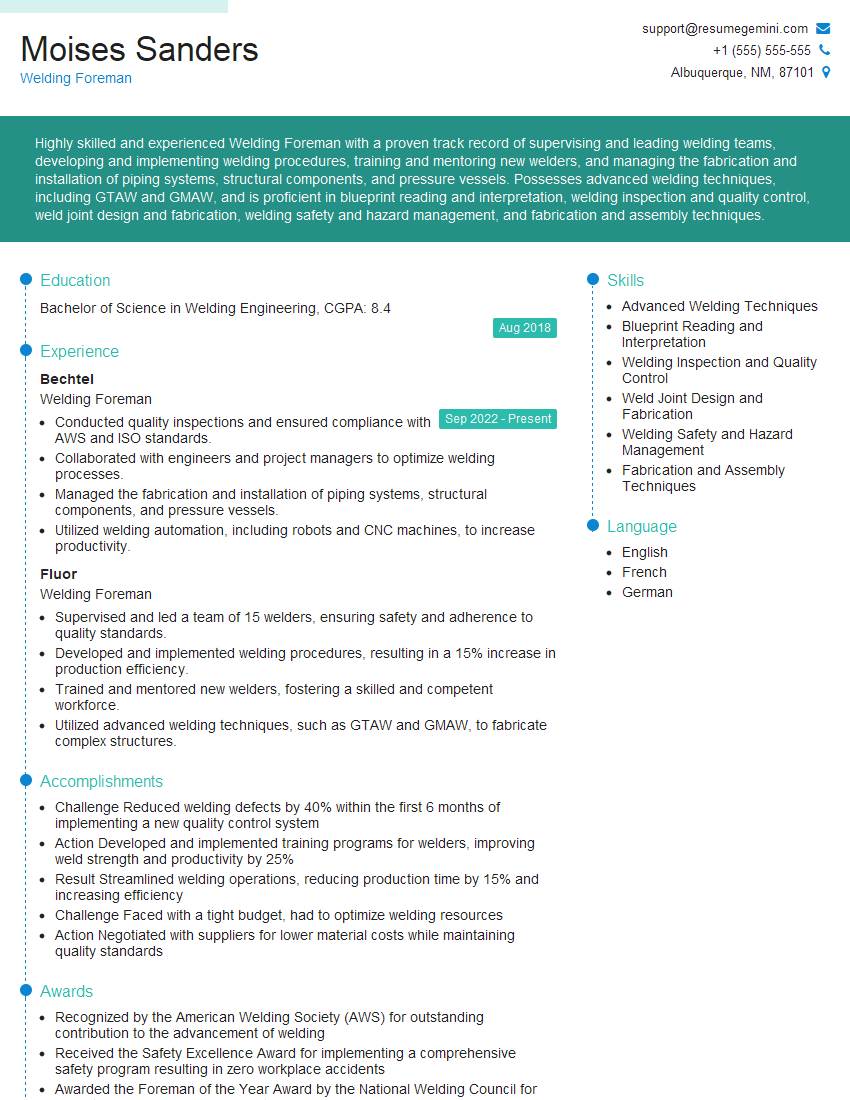
Mastering Welding Risk Management is crucial for career advancement in this field. It demonstrates your commitment to safety and your ability to contribute to a safer and more productive work environment. To significantly boost your job prospects, creating a compelling and ATS-friendly resume is essential. ResumeGemini is a trusted resource that can help you build a professional resume that highlights your skills and experience effectively. We provide examples of resumes tailored to Welding Risk Management to guide you in showcasing your expertise. Take the next step and craft a resume that captures the attention of recruiters.
Explore more articles
Users Rating of Our Blogs
Share Your Experience
We value your feedback! Please rate our content and share your thoughts (optional).
What Readers Say About Our Blog
Really detailed insights and content, thank you for writing this detailed article.
IT gave me an insight and words to use and be able to think of examples