Preparation is the key to success in any interview. In this post, we’ll explore crucial Welding Torch interview questions and equip you with strategies to craft impactful answers. Whether you’re a beginner or a pro, these tips will elevate your preparation.
Questions Asked in Welding Torch Interview
Q 1. Explain the different types of welding torches and their applications.
Welding torches come in various types, each designed for specific applications and welding processes. The choice depends on factors like the type of metal being welded, the thickness of the material, and the desired weld quality.
- Oxy-fuel torches: These use a mixture of oxygen and fuel gases (like acetylene, propane, or propylene) to create a very hot flame for welding and cutting various metals. They are versatile but require skill to master the flame adjustment for different applications. Example: Oxy-acetylene welding is commonly used for ferrous and non-ferrous metals in automotive repair and fabrication.
- MIG (Gas Metal Arc Welding) torches: These feed a continuous wire electrode through a nozzle, while shielding gas protects the weld from atmospheric contamination. MIG welding is incredibly versatile, suitable for a wide range of metals and thicknesses. Example: MIG welding is widely used in automotive manufacturing, construction, and shipbuilding due to its speed and efficiency.
- TIG (Gas Tungsten Arc Welding) torches: These use a non-consumable tungsten electrode to create an arc, with a shielding gas protecting the weld pool. TIG welding produces high-quality welds with excellent control over penetration. Example: TIG welding is preferred for applications requiring precision, such as welding thin-walled stainless steel components or joining dissimilar metals in aerospace industries.
- Plasma torches: These utilize a constricted arc to generate a high-temperature plasma jet, capable of cutting and welding extremely thick materials. These torches are powerful and require specialized safety measures. Example: Plasma cutting is commonly employed in industrial settings for cutting thick steel plates and other metals.
The selection of the appropriate torch type is crucial for ensuring weld quality, safety, and efficiency. A wrong choice can lead to poor welds, equipment damage, or even injury.
Q 2. Describe the safety procedures associated with operating a welding torch.
Safety is paramount when operating a welding torch. Neglecting safety procedures can lead to serious injuries or fatalities. Here’s a breakdown of essential safety measures:
- Proper Ventilation: Welding produces fumes and gases that are harmful if inhaled. Always work in a well-ventilated area or use a fume extractor.
- Eye and Face Protection: Wear a welding helmet with appropriate shade lenses to protect your eyes and face from intense UV radiation and flying sparks.
- Protective Clothing: Wear flame-resistant clothing, including gloves, sleeves, and apron, to protect your skin from burns and sparks.
- Fire Prevention: Keep flammable materials away from the welding area. Have a fire extinguisher readily available.
- Gas Cylinder Handling: Always secure gas cylinders properly and use appropriate regulators and hoses. Never work with damaged cylinders.
- Proper Grounding: Ensure the workpiece is properly grounded to prevent electric shock.
- Training and Competence: Only operate a welding torch after receiving proper training and understanding the associated hazards.
Regular safety checks and maintenance of equipment are crucial to ensuring a safe working environment. It’s essential to follow all manufacturer’s instructions and company safety protocols.
Q 3. What are the common causes of torch malfunctions and how do you troubleshoot them?
Torch malfunctions can stem from various causes, hindering welding efficiency and posing safety risks. Troubleshooting involves systematic checks and potential repairs.
- Gas Leaks: Check for leaks using soapy water. Repair or replace damaged hoses, fittings, or regulators.
- Clogged Nozzles: Clean or replace clogged nozzles. This is common in MIG and TIG welding.
- Incorrect Gas Flow: Adjust gas flow to the manufacturer’s recommendations using the regulator. Low flow can lead to poor shielding; high flow can waste gas.
- Electrode Problems (MIG/TIG): Check for worn or damaged electrodes. Replace as needed. In MIG welding, check for proper wire feed and contact tip condition.
- Arc Starting Issues: In TIG welding, check for tungsten contamination or improper electrode preparation. In MIG welding, check the grounding connection.
- Insufficient or Erratic Flame (Oxy-fuel): Ensure correct gas mixture and pressure. Check for fuel gas leaks or regulator malfunctions.
A systematic approach to troubleshooting, starting with the simplest checks, is crucial. If a problem persists, consult a qualified technician before continuing to operate the equipment.
Q 4. How do you select the appropriate gas flow rate for different welding processes?
Selecting the right gas flow rate is vital for achieving quality welds. The flow rate influences shielding gas coverage, penetration depth, and weld bead profile. It varies greatly depending on the welding process and material being welded.
- MIG Welding: The gas flow rate is typically specified in cubic feet per hour (CFH) or liters per minute (LPM) and is adjusted using a flow meter on the gas regulator. A higher flow rate provides better shielding, but excessive flow wastes gas and can disturb the arc. The recommended flow rates are usually specified by the manufacturer based on the wire diameter and welding parameters.
- TIG Welding: Similar to MIG, TIG welding requires a carefully chosen gas flow rate. The shielding gas protects the weld puddle from atmospheric contamination, and the flow rate is crucial for achieving the desired weld quality. In this case, the flow rate can influence the arc stability and weld penetration.
- Oxy-fuel Welding: The gas flow rate influences flame characteristics. A correctly adjusted fuel-to-oxygen ratio determines the flame type (neutral, oxidizing, or reducing) needed for the specific material. Incorrect ratios can result in poor weld penetration and quality.
Always refer to the manufacturer’s recommendations or welding procedure specifications (WPS) to determine the appropriate gas flow rate for a given process and material. Experimentation and observation are crucial in fine-tuning the gas flow for optimal results.
Q 5. Explain the importance of proper gas shielding in welding.
Proper gas shielding is absolutely essential in welding for creating high-quality, strong, and aesthetically pleasing welds. The shielding gas protects the molten weld pool from atmospheric contamination, preventing defects that compromise weld integrity.
Atmospheric gases like oxygen and nitrogen can react with the molten metal, causing oxidation, porosity, and weakening of the weld. This is particularly critical in applications where weld quality is crucial.
The shielding gas forms a protective blanket over the weld pool, preventing atmospheric gases from reaching it. This ensures a clean, uniform weld bead free from defects. The effectiveness of shielding depends on factors such as gas flow rate, nozzle design, and the distance between the nozzle and the workpiece.
The absence of proper gas shielding can result in brittle welds, weld cracking, porosity, and decreased weld strength. In critical applications, this can lead to catastrophic failures. Therefore, selecting the appropriate shielding gas and ensuring adequate flow are vital for producing successful welds.
Q 6. What are the different types of welding gases and their properties?
Various gases are used in welding, each possessing unique properties that make them suitable for specific applications.
- Argon (Ar): An inert gas, Argon is frequently used as a shielding gas in TIG and MIG welding of aluminum and stainless steel, offering excellent arc stability and preventing oxidation.
- Helium (He): Another inert gas, Helium provides superior arc penetration compared to Argon. It is often used in TIG welding of thicker materials or when higher heat input is needed.
- Carbon Dioxide (CO2): Used as a shielding gas in MIG welding of mild steel, CO2 is relatively inexpensive but produces more spatter than other shielding gases.
- Oxygen (O2): Used in oxy-fuel welding and cutting, it supports the combustion process, generating the extremely high temperatures required for these processes.
- Acetylene (C2H2): A fuel gas used in conjunction with oxygen in oxy-fuel welding and cutting, known for its high flame temperature.
- Propane (C3H8) and Propylene (C3H6): Fuel gases, less expensive than acetylene, used in oxy-fuel applications where the high temperature of acetylene is not essential.
- Nitrogen (N2): Used as a shielding gas in some applications, but it can react with certain metals, so its use is more limited than Argon or Helium.
- Gas Mixtures: Combinations of the gases mentioned above are often used to achieve specific characteristics (e.g., Argon-CO2 mixtures for MIG welding).
Understanding the properties of each gas is essential for selecting the appropriate gas for a particular welding application.
Q 7. How do you adjust the gas pressure and flow rate on a welding torch?
Adjusting gas pressure and flow rate is crucial for controlling the welding process. This involves understanding the components of the gas delivery system and how they interact.
The gas pressure is regulated using a pressure regulator attached to the gas cylinder. The regulator has a pressure gauge indicating the cylinder pressure and an adjustment knob to set the output pressure. This output pressure is then passed to the flow meter/regulator on the welding torch itself.
The gas flow rate is adjusted using the flow meter. It usually has a needle valve or adjustment knob and a flow gauge (often in CFH or LPM). Slowly adjusting the valve allows fine-tuning of the gas flow. In many cases, you adjust the flow rate first, and the pressure will subsequently balance itself.
Remember that safety is paramount. Always follow the manufacturer’s instructions for pressure and flow rate settings and never exceed the maximum allowed pressure. Improper adjustments can lead to equipment malfunction, unsafe conditions, or poor weld quality.
For example, in MIG welding, adjusting the flow rate is critical for proper shielding gas coverage. Too little gas, and the weld will be porous; too much, and you waste gas and can disrupt the arc. In oxy-fuel welding, the precise ratio of fuel and oxygen is important for controlling the flame characteristics.
Q 8. Describe the process of cleaning and maintaining a welding torch.
Cleaning and maintaining your welding torch is crucial for its longevity and safe operation. Think of it like regularly servicing your car – preventative maintenance saves you bigger headaches down the line. The process involves several key steps:
- Visual Inspection: Begin by carefully examining the torch for any visible damage, cracks, or leaks. Check the hoses for wear and tear and ensure all connections are secure.
- Gas Purge: Before cleaning, always purge the torch and hoses of any remaining gas. This is a critical safety precaution.
- Tip Cleaning: The torch tip is the most delicate part. Use a specialized tip cleaner or a brass wire brush to gently remove any spatter or debris from the orifice. Never use abrasive materials which could damage the precision of the tip. Imagine trying to clean a fine needle with sandpaper – you’d ruin it!
- Body Cleaning: Clean the torch body with a suitable solvent or detergent to remove grease, oil, and welding spatter. A soft cloth or brush is recommended to avoid scratching the surface.
- Hose Inspection and Cleaning: Inspect the hoses for cracks, kinks, or damage. If found, replace them immediately. You can wipe them down with a damp cloth if necessary.
- Storage: Store the torch in a clean, dry location away from extreme temperatures and moisture. Keep it protected from accidental damage.
Regular cleaning, ideally after each use, significantly extends the life of your welding torch and prevents costly repairs or replacements. Neglecting this maintenance can lead to inconsistent welds, premature tip failure, and potential safety hazards.
Q 9. What are the safety considerations when using different types of welding gases?
Safety is paramount when working with welding gases. Different gases present unique hazards, and understanding these is critical. Here’s a summary:
- Oxygen (O2): Oxygen is highly reactive and can accelerate combustion. Avoid oil or grease contamination, as it can lead to spontaneous combustion. Always use oxygen-compatible equipment.
- Acetylene (C2H2): Acetylene is highly flammable and can decompose explosively under pressure. Never subject acetylene cylinders to excessive heat or impact. Use appropriate regulators and hoses designed for acetylene.
- Propane (C3H8): Propane is also flammable, but less reactive than acetylene. However, it’s still crucial to follow proper handling procedures, ensure good ventilation, and avoid ignition sources.
- Argon (Ar) and Helium (He): These inert gases are generally safer than flammable gases, but proper ventilation is still important to prevent oxygen displacement in confined spaces which could lead to asphyxiation.
Always read and understand the Material Safety Data Sheets (MSDS) for each gas used. Proper ventilation, appropriate PPE (personal protective equipment), and awareness of potential fire hazards are essential regardless of the gas type. Think of it as following a recipe – a minor omission can have huge implications.
Q 10. How do you identify and address potential hazards related to gas leaks?
Detecting and addressing gas leaks is a critical safety skill. A leak can lead to fire, explosion, or asphyxiation. Here’s how to approach this:
- Visual Inspection: Look for bubbles in soapy water applied to suspected leak points. This is a classic method and surprisingly effective.
- Smell Test (Caution): Some gases have a distinct odor (e.g., propane), but relying on smell alone is risky as some are odorless. Never use your sense of smell as your primary leak detection method.
- Electronic Leak Detectors: These instruments detect gas leaks electronically, providing a much more reliable and sensitive method than the soap-bubble test.
- Addressing Leaks: If a leak is detected, immediately shut off the gas supply at the cylinder valve. Ventilate the area thoroughly. Repair or replace any faulty equipment before resuming work.
Regularly check all connections for tightness and use appropriate leak-detection methods. Prevention is key. Remember, ignoring a gas leak can have severe consequences, potentially even fatal.
Q 11. Explain the different types of torch tips and their uses.
Torch tips are interchangeable and come in various sizes and styles. The size is related to the gas flow and the size of the weld. Here are some examples:
- Different Tip Sizes: Different numbers represent different orifice sizes, influencing the flame size and heat output. A smaller number typically means a smaller flame.
- Types of Tips: Tips are tailored to specific processes and gases. For instance, some tips are designed for oxy-fuel welding while others are optimized for cutting.
- Material: Most commonly made from brass or other materials suited for high temperatures, ensuring durability.
- Construction: They have carefully crafted orifices that create a specific flame profile.
Selecting the right tip is critical for a successful weld. Using the wrong tip can lead to poor weld quality and safety hazards.
Q 12. How do you select the appropriate torch tip size for a given application?
Selecting the right torch tip size is critical for optimal weld quality and efficiency. The process generally involves these steps:
- Consider the Material Thickness: Thicker materials require a larger tip to generate the necessary heat input.
- Gas Type and Pressure: The type and pressure of the gases used influence the optimal tip size. The manufacturer’s guidelines will typically provide charts or tables to guide the user.
- Desired Weld Size: The desired size and type of weld influence tip selection.
- Manufacturer’s Recommendations: Always consult the manufacturer’s specifications and recommendations. These are your guide!
Incorrect tip size selection leads to either insufficient heat (resulting in weak welds) or excessive heat (resulting in burn-through).
Q 13. What are the signs of a worn or damaged torch tip?
Recognizing a worn or damaged torch tip is essential to prevent poor weld quality, inefficient gas usage, and potential safety hazards. Signs include:
- Excessive Spatter: If you notice significantly more spatter than usual, it might indicate a damaged or worn orifice.
- Inconsistent Flame: A weak or uneven flame suggests a problem with the tip’s orifice. It may be partially blocked or damaged.
- Overheating: If the tip is getting excessively hot, it could mean that the gas flow is not optimized, potentially due to damage.
- Visual Damage: Look closely for cracks, dents, or obvious damage to the tip. Even minor damage can affect the weld.
Always replace a worn or damaged tip to maintain the quality and safety of your welding operations.
Q 14. Describe the procedure for changing a welding torch tip.
Changing a welding torch tip is a straightforward process, but safety is paramount:
- Gas Shut-Off: Always turn off the gas supply at the cylinder valves before attempting any tip changes.
- Purge the Lines: Purge any remaining gas from the hoses and torch.
- Tip Removal: Carefully unscrew the old tip (usually by hand or with a wrench). Pay attention to the orientation and thread type. Sometimes a small amount of force may be needed.
- Tip Installation: Screw on the new tip, ensuring it’s seated correctly and firmly. Avoid cross-threading.
- Inspection: Inspect the new tip and the connection for any defects before restarting the gas flow.
- Gas Flow Check: Open the gas valves slowly and carefully check for leaks.
Always follow the manufacturer’s instructions for your specific torch model. Improper installation can result in gas leaks or damage to the torch.
Q 15. What are the common problems associated with improper torch angle?
Improper torch angle significantly impacts weld quality. Think of it like trying to paint a straight line with a brush held at a severe angle – you’ll get an uneven, messy result. The ideal angle depends on the welding process (e.g., Gas Metal Arc Welding (GMAW) or Gas Tungsten Arc Welding (GTAW)) and the joint design, but generally, it should be consistent throughout the weld.
Too steep an angle: This leads to insufficient penetration, creating a shallow, weak weld that’s prone to cracking. Imagine a knife only scratching the surface instead of cutting through. The weld metal won’t properly fuse with the base metal. This is particularly problematic in thicker materials.
Too shallow an angle: This results in excessive penetration, potentially burning through the base metal, creating a weld that’s too narrow and susceptible to undercutting (a groove melted into the base metal beside the weld). This weakens the overall structure and can cause leakage in pipes or containers.
Inconsistent angle: Varying the angle during the welding process leads to an inconsistent weld bead profile – irregular width, height, and penetration. This weakens the joint and makes it aesthetically unappealing.
Maintaining the correct torch angle is crucial for achieving a strong, consistent, and aesthetically pleasing weld.
Career Expert Tips:
- Ace those interviews! Prepare effectively by reviewing the Top 50 Most Common Interview Questions on ResumeGemini.
- Navigate your job search with confidence! Explore a wide range of Career Tips on ResumeGemini. Learn about common challenges and recommendations to overcome them.
- Craft the perfect resume! Master the Art of Resume Writing with ResumeGemini’s guide. Showcase your unique qualifications and achievements effectively.
- Don’t miss out on holiday savings! Build your dream resume with ResumeGemini’s ATS optimized templates.
Q 16. How does travel speed affect the weld quality?
Travel speed is a critical factor in controlling the weld bead’s shape, size, and penetration. It directly influences heat input. Imagine painting a wall – a slow, steady stroke provides a thick, even coat, while a rushed, fast stroke results in a thin, uneven layer.
Too slow: This causes excessive heat input, leading to excessive penetration, burning, and possibly porosity (small holes in the weld). The weld metal can become excessively fluid, leading to sagging or deformation.
Too fast: This results in insufficient heat input, producing a narrow, shallow weld with poor fusion (incomplete bonding of the weld metal to the base metal). The weld might be cold and brittle, increasing the risk of cracking.
The optimal travel speed depends on several factors, including the welding process, amperage, material thickness, and joint design. Welders often develop a feel for the proper speed through experience and practice. Consistency in travel speed is key to achieving consistent weld quality.
Q 17. Explain the importance of maintaining a consistent arc length.
Maintaining a consistent arc length is paramount for stable arc characteristics and consistent weld quality. The arc length is the distance between the welding electrode and the workpiece. Think of it like maintaining a consistent flame distance while using a blowtorch – too close, and you’ll burn the material; too far, and you won’t get enough heat.
Too short arc length: This can cause the electrode to stick to the workpiece, leading to short circuits, inconsistent heat input, and spatter (small molten metal droplets).
Too long arc length: This results in an unstable arc, uneven heat distribution, and poor weld penetration. The arc may become erratic and difficult to control.
A consistent arc length ensures stable amperage and voltage, resulting in a smooth, consistent weld bead with good penetration and fusion. Proper arc length is essential for achieving consistent quality across the entire weld.
Q 18. How do you achieve proper weld penetration and fusion?
Achieving proper weld penetration and fusion requires a combination of factors, including correct amperage, voltage, travel speed, torch angle, and shielding gas coverage. Penetration is how deeply the weld metal fuses into the base material, while fusion refers to the complete bonding between the weld metal and the base metal.
Amperage and voltage: Sufficient amperage and voltage provide the necessary heat input for proper penetration. These settings are determined by the material thickness and type.
Travel speed: A suitable travel speed ensures that enough heat is applied to achieve full fusion without overheating.
Torch angle: Correct torch angle helps direct the heat and molten metal for consistent penetration.
Shielding gas: A proper shielding gas coverage protects the weld from atmospheric contamination, ensuring the quality of the weld pool.
In practice, welders adjust these parameters based on the material, joint design, and desired weld profile. Experience and visual inspection are critical in determining if proper penetration and fusion have been achieved.
Q 19. What are the effects of excessive or insufficient heat input?
Excessive or insufficient heat input significantly impacts weld quality and mechanical properties. Heat input is the amount of energy added to the weld joint per unit length. Think of it like baking a cake – too much heat makes it burn, while too little heat leaves it undercooked.
Excessive heat input: This leads to coarse grain structure, reduced tensile strength, increased susceptibility to cracking, and potential for porosity and burn-through. The weld bead might sag or deform.
Insufficient heat input: This results in incomplete fusion, lack of penetration, cold cracks, and a brittle weld. The weld might be weak and prone to failure.
Optimal heat input is crucial for achieving a weld with the desired strength, ductility, and toughness. It is determined by factors such as material thickness, welding process, and current settings. Monitoring heat input and making adjustments during welding can improve the quality and integrity of the weld.
Q 20. How do you adjust the amperage and voltage settings for different materials?
Adjusting amperage and voltage settings depends heavily on the material being welded. Different metals have different melting points and electrical conductivities. A welder needs a thorough understanding of material properties to select appropriate settings. Think of it like cooking different types of food – each requires a specific temperature and cooking time.
Thicker materials: Generally require higher amperage and voltage to achieve proper penetration.
Thinner materials: Require lower amperage and voltage to avoid burn-through.
Welding data sheets or manuals provide guidance on proper settings for various materials and welding processes. However, welders often fine-tune these settings based on their experience and observation of the weld pool.
For instance, welding stainless steel typically requires lower amperage than mild steel due to its higher conductivity and lower melting point. Aluminum, with its even lower melting point and high thermal conductivity, necessitates even more careful control of amperage and voltage to avoid burn-through.
Q 21. Describe the different types of weld defects and their causes.
Weld defects are imperfections that compromise the structural integrity and quality of a weld. They arise from various factors, including improper technique, incorrect equipment settings, poor material preparation, and environmental conditions.
Porosity: Small holes or voids within the weld metal, caused by gas entrapment during welding. This weakens the weld and reduces its fatigue strength.
Cracks: Breaks or fissures in the weld metal, typically caused by stresses induced during cooling or by hydrogen embrittlement. These can lead to catastrophic failure.
Undercutting: A groove melted into the base metal adjacent to the weld, caused by excessive heat input or improper welding technique. It reduces the weld’s effective cross-sectional area and weakens the joint.
Incomplete Fusion: A lack of complete bonding between the weld metal and the base metal. This creates a weak point in the joint, susceptible to failure.
Lack of Penetration: Insufficient penetration of the weld metal into the base material, resulting in a shallow, weak weld.
Spatter: Small molten metal droplets ejected from the weld pool during welding. While not always detrimental, excessive spatter indicates poor arc control and can affect weld quality.
Slag inclusions: Non-metallic impurities trapped within the weld metal, reducing the weld’s strength and ductility.
Understanding the causes of these defects is crucial for developing preventive measures and improving welding techniques. Regular inspection and testing are essential for identifying and addressing weld defects before they compromise structural integrity.
Q 22. How do you prevent common weld defects?
Preventing weld defects starts with meticulous preparation and a thorough understanding of the welding process. Common defects like porosity (tiny holes), slag inclusions (trapped impurities), and incomplete penetration (weld doesn’t fully fuse) are often caused by factors within our control.
- Proper Joint Preparation: Ensuring clean, properly fitted joint components is crucial. Think of it like building a house – a shaky foundation leads to problems. Any gaps, rust, or contamination must be removed before welding.
- Correct Welding Parameters: This includes choosing the right amperage, voltage, and travel speed for the specific material and thickness. Imagine trying to bake a cake with the oven temperature wildly fluctuating – the result won’t be consistent. Each material requires a specific heat input to melt and fuse correctly.
- Maintaining a Stable Arc: A consistent arc maintains consistent heat, leading to uniform weld penetration. An unsteady arc can lead to uneven heating and defects. Think of it like a steady flame under a pot – a flickering flame means inconsistent cooking.
- Proper Shielding Gas Coverage: Inert gases like argon or helium shield the weld pool from atmospheric contamination. Insufficient gas coverage introduces oxygen and nitrogen, causing porosity. Think of it as protecting a delicate painting from dust – shielding gas acts as a protective barrier.
- Post-Weld Heat Treatment: Depending on the material, a controlled heating and cooling process can reduce residual stresses and improve the mechanical properties of the weld.
By addressing these key areas, we significantly reduce the likelihood of weld defects, leading to stronger, more reliable welds.
Q 23. Explain the importance of post-weld inspection.
Post-weld inspection is paramount for ensuring the structural integrity and safety of the welded structure. It’s the final check to identify any defects that might have escaped detection during the welding process. These defects, even if small, can compromise the overall strength and potentially lead to catastrophic failures.
Imagine building a bridge – you wouldn’t skip the final inspection before opening it to traffic, would you? Similarly, thorough inspection after welding ensures the weld meets the required quality standards and safety regulations. This is especially critical in industries like aerospace, automotive, and construction, where structural integrity is of utmost importance.
Q 24. What are the different methods for inspecting welds?
Several methods are used for inspecting welds, each with its strengths and applications.
- Visual Inspection: The simplest method, involving careful observation of the weld surface for any obvious defects like cracks, undercuts, or excessive spatter. This is often the first step in any inspection process.
- Non-Destructive Testing (NDT): This includes methods like radiographic testing (RT) using X-rays or gamma rays to detect internal flaws, ultrasonic testing (UT) using sound waves to identify internal defects, and magnetic particle testing (MT) to detect surface and near-surface cracks in ferromagnetic materials.
- Destructive Testing: This involves cutting a section of the weld to examine its internal structure and determine its mechanical properties, which includes tensile testing and bend testing. This method is used only when the weld can be sacrificed for testing purposes, and it is more expensive and time consuming.
The choice of method depends on factors like the weld’s accessibility, the required level of detail, and the criticality of the application.
Q 25. Describe your experience with different types of welding torch accessories.
My experience encompasses a wide range of welding torch accessories, each designed to enhance specific aspects of the welding process.
- Different Tip Sizes and Styles: I’ve worked with various tip sizes to accommodate different material thicknesses and welding currents. Different tip styles, such as those designed for specific gases, are crucial for optimal flame control and penetration.
- Gas Flow Regulators and Gauges: Precise control over gas flow is critical. Accurate gauges and regulators ensure the correct gas mixture and flow rate, resulting in a stable and consistent flame.
- Mixing Chambers and Injectors: These components play a vital role in mixing fuel and oxygen, directly impacting flame quality and weld characteristics. Optimizing these components is essential for achieving desired results.
- Safety Accessories: I’m proficient in using safety equipment such as flashback arrestors and regulators, which are critical for preventing accidents and ensuring safe welding operations.
My experience has enabled me to select and use the correct accessories to optimize the welding process for various materials and applications, and to ensure a safe working environment.
Q 26. How do you handle emergency situations involving welding torches?
Handling emergency situations with welding torches requires immediate and decisive action. My training emphasizes safety protocols above all else.
- Fire: If a fire occurs, immediately turn off the gas supply, and use a fire extinguisher rated for Class B fires (flammable liquids/gases). Never attempt to extinguish a fire with water unless instructed by a safety professional.
- Gas Leaks: Quickly turn off the gas supply and ventilate the area. Never use open flames in the vicinity of a suspected leak. Report the leak to the appropriate personnel for repair.
- Electrical Shock: Ensure the welding machine is properly grounded. If an electrical shock occurs, turn off the power immediately. Depending on the severity, seek immediate medical attention.
- Burns: Treat burns immediately by running cool water over the affected area. Seek medical attention for severe burns.
Regular safety inspections and training are crucial to minimize risks and ensure a safe working environment. Proactive safety measures are much more effective than reacting to emergencies.
Q 27. Explain your understanding of the different types of flame profiles.
Understanding flame profiles is crucial for successful gas welding. The flame’s profile is determined by the mixture of fuel gas and oxygen.
- Neutral Flame: This is the ideal flame for most welding applications. It’s characterized by a clearly defined inner cone, a medium-sized feather, and a pale blue outer cone. The heat is evenly distributed and provides optimal penetration.
- Oxidizing Flame: This flame has an excess of oxygen. It’s shorter, noisy and has a pointed inner cone. It’s used in specific cases but generally weakens the weld and can oxidize the base metal.
- Carburizing Flame: This flame has an excess of fuel gas. It’s longer, softer and has a luminous, feathery appearance. It’s useful in specific cases for certain metals, but generally leads to softer and weaker welds.
Proper adjustment of the gas mixture is essential to achieve the desired flame profile. An improperly adjusted flame can lead to poor weld quality and even safety hazards.
Q 28. How do you perform a pre-weld inspection of a welding torch?
A pre-weld inspection of a welding torch is a critical step in ensuring safe and effective operation.
- Visual Inspection: Examine the torch for any signs of damage, cracks, or leaks in the hoses or body. Check for any loose connections or worn parts.
- Gas Connections: Ensure all gas connections are tight and free from leaks. Use a soapy water solution to check for bubbles, indicating leaks. (Never use a flame to check for leaks).
- Tip Condition: Inspect the welding tip for any damage, such as blockage or wear. Replace a damaged tip immediately.
- Gas Flow: Check the gas flow regulators and gauges to ensure they’re functioning correctly and set to the appropriate pressure.
- Safety Features: Check the functionality of any safety features, such as flashback arrestors. Ensure they are in place and free from obstructions.
By conducting a thorough pre-weld inspection, we can prevent accidents, ensure optimal performance, and produce high-quality welds.
Key Topics to Learn for Welding Torch Interview
- Torch Types and Applications: Understanding the differences between various torch types (e.g., oxy-fuel, plasma, MIG) and their suitability for different materials and welding processes.
- Gas Flow and Pressure Regulation: Mastering the principles of gas flow control, pressure regulation, and their impact on weld quality and safety.
- Safety Procedures and Precautions: Thorough knowledge of safety protocols, including proper handling of gases, PPE requirements, and emergency procedures.
- Flame Adjustment and Control: Understanding how to adjust the flame for optimal performance based on the material being welded and the desired weld characteristics.
- Joint Preparation and Design: Knowledge of different joint types and their preparation for efficient and strong welds.
- Troubleshooting Common Issues: Ability to diagnose and resolve common problems encountered during welding, such as inconsistent flame, poor weld penetration, or gas leaks.
- Weld Quality Assessment: Understanding visual inspection techniques and the criteria for evaluating weld quality (e.g., penetration, bead shape, porosity).
- Maintenance and Repair: Knowledge of routine maintenance procedures for welding torches and troubleshooting minor repairs.
- Material Compatibility: Understanding the compatibility of different torch types and gases with various base materials.
Next Steps
Mastering the art of welding torch techniques opens doors to diverse and rewarding career opportunities in manufacturing, construction, and various specialized industries. A strong understanding of welding torch principles demonstrates technical proficiency and commitment to safety, making you a highly desirable candidate. To maximize your job prospects, it’s crucial to create an ATS-friendly resume that effectively showcases your skills and experience. We highly recommend using ResumeGemini to build a professional and impactful resume that gets noticed. ResumeGemini offers tools and resources to help you create a standout resume, and we provide examples of resumes tailored to the Welding Torch field to guide you.

Welding Engineer Resume Sample
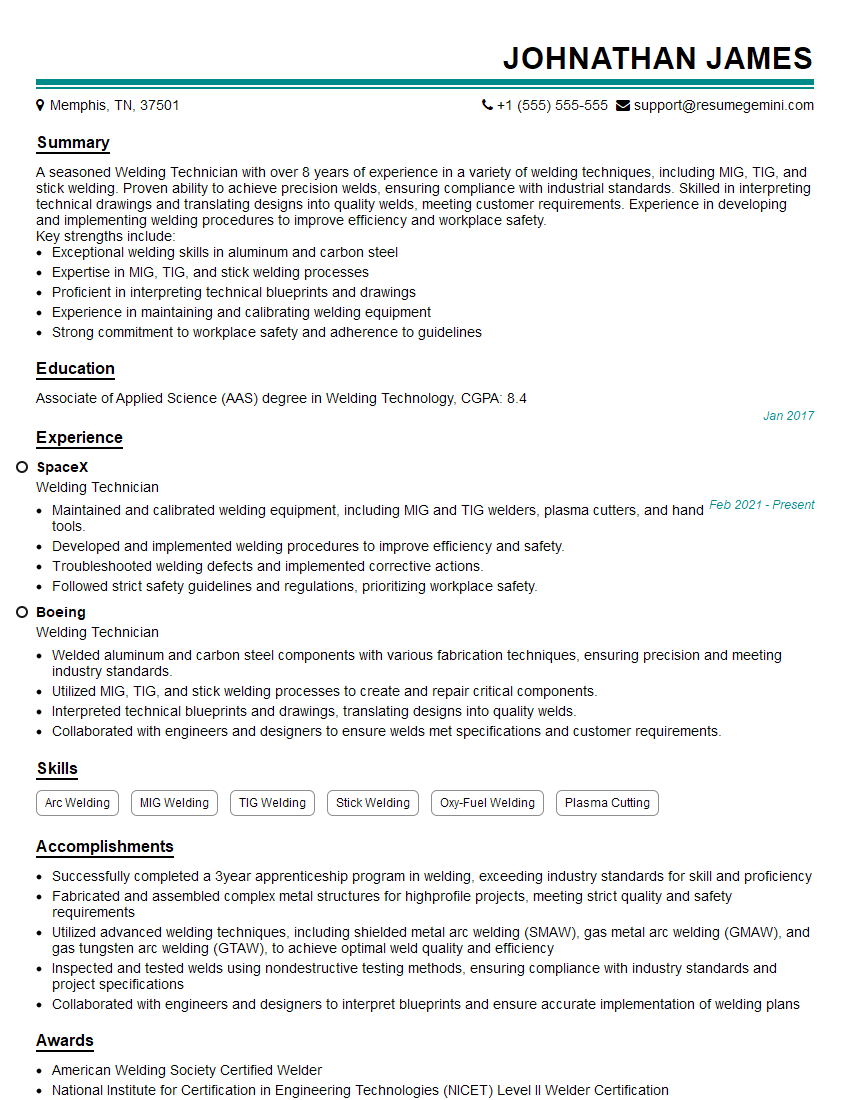
Welding Technician Resume Sample

Welding Instructor Resume Sample
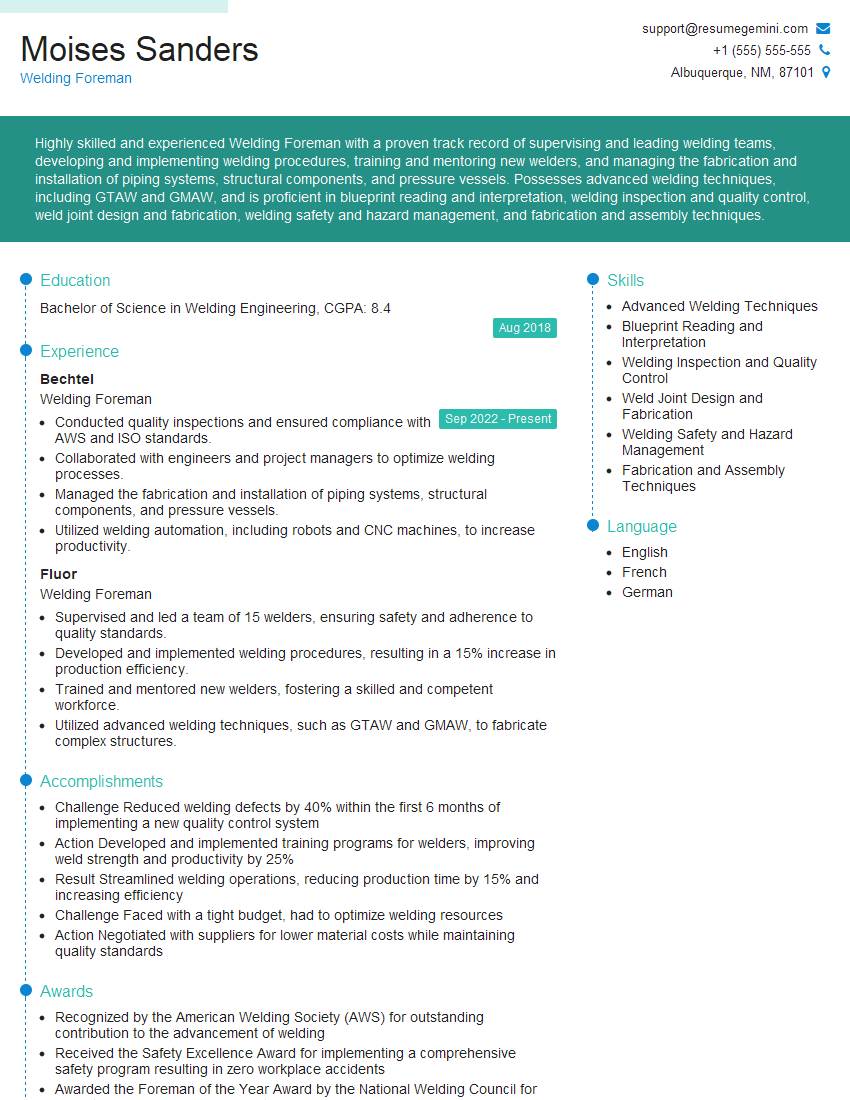
Welding Foreman Resume Sample
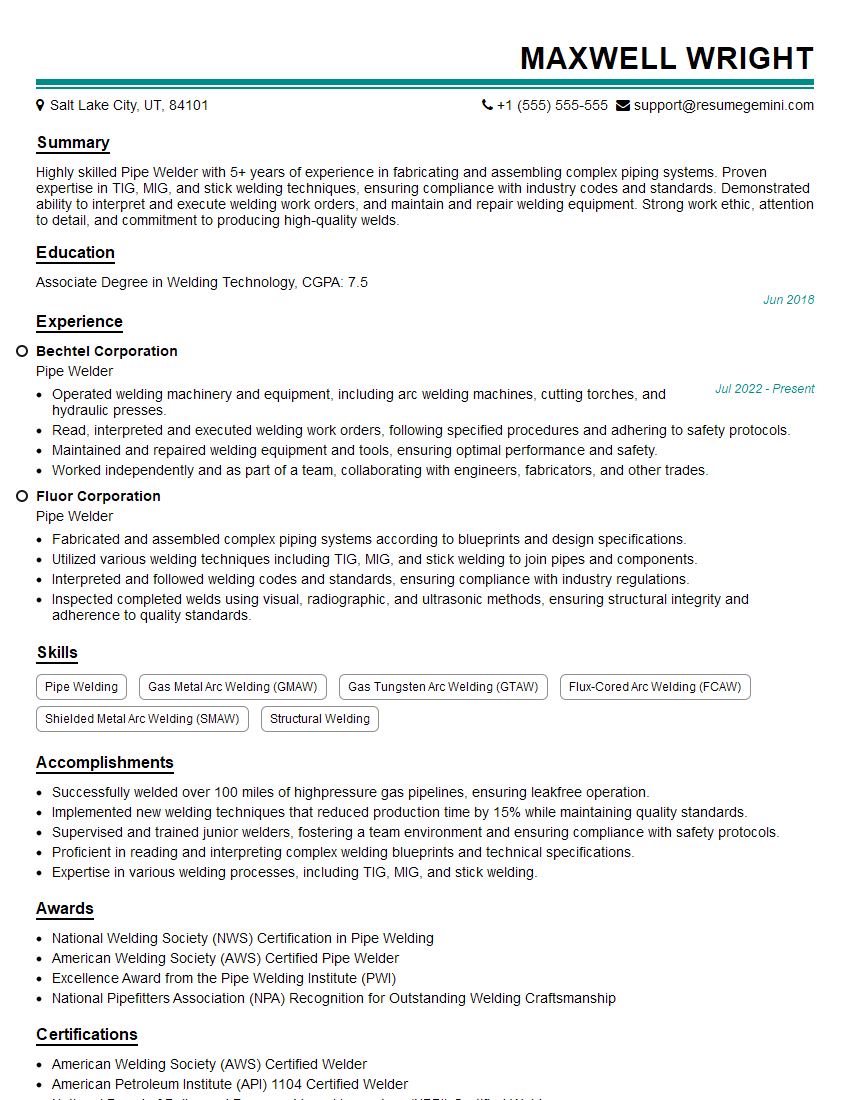
Pipe Welder Resume Sample
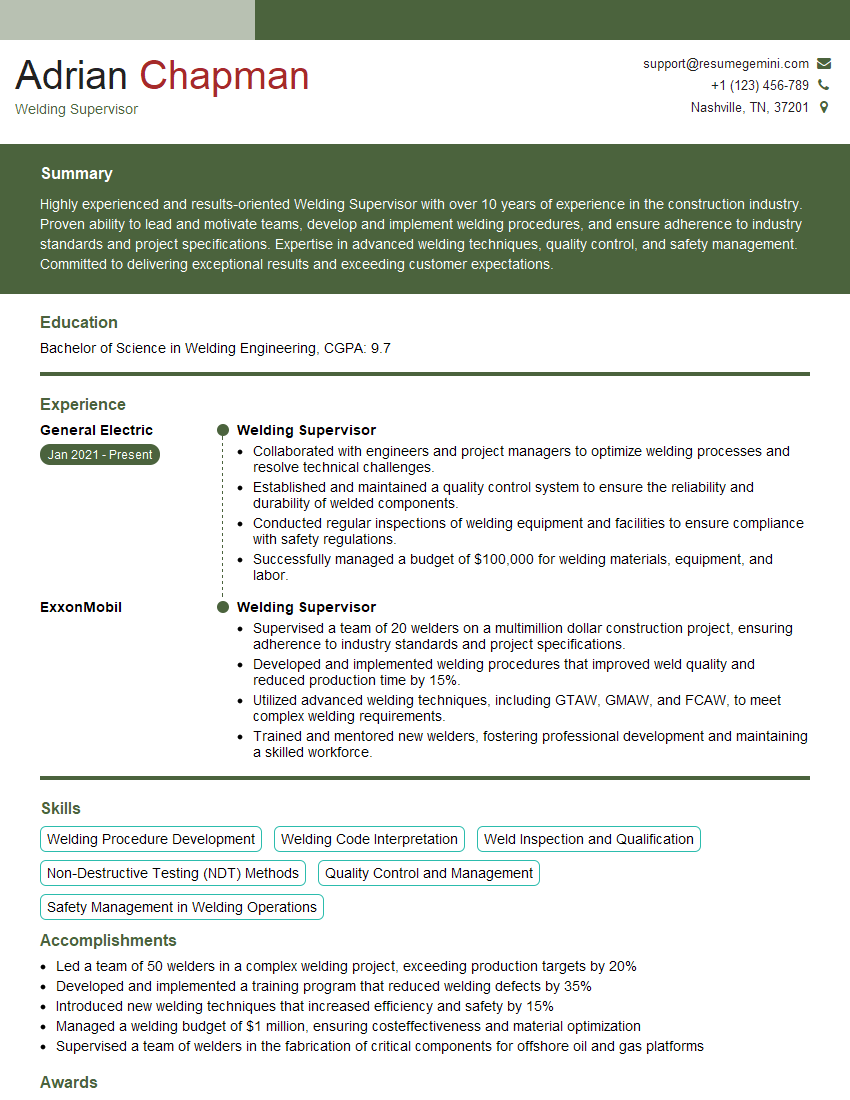
Welding Supervisor Resume Sample

Fabrication Welder Resume Sample
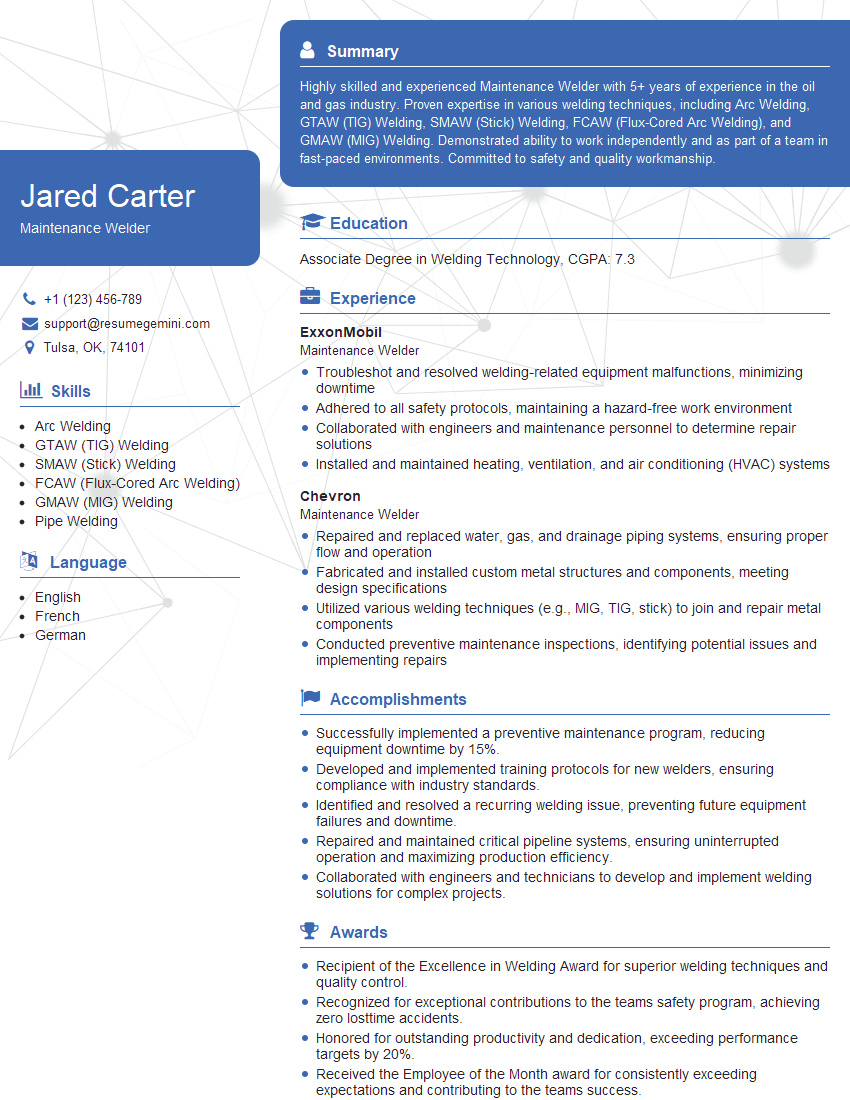
Maintenance Welder Resume Sample
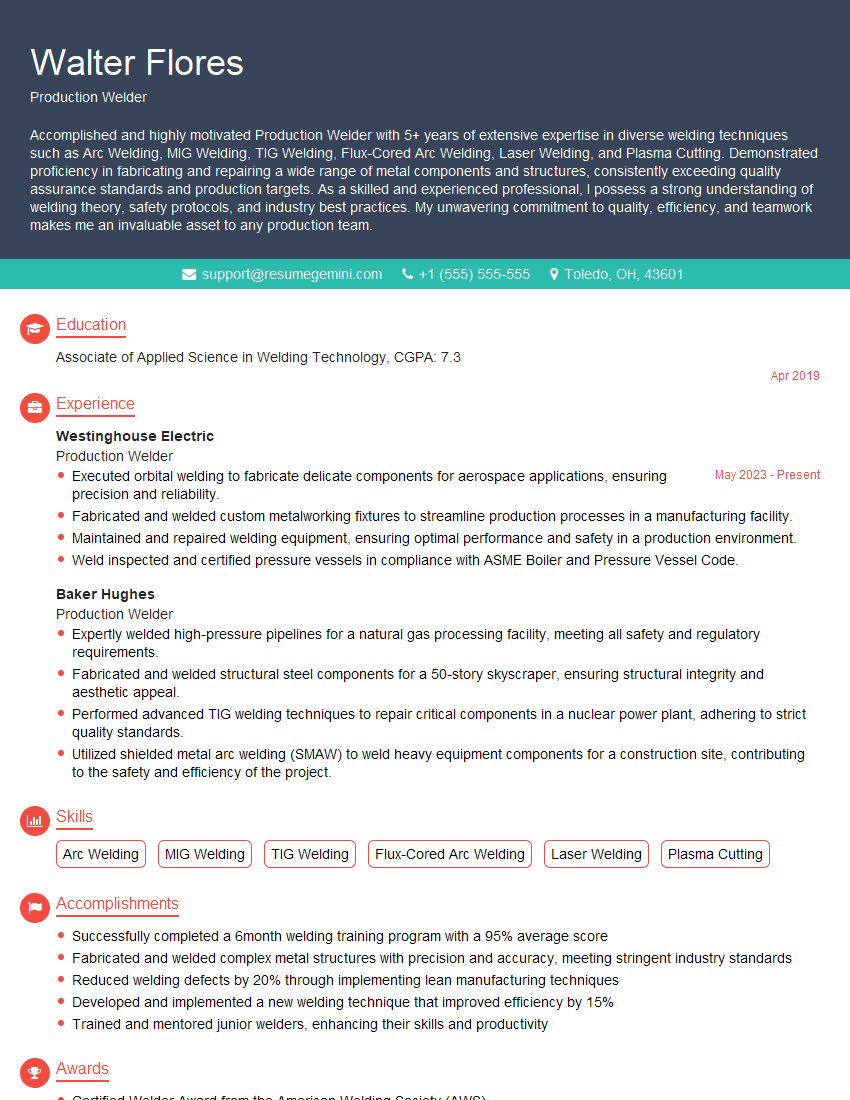
Production Welder Resume Sample

Structural Welder Resume Sample
Explore more articles
Users Rating of Our Blogs
Share Your Experience
We value your feedback! Please rate our content and share your thoughts (optional).
What Readers Say About Our Blog
Really detailed insights and content, thank you for writing this detailed article.
IT gave me an insight and words to use and be able to think of examples