Interviews are more than just a Q&A session—they’re a chance to prove your worth. This blog dives into essential Welding Treatment interview questions and expert tips to help you align your answers with what hiring managers are looking for. Start preparing to shine!
Questions Asked in Welding Treatment Interview
Q 1. Explain the different types of welding processes and their applications.
Welding processes are numerous, each suited to different materials and applications. Think of them like different tools in a toolbox – each with its own strengths and weaknesses.
- Shielded Metal Arc Welding (SMAW): This is your classic ‘stick welding,’ using a consumable electrode coated with flux to protect the weld pool from atmospheric contamination. It’s versatile, portable, and relatively inexpensive, making it ideal for outdoor construction or repairs where portability is key. I’ve used it extensively on pipeline projects.
- Gas Metal Arc Welding (GMAW): Also known as MIG welding, this process uses a continuous wire electrode fed into the weld pool. It’s faster and produces cleaner welds than SMAW, making it perfect for high-volume production like automotive manufacturing. I’ve worked with robots in GMAW setups for high-precision automotive body panel welding.
- Gas Tungsten Arc Welding (GTAW): Or TIG welding, this uses a non-consumable tungsten electrode and an inert gas shield. It produces extremely high-quality welds, excellent for thin materials or applications requiring precision and clean aesthetics, such as stainless steel fabrication in the aerospace industry. A project I’m particularly proud of involved TIG welding titanium components for a medical device.
- Flux-Cored Arc Welding (FCAW): Similar to GMAW but the electrode contains its own flux, making it suitable for outdoor applications with less sensitivity to wind. I’ve used this extensively in construction, welding heavy steel structures.
These are just a few examples; other processes like Submerged Arc Welding (SAW) and Resistance Welding (RW) are also crucial in various industrial contexts. The choice depends heavily on material thickness, joint design, required weld quality, and the overall production environment.
Q 2. Describe the importance of pre-weld inspection and what it entails.
Pre-weld inspection is paramount; it’s like checking your ingredients before baking a cake – you can’t expect a perfect outcome with substandard inputs. It involves a thorough examination of the base materials, joint preparation, and the overall welding environment. This ensures the weld will meet the required specifications.
- Visual Inspection: Checking for surface defects like cracks, corrosion, or contamination.
- Dimensional Inspection: Verifying joint dimensions and fit-up accuracy. Improper fit-up can lead to weld defects like porosity or incomplete fusion.
- Material Testing: Ensuring the base metals meet the necessary chemical composition and mechanical properties. This is crucial for safety and functionality.
- Cleanliness Check: Removing any grease, oil, paint, or other contaminants that can degrade weld quality.
A poorly executed pre-weld inspection can lead to costly rework, delays, or worse, catastrophic failure of the weldment. I always emphasize the importance of this step in my team’s training.
Q 3. What are the common weld defects and their causes?
Common weld defects can be likened to blemishes on a painting, compromising the overall integrity and aesthetics. Some common defects include:
- Porosity: Small holes or voids within the weld metal, often caused by gas entrapment during welding.
- Incomplete Fusion: Lack of proper bonding between the weld metal and the base metal, resulting in weakness and potential cracking.
- Undercut: A groove melted into the base metal at the edge of the weld, reducing strength and creating stress concentration points.
- Cracks: Fractures in the weld metal, often caused by rapid cooling, high residual stresses, or hydrogen embrittlement.
- Slag Inclusions: Trapped flux or other non-metallic materials within the weld.
Causes are varied and often interlinked. Improper welding parameters (incorrect current, voltage, travel speed), poor joint preparation, contaminated base materials, and insufficient shielding gas are all common culprits. Careful process control and adherence to established welding procedures are crucial in defect prevention.
Q 4. How do you ensure weld quality and consistency?
Ensuring consistent weld quality is a multi-faceted approach, much like orchestrating a symphony – all parts need to work in harmony. Key aspects include:
- Qualified Welders: Employing experienced and certified welders who understand the specific techniques and safety procedures. I always push for regular training and certification updates for my team.
- Proper Equipment and Calibration: Using well-maintained welding equipment, routinely checked and calibrated to ensure accuracy and reliability.
- Standardized Procedures: Following documented welding procedures (WPS) that outline specific parameters for each weld type and material.
- Regular Monitoring and Inspection: Conducting regular inspections during and after welding to identify and address any defects promptly.
- Non-Destructive Testing (NDT): Employing NDT methods such as radiography, ultrasonic testing, or dye penetrant testing to evaluate weld integrity without damaging the weldment.
Statistical Process Control (SPC) is a valuable tool in maintaining consistency. By tracking weld parameters and defect rates, we can identify trends and implement corrective actions proactively.
Q 5. Explain the significance of weld symbols and their interpretation.
Weld symbols are a standardized language for communicating weld requirements on engineering drawings. They’re like a roadmap, guiding the welder on how to execute the weld. A symbol contains crucial information such as the type of weld, its size, location, and any special requirements.
For example: ∘ represents a fillet weld. Additional symbols indicate the leg length, weld type (e.g., double fillet, plug, slot), and the location on the joint.
Understanding these symbols is critical to ensuring the correct weld is made according to the design specifications. Misinterpretation can lead to improper welds and potential failures. Proper training on interpreting weld symbols is essential for all welders and engineers involved in the process.
Q 6. Describe your experience with different welding filler materials.
My experience spans a wide range of filler materials, each possessing unique properties tailored to specific applications. Selecting the right filler material is vital – it’s like choosing the right paint for a specific surface.
- Mild Steel Electrodes: For general-purpose welding of mild steel, offering good strength and weldability. I frequently use these for construction and general fabrication.
- Stainless Steel Filler Metals: For welding stainless steel, maintaining corrosion resistance and high strength. I’ve used these extensively in food processing and chemical plant projects.
- Aluminum Filler Wires: For aluminum welding, requiring specialized techniques due to aluminum’s high thermal conductivity. I’ve worked on aircraft component repairs using these materials.
- High-Strength Low-Alloy (HSLA) Steels: For applications demanding high strength and toughness. These have been crucial in bridge construction projects I’ve been involved with.
The selection of the filler material depends on the base material’s composition, mechanical properties, and the desired properties of the weld. The wrong choice can lead to poor weld quality, cracking, or corrosion.
Q 7. How do you select the appropriate welding process for a specific application?
Choosing the right welding process is a critical decision, like selecting the right tool for a job. Several factors guide this selection:
- Base Material: The type of metal (steel, aluminum, stainless steel, etc.) and its thickness dictate which processes are suitable.
- Joint Design: The geometry of the joint (butt, fillet, lap, etc.) affects weld accessibility and the choice of process.
- Weld Quality Requirements: The required strength, toughness, and appearance of the weld will influence the process selection. High-quality welds often necessitate GTAW or GMAW.
- Production Environment: Factors like outdoor welding, accessibility, and production speed influence the choice. SMAW is preferred for field applications due to its portability.
- Cost and Availability: The cost of equipment, filler materials, and skilled labor will be considered.
Often, a combination of factors leads to the selection. For instance, while GMAW might be faster for production, GTAW might be chosen for critical, high-quality applications. A thorough understanding of the available processes and their capabilities is crucial for informed decision-making.
Q 8. Explain your understanding of the principles of heat treatment after welding.
Post-weld heat treatment (PWHT) is a crucial process to alleviate residual stresses and improve the microstructure of a weld, enhancing its mechanical properties and overall performance. The principles are based on controlled heating and cooling cycles designed to achieve specific metallurgical changes.
Think of it like this: welding introduces localized intense heat, causing the metal to expand and contract unevenly. This leads to internal stresses that can cause cracking or distortion over time. PWHT helps to ‘relax’ these stresses by uniformly heating the weldment to a specific temperature, holding it there for a set period, and then slowly cooling it. This process allows the metal to recrystallize and refine its grain structure, reducing internal stresses and improving toughness, ductility and impact resistance.
Different materials require different PWHT parameters. For example, high-strength low-alloy (HSLA) steels often require stress-relieving heat treatments to prevent cracking, while some stainless steels might benefit from solution annealing to improve corrosion resistance. The specific temperature, holding time, and cooling rate are determined by factors such as the base material, weld type, and desired properties.
- Stress Relief Annealing: Reduces residual stresses.
- Solution Annealing: Dissolves precipitates in the material to improve properties.
- Normalizing: Refines the grain structure to improve strength and toughness.
Q 9. What are the safety precautions you take while welding?
Welding safety is paramount. My safety protocols always begin with proper Personal Protective Equipment (PPE), including a welding helmet with appropriate shade, flame-resistant clothing, gloves, and sturdy closed-toe shoes. I also ensure adequate ventilation to prevent exposure to harmful fumes and gases, often using local exhaust ventilation systems or working in well-ventilated areas. The workspace must be kept clean and free of flammable materials. Before commencing any welding, I thoroughly inspect the equipment for any defects or damage, and I use fire extinguishers appropriately. I am also extremely careful regarding the positioning of the welding leads, making sure there are no tripping hazards. Finally, I always adhere to the company’s safety procedures and communicate with colleagues to ensure everyone’s safety.
Furthermore, I’m trained in fire safety and emergency procedures specific to welding, and I know how to respond to electrical shocks or burns.
Q 10. How do you address welding distortion and warping?
Welding distortion and warping are inevitable consequences of the thermal cycles during welding. Addressing these issues requires a multifaceted approach starting with proper weld design and technique.
- Preheating: Preheating the base metal before welding reduces the temperature gradient during welding, thereby minimizing distortion.
- Proper Joint Design: Well-designed joints inherently minimize distortion. For example, using a butt joint versus a lap joint.
- Welding Sequence: The order in which welds are performed can significantly influence distortion. Careful planning and strategic welding sequences (e.g., weaving and tack welding) will help minimize distortion.
- Fixturing: Using jigs and fixtures to restrain the workpiece during welding effectively limits movement and warping.
- Post-Weld Straightening: Mechanical straightening using specialized equipment can correct some distortions after welding.
Imagine welding a long, thin piece of metal; it’s likely to warp significantly. Preheating it evenly, using a suitable jig to hold it straight during welding, and employing a strategic welding sequence will minimize warping, whereas simply welding it without any precaution would lead to significant distortion.
Q 11. What is your experience with non-destructive testing (NDT) methods for welds?
I have extensive experience with various Non-Destructive Testing (NDT) methods for weld inspection, including visual inspection, radiographic testing (RT), ultrasonic testing (UT), and magnetic particle testing (MT).
Visual Inspection (VT): This is the first step, identifying any obvious surface defects. It’s quick, easy, and crucial for detecting surface cracks, porosity, or undercuts.
Radiographic Testing (RT): Uses X-rays or gamma rays to detect internal defects like porosity, cracks, and inclusions. It provides a permanent record, but it’s expensive and requires specialized equipment.
Ultrasonic Testing (UT): Employs high-frequency sound waves to detect internal flaws. It’s highly sensitive and can detect smaller defects than RT, but operator skill is critical for accurate interpretation.
Magnetic Particle Testing (MT): Used to detect surface and near-surface cracks in ferromagnetic materials. Magnetic particles are applied to the surface, and any cracks will disrupt the magnetic field, revealing the defect.
The selection of the appropriate NDT method depends on the type of weld, the material, and the required sensitivity.
Q 12. Explain your experience with different types of welding joints.
My experience encompasses a wide range of welding joints, including:
- Butt Joints: Joining two pieces of metal end-to-end. Common in structural steel.
- Lap Joints: Overlapping two pieces of metal. Simple to weld, but may not be as strong.
- T-Joints: Joining a piece of metal perpendicular to another. Often used in pipe construction.
- Corner Joints: Joining two pieces of metal at a right angle. Used extensively in sheet metal fabrication.
- Edge Joints: Joining the edges of two pieces of metal. Requires precise alignment.
The choice of joint depends on factors such as the materials being joined, the intended application, and the required strength and fatigue resistance. For example, a butt weld is stronger than a lap weld, but a butt weld requires more precise preparation.
Q 13. How do you manage and resolve welding-related problems on a project?
Problem-solving in welding requires a systematic approach. My process typically involves:
- Identifying the problem: Precisely define the issue. Is it a crack, porosity, distortion, or something else?
- Analyzing the root cause: Determine why the problem occurred. Was it poor welding technique, incorrect material selection, inadequate pre-weld preparation, or equipment malfunction? This often involves examining the failed weldment and related documentation.
- Developing a solution: Based on the root cause analysis, develop a corrective action plan. This might include adjusting welding parameters, modifying the joint design, improving pre-weld preparations or even replacing defective equipment.
- Implementing the solution: Put the corrective actions into effect, ensuring that appropriate safety procedures are followed.
- Verifying the solution: Inspect the welds using suitable NDT methods to confirm that the problem has been effectively resolved.
For example, if I encounter excessive porosity in a weld, I might investigate the welding parameters (current, voltage, travel speed), the shielding gas purity, or the cleanliness of the base metal. The corrective actions could range from adjustments to the welding process to a complete rework of the weld.
Q 14. What is your experience with different types of welding equipment?
My experience encompasses a broad range of welding equipment, including:
- Shielded Metal Arc Welding (SMAW) machines: Using stick electrodes, suitable for various materials and environments.
- Gas Metal Arc Welding (GMAW) machines (MIG welding): Using a continuous wire feed, efficient for many applications.
- Gas Tungsten Arc Welding (GTAW) machines (TIG welding): Precision welding that produces high-quality welds, ideal for thin materials and critical applications.
- Flux-Cored Arc Welding (FCAW) machines: Similar to MIG welding but uses a flux-cored electrode, suitable for outdoor applications.
- Resistance Welding machines (Spot and Seam welding): Used for joining sheet metals, offering high production speeds.
The selection of the appropriate equipment is determined by factors like the material being welded, the required joint quality, and the production environment. I am proficient in operating and maintaining all of these machines, ensuring that they are in good working order and are operated safely.
Q 15. Describe your understanding of welding codes and standards (e.g., AWS D1.1).
Welding codes and standards, such as AWS D1.1 (Structural Welding Code – Steel), are essential documents that provide guidelines and requirements for welding procedures, welder qualifications, and inspection criteria. They ensure the safety and structural integrity of welded structures. Think of them as a recipe book for creating strong and reliable welds. AWS D1.1, for instance, specifies requirements for various steel structures, outlining acceptable welding processes, preheating temperatures, post-weld heat treatments, and non-destructive testing (NDT) methods depending on the thickness and type of steel used. These codes are crucial because they provide a common language and set of expectations across the industry, promoting consistency and reducing the risk of failure. Deviation from these codes requires thorough justification and documentation.
For example, if I’m working on a project requiring compliance with AWS D1.1, I will carefully review the relevant sections concerning the base materials, joint design, welding process, and required welder qualifications. I’ll then ensure all welding procedures are documented and qualified according to the code’s stipulations. This includes the preparation of Welding Procedure Specifications (WPS) and performing Procedure Qualification Records (PQR) to demonstrate that the welding process produces welds meeting the code’s mechanical property requirements.
Career Expert Tips:
- Ace those interviews! Prepare effectively by reviewing the Top 50 Most Common Interview Questions on ResumeGemini.
- Navigate your job search with confidence! Explore a wide range of Career Tips on ResumeGemini. Learn about common challenges and recommendations to overcome them.
- Craft the perfect resume! Master the Art of Resume Writing with ResumeGemini’s guide. Showcase your unique qualifications and achievements effectively.
- Don’t miss out on holiday savings! Build your dream resume with ResumeGemini’s ATS optimized templates.
Q 16. How do you ensure compliance with safety regulations during welding operations?
Safety is paramount in welding. My approach involves a multi-layered strategy starting with adhering to OSHA regulations and company safety policies. This begins with a thorough risk assessment before any work commences, identifying potential hazards like fire, electrical shock, and exposure to harmful fumes. I always ensure that the work area is well-ventilated, using appropriate personal protective equipment (PPE), including a welding helmet with proper shade, flame-resistant clothing, gloves, and safety footwear. I regularly check the condition of my equipment to prevent malfunctions. I also emphasize the importance of fire prevention and proper handling of flammable materials.
Furthermore, I always inform colleagues about my work and ensure that others in the vicinity are aware of the hazards and safety measures. During welding operations, I use fire blankets and fire extinguishers readily available, and I follow lockout/tagout procedures on equipment. I’m trained in emergency response and first aid, making sure I can respond quickly to any incident. Regular safety training and awareness programs are key to maintaining a safe work environment. Regular inspections and maintenance of equipment are paramount.
Q 17. Describe your experience with robotic welding systems.
I have extensive experience with robotic welding systems, specifically in the automotive and manufacturing industries. My expertise encompasses programming, setup, maintenance, and troubleshooting of these automated systems. Robotic welding offers significant advantages in terms of precision, repeatability, and increased productivity. It’s especially beneficial for high-volume production runs requiring consistent weld quality.
I’m proficient in using various robotic welding software packages to create and edit weld programs, including offline programming. This allows me to simulate and optimize welding paths before actual execution, minimizing downtime and improving efficiency. I’ve worked with different robot brands and controllers, adapting quickly to new systems. Troubleshooting robotic welding systems often involves understanding both mechanical and electrical components; I possess the skills to diagnose and resolve issues related to sensor malfunctions, arc-starting problems, and weld inconsistencies. I’ve been involved in projects integrating robotic welding into existing production lines, managing the transition and training personnel on the new system.
Q 18. How do you interpret welding procedure specifications (WPS)?
A Welding Procedure Specification (WPS) is a document that outlines the parameters for a specific welding process to ensure consistent and high-quality welds. Interpreting a WPS involves understanding each parameter and its impact on the weld. Think of it like a detailed recipe for a specific type of weld.
For example, a WPS might specify the base material, joint design (e.g., butt joint, fillet joint), welding process (e.g., GMAW, SMAW), shielding gas type and flow rate, electrode type and size, welding current and voltage, travel speed, and pre- and post-weld heat treatment requirements. Understanding all these parameters is crucial for replicating the welding process reliably and ensuring the resulting weld meets the required specifications. I carefully review the WPS before starting any welding work to ensure I have the correct materials, equipment, and settings. I meticulously follow the procedures outlined to ensure consistent weld quality and compliance with project specifications.
Q 19. Explain your understanding of the Metal Transfer process in GMAW.
In Gas Metal Arc Welding (GMAW), also known as MIG welding, metal transfer refers to how the molten welding electrode material is transported from the welding wire to the weld pool. Several metal transfer modes exist, each with its own characteristics, advantages, and disadvantages.
- Short-circuiting transfer: This is suitable for thin materials and produces low spatter, but the weld penetration might be less. The wire touches the workpiece repeatedly, creating a short circuit, and the resulting arc transfers small droplets of metal.
- Globular transfer: Large drops of molten metal are transferred to the weld pool, resulting in high spatter and a less smooth weld bead. It’s generally used for thicker materials requiring high deposition rates.
- Spray transfer: This mode uses a higher current to ionize the shielding gas, which creates a continuous stream of finely atomized metal droplets to the weld pool resulting in a smooth, consistent weld. It’s excellent for high-quality, deep penetration welds in thicker materials.
- Pulse transfer: A combination of short-circuiting and spray transfer techniques. It offers a balance between high-quality welds and good control over penetration. This process is particularly beneficial for welding thinner materials with higher precision.
Choosing the appropriate metal transfer mode depends on factors such as material thickness, joint design, and desired weld quality. For example, short-circuiting is preferred for sheet metal, while spray transfer is better suited for thicker plates.
Q 20. What are the different types of shielding gases used in welding?
Shielding gases are crucial in arc welding processes as they protect the molten weld pool from atmospheric contamination (oxygen and nitrogen), which can cause porosity and weakening of the weld. The choice of shielding gas depends largely on the welding process and the base material being welded.
- Argon (Ar): An inert gas commonly used in Gas Tungsten Arc Welding (GTAW) and GMAW for welding aluminum and other non-ferrous metals. It provides excellent arc stability and minimizes weld contamination.
- Helium (He): Another inert gas, Helium offers higher arc energy and penetration than Argon, making it suitable for thicker materials or high-speed welding. It’s more expensive than argon.
- Carbon Dioxide (CO2): A relatively inexpensive active gas primarily used in GMAW for welding steel. Its active nature promotes better penetration but also increases spatter.
- Argon-Helium mixtures: Combining Argon and Helium allows for adjustments in arc characteristics. These blends offer a compromise between the properties of the individual gases.
- Argon-Oxygen-Carbon Dioxide (Ar-O2-CO2) mixtures: Sometimes used in GMAW for steel to improve weld penetration and reduce spatter.
The selection of the appropriate shielding gas is crucial for optimal weld quality and depends on various factors like the material being welded and the desired weld characteristics. Incorrect shielding gas selection can lead to poor weld quality and safety hazards.
Q 21. Describe your experience with different types of arc welding.
My experience encompasses several types of arc welding processes, each offering unique capabilities and applications:
- Shielded Metal Arc Welding (SMAW), or stick welding: A versatile process using a consumable electrode coated with flux to shield the arc and the weld pool. It’s portable and relatively inexpensive, making it suitable for various applications, but it is less efficient than other processes and has higher spatter and less precise control.
- Gas Metal Arc Welding (GMAW), or MIG welding: Uses a continuous consumable wire electrode fed into the weld pool. This process is highly productive, with excellent penetration and control, particularly suitable for high-volume production. It’s commonly used on steel and aluminum.
- Gas Tungsten Arc Welding (GTAW), or TIG welding: Employs a non-consumable tungsten electrode to create the arc. This method is known for its precision and produces high-quality welds with excellent control over penetration. It’s often used for critical applications and thin materials like aluminum and stainless steel.
- Flux-Cored Arc Welding (FCAW): A versatile process similar to GMAW but uses a tubular electrode filled with flux. It can be used with or without shielding gas, making it suited for outdoor applications.
The selection of the appropriate arc welding process depends on factors such as material type, joint design, desired weld quality, and production requirements. For example, I would use GTAW for critical aerospace components requiring impeccable quality, and GMAW for large-scale steel fabrication projects. My selection is always guided by the needs of the specific job at hand.
Q 22. How do you handle different types of base metals during welding?
Handling different base metals in welding requires a nuanced approach because each metal possesses unique properties affecting weldability. Factors such as melting point, thermal conductivity, and susceptibility to cracking influence the welding process significantly.
- Steel: Commonly welded using Shielded Metal Arc Welding (SMAW), Gas Metal Arc Welding (GMAW), or Flux-Cored Arc Welding (FCAW). Preheating might be necessary for thicker sections to prevent cracking. The choice of filler metal is crucial; it should match the base metal’s composition for optimal results.
- Aluminum: Known for its high thermal conductivity, aluminum requires a cleaner welding environment and specialized techniques like Gas Tungsten Arc Welding (GTAW) or GMAW with specialized aluminum wire and shielding gas (typically Argon). Proper surface preparation is paramount to remove oxides which hinder welding.
- Stainless Steel: Susceptible to porosity and cracking if not welded correctly. GTAW or GMAW with appropriate filler metal and shielding gas are commonly used. Post-weld cleaning is important to remove any slag or spatter.
- Copper: Possesses high thermal conductivity and requires specialized filler metals and high heat input. GTAW is often preferred due to its precise control.
In my experience, I’ve successfully welded various base metals in diverse projects, adapting my techniques and choosing appropriate equipment and filler materials based on the metal’s characteristics and project requirements. For example, while working on a marine construction project, I successfully welded high-strength low-alloy steel using FCAW to ensure a strong and robust weld in a challenging outdoor environment.
Q 23. What are your skills in troubleshooting welding equipment malfunctions?
Troubleshooting welding equipment malfunctions requires systematic diagnosis. I typically follow a structured approach, starting with the most obvious issues and progressively moving towards more complex problems.
- Visual Inspection: Checking for loose connections, damaged cables, gas leaks, and any signs of overheating or physical damage is the first step. I often use multimeters to check for power and voltage.
- Testing the Power Source: Verifying that the power source is functioning correctly, including checking output voltage and amperage settings against the machine’s specifications.
- Gas Flow Rate and Purity: When using gas-shielded processes (GMAW, GTAW), verifying the gas flow rate and the purity of the shielding gas is crucial. Gas leaks are often identified using a soapy water solution.
- Electrode/Wire Feed: For GMAW and FCAW, checking the wire feed mechanism for proper functioning and ensuring the wire is feeding correctly.
- Ground Connection: A poor ground connection can lead to numerous issues. I always ensure a clean and secure ground connection before commencing welding.
For instance, I once encountered a situation where the welding machine was producing inconsistent welds. Through systematic troubleshooting, I discovered a faulty contact tip. Replacing the tip immediately resolved the issue. My experience allows me to quickly identify and rectify common malfunctions, minimizing downtime.
Q 24. How do you maintain welding equipment and ensure its proper functionality?
Maintaining welding equipment is crucial for safety and consistent performance. A well-maintained machine ensures optimal welds and prevents costly downtime. My maintenance routine includes:
- Regular Cleaning: Removing spatter, slag, and other debris from the equipment after each use.
- Inspection of Cables and Connections: Checking for wear and tear, loose connections, and damage to the cables and connectors.
- Gas Cylinder Checks: Ensuring sufficient gas supply and checking the pressure gauges regularly.
- Lubrication: Lubricating moving parts according to the manufacturer’s recommendations.
- Scheduled Maintenance: Following manufacturer’s instructions for regular preventative maintenance, including filter changes, internal cleaning, and component inspections.
- Documentation: Maintaining a log of maintenance performed, including dates, tasks, and any observations or issues.
I view preventative maintenance as an investment in productivity and safety. Regular maintenance minimizes unexpected equipment failures and increases the longevity of the equipment, ultimately reducing costs and improving overall efficiency.
Q 25. Describe your experience with the different types of weld testing methods.
My experience encompasses several weld testing methods, each providing different insights into the weld’s quality and integrity.
- Visual Inspection: The most basic test, assessing the weld’s appearance for cracks, porosity, undercuts, or other surface defects.
- Liquid Penetrant Testing (LPT): Detects surface-breaking flaws by using a dye that penetrates cracks and is then revealed by a developer.
- Magnetic Particle Testing (MPT): Used for ferromagnetic materials, this method detects surface and near-surface flaws by magnetizing the weld and applying magnetic particles, which accumulate at the discontinuities.
- Ultrasonic Testing (UT): Employs high-frequency sound waves to detect internal flaws such as cracks, porosity, and inclusions.
- Radiographic Testing (RT): Uses X-rays or gamma rays to create images of the weld’s internal structure, revealing internal defects. This is one of the most accurate methods.
- Mechanical Testing: Includes tensile testing (measuring tensile strength), bend testing (assessing ductility), and hardness testing (determining weld hardness).
In my career, I have utilized these methods extensively, often in combination, to ensure the integrity of welds in critical applications. For example, during a pressure vessel fabrication project, RT was used to confirm the absence of internal defects before the vessel went into service.
Q 26. Explain how you determine the correct amperage and voltage for a specific welding task.
Determining the correct amperage and voltage is critical for achieving high-quality welds. Incorrect settings can lead to poor penetration, excessive spatter, or even weld defects. The optimal settings depend on several factors:
- Base Metal Thickness: Thicker materials require higher amperage for proper penetration.
- Welding Process: Each process (SMAW, GMAW, GTAW, FCAW) has its own recommended amperage and voltage ranges.
- Filler Metal: The diameter and type of filler metal influence the required amperage.
- Joint Design: Different joint types (butt, fillet, lap) require different settings to ensure proper fusion.
- Material Type: The type of base metal impacts the welding parameters. For example, aluminum requires lower amperage than steel.
I typically use a combination of experience, manufacturer’s recommendations, and welding procedure specifications (WPS) to determine the appropriate settings. I always start with a lower setting and gradually increase the amperage until I achieve a good weld bead appearance. Precise adjustment depends on continuous observation of the welding process and ongoing adjustment for optimal outcomes.
Q 27. Explain your experience with different types of post-weld heat treatments.
Post-weld heat treatments (PWHT) are often necessary to relieve residual stresses and improve the weld’s mechanical properties. The type of PWHT depends on the material and the welding process. My experience includes:
- Stress Relief Annealing: This involves heating the weldment to a specific temperature and holding it for a set time to reduce residual stresses. This is frequently used for high-strength steels to prevent cracking.
- Normalizing: Heating the weldment to a higher temperature than stress relief annealing, followed by air cooling, to refine the grain structure and improve mechanical properties.
- Tempering: Performed after hardening, tempering reduces the hardness and brittleness of the weld, increasing its toughness.
The specific parameters (temperature and time) for PWHT are determined by the material specifications and welding procedure. Improper PWHT can be detrimental to the weld’s integrity. In a recent project involving the fabrication of a large pressure vessel, proper PWHT was crucial to ensure the vessel could safely withstand the operating pressures.
Q 28. What is your experience with gas tungsten arc welding (GTAW) and its applications?
Gas Tungsten Arc Welding (GTAW), also known as TIG welding, is a versatile arc welding process using a non-consumable tungsten electrode to produce the weld. It’s known for its high-quality welds, excellent control, and ability to weld a wide range of materials.
- Applications: GTAW is commonly used for welding thin materials, where precise control is crucial. It is ideal for applications requiring high-quality, aesthetically pleasing welds, such as: aerospace, automotive, piping, and nuclear industries.
- Advantages: GTAW provides excellent control over the weld bead, allowing for precise placement and penetration. It produces clean welds with minimal spatter and is capable of welding a wide range of materials, including aluminum, stainless steel, and various alloys.
- Disadvantages: GTAW is generally slower than other welding processes such as GMAW or FCAW, and it requires higher skill levels from the welder. The equipment can be more complex and expensive.
My extensive experience with GTAW includes welding thin-walled stainless steel components in a food processing plant, where cleanliness and precision were paramount to avoid contamination. I’ve also utilized GTAW in numerous repair projects, where precise control was essential for restoring the structural integrity of damaged components. The versatility and precision of GTAW are unmatched in many high-quality applications.
Key Topics to Learn for Your Welding Treatment Interview
- Welding Processes: Understand the fundamentals of various welding techniques (e.g., GMAW, GTAW, SMAW) and their applications in different materials.
- Weld Joint Design: Learn about different joint configurations and their strengths and weaknesses, including considerations for stress and fatigue.
- Material Selection: Know how different base materials (metals and alloys) affect weldability and the choice of welding process.
- Weld Defects and Inspection: Familiarize yourself with common weld defects (porosity, cracks, inclusions), non-destructive testing (NDT) methods, and defect remediation strategies.
- Heat Treatment: Understand the purpose and different types of heat treatments used to improve weld properties (e.g., stress relieving, annealing).
- Welding Metallurgy: Grasp the underlying metallurgical principles governing weld formation, including phase transformations and microstructures.
- Safety Procedures and Regulations: Demonstrate a strong understanding of safety protocols and relevant industry regulations in welding environments.
- Practical Applications: Be prepared to discuss real-world examples where you applied your knowledge of welding treatment, showcasing problem-solving skills.
- Troubleshooting: Develop your ability to diagnose and solve problems related to weld quality and production efficiency.
Next Steps
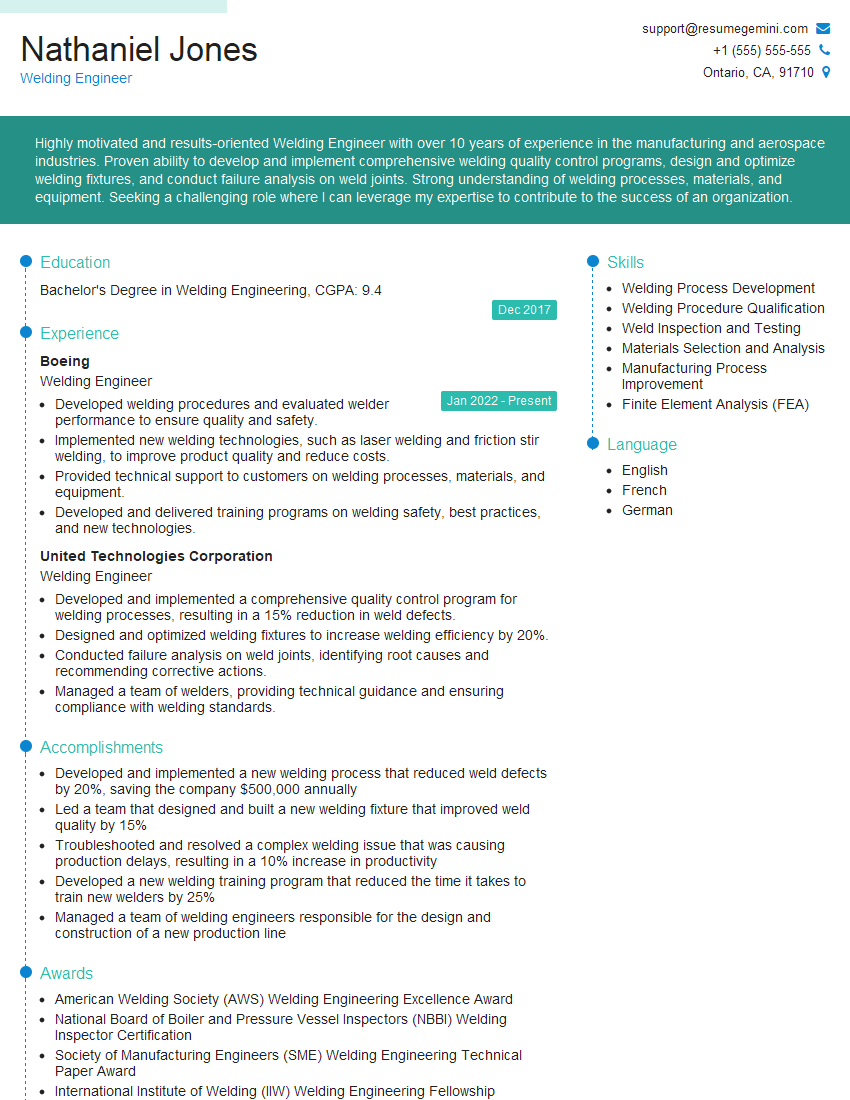
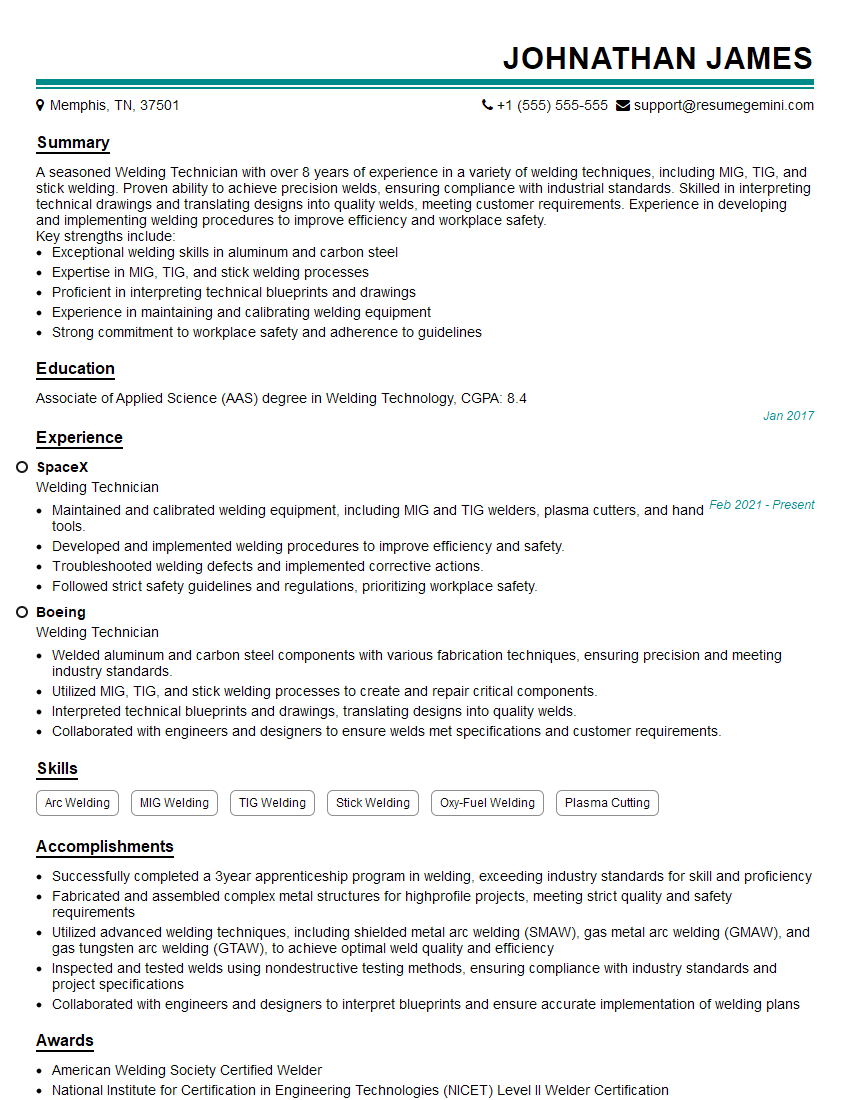
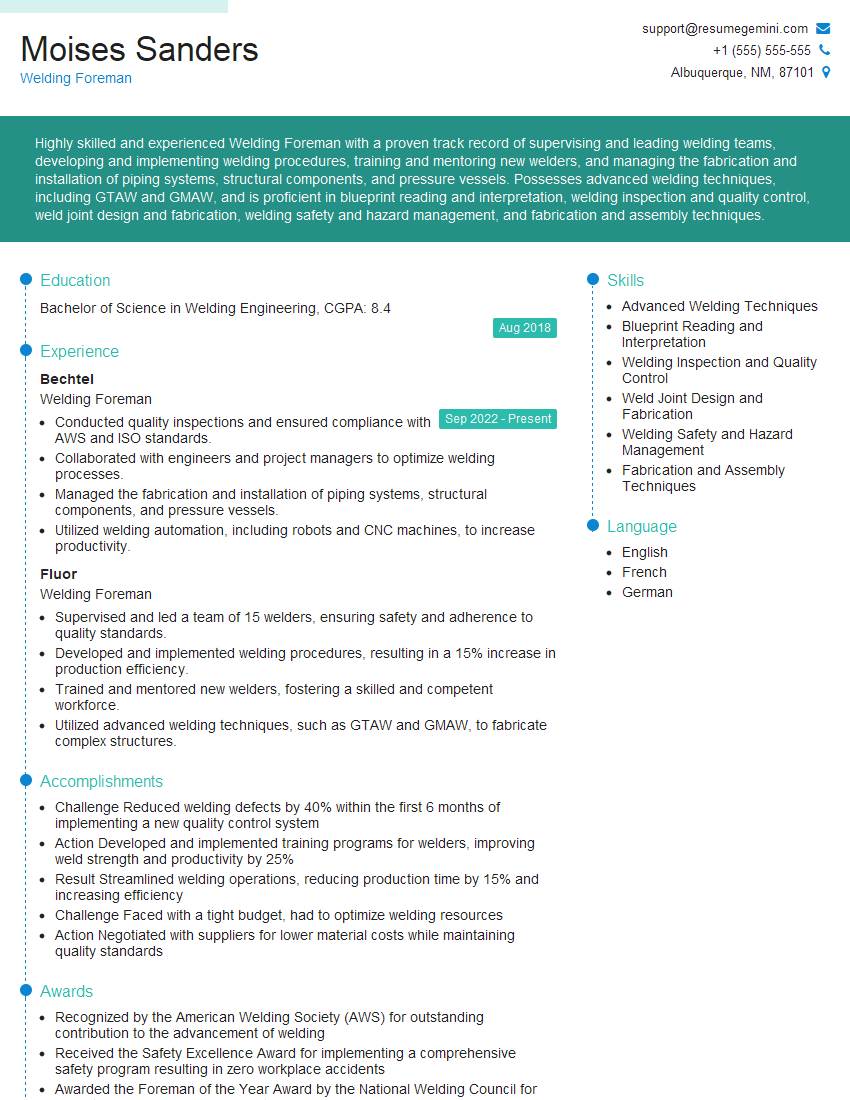
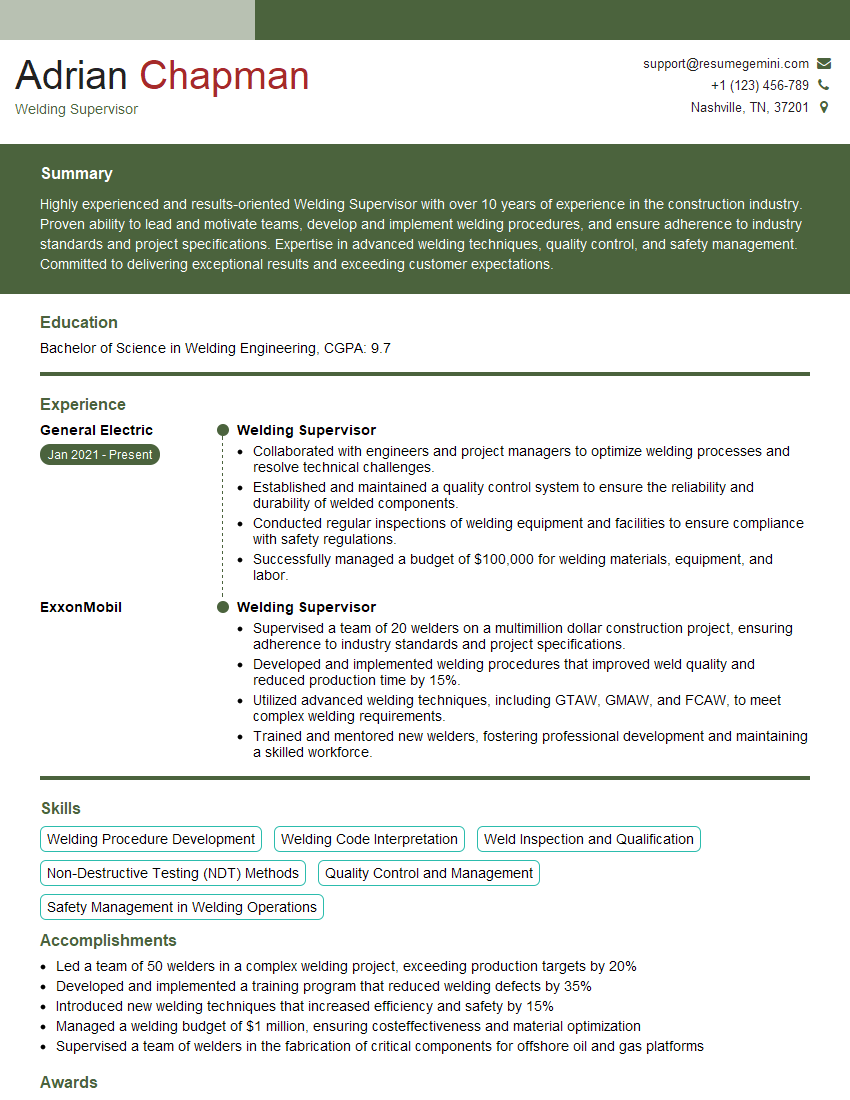
Mastering Welding Treatment is crucial for career advancement in this dynamic field. A strong understanding of these concepts opens doors to specialized roles and higher earning potential. To significantly boost your job prospects, it’s essential to create a professional, ATS-friendly resume that highlights your skills and experience effectively. ResumeGemini can help you build a compelling resume that showcases your expertise in Welding Treatment. We provide examples of resumes tailored to this specific field, helping you present your qualifications in the best possible light.
Explore more articles
Users Rating of Our Blogs
Share Your Experience
We value your feedback! Please rate our content and share your thoughts (optional).
What Readers Say About Our Blog
Really detailed insights and content, thank you for writing this detailed article.
IT gave me an insight and words to use and be able to think of examples