Interviews are opportunities to demonstrate your expertise, and this guide is here to help you shine. Explore the essential Welding Various Metals interview questions that employers frequently ask, paired with strategies for crafting responses that set you apart from the competition.
Questions Asked in Welding Various Metals Interview
Q 1. What welding processes are you proficient in?
My expertise spans a wide range of welding processes. I’m highly proficient in Gas Metal Arc Welding (GMAW), often called MIG welding; Gas Tungsten Arc Welding (GTAW), better known as TIG welding; Shielded Metal Arc Welding (SMAW), or stick welding; and Flux-Cored Arc Welding (FCAW). I also have experience with advanced techniques like submerged arc welding (SAW) for large-scale projects and resistance welding for specific applications requiring precise joining.
Each process has its strengths and is best suited for different materials and applications. For example, MIG welding is fast and efficient for large projects, while TIG welding offers superior control and precision for intricate work. My experience allows me to select the optimal process for any given task, ensuring high-quality welds.
Q 2. Explain the difference between MIG and TIG welding.
MIG and TIG welding are both arc welding processes, but they differ significantly in their techniques and applications. MIG welding uses a consumable electrode (wire) that feeds continuously into the weld pool, shielding the weld with a gas such as argon or CO2. It’s a faster process, ideal for mass production and less critical applications. Think of it like using a glue gun – fast and efficient for most jobs.
TIG welding, on the other hand, utilizes a non-consumable tungsten electrode, and a separate filler metal rod is added manually to the weld pool. A shielding gas, typically argon, protects the weld from atmospheric contamination. TIG welding offers exceptional control and precision, resulting in cleaner, higher-quality welds suitable for critical applications and intricate designs. It’s more like using a tiny brush to paint a precise detail – slower but much more controlled.
Q 3. Describe the various types of welding filler metals and their applications.
Filler metals are crucial in welding; they act as the bridge between the base metals being joined. The choice of filler metal depends heavily on the base metal’s composition and the desired weld properties. Common types include:
- Steel filler metals: Used for welding various steel grades, ranging from mild steel to stainless steel. The composition varies depending on the base metal and application, including elements like manganese, silicon, and chromium to enhance properties.
- Aluminum filler metals: Used for joining aluminum alloys. These fillers contain alloying elements to match the base metal’s composition and provide good corrosion resistance.
- Stainless steel filler metals: Specifically designed for welding different stainless steel grades. They often contain chromium, nickel, and molybdenum to maintain the corrosion resistance of the base metal.
- Nickel-based filler metals: Used in high-temperature applications due to their superior strength and corrosion resistance at elevated temperatures.
Choosing the wrong filler metal can lead to weld defects, cracking, or poor corrosion resistance. For example, using a filler metal with low corrosion resistance on a stainless steel component would compromise the entire structure’s durability.
Q 4. How do you select the appropriate welding parameters for different base materials?
Selecting the correct welding parameters is critical to achieving strong, sound welds. These parameters include voltage, amperage, travel speed, and shielding gas flow rate. Each base material has specific requirements. For example:
- Steel: Requires higher amperage for thicker materials and lower amperage for thinner sections. Voltage influences penetration depth, and travel speed affects the weld bead profile.
- Aluminum: Demands a cleaner surface preparation and often needs a higher voltage and lower amperage than steel to prevent porosity. The use of a pulsed current can improve weld quality.
- Stainless Steel: Is sensitive to heat input; therefore, the welding process and parameters should minimize distortion and maintain the integrity of the passive oxide layer.
I use welding data sheets, manufacturers’ recommendations, and my own experience to determine the optimal settings for each material. Trial welds are often performed to fine-tune the parameters before proceeding with the main welding operation.
Q 5. What are the safety precautions you take while welding?
Safety is paramount in welding. My safety procedures include:
- Personal Protective Equipment (PPE): Always wearing a welding helmet with appropriate shade lenses, welding gloves, flame-resistant clothing, and safety footwear.
- Ventilation: Ensuring adequate ventilation to remove welding fumes and gases, which can be toxic.
- Fire Prevention: Keeping fire extinguishers nearby and ensuring the workspace is free of flammable materials.
- Eye and Skin Protection: Protecting eyes and skin from ultraviolet (UV) radiation, intense heat, and sparks.
- Proper Grounding: Ensuring proper grounding of the welding equipment to prevent electrical shock.
I regularly inspect my equipment to ensure it’s in safe working condition and follow all relevant safety regulations.
Q 6. How do you identify and correct common welding defects?
Identifying and correcting welding defects is a crucial part of the process. Common defects include porosity (gas pockets), undercutting (grooves at the weld edge), lack of fusion (incomplete joining of the base metals), and cracks. Identifying these often involves visual inspection, but sometimes requires more advanced techniques such as radiographic testing (RT) or ultrasonic testing (UT).
Corrective actions depend on the defect’s severity and type. Minor defects might be acceptable depending on the application, but more significant ones require re-welding or other repair methods. For example, porosity might require adjusting the shielding gas flow rate or preheating the base metal, while lack of fusion necessitates cleaning the surfaces thoroughly before re-welding. Documentation of the defects and the corrective actions is essential.
Q 7. Explain the importance of pre-weld and post-weld inspection.
Pre-weld and post-weld inspections are vital for ensuring the quality and integrity of the weld. Pre-weld inspection focuses on assessing the base materials, verifying their cleanliness and suitability for welding. It also involves checking for any surface defects that could affect the weld quality. This is analogous to a chef meticulously preparing ingredients before cooking a meal.
Post-weld inspection evaluates the weld itself after completion, checking for visual defects, dimensional accuracy, and mechanical properties. Methods like visual inspection, dye penetrant testing, or radiographic testing might be used. This is equivalent to the chef tasting and inspecting the finished dish before serving. Both pre- and post-weld inspections help prevent failures and guarantee the final product meets the required standards.
Q 8. What are the different types of weld joints and their strengths?
Weld joints are the connections formed when two or more pieces of metal are joined together through welding. Different joint designs offer varying strengths depending on the application and the type of weld used. Think of it like building with LEGOs – some connections are stronger than others.
- Butt Joint: The simplest joint, where two pieces are butted end-to-end. Strength depends heavily on proper penetration and the welding process used. A good butt weld can be incredibly strong, rivaling the base metal strength.
- Lap Joint: One piece overlaps the other. Simpler to weld than a butt joint but generally weaker, especially under stress.
- T-Joint: One piece joins another at a right angle, like the letter ‘T’. Strength varies considerably depending on the weld type and the leg length. Fillet welds are commonly used here.
- Corner Joint: Two pieces meet at a corner. The strength depends on the weld size and type. Again, fillet welds are prevalent.
- Edge Joint: The edges of two pieces are joined. This is often used for thinner materials and usually involves a fillet weld.
The strength of a weld joint is influenced not only by the joint design but also by factors like the welder’s skill, the welding process, the base materials, and the post-weld heat treatment.
Q 9. Describe your experience with different types of welding equipment.
Throughout my career, I’ve gained extensive experience with a wide range of welding equipment, from traditional methods to advanced automated systems. I’m proficient with:
- Shielded Metal Arc Welding (SMAW) / Stick Welding: I’m comfortable with various electrode types and sizes, understanding their impact on penetration and weld bead characteristics. I’ve used this for numerous repairs and fabrication jobs in diverse metal types.
- Gas Metal Arc Welding (GMAW) / MIG Welding: My experience includes both pulsed and conventional MIG welding, allowing me to adapt to different materials and thicknesses. I’m skilled in adjusting wire feed speed, voltage, and shielding gas to optimize weld quality.
- Gas Tungsten Arc Welding (GTAW) / TIG Welding: I’m proficient in TIG welding various metals, including stainless steel and aluminum. Precise control and attention to detail are crucial here, and I’ve consistently delivered high-quality welds even on intricate designs.
- Flux-Cored Arc Welding (FCAW): This method is particularly useful for outdoor applications and is quite versatile for heavier materials. I’m proficient in both self-shielded and gas-shielded FCAW.
- Automated Welding Systems: I have experience programming and operating robotic welding systems, crucial for consistent high-volume production in manufacturing environments.
My experience spans various applications, ensuring that I choose the appropriate equipment and technique for each task, prioritizing safety and quality.
Q 10. How do you interpret welding symbols and blueprints?
Interpreting welding symbols and blueprints is fundamental to my work. Welding symbols provide concise instructions on the type of weld, its size, location, and other crucial details. Think of them as a shorthand for complex weld designs.
For example, a symbol might show a < indicating a fillet weld on the arrow side of the joint, with a dimension indicating the leg size. A circle might signify a weld all around a component. Blueprints provide the overall context—the location of welds within a larger assembly.
My approach involves systematically examining each symbol and its corresponding reference on the blueprint. I cross-reference dimensions and specifications to ensure complete understanding before starting any welding operation. Any ambiguity is always clarified before proceeding. This careful review minimizes errors and maximizes efficiency.
Q 11. Explain the concept of weld penetration and its importance.
Weld penetration refers to how deeply the weld extends into the base metal. Imagine it like pushing a needle into fabric; penetration is how far the needle goes in. Sufficient penetration ensures a strong, reliable weld. Insufficient penetration creates a weak point vulnerable to failure.
Good penetration is crucial for structural integrity. It creates a full fusion between the weld material and the base metal, maximizing the joint’s strength. Insufficient penetration leads to incomplete fusion, creating weaknesses prone to cracking or breaking under stress. The required penetration depth varies based on the thickness of the materials being joined and the type of weld.
I ensure adequate penetration through careful control of welding parameters such as current, voltage, travel speed, and the selection of appropriate consumables. Regular visual inspection and often non-destructive testing methods are also used to confirm proper penetration.
Q 12. How do you manage welding fumes and ensure a safe working environment?
Welding fumes contain various hazardous substances, so managing them is paramount for safety. My approach involves a multi-pronged strategy:
- Ventilation: Using appropriate ventilation systems such as local exhaust ventilation (LEV) to remove fumes at their source is essential. This prevents them from spreading to the work area.
- Respiratory Protection: Wearing appropriate respirators, selected based on the type of welding and the materials being used, is crucial to safeguard respiratory health. Proper fit testing is essential.
- Personal Protective Equipment (PPE): This includes welding helmets with appropriate shade lenses, welding gloves, and flame-resistant clothing to protect against sparks, heat, and ultraviolet radiation.
- Regular Monitoring: Regular air quality monitoring ensures that fume levels remain within safe limits. This helps identify potential issues and adjust safety measures accordingly.
- Work Practices: Following proper welding procedures and good housekeeping practices minimizes fume generation and improves air quality.
Safety is never compromised. I always prioritize safe work practices and ensure that all necessary safety measures are in place before commencing any welding work.
Q 13. Describe your experience with different types of welding gases.
My experience with welding gases encompasses various shielding gases and fuel gases, each with its specific properties and applications. The choice of gas significantly impacts weld quality and the suitability of the process for specific materials.
- Shielding Gases: I’ve worked extensively with Argon, Helium, Carbon Dioxide (CO2), and mixtures of these gases in GMAW and GTAW. Argon provides excellent arc stability for TIG welding, especially with aluminum and stainless steel. CO2 is commonly used in MIG welding steel, offering better penetration but potentially at the expense of weld aesthetics. Gas mixtures offer tailored properties for specific applications.
- Fuel Gases: In oxy-fuel welding (such as oxy-acetylene), the choice of gas (acetylene, propane, etc.) influences the flame temperature and characteristics, affecting the welding process and penetration. Understanding the characteristics of each fuel gas is critical for controlling the weld pool.
Proper gas flow rates are critical. Too little gas leads to oxidation and porosity, while too much can disrupt the arc or flame.
Q 14. What are the factors that affect weld quality?
Numerous factors influence weld quality, and I consider them all meticulously. Think of it like baking a cake—many ingredients must work together perfectly for a delicious result.
- Base Material Properties: The chemical composition, thickness, and surface condition of the base metal significantly influence weldability. Cleanliness is essential; any contamination can lead to defects.
- Welding Process Selection: The appropriateness of the chosen welding process for the specific material and application is critical. Using the wrong process can lead to numerous issues, such as poor penetration or excessive spatter.
- Welding Parameters: Precise control of parameters such as current, voltage, travel speed, and gas flow is vital for achieving consistent weld quality. These parameters are meticulously adjusted for each project to account for differences in materials and design.
- Joint Design: A poorly designed joint, no matter how well welded, is prone to failure. The design must be appropriate for the intended load and application.
- Preheating and Post-weld Heat Treatment: These processes can significantly improve weld quality, particularly with thicker materials or materials prone to cracking. My experience dictates when and how these measures are implemented.
- Welder Skill and Technique: Proper technique and consistency in execution are critical. Years of practice and ongoing training help to deliver consistently high-quality welds. An experienced welder can recognize and address potential problems promptly.
Continuous monitoring and inspection, including often non-destructive testing, are vital to ensure that the final product meets the required quality standards.
Q 15. How do you perform a visual inspection of a weld?
A visual inspection of a weld is the first and often most crucial step in quality control. It’s a non-destructive method that relies on careful observation to identify potential defects. I start by assessing the weld’s overall appearance, looking for things like:
- Weld bead profile: Is it smooth, uniform, and consistent with the required profile? An excessively convex or concave bead might indicate problems with the welding parameters.
- Undercuts and overlaps: These are defects where the weld metal doesn’t fully fuse with the base metal, leaving grooves or excessive weld material beyond the joint. They weaken the structure.
- Porosity: Tiny holes in the weld metal, often caused by gas entrapment during welding. These can significantly reduce strength.
- Cracks: These are serious defects that can propagate under stress, leading to catastrophic failure. I carefully inspect for any cracks, especially at the weld toes (the edges of the weld).
- Spatter: Small droplets of molten metal that solidify away from the main weld. While not always critical, excessive spatter can indicate a problem with the welding process.
- Lack of fusion: This is where the weld metal hasn’t properly bonded with the base metal, creating a weak point. It often appears as a line or discoloration within the weld.
I use magnification tools like a magnifying glass or even a borescope for close inspection, particularly in hard-to-reach areas. Documentation is key – I always take detailed photographs and notes to record my findings.
For example, during the inspection of a pressure vessel weld, I once spotted a small crack that wasn’t immediately visible to the naked eye. This early detection prevented a potential catastrophic failure and ensured the vessel’s safe operation.
Career Expert Tips:
- Ace those interviews! Prepare effectively by reviewing the Top 50 Most Common Interview Questions on ResumeGemini.
- Navigate your job search with confidence! Explore a wide range of Career Tips on ResumeGemini. Learn about common challenges and recommendations to overcome them.
- Craft the perfect resume! Master the Art of Resume Writing with ResumeGemini’s guide. Showcase your unique qualifications and achievements effectively.
- Don’t miss out on holiday savings! Build your dream resume with ResumeGemini’s ATS optimized templates.
Q 16. Explain the importance of proper joint preparation before welding.
Proper joint preparation is paramount for achieving a strong, reliable weld. The goal is to create a clean, consistent joint geometry that facilitates good penetration and fusion of the weld metal with the base metal. Poor joint preparation often leads to defects like porosity, lack of fusion, and undercuts. The specific preparation depends on the type of joint (butt, lap, fillet, etc.), the base metal thickness, and the welding process.
Generally, joint preparation involves these steps:
- Cleaning: Removing any dirt, grease, paint, rust, or other contaminants from the base metal surfaces. This is often done using wire brushing, grinding, or chemical cleaning agents.
- Beveling (for thicker materials): Creating an angled edge on the base metal to allow for better penetration of the weld metal. The bevel angle and root opening are crucial for the success of the weld.
- Fit-up: Ensuring accurate alignment and spacing of the joint components before welding. This is vital for preventing gaps or overlaps.
- Shielding: Protecting the weld zone from atmospheric contamination, which can degrade the weld quality. This might involve using shielding gases (like argon or CO2) or covering the weld area with a flux.
For instance, when welding thick steel plates in a shipbuilding project, precise beveling and accurate fit-up are critical for ensuring complete penetration and preventing the formation of cracks in the weld.
Q 17. What are the different types of non-destructive testing (NDT) methods used in welding?
Non-destructive testing (NDT) is crucial for verifying the integrity of welds without damaging the structure. Several methods are commonly used:
- Visual Inspection (VT): As discussed earlier, this is the first line of defense and provides a quick assessment of surface defects.
- Radiographic Testing (RT): Uses X-rays or gamma rays to penetrate the weld and detect internal defects like porosity, cracks, and lack of fusion. The resulting images (radiographs) reveal the internal structure.
- Ultrasonic Testing (UT): Employs high-frequency sound waves to detect internal defects. The reflection of the sound waves provides information about the size, location, and nature of the flaws.
- Magnetic Particle Testing (MT): Suitable for ferromagnetic materials (like steel). A magnetic field is applied to the weld, and magnetic particles are sprinkled on the surface. The particles accumulate at discontinuities, revealing surface and near-surface defects.
- Dye Penetrant Testing (PT): A liquid dye is applied to the weld surface, penetrating any surface cracks. A developer then draws the dye out of the cracks, making them visible.
The choice of NDT method depends on the type of weld, the material, and the potential types of defects. In a critical application like an aircraft component, a combination of methods might be employed to ensure comprehensive testing.
Q 18. Describe your experience with robotic welding or automated welding systems.
I have extensive experience with robotic welding and automated welding systems, primarily in high-volume manufacturing environments. My expertise includes programming, setup, and troubleshooting of robotic welding cells, using various types of robots (e.g., six-axis articulated robots).
I’m proficient in using robot programming languages like KRL (KUKA Robot Language) and have experience with various welding processes like Gas Metal Arc Welding (GMAW) and Gas Tungsten Arc Welding (GTAW) integrated with robotic systems.
One project involved automating the welding of automotive chassis components. We were able to significantly improve production efficiency, consistency, and weld quality by implementing robotic welding. The robots maintained precise control over the welding parameters, resulting in highly consistent welds and reduced defects compared to manual welding.
My experience also includes working with automated welding systems using programmable logic controllers (PLCs). This involves integrating the welding system with other manufacturing processes, such as material handling and quality control systems.
Q 19. How do you troubleshoot common welding problems?
Troubleshooting welding problems often involves a systematic approach. I typically follow these steps:
- Identify the problem: What is the specific defect? Is it porosity, lack of penetration, excessive spatter, or something else? Visual inspection and NDT techniques are invaluable here.
- Analyze the welding parameters: Review the settings of the welding machine, including voltage, amperage, travel speed, and gas flow. Incorrect parameters are a common source of problems.
- Examine the materials: Check the base metal for cleanliness, proper preparation, and compatibility with the filler metal and welding process.
- Assess the equipment: Verify the proper functioning of the welding machine, gas supply, and other equipment. Worn-out components or malfunctioning equipment can significantly affect weld quality.
- Consider environmental factors: Wind, humidity, and temperature can all affect the welding process. Welding outdoors requires extra precautions.
For example, if I observe excessive spatter in a GMAW process, I might first check the wire feed speed, then the shielding gas flow, and then the contact tip-to-workpiece distance. Each parameter can impact spatter, and systematic troubleshooting allows for efficient problem solving.
Q 20. What are the different types of base metals you have experience welding?
My experience encompasses a wide range of base metals, including:
- Mild Steel: Commonly used in construction, automotive, and many other applications. I have extensive experience welding various grades of mild steel using different processes.
- Stainless Steel: Requires specialized techniques due to its susceptibility to oxidation and its different metallurgical properties. I’m familiar with various stainless steel grades (e.g., 304, 316) and the appropriate welding procedures.
- Aluminum: A lightweight metal that requires specific procedures to prevent porosity and oxide formation. I have experience with Gas Tungsten Arc Welding (GTAW), a process commonly used for aluminum.
- Copper and Copper Alloys: These metals are known for their high thermal conductivity, requiring specialized techniques to prevent overheating and distortion. I’ve worked with copper alloys in various applications.
- Nickel Alloys: Used in demanding environments due to their high strength and corrosion resistance. I have experience with specific welding techniques for different nickel alloys.
My experience also includes welding dissimilar metals, which presents unique challenges related to differences in melting points and coefficients of thermal expansion. Careful selection of filler metals and appropriate welding techniques are essential in these cases.
Q 21. Explain your understanding of different welding codes and standards (e.g., AWS D1.1).
I have a strong understanding of various welding codes and standards, most notably the American Welding Society (AWS) codes. AWS D1.1, ‘Structural Welding Code – Steel,’ is a key standard I frequently refer to in structural welding projects. This code provides guidelines on weld design, procedures, and quality control for steel structures.
These codes are critical for ensuring the safety and reliability of welded structures. They specify requirements for welder qualification, welding procedures, and non-destructive testing. Understanding these codes ensures that welds meet the required strength, toughness, and durability.
Besides AWS D1.1, I’m also familiar with other relevant codes such as:
- AWS D1.3: Structural Welding Code – Sheet Steel
- AWS D1.4: Structural Welding Code – Aluminum
- ASME Section IX: Welding and Brazing Qualifications
Following these standards ensures that the welding process adheres to industry best practices and that the final product meets the necessary safety and quality standards. Compliance with these codes is often a contractual requirement for large-scale projects.
Q 22. How do you maintain and calibrate welding equipment?
Maintaining and calibrating welding equipment is crucial for ensuring consistent weld quality and operator safety. This involves regular inspections, cleaning, and adjustments, as well as periodic calibration using standardized test procedures.
- Regular Inspections: Daily checks include verifying gas pressures (for GMAW/MIG and GTAW/TIG welding), checking the condition of cables and clamps for damage or wear, and ensuring the torch or electrode holder is properly connected and functioning correctly. Any loose connections, frayed cables, or damaged parts must be addressed immediately.
- Cleaning: Removing spatter and slag buildup from the welding gun, torch, and surrounding areas is essential. This prevents issues with conductivity and ensures proper arc initiation. For gas-metal arc welding (GMAW), regular cleaning of the contact tip is especially important.
- Calibration: Calibration depends on the type of equipment. For example, a calibrated welding power source needs a periodic check against a known standard using a precision voltmeter and ammeter to ensure the output current and voltage are within the manufacturer’s specifications. This often involves specialized tools and adherence to specific manufacturer procedures. For example, checking the accuracy of a timer on a pulsed MIG machine ensures consistent welding parameters.
- Preventive Maintenance: Following the manufacturer’s recommended maintenance schedule is vital. This often involves lubricating moving parts, replacing worn components, and conducting thorough inspections at predetermined intervals.
Ignoring these procedures can lead to inconsistent welds, equipment malfunction, and potential hazards.
Q 23. How do you determine the correct amperage and voltage for a particular welding job?
Determining the correct amperage and voltage for a welding job depends on several factors: the type of metal being welded, its thickness, the welding process being used, and the desired weld penetration. It’s a balancing act – too much current can cause burn-through, while too little results in insufficient fusion.
- Metal Type and Thickness: Thicker metals require higher amperage for proper penetration. Different metals have different melting points and electrical conductivity, influencing the required current and voltage.
- Welding Process: Each process (GMAW, GTAW, SMAW) has its own optimal parameters. Shielded metal arc welding (SMAW) generally uses lower voltage and higher amperage compared to gas tungsten arc welding (GTAW) which usually uses higher voltage and lower amperage.
- Joint Design: The geometry of the weld joint (butt joint, lap joint, fillet weld) affects heat distribution and therefore influences the required amperage and voltage. A butt joint typically needs higher current to penetrate the entire thickness than a fillet weld.
- Weld Penetration: The desired depth of penetration dictates the current. Greater penetration calls for higher amperage.
Welders often use welding data books or manufacturer’s recommendations as a starting point and fine-tune the settings based on experience and observation of the weld bead. Monitoring the weld pool and adjusting accordingly is a crucial skill acquired through practice and experience.
Q 24. Explain the principles of heat transfer during welding.
Heat transfer during welding is a complex process involving multiple mechanisms: conduction, convection, and radiation.
- Conduction: Heat transfers directly through the metal from the weld pool to the surrounding base material. The rate of conduction depends on the metal’s thermal conductivity; metals like copper transfer heat quickly, while others transfer it more slowly.
- Convection: Heat transfer occurs through the movement of molten metal within the weld pool and the surrounding gases. In GMAW processes, the shielding gas plays a significant role in convection heat transfer.
- Radiation: Heat is emitted from the weld pool as electromagnetic radiation in the infrared and visible spectrum. This radiated heat affects the workpiece and surrounding areas. The higher the temperature of the arc, the higher the radiative heat transfer.
Understanding these mechanisms is key to controlling the welding process and preventing defects. For example, preheating the base metal improves heat distribution and reduces the risk of cracking in thicker sections by increasing conduction and heat dissipation.
Q 25. Describe your experience working with different thicknesses of metals.
My experience encompasses working with a broad range of metal thicknesses, from thin sheet metal (less than 1/16 inch) to thick plates (over 1 inch). The techniques and parameters drastically change with varying thicknesses.
- Thin Sheet Metal: Requires low amperage and voltage to prevent burn-through. Precise control and a fast travel speed are crucial. Special techniques like tack welding may be employed to prevent warping.
- Medium Thickness Metal: (e.g., 1/8 to 1/2 inch) Offers more flexibility in welding parameters. A balance between penetration and weld bead shape is critical.
- Thick Plates: Requires high amperage and preheating to ensure adequate fusion and prevent cracking. Multi-pass welding is often necessary, with each pass depositing a layer of weld metal.
I am proficient in using different welding processes (GMAW, GTAW, SMAW) to handle various thicknesses effectively. For instance, GTAW is suitable for precise control with thin metals and allows for very good fusion and less distortion. SMAW is a good choice for very thick materials, although preheating and multi-pass are important considerations.
Q 26. How do you handle situations where welding defects are detected after completion?
Detecting welding defects after completion requires a systematic approach. The first step is identifying the type of defect (porosity, cracking, lack of fusion, undercut, etc.).
- Visual Inspection: A thorough visual inspection is the initial step. This often involves magnification tools and specialized lighting to find surface defects.
- Non-destructive Testing (NDT): Methods like radiographic testing (RT), ultrasonic testing (UT), or dye penetrant testing (PT) may be employed to detect internal flaws.
- Remedial Actions: Depending on the severity and location of the defect, different actions are taken. Minor surface defects might be ground or smoothed. More serious internal flaws might necessitate rework, removal, and re-welding of the affected section. In some cases, depending on the criticality of the weld, the entire part may need to be scrapped.
- Documentation: Every step, from defect identification to corrective action, is meticulously documented for traceability and quality control purposes.
The decision of how to handle a defect involves careful consideration of safety, cost, and the required structural integrity of the weldment. This often requires collaboration with engineers and quality control personnel.
Q 27. What are your strategies for continuous improvement in your welding skills?
Continuous improvement in welding is an ongoing process. My strategies include:
- Formal Training and Certifications: Regularly attending workshops, seminars, and pursuing advanced certifications to stay updated with the latest techniques and safety standards.
- Hands-on Practice: Consistent practice on different materials and joint types is essential to refine skills and gain experience.
- Seeking Feedback: Actively soliciting feedback from supervisors and peers to identify areas for improvement and learn from mistakes.
- Staying Updated: Following industry news, reading technical publications, and exploring new technologies to enhance knowledge and skills.
- Utilizing Technology: Exploring and implementing advanced welding equipment and techniques to improve efficiency and weld quality.
Ultimately, continuous learning and a dedication to excellence are vital in enhancing my welding skills and ensuring consistent high-quality workmanship.
Q 28. Describe a time you had to solve a complex welding problem.
During a project involving the construction of a large pressure vessel, we encountered a complex challenge: consistent cracking in the weld between two thick stainless steel plates. Initial inspection showed incomplete fusion in several areas. The initial welding parameters were insufficient for the thick stainless steel and the complex geometry of the joint.
Our solution involved a multi-pronged approach:
- Material Analysis: We re-analyzed the composition of the stainless steel to rule out any material defects.
- Parameter Adjustment: We experimented with different preheating temperatures, amperage, voltage, and travel speeds using GTAW. We implemented a multi-pass welding procedure with inter-pass cleaning to ensure complete fusion in each layer.
- Weld Joint Design Review: We reviewed the joint design to ensure its suitability for the high stresses involved in the application. We also verified the alignment and fit-up of the plates.
- NDT Implementation: We implemented stringent non-destructive testing (NDT) procedures at each stage to detect defects early on, preventing widespread cracking.
Through this combined approach, we successfully resolved the cracking issue and completed the pressure vessel according to specifications. This experience highlighted the importance of a methodical approach to problem-solving in welding, emphasizing the necessity of thorough analysis, experimentation, and effective communication.
Key Topics to Learn for Welding Various Metals Interview
- Arc Welding Processes: Understanding different arc welding techniques (SMAW, GMAW, FCAW, GTAW) and their applications for various metals like steel, aluminum, and stainless steel. This includes knowledge of electrode selection, amperage control, and travel speed adjustments.
- Metal Properties and Weldability: Knowing the characteristics of different metals (e.g., thermal conductivity, tensile strength) and how these affect weld quality, including potential issues like porosity, cracking, and warping. Practical application includes selecting the right welding process and parameters for each metal type.
- Joint Design and Preparation: Mastering different joint types (butt, lap, tee, corner) and their suitability for various applications. This includes understanding proper joint preparation techniques like beveling and edge cleaning to ensure strong and reliable welds.
- Weld Defects and Troubleshooting: Identifying common weld defects (e.g., undercut, lack of fusion, porosity) and understanding their causes. Practical application includes knowing how to adjust welding parameters and techniques to prevent and correct these defects.
- Safety Procedures and Regulations: Demonstrating a thorough understanding of safety protocols associated with welding, including PPE usage, fire prevention, and handling of hazardous materials. This is crucial for all welding-related interviews.
- Welding Codes and Standards: Familiarity with relevant welding codes (e.g., AWS D1.1) and their implications for quality control and inspection. This showcases a commitment to industry best practices.
- Material Compatibility and Selection: Understanding the implications of welding dissimilar metals and the potential challenges involved. This includes knowing suitable filler materials and techniques for creating strong and durable joints.
Next Steps
Mastering the art of welding various metals significantly enhances your career prospects in a highly skilled and in-demand field. It opens doors to specialized roles with higher earning potential and greater career satisfaction. To significantly boost your job search success, it’s crucial to have an ATS-friendly resume that highlights your skills and experience effectively. ResumeGemini is a trusted resource for crafting professional and impactful resumes. They offer examples of resumes specifically tailored to the Welding Various Metals field, ensuring your application stands out. Utilize this resource to create a resume that showcases your unique capabilities and helps you land your dream job.

Welding Engineer Resume Sample
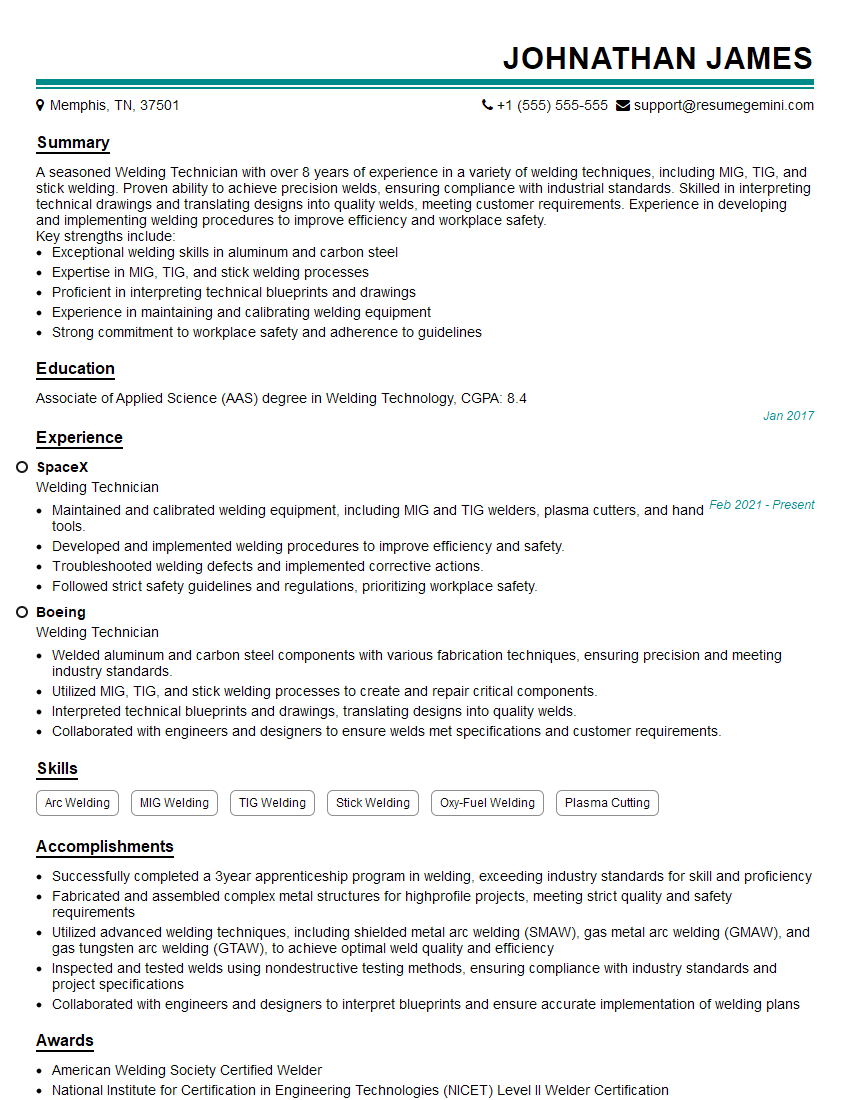
Welding Technician Resume Sample

Welding Instructor Resume Sample
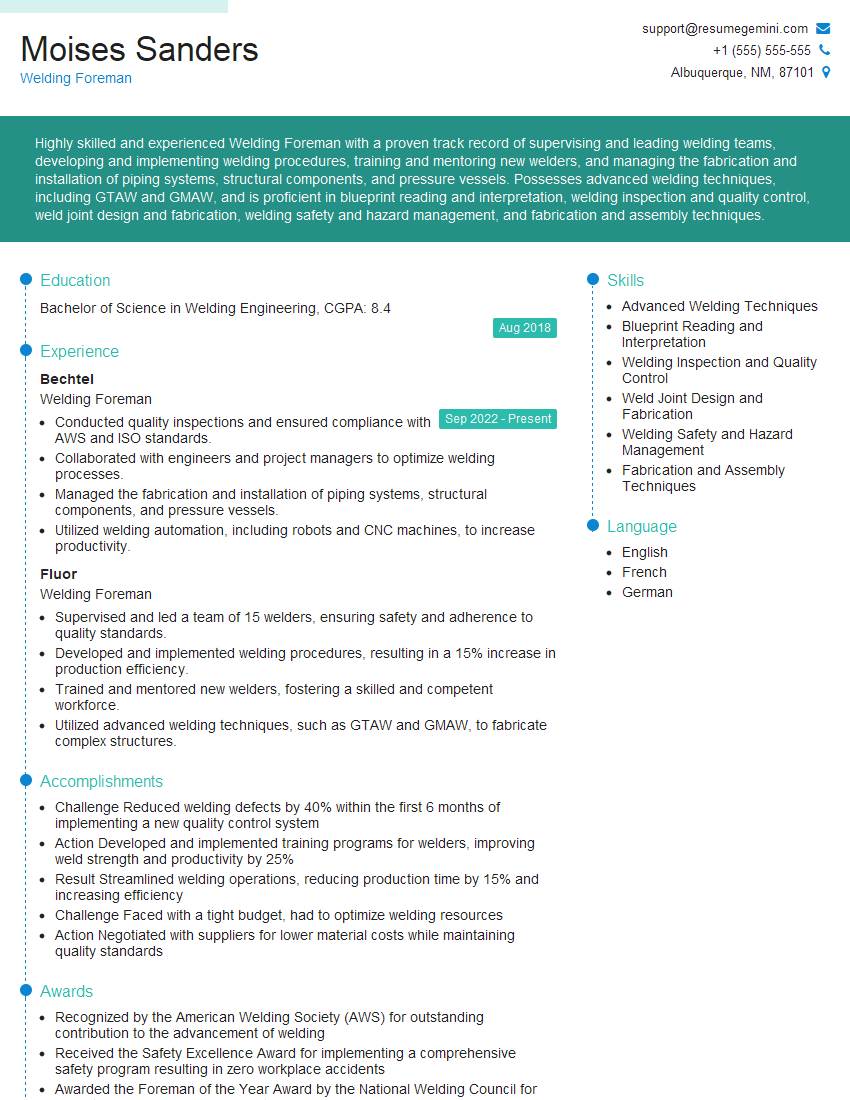
Welding Foreman Resume Sample
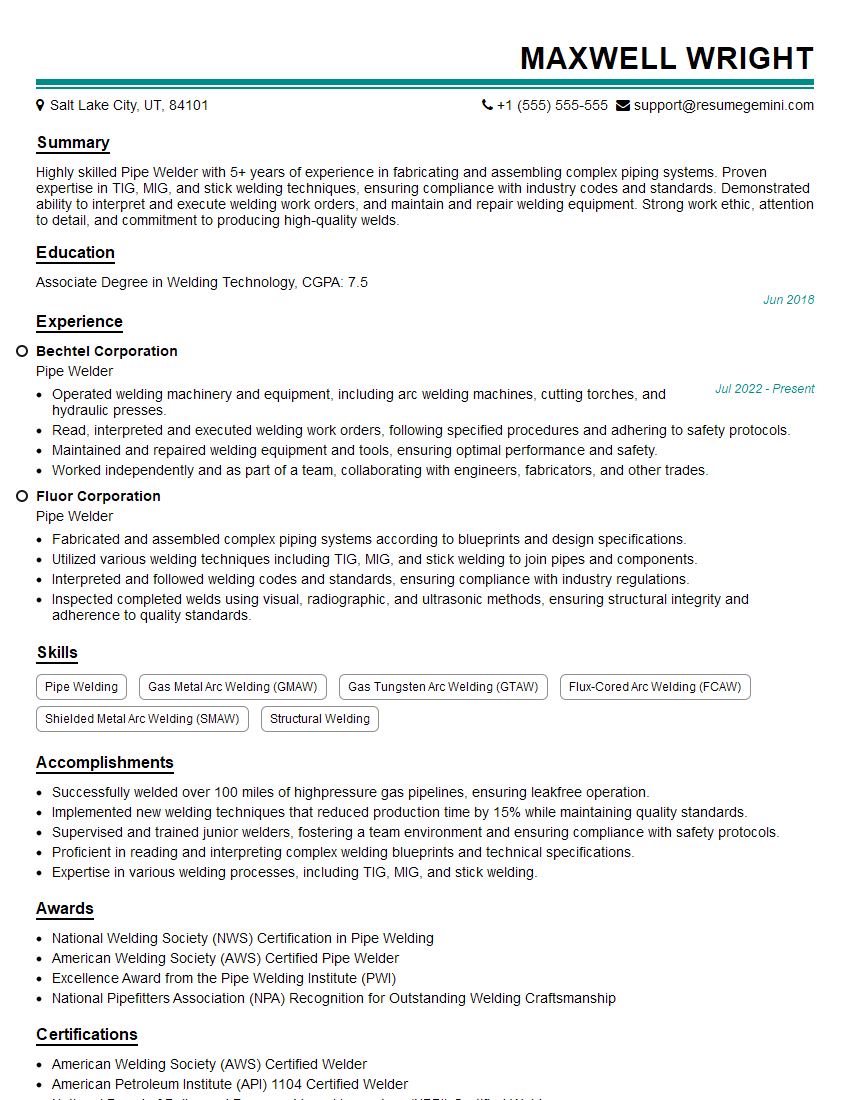
Pipe Welder Resume Sample
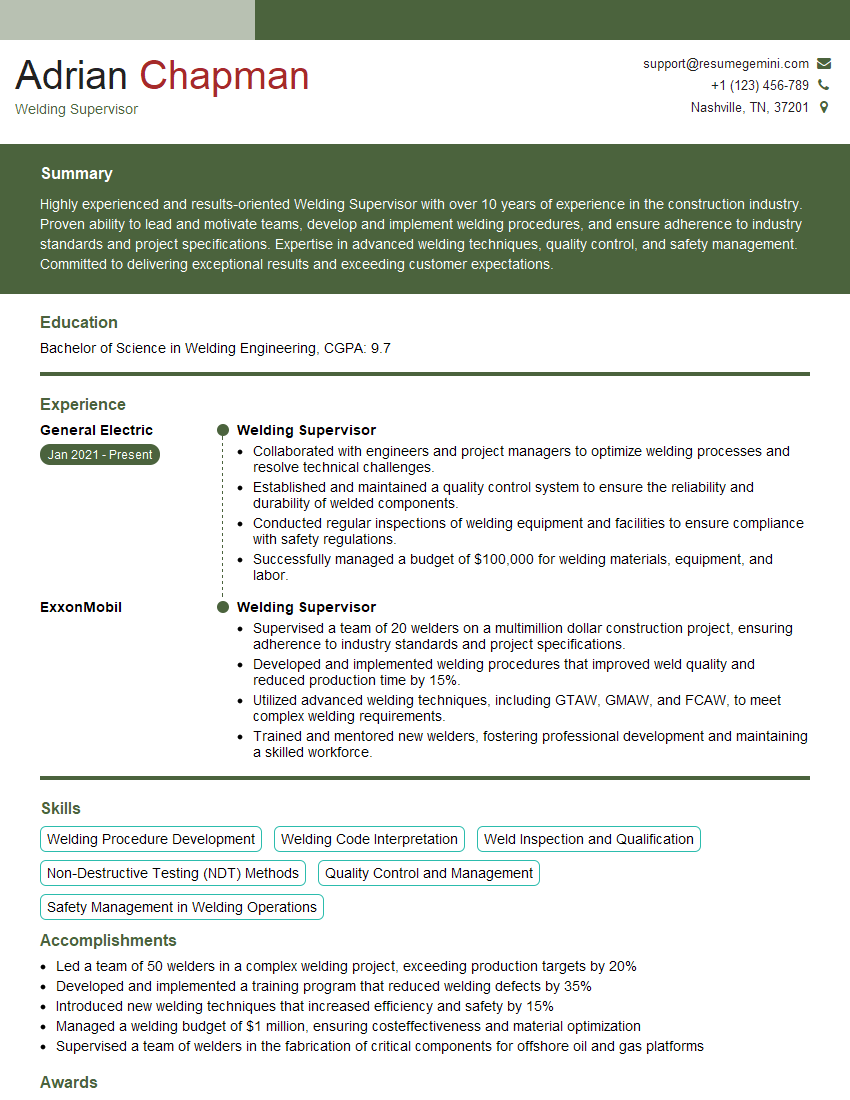
Welding Supervisor Resume Sample
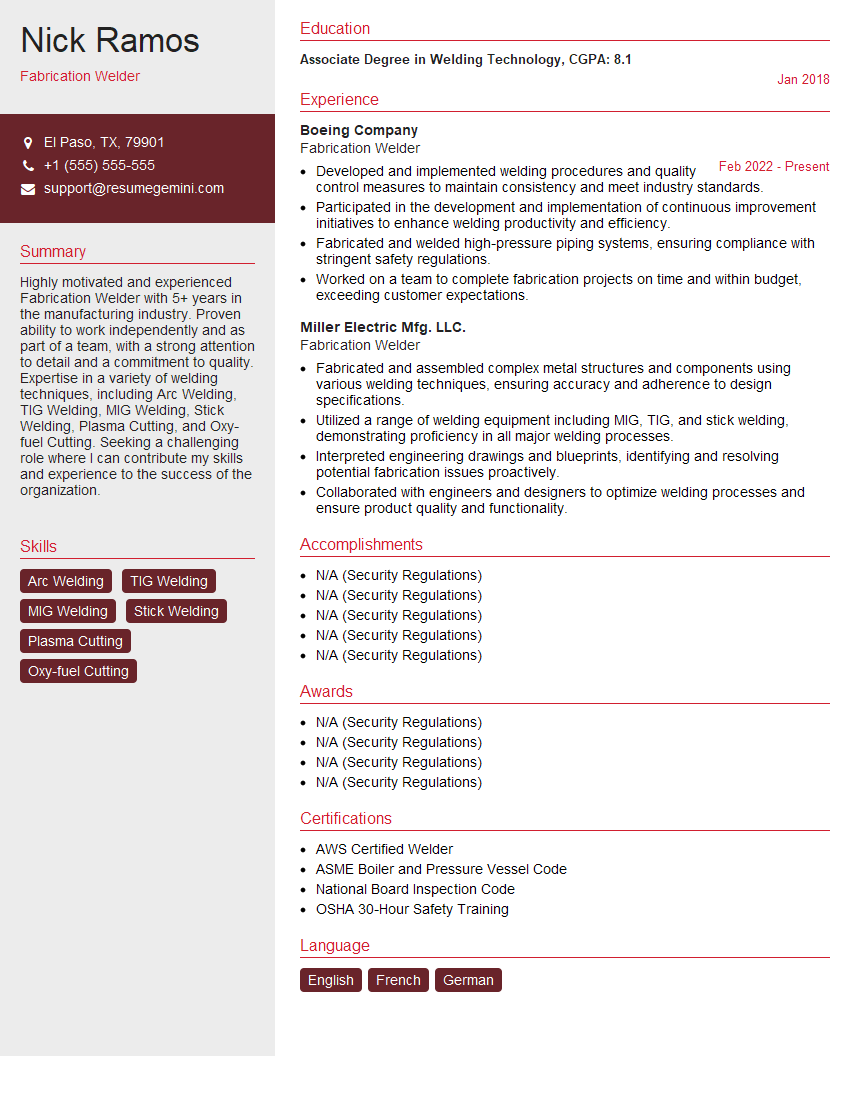
Fabrication Welder Resume Sample
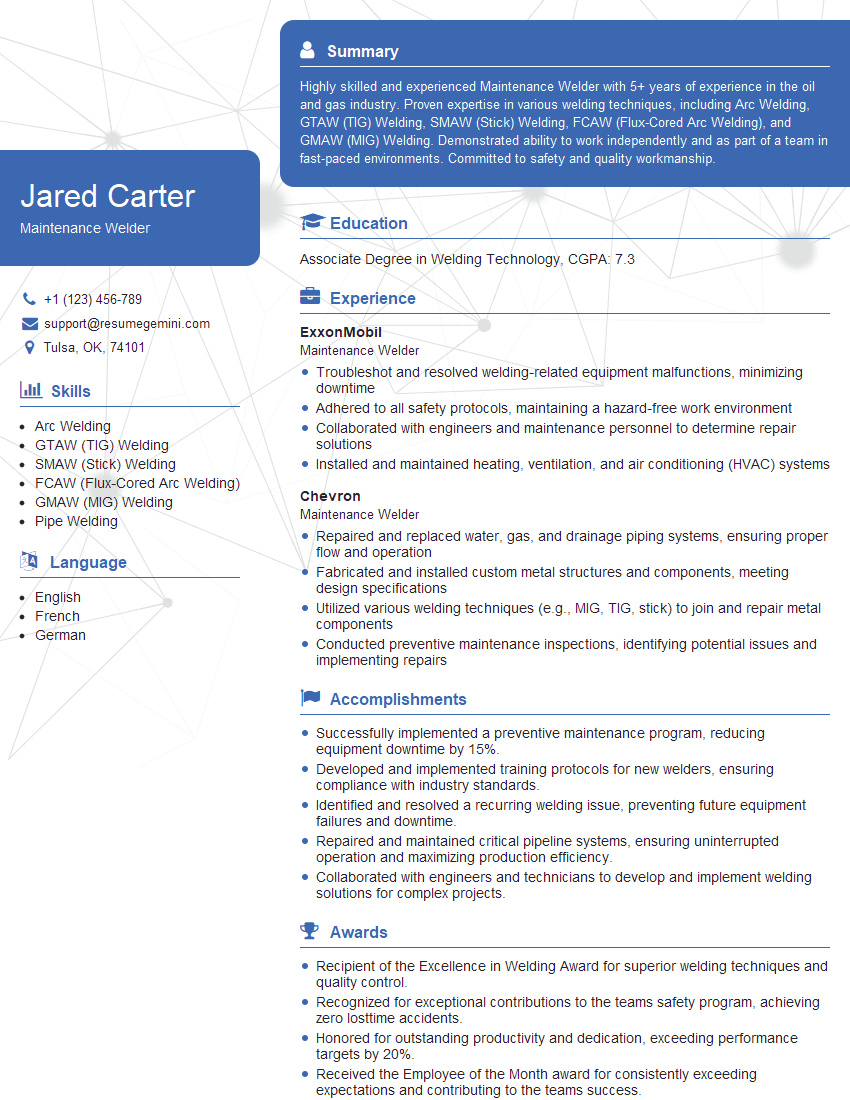
Maintenance Welder Resume Sample
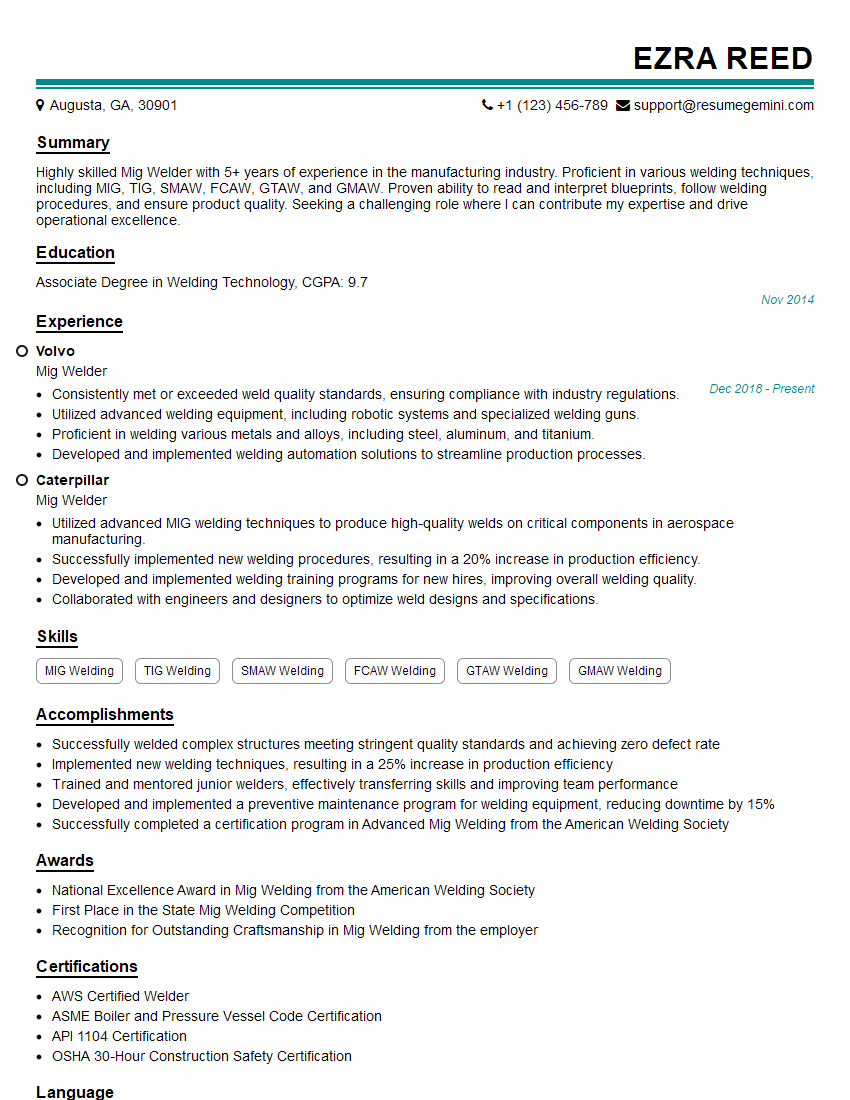
Mig Welder Resume Sample
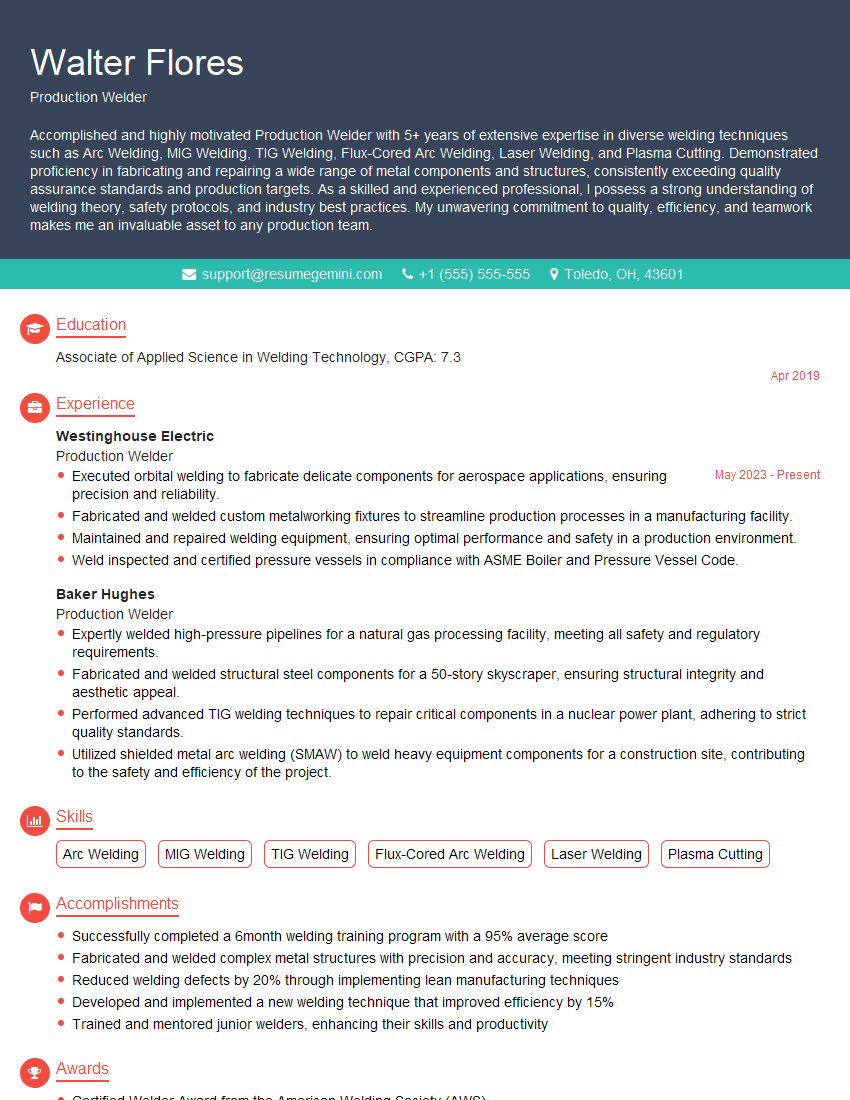
Production Welder Resume Sample
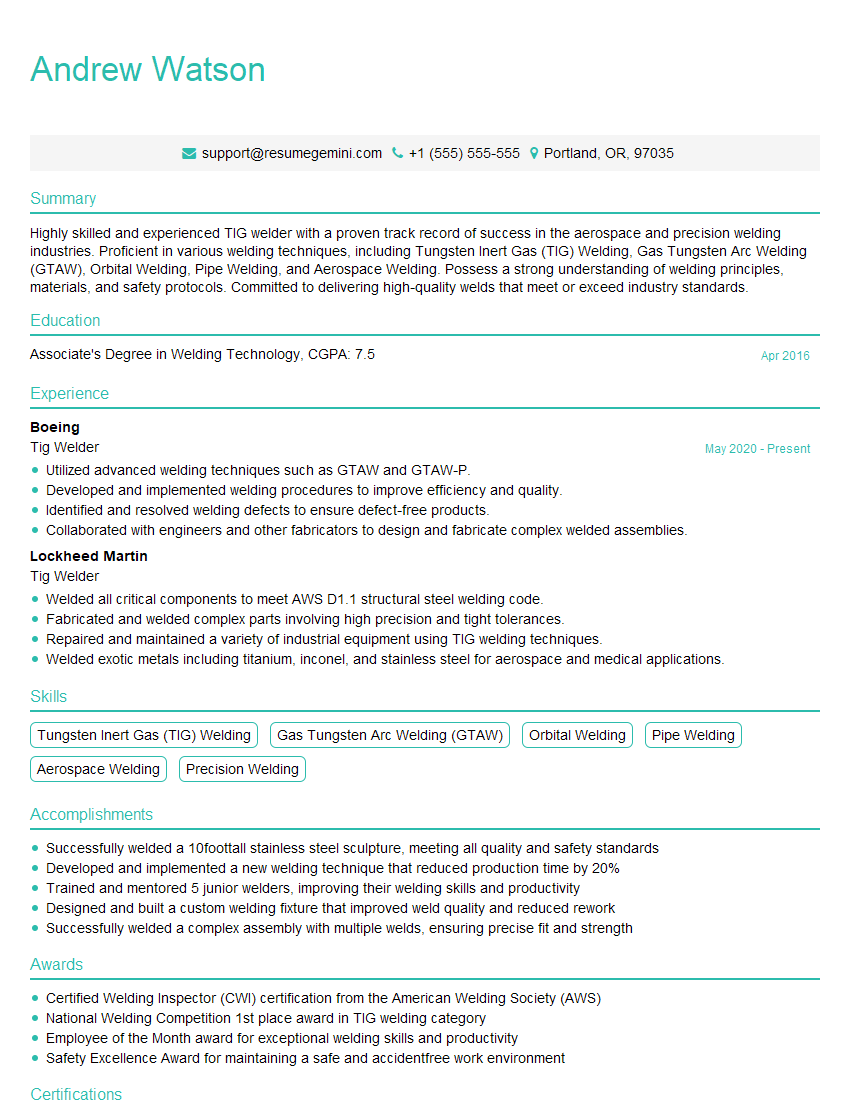
Tig Welder Resume Sample
Explore more articles
Users Rating of Our Blogs
Share Your Experience
We value your feedback! Please rate our content and share your thoughts (optional).
What Readers Say About Our Blog
Really detailed insights and content, thank you for writing this detailed article.
IT gave me an insight and words to use and be able to think of examples