Interviews are opportunities to demonstrate your expertise, and this guide is here to help you shine. Explore the essential White Balance Correction interview questions that employers frequently ask, paired with strategies for crafting responses that set you apart from the competition.
Questions Asked in White Balance Correction Interview
Q 1. Explain the concept of white balance in digital imaging.
White balance in digital imaging refers to the process of adjusting the colors in a photograph so that white objects appear white, and other colors appear natural and accurate. It’s crucial because cameras, unlike our eyes, don’t inherently know what ‘white’ should look like under different lighting conditions. Imagine taking a photo indoors under a tungsten light bulb; without white balance correction, the photo might have an orange or yellowish cast. White balance ensures your image accurately reflects the colors present in the scene.
Think of it like this: your camera’s sensor captures light, but it needs help interpreting the color temperature of that light. White balance is the mechanism that provides this interpretation.
Q 2. What are the different white balance presets (e.g., Daylight, Shade, Tungsten)?
Cameras offer several preset white balance options designed to compensate for different light sources. These presets adjust the color temperature to neutralize the dominant color cast. Common presets include:
- Daylight: For sunny outdoor conditions (around 5500K).
- Shade: For slightly cooler light found under trees or in shaded areas (around 6500K).
- Tungsten (Incandescent): For indoor lighting with traditional tungsten light bulbs (around 2700K – warm yellowish light).
- Fluorescent: For lighting from fluorescent tubes (varies significantly depending on the type of fluorescent bulb, often cool and bluish).
- Flash: For the relatively cool light from a camera flash (around 5500K – similar to daylight).
- Cloudy: For overcast daylight (around 6500-7500K).
These are approximate values; the actual color temperature can vary.
Q 3. How does color temperature affect white balance?
Color temperature, measured in Kelvin (K), describes the apparent color of a light source. It ranges from very warm (low Kelvin values, like the reddish glow of a candle flame) to very cool (high Kelvin values, like the bluish tint of a clear midday sky). White balance is directly impacted by color temperature because different light sources have different color casts. A warmer light source (lower Kelvin) will give a photo a yellowish or orange tint, while a cooler light source (higher Kelvin) will make it appear bluish or purplish. The white balance setting adjusts for these differences, aiming to make white appear neutral.
For example, a photo taken under a tungsten lamp (around 2700K) will need a warmer white balance setting to correct for its yellowish cast, while a photo shot on a clear sunny day (around 5500K) might benefit from a cooler setting, or sometimes the daylight preset is sufficient.
Q 4. Describe the process of correcting white balance in post-processing.
Correcting white balance in post-processing involves adjusting the color balance of an image after it has been captured. This is often necessary when the initial white balance setting wasn’t accurate or optimal. The goal is to make whites appear white and restore natural color rendering. The process generally involves manipulating the color channels (red, green, and blue) to neutralize any color casts present in the image. This is achieved through tools that alter the overall color temperature and tint of the image.
Typically, it involves identifying the dominant color cast (e.g., too much blue, too much yellow) and then making adjustments to counteract it. One might subtly shift the color balance to bring the photo closer to a neutral tone where whites are truly white.
Q 5. What are the common methods for correcting white balance in Adobe Photoshop or Lightroom?
Adobe Photoshop and Lightroom provide several ways to correct white balance. Both offer a White Balance tool which allows you to adjust color temperature and tint directly. You can use an eyedropper tool to sample a neutral area in the image (ideally something that should be truly white or gray) and the software will adjust the white balance accordingly. Alternatively, you can select a preset, or use the Temperature and Tint sliders to fine-tune the color balance manually. Both programs also often include a ‘White Balance’ adjustment in their tools for color balance corrections.
Example (Lightroom): In Lightroom’s Develop module, you’ll find the White Balance tool with a Temperature and Tint slider. You can also use the eyedropper to select a neutral point.
Q 6. Explain the difference between auto white balance and manual white balance.
Auto white balance (AWB) is an automated feature that attempts to determine the color temperature of the light source and adjust the white balance accordingly. It’s convenient but can sometimes be inaccurate, especially in complex lighting scenarios or with unusual light sources. Manual white balance gives you complete control over the color temperature and tint. You manually select a preset or adjust the settings based on the lighting conditions and your artistic intent. This provides more precise control and is preferred when AWB fails to produce accurate results or when you want a specific color mood in the image.
In essence, AWB is a quick solution, ideal for snapshots, while manual white balance offers precision and is suitable for more demanding situations where accurate color representation is vital (such as product photography or professional portraiture).
Q 7. How do different lighting conditions influence white balance?
Different lighting conditions drastically influence white balance. The color temperature changes depending on the light source (sunlight, tungsten, fluorescent, etc.) and the time of day. Sunlight is warmer at sunrise and sunset (lower Kelvin) and cooler at midday (higher Kelvin). Cloudy days have a cooler color temperature than sunny days. Indoor lighting varies greatly; incandescent bulbs are warmer than fluorescent lights, and LED lights can range widely in color temperature. Mixed lighting (a combination of different light sources) poses the greatest challenge, creating unpredictable color casts that require careful white balance correction.
For example, shooting indoors with a mixture of tungsten and daylight will likely create an unnatural color cast that needs careful post-processing adjustments to neutralize. Understanding these variations is crucial for choosing appropriate white balance settings or for effective post-processing correction.
Q 8. How does white balance affect the overall mood and tone of an image?
White balance profoundly impacts an image’s mood and tone by influencing its overall color temperature. Think of it like adjusting the lighting in a room: a warm, yellowish light creates a cozy, intimate feeling, while a cool, bluish light evokes a more serene or clinical atmosphere. Incorrect white balance can drastically alter the perceived emotional impact of a photo.
For instance, a photo of a sunset with a cool white balance will appear less vibrant and warm, losing the golden hues that contribute to its magical feel. Conversely, a photo of a snowy landscape with a warm white balance might appear unnatural, almost as if it were lit by artificial light, losing its crisp, clean quality. The correct white balance ensures the colors accurately reflect reality, allowing the photographer’s artistic vision to shine through authentically.
Q 9. What are the consequences of incorrect white balance?
Incorrect white balance leads to a pervasive color cast across the entire image, making it look unnatural and unprofessional. This color cast distorts the true colors of the scene, making objects appear warmer (yellowish or orange) or cooler (bluish or purplish) than they actually are. This can render your photos unusable, especially in situations where color accuracy is crucial, such as product photography or event photography.
Imagine a portrait shot under tungsten lighting (warm) with a daylight white balance setting. The subject’s skin tones will appear unnaturally orange or yellowish. Conversely, using a tungsten white balance setting under daylight will result in a cool, bluish tint. This negatively impacts the image’s aesthetic appeal, and in professional contexts can affect the credibility and even legal admissibility of the image.
Q 10. What is a color temperature meter and how is it used?
A color temperature meter, also known as a color temperature sensor, is a device used to measure the color temperature of a light source, expressed in Kelvin (K). It essentially measures the relative proportions of different wavelengths of light emitted by the source.
It’s used by photographers and filmmakers to accurately determine the white balance setting needed for their camera. By measuring the light illuminating a scene, the meter provides a precise Kelvin value, allowing the photographer to select the appropriate white balance setting on their camera or in post-processing software to neutralize any color casts. This ensures accurate color reproduction in their images, particularly important in situations where there’s a mix of light sources or where precise color fidelity is crucial.
Think of it like a precision tool for setting the color ‘baseline’ before capturing the image. It eliminates guesswork and ensures consistent, accurate color rendering.
Q 11. Explain the concept of color casts and how they relate to white balance.
Color casts are unwanted color tints that dominate an image, often resulting from incorrect white balance. They appear as overall shifts in color, making everything seem too warm (orange, yellow) or too cool (blue, purple). The relationship with white balance is direct: an incorrect white balance setting directly causes the color cast. Essentially, your camera is interpreting the white point incorrectly, leading to a shift in all other colors.
For example, shooting indoors under incandescent light without adjusting white balance will result in an overall orange color cast. Similarly, shooting on a cloudy day without adjusting for the cool light might result in a bluish cast. Understanding color casts is fundamental to mastering white balance, as correcting the cast is the primary goal of white balance adjustment.
Q 12. How can you use a gray card to achieve accurate white balance?
A gray card is a neutral gray reference card that reflects light evenly across the visible spectrum. It’s used to achieve accurate white balance by providing a known neutral color for the camera to reference.
To use a gray card, simply photograph the card under the same lighting conditions as your intended subject. Then, in your editing software (or in-camera, if the option is available), use the gray card image as a reference to adjust the white balance. The software will analyze the gray card’s color data and adjust the overall color balance of your image to accurately represent the scene’s true colors. It’s a very reliable method for achieving accurate and consistent white balance, especially beneficial in complex lighting scenarios.
Q 13. Describe the challenges of white balance correction in low-light conditions.
White balance correction in low-light conditions presents significant challenges because low light often introduces increased noise (grain) and makes accurate color sensing more difficult. The camera’s sensor has to work harder to gather sufficient light, which can lead to inaccuracies in color interpretation.
The reduced amount of light available makes it harder for the camera to accurately determine the white point, thus increasing the likelihood of color casts. Additionally, the type of light source can also dramatically affect the results. For example, artificial lighting in low light often has a strong color temperature that is difficult to correct perfectly. Careful consideration of the light source and the use of techniques like using a high ISO setting (while acknowledging the trade-off with increased noise) can help mitigate these issues. Proper post-processing is often necessary to fine-tune white balance in low-light images.
Q 14. How can you adjust white balance in raw image files versus JPEGs?
Adjusting white balance is significantly more flexible and forgiving in raw image files than in JPEGs. Raw files contain significantly more image data, allowing for much greater latitude in post-processing adjustments without loss of image quality. You can often correct a severely off white balance in a raw file and recover accurate colors, whereas the same correction in a JPEG might result in undesirable artifacts or color banding.
In raw files, white balance adjustment is done using software such as Adobe Lightroom, Capture One, or others. You have a much wider range of tools to adjust the white balance, color temperature, and tint, often with a visual preview of the changes. In JPEGs, white balance adjustments are more limited and are often made within the camera itself or through less robust tools within editing programs, leading to a reduced level of control. Therefore, shooting in RAW is highly recommended for situations where precise white balance control is critical.
Q 15. What are the advantages and disadvantages of using different white balance correction methods?
White balance correction aims to neutralize colors, making whites appear truly white and other colors accurate to their true values. Different methods exist, each with its strengths and weaknesses.
- Auto White Balance (AWB): This is the camera’s built-in attempt to automatically determine the correct white balance. Advantages: Convenient and fast. Disadvantages: Can be inaccurate under complex lighting conditions, often leading to color casts, especially in mixed lighting or unusual color temperatures.
- Preset White Balance: Options like Daylight, Shade, Cloudy, Tungsten, Fluorescent offer pre-defined settings for common lighting types. Advantages: Simple and often effective in consistent lighting situations. Disadvantages: Limited flexibility; if the lighting doesn’t perfectly match the preset, inaccuracies result.
- Custom White Balance: This involves taking a picture of a neutral gray or white object under the specific lighting conditions and using that image as a reference. Advantages: High accuracy when properly implemented; allows for highly precise control in unique lighting scenarios. Disadvantages: More technically demanding; requires extra steps and a neutral reference object.
- Post-Processing Correction: Software like Photoshop or Lightroom allows for white balance adjustments after capture. Advantages: Flexibility and non-destructive editing; you can experiment with different settings without altering the original image. Disadvantages: Requires additional software and time; excessive correction can lead to artifacts or color degradation.
The choice depends on the context. A quick snapshot might benefit from AWB, while a professional photoshoot demands custom white balance for precision.
Career Expert Tips:
- Ace those interviews! Prepare effectively by reviewing the Top 50 Most Common Interview Questions on ResumeGemini.
- Navigate your job search with confidence! Explore a wide range of Career Tips on ResumeGemini. Learn about common challenges and recommendations to overcome them.
- Craft the perfect resume! Master the Art of Resume Writing with ResumeGemini’s guide. Showcase your unique qualifications and achievements effectively.
- Don’t miss out on holiday savings! Build your dream resume with ResumeGemini’s ATS optimized templates.
Q 16. How do you deal with mixed lighting scenarios that require white balance correction?
Mixed lighting presents a significant challenge to white balance. A scene might contain both warm tungsten light from a bulb and cool daylight from a window. The camera’s AWB often struggles to correctly interpret these conflicting color temperatures.
The most effective approach involves a combination of techniques:
- Careful Scene Assessment: Before shooting, identify the dominant light sources and their color temperatures. This helps you make informed decisions about which white balance setting to use or whether post-processing will be necessary.
- Selective Use of Presets: If one light source is considerably more dominant, you might select the appropriate preset (e.g., Daylight for a scene primarily lit by sunlight).
- Custom White Balance: In situations with significant mixed lighting, custom white balance is often best. You might need to create multiple custom settings if the color temperature varies dramatically within different areas of the scene.
- Post-Processing Correction: Software allows for targeted adjustments to different areas of the image. Masking tools let you isolate regions with specific color casts and correct them individually, effectively ‘blending’ the differently lit areas.
- Using Color Grading to Enhance: If perfect neutrality is not achievable, skilled color grading can balance the image and create an aesthetically pleasing look, even if it’s not technically ‘perfect’ white balance.
Remember, sometimes a slightly imperfect white balance can contribute to a more desirable artistic outcome.
Q 17. Explain the relationship between white balance and color grading.
White balance and color grading are closely related but distinct processes. White balance aims to achieve color accuracy by neutralizing color casts, while color grading involves creatively adjusting the overall color palette to achieve a specific look and feel.
Think of it like this: white balance is like setting a foundation – making sure the colors are accurate before applying additional styling. Color grading is the subsequent styling – applying a mood or effect to the overall image.
For example, you might first correct a color cast with white balance, making sure skin tones are natural. Then, during color grading, you might choose to desaturate certain areas to create a specific mood or increase the vibrancy of specific colors to enhance visual appeal.
Often, a correctly balanced white balance is crucial for successful color grading. If the base colors are off, subsequent color adjustments can result in unpredictable or unnatural effects.
Q 18. How does white balance affect skin tones in photography?
White balance significantly impacts skin tones. An incorrect white balance can result in skin appearing too warm (orange or reddish) or too cool (blueish or greenish).
For instance, under tungsten lighting (warm), an image with improper white balance might make skin appear overly orange. Conversely, under cool shade, incorrect white balance might render skin tones too bluish or green. Achieving accurate skin tones is a primary goal of many photographers, and accurate white balance is the critical first step.
Accurate white balance ensures the skin’s natural undertones—whether cool, neutral, or warm—are represented faithfully, adding to the image’s realism and overall quality.
Q 19. What is the role of histograms in evaluating white balance?
Histograms are valuable tools for evaluating white balance. They display the tonal distribution of an image, showing the relative frequency of each brightness level, from pure black to pure white.
In the context of white balance, we look for a histogram that is balanced and not skewed towards one side or color. A histogram significantly skewed to the left indicates that the image is too dark and may have a cool color cast. A skew to the right can mean it’s too bright and may have a warm color cast. A more balanced histogram suggests a relatively accurate white balance.
While a histogram doesn’t directly indicate specific color casts, a visual assessment of the histogram alongside the image itself helps ensure the white balance is suitable. Software often allows you to visualize the histogram’s color channels separately (RGB) to even better assess color balance.
Q 20. How can white balance be affected by the camera sensor?
The camera sensor plays a crucial role in how white balance is determined and applied. Different sensors have different spectral sensitivities—how they respond to different wavelengths of light. This inherent sensitivity can lead to variations in color rendition, even with the same white balance settings across different camera models.
Additionally, sensor characteristics like dynamic range and color depth can affect the accuracy and overall appearance of the final image after white balance adjustments are made. A sensor with higher dynamic range is better able to capture detail in both highlights and shadows, making it more forgiving of slight white balance errors, and capable of better post-processing adjustments.
Sensor variations mean that what constitutes ‘neutral’ white balance might differ slightly across various cameras. This is why consistent white balance across multiple cameras or the same camera over time can require calibration or careful attention to the specific sensor response profile.
Q 21. How can you use custom white balance settings?
Custom white balance offers the most control over color accuracy. It involves using a neutral-colored object (ideally a gray card, 18% gray) as a reference under the specific lighting conditions of your scene.
The process generally follows these steps:
- Obtain a neutral gray card: These are readily available from photography suppliers.
- Shoot a reference image: Photograph the gray card under the prevailing lighting conditions. Ensure the card is evenly lit and fills a significant portion of the frame.
- Set custom white balance: Most cameras have a menu option to select a custom white balance, which involves using the reference image you just shot. The process varies slightly from camera to camera; you’ll need to refer to your camera’s manual.
- Verify Results: Take test shots of your subject and evaluate the white balance; adjust if necessary. Sometimes, multiple iterations are required for perfect accuracy.
Custom white balance is essential in situations where AWB or presets are unreliable, such as when shooting under mixed lighting or with artificial light sources that have unusual color temperatures.
Q 22. What are some common mistakes people make when adjusting white balance?
A common mistake in white balance adjustment is relying solely on automatic settings. While convenient, auto white balance (AWB) can sometimes misinterpret the light source, leading to color casts. Another frequent error is neglecting to check the white balance throughout a shoot, especially when transitioning between different lighting conditions (e.g., from sunlight to shade). People also often forget to shoot a test image to verify their WB settings before committing to a crucial shot. Finally, some individuals struggle with understanding the different white balance presets and when to apply them appropriately. For instance, using a ‘Cloudy’ preset on a sunny day will result in images that are too warm.
- Example 1: Shooting a portrait under tungsten lighting (like incandescent bulbs) without adjusting the white balance to the appropriate preset will result in a very orange or yellow color cast.
- Example 2: Failing to adjust white balance when moving from indoor lighting to outdoor sunlight will cause inconsistency in the color temperature across your photo series.
Q 23. How does white balance correction impact file size?
White balance correction itself doesn’t directly impact file size. The file size is primarily determined by the image resolution, compression settings, and file format (e.g., JPEG, TIFF, RAW). However, if you’re working with RAW files, making significant white balance adjustments *in post-processing* can slightly increase the file size because it involves more complex calculations on the image data. The difference is usually negligible, but it might become noticeable with numerous adjustments, particularly with very high-resolution RAW files. JPEG files, which have already undergone compression, are less affected by post-processing WB changes.
Q 24. Discuss the importance of white balance consistency across a series of images.
Maintaining white balance consistency across a series of images is crucial for achieving a cohesive and professional look. Inconsistent white balance leads to jarring color shifts between photos, disrupting the visual flow and making the image series appear amateurish. Imagine a wedding photo album where some images are warm and others are cool—it would be distracting and unpleasant to view. Consistency ensures that the colors in your images accurately reflect the scene and creates a more visually appealing and harmonious collection. This is particularly important when images are meant to be viewed sequentially, such as in a slideshow or video.
Q 25. How would you troubleshoot an image with a severe color cast?
Troubleshooting a severely color-cast image involves a systematic approach. First, identify the type of color cast—is it too warm (orange/yellow), too cool (blue/purple), or another hue? This helps narrow down the possible causes. Then, I would attempt correction using a RAW editor (if possible) offering non-destructive editing. This allows for adjustments without permanently altering the original data.
- Assess the image: Determine the dominant color cast (e.g., strong blue cast).
- Use white balance tools: Experiment with the white balance eyedropper tool, selecting a neutral area (ideally pure white or gray) in the image. Or, try the pre-set options like ‘Cloudy,’ ‘Shade,’ ‘Tungsten,’ or ‘Fluorescent’ to see which one brings the colors closer to the intended look.
- Fine-tune with color balance tools: If the eyedropper or presets don’t completely resolve the issue, I’d use color balance or color mixer tools to selectively adjust individual color channels (red, green, blue) to further neutralize the cast.
- Consider curves: For advanced correction, adjusting the curves can offer very fine-grained control.
- Check for other issues: Ensure the color cast isn’t caused by an issue with the original image capture (like a faulty sensor). It could also be an artistic choice to make the image warmer or cooler.
If the image is a JPEG, the options for correction are more limited as changes are destructive, but many of the techniques above can still be used.
Q 26. Explain the concept of white balance bracketing.
White balance bracketing involves taking multiple shots of the same scene with different white balance settings. This is a precautionary measure to ensure you have a correctly balanced image, regardless of the initial setting. It’s especially helpful in challenging lighting conditions or situations where the AWB might falter. By bracketing, you are increasing your chances of capturing an image that faithfully represents the scene’s true colors. You usually bracket around the setting you feel is most accurate, for instance using presets like ‘Shade’, ‘Auto’, and ‘Daylight’.
Q 27. Describe a situation where you had to correct a challenging white balance issue.
I once had to correct a severely green-tinted series of photographs taken at a night market under sodium vapor lamps. The automatic white balance had completely failed to compensate for the distinctive yellowish-green cast emitted by these lights. The images, initially unusable due to the overwhelming green tint, needed extensive correction. I utilized a combination of techniques. First, I tried the white balance eyedropper tool in my RAW editor, but it wasn’t very effective because there were no truly neutral areas in the scene. So, I then used a combination of color balance adjustments and curves to very carefully reduce the green and compensate with warmer tones. This approach allowed me to recover images that would have otherwise been discarded.
Q 28. How does your experience with white balance translate to your broader image editing skills?
My experience with white balance correction is fundamental to my broader image editing skills. A strong understanding of color theory and how light affects colors is crucial for nearly all aspects of post-processing. Accurate white balance correction lays the foundation for effective color grading, color correction, and overall image refinement. If the white balance is incorrect, subsequent edits aiming for a realistic or aesthetically pleasing result become far more challenging. Mastering white balance helps develop a keen eye for color and subtleties of light, improving my ability to make informed decisions in all phases of photo editing and image manipulation.
Key Topics to Learn for White Balance Correction Interview
- Understanding Color Temperature: Grasp the concept of color temperature (Kelvin) and its impact on image appearance. Learn to identify and interpret different color temperatures in various lighting conditions.
- White Balance Methods: Become familiar with different white balance methods (e.g., Auto White Balance, Preset White Balance, Custom White Balance). Understand their strengths and weaknesses and when to apply each method.
- Color Spaces and Transformations: Explore the relationship between different color spaces (e.g., RGB, XYZ) and how white balance adjustments affect them. Understand color transformations and their implications for image quality.
- Practical Applications: Discuss how white balance correction is applied in various contexts, such as photography, videography, and image editing software. Consider examples in different shooting environments (indoors, outdoors, mixed lighting).
- Color Casts and Correction Techniques: Learn to identify and correct various color casts (e.g., blue, orange, green) using different techniques and tools. Understand the impact of incorrect white balance on image aesthetics and overall quality.
- Computational Photography and White Balance Algorithms: Explore the algorithms behind automated white balance and how they work to estimate and correct color temperature. Discuss the limitations of these algorithms and potential challenges.
- Troubleshooting and Problem Solving: Develop your ability to diagnose and solve white balance issues in images. Practice identifying the causes of incorrect white balance and implementing effective solutions.
Next Steps
Mastering white balance correction is crucial for career advancement in image processing, photography, videography, and related fields. A strong understanding of these concepts demonstrates technical proficiency and problem-solving skills highly valued by employers. To significantly increase your job prospects, it’s essential to create a professional and ATS-friendly resume that highlights your expertise. We strongly recommend using ResumeGemini to build a compelling resume showcasing your skills and experience. ResumeGemini provides tailored resume examples, including those specifically designed for candidates with expertise in White Balance Correction. Take the next step towards your dream career – build a standout resume with ResumeGemini today!
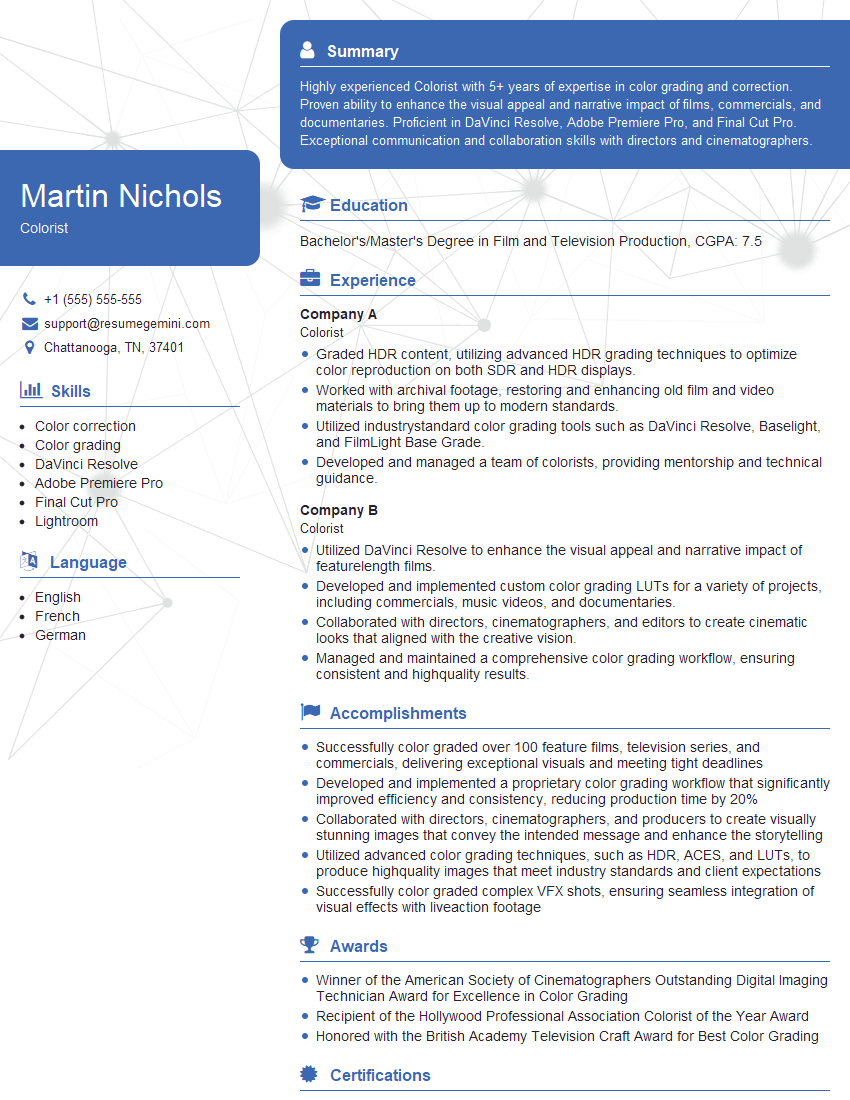
Colorist Resume Sample

Multimedia Specialist Resume Sample
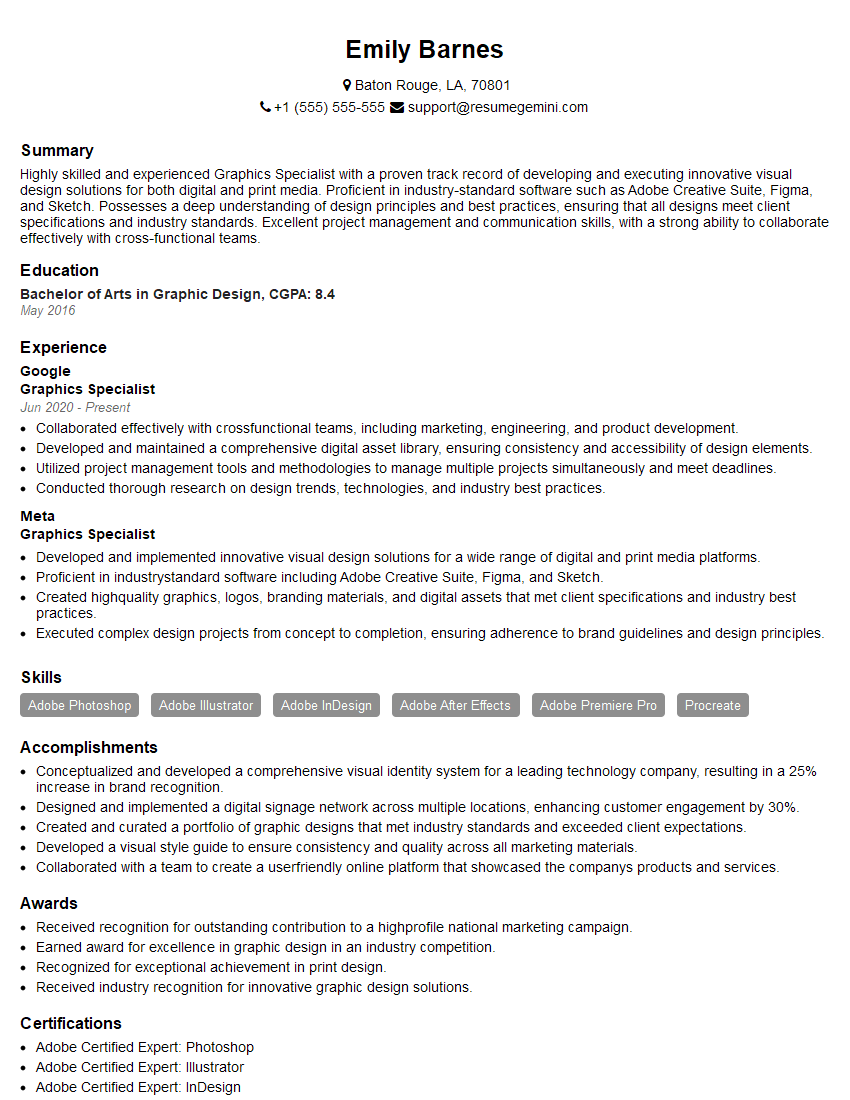
Graphics Specialist Resume Sample
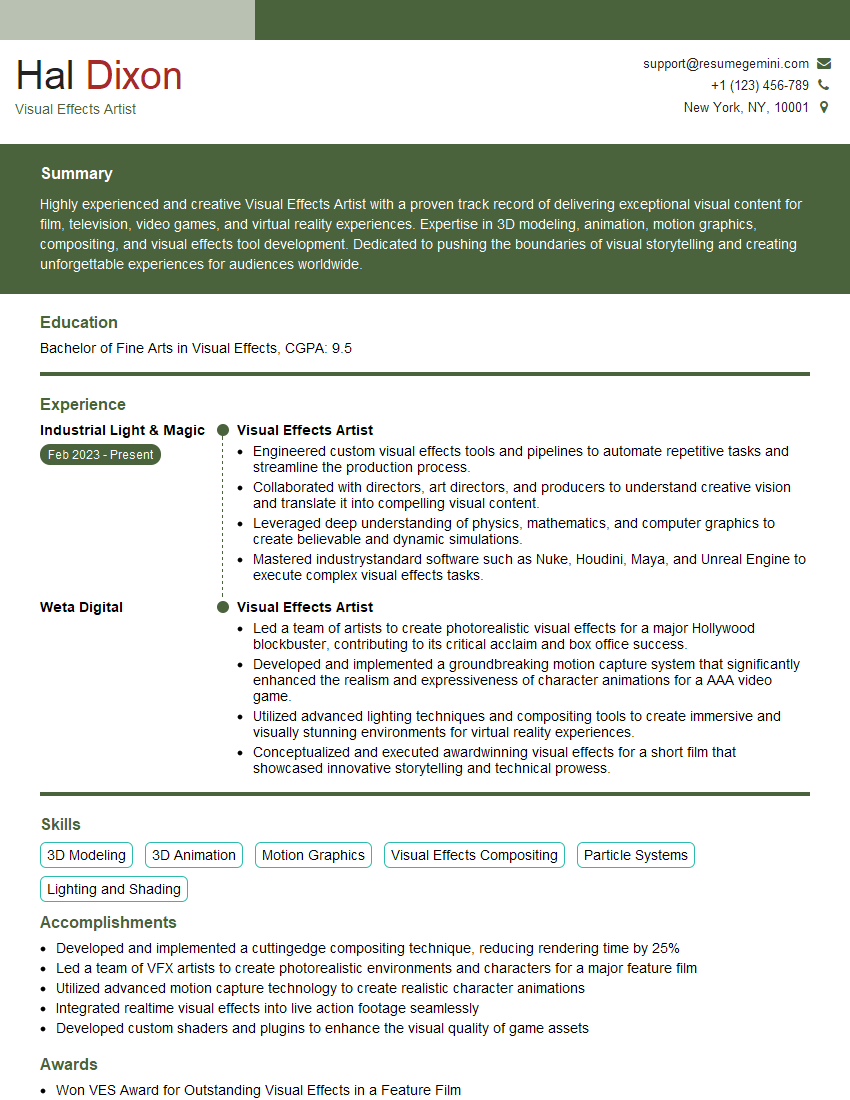
Visual Effects Artist Resume Sample
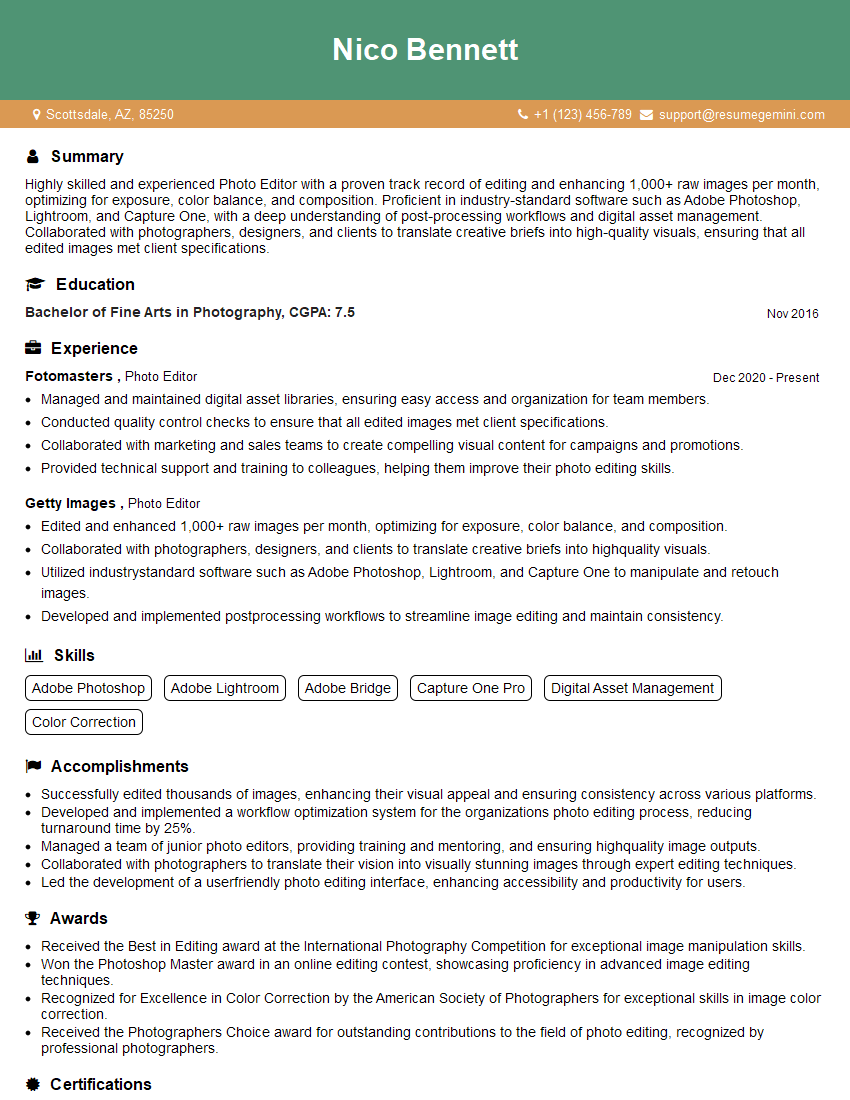
Photo Editor Resume Sample
Video Editor Resume Sample
Camera Operator Resume Sample
Cinematographer Resume Sample
Lighting Technician Resume Sample
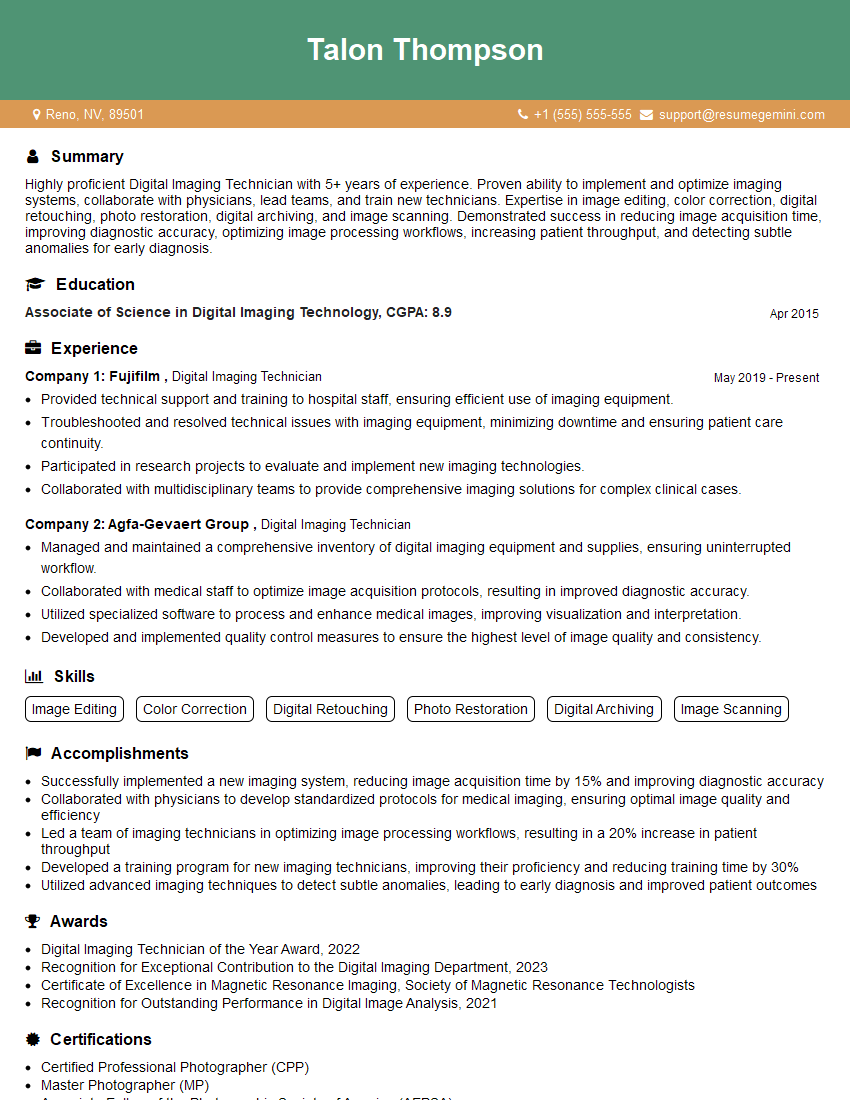
Digital Imaging Technician Resume Sample
Explore more articles
Users Rating of Our Blogs
Share Your Experience
We value your feedback! Please rate our content and share your thoughts (optional).
What Readers Say About Our Blog
Really detailed insights and content, thank you for writing this detailed article.
IT gave me an insight and words to use and be able to think of examples