Interviews are opportunities to demonstrate your expertise, and this guide is here to help you shine. Explore the essential Work Instructions and Procedures Development interview questions that employers frequently ask, paired with strategies for crafting responses that set you apart from the competition.
Questions Asked in Work Instructions and Procedures Development Interview
Q 1. Explain the difference between a work instruction and a standard operating procedure (SOP).
While both work instructions and standard operating procedures (SOPs) aim to standardize processes, they differ in scope and detail. Think of it like this: an SOP is the comprehensive recipe book for a whole restaurant, while work instructions are the specific recipe cards for individual dishes.
Work Instructions focus on a single task or a small, well-defined part of a process. They are typically shorter, more task-oriented, and often include step-by-step instructions with visuals. They’re designed for immediate execution.
Standard Operating Procedures (SOPs), on the other hand, are broader in scope and encompass a complete process or series of related tasks. They are more detailed, often including background information, safety considerations, and quality control checks. They may reference or incorporate multiple sets of work instructions.
Example: Imagine making a pizza. A work instruction might be ‘Spread tomato sauce evenly over the pizza base.’ An SOP would cover the entire pizza-making process, from dough preparation to baking and serving, encompassing various work instructions for each stage.
Q 2. Describe your experience developing work instructions for complex processes.
I have extensive experience developing work instructions for complex processes, particularly in manufacturing and pharmaceutical environments. For instance, I once developed work instructions for the assembly of a complex piece of medical equipment involving over 100 individual steps. This required a meticulous approach involving:
- Process Mapping: Detailed process mapping using flowcharts and diagrams to visually represent each step and sub-process.
- Risk Assessment: Identifying potential hazards and incorporating safety precautions into the instructions.
- Modular Design: Breaking down the complex process into smaller, manageable modules with individual work instructions for each.
- Cross-functional Collaboration: Working closely with engineers, technicians, and quality control personnel to ensure accuracy and completeness.
- Version Control: Utilizing a document management system to track revisions and ensure everyone uses the most current version.
The result was a set of clear, concise, and easy-to-follow work instructions that reduced assembly time, improved quality, and significantly minimized errors.
Q 3. How do you ensure your work instructions are clear, concise, and easy to understand?
Clarity, conciseness, and ease of understanding are paramount when developing work instructions. I use several techniques to achieve this:
- Simple Language: Avoiding technical jargon and using plain language appropriate for the target audience.
- Step-by-Step Instructions: Numbering each step clearly and concisely.
- Visual Aids: Incorporating images, diagrams, and videos to enhance understanding.
- Concise Sentences: Keeping sentences short and to the point.
- Active Voice: Using active voice to make instructions direct and unambiguous.
- Consistent Formatting: Maintaining a consistent format throughout the instructions to improve readability.
- Review and Feedback: Getting feedback from end-users to ensure the instructions are clear and effective.
For example, instead of writing ‘Ensure proper torque is applied,’ I’d use ‘Tighten bolt to 10 Nm using torque wrench.’
Q 4. What methods do you use to gather information for creating work instructions?
Gathering information for creating work instructions requires a multi-faceted approach. I typically use a combination of methods:
- Observation: Observing the process being performed by experienced personnel to understand the steps and techniques involved.
- Interviews: Conducting interviews with subject matter experts (SMEs) to gather their knowledge and insights.
- Document Review: Reviewing existing documents such as process flowcharts, engineering drawings, and previous work instructions.
- Workshops: Facilitating workshops with relevant stakeholders to gather input and consensus.
- Data Analysis: Analyzing historical data to identify bottlenecks, errors, and areas for improvement.
This combined approach ensures a comprehensive understanding of the process and allows for the creation of accurate and complete work instructions.
Q 5. How do you ensure accuracy and completeness in your work instructions?
Accuracy and completeness are crucial for effective work instructions. To ensure these, I implement the following strategies:
- Multiple Reviews: Having multiple individuals review the instructions for accuracy and completeness, including SMEs and end-users.
- Cross-checking: Comparing the instructions to other relevant documents and data sources.
- Pilot Testing: Testing the instructions in a controlled environment before full implementation to identify any errors or areas for improvement.
- Revision Control: Utilizing a version control system to track changes and ensure everyone is using the latest version.
- Regular Updates: Reviewing and updating the instructions regularly to reflect any changes in the process or equipment.
This rigorous approach minimizes the risk of errors and ensures the instructions remain current and relevant.
Q 6. What software or tools do you use for creating and managing work instructions?
I’m proficient in using various software and tools for creating and managing work instructions. My experience includes:
- Microsoft Word and Excel: For creating and formatting basic work instructions.
- Adobe Acrobat Pro: For creating and managing PDF versions of work instructions.
- Specialized Authoring Tools: Software specifically designed for creating and managing technical documentation, such as MadCap Flare or Arbortext Editor.
- Document Management Systems (DMS): Systems like SharePoint or Documentum to store, manage, and control versions of work instructions.
- Learning Management Systems (LMS): Systems like Moodle or Canvas to distribute and track access to work instructions.
The choice of software depends on the complexity of the instructions, the size of the organization, and the specific needs of the project.
Q 7. How do you incorporate visual aids into your work instructions?
Visual aids are essential for improving the clarity and understanding of work instructions. I use a variety of techniques to incorporate them effectively:
- Photographs: High-quality photographs of equipment, tools, and processes.
- Illustrations: Clear and concise illustrations that visually represent the steps in the process.
- Flowcharts: Diagrams that show the sequence of steps in a process.
- Videos: Short videos demonstrating the correct procedure.
- Screen captures: Screenshots of software interfaces or control panels.
- 3D models: In complex processes, 3D models can help visualize the process from different angles.
The key is to choose the most appropriate visual aid for each step, ensuring it is clear, concise, and easy to understand. Overusing visuals can be as detrimental as lacking them; the goal is to enhance, not overwhelm.
Q 8. How do you handle revisions and updates to existing work instructions?
Revisions and updates to work instructions are crucial for maintaining accuracy and efficiency. My approach involves a structured process, beginning with identifying the need for a change. This could stem from feedback from employees, process improvements, regulatory updates, or equipment modifications. Once the need is identified, I create a revision request, documenting the proposed changes clearly and concisely. This request is then reviewed by relevant stakeholders, including subject matter experts (SMEs) and potentially quality control personnel. After approval, the changes are implemented, and the updated version is clearly labeled with a new revision number (e.g., v1.1, v2.0). A change log is meticulously maintained, detailing all revisions made, the date of implementation, and the author. Finally, all affected personnel are notified of the update and provided with training as needed. This systematic approach ensures that everyone is working with the most up-to-date and accurate procedures.
For instance, if a new safety procedure is required, the change request would detail the new steps, the rationale behind the changes, and any necessary safety equipment. The updated document would reflect these alterations, and all employees would receive training before the new procedure is implemented. This ensures clarity, reduces errors, and improves safety.
Q 9. Describe your experience with version control systems for work instructions.
Version control is paramount in managing work instructions. I have extensive experience using systems like Git and SharePoint to manage multiple versions of documents. These systems allow me to track changes, revert to previous versions if needed, and ensure that only the approved and most recent version is accessible to employees. This is especially important in collaborative environments where multiple people may be contributing to the creation and updates of work instructions. Using a version control system prevents confusion caused by multiple conflicting versions, maintains a complete audit trail, and simplifies the process of identifying and managing changes over time. Each version is uniquely identified, and the history of revisions is easily accessible, promoting accountability and clarity.
For example, using Git, we could branch off the main version of a work instruction to make edits, testing and reviewing these changes before merging them back into the main branch, ensuring only thoroughly checked versions are deployed. This minimizes disruption and avoids unintended consequences.
Q 10. How do you ensure your work instructions comply with relevant regulations and standards?
Compliance is a critical aspect of work instructions. I ensure compliance by thoroughly researching and understanding all relevant regulations and standards applicable to the specific process or task. This includes reviewing industry-specific guidelines, health and safety regulations (like OSHA), and any company-specific policies. I incorporate these requirements directly into the work instructions, using clear and concise language. I also include references to the relevant standards and regulations in the document itself for easy verification. Regular reviews are conducted to ensure that the instructions remain current with any changes in legislation or best practices. Any updates or revisions are meticulously documented and communicated to all relevant personnel. This proactive approach ensures that the work instructions are not only accurate and efficient but also legally compliant and safe.
For example, when developing work instructions for handling hazardous materials, I would consult OSHA guidelines and integrate the necessary safety protocols and PPE requirements directly into the document.
Q 11. How do you test the effectiveness of your work instructions?
Testing the effectiveness of work instructions is crucial to ensuring they achieve their intended purpose. My approach combines several strategies. First, I conduct a thorough review and feedback session with SMEs to validate the clarity, accuracy, and completeness of the instructions before any practical testing. Then, I conduct pilot testing with a small group of employees who will be using the instructions. This allows me to identify any areas of ambiguity, confusion, or inefficiency. This is often followed by a structured walkthrough, where I observe employees performing the task, noting any difficulties or deviations from the documented procedure. Feedback from the pilot testing is then used to revise and refine the instructions. Finally, after revisions, broader implementation takes place, with ongoing monitoring and feedback mechanisms to continuously improve the effectiveness of the instructions. This iterative process is key to achieving accurate, efficient, and effective work instructions.
For instance, if a new manufacturing process was documented, the pilot test might involve 3-5 employees following the instructions and providing feedback on clarity and time taken. This might reveal a step that was unclear, leading to a revision before full roll-out.
Q 12. How do you involve subject matter experts (SMEs) in the development process?
Subject matter experts (SMEs) are integral to the success of work instructions. I actively involve SMEs throughout the entire development process, from the initial planning stages to the final review and approval. This often involves individual interviews and group workshops. Interviews allow for in-depth understanding of their individual expertise and experiences. Workshops provide a collaborative environment for gathering diverse perspectives and identifying potential problems or areas for improvement. Their input helps ensure the instructions accurately reflect best practices, address potential challenges, and are easily understood by those who will be using them. Their feedback during the review phase is crucial to validating the accuracy and effectiveness of the final version. This collaborative approach ensures the resulting work instructions are practical, efficient, and reflect real-world expertise.
For example, when developing instructions for a complex machine operation, I would involve experienced technicians as SMEs. Their practical experience is invaluable in identifying potential pitfalls and ensuring the safety and efficiency of the documented process.
Q 13. Describe a time you had to develop work instructions under tight deadlines.
I once had to develop work instructions for a new product launch with an extremely tight deadline – just two weeks. The key was prioritizing and streamlining the process. I immediately identified the core steps of the procedure and focused on creating clear and concise instructions for those. I worked closely with the SMEs, using a highly collaborative approach, leveraging their expertise to rapidly develop the initial draft. Rather than aiming for perfection from the start, I opted for an iterative approach, getting a functional version out quickly and then refining it based on immediate feedback. We utilized a simplified review process, focusing on essential aspects first. The final product was not as polished as I’d have liked with more time, but it was fully functional, allowing the product launch to proceed as planned. The success hinged on efficient communication, prioritization, and acceptance that a streamlined version was better than no instructions at all. The document was iteratively improved in subsequent updates.
Q 14. How do you handle conflicting information from different sources when developing work instructions?
Conflicting information is a common challenge in developing work instructions. My approach involves a systematic process of reconciliation. First, I meticulously document all sources of information, noting any discrepancies. Then, I analyze the conflicting information, determining the validity and reliability of each source. This often involves consulting additional sources, expert opinions, or relevant standards. Once the most reliable and accurate information is identified, I synthesize it into a single, coherent set of instructions. If resolving conflicts isn’t possible due to ambiguity, this needs further investigation before the work instruction is finalized. Throughout this process, transparency and proper documentation are crucial, ensuring that any decisions made regarding conflicting information are clearly recorded and justified. This systematic approach ensures that the final work instructions are accurate, reliable, and consistent.
For example, if one source stated a specific chemical should be stored at room temperature and another at a lower temperature, I would consult the chemical’s Safety Data Sheet (SDS) to determine the correct storage conditions, resolving the conflict based on reliable, authoritative information.
Q 15. How do you prioritize the development of work instructions based on importance or urgency?
Prioritizing work instruction development requires a systematic approach balancing urgency and importance. I typically use a matrix that considers both factors. For example, a high-urgency, high-importance task might be fixing a safety procedure with a known risk, while a low-urgency, high-importance task might be updating a standard operating procedure for a newly implemented system.
I employ a risk-assessment methodology, assigning each task a risk score based on potential consequences of incorrect procedures (e.g., safety hazards, financial losses, quality defects). This score, combined with the urgency (timeline for completion), informs the prioritization. I visually represent this in a matrix, allowing me to quickly identify which tasks need immediate attention and which can be scheduled for later.
- High Urgency, High Importance: Immediate action – safety critical procedures, urgent process changes
- High Urgency, Low Importance: Prioritize based on impact, but act quickly. Could be a minor process change needed before a deadline.
- Low Urgency, High Importance: Schedule for near-term development – key processes that require improvement over time
- Low Urgency, Low Importance: Postpone or re-evaluate the need – may be unnecessary or can be handled later
This method ensures that critical tasks receive the necessary attention while less critical tasks aren’t neglected but are appropriately scheduled.
Career Expert Tips:
- Ace those interviews! Prepare effectively by reviewing the Top 50 Most Common Interview Questions on ResumeGemini.
- Navigate your job search with confidence! Explore a wide range of Career Tips on ResumeGemini. Learn about common challenges and recommendations to overcome them.
- Craft the perfect resume! Master the Art of Resume Writing with ResumeGemini’s guide. Showcase your unique qualifications and achievements effectively.
- Don’t miss out on holiday savings! Build your dream resume with ResumeGemini’s ATS optimized templates.
Q 16. What metrics do you use to measure the effectiveness of work instructions?
Measuring the effectiveness of work instructions requires a multifaceted approach. I focus on both qualitative and quantitative metrics.
- Quantitative Metrics: These involve numerical data and include error rates (reduction in mistakes), task completion time (reduction in time taken), training time (reduction in time needed to train staff), and compliance rate (percentage of staff correctly following procedures). I might track these metrics using spreadsheets or dedicated software.
- Qualitative Metrics: These focus on user feedback, such as surveys, interviews, and observations, which provide insights into user satisfaction, clarity of instructions, and ease of use. I would analyze comments for common themes to identify areas for improvement.
For example, if error rates for a specific task drop by 15% after implementing new work instructions and user satisfaction surveys indicate a significant increase in ease of understanding, this provides strong evidence of effective instructions. I would regularly review these metrics to identify areas for continuous improvement.
Q 17. How do you address feedback from users of your work instructions?
Addressing user feedback is crucial for creating effective work instructions. I actively solicit feedback through various channels and handle it in a structured way.
My process typically includes:
- Collecting Feedback: This can be through surveys, informal feedback sessions, direct observation of users, or suggestion boxes. I ensure feedback mechanisms are easy to access and use.
- Analyzing Feedback: I categorize and analyze the feedback, looking for patterns and common themes. This helps me identify systematic issues rather than isolated problems.
- Prioritizing Feedback: I prioritize feedback based on frequency, severity, and impact. High-impact issues get addressed first.
- Implementing Changes: Based on the analysis, I revise the work instructions, ensuring that updates are clearly communicated to users.
- Following Up: Post-implementation, I check if the changes addressed the issues and gather additional feedback. This iterative process ensures continuous improvement.
For example, if multiple users report confusion about a specific step, I’ll revise the wording, add diagrams, or break down the step into smaller, simpler ones. Documenting all changes and their rationale ensures transparency and traceability.
Q 18. Describe your experience working with different types of audiences (e.g., technical vs. non-technical).
My experience spans working with diverse audiences, ranging from highly technical engineers to non-technical production staff. I adapt my communication style and the complexity of the instructions to match the audience’s technical proficiency.
For technical audiences, I can use more technical jargon and detail, including intricate diagrams and specifications. I expect a deeper understanding of processes and terminology. For instance, when working with software engineers, I’ll include detailed code snippets and algorithms in the work instructions.
For non-technical audiences, I focus on clear, concise language, avoiding jargon. I use visuals like flowcharts, images, and videos to supplement text instructions. I prioritize simplicity and step-by-step guidance. For example, for a production line worker, I’d use simple language and plenty of visuals to guide them through the assembly process.
In both cases, I prioritize clarity, accuracy, and ease of understanding. Regardless of the audience, I always test the instructions with representative users to ensure effectiveness and identify areas for improvement.
Q 19. How do you ensure consistency in the style and format of your work instructions?
Maintaining consistency in style and format across work instructions is vital for clarity and ease of use. I achieve this through several methods:
- Style Guide: I develop and enforce a comprehensive style guide specifying font sizes, headings, formatting, terminology, and visual elements. This guide acts as a blueprint for all instructions.
- Templates: I use pre-designed templates for all instruction types, ensuring a uniform structure and layout. This streamlines the creation process and ensures consistency.
- Review and Editing: A rigorous review process involves multiple stakeholders to ensure consistency in style, terminology, and formatting before finalizing the documents.
- Software Tools: Utilizing authoring tools with built-in templates and style checking features enhances consistency and reduces manual effort.
Think of it like a brand style guide, but for work instructions. Consistent formatting and style make the instructions easily recognizable and navigable, reducing confusion and training time.
Q 20. What is your approach to managing large and complex sets of work instructions?
Managing large and complex sets of work instructions requires a structured approach. I typically employ a hierarchical system with a clear organizational structure.
This often involves:
- Categorization: Organizing instructions based on department, process, or equipment type using a logical framework.
- Version Control: Implementing a version control system to track changes, revisions, and updates to instructions, preventing confusion and ensuring that everyone uses the most up-to-date versions. This might involve using a document management system or version control software (e.g., Git).
- Centralized Repository: Storing all instructions in a central, easily accessible repository (e.g., a shared drive, a document management system, or a wiki) allows for easy retrieval and update.
- Search Functionality: Employing search functionality or an indexing system allows users to quickly find specific procedures.
- Regular Audits: Regularly auditing and updating instructions ensures accuracy and relevance, eliminating obsolete information.
This structured approach ensures easy navigation, maintainability, and efficient management of a large volume of documentation. Using a well-defined organizational structure prevents the instructions from becoming unwieldy and difficult to use.
Q 21. How do you use technology to improve efficiency in work instruction development?
Technology plays a vital role in improving efficiency in work instruction development and delivery. I leverage several tools to achieve this:
- Authoring Tools: Software specifically designed for creating and managing work instructions simplifies the process, often including features for creating templates, managing versions, and incorporating multimedia.
- Document Management Systems (DMS): A DMS centralizes storage, enables version control, facilitates access control, and provides search capabilities, making it easy to find and update instructions.
- Learning Management Systems (LMS): Integrating work instructions into an LMS facilitates training and assessment, ensuring that users understand the procedures correctly.
- Multimedia Integration: Incorporating videos, images, and interactive elements into instructions improves comprehension and engagement, particularly for complex tasks.
- Mobile Accessibility: Ensuring that instructions are accessible on mobile devices enables on-the-job reference and facilitates just-in-time training.
For example, using an authoring tool allows me to create a template with standardized formatting, reducing the time and effort needed to create new instructions. Integrating these instructions into an LMS then ensures employees have immediate access to the most up-to-date version and can be tested on their comprehension.
Q 22. Describe your experience with using different instructional design models.
My experience encompasses several instructional design models, each chosen strategically based on the complexity of the task and the learners’ characteristics. I’ve extensively used the ADDIE model (Analysis, Design, Development, Implementation, Evaluation) for large-scale projects requiring thorough planning and structured development. This model allows for iterative refinement, crucial for creating effective work instructions. For simpler tasks, I’ve successfully employed the rapid prototyping model, focusing on quick iteration and feedback to create a Minimum Viable Product (MVP) before full-scale development. I also utilize the Agile approach, integrating feedback throughout the process, enabling flexibility and responsiveness to changing needs. For example, when developing instructions for a new assembly line process, the ADDIE model helped me structure the project from needs analysis to thorough pilot testing. Conversely, when creating instructions for updating software, the rapid prototyping method allowed for agile updates based on user feedback during the development phase.
Q 23. How do you ensure your work instructions are accessible to people with disabilities?
Accessibility is paramount. I ensure compliance with WCAG (Web Content Accessibility Guidelines) and Section 508 standards when creating work instructions. This involves using clear and simple language, avoiding jargon, providing alternative text for images, using sufficient color contrast, and offering multiple formats like text, audio, and video. For example, I’d include transcripts for videos and create large-print versions of the instructions. If the instructions involve interactive elements, I ensure keyboard navigation and screen reader compatibility are considered. Structuring the content logically with headings and subheadings further improves accessibility. Finally, I always conduct user testing with people with disabilities to receive valuable feedback and identify areas for improvement.
Q 24. How do you deal with ambiguity in processes when developing work instructions?
Ambiguity is the enemy of effective work instructions. To tackle this, I employ a multi-pronged approach. First, I conduct thorough process mapping and stakeholder interviews to understand the process comprehensively. This involves documenting each step meticulously, identifying decision points, and clarifying any unclear aspects. I then use flowcharts and diagrams to visualize the process, making it easier to spot and address ambiguities. For instance, if a step mentions ‘adjust the setting,’ I’d replace it with specific, measurable instructions like ‘turn the knob to the 5th mark on the scale.’ Finally, I conduct rigorous testing and pilot runs to identify any remaining ambiguities and iterate on the instructions until they are unambiguous and straightforward.
Q 25. How do you ensure your work instructions are easily translated into other languages?
To facilitate easy translation, I use a modular approach in the design of my work instructions. This means breaking down the content into smaller, self-contained units. This modular structure makes the translation process significantly easier and less costly. Furthermore, I avoid using idioms and colloquialisms in the original English copy, opting for simple, direct language. I also create a glossary of terms to ensure consistent terminology across all translations. Finally, I work closely with professional translators experienced in technical documentation, ensuring accuracy and cultural appropriateness.
Q 26. Describe your experience with training others on how to use work instructions.
Training others on the use of work instructions is a crucial part of my role. My approach focuses on active learning and practical application. I typically start with an overview of the instructions’ purpose and structure. Then, I guide learners through a step-by-step demonstration, emphasizing key points and potential challenges. Hands-on practice is paramount; I provide supervised practice sessions where individuals work through the instructions and receive immediate feedback. I also incorporate different learning styles, such as visual aids, quizzes, and group discussions. For instance, when training technicians on a new maintenance procedure, I’d use a combination of videos, diagrams, and hands-on practice on a real-world machine.
Q 27. How do you measure the impact of your work instructions on organizational performance?
Measuring the impact of work instructions on organizational performance requires a multifaceted approach. I use key performance indicators (KPIs) such as error rates, task completion times, and employee satisfaction surveys. For example, a reduction in error rates directly translates to improved product quality and reduced costs. Similarly, shorter task completion times reflect improved efficiency and productivity. Employee feedback surveys offer qualitative insights into usability and effectiveness. By tracking these metrics before and after implementing the new instructions, I can quantitatively demonstrate the positive impact on the organization’s bottom line and work environment. I use data analysis techniques to identify trends and patterns, providing insights for continuous improvement.
Q 28. How do you stay current with best practices in work instruction development?
Staying current with best practices is crucial in this rapidly evolving field. I actively participate in industry conferences and workshops, networking with other professionals and learning about the latest trends and technologies. I subscribe to relevant journals and publications to stay informed about research and advancements. Online courses and webinars are also valuable learning resources. Additionally, I regularly review and update my own work instructions based on feedback and advancements in technology and best practices. Continuous improvement and adaptation are essential to ensure work instructions remain relevant, effective, and efficient.
Key Topics to Learn for Work Instructions and Procedures Development Interview
- Understanding the Purpose and Audience: Defining the target audience and their skill levels to tailor instructions effectively.
- Information Gathering and Analysis: Techniques for collecting data from subject matter experts and documenting processes accurately.
- Process Mapping and Flowcharting: Creating visual representations of processes to identify inefficiencies and areas for improvement.
- Writing Clear and Concise Instructions: Utilizing active voice, simple language, and visual aids to enhance understanding.
- Standard Operating Procedures (SOPs): Developing and implementing SOPs that ensure consistency and compliance.
- Revision Control and Version Management: Implementing systems to track changes and maintain the most up-to-date versions of instructions.
- Testing and Validation: Methods for ensuring the accuracy and effectiveness of developed work instructions through testing and feedback.
- Instructional Design Principles: Applying principles of instructional design to create engaging and effective learning materials.
- Technical Writing Skills: Mastering the art of clear, concise, and accurate technical writing to eliminate ambiguity.
- Software and Tools: Familiarity with software used in the development of work instructions (e.g., diagramming software, document management systems).
- Problem-solving and Troubleshooting: Identifying and resolving issues related to the clarity, accuracy, and completeness of instructions.
Next Steps
Mastering Work Instructions and Procedures Development is crucial for advancing your career. It demonstrates your ability to streamline processes, improve efficiency, and enhance compliance within any organization. To maximize your job prospects, it’s essential to create an ATS-friendly resume that highlights your skills and experience effectively. ResumeGemini is a trusted resource that can help you build a professional and impactful resume. They provide examples of resumes tailored to Work Instructions and Procedures Development, giving you a head start in crafting a compelling application that gets noticed. Invest time in crafting a strong resume; it’s your first impression with potential employers.

Operations Manager Resume Sample
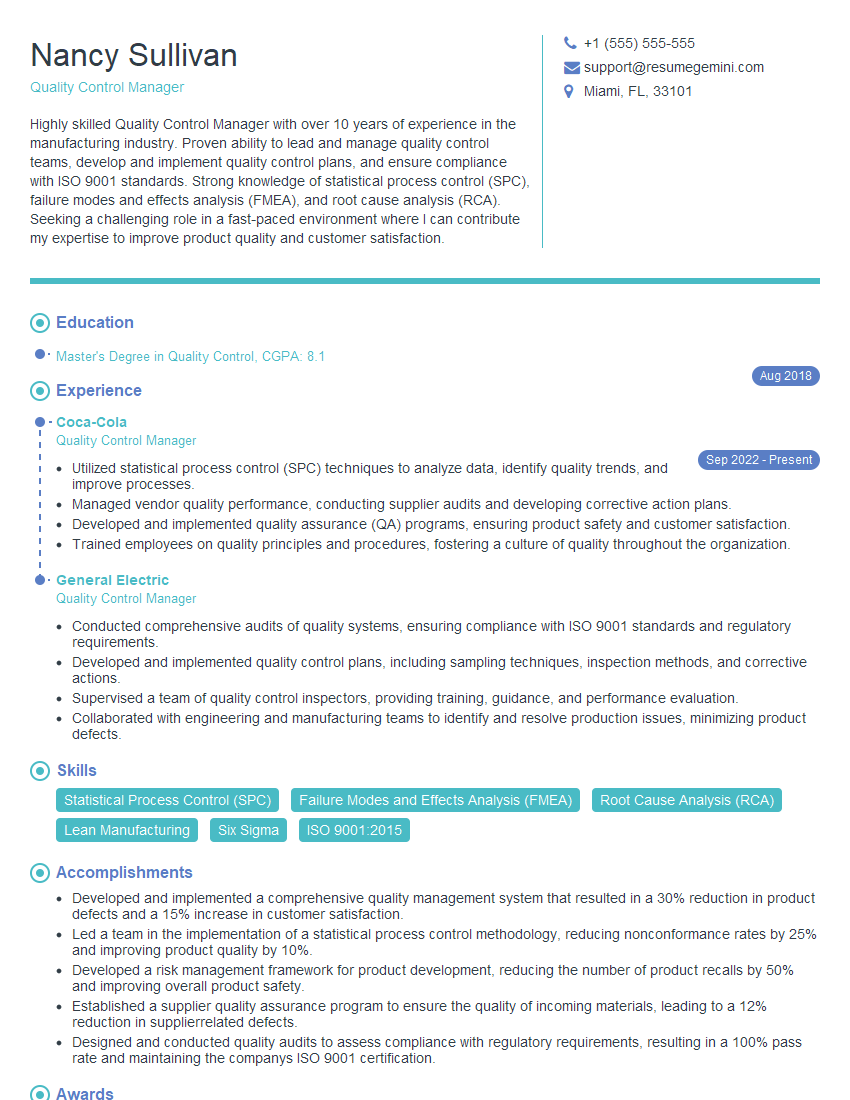
Quality Control Manager Resume Sample
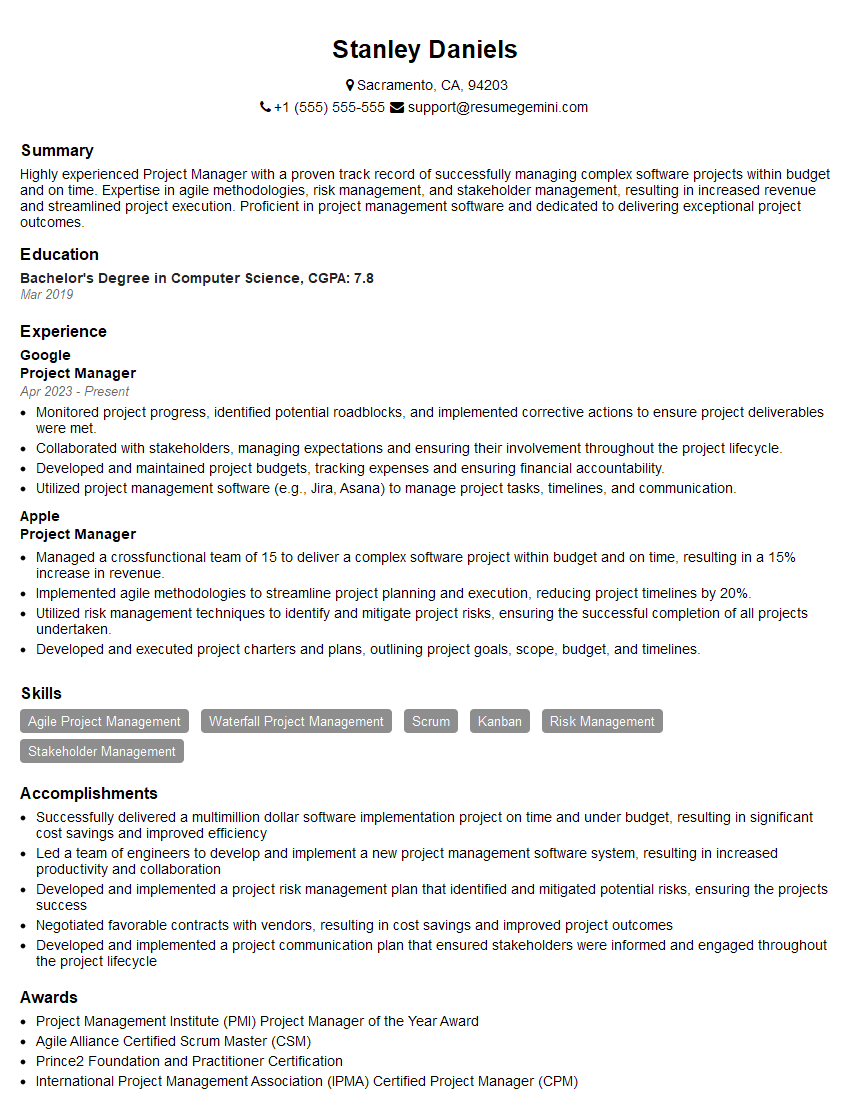
Project Manager Resume Sample
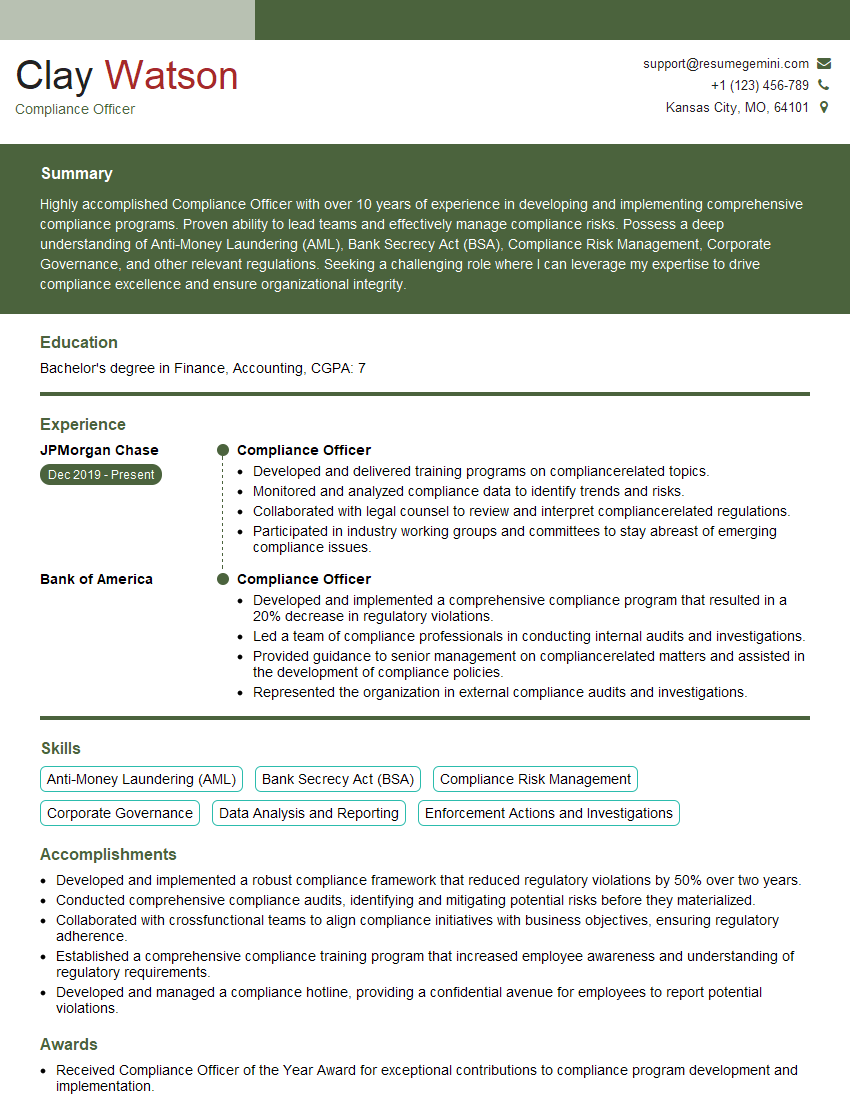
Compliance Officer Resume Sample
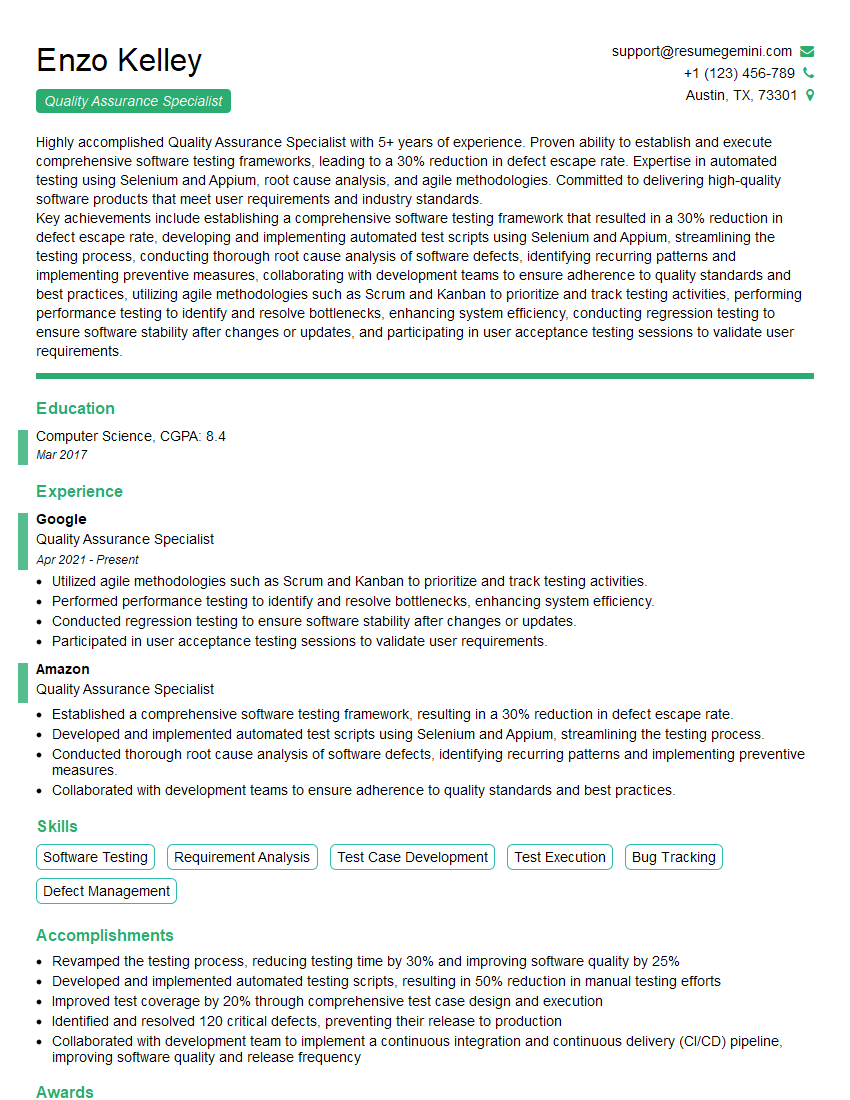
Quality Assurance Specialist Resume Sample
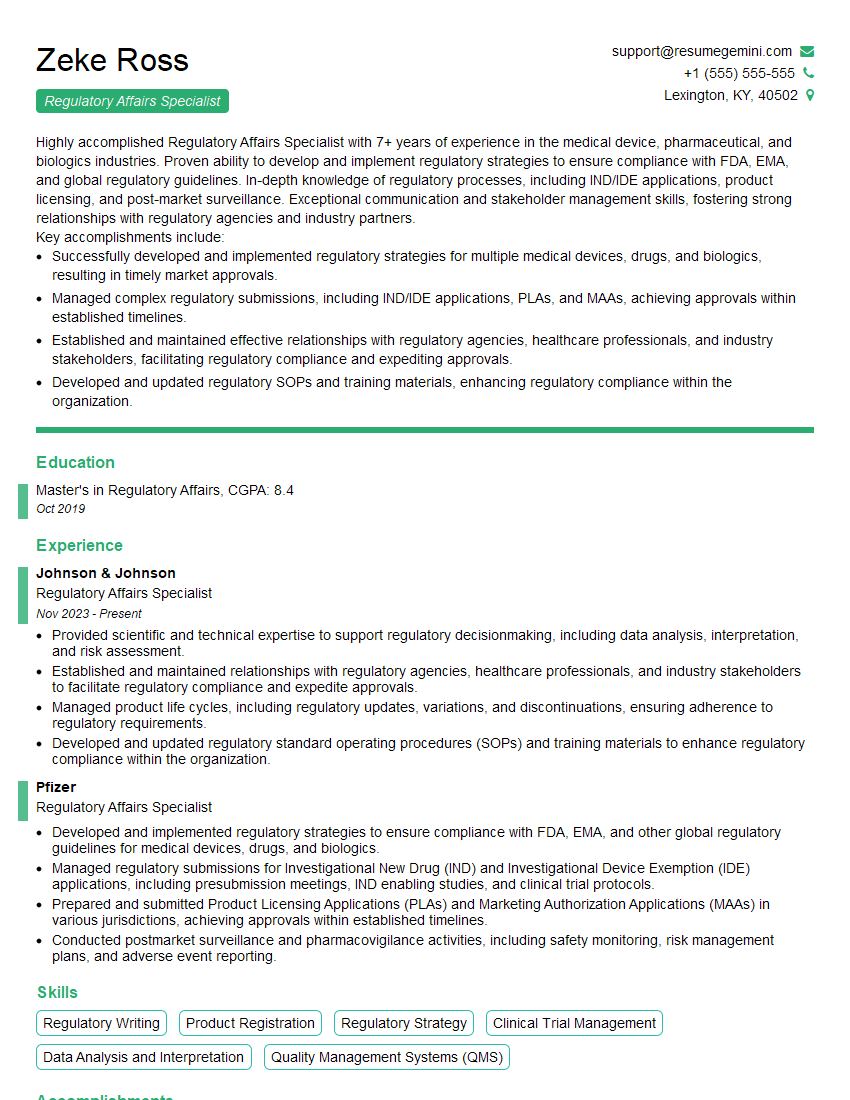
Regulatory Affairs Specialist Resume Sample
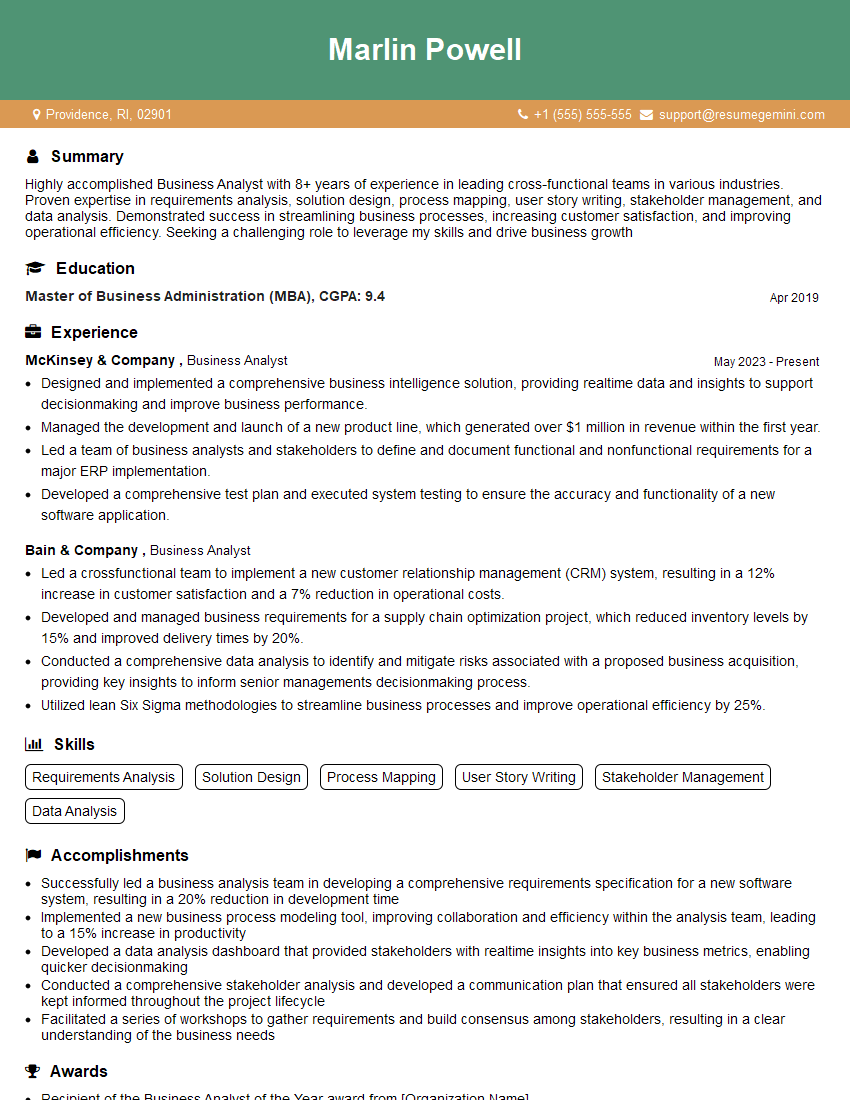
Business Analyst Resume Sample
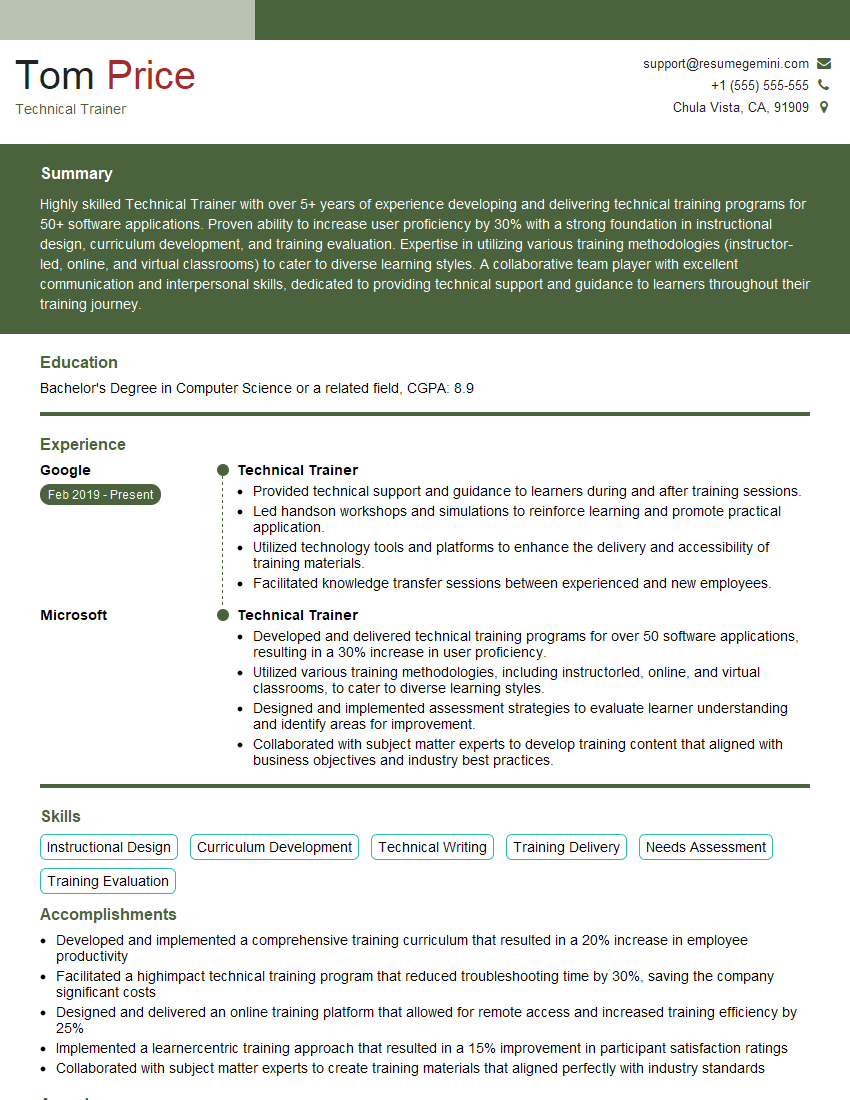
Technical Trainer Resume Sample
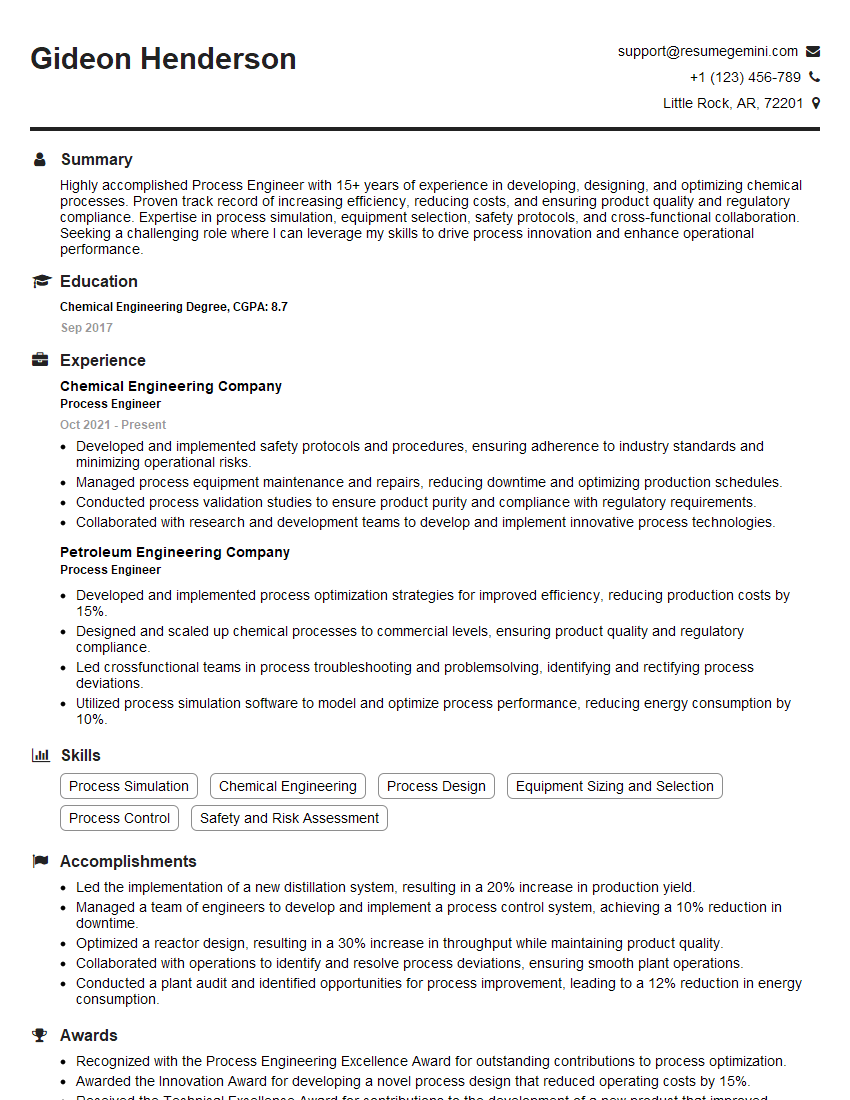
Process Engineer Resume Sample
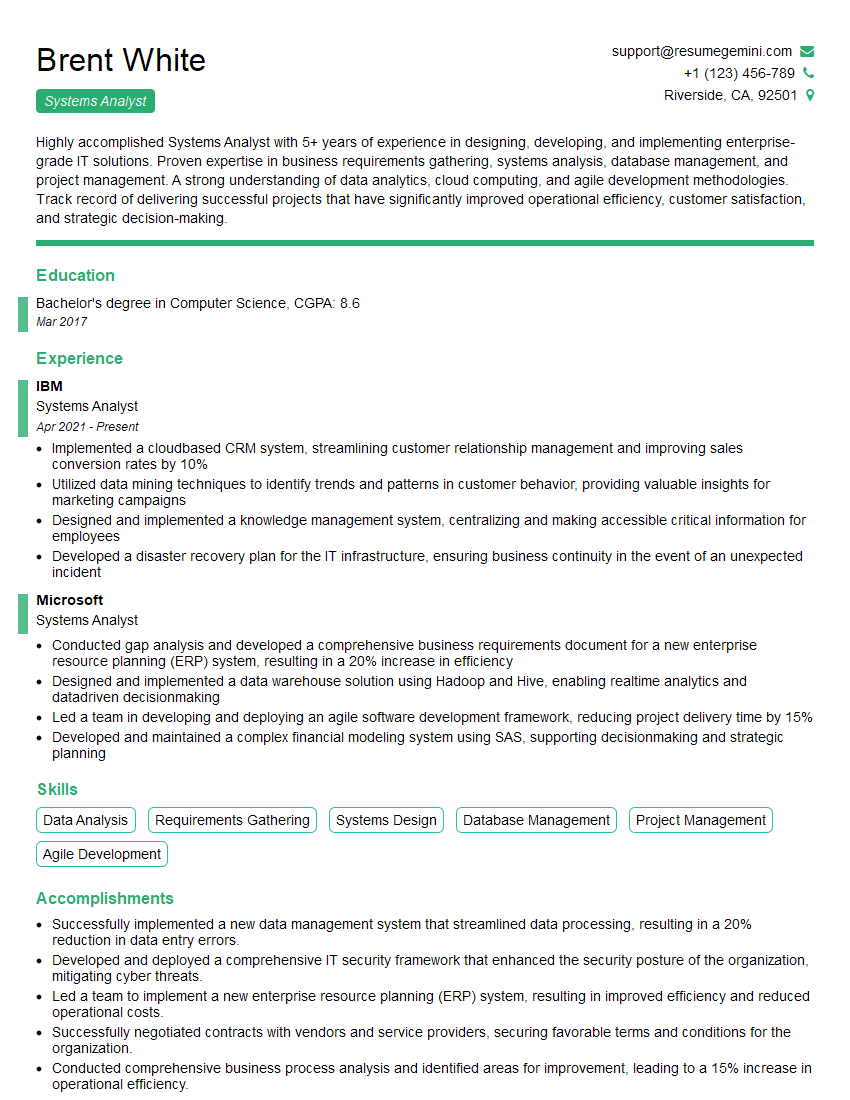
Systems Analyst Resume Sample

Information Architect Resume Sample
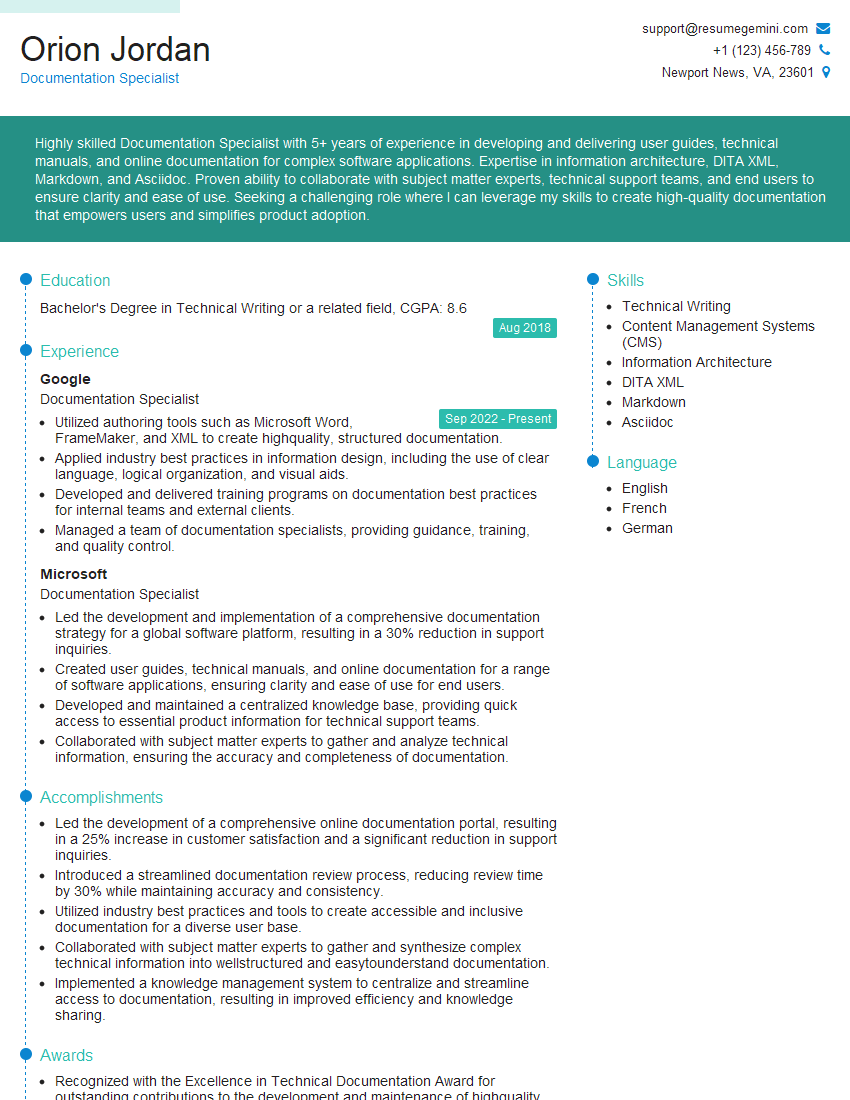
Documentation Specialist Resume Sample
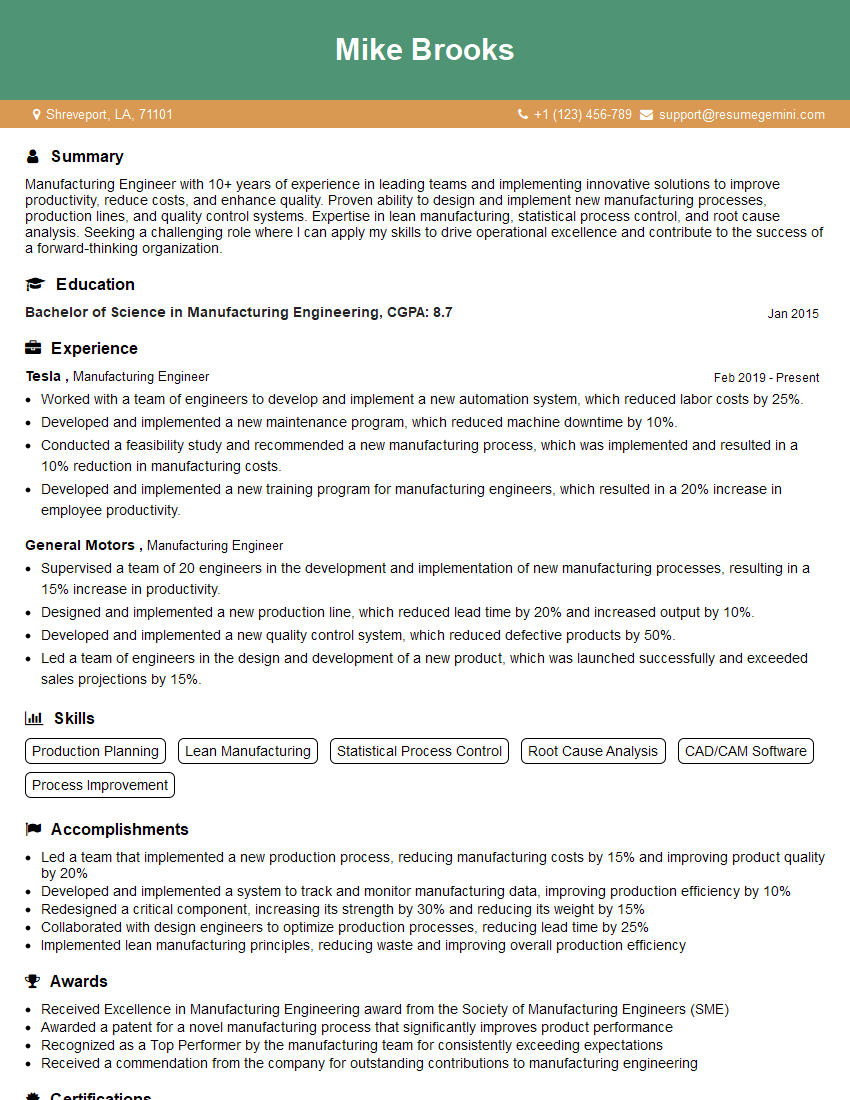
Manufacturing Engineer Resume Sample
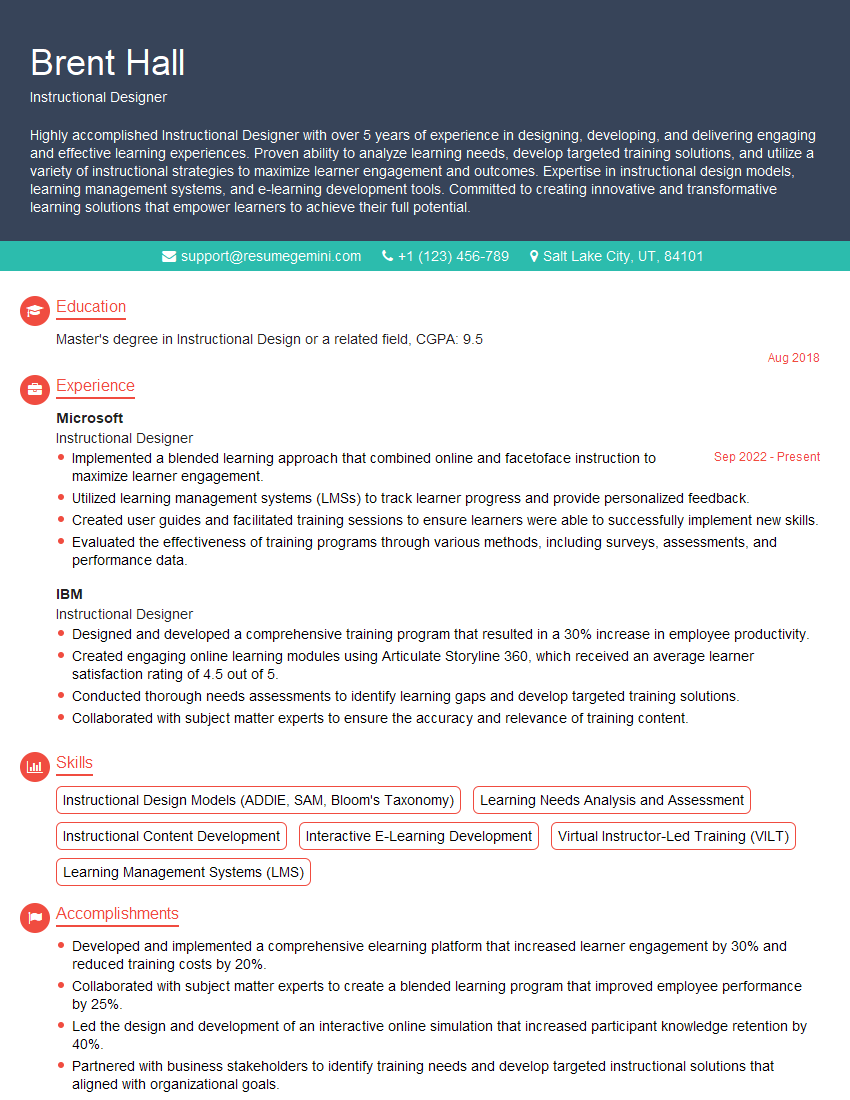
Instructional Designer Resume Sample
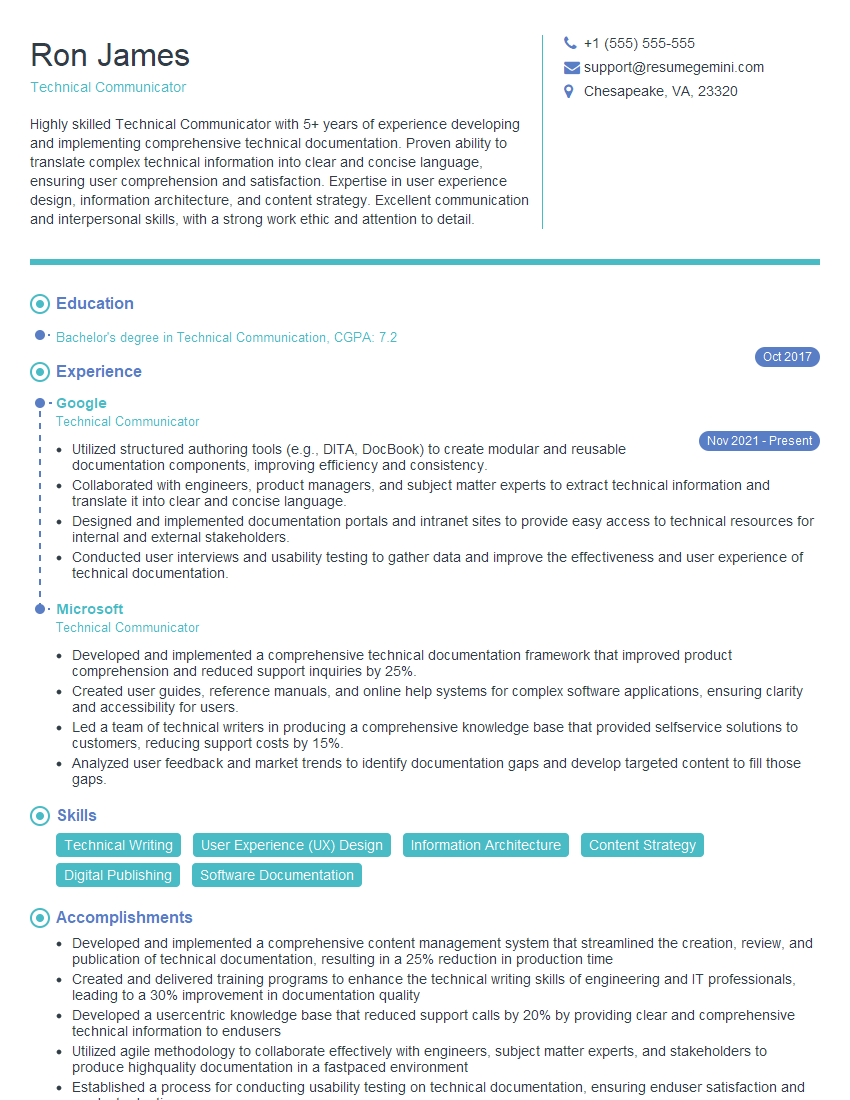
Technical Communicator Resume Sample

Technical Writer Resume Sample
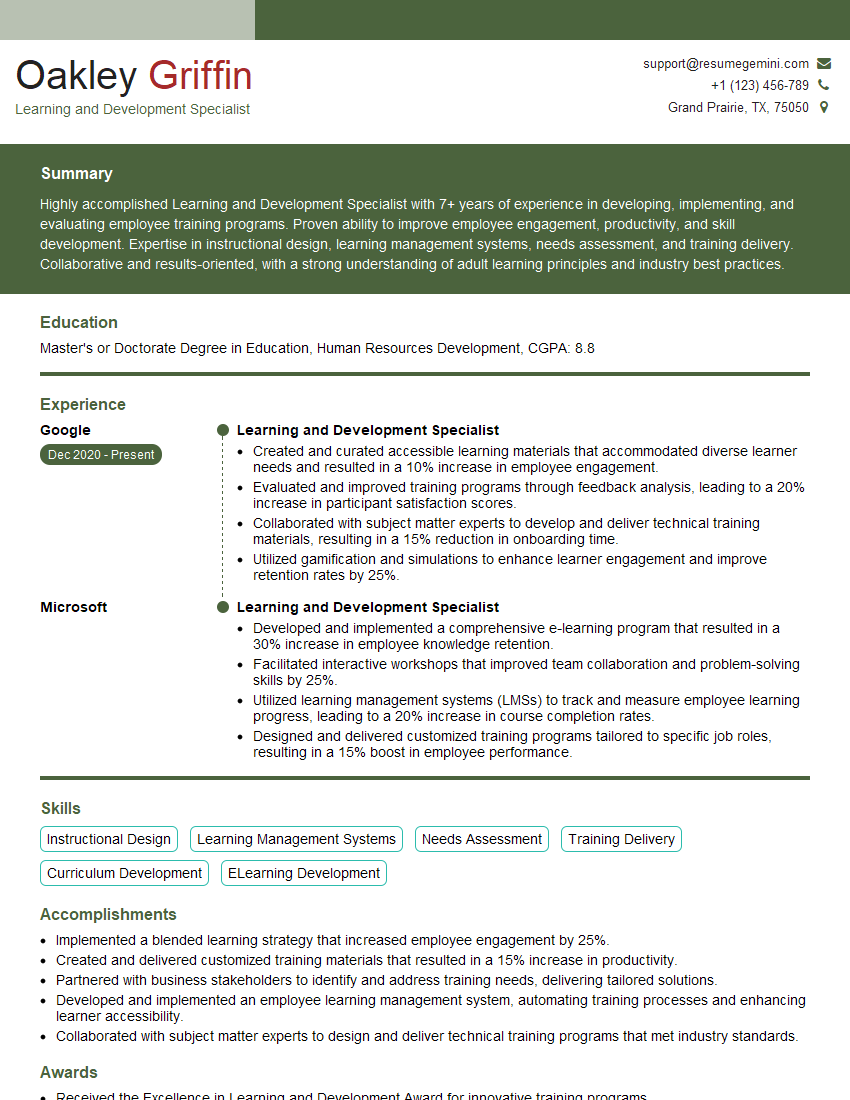
Learning and Development Specialist Resume Sample
- Operations Manager
- Quality Control Manager
- Project Manager
- Compliance Officer
- Quality Assurance Specialist
- Regulatory Affairs Specialist
- Business Analyst
- Technical Trainer
- Process Engineer
- Systems Analyst
- Information Architect
- Documentation Specialist
- Manufacturing Engineer
- Instructional Designer
- Technical Communicator
- Technical Writer
- Learning and Development Specialist
Explore more articles
Users Rating of Our Blogs
Share Your Experience
We value your feedback! Please rate our content and share your thoughts (optional).
What Readers Say About Our Blog
Really detailed insights and content, thank you for writing this detailed article.
IT gave me an insight and words to use and be able to think of examples