Interviews are opportunities to demonstrate your expertise, and this guide is here to help you shine. Explore the essential Adjustable Rate Mortgages (ARMs) interview questions that employers frequently ask, paired with strategies for crafting responses that set you apart from the competition.
Questions Asked in Adjustable Rate Mortgages (ARMs) Interview
Q 1. Explain the mechanics of an adjustable-rate mortgage (ARM).
An adjustable-rate mortgage (ARM) is a home loan where the interest rate isn’t fixed for the entire loan term. Instead, it fluctuates based on an underlying economic index. Think of it like a seesaw – the interest rate goes up and down with market changes. This means your monthly payments can change over time, unlike a fixed-rate mortgage where payments remain consistent.
The initial interest rate is typically lower than a fixed-rate mortgage, attracting borrowers. However, this lower initial rate comes with the risk of higher payments later as the index rate rises.
Here’s a simplified breakdown:
- Initial Period: You enjoy a lower interest rate for a set period (e.g., 5 years), making your initial payments more affordable.
- Adjustment Period: After the initial period, the interest rate adjusts periodically (e.g., annually) based on changes in the index rate plus a margin (explained later).
- Payment Adjustment: Your monthly payment will increase or decrease depending on the new interest rate. The principal (remaining loan balance) is always being paid down, regardless of the changing interest rate.
Q 2. What is an index rate, and how does it impact an ARM?
The index rate is a benchmark interest rate that reflects general market conditions. It’s an external factor, completely separate from the lender, that your ARM’s interest rate is tied to. Think of it as the foundation upon which your adjustable interest rate is built. Common index rates include the London Interbank Offered Rate (LIBOR) – though it’s largely phased out – the Secured Overnight Financing Rate (SOFR), the Cost of Funds Index (COFI), or the 1-year Treasury Constant Maturity Rate.
The index rate’s impact is straightforward: when the index rate goes up, your ARM’s interest rate generally goes up, leading to higher monthly payments. Conversely, when the index rate falls, your interest rate usually decreases, potentially leading to lower payments.
Example: If your ARM uses the 1-year Treasury Constant Maturity Rate as its index and that rate rises by 0.5%, your interest rate will likely rise (by a margin-adjusted amount; explained in the next question).
Q 3. Describe the margin in an ARM and its role in determining the interest rate.
The margin in an ARM is a fixed percentage added to the index rate to determine your actual interest rate. It’s the lender’s profit margin, representing their cost of funds plus their desired profit. It remains constant throughout the life of the loan, acting as a buffer or cushion. The margin compensates the lender for the risk of lending money with an adjustable rate.
Calculating the interest rate: Interest Rate = Index Rate + Margin
Example: Let’s say the index rate is 3% and your margin is 2%. Your interest rate would be 5%. If the index rate rises to 4%, your new interest rate would be 6% (4% + 2%). The margin never changes, only the index rate does.
Q 4. What is an adjustment period in an ARM, and how frequently can rates adjust?
The adjustment period is the time interval at which your ARM’s interest rate can be adjusted. This period is typically set at the start of the loan (e.g., 6 months, 1 year, 3 years, 5 years), and it’s stipulated in your loan agreement. Rates don’t adjust more frequently than this scheduled period, so if your loan states an annual adjustment, the rate won’t change every month.
Frequency: The frequency of adjustment is a crucial factor to consider when choosing an ARM. A shorter adjustment period (like 6 months) offers more flexibility to react to market changes, but it also means more frequent changes in your payment amount. A longer adjustment period provides greater stability but potentially less opportunity to benefit from falling interest rates.
Q 5. Explain the difference between a fixed-rate mortgage and an ARM.
The core difference lies in the interest rate:
- Fixed-Rate Mortgage: The interest rate remains constant for the entire loan term (e.g., 15 or 30 years). Your monthly payments will always be the same, providing predictable budgeting.
- ARM: The interest rate adjusts periodically based on an index rate plus a margin. This makes your monthly payments variable, potentially leading to higher payments over time depending on market fluctuations.
Essentially, a fixed-rate mortgage offers predictability at the cost of potentially higher initial interest rates, while an ARM offers lower initial rates but with the trade-off of unpredictable future payments.
Q 6. What are the advantages and disadvantages of ARMs for borrowers?
Advantages of ARMs:
- Lower Initial Interest Rate: Often lower than fixed-rate mortgages, making them attractive for borrowers with short-term financial goals.
- Potential for Lower Payments: If interest rates fall during the loan term, your payments can decrease.
Disadvantages of ARMs:
- Payment Uncertainty: Monthly payments can fluctuate, making budgeting challenging. Unexpectedly high payments could strain your finances.
- Risk of Higher Interest Rates: If market interest rates increase, your payments will also rise, potentially significantly.
- Negative Amortization (in some cases): If the rate increases and your payment is insufficient to cover the interest, the unpaid interest could add to your principal, leading to an increased overall loan amount.
The choice between an ARM and a fixed-rate mortgage depends on your risk tolerance, financial outlook, and anticipated length of homeownership.
Q 7. How do interest rate caps work in an ARM?
Interest rate caps in an ARM are limitations on how much the interest rate can change during any given adjustment period or over the life of the loan. They offer protection against extreme interest rate swings, providing predictability and limiting risk.
There are typically two types of caps:
- Periodic Cap: Limits how much the interest rate can increase or decrease during a single adjustment period. For example, a 2% periodic cap means the rate can’t increase or decrease by more than 2% in a year, even if the index changes by a larger amount.
- Lifetime Cap: Limits the total amount the interest rate can increase over the entire life of the loan. For example, a 6% lifetime cap means the interest rate will never exceed the initial rate by more than 6%, regardless of market changes.
Example: If you have a 2% periodic cap and a 6% lifetime cap, and your initial interest rate is 4%, then even if the index increases greatly, your interest rate will never go above 10% (4% + 6%). During each adjustment period, it won’t go up more than 2% even if the index suggests a greater increase.
Q 8. Explain the concept of negative amortization in an ARM.
Negative amortization in an ARM occurs when your monthly payment is not large enough to cover the interest due on your loan. The unpaid interest is then added to your principal balance, causing your loan amount to grow over time, rather than shrink. Imagine you owe $1000, and the interest for the month is $50. If you only pay $40, the remaining $10 of interest is added to your principal, making your new balance $1010. This can seem counterintuitive, as you are making payments but your debt is increasing. This is a dangerous situation, as it leads to a larger loan balance at the end of your initial low interest rate period, usually resulting in significantly higher payments and potentially foreclosure.
Q 9. Describe the process of calculating an ARM payment.
Calculating an ARM payment isn’t as simple as a fixed-rate mortgage because the interest rate changes periodically. The calculation utilizes a standard amortization formula, but the interest rate is adjusted at each adjustment period. Here’s a simplified breakdown:
- Determine the interest rate: This will be the current interest rate in effect for the payment period, as determined by the ARM’s index and margin.
- Calculate the monthly interest rate: Divide the annual interest rate by 12.
- Determine the loan term in months: Multiply the number of years remaining by 12.
- Use the amortization formula: The standard formula considers the loan balance, the monthly interest rate, and the loan term to calculate the monthly payment. You’ll find various online calculators or spreadsheet functions (like PMT in Excel) to perform this calculation accurately.
Example: Let’s say you have a $200,000 loan, a 5% annual interest rate (0.05/12 = 0.004167 monthly rate) and a 30-year term (360 months). The calculation will yield a monthly payment. Note that this is a simplified example and does not include property taxes or insurance often included in the monthly payment.
M = P [ i(1 + i)^n ] / [ (1 + i)^n – 1]Where:
- M = Monthly Payment
- P = Principal Loan Amount
- i = Monthly Interest Rate
- n = Number of Months
It’s crucial to remember that each adjustment period will require recalculating the payment using the new interest rate and the remaining loan term. This is why many ARM borrowers utilize an amortization schedule to visualize future payments.
Q 10. How do you explain complex ARM features to a borrower?
Explaining complex ARM features to a borrower requires patience, clear communication, and relatable examples. Avoid jargon and focus on the big picture. I use a layered approach:
- Start with the basics: Explain the concept of a variable interest rate, showing how it differs from a fixed-rate mortgage. Use analogies like a checking account with fluctuating interest rates.
- Break down the key terms: Define terms like index, margin, adjustment period, and initial interest rate in simple language. For example, explain the index as a benchmark interest rate (like a market index), and the margin as the bank’s profit on top of that.
- Illustrate with scenarios: Show them how their payment could change over time under various interest rate scenarios, using charts or graphs. I might even create a few potential scenarios to illustrate the range of possibilities, from low to high interest rates, based on historic trends.
- Highlight the risks and benefits: Emphasize the potential for both lower initial payments and higher payments in the future. Discuss the importance of understanding their financial capacity and risk tolerance.
- Provide written materials: Summarize the key features and risks in plain English, along with clear disclosures.
Ultimately, the goal is to ensure the borrower understands the potential financial consequences and makes an informed decision. Transparency and open communication are vital.
Q 11. What are the risks associated with ARMs?
ARMs carry significant risks, primarily stemming from the fluctuating interest rate. Here are some key risks:
- Payment Shock: The most significant risk is a sudden and substantial increase in monthly payments when the interest rate adjusts. This can severely strain a borrower’s budget if they haven’t factored in this possibility.
- Negative Amortization: As explained previously, this occurs when the monthly payment is less than the interest due, causing the principal balance to increase.
- Interest Rate Risk: Rising interest rates can lead to drastically higher payments and potentially make the loan unaffordable.
- High Initial Interest Rates: Although the initial interest rate is often low, it may not stay low, and it could be high relative to fixed rate mortgages.
- Prepayment Penalties: Some ARMs have prepayment penalties, which means you’ll face financial penalties if you decide to pay off the loan early. This can greatly impact one’s ability to refinance when interest rates fall.
Understanding these risks is crucial for borrowers to make informed decisions about whether an ARM is appropriate for their financial situation.
Q 12. What are the different types of ARMs (e.g., 5/1 ARM, 7/1 ARM)?
ARMs are categorized by their adjustment period. The most common types include:
- 5/1 ARM: The interest rate is fixed for the first five years, then adjusts annually thereafter.
- 7/1 ARM: The interest rate is fixed for the first seven years, then adjusts annually thereafter.
- 3/1 ARM: The interest rate is fixed for the first three years, then adjusts annually thereafter.
- 10/1 ARM: The interest rate is fixed for the first ten years, then adjusts annually thereafter.
The number before the slash represents the fixed-rate period, and the number after the slash indicates the frequency of interest rate adjustments. Other variations exist with different adjustment periods, such as 2/28 or 5/6 ARMs, but the principle is always the same: an initial fixed-rate period followed by periodic adjustments.
Q 13. How does the current economic climate affect ARM interest rates?
The current economic climate significantly influences ARM interest rates. The relationship is complex, involving several interacting factors. Generally:
- Rising inflation and interest rates: When the Federal Reserve raises interest rates to combat inflation, the index rate used in ARMs typically rises as well. This results in higher interest rates for ARMs, leading to increased monthly payments for borrowers.
- Economic recession: During economic recessions, the Federal Reserve may lower interest rates to stimulate the economy. This could lead to lower index rates for ARMs, potentially resulting in lower monthly payments. However, this can be coupled with increased risk of job loss affecting borrowers ability to make payments.
- Market conditions: General market conditions also impact interest rates. High demand for loans can push rates higher, while low demand can push them lower.
It’s important to remember that predicting future interest rates is highly speculative. Borrowers need to consider potential scenarios—both positive and negative—and factor that into their decision-making process.
Q 14. What are the key disclosures required for ARMs under RESPA?
The Real Estate Settlement Procedures Act (RESPA) mandates specific disclosures for ARMs to ensure borrowers understand the terms and risks. Key disclosures include:
- Initial interest rate and payment amount: Clear disclosure of the initial rate and the payment amount for the initial fixed-rate period.
- Index and margin: Detailed explanation of the index rate used to determine interest rate adjustments and the lender’s margin (markup).
- Adjustment periods and frequency: Clear information on how often the interest rate will be adjusted and the rules of such adjustment.
- Maximum interest rate: The highest possible interest rate the loan could reach during its lifetime.
- Payment caps: If applicable, a description of any payment caps which limit how much the payment can increase.
- Lifetime cap: If applicable, a description of the limit of increases in the interest rate throughout the lifetime of the loan.
- Negative amortization explanation: A clear explanation of negative amortization and the potential for increased debt.
- Annual percentage rate (APR): While not unique to ARMs, the APR is crucial as it reflects the total cost of credit, including fees and interest.
These disclosures help borrowers compare ARMs and make informed choices. Lenders are strictly required to provide these disclosures, and failure to do so can lead to legal repercussions.
Q 15. How do you assess a borrower’s suitability for an ARM?
Assessing a borrower’s suitability for an Adjustable-Rate Mortgage (ARM) requires a thorough evaluation of their financial profile and risk tolerance. It’s not a one-size-fits-all approach; we need to understand their ability to manage potential interest rate fluctuations.
- Creditworthiness: A strong credit score is crucial, as it indicates a lower risk of default. Lenders often require a minimum credit score, and a higher score typically results in better terms.
- Debt-to-income ratio (DTI): This ratio compares a borrower’s monthly debt payments to their gross monthly income. A lower DTI signifies a greater capacity to handle increased mortgage payments if interest rates rise.
- Income stability: Consistent income is paramount. We need assurance that the borrower can afford payments even if their interest rate adjusts upward. We’ll look at employment history and income documentation.
- Down payment: A larger down payment reduces the loan amount, thus minimizing the potential impact of interest rate increases. A substantial down payment can also improve eligibility even with a slightly lower credit score.
- Risk tolerance: ARM suitability strongly depends on a borrower’s tolerance for uncertainty. We’ll have a frank discussion about the potential risks of rising interest rates and how that could affect their budget. Some borrowers are comfortable with the potential savings of a lower initial interest rate, accepting the risk of future increases, while others prefer the predictability of a fixed-rate mortgage.
For example, a borrower with excellent credit, a low DTI, stable employment, a sizable down payment, and a high tolerance for risk might be an ideal candidate for an ARM. Conversely, a borrower with a lower credit score, high DTI, fluctuating income, and low risk tolerance would likely be better suited for a fixed-rate mortgage.
Career Expert Tips:
- Ace those interviews! Prepare effectively by reviewing the Top 50 Most Common Interview Questions on ResumeGemini.
- Navigate your job search with confidence! Explore a wide range of Career Tips on ResumeGemini. Learn about common challenges and recommendations to overcome them.
- Craft the perfect resume! Master the Art of Resume Writing with ResumeGemini’s guide. Showcase your unique qualifications and achievements effectively.
- Don’t miss out on holiday savings! Build your dream resume with ResumeGemini’s ATS optimized templates.
Q 16. What are some common ARM-related consumer complaints?
Common ARM-related consumer complaints often stem from a lack of understanding about how ARMs work. Many borrowers misunderstand the terms of their loan, leading to dissatisfaction when rates adjust.
- Unexpected rate increases: Borrowers may not fully grasp the potential magnitude of future rate increases and their impact on monthly payments. This often leads to financial strain and frustration.
- Complexity of terms and conditions: ARM disclosures can be quite complex. The nuances of index rates, margins, adjustment caps, and payment schedules can be difficult to navigate, leaving borrowers feeling misled or confused.
- Lack of transparency: Sometimes, borrowers feel that the lender hasn’t clearly explained the potential risks associated with an ARM. This lack of transparency exacerbates the problem when rates rise unexpectedly.
- Difficulty managing payments: The unpredictability of future payments can make budgeting difficult, leading to missed payments and potential foreclosure.
Addressing these complaints requires clear and concise communication from lenders. A thorough explanation of the ARM’s features and potential risks is paramount, ensuring that borrowers fully understand the implications before signing the loan documents.
Q 17. How do you handle a borrower’s questions about ARM complexity?
Handling a borrower’s questions about ARM complexity requires patience, clear communication, and readily available resources. It’s crucial to demystify the jargon and translate complex financial concepts into everyday language.
- Use plain language: Avoid technical terms whenever possible. If you must use them, define them clearly and concisely.
- Use visual aids: Charts, graphs, and examples can greatly aid understanding. Illustrating how different scenarios – such as varying interest rate increases – affect monthly payments is very effective.
- Provide written materials: Supplement verbal explanations with written summaries and disclosures. This gives borrowers time to process the information and ask clarifying questions.
- Offer scenario planning: Walk through different possible interest rate scenarios to illustrate the potential impact on their monthly payments. This allows borrowers to understand the best-case, worst-case, and most likely scenarios.
- Be responsive to questions: Encourage borrowers to ask questions and answer them thoroughly and patiently. Repeated explanations might be necessary for full comprehension.
For instance, if a borrower is confused about the index rate, I would explain it simply as the underlying benchmark rate that your ARM’s interest rate is based on. Then I’d provide examples of how changes in this benchmark affect their rate and monthly payments.
Q 18. How does an ARM differ from a hybrid ARM?
While both are Adjustable-Rate Mortgages, a hybrid ARM differs from a standard ARM in the initial fixed-rate period. A standard ARM’s interest rate adjusts from the very beginning, typically on a yearly or monthly basis according to the index rate, subject to any adjustment caps defined in the loan agreement.
A hybrid ARM, on the other hand, features a fixed interest rate for a specified period – for example, 5 years or 7 years. After this initial fixed-rate period, it converts into a standard adjustable-rate mortgage, with future interest rate adjustments tied to the index rate and any relevant margins and caps. This initial fixed period offers borrowers a degree of predictability during the early years of the loan.
Think of it like this: a standard ARM is like a rollercoaster from the start, while a hybrid ARM is like a rollercoaster with a gentler introductory section before the thrilling drops and turns begin.
Q 19. Explain the role of the initial interest rate in an ARM.
The initial interest rate in an ARM is the rate at which the borrower makes payments during the initial period, prior to any adjustments. It’s often lower than the rates for comparable fixed-rate mortgages. This attractive initial rate is a significant draw for borrowers.
However, it’s vital to understand that this initial rate is only temporary. The interest rate will adjust periodically according to a pre-defined formula, usually based on a chosen index (such as the London Interbank Offered Rate (LIBOR) or Secured Overnight Financing Rate (SOFR)) plus a margin (a fixed percentage added by the lender). The frequency of adjustments and the limits on how much the rate can change in a given period (adjustment caps) are clearly outlined in the loan agreement.
For example, an ARM might have an initial interest rate of 4% for the first year. This low rate can make the mortgage more attractive initially. But after that, it may adjust annually based on a specified index plus a margin, potentially leading to higher payments in future years. The borrower must carefully analyze whether the potential long-term cost outweighs the initial savings.
Q 20. How do you compare the total cost of an ARM vs. a fixed-rate mortgage?
Comparing the total cost of an ARM and a fixed-rate mortgage requires a scenario-based analysis, as the total cost of an ARM depends largely on the future trajectory of interest rates. There’s no guarantee of what will happen, so we need to consider different possibilities.
A fixed-rate mortgage’s total cost is predictable. It’s simply the sum of all monthly payments throughout the loan term. An ARM’s total cost, however, is uncertain. We can model potential scenarios based on different projected interest rate paths. We’ll use a financial calculator or mortgage amortization software to assess the likely total cost under various rate increase scenarios.
To illustrate, consider these scenarios:
- Scenario 1 (Interest rates remain low): The ARM could end up being cheaper than the fixed-rate mortgage. The initial lower rate would save the borrower money throughout the loan’s life.
- Scenario 2 (Interest rates rise moderately): The total cost of the ARM could be comparable to that of the fixed-rate mortgage, with the savings in the early years offset by higher payments later on.
- Scenario 3 (Interest rates rise significantly): The total cost of the ARM could be considerably higher than the fixed-rate mortgage. This scenario showcases the risk inherent in ARMs.
Therefore, the choice depends on the borrower’s risk tolerance and predictions of future interest rates. A thorough sensitivity analysis to various scenarios is crucial for effective decision-making.
Q 21. Discuss the impact of refinancing on an ARM.
Refinancing an ARM can significantly impact the borrower’s situation, offering the opportunity to either lock in a fixed rate or switch to a new ARM with potentially more favorable terms. The decision to refinance hinges on several factors:
- Current interest rates: If interest rates have fallen since the initial ARM was taken out, refinancing could allow the borrower to secure a lower interest rate, leading to lower monthly payments or a shorter loan term.
- Remaining loan term: The longer the remaining term, the greater the potential savings from refinancing. If the loan is nearing its end, the cost of refinancing might outweigh the benefits.
- Refinancing costs: Closing costs, such as appraisal fees and lender fees, must be considered. These costs could offset some or all of the savings from refinancing. A cost-benefit analysis is essential.
- Financial situation: The borrower’s credit score, income, and debt-to-income ratio all play a role in refinancing eligibility and the terms offered by lenders.
- ARM type: The type of ARM (e.g., 3/1 ARM, 5/1 ARM, 7/1 ARM, etc.) and its current phase (fixed-rate period or adjustable-rate period) will influence the refinancing options available. An ARM near the end of its initial fixed-rate period may be a good time to consider refinancing into a fixed-rate mortgage to avoid future rate adjustments.
For example, a borrower with a 5/1 ARM that is transitioning into its adjustable-rate period may opt to refinance into a fixed-rate mortgage to eliminate the uncertainty of future rate adjustments. This approach provides stability and predictability.
Q 22. What are the potential pitfalls of an ARM for borrowers?
Adjustable-Rate Mortgages (ARMs) offer initially lower interest rates, attracting borrowers. However, this advantage comes with significant risks. The biggest pitfall is the unpredictable nature of the interest rate. Rates can increase substantially, leading to significantly higher monthly payments. This can strain borrowers’ budgets, especially if they haven’t planned for such increases. Another potential pitfall is the risk of negative amortization, where the monthly payment doesn’t cover the accrued interest, causing the loan balance to grow. This can quickly lead to financial distress. Finally, ARMs often come with prepayment penalties, which can discourage borrowers from refinancing even if interest rates drop significantly.
Example: Imagine a borrower takes out a 5/1 ARM with an initial interest rate of 3%. After five years, the rate could jump to 6% or even higher, dramatically increasing their monthly payment. If their income hasn’t increased proportionally, they might struggle to make these higher payments.
Q 23. Explain the concept of lifetime interest rate caps.
Lifetime interest rate caps are crucial protections for borrowers with ARMs. They limit how much the interest rate can increase over the life of the loan. This cap provides predictability and prevents exorbitant rate hikes. There are typically two types of caps: a periodic cap, which limits the rate increase within a specific adjustment period (e.g., annually), and a lifetime cap, which limits the overall increase from the initial rate until the loan matures. For instance, a loan might have a 2% annual cap and a 5% lifetime cap. This means the rate can’t increase by more than 2% each year and no more than 5% from the initial rate throughout the loan’s term.
Example: If the initial rate is 4%, with a 2% annual cap and a 5% lifetime cap, the rate could never exceed 9% (4% + 5%), even if market rates rise significantly. The annual cap prevents sudden dramatic jumps.
Q 24. How does the payment shock affect borrowers?
Payment shock refers to the sudden and substantial increase in monthly mortgage payments due to an ARM’s adjustable interest rate. This shock can have a devastating impact on borrowers’ finances. A significant payment increase can force borrowers to make difficult choices, such as cutting back on essential expenses, accumulating debt, or even facing foreclosure. The severity of the shock depends on the magnitude of the rate increase and the borrower’s financial resilience.
Example: A borrower accustomed to a $1,500 monthly payment might suddenly face a $2,500 payment after a rate adjustment. This $1,000 increase can be crippling, especially if they haven’t budgeted for it or have limited financial flexibility.
Q 25. What are the regulatory requirements surrounding ARM disclosures?
The Truth in Lending Act (TILA) and Regulation Z govern ARM disclosures. Lenders are required to provide borrowers with clear and comprehensive information about the loan’s terms, including the initial interest rate, the adjustment period, the index used to determine the rate, the margin, any caps on rate increases, and the potential for negative amortization. These disclosures must be provided in a standardized format, making it easier for borrowers to compare different ARM options. Failure to comply with these regulations can result in significant penalties for lenders.
Key Disclosures: The most important disclosures include the initial interest rate, the index, the margin, the payment schedule, and the potential for payment increases. The lender must clearly explain how the interest rate is calculated and what factors could affect it.
Q 26. Describe the process of underwriting an ARM application.
Underwriting an ARM application involves a thorough assessment of the borrower’s creditworthiness and ability to repay the loan, considering the risk of future rate increases. The process is similar to that of a fixed-rate mortgage but includes a more in-depth analysis of the borrower’s financial capacity to handle potential payment shocks. Underwriters review credit scores, debt-to-income ratios, and employment history. They also stress-test the loan by simulating scenarios with higher interest rates to assess the borrower’s ability to manage increased payments. A crucial aspect is verifying the borrower’s understanding of the risks associated with ARMs.
Key Considerations: Credit score, debt-to-income ratio, income stability, and the borrower’s understanding of ARM mechanics are crucial factors. The underwriter also considers the borrower’s financial reserves and their ability to absorb potential payment increases.
Q 27. How do you determine the appropriate ARM type for a specific borrower?
Determining the appropriate ARM type requires a careful assessment of the borrower’s individual circumstances and risk tolerance. Factors to consider include the borrower’s financial stability, their income, their anticipated tenure in the home, and their comfort level with risk. For borrowers with strong financial profiles and a shorter anticipated homeownership period, a shorter-term ARM (e.g., 3/1 or 5/1 ARM) might be suitable. For those with more risk aversion, a longer-term ARM or a fixed-rate mortgage might be more appropriate. It’s crucial to understand the borrower’s goals and financial situation before recommending any specific ARM type.
Example: A first-time homebuyer with stable income and plans to move within 5 years might consider a 5/1 ARM, potentially benefitting from lower initial payments. A borrower nearing retirement, on the other hand, might prefer a fixed-rate mortgage to avoid uncertainty regarding future payments.
Q 28. How do you address a borrower’s concerns about potential rate increases?
Addressing a borrower’s concerns about potential rate increases requires a balanced and transparent approach. It’s vital to acknowledge the risks involved while emphasizing the potential benefits of lower initial payments. I would explain the mechanics of the specific ARM, emphasizing the impact of the index, margin, and caps. We would explore different scenarios, simulating rate increases to illustrate potential payment changes. Additionally, I’d explain strategies for mitigating risk, such as building an emergency fund or considering refinancing options if rates become unmanageable. Open communication and providing realistic expectations are crucial for building trust and managing the borrower’s anxieties.
Strategies: Provide detailed illustrations, explain refinancing options, and explore potential mitigation strategies, such as building financial reserves.
Key Topics to Learn for Adjustable Rate Mortgages (ARMs) Interview
- Understanding the Basics: Define ARMs, including their structure, key features (index, margin, adjustment period, caps), and how they differ from fixed-rate mortgages.
- Index Rates and Margins: Explain how index rates (e.g., LIBOR, SOFR) and margins determine the interest rate. Practice calculating the interest rate given an index and margin.
- Adjustment Periods and Caps: Describe the impact of different adjustment periods (e.g., annual, semi-annual) and the role of periodic and lifetime caps in managing interest rate risk.
- ARM Types and Variations: Explore various ARM types (e.g., 5/1 ARM, 7/1 ARM, 3/1 ARM) and their characteristics. Understand the implications of different ARM structures for borrowers.
- Risk Assessment and Qualification: Discuss the risk factors associated with ARMs and how lenders assess borrower suitability. Consider the impact of interest rate changes on borrower affordability.
- Disclosure Requirements: Familiarize yourself with the regulatory requirements and disclosures related to ARMs (e.g., Truth in Lending Act). Understand the importance of transparency and consumer protection.
- Practical Application: Be prepared to discuss real-world scenarios involving ARM calculations, risk assessment, and client communication. Practice explaining complex concepts in a clear and concise manner.
- Problem-Solving: Develop your ability to analyze ARM-related problems, identify potential issues, and propose effective solutions. This may involve calculations, scenario planning, or risk mitigation strategies.
Next Steps
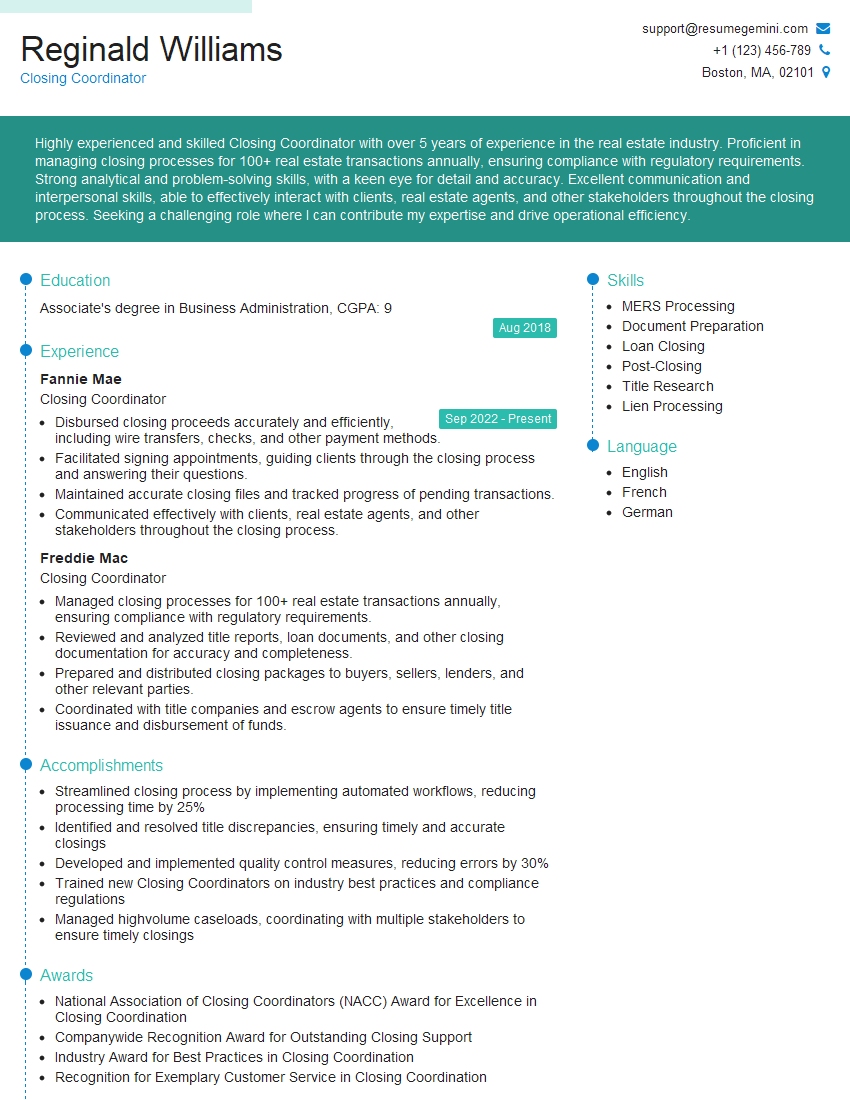
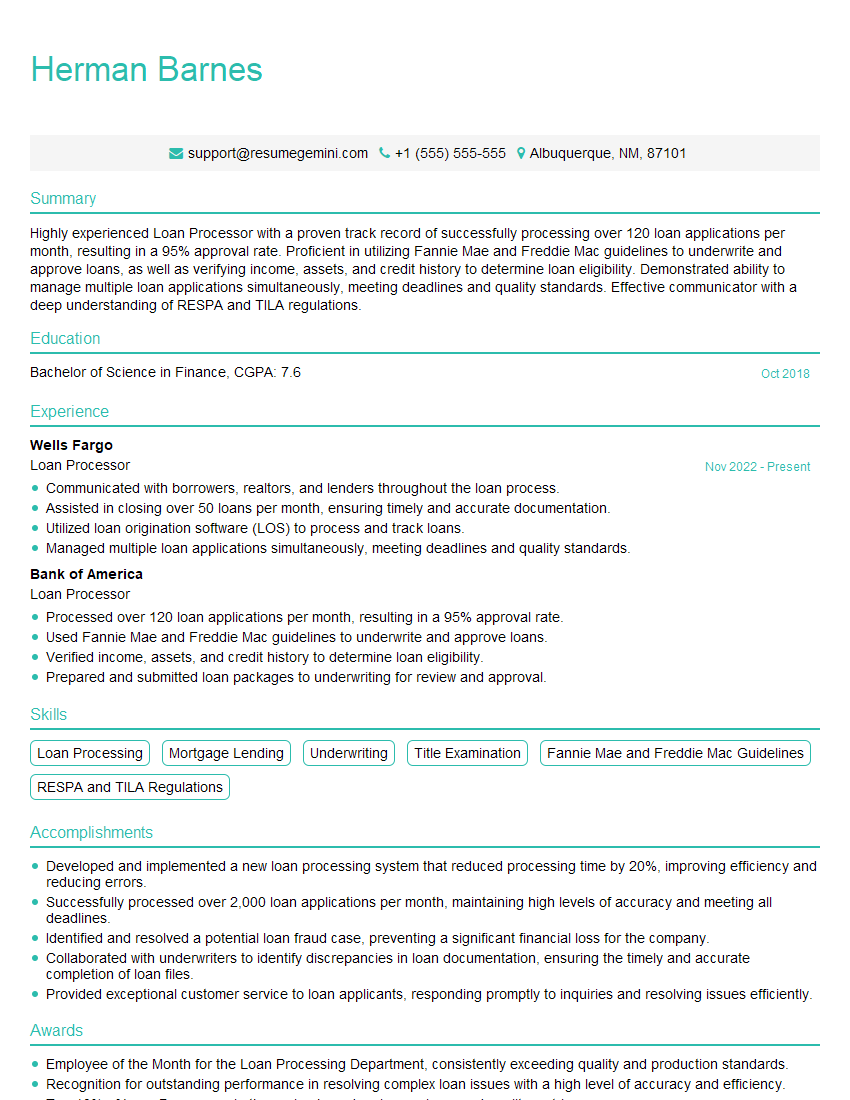
Mastering Adjustable Rate Mortgages is crucial for career advancement in the financial industry, opening doors to specialized roles and higher earning potential. A strong resume is your key to unlocking these opportunities. Make sure your resume is ATS-friendly to ensure it’s effectively scanned by applicant tracking systems. To build a truly compelling and effective resume, leverage the power of ResumeGemini. ResumeGemini provides a user-friendly platform to create professional resumes and offers examples tailored to specific roles, including those focused on Adjustable Rate Mortgages. Take advantage of these resources to present yourself as the ideal candidate.
Explore more articles
Users Rating of Our Blogs
Share Your Experience
We value your feedback! Please rate our content and share your thoughts (optional).
What Readers Say About Our Blog
Really detailed insights and content, thank you for writing this detailed article.
IT gave me an insight and words to use and be able to think of examples