Interviews are opportunities to demonstrate your expertise, and this guide is here to help you shine. Explore the essential Alternative and Augmentative Communication (AAC) interview questions that employers frequently ask, paired with strategies for crafting responses that set you apart from the competition.
Questions Asked in Alternative and Augmentative Communication (AAC) Interview
Q 1. Describe your experience with various AAC systems (e.g., PECS, SGDs, speech generating devices).
My experience with AAC systems is extensive, encompassing a wide range of modalities. I’ve worked extensively with Picture Exchange Communication System (PECS), a low-tech approach focusing on visual communication and functional exchange. I’ve also had significant experience with Speech Generating Devices (SGDs), both high-tech and mid-tech options. These range from simple devices with pre-programmed phrases to sophisticated devices allowing for customized vocabulary and sentence generation. My experience includes using SGDs with various interfaces, such as touchscreens, eye gaze, and switch access. I’m also proficient with a variety of software-based AAC systems, offering flexibility and customization options. For instance, I’ve used Proloquo2Go and TouchChat, both popular SGD apps that empower individuals to communicate effectively. Finally, I have experience integrating augmentative communication strategies into existing assistive technologies, such as tablets or laptops, creating customized communication solutions.
Q 2. Explain the assessment process for identifying the need for AAC.
The assessment process for identifying the need for AAC is a multi-faceted approach, requiring a collaborative effort from speech-language pathologists (SLPs), educators, parents, and the individual. It begins with a comprehensive evaluation of the individual’s communication abilities, including receptive and expressive language skills, nonverbal communication, and overall cognitive abilities. We utilize standardized assessments such as the CELF (Clinical Evaluation of Language Fundamentals) and informal measures observing communication in naturalistic settings. Crucially, we assess the individual’s participation and social engagement. We also thoroughly evaluate their current communication methods and their effectiveness in meeting daily needs. This includes identifying communication strengths and areas needing improvement. We analyze their physical abilities, considering factors that may influence AAC selection, such as fine motor skills or visual acuity. The assessment is not simply about identifying a communication deficit; it’s about understanding the individual’s needs, wants, and aspirations, and finding ways to empower them to communicate effectively. The ultimate goal is to find the right AAC system that enables them to fully participate in their life.
Q 3. How do you select appropriate AAC systems for diverse learners?
Selecting appropriate AAC systems for diverse learners requires a personalized approach. There’s no one-size-fits-all solution. The process begins with considering the individual’s unique communication needs, cognitive abilities, physical skills, and personal preferences. For instance, a child with limited fine motor skills might benefit from a switch-accessible device or eye-gaze technology, while a child with strong cognitive abilities might thrive with a sophisticated SGD offering complex language generation. We also consider the individual’s environment and communication partners. A system that works well in a classroom setting may not be suitable for home use. We always involve the individual, their family, and educators in the selection process. Trial periods with different systems allow for hands-on experience and feedback, ensuring the chosen system is both functional and motivating. We regularly review and adjust the system as the individual’s needs and abilities evolve. For example, a young child may initially benefit from a simple picture-based system, but as they grow and develop, they may transition to a more sophisticated SGD. This iterative process ensures that the AAC system remains an effective tool for communication.
Q 4. What are the ethical considerations when working with individuals using AAC?
Ethical considerations are paramount when working with individuals using AAC. Maintaining the individual’s dignity and autonomy is crucial. This involves respecting their choices, even if they differ from our recommendations, ensuring their participation in all aspects of the AAC process, and fostering their independence in communication. Confidentiality is essential, protecting sensitive information related to their communication needs and personal preferences. We need to ensure equitable access to AAC services, regardless of socioeconomic status or geographic location. Furthermore, we must be mindful of cultural sensitivities and ensure the AAC system respects the individual’s cultural background and language preferences. We must also advocate for the individual’s rights and ensure they have the support they need to succeed in their environment. Finally, we must continually reflect on our practice and be ready to adapt to evolving best practices in AAC to ensure we are providing the most ethical and effective support.
Q 5. Describe your experience with AAC intervention strategies.
My AAC intervention strategies are based on evidence-based practices, integrating various approaches tailored to individual needs. This includes direct instruction on using the AAC system, focusing on vocabulary acquisition and strategic communication. We use modeling, prompting, and feedback strategies to promote effective communication. I frequently utilize activity-based interventions to enhance the motivation and engagement of the individual. We also focus on building the social communication skills needed for successful interactions. For example, I might engage the individual in collaborative storytelling or role-playing scenarios to practice initiating conversations, maintaining topics, and turn-taking. A crucial aspect of my intervention is providing ongoing support and training to family members and educators, empowering them to facilitate communication at home and school. Regular progress monitoring and data analysis ensure interventions are effective and modifications are made as needed. Flexibility is key, adapting interventions to changing needs and circumstances.
Q 6. How do you address communication breakdowns when using AAC?
Communication breakdowns are inevitable when using AAC. Addressing them requires a proactive and flexible approach. Firstly, it’s crucial to identify the cause of the breakdown. Is it due to vocabulary limitations, system malfunctions, environmental factors, or a lack of understanding from communication partners? Once the cause is identified, we can implement appropriate strategies. This may involve expanding vocabulary, modifying the AAC system, adapting the communication environment, or providing training to communication partners on effective communication strategies. For example, if a breakdown is due to vocabulary limitations, we might introduce new vocabulary related to the context. If it’s due to a lack of understanding, we might employ strategies such as visual supports or clarifying questions. Regularly reviewing the individual’s use of the AAC system and adapting strategies as needed is essential to prevent and address future breakdowns. This requires constant communication and collaboration with all involved.
Q 7. Explain the role of family and caregivers in AAC implementation.
Family and caregivers play a pivotal role in successful AAC implementation. They are the individual’s primary communication partners and their involvement is crucial for long-term success. My approach includes extensive training and support for family members and caregivers on how to effectively use and maintain the chosen AAC system. We work collaboratively to integrate the AAC system into their daily routines and activities. We provide ongoing support to address challenges and celebrate successes. This includes regular meetings to discuss progress, troubleshoot problems, and adapt strategies. We also offer guidance on how to promote the individual’s overall communication development. By actively engaging and supporting families, we create a unified and consistent communication environment that maximises the individual’s communication potential. The success of AAC hinges on everyone working together – the individual, the clinicians, and the family. Empowering families is crucial for empowering the individual using AAC.
Q 8. How do you adapt AAC strategies for individuals with various disabilities?
Adapting AAC strategies for individuals with diverse disabilities requires a holistic approach, considering the person’s unique strengths, weaknesses, and communication needs. We begin with a thorough assessment, analyzing their physical capabilities, cognitive skills, and sensory preferences. For example, someone with limited motor skills might benefit from a switch-activated system, while an individual with visual impairments might need a tactile or auditory AAC system.
- Physical Disabilities: Individuals with cerebral palsy might use eye-gaze technology or a head-mounted switch to access an AAC device. Those with limited hand function could benefit from single-switch interfaces or voice-activated systems.
- Cognitive Disabilities: Individuals with intellectual disabilities may benefit from AAC systems with simplified vocabulary and visual supports. Systems with picture exchange communication system (PECS) features can be particularly effective.
- Sensory Disabilities: Individuals with hearing impairments may require visual or tactile feedback integrated into their AAC system, while those with visual impairments will need auditory cues and tactile feedback.
The key is flexibility and personalization. We don’t just choose an AAC system; we create a communication system tailored to the individual’s abilities and context. We also consider the individual’s communication partners and adapt the system to ensure effective communication in their everyday environments.
Q 9. What are the benefits and limitations of different AAC modalities?
Different AAC modalities, including no-tech, low-tech, and high-tech options, offer unique benefits and limitations. The best choice always depends on the individual’s needs and resources.
- No-tech AAC: This includes gestures, facial expressions, and body language. Benefits: readily available, no equipment needed. Limitations: limited expressiveness, relies on partner understanding.
- Low-tech AAC: This includes picture cards, communication boards, and simple symbol systems like PECS. Benefits: cost-effective, portable, readily available. Limitations: limited vocabulary, can be time-consuming to use for complex communication.
- High-tech AAC: This includes speech-generating devices (SGDs), tablets with AAC apps, and computer-based systems. Benefits: large vocabulary, customizable, potential for speech output. Limitations: can be expensive, requires training, potential for technical issues.
For instance, a preschooler with limited verbal skills might start with PECS to build foundational communication skills before transitioning to an SGD later. An adult with aphasia might benefit from a high-tech system that allows for more complex communication but may need ongoing therapy to master it effectively.
Q 10. Discuss the importance of ongoing assessment and intervention in AAC.
Ongoing assessment and intervention are crucial for successful AAC implementation. The communication needs of individuals change over time, and the AAC system must adapt accordingly. Regular assessments allow us to identify any challenges or areas for improvement, modifying the system or strategies as needed.
- Regular Monitoring: We assess the effectiveness of the AAC system by observing communication frequency, accuracy, and efficiency in different settings.
- Adaptive Strategies: As the individual’s skills improve, we might expand the vocabulary, introduce more complex grammatical structures, or explore different communication modalities.
- Environmental Adjustments: We may need to modify the environment to support communication, such as reducing distractions or providing visual supports.
Imagine a child initially using a simple picture board for basic needs. As their language skills grow, we might transition to a device with more advanced features and a larger vocabulary, ensuring the system remains a relevant and effective tool.
Q 11. Describe your experience with AAC technology and its maintenance.
My experience spans a wide range of AAC technologies, from simple communication boards to sophisticated SGDs and apps. I am proficient in selecting, configuring, and troubleshooting various devices. Regular maintenance is critical, ensuring devices function optimally. This involves checking batteries, software updates, and conducting routine inspections for any damage or malfunctions.
For example, I’ve worked with individuals using Proloquo2Go, TouchChat, and various SGDs from Tobii Dynavox and AssistiveWare. I have extensive experience in troubleshooting technical issues, such as connectivity problems or software glitches, and in providing training on the device’s maintenance to caregivers and users.
Data backups are essential, especially for high-tech systems, to prevent data loss in case of device malfunction or damage. I emphasize preventive maintenance to extend the lifespan of the technology and ensure continued communication access.
Q 12. How do you train caregivers and educators on the use of AAC systems?
Training caregivers and educators is fundamental to successful AAC implementation. My training approach involves a combination of didactic instruction, hands-on practice, and ongoing support. I tailor the training to the specific needs of the learners, ensuring they gain both theoretical knowledge and practical skills.
- Individualized Training: I conduct individualized training sessions, adapting the content and pace to match the caregiver’s/educator’s learning style and experience level.
- Model-Based Instruction: I demonstrate effective communication strategies using the AAC system and encourage the caregiver/educator to practice these strategies.
- Ongoing Support: I offer ongoing support through follow-up sessions, phone consultations, and access to supplementary materials.
For example, I recently trained a teacher to use PECS with a non-verbal student. The training involved demonstrating the system, practicing different scenarios, and providing the teacher with resources to continue practicing.
Q 13. How do you integrate AAC into natural communication environments?
Integrating AAC into natural communication environments ensures the system is used functionally and meaningfully in daily life. We avoid using the AAC system solely during therapy sessions but strive to create opportunities for communication throughout the day, in all contexts. This means using the system during mealtimes, playtime, social interactions, and other daily routines.
- Environmental Modifications: We may modify the environment to support communication, such as reducing distractions or providing visual supports.
- Communication Temptations: We create opportunities for communication by strategically placing desirable items out of reach or making requests more challenging to encourage the use of the AAC system.
- Modeling: We model the use of the AAC system during natural interactions, prompting the individual to participate.
For example, during a family dinner, we would encourage the individual using the AAC to express their preferences for food, rather than simply waiting for someone to provide them. This active participation fosters natural communication.
Q 14. Explain the concept of aided language stimulation.
Aided language stimulation (ALS) is a strategy that uses an AAC system to enhance language development. It involves using the AAC system as a tool to model language and expand the individual’s communication abilities. We use the device to model language, expand utterances, and provide richer input than spoken language alone might provide. It’s all about integrating the device into natural communication, not simply using it as a replacement for speech.
For example, if a child points to a picture of a car, the clinician or caregiver might say, “Yes, that’s a red car!” while simultaneously pointing to the picture of the car on the AAC device and saying it again. They then might expand it, saying “The red car is fast” while highlighting the corresponding words or phrases on the device. This method helps the individual connect the visual symbols with their spoken meanings. It’s a powerful way to bridge the gap between the child’s existing communication and more complex language structures.
Q 15. What is your experience with low-tech and high-tech AAC solutions?
My experience encompasses a wide range of both low-tech and high-tech AAC solutions. Low-tech options, such as picture exchange systems (PECS), communication boards, and adapted writing tools, are invaluable for their simplicity, accessibility, and cost-effectiveness. I’ve worked extensively with individuals using PECS to build communication skills, starting with simple exchanges and progressing to more complex sentence structures. For example, I helped a young child with autism use PECS to communicate their needs and wants, eventually transitioning to using phrases and short sentences. High-tech solutions, including speech-generating devices (SGDs) like iPads with AAC apps and dedicated SGDs, offer greater flexibility and potential for complex communication. I’ve assisted individuals in selecting and customizing these devices, learning to utilize various features, and adapting their use to different environments. For instance, I worked with a teenager who used an SGD to participate fully in classroom discussions and social activities. My experience emphasizes a holistic approach, matching AAC systems to individual needs and preferences, and continuously evaluating and adapting strategies for optimal outcomes.
Career Expert Tips:
- Ace those interviews! Prepare effectively by reviewing the Top 50 Most Common Interview Questions on ResumeGemini.
- Navigate your job search with confidence! Explore a wide range of Career Tips on ResumeGemini. Learn about common challenges and recommendations to overcome them.
- Craft the perfect resume! Master the Art of Resume Writing with ResumeGemini’s guide. Showcase your unique qualifications and achievements effectively.
- Don’t miss out on holiday savings! Build your dream resume with ResumeGemini’s ATS optimized templates.
Q 16. How do you facilitate social interaction using AAC?
Facilitating social interaction with AAC requires a multifaceted approach. It’s not just about conveying information; it’s about fostering genuine connections. I begin by ensuring the individual has the necessary vocabulary and communication strategies to participate in social contexts. This often includes teaching social scripts – pre-prepared phrases for common social situations, like greetings, turn-taking, and expressing opinions. For instance, I might create a visual schedule with pictures and phrases for initiating conversations or expressing emotions during a playdate. Furthermore, I focus on building communication partners’ skills. This includes training peers, family, and educators on effective communication strategies, such as giving the AAC user time to respond, encouraging participation, and actively listening. It’s crucial to model appropriate social behaviors and encourage natural, reciprocal interactions, creating inclusive environments that support meaningful communication.
Q 17. How do you promote literacy skills using AAC?
Promoting literacy skills through AAC is essential for empowering individuals to become active readers and writers. The foundation is built on integrating literacy activities directly into AAC use. This might involve using the AAC system to read stories, write sentences, label objects, or create stories. I often incorporate interactive literacy apps on SGDs or create visually engaging communication boards that incorporate letter-sound associations. For example, a child might use an app to build words, then use the assembled word within a sentence on their AAC system. I emphasize multi-sensory learning, utilizing tactile letters, sign language, and other modalities alongside the AAC system. Modeling reading and writing through shared activities is crucial, using the AAC system as a tool for joint engagement. The goal isn’t just to improve literacy skills but to demonstrate how AAC can be a tool for expressing ideas and accessing a broader range of literacy experiences.
Q 18. Describe your experience with various communication assessment tools.
My experience encompasses a range of communication assessment tools. I routinely utilize standardized assessments, such as the Communication Matrix and the Functional Communication Profile, to comprehensively evaluate an individual’s communication abilities. These tools help identify strengths and weaknesses, providing a baseline for intervention planning. Beyond standardized assessments, I use informal assessments, such as observations in natural settings and play-based assessments, to observe communication in context. This includes analyzing the individual’s communicative intent, their use of different communication modes, and their level of engagement. The data gathered inform a comprehensive profile, guiding the selection and implementation of appropriate AAC strategies. For example, I might observe a child during play to assess their ability to initiate communication, their understanding of cause and effect, and their preferred communication methods.
Q 19. Explain the importance of person-centered planning in AAC.
Person-centered planning is paramount in AAC. It emphasizes that the AAC system should be tailored to the individual’s unique needs, preferences, and goals, rather than a one-size-fits-all approach. The process involves actively involving the individual, their family, and their support team in decision-making. This collaborative process ensures that the chosen AAC system aligns with the individual’s lifestyle, communication goals, and personal values. For example, if an individual enjoys music, their AAC system might be customized to incorporate musical elements. Similarly, if someone is highly visual, a system with strong visual supports would be chosen. This collaborative and individualized approach leads to greater user acceptance, higher communication success, and improved overall quality of life.
Q 20. How do you address the challenges of accessing AAC services?
Addressing challenges in accessing AAC services often requires advocating for individuals and their families. These challenges include financial barriers, limited access to qualified professionals, and a lack of awareness surrounding AAC. My approach involves educating stakeholders about the importance of early intervention and the benefits of AAC. I collaborate with families to navigate the healthcare system, securing funding and accessing necessary services. I also connect families with support groups and advocate for policies that improve accessibility. Furthermore, I address individual challenges directly, such as by customizing AAC systems to overcome physical or cognitive limitations. For example, I may work with a school to ensure appropriate support and resources are provided to a child using AAC.
Q 21. Describe your experience with AAC in different settings (e.g., school, home, hospital).
My experience with AAC spans various settings, each requiring unique adaptations and strategies. In schools, I work with educators to integrate AAC into the curriculum and classroom routines, promoting inclusive learning environments. This might involve training teachers on effective communication strategies, adapting assessment methods, and providing support to peers. At home, I work closely with families to establish consistent communication strategies across all contexts, ensuring carryover of skills. This frequently includes training family members on how to utilize the AAC system and how to promote communication opportunities. In hospital settings, I ensure that individuals can express their needs and participate in medical decision-making. This may involve using specialized AAC systems for medical communication or adapting existing systems to hospital environments. Adapting my approach to the specific setting and its unique needs is key to ensuring successful AAC implementation.
Q 22. How do you advocate for individuals who use AAC?
Advocating for individuals using AAC involves a multifaceted approach focused on ensuring they have access to the communication tools and support they need to fully participate in all aspects of life. This goes beyond simply providing a device; it’s about ensuring their voice is heard and their needs are met.
- Systemic Advocacy: I work to change policies and practices that create barriers to AAC access, such as advocating for funding for AAC devices and training for professionals. For example, I might work with school districts to ensure that individualized education programs (IEPs) properly address AAC needs.
- Individualized Advocacy: This involves directly supporting individuals and their families. This includes helping them navigate the process of obtaining AAC devices, training them on device use, and advocating for their needs within various settings (school, work, community).
- Empowerment: A crucial part of advocacy is empowering the individual using AAC to advocate for themselves. This includes teaching self-advocacy skills, helping them understand their rights, and supporting them in expressing their needs and preferences.
- Collaboration: Effective advocacy often involves building strong relationships with other professionals (OT, PT, SLP, educators, etc.) and family members to create a collaborative team supporting the individual.
For example, I recently helped a young man with autism obtain a high-tech AAC device through collaboration with his parents and school. This involved navigating insurance processes, conducting assessments, and providing ongoing training. The outcome was a significant improvement in his communication and social interactions.
Q 23. Describe your experience with different AAC software and applications.
My experience encompasses a wide range of AAC software and applications, from low-tech options like picture exchange systems (PECS) and communication boards to high-tech options such as speech-generating devices (SGDs) with sophisticated language prediction capabilities.
- Low-Tech: I’m proficient in designing and implementing PECS and creating customized communication boards tailored to individual needs and preferences. This often involves considering the user’s cognitive abilities, communication goals, and environmental factors.
- Mid-Tech: I’ve worked extensively with tablet-based applications like Proloquo2Go and TouchChat, understanding their features and effectively utilizing their customization options. This includes programming vocabulary, adapting the interface, and tracking data usage.
- High-Tech: I have experience with SGDs from various manufacturers (e.g., Tobii Dynavox, PRC-Saltillo). This involves programming complex language systems, customizing the device’s appearance and functionality, and providing ongoing support and training. I’m particularly familiar with the use of dynamic displays and the implementation of fringe access methods.
I find that selecting the right AAC system is a very individual process and often involves trial and error. There is no one-size-fits-all solution, and effective implementation requires a thorough assessment and ongoing evaluation.
Q 24. What are some common challenges in AAC implementation, and how do you address them?
Several common challenges arise during AAC implementation. Addressing them requires a proactive and flexible approach.
- Lack of access to devices and training: This is often due to high costs and limited funding. Addressing this requires advocacy and creative solutions, such as exploring funding options, utilizing loaner programs, or seeking alternative funding sources.
- Insufficient professional training: Many professionals lack adequate training in AAC assessment and intervention. Continuing education, workshops, and collaborative learning opportunities are crucial to address this.
- Negative attitudes and low expectations: Sometimes, individuals, families, and professionals harbor misconceptions about the effectiveness of AAC. Educating others about AAC’s potential and benefits is vital to overcome this challenge.
- Communication partner challenges: Effective communication relies on the active participation of communication partners. Training communication partners on how to effectively interact with individuals using AAC is essential.
- Technological challenges: Technical issues and device malfunctions can disrupt communication. Regular maintenance, troubleshooting, and backup systems can mitigate this issue.
Addressing these challenges involves systematic planning, careful assessment, ongoing training, and collaborative problem-solving. For instance, to address funding limitations, I might work with families to find grants or explore less expensive options while still meeting the individual’s communication needs.
Q 25. How do you ensure the effectiveness of your AAC intervention?
Ensuring effective AAC intervention requires a data-driven approach, continuous monitoring, and a willingness to adapt strategies based on outcomes.
- Data Collection: I regularly collect data on the individual’s communication performance, tracking vocabulary use, communication attempts, and communication success. This may involve direct observation, video recording, and data logging from the AAC device itself.
- Functional Assessment: It is crucial to assess the functionality of the AAC system in the individual’s natural environment. This ensures the chosen system appropriately addresses their communication needs across various settings and contexts.
- Regular Monitoring: I regularly review the data collected, looking for trends and patterns to inform decision-making. This might involve adjustments to the AAC system, vocabulary, or intervention strategies.
- Collaboration and Feedback: I regularly collaborate with the individual, their family, and other professionals to obtain feedback and make necessary adjustments. This ensures the intervention remains relevant, engaging, and effective.
- Goal Setting and Progress Tracking: I work collaboratively to establish meaningful, measurable, achievable, relevant, and time-bound (SMART) goals and regularly track progress towards these goals.
For example, if data shows a student struggles with using certain grammatical structures on their AAC device, we might introduce visual supports or modify the device’s programming to facilitate their use.
Q 26. Explain the importance of collaboration with other professionals (e.g., OT, PT, SLP).
Collaboration with other professionals is fundamental to successful AAC implementation. Each professional brings unique expertise and perspectives that contribute to a holistic and effective intervention.
- Occupational Therapists (OTs): OTs assess and address the individual’s physical and adaptive needs, ensuring the chosen AAC system is accessible and usable. They might adapt seating, positioning, and augmentative access methods.
- Physical Therapists (PTs): PTs address the individual’s gross motor skills, which significantly impact their ability to use an AAC system. They may work on posture, range of motion, and motor planning.
- Speech-Language Pathologists (SLPs): SLPs are central to AAC intervention, assessing communication needs, selecting appropriate systems, and providing training. They work closely with the AAC user to develop communication strategies and expand vocabulary.
- Educators: Educators play a vital role in integrating AAC into the learning environment, supporting communication across the curriculum, and modelling effective communication strategies.
A collaborative approach avoids duplication of efforts, ensures a comprehensive assessment, and facilitates a more effective and efficient intervention. For example, if a child has limited fine motor skills, the OT might adapt the device’s access method, the PT might work on improving hand strength, and the SLP would work on language skills, using the adapted access method.
Q 27. How do you stay current with best practices and advancements in AAC?
Staying current in the rapidly evolving field of AAC requires ongoing professional development and engagement with the professional community.
- Professional Organizations: I actively participate in professional organizations such as the American Speech-Language-Hearing Association (ASHA) and attend their conferences and workshops. This exposes me to the latest research, best practices, and innovative technologies.
- Journals and Publications: I regularly read peer-reviewed journals and publications focusing on AAC, staying informed about new research findings and clinical practices.
- Continuing Education Courses: I consistently pursue continuing education courses and workshops to enhance my knowledge and skills in various areas of AAC, including assessment, intervention, and technology.
- Networking and Collaboration: I actively network with other AAC professionals, sharing experiences, best practices, and resources. Collaboration and knowledge exchange are crucial in a rapidly evolving field.
- Technology Updates: I remain updated on new AAC software and hardware developments. This ensures I can provide users with the most effective and efficient communication tools.
By embracing these strategies, I guarantee that my interventions are based on the most current evidence and best practices, maximizing positive outcomes for the individuals I serve.
Q 28. Describe your experience with data collection and analysis related to AAC.
Data collection and analysis are integral to effective AAC intervention. The type of data collected and the methods of analysis will depend on the individual’s needs and the goals of the intervention.
- Types of Data: Data can range from quantitative measures such as the number of words produced, communication attempts, and communication successes to qualitative data such as observations of communication behaviors and feedback from communication partners. Data is often collected using the AAC system’s built-in tracking features, spreadsheets, observation checklists, and video recordings.
- Data Analysis: Quantitative data is frequently analyzed using statistical methods to identify trends, progress, and areas for improvement. Qualitative data is analyzed through thematic analysis, looking for patterns and meanings in observed behaviors and communication interactions.
- Data Reporting: Collected data is utilized to generate reports that inform the intervention process, demonstrate progress, and advocate for the individual’s needs. These reports are shared with families, educators, and other relevant professionals.
- Technology Use: I use a variety of technologies for data collection and analysis, including AAC system software, spreadsheets, and data analysis programs. The chosen technology depends on the type of data collected and the complexity of the analysis.
For example, if a student’s data shows that they are consistently unsuccessful at initiating communication, I might adjust their intervention strategy by increasing visual supports or implementing prompting strategies. This data-driven approach ensures that the intervention remains effective and relevant to the individual’s evolving needs.
Key Topics to Learn for Alternative and Augmentative Communication (AAC) Interview
- AAC Assessment and Selection: Understanding the process of identifying communication needs, selecting appropriate AAC systems (low-tech to high-tech), and considering individual client factors (age, abilities, cognitive skills, etc.). Practical application: Describe your experience with different assessment tools and how you’d tailor an AAC system to a specific client’s needs.
- Symbol Systems and Language Models: Knowledge of various symbol systems (e.g., PCS, Bliss symbols), their strengths and weaknesses, and how they support language development. Practical application: Compare and contrast two different symbol systems and explain which might be best suited for a specific client profile.
- Technology and AAC: Familiarity with different types of AAC devices (speech-generating devices, apps, augmentative communication software), their features, and troubleshooting techniques. Practical application: Describe your experience using a specific AAC device and how you addressed technical challenges or user difficulties.
- Communication Strategies and Interventions: Understanding effective communication strategies, including partner-assisted scanning, aided language modeling, and environmental adaptations. Practical application: Explain how you would support a client using an AAC system in a social interaction, focusing on communication strategies to aid comprehension and participation.
- Ethical Considerations and Legal Frameworks: Awareness of the ethical considerations surrounding AAC, such as client autonomy, confidentiality, and informed consent. Familiarity with relevant legislation and regulations. Practical application: Discuss ethical dilemmas that might arise in AAC practice and how you would address them.
- Data Collection and Progress Monitoring: Understanding methods for collecting data on AAC use, progress, and effectiveness. Practical application: Describe a method for measuring the effectiveness of an intervention using an AAC system.
- Collaboration and Team Work: The importance of collaborative practice with families, educators, therapists, and other professionals. Practical application: Describe your experience working within a multidisciplinary team to support a client’s communication needs.
Next Steps
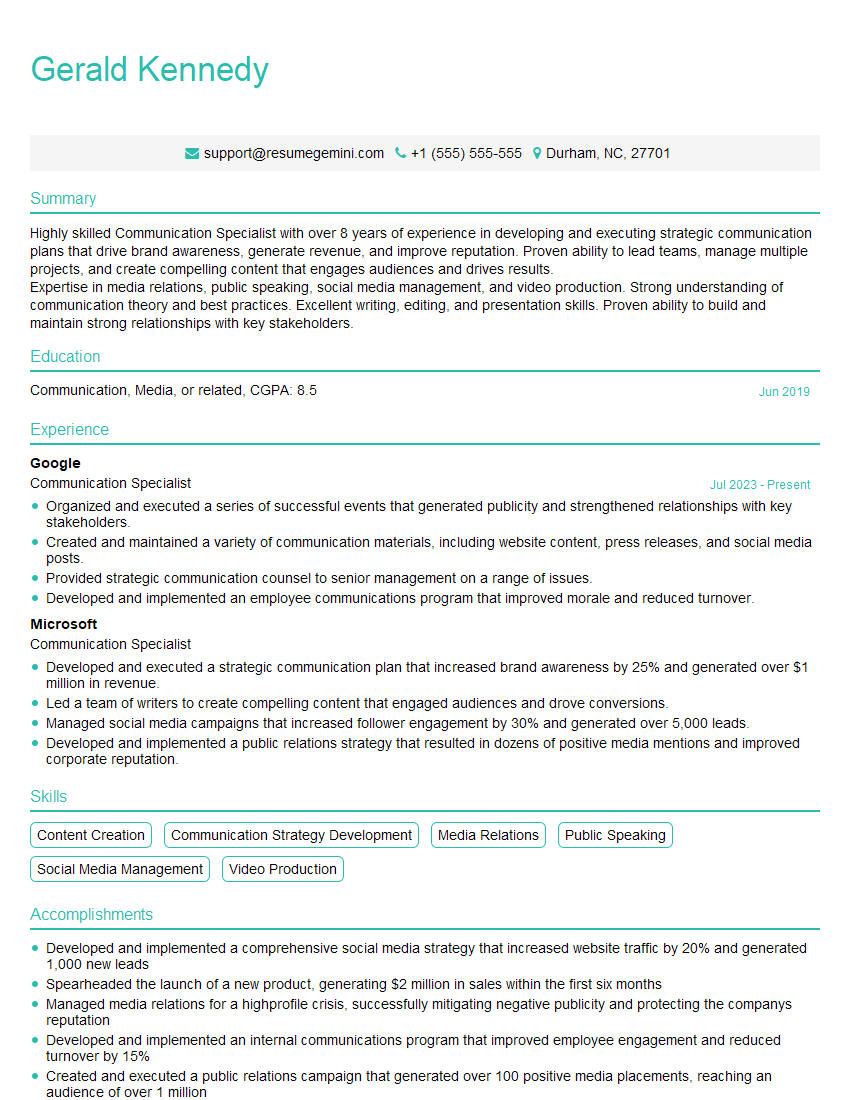
Mastering Alternative and Augmentative Communication (AAC) opens doors to rewarding careers impacting the lives of individuals with communication challenges. To maximize your job prospects, a well-crafted, ATS-friendly resume is essential. ResumeGemini is a trusted resource for building professional resumes that catch the eye of recruiters. Take advantage of their tools and resources to create a compelling resume that highlights your AAC expertise. Examples of resumes tailored to Alternative and Augmentative Communication (AAC) are available to help guide you.
Explore more articles
Users Rating of Our Blogs
Share Your Experience
We value your feedback! Please rate our content and share your thoughts (optional).
What Readers Say About Our Blog
Really detailed insights and content, thank you for writing this detailed article.
IT gave me an insight and words to use and be able to think of examples