The right preparation can turn an interview into an opportunity to showcase your expertise. This guide to Electrical and Electronic System Inspection interview questions is your ultimate resource, providing key insights and tips to help you ace your responses and stand out as a top candidate.
Questions Asked in Electrical and Electronic System Inspection Interview
Q 1. Explain the difference between a Class A and Class B fire extinguisher.
Class A and Class B fire extinguishers are categorized based on the types of fires they are designed to combat. Think of it like this: different fires require different ‘weapons’.
Class A extinguishers are for fires involving ordinary combustible materials like wood, paper, cloth, and some plastics. They typically use water or a water-based agent to cool the fire and suppress the flames. Imagine using a water hose on a burning pile of wood – that’s the principle.
Class B extinguishers are designed for flammable liquid fires such as gasoline, oil, grease, and paint. These extinguishers use agents like carbon dioxide (CO2), dry chemical, or foam to smother the fire and prevent it from getting oxygen. Think of smothering a grease fire with a lid – this prevents the flames from accessing the oxygen they need to burn.
In short, Class A tackles solid fuel fires, while Class B tackles liquid fuel fires. It’s crucial to use the correct extinguisher for the fire type, as using the wrong one can be ineffective or even dangerous.
Q 2. Describe the process of testing a ground fault circuit interrupter (GFCI).
Testing a Ground Fault Circuit Interrupter (GFCI) is a crucial safety measure to ensure it’s functioning correctly and protecting against electrical shocks. Every GFCI outlet should be tested regularly.
The process is straightforward: most GFCIs have a built-in ‘Test’ and ‘Reset’ button. First, plug a known good appliance into the GFCI outlet. Then, press the ‘Test’ button. This simulates a ground fault; the GFCI should immediately trip, cutting off the power. If it doesn’t trip, the GFCI is faulty and needs to be replaced. Finally, press the ‘Reset’ button to restore power.
It’s vital to remember that a non-functioning GFCI is a significant safety hazard. Regular testing, ideally monthly, is essential for maintaining a safe electrical environment, especially in areas like bathrooms, kitchens, and outdoors where water is present.
Q 3. What safety precautions should be taken when working with high-voltage systems?
Working with high-voltage systems presents serious risks of electric shock, burns, and arc flash. Safety is paramount and demands strict adherence to established protocols.
Here’s a summary of essential safety precautions:
- Lockout/Tagout Procedures: Always de-energize the system and apply lockout/tagout devices to prevent accidental re-energization. Think of this as a ‘safety switch’ that prevents anyone from accidentally turning the power back on.
- Personal Protective Equipment (PPE): Use appropriate PPE, including insulated gloves, safety glasses, arc flash suits (for high-energy systems), and safety footwear.
- Proper Training: Only qualified and trained personnel should work on high-voltage systems.
- Grounding and Bonding: Ensure proper grounding and bonding to prevent static electricity build-up and potential electrical hazards.
- Visual Inspection: Before commencing work, meticulously inspect the equipment for any signs of damage or wear.
- Emergency Procedures: Be familiar with emergency procedures, including the location of safety equipment and emergency contacts.
Ignoring these precautions can lead to severe injury or even death. Safety is not optional when dealing with high-voltage electricity.
Q 4. How do you identify and troubleshoot a short circuit?
A short circuit is an unintended connection between two points in an electrical circuit with different potentials, often resulting in excessive current flow. Imagine a shortcut in a highway; traffic jams and potential damage ensue.
Identifying and troubleshooting a short circuit involves a systematic approach:
- Visual Inspection: Look for any obvious signs of damage, such as frayed wires, burned insulation, or loose connections.
- Testing with a Multimeter: Use a multimeter to measure resistance or continuity. Low resistance indicates a potential short circuit. This is like using a special measuring tool to pinpoint exactly where the ‘shortcut’ is.
- Circuit Tracing: Carefully trace the circuit to pinpoint the location of the short.
- Isolation and Repair: Once located, isolate the faulty section of the circuit and repair or replace damaged components.
For example, a short circuit in a home’s wiring might manifest as tripped circuit breakers or blown fuses. Pinpointing the exact location might involve checking outlets, switches, and wiring within walls, potentially requiring the assistance of a qualified electrician.
Q 5. Explain the purpose of a circuit breaker and how it functions.
A circuit breaker is a safety device designed to protect an electrical circuit from damage caused by overcurrent, short circuits, or ground faults. Think of it as a safety valve for your electrical system.
It functions by interrupting the flow of electricity when the current exceeds a predetermined threshold. This is accomplished through a bimetallic strip or a magnetic coil, which trigger a mechanism to break the electrical connection. If the current becomes too high, for example due to a short circuit, the circuit breaker will trip, opening the circuit and cutting off the power. This prevents overheating, fires, and damage to electrical equipment. Once the fault is resolved, the circuit breaker can usually be reset, restoring power.
Circuit breakers are far safer than older fuses, which need to be replaced when they blow. Circuit breakers are resettable and provide a more convenient and safer way to protect electrical circuits.
Q 6. What are the common causes of electrical fires?
Electrical fires can stem from various causes, often a combination of factors. Understanding these root causes is crucial for prevention.
- Overloaded Circuits: Plugging too many devices into a single outlet or circuit can overload it, causing overheating and potentially igniting nearby materials.
- Faulty Wiring: Damaged or poorly installed wiring can create short circuits and sparks, initiating fires.
- Overheating Appliances: Appliances with malfunctioning components or inadequate ventilation can overheat and start fires.
- Loose Connections: Loose connections can create resistance and heat, leading to fires.
- Arcing: Electrical arcing, where electricity jumps across an air gap, can create intense heat and ignite flammable materials.
- Appliance Malfunctions: A faulty appliance, like a malfunctioning heating element in a stove, can be a significant fire hazard.
Regular electrical inspections, proper maintenance of appliances, and avoiding overloaded circuits are essential steps in minimizing the risk of electrical fires.
Q 7. Describe your experience with different types of electrical wiring.
My experience encompasses a wide range of electrical wiring types, each with its own characteristics and applications. Understanding these differences is fundamental for safe and effective installations and inspections.
I’ve worked extensively with:
- Copper Wiring (TW, THHN, THWN): This is the most common type, known for its excellent conductivity and durability. The specific type (TW, THHN, THWN) indicates its insulation and application, such as in dry or wet locations.
- Aluminum Wiring: While less common now due to concerns about oxidation and connection issues, I have experience inspecting and troubleshooting systems using aluminum wiring, understanding the proper connection techniques and safety measures required.
- BX Cable (Armored Cable): I’m familiar with the installation and inspection of BX cable, which offers added protection from mechanical damage.
- MC Cable (Metal-Clad Cable): I’ve worked with MC cable in various settings, understanding its suitability for specific applications.
- Non-Metallic Sheathed Cable (NM): Commonly used in residential settings, I am adept at inspecting NM cable for proper installation and any signs of damage.
My experience also includes understanding wiring codes and regulations (like the NEC in the US) to ensure safe and compliant installations and identifying potential hazards during inspections.
Q 8. How do you interpret electrical schematics and blueprints?
Interpreting electrical schematics and blueprints is fundamental to any electrical and electronic system inspection. Think of them as the system’s roadmap. Schematics are simplified diagrams showing the electrical connections between components, using standardized symbols. Blueprints, on the other hand, provide the physical layout of the system, showing the placement of components within the structure. To interpret them effectively, you need a solid understanding of electrical symbols (like resistors, capacitors, transistors, etc.), component designations, and the overall system architecture.
For example, a schematic might show how a power supply connects to a microcontroller, while the blueprint would reveal the physical location of those components on a circuit board or within an enclosure. I approach this by first understanding the overall system function, then tracing the individual signal paths and power flows from the schematic, verifying these against the physical layout on the blueprint. This ensures I can accurately identify components, connections, and potential issues during inspection.
Effective interpretation also involves understanding revision control and identifying any modifications or updates. Many schematics and blueprints are version-controlled, indicating changes over time. Failing to account for these can lead to misinterpretations during inspection.
Q 9. What are the key components of a power distribution system?
A power distribution system’s key components work together to safely deliver electrical power to various loads. Imagine it like a highway system for electricity. The core elements include:
- Power Source: This is the origin of the electricity, typically a generator, transformer, or the utility grid itself.
- Protection Devices: These are crucial for safety. Circuit breakers, fuses, and overcurrent relays prevent damage from overloads or short circuits. They act as safety valves preventing damage to the rest of the system.
- Conductor Cables and Wiring: These transport the electrical power from the source to the loads. Proper sizing and insulation are critical for efficient and safe operation.
- Distribution Panels (Switchboards): These central points distribute power to different circuits and provide access for monitoring and control.
- Load Centers: These are the destinations of the power—the motors, lights, appliances, or other equipment consuming electricity.
- Grounding System: A critical safety component that protects against electrical shocks and voltage surges by providing a low-resistance path to the earth.
The interaction of these components ensures safe and reliable power delivery. For instance, a fault in a circuit will trigger the circuit breaker, isolating the faulty section and protecting the rest of the system. This is fundamental to the effective operation of any system.
Q 10. Explain the importance of proper grounding and bonding.
Proper grounding and bonding are paramount for safety and equipment protection in electrical systems. Think of grounding as providing a safe return path for electrical current to the earth in the event of a fault, preventing dangerous voltages from appearing on exposed conductive surfaces. Bonding, on the other hand, connects metal enclosures and equipment to ensure electrical equipotentiality. This prevents dangerous voltage differences between these parts, minimizing the risk of electric shock.
Without grounding, a faulty appliance could become energized, leading to severe electric shock if touched. Without proper bonding, a voltage difference could build between metal parts, resulting in a shock if simultaneously touched. This scenario might happen in a situation with a faulty system where a live wire touches the metal case of an appliance. Grounding allows the current to flow safely to the ground. I always verify grounding and bonding connections during my inspections to ensure compliance with safety standards and codes.
Q 11. How do you test for continuity in a circuit?
Testing for continuity in a circuit verifies if there is a complete, unbroken path for current flow. It’s like checking if a pipe is clear from obstructions. This is done using a multimeter set to the continuity test mode (usually represented by a diode symbol). One lead of the multimeter is placed on one end of the circuit path, and the other lead is placed on the other end.
A continuous beep or visual indication on the multimeter confirms a continuous path. No beep or indication means a break in the circuit, indicating a fault. For example, when checking a switch, we would test continuity with the switch closed and then with the switch open. A closed switch should show continuity (a complete path), while an open switch should not. This is how we determine the functional status of the switch during an electrical inspection. The simplicity of the test belies its significance in identifying basic circuit integrity.
Q 12. What are the different types of electronic components and their functions?
Electronic components are the building blocks of electronic circuits. They perform various functions, and a good understanding is critical for efficient troubleshooting. Here are a few key types:
- Resistors: Control current flow by offering resistance.
- Capacitors: Store electrical energy.
- Inductors: Store energy in a magnetic field.
- Diodes: Allow current flow in only one direction.
- Transistors: Act as electronic switches or amplifiers.
- Integrated Circuits (ICs): Contain many transistors and other components on a single chip, performing complex functions.
For instance, a resistor might limit the current to a light-emitting diode (LED) to prevent it from burning out. A capacitor might smooth out fluctuations in a power supply. Understanding the roles of each component is key to circuit analysis and repair.
Q 13. Describe your experience with troubleshooting electronic circuits.
My experience in troubleshooting electronic circuits spans various projects, ranging from simple appliance repairs to complex industrial control systems. My approach is systematic, starting with a thorough visual inspection to identify any obvious damage or loose connections. I then use multimeters, oscilloscopes, and logic analyzers to check voltages, currents, and signals at various points in the circuit.
For example, during an inspection of a manufacturing facility, a motor control system malfunctioned, halting the production line. I systematically checked voltage and current supplies to the motor, the signals from the control board, and the motor itself. Using an oscilloscope, I identified a faulty signal pulse from the control board to the motor, pinpointing the issue to a specific IC on the board. This systematic approach minimized downtime. I heavily rely on circuit diagrams, datasheets, and troubleshooting guides alongside my experience and knowledge to efficiently locate and solve these issues.
Q 14. How do you identify and replace faulty electronic components?
Identifying and replacing faulty electronic components requires precision and care. First, the faulty component needs to be precisely identified, using the diagnostic techniques already described—visual inspection, multimeter checks, and signal analysis. This is often done by comparing readings at various points in the circuit with expected values from schematics or datasheets. Once identified, the component’s specifications (value, type, power rating) must be noted from the component itself or the schematics.
Next, the component is safely removed, taking precautions to avoid damage to surrounding components or the circuit board. The replacement component must match the specifications exactly. After installation, the circuit is carefully tested to ensure the repair was successful and that there are no secondary issues. A final check usually includes a power-up and functional tests to verify the repair.
For example, a faulty capacitor in a power supply could cause erratic voltages. After identifying the faulty capacitor using a multimeter, I would carefully desolder the old capacitor, install a new one with matching specifications, and then retest the power supply to confirm stable voltage output. This methodical approach ensures both safety and successful repair. Safety procedures during this process are especially important to prevent electrical shock or damage to other components.
Q 15. Explain the use of multimeters and other testing equipment.
Multimeters are the workhorses of electrical system inspection. They’re versatile instruments used to measure voltage, current, and resistance. Think of them as the basic diagnostic tool, allowing us to assess the health of circuits. For example, we might use a multimeter to check if a specific branch circuit is receiving the correct voltage (e.g., 120V in a North American home). A low voltage reading might indicate a loose connection or a failing component. Beyond multimeters, we utilize a range of other specialized equipment depending on the complexity of the system and the specific inspection needs. This can include:
- Clamp meters: These measure current without breaking the circuit, crucial for safety and efficiency, especially in high-current applications.
- Insulation testers (Meggers): These measure the insulation resistance of cables and equipment, identifying potential shorts or degradation that could lead to safety hazards.
- Thermal imaging cameras: These detect excessive heat, often indicative of faulty connections or overloaded components, preventing fires and equipment failure.
- Loop testers: Used to verify the correct operation of protective devices like Earth Leakage Circuit Breakers (ELCBs) and Residual Current Devices (RCDs).
- Power quality analyzers: These sophisticated instruments monitor voltage variations, harmonics, and other power disturbances that affect equipment performance and reliability.
The choice of equipment depends on the specific task. For a routine check-up of a small office, a multimeter might suffice. However, for a large industrial facility, we’d need a suite of instruments to thoroughly evaluate its intricate electrical systems.
Career Expert Tips:
- Ace those interviews! Prepare effectively by reviewing the Top 50 Most Common Interview Questions on ResumeGemini.
- Navigate your job search with confidence! Explore a wide range of Career Tips on ResumeGemini. Learn about common challenges and recommendations to overcome them.
- Craft the perfect resume! Master the Art of Resume Writing with ResumeGemini’s guide. Showcase your unique qualifications and achievements effectively.
- Don’t miss out on holiday savings! Build your dream resume with ResumeGemini’s ATS optimized templates.
Q 16. How do you ensure compliance with relevant electrical codes and standards?
Compliance with electrical codes and standards is paramount. It’s not just about avoiding legal issues; it’s about ensuring safety. We adhere to codes like the National Electrical Code (NEC) in the US, or equivalent standards like BS 7671 in the UK. This involves a multi-step process:
- Thorough understanding of applicable codes: I regularly update my knowledge to keep pace with the latest revisions and amendments.
- Careful examination of the system: This includes checking for proper grounding, correct wiring configurations, appropriate overcurrent protection (fuses, circuit breakers), and adherence to safe working clearances.
- Verification through testing: Using the testing equipment I mentioned earlier, we verify that the system meets the code requirements.
- Documentation: All findings, including any deviations from the code, are meticulously documented in our reports.
- Remediation recommendations: If any non-compliance is discovered, we provide clear and concise recommendations for corrective actions.
For instance, if we find a circuit breaker rated lower than the required capacity for the connected load, we would document that as a violation and recommend upgrading to a properly sized breaker to prevent overheating and potential fire hazards. This methodical approach ensures that the electrical systems are safe and compliant.
Q 17. Describe your experience with preventative maintenance of electrical and electronic systems.
Preventative maintenance is crucial for extending the lifespan of electrical and electronic systems, improving reliability, and mitigating risks. My experience encompasses a broad range of preventative maintenance activities, including:
- Regular inspections: Conducting routine visual inspections to identify any signs of wear, damage, or loose connections.
- Cleaning: Removing dust and debris from equipment to improve cooling and prevent overheating.
- Testing: Performing periodic tests of critical components and circuits using the appropriate testing equipment. This ensures that protection devices are functioning correctly and that the system is operating within safe parameters.
- Lubrication: Lubricating moving parts of electrical equipment (e.g., motor bearings) as required.
- Tightening connections: Regularly checking and tightening loose connections to maintain good electrical contact.
During a recent preventative maintenance visit to a manufacturing facility, we identified a slightly loose connection on a high-voltage transformer. While not immediately dangerous, if left unattended, it could have led to arcing and potential fire. We tightened the connection, preventing a potentially serious issue.
Q 18. How do you document inspection findings and generate reports?
Detailed documentation is a cornerstone of effective electrical inspections. Our inspection findings are meticulously documented and presented in comprehensive reports. This typically involves:
- Clear identification of the inspected system: Location, equipment type, and other relevant details.
- Detailed description of the inspection process: Equipment used, tests performed, and observations made.
- Photographs and diagrams: Visual evidence to support the written report. This could include images of wiring configurations, equipment labels, or any defects identified.
- Tabulated data: Measurements of voltage, current, resistance, and other relevant parameters.
- Clear statement of findings: Summarizing the inspection results and highlighting any discrepancies or non-compliances.
- Recommendations for corrective actions: Providing detailed suggestions to address any identified issues.
The reports are formatted to be easily understandable for both technical and non-technical audiences. We use standardized templates and clear language to ensure consistency and transparency. This careful documentation ensures accountability and aids in future maintenance planning.
Q 19. Explain your experience with different types of electronic sensors and their applications.
I have extensive experience working with various electronic sensors, understanding their principles of operation and application. Examples include:
- Temperature sensors (thermocouples, RTDs, thermistors): Used in applications ranging from monitoring motor winding temperatures to controlling industrial process temperatures.
- Pressure sensors: Critical for monitoring pressure in hydraulic systems, pneumatic controls, and other process control applications.
- Flow sensors: Measure the flow rate of liquids or gases, often used in industrial processes or HVAC systems.
- Level sensors: Detect the level of liquids or solids in tanks or containers.
- Proximity sensors: Detect the presence or absence of an object without physical contact, often employed in automation and robotics.
In one project, we integrated a network of temperature and humidity sensors in a large data center to monitor environmental conditions and ensure optimal performance of the IT equipment. Understanding sensor specifications, calibration requirements, and signal processing techniques is crucial for accurate data acquisition and reliable system operation.
Q 20. How do you handle emergency situations involving electrical hazards?
Safety is my utmost priority. In the event of an electrical emergency, my response follows a strict protocol:
- Immediate isolation: The first step is to isolate the affected area and de-energize the power source, if possible and safe to do so. This might involve switching off circuit breakers or isolating the power supply.
- Emergency services: Call emergency services immediately, providing clear and concise information about the situation.
- Evacuation and safety: Ensure the immediate evacuation of any personnel in the affected area to prevent further injuries.
- Assessment and containment: Once the area is safe, assess the situation to determine the extent of the damage and to ensure that there are no ongoing electrical hazards.
- Documentation: Thoroughly document the incident, including the cause, response actions, and any injuries or damage.
One instance involved a short circuit in a power distribution panel. Following these steps, we safely de-energized the panel and called emergency responders while ensuring the safety of personnel. Afterward, a thorough investigation was conducted to determine the root cause and prevent future occurrences.
Q 21. Describe your knowledge of various safety regulations and procedures.
My knowledge of safety regulations and procedures is comprehensive, covering various aspects of electrical safety. This includes:
- Lockout/Tagout (LOTO) procedures: Ensuring proper isolation of electrical equipment before maintenance or repair work.
- Personal Protective Equipment (PPE): Consistent use of appropriate PPE, including insulated gloves, safety glasses, and arc flash protective clothing.
- Safe working practices: Adherence to safe working distances, proper handling of tools, and awareness of potential hazards.
- Emergency response plans: Understanding and participating in emergency response procedures.
- Relevant legislation and standards: Staying updated on current safety regulations and best practices.
I’m familiar with the hierarchy of controls in managing electrical risks, prioritizing elimination of hazards where possible, followed by engineering controls, administrative controls, and finally personal protective equipment as the last line of defense. This layered approach ensures maximum safety during inspections and maintenance tasks.
Q 22. What are the different types of electronic testing equipment you are familiar with?
My experience encompasses a wide range of electronic testing equipment, crucial for thorough inspections. This includes, but isn’t limited to:
- Multimeters: These are fundamental for measuring voltage, current, and resistance. I’m proficient in using both analog and digital multimeters, understanding their limitations and selecting the appropriate tool for the specific task. For example, when troubleshooting a low-voltage circuit, a high-impedance digital multimeter is preferred to minimize loading effects.
- Oscilloscope: Essential for analyzing waveforms and identifying signal integrity issues. I can use oscilloscopes to diagnose problems like signal noise, timing errors, and harmonic distortion in various circuits. A recent project involved using an oscilloscope to pinpoint a faulty component causing intermittent signal loss in a high-speed data transmission system.
- Logic Analyzers: Used for analyzing digital signals, these are invaluable when inspecting digital circuits and embedded systems. I’ve used logic analyzers to debug complex state machines and troubleshoot communication protocols in industrial automation equipment.
- Spectrum Analyzers: These allow for the examination of signals across a wide frequency range, identifying interference and noise. This is particularly important in RF and communications systems. I’ve successfully utilized a spectrum analyzer to identify electromagnetic interference causing data corruption in a wireless sensor network.
- Power Analyzers: Used to measure power consumption and efficiency, critical for energy audits and optimization. I’ve used this equipment to pinpoint energy losses in industrial machinery and recommend energy-saving strategies.
Beyond these core instruments, I’m also familiar with specialized equipment like insulation testers, capacitance meters, and thermal imagers, tailoring my approach to the specific needs of each inspection.
Q 23. Explain your proficiency in using computer-aided design (CAD) software for electrical systems.
I’m highly proficient in using CAD software, specifically AutoCAD Electrical and EPLAN Electric P8, for electrical system design and documentation. My skills extend beyond simple drafting; I can create comprehensive schematics, panel layouts, and wiring diagrams. I understand the importance of adhering to industry standards for drawing conventions and symbol libraries.
For instance, in a recent project, I used AutoCAD Electrical to design the electrical system for a new manufacturing facility. This involved creating detailed schematics, performing cable sizing calculations, and generating reports for procurement and installation. The software’s automation features, such as automatic wire numbering and bill of materials generation, significantly improved efficiency and reduced errors.
Furthermore, I’m adept at using CAD software to troubleshoot existing systems by overlaying as-built drawings with design documentation, identifying discrepancies, and proposing modifications. This has been crucial in numerous projects where upgrading or repairing existing infrastructure was required.
Q 24. How do you manage multiple inspection tasks and meet deadlines?
Managing multiple inspection tasks and meeting deadlines requires a structured approach. I employ a combination of prioritization techniques, time management strategies, and effective communication.
- Prioritization: I use methods like MoSCoW (Must have, Should have, Could have, Won’t have) to prioritize tasks based on urgency and importance. This ensures critical inspections are addressed first.
- Time Management: I utilize project management tools like Gantt charts and task lists to break down complex projects into smaller, manageable tasks, assigning realistic timelines to each. Regular progress reviews help keep me on track.
- Communication: Open and consistent communication with clients and colleagues is essential. I proactively provide updates on progress and address any potential roadblocks early on. This helps prevent delays and ensures everyone is informed.
For example, during a period of high demand, I successfully managed three concurrent inspection projects with overlapping deadlines by using a detailed project plan and regular communication with each client. This allowed me to efficiently allocate my time and resources, ensuring all deadlines were met.
Q 25. Describe your experience with different types of industrial control systems.
My experience with industrial control systems (ICS) spans various types, including Programmable Logic Controllers (PLCs), Supervisory Control and Data Acquisition (SCADA) systems, and Distributed Control Systems (DCS).
- PLCs: I’m experienced with various PLC platforms like Allen-Bradley, Siemens, and Schneider Electric, proficient in programming, troubleshooting, and configuration.
- SCADA: I understand SCADA system architecture, including human-machine interfaces (HMIs) and data historians. I’ve worked with systems from various vendors, assisting in system upgrades and troubleshooting network communication issues.
- DCS: I have experience working with DCS systems in process industries, understanding their distributed nature and the importance of safety and reliability. I’ve been involved in system audits and upgrades, ensuring compliance with safety standards.
In a recent project, I helped troubleshoot a SCADA system experiencing communication failures. By systematically analyzing the network configuration and using diagnostic tools, I identified a faulty network switch and resolved the issue, minimizing downtime and ensuring operational continuity.
Q 26. Explain your knowledge of programmable logic controllers (PLCs).
My knowledge of Programmable Logic Controllers (PLCs) is extensive. I’m proficient in programming PLCs using ladder logic, function block diagrams, and structured text. I understand the importance of using best practices for creating robust and maintainable code.
Beyond programming, I have expertise in PLC hardware configuration, including I/O module selection and wiring. I’m also experienced in troubleshooting PLC systems, utilizing diagnostic tools and techniques to identify and resolve issues. I’ve worked with various PLC manufacturers, adapting my programming style and troubleshooting techniques to specific platforms.
For example, I recently resolved a production line stoppage caused by a PLC programming error. By carefully reviewing the code and using simulation tools, I identified the faulty logic and implemented a correction, minimizing downtime and preventing further losses.
Q 27. Describe your experience with data acquisition and analysis in electrical systems.
Data acquisition and analysis are critical aspects of electrical system inspections. I utilize various tools and techniques to collect data, analyze trends, and identify potential problems.
- Data Acquisition: I’m experienced in using data acquisition systems (DAQ) to collect data from various sensors, including temperature, pressure, current, and voltage sensors. I’m proficient in selecting appropriate sensors, configuring DAQ systems, and ensuring accurate data logging.
- Data Analysis: I use software like MATLAB and LabVIEW for data analysis. This includes signal processing, trend analysis, and statistical analysis to identify patterns, anomalies, and potential failures. I can create visualizations to present findings in a clear and understandable manner.
In a recent project, I used a DAQ system to monitor the vibration levels of a large industrial motor. By analyzing the collected data, I identified a subtle increase in vibration frequency indicative of bearing wear, allowing for proactive maintenance and preventing a costly catastrophic failure.
Q 28. How do you stay updated on the latest industry standards and technologies?
Staying current with industry standards and technologies is crucial in this field. I employ several strategies to maintain my knowledge and skills:
- Professional Organizations: I’m an active member of IEEE and other relevant professional organizations. This provides access to publications, conferences, and networking opportunities, keeping me abreast of the latest advancements.
- Industry Publications and Journals: I regularly read industry publications like IEEE Spectrum and other relevant journals to stay informed about new technologies and best practices.
- Online Courses and Webinars: I actively participate in online courses and webinars offered by reputable organizations to enhance my skills in specific areas.
- Manufacturer Training: I regularly attend training courses provided by equipment manufacturers to stay updated on the latest features and capabilities of the tools I use.
This continuous learning approach ensures that my inspections are conducted using the most up-to-date methods and that I’m equipped to handle the challenges posed by evolving technologies.
Key Topics to Learn for Electrical and Electronic System Inspection Interview
- Safety Regulations and Procedures: Understanding and applying relevant safety standards (e.g., OSHA, NEC) in inspection procedures. This includes proper use of personal protective equipment (PPE) and lockout/tagout procedures.
- Electrical Theory Fundamentals: Demonstrating a solid grasp of Ohm’s Law, Kirchhoff’s Laws, and basic AC/DC circuit analysis. Practical application involves troubleshooting simple circuits and identifying potential hazards.
- Electronic Components and Circuits: Familiarity with common electronic components (resistors, capacitors, transistors, integrated circuits) and their functionality within various systems. Practical experience diagnosing faults in electronic circuits is highly valuable.
- Testing and Measurement Techniques: Proficiency in using various test equipment (multimeters, oscilloscopes, clamp meters) to accurately measure voltage, current, resistance, and other electrical parameters. Understanding the limitations and proper use of each instrument is crucial.
- Inspection Methods and Documentation: Knowledge of systematic inspection techniques, including visual inspection, functional testing, and diagnostic procedures. Accurate and detailed documentation of findings, including photos and reports, is essential.
- Troubleshooting and Problem-Solving: Ability to systematically identify and troubleshoot malfunctions in electrical and electronic systems. This includes utilizing diagnostic tools and applying logical reasoning to isolate problems.
- Specific System Knowledge: Depending on the role, you may need in-depth knowledge of specific systems (e.g., industrial control systems, power distribution systems, automotive electrical systems). Tailor your preparation to the job description.
Next Steps
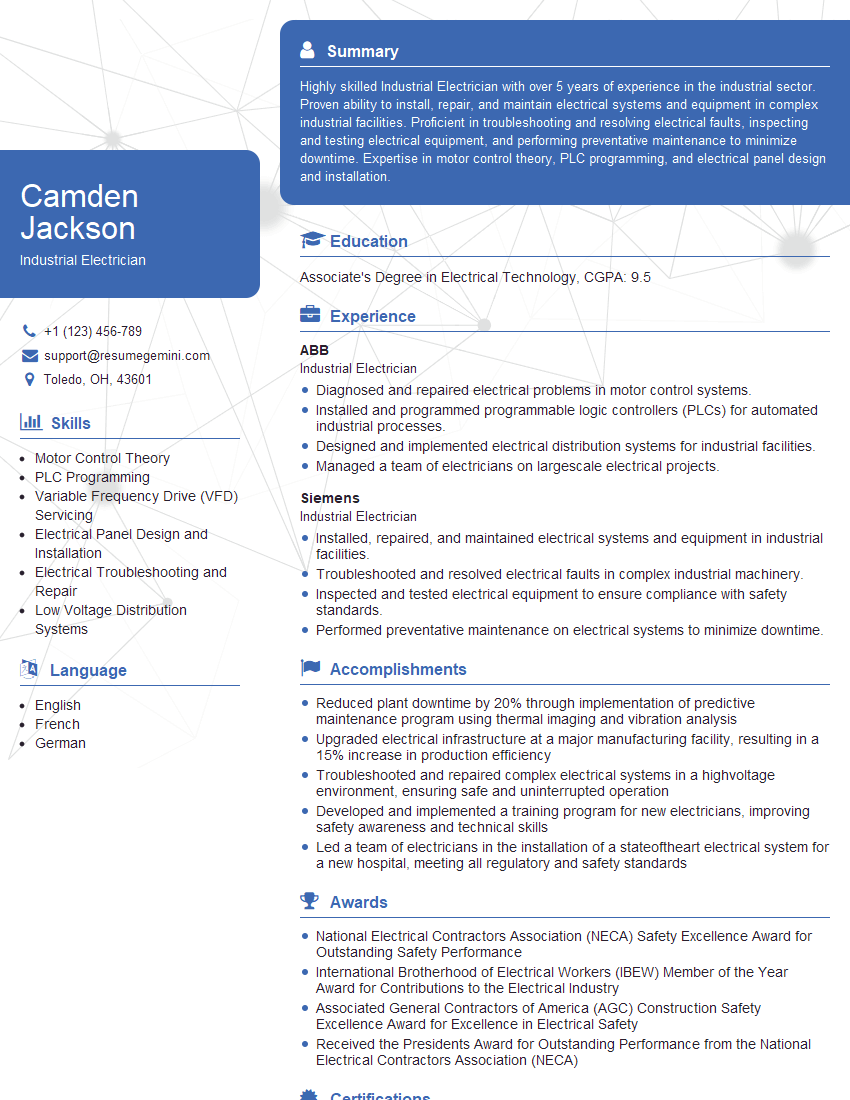
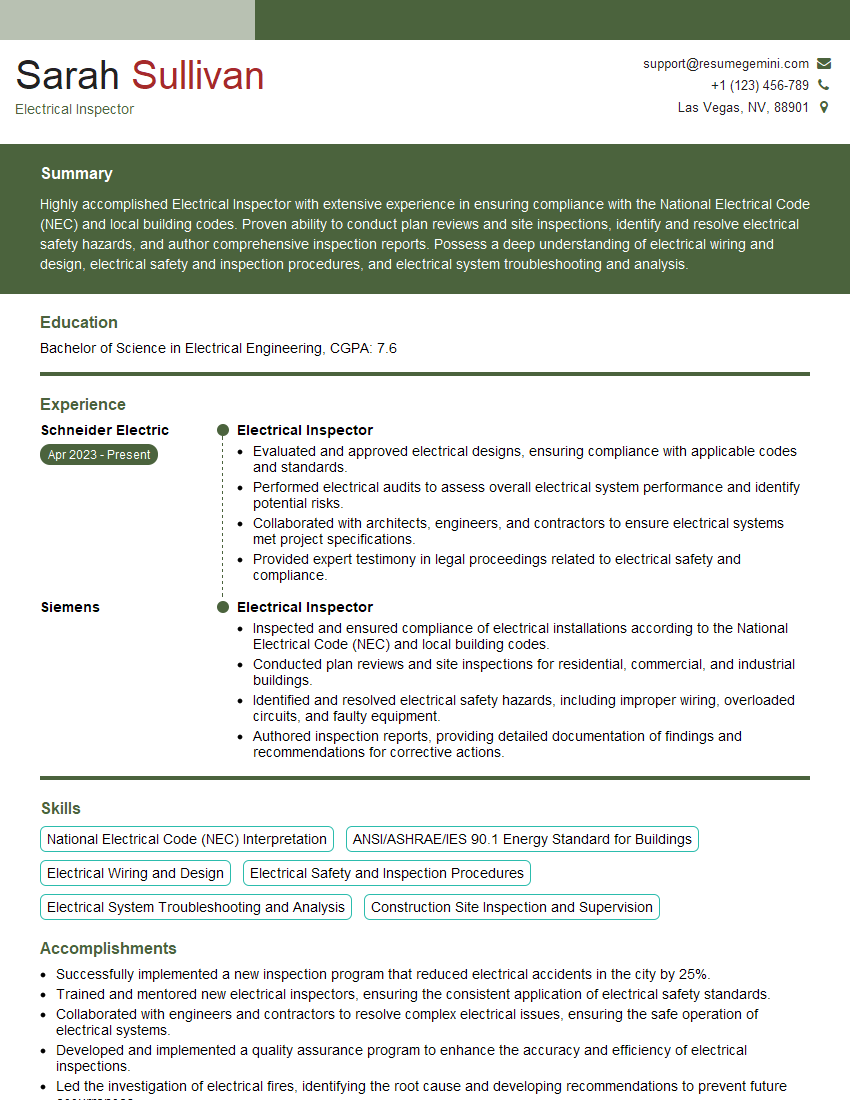
Mastering Electrical and Electronic System Inspection opens doors to a rewarding career with excellent growth potential. A strong understanding of these systems is highly sought after in many industries, leading to diverse and challenging opportunities. To significantly improve your job prospects, it’s crucial to create an ATS-friendly resume that highlights your skills and experience effectively. ResumeGemini is a trusted resource that can help you build a professional and impactful resume tailored to your specific needs. Examples of resumes tailored to Electrical and Electronic System Inspection are available to guide you through the process. Invest time in crafting a compelling resume – it’s your first impression on potential employers.

Explore more articles
Users Rating of Our Blogs
Share Your Experience
We value your feedback! Please rate our content and share your thoughts (optional).
What Readers Say About Our Blog
Really detailed insights and content, thank you for writing this detailed article.
IT gave me an insight and words to use and be able to think of examples