Unlock your full potential by mastering the most common CleanTech interview questions. This blog offers a deep dive into the critical topics, ensuring you’re not only prepared to answer but to excel. With these insights, you’ll approach your interview with clarity and confidence.
Questions Asked in CleanTech Interview
Q 1. Explain the difference between onshore and offshore wind energy.
Onshore and offshore wind energy both harness the power of wind to generate electricity, but they differ significantly in their location and associated challenges. Onshore wind farms are built on land, typically in areas with consistent, high winds. Offshore wind farms, on the other hand, are constructed in bodies of water, often several kilometers from the coast.
- Onshore Advantages: Easier access for construction, maintenance, and repair; generally lower initial capital costs.
- Onshore Disadvantages: Potential for visual impact on landscapes; land use conflicts; dependence on suitable land availability; potential noise pollution.
- Offshore Advantages: Higher and more consistent wind speeds leading to higher energy yields; less visual impact on populated areas; less noise pollution affecting nearby residents.
- Offshore Disadvantages: Significantly higher construction and maintenance costs due to the harsh marine environment; challenges in grid connection; potential impacts on marine ecosystems.
Think of it like this: onshore wind farms are like easily accessible, smaller-scale farms, while offshore wind farms are more ambitious, high-yield farms located further out, requiring specialized equipment and expertise to manage.
Q 2. Describe the lifecycle assessment of a solar panel.
A lifecycle assessment (LCA) of a solar panel considers its environmental impact across its entire lifespan, from raw material extraction to end-of-life disposal. This involves evaluating energy consumption, greenhouse gas emissions, water usage, and the generation of waste at each stage.
- Material Extraction and Manufacturing: This stage involves mining silicon, extracting other rare earth elements, and manufacturing the panel. It’s energy-intensive and generates significant waste.
- Transportation and Installation: Transporting the panels to the site and installation processes contribute to the carbon footprint.
- Operation and Maintenance: During its operational life, a solar panel generates clean electricity, offsetting its earlier emissions. Minimal maintenance is generally required.
- End-of-Life Management: At the end of its lifespan (typically 25-30 years), panels need to be disposed of responsibly. Recycling components such as silicon and other valuable materials is crucial to minimize environmental impact. Improper disposal can lead to land pollution.
For example, a comprehensive LCA might quantify the total greenhouse gas emissions in kg CO2e per kWh of electricity generated over the panel’s lifetime. This data is crucial for comparing the overall environmental performance of solar panels with other energy sources and different panel technologies.
Q 3. What are the main challenges facing the adoption of electric vehicles?
The widespread adoption of electric vehicles (EVs) faces several significant challenges:
- High Initial Purchase Price: EVs often have a higher upfront cost compared to gasoline-powered vehicles.
- Limited Range and Charging Infrastructure: The range of many EVs is still limited, and the availability of fast charging stations is insufficient in many areas, causing range anxiety.
- Charging Time: While fast charging is improving, charging times are still longer than refueling a gasoline car.
- Electricity Grid Capacity: A massive increase in EV adoption will put significant strain on the existing electricity grid, requiring upgrades to accommodate increased demand.
- Battery Production and Disposal: The production of EV batteries requires significant resources and energy, and responsible recycling methods need further development.
- Consumer Perception and Education: Some consumers are hesitant to adopt EVs due to unfamiliarity with the technology and concerns about performance and maintenance.
Addressing these challenges requires a multi-pronged approach involving government incentives, technological advancements, increased investments in charging infrastructure, and public education campaigns.
Q 4. How does carbon capture and storage technology work?
Carbon capture and storage (CCS) technology aims to prevent CO2 emissions from reaching the atmosphere by capturing them at their source (e.g., power plants, industrial facilities) and storing them underground in geological formations.
The process typically involves three main steps:
- Capture: CO2 is separated from other gases using various methods, such as absorption (using solvents), adsorption (using solid materials), or membranes.
- Transport: The captured CO2 is compressed and transported via pipelines or ships to a suitable storage site.
- Storage: The CO2 is injected into deep underground geological formations (e.g., depleted oil and gas reservoirs, saline aquifers) where it is trapped for long periods.
Example: A power plant equipped with CCS captures CO2 from its flue gases, compresses it, and then transports it via pipeline to a depleted oil reservoir for permanent storage.
While CCS shows promise, it’s expensive and energy-intensive. Its scalability and long-term safety are also subject to ongoing research and development.
Q 5. What are the different types of biomass energy?
Biomass energy harnesses the chemical energy stored in organic matter (plants and animal waste). Different types of biomass can be used to generate energy through various methods:
- Wood: Wood pellets and wood chips can be burned directly in power plants or used in residential heating systems.
- Agricultural Residues: Crop stalks, straw, and other agricultural byproducts can be used for energy generation.
- Energy Crops: Plants specifically cultivated for energy production, such as switchgrass and miscanthus, offer a sustainable source of biomass.
- Municipal Solid Waste (MSW): Waste materials from households and businesses can be incinerated to produce energy, with proper waste management practices to minimize environmental impacts.
- Biogas: Anaerobic digestion of organic matter produces biogas, a mixture of methane and carbon dioxide, which can be used for heating or electricity generation.
It’s important to note that using biomass sustainably is critical. Unsustainable practices like deforestation for biomass production can negate the environmental benefits.
Q 6. Explain the concept of a smart grid.
A smart grid is an advanced electricity network that uses digital technologies to improve efficiency, reliability, and sustainability. Unlike traditional grids, which are largely one-way systems, smart grids are two-way, allowing for better communication and control between utilities, consumers, and renewable energy sources.
Key features of a smart grid include:
- Advanced Metering Infrastructure (AMI): Smart meters provide real-time data on energy consumption, allowing utilities to manage demand more effectively.
- Two-Way Communication: Enables utilities to communicate with customers and devices, allowing for demand response programs and improved grid management.
- Integration of Renewable Energy: Smart grids facilitate the integration of distributed renewable energy sources, such as solar panels and wind turbines.
- Improved Grid Stability and Reliability: Real-time data and advanced controls help prevent blackouts and improve the overall reliability of the grid.
- Energy Storage: Integration of energy storage technologies, like batteries, helps balance supply and demand, improving grid stability and utilization of renewable energy sources.
Smart grids are essential for managing the increasing integration of renewable energy sources and meeting future energy demands in a sustainable manner.
Q 7. Discuss the environmental impact of fracking.
Hydraulic fracturing, or fracking, is a method of extracting natural gas and oil from shale rock. While it has increased energy production, it has significant environmental impacts:
- Water Usage and Contamination: Fracking requires large volumes of water, and the wastewater generated can be contaminated with chemicals and hydrocarbons, posing risks to water resources.
- Air Pollution: Fracking operations can release methane, a potent greenhouse gas, as well as other air pollutants, contributing to climate change and air quality issues.
- Induced Seismicity: The injection of wastewater underground can induce seismic activity, potentially causing earthquakes in some regions.
- Habitat Disturbance and Biodiversity Loss: Fracking operations can cause habitat fragmentation and disruption, leading to loss of biodiversity.
- Waste Management: The management of large volumes of wastewater and other waste materials from fracking operations presents significant challenges.
The extent of the environmental impact of fracking varies depending on the specific location, geological conditions, and operational practices. Rigorous environmental regulations and best practices are crucial to mitigate its negative effects.
Q 8. What are the advantages and disadvantages of geothermal energy?
Geothermal energy harnesses heat from the Earth’s interior to generate electricity or provide direct heating. It’s a reliable, consistent source of renewable energy, but it’s not without its challenges.
- Advantages:
- Reliability and Consistency: Unlike solar and wind, geothermal energy is available 24/7, regardless of weather conditions. This consistent energy output makes it a valuable asset to the electricity grid.
- Reduced Greenhouse Gas Emissions: Geothermal power plants produce significantly fewer greenhouse gas emissions compared to fossil fuel-based power plants, contributing to a cleaner energy future.
- High Energy Density: Geothermal resources contain a large amount of energy in a relatively small area, requiring less land compared to other renewable energy sources like solar or wind.
- Baseload Power Potential: Geothermal power plants can operate as baseload power sources, meaning they can provide a consistent supply of electricity to meet baseline demand.
- Disadvantages:
- Geographic Limitations: Geothermal resources are not evenly distributed across the globe. Suitable locations are often found near tectonic plate boundaries or volcanic areas, limiting accessibility.
- High Initial Costs: The upfront costs of drilling and constructing geothermal power plants can be significant, making it a less accessible option in many regions.
- Environmental Impacts: While generally cleaner than fossil fuels, geothermal energy can have localized environmental impacts, including land subsidence (sinking of the land surface), induced seismicity (small earthquakes), and the release of greenhouse gases (though usually less than fossil fuels).
- Water Usage: Some geothermal power plants require substantial amounts of water for cooling, potentially impacting water resources in arid or semi-arid regions.
For example, Iceland leverages its geothermal resources extensively for heating and electricity generation, demonstrating the potential of this technology in suitable locations.
Q 9. Describe different types of hydropower systems.
Hydropower utilizes the energy of moving water to generate electricity. Several types of hydropower systems exist, each with its characteristics:
- Run-of-River Hydropower: This system diverts a portion of a river’s flow through a hydropower plant, with minimal alteration to the river’s natural flow. It’s generally considered environmentally friendly due to minimal impact on the river ecosystem. An example would be a small-scale plant diverting water through a short channel with minimal damming.
- Reservoir Hydropower: This system involves the construction of a large dam to create a reservoir, which stores water and releases it to generate electricity. This allows for greater control over energy production, but can have significant environmental consequences, including habitat alteration and the displacement of communities. The Three Gorges Dam in China is a prime example of a large-scale reservoir hydropower plant.
- Pumped Storage Hydropower: This system pumps water uphill to a reservoir during off-peak hours when energy demand is low and then releases the water downhill to generate electricity during peak demand hours. It’s an effective way to store energy and balance the grid, acting as a large-scale battery.
- Tidal Hydropower: This harnesses the energy of ocean tides using turbines placed in tidal channels or estuaries. It’s a renewable source but depends on suitable geographical locations with significant tidal variations.
- Wave Energy Converters: These technologies capture the kinetic energy of ocean waves to generate electricity. Still relatively early in development, they offer potential for clean energy generation from ocean waves.
Q 10. How can buildings be designed for greater energy efficiency?
Designing energy-efficient buildings involves a holistic approach, considering various aspects to minimize energy consumption.
- Passive Design Strategies: These focus on optimizing the building’s relationship with its environment to minimize energy needs. Examples include:
- Orientation and Shading: Positioning the building to maximize solar gain in winter and minimize it in summer, utilizing shading devices like overhangs or trees.
- Insulation and Air Sealing: Utilizing high-performance insulation materials to reduce heat loss in winter and heat gain in summer, and sealing air leaks to prevent drafts.
- Natural Ventilation: Designing the building to leverage natural breezes for cooling, reducing reliance on mechanical systems.
- Active Design Strategies: These utilize technology to improve efficiency. Examples include:
- High-Efficiency HVAC Systems: Installing advanced heating, ventilation, and air conditioning (HVAC) systems that minimize energy consumption while maintaining comfort.
- Energy-Efficient Lighting: Employing LED lighting and smart lighting controls to reduce electricity consumption.
- Renewable Energy Integration: Incorporating solar panels, geothermal heat pumps, or other renewable energy systems to generate energy onsite.
- Smart Building Technologies: Utilizing building management systems (BMS) to monitor and optimize energy consumption in real-time, adjusting systems based on occupancy and environmental conditions.
A practical example is the use of green building certification standards like LEED, which sets benchmarks for energy efficiency in building design and construction.
Q 11. What are some strategies for reducing carbon emissions in transportation?
Reducing carbon emissions in transportation requires a multi-pronged strategy addressing various aspects of the transport sector.
- Transition to Electric Vehicles (EVs): Promoting the adoption of electric vehicles powered by renewable energy sources significantly reduces greenhouse gas emissions compared to gasoline or diesel vehicles. This includes supporting the development of charging infrastructure and incentivizing EV purchases.
- Improving Fuel Efficiency: Implementing stricter fuel efficiency standards for vehicles, promoting the development of more fuel-efficient internal combustion engines, and improving vehicle aerodynamics.
- Sustainable Fuels: Exploring and implementing the use of biofuels or other sustainable alternatives to fossil fuels in transportation. This includes carefully considering the sustainability of biofuel production to avoid unintended environmental consequences.
- Public Transportation and Active Mobility: Investing in and promoting the use of public transportation such as buses, trains, and trams, as well as encouraging cycling and walking to reduce reliance on private vehicles.
- Smart Transportation Systems: Improving traffic flow and reducing congestion through advanced traffic management systems and optimizing public transport routes and schedules.
- Carbon Offsetting: Implementing carbon offset programs to compensate for unavoidable emissions from transportation activities.
For example, cities like Amsterdam have prioritized cycling infrastructure, significantly reducing reliance on cars and contributing to lower emissions.
Q 12. Explain the concept of a circular economy.
A circular economy aims to minimize waste and maximize resource utilization by keeping materials and products in use for as long as possible. It moves away from a linear “take-make-dispose” model towards a regenerative system.
- Reduce: Minimizing the consumption of resources and energy by designing products for durability, repairability, and longevity.
- Reuse: Extending the lifespan of products through reuse, repair, refurbishment, and remanufacturing.
- Recycle: Processing waste materials to recover valuable resources and create new products.
- Recover: Extracting energy or other valuable resources from waste materials that cannot be recycled.
Imagine a clothing company designing clothes with durable, easily replaceable parts, promoting repair services, and using recycled materials in their production process. This exemplifies the circular economy principles.
Q 13. What are the key factors influencing the cost of renewable energy?
The cost of renewable energy is influenced by several key factors:
- Technology Costs: The manufacturing and installation costs of renewable energy technologies, such as solar panels, wind turbines, and geothermal power plants, significantly impact their overall price. Technological advancements leading to improved efficiency and reduced manufacturing costs can decrease the final price.
- Resource Availability: The availability and location of resources, such as sunlight, wind, water, and geothermal heat, influence project costs. Projects in remote locations often have higher costs due to infrastructure limitations.
- Policy and Regulations: Government policies, such as subsidies, tax incentives, and regulatory frameworks, can influence the cost of renewable energy. Supportive policies typically reduce the cost, while restrictive ones can increase it.
- Financing Costs: The cost of capital, including interest rates and loan terms, can significantly influence project development costs. Favorable financing options can lead to lower overall costs.
- Installation and Maintenance Costs: Costs associated with the installation, operation, and maintenance of renewable energy systems can vary based on location, complexity, and technology. Lower maintenance costs contribute to long-term economic viability.
- Intermittency and Storage: The intermittent nature of some renewable energy sources, like solar and wind, requires energy storage solutions or grid management strategies, adding to the overall cost.
Over time, the cost of renewable energy technologies has significantly decreased, driven by technological advancements and economies of scale, making them increasingly competitive with fossil fuels.
Q 14. Describe the different types of solar energy technologies.
Solar energy technologies harness the sun’s radiant energy to generate electricity or heat. Several types exist:
- Photovoltaic (PV) Solar Cells: These directly convert sunlight into electricity using semiconductor materials like silicon. They are commonly used in solar panels for residential, commercial, and utility-scale power generation. Different types of PV cells exist, including monocrystalline, polycrystalline, and thin-film, each with its own efficiency and cost characteristics.
- Concentrated Solar Power (CSP): This technology uses mirrors or lenses to concentrate sunlight onto a receiver, which heats a fluid to generate steam to drive a turbine and generate electricity. CSP plants are typically larger-scale installations and can incorporate thermal energy storage, enabling power generation even when the sun is not shining.
- Solar Thermal Collectors: These systems use solar energy to heat water or air for domestic hot water heating, space heating, or industrial process heat. They can be used in various applications, from individual homes to large-scale industrial facilities.
- Solar Water Splitting: This emerging technology uses sunlight to split water molecules into hydrogen and oxygen, producing clean hydrogen fuel. It has great potential but is still under development and requires further research and innovation.
For example, large-scale solar farms utilize PV technology to generate electricity, while many homes use solar thermal collectors to heat water.
Q 15. What are the challenges associated with integrating renewable energy into the grid?
Integrating renewable energy sources like solar and wind power into the existing grid presents several significant challenges. The intermittent nature of these resources is a primary concern. Unlike fossil fuel plants that can generate power on demand, solar panels only produce electricity during daylight hours, and wind turbines only generate when the wind blows. This intermittency creates fluctuations in power supply, potentially leading to instability within the grid.
- Balancing Supply and Demand: Matching electricity generation with real-time demand is crucial. Renewable energy’s inherent variability makes this difficult. Sophisticated forecasting models and grid management strategies are necessary to predict energy output and adjust accordingly.
- Grid Infrastructure: Existing grid infrastructure is often ill-equipped to handle the decentralized nature of renewable energy generation. Upgrading transmission lines and substations is often required to efficiently transport power from remote renewable energy sources to population centers.
- Energy Storage: The lack of readily available, cost-effective energy storage solutions exacerbates the intermittency issue. Storing excess energy generated during peak production periods for use during low-production periods is critical for grid stability.
- Geographic Limitations: The optimal locations for renewable energy generation may not always coincide with areas of high energy demand. This necessitates long-distance transmission, adding costs and potential losses.
- Policy and Regulation: Effective policies and regulations are needed to incentivize renewable energy adoption and ensure seamless grid integration. This includes streamlining permitting processes, establishing fair pricing mechanisms, and promoting research and development in grid modernization technologies.
For example, consider a scenario where a large solar farm experiences a sudden drop in sunlight due to cloud cover. Without sufficient energy storage or rapid response from other generation sources, this could lead to a power outage. Effective grid management and integration strategies are vital to prevent such occurrences.
Career Expert Tips:
- Ace those interviews! Prepare effectively by reviewing the Top 50 Most Common Interview Questions on ResumeGemini.
- Navigate your job search with confidence! Explore a wide range of Career Tips on ResumeGemini. Learn about common challenges and recommendations to overcome them.
- Craft the perfect resume! Master the Art of Resume Writing with ResumeGemini’s guide. Showcase your unique qualifications and achievements effectively.
- Don’t miss out on holiday savings! Build your dream resume with ResumeGemini’s ATS optimized templates.
Q 16. How does energy storage technology contribute to renewable energy adoption?
Energy storage technology is essential for bridging the gap created by the intermittent nature of renewable energy sources. It acts as a buffer, storing excess energy generated during periods of high production and releasing it when renewable energy generation is low or demand is high. This significantly enhances the reliability and stability of the grid, making renewable energy a more viable and attractive alternative to fossil fuels.
- Improved Grid Stability: Storage prevents fluctuations in power supply, ensuring a consistent and reliable power flow to consumers. This reduces the risk of blackouts and brownouts, increasing grid resilience.
- Increased Renewable Energy Penetration: By addressing intermittency, storage allows for a greater integration of renewable energy sources into the grid. This accelerates the transition towards cleaner energy systems.
- Peak Demand Management: Storage can be utilized to meet peak demand periods, reducing the need for fossil fuel peaker plants which are often less environmentally friendly.
- Cost Optimization: While the upfront cost of energy storage can be significant, it can lead to long-term cost savings by reducing reliance on expensive, less environmentally friendly energy sources and improving grid efficiency.
For instance, pumped hydro storage, which utilizes the potential energy of water, is a mature and effective technology. Batteries, both large-scale and smaller household ones, are becoming increasingly important in grid-scale storage. The availability of diverse storage solutions is vital for optimizing renewable energy integration.
Q 17. Explain the concept of net-zero emissions.
Net-zero emissions refers to a state where the amount of greenhouse gases (GHGs) released into the atmosphere is balanced by an equivalent amount removed. This doesn’t necessarily mean zero emissions; rather, it means achieving a balance between emissions and removal. This is often expressed as ‘net-zero carbon emissions’ or ‘carbon neutrality,’ focusing on carbon dioxide (CO2) as a primary GHG.
Achieving net-zero emissions requires a multifaceted approach. This includes:
- Reducing Emissions: Implementing measures to significantly reduce GHG emissions from various sectors such as energy, transportation, industry, and agriculture. This often involves transitioning to renewable energy, improving energy efficiency, and adopting sustainable practices.
- Carbon Removal: Employing technologies and methods to actively remove CO2 from the atmosphere. Examples include afforestation (planting trees), carbon capture and storage (CCS), and direct air capture (DAC).
The goal is to drastically decrease GHG emissions while simultaneously removing any remaining emissions from the atmosphere, effectively neutralizing their impact on the climate. It’s a crucial step in mitigating climate change and limiting global warming.
Q 18. What are some examples of green building materials?
Green building materials are those that have a lower environmental impact compared to conventional materials throughout their lifecycle. This includes factors like extraction, manufacturing, transportation, installation, use, and end-of-life management.
- Recycled Materials: Using recycled content in construction materials like steel, concrete, and wood reduces the demand for virgin resources and minimizes waste.
- Bamboo: A rapidly renewable resource, bamboo is a sustainable alternative to traditional timber, offering high strength and flexibility.
- Hempcrete: A composite material made from hemp fibers and lime, it’s a low-carbon alternative to concrete, offering excellent insulation properties.
- Reclaimed Wood: Salvaging and reusing old wood reduces waste and preserves a valuable resource.
- Mycelium Composites: These materials utilize the root structure of fungi to create lightweight, strong, and biodegradable building components.
- Sustainable Timber: Using timber certified by organizations like the Forest Stewardship Council (FSC) ensures responsible forest management and reduces deforestation.
The choice of green building materials directly impacts the overall environmental footprint of a building, contributing to sustainable construction practices and reducing the embodied carbon in structures.
Q 19. What are the environmental benefits of recycling and waste reduction?
Recycling and waste reduction offer a range of significant environmental benefits. They contribute to a circular economy, minimizing resource depletion and pollution.
- Reduced Landfill Waste: Recycling diverts waste from landfills, conserving land resources and reducing the emission of methane, a potent greenhouse gas, from decomposing organic waste.
- Conservation of Natural Resources: Recycling reduces the demand for virgin materials, lessening the environmental impact associated with extraction and processing of raw materials.
- Reduced Pollution: Manufacturing products from recycled materials often requires less energy and produces fewer pollutants compared to using virgin materials.
- Energy Savings: Recycling saves energy compared to producing goods from raw materials, thereby reducing greenhouse gas emissions and contributing to energy independence.
- Protection of Ecosystems: By reducing the need for resource extraction, recycling helps protect habitats and biodiversity.
For instance, recycling aluminum cans saves significant amounts of energy compared to producing new aluminum from bauxite ore. Similarly, recycling paper reduces deforestation and air pollution from paper manufacturing.
Q 20. Discuss the potential of hydrogen fuel cells as a clean energy source.
Hydrogen fuel cells offer a promising clean energy solution, producing electricity through an electrochemical reaction between hydrogen and oxygen. The only byproduct is water, making them a zero-emission technology at the point of use.
- Clean Energy Generation: Fuel cells generate electricity without combustion, eliminating harmful pollutants associated with fossil fuel-based power generation.
- High Efficiency: Hydrogen fuel cells are more efficient than combustion engines, converting a larger portion of fuel energy into electricity.
- Versatile Applications: Fuel cells can be used in a variety of applications, from stationary power generation to transportation (cars, buses, trains), and portable devices.
However, challenges remain. The production of ‘green’ hydrogen, using renewable energy sources for electrolysis (splitting water into hydrogen and oxygen), is currently energy-intensive and costly. Furthermore, efficient and safe hydrogen storage and transportation infrastructure needs to be developed and expanded for widespread adoption.
Despite these challenges, the potential of hydrogen fuel cells to contribute to a decarbonized energy system is significant, particularly in sectors difficult to electrify directly.
Q 21. Explain the difference between various types of batteries.
Different battery types have distinct characteristics, affecting their suitability for various applications. Key distinctions include chemistry, energy density, power density, lifespan, cost, and safety.
- Lead-Acid Batteries: Mature technology, low cost, but relatively low energy density and short lifespan. Common in automotive applications (starting batteries).
- Nickel-Cadmium (NiCd) Batteries: Relatively high energy density, but contain toxic cadmium, making them environmentally problematic. Less common now.
- Nickel-Metal Hydride (NiMH) Batteries: Improved energy density compared to NiCd, environmentally friendlier, but still lower than some newer technologies. Used in hybrid vehicles and some consumer electronics.
- Lithium-ion (Li-ion) Batteries: High energy density, relatively high power density, long lifespan, but can be expensive and pose safety risks if mishandled. Dominant in portable electronics, electric vehicles, and grid-scale energy storage.
- Lithium-Polymer (LiPo) Batteries: A type of lithium-ion battery with a polymer electrolyte, offering flexibility and design advantages. Used in some portable devices and drones.
- Flow Batteries: Energy and power are decoupled; they are suitable for large-scale stationary energy storage applications. Energy capacity is determined by the electrolyte volume, power by the cell stack size. Various chemistries exist like vanadium redox flow batteries.
The choice of battery technology depends heavily on the specific application requirements. For example, electric vehicles require high energy density and power density, favoring Li-ion batteries. Grid-scale energy storage might prioritize cost-effectiveness and lifespan, potentially making flow batteries more appropriate.
Q 22. What are the policy and regulatory challenges of transitioning to a clean energy system?
Transitioning to a clean energy system faces significant policy and regulatory hurdles. These challenges stem from the need to balance environmental protection with economic realities and existing infrastructure.
- Subsidies and Incentives: Governments often provide subsidies and tax breaks for renewable energy technologies to make them economically competitive with fossil fuels. However, the design and implementation of these incentives can be complex and sometimes inefficient, leading to debates about fairness and effectiveness. For example, some subsidies might favor certain technologies over others, potentially hindering innovation.
- Regulatory Frameworks: Establishing clear and consistent regulations for renewable energy projects (permitting, grid integration, environmental impact assessments) is crucial. Inconsistent or overly burdensome regulations can stifle investment and slow down deployment. Streamlining permitting processes and creating standardized interconnection standards are key areas for improvement.
- Grid Modernization: Integrating intermittent renewable sources like solar and wind power requires significant upgrades to the existing electricity grid. This necessitates substantial investments and sophisticated grid management technologies to ensure reliable power supply. Policy needs to incentivize grid modernization and address the challenges of managing fluctuating renewable energy generation.
- Carbon Pricing: Implementing effective carbon pricing mechanisms, such as carbon taxes or cap-and-trade systems, can help internalize the environmental cost of fossil fuels. However, designing a system that is both economically efficient and politically acceptable is challenging. Concerns about competitiveness and potential regressive impacts on low-income households need to be addressed.
- International Cooperation: Climate change is a global issue, requiring international cooperation on clean energy policies and technological advancements. However, differing national priorities and capacities can make achieving global agreements difficult.
Successfully navigating these challenges requires a holistic approach that combines technological innovation with well-designed policies and robust regulatory frameworks. For instance, a phased approach, starting with pilot projects and gradually scaling up clean energy deployment, is often a more manageable and less disruptive strategy.
Q 23. How can you measure the effectiveness of a sustainability initiative?
Measuring the effectiveness of a sustainability initiative requires a multi-faceted approach, combining quantitative and qualitative data. It’s not enough to simply state intentions; concrete metrics are essential.
- Environmental Impact: This could involve measuring reductions in greenhouse gas emissions (using metrics like tonnes of CO2 equivalent reduced), water consumption, waste generation, or energy usage (kWh saved).
- Economic Performance: Tracking cost savings from energy efficiency improvements, increased revenue from green products, or reduced operational expenses are key economic indicators. Return on Investment (ROI) calculations are often used.
- Social Impact: Assessing the initiative’s influence on local communities, employee well-being, and stakeholder engagement can be crucial. Surveys, focus groups, and social media analysis can gather this information.
- Operational Efficiency: Metrics like reduced production time, improved resource utilization, and increased operational uptime are important indicators of efficiency gains.
For example, a company implementing a recycling program could measure its success by tracking the amount of waste diverted from landfills, the cost savings from reduced waste disposal fees, and employee satisfaction through feedback surveys. Setting clear, measurable, achievable, relevant, and time-bound (SMART) goals is essential for effective monitoring and evaluation.
Q 24. Describe the role of data analytics in clean energy projects.
Data analytics plays a crucial role in optimizing clean energy projects, from planning and design to operation and maintenance. It allows for better decision-making, improved efficiency, and reduced costs.
- Predictive Maintenance: Analyzing sensor data from wind turbines or solar panels can predict equipment failures, allowing for timely maintenance and preventing costly downtime. Machine learning algorithms can identify patterns indicative of impending problems.
- Resource Optimization: Analyzing weather patterns, electricity demand, and energy production forecasts allows for optimizing energy generation and distribution. This helps to minimize energy waste and maximize the utilization of renewable resources.
- Grid Management: Data analytics is vital for managing the integration of renewable energy sources into the electricity grid. Real-time data analysis enables efficient grid balancing and prevents instability.
- Project Planning & Siting: Analyzing geographical data, environmental factors, and regulatory constraints can help identify optimal locations for clean energy projects. This improves the feasibility and cost-effectiveness of projects.
For instance, analyzing historical wind speed data helps in selecting optimal locations for wind farms and accurately estimating their energy output. This type of data-driven decision-making reduces uncertainty and risk in clean energy investments.
Q 25. What are your thoughts on the future of clean energy innovation?
The future of clean energy innovation is incredibly promising, driven by several key trends:
- Improved Efficiency & Cost Reduction: Continued advancements in materials science, manufacturing processes, and energy storage technologies will lead to more efficient and cost-competitive clean energy solutions. We’re already seeing significant price drops in solar and wind power.
- Artificial Intelligence & Machine Learning: AI and ML will play an increasingly important role in optimizing energy production, storage, and distribution, enhancing grid management, and improving the efficiency of clean energy systems.
- Energy Storage: Developments in battery technology, pumped hydro storage, and other energy storage solutions are crucial for addressing the intermittency of renewable energy sources and improving grid stability.
- Smart Grids: Smart grids, enabled by advanced sensors, communication networks, and data analytics, will facilitate the integration of distributed renewable energy resources and enhance grid reliability and efficiency.
- Green Hydrogen: Hydrogen produced from renewable sources (green hydrogen) has the potential to become a major energy carrier, offering a solution for energy storage and decarbonizing hard-to-abate sectors.
However, challenges remain, including scaling up production, ensuring grid infrastructure upgrades, and managing the societal impacts of the transition. A collaborative effort involving governments, industry, and research institutions is essential to realize the full potential of clean energy innovation.
Q 26. Describe your experience with specific clean energy technologies.
My experience encompasses several clean energy technologies, primarily focusing on solar photovoltaic (PV) systems and energy efficiency improvements in industrial settings.
- Solar PV: I’ve been involved in projects ranging from the design and installation of rooftop solar systems for commercial buildings to larger-scale utility-scale solar farms. This includes working with various PV technologies, including crystalline silicon, thin-film, and concentrating solar power (CSP) systems. My experience covers all stages from site assessment and permitting to system commissioning and performance monitoring. I’m familiar with different inverter technologies and the importance of optimizing system design for maximum energy yield.
- Industrial Energy Efficiency: I’ve worked on numerous projects focusing on reducing energy consumption in manufacturing plants. This involves conducting energy audits, identifying areas for improvement (e.g., optimizing motor systems, implementing better insulation, improving process control), recommending cost-effective upgrades, and tracking energy savings after implementation. I’ve worked with various technologies including heat recovery systems and Variable Frequency Drives (VFDs).
One particularly memorable project involved designing and implementing a solar carport system for a large distribution center. This not only reduced the facility’s energy costs but also provided shade for employee parking and improved the aesthetic appeal of the site.
Q 27. Explain your understanding of Life Cycle Analysis (LCA).
Life Cycle Assessment (LCA) is a standardized method for evaluating the environmental impacts associated with all stages of a product or process’s life, from raw material extraction to disposal or recycling. It’s a cradle-to-grave analysis.
- Stages of LCA: A typical LCA includes four main stages: Goal and Scope Definition (defining the product system and impact categories), Inventory Analysis (quantifying resource use and emissions), Impact Assessment (evaluating the magnitude and significance of environmental impacts), and Interpretation (drawing conclusions and making recommendations).
- Impact Categories: LCAs typically consider a range of environmental impacts, including greenhouse gas emissions (global warming potential), air and water pollution, resource depletion, and land use changes.
- Data Collection: Data collection for an LCA can be challenging, requiring detailed information about material inputs, energy use, waste generation, and transportation. Often, databases and life cycle inventory (LCI) software are employed.
For example, an LCA of an electric vehicle would assess the environmental impacts associated with battery production, vehicle manufacturing, electricity generation for charging, and vehicle end-of-life management. Comparing this to the LCA of a gasoline-powered vehicle allows for a comprehensive environmental comparison of the two options. LCA helps to make informed decisions regarding sustainability, highlighting potential environmental hotspots and suggesting areas for improvement.
Q 28. How would you approach a project to improve energy efficiency in a manufacturing plant?
Improving energy efficiency in a manufacturing plant requires a systematic approach. My strategy would involve these steps:
- Energy Audit: Conduct a thorough energy audit to identify the plant’s energy consumption patterns, pinpoint areas of high energy use, and assess the potential for energy savings. This would include analyzing electricity, steam, and compressed air usage. Infrared thermography might be used to detect thermal losses.
- Benchmarking: Compare the plant’s energy performance to industry benchmarks to identify opportunities for improvement. This sets a target for energy efficiency improvements.
- Prioritization: Prioritize energy-saving measures based on their cost-effectiveness (ROI), feasibility, and potential environmental impact. Quick wins, such as low-cost improvements with immediate payback, should be targeted first.
- Implementation: Implement selected energy-saving measures. This might include upgrading lighting to LEDs, installing variable frequency drives (VFDs) on motors, improving insulation, implementing heat recovery systems, and optimizing process control strategies. Continuous monitoring will be carried out to check the impact of each improvement.
- Monitoring and Verification: Monitor energy consumption after implementing the improvements to verify the achieved savings and track progress towards the established targets. Regularly review the effectiveness of the implemented measures and adjust the strategy as needed.
- Employee Engagement: Involving plant staff in the process is essential. Training employees on energy-saving practices will ensure ongoing success.
For example, in one plant, we found that a significant amount of energy was wasted due to inefficient compressed air systems. By implementing leak detection and repair programs and upgrading compressors, we achieved substantial energy savings and reduced operational costs. Continuous monitoring allows for refining the strategy and achieving ongoing reductions in energy use.
Key Topics to Learn for CleanTech Interview
- Renewable Energy Sources: Understanding the principles, advantages, and limitations of solar, wind, hydro, geothermal, and biomass energy. Explore practical applications like grid integration and energy storage solutions.
- Energy Efficiency and Conservation: Delve into building efficiency technologies, smart grids, and demand-side management strategies. Consider case studies on successful energy efficiency projects and their impact.
- Sustainable Transportation: Familiarize yourself with electric vehicles (EVs), alternative fuels, and public transportation optimization. Explore the challenges and solutions related to infrastructure development and adoption.
- Waste Management and Recycling: Learn about different waste treatment methods, circular economy principles, and sustainable material sourcing. Analyze the role of technology in improving recycling processes and reducing landfill waste.
- Carbon Capture and Storage (CCS): Understand the technologies involved in capturing CO2 emissions from power plants and industrial processes, and their potential for mitigating climate change. Explore the challenges and limitations of CCS technologies.
- Environmental Monitoring and Data Analysis: Explore the use of sensors, remote sensing, and data analytics for environmental monitoring and impact assessment. Consider practical applications in pollution control and resource management.
- Cleantech Policy and Regulations: Gain a basic understanding of relevant environmental policies, regulations, and carbon markets. Analyze their impact on the CleanTech industry and business strategies.
Next Steps
Mastering CleanTech positions you at the forefront of a rapidly growing and impactful industry, opening doors to exciting and meaningful careers. To maximize your job prospects, it’s crucial to create a resume that effectively showcases your skills and experience to Applicant Tracking Systems (ATS). We strongly encourage you to leverage ResumeGemini, a trusted resource for building professional and ATS-friendly resumes. ResumeGemini provides examples of resumes tailored to the CleanTech sector, ensuring your application stands out from the competition. Take the next step towards your CleanTech career today!
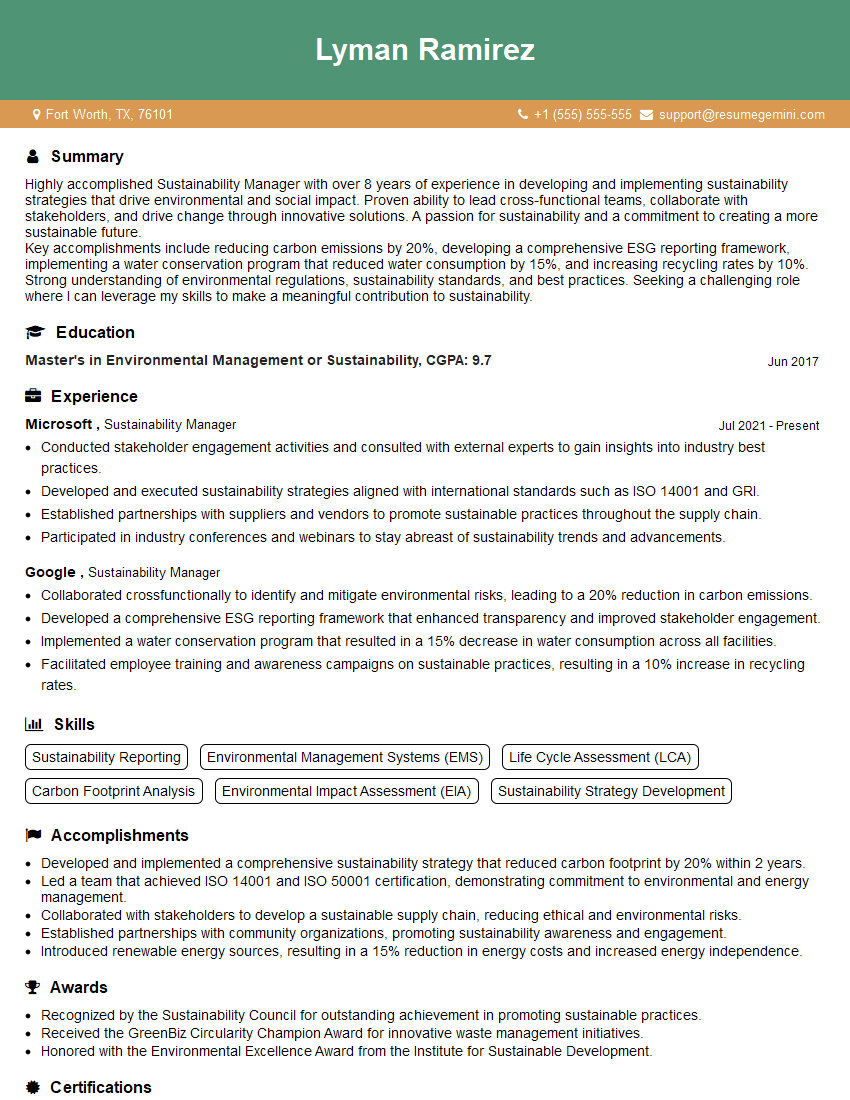
Sustainability Manager Resume Sample
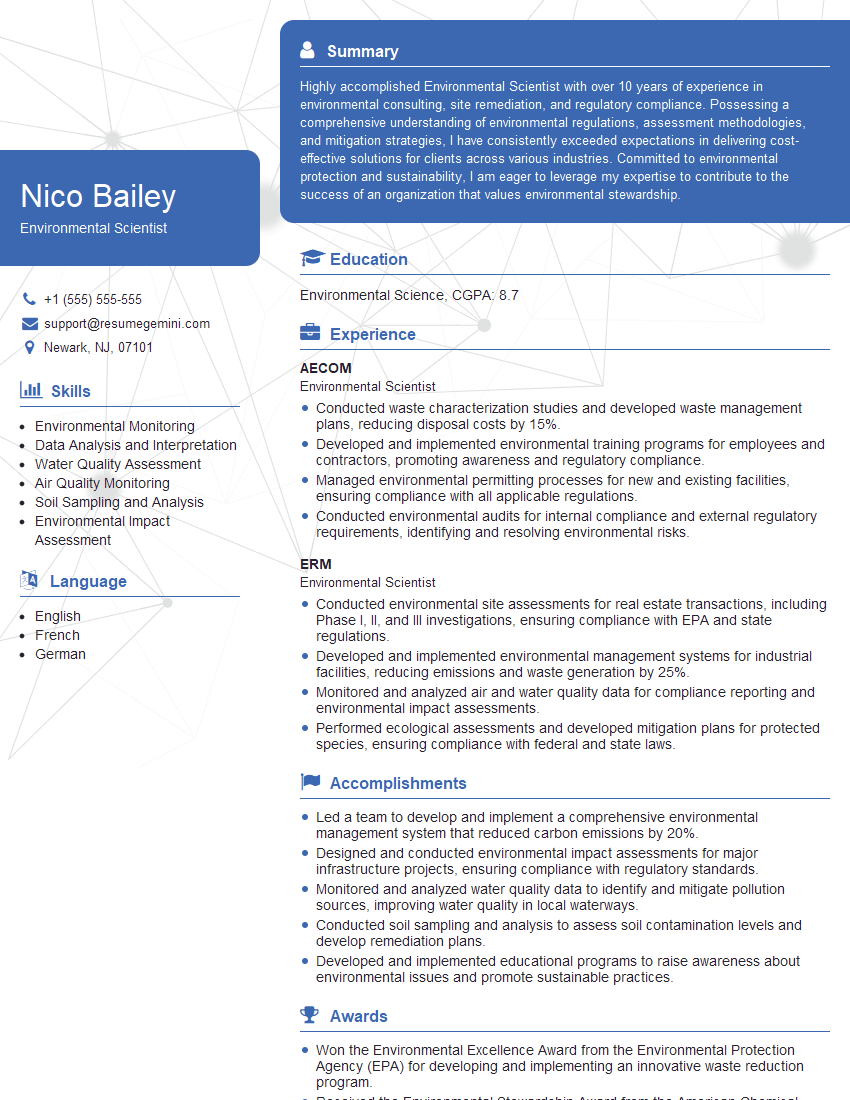
Environmental Scientist Resume Sample
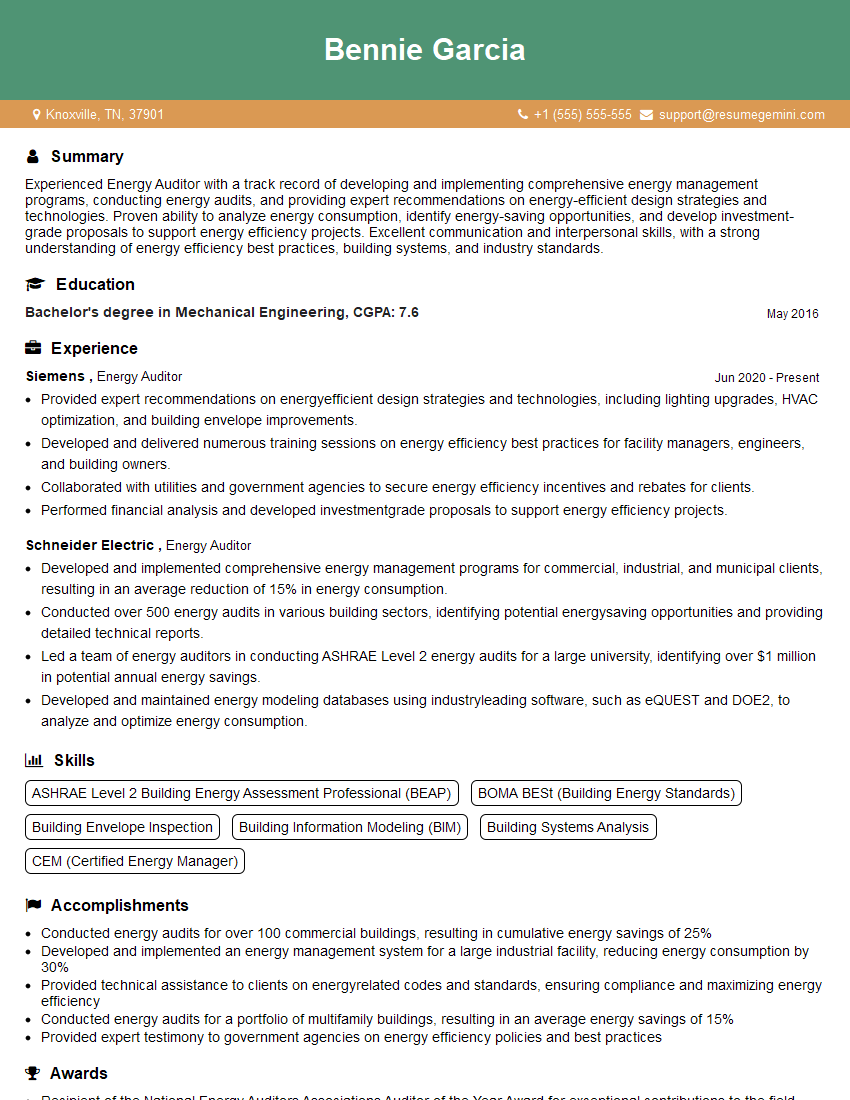
Energy Auditor Resume Sample
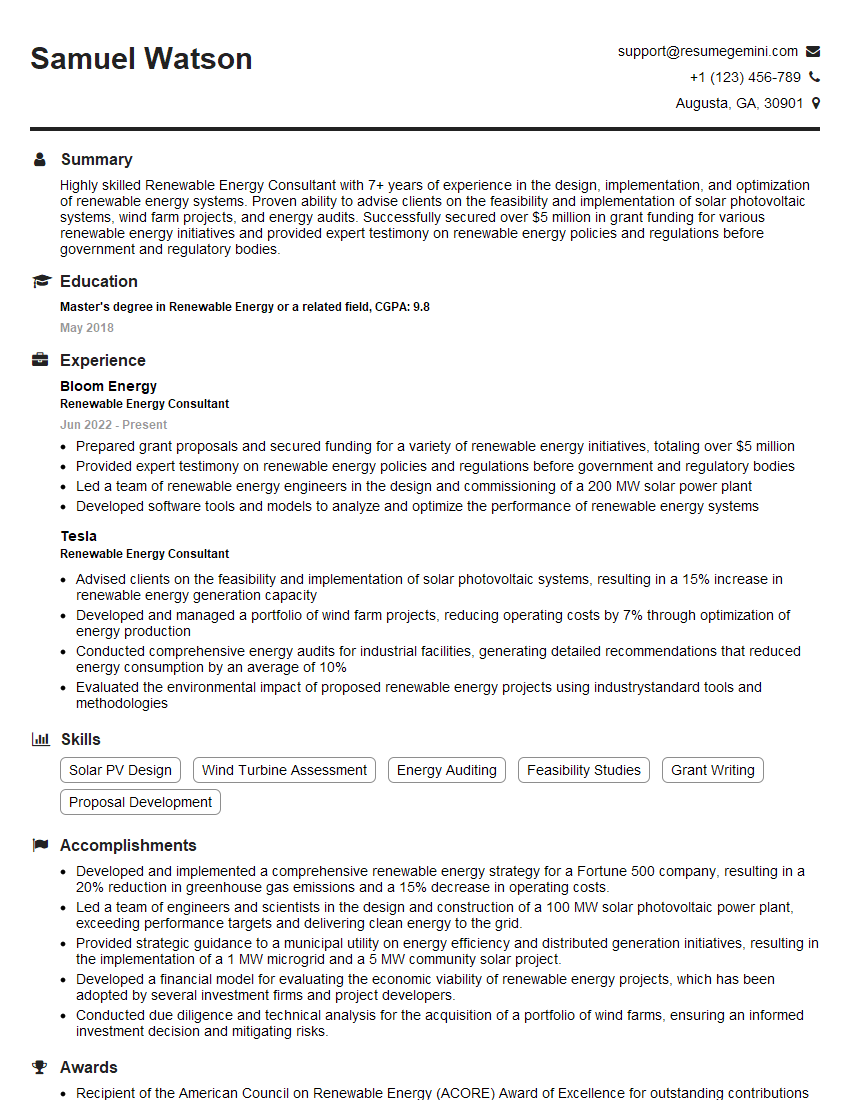
Renewable Energy Consultant Resume Sample

Sustainability Consultant Resume Sample
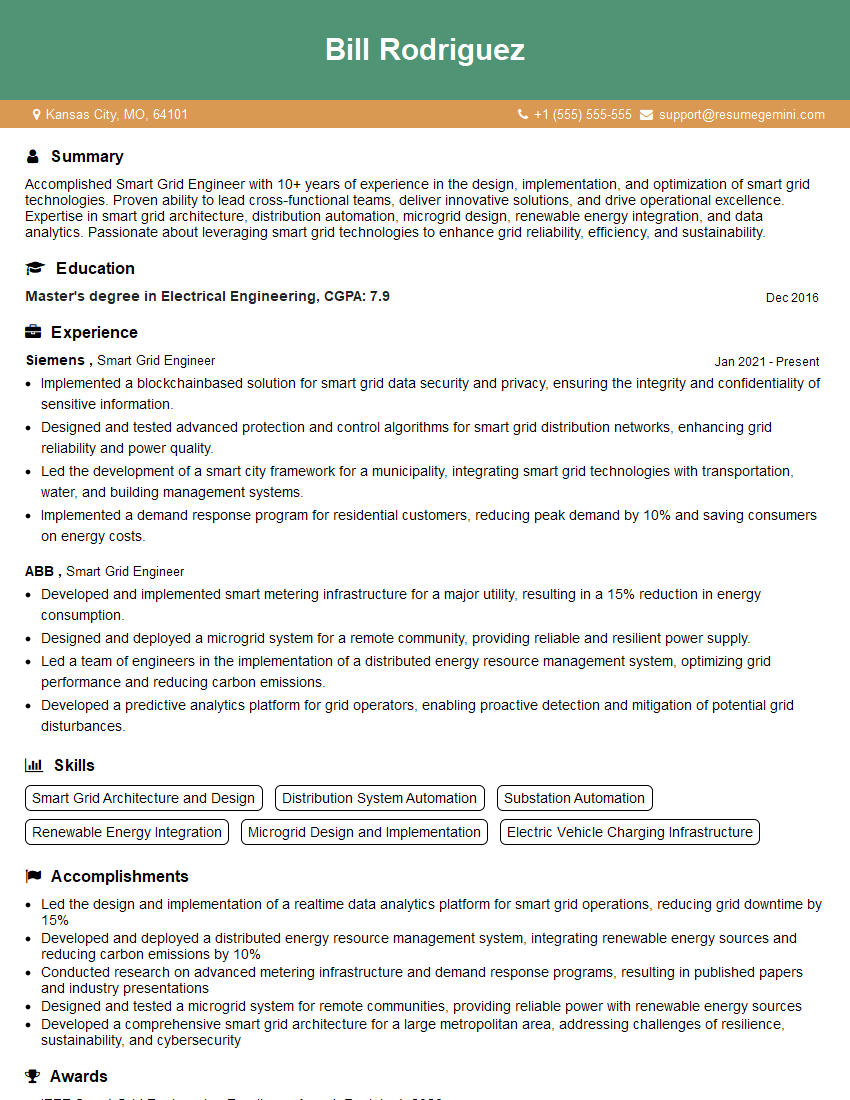
Smart Grid Engineer Resume Sample
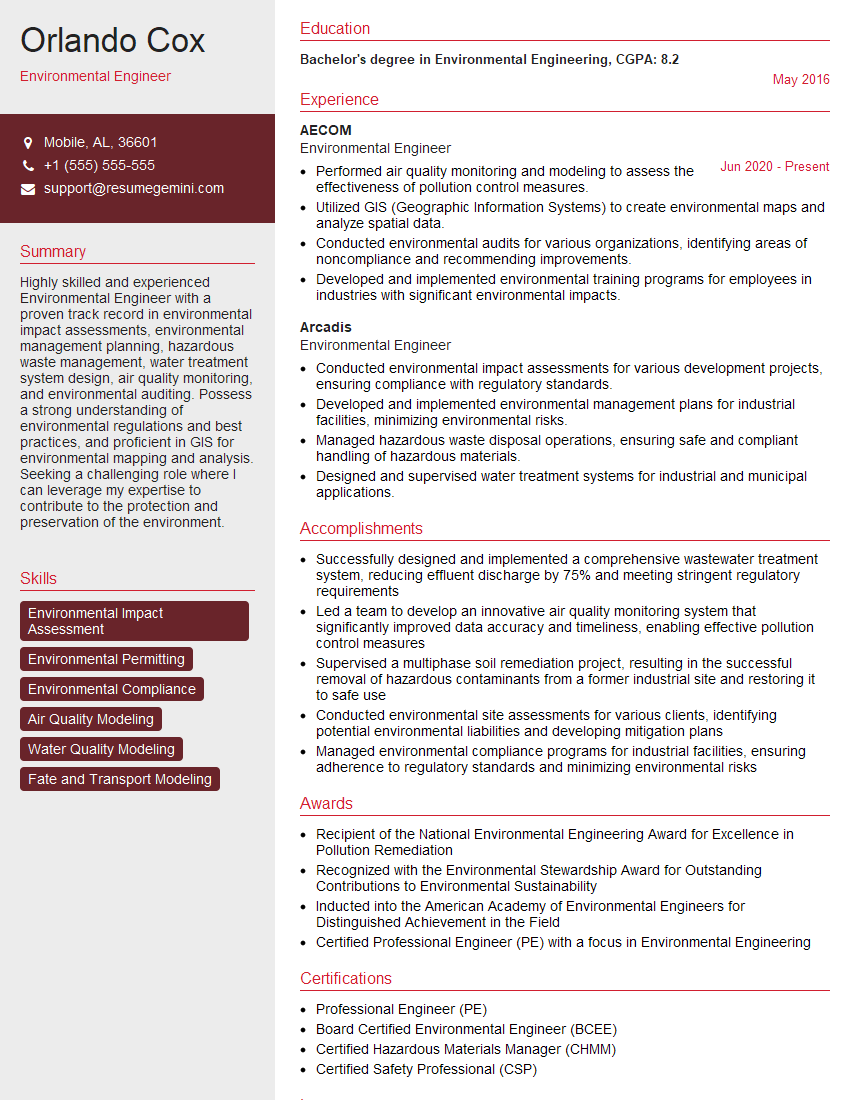
Environmental Engineer Resume Sample
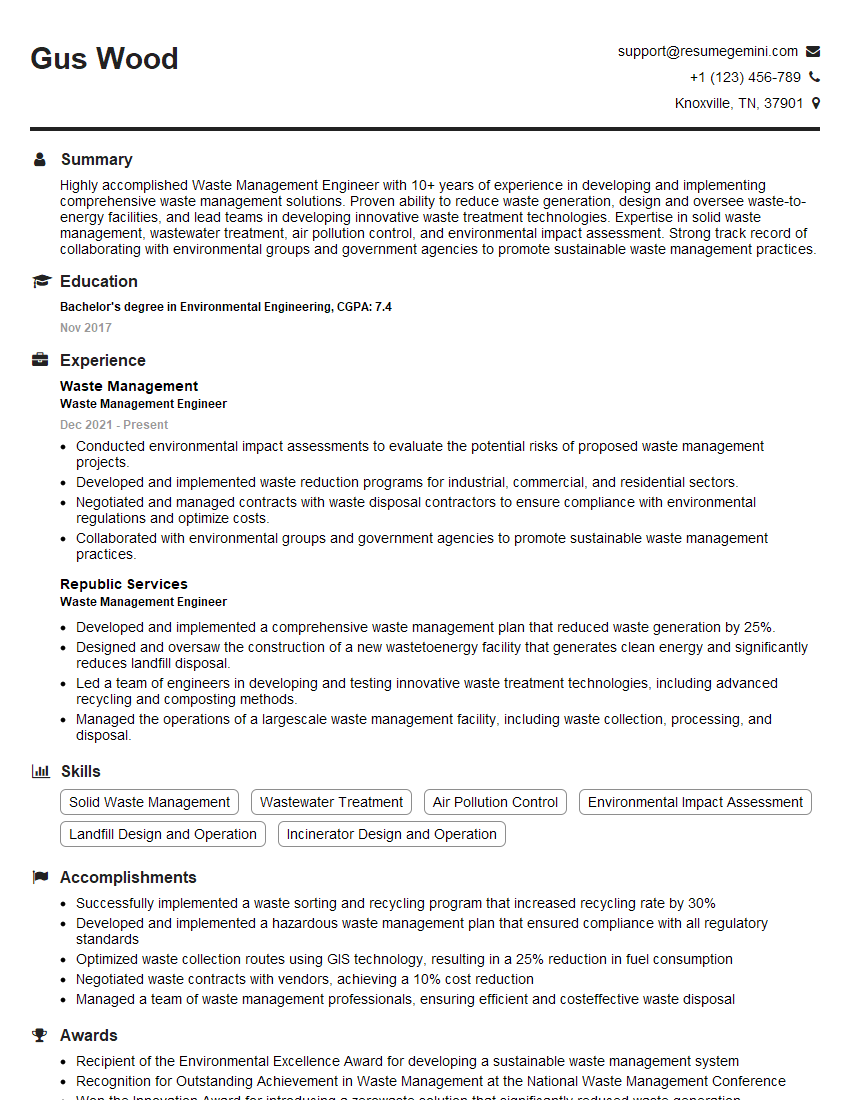
Waste Management Engineer Resume Sample
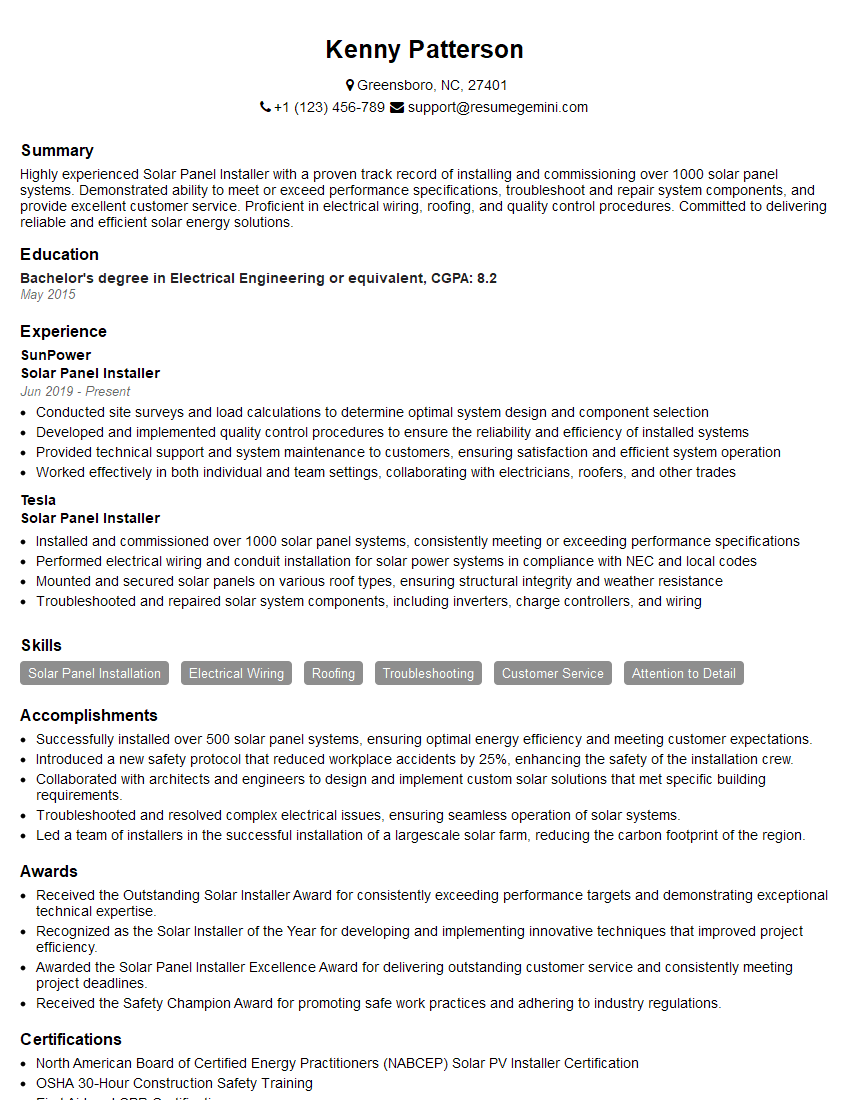
Solar Panel Installer Resume Sample
Explore more articles
Users Rating of Our Blogs
Share Your Experience
We value your feedback! Please rate our content and share your thoughts (optional).
What Readers Say About Our Blog
Really detailed insights and content, thank you for writing this detailed article.
IT gave me an insight and words to use and be able to think of examples