Unlock your full potential by mastering the most common Availability interview questions. This blog offers a deep dive into the critical topics, ensuring you’re not only prepared to answer but to excel. With these insights, you’ll approach your interview with clarity and confidence.
Questions Asked in Availability Interview
Q 1. Explain the concept of High Availability (HA).
High Availability (HA) means designing and implementing systems to ensure they remain operational and accessible to users for a specified amount of time. Think of it like this: imagine a critical online store; HA ensures that even if one server fails, customers can still place orders without interruption. It’s about minimizing downtime and maximizing the system’s uptime.
HA isn’t about preventing *all* failures; it’s about mitigating the impact of failures. This involves strategies like redundancy, failover mechanisms, and robust monitoring. The goal is to provide a seamless user experience even in the face of unexpected events.
Q 2. What are the key metrics used to measure system availability?
Key metrics for measuring system availability focus on uptime and downtime. The most common include:
- Uptime: The total amount of time a system is operational and accessible. Often expressed as a percentage.
- Downtime: The total amount of time a system is unavailable. This is what we strive to minimize.
- Mean Time Between Failures (MTBF): The average time between system failures. A higher MTBF indicates greater reliability.
- Mean Time To Repair (MTTR): The average time it takes to restore a failed system to operational status. A lower MTTR is crucial for quick recovery.
- Availability (often expressed as a percentage): Calculated as Uptime / (Uptime + Downtime). A 99.99% availability target is common for highly available systems, representing only a few minutes of downtime per year.
These metrics, when tracked and analyzed, help pinpoint weaknesses in the system and inform decisions about improvements.
Q 3. Describe different architectures for achieving high availability (e.g., active-passive, active-active).
Several architectures achieve high availability. Here are two common ones:
- Active-Passive: In this setup, one system (the active) handles all requests, while a second identical system (the passive) stands by. If the active system fails, the passive system takes over. Think of it like a backup singer waiting in the wings—ready to step in if the lead singer falters. This is simpler to implement but only utilizes half of your resources at any given time.
- Active-Active: Here, both systems actively handle requests, sharing the workload. If one system fails, the other continues to handle all traffic. This provides higher throughput and fault tolerance than active-passive, but requires more complex configuration and management. Imagine two singers performing a duet – if one gets sick, the other can still complete the performance.
Other architectures exist, including active-active configurations with load balancers distributing traffic across multiple active systems and more complex, geographically distributed deployments.
Q 4. Explain the difference between fault tolerance and high availability.
While both fault tolerance and high availability aim for system robustness, they differ in scope:
- Fault Tolerance: Focuses on preventing a single point of failure from bringing down the entire system. It’s about designing systems that can continue to operate even when individual components fail. This is achieved through redundancy at a component level, like RAID for storage or redundant network interfaces.
- High Availability: Focuses on maximizing the uptime of the entire system, encompassing fault tolerance but also including considerations like disaster recovery, system monitoring, and quick recovery procedures. It’s a broader concept that extends beyond just component-level redundancy.
Fault tolerance is a *subset* of the larger goal of high availability. A highly available system *must* be fault-tolerant, but a fault-tolerant system isn’t necessarily highly available unless it also addresses other aspects like recovery procedures and disaster recovery.
Q 5. What are some common causes of system downtime?
System downtime can stem from various sources:
- Hardware Failures: Server crashes, disk failures, network issues.
- Software Bugs: Application errors, operating system glitches, configuration problems.
- Human Error: Accidental deletions, misconfigurations, improper maintenance.
- Natural Disasters: Earthquakes, floods, fires.
- Cyberattacks: DDoS attacks, malware infections, data breaches.
- Power Outages: Interruptions in the power supply.
Understanding these potential causes is vital for proactively designing systems that are more resilient to these risks.
Q 6. How do you design for disaster recovery in a highly available system?
Designing for disaster recovery in a highly available system is crucial. This usually involves:
- Geographic Redundancy: Having separate data centers in different geographical locations to protect against regional disasters.
- Data Backup and Replication: Regularly backing up data to offsite locations and implementing data replication strategies to ensure data consistency across systems.
- Failover Mechanisms: Automatic failover to a backup system in case of a primary system failure. This often involves load balancers and automatic switch-over procedures.
- Disaster Recovery Plan: A well-defined plan that outlines steps to be taken in the event of a disaster, including communication protocols, recovery procedures, and roles and responsibilities.
- Regular Testing: Periodically testing the disaster recovery plan to ensure it’s effective and to identify potential weaknesses.
A well-defined disaster recovery plan is an essential part of any highly available system. Think of it like a fire drill – you practice it so that when the real event occurs, you know exactly what to do.
Q 7. Explain the concept of failover and failback.
Failover is the process of switching from a primary system to a secondary system when the primary system fails. It’s designed to ensure continued operation with minimal disruption. For example, if a web server crashes, a failover mechanism automatically directs traffic to a backup web server.
Failback is the process of switching back to the primary system once it has been repaired and is operating normally. Failback ensures that the system returns to its optimal configuration after the failure has been resolved. In our web server example, once the primary server is fixed, the failback mechanism redirects traffic back to it.
Both failover and failback are critical components of high availability, enabling systems to recover from failures and resume normal operations efficiently.
Q 8. What are some common HA technologies or tools you’ve used?
High Availability (HA) technologies are crucial for ensuring continuous uptime. I’ve extensively used several, each with its strengths and weaknesses depending on the specific application. These include:
- Clustering technologies: Such as Pacemaker/Corosync for Linux systems, allowing automatic failover between multiple servers. I’ve used this to create highly available database clusters, ensuring database access even if one server fails. For example, in a recent project, we used Pacemaker to manage a PostgreSQL cluster, guaranteeing 24/7 availability for a critical e-commerce application.
- Virtualization platforms: VMware vSphere and Microsoft Hyper-V offer features like high availability clustering and failover capabilities at the virtual machine level. This allows rapid recovery of virtual machines in the event of hardware failure. In a previous role, we utilized vSphere’s HA features to protect against server hardware issues, ensuring minimal downtime for our web application servers.
- Cloud-based HA solutions: Services like AWS Elastic Load Balancing, Azure Load Balancer, and Google Cloud Load Balancing provide built-in load balancing and high availability features. These services abstract away much of the complexity of managing HA infrastructure, significantly simplifying deployment and management. I’ve integrated these services into several projects, scaling applications seamlessly and ensuring resilience to cloud provider outages.
Choosing the right technology often depends on factors like budget, complexity, existing infrastructure, and the specific requirements of the application.
Q 9. Describe your experience with load balancing and its role in HA.
Load balancing is essential for HA, distributing incoming traffic across multiple servers. This prevents any single server from becoming overloaded, a common cause of downtime. If one server fails, the load balancer automatically redirects traffic to the remaining healthy servers, ensuring continuous service. Imagine a popular website; without a load balancer, all traffic would hit a single server, potentially causing it to crash under load.
My experience spans various load balancing techniques, including:
- Hardware load balancers: These dedicated appliances offer high performance and reliability. I’ve worked with F5 BIG-IP and Citrix Netscaler load balancers in large-scale deployments, managing traffic for mission-critical applications.
- Software load balancers: These run on standard servers, offering flexibility and cost-effectiveness for smaller deployments. I’ve used HAProxy and Nginx as software load balancers, configuring them for both HTTP and TCP traffic distribution. For instance, I configured Nginx to distribute traffic across multiple application servers, optimizing response times and preventing overload.
- Cloud-based load balancers: As mentioned earlier, cloud providers offer managed load balancing services, simplifying deployment and scaling. I regularly leverage these services for improved agility and cost efficiency.
Effective load balancing is crucial not only for preventing server overload but also for enhancing application performance and scalability. It’s a cornerstone of robust HA architecture.
Q 10. How do you monitor system availability and performance?
Monitoring system availability and performance is an ongoing process that requires a multi-faceted approach. I typically employ a combination of tools and strategies:
- System monitoring tools: Tools like Nagios, Zabbix, Prometheus, and Grafana are invaluable for tracking server health, resource utilization (CPU, memory, disk I/O), network performance, and application metrics. I use these to set up dashboards that provide a real-time overview of system health. For example, I’ve used Prometheus and Grafana to visualize key application metrics, allowing for proactive identification of potential issues.
- Application performance monitoring (APM): Tools like New Relic, Dynatrace, and AppDynamics provide detailed insights into application performance, identifying bottlenecks and slowdowns. These tools are crucial for identifying issues that might not be apparent through basic system monitoring. In one project, APM tools helped us pinpoint a performance bottleneck caused by a database query, improving response times significantly.
- Log analysis: Regularly reviewing application and system logs helps detect errors and identify potential problems. Tools like ELK stack (Elasticsearch, Logstash, Kibana) allow for efficient log aggregation, analysis, and visualization.
- Synthetic monitoring: Tools that simulate user actions can detect problems before real users experience them. This helps ensure that the application remains available and responsive from the user’s perspective.
Combining these approaches provides a comprehensive view of system health and allows for proactive identification and resolution of potential availability issues.
Q 11. Explain your experience with redundancy in system design.
Redundancy is a core principle of HA, ensuring that critical system components have backups to maintain operation during failures. I’ve implemented redundancy at various levels:
- Hardware redundancy: Using redundant power supplies, network interfaces, and storage devices ensures that system operations continue even if one component fails. For example, in a datacenter environment, redundant power supplies and network switches are essential for maintaining uptime.
- Software redundancy: Running multiple instances of applications on different servers and employing load balancing provides redundancy at the application layer. This ensures continuous service even if one application instance fails.
- Data redundancy: Employing technologies such as RAID (Redundant Array of Independent Disks) for storage and database replication ensures data availability even if a storage device fails. I have implemented database replication using technologies like MySQL replication and PostgreSQL streaming replication, ensuring data consistency and availability across multiple servers.
- Geographic redundancy: Distributing systems across multiple geographic locations ensures service continuity even in the event of regional disasters. Cloud providers often offer easy ways to achieve geographic redundancy. I’ve used AWS’s multi-region architecture in several projects to ensure high availability across geographically diverse user bases.
Implementing redundancy requires careful planning and consideration of the potential points of failure within a system. The goal is to minimize the impact of failures on the overall availability of the system.
Q 12. How do you handle capacity planning for high-availability systems?
Capacity planning for HA systems is crucial for ensuring that the system can handle expected and unexpected increases in load. It’s not just about having enough resources; it’s about designing a system that can gracefully handle surges without compromising availability.
My approach involves:
- Performance testing: Conducting load tests and stress tests to determine the system’s capacity under various load conditions. This helps identify bottlenecks and potential failure points.
- Historical data analysis: Analyzing historical data on resource usage to predict future demand. This helps determine the required capacity for the system to handle anticipated growth.
- Scalability planning: Designing the system with scalability in mind, allowing for easy addition of resources as needed. This could involve using cloud-based solutions or containerization technologies.
- Margin of safety: Building in a safety margin to accommodate unexpected spikes in demand. This helps prevent system overload and potential failures.
- Automated scaling: Employing techniques like auto-scaling in cloud environments to automatically adjust capacity based on real-time demand. This allows for efficient use of resources and ensures availability even during unexpected surges.
Capacity planning is an iterative process, requiring continuous monitoring and adjustment based on observed performance and changing requirements.
Q 13. Describe your experience with implementing monitoring and alerting systems.
Implementing robust monitoring and alerting systems is paramount for maintaining HA. My experience includes designing and deploying systems that provide timely notifications of potential problems, enabling proactive intervention.
Key aspects of my approach include:
- Defining critical metrics: Identifying the key performance indicators (KPIs) that are essential for system health and availability. This involves collaborating with development and operations teams to understand the application’s critical functionalities.
- Setting appropriate thresholds: Establishing thresholds for key metrics that trigger alerts when they are exceeded or breached. This requires careful consideration of the system’s normal operating range and acceptable tolerances.
- Choosing the right alerting tools: Selecting appropriate tools for sending alerts, such as email, SMS, PagerDuty, or other incident management systems. The choice of tools depends on factors such as urgency, team preferences, and existing infrastructure. I’ve used PagerDuty extensively for escalation management and incident response, ensuring that critical alerts reach the right people quickly.
- Alert routing and escalation: Establishing a clear escalation path to ensure that alerts reach the appropriate personnel based on severity and time of day. This often involves establishing on-call rotations and communication protocols.
- Alert deduplication and noise reduction: Implementing measures to avoid alert storms caused by cascading failures or transient issues. This involves using techniques such as alert deduplication and filtering.
A well-designed monitoring and alerting system significantly reduces downtime by enabling early detection and rapid response to potential problems.
Q 14. How do you troubleshoot and resolve availability issues?
Troubleshooting and resolving availability issues requires a systematic approach. My process typically involves:
- Gathering information: Starting by collecting information from various sources, such as monitoring tools, logs, and affected users. This helps identify the scope and nature of the problem.
- Reproducing the issue: Attempting to reproduce the issue in a controlled environment, if possible. This helps isolate the root cause and test potential solutions.
- Analyzing logs and metrics: Carefully reviewing system and application logs, as well as performance metrics, to pinpoint the source of the problem. Tools like the ELK stack are extremely helpful in this phase.
- Isolating the problem: Using a systematic approach to isolate the faulty component or process. This might involve checking network connectivity, server resources, application code, or database integrity.
- Implementing a solution: Once the root cause is identified, implementing a solution, which might involve restarting services, deploying a patch, rolling back to a previous version, or making configuration changes.
- Testing the solution: Thoroughly testing the solution to ensure that it resolves the problem without introducing new issues.
- Documenting the issue and resolution: Creating a detailed record of the issue, the troubleshooting steps, and the implemented solution. This helps prevent similar problems in the future and facilitates knowledge sharing within the team.
Effective troubleshooting often requires a combination of technical skills, problem-solving abilities, and a methodical approach. My experience has taught me the importance of staying calm under pressure and employing a systematic process to quickly identify and resolve issues.
Q 15. Explain your understanding of different service level agreements (SLAs).
Service Level Agreements (SLAs) are formal contracts defining the expected performance of a service, specifically focusing on availability, performance, and other key metrics. They’re crucial for setting clear expectations between a service provider and its customers.
- Uptime Guarantee: This is the most common metric, typically expressed as a percentage (e.g., 99.99% uptime). It specifies the percentage of time the service should be operational. A 99.99% uptime translates to a maximum of about 52 minutes of downtime per year.
- Mean Time To Resolution (MTTR): This specifies the average time taken to resolve an incident or outage. A shorter MTTR is desirable.
- Mean Time Between Failures (MTBF): This is the average time between failures of a system. A higher MTBF indicates greater reliability.
- Recovery Time Objective (RTO): The maximum acceptable downtime after an outage. This is a critical factor for businesses that require continuous operation.
- Recovery Point Objective (RPO): The maximum acceptable data loss in case of an outage. This helps determine backup and recovery strategies.
For example, a company offering cloud storage might guarantee 99.9% uptime, with an MTTR of under 4 hours and an RPO of 24 hours. These metrics help customers understand the level of service reliability they can expect.
Career Expert Tips:
- Ace those interviews! Prepare effectively by reviewing the Top 50 Most Common Interview Questions on ResumeGemini.
- Navigate your job search with confidence! Explore a wide range of Career Tips on ResumeGemini. Learn about common challenges and recommendations to overcome them.
- Craft the perfect resume! Master the Art of Resume Writing with ResumeGemini’s guide. Showcase your unique qualifications and achievements effectively.
- Don’t miss out on holiday savings! Build your dream resume with ResumeGemini’s ATS optimized templates.
Q 16. How do you balance cost optimization with high availability?
Balancing cost optimization and high availability is a constant challenge. It’s about finding the optimal point where sufficient redundancy and failover mechanisms are in place without unnecessary expenditure. The key is strategic planning and a thorough understanding of your application’s criticality and potential risks.
- Prioritization: Identify critical systems and applications that require the highest levels of availability. Allocate more resources (and thus higher costs) to these systems.
- Scalability: Design systems that can scale up or down based on demand. This avoids over-provisioning resources when demand is low, saving costs.
- Cloud-based solutions: Leverage cloud’s pay-as-you-go model to optimize costs. Auto-scaling features can adjust resources based on actual usage.
- Redundancy optimization: Implement redundancy strategically. A fully redundant solution might be overkill for some components. Analyze the risk and cost implications of each level of redundancy.
- Monitoring and alerting: Invest in robust monitoring and alerting systems to detect potential issues early, minimizing downtime and its associated costs.
For instance, instead of deploying multiple expensive high-end servers, a cost-effective strategy might involve using a combination of less costly servers with load balancing and auto-scaling capabilities in the cloud. This allows for sufficient capacity during peak demand while maintaining cost efficiency during off-peak hours.
Q 17. Describe a time you had to improve the availability of a system.
In a previous role, we experienced significant performance degradation and intermittent outages in a key e-commerce application during peak shopping seasons. The system was built on a single database server, resulting in a bottleneck under high load.
To address this, we followed a phased approach:
- Analysis: We meticulously analyzed system logs, monitoring data, and performance metrics to pinpoint bottlenecks and identify the root cause—the overloaded database server.
- Solution Design: We proposed migrating to a clustered database solution using database replication. This would distribute the load across multiple servers and ensure high availability even if one server failed. We chose a synchronous replication strategy for data consistency, despite the slightly higher latency.
- Implementation: We implemented the clustered database solution, configured load balancing, and thoroughly tested the system to ensure seamless failover.
- Monitoring: We implemented enhanced monitoring and alerting to proactively detect any potential issues.
The result was a significant improvement in system stability and availability. We eliminated the previous performance bottlenecks and significantly reduced downtime during peak seasons. This proactive approach not only improved user experience but also significantly reduced lost revenue.
Q 18. What is your experience with different database replication strategies for HA?
I have extensive experience with various database replication strategies for high availability. The choice of strategy depends on factors like data consistency requirements, performance needs, and budget constraints.
- Synchronous Replication: This ensures data consistency across all replicas. Writes are replicated to all servers before a transaction is confirmed. While robust, it can have higher latency and reduce throughput. It’s ideal for applications requiring strict data consistency, such as financial systems.
- Asynchronous Replication: This offers higher throughput and lower latency as writes are only replicated asynchronously. However, data consistency might be compromised in case of a server failure before replication completes. This is suitable for applications that can tolerate a short period of data inconsistency, such as logging systems.
- Master-Slave Replication: A single master handles all writes, while slave servers read from the master. It’s simpler than multi-master, but a master failure requires a failover mechanism. This is commonly used for read-heavy workloads.
- Multi-Master Replication: Multiple masters can handle writes independently, leading to higher availability but with complexities in conflict resolution. Ideal for geographically distributed systems requiring independent writes.
Example: A MySQL setup might use master-slave replication with asynchronous replication to distribute read load. PostgreSQL could employ synchronous replication for a highly consistent financial application.
Q 19. Explain your experience with cloud-based HA solutions (e.g., AWS, Azure, GCP).
I’m proficient with cloud-based HA solutions on AWS, Azure, and GCP. These platforms offer managed services simplifying the implementation and management of highly available systems.
- AWS: Extensive experience with RDS for database HA, EC2 with Auto Scaling and Elastic Load Balancing for application HA, and S3 for highly durable storage. I’ve used Route53 for DNS failover and CloudWatch for monitoring and alerting.
- Azure: I’ve utilized Azure SQL Database for highly available databases, Azure App Service for application deployment with built-in HA features, and Azure Load Balancer for distributing traffic. Azure Monitor is a key component for monitoring and alerting.
- GCP: I’ve worked with Cloud SQL for database HA, Compute Engine with managed instance groups and load balancing for applications, and Cloud Storage for object storage. Cloud Monitoring and Logging provide critical insights for maintaining high availability.
These cloud platforms provide various redundancy options, allowing for flexible solutions tailored to specific needs and budgets. They offer robust monitoring and automated failover mechanisms, minimizing downtime and simplifying management.
Q 20. How do you prioritize different availability initiatives?
Prioritizing availability initiatives requires a structured approach. I use a risk-based prioritization framework, considering factors such as:
- Business Impact: The potential impact of an outage on revenue, reputation, and customer satisfaction.
- Frequency of Failure: How often a system or component fails.
- Severity of Failure: The duration and scope of an outage. Is it a total system failure, or a partial outage affecting only a specific feature?
- Recovery Time Objective (RTO): The acceptable downtime after an outage.
- Recovery Point Objective (RPO): The acceptable data loss in case of an outage.
I utilize a matrix combining these factors to score each initiative, allowing for objective prioritization. Initiatives with high business impact, frequent failures, and long RTOs will be prioritized higher.
For example, a critical payment processing system will rank higher than a less critical reporting system, even if both have similar failure rates. This structured approach ensures that resources are allocated to the most impactful availability improvements first.
Q 21. Explain your approach to capacity planning in a cloud environment.
Capacity planning in a cloud environment involves forecasting resource needs based on anticipated demand and ensuring sufficient resources are available to meet those needs while maintaining cost efficiency. It’s an iterative process.
- Demand Forecasting: Analyze historical usage patterns, projected growth, and seasonal variations to estimate future resource requirements. Consider factors like peak loads and anticipated events.
- Resource Sizing: Determine the appropriate instance types, storage capacity, and other resources based on the forecasted demand and application requirements. Utilize tools provided by cloud providers to estimate resource needs.
- Autoscaling: Implement autoscaling features provided by cloud platforms to dynamically adjust resources based on actual demand. This avoids over-provisioning and improves cost efficiency.
- Performance Testing: Conduct load testing and stress testing to validate the capacity plan and identify potential bottlenecks before deployment.
- Monitoring and Adjustment: Continuously monitor resource usage and performance. Adjust the capacity plan as needed based on actual usage patterns and identified bottlenecks.
In practice, I often employ a combination of top-down forecasting based on projected growth and bottom-up estimations based on application requirements. Regular review and adjustments to the capacity plan are critical for maintaining optimal performance and cost efficiency in a dynamic cloud environment.
Q 22. What are some common challenges in achieving high availability?
Achieving high availability, meaning minimizing downtime and ensuring continuous operation, presents several significant challenges. These often intertwine and require a holistic approach to overcome.
- Single Points of Failure (SPOFs): A single component failure crippling the entire system is a major hurdle. This could be a database server, a network switch, or even a crucial piece of software. Think of a power grid – if one transformer fails, a whole area could lose power. Mitigating this requires redundancy and failover mechanisms.
- Software Bugs and Errors: Unexpected software crashes or bugs can lead to outages. Robust testing, code reviews, and effective monitoring are crucial for preventing and quickly resolving these issues.
- Hardware Failures: Servers, storage devices, and networking equipment have a limited lifespan and can fail. Implementing redundancy (multiple servers) and disaster recovery plans is essential to handle such failures.
- Human Error: Misconfigurations, accidental deletions, or improper maintenance can significantly impact availability. Strict change management processes and thorough training can minimize human error.
- Natural Disasters and Environmental Factors: Earthquakes, floods, or power outages can severely impact systems. Geographically dispersed data centers and robust backup power supplies become vital for resilience.
- Network Issues: Connectivity problems, bandwidth limitations, or network outages can prevent users from accessing services. Redundant network paths and robust network monitoring are crucial for mitigating these challenges.
- Security Threats: Cyberattacks, data breaches, and denial-of-service (DoS) attacks can compromise availability. Strong security measures, including intrusion detection and prevention systems, are essential.
Addressing these challenges requires a multi-layered approach involving careful planning, robust infrastructure, and proactive monitoring.
Q 23. What is your experience with automated failover mechanisms?
I have extensive experience with automated failover mechanisms, having designed and implemented them in several high-availability environments. These mechanisms are critical for ensuring seamless transitions when a primary system fails. My experience includes working with various technologies, such as:
- Heartbeat monitoring: Using tools to constantly check the health of primary systems and trigger failover when a failure is detected.
- Virtualization and clustering: Leveraging technologies like VMware vSphere HA or Windows Failover Clustering to automatically move services to standby servers in the event of a primary server failure.
- Database replication: Implementing techniques such as synchronous or asynchronous replication to ensure data consistency and minimal downtime in case of a database server failure. For example, using MySQL replication or PostgreSQL streaming replication.
- Load balancers: Employing load balancers to distribute traffic across multiple servers, ensuring that if one server fails, the load balancer automatically redirects traffic to the available servers. Examples include HAProxy, Nginx, and F5 BIG-IP.
For example, in one project involving a critical e-commerce platform, we implemented a fully automated failover system using a combination of heartbeat monitoring, load balancers, and database replication. This ensured that even in the event of a complete server failure, the website remained operational within seconds, minimizing any disruption to users.
Q 24. How do you handle security concerns within a high-availability architecture?
Security is paramount in any high-availability architecture. Weakening security to improve availability is a dangerous trade-off. Instead, a robust security posture should be integrated into the HA design from the outset.
- Access Control: Restricting access to critical systems and data through strong authentication and authorization mechanisms. This includes using multi-factor authentication (MFA) and least privilege access.
- Network Security: Implementing firewalls, intrusion detection/prevention systems (IDS/IPS), and virtual private networks (VPNs) to protect the network infrastructure from unauthorized access and attacks.
- Data Encryption: Encrypting sensitive data both in transit and at rest to protect against unauthorized access or data breaches. This includes using TLS/SSL for secure communication and disk encryption for stored data.
- Vulnerability Management: Regularly scanning for and addressing vulnerabilities in the software and hardware components of the HA architecture. This includes patching systems promptly and implementing security updates.
- Security Monitoring and Auditing: Continuously monitoring the security posture of the HA environment and conducting regular security audits to identify and address potential threats. This includes using security information and event management (SIEM) systems.
- Secure Failover Mechanisms: Ensuring that failover procedures do not compromise security. For instance, only allowing trusted systems to participate in the failover process and employing strong authentication during the failover.
Consider a scenario where a load balancer fails. If security isn’t properly implemented, a malicious actor might exploit the failover process to gain unauthorized access. Secure failover processes are vital.
Q 25. Describe your understanding of Mean Time To Failure (MTTF) and Mean Time To Repair (MTTR).
Mean Time To Failure (MTTF) and Mean Time To Repair (MTTR) are two key metrics used to assess the reliability and maintainability of systems. They are often used together to paint a complete picture of system availability.
- MTTF (Mean Time To Failure): This represents the average time a system is expected to run before it fails. A higher MTTF indicates greater reliability. It’s usually expressed in hours or years. For example, an MTTF of 10,000 hours suggests the system is expected to run continuously for approximately 10,000 hours before failing.
- MTTR (Mean Time To Repair): This represents the average time it takes to restore a failed system to operational status. A lower MTTR indicates better maintainability. It’s usually expressed in minutes or hours. An MTTR of 30 minutes implies that on average, it takes 30 minutes to resolve a failure.
These metrics are crucial in determining the overall availability of a system. For instance, a system with a high MTTF and a low MTTR will generally have much higher availability compared to one with a low MTTF and a high MTTR. Calculating availability often involves the formula: Availability = MTTF / (MTTF + MTTR)
Q 26. Explain the concept of RTO and RPO in disaster recovery.
In disaster recovery planning, Recovery Time Objective (RTO) and Recovery Point Objective (RPO) are critical metrics defining acceptable downtime and data loss.
- RTO (Recovery Time Objective): This specifies the maximum acceptable downtime after a disaster. It defines how long it can take to restore systems and data to an operational state. For example, an RTO of 4 hours means that systems and data must be restored within 4 hours of a disaster.
- RPO (Recovery Point Objective): This specifies the maximum acceptable data loss in the event of a disaster. It defines how much data can be lost before recovery. An RPO of 1 hour means that the maximum allowable data loss is data from the last hour before the disaster.
These objectives are crucial because they guide the design and implementation of disaster recovery plans. Setting appropriate RTO and RPO values requires careful consideration of business impact analysis (BIA) results and the cost of recovery. For instance, a financial institution may have a much lower RTO and RPO than a small retail business.
Q 27. How do you ensure system availability during software deployments?
Ensuring system availability during software deployments is crucial to avoid service disruption. Strategies include:
- Blue/Green Deployments: Running two identical environments (blue and green). New code is deployed to the green environment, and once tested, traffic is switched from blue to green, minimizing downtime. If issues arise, traffic can quickly revert to the blue environment.
- Canary Deployments: Rolling out the new code to a small subset of users (canary group) before a full deployment. This allows for early detection of issues in a controlled environment.
- Rolling Deployments: Gradually updating servers, one at a time, with the new code. This minimizes the impact of any issues and allows for quick rollback if necessary.
- Automated Rollbacks: Having automated systems in place to quickly revert to the previous stable version of the software if issues arise during deployment.
- Zero-Downtime Deployments: Using techniques like load balancing and process managers to allow seamless updates without interrupting service. For example, using tools like Docker and Kubernetes to manage containerized applications.
The choice of deployment strategy depends on the specific application and its requirements. A well-planned deployment process should also include thorough testing and monitoring to detect and resolve any issues quickly.
Q 28. What strategies do you use for preventing downtime during maintenance?
Preventing downtime during maintenance requires careful planning and execution. Key strategies include:
- Scheduled Maintenance Windows: Performing maintenance during off-peak hours or periods of low user activity to minimize disruption.
- Patching and Updating: Regularly applying security patches and software updates to prevent vulnerabilities that could lead to downtime. Prioritize and test patches before applying them to production systems.
- Redundancy and Failover: Having redundant systems and failover mechanisms in place allows for maintenance on one system while another system remains operational.
- Non-Disruptive Upgrades: Utilizing technologies that allow for upgrades and maintenance without requiring a system shutdown (e.g., in-place upgrades or rolling upgrades).
- Automated Maintenance Tasks: Automating routine maintenance tasks such as log rotation, disk cleanup, and software updates to reduce manual intervention and errors.
- Thorough Testing: Testing maintenance procedures in a non-production environment before applying them to production systems.
- Rollback Plan: Having a plan to quickly revert changes if issues arise during maintenance.
Think of it like changing a tire on a car. If you have a spare tire (redundancy) and you know how to change it quickly (well-defined process and training), you can minimize the downtime. The key is preparation and a well-rehearsed plan.
Key Topics to Learn for Availability Interview
- High Availability Architectures: Understanding concepts like redundancy, failover mechanisms, and load balancing. Explore different architectural patterns like active-passive, active-active, and N+1 configurations.
- Monitoring and Alerting: Learn how to implement effective monitoring strategies to proactively identify and address potential availability issues. Discuss the importance of real-time alerts and automated responses.
- Disaster Recovery and Business Continuity: Understand the principles of disaster recovery planning and the role of backup and recovery strategies in maintaining system availability. Explore different recovery time objectives (RTO) and recovery point objectives (RPO).
- Capacity Planning and Performance Tuning: Learn how to assess system capacity needs and proactively address performance bottlenecks that can impact availability. Discuss performance testing methodologies and optimization strategies.
- Service Level Agreements (SLAs): Understand how SLAs define availability expectations and how they are used to measure the success of availability initiatives. Discuss the importance of clearly defining and communicating SLAs.
- Cloud-Based Availability Solutions: Explore the role of cloud platforms in providing highly available systems. Discuss various cloud services that contribute to high availability, such as autoscaling, load balancing, and managed databases.
- Troubleshooting and Root Cause Analysis: Develop your skills in diagnosing and resolving availability issues. Understand the importance of effective root cause analysis to prevent future incidents.
Next Steps
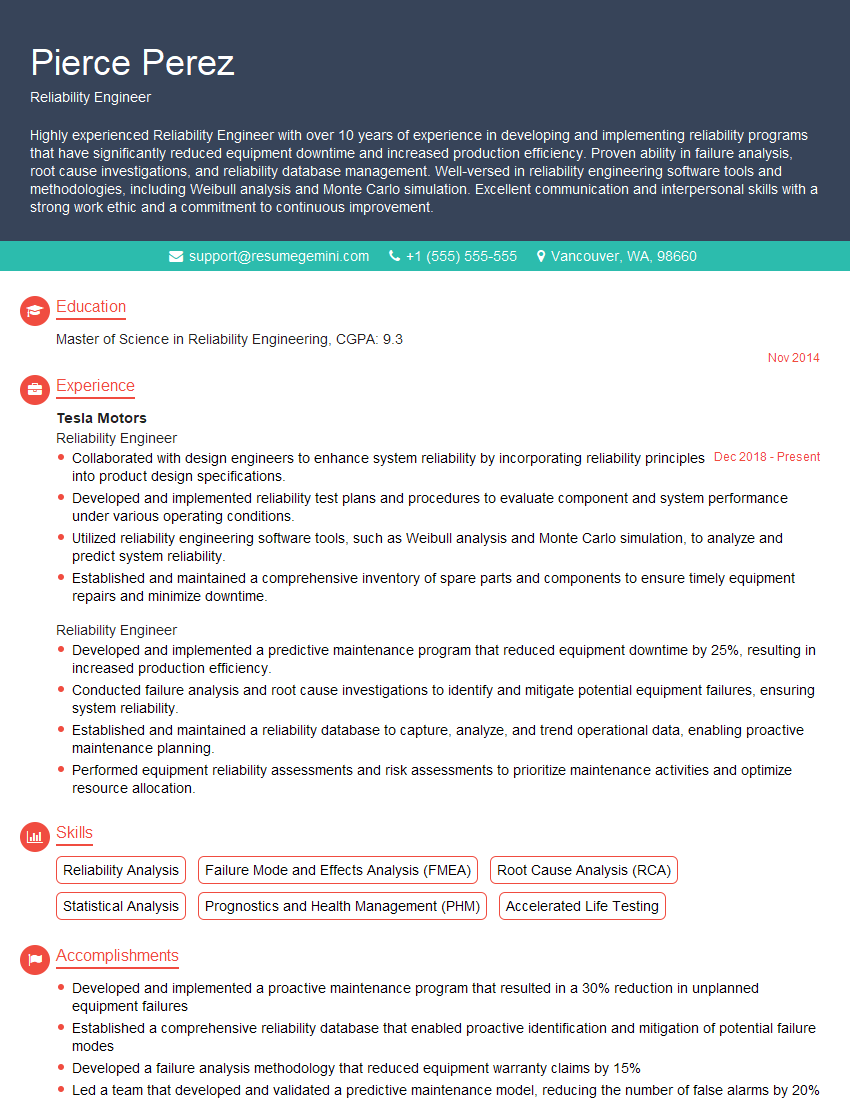
Mastering Availability is crucial for career advancement in today’s technology-driven world. Demonstrating a strong understanding of these concepts significantly enhances your value to any organization. To maximize your job prospects, create an ATS-friendly resume that effectively highlights your skills and experience. We highly recommend using ResumeGemini to build a professional and impactful resume. ResumeGemini provides a streamlined process and offers examples of resumes tailored to Availability roles to guide you. Investing time in crafting a strong resume significantly increases your chances of landing your dream job.
Explore more articles
Users Rating of Our Blogs
Share Your Experience
We value your feedback! Please rate our content and share your thoughts (optional).
What Readers Say About Our Blog
I Redesigned Spongebob Squarepants and his main characters of my artwork.
https://www.deviantart.com/reimaginesponge/art/Redesigned-Spongebob-characters-1223583608
IT gave me an insight and words to use and be able to think of examples
Hi, I’m Jay, we have a few potential clients that are interested in your services, thought you might be a good fit. I’d love to talk about the details, when do you have time to talk?
Best,
Jay
Founder | CEO