Interviews are opportunities to demonstrate your expertise, and this guide is here to help you shine. Explore the essential Genetic Data Analysis interview questions that employers frequently ask, paired with strategies for crafting responses that set you apart from the competition.
Questions Asked in Genetic Data Analysis Interview
Q 1. Explain the difference between NGS and Sanger sequencing.
Next-Generation Sequencing (NGS) and Sanger sequencing are both methods used to determine the order of nucleotides in a DNA or RNA molecule, but they differ significantly in their scale, speed, and cost. Think of Sanger sequencing as meticulously hand-copying a single book, while NGS is like photocopying thousands of books simultaneously.
Sanger Sequencing: This is a ‘first-generation’ method that sequences a single DNA fragment at a time. It’s highly accurate but relatively slow and expensive, making it suitable for smaller-scale projects or targeted sequencing of specific genes. It relies on chain-termination technology, using dideoxynucleotides to stop DNA synthesis at different points, creating fragments of varying lengths that are then analyzed by capillary electrophoresis.
NGS: This ‘massively parallel’ sequencing technology allows for the simultaneous sequencing of millions or even billions of DNA fragments. This dramatically increases throughput, reducing both time and cost per base. Several different NGS platforms exist (Illumina, PacBio, Ion Torrent), each with its own chemistry and methodology, but they all share the principle of massively parallel sequencing. NGS is ideal for large-scale projects like whole-genome sequencing or exome sequencing.
In summary, Sanger sequencing offers high accuracy for small-scale projects, whereas NGS provides high throughput and lower cost for large-scale sequencing needs. The choice depends entirely on the project’s scope and budget.
Q 2. Describe the process of variant calling from NGS data.
Variant calling is the process of identifying variations (mutations) in a DNA sequence compared to a reference genome. It’s a crucial step in NGS data analysis, providing insights into genetic diseases, ancestry, and more. Imagine you have a perfect copy of a book (reference genome) and several slightly different copies (your sequenced genomes). Variant calling helps you pinpoint the differences.
The process generally involves several steps:
Read Alignment: First, the raw sequencing reads (short DNA sequences) need to be aligned to a reference genome. Programs like BWA or Bowtie2 are used to map reads to their respective genomic locations. Think of it as finding the right page and line number in the book for each fragment.
Read Deduplication: NGS often generates multiple copies of the same sequence (duplicates). These duplicates are removed to avoid bias in subsequent analysis. It’s like removing extra copies of a page from your stack of ‘different copies’.
Variant Calling Algorithms: Algorithms like GATK HaplotypeCaller or FreeBayes then analyze the aligned reads, looking for deviations from the reference genome. These deviations, like single nucleotide polymorphisms (SNPs) or insertions/deletions (indels), are identified and reported as potential variants.
Variant Filtering: Not all identified variants are true biological variations. Many are artifacts of the sequencing process or sequencing errors. Filtering based on quality scores, read depth, and other metrics helps eliminate false positives. This is like carefully checking each highlighted difference to confirm that it’s not a typo in the copied book.
Annotation: Finally, the remaining variants are annotated with information about their location, type, potential effects on genes (e.g., synonymous, missense, nonsense), and functional consequences. This is like adding context and interpretation to each verified difference.
The output is typically a Variant Call Format (VCF) file, a standardized file format for storing and sharing variant information.
Q 3. What are the common file formats used in genomic data analysis (e.g., BAM, VCF, FASTQ)?
Several common file formats are used in genomic data analysis, each serving a specific purpose:
FASTQ (.fastq): This file format stores raw sequencing reads along with their associated quality scores. It’s the initial output from the sequencer and contains all the information from the instrument’s detectors, analogous to a raw image from a camera before any processing.
BAM (.bam): This is a binary version of the SAM (Sequence Alignment/Map) format. It stores aligned sequencing reads to a reference genome, showing where each read maps in the genome. Imagine it as an indexed copy of the book, showing where each fragment fits into the original.
VCF (.vcf): The Variant Call Format stores information about genetic variants identified through variant calling. This includes the position, type, and quality of each variant. It’s like a list of all identified errors and variations in your copied books.
BED (.bed): A file format used to represent genomic intervals, like regions of interest or genes. Useful for focusing analyses on specific regions.
Understanding these formats is critical for navigating and effectively working with genomic data. Each format’s structure and content are essential for downstream analyses.
Q 4. How do you handle missing data in a genetic dataset?
Missing data is a common challenge in genetic datasets, arising from various sources like failed sequencing, low-quality reads, or genotyping errors. It’s crucial to address missing data appropriately to avoid bias and ensure the accuracy of downstream analyses.
Several strategies can be used to handle missing data:
Imputation: This involves estimating missing genotypes based on the genotypes of other individuals in the dataset. This is similar to inferring a missing word in a sentence based on the surrounding context. Algorithms like Beagle or IMPUTE2 are commonly used for imputation.
Deletion: Simply removing individuals or SNPs with excessive missing data is a straightforward approach but can lead to a loss of information and potential bias if not done carefully. This is like removing entire pages of the book that have too many missing words.
Maximum Likelihood Estimation (MLE): This statistical approach estimates the missing values based on the distribution of observed data, often using a specific model for the data’s structure.
Multiple Imputation: Instead of estimating missing values with a single value, this approach creates multiple plausible imputed datasets, allowing for uncertainty in the imputed data to be accounted for.
The best approach depends on the extent of missing data, the underlying pattern of missingness, and the specific analysis being performed. Careful consideration and justification are required for each choice.
Q 5. Explain the concept of Genome-Wide Association Studies (GWAS).
Genome-Wide Association Studies (GWAS) are observational studies that search for associations between genetic variations (SNPs) across the entire genome and a particular trait or disease. Think of it as searching for common spelling mistakes in many copies of a book to discover which mistakes are related to a specific plot point.
In a GWAS, researchers genotype a large number of individuals, both affected and unaffected by the trait of interest. They then test for statistical associations between each SNP and the trait. If a SNP is significantly more frequent in individuals with the trait than in those without, it suggests that the SNP might be associated with an increased risk of that trait. This provides valuable information for understanding the genetic basis of complex traits and diseases.
Q 6. What are some common statistical methods used in GWAS?
Several statistical methods are employed in GWAS to identify SNPs associated with the trait of interest:
Chi-squared test: This test assesses the association between a SNP (typically categorized into genotypes like AA, Aa, aa) and the case/control status (disease/no disease).
Fisher’s exact test: A more robust version of the chi-squared test, especially useful with small sample sizes.
Linear regression: Used for quantitative traits (e.g., blood pressure), to assess the association between the SNP and the trait’s value.
Logistic regression: Used for binary traits (e.g., disease/no disease), to model the probability of having the trait given the SNP genotype.
Mixed-effects models: These account for population structure and familial relationships, which can confound association analyses.
These tests generate p-values, indicating the statistical significance of each association. Multiple testing correction (like Bonferroni or Benjamini-Hochberg) is crucial due to the large number of SNPs tested.
Q 7. Describe the difference between linkage disequilibrium and linkage.
Linkage and linkage disequilibrium (LD) both describe the non-random association of alleles at different loci (positions) on a chromosome, but they differ in their underlying mechanisms and implications.
Linkage: This refers to the tendency of alleles at nearby loci to be inherited together due to their physical proximity on a chromosome. They are less likely to be separated by recombination during meiosis (the formation of gametes). Imagine two words that are always written next to each other in a sentence – they’re linked because they’re consistently found together.
Linkage Disequilibrium (LD): This is a statistical measure of the non-random association of alleles at different loci. It doesn’t necessarily imply physical proximity. High LD means alleles at two loci are more frequently observed together than expected under random association. LD can result from linkage (physical proximity), but it can also arise from other factors, such as population bottlenecks or selective sweeps. Imagine two words that are always found together in a sentence, but they aren’t necessarily written next to each other – their association isn’t due to proximity, but because of other contextual factors.
In essence, linkage is a physical phenomenon, while LD is a statistical association. LD is crucial in GWAS because it allows researchers to identify a SNP associated with a disease even if the causal variant is not directly genotyped. The associated SNP is in LD with the causal variant; both are inherited together.
Q 8. What is a Manhattan plot, and how is it used in GWAS?
A Manhattan plot is a powerful visualization tool used in Genome-Wide Association Studies (GWAS) to display the results of association testing between genetic variants (usually Single Nucleotide Polymorphisms or SNPs) and a particular trait or disease. Imagine a city skyline – each building represents a SNP, and its height corresponds to the strength of its association with the trait. The stronger the association (lower p-value), the taller the building.
In a GWAS, we test millions of SNPs for association with the trait. The Manhattan plot helps us quickly identify SNPs showing statistically significant associations (typically those exceeding a genome-wide significance threshold, often set at 5 x 10⁻⁸). These SNPs are usually plotted as points that significantly exceed the horizontal line representing the threshold.
How it’s used in GWAS: The plot allows researchers to visually identify regions of the genome that are strongly associated with the trait of interest. Clusters of tall buildings suggest a genomic region containing genes or regulatory elements influencing the trait. This helps pinpoint candidate genes for further investigation.
Example: A GWAS investigating type 2 diabetes might reveal a cluster of tall buildings on chromosome 11, indicating a potential association between SNPs in that region and the risk of developing type 2 diabetes. Researchers would then focus on investigating genes in this region.
Q 9. Explain the concept of haplotype phasing.
Haplotype phasing is the process of determining the linkage phase of alleles on a chromosome. Think of it like this: you have two copies of each chromosome (one from your mother and one from your father). Haplotype phasing aims to separate these two copies, assigning alleles to their respective parental chromosomes.
Why is it important? Genotyping technologies often provide genotype data (e.g., AA, Aa, aa), but not the phase information (e.g., whether an individual carries A from their mother and a from their father, or vice versa). Knowing the phase is crucial for many downstream analyses, such as linkage disequilibrium analysis, haplotype association studies, and imputation.
Methods for haplotype phasing: Several computational methods exist, including:
- Family-based phasing: Uses information from parents and offspring to infer haplotypes.
- Population-based phasing: Uses population-level linkage disequilibrium information to infer haplotypes.
- Hidden Markov Models (HMMs): Statistical models that use probabilistic information to estimate haplotypes.
Example: Imagine a SNP with two alleles, A and a. A diploid individual has the genotype Aa. Phasing determines whether the individual’s haplotypes are A|a (A on one chromosome and a on the other) or a|A (a on one chromosome and A on the other). The vertical bar separates the two haplotypes.
Q 10. How do you perform quality control on genomic data?
Quality control (QC) of genomic data is a critical step to ensure the accuracy and reliability of downstream analyses. It involves removing low-quality data points and identifying potential biases that could affect the results.
Steps in QC:
- Genotyping rate: Remove individuals or SNPs with low genotyping rates (percentage of successfully genotyped SNPs per individual or individuals per SNP).
- Missing data: Impute or remove SNPs/individuals with excessive missing data.
- Hardy-Weinberg equilibrium (HWE): Check if SNP genotype frequencies deviate significantly from HWE expectations, indicating potential genotyping errors or population stratification.
- Sex check: Verify the consistency between reported sex and X chromosome heterozygosity.
- Population stratification: Identify and correct for population substructure using methods like principal component analysis (PCA) to avoid spurious associations in GWAS.
- Relatedness: Identify and remove closely related individuals to avoid inflation of association statistics.
- Minor allele frequency (MAF): Filter out SNPs with very low MAF to increase statistical power and avoid spurious associations.
Example: If a SNP has a genotyping rate of only 50%, it might be indicative of poor quality and is often filtered out to avoid misleading results. Similarly, individuals with excessive missing data might represent low-quality samples and are removed.
Q 11. What are some common biases in genomic data, and how can they be addressed?
Genomic data is susceptible to various biases that can lead to inaccurate or misleading conclusions. Careful consideration and mitigation strategies are crucial.
Common biases:
- Population stratification: Differences in allele frequencies between subgroups within a population can lead to spurious associations.
- Batch effects: Technical variations introduced during different stages of data generation (e.g., different genotyping batches) can affect results.
- Confounding: Uncontrolled variables that are correlated with both genotype and phenotype can lead to false associations.
- Sample selection bias: Bias in the selection of individuals for the study.
- Publication bias: Tendency to publish only statistically significant results.
Addressing biases:
- Population stratification: Use PCA or structured association tests to adjust for population structure.
- Batch effects: Include batch as a covariate in statistical models or use methods specifically designed to correct for batch effects.
- Confounding: Carefully control for potential confounders in the study design and statistical analysis.
- Sample selection bias: Employ rigorous sampling strategies to ensure a representative sample.
- Publication bias: Be aware of publication bias and consider meta-analyses to integrate findings from multiple studies.
Example: A GWAS on a disease might show a spurious association with a SNP if the study population isn’t properly adjusted for population stratification, where different groups within the population have varying allele frequencies related to both the SNP and the disease.
Q 12. Describe different types of genomic variations (SNPs, INDELS, CNVs).
Genomic variations are differences in DNA sequences among individuals. They are the raw material for evolution and contribute to phenotypic diversity.
Types of genomic variations:
- Single Nucleotide Polymorphisms (SNPs): The most common type of variation, involving a change in a single nucleotide base (A, T, C, or G). SNPs can be found throughout the genome, both in coding and non-coding regions.
- Insertions and Deletions (INDELS): Variations involving the insertion or deletion of one or more nucleotides. These can cause frameshift mutations if they occur in coding regions, leading to changes in protein sequence.
- Copy Number Variations (CNVs): Variations involving the duplication or deletion of larger segments of DNA, ranging from kilobases to megabases. CNVs can affect the dosage of genes and can have significant phenotypic consequences.
Examples:
- SNP: A change from A to T at a specific position in the genome.
- INDEL: Insertion of a ‘G’ nucleotide into a gene sequence.
- CNV: Duplication of a 100kb region containing several genes.
Understanding these variations is essential for studying genetic diseases, evolution, and personalized medicine.
Q 13. Explain the concept of phylogenetic trees and their construction.
Phylogenetic trees are branching diagrams that represent the evolutionary relationships between different species or groups of organisms. They are like family trees, but for species. The branching points (nodes) indicate common ancestors, and the branch lengths represent evolutionary time or genetic distance.
Construction of phylogenetic trees: Trees are constructed using various methods, generally based on comparing genetic data (DNA or protein sequences) or morphological characteristics. Common approaches include:
- Distance-based methods: Calculate pairwise distances between sequences and construct trees based on these distances (e.g., neighbor-joining).
- Character-based methods: Analyze the presence or absence of specific characters (e.g., nucleotide bases or morphological traits) to infer evolutionary relationships (e.g., maximum parsimony, maximum likelihood).
- Bayesian methods: Use Bayesian inference to estimate the probability of different tree topologies.
Applications: Phylogenetic trees are used to study evolutionary relationships, track the spread of infectious diseases, identify conserved regions in genomes, and understand the evolution of traits.
Example: A phylogenetic tree of primate species might show humans, chimpanzees, and gorillas sharing a more recent common ancestor compared to other primates like lemurs. The branch lengths might reflect the estimated time since divergence.
Q 14. What are some common tools used for genomic data analysis (e.g., SAMtools, GATK, BWA)?
Many powerful tools are available for genomic data analysis. Here are a few examples, categorized by their function:
Alignment and Mapping:
BWA (Burrows-Wheeler Aligner): A widely used tool for aligning short reads (e.g., Illumina sequencing data) to a reference genome. It’s efficient and accurate for aligning millions of reads.
Variant Calling:
GATK (Genome Analysis Toolkit): A comprehensive toolkit for variant discovery and genotyping. It offers sophisticated algorithms for handling various types of genomic variations (SNPs, INDELS, CNVs) and includes tools for quality control and filtering.SAMtools: A suite of utilities for manipulating sequence alignment files (SAM/BAM format). It includes tools for sorting, indexing, and filtering alignment data, essential preprocessing steps for variant calling.
Other Tools:
PLINK: A command-line tool widely used for GWAS analysis, linkage analysis, and population genetics studies.R/Bioconductor: A powerful statistical computing environment with extensive packages for genomic data analysis.
The choice of tools depends on the specific analysis goals and the type of data. Often, a pipeline involving multiple tools is used for a comprehensive analysis.
Q 15. How would you approach the analysis of RNA-Seq data?
Analyzing RNA-Seq data is a multi-step process that begins with raw sequencing reads and culminates in biological insights. My approach involves several key stages:
- Quality Control (QC): I start by assessing the quality of the raw sequencing reads using tools like FastQC. This involves checking for adapter contamination, base quality scores, and GC content. Identifying and mitigating issues at this stage is crucial for downstream analysis accuracy. For instance, if adapter contamination is high, I would use tools like Cutadapt to trim the reads.
- Read Alignment: Next, I align the cleaned reads to a reference genome (e.g., human genome GRCh38) using aligners like STAR or HISAT2. The output is a SAM/BAM file indicating where each read maps to the genome. Alignment efficiency and the number of uniquely mapped reads are crucial metrics at this stage.
- Read Counting: After alignment, I quantify gene expression by counting the number of reads mapping to each gene using tools like featureCounts or HTSeq-count. This generates a count matrix, the foundation for further analysis. This step involves choosing appropriate gene annotations based on the experimental design.
- Normalization: Raw read counts are not directly comparable between samples due to variations in sequencing depth and library size. I employ normalization methods (like TMM, RLE, or DESeq2’s built-in normalization) to adjust for these biases and enable meaningful comparisons. For instance, if one sample has double the number of reads, it doesn’t mean it expresses double the amount of every gene.
- Differential Expression Analysis: This is the core step where I identify genes that are differentially expressed between experimental conditions (e.g., treated vs. control). I typically use tools like DESeq2 or edgeR, which employ statistical tests (like the negative binomial test) to determine significance while accounting for multiple testing corrections (like Benjamini-Hochberg). I would look for genes with adjusted p-values below a certain threshold (e.g., 0.05) and significant fold-changes.
- Functional Enrichment Analysis: Finally, I perform pathway analysis using tools like GOseq or DAVID to identify biological pathways enriched among the differentially expressed genes. This helps to understand the biological context of the observed changes in gene expression. For example, I may find that a set of genes involved in cell growth is upregulated under a specific condition.
Throughout the analysis, rigorous quality control and proper data visualization are essential for ensuring reliability and drawing biologically meaningful conclusions.
Career Expert Tips:
- Ace those interviews! Prepare effectively by reviewing the Top 50 Most Common Interview Questions on ResumeGemini.
- Navigate your job search with confidence! Explore a wide range of Career Tips on ResumeGemini. Learn about common challenges and recommendations to overcome them.
- Craft the perfect resume! Master the Art of Resume Writing with ResumeGemini’s guide. Showcase your unique qualifications and achievements effectively.
- Don’t miss out on holiday savings! Build your dream resume with ResumeGemini’s ATS optimized templates.
Q 16. Explain the concept of gene expression and its quantification.
Gene expression refers to the process by which information from a gene is used to synthesize a functional gene product, typically a protein. The level of gene expression reflects the amount of mRNA transcribed from a gene, indicating the gene’s activity. Quantification involves measuring the abundance of mRNA transcripts for a given gene. This is often done using RNA sequencing (RNA-Seq) where the amount of mRNA is proportional to the number of reads that map to the corresponding gene during sequencing.
There are several ways to quantify gene expression:
- RNA-Seq: Provides a comprehensive measure of the abundance of all transcripts in a sample. The quantification is usually presented as reads per kilobase per million mapped reads (RPKM) or transcripts per million (TPM), which normalizes for gene length and sequencing depth.
- Microarray: An older technology that measures gene expression levels based on the hybridization of fluorescently labeled cDNA to DNA probes on a chip. While less accurate than RNA-Seq, it’s still used in certain applications.
- qPCR (quantitative PCR): Measures gene expression levels by quantifying the amount of cDNA using fluorescent probes. It’s highly sensitive and can quantify specific transcripts but is less high-throughput than RNA-Seq.
The choice of method depends on factors like budget, throughput needs, and the level of detail required.
Q 17. Describe different methods for normalization of gene expression data.
Normalization is crucial to make gene expression data comparable across samples. Different samples will have different sequencing depths, which makes direct comparison of read counts meaningless. Here are several common normalization methods:
- Total count normalization (TPM, RPKM): Divides the raw counts by the total number of reads in a sample and normalizes for gene length. This addresses differences in sequencing depth, but still doesn’t fully account for variations in RNA composition between samples.
- Upper quartile normalization: Normalizes based on the 75th percentile of gene expression values. Less sensitive to outliers than total count normalization.
- Median normalization: Similar to upper quartile normalization, but using the median instead.
- DESeq2 and edgeR normalization: These popular packages for differential expression analysis employ sophisticated normalization techniques (e.g., size factors, TMM normalization) which account for various sources of technical variation and are optimized for differential expression testing. They often provide better results than simpler methods.
Choosing the appropriate normalization method depends on the experimental design and the specific questions being asked. For example, for differential expression analysis between two treatment groups, DESeq2’s internal normalization is often preferred because it specifically addresses the biases relevant to this comparison.
Q 18. What are some common bioinformatics databases (e.g., NCBI, Ensembl, UniProt)?
Several bioinformatics databases are invaluable resources for genomic data analysis. Here are some key examples:
- NCBI (National Center for Biotechnology Information): A massive repository of genomic, proteomic, and bibliographic information. Key databases include GenBank (nucleotide sequences), RefSeq (curated sequences), and PubMed (biomedical literature).
- Ensembl: Provides comprehensive genome annotation data for various species. It offers gene predictions, regulatory regions, and variation data. It’s particularly useful for integrating genomic information with RNA-Seq data.
- UniProt: A central hub for protein sequences and annotations, including functional information, protein-protein interactions, and subcellular localization. It’s essential when studying the proteomic consequences of gene expression changes.
- GEO (Gene Expression Omnibus): A public repository for high-throughput functional genomic data, such as microarray and RNA-Seq data. It allows researchers to find and analyze publicly available datasets, furthering scientific collaboration and reproducibility.
These databases are interconnected and often used in conjunction to gather a comprehensive understanding of genes and proteins.
Q 19. Explain your experience with programming languages relevant to bioinformatics (e.g., R, Python).
I have extensive experience in programming languages vital to bioinformatics, primarily R and Python.
R: I utilize R extensively for statistical analysis of genomic data. My expertise includes using packages such as DESeq2, edgeR, limma for differential gene expression analysis, ggplot2 for data visualization, and Bioconductor for various bioinformatics tasks. For instance, I’ve used R to analyze RNA-Seq data from a large-scale study of cancer gene expression, identifying novel biomarkers associated with patient survival. A typical R script might involve importing data, performing normalization, running statistical tests, and generating publication-quality figures.
Python: I employ Python for data manipulation and automation, especially when dealing with large datasets. I’m proficient in using libraries like Pandas for data wrangling, NumPy for numerical computation, and Biopython for sequence manipulation. I’ve used Python to automate complex workflows, such as the preprocessing of large RNA-Seq datasets, which involved quality control, read alignment, and read counting, saving considerable time and reducing the risk of errors. A Python script might handle file processing, data transformation, or the integration of multiple tools in a pipeline.
Q 20. Describe your experience with command-line tools for data manipulation.
I’m highly comfortable working with command-line tools for data manipulation and analysis. My proficiency encompasses tools like:
samtools: For manipulating SAM/BAM files (alignment files).bedtools: For genomic region operations such as intersection, merging, and counting.awkandsed: For powerful text processing and data extraction from large files.grep: For searching and filtering text based on patterns.bcftools: For handling variant call format (VCF) files.
I often utilize these tools to create efficient pipelines for genomic data processing. For instance, I’ve used samtools to sort and index BAM files, bedtools to intersect aligned reads with gene annotations, and awk to extract specific columns of data from tabular files. This approach allows for fine-grained control over data manipulation and enables scalability for large genomic datasets.
Q 21. How do you handle large genomic datasets efficiently?
Handling large genomic datasets efficiently requires a combination of strategies:
- Parallel processing: I leverage parallel computing techniques using tools like GNU Parallel or multiprocessing libraries in Python and R. This allows for splitting computationally intensive tasks across multiple cores, significantly reducing processing time for tasks such as alignment and differential expression analysis.
- Data compression: I use efficient compression formats such as gzip or bgzip to reduce storage space and improve I/O performance. This is especially important when working with large sequencing files. For instance, BAM files are often stored in bgzip format.
- Database management systems: For managing and querying extremely large datasets, I utilize database systems such as MySQL or PostgreSQL. This allows for efficient data storage, retrieval, and querying, enabling complex analyses. I might use SQL to efficiently access specific subsets of the data that I need for analysis.
- Cloud computing: For exceptionally large datasets or computationally intensive analyses, I utilize cloud computing platforms like AWS or Google Cloud. These platforms provide scalable computing resources and storage solutions. They are vital for managing the massive amounts of data generated by whole-genome sequencing projects.
- Memory management: I use techniques such as chunking (reading data in smaller blocks) and iterative processing to reduce memory footprint when dealing with datasets that exceed available RAM. This can prevent out-of-memory errors during processing.
The optimal approach depends on the specific dataset size, available computational resources, and the complexity of the analysis. The key is to proactively plan and implement strategies for efficient data management throughout the entire workflow.
Q 22. Explain your experience with cloud computing platforms for bioinformatics (e.g., AWS, Google Cloud, Azure).
My experience with cloud computing platforms for bioinformatics is extensive. I’ve worked extensively with AWS (Amazon Web Services), Google Cloud Platform (GCP), and Microsoft Azure, leveraging their services for various stages of genomic data analysis. Each platform offers unique strengths. For instance, AWS provides robust compute resources like EC2 instances, ideal for running computationally intensive tasks such as variant calling and genome alignment. I’ve utilized their S3 storage for secure and scalable storage of large genomic datasets, often exceeding terabytes. GCP’s strengths lie in its powerful machine learning capabilities, particularly useful in developing predictive models for disease risk based on genomic data. I’ve used GCP’s Vertex AI platform for this purpose, leveraging pre-trained models and custom-built pipelines. Finally, Azure’s strengths include its integration with other Microsoft products and its user-friendly interface. I’ve found Azure Batch particularly useful for managing large-scale parallel processing jobs, crucial for tasks like genome-wide association studies (GWAS).
In practice, selecting a platform depends on the specific project requirements. Cost-effectiveness, scalability needs, existing infrastructure, and specialized tools available on each platform all factor into the decision. I’m proficient in managing resources on all three platforms, including cost optimization, security best practices, and efficient data transfer.
Q 23. Describe a challenging bioinformatics problem you solved and how you approached it.
One particularly challenging project involved identifying novel genetic variants associated with a rare, complex neurological disorder. The dataset comprised whole-genome sequencing data from a relatively small cohort of affected individuals and unaffected controls. The challenge lay in the high dimensionality of the data (millions of variants) combined with the low sample size, increasing the risk of false positives and confounding factors.
My approach involved a multi-step strategy. First, I performed rigorous quality control on the raw sequencing data to remove low-quality reads and identify potential artifacts. Then, I employed a combination of variant calling algorithms, including GATK, to identify single nucleotide polymorphisms (SNPs) and small insertions/deletions. Following variant annotation using databases like dbSNP and ANNOVAR, I focused on rare variants, since common variants were less likely to explain the rarity of the disorder. The core analysis relied on statistical tests, adjusting for multiple comparisons using methods like Bonferroni correction and False Discovery Rate (FDR) control. Finally, I used pathway analysis tools, like DAVID, to investigate the functional enrichment of identified variants, seeking connections to known biological processes relevant to the disorder. This helped in prioritizing candidate variants for further validation. The project resulted in the identification of several novel candidate genes associated with the disease, laying the groundwork for future functional studies.
Q 24. What are some ethical considerations in genomic data analysis?
Ethical considerations in genomic data analysis are paramount. The core principles revolve around data privacy, security, consent, and fairness. Genomic data is highly sensitive, revealing not only an individual’s genetic predispositions but also potentially information about their family members. Therefore, stringent security measures, including encryption and access control, are crucial to protect this data from unauthorized access or misuse.
- Informed consent: Individuals must provide informed consent, fully understanding the implications of sharing their genomic data for research or clinical purposes.
- Data anonymization and de-identification: Techniques to remove personally identifiable information from datasets are vital, though complete anonymization remains challenging due to the potential for re-identification using linkage attacks.
- Data sharing and access: Appropriate policies and procedures are needed to govern data access and sharing, balancing the needs of research with the protection of individual privacy.
- Bias and discrimination: Analyzing genomic data must be mindful of potential biases that could lead to discriminatory outcomes. For example, algorithms trained on datasets lacking diversity could perpetuate existing health disparities.
- Incidental findings: The process of managing and communicating incidental findings (unexpected discoveries unrelated to the initial purpose of testing) raises ethical concerns. Protocols should be in place to deal with potentially difficult or emotionally charged information revealed during the analysis.
Furthermore, researchers have a responsibility to ensure that genomic data is not used for discriminatory purposes, such as insurance discrimination or employment discrimination based on genetic predisposition.
Q 25. How would you interpret a p-value in the context of GWAS?
In a genome-wide association study (GWAS), the p-value represents the probability of observing the association between a genetic variant (e.g., a single nucleotide polymorphism or SNP) and a trait (e.g., disease risk) if there were no true association. A smaller p-value indicates stronger evidence against the null hypothesis (no association). Typically, a p-value below a significance threshold (e.g., 5 x 10⁻⁸ for GWAS) suggests that the association is statistically significant, meaning it is unlikely to have occurred by chance.
However, interpretation must be cautious. A significant p-value does not definitively prove causation; it merely suggests an association. Factors such as population stratification, linkage disequilibrium, and multiple testing can influence p-values. Therefore, a significant p-value should be considered in conjunction with other evidence, such as biological plausibility and replication in independent datasets, to draw reliable conclusions.
For example, a p-value of 1 x 10⁻¹⁰ in a GWAS would strongly suggest a statistically significant association between a particular SNP and the disease under investigation, implying that this SNP is likely involved in the disease mechanism. Conversely, a p-value of 0.1 would suggest no significant association, meaning the observed relationship is likely due to chance.
Q 26. Explain the concept of heritability and its estimation.
Heritability is the proportion of the phenotypic variation in a population that is attributable to genetic variation. In simpler terms, it quantifies how much of the observed differences among individuals for a particular trait is due to their genes, as opposed to environmental factors. Heritability is expressed as a value between 0 and 1 (or 0% and 100%). A heritability of 0 means that genetic variation plays no role in the phenotypic variation, while a heritability of 1 means that all observed variation is due to genetic differences.
Heritability estimation is often performed using twin studies or family-based studies. Twin studies compare the concordance rate (the probability that both twins share a trait) between monozygotic (identical) twins and dizygotic (fraternal) twins. Higher concordance in monozygotic twins suggests a higher heritability. Family-based studies analyze the degree of genetic similarity among relatives and the correlation of their trait values. Statistical methods, such as variance component analysis, are used to partition the phenotypic variance into genetic and environmental components, providing an estimate of heritability. Genome-wide association studies (GWAS) can also indirectly inform heritability estimates by quantifying the contribution of individual genetic variants to phenotypic variance.
It’s crucial to remember that heritability is a population-specific parameter; it does not reflect the heritability of a specific individual’s trait. Furthermore, heritability estimates can be influenced by various factors, including the environment and the definition of the trait being studied.
Q 27. What are some limitations of GWAS?
GWAS, while powerful, have several limitations:
- Focus on common variants: GWAS primarily identify common variants that explain only a small fraction of the heritability for most complex traits (the ‘missing heritability problem’). Rare variants, structural variants, and gene-gene interactions are often missed.
- Population stratification: Population substructure can lead to spurious associations if not properly accounted for during the analysis. This is because allele frequencies can differ between populations, creating artificial associations.
- Linkage disequilibrium: GWAS often identify SNPs that are in linkage disequilibrium (LD) with the causal variant, not the causal variant itself. This makes it difficult to pinpoint the precise genetic basis of the association.
- Environmental influences: GWAS cannot account for complex interactions between genes and environment, which significantly influence most complex traits.
- Multiple testing correction: The large number of SNPs tested in GWAS necessitates stringent multiple testing correction, which can reduce the power to detect true associations.
- Ethical considerations: As discussed previously, the use of GWAS data needs careful consideration of ethical implications related to privacy and potential discrimination.
Overcoming these limitations often requires integrating GWAS data with other approaches, such as whole-genome sequencing, epigenetic studies, and detailed environmental data, to get a more comprehensive understanding of complex traits.
Key Topics to Learn for Genetic Data Analysis Interview
- Genomic Data Structures and Formats: Understanding different file formats like FASTQ, SAM/BAM, VCF, and their associated metadata is crucial. Practical application includes efficient data manipulation and quality control.
- Genome Alignment and Variant Calling: Mastering the principles behind aligning sequencing reads to a reference genome and identifying variations (SNPs, INDELS, CNVs). This is fundamental to many downstream analyses.
- Statistical Genetics and Population Genetics: Develop a strong understanding of statistical methods used in genetic analysis, including linkage disequilibrium, heritability estimation, and population stratification. Applications include Genome-Wide Association Studies (GWAS) and phylogenetic analysis.
- Bioinformatics Tools and Software: Familiarity with common bioinformatics tools like SAMtools, BWA, GATK, and R/Bioconductor packages is essential for practical data analysis. Problem-solving involves efficiently utilizing these tools for specific analyses.
- Data Visualization and Interpretation: Learn to effectively visualize and interpret complex genetic data using various plotting techniques and statistical measures. This involves communicating your findings clearly and concisely.
- Ethical Considerations in Genetic Data Analysis: Understanding the ethical implications of handling sensitive genetic data, including privacy, consent, and bias, is vital for responsible research and practice.
Next Steps
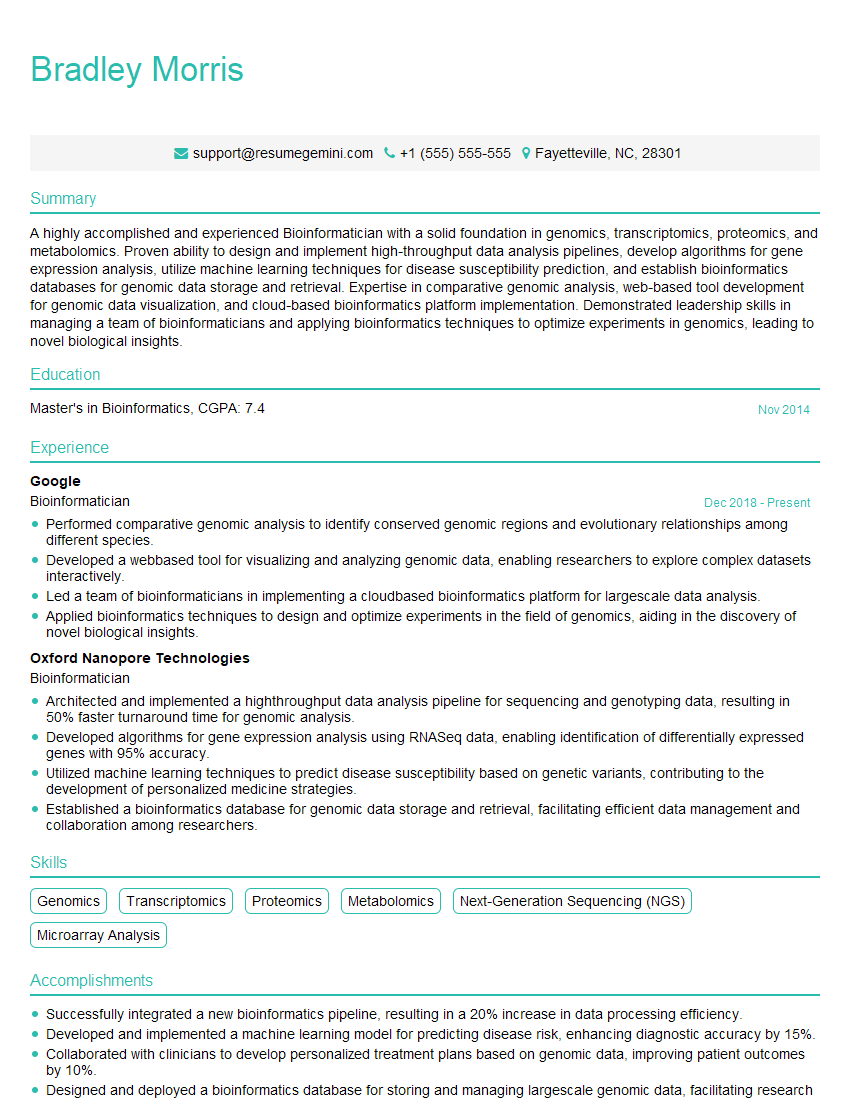
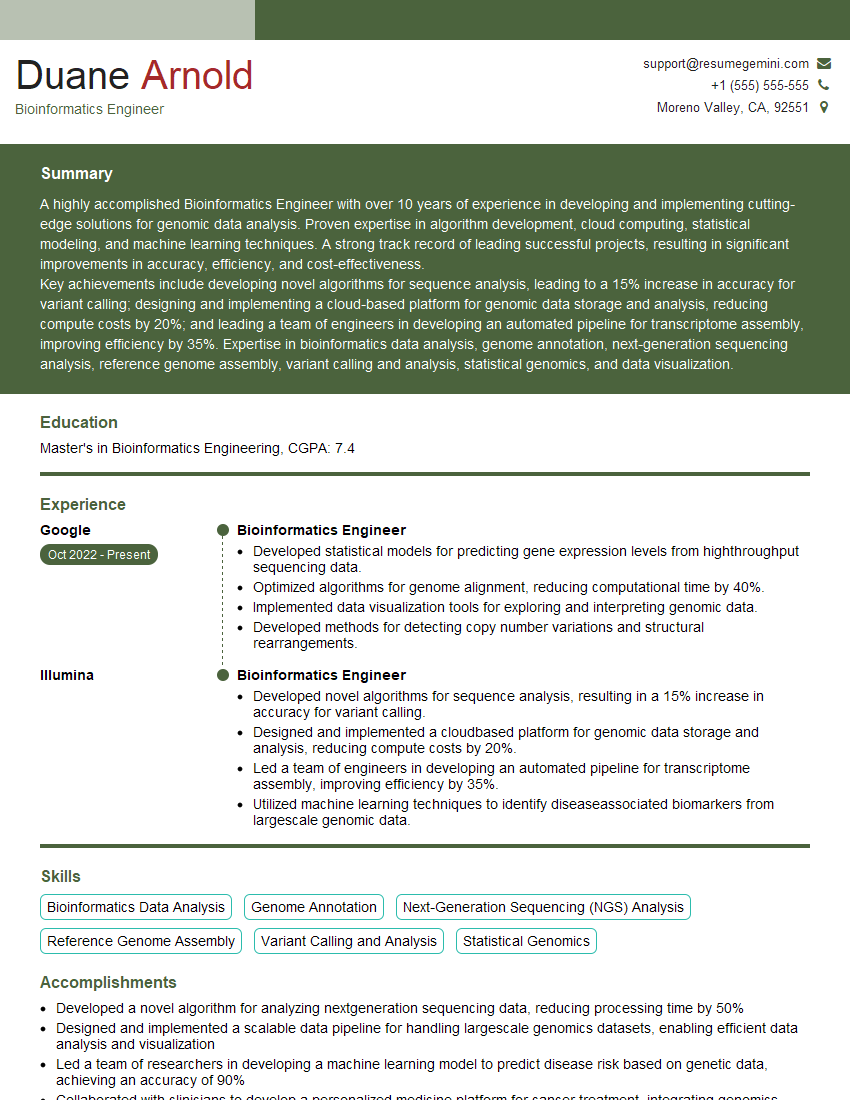
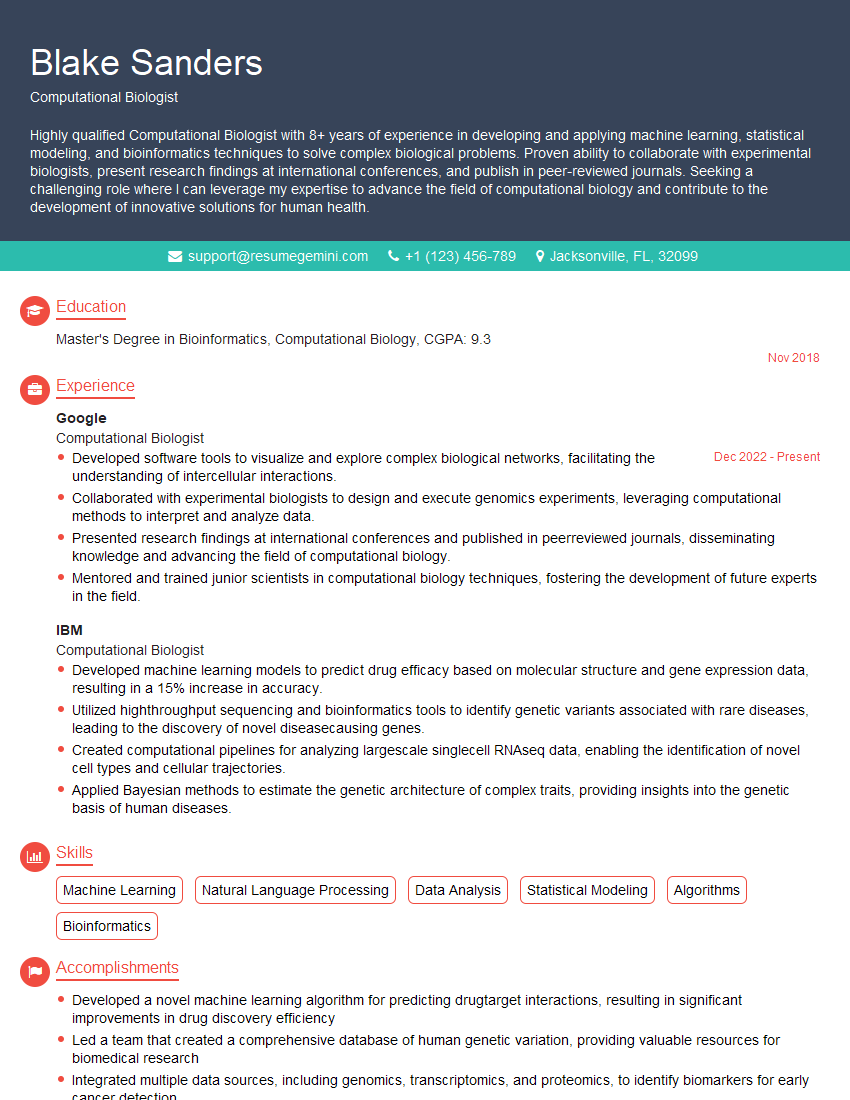
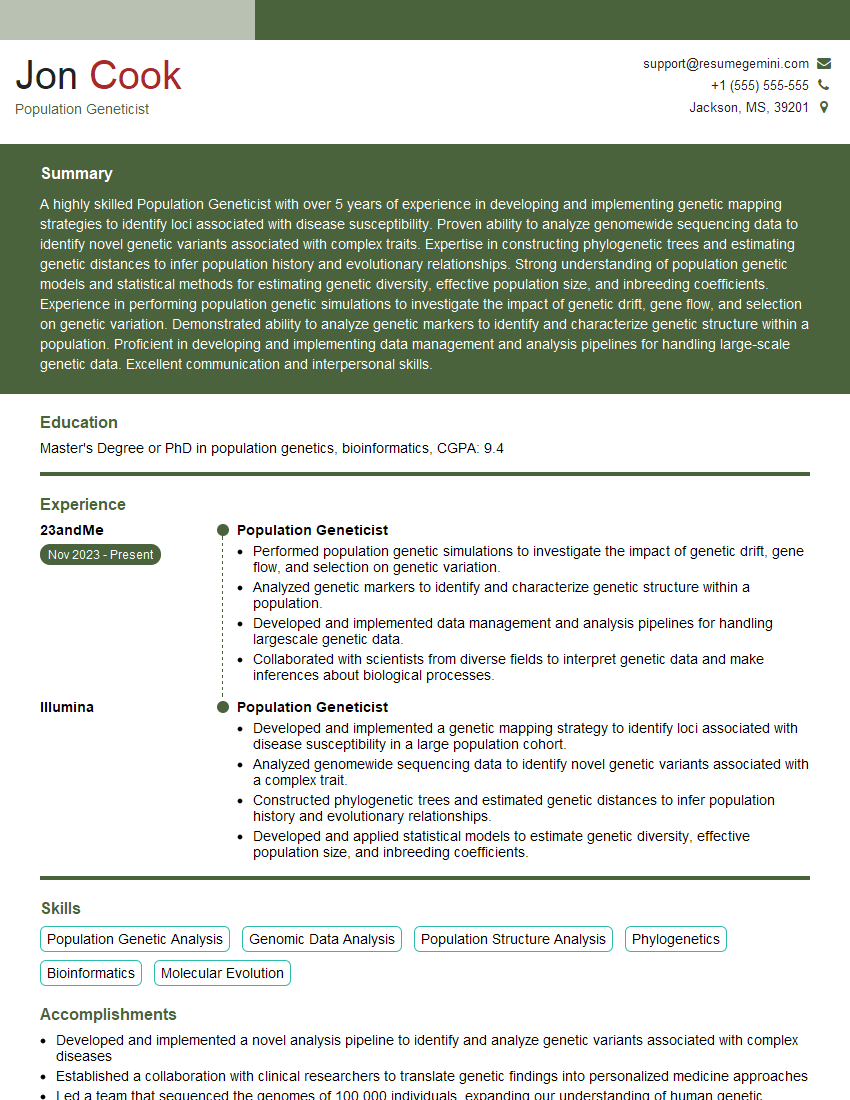
Mastering Genetic Data Analysis opens doors to exciting and impactful careers in research, healthcare, and biotechnology. The demand for skilled professionals in this field is rapidly growing, offering excellent opportunities for career advancement and significant contributions to scientific discovery. To maximize your job prospects, crafting a compelling and ATS-friendly resume is crucial. ResumeGemini is a trusted resource to help you build a professional resume that highlights your skills and experience effectively. We provide examples of resumes tailored to Genetic Data Analysis to help guide you in creating a stand-out application.
Explore more articles
Users Rating of Our Blogs
Share Your Experience
We value your feedback! Please rate our content and share your thoughts (optional).
What Readers Say About Our Blog
Really detailed insights and content, thank you for writing this detailed article.
IT gave me an insight and words to use and be able to think of examples