The right preparation can turn an interview into an opportunity to showcase your expertise. This guide to Welding Equipment and Technology interview questions is your ultimate resource, providing key insights and tips to help you ace your responses and stand out as a top candidate.
Questions Asked in Welding Equipment and Technology Interview
Q 1. Explain the difference between GMAW and GTAW welding processes.
GMAW, or Gas Metal Arc Welding, and GTAW, or Gas Tungsten Arc Welding, are both arc welding processes, but they differ significantly in their methods and applications. Think of it like this: GMAW is like using a spray gun, while GTAW is like using a very precise paintbrush.
GMAW (MIG welding) uses a continuously fed consumable wire electrode as both the filler material and the electrode. The shielding gas, usually argon or a mixture of argon and CO2, protects the weld from atmospheric contamination. It’s faster, easier to learn, and generally produces more weld metal quickly, making it suitable for high-volume production work, automotive repair, and other applications requiring speed and efficiency. The electrode wire melts continuously, feeding into the weld puddle.
GTAW (TIG welding) uses a non-consumable tungsten electrode to create the arc. The filler metal is added separately, providing greater control over the weld bead. The shielding gas, typically argon or helium, protects the weld puddle. This process allows for incredibly precise control, yielding higher-quality welds with superior aesthetics. It’s preferred for delicate work, critical applications, and situations demanding superior weld quality, such as aerospace manufacturing or pipe welding.
- GMAW Advantages: High deposition rate, easy to learn, good for automation.
- GMAW Disadvantages: Less precise control, susceptible to porosity if shielding gas is inadequate.
- GTAW Advantages: Excellent weld quality, precise control, cleaner welds.
- GTAW Disadvantages: Slower process, requires more skill, higher initial investment in equipment.
Q 2. Describe the various types of welding filler metals and their applications.
Welding filler metals are crucial for joining materials, providing the necessary base material for the weld. They are available in various forms like rods, wires, and electrodes, each designed for specific applications. The choice depends heavily on the base metal being welded and the desired properties of the final weld.
- Mild Steel Filler Metals: Commonly used for joining mild steel, they are relatively inexpensive and readily available in various diameters and compositions.
- Stainless Steel Filler Metals: Formulated to match the corrosion resistance and other characteristics of various stainless steel grades. They’re crucial in applications demanding high corrosion resistance.
- Aluminum Filler Metals: Used specifically for joining aluminum alloys. Different alloys are available to match various aluminum grades, considering aspects like strength and corrosion resistance.
- Cast Iron Filler Metals: Designed to handle the unique characteristics of cast iron, which is prone to cracking during welding. These fillers often have special compositions to minimize this risk.
- High-Strength Low-Alloy (HSLA) Steel Filler Metals: Provide high strength and excellent weldability for structural applications requiring superior mechanical properties.
The selection process also considers the welding process used (GMAW, GTAW, SMAW, etc.). For example, the filler metal for GMAW comes in a spool of wire, while for SMAW, it is a coated rod (electrode).
Q 3. What are the safety precautions necessary when using different welding equipment?
Welding presents inherent risks, and safety is paramount. Proper safety precautions must be taken regardless of the welding process or equipment. Imagine a welding environment as a potential hazard zone requiring constant vigilance.
- Eye and Face Protection: Always use a welding helmet with appropriate shade lenses to protect against intense UV and IR radiation from the arc. Regularly inspect helmets to ensure they’re free from damage.
- Respiratory Protection: Welding fumes can be toxic. Use a respirator or ventilation system to remove fumes from the breathing zone, particularly when working with certain metals like stainless steel or aluminum.
- Clothing and Footwear: Wear flame-resistant clothing and leather gloves to protect from sparks and hot materials. Safety footwear provides protection against impacts and hot debris.
- Fire Protection: Have a fire extinguisher readily available and know how to use it. Keep flammable materials away from the welding area.
- Shielding Gas Safety: When using shielding gases, ensure adequate ventilation to prevent asphyxiation from gas displacement.
- Electrical Safety: Always disconnect power from the welding machine before performing any maintenance or repairs. Check the wiring and grounding for proper connections to avoid electrical shock.
Regular training and adherence to safety standards are crucial for safe welding practices.
Q 4. How do you identify and address common welding defects?
Identifying and addressing welding defects requires a trained eye and understanding of the welding process. Common defects include porosity, cracks, lack of fusion, and undercut.
- Porosity: Small holes within the weld caused by trapped gases. This can be caused by improper shielding, moisture in the filler material, or contaminated base metal. Address this by ensuring proper shielding gas flow, using dry filler material, and cleaning the base metal thoroughly before welding.
- Cracks: Fractures in the weld, often caused by high stresses or improper heat input. They can result from too rapid cooling, insufficient preheat, or poor joint design. Addressing this involves optimizing welding parameters, preheating the material, and using correct filler material.
- Lack of Fusion: Incomplete bonding between the weld metal and the base metal. This is commonly caused by insufficient heat input or poor surface preparation. Proper cleaning of surfaces and adjustments to welding parameters (amperage, travel speed) are crucial here.
- Undercut: Grooves at the edges of the weld. It can be caused by excessive current, excessive travel speed, or improper electrode angle. Adjust welding parameters to remedy this.
Visual inspection is the first step, followed by more in-depth analysis if needed, which might involve radiographic testing or ultrasonic testing for deeper flaws.
Q 5. Explain the principles of arc welding and the factors affecting arc stability.
Arc welding relies on the heat generated by an electric arc to melt the base metal and filler metal, forming a weld. Think of it as a controlled electrical discharge that creates intense heat.
Principles: An electric arc is created between the electrode and the workpiece. This arc’s extremely high temperature melts both the base metal and the electrode (in consumable electrode processes) or the filler material (in non-consumable electrode processes). The molten material flows together to form the weld, solidifying as it cools.
Factors affecting arc stability:
- Electrode stickout: The length of the electrode extending beyond the contact tip significantly impacts arc stability. Too long a stickout can lead to erratic arcing, while too short a stickout can cause the contact tip to overheat.
- Current: The welding current directly affects the arc’s intensity. Too low a current results in weak penetration, while too high a current can lead to excessive spatter and instability.
- Voltage: The voltage determines the arc length. Maintaining optimal voltage is crucial for stable arcing.
- Shielding gas: Appropriate shielding gas is essential to prevent atmospheric contamination of the molten weld pool, contributing to instability and defects.
- Electrode type and condition: The choice of electrode and its condition (cleanliness, diameter) directly impact the arc’s stability and the quality of the weld.
Maintaining optimal parameters for these factors ensures a stable arc, leading to consistent and quality welds.
Q 6. What are the different types of welding joints and their suitability for various applications?
Welding joints are the configurations in which base metals are joined together. Different joints offer varying strengths and are selected based on the application’s specific requirements.
- Butt Joint: The simplest joint, where the edges of the two base metals are butted together. Suitable for applications requiring high strength along the weld line, but requires precise preparation for optimal weld quality. Commonly used in pipelines and structural beams.
- Lap Joint: One base metal overlaps the other. Relatively easy to prepare and weld, but weaker than a butt joint. Used in applications where high strength isn’t crucial.
- T-Joint: One base metal is welded perpendicular to the other, resembling the letter ‘T’. The strength depends on the weld preparation and the welding process. Used in various structural applications.
- Corner Joint: Two base metals are joined at a corner. Commonly used in joining sheet metals, but generally weaker than other joints.
- Edge Joint: The edges of two base metals are welded together. Requires careful preparation and is often used in thin materials.
The choice of joint is influenced by many factors, including the geometry of the components to be joined, desired strength, access to weld area, and the welding process to be used.
Q 7. Describe the process of setting up and calibrating a welding machine.
Setting up and calibrating a welding machine ensures the machine operates correctly and consistently. The specific procedures vary slightly among different machines, but the basic principles are similar. Imagine it as preparing your tools before starting any precise task.
Setup:
- Connect Power Supply: Ensure the welding machine is correctly connected to a suitable power source, checking voltage requirements.
- Gas Supply (if applicable): Connect and check the shielding gas supply, confirming adequate pressure and flow rate.
- Electrode/Wire Feeder (if applicable): Install the appropriate electrode or wire, and adjust the wire feed speed if necessary.
- Ground Connection: Establish a secure ground connection to the workpiece for proper electrical flow and safety.
Calibration:
- Voltage/Current Adjustment: Use a welding current meter or the machine’s digital display to set the desired voltage and current. This typically involves adjusting knobs or digital controls on the machine based on the material being welded and the desired weld bead appearance. A practice run on a scrap piece of the same material is recommended to fine-tune these parameters.
- Wire Feed Speed (GMAW): Adjust this speed to match the current and ensure a consistent weld bead. Again, experiment on a scrap piece to optimize.
- Gas Flow Rate (if applicable): Adjust this according to the manufacturer’s recommendations and ensure sufficient gas coverage of the weld.
- Test Welds: Create a few test welds on a scrap piece to confirm the settings provide the desired weld characteristics (penetration, bead appearance, etc.).
Remember to always consult the manufacturer’s instructions for specific procedures and safety precautions.
Q 8. How do you interpret welding symbols and blueprints?
Welding symbols and blueprints are the language of welding, providing crucial information to welders. Think of them as a detailed recipe for creating a weldment. They dictate the type of weld, its size, location, and other essential parameters. Interpreting them requires a solid understanding of the AWS (American Welding Society) standard symbols. The symbols are arranged in a specific sequence on the blueprint, showing details such as:
- Reference Line: The baseline showing where the weld is located.
- Arrow Side: The side of the reference line indicating the weld is on that side of the joint.
- Other Side: A symbol or notation indicating weld details on the opposite side.
- Weld Symbol: Indicates the type of weld (e.g., fillet, groove, plug) and its dimensions.
- Dimensions: Numbers indicating size, leg length, depth, etc.
- Finishing Symbol: Shows the required surface finish (e.g., grinding, chipping).
- Process Symbol: Specifies the welding process to be used (e.g., SMAW, GMAW).
For example, a symbol depicting a ‘>’ next to a reference line with a dimension ‘6mm’ signifies a fillet weld of 6mm leg length on the arrow side of the joint. The absence of a symbol on the other side implies no weld there. Mastering symbol interpretation is critical for accurate and efficient welding, preventing costly rework and ensuring structural integrity.
Q 9. What are the different types of non-destructive testing (NDT) methods used in welding?
Non-destructive testing (NDT) in welding is crucial for ensuring the quality and safety of welds without damaging the structure. Several methods are commonly used:
- Visual Inspection (VT): The simplest method, visually checking the weld for cracks, porosity, undercuts, or other defects. Think of it like a thorough visual examination of the weld joint.
- Radiographic Testing (RT): Uses X-rays or gamma rays to reveal internal flaws like cracks or porosity. This is like an X-ray for the weld.
- Ultrasonic Testing (UT): Employs high-frequency sound waves to detect internal defects. This is analogous to sonar used to image the underwater world.
- Magnetic Particle Testing (MT): Uses magnetic fields to detect surface and near-surface cracks. Think of it like a metal detector that finds cracks in ferrous metals.
- Dye Penetrant Testing (PT): A liquid dye is applied to the surface to detect surface cracks. This is similar to finding a leak in a pipe by using a colored fluid.
- Liquid Penetrant Testing (LPT): Similar to Dye Penetrant Testing but uses a fluorescent dye and UV light for better visibility.
The choice of NDT method depends on factors like the type of weld, material, and the type of defects expected. Often, multiple methods are used in combination to provide comprehensive inspection.
Q 10. Explain the importance of pre-heating and post-heating in welding.
Preheating and post-heating are crucial heat treatments in welding, particularly for thicker materials or those prone to cracking. They help control the cooling rate of the weld, thus preventing issues like cracking or distortion.
- Preheating: Heating the base metal before welding reduces the cooling rate, preventing rapid contraction and reducing the risk of cracking, especially in high-carbon or alloy steels. Imagine it like warming up a stiff material before bending it; it becomes more pliable and less prone to breakage.
- Post-heating: Heating the weld after welding helps relieve residual stresses that have built up due to the rapid cooling of the weld metal. It’s like letting a stretched-out metal cool down gradually to prevent it from warping or breaking.
The specific preheat and post-heat temperatures depend on the material, thickness, and the welding process used. These temperatures are usually specified in the welding procedure specification (WPS). Improper preheating or post-heating can lead to brittle welds, cracking, or distortion.
Q 11. How do you select the appropriate welding parameters (voltage, amperage, travel speed) for a given application?
Selecting appropriate welding parameters is crucial for producing high-quality welds. It’s a balancing act. The three main parameters are voltage, amperage, and travel speed.
- Voltage: Controls the arc length and penetration depth. Higher voltage generally leads to greater penetration but also a wider weld bead.
- Amperage: Controls the heat input. Higher amperage means more heat and a faster melting rate. It impacts the weld bead width and penetration depth.
- Travel Speed: Determines how much heat is applied to the base metal. A slower travel speed increases heat input, resulting in a wider weld bead but potentially more penetration.
The ideal combination depends on the base metal, joint design, and desired weld bead profile. For example, welding thin sheet metal requires lower amperage and voltage, with a faster travel speed to prevent burn-through. Conversely, thicker materials require higher amperage and voltage at a slower travel speed to achieve sufficient penetration. Welders usually use charts, tables, and experience to determine the proper settings for a specific application. Often, adjustments are made during the welding process to achieve the desired result.
Q 12. Describe the different types of shielding gases used in welding and their purposes.
Shielding gases prevent atmospheric contamination of the molten weld pool, ensuring a clean, sound weld. Different gases offer varying benefits depending on the welding process and material:
- Argon (Ar): Inert gas used primarily in Gas Metal Arc Welding (GMAW) and Gas Tungsten Arc Welding (GTAW) for welding aluminum, stainless steel, and other reactive metals. It protects the weld pool from oxidation.
- Helium (He): Also inert, used in GMAW and GTAW. Provides better penetration and arc stability than argon but is more expensive.
- Carbon Dioxide (CO2): A slightly active gas used in GMAW, offering good penetration but with increased spatter compared to inert gases. It is cost-effective.
- Argon/CO2 Mixtures: Commonly used in GMAW for steel, offering a balance between cost-effectiveness and weld quality.
- Other Mixtures: Various blends of argon, helium, oxygen, and carbon dioxide are used to optimize weld properties for specific applications.
The choice of shielding gas significantly impacts weld quality, cost, and process efficiency. For instance, using argon for aluminum welding is essential to prevent porosity and oxide formation.
Q 13. What are the advantages and disadvantages of different welding power sources (e.g., constant current, constant voltage)?
Welding power sources are either constant current (CC) or constant voltage (CV), each offering unique advantages and disadvantages:
- Constant Current (CC): Maintains a consistent amperage regardless of arc length. It’s preferred for manual metal arc welding (SMAW) and stick welding because it minimizes variations in current during the process. The arc length may fluctuate, impacting penetration.
- Constant Voltage (CV): Maintains a consistent voltage regardless of the arc length. This is preferred for GMAW and GTAW as it allows for easier control of the wire feed speed, leading to consistent weld beads. However, it is sensitive to variations in arc length.
Advantages of CC: Provides stable arc during stick welding, less sensitive to arc length changes. Disadvantages of CC: Less control over the weld bead shape and size.
Advantages of CV: Precise control over the weld bead, generally more efficient. Disadvantages of CV: More sensitive to variations in arc length, may require skilled operator to avoid burn-through.
The selection depends heavily on the welding process. SMAW typically uses CC, while GMAW and GTAW usually employ CV.
Q 14. How do you maintain and troubleshoot welding equipment?
Maintaining and troubleshooting welding equipment is crucial for safety and productivity. Regular maintenance is key.
- Regular Inspections: Check cables for damage, inspect the welding torch and its components for wear, and ensure gas flow regulators are functioning correctly.
- Cleaning: Clean the welding machine’s ventilation system and remove spatter from the torch and work area. A buildup of spatter can restrict gas flow and cause operational issues.
- Consumables: Replace worn-out electrodes, nozzles, contact tips, and wire feeders as needed.
- Troubleshooting: Identify the problem by systematically checking for issues like power supply problems, gas leaks, faulty cables, or blocked nozzles. A lack of arc may indicate a problem with the electrode, power supply, or ground connection. Irregular weld bead appearance may point towards an issue with gas flow, improper shielding, or incorrect welding parameters.
- Professional Maintenance: If major repairs are needed, it is important to consult with a qualified professional for servicing.
For example, a welder might notice inconsistent arc behavior. Troubleshooting steps could include checking the electrode, the power supply, inspecting the cables, or checking the ground connection.
Proactive maintenance prevents downtime and ensures safe operation. Remember that a well-maintained welding machine leads to higher quality welds and improves safety on the job.
Q 15. What are the effects of welding on the base material’s properties?
Welding significantly alters the base material’s properties, primarily through the intense heat and pressure applied during the process. Think of it like forging metal, but on a smaller, more controlled scale. The changes are often localized to the Heat Affected Zone (HAZ), the area surrounding the weld that experiences changes in microstructure and properties.
Mechanical Properties: The weld and HAZ often exhibit increased hardness, potentially leading to brittleness, especially in high-carbon steels. Tensile strength can increase, but it depends on the base material, welding parameters, and post-weld heat treatments. Yield strength and ductility might be affected. Improper welding can lead to reduced toughness and increased susceptibility to cracking.
Microstructure: The intense heat causes phase transformations in the base metal. For example, in steels, the heat can cause grain growth, making the material coarser and potentially weaker. This transformation depends on the cooling rate and the steel’s composition. The microstructure significantly influences mechanical properties.
Residual Stresses: Welding introduces residual stresses due to the uneven heating and cooling of the metal. These stresses can be tensile or compressive, and if too high, they can contribute to cracking or deformation. Proper welding techniques and post-weld heat treatments aim to minimize residual stresses.
Example: Welding two pieces of mild steel might slightly increase the hardness in the weld and HAZ compared to the base metal. However, improper welding parameters could lead to cracking or reduced ductility in the area, rendering it less resistant to stress.
Career Expert Tips:
- Ace those interviews! Prepare effectively by reviewing the Top 50 Most Common Interview Questions on ResumeGemini.
- Navigate your job search with confidence! Explore a wide range of Career Tips on ResumeGemini. Learn about common challenges and recommendations to overcome them.
- Craft the perfect resume! Master the Art of Resume Writing with ResumeGemini’s guide. Showcase your unique qualifications and achievements effectively.
- Don’t miss out on holiday savings! Build your dream resume with ResumeGemini’s ATS optimized templates.
Q 16. Explain the concept of heat input and its impact on weld quality.
Heat input is the amount of heat energy supplied to the weld per unit length. It’s a crucial parameter determining weld quality and is expressed in Joules per millimeter (J/mm) or Kilojoules per inch (kJ/in). Think of it like baking a cake – too little heat, and it’s undercooked; too much, and it’s burnt. Similarly, with welding, the right amount of heat is essential.
High Heat Input: Leads to a wider HAZ, larger weld bead, slower cooling rates, and potentially increased risk of cracking, poor mechanical properties, and excessive distortion. The weld might be softer and weaker.
Low Heat Input: Results in a narrower HAZ, smaller weld bead, faster cooling rates, and potentially increased risk of cracking, increased hardness, and decreased ductility. The weld might be brittle.
The optimal heat input depends on factors such as the base material, thickness, and welding process. It’s crucial to follow recommended heat input ranges for the specific material and application. Poor control can lead to defects like porosity or incomplete fusion.
Example: Welding thick stainless steel requires higher heat input compared to thin aluminum sheets to ensure proper fusion and penetration. A welding procedure specification (WPS) would dictate the appropriate heat input range for a given application.
Q 17. What are the different types of welding electrodes and their applications?
Welding electrodes are consumable materials that provide filler metal to the weld joint. The type of electrode significantly influences the weld properties and is selected based on the base material and application.
Shielded Metal Arc Welding (SMAW) Electrodes: These electrodes are coated with a flux that protects the weld from atmospheric contamination, providing shielding gas and alloying elements. Common types include E6010 (fast-freezing, for out-of-position welding), E7018 (low hydrogen, for high-quality welds), and E308 (austenitic stainless steel).
Gas Metal Arc Welding (GMAW) Wire Electrodes: These are solid or flux-cored wires fed continuously into the weld pool, often using shielding gas like Argon or CO2. Solid wires are common for many applications, while flux-cored wires offer better shielding and performance in outdoor environments.
Gas Tungsten Arc Welding (GTAW) Electrodes: Also known as TIG welding, this process uses a non-consumable tungsten electrode to create the arc, with filler metal added separately. Tungsten electrodes come in various purities and shapes to suit different applications.
Example: Welding high-strength steel requires low-hydrogen electrodes like E7018 in SMAW to minimize cracking. Aluminum welding typically uses GMAW with argon shielding gas.
Q 18. How do you determine the appropriate welding wire diameter for a given application?
Selecting the appropriate welding wire diameter is critical for achieving a quality weld and depends on several factors:
Base Material Thickness: Thicker materials require larger diameter wire to achieve proper penetration.
Welding Process: Different processes have different wire feed speeds and arc characteristics, which influence the optimal diameter.
Welding Current: Higher currents generally necessitate larger diameter wires to handle the heat load.
Joint Design: The type of joint (butt, fillet, etc.) impacts the required weld bead size and hence the wire diameter.
Manufacturers provide guidelines for wire diameter selection based on these parameters. Using too small a diameter can result in insufficient penetration, while using too large a diameter can lead to excessive heat input and distortion. Consult the welding procedure specification (WPS) and manufacturer’s recommendations for the best results.
Example: Welding thin sheet metal might use a 0.035-inch diameter wire, while welding thick steel plates could require a 0.045-inch or even larger diameter wire.
Q 19. Describe the procedure for performing a weld test.
Performing a weld test involves several steps to verify the weld quality meets the required specifications. It ensures the weld meets strength, toughness, and other critical properties.
Preparation: Select a test piece representative of the actual weld, ensuring proper cleaning and surface preparation.
Welding: Perform the weld according to the prescribed welding procedure specification (WPS).
Visual Inspection: Check for surface defects like cracks, porosity, undercuts, or spatter. This initial inspection helps identify obvious problems.
Non-Destructive Testing (NDT): Techniques like radiographic testing (RT), ultrasonic testing (UT), or liquid penetrant testing (PT) are used to detect internal defects.
Destructive Testing: This involves testing samples of the weld for mechanical properties, such as tensile strength, yield strength, elongation, and impact toughness. This provides quantitative data on weld quality.
Documentation: Thoroughly document the entire process, including materials used, welding parameters, test results, and any observations.
The specific test methods depend on the application requirements and relevant standards (e.g., AWS D1.1 for structural welding). Test results should meet the acceptance criteria defined in the WPS and related codes.
Q 20. What are the common causes of porosity and undercut in welds?
Porosity and undercut are common weld defects that can significantly compromise the integrity of the weld. Understanding their causes is crucial for preventative measures.
Porosity: These are small holes or voids within the weld metal, often caused by:
- Gas Entrapment: Contamination from moisture in the electrode coating, base metal, or shielding gas can lead to gas bubbles trapped in the weld pool.
- Improper Shielding: Insufficient shielding gas coverage allows atmospheric gases to enter the weld.
- High Welding Current: Excessive current can cause rapid cooling, trapping gases.
Undercut: This is a groove or recess at the edge of the weld, often caused by:
- Excessive Current or Arc Force: A high arc force can erode the base metal.
- Incorrect Electrode Angle: An improper electrode angle can cause uneven heat distribution and erosion.
- Insufficient Weld Pool Control: Poor control of the molten metal can lead to melting away of base material.
Preventing these defects requires proper technique, materials selection, and parameter control. Always ensure proper cleaning and preheating when necessary. Regular maintenance of equipment is also crucial.
Q 21. How do you prevent weld spatter?
Weld spatter, those annoying little metal droplets ejected during the welding process, can be minimized through several strategies:
Proper Welding Parameters: Optimizing the welding current, voltage, and travel speed can significantly reduce spatter. Too high a current can increase spatter.
Electrode Selection and Preparation: Using the correct electrode type and ensuring it is properly prepared (clean and free of defects) can minimize spatter.
Shielding Gas Control: Maintaining a proper shielding gas flow rate and ensuring proper gas coverage is essential. Poor shielding gas coverage can enhance spatter.
Electrode Angle and Technique: Maintaining a proper electrode angle and using a smooth, consistent welding technique will help reduce spatter.
Use of Anti-Spatter Agents: Specialized anti-spatter sprays or coatings can be applied to the workpiece to reduce spatter adhesion. These form a barrier between the weld and the workpiece, preventing droplets from sticking.
Remember, less spatter not only makes for a cleaner weld but also improves overall efficiency and reduces post-weld cleaning time. Proper training and adherence to best practices are key to minimizing this common welding issue.
Q 22. Explain the importance of proper joint preparation in welding.
Proper joint preparation is paramount in welding because it directly impacts the strength, quality, and overall integrity of the weld. Think of it like building a house – you wouldn’t start constructing walls on a poorly prepared foundation. Similarly, a poorly prepared weld joint leads to weaknesses and potential failures.
- Cleaning: Removing dirt, grease, paint, rust, and other contaminants is crucial. These impurities can interfere with the weld’s metallurgical bond, leading to porosity (small holes) or inclusions (foreign material trapped in the weld). I’ve seen projects delayed significantly due to inadequate cleaning, requiring costly rework.
- Beveling/Edge Preparation: The shape of the joint edges is crucial for proper penetration and fusion. Different joint designs (butt, lap, fillet, etc.) require specific bevel angles and root openings. Incorrect beveling can lead to incomplete fusion, leaving areas of weakness. For instance, a poorly beveled butt joint in a high-stress application could lead to catastrophic failure.
- Fit-up: The accuracy of how the pieces are positioned before welding is critical. Gaps or misalignments can affect weld penetration and create stress concentrations. Precise fit-up requires careful measurement and sometimes specialized jigs and fixtures. I once worked on a project where a simple jig saved weeks of rework due to misalignment.
In short, proper joint preparation ensures a strong, reliable, and aesthetically pleasing weld. It’s a fundamental step that significantly impacts the success of any welding project.
Q 23. What are the different types of robotic welding systems and their applications?
Robotic welding systems offer significant advantages in terms of speed, precision, and consistency. There are several types, each suited for different applications:
- Arc Welding Robots: These are the most common type, utilizing processes like Gas Metal Arc Welding (GMAW), Gas Tungsten Arc Welding (GTAW), and Shielded Metal Arc Welding (SMAW). They’re used extensively in high-volume manufacturing for applications like automotive body panels, pipelines, and structural components. The precision and speed are far superior to manual welding in these scenarios.
- Laser Welding Robots: These robots utilize high-powered lasers to melt and fuse materials. They’re ideal for joining thin materials and producing very precise, narrow welds. Applications include microelectronics, medical devices, and high-precision manufacturing.
- Resistance Welding Robots: These robots use electrical resistance to generate heat and join metals. Spot welding, commonly used in automotive body assembly, is a prime example. Resistance welding robots provide high throughput and excellent repeatability for similar welds.
The choice of robotic welding system depends on factors like material type, joint design, required weld quality, production volume, and budget. For instance, a car manufacturer might use arc welding robots for the body shell and resistance welding robots for spot welds, leveraging the strengths of each system.
Q 24. Describe the role of a Welding Inspector in ensuring quality control.
A Welding Inspector plays a vital role in quality control by ensuring that welds meet the required specifications and standards. Their responsibilities include:
- Visual Inspection: Checking for surface defects like cracks, porosity, undercut, and lack of fusion. This is often the first and most important step. A seasoned inspector can often spot problems visually before other tests are done.
- Non-Destructive Testing (NDT): Employing techniques like radiographic testing (RT), ultrasonic testing (UT), magnetic particle testing (MT), and liquid penetrant testing (PT) to detect internal flaws invisible to the naked eye. I’ve personally used UT extensively to find subsurface cracks in pressure vessels.
- Documentation and Reporting: Maintaining detailed records of inspections, including photos, test results, and any identified defects. This is crucial for traceability and accountability.
- Enforcement of Codes and Standards: Ensuring that welding procedures and practices comply with relevant codes (like AWS D1.1 for structural steel) and standards (like ASME Section IX for boilers and pressure vessels).
Ultimately, the Welding Inspector acts as the gatekeeper, ensuring that only high-quality welds are accepted and unsafe components are rejected. Their expertise is critical in preventing failures and maintaining safety and integrity.
Q 25. What are the latest advancements in welding technology?
The welding industry is constantly evolving, with several significant advancements:
- Additive Manufacturing (3D Printing): Welding techniques are integrated into 3D printing processes to create complex parts layer by layer. This offers design freedom and the ability to produce lightweight, high-strength components.
- Advanced Robotics and Automation: Robots are becoming more sophisticated, with improved sensors, AI-powered control systems, and capabilities for more complex welding tasks. Collaborative robots (cobots) are also emerging, allowing for safer and more efficient human-robot interaction.
- Hybrid Welding Processes: Combining different welding processes (e.g., laser and arc welding) to leverage the strengths of each. This allows for improved weld quality, speed, and penetration.
- Sensor-Based Welding: Using sensors to monitor the welding process in real-time, adjusting parameters to optimize weld quality and prevent defects. This is especially useful for ensuring consistency in automated welding.
- Improved Welding Materials: The development of new filler metals and base materials with enhanced properties (e.g., higher strength, better corrosion resistance) is constantly improving weld performance.
These advancements are pushing the boundaries of what’s possible in welding, allowing for more efficient, reliable, and high-quality welds in diverse applications.
Q 26. How do you address a welding situation with limited accessibility?
Limited accessibility presents a significant challenge in welding, but several strategies can be employed:
- Specialized Welding Equipment: Using smaller, more maneuverable welding torches and power sources. Miniature welding equipment allows access to tight spaces.
- Robotics and Automation: Deploying robots with articulated arms and specialized tooling capable of reaching otherwise inaccessible areas. This is particularly useful in complex geometries and confined spaces.
- Welding Positioners and Rotators: Using equipment to manipulate the workpiece, bringing the weld joint into a more accessible position for the welder. This can significantly simplify the task.
- Adaptive Welding Techniques: Employing alternative welding processes like friction stir welding or resistance welding, which may be less sensitive to accessibility limitations.
- Pre-fabrication and Assembly: Wherever possible, completing as much of the welding as possible in an accessible environment before final assembly.
The optimal approach depends on the specific situation. A careful assessment of the constraints and available resources is crucial in determining the most efficient and safe solution.
Q 27. What experience do you have with different types of welding automation?
Throughout my career, I’ve worked extensively with various welding automation systems, including:
- Arc Welding Robots (GMAW, GTAW): Extensive experience programming and operating robots for high-volume production of automotive parts and structural components. I’m proficient in robot programming languages and various welding parameters optimization.
- Resistance Spot Welding Systems: Experience in setting up, programming, and maintaining automated spot welding systems, including troubleshooting and preventive maintenance. This includes experience with various control systems and robotic interfaces.
- Automated Guided Vehicles (AGVs): Integrated AGVs into welding automation lines to transport workpieces between different stations, improving efficiency and reducing manual handling.
- Laser Welding Systems: Experience in the programming and operation of laser welding systems for precision applications, including material selection and parameter optimization.
My experience spans various industries, providing me with a deep understanding of the complexities and challenges of implementing and managing different types of welding automation systems.
Q 28. Explain your understanding of different codes and standards (AWS, ASME, etc.) related to welding.
I possess a thorough understanding of various welding codes and standards, including AWS (American Welding Society) and ASME (American Society of Mechanical Engineers) codes. These codes and standards provide guidelines for safe and reliable welding practices.
- AWS D1.1: This structural welding code specifies requirements for the welding of structural steel. I’ve used this extensively in designing and overseeing structural steel projects.
- AWS D1.5: This covers bridge welding, a specialized area requiring stringent quality control.
- ASME Section IX: This is a crucial standard for welding and brazing procedures in pressure vessels, boilers, and other pressure-containing components. My work with pressure vessels has required strict adherence to ASME Section IX qualifications.
- Other relevant codes: I also have familiarity with codes from other organizations, such as ISO and other international standards depending on the project’s location and requirements. A global perspective is essential in today’s projects.
Understanding and applying these codes and standards is paramount to ensuring the safety and structural integrity of welded structures. I always ensure that my work complies with all relevant codes and standards to avoid potential risks and legal issues.
Key Topics to Learn for Your Welding Equipment and Technology Interview
- Gas Metal Arc Welding (GMAW) Processes: Understand the different types of GMAW (MIG), including short-circuiting, globular, spray transfer, and pulsed spray. Be prepared to discuss their applications and limitations.
- Gas Tungsten Arc Welding (GTAW) Processes: Master the principles of GTAW (TIG) welding, including electrode selection, shielding gas management, and joint preparation. Discuss practical applications in different materials.
- Shielded Metal Arc Welding (SMAW) Processes: Familiarize yourself with SMAW (Stick) welding techniques, electrode classifications (E6010, E7018, etc.), and their suitability for various applications. Be ready to troubleshoot common problems.
- Welding Safety and Procedures: Demonstrate a strong understanding of safety regulations, PPE requirements, and proper welding procedures to ensure a safe working environment. This is crucial for any welding role.
- Welding Joint Design and Preparation: Discuss different types of welds (butt, lap, fillet, etc.) and how joint design impacts the welding process and the final product’s strength and integrity.
- Welding Metallurgy and Material Properties: Understand the effects of heat on different metals, the importance of pre and post-weld heat treatments, and how material properties influence weldability.
- Troubleshooting and Problem Solving: Be ready to discuss common welding defects (porosity, cracks, undercutting) and how to identify and rectify them. Practical experience in troubleshooting is highly valuable.
- Advanced Welding Techniques: Depending on the role, you may want to explore topics like robotic welding, laser welding, or other specialized welding processes.
- Welding Equipment Maintenance and Operation: Be prepared to discuss the maintenance and operation of various welding equipment, including power sources, wire feeders, and safety devices.
Next Steps
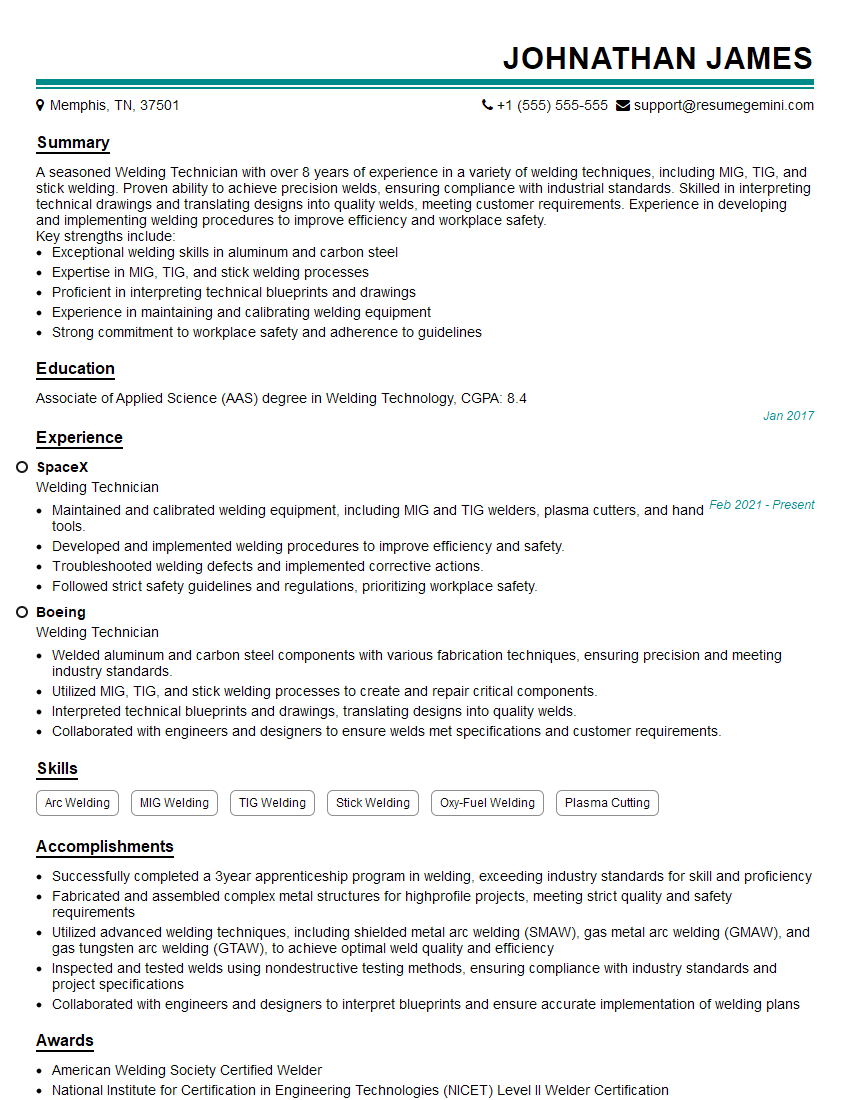
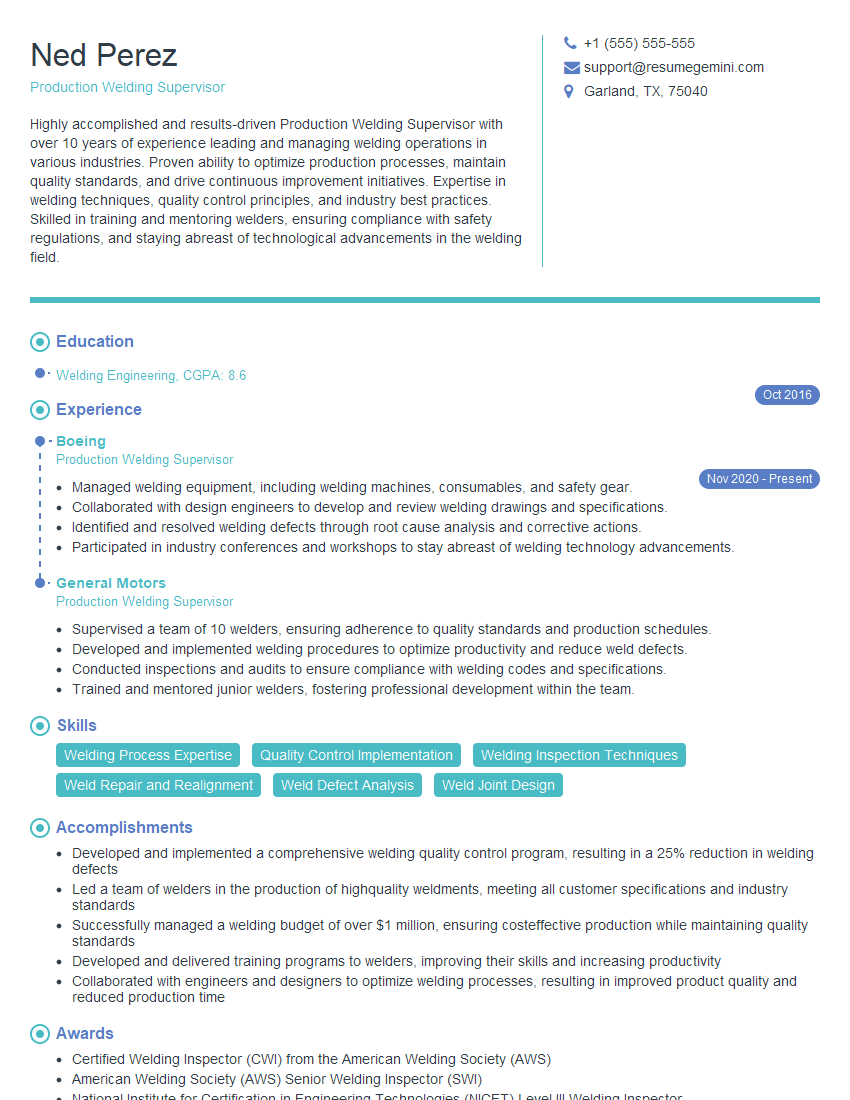
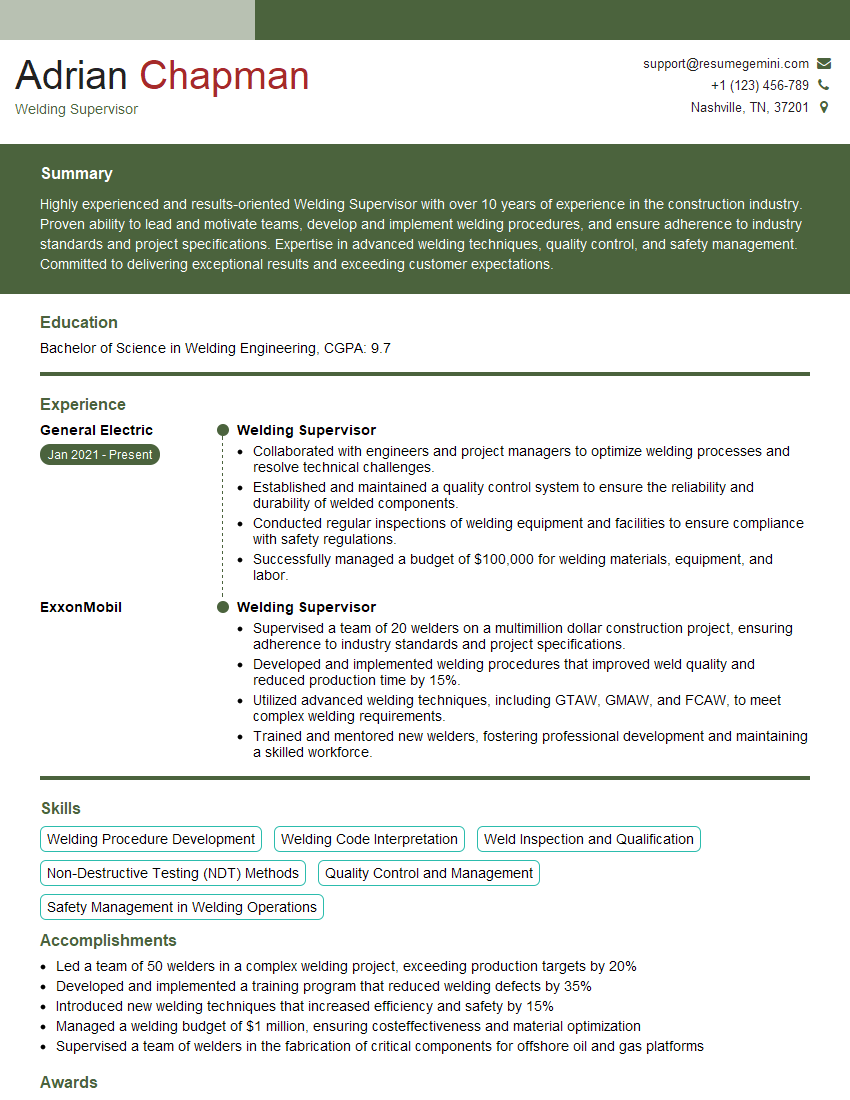
Mastering Welding Equipment and Technology is crucial for career advancement in this in-demand field. A strong understanding of these principles will significantly enhance your job prospects and open doors to exciting opportunities. To maximize your chances, it’s essential to create a professional, ATS-friendly resume that highlights your skills and experience effectively. ResumeGemini is a trusted resource that can help you build a compelling resume that catches the recruiter’s eye. We provide examples of resumes tailored to the Welding Equipment and Technology field to guide you through the process. Invest time in creating a strong resume – it’s your first impression to potential employers.


Explore more articles
Users Rating of Our Blogs
Share Your Experience
We value your feedback! Please rate our content and share your thoughts (optional).
What Readers Say About Our Blog
Really detailed insights and content, thank you for writing this detailed article.
IT gave me an insight and words to use and be able to think of examples