Are you ready to stand out in your next interview? Understanding and preparing for Traffic Safety Awareness interview questions is a game-changer. In this blog, we’ve compiled key questions and expert advice to help you showcase your skills with confidence and precision. Let’s get started on your journey to acing the interview.
Questions Asked in Traffic Safety Awareness Interview
Q 1. Explain the difference between reactive and proactive traffic safety measures.
Reactive traffic safety measures address issues after a crash has occurred, focusing on consequences and immediate solutions. Proactive measures, conversely, aim to prevent crashes before they happen by identifying and mitigating risks beforehand.
- Reactive: Imagine a high-speed collision occurs at an intersection. A reactive response would involve deploying emergency services, investigating the crash, and perhaps adding signage indicating a past accident at that location. This approach treats the symptom (the crash) rather than the disease (the underlying causes).
- Proactive: A proactive approach to the same intersection might involve a thorough traffic engineering study to evaluate sightlines, traffic volume, and pedestrian flow. The study could recommend measures like installing a traffic signal, modifying the road design (e.g., adding a roundabout), or improving pedestrian crossings, preventing future accidents.
The key difference lies in their timing and approach. Reactive measures are often necessary but less effective in the long run. Proactive strategies are far more impactful by addressing underlying issues and preventing incidents in the first place.
Q 2. Describe your experience with traffic data analysis and interpretation.
My experience with traffic data analysis involves using various statistical and visualization techniques to understand accident patterns and trends. This includes working with datasets containing information such as location, time of day, weather conditions, vehicle type, and driver behavior.
For example, I recently analyzed data showing a spike in rear-end collisions during rush hour on a particular highway stretch. By analyzing the data’s spatial and temporal characteristics, we discovered poor visibility due to low lighting and a sharp curve combined with high traffic volume were the primary factors. This led to recommendations for improved lighting, speed limit reduction, and potential road redesign.
I am proficient in using software such as ArcGIS, R, and Python for data manipulation, analysis, and visualization. My analysis frequently involves developing predictive models to forecast accident likelihoods based on identified risk factors. This allows for targeted interventions and better resource allocation.
Q 3. What are the key components of a comprehensive traffic safety program?
A comprehensive traffic safety program needs several interconnected components to be truly effective:
- Engineering: This involves improving road design, signage, and traffic control devices to minimize crash risk. Examples include improving road geometry, installing traffic signals or roundabouts, adding pedestrian crossings and improving lighting.
- Enforcement: Strict enforcement of traffic laws through police patrols, speed cameras, and red-light cameras helps deter unsafe driving behaviors. It’s critical to have fair and consistent enforcement to maximize its effectiveness.
- Education: Public awareness campaigns, driver education programs, and community outreach initiatives teach safe driving practices and promote responsible road use. This is crucial for changing behaviors and promoting a safety-conscious culture.
- Emergency Medical Services (EMS): A well-trained and readily available EMS system ensures rapid response and appropriate care for victims of crashes, mitigating the severity of injuries and fatalities.
- Data Analysis and Evaluation: Continuous monitoring of traffic accidents, analysis of contributing factors, and ongoing program evaluation are essential to identify areas for improvement and measure the effectiveness of the implemented strategies.
These components should work synergistically. For instance, engineering improvements can be complemented by targeted enforcement and public education to ensure maximum impact.
Q 4. How would you assess the effectiveness of a traffic safety campaign?
Assessing the effectiveness of a traffic safety campaign requires a multi-faceted approach, going beyond simple metrics like the number of crashes.
- Pre- and Post-Campaign Comparisons: Analyze crash data before and after the campaign to measure changes in crash frequency and severity. It’s important to control for external factors that could influence the results.
- Public Awareness Surveys: Evaluate public awareness and knowledge of safe driving practices through surveys and questionnaires. This assesses the campaign’s reach and impact on public behavior.
- Behavioral Observation Studies: Conduct observational studies to assess changes in driver behavior, such as speed compliance, seatbelt usage, and adherence to traffic signals.
- Enforcement Data: Analyze enforcement data to see if the campaign has influenced driver behavior, leading to fewer violations.
- Cost-Benefit Analysis: Evaluate the overall cost-effectiveness of the campaign by comparing the reduction in crashes and associated costs (e.g., medical expenses, property damage) to the cost of implementing the campaign.
Using a combination of these methods provides a comprehensive picture of the campaign’s success and identifies areas that need improvement.
Q 5. What are the most common causes of traffic accidents in your area?
In my area, the most common causes of traffic accidents are:
- Speeding: Exceeding speed limits is a major contributor to accidents, leading to reduced reaction time and increased impact severity.
- Distracted Driving: Cell phone use, eating, and other distractions severely impair driving ability, causing a large percentage of crashes.
- Impaired Driving: Driving under the influence of alcohol or drugs significantly increases crash risk due to reduced coordination, impaired judgment, and slower reaction time.
- Failure to Yield: Disregarding right-of-way rules at intersections and merging points frequently results in collisions.
- Driver Fatigue: Drowsiness behind the wheel diminishes alertness and increases the likelihood of errors leading to accidents.
These factors are interconnected. For example, speeding often exacerbates the consequences of distracted or impaired driving. Addressing these underlying causes is paramount to reducing accidents in my region.
Q 6. Describe your experience with traffic calming techniques.
My experience with traffic calming techniques includes the design, implementation, and evaluation of various measures aimed at reducing vehicle speeds and improving safety in residential areas and other vulnerable locations.
I’ve worked with several projects involving the use of:
- Speed bumps and humps: These physical devices force drivers to slow down, making streets safer for pedestrians and cyclists. Careful design is critical to ensure they are effective yet comfortable for drivers.
- Narrowing of roadways: Reducing the width of roadways can naturally slow down traffic and create a feeling of constrained space.
- Chicanes and roundabouts: These design elements force drivers to navigate turns at lower speeds, reducing the risk of collisions.
- Pedestrian islands and raised crossings: These improvements improve pedestrian safety and visibility, giving them safer passage across roads.
- Traffic circles: These improve flow and often reduce speeds as drivers navigate the circle.
The success of traffic calming depends greatly on proper planning, community engagement, and careful selection of appropriate measures for the specific context.
Q 7. How do you identify and mitigate high-risk locations for traffic accidents?
Identifying high-risk locations involves a combination of data analysis and on-site assessment.
- Data Analysis: This involves analyzing crash data to pinpoint areas with a disproportionately high number of accidents. We look at the location, type of crashes, time of day, and contributing factors to understand the underlying issues.
- On-site assessment: Field visits to high-risk areas help validate the data analysis and identify factors that might not be apparent from the data alone. This could include reviewing sightlines, identifying road design deficiencies, assessing pedestrian and cyclist activity, and observing driver behaviors.
- Risk Mapping: Using GIS software, I create maps that visually represent crash locations and associated risks, allowing us to prioritize areas requiring immediate attention.
Once high-risk areas are identified, mitigation strategies are developed and implemented, based on the specific risk factors identified. This might involve engineering improvements (like better signage or road redesigns), increased enforcement, or targeted public awareness campaigns. Post-implementation monitoring is essential to assess the effectiveness of these mitigation efforts.
Q 8. What are the different types of traffic control devices and their applications?
Traffic control devices are essential for regulating traffic flow, enhancing safety, and guiding drivers. They can be broadly categorized into:
- Road Markings: These include lines, arrows, symbols, and other markings painted on the road surface to guide drivers, delineate lanes, and indicate hazards. For example, lane lines clearly separate traffic flows, while crosswalks indicate pedestrian crossing areas.
- Traffic Signals: These use lights (red, yellow, green) to control the movement of vehicles and pedestrians at intersections. Adaptive traffic signals, for instance, adjust signal timings based on real-time traffic conditions to optimize flow and reduce congestion.
- Traffic Signs: These communicate information, warnings, and regulations to drivers. Regulatory signs, like speed limit signs, enforce rules, while warning signs alert drivers to potential hazards ahead, such as curves or school zones. Guide signs, on the other hand, provide directional information.
- Traffic Control Devices for Work Zones: These include cones, drums, barricades, and flashing lights used to create safe work areas during road construction or maintenance. Proper placement and visibility of these devices are crucial to preventing accidents.
- Traffic Signals: These are crucial for managing intersections. They can range from simple two-way signals to complex systems controlling multiple lanes and movements, often employing sensors to detect traffic volume and adjust timing accordingly.
The application of these devices is determined by factors like traffic volume, speed, intersection geometry, and the presence of vulnerable road users like pedestrians and cyclists. Effective placement and maintenance are critical to ensuring their effectiveness.
Q 9. Explain your understanding of human factors in traffic safety.
Human factors are critical in traffic safety. They encompass the physical and cognitive limitations, and perceptual and behavioral characteristics of drivers, pedestrians, and cyclists that affect their performance on the road. Understanding these factors is paramount for designing safer roads and traffic systems.
- Driver Errors: These are the leading cause of traffic accidents. Examples include speeding, distracted driving (cell phone use, drowsiness), impaired driving (alcohol or drug use), and failing to yield right-of-way.
- Perception and Cognition: Drivers’ abilities to perceive hazards, make decisions, and react appropriately are influenced by factors like visibility, weather conditions, and the driver’s cognitive state. Poor visibility can lead to delayed hazard perception, while fatigue can impair decision-making.
- Driver Behavior: Aggressive driving, risky overtaking maneuvers, and following distances too closely are examples of driver behaviors that significantly increase accident risk.
- Pedestrian and Cyclist Behavior: Pedestrians and cyclists are vulnerable road users, and their safety is often dependent on their behavior and their interactions with drivers. Jaywalking, riding bikes without helmets, and failing to be visible to drivers are examples of risky behavior.
Addressing human factors requires a multi-pronged approach, including engineering solutions (e.g., improved road design), education (e.g., driver training), and enforcement (e.g., speed cameras, stricter penalties for traffic violations).
Q 10. How familiar are you with traffic engineering software and tools?
I have extensive experience with various traffic engineering software and tools, including:
- Simulation software: Such as
VISSIM,SUMO, andCORSIM, which are used to model and simulate traffic flow under different scenarios to assess the impact of design changes or control strategies. - Traffic data analysis software: I am proficient in using software like
SynchroandTransModelerto analyze traffic data, identify bottlenecks, and develop solutions to optimize traffic flow and safety. - GIS (Geographic Information System) software: Tools such as
ArcGISallow for visualizing and analyzing traffic data within a geographic context, supporting informed decision-making in transportation planning and traffic safety management. - Data visualization and reporting tools: I am skilled in utilizing tools like
TableauandPower BIto effectively communicate complex traffic data and analysis results to both technical and non-technical audiences.
My expertise extends to utilizing these tools for tasks like accident analysis, traffic signal optimization, and the development of comprehensive traffic management plans.
Q 11. Describe your experience with traffic accident investigations.
My experience with traffic accident investigations involves a systematic approach focusing on data collection, analysis, and reporting. This includes:
- On-site investigation: This involves meticulously documenting the accident scene, including taking photographs, measurements, and creating detailed sketches. Evidence collection, such as skid marks, vehicle damage, and witness statements, is crucial at this stage.
- Data analysis: This stage involves examining data from various sources, including police reports, witness statements, vehicle damage assessments, and traffic camera footage. Advanced analytical techniques may be employed to reconstruct the accident sequence.
- Report writing: A detailed report is compiled, summarizing findings, identifying contributing factors, and providing recommendations for preventing similar accidents. This may involve proposing infrastructure improvements or recommending changes to traffic regulations.
- Contributing factors identification: This includes determining whether factors such as driver error, road design deficiencies, environmental conditions (e.g., adverse weather), or vehicle malfunction contributed to the accident.
For example, I once investigated an accident where a curve in the road was deemed insufficiently banked leading to loss of control for several vehicles. The subsequent report recommended banking improvements to mitigate this risk in the future.
Q 12. How do you communicate complex traffic safety information to a non-technical audience?
Communicating complex traffic safety information to a non-technical audience requires adapting the language and presentation style to ensure understanding and engagement. I employ various techniques, including:
- Simple Language: Avoiding jargon and technical terms, opting instead for clear and concise language accessible to everyone.
- Visual Aids: Using charts, graphs, maps, and infographics to illustrate complex data in a more digestible format. A simple bar chart showing accident rates over time is more effective than presenting the raw data.
- Analogies and Real-world Examples: Relatable comparisons and everyday examples make abstract concepts easier to grasp. For example, comparing the stopping distance of a car to the length of a football field can illustrate the importance of maintaining safe following distances.
- Storytelling: Using narratives to connect with the audience on an emotional level and make the information memorable. Sharing a story about an accident caused by distracted driving can be far more impactful than simply stating statistics.
- Interactive Elements: Incorporating interactive elements, such as quizzes or polls, to engage the audience and check for understanding.
The key is to focus on the impact of the information on the audience’s lives, highlighting the risks and benefits of safer driving practices.
Q 13. What are the key performance indicators (KPIs) used to measure traffic safety improvements?
Key Performance Indicators (KPIs) are essential for monitoring and evaluating the effectiveness of traffic safety interventions. Common KPIs include:
- Number of accidents: The total number of accidents occurring within a specific area or time period is a fundamental KPI.
- Accident rates: These are calculated by dividing the number of accidents by the exposure (e.g., vehicle miles traveled). This allows for comparisons between areas with different traffic volumes.
- Severity of accidents: This involves classifying accidents based on their severity (e.g., fatal, injury, property damage only). A reduction in the number of fatal accidents is a significant success indicator.
- Fatality rate: The number of fatalities per 100 million vehicle kilometers traveled is a common metric.
- Injury rate: Similar to fatality rate, it measures the number of injuries per unit of exposure.
- Speed compliance: The percentage of vehicles traveling at or below the posted speed limit indicates the effectiveness of speed management strategies.
- Seatbelt use rate: This reflects public awareness and compliance with seatbelt laws.
By tracking these KPIs over time, we can assess the impact of implemented strategies and make data-driven adjustments to further enhance road safety.
Q 14. Explain your understanding of the role of legislation in promoting road safety.
Legislation plays a vital role in promoting road safety by establishing rules, setting standards, and enforcing penalties for violations. Effective legislation encompasses several key aspects:
- Speed limits: Setting appropriate speed limits based on road conditions and traffic characteristics is crucial for reducing accident severity. Lower speed limits in residential areas, for example, protect vulnerable road users.
- Licensing and vehicle regulations: Strict driver licensing requirements, regular vehicle inspections, and mandatory equipment (e.g., seatbelts, headlights) contribute to road safety.
- Enforcement: Effective enforcement of traffic laws through police patrols, speed cameras, and red light cameras is essential for deterring unsafe driving behaviors.
- Penalties for violations: Meaningful penalties for traffic violations, ranging from fines to license suspension, are necessary to encourage compliance.
- Helmet and seatbelt laws: Mandatory helmet use for motorcycle riders and seatbelt use for drivers and passengers significantly reduces injuries and fatalities.
- Impaired driving laws: Strict laws against driving under the influence of alcohol or drugs are crucial for public safety.
Legislation also supports the development and implementation of road safety infrastructure and programs, ultimately creating a safer road environment for everyone.
Q 15. Describe your experience with developing and implementing traffic safety training programs.
Developing and implementing effective traffic safety training programs requires a multifaceted approach. It begins with a thorough needs assessment to identify specific risks and knowledge gaps within the target audience (e.g., young drivers, commercial truckers, cyclists). This assessment informs the curriculum design, ensuring it’s relevant and addresses the identified needs. For instance, a program for young drivers might focus on hazard perception and risk management, while a program for commercial drivers might emphasize fatigue management and safe cargo handling.
My experience includes designing and delivering training using a blend of methods: interactive workshops, online modules, simulations, and real-world demonstrations. I always incorporate feedback mechanisms to continuously improve the effectiveness of the program. For example, in a recent program for cyclists, we used post-training surveys and follow-up interviews to assess knowledge retention and behavioral changes. The feedback helped us refine the curriculum’s focus on safe cycling techniques and conflict avoidance.
Implementing the training involves securing resources, coordinating logistics, and ensuring effective delivery. This often entails collaborating with multiple stakeholders – from government agencies to community organizations – to maximize reach and impact. Successful implementation involves not just delivering the training, but also monitoring its effectiveness and making adjustments as needed.
Career Expert Tips:
- Ace those interviews! Prepare effectively by reviewing the Top 50 Most Common Interview Questions on ResumeGemini.
- Navigate your job search with confidence! Explore a wide range of Career Tips on ResumeGemini. Learn about common challenges and recommendations to overcome them.
- Craft the perfect resume! Master the Art of Resume Writing with ResumeGemini’s guide. Showcase your unique qualifications and achievements effectively.
- Don’t miss out on holiday savings! Build your dream resume with ResumeGemini’s ATS optimized templates.
Q 16. How do you prioritize competing traffic safety projects or initiatives?
Prioritizing competing traffic safety projects requires a structured approach that balances urgency, impact, and feasibility. I typically utilize a prioritization matrix that considers factors such as:
- Severity of the problem: How many accidents are occurring, and how severe are the injuries or fatalities?
- Potential impact of the intervention: How many lives or injuries could be prevented?
- Feasibility of implementation: Is the project realistic to implement given available resources and time constraints?
- Community support: Does the project have community buy-in and support?
For example, if we have two projects – one addressing speeding in a school zone and another improving pedestrian safety at a busy intersection with a history of accidents – we’d likely prioritize the school zone project due to the higher vulnerability of children and the potential for significant impact.
This matrix helps visualize the relative importance of each project, allowing for informed decision-making and resource allocation. It also provides a clear rationale for the prioritization choices, improving transparency and communication with stakeholders.
Q 17. What are your strategies for improving driver behavior and reducing risky driving practices?
Improving driver behavior and reducing risky driving practices necessitates a multi-pronged strategy. It’s not enough to simply enforce laws; we need to change attitudes and habits. My strategies include:
- Education and awareness campaigns: Targeting specific risky behaviors like distracted driving, speeding, and drunk driving through public service announcements, social media campaigns, and community outreach programs.
- Enforcement of traffic laws: Consistent and visible enforcement sends a clear message that risky behavior won’t be tolerated. This should be combined with educational measures, rather than solely relying on punishment.
- Engineering improvements: Modifying road infrastructure to reduce opportunities for risky driving. This might include roundabouts to reduce high-speed collisions, improved signage, and better pedestrian crossings.
- Technological solutions: Implementing technologies like speed cameras, red-light cameras, and advanced driver-assistance systems (ADAS) to detect and deter risky behavior.
- Incentive programs: Rewarding safe driving behavior through discounts on insurance or other benefits.
For example, a community might benefit from a campaign focusing on pedestrian safety combined with the installation of new crosswalks and increased police presence in high-risk areas. This integrated approach maximizes effectiveness.
Q 18. How would you address community concerns regarding traffic safety issues?
Addressing community concerns about traffic safety involves active listening, transparency, and collaboration. I’d start by engaging with the community through town halls, public forums, and online surveys to gather input and identify specific concerns. Understanding their perspectives is crucial.
Next, I’d analyze the identified issues using data-driven methods. This might involve reviewing accident reports, conducting traffic studies, and mapping areas of concern. Data visualization helps communicate findings effectively to the community. For example, heat maps showing accident locations can be a powerful tool for illustrating risk areas.
Based on the data analysis, I’d develop targeted solutions, engaging the community in the process. This might include implementing traffic calming measures, improving signage, or increasing enforcement in problem areas. Regular communication is key throughout the process, keeping the community informed about progress and challenges.
Finally, evaluating the effectiveness of implemented solutions is essential. Post-implementation data analysis is critical for assessing the impact and making any necessary adjustments to achieve positive and sustained improvements.
Q 19. What are your thoughts on the role of technology in improving road safety?
Technology plays a transformative role in improving road safety. We’re seeing advancements in several key areas:
- Advanced Driver-Assistance Systems (ADAS): Features like automatic emergency braking, lane departure warnings, and adaptive cruise control are helping prevent accidents.
- Connected Vehicle Technology (CVT): Vehicles communicating with each other and infrastructure can warn drivers of potential hazards and improve traffic flow, reducing congestion and accidents.
- Smart Traffic Management Systems: These systems use real-time data to optimize traffic signals, improve traffic flow, and reduce congestion, thus minimizing the risk of accidents.
- Data Analytics and Artificial Intelligence (AI): Analyzing large datasets of traffic accidents can help identify patterns, predict risks, and inform the development of more effective safety interventions. AI can help analyze driving data to provide personalized feedback and identify high-risk drivers.
However, it’s crucial to address ethical considerations surrounding data privacy and algorithmic bias in the development and implementation of these technologies.
Q 20. Describe your experience working with stakeholders on traffic safety initiatives.
Working with stakeholders on traffic safety initiatives requires effective communication, collaboration, and consensus-building. Stakeholders can range from government agencies and law enforcement to community groups, businesses, and individuals. My approach involves:
- Establishing clear communication channels: Regular meetings, email updates, and shared online platforms to ensure everyone is informed and involved.
- Building consensus: Facilitating discussions and finding common ground among stakeholders with potentially diverse interests.
- Transparency and accountability: Openly sharing data, plans, and progress reports.
- Active listening: Understanding the perspectives and concerns of each stakeholder group.
- Conflict resolution: Addressing disagreements and finding mutually acceptable solutions.
For instance, in a project involving installing speed bumps, I would engage residents, businesses, and the local council to address concerns and ensure the solution addresses everyone’s needs, balancing safety with access and inconvenience.
Q 21. How do you stay updated on the latest advancements and best practices in traffic safety?
Staying updated on the latest advancements and best practices in traffic safety is essential. My approach involves a multi-faceted strategy:
- Professional memberships and conferences: Actively participating in organizations like the Institute of Transportation Engineers (ITE) and attending relevant conferences to network with experts and learn about new research.
- Reading peer-reviewed journals and research papers: Staying abreast of the latest findings in traffic safety research.
- Following industry news and publications: Monitoring relevant websites, blogs, and newsletters for updates on new technologies and initiatives.
- Networking with colleagues and experts: Sharing knowledge and best practices with peers in the field.
- Participating in training and professional development courses: Continuously updating my skills and knowledge.
This ongoing process ensures that my knowledge and strategies remain current, enabling me to develop and implement the most effective traffic safety programs and initiatives.
Q 22. What is your understanding of the Highway Capacity Manual?
The Highway Capacity Manual (HCM) is a widely recognized resource for transportation professionals. It provides methodologies and guidelines for evaluating the operational performance of roadways and intersections. Think of it as a comprehensive cookbook for traffic engineers, outlining various techniques to assess traffic flow, level of service, and capacity. It’s crucial for planning, designing, and operating efficient and safe transportation systems.
The HCM uses a variety of factors to determine capacity, including roadway geometry (number of lanes, lane width, shoulder width), traffic signal timing, driver behavior, and the types of vehicles using the roadway. It doesn’t just offer a single number for capacity, but instead presents a range of values and scenarios, accounting for variability in real-world conditions. For example, a highway section might have a higher capacity during off-peak hours compared to peak hours.
The HCM’s use is critical for justifying improvements to existing roadways or designing new ones. If a highway segment consistently operates at a low level of service (meaning significant congestion and delays), the HCM can be used to demonstrate the need for widening, adding turning lanes, or implementing other improvements to increase capacity and improve safety.
Q 23. How familiar are you with different traffic simulation models?
I’m highly familiar with various traffic simulation models, ranging from microscopic to macroscopic. Microscopic models simulate individual vehicle movements, providing a detailed understanding of traffic dynamics. Examples include VISSIM and CORSIM. These models are useful for analyzing complex intersections or evaluating the impact of specific design features like roundabouts or dedicated bus lanes.
Macroscopic models, on the other hand, focus on aggregate traffic flow patterns. They are computationally less intensive and are ideal for large-scale network simulations. Examples include METANET and TRANSYT. These are often used to model entire city networks to assess the impact of large-scale projects or changes in traffic management strategies.
I also have experience with mesoscopic models, which bridge the gap between microscopic and macroscopic approaches, offering a balance between detail and computational efficiency. Choosing the right model depends on the specific problem being addressed and the available data. For instance, while a microscopic model is ideal for a detailed intersection analysis, a macroscopic model is more suitable for evaluating the impact of a new highway on the regional traffic network.
Q 24. Describe a time you identified and solved a traffic safety problem.
During a project involving a particularly dangerous intersection with a high rate of angle collisions, I noticed a pattern in the accident data. While initial assessments focused on sight distance issues, a deeper dive into the data revealed that left-turning vehicles were disproportionately involved in accidents during peak hours. This was due to a combination of high traffic volume, limited turning space, and the presence of a bus stop blocking the view of oncoming traffic.
My solution involved a multi-pronged approach: First, we implemented advanced warning signage for drivers intending to turn left. Second, we optimized the traffic signal timing to provide longer green times for left turns during off-peak hours, reducing conflict points. Finally, we worked with the transit authority to slightly relocate the bus stop, improving sight distance for drivers attempting to make left turns. The post-implementation analysis showed a significant reduction in angle collisions, validating the effectiveness of this data-driven approach.
Q 25. What are the ethical considerations in traffic safety management?
Ethical considerations in traffic safety management are paramount. We have a responsibility to ensure our recommendations and designs prioritize the safety and well-being of all road users, regardless of their mode of transportation or demographic background. This includes:
- Equity and fairness: Ensuring that safety improvements benefit all segments of the population equally, and not disproportionately favoring certain groups.
- Transparency and accountability: Clearly communicating our findings and justifications to stakeholders, and being accountable for the consequences of our decisions.
- Data integrity: Using reliable and unbiased data to support our recommendations, avoiding any manipulation or misrepresentation of information.
- Conflict of interest: Avoiding any situations that could compromise our objectivity or impartiality.
- Environmental considerations: Integrating environmental sustainability into our decisions, minimizing the environmental impact of traffic management strategies.
For example, prioritizing safety improvements in underserved communities demonstrates ethical commitment. Similarly, transparently sharing data and rationale for decisions fosters trust and accountability within the community.
Q 26. How would you handle a situation where your traffic safety recommendations were rejected?
If my traffic safety recommendations were rejected, I would first seek to understand the reasons behind the rejection. This would involve engaging in respectful dialogue with decision-makers to ascertain their concerns and priorities. Perhaps there were budget constraints, political considerations, or a lack of understanding regarding the technical aspects of my proposal.
Depending on the nature of the objections, I might offer alternative solutions, potentially involving phased implementation or cost-effective modifications to my original plan. I would meticulously document the rationale behind my recommendations, including the data analysis and risk assessments, to reinforce their validity. If necessary, I would seek to engage with other stakeholders and garner broader support for my recommendations. Ultimately, my priority is to advocate for the safest possible outcome, even if my initial proposal isn’t fully adopted.
Q 27. Explain your understanding of the principles of traffic flow and capacity.
Traffic flow refers to the movement of vehicles over time and space, often described by parameters like speed, density, and flow rate (vehicles per hour). Capacity, on the other hand, is the maximum sustainable flow rate under prevailing conditions. Imagine a highway lane: the flow is how many cars pass a point per hour, while the capacity is the maximum number that can pass before congestion starts significantly impacting speed.
These principles are intertwined. High density (many cars close together) can lead to lower speeds and reduced flow, even if the roadway has a high capacity. Understanding this relationship is vital for traffic management. For instance, a highway might have a high capacity, but if the flow consistently approaches this capacity, it leads to congestion and safety issues. Traffic management strategies aim to balance flow and capacity, preventing excessive congestion and ensuring efficient and safe movement of traffic. These strategies might include ramp metering, variable speed limits, or traffic signal optimization.
Q 28. How do you use data to justify traffic safety investments?
Data is fundamental to justifying traffic safety investments. I use a multi-faceted approach:
- Accident data analysis: Identifying locations with high accident rates, analyzing contributing factors (e.g., speed, visibility, driver behavior), and quantifying the costs associated with these accidents (medical expenses, property damage, lost productivity).
- Traffic volume and speed data: Assessing traffic flow patterns, identifying bottlenecks and areas of congestion, and evaluating the impact of these conditions on safety and efficiency.
- Cost-benefit analysis: Comparing the costs of implementing safety improvements (e.g., installing traffic signals, improving signage) with the potential benefits (e.g., reduction in accidents, improved travel times, economic benefits). This demonstrates the return on investment (ROI) of a given project.
- Simulation modeling: Using traffic simulation models to predict the impact of proposed safety improvements on traffic flow and safety outcomes, providing quantitative evidence to support investment decisions.
- Before-and-after studies: Comparing accident and traffic data before and after implementing safety improvements to objectively evaluate their effectiveness.
By presenting a comprehensive analysis using this data, I can clearly articulate the need for specific safety investments, demonstrating both their potential to reduce risks and their economic viability.
Key Topics to Learn for Traffic Safety Awareness Interview
- Roadway Design and Engineering: Understanding how road design elements (e.g., signage, lane markings, curves) impact traffic flow and safety. Consider practical applications like analyzing accident reports to identify design flaws.
- Traffic Laws and Regulations: Thorough knowledge of relevant traffic laws, regulations, and enforcement procedures. Be prepared to discuss how these laws contribute to overall safety and how violations impact accident rates.
- Human Factors in Traffic Safety: Exploring the role of human behavior (driver behavior, pedestrian behavior, etc.) in traffic accidents. Consider practical applications like designing public awareness campaigns or suggesting driver education improvements.
- Data Analysis and Interpretation: Understanding how to collect, analyze, and interpret traffic safety data (e.g., accident reports, traffic counts) to identify trends and inform safety initiatives. Be ready to discuss statistical methods used in traffic safety analysis.
- Traffic Management and Control Strategies: Familiarity with various traffic management techniques (e.g., traffic signals, roundabouts, speed limits) and their effectiveness in improving safety. Be prepared to discuss the pros and cons of different strategies.
- Risk Assessment and Mitigation: Understanding how to identify and assess traffic safety risks and develop effective mitigation strategies. This could involve discussing specific risk assessment methodologies and practical examples of mitigation strategies.
- Emerging Technologies in Traffic Safety: Knowledge of new technologies like intelligent transportation systems (ITS), autonomous vehicles, and their impact on traffic safety. This shows forward-thinking and adaptability.
Next Steps
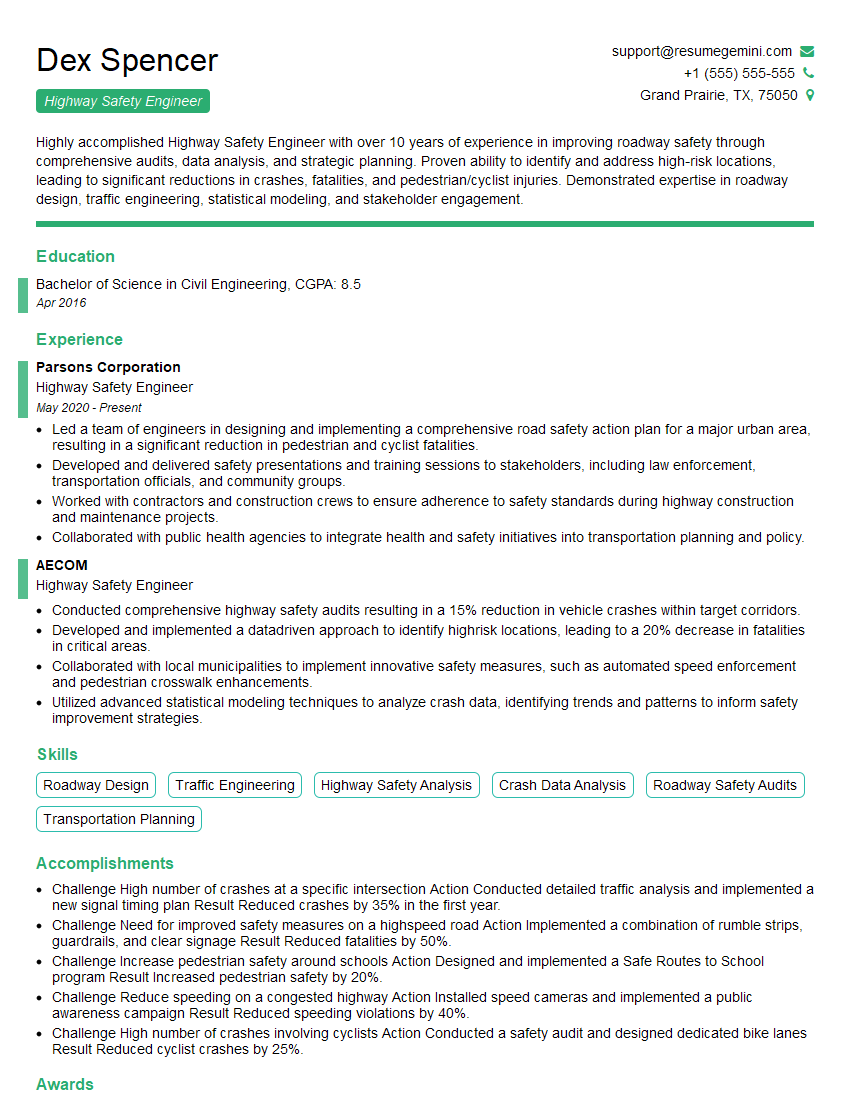
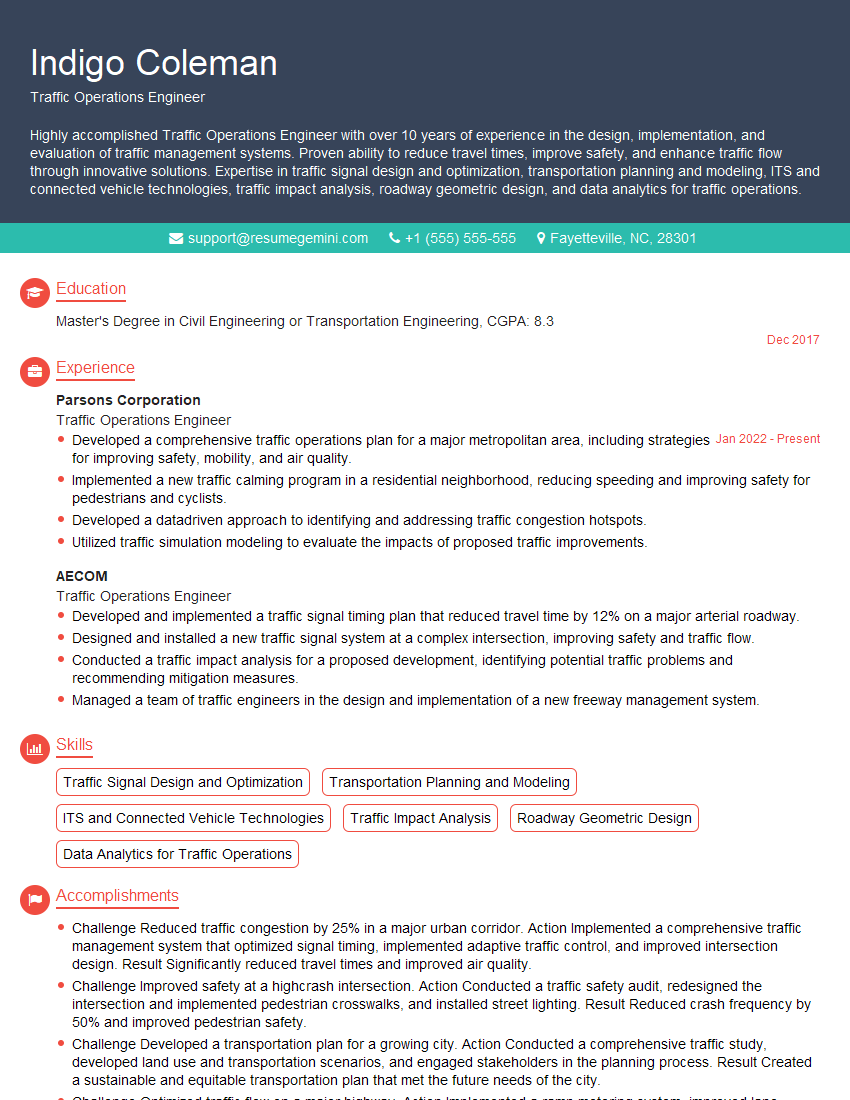
Mastering Traffic Safety Awareness is crucial for career advancement in this vital field. A strong understanding of these concepts demonstrates your commitment to public safety and positions you as a valuable asset to any organization. To significantly enhance your job prospects, create an ATS-friendly resume that highlights your skills and experience effectively. We highly recommend using ResumeGemini to build a professional and impactful resume that will get noticed. ResumeGemini provides examples of resumes tailored to Traffic Safety Awareness to help guide you.

Explore more articles
Users Rating of Our Blogs
Share Your Experience
We value your feedback! Please rate our content and share your thoughts (optional).
What Readers Say About Our Blog
Really detailed insights and content, thank you for writing this detailed article.
IT gave me an insight and words to use and be able to think of examples