Feeling uncertain about what to expect in your upcoming interview? We’ve got you covered! This blog highlights the most important Aerospace Structures Design interview questions and provides actionable advice to help you stand out as the ideal candidate. Let’s pave the way for your success.
Questions Asked in Aerospace Structures Design Interview
Q 1. Explain the difference between static and dynamic analysis in aerospace structures.
Static analysis examines a structure’s behavior under constant loads, like the weight of an aircraft on the ground. Think of it like weighing a scale – the load is consistent and we’re interested in the resulting stresses and deflections. Dynamic analysis, on the other hand, considers how a structure responds to time-varying loads, such as vibrations during flight or gusts of wind. Imagine a rollercoaster – the forces are constantly changing, and we need to ensure the structure can withstand those fluctuating loads and accelerations.
In aerospace, static analysis is crucial for determining if a structure can withstand the weight and stresses during normal operation. Dynamic analysis, however, is critical for understanding the structure’s response to turbulence, engine vibrations, and other dynamic events, ensuring structural integrity and passenger safety.
The key difference lies in the nature of the loads: static loads are constant, while dynamic loads change with time. This difference necessitates the use of different analytical techniques, with dynamic analysis often being significantly more complex than static analysis.
Q 2. Describe your experience with Finite Element Analysis (FEA) software (e.g., ANSYS, NASTRAN).
I have extensive experience using ANSYS and NASTRAN for Finite Element Analysis (FEA) in aerospace structural design. My work has involved everything from creating complex 3D models of aircraft components to performing linear and nonlinear analyses to predict structural behavior under various loading conditions. In ANSYS, I’ve leveraged its powerful meshing capabilities and extensive material libraries to model composite materials and complex geometries, like the wing spars of a high-speed aircraft. With NASTRAN, I’ve been involved in modal analysis to determine natural frequencies and mode shapes, a crucial step in avoiding resonance and fatigue issues during flight. I’m proficient in post-processing results to identify stress concentrations, deflections, and other critical design parameters.
For example, in one project, we used ANSYS to model the fatigue life of a landing gear component under repeated loading cycles, which helped us optimize the design for maximum durability and minimize weight. In another project involving NASTRAN, we analyzed the vibration characteristics of a helicopter fuselage to ensure the structure wouldn’t resonate with the engine frequencies, thereby preventing potential structural failure. My experience encompasses the entire FEA workflow, from pre-processing (model creation and meshing) to post-processing (results interpretation and report generation).
Q 3. How do you account for fatigue and creep in aerospace structure design?
Fatigue and creep are significant concerns in aerospace structure design because they can lead to unexpected failures. Fatigue is the weakening of a material due to repeated cyclical loading. Imagine repeatedly bending a paperclip – eventually, it will break, even if the load in each cycle is well below its ultimate strength. Creep, on the other hand, is the gradual deformation of a material under sustained stress at elevated temperatures. Think of a hot metal slowly sagging under its own weight.
We account for fatigue by using fatigue life analysis methods like the S-N curve approach (stress versus number of cycles to failure) or fracture mechanics analysis, incorporating material properties like fatigue strength and endurance limit. In FEA, this involves applying cyclic loads to the model and analyzing stress ranges to predict fatigue life. For creep, we use constitutive models that incorporate the material’s time-dependent behavior at high temperatures. This requires sophisticated material testing and the incorporation of time-dependent material parameters into FEA.
Designing for fatigue often involves techniques like stress concentration reduction (discussed later), proper material selection, and using fatigue-resistant alloys. Creep mitigation strategies include using high-temperature-resistant materials, limiting operating temperatures, and designing for lower stress levels.
Q 4. What are the common failure modes in aerospace structures?
Aerospace structures can fail in various ways, depending on the loading conditions and material properties. Some common failure modes include:
- Yielding: The material deforms plastically beyond its elastic limit, causing permanent deformation. Think of bending a metal spoon too far – it won’t spring back.
- Fracture: The material cracks and separates, often due to high stress concentrations or fatigue. This is a catastrophic failure.
- Buckling: A structural member collapses under compressive loading. Think of a slender column bending under its own weight.
- Fatigue Failure: As explained earlier, this is a progressive failure caused by repeated loading cycles.
- Creep Rupture: This happens when a material under sustained high-temperature stress eventually breaks due to time-dependent deformation.
- Corrosion: Environmental factors degrade the material’s properties, leading to weakening and failure. This is a significant concern for aircraft operating in harsh environments.
Understanding these failure modes is critical in designing safe and reliable aerospace structures. The design process involves carefully considering all potential failure modes and implementing strategies to mitigate their risks.
Q 5. Explain the concept of stress concentration and how it’s addressed in design.
Stress concentration refers to the localized increase in stress around geometric discontinuities such as holes, notches, or fillets in a structure. These features can amplify the applied stress significantly, potentially leading to premature failure even when the overall stress level is low. Imagine trying to break a piece of wood – it’s much easier to snap it where there’s a knot or crack.
In design, we address stress concentrations through several methods:
- Radius Modification: Increasing the radius of curvature at sharp corners or notches reduces stress concentration. Smoother transitions distribute stresses more evenly.
- Hole Reinforcement: Using reinforcing plates or bushings around holes reduces stress concentrations. This is frequently seen in aircraft structures where holes are necessary for fasteners.
- Material Selection: Materials with higher ductility (ability to deform plastically before fracturing) are better able to handle stress concentrations.
- Finite Element Analysis (FEA): FEA can precisely identify regions of high stress concentration, allowing for targeted design modifications.
Ignoring stress concentrations can lead to catastrophic failures. Therefore, careful design consideration and thorough FEA are crucial to minimize their impact and ensure structural integrity.
Q 6. Discuss different types of composite materials used in aerospace applications and their advantages/disadvantages.
Composite materials are widely used in aerospace applications due to their high strength-to-weight ratio and designability. Common types include:
- Carbon Fiber Reinforced Polymer (CFRP): Offers exceptional strength and stiffness, making it ideal for high-performance aircraft components. However, it’s expensive and susceptible to impact damage.
- Glass Fiber Reinforced Polymer (GFRP): Less expensive than CFRP, GFRP provides good strength and stiffness but with lower performance characteristics. It’s commonly used in less critical components.
- Aramid Fiber Reinforced Polymer (AFRP): Known for its high impact resistance and toughness, making it suitable for components requiring protection against bird strikes or debris impact. It has lower stiffness compared to CFRP.
Advantages of Composites: High strength-to-weight ratio, design flexibility (complex shapes), corrosion resistance, fatigue resistance (in certain cases).
Disadvantages of Composites: High cost, susceptibility to impact damage, complex manufacturing processes, potential for delamination (separation of layers).
The choice of composite material depends on the specific application requirements, considering factors such as strength, stiffness, weight, cost, and environmental conditions.
Q 7. How do you validate your FEA models?
Validating FEA models is crucial to ensure their accuracy and reliability. We use several methods:
- Comparison with Analytical Solutions: For simple geometries and loading conditions, we compare FEA results with analytical solutions to verify the model’s accuracy. This provides a baseline for confidence in the more complex models.
- Experimental Validation: We conduct experiments such as static or dynamic testing on physical prototypes or representative specimens. The experimental results are then compared to FEA predictions to assess the model’s accuracy. This is the most crucial step in model verification.
- Mesh Refinement Studies: We systematically refine the FEA mesh to check for convergence of the solution. If the results don’t change significantly with mesh refinement, it indicates the mesh is sufficiently fine to capture the structural behavior accurately.
- Correlation with Existing Data: If similar structures have been previously tested or analyzed, we correlate our FEA results with the existing data to build confidence in our model’s accuracy. This is particularly useful when dealing with established design practices.
- Peer Review: We present our FEA model and results to other engineers for review and critique. This is a crucial quality check that identifies potential errors or omissions in the analysis.
A combination of these validation methods provides a robust assessment of the FEA model’s accuracy and reliability, making it suitable for design decision-making in aerospace applications.
Q 8. Explain your understanding of buckling and its prevention in aerospace structures.
Buckling is a sudden failure mode in slender structural members subjected to compressive loads. Imagine trying to crush a soda can – it doesn’t just crumble, it suddenly collapses sideways. This is buckling. In aerospace structures, where lightweight components are crucial, buckling is a significant concern. It occurs when the compressive stress exceeds the critical buckling stress, causing a sudden and often catastrophic loss of structural integrity.
Preventing buckling involves several strategies:
- Increased Structural Stiffness: Using materials with higher Young’s modulus (a measure of stiffness), or employing structural designs that increase the member’s resistance to bending, like using thicker sections or adding stiffeners (think of the ribs on an airplane wing).
- Optimizing Geometry: Designing components with optimal cross-sectional shapes (e.g., I-beams, which are strong in bending), or using a configuration that avoids high stress concentrations.
- Introducing Initial Curvature: Subtly curving a component can effectively increase its buckling resistance. This is often seen in thin-walled cylindrical shells.
- Use of Composite Materials: Composites can be tailored to provide higher stiffness-to-weight ratios, effectively mitigating buckling.
For instance, in designing a fuselage, we might use stringers (longitudinal stiffeners) and frames (circumferential stiffeners) to prevent buckling of the thin skin under pressure and bending loads. Finite Element Analysis (FEA) software is crucial in predicting buckling loads and optimizing the design for maximum strength and safety.
Q 9. Describe your experience with different types of structural joints (e.g., rivets, bolts, adhesives).
My experience encompasses a wide range of structural joints, each with its own strengths and weaknesses. The choice of joint type depends heavily on factors such as load requirements, accessibility, material compatibility, and manufacturing costs.
- Rivets: These are widely used in aerospace due to their high shear strength and ability to withstand fatigue loads. However, they require a lot of skilled labor for installation, and they can’t be easily removed and replaced.
- Bolts: Offer greater versatility than rivets because they are reusable and allow for easier disassembly and maintenance. However, they can be heavier and require careful consideration of potential stress concentrations around the bolt holes.
- Adhesives: Becoming increasingly popular, especially with composite materials. They allow for lightweight designs and can distribute loads effectively across larger areas. However, careful consideration must be given to environmental factors, as some adhesives can degrade under high temperature or humidity.
In my previous role, I was involved in a project using bonded composite structures. We had to carefully select the adhesive based on its performance under various environmental conditions (temperature cycling, humidity, exposure to UV radiation), ensuring a long-lasting and reliable joint.
Q 10. How do you consider factors like temperature and humidity in structural design?
Temperature and humidity significantly affect the mechanical properties of aerospace materials. Changes in temperature can cause thermal expansion and contraction, leading to stresses that can compromise structural integrity. Similarly, humidity can affect the strength and stiffness of certain materials, especially composites. These factors are incorporated into the design process through several methods:
- Material Selection: Choosing materials with low coefficients of thermal expansion (CTE) and good resistance to moisture absorption is crucial.
- Finite Element Analysis (FEA): FEA simulations incorporating thermal and moisture effects are essential to predict stresses and deformations caused by environmental variations. We can model temperature gradients and humidity levels to understand the potential impact on the structure.
- Design for Thermal Management: Incorporating features to manage temperature, such as insulation or thermal barriers, can help reduce thermal stresses.
- Testing and Qualification: Rigorous testing in various environmental conditions, including temperature cycling and humidity exposure, ensures that the structure can withstand the expected operational conditions.
For example, in designing a spacecraft, we must account for extreme temperature variations experienced during launch and orbital operation. This might involve designing composite structures that maintain strength even when exposed to cryogenic temperatures.
Q 11. What are the key considerations for designing lightweight structures?
Designing lightweight structures in aerospace is paramount because it directly impacts fuel efficiency, payload capacity, and overall performance. The key considerations include:
- Material Selection: Using high-strength, low-density materials like aluminum alloys, titanium alloys, or advanced composites is essential. Each material has a unique strength-to-weight ratio, and the optimal choice depends on the specific application.
- Structural Optimization: Employing techniques like topology optimization, which uses algorithms to find the best material distribution to minimize weight while satisfying strength and stiffness requirements. This allows us to remove unnecessary material from the structure.
- Advanced Manufacturing Techniques: Utilizing advanced manufacturing techniques like additive manufacturing (3D printing) can create complex, lightweight structures that are difficult or impossible to make using traditional methods.
- Multidisciplinary Optimization: Optimizing the structure considering other disciplines, like aerodynamics. For example, optimizing the wing shape can simultaneously improve aerodynamic efficiency and reduce structural weight.
A classic example is the use of honeycomb sandwich structures in aircraft wings, providing exceptional strength and stiffness while minimizing weight. These structures combine a lightweight core material (honeycomb) with thin face sheets.
Q 12. Explain the concept of damage tolerance and its importance in aerospace.
Damage tolerance is a design philosophy that allows an aircraft structure to withstand damage without catastrophic failure. Instead of aiming for absolute flawlessness, it focuses on designing structures that can tolerate a certain level of damage and continue operating safely until the damage can be repaired. This is critical for safety and maintainability.
The importance of damage tolerance in aerospace stems from the inherent possibility of unforeseen damage during operation, such as bird strikes or foreign object damage. Designing for damage tolerance involves several aspects:
- Crack Propagation Analysis: Analyzing how cracks might propagate under various load conditions to predict their growth rate and potential for failure.
- Fail-Safe Design: Designing the structure so that even if a failure occurs, there are mechanisms to prevent a catastrophic event. This might involve the use of load-carrying stiffeners or multiple structural members.
- Inspection and Maintenance Procedures: Establishing regular inspection and maintenance programs to detect and repair damage before it becomes critical.
The design of modern airliners incorporates damage tolerance principles extensively, with structures designed to survive minor impact damage without immediate failure, allowing for safe landings and subsequent repairs.
Q 13. How do you ensure the airworthiness of a designed structure?
Ensuring the airworthiness of a designed structure is a critical aspect of aerospace engineering. This involves demonstrating that the structure meets all regulatory requirements and is safe for intended operation. The process involves several steps:
- Compliance with Regulations: Adhering to strict regulations and standards set by aviation authorities (like the FAA in the US or EASA in Europe). These regulations define design standards, materials requirements, and testing procedures.
- Analysis and Simulation: Utilizing advanced analysis techniques such as FEA to demonstrate that the structure can withstand the anticipated loads and environmental conditions throughout its lifespan.
- Testing and Validation: Conducting rigorous testing, including static testing, fatigue testing, and environmental testing, to validate the analytical predictions and confirm the structural integrity.
- Certification: Obtaining certification from the relevant aviation authorities, demonstrating that the design meets all the required standards and is safe for operation.
Throughout the design process, rigorous documentation and traceability are essential to ensure that all aspects of the design are fully validated and comply with regulatory requirements. Failure to meet these requirements can result in delays, cost overruns, and, more seriously, compromise the safety of the aircraft.
Q 14. Describe your experience with structural testing and validation.
My experience with structural testing and validation is extensive. I’ve been involved in various testing programs, from simple component tests to complex structural tests on full-scale components and even complete airframes.
Typical testing procedures involve:
- Static Testing: Applying gradually increasing loads to determine the ultimate strength and failure mode of a structure. This helps verify the analytical predictions and identify potential design weaknesses.
- Fatigue Testing: Applying cyclic loads to simulate the repeated loading during normal operation. This determines the fatigue life of the structure and its resistance to crack initiation and propagation.
- Environmental Testing: Exposing the structure to various environmental conditions, such as temperature cycling, humidity, and vibration, to assess its performance under different operational environments.
- Non-Destructive Testing (NDT): Using techniques like radiography, ultrasonic testing, or dye penetrant inspection to detect internal flaws or cracks without damaging the structure.
In a recent project, we performed fatigue testing on a wing component to determine its lifespan under various flight conditions. The results were used to refine the maintenance schedule and ensure the continued airworthiness of the aircraft.
Q 15. What are the different types of loads considered in aerospace structure design?
Aerospace structure design necessitates considering a wide array of loads, broadly categorized as static and dynamic. Static loads are constant or slowly varying, while dynamic loads involve rapid changes in magnitude and direction. Let’s delve deeper:
- Static Loads: These include dead weight (the aircraft’s own weight), live loads (payload, fuel, crew), and pressure loads (cabin pressure, aerodynamic pressure at cruise). Imagine the constant pressure the wings experience during flight – that’s a static load.
- Dynamic Loads: These are much more complex. They include gust loads (sudden changes in wind speed and direction), maneuver loads (loads imposed during turns, climbs, and descents), and landing loads (impact forces during touchdown). Think of the intense forces on the landing gear during a hard landing – a prime example of a dynamic load.
- Fatigue Loads: These are cyclic loads that, over time, can lead to material failure even if the load magnitudes are below the ultimate strength. Repeated stress cycles from takeoff and landing, for example, are key considerations in fatigue design.
- Thermal Loads: Temperature variations during flight can cause significant stresses, particularly in materials with high coefficients of thermal expansion. Think of the extreme temperature differences a spacecraft experiences during re-entry.
Accurately predicting and mitigating these diverse loads is critical to ensure structural integrity and safety throughout the aircraft’s operational lifespan.
Career Expert Tips:
- Ace those interviews! Prepare effectively by reviewing the Top 50 Most Common Interview Questions on ResumeGemini.
- Navigate your job search with confidence! Explore a wide range of Career Tips on ResumeGemini. Learn about common challenges and recommendations to overcome them.
- Craft the perfect resume! Master the Art of Resume Writing with ResumeGemini’s guide. Showcase your unique qualifications and achievements effectively.
- Don’t miss out on holiday savings! Build your dream resume with ResumeGemini’s ATS optimized templates.
Q 16. Explain your understanding of the different design codes and standards (e.g., FAR, EASA).
Design codes and standards, such as FAR (Federal Aviation Regulations) in the US and EASA (European Union Aviation Safety Agency) regulations in Europe, provide a framework for ensuring aircraft safety and airworthiness. They detail stringent requirements for structural design, testing, and certification. These aren’t merely guidelines; they are mandatory regulations.
My understanding encompasses the various sections relevant to structural design, including those related to limit and ultimate loads, fatigue and damage tolerance, material properties, and manufacturing processes. FAR Part 25 and EASA CS-25, for example, cover the certification requirements for transport category airplanes. Understanding these codes is paramount; failure to comply can result in significant delays, design modifications, or even grounding of the aircraft.
Beyond these primary regulatory bodies, I’m also familiar with industry standards like those published by organizations like SAE International, which offer best practices and recommended guidelines. Successfully navigating the complexities of these regulations and standards is crucial for ensuring a robust and compliant design.
Q 17. Describe your experience with optimization techniques in structural design.
Optimization is central to aerospace structural design, as it aims to minimize weight while maintaining strength and stiffness. My experience includes using various optimization techniques, both gradient-based (like sequential linear programming) and gradient-free (like genetic algorithms). These techniques often involve employing software tools like MATLAB or specialized finite element analysis (FEA) software with built-in optimization capabilities.
For example, I’ve worked on projects that involved optimizing the layup of composite structures to minimize weight while satisfying strength and stiffness constraints. This often involved utilizing multi-objective optimization algorithms to balance competing design goals. The process typically involves defining objective functions (e.g., minimize weight), constraints (e.g., strength and stiffness requirements), and design variables (e.g., fiber orientation, ply thickness). The chosen algorithm then iteratively searches for the optimal design that satisfies all constraints.
The successful implementation of optimization techniques requires a deep understanding of both structural mechanics and numerical optimization algorithms. The results lead to lighter, more efficient, and more cost-effective designs, which is especially crucial in the aerospace industry where weight is a major factor.
Q 18. How do you handle uncertainties and tolerances in your designs?
Uncertainties and tolerances are inherent in aerospace manufacturing and operation. Addressing them is critical for ensuring safety and reliability. My approach involves:
- Probabilistic Design: Incorporating statistical methods to account for variations in material properties, manufacturing tolerances, and loading conditions. This may involve using Monte Carlo simulations to assess the probability of failure under different scenarios. This helps to identify weak points and areas needing further attention.
- Factor of Safety: Applying appropriate safety factors to design loads and material strengths to account for uncertainties and unforeseen events. The factor of safety is a multiplier that increases the design strength to make it greater than predicted load values.
- Robust Design: Designing structures that are relatively insensitive to variations in parameters. This requires a thorough understanding of the sensitivity of the design to these uncertainties and can involve design changes to reduce this sensitivity.
- Detailed Tolerance Analysis: Carefully analyzing the impact of manufacturing tolerances on the overall structural performance, sometimes using specialized tolerance analysis software to identify areas where tolerances need to be tighter.
By meticulously considering uncertainties and tolerances, we can create designs that are not only theoretically sound but also practically feasible and demonstrably safe.
Q 19. Explain the significance of material selection in aerospace structural design.
Material selection is paramount in aerospace structural design. The choice of material directly impacts weight, strength, stiffness, durability, cost, and manufacturability. The ideal material possesses a high strength-to-weight ratio, excellent fatigue resistance, and good environmental stability.
Traditional metallic alloys (aluminum, titanium, steel) are still widely used, offering high strength and good ductility, but they can be heavy. The increasing use of composite materials (carbon fiber reinforced polymers, CFRP) has revolutionized aerospace design. CFRP offer superior strength-to-weight ratios compared to metals and also allow for intricate shapes, leading to aerodynamically efficient structures.
Material selection often involves trade-offs. For instance, while titanium alloys offer excellent strength and corrosion resistance, they are expensive and difficult to machine. Careful consideration of the specific application’s requirements and constraints, including environmental factors, cost limitations, and manufacturing capabilities, is essential for making informed material choices.
Q 20. What are your experiences with different analysis methods (e.g., hand calculations, FEA, experimental)?
My experience encompasses a wide range of analysis methods, each suited for different purposes and stages of the design process:
- Hand Calculations: Essential for preliminary design and quick estimations. They provide a basic understanding of structural behavior and can be used to verify the results of more sophisticated analyses. Simple beam theory, for example, can be used to approximate stress and deflection in basic components.
- Finite Element Analysis (FEA): FEA is the backbone of modern aerospace structural analysis. I have extensive experience using FEA software packages to simulate the behavior of complex structures under various load conditions, providing detailed stress, strain, and displacement data. This allows for a far more nuanced understanding of the structural behavior than hand calculations alone can provide.
- Experimental Methods: Physical testing, including static and fatigue testing, is crucial for validating analytical models and verifying the structural integrity of components and assemblies. Testing results help to calibrate FEA models and confirm the accuracy of predictions.
The choice of method often depends on the complexity of the structure, the required accuracy, and the available resources. A typical design process might involve hand calculations for preliminary sizing, followed by detailed FEA for refined analysis, and then experimental validation to ensure the design meets the necessary performance criteria.
Q 21. Describe your experience with the design and analysis of composite structures.
I have significant experience in the design and analysis of composite structures, focusing primarily on CFRP. This includes:
- Layup Design: Optimizing the stacking sequence of composite plies to achieve desired strength, stiffness, and other properties. This involves considering fiber orientation, ply thickness, and material properties.
- Failure Analysis: Employing various failure criteria (e.g., Tsai-Wu, maximum stress, maximum strain) to assess the structural integrity of composite components under different loading conditions. This is crucial for ensuring that the composite material does not fail prematurely.
- FEA of Composites: Utilizing specialized FEA software with capabilities to handle the anisotropic nature of composite materials. This involves accurately modeling the material properties and the layup of the composite structure.
- Damage Tolerance Analysis: Assessing the ability of composite structures to withstand damage without catastrophic failure, accounting for potential impacts or delamination.
Working with composites requires a deep understanding of material behavior, manufacturing processes, and specialized analysis techniques. The rewards, however, are substantial – lighter, stronger, and more versatile structures capable of meeting the demanding requirements of modern aerospace applications.
Q 22. How do you manage projects involving multiple disciplines (e.g., aerodynamics, systems engineering)?
Managing multidisciplinary projects in aerospace requires a structured approach focusing on clear communication and collaboration. Think of it like orchestrating a symphony – each section (aerodynamics, systems engineering, structures) plays a crucial role, and the conductor (project manager) ensures harmonious execution.
- Integrated Design Teams: I advocate for establishing cross-functional teams from the outset, fostering direct communication and shared understanding. This avoids costly rework later on due to conflicting design choices.
- Common Data Environment (CDE): A centralized platform for all project data – models, simulations, documentation – ensures everyone works with the most up-to-date information. This minimizes errors stemming from outdated data or conflicting versions.
- Regular Reviews and Milestones: Scheduled design reviews involving all disciplines allow for early problem detection and collaborative problem-solving. Clearly defined milestones help track progress and manage expectations.
- System Requirements Traceability: A robust requirements management system connects high-level system requirements to specific design choices across all disciplines. This assures design integrity and demonstrable compliance with overall project goals.
For example, in a recent project involving a UAV design, the aerodynamics team provided critical lift and drag data which directly informed the structural design team’s choice of materials and component sizing. Regular meetings ensured the systems engineering team’s weight and power constraints were incorporated efficiently.
Q 23. Describe your experience with failure investigation and root cause analysis.
Failure investigation is a critical aspect of aerospace engineering, demanding meticulous attention to detail and a systematic approach. My experience involves utilizing a combination of methods to determine the root cause of structural failures.
- Data Collection: This starts with thorough documentation – gathering all relevant data such as flight data recorders, sensor readings, material testing results, and witness accounts.
- Visual Inspection: A careful examination of the failed component, often involving non-destructive testing (NDT) methods like ultrasonic testing or X-ray inspection, to identify the failure location and characteristics.
- Finite Element Analysis (FEA): Using FEA to recreate the loading conditions and simulate the failure mechanisms. This helps pinpoint areas of high stress or weak points in the design.
- Failure Mode and Effects Analysis (FMEA): A proactive technique applied to identify potential failure modes and their associated severity. This allows for mitigation strategies during the design phase and informs subsequent investigations.
- Root Cause Identification: Through systematic investigation using techniques like the ‘5 Whys’ method, the root cause of the failure is identified, not just the immediate symptoms.
For instance, I was involved in investigating a fatigue crack in a landing gear component. By combining visual inspection, metallurgical analysis, and FEA, we determined that the crack originated from a manufacturing defect that was missed during quality control. This resulted in revised manufacturing procedures and improved NDT methods.
Q 24. Explain your understanding of aeroelasticity and its impact on structural design.
Aeroelasticity is the study of the interaction between aerodynamic forces and structural deformations. Imagine a wing flexing under wind load – that’s aeroelasticity in action. It’s crucial in aerospace design because these interactions can significantly impact aircraft stability and performance, even causing catastrophic failure.
- Flutter: A self-excited oscillation where aerodynamic forces and structural vibrations reinforce each other, potentially leading to structural failure. This is a major concern for aircraft design and requires careful analysis and design mitigation.
- Divergence: An aeroelastic instability where aerodynamic forces cause a structural deformation to increase uncontrollably, leading to structural failure.
Aeroelastic effects are considered throughout the design process. Design solutions might involve adjusting wing stiffness, using active control systems to counteract aerodynamic forces, or employing computational fluid dynamics (CFD) and FEA simulations to predict and mitigate aeroelastic phenomena. Ignoring aeroelasticity can lead to disastrous consequences like the Tacoma Narrows Bridge collapse, which serves as a stark reminder of the importance of this area of study.
Q 25. How do you balance weight, strength, and cost considerations in your designs?
Balancing weight, strength, and cost is a constant challenge in aerospace structural design – a classic example of engineering trade-offs. It’s about finding the optimal solution that meets performance requirements while remaining economically viable.
- Material Selection: Choosing materials with the right strength-to-weight ratio is paramount. Advanced composites are often preferred for their high strength and low weight, but their cost can be a factor. Aluminum alloys offer a good balance of strength, weight, and cost for many applications.
- Optimization Techniques: Employing computational tools like FEA and topology optimization helps identify areas where material can be removed without compromising structural integrity, leading to weight reduction and cost savings.
- Design for Manufacturing: Optimizing the design to streamline the manufacturing process reduces production time and costs. This might involve selecting simpler geometries or using readily available materials.
- Life Cycle Cost Analysis: Considering the entire life cycle costs, including manufacturing, maintenance, and potential repair costs, helps make informed decisions.
For example, designing a lighter wing may increase fuel efficiency, thereby reducing operating costs over the aircraft’s lifetime, even if the initial manufacturing cost is slightly higher.
Q 26. Describe a challenging structural design problem you encountered and how you solved it.
One challenging problem involved designing the payload bay door for a small satellite launcher. The requirement was a lightweight, reliable, and easily deployable door capable of withstanding significant aerodynamic loads during ascent. The challenge lay in balancing these competing demands within strict size and weight constraints.
My solution involved a multi-step approach:
- Material Selection: We opted for a carbon fiber composite material for its high strength-to-weight ratio.
- Topology Optimization: FEA and topology optimization were used to design a door structure that maximized strength and minimized weight. This resulted in a highly optimized design with significant weight savings compared to traditional designs.
- Testing and Validation: Rigorous testing, including wind tunnel testing and structural analysis, was conducted to validate the door’s performance and ensure it met all requirements.
The resulting design was significantly lighter and more reliable than initially anticipated, exceeding the project requirements. This project highlighted the power of combining advanced materials, computational techniques, and innovative engineering solutions to overcome difficult design challenges.
Q 27. What are your preferred methods for documenting and communicating your designs?
Effective documentation and communication are crucial for successful aerospace projects. My preferred methods include:
- 3D CAD Modeling: Software like CATIA or NX are used to create detailed 3D models, facilitating design reviews and ensuring all team members understand the design.
- Detailed Drawings: These drawings include all necessary dimensions, tolerances, and material specifications, providing a blueprint for manufacturing and assembly.
- FEA Results and Reports: Detailed reports documenting the results of FEA simulations, including stress analysis and deformation predictions, ensure the design meets structural requirements.
- Technical Reports and Presentations: Clear and concise reports and presentations summarize the design process, rationale, and testing results, facilitating efficient communication among all stakeholders.
- Digital Collaboration Platforms: Utilizing platforms like SharePoint or similar systems ensure easy access to all project documentation and enable seamless collaboration among team members.
Maintaining a well-organized and easily accessible digital archive is essential for ensuring continuity and traceability throughout the project’s lifecycle.
Q 28. How do you stay up-to-date with the latest advancements in aerospace structures technology?
Staying current in the rapidly evolving field of aerospace structures demands a proactive and multifaceted approach:
- Professional Societies: Active participation in professional organizations like AIAA (American Institute of Aeronautics and Astronautics) provides access to conferences, publications, and networking opportunities.
- Peer-Reviewed Publications: Regularly reviewing journals and technical publications keeps me abreast of the latest research and findings in the field.
- Online Resources: Utilizing online resources such as NASA Technical Reports Server and various industry databases allows me to access a wealth of information.
- Continuing Education: Pursuing continuing education opportunities, such as specialized courses and workshops, enables me to deepen my knowledge and expertise in specific areas.
The aerospace industry is a dynamic one; continuous learning is essential to remain at the cutting edge of structural design technology.
Key Topics to Learn for Aerospace Structures Design Interview
- Structural Mechanics Fundamentals: Understanding stress, strain, elasticity, plasticity, failure theories (e.g., Von Mises, Tresca), and material properties is foundational. This forms the basis for analyzing and designing aerospace structures.
- Finite Element Analysis (FEA): Learn the practical application of FEA software for analyzing complex structural components. Be prepared to discuss meshing strategies, boundary conditions, and interpreting results. This is crucial for modern aerospace design.
- Aircraft Structural Design: Explore the design considerations for different aircraft components like wings, fuselages, and control surfaces. Understand the trade-offs between weight, strength, and aerodynamic performance.
- Composite Materials: Gain a strong understanding of composite materials (e.g., carbon fiber reinforced polymers) and their application in aerospace structures. Know their advantages, limitations, and analysis techniques specific to composites.
- Fatigue and Fracture Mechanics: Prepare to discuss fatigue life prediction, crack propagation, and fracture toughness. This is essential for ensuring the safety and reliability of aircraft structures subjected to cyclic loading.
- Aeroelasticity: Understand the interaction between aerodynamic forces and structural deformation. Be ready to discuss flutter and other aeroelastic phenomena and their implications for design.
- Design for Manufacturing (DFM): Demonstrate your understanding of practical manufacturing processes and their impact on structural design. This includes considerations for joining methods, tolerances, and cost-effectiveness.
- Structural Optimization Techniques: Familiarize yourself with methods for optimizing structural designs to minimize weight while maintaining required strength and stiffness. This is critical for fuel efficiency and overall aircraft performance.
Next Steps
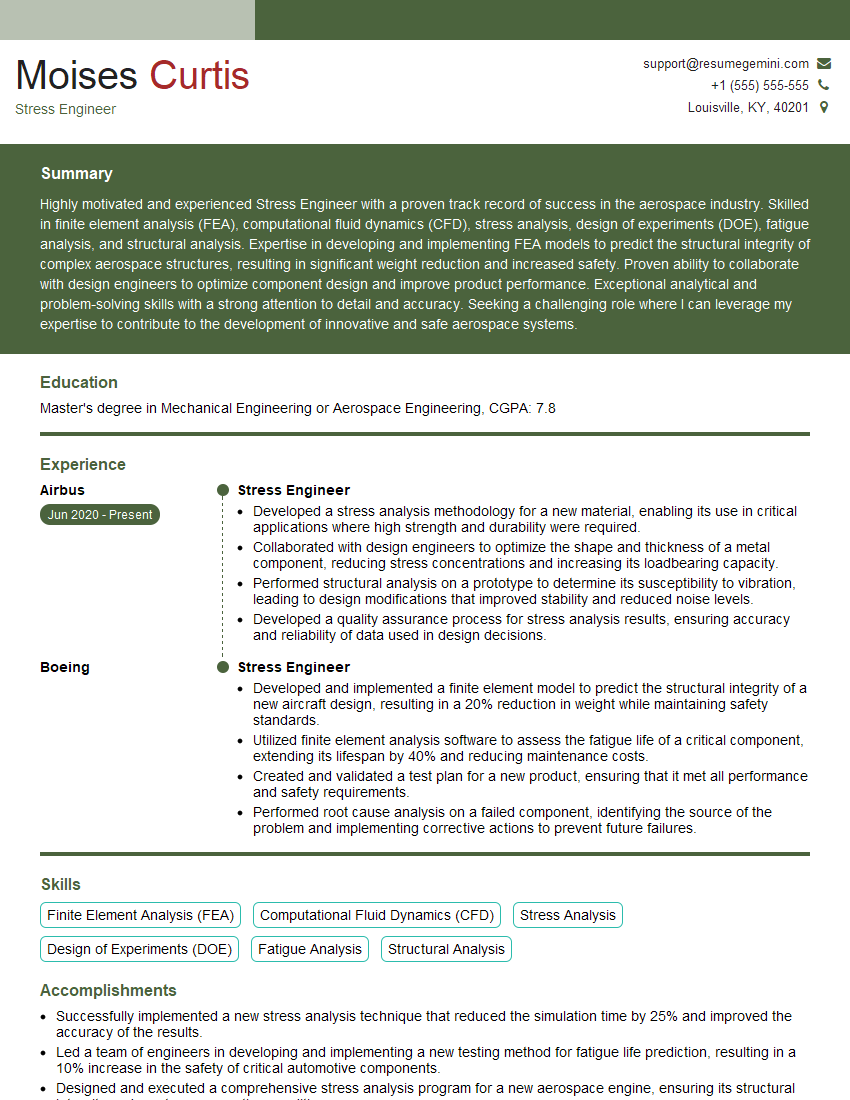
Mastering Aerospace Structures Design opens doors to exciting and challenging careers in a cutting-edge industry. To maximize your job prospects, creating a strong, ATS-friendly resume is crucial. A well-crafted resume highlights your skills and experience effectively, increasing your chances of landing an interview. We highly recommend using ResumeGemini to build a professional and impactful resume. ResumeGemini provides tools and resources to help you create a resume tailored to the specific requirements of Aerospace Structures Design roles. Examples of such resumes are available to help guide you. Take the next step towards your dream career today!
Explore more articles
Users Rating of Our Blogs
Share Your Experience
We value your feedback! Please rate our content and share your thoughts (optional).
What Readers Say About Our Blog
Really detailed insights and content, thank you for writing this detailed article.
IT gave me an insight and words to use and be able to think of examples