Interviews are more than just a Q&A session—they’re a chance to prove your worth. This blog dives into essential Materials and Manufacturing interview questions and expert tips to help you align your answers with what hiring managers are looking for. Start preparing to shine!
Questions Asked in Materials and Manufacturing Interview
Q 1. Explain the difference between tensile strength and yield strength.
Tensile strength and yield strength are both crucial measures of a material’s ability to withstand forces, but they represent different points on its stress-strain curve. Tensile strength refers to the maximum stress a material can withstand before it breaks or fractures. Think of it as the ultimate limit. Yield strength, on the other hand, indicates the stress at which the material begins to deform permanently. This is the point where it transitions from elastic deformation (where it returns to its original shape after the stress is removed) to plastic deformation (permanent changes in shape).
Imagine stretching a rubber band. The tensile strength is the point where it snaps. The yield strength is the point where it starts to stretch and doesn’t completely return to its original length when you let go. Knowing both values helps engineers design structures that can withstand loads without permanent damage or catastrophic failure. A high tensile strength material can endure significant loads before failure, while a high yield strength material helps avoid permanent deformation under working loads.
Q 2. Describe the different types of manufacturing processes (e.g., casting, forging, machining).
Manufacturing processes broadly categorize into several types, each with its own advantages and disadvantages depending on the material and desired product.
- Casting: Molten material is poured into a mold, which solidifies into the desired shape. This is excellent for complex shapes and large quantities but often yields lower precision and may require additional machining. Think of casting a bronze statue or engine blocks.
- Forging: A metal workpiece is shaped using compressive forces, either by hammering or pressing. This produces a strong and dense product with improved grain structure, ideal for high-strength applications like crankshafts or railway wheels. Forging can be hot or cold depending on the temperature of the workpiece.
- Machining: Material is removed from a workpiece using cutting tools. This is highly precise and versatile, enabling complex geometries and high surface finishes. However, it’s a relatively slow and expensive process and is generally used for smaller batches or high-precision parts such as aircraft components or medical implants.
- Additive Manufacturing (3D Printing): Materials are built layer by layer from a digital design. This offers great design freedom and enables the creation of complex geometries and customized parts. Though still developing, it’s rapidly advancing in various industries, from aerospace to medicine.
- Extrusion: A material is forced through a die to create a continuous profile. Widely used for producing long, uniform shapes like pipes, wires, or rods.
The choice of process depends heavily on factors like material properties, desired tolerances, production volume, and cost.
Q 3. What are the common failure modes in materials?
Common material failure modes are a consequence of exceeding the material’s strength or enduring harsh conditions. These include:
- Fracture: Complete separation of the material into two or more pieces. This can be brittle (sudden, without significant deformation) or ductile (gradual, with significant deformation prior to fracture).
- Yielding: Permanent deformation of the material beyond its elastic limit. The material will not return to its original shape.
- Creep: Time-dependent deformation under constant stress. This is particularly concerning at high temperatures.
- Fatigue: Failure due to repeated cyclic loading, even at stresses well below the yield strength. This can lead to crack initiation and propagation, eventually resulting in catastrophic failure.
- Corrosion: Degradation of the material due to chemical or electrochemical reactions with its environment.
- Wear: Loss of material due to friction or abrasion.
Understanding these failure modes is crucial for designing reliable and durable products. For instance, designing a bridge necessitates careful consideration of fatigue effects from repeated traffic loads, while selecting materials for a marine application requires robust corrosion resistance.
Q 4. How do you determine the appropriate material for a specific application?
Selecting the appropriate material is a critical step in product development. It’s a multi-faceted decision process that often involves trade-offs. The process typically involves:
- Defining Requirements: Clearly outline the intended application, including operational conditions (temperature, pressure, loading), required properties (strength, toughness, corrosion resistance), and performance criteria (lifetime, cost).
- Material Selection Charts and Databases: Utilize databases like MatWeb to search for materials meeting the specified requirements. This helps narrow down the choices based on factors like mechanical properties, density, and cost.
- Material Testing: Conduct laboratory tests (tensile testing, impact testing, fatigue testing, etc.) to validate the selected material’s suitability under simulated operating conditions. This provides empirical data confirming theoretical predictions.
- Prototyping and Testing: Create prototypes to evaluate the material’s performance in a real-world setting. This allows for detection of potential issues not identified through lab testing.
- Cost Analysis: Compare the cost of the material and processing with its performance and lifespan. A more expensive material may be justified if it significantly improves product reliability or longevity.
For instance, choosing a material for a surgical implant requires biocompatibility, high strength, and corrosion resistance, possibly leading to the selection of titanium alloys. Conversely, a disposable plastic bottle needs to be lightweight, inexpensive, and have sufficient strength for handling, prompting the use of polyethylene terephthalate (PET).
Q 5. Explain the concept of fatigue in materials.
Fatigue in materials refers to the progressive and localized structural damage that occurs when a material is subjected to cyclic loading. Even if the applied stress is well below the material’s yield strength, repeated loading cycles can lead to the initiation and propagation of micro-cracks, eventually resulting in catastrophic failure. This is often unpredictable and can occur suddenly, making fatigue a significant concern in engineering design.
Imagine repeatedly bending a paper clip. Eventually, it will break, even though a single bend wouldn’t have caused failure. This is due to fatigue. The number of cycles to failure depends on factors such as stress amplitude, material properties, surface finish, and environmental conditions. Stress raisers, such as sharp corners or notches, can significantly reduce fatigue life. Fatigue failure is often identified by characteristic fatigue striations visible on the fracture surface under a microscope. To mitigate fatigue, engineers utilize techniques such as shot peening (to create compressive residual stresses), design changes to reduce stress concentrations, and material selection with higher fatigue resistance.
Q 6. Describe your experience with quality control methodologies in manufacturing.
My experience with quality control methodologies in manufacturing encompasses various aspects, including statistical process control (SPC), Six Sigma methodologies, and implementing ISO 9001 standards.
In previous roles, I’ve been involved in:
- Developing and implementing SPC charts: Monitoring key process parameters (like dimensions, surface finish, and material properties) to identify and address potential variations before they lead to defects.
- Conducting root cause analysis (RCA): Investigating defects and failures to determine their underlying causes and implement corrective actions to prevent recurrence. Tools like fishbone diagrams and 5 Whys have been frequently used.
- Implementing Six Sigma methodologies: Applying DMAIC (Define, Measure, Analyze, Improve, Control) to systematically reduce process variation and improve quality. This involved defining critical to quality (CTQ) characteristics and setting targets for improvement.
- Auditing and ensuring compliance with ISO 9001: Reviewing processes and documentation to ensure adherence to quality management system standards and continuous improvement.
- Implementing Non-destructive testing (NDT): Utilizing techniques such as ultrasonic testing, radiographic inspection, and magnetic particle inspection to detect internal flaws and ensure component integrity without causing damage.
My approach emphasizes a proactive rather than reactive approach to quality control, aiming to prevent defects from occurring in the first place rather than solely detecting them after production.
Q 7. What are the different types of metal alloys and their properties?
Metal alloys are mixtures of two or more metallic elements. Alloying enhances the base metal’s properties, often resulting in improved strength, corrosion resistance, or other desirable characteristics.
- Steel: Iron-carbon alloys, with varying carbon content influencing properties. Low-carbon steel is ductile and weldable, while high-carbon steel offers greater strength and hardness. Alloying steel with elements like chromium, nickel, and molybdenum further enhances its properties, leading to stainless steel (corrosion resistance), tool steels (high hardness and wear resistance), and high-strength low-alloy (HSLA) steels (high strength with good weldability).
- Aluminum Alloys: Aluminum alloys are lightweight and corrosion-resistant. They find applications in aerospace, automotive, and packaging industries. Different alloying elements, such as copper, magnesium, and zinc, tailor the alloy’s strength, workability, and heat treatment response.
- Copper Alloys: These alloys possess excellent electrical conductivity and corrosion resistance. Brass (copper-zinc) and bronze (copper-tin) are common examples. Brass is widely used in plumbing and electrical fittings, while bronze finds applications in bearings and statues.
- Titanium Alloys: These alloys offer high strength-to-weight ratios, excellent corrosion resistance, and biocompatibility. Their high cost limits their use to high-performance applications like aerospace, biomedical implants, and high-end sporting goods.
- Nickel Alloys: Nickel alloys are known for their corrosion resistance, particularly in harsh environments. Inconel and Monel are well-known examples, often used in chemical processing, power generation, and marine applications.
The selection of an appropriate metal alloy hinges on the specific application and the required properties, including strength, ductility, corrosion resistance, cost, and machinability.
Q 8. Explain the principles of lean manufacturing.
Lean manufacturing is a systematic approach to optimize manufacturing processes by eliminating waste and maximizing value. It’s based on the Toyota Production System (TPS) and focuses on delivering high-quality products efficiently, with minimal resources. The core principles revolve around identifying and removing seven types of waste often referred to as ‘muda’:
- Overproduction: Producing more than needed.
- Waiting: Idle time for materials, machines, or personnel.
- Transportation: Unnecessary movement of materials.
- Inventory: Excess materials or work-in-progress.
- Motion: Unnecessary movement of people or equipment.
- Over-processing: Doing more work than necessary.
- Defects: Errors leading to rework or scrap.
In practice, lean manufacturing utilizes tools like Kanban (visual signaling for material flow), Kaizen (continuous improvement), and Value Stream Mapping (analyzing the entire production process to identify waste) to achieve its goals. For example, in a furniture factory, lean principles might involve optimizing the flow of wood from storage to assembly, reducing wait times at each workstation, and minimizing defects through improved quality control measures. The result is a more efficient, responsive, and cost-effective manufacturing process.
Q 9. How do you manage material inventory effectively?
Effective material inventory management is crucial for a smooth manufacturing process and profitability. It’s a balancing act between ensuring sufficient materials to meet production demands and avoiding excessive inventory that ties up capital and increases storage costs. Key strategies include:
- Just-in-Time (JIT) Inventory: Receiving materials only when needed, minimizing storage space and reducing waste. This requires strong supplier relationships and accurate demand forecasting.
- Material Requirements Planning (MRP): A software-based system that plans the necessary materials based on the production schedule, taking into account lead times and inventory levels.
- ABC Analysis: Categorizing inventory into A (high-value), B (medium-value), and C (low-value) items, allowing for focused control over the most critical materials. More attention is given to A items.
- Inventory Tracking Systems: Utilizing barcode scanners, RFID tags, or other technologies to accurately monitor inventory levels in real-time.
- Regular Stocktaking: Periodic physical checks to verify inventory accuracy and identify discrepancies.
For instance, a company producing electronics might use JIT for crucial components like microchips, MRP for planning the entire assembly process, and ABC analysis to prioritize inventory control of expensive processors over less costly screws. Combining these techniques ensures optimal inventory levels, minimizing waste and maximizing efficiency.
Q 10. Describe your experience with Six Sigma methodologies.
Six Sigma is a data-driven methodology focused on process improvement and minimizing defects. I’ve utilized DMAIC (Define, Measure, Analyze, Improve, Control) and DMADV (Define, Measure, Analyze, Design, Verify) cycles extensively.
In a previous role, we implemented Six Sigma to reduce defects in a plastic injection molding process. Following DMAIC:
- Define: We clearly defined the problem: high rates of warping in the final product.
- Measure: We collected data on defect rates, process parameters (temperature, pressure, etc.), and material properties.
- Analyze: Through statistical analysis (e.g., control charts, regression analysis), we identified the root cause: inconsistent cooling rates due to variations in mold temperature.
- Improve: We implemented solutions such as upgrading the mold temperature control system and optimizing the cooling cycle.
- Control: We established monitoring systems to ensure the improvements were sustained and the defect rate remained low.
This resulted in a significant reduction in defects, leading to cost savings and improved customer satisfaction. My experience also includes using Minitab and other statistical software for data analysis and process capability studies.
Q 11. What are the different types of plastics and their applications?
Plastics are broadly classified based on their polymer structure and properties. Some common types include:
- Thermoplastics: These can be repeatedly melted and reshaped without significant degradation. Examples include:
- Polyethylene (PE): Used in films, bottles, and packaging due to its flexibility and low cost.
- Polypropylene (PP): Used in containers, fibers, and automotive parts for its strength and resistance to chemicals.
- Polyvinyl Chloride (PVC): Used in pipes, flooring, and window frames for its durability and low cost.
- Polystyrene (PS): Used in packaging, disposable cups, and insulation due to its ease of molding.
- Polyethylene Terephthalate (PET): Used in beverage bottles, clothing fibers, and food packaging for its clarity and strength.
- Thermosets: These undergo irreversible chemical changes upon heating, forming a rigid, cross-linked structure. Examples include:
- Epoxy resins: Used as adhesives, coatings, and in composites for their strong adhesion and chemical resistance.
- Polyester resins: Used in fiberglass reinforced plastics (FRP), boat hulls, and automotive parts for their high strength and moldability.
- Phenolic resins: Used in electrical insulators, adhesives, and molding compounds for their high temperature resistance.
The choice of plastic depends heavily on the application requirements – factors like strength, flexibility, temperature resistance, chemical resistance, cost, and recyclability all play a role.
Q 12. How do you troubleshoot manufacturing process issues?
Troubleshooting manufacturing process issues requires a systematic approach. I typically follow these steps:
- Identify the Problem: Clearly define the issue, including the specific symptoms and their impact on production.
- Gather Data: Collect relevant data through various means, such as machine logs, quality control reports, and operator feedback. This might include visual inspection of the product, measuring key parameters, and reviewing historical production data.
- Analyze the Data: Utilize statistical tools and techniques (e.g., Pareto charts, control charts, root cause analysis) to identify the root cause of the problem. This often involves differentiating between special cause variation and common cause variation.
- Develop and Implement Solutions: Based on the root cause analysis, develop and implement corrective actions. This might involve adjusting machine parameters, improving operator training, modifying the process, or changing materials.
- Verify the Solution: Monitor the process after implementing the solution to ensure the issue is resolved and the improvements are sustained. This usually involves collecting more data and comparing it to pre-solution data.
For example, if facing inconsistent product dimensions in a machining operation, I would systematically investigate factors like tool wear, machine settings, material variations, and operator technique, using data analysis to pinpoint the primary contributor before implementing corrective actions.
Q 13. What are the key factors affecting material selection in a cost-sensitive project?
Material selection in cost-sensitive projects requires careful consideration of several factors to balance performance and affordability. Key aspects include:
- Material Cost: The raw material price is the most direct cost driver. This should be considered alongside the cost of processing and finishing.
- Material Properties: The material must meet the functional requirements of the application. For instance, strength, durability, temperature resistance, and chemical resistance are critical factors.
- Manufacturing Process: The chosen material must be compatible with the available manufacturing processes. This affects ease of processing, production speed, and tooling costs.
- Availability and Supply Chain: Ensuring a reliable supply of the chosen material is essential. Long lead times or supply chain disruptions can significantly impact project timelines and costs.
- Recyclability and Sustainability: Increasingly, environmental concerns drive material choices. Recyclable or sustainably sourced materials can offer long-term cost advantages and improved brand image.
For a cost-sensitive project designing a simple plastic part, we might compare the cost and properties of different thermoplastics like polypropylene, polyethylene, and ABS, considering factors like part geometry, necessary strength, and the availability of recycled materials. This analysis will lead to selecting the most cost-effective material while still meeting the project’s performance criteria.
Q 14. Explain your experience with CAD/CAM software.
I have extensive experience with various CAD/CAM software packages, including SolidWorks, AutoCAD, and Mastercam. My proficiency extends beyond basic modeling to encompass advanced features like FEA (Finite Element Analysis) for design validation and the generation of CNC machining toolpaths.
In a previous project, we used SolidWorks to design a complex injection mold for a plastic component. I created the 3D model, performed simulations to optimize wall thickness for strength and warping, and then generated 2D drawings for manufacturing. Using Mastercam, I programmed the CNC machining toolpaths for creating the mold’s intricate features, ensuring efficient and accurate machining while minimizing material waste. My expertise in CAD/CAM software has consistently enabled me to design robust, manufacturable products while optimizing efficiency and reducing costs throughout the entire product development cycle.
Q 15. Describe your experience with statistical process control (SPC).
Statistical Process Control (SPC) is a powerful methodology used to monitor and control manufacturing processes by identifying and reducing variability. It uses statistical methods to analyze data from the production process and determine if the process is operating within pre-defined limits. This prevents defects and ensures consistent product quality.
In my previous role at Acme Manufacturing, we implemented SPC charts for monitoring the diameter of precision-machined parts. We used control charts like X-bar and R charts to track the average diameter and the range of diameters within each sample. By setting upper and lower control limits based on historical data, we could quickly identify any shifts or trends indicating a process issue. For example, a sudden increase in the average diameter might suggest a problem with the machine’s tooling. By addressing these issues proactively, we reduced scrap rates by 15% and improved overall process efficiency.
I’m proficient in using various SPC software packages, including Minitab and JMP, for data analysis, chart generation, and capability studies. I also have experience training production personnel on the proper use and interpretation of SPC charts, ensuring everyone understands the importance of data-driven decision making in maintaining process stability.
Career Expert Tips:
- Ace those interviews! Prepare effectively by reviewing the Top 50 Most Common Interview Questions on ResumeGemini.
- Navigate your job search with confidence! Explore a wide range of Career Tips on ResumeGemini. Learn about common challenges and recommendations to overcome them.
- Craft the perfect resume! Master the Art of Resume Writing with ResumeGemini’s guide. Showcase your unique qualifications and achievements effectively.
- Don’t miss out on holiday savings! Build your dream resume with ResumeGemini’s ATS optimized templates.
Q 16. What are your experiences with different joining processes such as welding, brazing, or adhesive bonding?
My experience encompasses a wide range of joining processes, including welding, brazing, and adhesive bonding. Each process has its own advantages and disadvantages, making the choice dependent on the materials being joined, the required strength, and the overall application.
- Welding: I have extensive experience with various welding techniques, including Gas Metal Arc Welding (GMAW), Gas Tungsten Arc Welding (GTAW), and Resistance Spot Welding (RSW). I understand the importance of selecting the appropriate welding parameters (voltage, current, travel speed) to achieve optimal weld penetration and minimize defects like porosity and cracking. For instance, in a project involving the fabrication of stainless steel pressure vessels, I used GTAW to ensure high-quality welds that met stringent safety and performance standards.
- Brazing: Brazing is a valuable joining technique when high strength and hermetic seals are crucial. I’ve worked with silver brazing and furnace brazing for joining dissimilar metals, ensuring capillary action facilitates uniform filling of the joint. This technique is particularly effective for joining components requiring high thermal conductivity and resistance to corrosion.
- Adhesive Bonding: I have experience with structural adhesive bonding, particularly useful for joining composite materials and lightweight structures. Proper surface preparation is key, and understanding the curing process and environmental conditions is vital. I’ve utilized this method in aerospace applications, where lightweight and high-strength joints are paramount.
My expertise also includes the inspection and testing of these joints using techniques like visual inspection, dye penetrant testing, and radiographic inspection to ensure the quality and integrity of the joined components.
Q 17. Explain the concepts of creep and stress relaxation in materials.
Creep and stress relaxation are time-dependent material behaviors that are crucial to consider in many engineering applications, especially those involving high temperatures or sustained loads. They represent distinct but related phenomena.
- Creep: Creep is the gradual deformation of a material under constant stress over time. Imagine a metal wire hanging under a heavy weight; over time, it will slowly elongate. The rate of creep is highly temperature-dependent – higher temperatures accelerate creep. Creep is often described using creep curves showing strain versus time. Factors like grain size and material composition influence a material’s creep resistance.
- Stress Relaxation: Stress relaxation is the decrease in stress in a material under constant strain. Imagine a rubber band stretched to a certain length and held fixed; the force required to maintain that length will gradually decrease over time. This is stress relaxation. Similar to creep, temperature plays a significant role; higher temperatures typically accelerate stress relaxation.
Both creep and stress relaxation are detrimental in many applications. For instance, in high-temperature turbines, creep can lead to dimensional instability and premature failure. In polymers used in seals, stress relaxation can reduce clamping force over time, leading to leaks. Material selection and design considerations, like using creep-resistant alloys or selecting materials with appropriate stress relaxation characteristics, are critical to mitigating these effects.
Q 18. How would you manage a project with conflicting deadlines and resource constraints?
Managing projects with conflicting deadlines and resource constraints requires a structured approach. My strategy involves a combination of prioritization, communication, and proactive problem-solving.
- Prioritization: I would begin by clearly defining project goals and objectives and then prioritize tasks based on their criticality and impact on those goals. Techniques like MoSCoW analysis (Must have, Should have, Could have, Won’t have) are extremely useful here. This allows focusing resources on the most important tasks first.
- Resource Allocation: Once priorities are established, I would analyze resource availability, identifying potential bottlenecks. This might involve negotiating with stakeholders to secure additional resources or re-allocating existing ones. This frequently involves open and honest communication.
- Communication: Open and transparent communication with all stakeholders (team members, management, clients) is critical. Regular updates on progress, potential roadblocks, and necessary adjustments are essential to ensure everyone is informed and aligned. This helps to build trust and manage expectations.
- Risk Management: I would proactively identify potential risks and develop contingency plans to address them. This might involve exploring alternative approaches or timelines to mitigate the impact of unforeseen delays or resource issues.
- Adaptive Planning: Recognize that plans are not set in stone. Regular monitoring and evaluation of progress are essential to identify any deviations from the plan and make necessary adjustments. This might involve using Agile methodologies to adapt to changing circumstances.
In a past project involving the simultaneous development of two new product lines, we used this approach to successfully navigate conflicting deadlines and resource shortages. By prioritizing critical tasks, reallocating resources, and proactively communicating with stakeholders, we successfully launched both products on time and within budget.
Q 19. Explain the importance of safety protocols in a manufacturing environment.
Safety protocols in a manufacturing environment are paramount, not only for legal compliance but also to prevent accidents, injuries, and fatalities. A safe work environment boosts morale, productivity, and overall operational efficiency.
Effective safety protocols cover several key aspects:
- Hazard Identification and Risk Assessment: Regularly identifying potential hazards (e.g., moving machinery, hazardous materials, electrical hazards) and assessing their risks is crucial. This often involves a structured hazard identification process and risk assessments following standardized methodologies.
- Personal Protective Equipment (PPE): Providing and enforcing the use of appropriate PPE (e.g., safety glasses, gloves, hearing protection, respirators) is essential for protecting workers from various hazards. Training on proper PPE usage is equally important.
- Machine Guarding and Lockout/Tagout Procedures: Ensuring that machinery is properly guarded and that lockout/tagout procedures are followed before any maintenance or repair work is undertaken is crucial to prevent accidents caused by unexpected equipment startup.
- Emergency Response Plans: Having well-defined emergency response plans in place for various scenarios (e.g., fires, spills, injuries) is critical for minimizing the impact of emergencies. Regular drills and training are vital for ensuring everyone knows what to do in an emergency.
- Training and Education: Regular safety training and education for all employees are essential to raise awareness of hazards and safe work practices. This could include specific training on operating machinery, handling hazardous materials, and emergency procedures.
In my experience, a strong safety culture, fostered through leadership commitment, employee involvement, and continuous improvement, is essential for ensuring a safe and productive manufacturing environment. A proactive approach, rather than reactive, is key to minimizing incidents and promoting a positive safety record.
Q 20. Describe your experience with process improvement methodologies.
I have extensive experience with various process improvement methodologies, most notably Lean Manufacturing and Six Sigma. These approaches are complementary and often used together to optimize manufacturing processes.
- Lean Manufacturing: Lean focuses on eliminating waste (muda) in all forms, including overproduction, waiting, transportation, inventory, motion, over-processing, and defects. Tools such as Value Stream Mapping, 5S, Kanban, and Kaizen are used to identify and eliminate waste. For instance, in a previous role, we used Value Stream Mapping to visualize the flow of materials in our assembly process and identified several bottlenecks that were subsequently eliminated through process redesign, reducing lead times by 20%.
- Six Sigma: Six Sigma is a data-driven approach to process improvement, aiming to reduce variability and improve process capability. It uses DMAIC (Define, Measure, Analyze, Improve, Control) methodology to systematically address process issues. In a project involving reducing defects in a casting process, we used Six Sigma tools like control charts, process capability analysis, and design of experiments to identify the root causes of defects and implement corrective actions, achieving a significant reduction in defect rates.
Beyond Lean and Six Sigma, I’m also familiar with other methodologies such as Total Quality Management (TQM) and Theory of Constraints (TOC), adapting the most appropriate approach depending on the specific needs of the project or process.
Q 21. How do you handle conflicts within a team?
Conflict within a team is inevitable, but how it’s handled determines its impact. My approach focuses on open communication, active listening, and finding mutually agreeable solutions.
- Identify the Root Cause: I begin by attempting to understand the root cause of the conflict, listening to all perspectives without judgment. This frequently involves asking clarifying questions and encouraging open dialogue.
- Facilitate Communication: I create a safe and respectful environment for team members to express their concerns and perspectives. This can involve facilitating a team meeting or providing one-on-one support to individual team members.
- Focus on Shared Goals: I remind the team of shared goals and objectives, emphasizing that resolving the conflict is beneficial for everyone. This helps to redirect the focus from personal differences to collaborative problem-solving.
- Find a Mutually Agreeable Solution: I guide the team towards finding a solution that addresses the concerns of all parties involved. This might involve brainstorming possible solutions, compromising, or seeking mediation if necessary.
- Document and Follow Up: Once a solution is reached, it is documented clearly. I ensure a follow-up to assess the effectiveness of the solution and make any necessary adjustments.
I believe that effectively managed conflicts can lead to increased team cohesion and stronger relationships. It is an opportunity for growth and learning for everyone involved.
Q 22. What is your experience with different types of non-destructive testing (NDT)?
Non-destructive testing (NDT) encompasses a range of techniques used to evaluate the properties of a material, component, or system without causing damage. My experience spans several key methods.
- Visual Inspection: This is the simplest method, involving a careful visual examination for surface defects like cracks, corrosion, or dimensional inaccuracies. I’ve used this extensively in quality control checks on castings and welded joints.
- Ultrasonic Testing (UT): UT utilizes high-frequency sound waves to detect internal flaws. I’ve employed UT to assess the integrity of composite materials and detect subsurface cracks in metallic components. For instance, I used UT to identify delamination in a carbon fiber reinforced polymer (CFRP) component during a project for an aerospace company.
- Radiographic Testing (RT): RT uses X-rays or gamma rays to penetrate materials and reveal internal flaws. I’ve utilized RT to inspect welds in pressure vessels, ensuring the absence of porosity or cracks that could compromise safety. This method is crucial for applications demanding high reliability.
- Magnetic Particle Testing (MT): MT is ideal for detecting surface and near-surface cracks in ferromagnetic materials. I’ve employed MT to inspect components with complex geometries, like turbine blades, where visual inspection alone would be insufficient. The magnetic field highlights the cracks as visible indications.
- Liquid Penetrant Testing (PT): PT is another surface examination method used to locate surface-breaking defects. A dye penetrates these defects and a developer reveals them. I’ve used this method extensively on components with intricate geometries where it’s crucial to detect small cracks, for example, checking for surface flaws on aluminum parts in a precision machining facility.
The selection of the appropriate NDT method depends heavily on the material, the potential types of defects, and the desired level of detail. Choosing the right technique is crucial to ensure accurate and reliable results.
Q 23. How do you ensure product quality and consistency?
Ensuring product quality and consistency is paramount. My approach is multifaceted and centers around a robust quality management system (QMS).
- Process Control: This involves meticulously defining and controlling each step of the manufacturing process, from raw material selection to final inspection. This often involves statistical process control (SPC) techniques to monitor process capability and identify potential variations early on.
- Material Selection and Testing: Only approved materials with proper certifications meet the specifications are used. Incoming material inspection is critical; this often includes various NDT methods as described above.
- Quality Control at Each Stage: Implementing checks at every stage, not just at the end, allows for early detection of defects and minimizes waste. This includes in-process inspections and functional testing.
- Regular Equipment Calibration: Equipment that is improperly calibrated is a major source of inconsistencies. Regular calibration using validated standards and traceable results assures the reliability of our measurements.
- Continuous Improvement: Utilizing data analysis of quality metrics enables the identification of recurring issues and the implementation of corrective actions (CAPA). Lean principles (Kaizen) are employed to minimize waste and optimize processes continuously.
For example, in a previous role, we identified inconsistent surface finish on a machined part. By analyzing SPC charts and reviewing the machining parameters, we found a problem with tool wear. We then implemented a preventive maintenance schedule which resulted in a significant improvement in surface finish consistency.
Q 24. What is your understanding of sustainability in manufacturing?
Sustainability in manufacturing focuses on minimizing environmental impact and resource depletion throughout the entire product lifecycle. This includes raw material sourcing, manufacturing processes, product use, and end-of-life management.
- Reducing Waste: Implementing Lean Manufacturing principles helps to minimize waste (materials, energy, time). This includes strategies such as optimizing production processes, implementing recycling programs, and reducing material consumption.
- Energy Efficiency: Utilizing energy-efficient equipment and processes is crucial. This might involve switching to renewable energy sources, improving insulation, or implementing process optimization strategies.
- Sustainable Materials: Selecting materials with lower environmental impact is essential. This could involve using recycled materials, bio-based materials, or materials with high recyclability.
- Pollution Control: Implementing appropriate treatment and disposal of waste streams to minimize environmental impact, including proper air and water treatment technologies.
- Lifecycle Assessment (LCA): Conducting LCAs helps quantify the environmental impact of the product from cradle to grave. It provides an objective analysis for continuous improvement.
For example, I was involved in a project where we switched to a water-based coating instead of a solvent-based one. This reduced volatile organic compound (VOC) emissions and improved air quality in the workplace significantly.
Q 25. Explain your experience with different types of surface treatments.
Surface treatments are crucial for enhancing the properties of materials, such as corrosion resistance, wear resistance, or aesthetics. My experience encompasses various techniques:
- Electroplating: This involves depositing a thin layer of metal onto a substrate using an electrochemical process. I’ve worked with nickel, chromium, and zinc plating to improve corrosion resistance and wear resistance in various components. I oversaw a project where we electroplated copper onto aluminum substrates to improve solderability.
- Anodizing: This electrochemical process forms a protective oxide layer on aluminum, improving its corrosion resistance and hardness. I have used this for aluminum parts requiring increased durability and aesthetics.
- Powder Coating: This is a dry process where a powdered paint is applied to a substrate and then cured. It offers good corrosion resistance and a wide range of color options. This is often used for parts requiring a tough and aesthetically pleasing finish.
- Thermal Spraying: This process involves spraying molten or semi-molten material onto a surface to create a protective coating. I’ve used this technique to apply ceramic coatings to improve wear and thermal resistance. A notable instance was applying a thermal spray coating to a component subjected to high-temperature corrosion.
- Chemical Conversion Coatings: These processes form a thin layer of chemical compound on the surface of the substrate, offering protection against corrosion. I have experience with chromate and phosphate conversion coatings.
The choice of surface treatment is highly dependent on the application’s specific requirements, the substrate material, and the desired properties.
Q 26. Describe your experience with automation in manufacturing.
Automation plays a vital role in modern manufacturing, boosting efficiency, improving consistency, and enhancing safety. My experience includes working with various automated systems.
- CNC Machining: I’ve extensively used CNC machines for precise and repeatable machining operations. Programmable logic controllers (PLCs) control these machines, executing complex machining paths to create intricate parts.
- Robotics: I’ve worked with industrial robots for tasks such as material handling, welding, painting, and assembly. This has resulted in improved production rates and better ergonomics for workers.
- Automated Assembly Lines: I have experience designing and optimizing automated assembly lines using a combination of robots, conveyors, and automated guided vehicles (AGVs).
- Supervisory Control and Data Acquisition (SCADA) Systems: I’m familiar with SCADA systems for monitoring and controlling various aspects of the manufacturing process, such as temperature, pressure, and flow rates. This allows for real-time process optimization and troubleshooting.
- Computer-Aided Manufacturing (CAM) Software: I’m proficient in using CAM software to generate CNC programs, optimizing machining parameters for efficiency and quality. I’ve used software such as Mastercam and Fusion 360.
For example, in a previous role, we implemented a robotic welding system, resulting in a 30% increase in welding throughput and a significant reduction in welding defects.
Q 27. How would you handle a situation where a critical component fails?
The failure of a critical component is a serious event requiring a swift and systematic response. My approach would involve:
- Immediate Containment: First, I’d immediately secure the affected area to prevent further damage or injury and stop production to prevent other components from being compromised.
- Failure Analysis: A thorough investigation would be launched to determine the root cause of the failure. This involves visual inspection, NDT techniques, and potentially metallurgical analysis to identify underlying issues.
- Corrective Actions: Based on the failure analysis, appropriate corrective actions would be implemented to prevent recurrence. This might involve design modifications, process improvements, or material changes.
- Recovery Plan: A plan would be developed to repair or replace the failed component and resume production as quickly and safely as possible. This often includes contingency planning in case of similar failures.
- Documentation: All aspects of the incident, including the failure analysis, corrective actions, and recovery plan, would be meticulously documented to aid in future problem-solving.
Effective communication with all stakeholders is crucial throughout this process. Transparency is key to maintaining trust and managing expectations during such critical situations.
Q 28. What are your career goals in the field of Materials and Manufacturing?
My career goals involve leveraging my expertise in materials and manufacturing to contribute to innovative and sustainable solutions. I aim to:
- Advance my expertise in additive manufacturing (3D printing): I’m eager to contribute to developing efficient and sustainable 3D printing processes for high-performance materials.
- Lead and mentor teams in complex manufacturing projects: I want to share my knowledge and experience to foster a collaborative and high-performing team environment.
- Focus on sustainable manufacturing practices: I’m passionate about minimizing environmental impact throughout the manufacturing process, contributing to a more environmentally responsible industry.
- Pursue opportunities for professional development: I will continue expanding my knowledge and skills through advanced training and research to stay at the forefront of technological advancements.
Ultimately, my goal is to contribute to a manufacturing sector that is both highly efficient and environmentally conscious, creating high-quality products while minimizing our collective footprint on the planet.
Key Topics to Learn for Materials and Manufacturing Interview
- Material Selection and Properties: Understanding material properties (strength, ductility, conductivity, etc.) and their relationship to application requirements. Consider factors like cost, availability, and environmental impact.
- Manufacturing Processes: Familiarize yourself with various manufacturing techniques like casting, forging, machining, additive manufacturing (3D printing), and their respective advantages and limitations. Be prepared to discuss process selection based on design and material considerations.
- Quality Control and Assurance: Understand statistical process control (SPC), quality management systems (like ISO 9001), and non-destructive testing methods. Be ready to discuss how quality is maintained throughout the manufacturing process.
- Design for Manufacturing (DFM): Learn how design choices impact manufacturability, cost, and lead times. This includes understanding tolerances, surface finishes, and assembly considerations.
- Supply Chain Management: Gain an understanding of the complexities of sourcing raw materials, managing inventory, and optimizing logistics in a manufacturing setting.
- Sustainability and Green Manufacturing: Explore environmentally friendly manufacturing practices, waste reduction strategies, and the use of sustainable materials.
- Problem-solving and Troubleshooting: Develop your ability to analyze manufacturing problems, identify root causes, and implement effective solutions. Consider using tools like root cause analysis (RCA) and 5 Whys.
- Advanced Manufacturing Techniques: Depending on the specific role, explore areas like automation, robotics, lean manufacturing, or Industry 4.0 concepts.
Next Steps
Mastering Materials and Manufacturing opens doors to exciting and rewarding careers in diverse industries. A strong understanding of these concepts is crucial for career advancement and securing your dream job. To significantly improve your job prospects, focus on crafting a compelling and ATS-friendly resume that highlights your skills and experience effectively. ResumeGemini is a trusted resource to help you build a professional and impactful resume. We provide examples of resumes tailored specifically to the Materials and Manufacturing field to guide you in creating a document that showcases your expertise and catches the recruiter’s attention.
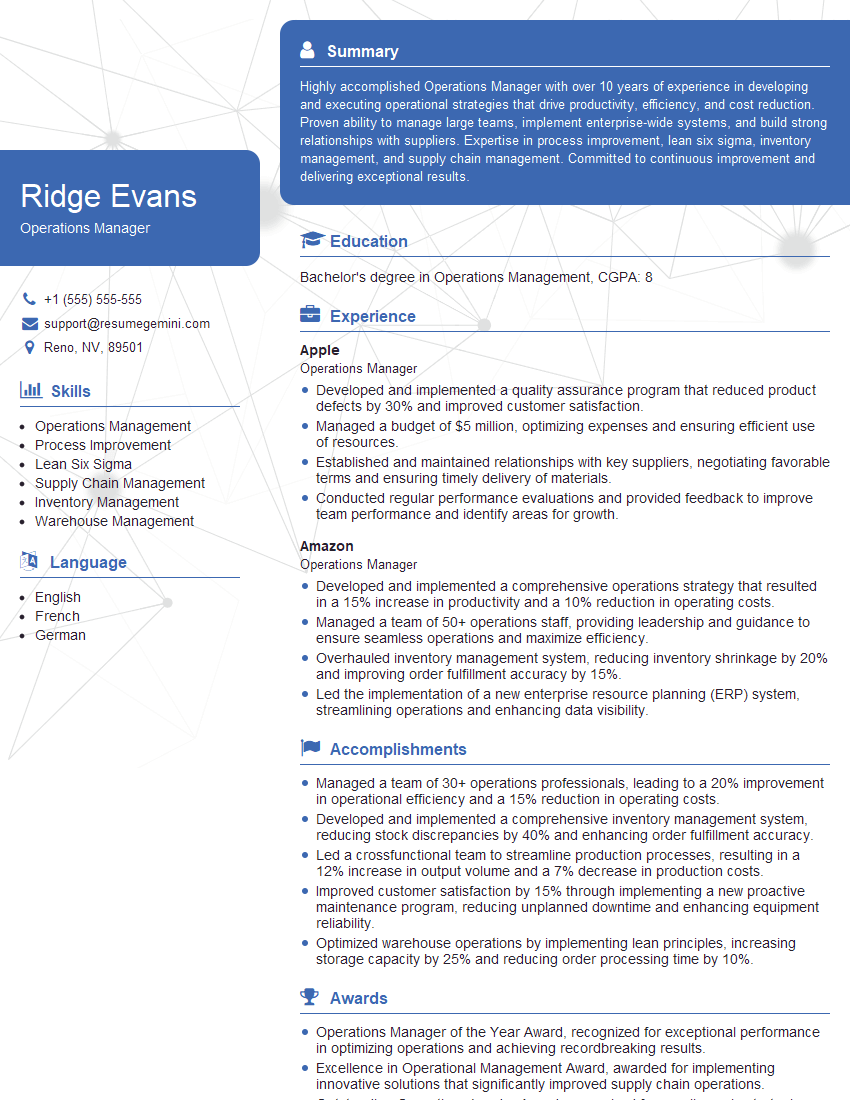
Operations Manager Resume Sample
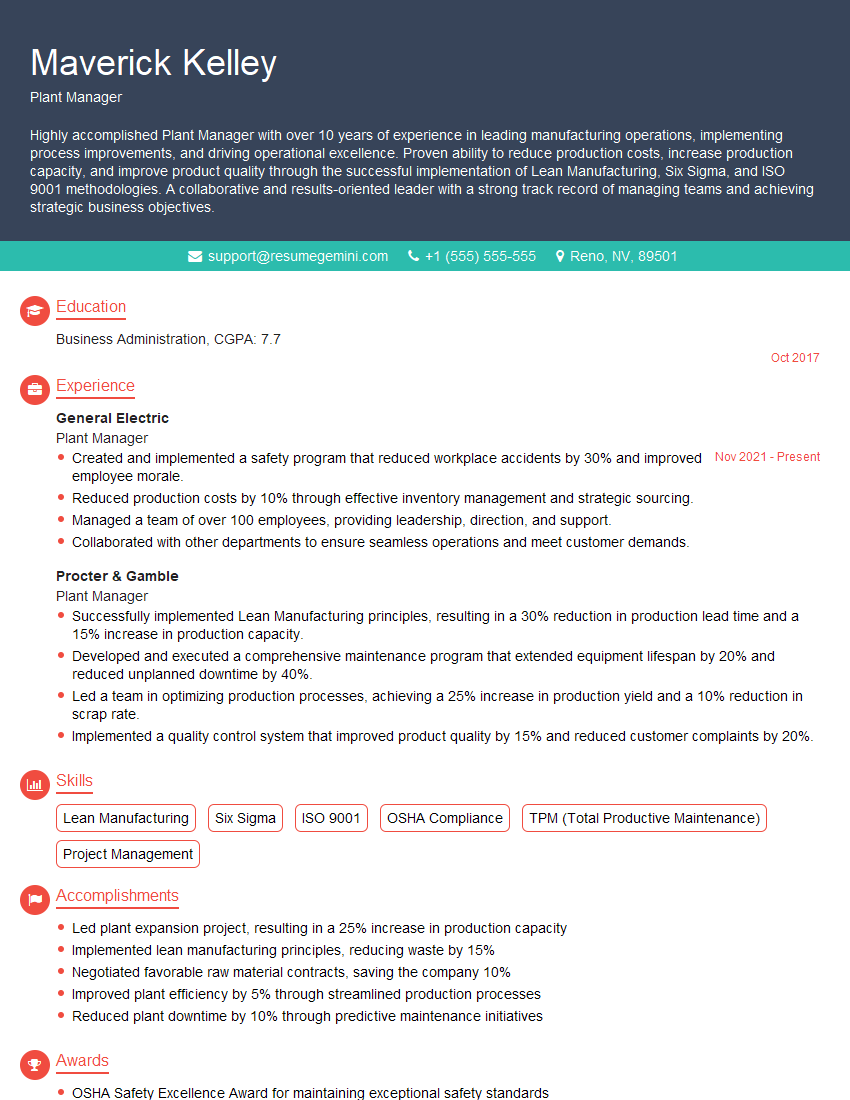
Plant Manager Resume Sample
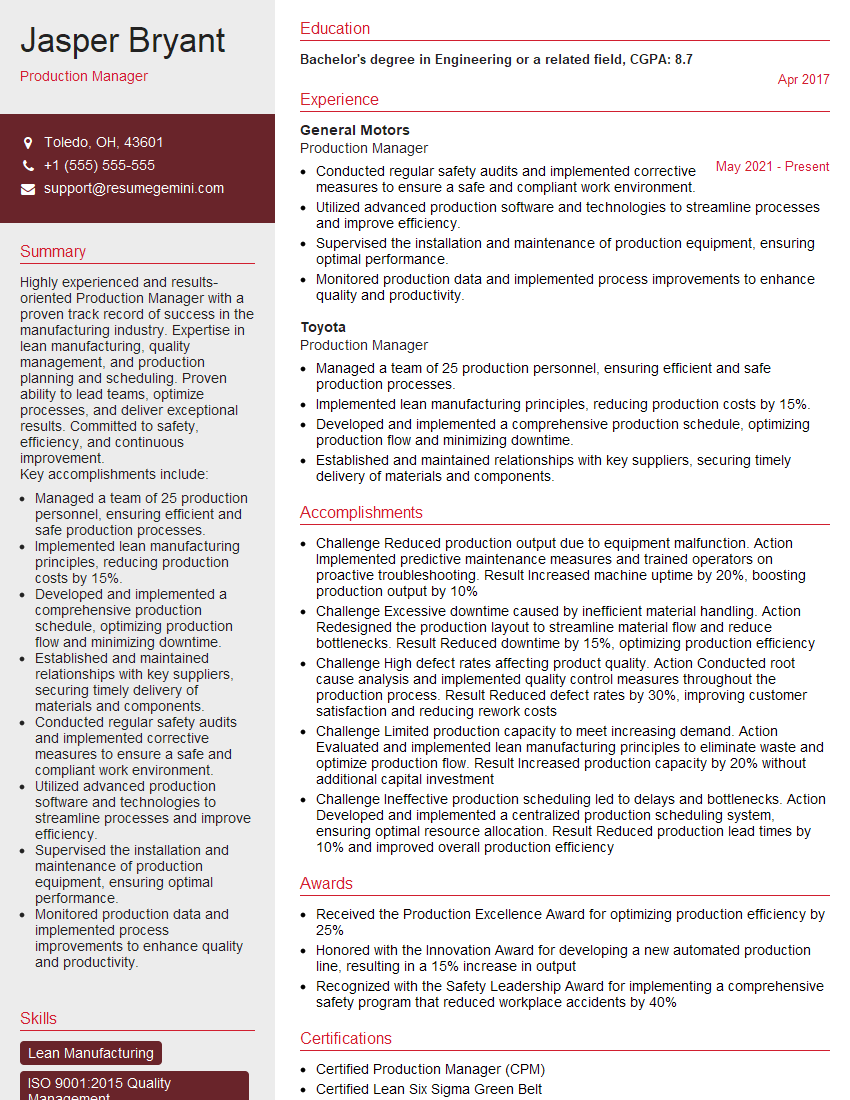
Production Manager Resume Sample
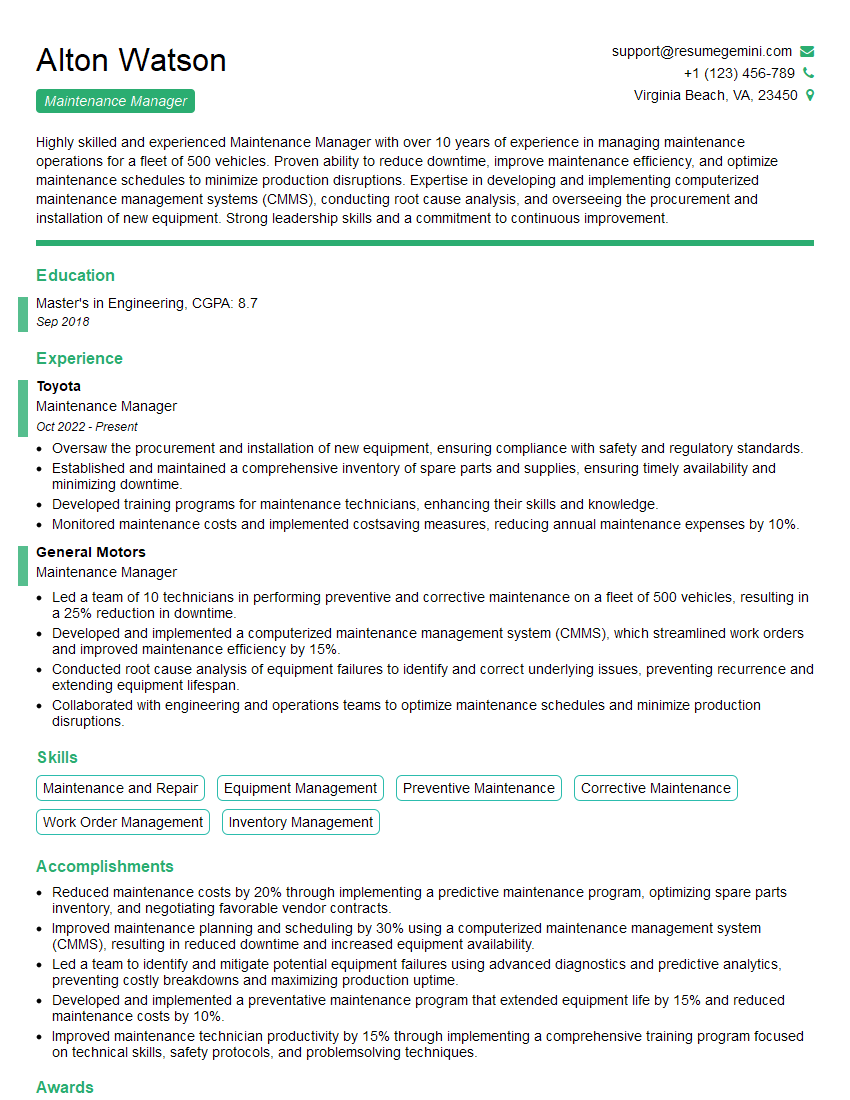
Maintenance Manager Resume Sample
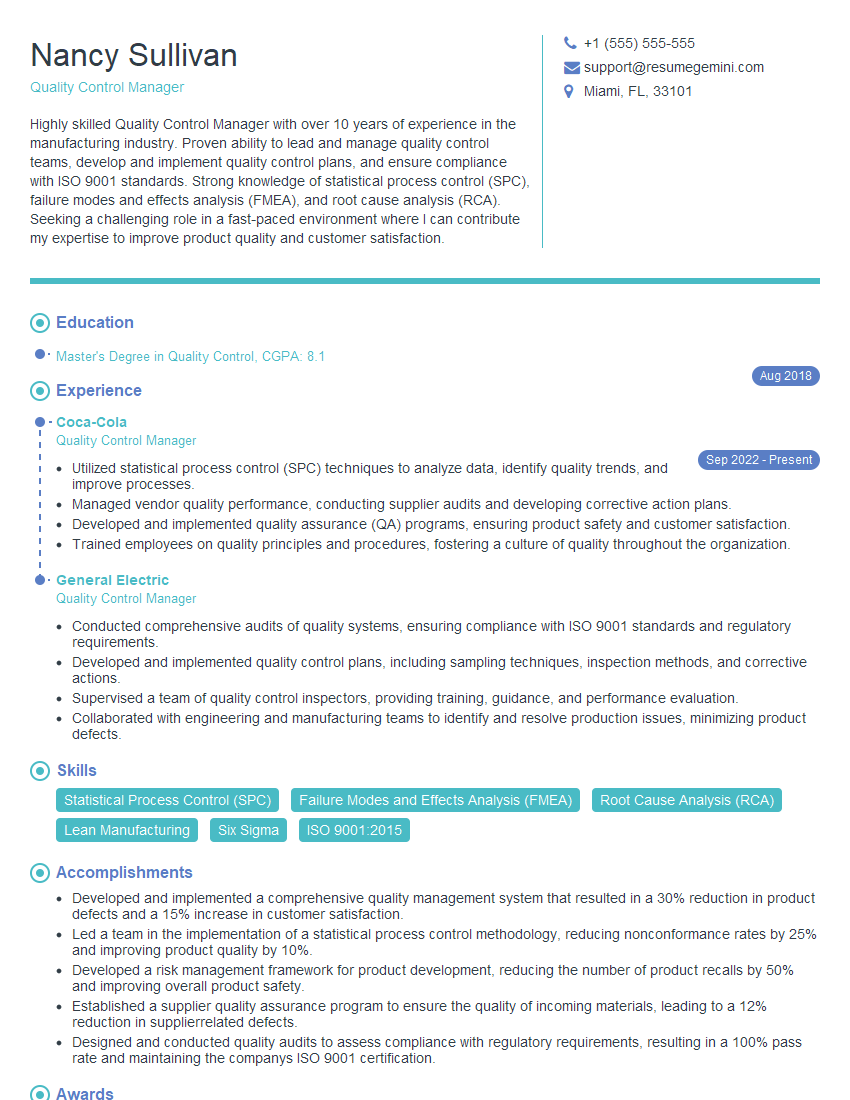
Quality Control Manager Resume Sample
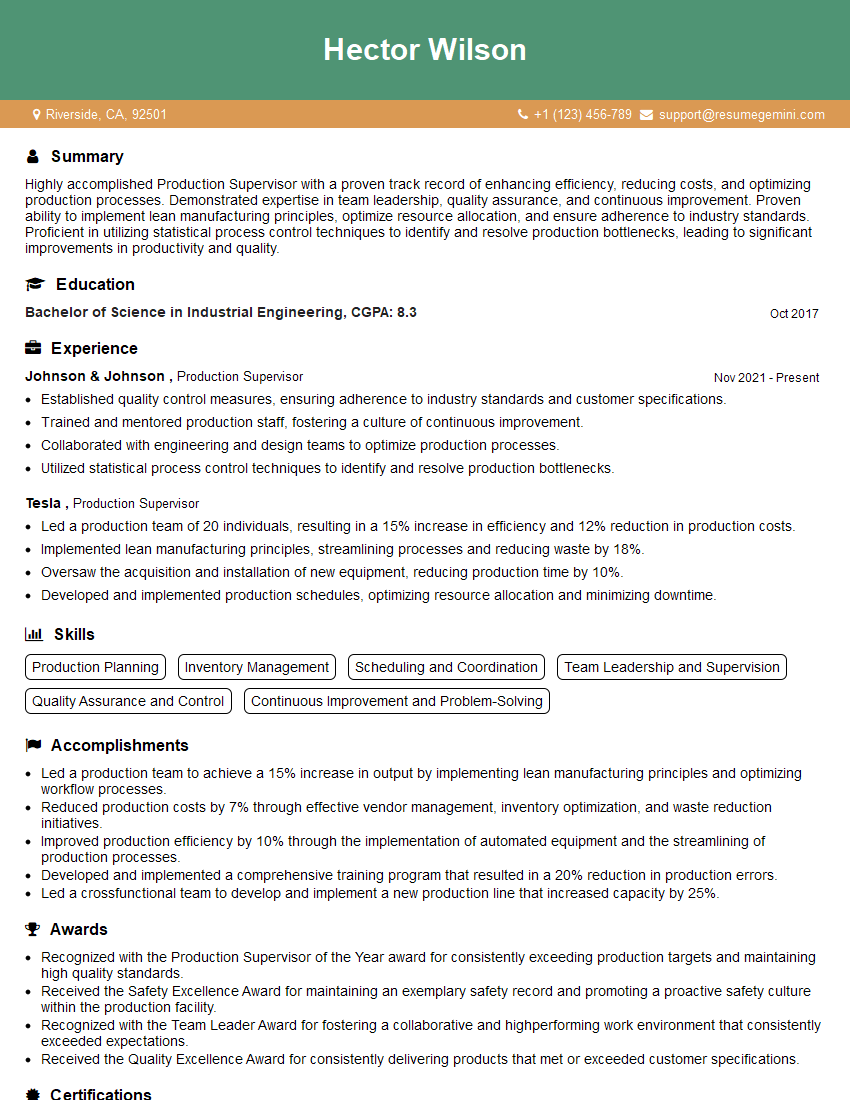
Production Supervisor Resume Sample
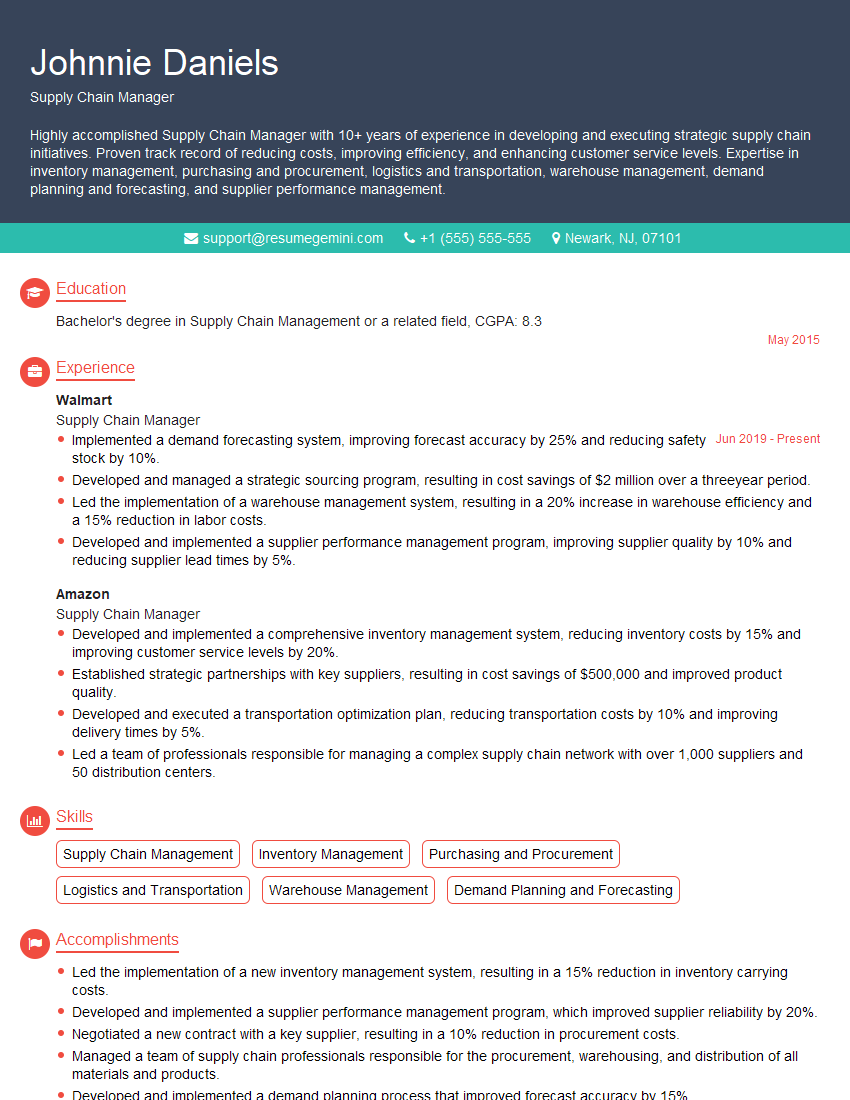
Supply Chain Manager Resume Sample
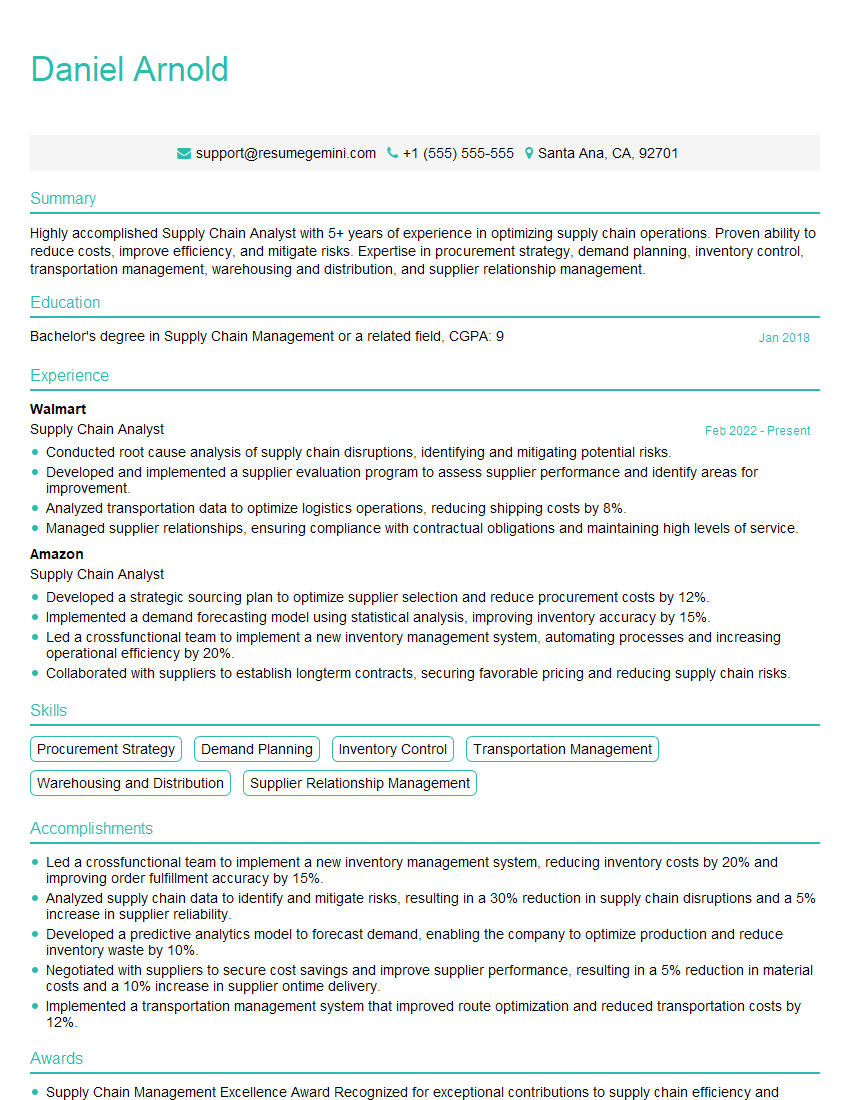
Supply Chain Analyst Resume Sample
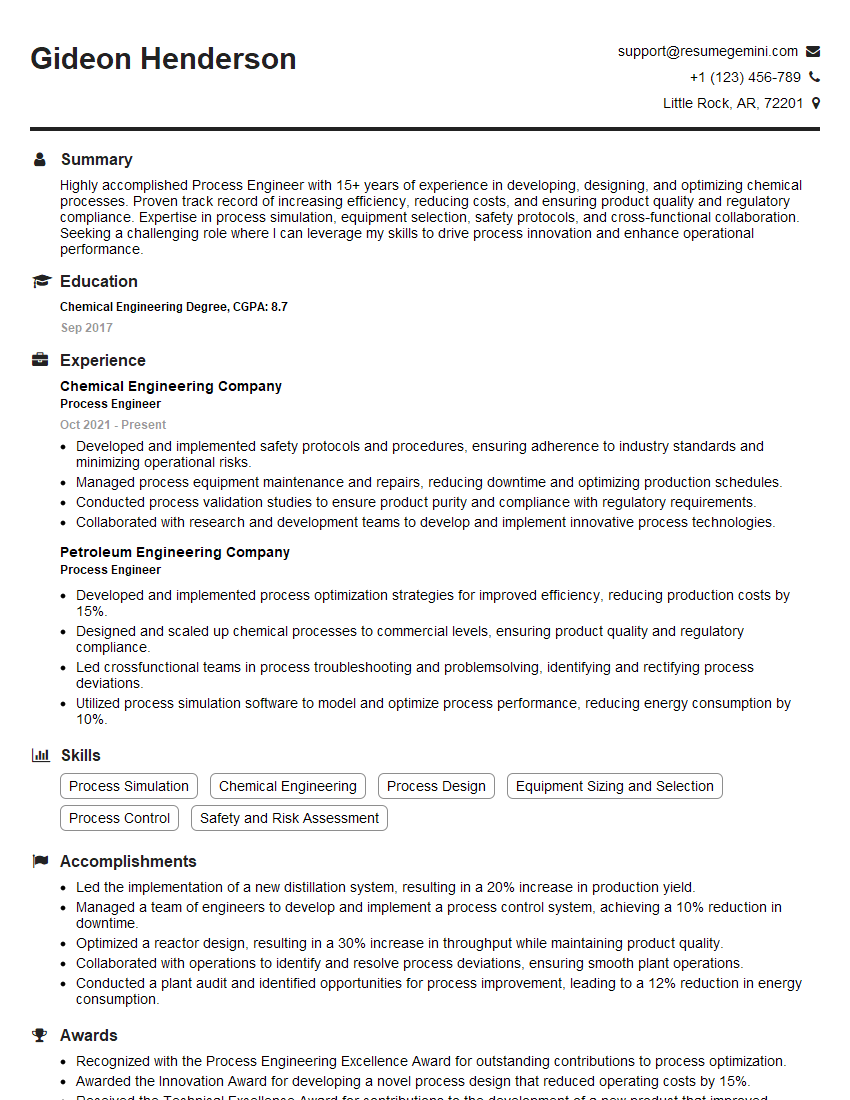
Process Engineer Resume Sample
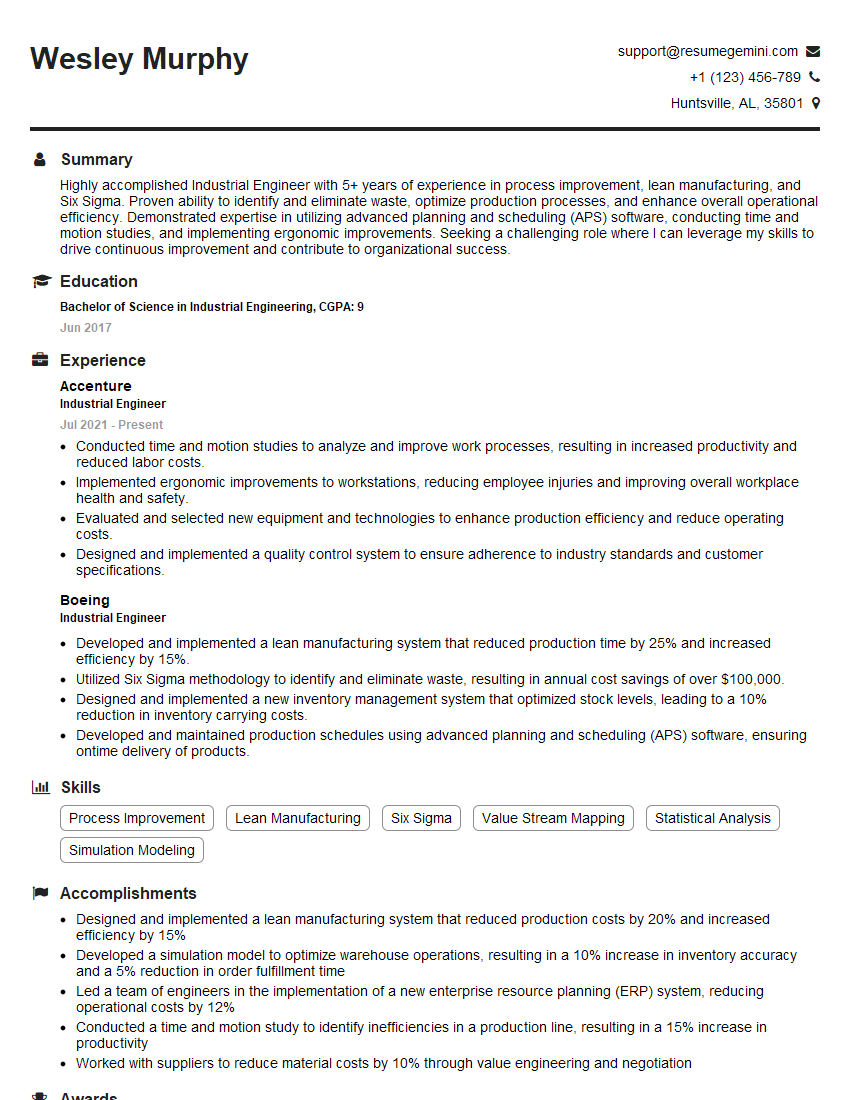
Industrial Engineer Resume Sample
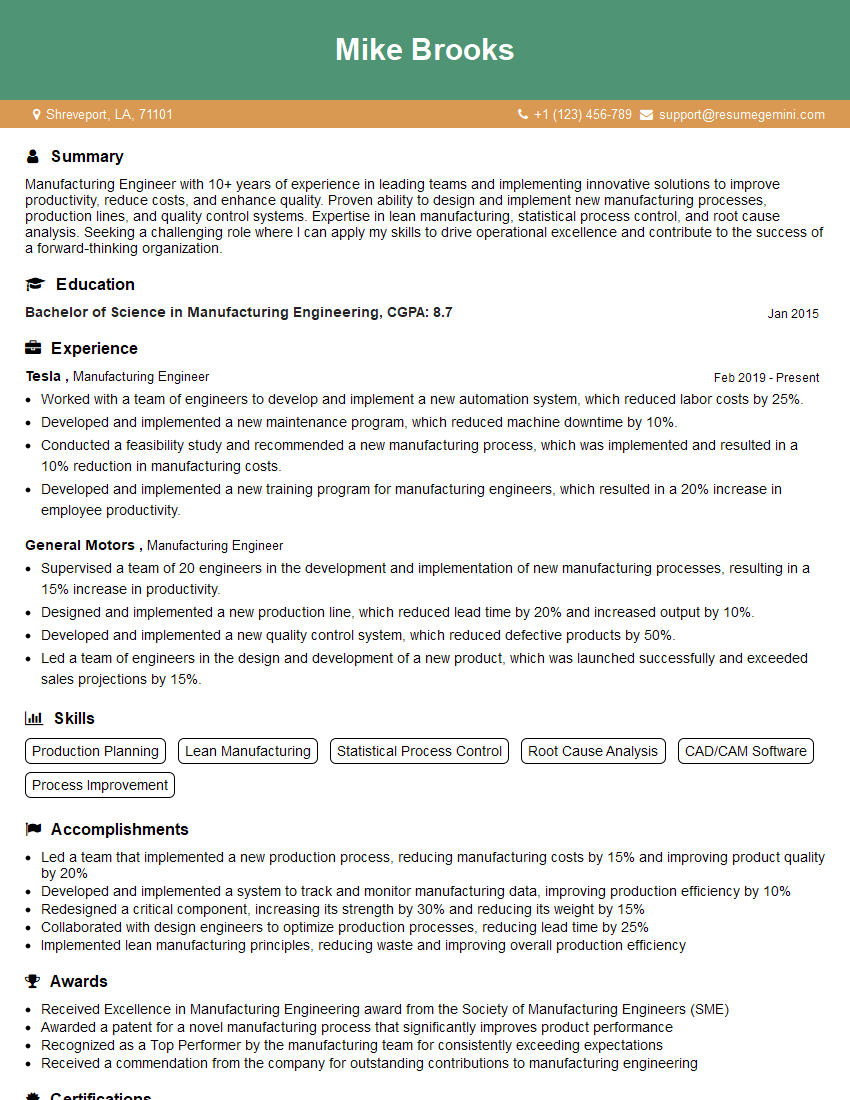
Manufacturing Engineer Resume Sample
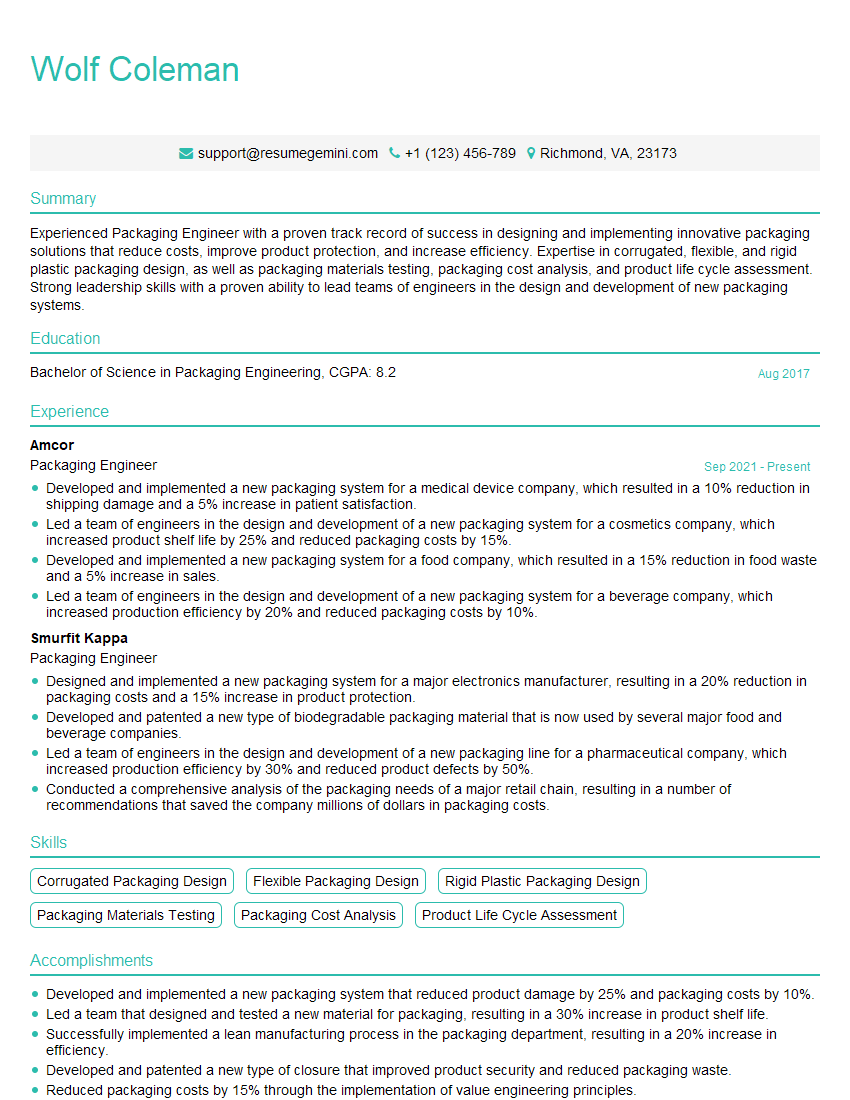
Packaging Engineer Resume Sample
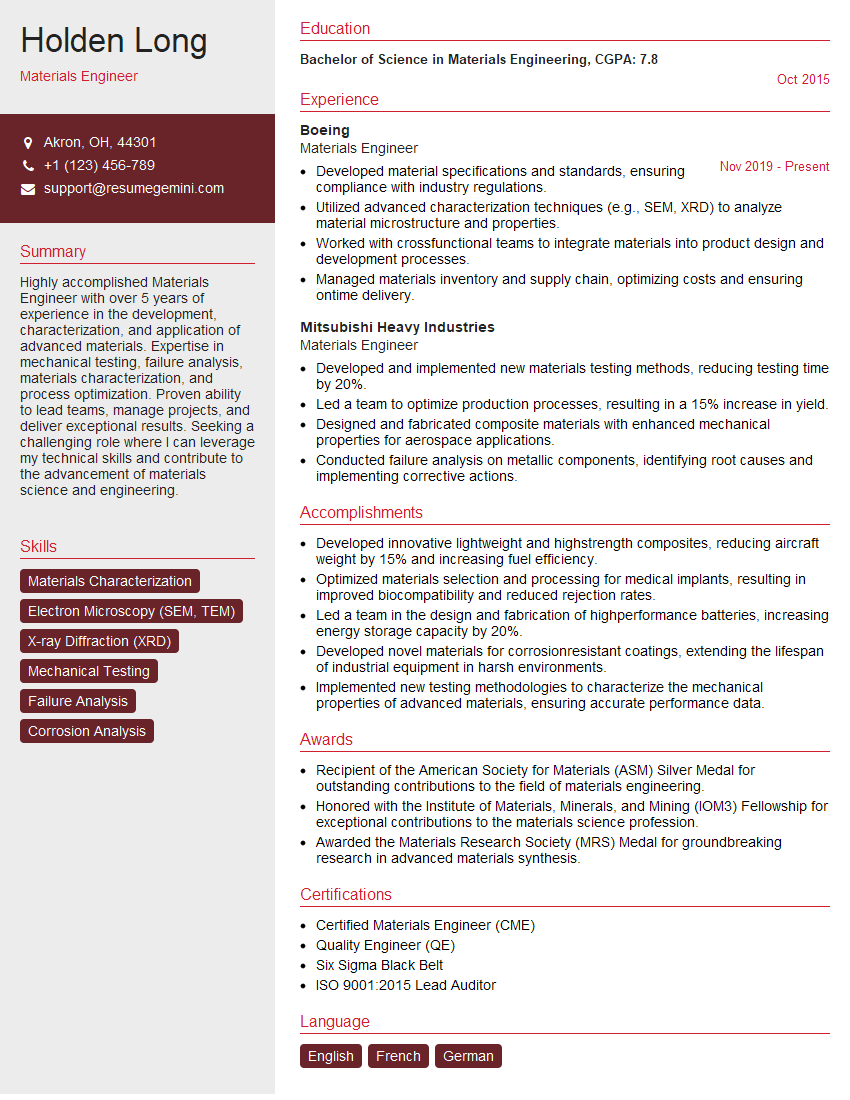
Materials Engineer Resume Sample

Metallurgist Resume Sample
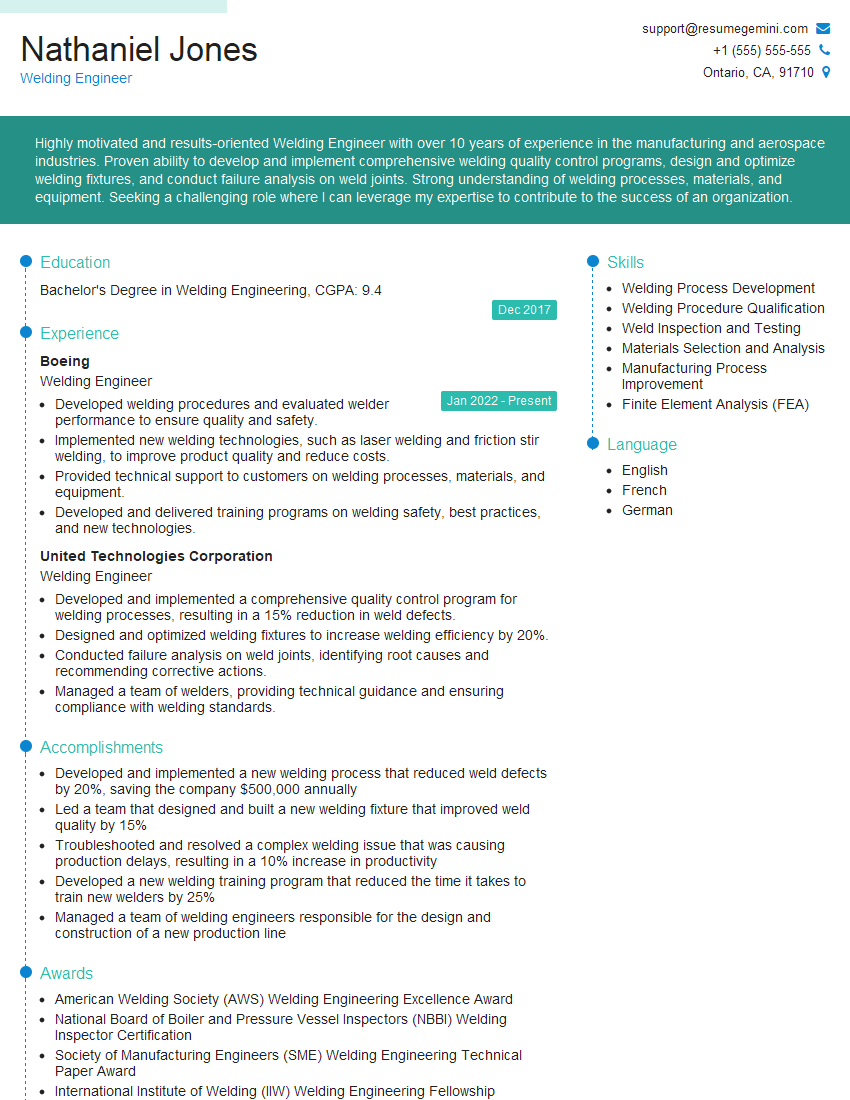
Welding Engineer Resume Sample

Quality Assurance Engineer Resume Sample
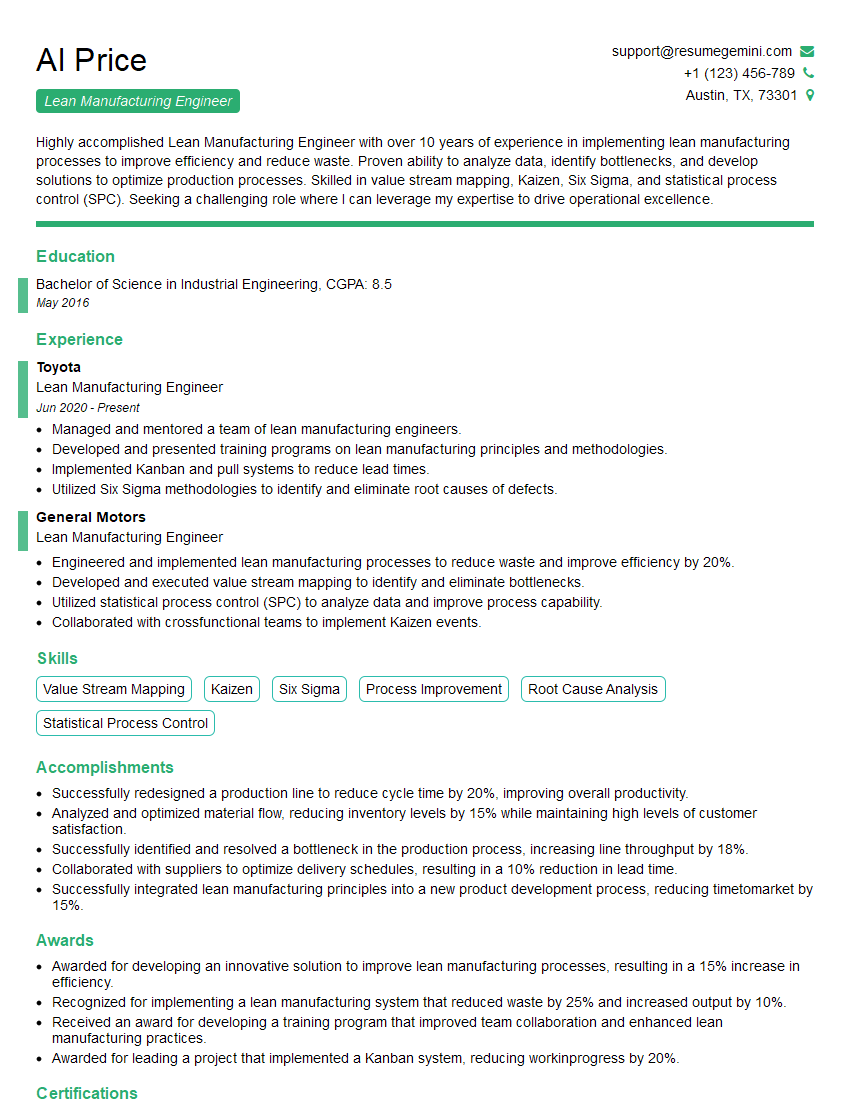
Lean Manufacturing Engineer Resume Sample
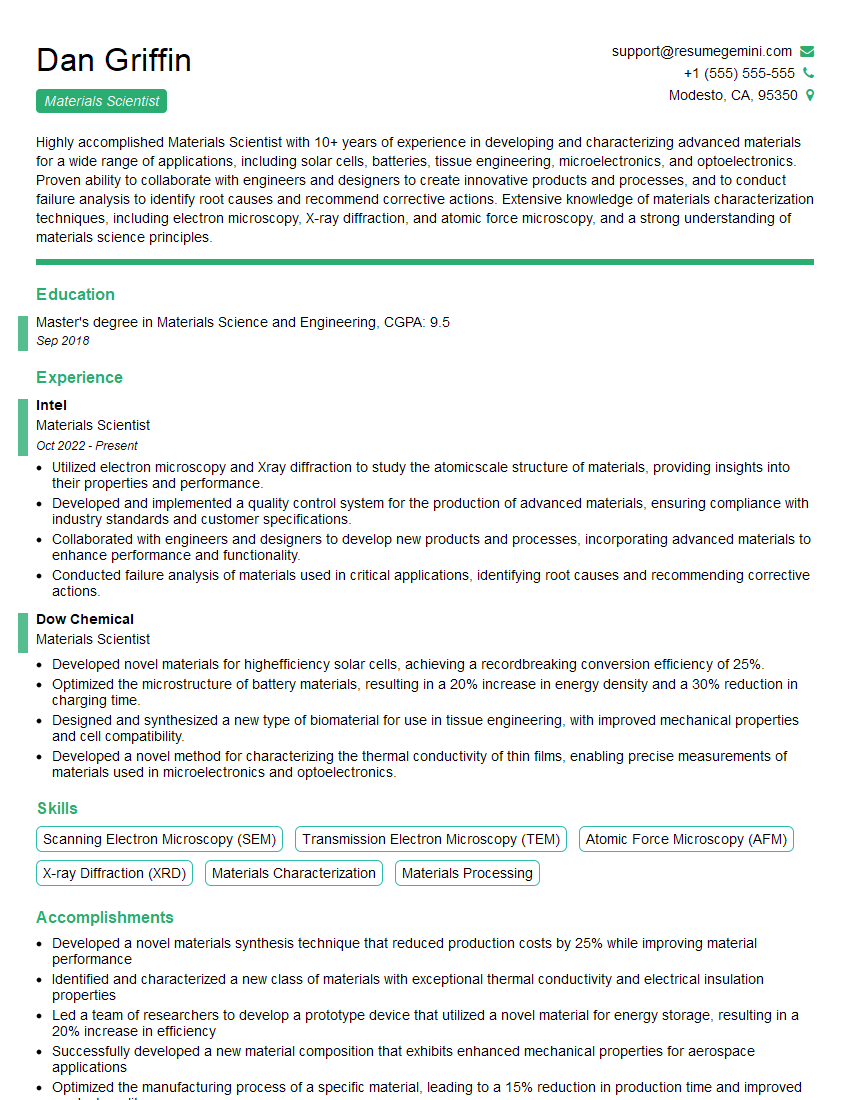
Materials Scientist Resume Sample
- Operations Manager
- Plant Manager
- Production Manager
- Maintenance Manager
- Quality Control Manager
- Production Supervisor
- Supply Chain Manager
- Supply Chain Analyst
- Process Engineer
- Industrial Engineer
- Manufacturing Engineer
- Packaging Engineer
- Materials Engineer
- Metallurgist
- Welding Engineer
- Quality Assurance Engineer
- Lean Manufacturing Engineer
- Materials Scientist
Explore more articles
Users Rating of Our Blogs
Share Your Experience
We value your feedback! Please rate our content and share your thoughts (optional).
What Readers Say About Our Blog
Really detailed insights and content, thank you for writing this detailed article.
IT gave me an insight and words to use and be able to think of examples