The thought of an interview can be nerve-wracking, but the right preparation can make all the difference. Explore this comprehensive guide to Traditional Art interview questions and gain the confidence you need to showcase your abilities and secure the role.
Questions Asked in Traditional Art Interview
Q 1. Describe your preferred traditional art medium and why.
My preferred traditional art medium is oil painting. I find the richness and luminosity of oil paints unparalleled. The slow drying time allows for extensive blending and layering, enabling a depth and subtlety that’s difficult to achieve with faster-drying mediums. This slow process also allows for a more meditative and deliberate approach to my work, fostering a deeper connection with the creative process itself. The inherent flexibility of oils, allowing for both thin washes and thick impasto techniques, provides incredible versatility in achieving various textural effects and expressive qualities within a single piece.
Other mediums, like watercolor or acrylics, certainly have their own merits, but the forgiving nature and extensive possibilities of oil painting perfectly suit my artistic vision and working style.
Q 2. Explain your artistic process from concept to completion.
My artistic process is a multifaceted journey that begins with a concept, often inspired by nature, literature, or personal experiences. I start with sketching, using both quick thumbnail sketches to explore different compositions and more detailed studies to refine the form and anatomy of my subject. This phase involves experimenting with various viewpoints and perspectives to find the most impactful presentation.
Next comes the underpainting, a foundational layer applied to the canvas using thinned-out oil paint. This establishes the overall tone and values of the piece, providing a solid base for subsequent layers. Then, I gradually build up the painting layer by layer, focusing on gradually refining details and incorporating rich colors through careful blending and layering. I often employ the ‘alla prima’ technique, completing sections in one sitting, while also using the glazing technique where transparent layers are built over each other for depth. Finally, I refine the details, adjust values, and sign the piece. This is a highly iterative process, with constant adjustments and revisions, until I am satisfied with the final result.
Q 3. Discuss the historical significance of a specific traditional art movement.
The Impressionist movement holds immense historical significance. Emerging in 19th-century France, it revolutionized art by rejecting the academic traditions of meticulous detail and precise representation in favor of capturing fleeting moments and the subjective experience of light and color. Artists like Monet, Renoir, and Degas abandoned the dark studios and embraced plein air painting, working directly from nature.
This shift had a profound impact, not only artistically but also socially. The Impressionists challenged the established art world, exhibiting independently and defying the rigid standards of the Salon, the official art exhibition of the French Academy. Their emphasis on subjective perception and capturing the ephemeral opened the door for future artistic movements like Post-Impressionism and Fauvism, and their influence continues to resonate in contemporary art. The Impressionists’ focus on light and its effects on color fundamentally altered the way artists saw and represented the world.
Q 4. How do you approach color mixing in your chosen medium?
Color mixing in oil painting is a fascinating process, requiring both knowledge and experimentation. I primarily use a limited palette approach, starting with a few primary and secondary colors, and then mixing various hues through careful gradations. Understanding the color wheel is crucial— knowing how complementary colors interact and how to create harmonious palettes. For example, I might begin with cadmium yellow, alizarin crimson, and ultramarine blue, and then create a range of greens, oranges, and violets by mixing these pigments in varying proportions.
It is equally important to consider the optical mixing that occurs through layering. A thin layer of a cool color laid over a warm color can yield a completely different hue than a direct mix of the two. This understanding of both physical and optical mixing is essential for creating vibrant and nuanced colors.
Q 5. Explain your understanding of perspective and composition.
Perspective and composition are fundamental aspects of creating a successful artwork. Perspective refers to creating the illusion of depth and three-dimensionality on a two-dimensional surface, using techniques such as linear perspective (converging lines) and atmospheric perspective (gradation of color and detail with distance). Composition refers to the arrangement of elements within the artwork to create visual harmony, balance, and guide the viewer’s eye.
For instance, using the rule of thirds – dividing the canvas into thirds both horizontally and vertically and placing key elements along these lines or at their intersections – can create a more dynamic and engaging composition. Similarly, understanding leading lines, which draw the viewer’s gaze towards the focal point of the image, is critical for successful composition. The interplay between perspective and composition is vital in guiding the viewer’s eye through the artwork, creating a strong narrative, and conveying the intended emotion or message.
Q 6. Describe a time you had to overcome a technical challenge in your art.
I once attempted a large-scale oil painting depicting a stormy seascape. The challenge was capturing the dynamic movement of the waves and the turbulent nature of the sea while maintaining realism. The initial attempts were stiff and lacked the fluidity I envisioned. I overcame this by studying videos of ocean waves, observing their patterns and the way light interacts with the water’s surface. I also experimented with different brush techniques, using palette knives and various sized brushes to create textured layers and express the energy of the scene. This involved considerable trial and error, many failed attempts, and hours of experimentation, but eventually, I learned to create a more believable sense of movement through a combination of color application and brushwork.
Q 7. How do you handle critiques of your work?
I view critiques as valuable opportunities for growth. Constructive criticism, when delivered respectfully, can provide insights into areas where my work could be improved. I actively seek feedback from fellow artists, mentors, and even viewers, as different perspectives can reveal aspects I may have overlooked. Of course, not all critiques are equally helpful, and it’s important to discern between constructive feedback and simply negative opinions. I try to approach any critique with a receptive attitude, analyzing its validity and assessing how it might inform my future work. Ultimately, the goal is not to please everyone but to improve my skills and craft, using all feedback as a springboard for further development.
Q 8. What are some common challenges in your chosen traditional art form?
Traditional art, while deeply rewarding, presents unique challenges. One major hurdle is mastering the technical skills required. For example, achieving a perfect blend of colors in oil painting requires years of practice and a keen understanding of pigment properties. Another challenge is the time commitment involved. Many traditional techniques, like sculpting or printmaking, are inherently time-consuming, demanding patience and dedication. Finally, the availability and cost of high-quality materials can be a significant factor. Finding the right pigments, papers, or sculpting clays can be a quest in itself, and these materials are often expensive.
For instance, a sculptor working with bronze might face the challenge of finding a foundry capable of handling their specific design, while a watercolorist might struggle with controlling the unpredictable nature of the medium and achieving the desired level of detail.
Q 9. Explain the differences between various types of paints (e.g., oil, acrylic, watercolor).
Oil paints, acrylic paints, and watercolors differ significantly in their properties and application. Oil paints, composed of pigments suspended in drying oil (like linseed oil), are known for their richness, luminosity, and slow drying time. This slow drying allows for blending and layering, which is crucial for achieving subtle gradations of color and depth. However, their slow drying time also means they require careful handling and longer working periods.
Acrylic paints, on the other hand, are water-based and fast-drying. They offer versatility, adhering to a range of surfaces, and their quick drying time is advantageous for creating detailed work or working in layers rapidly. However, this fast drying can sometimes limit blending opportunities.
Watercolors, also water-based, are translucent and create luminous, delicate effects. Their inherent fluidity makes control challenging for beginners, demanding a lighter touch and a focus on layering washes of color. This very fluidity gives the final artwork an unique and beautiful transparency.
Q 10. Describe your knowledge of different printmaking techniques.
Printmaking encompasses a variety of techniques used to create multiple impressions of an image. Relief printing, such as woodcuts and linocuts, involves carving an image into a block of wood or linoleum, leaving the raised areas to receive ink. Intaglio techniques, including etching and engraving, utilize incised lines in a metal plate to hold the ink. In etching, acid is used to bite into the metal, creating the lines, while engraving involves directly incising lines into the plate with a burin.
Planographic printing, like lithography, uses a flat surface where the image is drawn with a greasy substance, allowing ink to adhere only to those areas. Finally, screen printing, or serigraphy, uses a stencil on a mesh screen to transfer ink onto the paper. Each technique yields unique textural and aesthetic qualities, influencing the final look and feel of the print. For example, a woodcut print will have a bold, graphic look, whereas an etching will have more subtle lines and a softer appearance.
Q 11. How do you maintain the integrity of your artwork over time?
Preserving the integrity of artwork over time requires careful consideration of storage and handling. For paintings, proper framing with UV-protective glass is crucial to minimize light damage. The environment should be stable, with consistent temperature and humidity to prevent warping, cracking, or fading. Avoiding direct sunlight is also paramount. For sculptures, the material itself dictates the preservation method; for example, bronze sculptures require regular cleaning to prevent corrosion, while wood sculptures might need periodic treatments to prevent insect infestation or decay. Proper documentation, including photographs and detailed records of materials and techniques, is essential for future conservation efforts.
I, for example, always ensure my oil paintings are varnished with a high-quality archival varnish to protect them from dust and environmental factors, adding an extra layer of protection.
Q 12. Explain your process for preparing your art for display or sale.
Preparing artwork for display or sale involves several key steps. For paintings, this includes careful cleaning, and potentially retouching any minor imperfections. Professional framing with archival materials (acid-free mats and backing boards) prevents damage and enhances presentation. For sculptures, cleaning and potentially polishing or waxing might be necessary, depending on the material. Appropriate lighting and display cases are essential to protect the artwork from the environment. Accurate labeling, including the title, medium, dimensions, and the artist’s signature, is crucial for professional presentation and record keeping. High-quality photography is essential for online sales or catalogues.
In my process, I personally ensure that every piece is meticulously photographed under professional lighting to truly capture the nuances and details of the artwork.
Q 13. Discuss your understanding of different sculpting techniques.
Sculpting techniques are diverse, ranging from subtractive methods, like carving stone or wood, where material is removed to reveal the form, to additive methods, such as modeling with clay or wax, where material is added to build the form. Casting, a process involving creating a mold of the original form and using it to produce multiple copies in a different material, is another significant technique. Subtractive techniques demand precision and planning, while additive methods offer more flexibility for adjustments during the creative process.
Different materials also influence the technique; clay allows for malleability and refinement, while marble requires a different approach altogether, demanding tools and skills specific to stone carving. For example, I have personally worked with both additive techniques like modeling clay and subtractive techniques like carving wood, and the experience and skills required are dramatically different.
Q 14. How do you approach creating realistic textures in your work?
Creating realistic textures involves understanding the interplay of light and shadow. Observing real-world textures carefully is the first step; noticing how light interacts with the surface, creating highlights, shadows, and subtle gradations is key. In painting, this might involve using different brushstrokes, varying the thickness of the paint, or employing techniques like impasto (applying thick paint) to create the illusion of texture. In sculpting, different tools and approaches are used to manipulate the surface to create grooves, ridges, or smooth transitions. The choice of materials also significantly contributes to the texture; rougher materials like burlap for example, inherently create rough texture, whereas a smooth surface is more reflective.
For instance, to portray the rough texture of bark on a tree, I might use a combination of dry brush techniques with various shades of brown and grey to emphasize the cracks and crevices, creating highlights and shadows.
Q 15. What are your preferred methods for sketching and drawing?
My sketching and drawing process is highly iterative, adapting to the subject and desired outcome. I begin with loose, gestural sketches using a variety of pencils, ranging from a soft 2B for quick studies to a harder 4H for precise linework. For example, when sketching a portrait, I might start with a 2B to capture the overall form and proportions, then switch to a 4H to refine details like the eyes and mouth. I often use charcoal for its expressive capabilities, particularly for landscape studies where I can quickly capture the dramatic effects of light and shadow. I also employ various drawing tools such as graphite sticks for bolder strokes and kneaded erasers for subtle adjustments. My choice of tool is always dictated by the desired effect and the stage of the artwork. I rarely skip this initial sketching phase as it’s crucial for developing a strong foundation.
Career Expert Tips:
- Ace those interviews! Prepare effectively by reviewing the Top 50 Most Common Interview Questions on ResumeGemini.
- Navigate your job search with confidence! Explore a wide range of Career Tips on ResumeGemini. Learn about common challenges and recommendations to overcome them.
- Craft the perfect resume! Master the Art of Resume Writing with ResumeGemini’s guide. Showcase your unique qualifications and achievements effectively.
- Don’t miss out on holiday savings! Build your dream resume with ResumeGemini’s ATS optimized templates.
Q 16. Explain your understanding of light and shadow in art.
Light and shadow are fundamental to creating depth, volume, and realism in artwork. My understanding stems from the core principles of light sources, cast shadows, reflected light, and ambient light. The interplay of these elements defines form and creates visual interest. For instance, a strong light source will create a defined highlight, a clear core shadow, and subtle reflected lights on adjacent surfaces. Consider a still life with a glass object; the light source will create a bright highlight on the curved surface, a shadow underneath, and perhaps a reflection of the surrounding environment. Mastering this interplay allows me to model forms convincingly and create a sense of three-dimensionality on a two-dimensional surface. I often use studies of light and shadow from everyday objects to refine my understanding.
Q 17. How do you incorporate symbolism or narrative elements into your work?
Symbolism and narrative are integral to enriching my artwork beyond simple representation. For instance, in a painting depicting a lone tree on a hill, I might use the tree as a symbol of resilience or solitude, depending on the narrative I want to convey. The composition, color palette, and even the texture of the paint can contribute to the symbolic meaning. A recurring motif in my work is the use of birds in flight to represent freedom and hope. The narrative development involves thorough planning and sketching, where I develop the story’s visual components, from the characters and setting to the climactic moments. Careful consideration is given to how visual elements—such as color and composition—interact to communicate this narrative effectively. My artistic choices are not random; every brushstroke serves to tell a story.
Q 18. Discuss your understanding of artistic anatomy.
Artistic anatomy is crucial for accurately representing the human form in art. My understanding encompasses a deep knowledge of the skeletal structure, muscle groups, and their relationship to movement and posture. This goes beyond simple surface anatomy; it involves understanding how muscles contract and relax, how bones articulate, and how these factors influence the overall form. I regularly study anatomical reference materials, including both anatomical charts and life drawings. A strong understanding of anatomy allows me to accurately depict figures in different poses and to give them believable weight and movement. I often create anatomical studies as independent pieces, which helps me strengthen my knowledge and ability to convey this within my larger projects.
Q 19. How do you research and develop ideas for your artwork?
My artwork’s ideas are sourced from a variety of avenues. Sometimes, inspiration stems from personal experiences, translating emotions and memories into visual form. Other times, I draw inspiration from literature, mythology, or history, transforming narratives into visual interpretations. Research plays a vital role in shaping my ideas. For historical pieces, archival research helps me maintain accuracy, and for nature-based work, extensive observation and sketching on location are crucial. Often, I keep a sketchbook to jot down ideas and explore different concepts. The process is cyclical; sketching often leads to new ideas, and those ideas then undergo further research and refinement, leading to the final artwork.
Q 20. Describe your experience with different types of brushes and tools.
My experience with brushes and tools is extensive and varied, reflecting the diverse mediums I use. In oil painting, I favor hog bristle brushes for their stiffness and ability to hold a lot of paint, while sable brushes are ideal for fine details. Watercolor painting necessitates softer brushes, often made of squirrel or synthetic fibers, allowing for delicate washes and subtle gradations. I also utilize various palette knives for impasto techniques and textured effects. Beyond brushes, I use a variety of drawing tools, as mentioned earlier, including charcoal pencils, graphite sticks, and even specialized tools for creating specific textures. The selection of tools always depends on the medium and the intended effect.
Q 21. Explain how you adapt your techniques for different art surfaces.
Adapting techniques to different art surfaces is essential for achieving the desired outcome. The texture, absorbency, and overall nature of the surface greatly influence the painting process and the final result. For instance, a smooth canvas allows for fine detail and delicate blending, while a rough canvas lends itself to textural effects and impasto techniques. Similarly, watercolor paper, with its varied textures, influences how the paint behaves and spreads, resulting in unique effects. I often test my mediums on small samples of the chosen surface to understand its behavior and to adjust my techniques accordingly. Understanding the interplay between the medium, tool, and surface is key to achieving consistent and successful results.
Q 22. How do you maintain a clean and organized workspace?
Maintaining a clean and organized workspace is paramount for any traditional artist. It’s not just about aesthetics; a well-organized space directly impacts efficiency and creativity. Think of it as preparing a chef’s kitchen – every tool needs its place for easy access and to prevent accidents.
- Designated Zones: I divide my workspace into distinct areas: one for drawing and sketching, another for painting, and a separate area for storage of materials. This prevents cross-contamination of media and keeps things tidy.
- Vertical Storage: I utilize vertical space with shelves and drawers to maximize storage and keep frequently used materials within easy reach. This prevents clutter on my working surface.
- Regular Cleaning: After each session, I clean my brushes, palettes, and work surfaces. This prevents paint from drying and becoming unusable, and keeps my environment hygienic. A weekly deeper clean is also essential to maintain a fresh working environment.
- Material Organization: I organize my materials by type and medium, using clear containers and labels. This makes finding the right tools quick and efficient. I use small containers for pigments and inks, and larger containers for canvases and paper.
By adhering to these practices, I ensure my workspace remains a productive and inspiring environment.
Q 23. Describe a piece of traditional art you admire and explain why.
A piece of traditional art I deeply admire is Michelangelo’s David. It’s not just the sheer scale and technical mastery of the sculpture that captivates me, but the profound emotional depth conveyed through the figure’s posture and expression.
Michelangelo’s ability to capture the subtle nuances of human anatomy, the tension of poised strength, and the quiet intensity in David’s gaze is truly remarkable. The way he manipulates the marble, creating a sense of movement and life from a seemingly inert material, is a testament to his unparalleled skill. The David represents not just a technical achievement, but a powerful statement on human potential and the spirit of defiance. It continues to inspire awe and contemplation centuries after its creation, a quality that defines truly great art.
Q 24. What are your long-term goals as a traditional artist?
My long-term goals as a traditional artist encompass several key aspects. Firstly, I aim to continuously refine my technical skills and explore new mediums and techniques. This involves ongoing practice, experimentation, and attending workshops or courses. Secondly, I strive to develop a distinctive artistic voice and style, allowing my artwork to convey unique perspectives and emotions.
Beyond personal growth, I aspire to exhibit my work in prestigious galleries and participate in art fairs. This involves building my portfolio, networking with curators and art professionals, and actively seeking opportunities for showcasing my work to a wider audience. Ultimately, I hope my art will resonate with viewers, sparking contemplation and emotional connections. I see my artistic journey as a lifelong pursuit of growth, creativity, and meaningful contribution to the world of art.
Q 25. Discuss your experience with art restoration or conservation techniques (if applicable).
While I don’t have formal training in art restoration, I have a deep appreciation for the delicate and meticulous work involved. I have undertaken some basic conservation practices for my own artwork, focusing primarily on preventative measures.
This includes proper storage to avoid damage from light, humidity, and temperature fluctuations. I also carefully handle my artwork, wearing gloves to avoid transferring oils from my hands and using archival-quality materials for mounting and framing. Understanding the fragility of traditional art and the importance of preservation is a crucial aspect of being a traditional artist. For more extensive restoration, I would always consult with experienced professionals who possess the necessary expertise and equipment.
Q 26. Explain your knowledge of different paper types and their uses.
Different paper types are crucial for achieving specific artistic effects. The choice of paper depends on the medium used (watercolor, drawing, printmaking, etc.) and the desired texture and finish.
- Watercolor Paper: This paper is typically heavier (140lb or higher) and features a textured surface (cold-pressed, hot-pressed, rough) that helps control the flow of water and pigments. Hot-pressed is smoother, cold-pressed is moderately textured, and rough is the most textured.
- Drawing Paper: Drawing paper comes in various weights and surfaces. Smooth paper is ideal for detailed work with fine pencils or inks, while textured paper creates interesting effects with charcoal or pastels.
- Printmaking Paper: Printmaking papers are often heavier and more durable, designed to withstand the pressure of printing techniques like etching or lithography. They are chosen for their ability to absorb ink and provide a crisp, clean impression.
- Sketch Paper: Sketch paper is generally lighter weight and less expensive, ideal for quick sketches and practice. It comes in various textures and finishes.
Understanding the properties of each paper type allows the artist to choose the most suitable one for their technique and creative vision. For example, using watercolor paper for ink drawings wouldn’t be ideal, and vice versa.
Q 27. How do you manage your time effectively when working on multiple projects?
Managing multiple projects requires a structured approach to time management. I use a combination of planning tools and self-discipline to stay organized and avoid feeling overwhelmed.
- Prioritization: I identify my most important projects and allocate time based on deadlines and urgency. This might involve using a project management tool or simply a detailed to-do list.
- Time Blocking: I dedicate specific blocks of time to each project, focusing intently on that task during that period. This minimizes multitasking and enhances concentration.
- Realistic Scheduling: I avoid over-scheduling myself. Building in buffer time for unexpected delays or creative blocks is essential. It’s better to slightly underestimate than overestimate the time needed for a task.
- Regular Review: I regularly review my progress, adjusting my schedule as needed to stay on track. This helps identify potential issues early and makes adjustments before they become major roadblocks.
This balanced and planned approach prevents burnout and ensures that all projects receive the attention they deserve.
Q 28. Describe your approach to teaching traditional art techniques (if applicable).
My approach to teaching traditional art is rooted in a hands-on, student-centered philosophy. I believe in fostering a supportive and encouraging learning environment where students feel comfortable experimenting and exploring their creativity.
My teaching involves a blend of demonstrations, individual guidance, and constructive critique. I start by explaining the fundamental principles and techniques, then guide students through practical exercises that progressively build their skills. I emphasize the importance of observation, experimentation, and developing individual artistic voices. I also incorporate discussions on art history and theory, placing the practical skills within a broader artistic context. My goal is not just to teach techniques, but to cultivate a love for art and empower students to express themselves through their work.
Key Topics to Learn for Traditional Art Interview
- Drawing Fundamentals: Understanding line weight, perspective, proportion, and form. Practical application: Demonstrate your ability to create accurate and expressive drawings from observation.
- Painting Techniques: Mastery of various mediums (oil, watercolor, acrylic) including color mixing, brushwork, and layering techniques. Practical application: Showcase your understanding of different painting styles and their technical requirements.
- Composition and Design Principles: Knowledge of rule of thirds, leading lines, visual balance, and creating focal points. Practical application: Analyze and discuss the compositional choices in your own work and that of master artists.
- Art History and Theory: Familiarity with major art movements, influential artists, and art historical contexts. Practical application: Connect your artistic practice to broader historical and theoretical frameworks.
- Anatomy and Figure Drawing: Accurate representation of the human form, understanding muscle structure and movement. Practical application: Show your ability to capture the essence of the human form through drawing and painting.
- Portfolio Presentation and Critique: Ability to articulate your artistic choices and receive constructive criticism. Practical application: Prepare a concise and compelling narrative about your artistic journey and the work you’ve created.
- Material and Process Knowledge: Understanding the properties of different art materials and how to properly care for them. Practical application: Demonstrate your understanding of how different materials behave and the techniques required to use them effectively.
Next Steps
Mastering traditional art skills opens doors to diverse and fulfilling careers, from fine art to illustration, animation, and beyond. A strong portfolio is crucial, but a well-crafted resume is your first impression. An ATS-friendly resume significantly increases your chances of getting your application noticed. To ensure your resume effectively showcases your skills and experience, consider using ResumeGemini. ResumeGemini provides a user-friendly platform and offers examples of resumes tailored to the Traditional Art field, helping you present your qualifications in the best possible light.
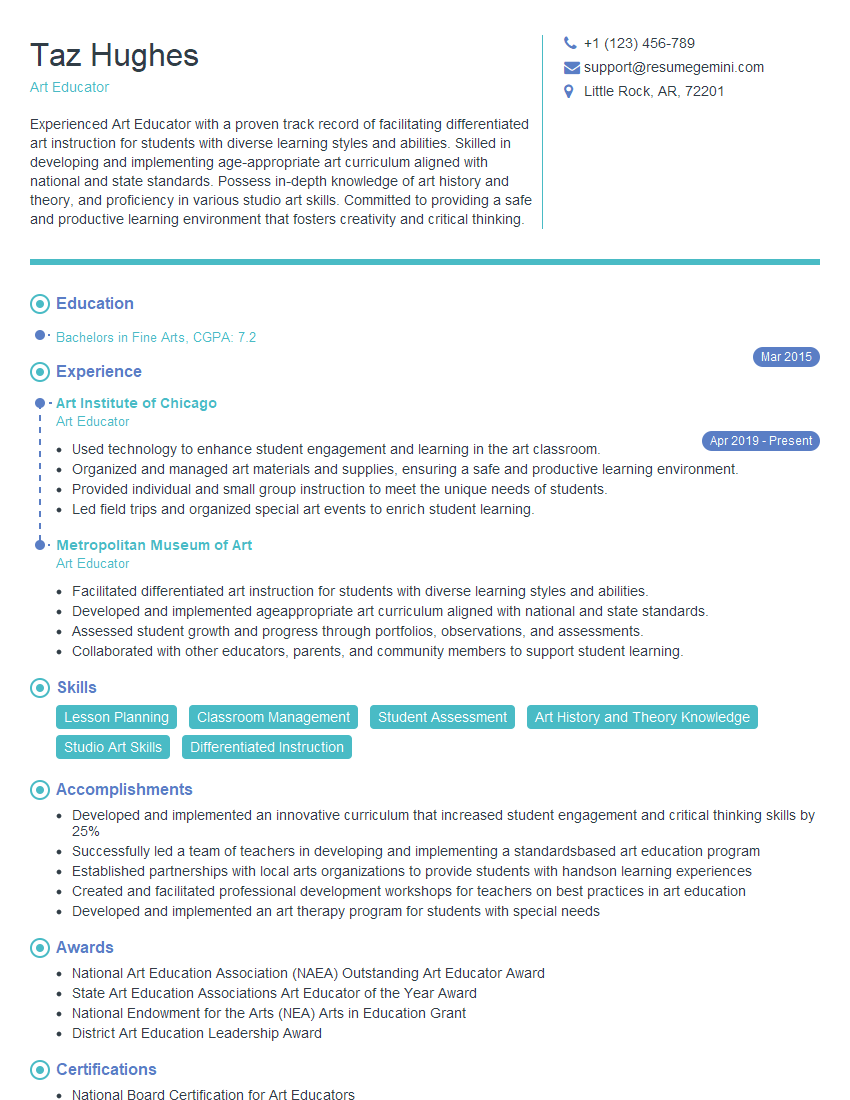
Art Educator Resume Sample
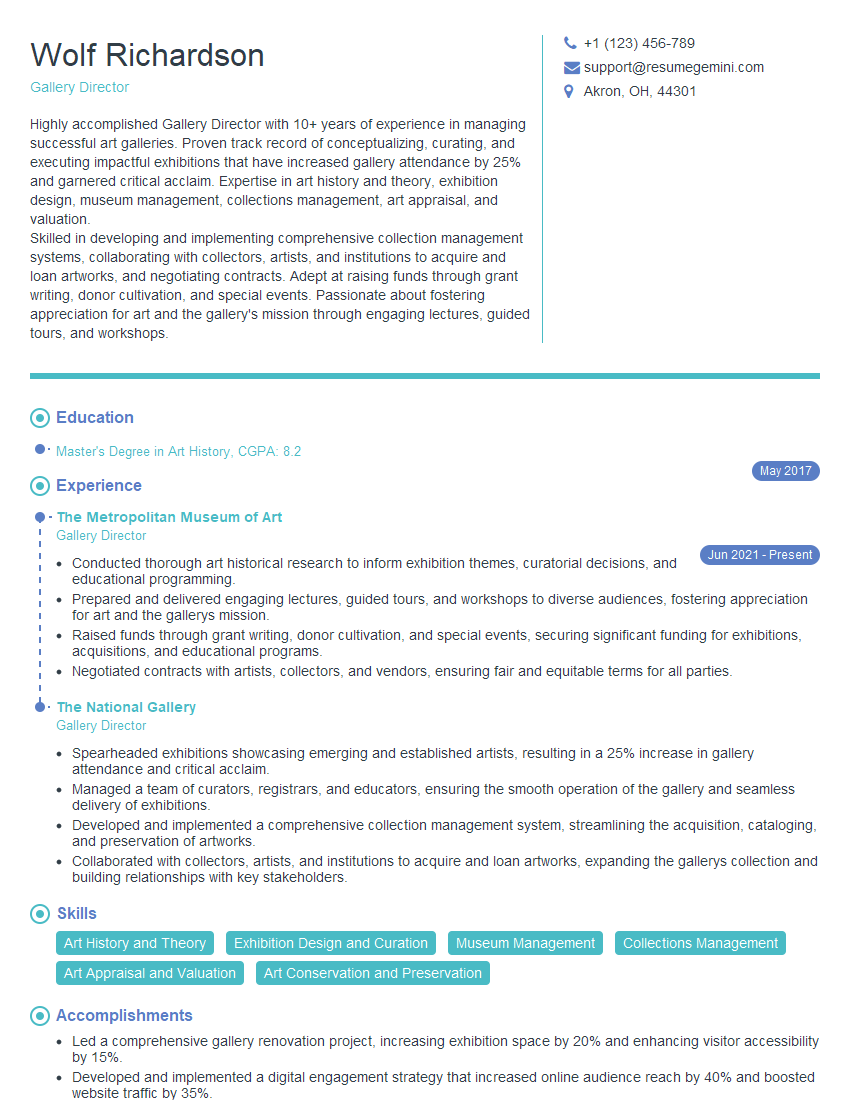
Gallery Director Resume Sample
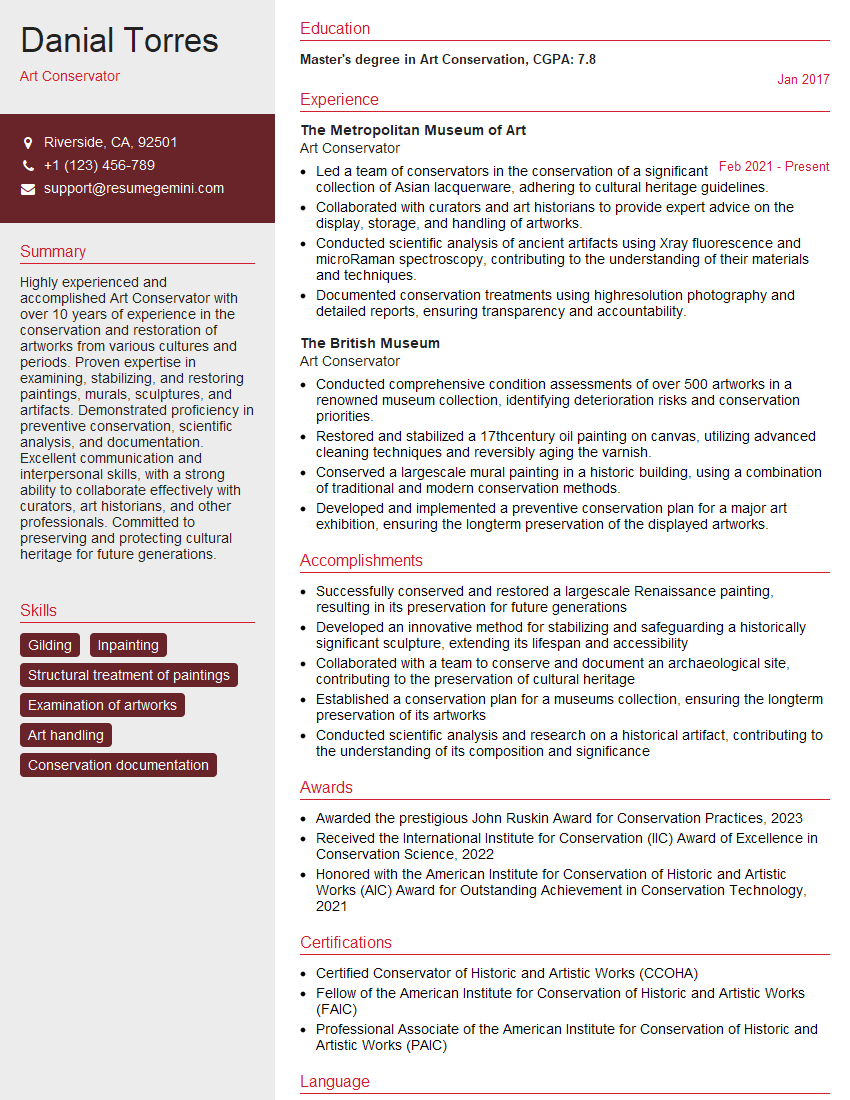
Art Conservator Resume Sample
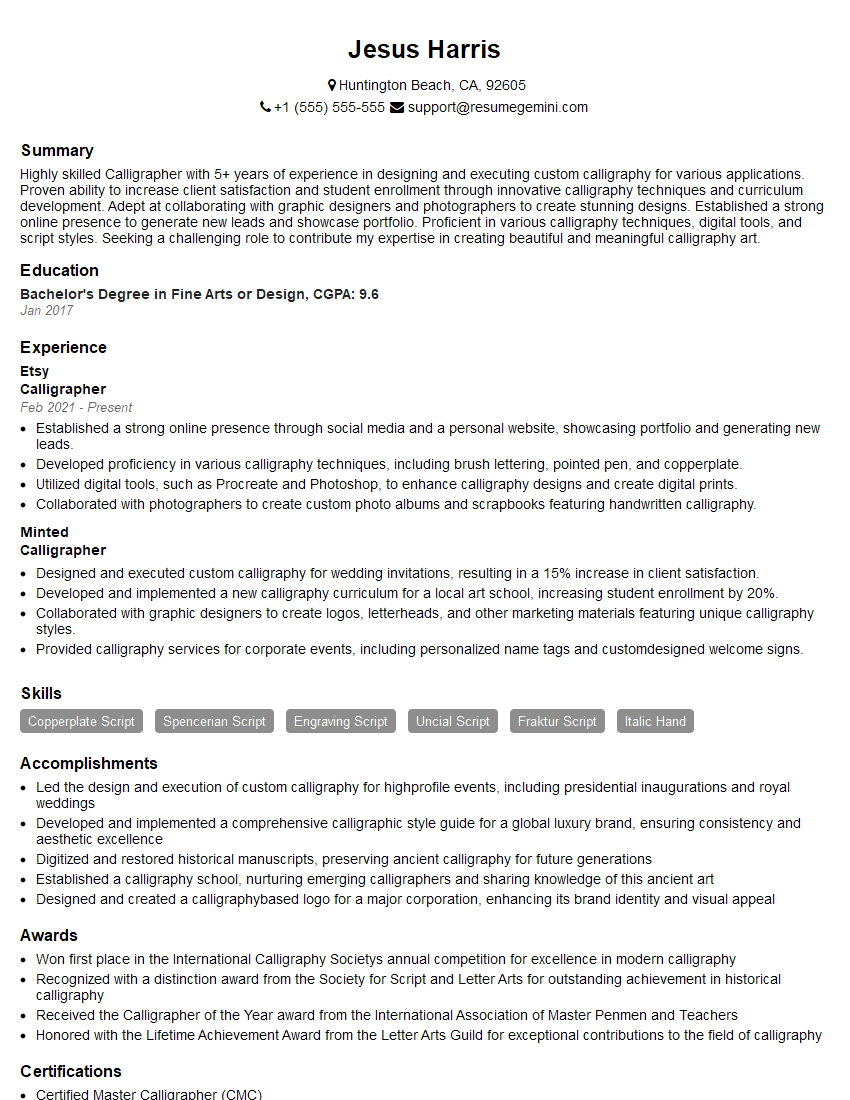
Calligrapher Resume Sample
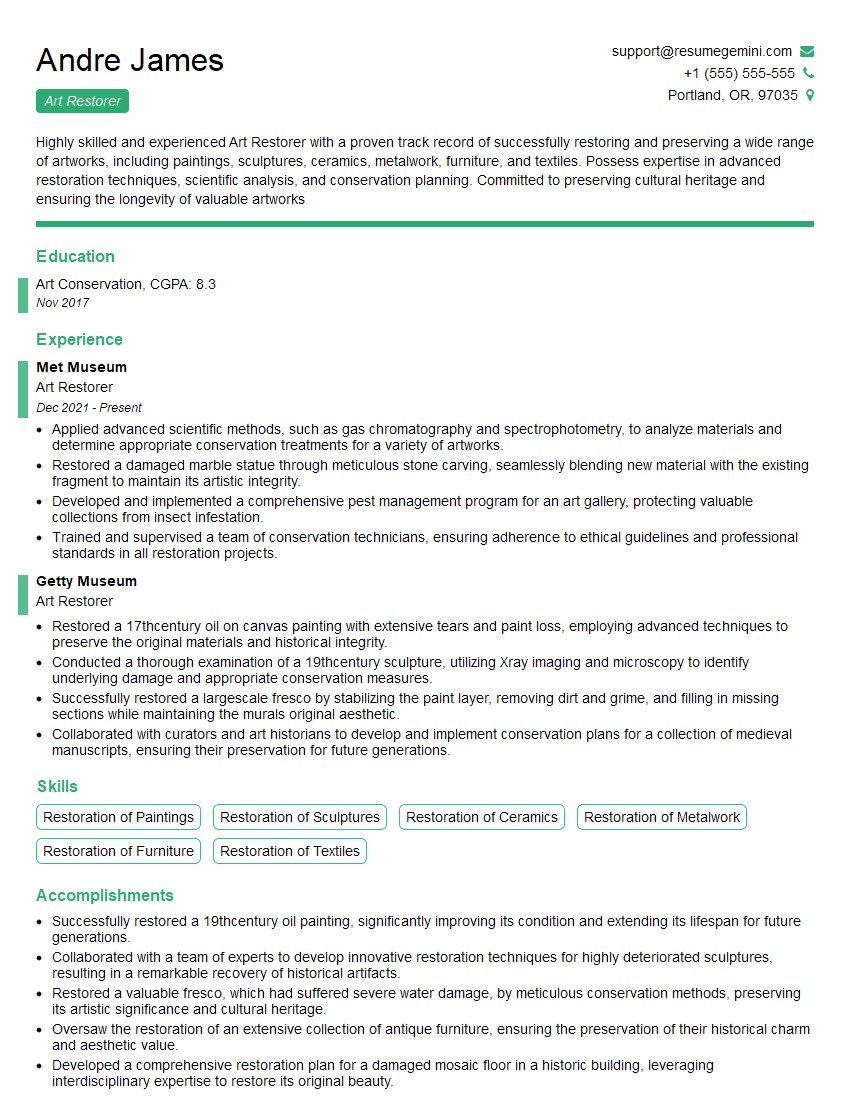
Art Restorer Resume Sample
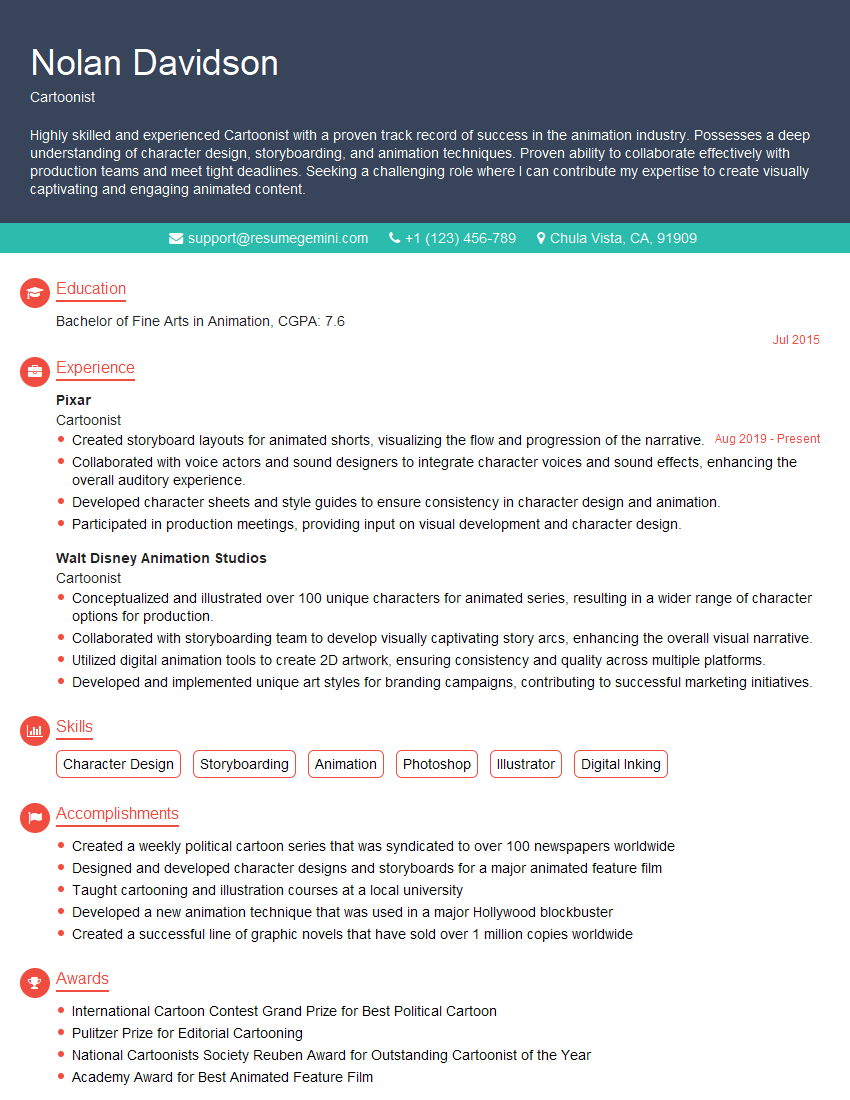
Cartoonist Resume Sample
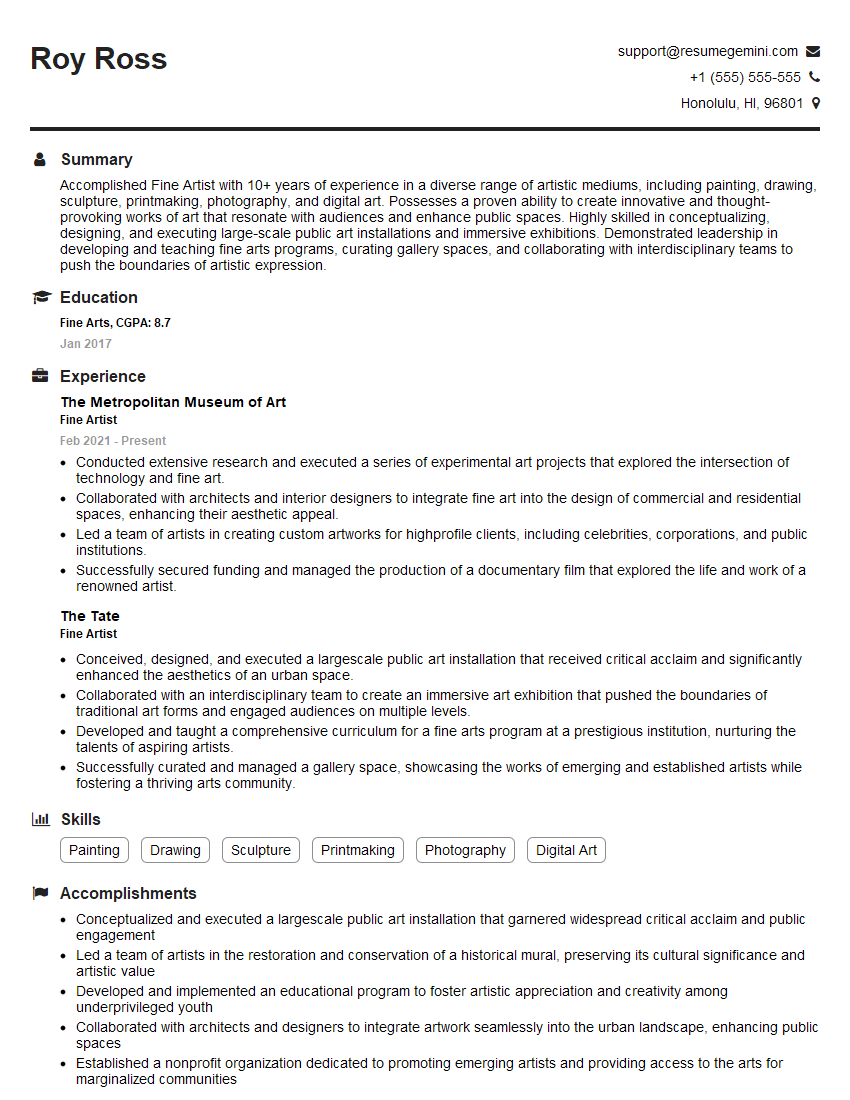
Fine Artist Resume Sample
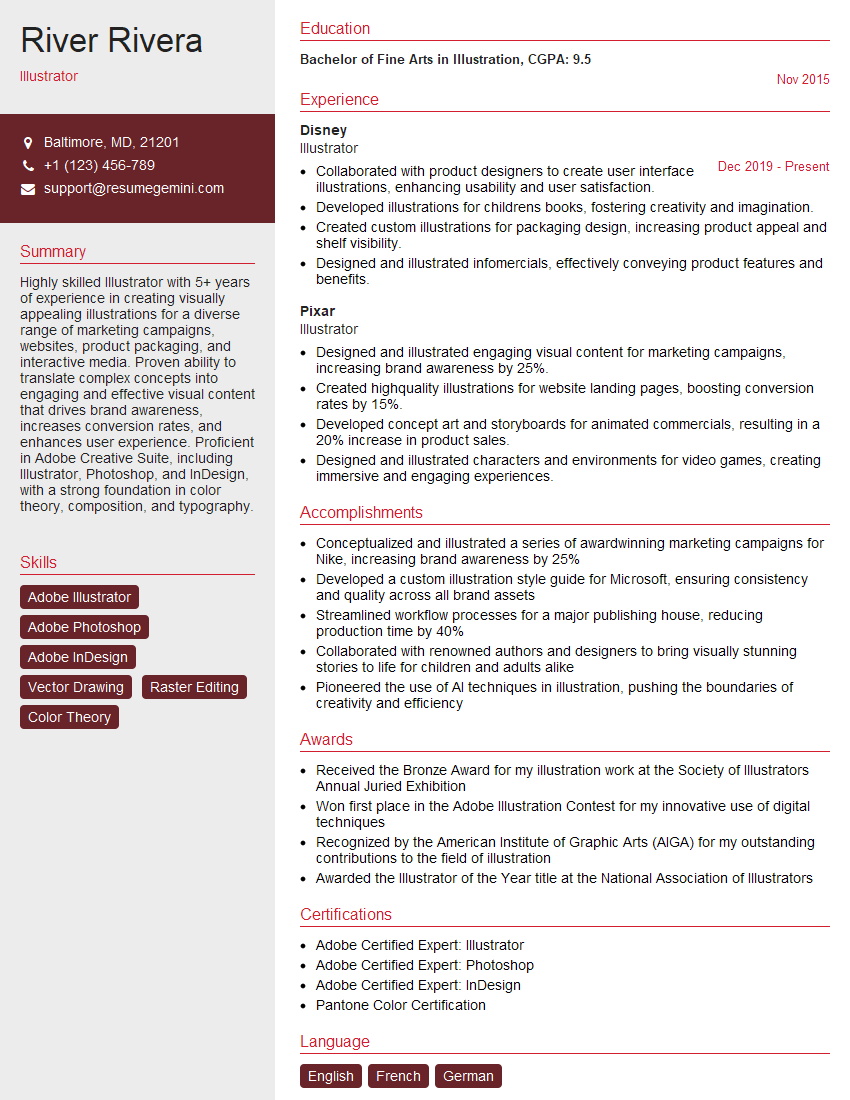
Illustrator Resume Sample
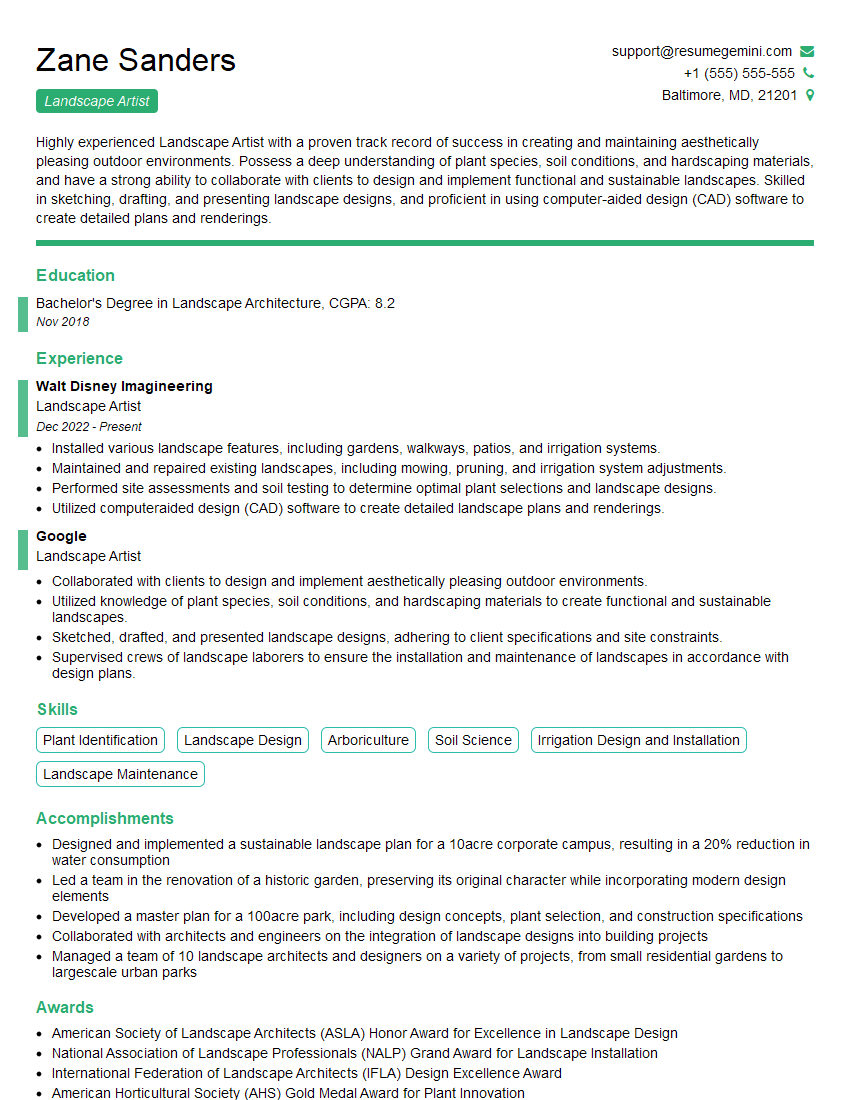
Landscape Artist Resume Sample
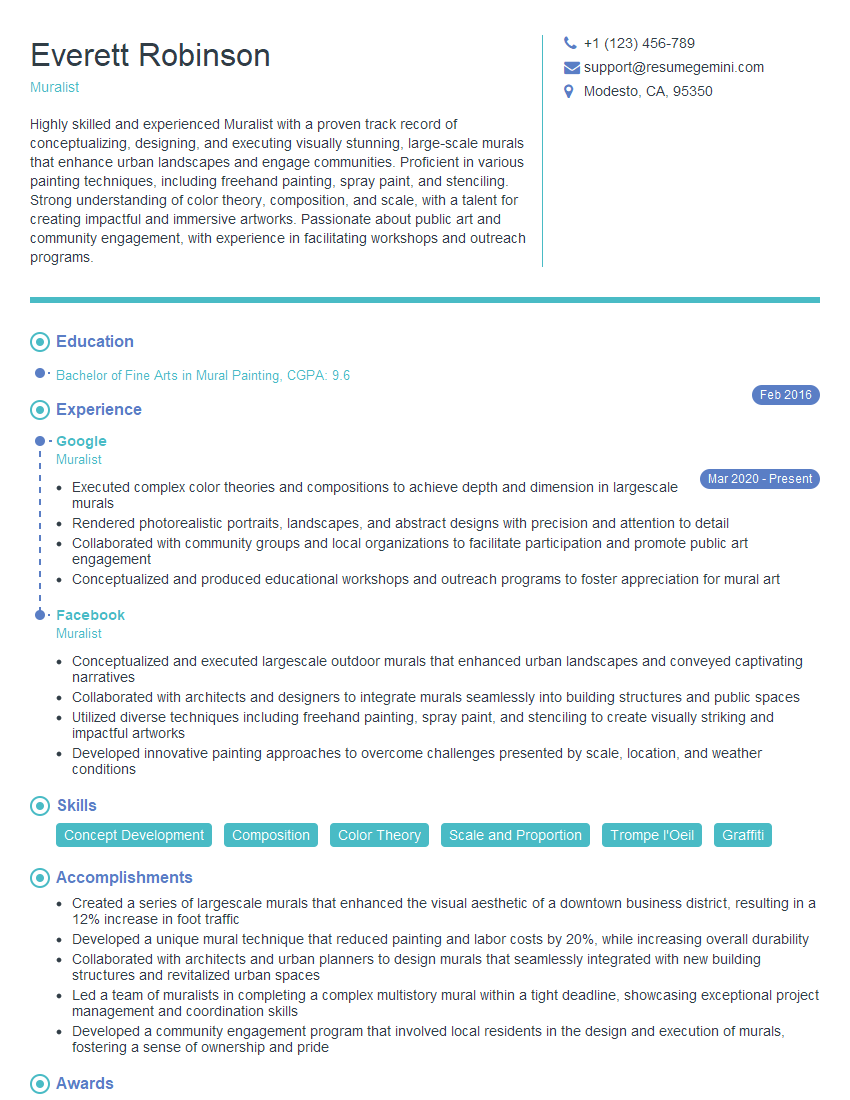
Muralist Resume Sample
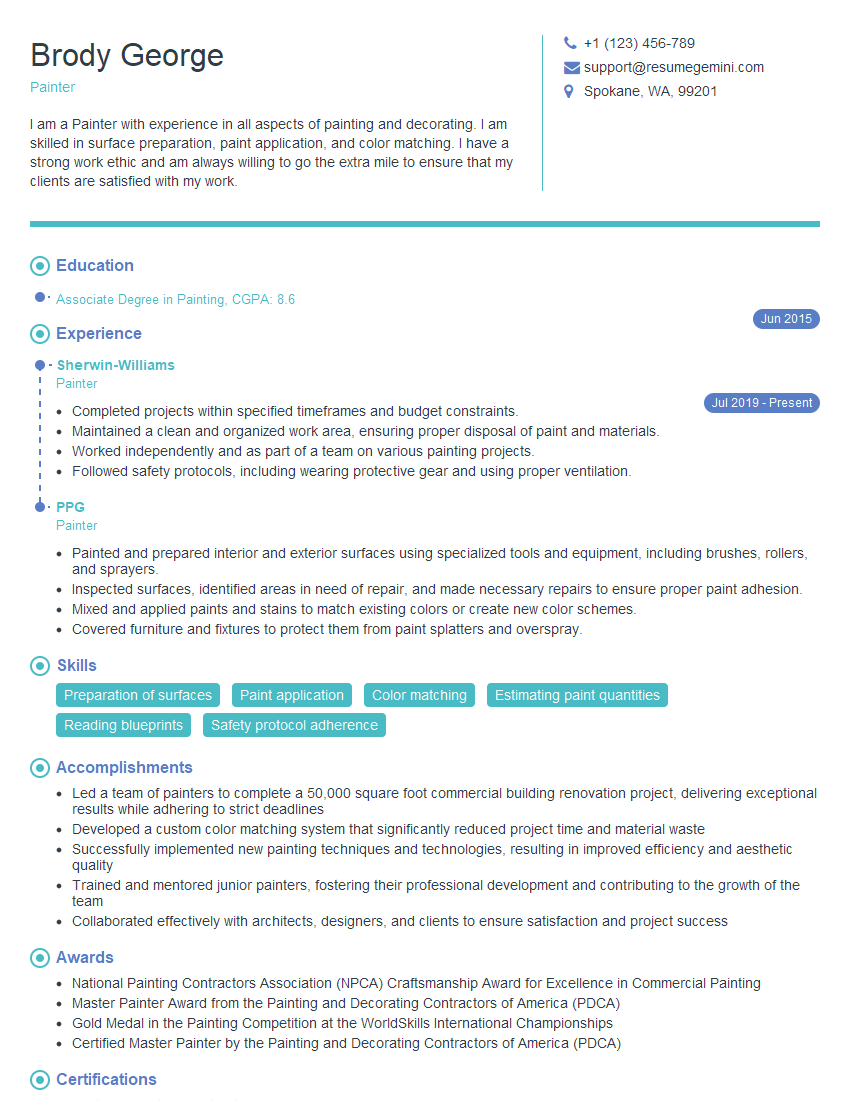
Painter Resume Sample
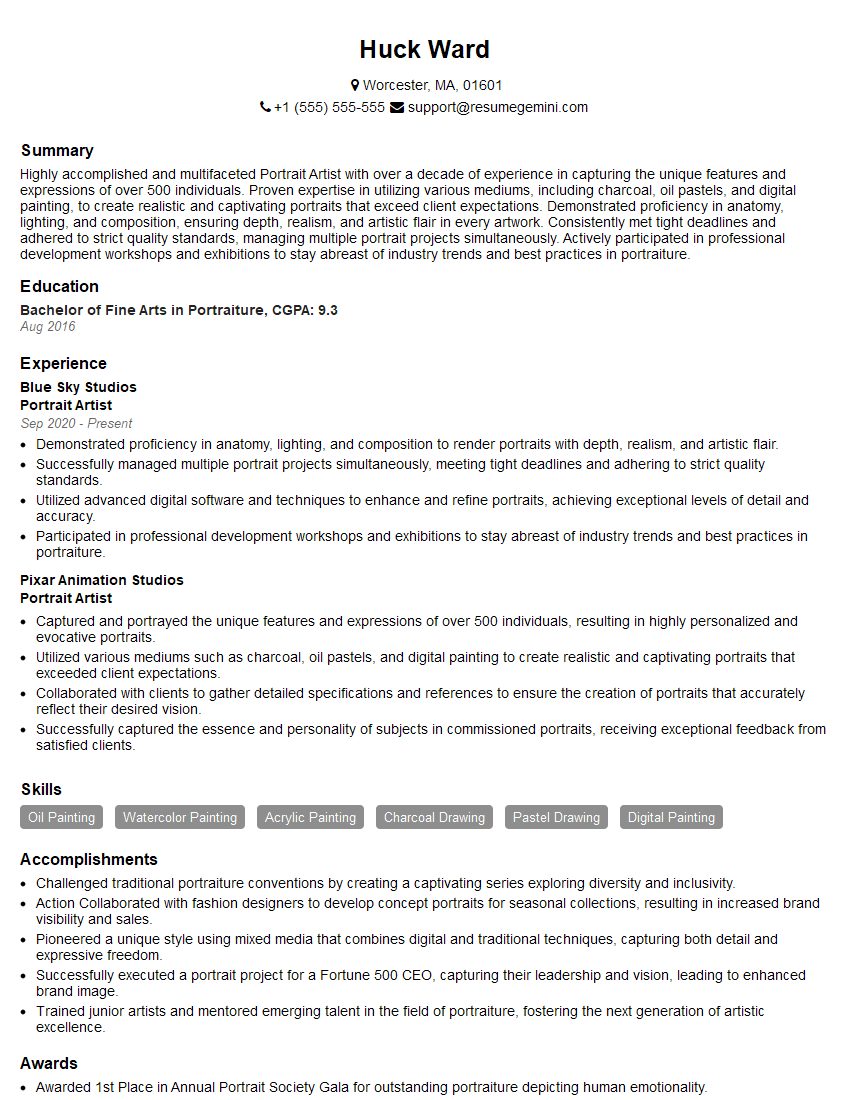
Portrait Artist Resume Sample
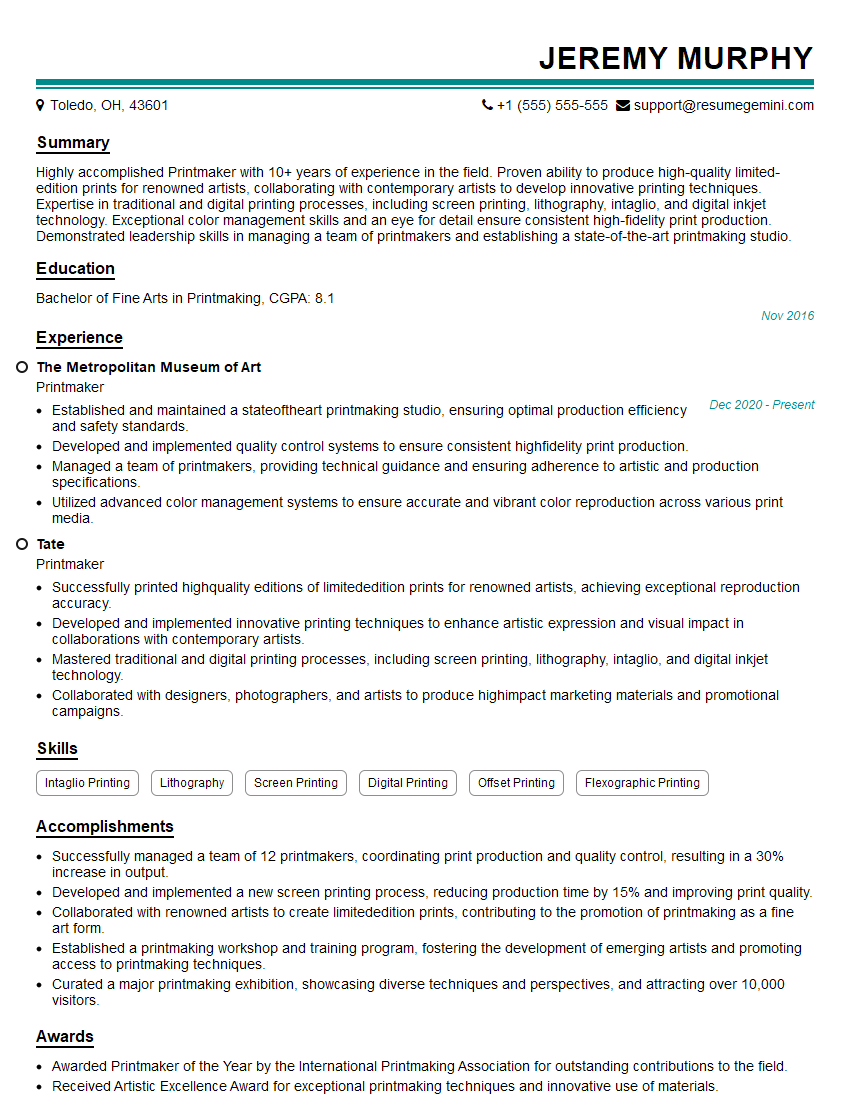
Printmaker Resume Sample
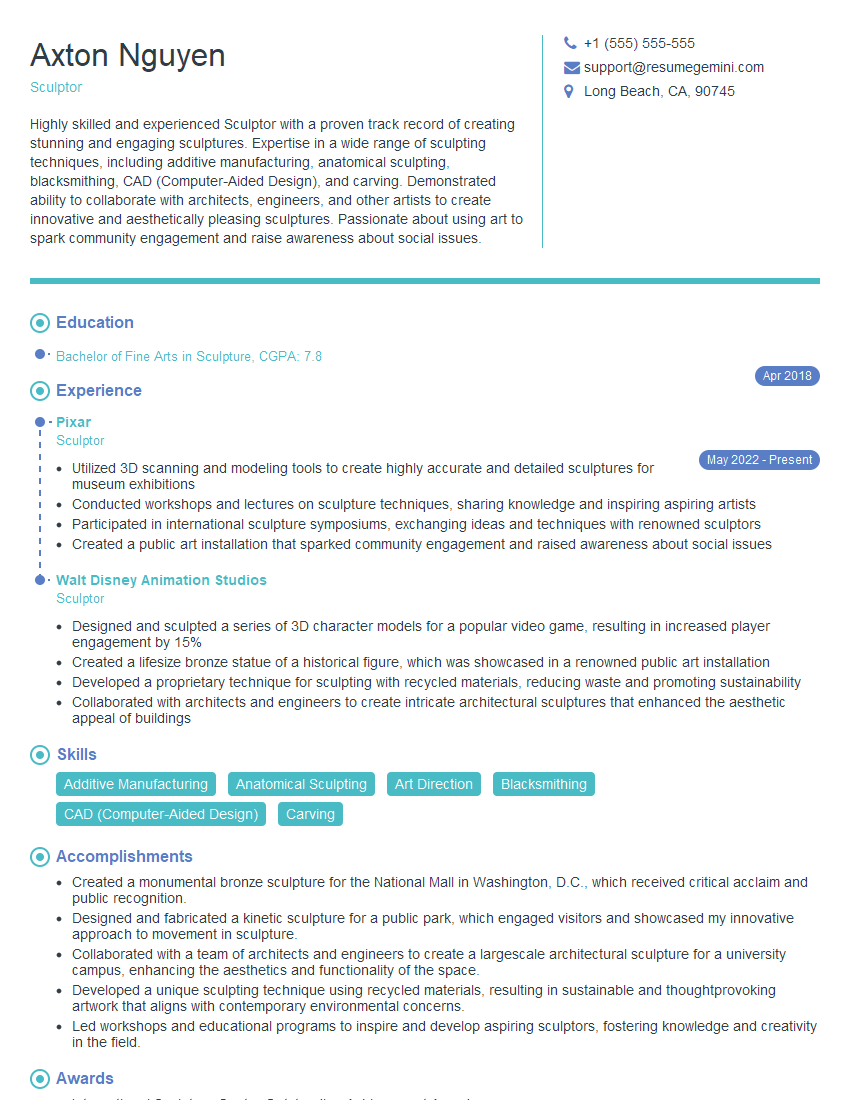
Sculptor Resume Sample
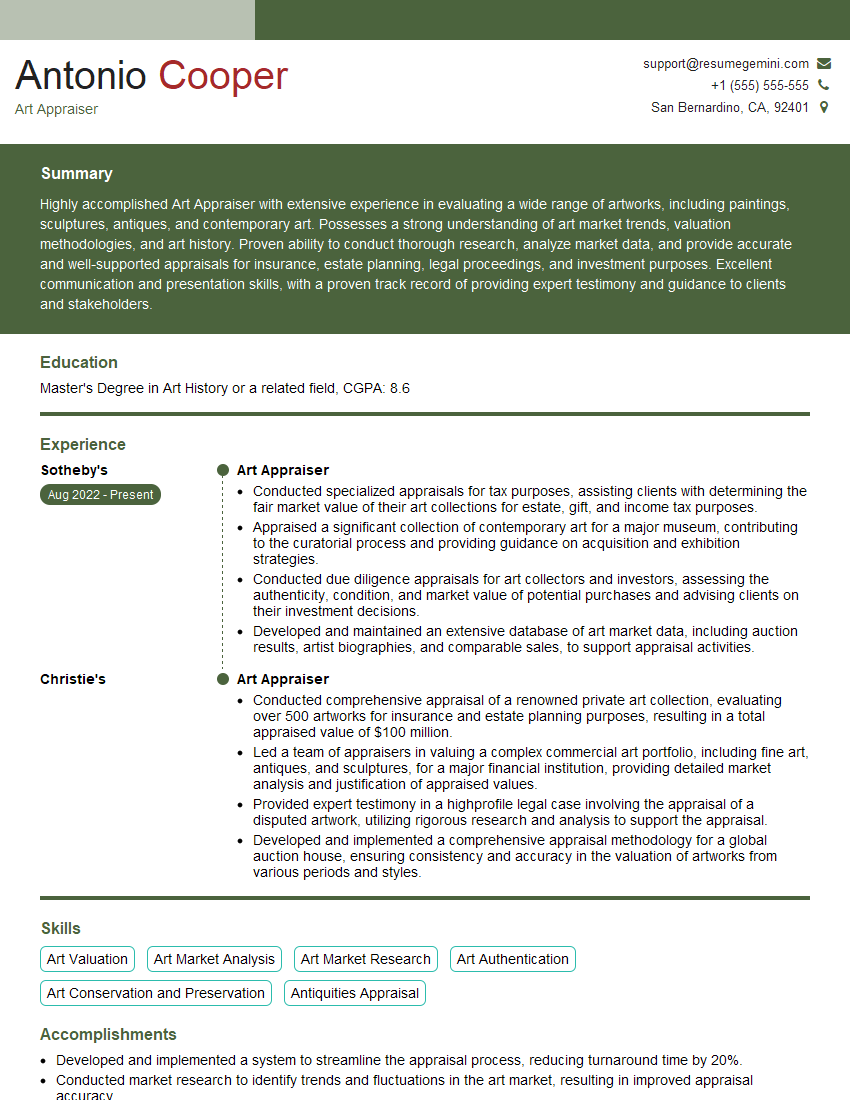
Art Appraiser Resume Sample
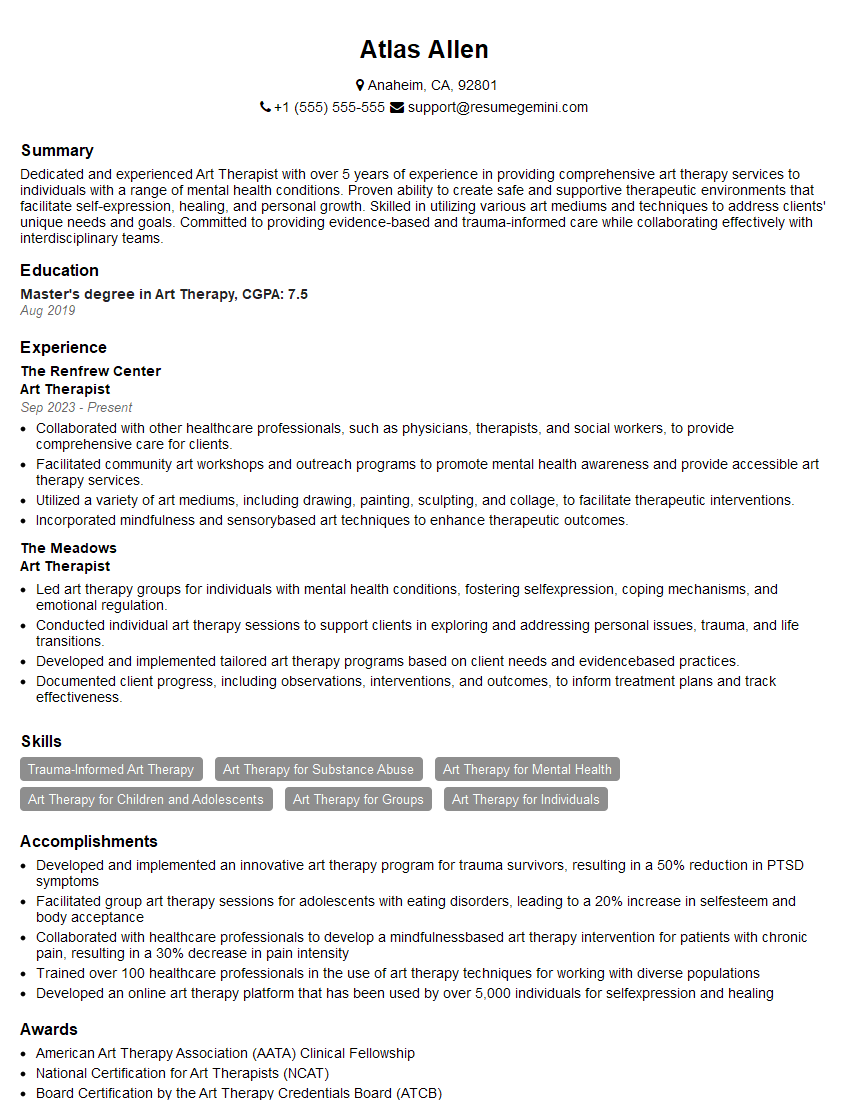
Art Therapist Resume Sample
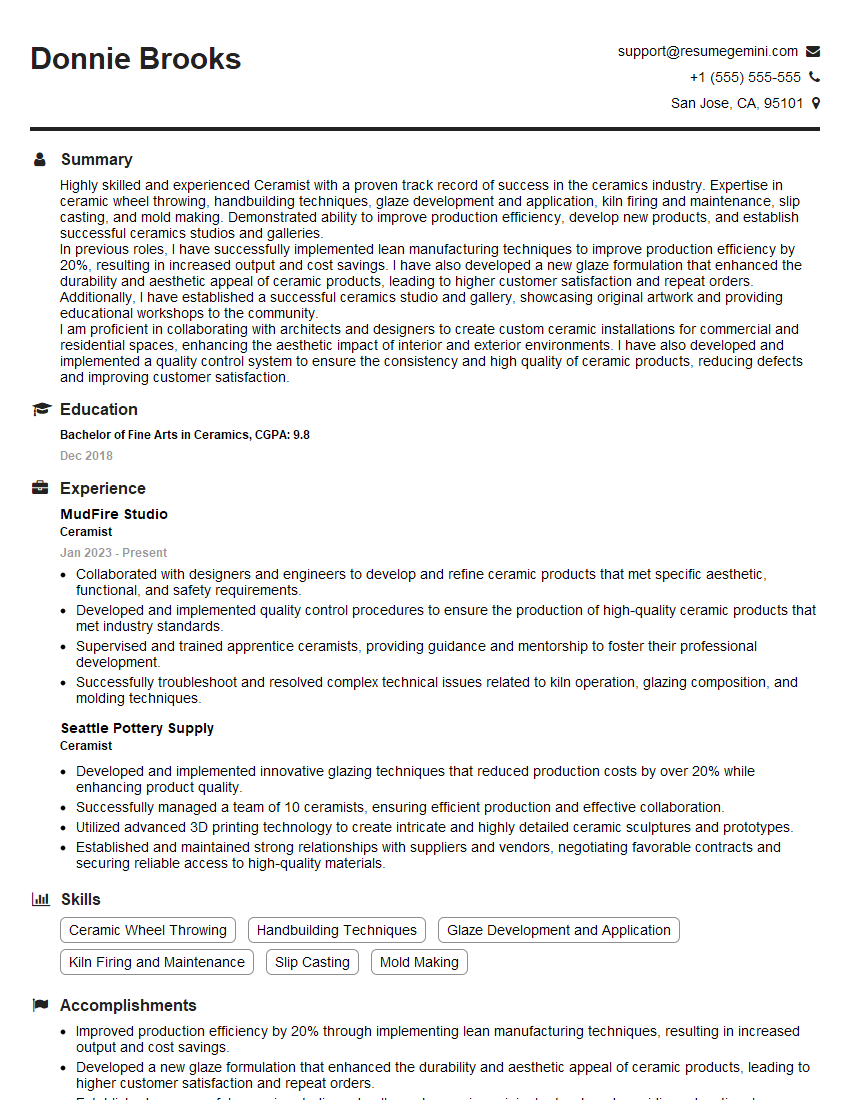
Ceramist Resume Sample
Explore more articles
Users Rating of Our Blogs
Share Your Experience
We value your feedback! Please rate our content and share your thoughts (optional).
What Readers Say About Our Blog
Really detailed insights and content, thank you for writing this detailed article.
IT gave me an insight and words to use and be able to think of examples