Preparation is the key to success in any interview. In this post, we’ll explore crucial Ability to create comics that appeal to a wide range of audiences interview questions and equip you with strategies to craft impactful answers. Whether you’re a beginner or a pro, these tips will elevate your preparation.
Questions Asked in Ability to create comics that appeal to a wide range of audiences Interview
Q 1. Describe your process for developing a compelling narrative in a comic book.
Crafting a compelling comic narrative begins with a strong core idea – a captivating premise that resonates with the target audience. Think of it like building a house: you need a solid foundation. This foundation is built upon three pillars:
- Character Development: Develop relatable characters with clear motivations, flaws, and arcs. For example, a superhero might grapple with the burden of their powers, or a seemingly ordinary teenager could harbor hidden talents. The audience needs to connect with these characters on an emotional level.
- Plot Structure: Structure your story using a classic narrative arc – exposition, rising action, climax, falling action, resolution. While you can experiment with non-linear storytelling, a clear structure ensures the story unfolds logically and keeps readers engaged. Think of it like a rollercoaster; you want the ups and downs to be well-paced and thrilling.
- Theme and Message: What overarching message or theme do you want to convey? Is it about overcoming adversity? Finding your place in the world? A strong theme will give your story depth and meaning, making it more memorable and impactful. This is the glue that holds everything together.
After establishing these elements, I meticulously outline the story, breaking it down into individual panels and scenes. This detailed planning allows for smooth transitions and impactful pacing, ensuring the narrative unfolds effectively. I often use storyboards to visualize the sequence and flow before diving into the actual art.
Q 2. How do you adapt your artistic style to appeal to different age demographics?
Adapting my artistic style for different age demographics requires a keen understanding of each group’s sensibilities. For younger audiences (e.g., children’s books), I employ simpler linework, brighter colors, and exaggerated features. Think of the cartoonish style of classic Disney animation. The focus is on clarity and visual appeal, making it easy for younger eyes to grasp the story. For older audiences (teens and adults), I can incorporate more intricate details, subtler color palettes, and more realistic proportions. The style might be more influenced by manga or graphic novels, showcasing more nuanced emotional expression.
For example, a character’s eyes might be larger and more expressive in a children’s comic, while in a comic for adults, the emphasis could be on subtle facial expressions and body language to convey emotion.
Q 3. Explain your approach to character design, considering audience appeal.
Character design is crucial for audience appeal. I begin by defining the character’s personality, role, and backstory. This informs their visual representation. For example, a villain might have sharp features and dark clothing to convey their menacing nature. A kind character might have softer lines and warm colors. I consider the overall aesthetic of the comic; a character’s design must be consistent with the world it inhabits.
I also consider symbolism. Clothing choices, accessories, and even hairstyles can subtly communicate information about a character’s personality and background. Consider the use of iconic superhero costumes – they instantly communicate power and identity. I often iterate on designs, experimenting with various styles and features until I achieve a look that’s both visually striking and effectively communicates the character’s essence.
Q 4. How do you balance visual storytelling with written dialogue?
Balancing visual storytelling with written dialogue is a delicate art. The visuals should enhance the narrative, not just reiterate the dialogue. The images should convey emotion, action, and setting— elements dialogue might not fully capture. Dialogue should be concise and impactful, serving to advance the plot or reveal character.
I often employ techniques like using visual cues to indicate emotions that dialogue might only imply. For instance, a character’s body language and facial expressions can communicate their internal conflict, even if their dialogue is calm. Similarly, the setting and background art can convey significant information, enhancing the narrative’s impact without relying on lengthy descriptions. This collaborative interplay between visuals and text creates a richer, more engaging experience for the reader.
Q 5. What software and tools do you use for comic creation?
My workflow involves a suite of digital tools. I primarily use Clip Studio Paint for illustration and page layouts. It offers powerful tools for drawing, inking, coloring, and lettering. Photoshop is also helpful for certain tasks, such as advanced color correction and image manipulation. For writing and organization, I rely heavily on Scrivener or other word processing software to keep track of scripts and panels.
Beyond software, I also utilize a graphics tablet with a pressure-sensitive pen for precision and natural-feeling digital art. The right hardware is crucial for achieving the quality and level of detail I strive for.
Q 6. How do you incorporate humor effectively into your comics?
Humor in comics can come from various sources: visual gags, witty dialogue, situational irony, or even character interactions. The key is to ensure the humor is appropriate for the target audience and integrated organically into the narrative. It should enhance the story, not distract from it.
For instance, a visual gag might involve a character tripping over an object in a crucial moment, creating a comedic interruption. Witty dialogue can showcase clever wordplay or unexpected remarks. I often create humor by contrasting the expected with the unexpected, playing with stereotypes, or employing slapstick elements. The timing and delivery are paramount; a well-timed joke can have a significantly larger effect.
Q 7. How do you handle feedback and criticism on your comic work?
Feedback is invaluable. I actively seek feedback from beta readers, fellow artists, and even potential publishers. Constructive criticism helps identify areas for improvement, refine the story, and enhance the overall quality of the comic. I carefully analyze the feedback, separating genuine concerns from personal preferences.
For instance, if multiple readers point out confusion in a particular sequence, it’s a clear sign that I need to revise the storytelling in that section. Conversely, if the feedback is subjective (e.g., “I didn’t like the character’s design”), I consider it alongside other feedback and use my artistic judgment to determine whether changes are necessary. Ultimately, the goal is to improve the comic based on valid critiques, while maintaining my artistic vision.
Q 8. Describe your experience working with different printing methods for comics.
My experience spans various printing methods, each offering unique advantages and disadvantages for comic production. Offset printing, the traditional method, provides high-quality results at a lower cost per unit for large print runs. However, it involves higher upfront costs for plate creation and is less flexible for smaller runs or revisions. Digital printing, on the other hand, is ideal for smaller runs and allows for greater flexibility and faster turnaround times, but the cost per unit is typically higher for smaller volumes. I’ve also worked with on-demand printing services, perfect for self-published works or limited editions, offering print-on-demand flexibility without large upfront investments but usually at a higher per-unit cost compared to offset. The choice of method often depends on the budget, print run size, and desired quality.
For instance, for a successful, widely distributed comic book series, offset printing is likely the most economical and effective. For a self-published indie comic with a limited audience, digital or on-demand printing would be more suitable. Choosing the right printing method is crucial for maximizing the impact and profitability of a comic book project.
Q 9. How do you manage deadlines and project timelines for comic production?
Managing deadlines in comic production requires a structured approach. I begin with a detailed breakdown of the project into manageable phases: scripting, penciling, inking, coloring, lettering, and printing. Each phase has assigned deadlines, creating a Gantt chart helps visualize the workflow and identify potential bottlenecks. Regular check-ins and progress reports are crucial to monitor the project’s health. Communication is key – maintaining open dialogue with artists, letterers, and printers ensures any issues are addressed promptly. Contingency plans are also important; unforeseen delays are inevitable, so having buffer time built into the schedule mitigates potential risks. I use project management software to track progress and milestones, sending regular updates to stakeholders. This proactive approach allows for effective timeline management, preventing last-minute rushes and ensuring high-quality output.
Q 10. Explain your understanding of different comic book genres (e.g., superhero, slice-of-life, horror).
Understanding comic book genres is essential for crafting compelling narratives. Superhero comics, for example, often feature characters with extraordinary abilities battling villains and exploring themes of morality and responsibility. Examples include Marvel’s Avengers or DC’s Justice League. Slice-of-life comics focus on the everyday experiences and relationships of ordinary people, exploring relatable themes of love, friendship, and family life. Yotsuba&! is a prime example of this genre. Horror comics delve into fear, suspense, and the macabre, often exploring psychological or supernatural elements; The Walking Dead is a highly successful example. My ability to adapt to these different styles allows me to create diverse and engaging narratives that cater to various tastes.
I analyze the core elements of each genre – character archetypes, narrative structures, visual styles – to ensure authenticity and appeal. This understanding helps to inform my creative choices and create a comic that resonates with the intended audience.
Q 11. How do you ensure your comics are accessible to a diverse audience?
Creating comics accessible to diverse audiences involves careful consideration at every stage of production. Representation matters, so I ensure diverse characters in terms of race, ethnicity, gender, sexual orientation, and abilities are accurately and respectfully depicted. Storylines should avoid harmful stereotypes and promote inclusivity. Accessibility also involves considerations for readers with visual impairments, through careful use of fonts, color contrast, and alternative text descriptions when the comic is in digital format. Simple language and straightforward narrative structures can also broaden the appeal, making the comic engaging for a wider age range. In short, it’s about creating a world that reflects the richness and diversity of the actual world, making everyone feel seen and represented.
For example, I may consciously avoid using harmful racial tropes and focus on showcasing diverse characters with complex personalities and motivations rather than relying on stereotypical depictions. The goal is to create a truly inclusive reading experience.
Q 12. Describe your experience with self-publishing or traditional publishing routes for comics.
I have experience with both self-publishing and traditional publishing routes. Self-publishing provides complete creative control and allows for a faster release schedule; however, it requires significantly more effort in marketing, distribution, and handling all aspects of production. Traditional publishing, on the other hand, offers wider distribution networks, marketing support from established publishers, and greater credibility; but it involves relinquishing some creative control and navigating the complexities of publishing contracts. Both routes have their own sets of challenges and rewards.
For a smaller, niche comic, self-publishing might be a better initial strategy due to its lower barrier to entry. For a larger-scale project with higher expectations and more resources, a traditional publishing route is probably a wiser choice. It’s important to weigh the pros and cons of each route carefully before making a decision based on individual project goals.
Q 13. How do you market and promote your comic books?
Marketing and promotion are integral to a comic’s success. My strategies encompass a multi-faceted approach. Building an online presence is crucial; this involves creating engaging social media content, establishing a website, and utilizing online platforms to interact with potential readers. Collaborations with other creators and influencers in the comic community can significantly broaden reach. Attending comic conventions and book fairs provides opportunities for direct engagement with audiences and building brand awareness. Pre-orders and crowdfunding campaigns can generate early buzz and secure funding for the project. Targeted advertising on relevant online platforms can enhance visibility. Review copies sent to critics and influencers can generate positive word-of-mouth marketing. This comprehensive strategy increases the likelihood of reaching the target audience and generating sales.
Q 14. How do you balance creative freedom with commercial considerations?
Balancing creative freedom and commercial considerations is a constant juggling act. It requires a thoughtful approach, understanding both the artistic vision and the market demands. I aim to find a sweet spot where the story remains compelling and true to my artistic voice while still appealing to a broad enough audience to be commercially viable. This might involve making strategic creative choices – refining aspects of the storyline or art style to enhance marketability without sacrificing the core narrative – or carefully selecting a target audience that aligns with both artistic integrity and the potential for return on investment.
Sometimes, compromises are necessary, but the key is to maintain a clear artistic vision while remaining adaptable and receptive to market feedback. It’s not about selling out but about finding a way to connect a compelling story with an eager audience.
Q 15. Describe your process for developing a unique visual style for a comic.
Developing a unique visual style for a comic is a crucial step in establishing its identity and appealing to a wide audience. It’s a process of experimentation and refinement, blending influences with personal expression. I begin by exploring various art styles – from Manga’s dynamic energy to the clean lines of European comics, the bold simplicity of graphic novels, and the intricate detail of classical illustration. I analyze what resonates with me aesthetically and conceptually. Then, I experiment with different mediums; digital painting allows for flexibility and corrections, while traditional methods like ink and watercolour can impart unique textures and spontaneity.
Next, I focus on character design. Consistent character design is key – think of the instantly recognizable style of Peanuts or the distinct features of Tintin. This consistent style applies to everything – from the way I draw eyes and noses to how I render clothing and backgrounds. I might create several iterations of a character, experimenting with different shapes, proportions, and expressions to discover the most effective visual representation. Ultimately, the visual style should support the narrative and emotional tone of the comic.
Finally, I create a style guide. This document is a reference sheet for myself and any collaborators, maintaining consistency throughout the project. It includes examples of character designs, panel layouts, lettering styles, and color palettes. This ensures visual cohesion and prevents stylistic drift across panels and issues.
Career Expert Tips:
- Ace those interviews! Prepare effectively by reviewing the Top 50 Most Common Interview Questions on ResumeGemini.
- Navigate your job search with confidence! Explore a wide range of Career Tips on ResumeGemini. Learn about common challenges and recommendations to overcome them.
- Craft the perfect resume! Master the Art of Resume Writing with ResumeGemini’s guide. Showcase your unique qualifications and achievements effectively.
- Don’t miss out on holiday savings! Build your dream resume with ResumeGemini’s ATS optimized templates.
Q 16. How do you use color and composition to enhance storytelling in comics?
Color and composition are fundamental tools for storytelling in comics. They aren’t merely decorative; they directly impact mood, pacing, and character development. For instance, warm colors like reds and oranges can evoke feelings of excitement, anger, or warmth, while cool colors like blues and greens often represent calmness, sadness, or mystery.
Composition guides the reader’s eye through the page. A classic technique is using the rule of thirds, placing key elements off-center to create visual interest. Panel layouts also affect the pace – a series of small panels can create a sense of urgency, while larger panels can emphasize a specific moment. Consider the use of gutters – the space between panels – which can affect the storytelling rhythm. A wider gutter may signify a time jump or change in location, while a narrow gutter could show seamless action.
Color can also highlight emotional shifts. A sudden change from muted tones to vibrant colors might indicate a character’s epiphany, while a gradual shift to darker shades can signify growing tension. Furthermore, color choices can subtly reveal character traits. A character who consistently wears muted colors might be introverted or melancholic, while someone always adorned in bright hues could be extroverted and optimistic.
Q 17. How do you create engaging and believable characters?
Creating engaging and believable characters requires a multifaceted approach. First, I develop a detailed backstory for each character, including their personality, motivations, relationships, and flaws. This backstory informs their actions and dialogue, giving them depth and relatability, even if only glimpses of the backstory are revealed in the comic itself. I consider their physical appearance, which should reflect their personality and background. A rugged, scarred character might suggest a life of hardship, while a neatly dressed character could imply order and control.
I also give each character distinct voices – their way of speaking, their vocabulary, their mannerisms. A character’s dialogue should feel natural and authentic to their personality. I also use visual cues – body language, facial expressions, and even the way they move – to convey their inner thoughts and emotions. Internal monologues or thought bubbles can reveal a character’s perspective, offering the reader insights into their hidden motivations and anxieties. Crucially, characters should have relatable flaws and undergo meaningful growth throughout the story.
I often use real-life people as inspiration, observing their mannerisms, speech patterns, and reactions to various situations. I also draw inspiration from literature and film, studying the way characters are developed in different narratives. The key is to create characters that readers connect with on an emotional level, making the story resonate.
Q 18. How do you incorporate symbolism and metaphor into your comic work?
Symbolism and metaphor enrich the storytelling in comics, adding layers of meaning that extend beyond the literal narrative. For instance, a recurring image of a wilting flower could symbolize a character’s declining health or a fading relationship. A dark, shadowy landscape might represent the character’s internal struggle or a menacing external force.
Metaphorical use of color is also extremely effective. The consistent use of a specific color associated with a particular character might symbolize an aspect of their personality or a key event in the story. For example, consistently using a particular shade of red could symbolize passion, danger, or even anger, depending on the context.
The placement of characters within a panel can also have symbolic meaning. Placing a character in a small, confined space can represent their feelings of being trapped or overwhelmed, while placing them in a vast, open space might symbolize freedom or liberation. Careful consideration of these symbolic elements enhances the narrative depth, allowing for multiple interpretations and enriching the reader’s experience. However, subtlety is crucial – avoid making symbolism too overt or heavy-handed.
Q 19. What are some common pitfalls to avoid when creating comics?
Several pitfalls can hinder the creation of successful comics. One common mistake is inconsistent art style. Maintaining a consistent visual style throughout the comic is essential for its visual cohesion and overall aesthetic appeal. Another frequent issue is weak character development. Characters should be well-defined, with clear motivations, flaws, and arcs. Generic or underdeveloped characters often result in a lack of reader engagement.
Poor pacing is another significant issue. A fast-paced comic might feel rushed, whereas a slow-paced comic can feel monotonous. Finding the right balance is key. Similarly, convoluted plots can overwhelm readers, making it difficult to follow the story. Keeping the plot clear and easy to follow is paramount. Finally, neglecting visual storytelling can impact the overall effectiveness of the comic. Effective visual storytelling conveys meaning through visual elements, complementing the written narrative.
To avoid these pitfalls, meticulous planning is essential. Creating detailed outlines, character profiles, and style guides helps maintain consistency and prevents issues. Regular feedback from others, including beta readers, can help identify areas for improvement.
Q 20. How do you research and develop concepts for new comic series?
Research and concept development for new comic series is a multi-stage process. I usually begin by brainstorming ideas, exploring different genres and themes that interest me. This could involve brainstorming sessions, mind mapping, or simply freewriting. Then I conduct thorough research, investigating historical events, social issues, or scientific concepts relevant to the story. This research ensures factual accuracy and enhances the realism of the narrative.
Next, I develop a detailed outline of the storyline, including the major plot points, character arcs, and setting details. I’ll create character sketches, detailed character profiles, and even world-building documents to ensure consistency. I also refine the visual style, developing a style guide to ensure consistency in art style throughout the series.
I regularly seek feedback throughout this process. Sharing early concepts with colleagues, friends, and potential readers helps identify weaknesses and refine ideas. I find that analyzing successful comics in the chosen genre also offers valuable insights into established tropes and conventions. Adapting successful storytelling techniques while maintaining originality is crucial. Ultimately, a compelling concept is both original and engaging, with a strong narrative foundation.
Q 21. Explain your understanding of copyright and intellectual property rights related to comics.
Understanding copyright and intellectual property (IP) rights is crucial for anyone creating comics. Copyright protection automatically applies to original works of authorship, including comics, upon creation. This protection grants the creator exclusive rights to reproduce, distribute, display, perform, and create derivative works based on their comic. This means you control how your work is used and who can use it.
Copyright infringement occurs when someone uses a copyrighted work without permission. This can include unauthorized reproduction, distribution, or adaptation of the comic. Registering a copyright with the relevant copyright office provides additional legal protections, particularly in cases of infringement. It strengthens your claim and allows for legal action to be taken against infringers.
When collaborating with others, clear agreements regarding ownership and usage rights are crucial. Contracts should outline each party’s contributions and corresponding rights. Furthermore, it is important to be aware of fair use principles, which allows limited use of copyrighted material for purposes such as criticism, commentary, news reporting, teaching, or research. However, determining whether a particular use qualifies as fair use can be complex and often depends on specific factors. It’s always best to err on the side of caution and obtain permission whenever possible. Ignoring copyright laws can lead to significant legal repercussions, including fines and lawsuits.
Q 22. How do you collaborate effectively with other members of a comic production team?
Effective collaboration in comic production hinges on clear communication, respect for individual roles, and a shared vision. I approach it through a structured, iterative process. Initially, we hold brainstorming sessions where everyone contributes ideas and establishes the overall narrative arc and visual style. This is followed by detailed planning, outlining page layouts, character designs, and scene descriptions. We use project management tools like Trello or Asana to track progress, deadlines, and feedback. Regular check-ins and constructive criticism are crucial. For example, during the inking phase, I might share my progress with the letterer early on to ensure font choices complement the art style and prevent layout conflicts. Open communication is paramount; any challenges are addressed promptly, fostering a supportive and productive environment. We often utilize collaborative online platforms to share files and provide feedback in real-time, streamlining the process significantly.
Q 23. Describe your experience with digital inking and coloring techniques.
My experience with digital inking and coloring is extensive, encompassing various software like Clip Studio Paint, Photoshop, and Procreate. I’m proficient in techniques ranging from traditional-style inking with digital brushes, mimicking the texture and feel of pen and ink, to cleaner, vector-based inking for precise lines and easier scaling. Coloring is an equally significant part of my process. I’m adept at using color palettes to establish mood and atmosphere. For example, using muted tones for a melancholic scene versus vibrant colors for an action-packed sequence. I experiment with different blending modes to achieve a variety of effects, from subtle shading to intense highlights. I also utilize digital tools to experiment with textures and patterns, adding depth and visual richness to the artwork. I can seamlessly transition between realistic and stylized approaches depending on the project’s requirements. For instance, in one project, I used a painterly, textured approach for a fantasy comic, whereas in another, I opted for a flatter, more graphic style for a science fiction piece.
Q 24. How do you use panel layout and pacing to control the reader’s experience?
Panel layout and pacing are the architects of the reader’s experience. They dictate the rhythm and flow of the story, controlling emotional impact and suspense. Consider a tense moment: A series of small panels, each showing incremental progress of a looming threat, builds anticipation. Conversely, a large, expansive panel might showcase a moment of peaceful reflection or a powerful reveal. I often use techniques like gutter space (the space between panels) to manipulate pacing; smaller gutters accelerate the story while larger ones slow it down, forcing the reader to pause and reflect. I also use various panel shapes and orientations – vertical panels can emphasize height, horizontal panels, breadth. It’s a dance of visual storytelling. Think of it like music; a fast tempo for action scenes, a slow, deliberate pace for emotional moments. By carefully adjusting panel size, shape, arrangement, and the space between them, I can guide the reader’s eyes and emotions through the narrative, creating a truly immersive experience.
Q 25. How do you manage the challenges of creating a long-form comic series?
Creating a long-form comic series requires meticulous planning and organization. It’s like running a marathon, not a sprint. First, I develop a comprehensive outline, outlining the major plot points and character arcs across the entire series. This helps maintain consistency and prevents plot holes. Then, I break down the series into manageable arcs or story beats, allowing for flexible scheduling. I use a detailed script, meticulously outlining each panel, dialogue, and visual elements. A production schedule is crucial, with realistic deadlines set for each stage (scripting, sketching, inking, coloring, lettering). Regular self-assessment and adaptation are key. I might adjust the pace or make minor plot adjustments based on reader feedback or evolving ideas, ensuring the story remains engaging over extended periods. Maintaining consistency in character design, art style, and tone is also essential throughout the series to offer a cohesive and satisfying reading experience. For example, I might use a mind map to visually organize the overall narrative structure, characters, and their interrelationships, keeping a bird’s eye view of the unfolding story.
Q 26. Explain your familiarity with different panel layouts and storytelling techniques.
My familiarity with panel layouts and storytelling techniques is extensive. I’m comfortable employing various techniques, such as the classic six-panel grid, splash pages for impactful moments, or more experimental layouts with irregular panel shapes. I understand the impact of different transitions between panels: the jump cut for a sudden change in time or place, the sequence panel to show a continuous action, or the parallel panel for comparing two events. I often use montage sequences to condense time or convey a repetitive action. Furthermore, I understand the narrative power of close-ups, medium shots, and long shots to control the reader’s focus and emotional response. Consider a fight scene: a series of close-up panels highlighting the characters’ expressions and movements builds tension and excitement, whereas wider shots might showcase the environment or the scale of the conflict. The choice of panel arrangement and type is a crucial part of my design language, ensuring that the visual narrative is seamlessly integrated with the written content.
Q 27. How do you adapt your work to different publishing formats (print, digital, web)?
Adapting my work for different formats requires a nuanced understanding of the limitations and capabilities of each medium. For print, I consider the resolution and color profile needed for optimal reproduction. For example, I may need to optimize file sizes for web distribution to ensure fast loading times. Digital platforms may require a different level of compression or resolution. When preparing comics for webcomics, I may use smaller file sizes to reduce loading times while maintaining visual quality. Print may necessitate certain color adjustments to account for the differences in ink and paper. In short, the format dictates certain technical considerations, but the storytelling remains central. The core narrative should remain engaging regardless of the chosen publishing method. Understanding target audience and platform specifics also plays a role – a mobile-first webcomic may require optimized layouts and intuitive navigation to improve the user experience.
Q 28. Describe your process for generating ideas and developing concepts for comics.
My idea generation process is a blend of inspiration and structured development. I start by immersing myself in different sources – books, movies, music, real-world events, even conversations. I keep a journal to jot down ideas, sketches, and observations. Then, I actively explore these concepts, asking myself questions like: “What if…?”, “What would happen if…?”, and “What are the consequences of…?” I develop the premise, flesh out characters, plot points, and potential conflict. Sometimes, a compelling character or a single compelling image can spark an entire story. Once I have a solid concept, I create a detailed outline or a storyboard to structure the narrative. I continuously refine my ideas based on feedback from trusted colleagues or beta readers. The whole process is an iterative one; I might start with a general concept and refine it throughout the process, adding layers of complexity and detail as the story evolves. It’s a dynamic and engaging process, constantly shaped by inspiration, research, and self-reflection.
Key Topics to Learn for Ability to create comics that appeal to a wide range of audiences Interview
- Understanding Your Audience: Identifying target demographics (age, interests, cultural background) and tailoring your storytelling and art style accordingly.
- Storytelling Fundamentals: Mastering narrative structure, character development, pacing, and conflict resolution to create engaging and memorable comics.
- Visual Communication: Effectively using visual elements like panel layout, character design, color palettes, and typography to convey emotion, information, and humor.
- Genre and Style Exploration: Demonstrating familiarity with various comic genres (e.g., superhero, slice-of-life, horror, comedy) and artistic styles, and the ability to adapt your approach.
- Humor and Tone: Understanding different comedic techniques and the ability to create a consistent and appropriate tone for your chosen audience.
- Accessibility and Inclusivity: Creating comics that are sensitive to diverse perspectives and avoid harmful stereotypes, ensuring inclusivity and broad appeal.
- Practical Application: Discussing your process – from initial concept to final artwork – and showcasing your ability to work efficiently and effectively within deadlines.
- Problem-Solving: Illustrating your capacity to overcome creative challenges, such as overcoming writer’s block or adapting to feedback.
- Software Proficiency: Demonstrating familiarity with industry-standard comic creation software (e.g., Adobe Photoshop, Clip Studio Paint).
- Portfolio Presentation: Articulating your creative choices and showcasing a diverse range of work that highlights your skill and adaptability.
Next Steps
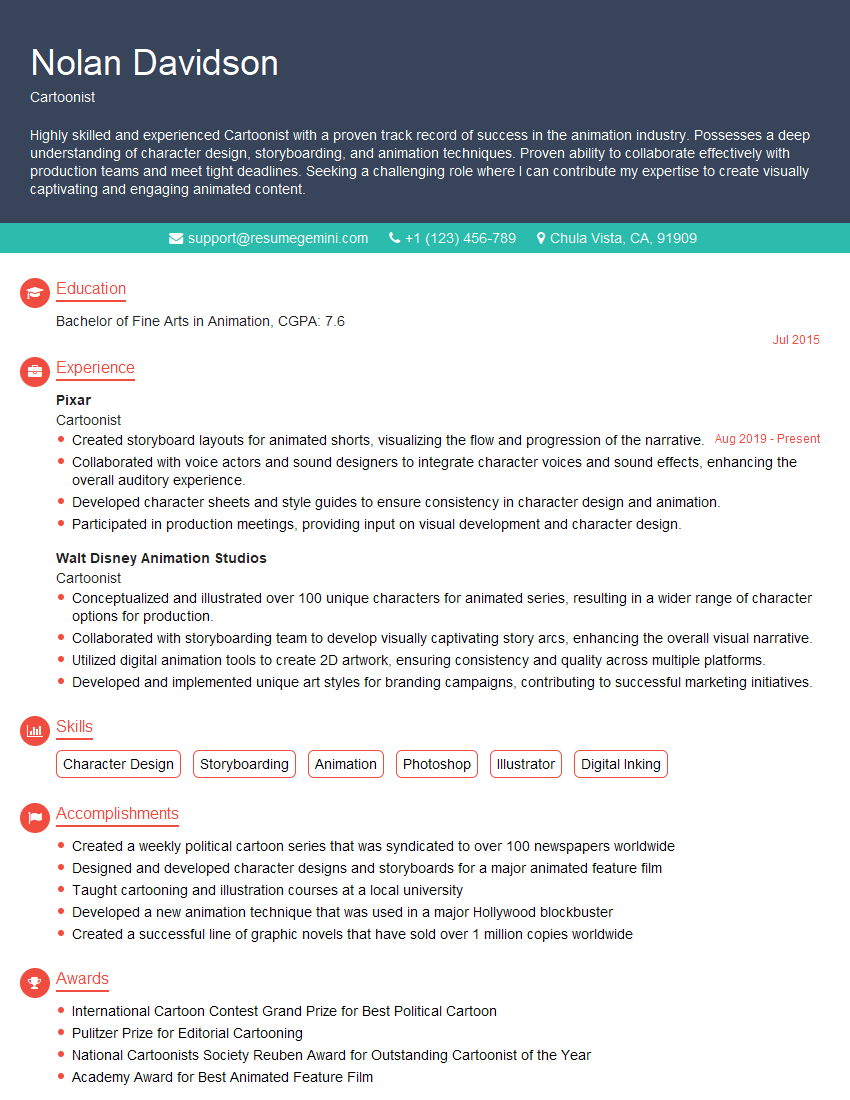
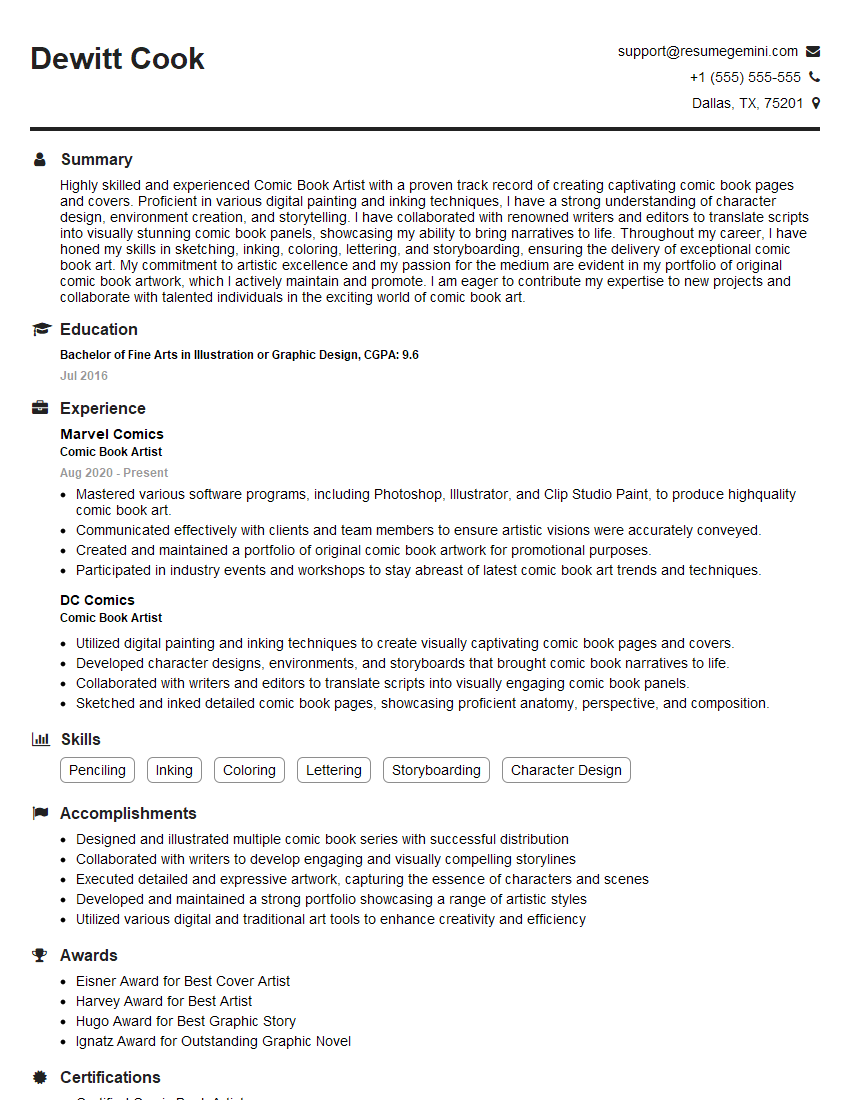
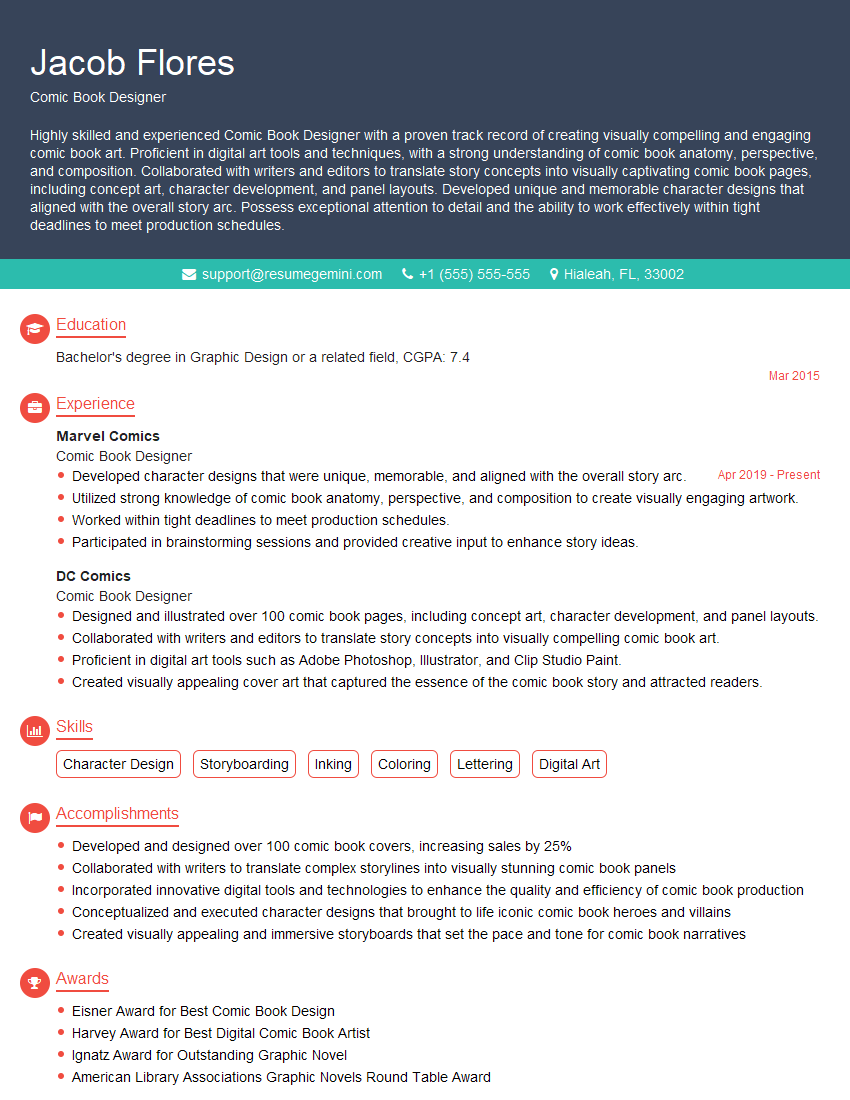
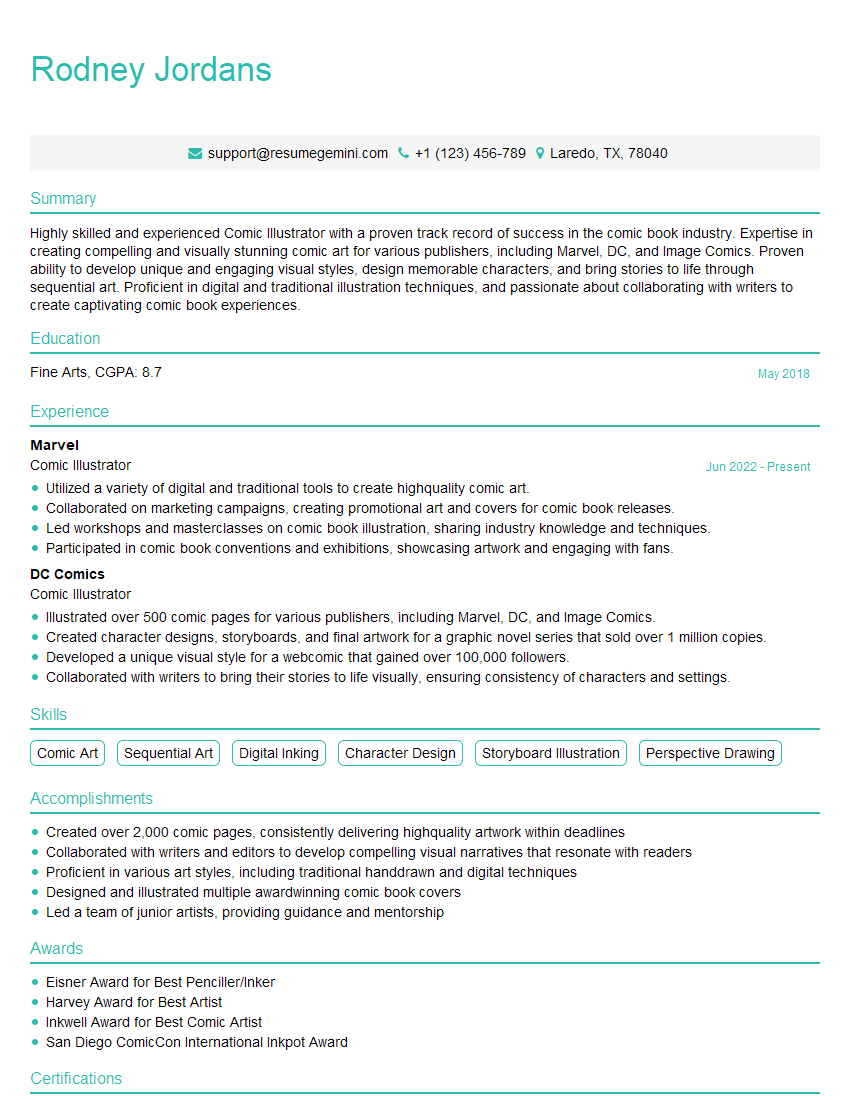
Mastering the ability to create comics that appeal to a wide range of audiences is crucial for career advancement in the creative industry. It opens doors to diverse opportunities and allows you to connect with a broader audience. Building an ATS-friendly resume is paramount to maximizing your job prospects. ResumeGemini is a trusted resource that can significantly enhance your resume-building experience, helping you present your skills and experience effectively. Examples of resumes tailored to showcasing your ability to create comics with broad appeal are available to help guide you. Take the next step and craft a compelling resume that reflects your unique talents and positions you for success.
Explore more articles
Users Rating of Our Blogs
Share Your Experience
We value your feedback! Please rate our content and share your thoughts (optional).
What Readers Say About Our Blog
Really detailed insights and content, thank you for writing this detailed article.
IT gave me an insight and words to use and be able to think of examples