Interviews are opportunities to demonstrate your expertise, and this guide is here to help you shine. Explore the essential Airworthiness Compliance interview questions that employers frequently ask, paired with strategies for crafting responses that set you apart from the competition.
Questions Asked in Airworthiness Compliance Interview
Q 1. Explain the difference between Airworthiness Directives (ADs) and Service Bulletins (SBs).
Airworthiness Directives (ADs) and Service Bulletins (SBs) are both documents issued by aircraft manufacturers or regulatory authorities to address potential safety issues or improve aircraft performance, but they differ significantly in their legal enforceability.
ADs (Airworthiness Directives) are mandatory actions issued by aviation regulatory bodies (like the FAA in the US or EASA in Europe). They are legally binding and must be complied with within the specified timeframe. Failure to comply can result in serious penalties, including grounding the aircraft. ADs usually address safety-critical issues discovered post-certification or through operational experience. For example, an AD might mandate the inspection or replacement of a specific component identified as having a high failure rate.
SBs (Service Bulletins), on the other hand, are recommendations issued by the aircraft manufacturer. While they often address similar issues as ADs (e.g., improved design, enhanced safety), they are not legally mandated. Compliance is at the discretion of the aircraft operator. However, operators usually strongly consider implementing SBs due to their potential for enhancing safety and maintainability. A Service Bulletin might suggest a modification to reduce wear and tear on a part, extending its lifespan and possibly improving efficiency.
In short: ADs are mandatory; SBs are recommendations. Think of it like this: an AD is like a traffic ticket, a SB is like a friendly suggestion from your mechanic.
Q 2. Describe the process of obtaining a Certificate of Airworthiness.
Obtaining a Certificate of Airworthiness (CofA) is a crucial process demonstrating that an aircraft meets all applicable airworthiness standards. It’s like a ‘passport’ allowing the aircraft to legally operate. The process generally involves these steps:
- Pre-flight Inspection and Documentation: A thorough inspection of the aircraft is undertaken to verify its airworthiness, and all relevant documents (logbooks, maintenance records, etc.) are gathered.
- Compliance Verification: The aircraft’s configuration and maintenance history are reviewed to confirm compliance with all applicable regulations, including ADs and any relevant SBs implemented.
- Inspections: Depending on the aircraft type and history, various inspections may be required. These often involve visual checks, non-destructive testing, and possibly functional tests of critical systems.
- Weight and Balance Calculations: Accurate calculations ensure the aircraft’s center of gravity falls within permissible limits.
- Application Submission: An application, including all necessary documentation and inspection reports, is submitted to the relevant aviation authority (e.g., FAA, EASA).
- Authority Review and Approval: The authority reviews the documentation and may conduct a final inspection before issuing the CofA. Once approved, the CofA is issued with a specific expiry date.
The process can vary slightly depending on the country and the specific type of aircraft, but these steps represent the core elements of obtaining a CofA.
Q 3. What are the key elements of a maintenance program compliant with airworthiness regulations?
A compliant maintenance program is crucial for ensuring continued airworthiness. Key elements include:
- Scheduled Maintenance: A defined schedule of inspections and maintenance tasks based on the aircraft’s type, operating hours, and usage. This is often based on manufacturer’s recommendations and regulatory requirements.
- Unscheduled Maintenance: Procedures for addressing unexpected issues or defects discovered during routine checks or operation. This typically involves troubleshooting, repairs, and documentation.
- Record Keeping: Meticulous and accurate record-keeping of all maintenance activities, including parts used, inspections performed, and any identified discrepancies. These records are essential for demonstrating compliance and for future maintenance planning.
- Competent Personnel: The maintenance program must be executed by qualified and licensed personnel with appropriate training and experience on the specific aircraft type.
- Quality Assurance: A system of checks and balances to ensure the effectiveness of the maintenance program, including audits and inspections. This is to ensure that the maintenance is done correctly and according to the regulations.
- Continuous Improvement: Regular review and updating of the maintenance program based on operational experience, lessons learned, and new regulations.
Imagine a car needing regular oil changes and inspections—an aircraft’s maintenance program functions similarly, but with far greater complexity and safety implications.
Q 4. How do you ensure compliance with applicable regulations for aircraft modifications?
Aircraft modifications require strict adherence to regulations to maintain airworthiness. The process typically involves:
- Authorization: Obtaining approval from the relevant aviation authority for any proposed modifications. This often includes submitting engineering data demonstrating that the modification won’t compromise safety or affect other aircraft systems. It is like getting a building permit before any construction can start.
- Design Approval: The modification must meet all applicable airworthiness requirements, often necessitating design reviews and approvals from certified engineers. This involves a comprehensive review of the design plans and their implications.
- Installation: The modification must be installed by qualified personnel using approved procedures. This is to ensure a proper and safe installation process.
- Verification: Post-installation inspections and tests are necessary to verify that the modification was installed correctly and meets the design specifications. This process confirms that the modification is working as intended.
- Documentation: All aspects of the modification process, including design approvals, installation records, and verification results, must be meticulously documented and maintained. This step creates an audit trail of the changes made and ensures traceability.
Improper modifications can severely compromise an aircraft’s safety and could result in serious penalties.
Q 5. Explain your understanding of Continuing Airworthiness Management (CAM).
Continuing Airworthiness Management (CAM) is a proactive approach to managing the airworthiness of an aircraft throughout its operational life. It’s not just about reacting to problems, but actively preventing them. CAM encompasses:
- Risk Management: Identifying and mitigating potential airworthiness risks. This includes proactive inspections and the timely addressing of potential problems before they lead to more serious issues.
- Maintenance Planning: Developing and implementing effective maintenance programs tailored to the aircraft’s operational profile and risk assessment.
- Compliance Monitoring: Tracking compliance with all applicable regulations, ADs, and SBs. This involves a continuous review of compliance levels and proactive steps to address non-compliance issues.
- Continuous Improvement: Regularly reviewing the effectiveness of the CAM system and making improvements based on lessons learned and operational experience. It is like fine-tuning a system for optimal performance.
- Data Analysis: Using data analysis to identify trends, predict potential issues, and refine maintenance strategies. This includes identifying repeating maintenance issues or patterns which may point to larger systemic problems.
Think of CAM as a comprehensive, holistic management system for ensuring an aircraft remains airworthy—a preventative approach rather than just reactive maintenance.
Q 6. What are the critical aspects of a safety management system (SMS) related to airworthiness?
A Safety Management System (SMS) plays a vital role in ensuring airworthiness by providing a framework for identifying, assessing, and mitigating safety risks. Critical aspects related to airworthiness include:
- Hazard Identification and Risk Assessment: Proactive identification of potential hazards related to aircraft maintenance, operations, and modifications, followed by a thorough risk assessment. This includes the identification of risks associated with both planned and unplanned maintenance.
- Risk Mitigation Strategies: Developing and implementing effective strategies to control or eliminate identified risks. This might include modifications, changes in maintenance procedures, training initiatives, or better record keeping.
- Safety Reporting System: Establishing a robust system for reporting safety incidents, near misses, and potential hazards. This encourages open communication about potential safety concerns and provides insights into areas for improvement.
- Proactive Safety Promotion: Creating a safety-conscious culture within the organization, promoting open communication, and encouraging personnel to report safety concerns without fear of retribution. This is vital for building a culture of safety.
- Continuous Improvement: Regularly reviewing and improving the SMS based on the analysis of safety data and feedback. This ensures that the system stays relevant and effective.
An effective SMS is crucial for preventing accidents and ensuring continuous airworthiness. It provides a structured approach to safety management in airworthiness-related activities.
Q 7. How would you handle a discrepancy found during an airworthiness inspection?
Handling a discrepancy found during an airworthiness inspection involves a structured approach:
- Documentation: Meticulously document the discrepancy, including its location, nature, severity, and any associated observations. Accurate record keeping is paramount.
- Assessment: Assess the severity of the discrepancy using established criteria. Is it a minor issue that can be deferred, or does it pose an immediate safety risk requiring immediate action?
- Immediate Actions (if necessary): If the discrepancy poses an immediate safety risk (e.g., a significant structural defect), take immediate steps to address it, possibly including grounding the aircraft. Safety comes first.
- Repair or Correction: Depending on the severity and nature of the discrepancy, either a repair or a corrective action will be needed. Repairs should only be carried out by qualified personnel using approved methods.
- Verification: Once the repair or corrective action is complete, verify that it has been effectively resolved, usually by a follow-up inspection. Ensuring that the repair is sufficient.
- Documentation of Repairs: Thoroughly document the repair or corrective action, including parts used, methods employed, and the results of verification. This step is as important as the repair itself.
- Notification (if applicable): Notify the relevant authorities (e.g., the aviation regulator) if the discrepancy requires their attention or if it involves an AD or SB.
Effective handling of discrepancies is essential for maintaining airworthiness and ensuring the safe operation of the aircraft.
Q 8. Describe the role of the accountable manager regarding airworthiness compliance.
The Accountable Manager (AM) holds ultimate responsibility for ensuring the continued airworthiness of an aircraft operator’s fleet. They are the single point of accountability to the regulatory authority. This isn’t just about ticking boxes; it’s about establishing and maintaining a robust safety management system (SMS) that proactively addresses airworthiness risks. Think of them as the CEO of safety for the operation.
Their role encompasses:
- Ensuring compliance with all applicable airworthiness regulations, such as EASA, FAA, or CASA.
- Overseeing the maintenance program and ensuring it’s effective and properly implemented.
- Appointing competent personnel, including appropriately qualified engineers and maintenance personnel.
- Monitoring the effectiveness of the safety management system and making necessary improvements.
- Ensuring adequate resources are allocated for airworthiness compliance.
- Reporting significant airworthiness occurrences and investigating potential deficiencies.
For instance, if a serious maintenance discrepancy is discovered, the AM is responsible for ensuring its timely resolution and reporting to the relevant authorities. Failure to fulfill these responsibilities can result in significant penalties and operational repercussions.
Q 9. What is your experience with different airworthiness regulations (e.g., EASA, FAA)?
I have extensive experience working under both EASA (European Union Aviation Safety Agency) and FAA (Federal Aviation Administration) regulations. I’ve been involved in various aspects of airworthiness compliance, including maintenance program development, continuous airworthiness management, and regulatory audits.
While both aim for safe operations, their approaches differ slightly. EASA, for example, emphasizes a more proactive, risk-based approach with a strong focus on SMS, while the FAA has a more extensive regulatory framework with detailed regulations. I understand the nuances of both regulatory frameworks and can adapt my approach to meet the specific requirements of each. I’ve personally managed audits under both EASA Part-M and FAA Part 145 regulations, highlighting my practical experience in navigating these complexities. My experience also includes working with Part 135 operators, further broadening my understanding of regulatory requirements across diverse operational sectors. This multifaceted exposure allows for a well-rounded and compliant approach to airworthiness.
Q 10. Explain the process of reporting and investigating an airworthiness incident.
Reporting and investigating an airworthiness incident involves a systematic process to identify the root cause and prevent recurrence. This process often follows a structured methodology, and timely reporting is crucial.
The process typically involves:
- Initial Reporting: The incident is reported immediately to the relevant personnel within the organization, often through established reporting channels. This could be a maintenance discrepancy, a near-miss incident, or a component failure.
- Preliminary Investigation: A preliminary investigation is conducted to gather information, secure any relevant evidence (e.g., damaged components, maintenance records), and understand the circumstances surrounding the incident.
- Formal Investigation (if necessary): If the incident is deemed significant, a formal investigation is conducted, often involving specialists, such as engineers or safety investigators, using tools such as Fault Tree Analysis (FTA) or Fishbone diagrams to identify contributing factors.
- Corrective Actions: Based on the investigation findings, corrective actions are implemented to prevent similar incidents from occurring. This might involve modifying maintenance procedures, replacing components, or retraining personnel.
- Reporting to Regulatory Authority: Depending on the severity of the incident, a report is submitted to the relevant regulatory authority (EASA, FAA, etc.) within the specified timeframe.
For example, if an aircraft experiences a hydraulic failure during flight, a thorough investigation will be initiated to determine the cause – whether it was due to a maintenance error, a manufacturing defect, or another factor. The corrective actions might include a maintenance procedure review, a component inspection program, or an airworthiness directive.
Q 11. How do you ensure accurate maintenance records are kept and updated?
Maintaining accurate maintenance records is paramount for airworthiness compliance. It’s not just about paperwork; it’s about ensuring a complete and auditable history of the aircraft’s maintenance, modifications, and repairs.
We utilize a computerized maintenance management system (CMMS) that ensures data integrity and prevents errors. This system includes features such as:
- Digital Records: All maintenance actions are digitally recorded, eliminating handwritten records and potential ambiguity.
- Automated Work Orders: Work orders are generated automatically, with clear instructions and required parts specified.
- Workflow Management: The system tracks the progress of each work order, ensuring timely completion.
- Access Control: Access to the system is controlled, ensuring only authorized personnel can modify records.
- Regular Audits: Regular audits are conducted to verify the accuracy and completeness of the records, and any discrepancies are investigated and rectified immediately.
- Data Backups and Security: Robust data backup and security protocols are in place to protect against data loss or unauthorized access.
Regular training on the use of the CMMS is provided to ensure consistency and competency across the maintenance team. Think of it like a meticulous medical history for the aircraft – crucial for understanding its condition and ensuring its safe operation.
Q 12. How would you assess the risk associated with a potential airworthiness deficiency?
Assessing the risk associated with a potential airworthiness deficiency requires a systematic approach. We typically use a risk assessment matrix that considers the likelihood and severity of the potential consequences. The higher the likelihood and severity, the higher the risk.
The assessment process involves:
- Identifying the Deficiency: Clearly define the nature and scope of the deficiency.
- Assessing the Likelihood: Estimate the probability of the deficiency leading to an accident or incident. This might involve considering factors such as operational procedures, environmental conditions, and component reliability.
- Assessing the Severity: Determine the potential consequences if the deficiency leads to an incident. This could range from minor inconvenience to catastrophic failure.
- Determining the Risk Level: Use a risk matrix to combine the likelihood and severity, resulting in a risk level (e.g., low, medium, high, critical).
- Determining Corrective Actions: Based on the risk level, appropriate corrective actions are implemented. This could range from immediate repairs to a more extensive investigation and potential grounding of the aircraft.
For instance, a small crack in a non-critical component might be considered low risk, requiring only monitoring, whereas a crack in a critical engine component would be considered high risk, requiring immediate rectification and potential grounding of the aircraft.
Q 13. Describe your familiarity with different types of aircraft maintenance checks.
My familiarity with aircraft maintenance checks encompasses a range of scheduled inspections and checks, aligned with airworthiness regulations and maintenance manuals. These checks are crucial to ensuring continued airworthiness.
Different types of checks include:
- A-Checks: These are routine checks, typically performed on a daily basis, focusing on visual inspections and functional checks of essential systems. Think of it as a quick health check for the aircraft.
- B-Checks: More extensive than A-checks, B-checks involve more detailed inspections and may include component removals and replacements. They are performed at scheduled intervals, often several times a year.
- C-Checks: Substantially more in-depth than B-checks, C-checks are major inspections that can involve significant component overhauls, repairs, and replacements. These are typically done less frequently, perhaps every few years.
- D-Checks: The most comprehensive type of check, often including a complete disassembly and inspection of major components. These are extensive, time-consuming checks that are done infrequently.
- Heavy Maintenance Checks: These are highly specialized checks, focusing on specific systems or components, and are often performed according to the manufacturer’s recommendations.
The specific frequency and scope of these checks are determined by the aircraft type, its operating environment, and the maintenance program, always adhering to the regulations specified by the relevant aviation authority.
Q 14. What is your understanding of the principles of human factors and their impact on airworthiness?
Human factors play a critical role in airworthiness. It acknowledges that human error is inevitable and focuses on designing systems and procedures that minimize the impact of these errors. A significant portion of air accidents and incidents are attributed to human error, hence understanding human factors is essential for maintaining airworthiness.
Key principles of human factors relevant to airworthiness include:
- Error Prevention: Designing systems and procedures that minimize the likelihood of human error, such as using checklists, implementing clear communication protocols, and providing adequate training.
- Human-Machine Interface (HMI): Designing cockpits and maintenance tools that are intuitive and easy to use, reducing operator workload and improving situational awareness.
- Work Environment: Ensuring a safe and comfortable work environment for maintenance personnel, reducing fatigue and improving performance.
- Crew Resource Management (CRM): Training pilots and other crew members to work effectively together, improving communication and decision-making.
- Fatigue Management: Implementing strategies to mitigate the effects of fatigue on performance, such as scheduling rest periods and controlling working hours.
For example, a poorly designed maintenance manual could lead to human errors during maintenance, while effective CRM training could significantly improve flight safety by ensuring efficient communication during critical situations. Ignoring human factors can lead to incidents and accidents, underscoring the importance of integrating them into every aspect of airworthiness management.
Q 15. Explain the concept of deferred maintenance and its associated risks.
Deferred maintenance, in the context of airworthiness, refers to the postponement of scheduled or unscheduled maintenance actions. Instead of immediately addressing a detected discrepancy or performing routine maintenance, it’s delayed until a more convenient time. Think of it like postponing a doctor’s appointment – you might feel fine now, but delaying necessary care increases risks.
The associated risks are significant and can include:
- Increased risk of failure: The underlying issue may worsen, leading to a catastrophic failure potentially endangering lives and causing substantial damage.
- Reduced aircraft safety: Deferred maintenance can compromise the aircraft’s structural integrity, flight control systems, or other critical components, impacting overall safety.
- Regulatory non-compliance: Delaying required maintenance violates regulations and can result in penalties, grounding, and operational restrictions.
- Increased maintenance costs: A small, easily fixable issue might escalate into a far more complex and expensive problem if left unattended.
- Insurance implications: Insurance companies might refuse coverage or increase premiums if maintenance records show a history of deferred maintenance.
For example, delaying the replacement of a cracked component in the landing gear could lead to a catastrophic collapse during landing. Always prioritize safety and comply with the manufacturer’s maintenance schedule and relevant regulations.
Career Expert Tips:
- Ace those interviews! Prepare effectively by reviewing the Top 50 Most Common Interview Questions on ResumeGemini.
- Navigate your job search with confidence! Explore a wide range of Career Tips on ResumeGemini. Learn about common challenges and recommendations to overcome them.
- Craft the perfect resume! Master the Art of Resume Writing with ResumeGemini’s guide. Showcase your unique qualifications and achievements effectively.
- Don’t miss out on holiday savings! Build your dream resume with ResumeGemini’s ATS optimized templates.
Q 16. How would you communicate effectively with different stakeholders regarding airworthiness issues?
Effective communication regarding airworthiness issues requires a tailored approach depending on the stakeholder. Imagine a conversation with a mechanic versus a regulatory authority – you’d use very different language and levels of technical detail.
- Pilots: Clear, concise updates on any issues affecting flight safety, focusing on operational implications and risk mitigation strategies. Avoid technical jargon whenever possible.
- Maintenance personnel: Detailed technical information, precise descriptions of discrepancies, and relevant maintenance procedures using standardized terminology and reference documentation.
- Management: Reports highlighting the financial impact of airworthiness issues, proposed solutions, and their associated costs and timelines. Focus on risk assessment and mitigation strategies.
- Regulatory authorities: Precise and complete documentation complying with all relevant regulations, demonstrating a commitment to safety and regulatory compliance. Be prepared to justify decisions and actions.
In all communications, clarity, transparency, and promptness are paramount. Using clear visual aids like diagrams, photos, and reports can significantly improve understanding.
Q 17. What experience do you have in using airworthiness data for decision making?
My experience in using airworthiness data for decision-making involves leveraging various data sources such as maintenance records, flight data recorders, and operational reports to assess aircraft reliability and identify potential safety concerns. This data-driven approach allows for proactive maintenance scheduling, risk mitigation, and optimized resource allocation.
For example, analyzing trends in maintenance events, such as recurrent failures of a specific component, can highlight a potential design flaw or maintenance procedure deficiency. This data might prompt a review of maintenance practices or an investigation into the root cause to prevent future occurrences. Similarly, flight data analysis could uncover anomalies in flight parameters that might suggest a developing mechanical issue.
This process involves statistical analysis, trend identification, and a deep understanding of aircraft systems to translate raw data into actionable insights that improve safety and efficiency.
Q 18. How would you ensure compliance with airworthiness regulations during aircraft maintenance outsourcing?
Ensuring airworthiness compliance during aircraft maintenance outsourcing requires stringent oversight and a robust quality assurance system. This involves selecting qualified and certified maintenance providers, thoroughly reviewing their capabilities and certifications, and defining clear contractual requirements.
Key steps include:
- Due diligence: Thoroughly vetting potential maintenance providers, verifying their certifications (e.g., FAA Part 145 certificate), reviewing their safety record, and auditing their maintenance practices.
- Contractual requirements: Clearly defining the scope of work, compliance requirements, reporting procedures, and quality control measures within the outsourcing agreement. This should explicitly specify adherence to relevant airworthiness regulations.
- Oversight and monitoring: Regularly monitoring the outsourced maintenance activities, reviewing maintenance records, and conducting on-site audits to ensure adherence to safety standards and regulations. This may involve direct observation, review of documentation, and interviews with maintenance personnel.
- Effective communication: Maintaining clear and consistent communication with the outsourced provider to promptly address any issues or discrepancies, ensuring that maintenance records are properly documented and readily available.
- Incident reporting and investigation: Establishing procedures for reporting and investigating any maintenance-related incidents or discrepancies to identify root causes and implement corrective actions.
Ultimately, the responsibility for airworthiness remains with the aircraft operator, even when maintenance is outsourced.
Q 19. Describe your understanding of the airworthiness aspects of different aircraft systems (e.g., engines, avionics).
My understanding of airworthiness aspects across different aircraft systems is extensive. Let’s consider engines, avionics, and flight controls:
- Engines: Airworthiness here focuses on aspects like engine performance (thrust, fuel consumption), structural integrity (blade health, compressor and turbine inspections), and emissions compliance. Regular inspections, performance monitoring, and adherence to manufacturer’s service bulletins are crucial.
- Avionics: Airworthiness in avionics hinges on system functionality, reliability, and integrity of flight critical systems. This includes navigation, communication, flight management, and displays. Regular checks, software updates, and compliance with regulatory standards (e.g., DO-178C for software) are vital.
- Flight controls: This concerns the system’s ability to reliably control the aircraft. Airworthiness aspects include integrity of control surfaces, actuators, and associated hydraulic or mechanical systems. Regular inspections, functional checks, and careful monitoring of control surface movements are paramount.
Understanding the interdependencies of these systems is critical. A problem in one system can impact the airworthiness of others.
Q 20. How do you stay updated with the latest changes in airworthiness regulations?
Staying updated on airworthiness regulations requires a multi-pronged approach:
- Regulatory agency websites: Regularly checking websites of relevant aviation authorities (e.g., FAA, EASA) for new regulations, advisory circulars, and safety bulletins.
- Industry publications and journals: Subscribing to industry publications and journals that provide updates on regulatory changes, best practices, and technical advancements.
- Industry conferences and workshops: Attending conferences and workshops to learn from experts and network with peers. This provides insight into current regulatory challenges and industry trends.
- Professional organizations: Joining professional organizations such as AIAA or SAE to access resources, training, and updates on airworthiness issues.
- Manufacturer service bulletins: Keeping abreast of manufacturer’s service bulletins and airworthiness directives to address emerging issues and incorporate design changes.
Continuous learning is key in this field, ensuring your knowledge remains current and your practices aligned with the latest safety standards.
Q 21. Describe a situation where you had to troubleshoot a complex airworthiness issue.
During a pre-flight inspection, we discovered an unusual vibration in one of the aircraft’s engines. Initial troubleshooting pointed to potential issues with the engine’s mounts, but further investigation revealed a subtle crack in a turbine blade. This was a complex issue because such cracks are difficult to detect visually.
Our solution involved a systematic approach:
- Data analysis: We reviewed engine performance data from previous flights, identifying a subtle increase in vibration levels over several flights.
- Non-destructive testing: We employed advanced non-destructive testing techniques (NDT), such as ultrasonic inspection, to confirm the crack’s presence and extent.
- Engine removal and disassembly: The engine had to be removed for a detailed inspection and replacement of the damaged turbine blade.
- Root cause analysis: We conducted a thorough root cause analysis to determine the reason for the crack. This involved metallurgical testing of the blade to rule out material defects and examination of the engine’s operational history.
- Corrective actions: Based on our findings, we implemented corrective actions, which included enhanced inspection procedures to improve early detection of similar cracks.
This case highlighted the importance of thorough investigation, leveraging advanced diagnostic tools, and implementing corrective actions to improve safety and prevent recurrence.
Q 22. What is your experience with airworthiness audits and inspections?
My experience with airworthiness audits and inspections spans over 10 years, encompassing various aircraft types and regulatory frameworks. I’ve been involved in both internal audits, ensuring our organization’s compliance with regulations like EASA Part-M or FAA Part 145, and external audits conducted by regulatory authorities. This includes conducting detailed inspections of aircraft maintenance records, reviewing maintenance procedures, verifying the competency of maintenance personnel, and assessing the adequacy of the organization’s safety management system (SMS).
For instance, during a recent audit of a Part-145 maintenance organization, I identified a discrepancy in their continuous airworthiness management (CAM) process. A specific maintenance task wasn’t properly documented, leading to a potential risk of overlooking critical maintenance actions. My findings led to the implementation of a revised procedure, improving the organization’s CAM and reducing airworthiness risks.
- Experience with different audit methodologies: I’m proficient in various audit methodologies, including risk-based approaches focusing on high-impact areas.
- Identifying non-compliances: I’m adept at pinpointing deviations from regulatory requirements and best practices, ensuring accurate and objective reporting.
- Collaborative approach: I believe in a collaborative approach, working with maintenance personnel to identify and resolve issues constructively.
Q 23. What strategies do you use to identify and mitigate airworthiness risks?
Identifying and mitigating airworthiness risks requires a proactive and systematic approach. My strategy is built on a robust risk management framework, encompassing hazard identification, risk assessment, risk control, and monitoring.
- Hazard Identification: I utilize various techniques, including checklists, hazard logs, and brainstorming sessions with maintenance personnel, to identify potential hazards across the entire lifecycle of an aircraft.
- Risk Assessment: I apply a qualitative or quantitative risk assessment method considering the likelihood and severity of each hazard, prioritizing those posing the highest risks to airworthiness.
- Risk Control: I develop and implement control measures to mitigate the identified risks. This could involve implementing new maintenance procedures, upgrading equipment, providing additional training, or changing operational practices.
- Monitoring and Review: I continuously monitor the effectiveness of the implemented controls and periodically review the risk assessment process to ensure its ongoing relevance.
For example, if a recurring issue with a specific aircraft component is identified, a thorough investigation would determine the root cause. This might involve analyzing maintenance records, conducting metallurgical tests, or reviewing the component’s design specifications. The outcome could range from implementing a more rigorous inspection program to redesigning the component itself.
Q 24. How would you prioritize airworthiness tasks in a high-pressure environment?
Prioritizing airworthiness tasks in high-pressure environments requires a structured approach based on risk assessment. I utilize a risk-based prioritization matrix, considering factors such as the severity of potential consequences, the likelihood of failure, and regulatory deadlines.
- Criticality Assessment: I classify tasks based on their impact on flight safety, using established criteria aligned with regulations.
- Time Sensitivity: Tasks with imminent deadlines or those impacting immediate flight operations are prioritized.
- Resource Allocation: I optimize resource allocation by assigning tasks to the appropriate personnel with the necessary skills and experience.
- Regular Review: The prioritization matrix is regularly reviewed and adjusted based on emerging risks and changing circumstances.
Think of it like a triage system in a hospital. Life-threatening injuries receive immediate attention, followed by urgent and then less urgent cases. Similarly, in airworthiness, safety-critical tasks related to immediate flight safety will always take precedence.
Q 25. Explain your experience with different aircraft documentation and certification processes.
My experience with aircraft documentation and certification processes is extensive. I’m familiar with various aircraft types and their associated documentation, including maintenance manuals, airworthiness certificates, logbooks, and service bulletins. I understand the intricacies of different certification schemes, including EASA, FAA, and other national aviation authorities.
I have a deep understanding of the processes involved in obtaining and maintaining airworthiness certificates, from initial type certification to continued airworthiness management. This includes reviewing and approving maintenance records, verifying compliance with airworthiness directives (ADs), and managing modifications and repairs.
- Experience with various documentation types: I’m proficient in interpreting and managing various forms of technical documentation, including maintenance manuals, parts manuals, and airworthiness directives.
- Certification processes: I understand the complexities of certification processes under different regulatory frameworks and can navigate the requirements efficiently.
- Modification management: I have experience in managing aircraft modifications, ensuring compliance with all relevant regulations and maintaining accurate records.
Q 26. How familiar are you with using airworthiness tracking software or databases?
I’m highly familiar with several airworthiness tracking software and databases, including AMOS, Trax, and other industry-standard systems. My expertise extends beyond simply using these tools; I understand their underlying data structures and can effectively leverage them to manage airworthiness data, track maintenance activities, generate reports, and identify trends.
For example, I’ve used AMOS to develop custom reports that provide real-time insights into the status of maintenance tasks, alerting us to potential delays and preventing disruptions to flight schedules. This ensures that maintenance activities are completed efficiently and effectively, enhancing safety and operational efficiency.
Q 27. How would you contribute to a culture of safety and compliance within an aviation organization?
Contributing to a culture of safety and compliance within an aviation organization is paramount. My approach is based on proactive communication, continuous improvement, and empowering employees to take ownership of safety.
- Proactive Communication: I believe in fostering open communication channels, encouraging employees to report safety concerns without fear of reprisal. This includes implementing robust reporting systems and ensuring that all reports are thoroughly investigated.
- Continuous Improvement: I promote a culture of continuous improvement by actively seeking out areas for improvement in safety procedures and processes. This involves regularly reviewing safety data, conducting safety audits, and implementing corrective actions.
- Employee Empowerment: I empower employees to take ownership of safety by providing them with the necessary training, tools, and resources to perform their tasks safely and effectively. This also includes actively listening to their feedback and suggestions.
- Safety Training: I advocate for comprehensive safety training programs that cover a wide range of topics, from basic safety principles to advanced risk management techniques.
A strong safety culture isn’t just about following rules; it’s about a shared commitment to safety at all levels of the organization. It’s about creating an environment where everyone feels empowered and responsible for safety.
Q 28. Describe your experience in presenting airworthiness data or findings to senior management.
I have extensive experience in presenting airworthiness data and findings to senior management. My presentations are tailored to the audience, focusing on clear, concise communication and avoiding technical jargon wherever possible. I use data visualization tools to present complex information in an easily digestible format, highlighting key findings and recommendations.
For instance, when presenting findings from a recent audit that revealed a potential weakness in our maintenance tracking system, I used charts and graphs to show the frequency of errors and their potential impact on airworthiness. I then outlined a plan for improvement, including specific actions, timelines, and responsible parties. This ensures senior management understands the issue, its severity, and the proposed solution in a structured and actionable manner.
- Data Visualization: I use charts, graphs, and other visual aids to present complex data effectively.
- Clear and Concise Communication: I present information in a clear, concise, and understandable manner, avoiding technical jargon.
- Actionable Recommendations: I always provide actionable recommendations with clear timelines and responsibilities.
Key Topics to Learn for Airworthiness Compliance Interview
- Airworthiness Regulations: Understand the foundational regulations (e.g., FAR Part 21, EASA Part 21) governing aircraft design, production, and operation. Focus on the practical implications of these regulations in your daily work.
- Aircraft Certification Process: Familiarize yourself with the stages involved in obtaining a type certificate, including design reviews, testing, and flight evaluations. Be prepared to discuss the role of compliance in each stage.
- Maintenance and Continuing Airworthiness: Gain a comprehensive understanding of maintenance programs, airworthiness directives (ADs), and the processes for ensuring continued airworthiness throughout an aircraft’s lifespan. Consider practical scenarios of managing AD compliance.
- Safety Management Systems (SMS): Learn about the principles and implementation of SMS within an aviation organization. Understand how SMS contributes to a proactive safety culture and compliance with airworthiness standards.
- Risk Assessment and Mitigation: Develop your skills in identifying, assessing, and mitigating risks related to airworthiness. Be ready to discuss different risk management methodologies and their application.
- Data Analysis and Reporting: Understand how data is used to monitor airworthiness compliance, identify trends, and inform decision-making. Be prepared to discuss data interpretation and reporting techniques.
- Human Factors in Airworthiness: Explore the human element in maintaining airworthiness, including pilot training, maintenance procedures, and organizational culture. Consider how human error can impact compliance and how to minimize such risks.
Next Steps
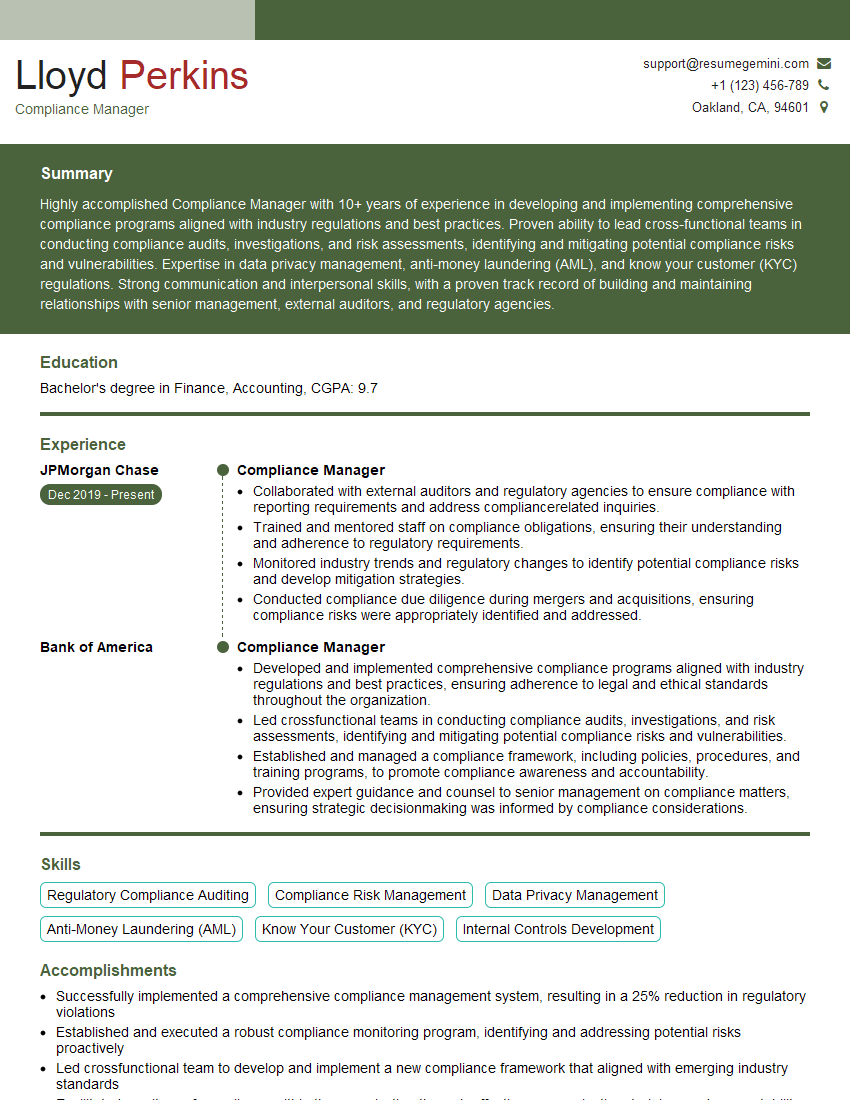
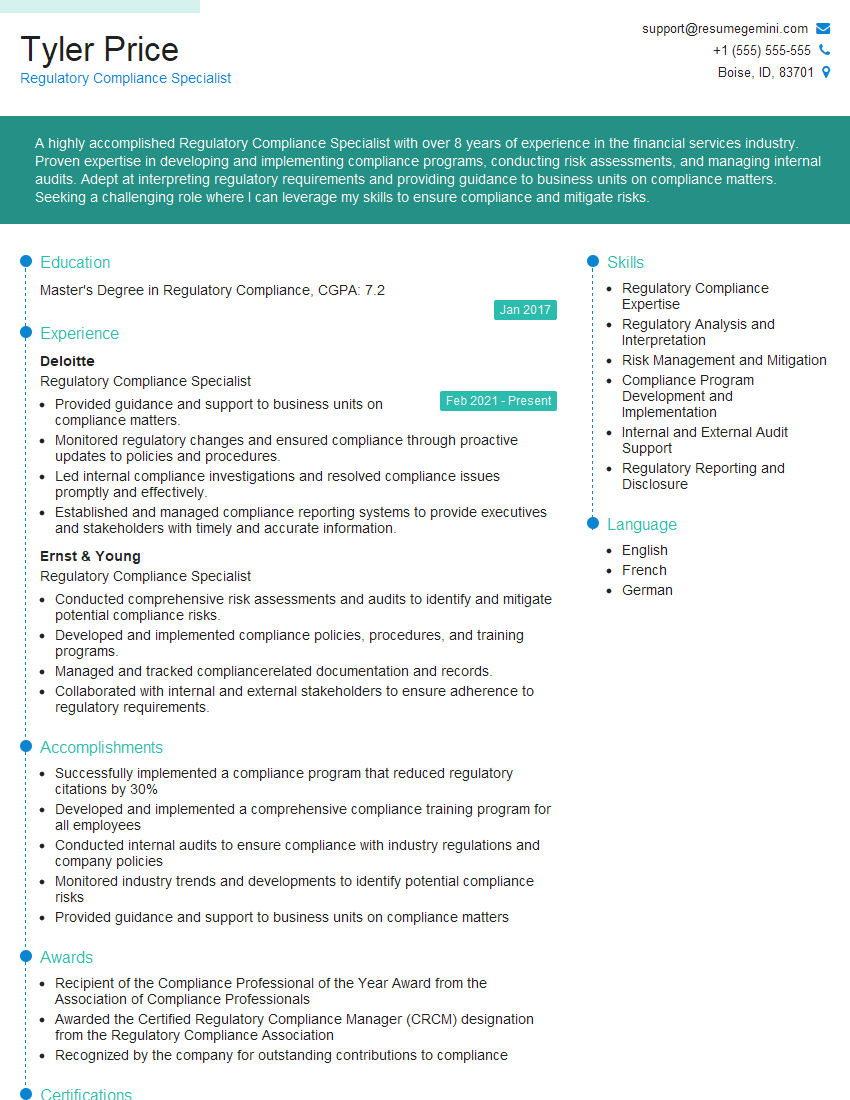
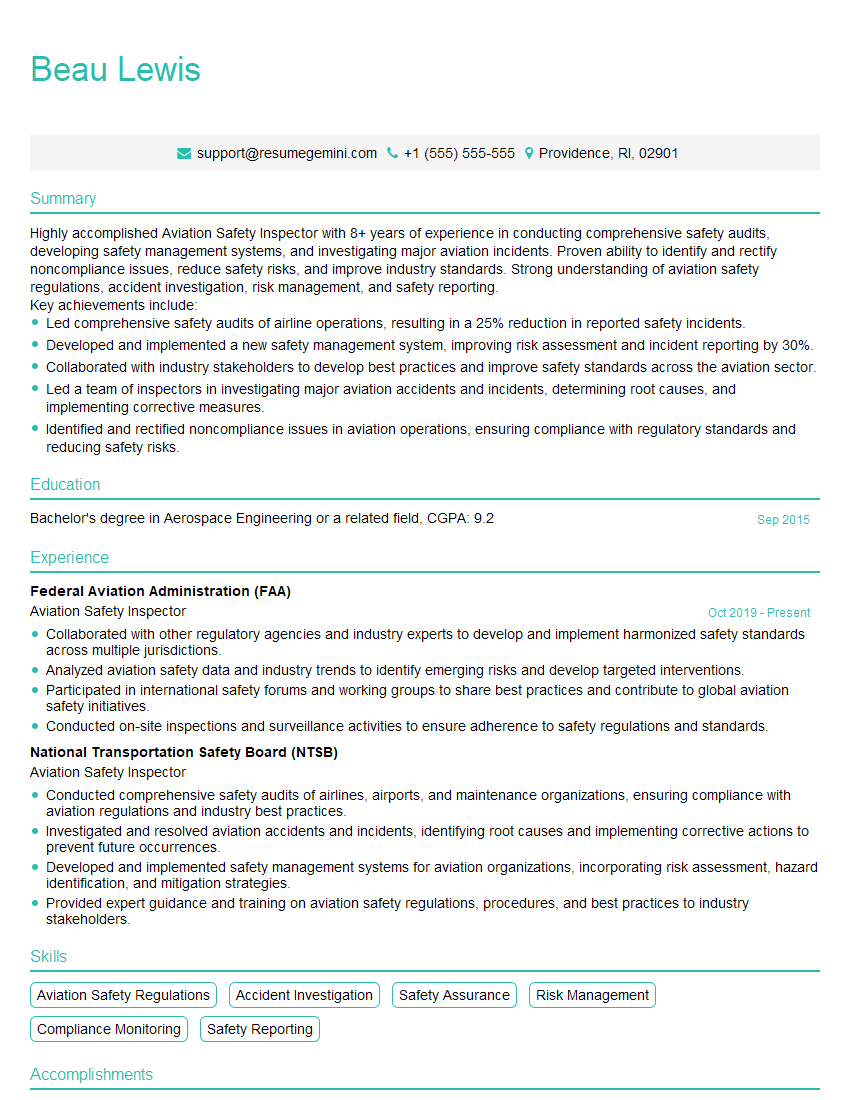
Mastering Airworthiness Compliance is crucial for career advancement in the aviation industry. It demonstrates your commitment to safety and your ability to navigate complex regulatory environments. To enhance your job prospects, creating an ATS-friendly resume is essential. ResumeGemini is a trusted resource that can help you build a professional and impactful resume tailored to highlight your skills and experience in Airworthiness Compliance. Examples of resumes specifically designed for this field are available within ResumeGemini to guide you.
Explore more articles
Users Rating of Our Blogs
Share Your Experience
We value your feedback! Please rate our content and share your thoughts (optional).
What Readers Say About Our Blog
Really detailed insights and content, thank you for writing this detailed article.
IT gave me an insight and words to use and be able to think of examples