Unlock your full potential by mastering the most common Ability to stay up-to-date on tax laws and regulations interview questions. This blog offers a deep dive into the critical topics, ensuring you’re not only prepared to answer but to excel. With these insights, you’ll approach your interview with clarity and confidence.
Questions Asked in Ability to stay up-to-date on tax laws and regulations Interview
Q 1. Explain your process for staying up-to-date on changes in tax legislation.
Staying current with tax law changes requires a multi-faceted approach. It’s not a passive activity; it demands proactive engagement and consistent effort. My process begins with subscribing to reputable tax news sources and setting up alerts for significant legislative updates. I then meticulously review these updates, focusing on areas directly relevant to my practice. I also participate in continuing professional education (CPE) courses to earn credits and stay abreast of evolving interpretations and rulings. Finally, I actively engage with professional organizations and networks, participating in discussions and conferences to glean insights and best practices from peers.
Q 2. What resources do you utilize to track current tax law developments?
My toolkit for tracking tax law changes includes several key resources. First and foremost is the official IRS website, which provides access to the Internal Revenue Code, publications, and announcements. I also rely on reputable tax research platforms like Checkpoint and Thomson Reuters, offering comprehensive databases, analysis, and news feeds. Beyond this, I regularly consult specialized tax journals, newsletters (both print and digital), and the publications of professional organizations like the American Institute of CPAs (AICPA). Podcasts and webinars by leading tax professionals also provide timely updates and insights.
Q 3. Describe a time you had to quickly adapt to a recent tax law change. What was the impact?
The 2017 Tax Cuts and Jobs Act significantly altered the corporate tax landscape. One immediate impact was the change to the corporate tax rate, from 35% to 21%. I had to quickly adapt our client strategies to take advantage of the lower rate. This involved revising tax projections, analyzing the implications for various business structures, and advising clients on optimal depreciation methods under the new rules. For several clients, we had to amend previously filed returns to reflect the changes. The impact was positive for most clients, resulting in significant tax savings. However, some complex scenarios required careful analysis to avoid unintended consequences. This experience highlighted the importance of continuous monitoring of tax law and efficient communication with clients about impactful changes.
Q 4. How do you interpret complex tax regulations and apply them to real-world scenarios?
Interpreting complex tax regulations requires a systematic and analytical approach. I begin by carefully reading the relevant sections of the Internal Revenue Code and associated regulations, paying close attention to definitions, exceptions, and cross-references. I then build a deep understanding of the specific facts and circumstances of the real-world scenario, ensuring all relevant details are considered. I cross-reference the facts against the relevant provisions of the tax code, looking for any ambiguities or potential interpretations. When needed, I consult secondary sources like tax commentaries, court cases, and private letter rulings to gain further clarity. Finally, I document my analysis and conclusions meticulously, ensuring the logic and rationale are clearly articulated. Think of it like solving a puzzle; the code provides the rules, the client’s situation is the puzzle pieces, and my job is to fit them together correctly to determine the tax liability.
Q 5. How familiar are you with the latest updates to the Internal Revenue Code?
I am very familiar with the latest updates to the Internal Revenue Code. My knowledge encompasses recent changes related to individual and corporate taxation, including provisions impacting deductions, credits, and reporting requirements. I am particularly aware of changes in areas like the qualified business income (QBI) deduction, the net investment income tax, and the ever-evolving landscape of international tax regulations. My ongoing professional development ensures I’m well-versed in the latest interpretations and rulings from the IRS and relevant courts.
Q 6. How do you ensure your tax knowledge remains current beyond formal training?
Maintaining current tax knowledge beyond formal training is critical. I do this by actively participating in professional organizations, attending seminars and webinars, and subscribing to reputable tax publications. I also regularly engage with colleagues, participating in discussions and sharing insights on recent developments. Moreover, staying updated through technology is key. I utilize tax research platforms and utilize various online resources to ensure I remain informed on the constantly evolving tax landscape. Finally, I make it a point to actively review relevant court cases and IRS pronouncements that could potentially shift tax interpretation.
Q 7. What is your approach to managing and prioritizing multiple tax law updates simultaneously?
Managing multiple tax law updates simultaneously demands a structured approach. I prioritize updates based on their relevance to my current workload and client needs. Urgent and impactful changes affecting numerous clients receive immediate attention. I employ project management tools to track deadlines and ensure timely implementation of necessary changes. For example, I might use a spreadsheet to log all relevant updates, categorize them by client or tax type, and assign priority levels and deadlines. This helps me stay organized, prevent overlooking critical information, and ensures efficient and effective implementation of the necessary adjustments to client strategies.
Q 8. What strategies do you use to stay informed about changes in state and local tax laws?
Staying current with state and local tax laws requires a multi-pronged approach. It’s not a passive process; it demands active engagement and a commitment to continuous learning.
- Subscription to professional tax services: I subscribe to reputable services like Thomson Reuters Checkpoint or CCH Axcess, which provide up-to-the-minute updates, analysis, and relevant legal citations. These platforms offer alerts for significant legislative changes.
- State and local government websites: I regularly check the websites of relevant state and local tax agencies. These sites often publish legislative updates, proposed regulations, and frequently asked questions (FAQs). For example, I’d monitor the California Franchise Tax Board website for updates affecting California clients.
- Professional journals and newsletters: I read professional publications like the Journal of Taxation and subscribe to relevant tax newsletters. These often offer in-depth analysis of emerging tax trends and court cases.
- Tax conferences and webinars: Attending continuing professional education (CPE) courses and webinars is crucial for staying abreast of current developments. These events often feature leading experts who provide insights and practical guidance.
- Networking with other professionals: Regular interaction with colleagues and other tax professionals is invaluable. Sharing insights and discussing recent cases helps to identify potential blind spots in my understanding.
This combined approach ensures I’m informed about changes affecting different jurisdictions and client situations.
Q 9. How do you evaluate the credibility and reliability of different sources of tax information?
Evaluating the credibility of tax information sources is paramount. I use a rigorous framework that prioritizes official sources and established authorities.
- Source Authority: I prioritize information from official government sources (IRS, state tax agencies), reputable accounting firms (Big Four), and well-established legal publishers (LexisNexis, Westlaw).
- Author Expertise: I consider the credentials and experience of the author or organization. Is the author a CPA, attorney, or other recognized tax expert?
- Date of Publication: Tax laws change constantly. I always check the publication date to ensure the information is current and hasn’t been superseded by newer legislation or court rulings.
- Cross-Referencing: I rarely rely on a single source. I cross-reference information from multiple reputable sources to verify its accuracy and consistency. Discrepancies trigger further investigation.
- Peer Review and Citations: I look for sources that have undergone peer review or include detailed citations and references to support their claims.
Imagine finding conflicting information about a deduction. I wouldn’t simply accept one version. I’d trace the source of each claim, looking for official documentation, court cases, or IRS pronouncements to resolve the conflict.
Q 10. Describe your experience with tax research databases and software.
My experience with tax research databases and software is extensive. I’m proficient in using various platforms, and my choice of software depends on the specific research needs and the client’s situation.
- Checkpoint and Axcess: These are comprehensive research platforms that provide access to tax codes, regulations, court cases, and expert commentary. They also offer tools for organizing research and generating client reports.
- RIA (Research Institute of America): Another strong contender offering similar capabilities, focusing on state and local tax as well as federal.
- ProSystem fx Tax: This is a tax preparation software that integrates with research databases, allowing for seamless research during the preparation process.
I’m comfortable navigating these systems, conducting efficient searches, identifying relevant sections of the code, and interpreting complex legal language. My ability to efficiently use these tools saves time and ensures accurate research outcomes.
Q 11. Explain how you would handle a situation where there’s conflicting information on a tax issue.
Conflicting information on a tax issue requires a systematic approach to resolution. It’s not uncommon, and proper handling is vital for providing accurate advice.
- Identify the Source of the Conflict: Determine the source of each conflicting piece of information. Are they from equally reputable sources, or is one more authoritative than the other?
- Analyze the Reasoning: Examine the reasoning and supporting evidence provided by each source. Look for differences in interpretation or application of the law.
- Prioritize Official Sources: Give precedence to official government publications (IRS publications, state tax agency guidance) and court decisions over less authoritative sources.
- Consider the Context: Evaluate the specific facts and circumstances of the tax issue to determine which interpretation is most applicable.
- Consult with Experts: If the conflict remains unresolved, consult with other tax professionals or seek guidance from legal counsel.
- Document the Process: Maintain thorough documentation of the research process, including the sources consulted and the reasoning behind the chosen interpretation.
For example, encountering differing interpretations of a specific tax credit, I’d prioritize official IRS guidance and court precedents before relying on less authoritative interpretations found in blog posts or forums.
Q 12. Have you ever had to deal with a significant change in tax law that affected a client or project? How did you handle it?
Yes, I’ve dealt with significant tax law changes affecting clients. A prime example is the 2017 Tax Cuts and Jobs Act (TCJA). This sweeping legislation significantly altered the tax landscape.
One client, a small business owner, was relying on certain deductions that were substantially reduced or eliminated under the TCJA. My response involved:
- Immediate communication: I promptly contacted the client to explain the changes and their potential impact.
- Analysis of alternatives: We explored alternative strategies to mitigate the negative effects of the law changes. This might have included adjusting their business structure, exploring different depreciation methods, or optimizing their tax planning for future years.
- Detailed explanation: I provided a detailed explanation of the new tax rules, using clear and concise language to ensure the client fully understood the implications.
- Updated tax planning: We revisited and updated their overall tax planning strategy to account for the changes introduced by the TCJA.
The key was proactive communication, thorough analysis, and a focus on finding solutions to minimize the client’s tax liability within the confines of the new legislation. Transparency and clear communication were crucial in maintaining trust and a strong client relationship.
Q 13. How do you utilize professional networking to enhance your understanding of tax laws?
Professional networking is essential for staying up-to-date on tax laws and best practices. It offers perspectives and insights I can’t access through independent study alone.
- Professional Organizations: I actively participate in professional organizations like the American Institute of Certified Public Accountants (AICPA) and state-specific CPA societies. These provide opportunities to network with other professionals, attend conferences, and engage in discussions on current tax issues.
- Conferences and Workshops: Attending tax conferences and workshops provides a chance to network with colleagues, hear from experts, and learn about new developments in the field.
- Online Forums and Groups: Online forums and LinkedIn groups dedicated to taxation provide platforms to share knowledge, ask questions, and stay informed about the latest updates.
- Mentorship: Having a mentor or being a mentor to someone allows for a continuous flow of information and advice regarding legal updates and practical challenges.
Through these interactions, I gain access to diverse perspectives, learn about new strategies, and get firsthand accounts of how colleagues are handling real-world tax challenges. This collaborative environment enhances my knowledge and keeps me ahead of the curve.
Q 14. What is your understanding of the recent changes in the tax code regarding [specific recent legislation]?
(Note: This answer requires a specific recent tax legislation to be inserted. The following is a template; replace bracketed information with details of the specific legislation.)
My understanding of the recent changes in the tax code regarding [Specific Recent Legislation, e.g., the Inflation Reduction Act of 2022] is that it introduced [Summary of key changes, e.g., new tax credits for clean energy investments and changes to the corporate minimum tax].
Specifically, [Detailed explanation of a key aspect, e.g., the clean energy tax credits have complex requirements regarding eligible technologies and project structures, necessitating careful review of the specific criteria for each credit to ensure qualification]. This requires careful planning and strategizing for businesses looking to take advantage of these incentives.
Furthermore, [Another key aspect with explanation, e.g., the changes to the corporate minimum tax will significantly impact large multinational corporations, leading many to reorganize their operations and tax structures to mitigate the increased tax burden]. This illustrates how significant legislative changes necessitate not only updating one’s understanding of the law itself but also adapting one’s approach to tax planning and client service.
I am continually monitoring further guidance and regulations issued by the IRS to fully grasp the implications of this legislation and to provide the most effective and up-to-date advice to my clients.
Q 15. How do you manage your continuous professional development (CPD) in relation to tax law?
Staying current in tax law requires a multifaceted approach. I dedicate a significant portion of my time to continuous professional development (CPD). This involves a combination of formal education and informal learning. Formally, I regularly attend conferences and webinars hosted by organizations like the American Institute of CPAs (AICPA) and the Tax Council. These events offer updates on recent legislation, court rulings, and evolving interpretations. I also actively pursue relevant continuing education courses offered by reputable providers, ensuring I meet any licensing requirements.
Informally, I subscribe to prominent tax publications like The Tax Advisor and Journal of Taxation, staying informed through articles and analysis. I actively follow reputable tax news sources online and participate in professional networking groups to engage in discussions and learn from colleagues’ experiences. This combination ensures I’m not only meeting compliance requirements but also proactively anticipating changes and trends within the field.
Career Expert Tips:
- Ace those interviews! Prepare effectively by reviewing the Top 50 Most Common Interview Questions on ResumeGemini.
- Navigate your job search with confidence! Explore a wide range of Career Tips on ResumeGemini. Learn about common challenges and recommendations to overcome them.
- Craft the perfect resume! Master the Art of Resume Writing with ResumeGemini’s guide. Showcase your unique qualifications and achievements effectively.
- Don’t miss out on holiday savings! Build your dream resume with ResumeGemini’s ATS optimized templates.
Q 16. Describe your method for identifying and mitigating potential tax risks.
Identifying and mitigating tax risks is a systematic process. It begins with a thorough understanding of my client’s business operations and financial activities. I utilize risk assessment questionnaires, interviews, and document reviews to pinpoint potential areas of exposure. This might include examining international transactions for compliance with foreign tax laws, reviewing employee compensation plans for potential tax issues, or analyzing investments for tax efficiency.
Once potential risks are identified, I develop a mitigation strategy. This could involve adjusting accounting practices, structuring transactions differently, or seeking expert opinions on specialized areas. For example, if a client is considering a significant international investment, I would consult with specialists in international tax to minimize exposure to foreign tax liabilities. Documentation is paramount; I maintain detailed records of all risk assessments and mitigation strategies to ensure full transparency and compliance. Regularly reviewing these assessments allows for proactive adjustments to changing circumstances.
Q 17. Explain your understanding of Circular 230.
Circular 230 is a set of regulations issued by the U.S. Department of the Treasury that govern the practice of attorneys, CPAs, enrolled agents, and other tax professionals who represent taxpayers before the Internal Revenue Service (IRS). It outlines ethical standards and rules of conduct, ensuring professionalism and integrity in tax practice. Essentially, it’s a code of conduct preventing conflicts of interest and ensuring tax advice given is competent and in accordance with the law.
Key aspects of Circular 230 include rules concerning the practice before the IRS, the preparation of tax returns, written advice, and the disclosure of fees and conflicts of interest. A violation of Circular 230 can result in serious penalties, including suspension from practicing before the IRS. Adherence to Circular 230 is a critical part of maintaining my professional reputation and ensuring I provide ethical and accurate tax services to my clients.
Q 18. How would you explain a complex tax concept to a non-expert?
Explaining a complex tax concept to a non-expert requires simplification and clear communication. Let’s take the concept of ‘depreciation’ as an example. Instead of explaining it as a ‘systematic allocation of the cost of a tangible capital asset over its useful life,’ I’d use an analogy.
I might say: ‘Imagine you buy a car for your business. You can’t deduct the entire cost in one year. Depreciation lets you deduct a portion of the car’s cost each year until it’s fully written off. It’s like spreading out the cost over the car’s lifespan. This reduces your taxable income each year, making your overall tax liability lower.’ I’d then use simple examples to illustrate the principle, ensuring the explanation is relevant to their background and understanding.
Q 19. What are some of the key differences between federal and state tax laws?
Federal and state tax laws differ significantly. Federal laws apply nationwide, while state laws vary widely. For instance, the federal government levies income tax on individuals and corporations, as do most states. However, the specific tax rates, deductions, and credits offered can differ significantly between states.
Some states have their own sales tax, with varying rates and exemptions. Property tax is typically a local or state matter, with assessment methods and rates varying geographically. Another crucial difference is in the treatment of certain deductions or credits. A deduction that’s allowed federally might be limited or entirely disallowed at the state level. Navigating this requires a deep understanding of both federal and state tax codes and often necessitates consulting state-specific resources and tax professionals.
Q 20. How do you prioritize your time when multiple urgent tax matters arise?
When multiple urgent tax matters arise, prioritization is key. I utilize a structured approach:
- Assessment: I first evaluate the urgency and potential consequences of each matter. Deadlines, potential penalties, and client impact are all critical factors.
- Categorization: I categorize tasks based on urgency (critical, high, medium, low). Critical matters, such as impending tax deadlines with significant penalties, are prioritized immediately.
- Delegation: Where possible, I delegate tasks to qualified team members, ensuring efficient use of resources.
- Time Blocking: I allocate specific time blocks to address high-priority tasks, avoiding interruptions. This allows focused work and improved efficiency.
- Communication: Clear communication with clients is vital, ensuring they understand the prioritization process and expected timelines.
This structured approach allows me to manage competing deadlines effectively while minimizing potential risks and maintaining client satisfaction.
Q 21. What is your understanding of the role of technology in tax compliance?
Technology plays a crucial role in modern tax compliance. Tax software and platforms have revolutionized the field, enhancing accuracy, efficiency, and security. For example, tax preparation software streamlines the process, automating calculations and reducing manual errors.
Cloud-based solutions enable secure data storage and collaboration, facilitating efficient teamwork and client communication. Data analytics tools help identify potential tax risks and compliance issues early on. Furthermore, secure file transfer and digital signature capabilities enhance security and efficiency. Staying abreast of technological advancements is essential to provide high-quality, timely, and secure tax services, ensuring compliance and maximizing client benefits. I regularly evaluate and implement new technologies to improve the efficiency and effectiveness of my practice.
Q 22. How do you ensure accuracy in applying tax laws in your work?
Ensuring accuracy in applying tax laws requires a multi-faceted approach. It’s not just about knowing the law; it’s about consistently applying it correctly. My process begins with a thorough understanding of the client’s situation, gathering all relevant financial documents, and meticulously reviewing them for completeness and accuracy. I then utilize reputable tax research services like Checkpoint or Thomson Reuters ONESOURCE to verify the current tax laws and regulations applicable to the specific situation. I always cross-reference multiple sources to reduce the risk of misinterpretations.
For example, if determining the deductibility of a business expense, I wouldn’t just rely on one interpretation. I would check the relevant IRS publications, court cases, and private letter rulings to ensure my interpretation aligns with the prevailing legal precedent. Finally, I always perform a quality check, often having a peer review my work before finalizing the tax return, ensuring multiple sets of eyes catch any potential errors. This rigorous process minimizes errors and maximizes the accuracy of my tax preparation and advisory services.
Q 23. What measures do you take to maintain client confidentiality when dealing with sensitive tax information?
Client confidentiality is paramount. I adhere to strict professional standards and legal requirements, including those stipulated in the IRS Circular 230 and state-specific regulations. This begins with securing all client data through password-protected computer systems, encrypted email, and secure file storage. Access to sensitive information is strictly limited to authorized personnel only. Furthermore, I utilize client confidentiality agreements that clearly define the scope of confidentiality and the measures taken to protect sensitive information.
In addition, I regularly train my team on data security best practices and the importance of safeguarding client data. I never discuss client information in public places, and I always ensure that any documents containing sensitive information are disposed of securely. Think of it like protecting a valuable asset – multiple layers of security are in place to guarantee its safety.
Q 24. How familiar are you with international tax regulations?
My familiarity with international tax regulations is extensive. I have worked extensively on cases involving cross-border transactions, foreign tax credits, and the intricacies of various tax treaties. I’m familiar with the complexities of tax havens, transfer pricing, and the implications of various international tax laws such as the Foreign Account Tax Compliance Act (FATCA) and the Common Reporting Standard (CRS). I’m comfortable navigating these regulations in advising clients with international business interests or assets.
For instance, I have assisted clients in navigating the complexities of foreign tax credits, ensuring they receive the maximum allowable deductions while adhering to all relevant international tax laws. This requires a deep understanding of the tax laws of multiple countries and their respective tax treaties with the U.S. My proficiency extends beyond simply understanding the rules; it includes proactively identifying potential risks and suggesting mitigating strategies for my clients.
Q 25. How would you handle a situation where a client disagrees with your tax interpretation?
Handling disagreements with clients regarding tax interpretations requires diplomacy and a commitment to transparency. My first step is to carefully review my analysis and ensure the accuracy of my interpretation, potentially seeking second opinions from colleagues or external experts. I then schedule a meeting with the client to discuss the matter in a calm and professional manner. I present my findings clearly and concisely, explaining the relevant tax laws and regulations that support my interpretation. I use simple language and avoid technical jargon, ensuring the client understands the rationale behind my assessment.
If the disagreement persists, I will explore alternative interpretations and present them to the client, along with their respective implications. Ultimately, I emphasize that the final decision rests with the client, while continuing to provide them with the information they need to make an informed decision. I document all discussions and decisions thoroughly, protecting both the client and myself.
Q 26. Describe your experience working with tax software and filing systems.
I possess extensive experience with various tax software and filing systems, including ProSeries, Lacerte, and TaxAct. My proficiency extends beyond simply data entry; I am adept at utilizing the advanced features of these systems, such as tax planning tools, data analysis, and report generation. I’m comfortable working with both individual and business tax returns, using the software to efficiently manage and analyze large volumes of client data. I’m also familiar with various e-filing systems and the procedures required for electronic submission of tax returns.
Beyond the software itself, my experience encompasses the practical application of these tools to streamline workflows and improve overall efficiency. I’ve implemented several workflow enhancements using these software packages to reduce processing time and ensure accuracy. For example, we use automated data import features to eliminate manual data entry errors. Moreover, I stay current with software updates and new features to continually optimize our firm’s processes and maintain our competitive edge.
Q 27. How do you handle the ethical implications of ambiguous tax laws?
Ambiguous tax laws present ethical challenges. My approach is guided by a strict adherence to the AICPA’s Code of Professional Conduct and IRS Circular 230. I always prioritize transparency and disclose any potential conflicts of interest or uncertainties in my interpretation of the law to my client. When faced with ambiguity, I conduct extensive research, consulting multiple sources, including IRS publications, court rulings, and professional guidance. I carefully document my research process and any assumptions made in interpreting the ambiguous sections of the law.
In situations where significant ambiguity remains, I might recommend seeking a second opinion from another tax professional or even consider engaging a tax attorney to help navigate the complexities. The goal is to ensure that my recommendations to the client are not only legally sound but also ethically defensible. It’s about acting with integrity and putting the client’s best interests above all else, even in the face of uncertainty.
Q 28. What is your preferred method for documenting your tax research and analysis?
My preferred method for documenting tax research and analysis involves a detailed, organized, and easily searchable system. I utilize a combination of digital tools and paper-based documentation, depending on the complexity of the case. For each client and project, I maintain a comprehensive file containing all relevant financial documents, tax laws, supporting research notes, communications, and the final tax report. Digital documents are stored in a secure, password-protected cloud-based system.
I employ a consistent formatting style within each file, ensuring all information is easily retrievable. This includes clearly labeling all documents, using a consistent filing system, and maintaining detailed notes throughout the research process. This system ensures that I can quickly and easily access any information required for audits, client consultations, or internal review. It’s critical for accountability, accuracy and reduces potential errors or misunderstandings.
Key Topics to Learn for Ability to stay up-to-date on tax laws and regulations Interview
- Understanding the Tax Code Structure: Familiarize yourself with the organization and hierarchy of tax laws, including federal, state, and local regulations. This includes understanding the interplay between different tax codes and identifying relevant sections for specific situations.
- Sources of Tax Law Updates: Learn how to effectively utilize resources like the IRS website, professional tax journals, legal databases, and reputable tax news sources to stay informed about changes and updates to tax laws and regulations. Practice navigating these resources efficiently.
- Interpreting Tax Legislation: Develop skills in reading and interpreting complex tax legislation. Practice analyzing legal language, identifying key provisions, and understanding their implications for different taxpayers and situations.
- Practical Application of Tax Law Changes: Consider how recent changes in tax law might impact various client scenarios or business decisions. Be prepared to discuss practical examples and demonstrate your ability to apply theoretical knowledge to real-world situations.
- Professional Development Strategies: Explore ongoing professional development options, such as attending seminars, webinars, or continuing education courses to maintain your tax expertise. Be ready to discuss your commitment to continuous learning in this dynamic field.
- Ethical Considerations in Tax Compliance: Understand the ethical responsibilities associated with staying current on tax laws and regulations, including the importance of accurate reporting and avoiding conflicts of interest.
Next Steps
Mastering the ability to stay up-to-date on tax laws and regulations is crucial for career advancement in any tax-related field. It demonstrates your commitment to professional excellence and client satisfaction. To significantly increase your chances of landing your dream role, it’s vital to present your skills effectively. Building an ATS-friendly resume is key. ResumeGemini is a trusted resource that can help you craft a compelling resume highlighting your expertise. We provide examples of resumes tailored to showcase your proficiency in staying current on tax laws and regulations – explore them to gain inspiration and guidance in building your own.
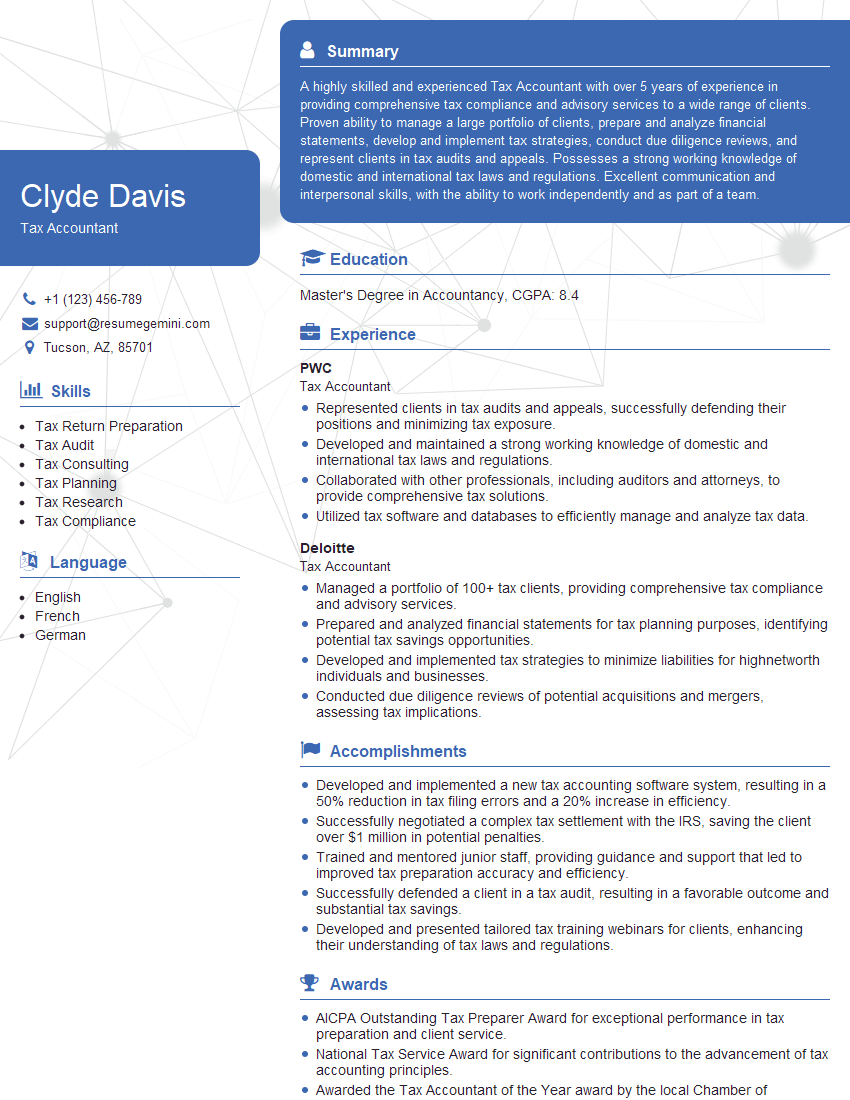
Tax Accountant Resume Sample
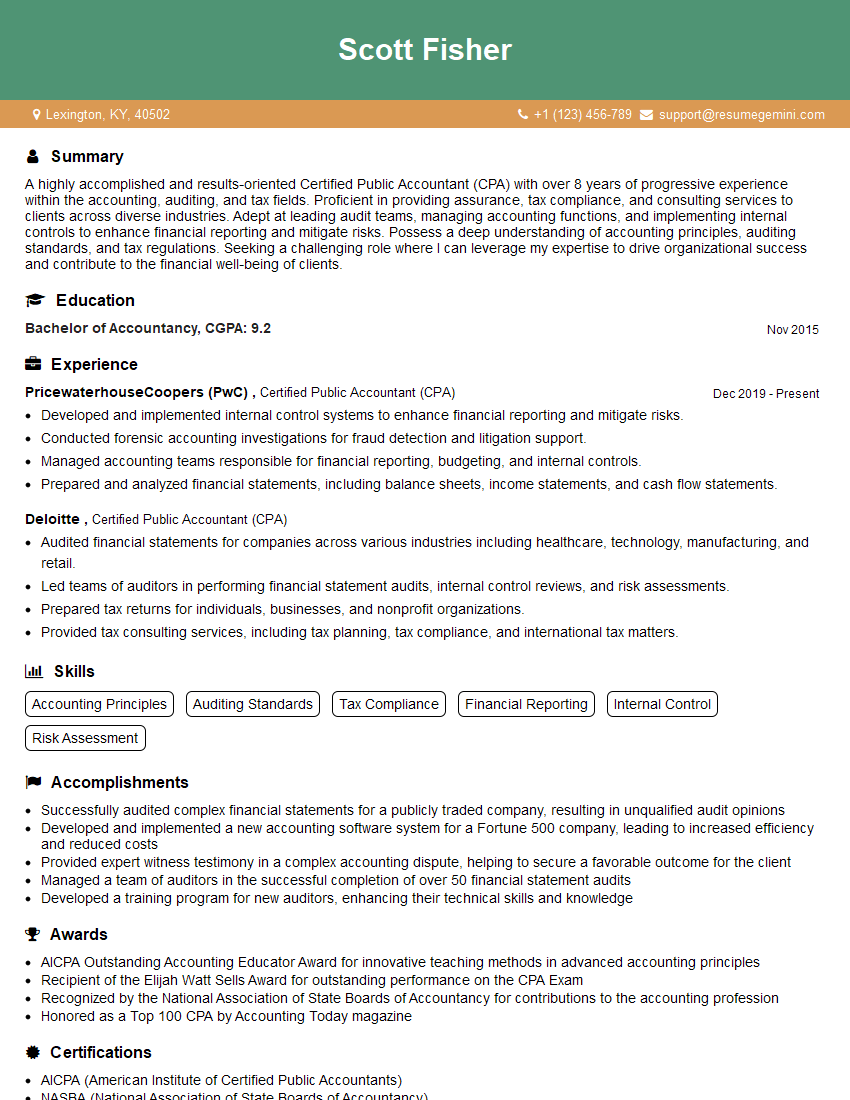
Certified Public Accountant (CPA) Resume Sample
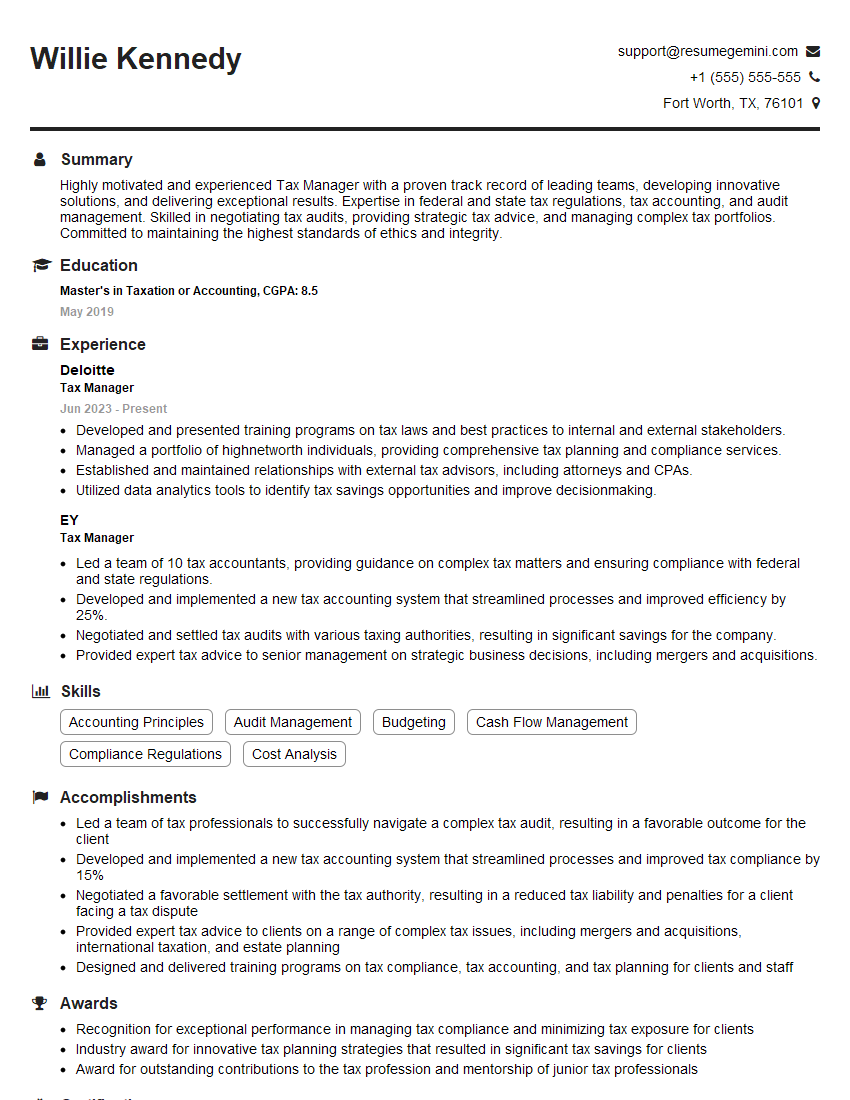
Tax Manager Resume Sample
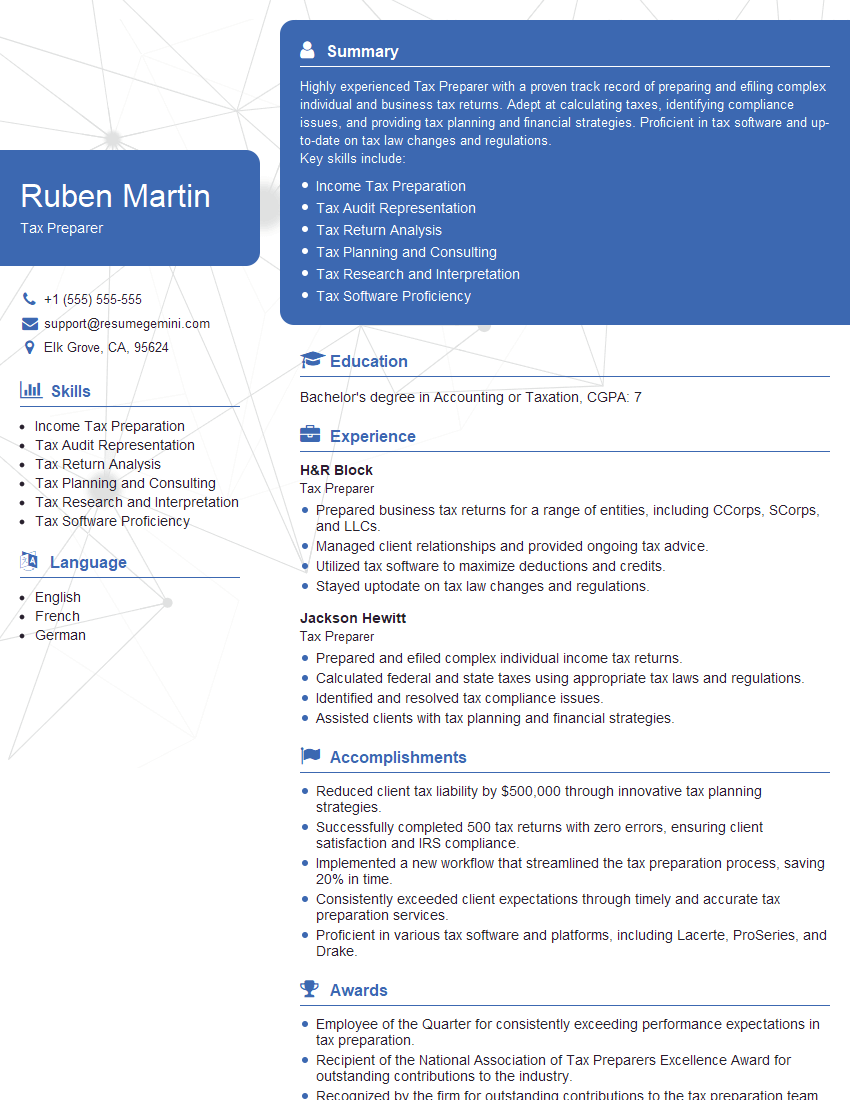
Tax Preparer Resume Sample
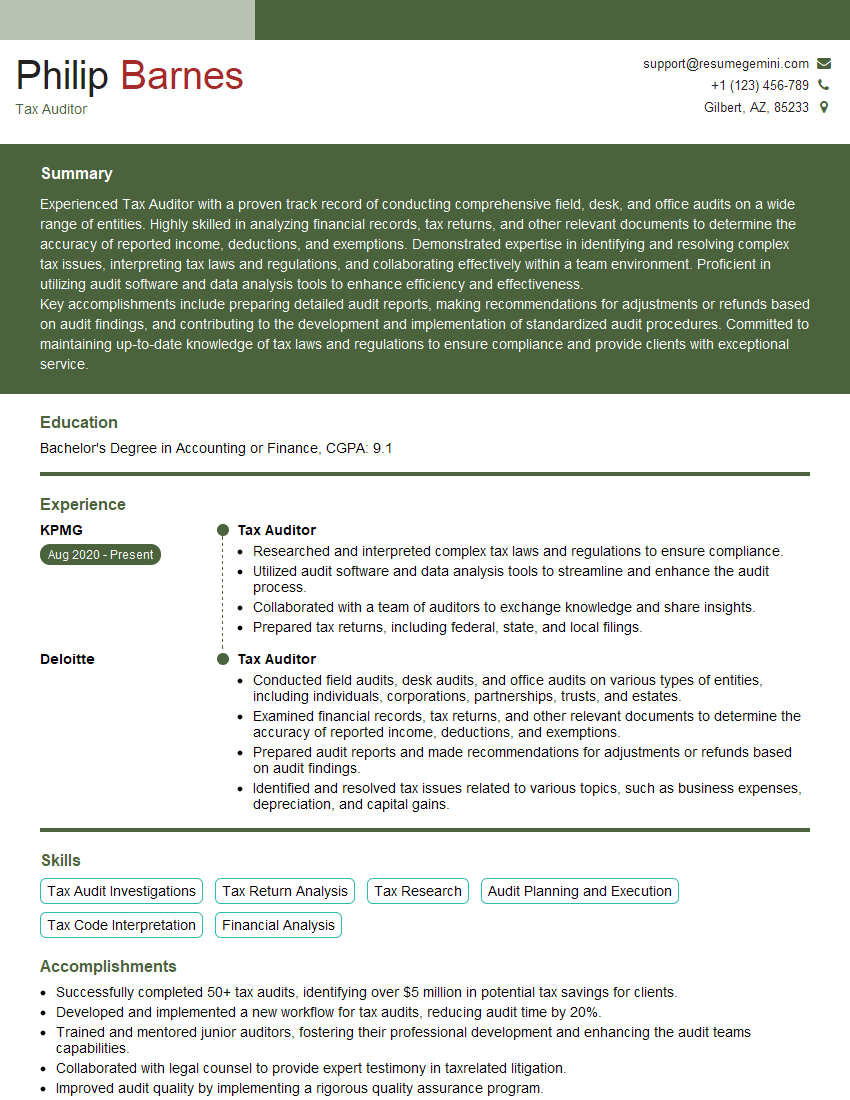
Tax Auditor Resume Sample
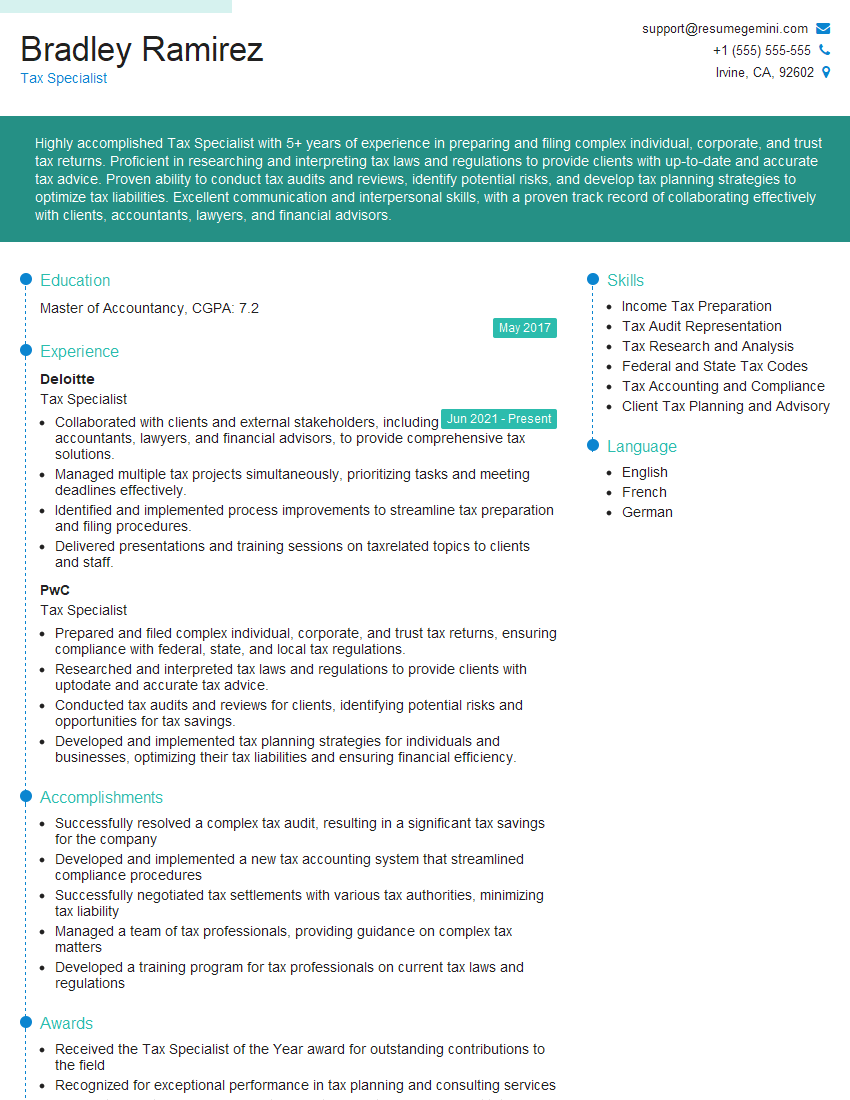
Tax Specialist Resume Sample
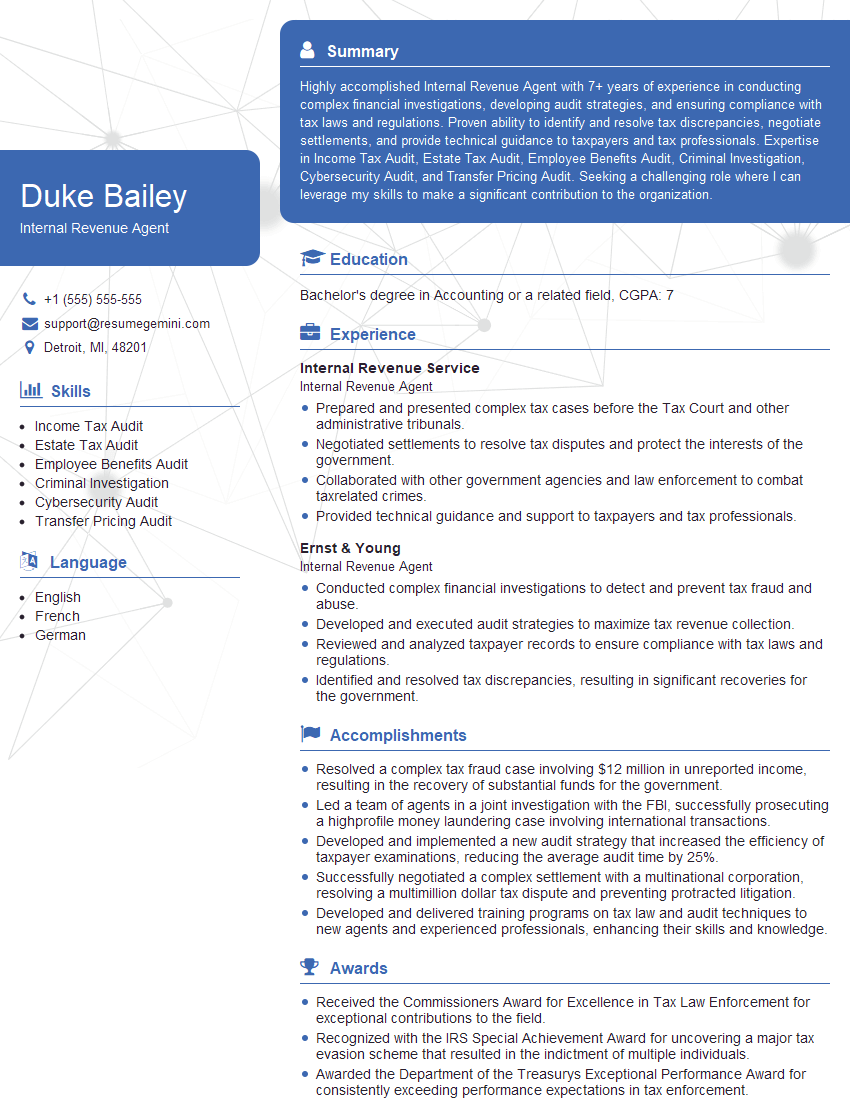
Internal Revenue Agent Resume Sample
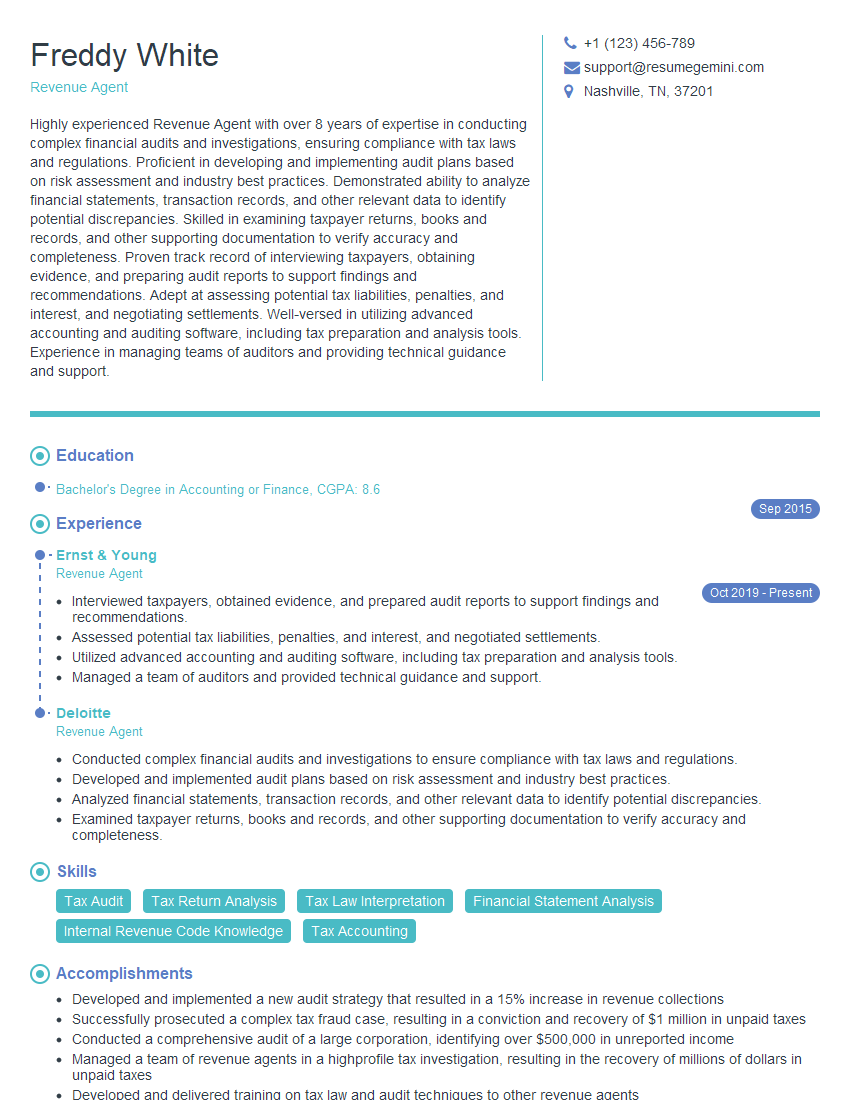
Revenue Agent Resume Sample
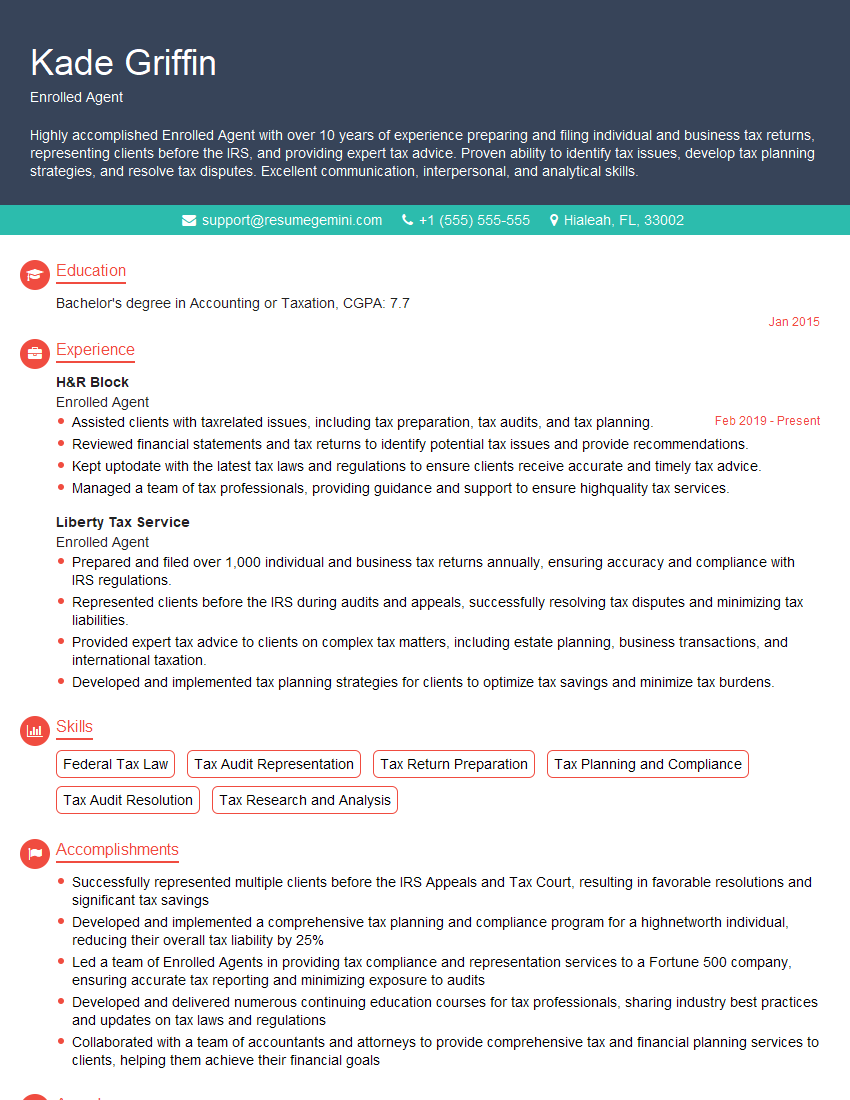
Enrolled Agent Resume Sample
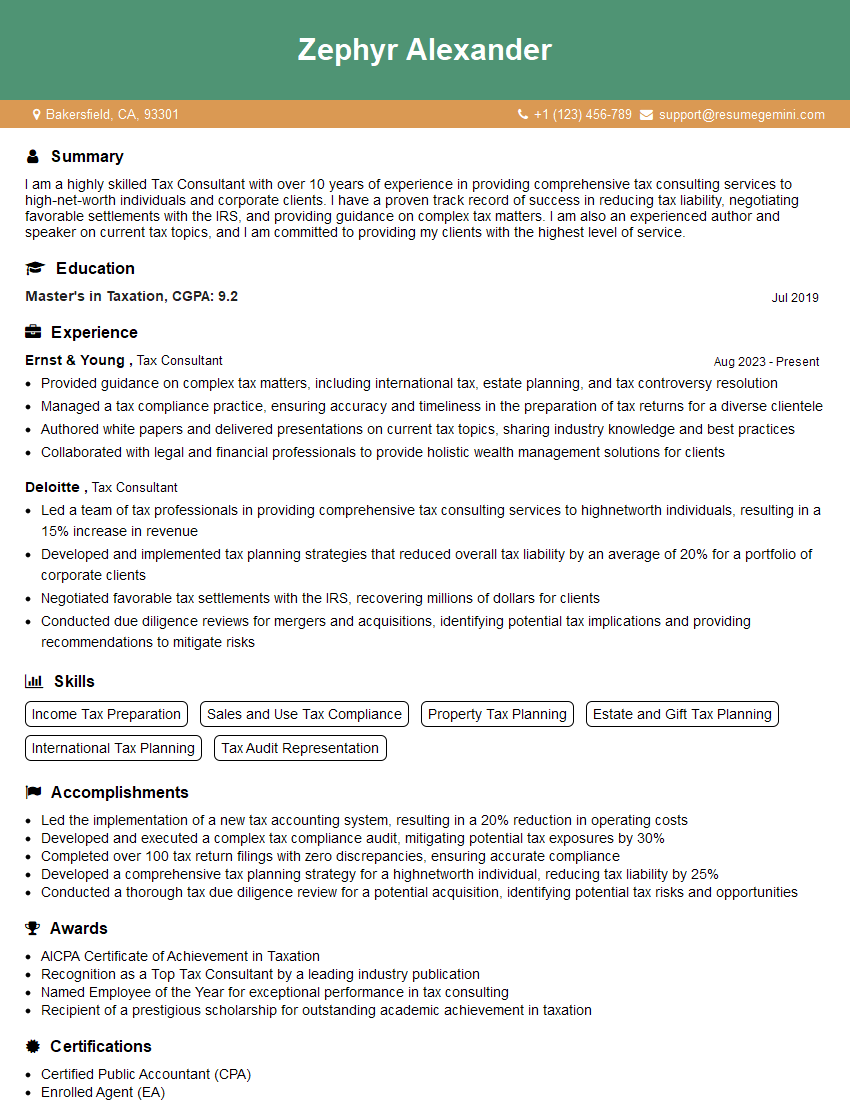
Tax Consultant Resume Sample
Explore more articles
Users Rating of Our Blogs
Share Your Experience
We value your feedback! Please rate our content and share your thoughts (optional).
What Readers Say About Our Blog
Really detailed insights and content, thank you for writing this detailed article.
IT gave me an insight and words to use and be able to think of examples