Preparation is the key to success in any interview. In this post, we’ll explore crucial Warehouse Layout and Optimization interview questions and equip you with strategies to craft impactful answers. Whether you’re a beginner or a pro, these tips will elevate your preparation.
Questions Asked in Warehouse Layout and Optimization Interview
Q 1. Explain the difference between a U-shaped and I-shaped warehouse layout.
The primary difference between U-shaped and I-shaped warehouse layouts lies in their workflow efficiency and space utilization. An I-shaped layout is linear, with receiving at one end, shipping at the other, and storage in between. This is simple to implement but can lead to bottlenecks and longer travel distances for workers and equipment. Think of it like a single, long assembly line.
A U-shaped layout, conversely, bends the linear flow into a U-shape. This often allows for a more efficient flow of goods, reducing travel time and improving overall productivity. Imagine it like a horseshoe – materials enter one end, are processed, and exit the other, with storage strategically placed along the curve to minimize travel. It’s particularly useful for high-volume operations and processes that benefit from repetitive movement.
In practice, the choice depends on several factors such as the volume of goods handled, the type of storage required, and the available space. A smaller warehouse might benefit from an I-shape, while a larger operation with high throughput would likely find a U-shape more effective.
Q 2. Describe your experience with warehouse management systems (WMS).
My experience with Warehouse Management Systems (WMS) is extensive. I’ve worked with various WMS platforms, from implementing new systems in greenfield warehouses to migrating existing operations to more advanced software. My expertise covers all aspects of WMS implementation, including needs analysis, system selection, configuration, user training, and ongoing support.
For example, in a previous role, I led the implementation of a WMS for a large e-commerce distributor. This involved a detailed assessment of their current operations, identifying process bottlenecks, and selecting a WMS that addressed their specific requirements, such as high order volume and complex inventory management. We achieved a 20% increase in order fulfillment speed after implementation, thanks to optimized inventory slotting and improved order routing. I am also proficient in integrating WMS with other enterprise systems like ERP and TMS to create a seamless and data-rich logistics ecosystem. My experience includes working with both cloud-based and on-premise WMS solutions.
Q 3. How do you calculate the optimal number of docks for a warehouse?
Determining the optimal number of docks requires a multifaceted approach, considering factors beyond just inbound and outbound shipments. It’s not a simple calculation but a strategic decision based on thorough analysis.
- Inbound/Outbound Volume: Analyze historical data on daily, weekly, and peak-season inbound and outbound shipments to project future demands.
- Dock Utilization Rate: Track how efficiently existing docks are used, identifying potential bottlenecks or idle time. This helps determine if adding docks will genuinely improve throughput or if process improvements are a more effective solution.
- Truck Turnaround Time: Faster turnaround times mean more trucks can be serviced with fewer docks. Analyze processes to minimize loading and unloading time.
- Available Space: Physical constraints limit the number of docks possible. Proper spacing is crucial for efficient truck maneuvering.
- Cost Analysis: Constructing and maintaining docks incurs significant costs; weigh this against potential throughput improvements.
A simulation model or queuing theory can be used to forecast optimal dock numbers given varying scenarios. However, a purely mathematical approach is often insufficient. It’s crucial to balance cost, capacity, and operational efficiency to arrive at a suitable number of docks.
Q 4. What are the key performance indicators (KPIs) you would track in a warehouse?
Key Performance Indicators (KPIs) for warehouse operations should reflect all aspects of performance – efficiency, cost, and quality. I prioritize a balanced scorecard approach. Some critical KPIs I regularly track include:
- Order Fulfillment Rate: Percentage of orders successfully fulfilled on time and in full.
- Inventory Accuracy: Percentage of inventory records accurately reflecting physical stock.
- Order Cycle Time: Time taken to process an order from receipt to shipment.
- Warehouse Labor Productivity: Output per labor hour, measuring efficiency of workforce.
- Storage Capacity Utilization: Percentage of available storage space in use.
- Shipping Cost per Unit: Cost of shipping relative to the number of units shipped, indicating efficiency.
- Damage Rate: Percentage of damaged goods during receiving, storage, or shipping.
- On-Time Delivery Rate: Percentage of orders delivered within the promised timeframe.
These KPIs should be monitored regularly, ideally in real-time via a dashboard, allowing for proactive identification and resolution of potential issues.
Q 5. Explain your understanding of slotting optimization techniques.
Slotting optimization is the strategic placement of inventory within a warehouse to maximize efficiency and minimize travel time for workers and equipment. It’s a crucial element of warehouse layout design and ongoing operations. Effective slotting significantly reduces picking time, improves order fulfillment rates, and optimizes storage space utilization.
Techniques range from simple methods like assigning frequently picked items to easily accessible locations (A-frame slotting) to sophisticated algorithms that use data analytics to determine optimal placements. These algorithms consider factors like item popularity, size, weight, and order patterns. For instance, a warehouse might use ABC analysis to classify inventory based on value and frequency of use; high-value, frequently picked items (‘A’ items) are placed in the most convenient locations. Software solutions frequently automate this process, utilizing advanced simulation and optimization techniques to suggest optimal layouts.
I have extensive experience using both manual and automated slotting optimization methods, and I can adapt my approach to align with the specific requirements and resources of each warehouse.
Q 6. How do you handle peak season demands in warehouse operations?
Managing peak season demands requires a proactive and multi-pronged approach. It’s not simply about scaling up existing operations but about strategic planning and operational flexibility.
- Demand Forecasting: Accurate forecasting is vital to anticipate the increase in order volume and plan accordingly.
- Staffing: Employ temporary staff, adjust worker schedules, or consider outsourcing to handle the increased workload.
- Inventory Management: Ensure adequate stock levels to meet projected demand, avoiding stockouts. Consider pre-positioning inventory in strategic locations.
- Process Optimization: Fine-tune existing processes to maximize efficiency. Automate repetitive tasks where possible.
- Technology Utilization: Leverage warehouse management systems (WMS) and other technologies to provide real-time visibility and streamline operations.
- Capacity Planning: Ensure sufficient storage capacity and loading dock space to accommodate the increased volume.
- Communication: Maintain clear communication with all stakeholders, including employees, suppliers, and customers.
Flexibility is key; a robust plan anticipates unforeseen circumstances and allows for quick adjustments.
Q 7. Describe your experience with lean manufacturing principles in a warehouse setting.
Lean manufacturing principles, focusing on eliminating waste and maximizing value, are highly applicable to warehouse operations. My experience incorporates these principles into warehouse design and operational improvement. I’ve successfully implemented several lean initiatives, resulting in significant efficiency gains and cost reductions.
For example, in one project, we implemented 5S methodology (Sort, Set in Order, Shine, Standardize, Sustain) to improve warehouse organization and reduce search time for items. We also used value stream mapping to identify and eliminate bottlenecks in the order fulfillment process, reducing cycle time by 15%. Furthermore, I’ve utilized Kaizen events to encourage continuous improvement through employee participation and problem-solving. Lean thinking extends beyond just physical organization; it’s about optimizing processes, reducing waste, and improving the overall flow of goods and information.
Q 8. How do you evaluate the efficiency of a warehouse layout?
Evaluating warehouse layout efficiency involves a multifaceted approach, focusing on key performance indicators (KPIs) that reflect operational effectiveness and cost optimization. It’s not just about speed; it’s about the holistic balance of speed, cost, and accuracy.
- Order fulfillment cycle time: This measures the time from order receipt to shipment. A shorter cycle time indicates higher efficiency.
- Storage and retrieval efficiency: This assesses how quickly and accurately items are located and retrieved. We use metrics like pick-to-light accuracy or put-away time.
- Space utilization: This KPI calculates the percentage of available warehouse space actively used for storage. High utilization minimizes wasted space and associated costs.
- Labor productivity: This measures the output (orders fulfilled, items picked) per unit of labor input. We often calculate this as orders per hour per worker.
- Inventory accuracy: This reflects the degree of correspondence between the physical inventory and the inventory management system. Discrepancies indicate inefficiencies and potential losses.
- Damage rates: High damage rates indicate problems with handling, storage, or layout. These costs often get overlooked.
For example, in one project, we analyzed a distribution center that experienced high order fulfillment times. By implementing a zone picking strategy and optimizing storage locations, we reduced the average cycle time by 25%, directly improving labor productivity and customer satisfaction.
Q 9. What are the advantages and disadvantages of automated guided vehicles (AGVs)?
Automated Guided Vehicles (AGVs) offer significant advantages in warehouse operations, but also come with certain limitations.
- Advantages:
- Increased efficiency: AGVs can operate 24/7, increasing throughput and reducing labor costs.
- Improved safety: By automating material handling, AGVs reduce the risk of accidents caused by human error.
- Enhanced productivity: They can handle heavier loads and operate in various conditions more consistently than humans.
- Flexibility: Modern AGVs can be programmed to follow dynamic routes and adapt to changing warehouse conditions.
- Disadvantages:
- High initial investment: Purchasing and implementing AGVs requires a substantial upfront investment.
- Maintenance costs: Regular maintenance and repairs are essential, adding to the overall operational costs.
- Integration complexity: Integrating AGVs into existing warehouse management systems can be challenging and require specialized expertise.
- Limited adaptability: They might not be suitable for all types of warehouses or tasks, particularly those with highly variable or unpredictable workflows. For example, a facility with constantly changing product locations might not benefit as much from AGVs.
Imagine a large e-commerce fulfillment center. Implementing AGVs for transporting pallets between receiving, storage, and shipping could significantly reduce transportation time and labor costs, but careful planning for integration and potential downtime is crucial.
Q 10. How do you address safety concerns in warehouse design and operations?
Safety is paramount in warehouse design and operation. Proactive measures are critical to prevent accidents and injuries.
- Layout design: Wide aisles, clear signage, adequate lighting, and the separation of pedestrian and vehicle traffic are essential. This also includes careful consideration of emergency exits and fire safety.
- Equipment safety: Regular maintenance of forklifts, conveyors, and other equipment is vital, along with proper operator training and safety protocols. This includes enforcing speed limits and the use of safety devices.
- Ergonomic design: Workstations should be designed to minimize physical strain on workers, reducing the risk of musculoskeletal disorders. This includes adjustable height tables and proper lifting techniques training.
- Personal protective equipment (PPE): Providing and enforcing the use of appropriate PPE such as safety shoes, gloves, and high-visibility vests is crucial.
- Emergency response plan: A comprehensive emergency response plan should be in place, covering situations like fire, spills, and medical emergencies. Regular drills are also necessary.
In one project, we redesigned a warehouse layout to separate pedestrian and forklift traffic using designated walkways and clearly marked zones, resulting in a significant reduction in near-miss incidents.
Q 11. Describe your experience with warehouse space utilization analysis.
Warehouse space utilization analysis is a crucial aspect of my work. It involves identifying and eliminating wasted space to optimize storage capacity and operational efficiency. This is usually done through a combination of physical surveys, data analysis, and simulations.
- Data collection: This includes collecting information on the size and layout of the warehouse, the dimensions and volume of stored items, and current storage practices.
- Space mapping: We create detailed maps of the warehouse, identifying areas of high and low utilization.
- Inventory analysis: We analyze inventory data to identify slow-moving and fast-moving items, optimizing storage locations for efficient retrieval.
- Simulation modeling: This is a powerful tool that allows us to experiment with different layout configurations and predict the impact on key performance indicators like throughput, storage capacity, and order fulfillment time. Software like AnyLogic or FlexSim can be used.
- Reporting and optimization: Based on the analysis, we propose adjustments to the warehouse layout, such as rearranging storage locations, optimizing shelving configurations, or implementing better space management techniques like dynamic slotting.
For example, in a recent project, we analyzed a warehouse with low space utilization. By implementing a dynamic slotting system and optimizing storage locations based on item velocity, we increased space utilization by 15% and reduced order picking time by 10%.
Q 12. How do you improve order picking efficiency in a warehouse?
Improving order picking efficiency requires a multi-pronged approach focusing on process optimization, technology integration, and workforce management.
- Optimize picking routes: Implement strategies like zone picking, batch picking, or wave picking to minimize travel time and improve efficiency. Software can help optimize routes based on item location and order volume.
- Implement technology: Employ technologies such as voice-directed picking, pick-to-light systems, or mobile picking carts to guide pickers, reduce errors, and accelerate the process. These systems streamline and often automate the process.
- Improve storage location assignment: Place frequently picked items in easily accessible locations to reduce travel time. This can involve dynamic slotting algorithms, adjusting product placement based on real-time data.
- Optimize picking process: Implement standardized procedures for picking, packing, and labeling to reduce errors and inconsistencies. This reduces wasted time and handling.
- Train and empower pickers: Provide proper training on picking techniques, safety protocols, and the use of warehouse management systems. Empower workers to identify and suggest process improvements.
For example, we implemented a voice-directed picking system in a distribution center, reducing picking errors by 20% and improving picker productivity by 15%.
Q 13. What are some common challenges in warehouse layout optimization?
Warehouse layout optimization presents several challenges:
- Balancing conflicting objectives: Optimizing for one KPI, such as order fulfillment time, might negatively impact another, such as space utilization or labor costs. Finding the right balance is critical.
- Dealing with dynamic demands: Fluctuations in order volume, product mix, and storage requirements necessitate flexible layouts that can adapt to changing conditions. This requires a layout that is flexible or scalable.
- Integrating new technologies: Implementing automation technologies such as AGVs or automated storage and retrieval systems (AS/RS) requires careful planning and integration with existing systems. This is a complex task requiring specialized expertise.
- Data limitations: Insufficient or inaccurate data can hinder effective optimization. Accurate and timely data is essential for effective modeling and decision-making.
- Resistance to change: Workers might be resistant to changes in layout or workflows, requiring careful communication and training to ensure smooth transitions. Change management is a key success factor.
For instance, a seasonal surge in demand could severely impact a warehouse layout designed for a steady baseline. Effective optimization involves planning for such variability.
Q 14. How do you incorporate ergonomics into warehouse design?
Incorporating ergonomics into warehouse design is crucial for worker safety, health, and productivity. It focuses on minimizing physical strain and discomfort during warehouse tasks.
- Workstation design: Workstations should be designed to accommodate the natural postures and movements of workers, adjusting heights, using appropriate tools, and minimizing repetitive motions.
- Material handling: Equipment and procedures should be designed to minimize heavy lifting, awkward postures, and repetitive movements. This may involve using lift assists, conveyors, or other equipment to reduce physical exertion.
- Aisles and walkways: Aisles should be wide enough to allow for comfortable movement and reduce the risk of collisions. Good lighting and clear signage are also essential.
- Environmental factors: Consider temperature, humidity, and lighting to create a comfortable work environment. Overly hot, cold, or dimly lit spaces can negatively impact worker performance and health.
- Training and education: Proper training on safe lifting techniques, ergonomic postures, and the use of equipment is essential. Regular breaks and opportunities for stretching also contribute to worker health.
For example, by implementing adjustable height picking tables and providing training on proper lifting techniques, we significantly reduced the incidence of musculoskeletal injuries in a warehouse.
Q 15. What software or tools have you used for warehouse layout design?
Throughout my career, I’ve utilized a variety of software and tools for warehouse layout design, each chosen to best suit the specific project needs and client requirements. For example, I’ve extensively used AutoCAD for detailed 2D and 3D modeling of warehouse layouts, allowing for precise measurements and visualization of space utilization. This is particularly useful for complex layouts involving various racking systems and equipment placement. In addition, I’m proficient with warehouse management system (WMS) software such as SAP EWM and Oracle Warehouse Management. These systems offer powerful simulation capabilities, allowing us to test different layouts and operational strategies before implementation. Finally, I’ve also worked with specialized warehouse design software like EasyWMS and FlexSim, which provide advanced optimization features to maximize efficiency and minimize costs.
The selection of the right tool depends critically on factors such as the complexity of the warehouse, budget, and available data. For smaller projects, a simpler CAD solution might suffice, while larger, more complex facilities will benefit greatly from advanced WMS and dedicated warehouse design software.
Career Expert Tips:
- Ace those interviews! Prepare effectively by reviewing the Top 50 Most Common Interview Questions on ResumeGemini.
- Navigate your job search with confidence! Explore a wide range of Career Tips on ResumeGemini. Learn about common challenges and recommendations to overcome them.
- Craft the perfect resume! Master the Art of Resume Writing with ResumeGemini’s guide. Showcase your unique qualifications and achievements effectively.
- Don’t miss out on holiday savings! Build your dream resume with ResumeGemini’s ATS optimized templates.
Q 16. Explain your experience with different storage methods (e.g., rack systems, bulk storage).
My experience encompasses a broad range of storage methods, each with its own advantages and disadvantages. I’ve worked extensively with various rack systems, including selective pallet racking, drive-in racking, push-back racking, and cantilever racking. The choice depends on factors like product size, turnover rate, and space constraints. For example, selective pallet racking offers excellent accessibility but may not be space-efficient for high-volume, low-variety items. In contrast, drive-in racking is highly space-efficient but limits accessibility.
I’ve also managed projects involving bulk storage solutions, like floor stacking and silo storage, typically used for large quantities of homogenous products. This method is cost-effective for large volume items, but requires careful consideration of product protection and material handling. My experience includes evaluating each method against specific project needs, incorporating factors like picking efficiency, product damage risk, and space optimization to make the most efficient and cost-effective choice.
Q 17. How do you handle inventory control and accuracy in a warehouse?
Maintaining inventory control and accuracy is paramount for efficient warehouse operations. My approach involves a multi-pronged strategy. Firstly, implementing a robust WMS is crucial. A good WMS tracks inventory movements in real-time, providing accurate stock levels and facilitating efficient picking and replenishment. Secondly, regular cycle counting is vital. Instead of a full annual inventory count, we perform smaller, more frequent counts of selected inventory sections, minimizing disruption while identifying discrepancies promptly. This ensures data accuracy throughout the year.
Thirdly, utilizing barcoding and RFID technology dramatically improves accuracy in receiving, putaway, and picking processes. These technologies minimize human error and provide real-time tracking of inventory. Finally, effective training for warehouse staff on proper inventory handling procedures and the use of WMS and inventory tracking systems is key to sustaining accuracy. It’s a continuous improvement process that involves regular data analysis, identifying areas for improvement, and adjusting procedures to reduce errors.
Q 18. How do you measure the return on investment (ROI) of warehouse improvements?
Measuring the ROI of warehouse improvements requires a clear understanding of both costs and benefits. We start by calculating the total investment, including software, hardware, labor, and any consulting fees. Then, we identify and quantify the benefits. These can include reduced labor costs due to increased efficiency, decreased storage costs from optimized space utilization, reduced inventory holding costs from improved inventory management, and increased throughput from faster order fulfillment.
We use key performance indicators (KPIs) to track these improvements. Examples include order fulfillment rate, picking accuracy, storage density, and inventory turnover. By comparing these KPIs before and after the improvements, we can determine the financial impact and calculate the ROI. A simple ROI calculation would be: (Net Benefits - Total Investment) / Total Investment. However, a thorough ROI analysis also considers intangible benefits like improved employee morale and reduced risk of errors.
Q 19. Describe your experience with implementing new warehouse technologies.
I have extensive experience implementing new warehouse technologies to enhance efficiency and accuracy. This includes projects involving the implementation of Automated Guided Vehicles (AGVs) and autonomous mobile robots (AMRs), which significantly improved material handling speed and efficiency in a large distribution center. In another project, I oversaw the integration of warehouse execution systems (WES), which orchestrated the flow of goods and tasks across various warehouse systems, leading to improved throughput and reduced lead times.
Successful technology implementation requires careful planning and execution. It includes selecting the right technology, integrating it with existing systems, and providing comprehensive training to staff. Furthermore, change management is critical, ensuring that the transition is smooth and that employees understand and accept the new systems. Data migration and validation are also vital steps, to avoid data loss or inaccuracies during the implementation process.
Q 20. How do you collaborate with other departments to optimize warehouse operations?
Optimizing warehouse operations requires close collaboration with various departments. For instance, I work closely with the purchasing department to forecast demand accurately, ensuring appropriate storage space is allocated. With the sales and marketing teams, I collaborate to understand sales trends and predict peak demand periods, enabling effective planning for staffing and resource allocation. The IT department is a key partner in implementing and supporting warehouse management systems and other technologies. Finally, continuous communication with operations ensures that implementation aligns with operational goals and constraints.
Effective collaboration involves regular meetings, shared dashboards to track key performance indicators, and open communication channels. A collaborative approach ensures that the warehouse design and operations are aligned with the overall business strategy and objectives. Transparency and shared goals are crucial to building a successful partnership.
Q 21. What are your strategies for reducing warehouse operating costs?
Reducing warehouse operating costs requires a holistic approach. Firstly, optimizing space utilization is key. This involves implementing efficient storage methods, reducing aisle widths (where possible), and maximizing vertical space. Secondly, improving labor productivity is critical. This can be achieved through efficient picking strategies, using appropriate technology (such as voice picking or pick-to-light systems), and providing effective employee training. Thirdly, minimizing waste is essential. This includes reducing energy consumption through efficient lighting and HVAC systems, minimizing product damage, and streamlining processes to reduce unnecessary movements.
Other cost-saving strategies include negotiating better rates with suppliers, implementing preventative maintenance programs to reduce equipment downtime, and leveraging data analytics to identify and address inefficiencies. Continuous monitoring of key performance indicators and a commitment to process improvement are vital for sustained cost reduction in the long run.
Q 22. How would you design a warehouse for a specific industry (e.g., food, retail)?
Designing a warehouse, especially for industries with specific needs like food or retail, requires a holistic approach. It’s not just about racking and shelving; it’s about optimizing the entire flow of goods, from receiving to shipping. For example, a food warehouse would necessitate considerations for temperature control, specialized handling equipment for fragile items, and strict adherence to hygiene and safety regulations. A retail warehouse, on the other hand, might focus on fast-paced order fulfillment, automated picking systems, and efficient slotting strategies to manage a high volume of SKUs (Stock Keeping Units).
Key Considerations:
- Product Characteristics: Size, weight, temperature sensitivity, fragility, shelf life, and handling requirements. A food warehouse with frozen products will require vastly different infrastructure compared to one handling dry goods.
- Order Fulfillment Strategy: Are orders predominantly single-item or multi-item? This influences the optimal picking method (batch picking, zone picking, wave picking). A retail environment with a high volume of online orders might benefit from a highly automated system.
- Storage Capacity: Determine the required space based on projected inventory levels and growth. This includes vertical space utilization through high-bay racking.
- Technology Integration: Warehouse Management Systems (WMS) are crucial for inventory tracking, order management, and overall efficiency. Automated Guided Vehicles (AGVs) and conveyor systems can significantly enhance throughput in high-volume facilities.
- Regulatory Compliance: Adherence to food safety regulations (e.g., HACCP for food warehouses) and occupational safety standards is paramount.
Example: Imagine designing a warehouse for a grocery chain. We would need designated areas for chilled and frozen goods, separate receiving and shipping docks, a high-throughput picking system for online grocery orders, and a robust WMS to manage inventory levels and expiration dates.
Q 23. Explain your understanding of different warehouse zoning strategies.
Warehouse zoning strategies divide the warehouse into distinct areas based on function. This improves efficiency, safety, and orderliness. Think of it like organizing your home – you wouldn’t put your groceries in your bedroom! Common zoning strategies include:
- Receiving Zone: Where incoming goods are inspected and processed.
- Storage Zone: The main area for storing inventory, often divided further based on product type, popularity, or velocity.
- Picking Zone: Where orders are assembled. The layout here is crucial for minimizing travel time.
- Packing Zone: Products are packaged and prepared for shipping.
- Shipping Zone: Orders are loaded onto trucks or other transport.
- Value-Added Services Zone: For tasks like labeling, kitting, or light assembly.
- Office and Administrative Zone: Space for staff and management.
Strategies for Zoning:
- Product-based zoning: Group similar products together for efficient picking.
- Activity-based zoning: Groups related activities together (e.g., placing packing stations near shipping docks).
- Popularity-based zoning: Frequently accessed items are placed in easily accessible areas.
Example: In a retail warehouse, high-velocity items might be placed in the picking zone closest to the shipping dock, while slower-moving items could be stored further back.
Q 24. How do you manage warehouse capacity planning?
Warehouse capacity planning is a crucial process to ensure sufficient space to meet current and future demands while optimizing costs. It involves forecasting demand, analyzing inventory levels, and assessing the warehouse’s physical limitations.
Steps in Capacity Planning:
- Demand Forecasting: Project future inventory levels based on historical data, sales trends, and seasonal fluctuations. Consider using statistical forecasting methods.
- Inventory Analysis: Determine the average inventory turnover rate, storage space requirements per SKU, and overall cubic volume.
- Space Assessment: Measure the existing warehouse space, considering rack configurations, aisle widths, and available vertical space. Analyze the utilization of current space and identify any inefficiencies.
- Technology Evaluation: Assess the potential for utilizing technology like higher-density racking, automated storage and retrieval systems (AS/RS), or vertical carousel systems to increase storage capacity.
- Simulation and Modeling: Utilize software tools to simulate different warehouse layouts and optimize space utilization.
- Contingency Planning: Develop strategies to handle unexpected surges in demand or inventory.
Example: Using historical sales data and seasonal trends, we can project the required storage space for the next five years. This informs decisions about potential expansion, technology upgrades, or changes in storage strategies.
Q 25. What are the principles of effective material handling in a warehouse?
Effective material handling in a warehouse hinges on minimizing movement, maximizing efficiency, and ensuring safety. Key principles include:
- Unit Load Optimization: Grouping items into larger units (pallets, containers) for easier handling and transport.
- Optimized Equipment Selection: Choosing the right equipment for the task, considering factors like weight, size, and fragility of the goods. This might involve forklifts, conveyors, automated guided vehicles (AGVs), or robotic systems.
- Efficient Layout Design: Minimizing the distance goods travel between receiving, storage, picking, and shipping. This involves strategic placement of equipment and storage locations.
- Improved Workflow Design: Streamlining processes to reduce unnecessary steps and bottlenecks. This might involve implementing lean principles or using value stream mapping.
- Safety and Ergonomics: Prioritizing the safety of warehouse personnel through proper training, safety equipment, and ergonomic considerations.
Example: Implementing a conveyor system to automate the movement of goods from receiving to storage eliminates manual handling, reduces the risk of injury, and improves overall speed and efficiency.
Q 26. How do you address issues related to warehouse traffic flow and congestion?
Warehouse traffic flow and congestion significantly impact efficiency and safety. Addressing these issues requires a multi-pronged approach.
Strategies for Managing Traffic Flow and Congestion:
- One-way Aisles: Implementing one-way traffic patterns in aisles to avoid head-on collisions.
- Designated Traffic Zones: Creating separate areas for receiving, shipping, and internal movement.
- Efficient Dock Scheduling: Optimizing the arrival and departure times of trucks to minimize congestion at the docks.
- Traffic Management Software: Using software to monitor and optimize vehicle movement within the warehouse.
- Proper Aisle Widths: Ensuring sufficient aisle widths to accommodate equipment and allow for safe passage.
- Optimized Equipment Routing: Planning the routes of forklifts and other equipment to minimize overlaps and conflicts.
- Employee Training: Training employees on safe driving practices and warehouse procedures.
Example: Implementing a traffic management system using sensors and cameras could provide real-time data on traffic flow, enabling proactive adjustments to routes and scheduling to mitigate congestion.
Q 27. Describe your experience with designing and implementing a warehouse layout from scratch.
I’ve been involved in designing and implementing several warehouse layouts from scratch, each presenting unique challenges. The process generally follows these steps:
- Needs Assessment: Gathering requirements from stakeholders, including forecasting future demands, inventory characteristics, and operational needs.
- Layout Design: Using warehouse layout software to design the optimal layout, considering factors like storage capacity, traffic flow, and equipment placement. This might involve several iterations and simulations.
- Equipment Selection: Choosing the most appropriate material handling equipment (forklifts, conveyors, automated systems) based on the layout and operational requirements.
- Implementation Planning: Creating a detailed implementation plan, including timelines, resource allocation, and potential risks.
- Construction and Installation: Overseeing the construction or modification of the warehouse space and installation of equipment.
- Testing and Optimization: Conducting thorough testing to identify and address any bottlenecks or inefficiencies before full operation. Continuous optimization is key.
- Training: Training staff on the use of new equipment and warehouse procedures.
Example: In one project for a rapidly growing e-commerce company, we implemented a highly automated system using AS/RS and AGVs to handle their significant order volume, resulting in a 30% increase in throughput and a significant reduction in labor costs. This involved extensive simulation and modeling to optimize the placement of AS/RS and AGV routes.
Q 28. How do you ensure compliance with safety regulations in warehouse operations?
Ensuring compliance with safety regulations is paramount in warehouse operations. This involves a proactive approach encompassing several key areas:
- Regular Safety Audits: Conducting regular inspections to identify and address potential hazards, ensuring compliance with OSHA (or equivalent local) regulations.
- Employee Training: Providing comprehensive safety training to all warehouse staff on topics such as forklift operation, proper lifting techniques, and hazard recognition.
- Emergency Preparedness: Developing and practicing emergency procedures, including fire safety plans and evacuation protocols.
- Proper Equipment Maintenance: Ensuring regular maintenance of all equipment to prevent malfunctions and accidents.
- Proper Signage and Markings: Clear signage indicating emergency exits, hazardous areas, and traffic flow patterns.
- Personal Protective Equipment (PPE): Providing and enforcing the use of appropriate PPE, such as safety glasses, gloves, and steel-toed boots.
- Hazard Communication: Implementing a system for identifying, labeling, and managing hazardous materials.
Example: Implementing a lockout/tagout procedure for equipment maintenance prevents accidental start-ups, minimizing the risk of injury to maintenance personnel.
Key Topics to Learn for Warehouse Layout and Optimization Interview
- Space Utilization Strategies: Understanding and applying techniques like slotting optimization, cube utilization, and aisle optimization to maximize storage capacity and minimize wasted space. Practical application: Analyzing existing warehouse layouts and proposing improvements to increase throughput.
- Material Handling Equipment Selection: Evaluating the efficiency and suitability of different material handling systems (e.g., conveyors, forklifts, automated guided vehicles) based on warehouse size, product characteristics, and order volume. Practical application: Justifying the selection of specific equipment through cost-benefit analysis and performance metrics.
- Warehouse Management Systems (WMS): Understanding the role of WMS in optimizing warehouse operations, including inventory management, order fulfillment, and labor management. Practical application: Describing how different WMS features can improve efficiency and accuracy in a specific warehouse scenario.
- Order Picking Strategies: Analyzing and comparing different order picking methods (e.g., batch picking, zone picking, wave picking) to determine the most efficient approach for specific order profiles. Practical application: Designing an optimized picking process for a high-volume warehouse handling diverse product types.
- Lean Principles and Kaizen in Warehouse Optimization: Implementing lean manufacturing principles to eliminate waste and improve workflow efficiency within the warehouse. Practical application: Identifying and resolving bottlenecks in a warehouse layout using tools like Value Stream Mapping.
- Safety and Ergonomics in Warehouse Design: Designing a warehouse layout that prioritizes employee safety and minimizes risks of injury. Practical application: Implementing safety protocols and ergonomic design considerations to enhance workplace safety.
- Metrics and KPIs: Understanding key performance indicators (KPIs) used to measure warehouse efficiency, such as order fulfillment rate, inventory turnover, and picking accuracy. Practical application: Using data analysis to identify areas for improvement and track the success of optimization initiatives.
Next Steps
Mastering Warehouse Layout and Optimization is crucial for career advancement in logistics and supply chain management, opening doors to leadership roles and higher earning potential. A strong resume is essential for showcasing your skills and experience to potential employers. Creating an ATS-friendly resume increases your chances of getting noticed and landing an interview. ResumeGemini is a trusted resource to help you build a professional and impactful resume that highlights your expertise. Examples of resumes tailored to Warehouse Layout and Optimization are available to guide you in crafting a compelling application.
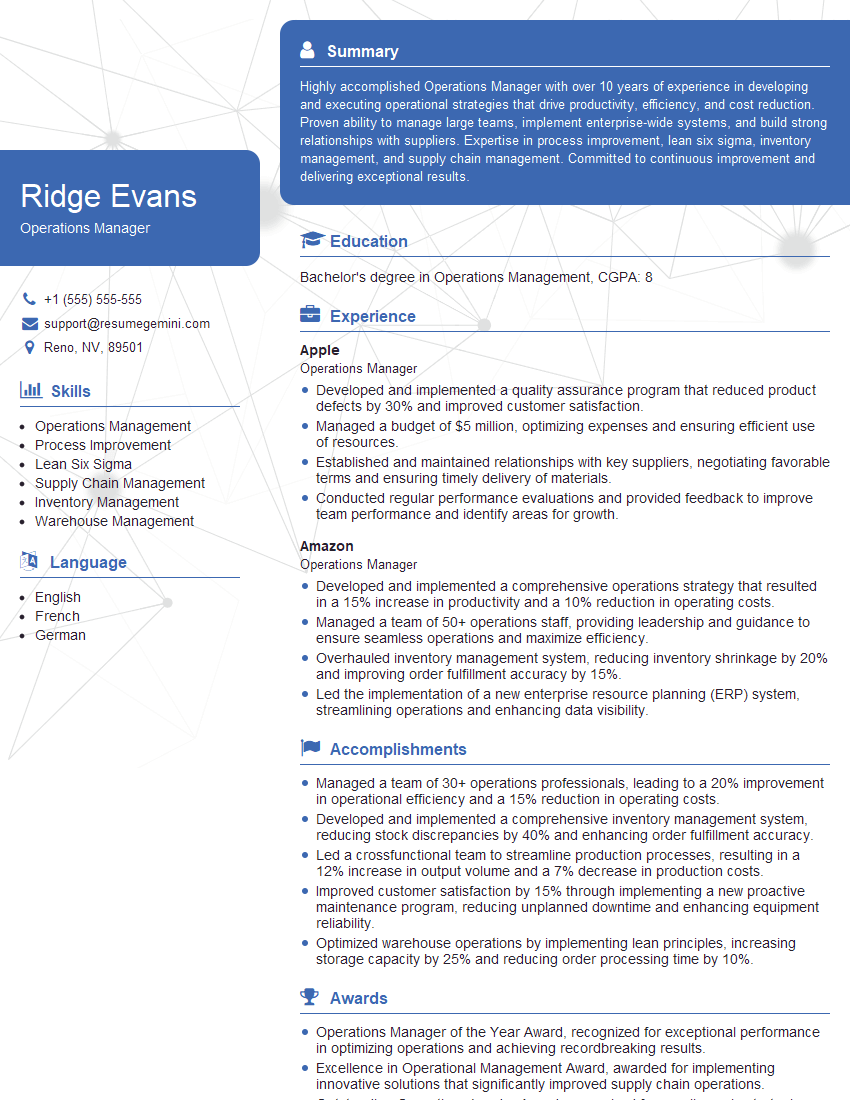
Operations Manager Resume Sample
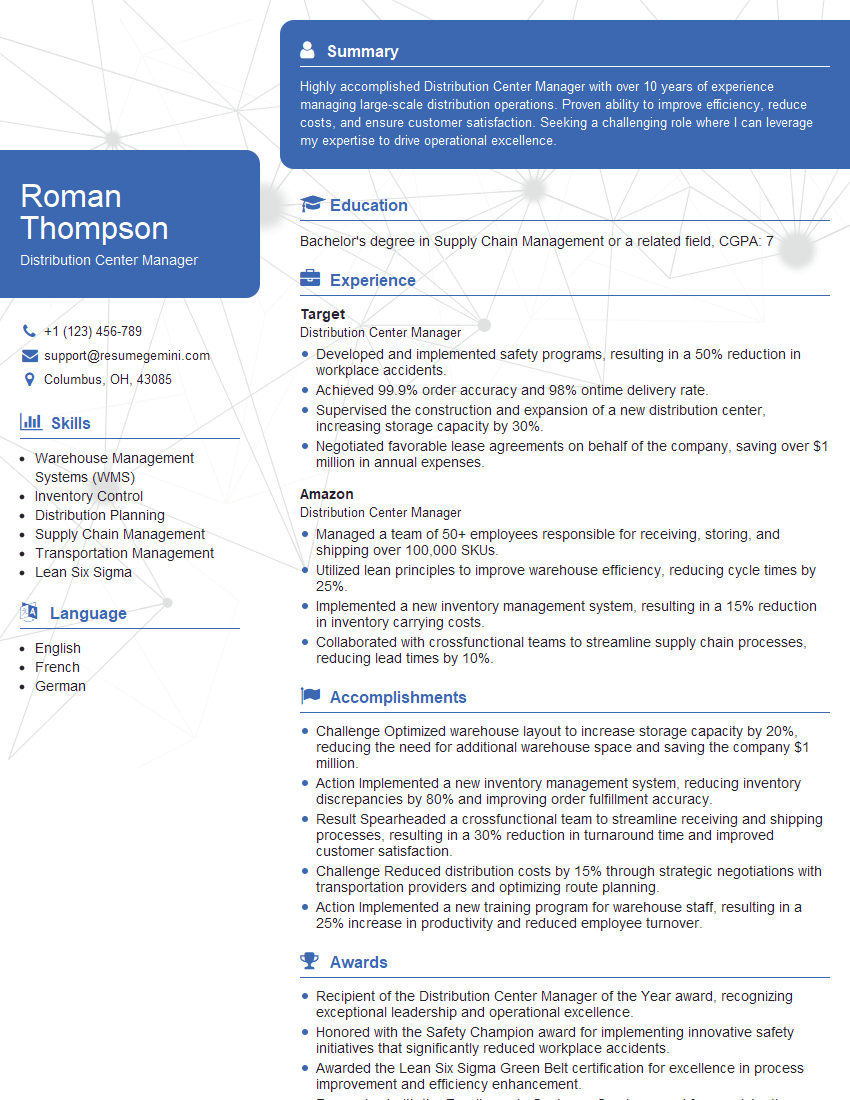
Distribution Center Manager Resume Sample
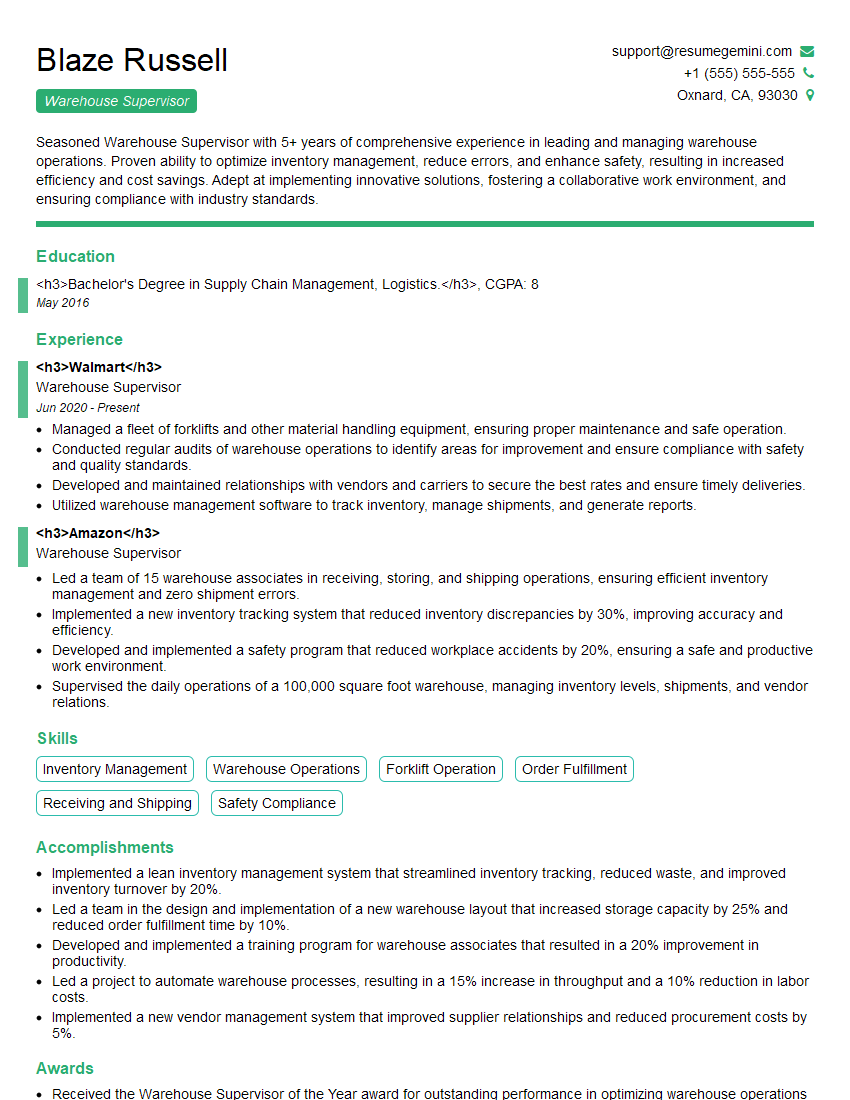
Warehouse Supervisor Resume Sample
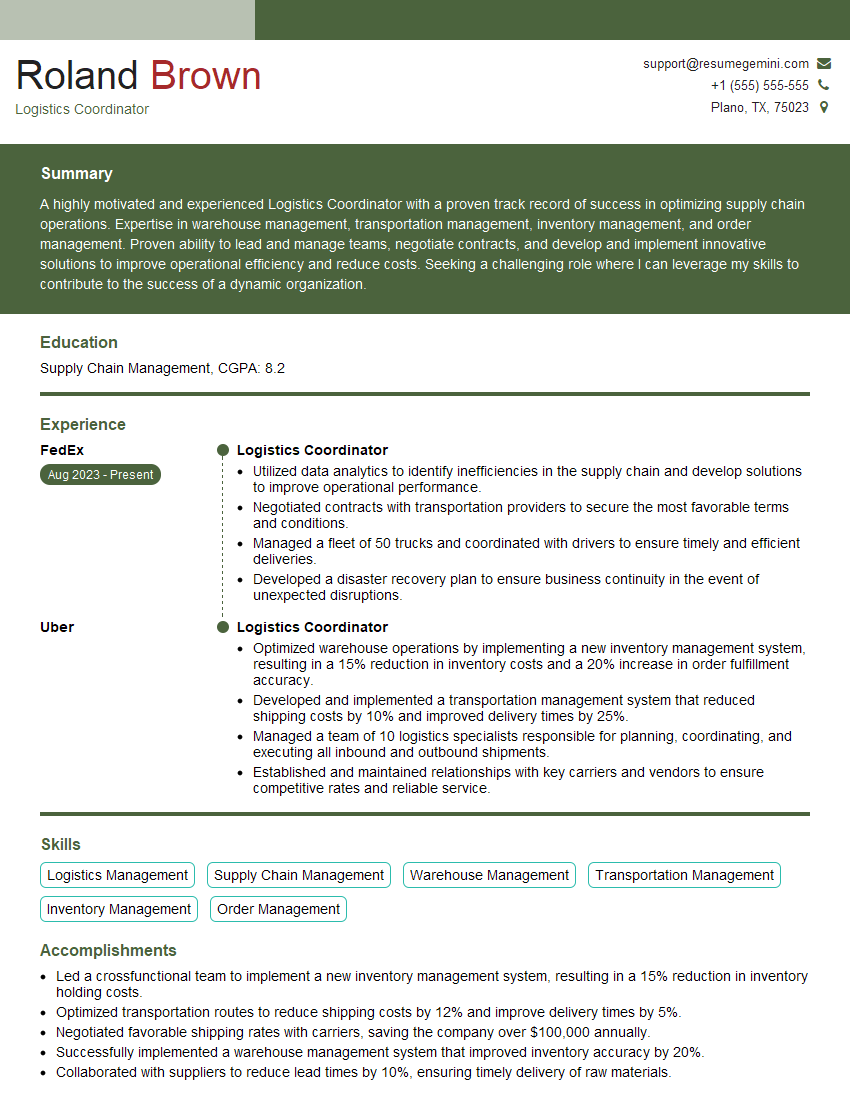
Logistics Coordinator Resume Sample
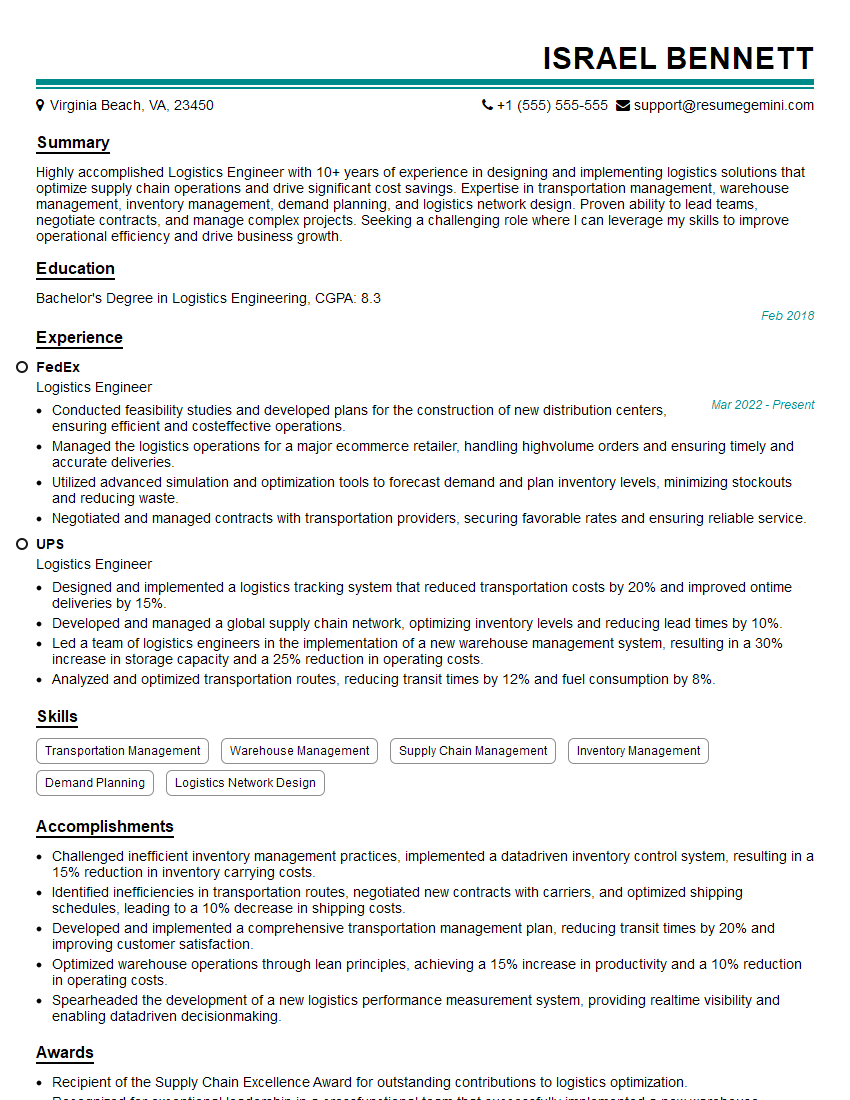
Logistics Engineer Resume Sample
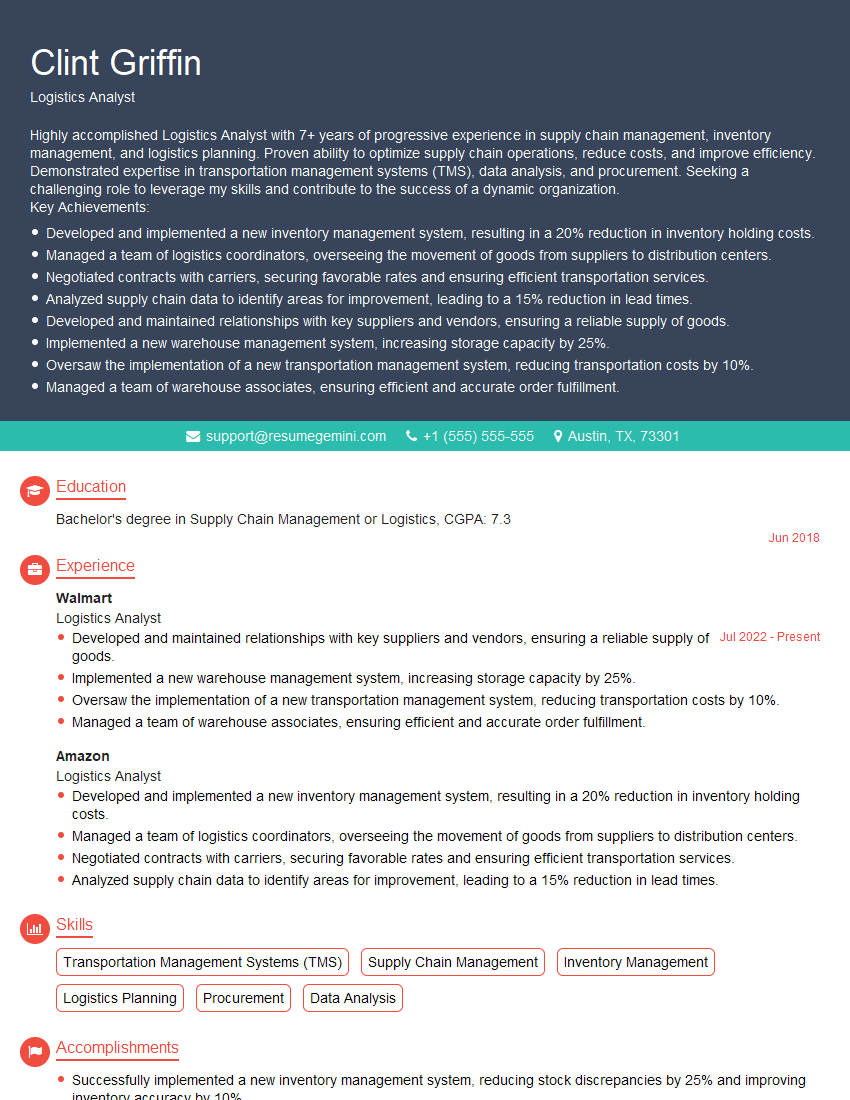
Logistics Analyst Resume Sample
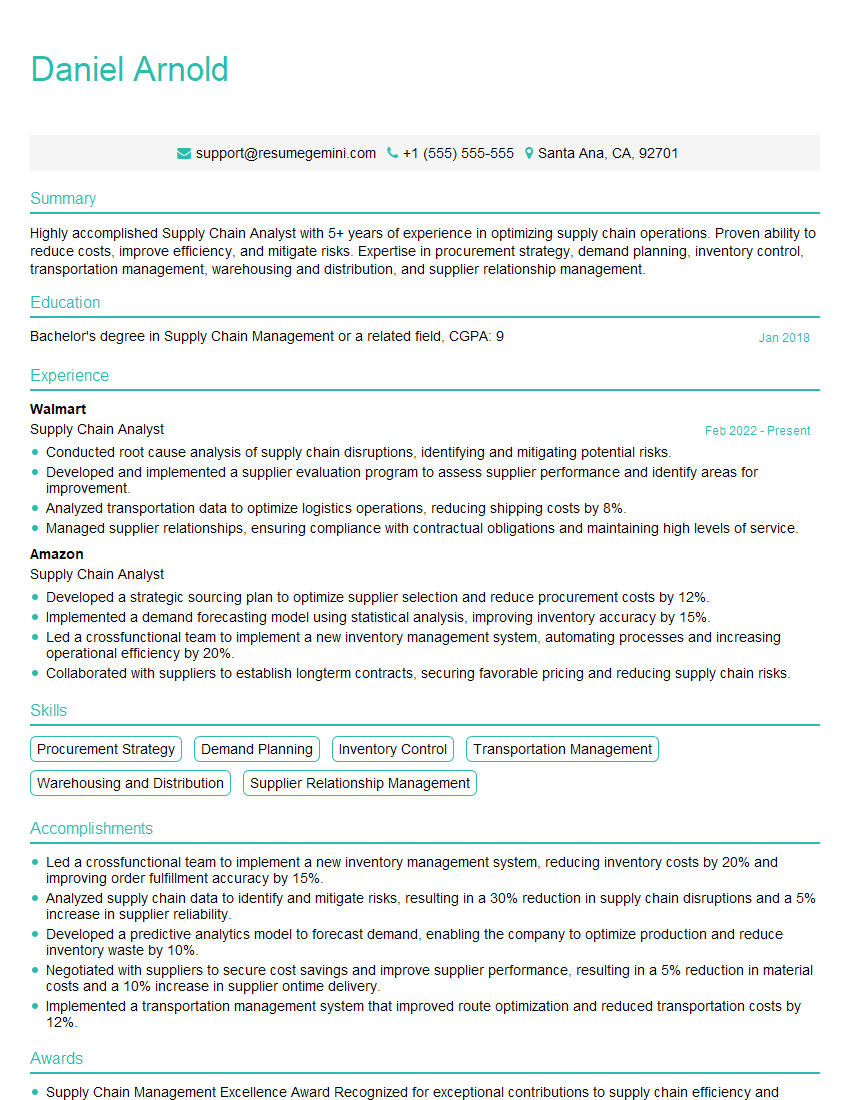
Supply Chain Analyst Resume Sample
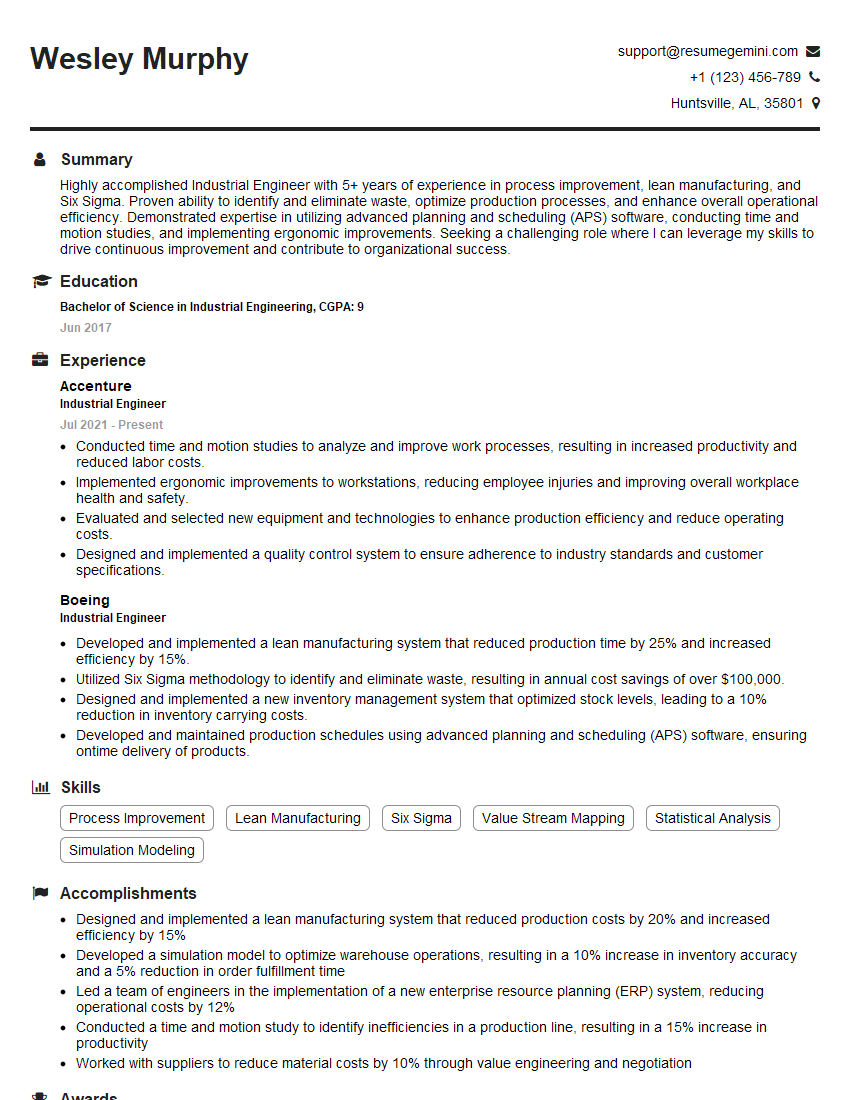
Industrial Engineer Resume Sample
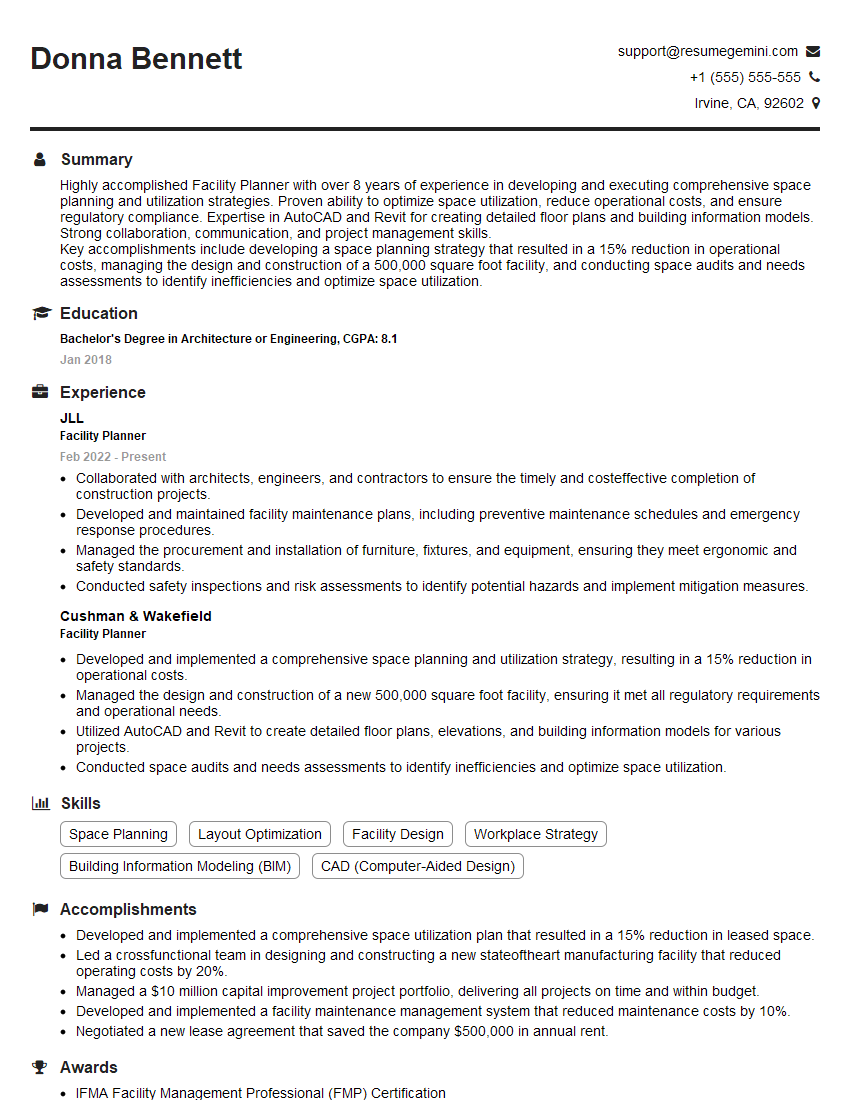
Facility Planner Resume Sample
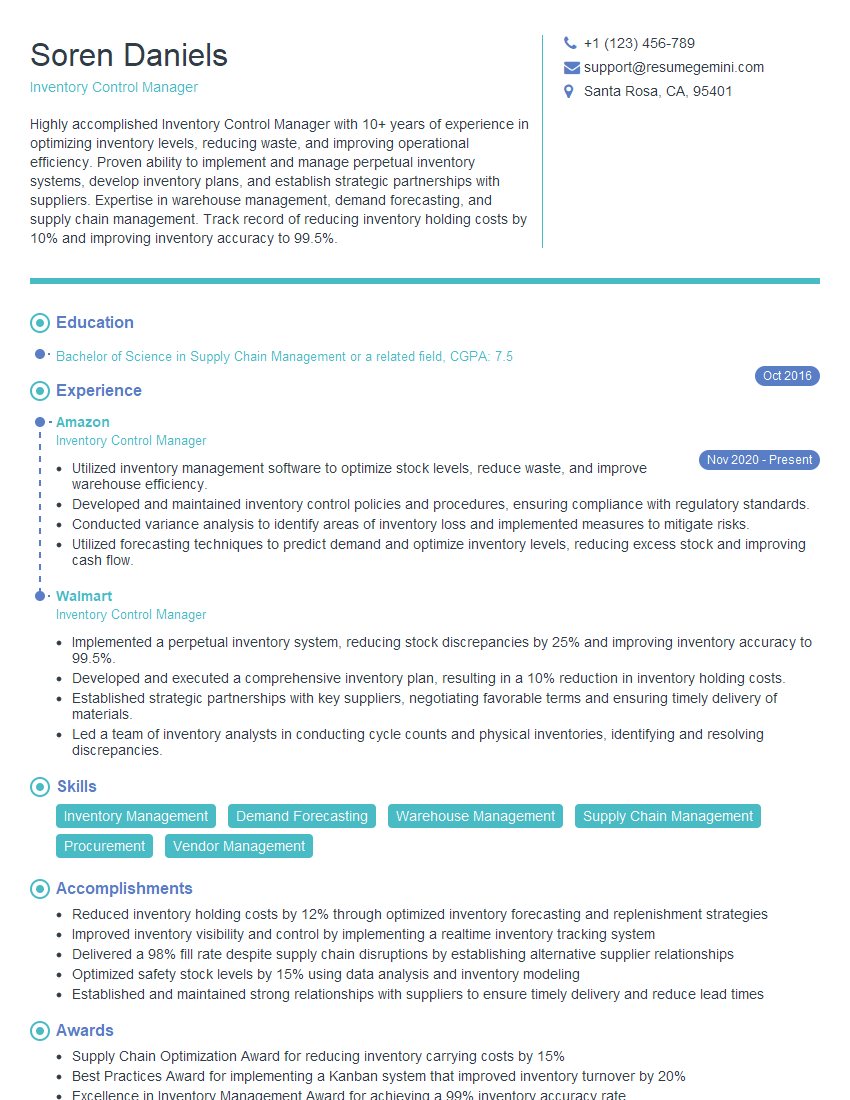
Inventory Control Manager Resume Sample
Explore more articles
Users Rating of Our Blogs
Share Your Experience
We value your feedback! Please rate our content and share your thoughts (optional).
What Readers Say About Our Blog
Really detailed insights and content, thank you for writing this detailed article.
IT gave me an insight and words to use and be able to think of examples