The thought of an interview can be nerve-wracking, but the right preparation can make all the difference. Explore this comprehensive guide to Advanced Material Handling Techniques interview questions and gain the confidence you need to showcase your abilities and secure the role.
Questions Asked in Advanced Material Handling Techniques Interview
Q 1. Explain the difference between automated guided vehicles (AGVs) and autonomous mobile robots (AMRs).
The key difference between Automated Guided Vehicles (AGVs) and Autonomous Mobile Robots (AMRs) lies in their navigation and operational flexibility. AGVs follow pre-programmed paths, often relying on wires embedded in the floor, magnetic tape, or laser guidance along a fixed route. Think of them as following a meticulously planned railway system within the warehouse. They’re great for repetitive, predictable tasks in structured environments. In contrast, AMRs utilize advanced sensors, such as LiDAR, cameras, and ultrasonic sensors, to navigate dynamically and react to their surroundings in real-time. They can adjust their paths autonomously, avoiding obstacles and navigating changes in the warehouse layout without needing reprogramming. Imagine them as self-driving cars in a warehouse – they can adapt to changing conditions and learn from their experiences.
In short: AGVs are like trains, following fixed tracks; AMRs are like cars, navigating freely.
Q 2. Describe your experience with warehouse management systems (WMS).
My experience with Warehouse Management Systems (WMS) spans over ten years, encompassing implementation, customization, and ongoing optimization. I’ve worked with various WMS platforms, from smaller, on-premise systems to large-scale cloud-based solutions. This includes everything from initial system design and configuration to integrating with other enterprise resource planning (ERP) systems and custom applications. I have a proven track record of leading projects to improve warehouse efficiency, reduce order fulfillment times, and enhance inventory accuracy. For example, in my previous role, we implemented a new WMS which resulted in a 15% reduction in picking errors and a 10% increase in order fulfillment speed.
My experience also includes troubleshooting system issues, training warehouse personnel on new software, and performing regular system audits to ensure optimal performance and compliance. I am proficient in using various reporting and analytical tools to monitor key performance indicators (KPIs) and identify areas for improvement within the WMS.
Q 3. What are the key performance indicators (KPIs) you track in material handling?
The key performance indicators (KPIs) I track in material handling are multifaceted and tailored to the specific operation. However, some consistently important metrics include:
- Order fulfillment rate: The percentage of orders fulfilled accurately and on time.
- Order cycle time: The time it takes to process an order, from receipt to shipment.
- Inventory accuracy: The percentage of inventory records that accurately reflect the actual physical stock.
- Warehouse throughput: The volume of goods processed per unit of time.
- Storage utilization rate: The percentage of available storage space actively used.
- Labor productivity: The output per worker hour.
- Damage rates: The percentage of goods damaged during handling.
- Safety incidents: The number of workplace accidents related to material handling.
By regularly monitoring these KPIs, we can identify bottlenecks, areas for improvement, and measure the effectiveness of implemented changes.
Q 4. How do you optimize warehouse layout for efficient material flow?
Optimizing a warehouse layout for efficient material flow is crucial for minimizing costs and maximizing throughput. My approach is systematic and involves several key steps:
- Needs Assessment: Understanding the specific needs and characteristics of the goods handled, including size, weight, volume, and frequency of movement.
- Flow Analysis: Mapping the movement of goods through the warehouse, from receiving to shipping, identifying potential bottlenecks and areas for improvement.
- Layout Design: Designing a layout that minimizes travel distances, reduces cross-traffic, and maximizes storage capacity. This often involves using simulation software to test different layout options.
- Zone Optimization: Dividing the warehouse into zones based on product type, frequency of access, and order processing requirements.
- Technology Integration: Incorporating technology such as conveyor systems, AGVs/AMRs, and WMS to automate and streamline material flow.
- Continuous Improvement: Regularly monitoring and analyzing material flow, adapting the layout and processes as needed to maintain efficiency.
For instance, I once redesigned a warehouse layout by implementing a cross-docking system which reduced order fulfillment time by 20%.
Q 5. Explain your understanding of lean principles in material handling.
Lean principles in material handling focus on eliminating waste and maximizing value throughout the material flow process. This is achieved by applying a set of core principles including:
- Value Stream Mapping: Identifying all steps in the material flow process and eliminating non-value-added activities.
- Just-in-Time (JIT) Inventory: Minimizing inventory levels by receiving materials only when needed, reducing storage costs and waste.
- 5S Methodology: Organizing the warehouse workspace to improve efficiency and safety (Sort, Set in Order, Shine, Standardize, Sustain).
- Kaizen (Continuous Improvement): Continuously searching for ways to improve processes, eliminating waste and increasing efficiency.
- Pull System: Producing goods only when there is demand, avoiding overproduction and reducing waste.
Implementing lean principles can significantly improve warehouse efficiency, reduce costs, and enhance overall productivity. For example, I’ve successfully implemented a Kanban system in a warehouse, which reduced lead times and inventory levels by 15%.
Q 6. Describe your experience with different types of conveyor systems.
My experience encompasses various conveyor systems, including:
- Roller Conveyors: Simple and cost-effective for moving goods over short distances. I’ve utilized these for gravity-fed systems in smaller warehouse operations.
- Belt Conveyors: Suitable for high-volume applications and can handle a wider range of goods. I’ve worked with these in larger distribution centers to transport goods across various sections.
- Chain Conveyors: Ideal for heavier items and inclines, commonly used in manufacturing and industrial settings. I’ve overseen integration of these in facilities handling large machinery parts.
- Spiral Conveyors: Space-saving solution for moving goods vertically, often used in multi-story warehouses. I’ve implemented these to optimize vertical space utilization.
- Overhead Conveyors: Used to transport goods above the floor, maximizing floor space. I’ve seen these applied in manufacturing environments and large assembly lines.
Selecting the appropriate conveyor system depends on various factors such as the type and weight of goods, required throughput, available space, and budget. My expertise lies in analyzing these factors to recommend and implement the most efficient and cost-effective solution.
Q 7. How do you manage safety in a high-volume material handling operation?
Safety in high-volume material handling operations is paramount. My approach is multifaceted and prioritizes proactive measures:
- Safety Training: Regular and comprehensive safety training for all warehouse personnel, covering topics such as equipment operation, safe lifting techniques, and hazard awareness.
- Equipment Maintenance: Rigorous preventative maintenance programs for all material handling equipment to prevent malfunctions and accidents. This includes regular inspections and timely repairs.
- Ergonomic Design: Designing the warehouse layout and workflows to minimize ergonomic risks, such as repetitive strain injuries and back problems.
- Safety Audits: Regular safety audits to identify potential hazards and ensure compliance with safety regulations. I’ve utilized a structured checklist approach for this purpose.
- Personal Protective Equipment (PPE): Ensuring that all workers have access to and utilize appropriate PPE, such as safety shoes, gloves, and high-visibility vests.
- Emergency Procedures: Establishing and regularly practicing clear emergency procedures in case of accidents or equipment malfunctions. This includes training workers on evacuation routes and first-aid procedures.
- Technology Integration: Utilizing technology such as sensors and cameras to monitor worker activity and identify potential hazards.
Implementing these measures, alongside a strong safety culture, is crucial for minimizing accidents and creating a safe working environment. For example, I implemented a color-coded safety system in a busy warehouse, leading to a significant decrease in near-miss incidents.
Q 8. What is your experience with RFID technology in material handling?
RFID, or Radio-Frequency Identification, is a game-changer in material handling. It allows for automated tracking of individual items throughout the entire supply chain, from receiving to shipping. Imagine a warehouse where each pallet, box, or even individual item has a tiny radio tag attached. These tags emit unique signals that are picked up by RFID readers strategically placed throughout the facility. This eliminates manual scanning and provides real-time visibility into inventory location and movement.
In my previous role, we implemented RFID to track high-value medical equipment. Before RFID, locating a specific piece of equipment could take hours; now, it takes seconds. We simply locate the nearest RFID reader and query the system. This drastically improved efficiency and reduced the risk of loss or theft. Furthermore, RFID data feeds directly into our inventory management system, eliminating manual data entry and improving the accuracy of our inventory records.
Beyond simple location tracking, RFID can also be used for access control, automating processes like loading and unloading trucks, and even integrating with automated guided vehicles (AGVs) for autonomous material handling.
Q 9. How do you handle inventory discrepancies?
Inventory discrepancies are a common headache, but addressing them effectively is key to maintaining operational efficiency and financial accuracy. My approach is multi-faceted, combining robust technology with thorough investigation and process improvement.
- Root Cause Analysis: I first identify the source of the discrepancy. Is it due to human error (e.g., incorrect scanning, miscounting), system glitches (e.g., software bugs, data entry errors), or physical issues (e.g., damage, theft)?
- Cycle Counting: Regular cycle counting—verifying a small portion of inventory regularly—is crucial to catching discrepancies early before they snowball. This proactive approach is far more efficient than a full inventory count.
- Technology Integration: Implementing advanced technologies like RFID, barcode scanners, and WMS (Warehouse Management Systems) significantly reduces human error and provides real-time data updates.
- Process Optimization: Reviewing and improving existing processes is often overlooked. For example, improving pick-and-pack procedures, optimizing warehouse layout, and using better training protocols can minimize discrepancies.
- Reconciliation and Adjustment: Once the root cause is identified and addressed, I thoroughly reconcile the inventory records, adjusting them accurately and documenting all changes. This ensures the inventory data reflects reality.
In one instance, we discovered significant discrepancies due to a faulty barcode scanner. After replacing the scanner, we implemented a double-checking procedure and saw a dramatic reduction in errors.
Q 10. Describe your experience with implementing new material handling technologies.
Implementing new material handling technologies requires a structured and methodical approach. It’s not simply about buying the latest equipment; it’s about integrating it seamlessly into existing workflows and ensuring a return on investment.
- Needs Assessment: First, we thoroughly assess the current operational challenges and identify where new technologies can provide the most value. This involves analyzing data, interviewing staff, and benchmarking against industry best practices.
- Technology Selection: Based on the needs assessment, we research, evaluate, and select the most suitable technologies. This requires considering factors such as cost, scalability, integration capabilities, and vendor support.
- Implementation Plan: We develop a detailed implementation plan, including timelines, resources, and training schedules. This plan accounts for potential disruptions and includes contingency plans.
- Training and Support: Effective training for all relevant personnel is critical. This ensures they understand how to operate the new equipment and software efficiently and safely. Ongoing support is equally important for addressing any issues that may arise.
- Post-Implementation Review: After implementation, we conduct a thorough review to assess the effectiveness of the new technologies. This helps identify areas for improvement and ensure the technology is delivering the expected benefits.
For instance, I led the implementation of a new WMS in a distribution center. This involved extensive training, data migration, and process re-engineering. The result was a 20% improvement in order fulfillment speed and a 15% reduction in storage costs.
Q 11. How do you optimize picking and packing processes?
Optimizing picking and packing is crucial for efficient order fulfillment. It’s about minimizing travel time, reducing errors, and ensuring timely delivery. My approach centers around several key strategies.
- Warehouse Layout Optimization: Strategic placement of inventory based on frequency of picking (A, B, C analysis) minimizes travel time for pickers. This could involve implementing slotting optimization software.
- Picking Methods: Choosing the right picking method (batch picking, zone picking, wave picking) depends on order volume, product variety, and order characteristics. For example, batch picking is efficient for large volumes of similar items, while zone picking is beneficial for diverse orders.
- Technology Integration: Using technologies such as voice-picking systems, pick-to-light systems, and mobile barcode scanners significantly enhances accuracy and speed. Voice-picking, for instance, allows pickers to keep their hands free, improving efficiency.
- Packaging Optimization: Using appropriate packaging materials and sizes reduces waste, improves protection, and minimizes shipping costs. This often involves adopting more sustainable packaging solutions.
- Process Mapping and Improvement: Regularly reviewing and optimizing the picking and packing process through process mapping can reveal inefficiencies and areas for improvement. Lean principles can be applied here to eliminate waste and streamline operations.
In a previous project, we implemented a wave picking system coupled with voice-picking technology. This resulted in a 30% improvement in picking efficiency and a significant reduction in picking errors.
Q 12. What are the common challenges in material handling and how have you overcome them?
Material handling faces numerous challenges, but effective solutions are often found through careful analysis and a combination of strategies.
- Space Constraints: Limited warehouse space is a common issue. Solutions include optimizing warehouse layout, using vertical storage solutions (high-bay racking, automated storage and retrieval systems), and implementing efficient storage methods.
- Labor Shortages: Finding and retaining skilled warehouse workers is difficult. Automation, such as AGVs and robotic systems, can alleviate this. Investing in employee training and creating a positive work environment also plays a role.
- Order Accuracy: Inaccurate order fulfillment leads to customer dissatisfaction and returns. Implementing robust quality control procedures, using barcode or RFID technology, and investing in proper training help improve accuracy.
- Inventory Management: Poor inventory management leads to stockouts and excess inventory. Effective WMS, cycle counting, and real-time inventory visibility tools address this challenge.
- Rising Costs: Labor, energy, and transportation costs are consistently increasing. Optimizing processes, using efficient equipment, and negotiating better rates with suppliers can mitigate these rising costs.
I’ve successfully addressed these challenges by focusing on data-driven decision making. By analyzing operational data, I can identify bottlenecks and areas for improvement, tailoring solutions to specific circumstances. For example, we successfully implemented a shuttle system in a high-density warehouse to improve efficiency and reduce labor needs.
Q 13. Explain your understanding of different storage methods (e.g., racking, shelving).
Understanding different storage methods is vital for maximizing warehouse space and efficiency. The optimal choice depends on factors such as product characteristics, storage volume, and handling methods.
- Racking: Offers high-density storage, allowing for efficient use of vertical space. Various types exist, including pallet racking (for storing pallets), cantilever racking (for long or bulky items), and drive-in racking (for high-volume storage of similar items).
- Shelving: Suitable for smaller items and lighter loads. Provides easy accessibility but is generally less space-efficient than racking. Variations include static shelving, mobile shelving (space-saving), and shelving with drawers.
- Bulk Storage: Used for large quantities of homogenous items. Less efficient in terms of accessibility but cost-effective for large volumes. Examples include floor stacking and using bulk bins.
- Automated Storage and Retrieval Systems (AS/RS): Highly automated systems that retrieve items from high-bay storage using automated cranes or robots. Provides high-density storage and improves efficiency, but requires significant investment.
Selecting the right storage method requires careful consideration. For instance, a warehouse storing a wide variety of small parts would benefit from shelving or a combination of shelving and racking. A warehouse handling large quantities of a single product would be suitable for bulk storage or drive-in racking.
Q 14. How do you ensure the accuracy of inventory data?
Ensuring the accuracy of inventory data is fundamental to efficient operations and financial control. It requires a combination of technology, processes, and human oversight.
- Real-time Inventory Tracking: Implementing a WMS with real-time inventory tracking capabilities provides up-to-the-minute visibility into inventory levels and locations. Technologies such as RFID and barcode scanning are crucial for this.
- Regular Cycle Counting: Periodically counting a small portion of the inventory verifies the accuracy of the system and allows for early detection of discrepancies.
- Data Validation: Implementing data validation checks within the WMS prevents errors during data entry and ensures data integrity. This includes checks for duplicate entries, invalid characters, and logical inconsistencies.
- Physical Inventory Counts: Conducting full physical inventory counts periodically (e.g., annually) provides a complete verification of the inventory data and identifies any significant discrepancies.
- Reconciliation: Regularly comparing physical counts with system records helps identify and correct any errors in the inventory data.
- Employee Training: Training warehouse staff on proper inventory procedures, including accurate scanning and counting techniques, reduces errors.
A robust approach to inventory accuracy involves continuous monitoring and improvement. By implementing these measures and consistently reviewing the data, organizations can significantly improve the accuracy of their inventory data and improve operational efficiency.
Q 15. What is your experience with slotting optimization?
Slotting optimization is the strategic placement of inventory within a warehouse to minimize travel time, improve order picking efficiency, and maximize storage space utilization. It’s like organizing your kitchen – you wouldn’t put your frequently used spices in the back of a hard-to-reach cupboard! Instead, you’d place them front and center for easy access.
My experience includes using various slotting optimization software and methodologies. I’ve worked with ABC analysis (classifying items based on their usage frequency), implementing fast-slow moving item strategies, and conducting simulations to test different slotting configurations. For example, in one project, we reduced order picking time by 15% by implementing a new slotting plan based on order frequency data analysis. This involved not only analyzing sales data but also considering factors like product dimensions and weight to optimize picker routes and minimize congestion in high-traffic areas.
Career Expert Tips:
- Ace those interviews! Prepare effectively by reviewing the Top 50 Most Common Interview Questions on ResumeGemini.
- Navigate your job search with confidence! Explore a wide range of Career Tips on ResumeGemini. Learn about common challenges and recommendations to overcome them.
- Craft the perfect resume! Master the Art of Resume Writing with ResumeGemini’s guide. Showcase your unique qualifications and achievements effectively.
- Don’t miss out on holiday savings! Build your dream resume with ResumeGemini’s ATS optimized templates.
Q 16. How do you improve efficiency in a distribution center?
Improving distribution center efficiency involves a holistic approach encompassing several key areas. Think of it as fine-tuning a well-oiled machine: each component plays a crucial role.
- Process Optimization: Streamlining workflows, eliminating bottlenecks, and implementing lean principles are paramount. This may involve analyzing order fulfillment processes, optimizing picking routes (using WMS systems and slotting optimization), and reducing unnecessary movement.
- Technology Integration: Utilizing Warehouse Management Systems (WMS), Radio Frequency Identification (RFID), and automated guided vehicles (AGVs) can drastically enhance efficiency. A WMS provides real-time inventory visibility, manages order fulfillment, and optimizes resource allocation. RFID enhances tracking accuracy and speeds up processes, while AGVs automate material movement reducing labor costs and human error.
- Layout and Design: A well-designed layout maximizes space utilization and minimizes travel distances. This includes strategically placing high-demand items near shipping docks and optimizing the flow of goods throughout the facility.
- Staff Training and Cross-Training: Well-trained personnel are essential. Cross-training ensures flexibility and reduces downtime when employees are absent.
- Data Analysis: Continuous monitoring of key performance indicators (KPIs) such as order fulfillment time, picking accuracy, and inventory turnover allows for identification of areas for improvement.
For instance, in a recent project, I implemented a new WMS that reduced order fulfillment time by 20% by optimizing picking routes and automating certain tasks. This directly translated to increased throughput and reduced operational costs.
Q 17. What is your experience with different types of lift trucks and their applications?
My experience encompasses a wide range of lift trucks, from counterbalance forklifts to reach trucks, order pickers, and very narrow aisle (VNA) trucks. Each type has specific applications and strengths.
- Counterbalance Forklifts: These are versatile and widely used for general material handling tasks, particularly in open spaces. They excel at moving pallets and heavier loads.
- Reach Trucks: Ideal for high-bay warehousing, reaching trucks provide access to stored pallets at various heights, maximizing vertical space utilization.
- Order Pickers: Designed for order picking operations, order pickers allow operators to reach different levels within a warehouse for efficient picking, often incorporating order picking software for optimal routing.
- Very Narrow Aisle (VNA) Trucks: These specialized trucks are perfect for maximizing storage density in narrow aisle facilities. They require skilled operators and often integrate with sophisticated warehouse control systems.
Selecting the right lift truck depends heavily on factors such as warehouse layout, storage methods, load types, and operational requirements. For instance, a facility with high ceilings and narrow aisles would benefit from VNA trucks, while a large open warehouse might utilize counterbalance forklifts more effectively.
Q 18. Explain your understanding of ergonomics in material handling.
Ergonomics in material handling focuses on designing workplaces and jobs to minimize physical strain and injuries. It’s about creating a work environment that supports the physical capabilities and limitations of workers, reducing the risk of musculoskeletal disorders (MSDs). Think of it as designing a workplace that ‘fits’ the human body.
My approach to ergonomics involves analyzing work tasks to identify potential risk factors such as repetitive movements, awkward postures, forceful exertions, and vibration. This might involve conducting job hazard analyses, implementing ergonomic assessments, and recommending modifications to workstations, equipment, and work processes. For example, I’ve worked on projects where we implemented adjustable height workstations, introduced powered equipment to reduce manual lifting, and provided training on proper lifting techniques. These interventions led to significant reductions in reported musculoskeletal injuries.
Q 19. How do you use data analytics to improve material handling processes?
Data analytics is crucial for improving material handling processes. By analyzing data, we can identify areas for improvement, optimize resource allocation, and make data-driven decisions. It’s like having a ‘detective’ for your warehouse.
I utilize various data sources, including WMS data, RFID tracking, and operational metrics, to gain insights into warehouse performance. For example, I can analyze order picking times to identify bottlenecks, assess inventory turnover rates to optimize storage strategies, or track equipment utilization to schedule maintenance proactively. I often employ statistical methods, data visualization techniques, and predictive modeling to anticipate future needs and proactively optimize processes. This allows for continuous improvement and optimization of material handling efficiency and cost-effectiveness.
Q 20. Describe your experience with material handling equipment maintenance.
Material handling equipment maintenance is critical for ensuring operational efficiency, safety, and minimizing downtime. Think of it as regular check-ups for your warehouse’s ‘vehicle fleet’.
My experience includes developing and implementing preventative maintenance programs using Computerized Maintenance Management Systems (CMMS). This involves creating schedules for routine inspections, lubrication, and repairs based on manufacturer recommendations and usage patterns. I also oversee the training of maintenance personnel, ensuring they have the skills and knowledge to perform maintenance tasks effectively and safely. Moreover, I focus on tracking maintenance costs, analyzing equipment performance data, and identifying areas for improvement in the maintenance process itself. Regular maintenance directly translates to reducing equipment breakdowns, extending lifespan, and minimizing costly repairs.
Q 21. What are the common causes of material handling accidents and how to prevent them?
Material handling accidents are often caused by a combination of factors: unsafe work practices, inadequate training, equipment malfunction, and poor workplace design. Prevention requires a multi-pronged approach.
- Unsafe Work Practices: Improper lifting techniques, operating equipment without proper training, and failing to follow safety procedures are common culprits. Addressing this requires comprehensive training programs, clear safety guidelines, and regular reinforcement of safe work practices.
- Inadequate Training: Insufficient training leads to errors, injuries, and accidents. Comprehensive training on equipment operation, safety procedures, and emergency response is critical.
- Equipment Malfunction: Faulty equipment increases the risk of accidents. Regular preventative maintenance, inspections, and timely repairs are essential to mitigate this risk.
- Poor Workplace Design: Poor layout, inadequate lighting, congested aisles, and lack of appropriate safety equipment contribute to accidents. Ergonomic design principles and proper warehouse layout are essential.
Implementing a strong safety culture, including regular safety meetings, incident investigations, and proactive hazard identification, is crucial for accident prevention. By addressing these factors systematically, we can create a safer and more efficient material handling operation.
Q 22. How do you choose the right material handling equipment for a specific application?
Selecting the right material handling equipment is crucial for efficiency and cost-effectiveness. It’s not a one-size-fits-all solution; the best choice depends on a detailed analysis of several factors. Think of it like choosing the right tool for a job – you wouldn’t use a hammer to screw in a screw!
- Material Characteristics: Weight, size, fragility, and shape of the materials dictate the type of equipment needed. Fragile items require gentler handling than heavy pallets.
- Warehouse Layout: The warehouse’s physical structure—aisle width, ceiling height, floor type—limits the types of equipment that can be used. Narrow aisles might necessitate the use of very narrow aisle forklifts.
- Throughput Requirements: The volume of materials to be moved per unit of time determines the capacity and speed needed. High throughput necessitates automated systems or high-capacity equipment.
- Budget: Cost is a major constraint. While advanced automation offers greater efficiency, it comes with a hefty price tag. A thorough cost-benefit analysis is essential.
- Labor Availability: The level of automation and the type of equipment will depend on the availability and skillset of your workforce. Some systems require highly trained personnel.
For example, a distribution center handling large volumes of palletized goods might benefit from automated guided vehicles (AGVs) and high-bay racking. Conversely, a small warehouse handling individual parcels might be better served by manual hand trucks and shelving.
Q 23. What are your thoughts on the future of material handling technology?
The future of material handling is bright, driven by technological advancements and a growing focus on efficiency and sustainability. We’re seeing a rapid convergence of several key trends:
- Increased Automation: Robotic systems, AGVs, and automated storage and retrieval systems (AS/RS) are becoming increasingly sophisticated and cost-effective, allowing for greater efficiency and reduced labor costs.
- Data-Driven Optimization: Advanced analytics and the Internet of Things (IoT) are providing real-time visibility into warehouse operations, allowing for proactive adjustments and optimization of workflows.
- Artificial Intelligence (AI) and Machine Learning (ML): AI and ML are being used to optimize routes, predict demand, and manage inventory more efficiently. This leads to fewer errors and faster response times.
- Sustainability: There’s a growing emphasis on sustainable material handling practices, such as using electric vehicles, optimizing energy consumption, and reducing waste. Green logistics are becoming a top priority.
- Integration with E-commerce: The rise of e-commerce necessitates faster and more flexible material handling solutions to meet the demands of faster delivery times and individualized orders.
Imagine a warehouse where robots autonomously pick, pack, and sort orders, guided by AI-powered systems that predict demand and optimize inventory levels. This isn’t science fiction; it’s rapidly becoming a reality.
Q 24. Describe your experience with implementing a new WMS or other material handling software.
I’ve been involved in several WMS (Warehouse Management System) implementations, most recently with a company transitioning from a paper-based system to a modern cloud-based solution. The process involved a structured approach:
- Needs Assessment: We thoroughly analyzed the existing processes, identifying pain points and areas for improvement. This involved interviews with warehouse staff to understand their daily workflows.
- Software Selection: We evaluated different WMS vendors, comparing features, functionalities, and scalability to ensure alignment with the company’s long-term goals. We looked at things like integration capabilities with existing ERP systems.
- Implementation Planning: A detailed implementation plan was developed, outlining timelines, responsibilities, and resource allocation. This included training for warehouse staff.
- Data Migration: Careful planning and execution of data migration from the old system to the new WMS was crucial to avoid disruptions during the transition.
- Testing and Go-Live: Thorough testing was conducted before go-live to identify and fix any bugs. Post-implementation support ensured a smooth transition and addressed any unforeseen issues.
The success of the implementation was measured by improvements in accuracy, efficiency, and overall order fulfillment times. Post-implementation, we tracked key performance indicators (KPIs) like order fulfillment cycle time and inventory accuracy to ensure that the system was delivering the expected benefits.
Q 25. How do you manage and improve throughput in a warehouse operation?
Improving warehouse throughput requires a holistic approach, focusing on optimizing various aspects of the operation. Think of it like optimizing a finely tuned machine – each component needs to work in harmony.
- Process Optimization: Analyzing and streamlining workflows to eliminate bottlenecks. This might involve re-arranging layouts, implementing cross-docking, or optimizing picking routes.
- Equipment Optimization: Ensuring that the right equipment is being used for the right task. This may involve upgrading outdated equipment or introducing new technologies like AGVs.
- Inventory Management: Optimizing inventory levels and locations to minimize travel times and storage costs. This includes implementing strategies like slotting optimization and implementing ABC analysis.
- Staff Training and Motivation: Well-trained and motivated staff are crucial for efficiency. Providing proper training and implementing incentive programs can significantly improve productivity.
- Technology Integration: Implementing a robust WMS and other related technologies, such as barcode scanners and RFID, can automate tasks and improve accuracy.
For example, implementing a slotting optimization program can significantly reduce travel time for order pickers, leading to a substantial increase in throughput. Similarly, utilizing a WMS with advanced route optimization features can ensure the most efficient picking sequences.
Q 26. How do you balance cost optimization and service level in material handling?
Balancing cost optimization and service level is a crucial aspect of material handling. It’s a delicate act – cutting costs too aggressively can negatively impact service levels, leading to customer dissatisfaction. Conversely, focusing solely on service without regard to cost can lead to unsustainable operations.
The key is to find the sweet spot using techniques such as:
- Lean Principles: Eliminating waste in all aspects of the operation, from unnecessary movements to excess inventory. This improves efficiency and reduces costs without compromising service.
- Data Analytics: Using data to understand the cost-service trade-off. This involves analyzing data to identify areas where cost reductions can be achieved without negatively impacting service.
- Technology Investments: Strategic investments in technology can often yield long-term cost savings and service level improvements. Automated systems, for example, improve efficiency and reduce labor costs.
- Outsourcing: Consider outsourcing certain aspects of the operation, like transportation or warehousing, to specialized providers who can offer cost-effective and high-quality services.
- Continuous Improvement: Regularly reviewing and improving processes to identify opportunities for cost reduction and service level enhancement. Implementing Kaizen methodologies promotes continuous improvement.
A good example would be implementing a cross-docking strategy which minimizes storage time and reduces costs while maintaining or improving delivery speed.
Q 27. Describe your experience with integrating material handling systems with other enterprise systems.
Integrating material handling systems with other enterprise systems, such as ERP (Enterprise Resource Planning) and TMS (Transportation Management System), is crucial for a seamless flow of information and improved operational efficiency. This integration requires a structured approach.
- Data Mapping: Careful mapping of data fields between systems to ensure seamless data exchange. This is crucial for avoiding data discrepancies and errors.
- API Integration: Using Application Programming Interfaces (APIs) to enable real-time data exchange between systems. This provides instant updates and improves responsiveness.
- Middleware: Employing middleware solutions to facilitate communication and data exchange between different systems, especially those with incompatible architectures.
- Data Validation: Implementing robust data validation procedures to ensure data accuracy and integrity during the integration process. Data scrubbing can improve the quality of data transferred.
- Testing and Validation: Thorough testing of the integrated system to ensure seamless operation and to identify and address any issues before full deployment.
For instance, integrating the WMS with the ERP system allows for real-time updates on inventory levels and order status, providing visibility across the entire supply chain. Integration with the TMS enables efficient scheduling and tracking of shipments.
Q 28. What is your approach to problem-solving in a fast-paced material handling environment?
In a fast-paced material handling environment, problem-solving requires a structured and efficient approach. I typically follow a systematic process:
- Identify the Problem: Clearly define the problem, gathering data from various sources, including staff observations and system logs. This involves root cause analysis.
- Analyze the Problem: Analyze the root cause of the problem, identifying contributing factors. Use tools like fishbone diagrams or 5 Whys to delve deeper.
- Develop Solutions: Brainstorm and evaluate potential solutions, considering their impact on cost, efficiency, and safety. Use decision matrices to compare options.
- Implement the Solution: Implement the chosen solution, ensuring appropriate communication and training for affected personnel. Pilot testing the solution before full rollout is often beneficial.
- Monitor and Evaluate: Monitor the effectiveness of the implemented solution, collecting data to assess its impact. Make adjustments as needed based on feedback and performance data.
For example, if a picking bottleneck is identified, a systematic approach involves analyzing picking routes, equipment utilization, and staff productivity. Potential solutions could range from rearranging warehouse layouts to implementing pick-to-light systems or additional staff training.
Key Topics to Learn for Advanced Material Handling Techniques Interview
- Automated Storage and Retrieval Systems (AS/RS): Understanding different AS/RS types (unit load, mini-load, etc.), their operational principles, and control systems. Consider the advantages and disadvantages of various systems in different contexts.
- Warehouse Management Systems (WMS): Explore WMS functionalities, integration with other systems (e.g., ERP), and the role of data analytics in optimizing warehouse operations. Think about real-world scenarios where WMS improves efficiency and reduces costs.
- Robotics and Automation in Material Handling: Familiarize yourself with various robotic systems used in warehousing and distribution, including AGVs, AMRs, and robotic arms. Discuss their applications, limitations, and integration challenges.
- Lean Manufacturing and Material Handling Principles: Understand how Lean principles (e.g., 5S, Kaizen) are applied to optimize material flow and eliminate waste in warehousing and distribution. Prepare to discuss case studies demonstrating Lean implementation.
- Safety and Ergonomics in Material Handling: Discuss safety regulations and best practices for preventing injuries related to material handling equipment and processes. Explore ergonomic considerations for designing efficient and safe workplaces.
- Supply Chain Optimization and Material Flow: Understand how efficient material handling contributes to overall supply chain optimization. Be ready to discuss strategies for improving material flow, reducing lead times, and minimizing inventory costs.
- Simulation and Modeling in Material Handling: Explore the use of simulation software to optimize warehouse layouts, processes, and equipment selection. Be prepared to discuss the benefits and limitations of simulation techniques.
Next Steps
Mastering Advanced Material Handling Techniques is crucial for career advancement in logistics, supply chain management, and related fields. Demonstrating expertise in these areas will significantly enhance your job prospects and open doors to higher-paying roles with greater responsibility. To stand out from the competition, create a compelling and ATS-friendly resume that highlights your skills and experience effectively. ResumeGemini is a trusted resource for building professional resumes that make a lasting impression on recruiters. We offer examples of resumes tailored to Advanced Material Handling Techniques to guide you in crafting your own compelling application. Take advantage of these resources and launch your career to the next level!
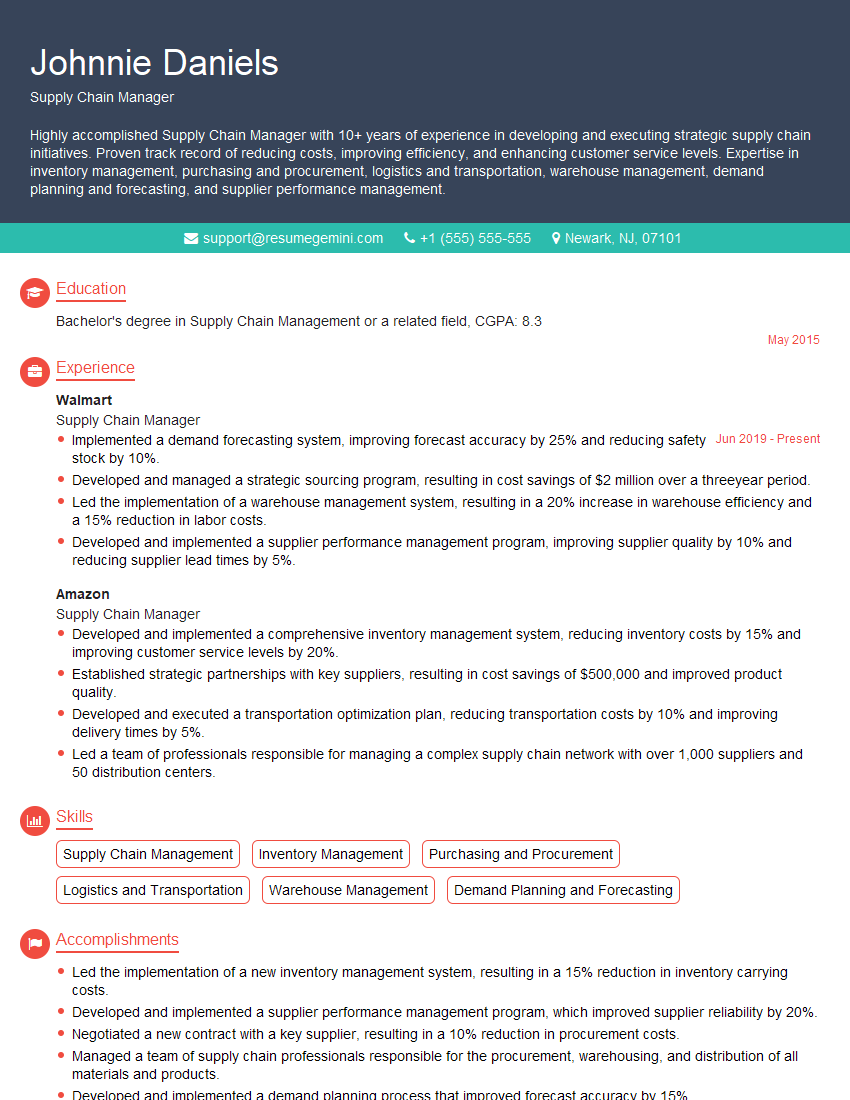
Supply Chain Manager Resume Sample
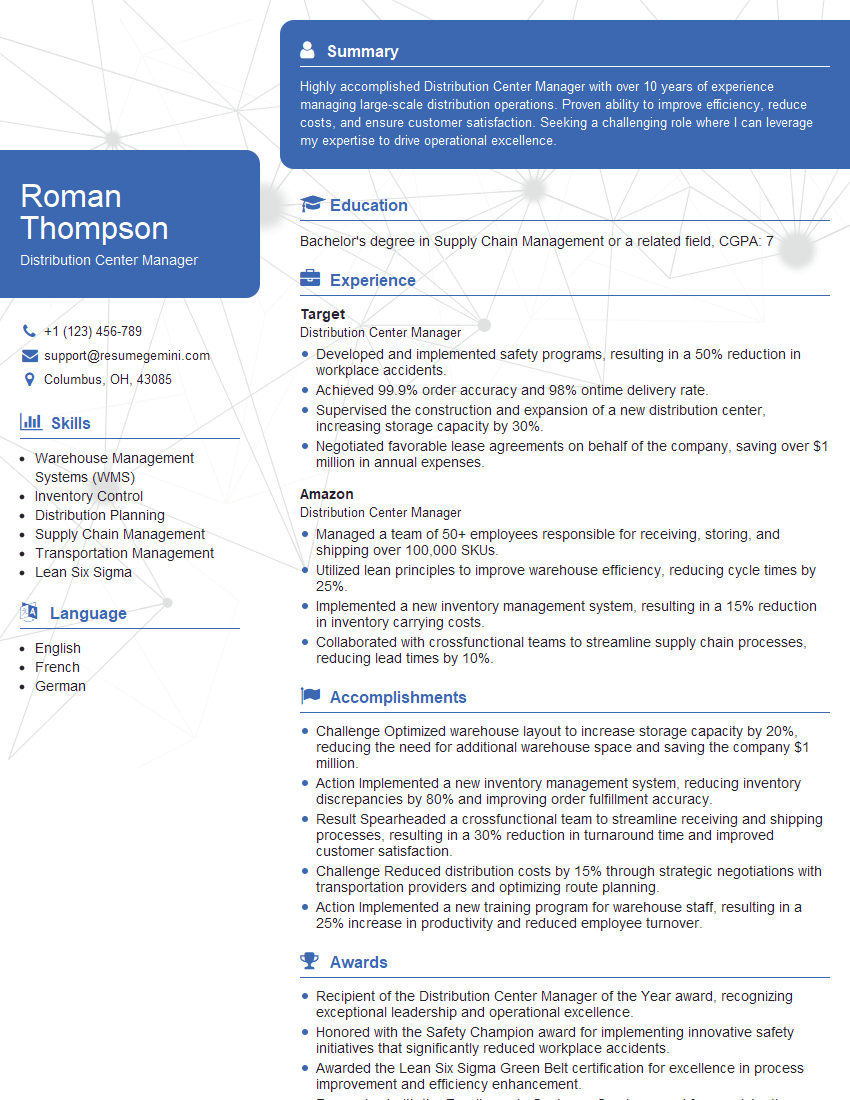
Distribution Center Manager Resume Sample
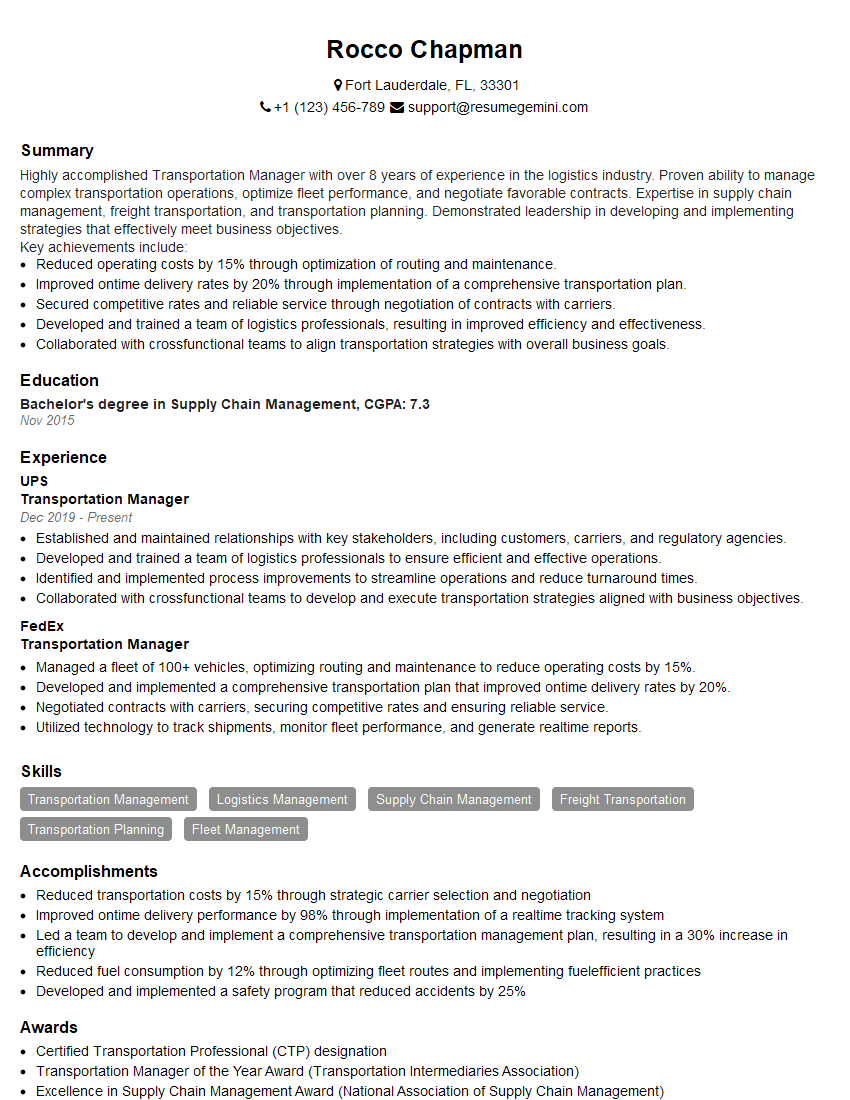
Transportation Manager Resume Sample
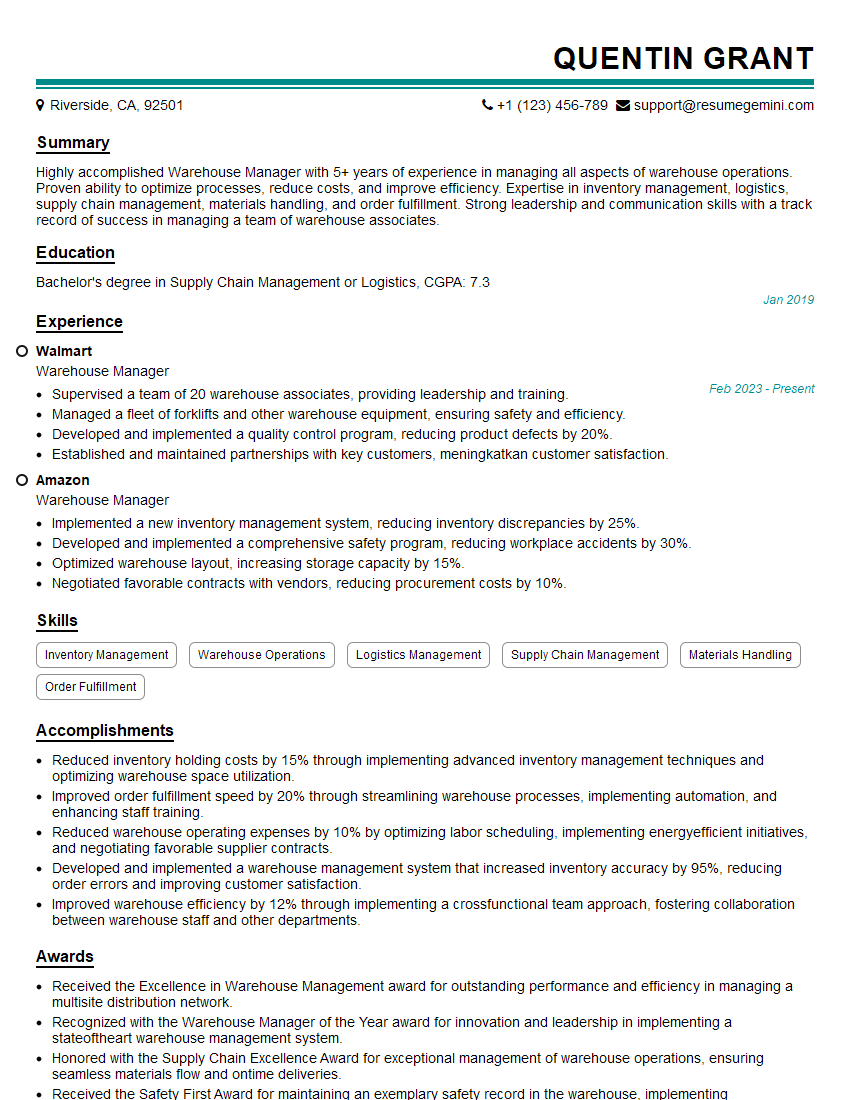
Warehouse Manager Resume Sample
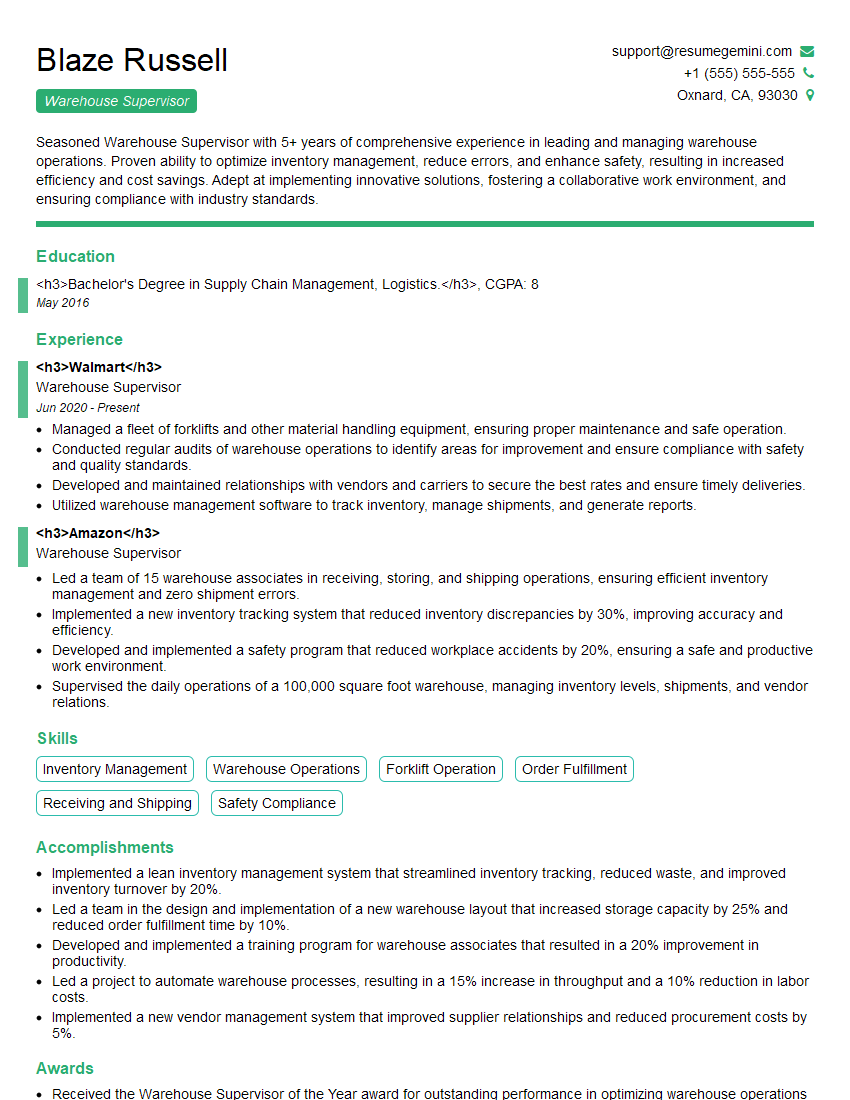
Warehouse Supervisor Resume Sample
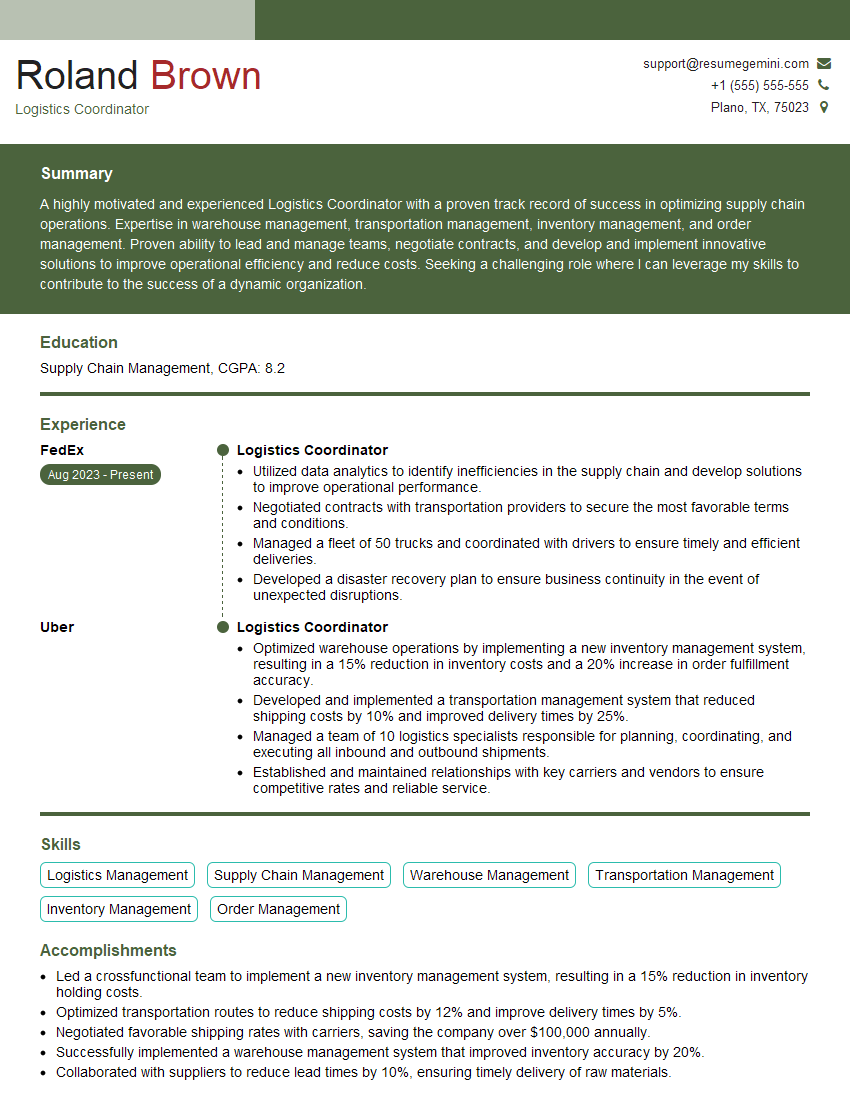
Logistics Coordinator Resume Sample
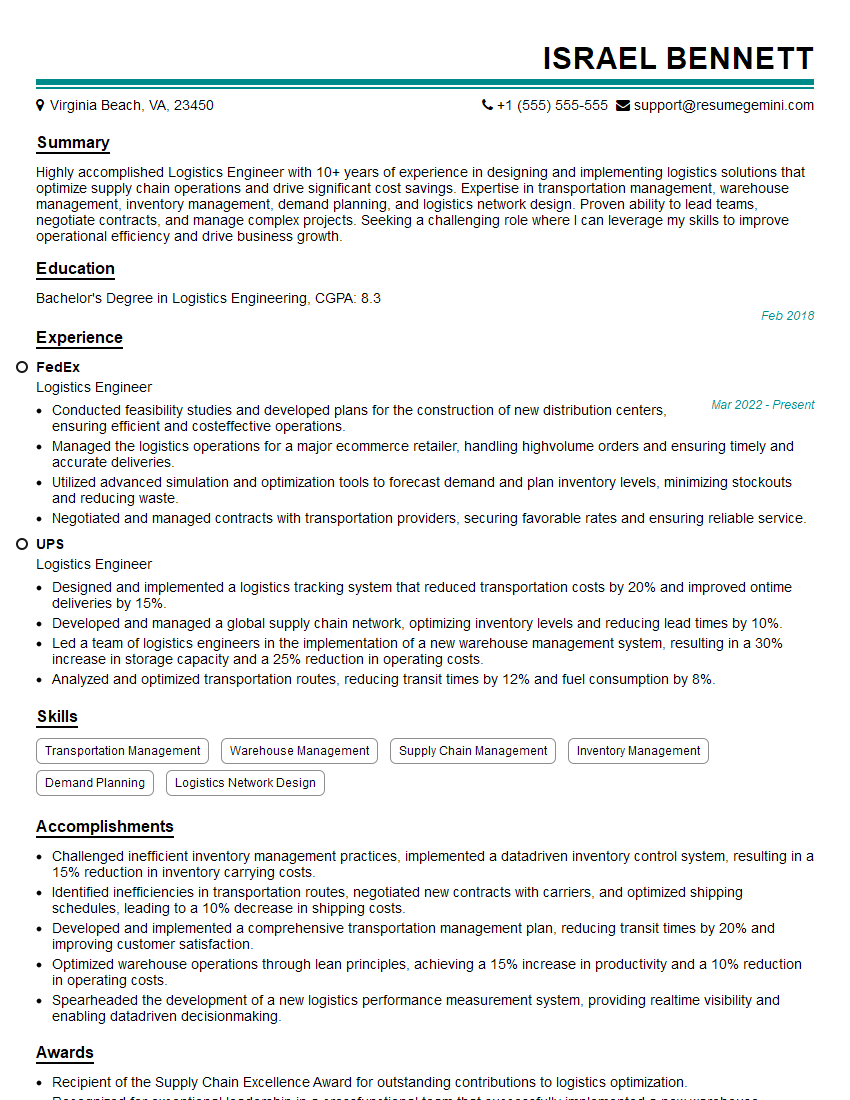
Logistics Engineer Resume Sample
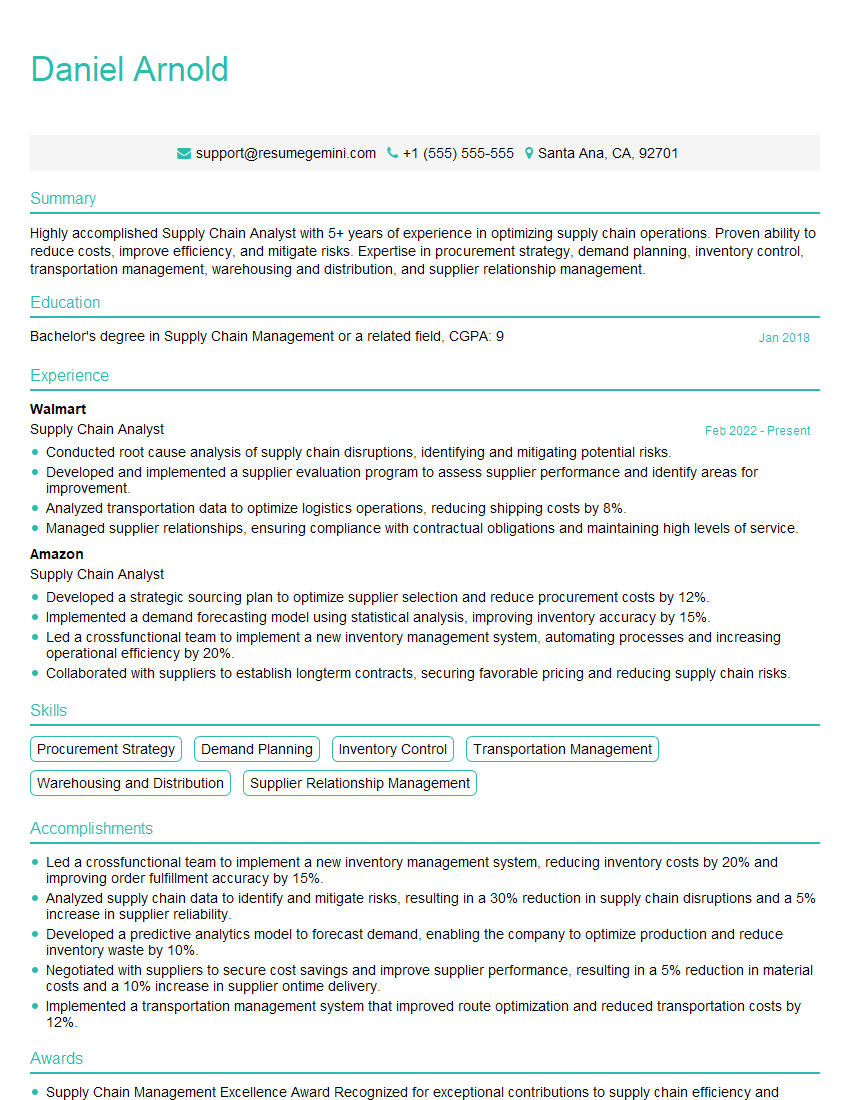
Supply Chain Analyst Resume Sample
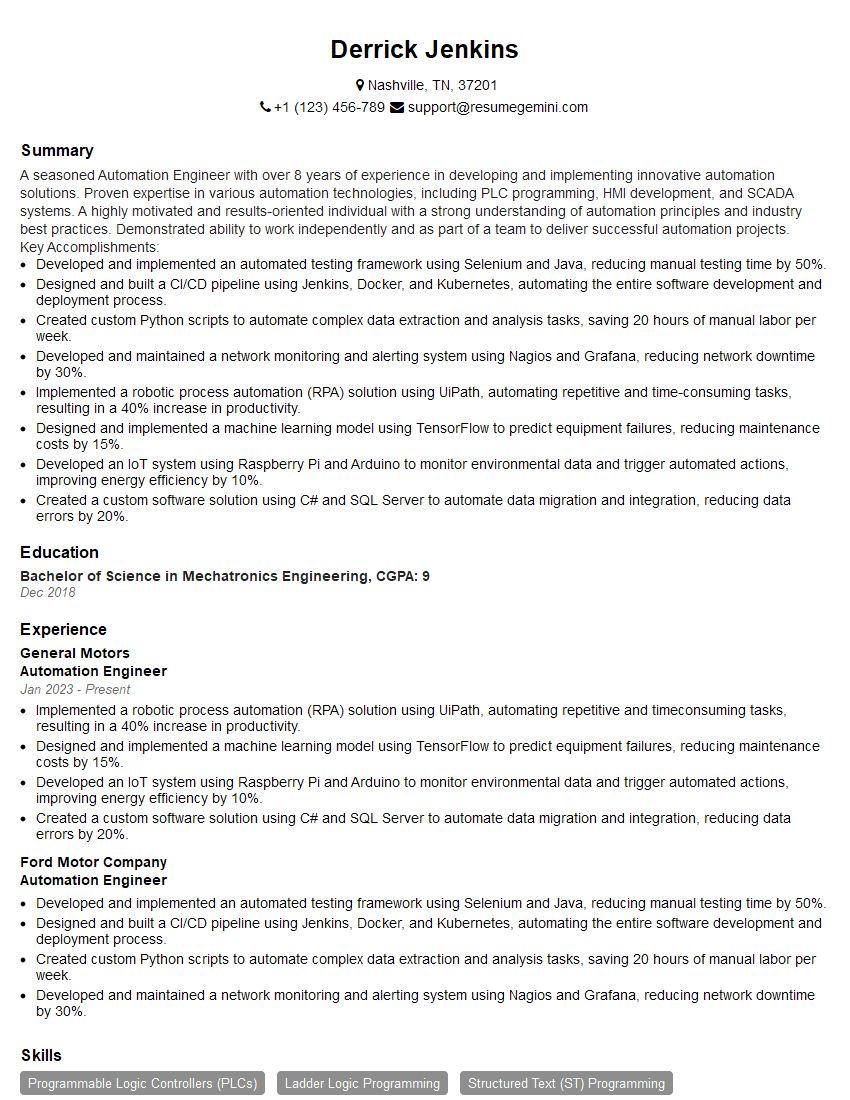
Automation Engineer Resume Sample
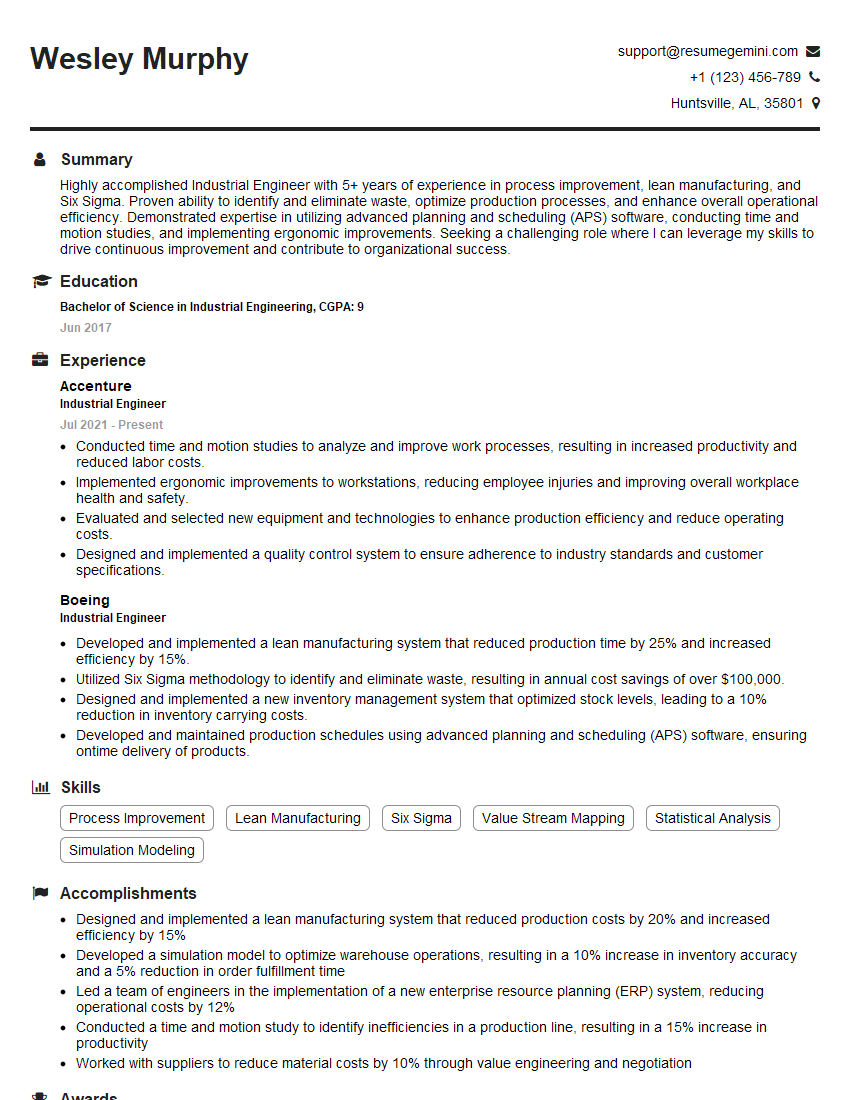
Industrial Engineer Resume Sample
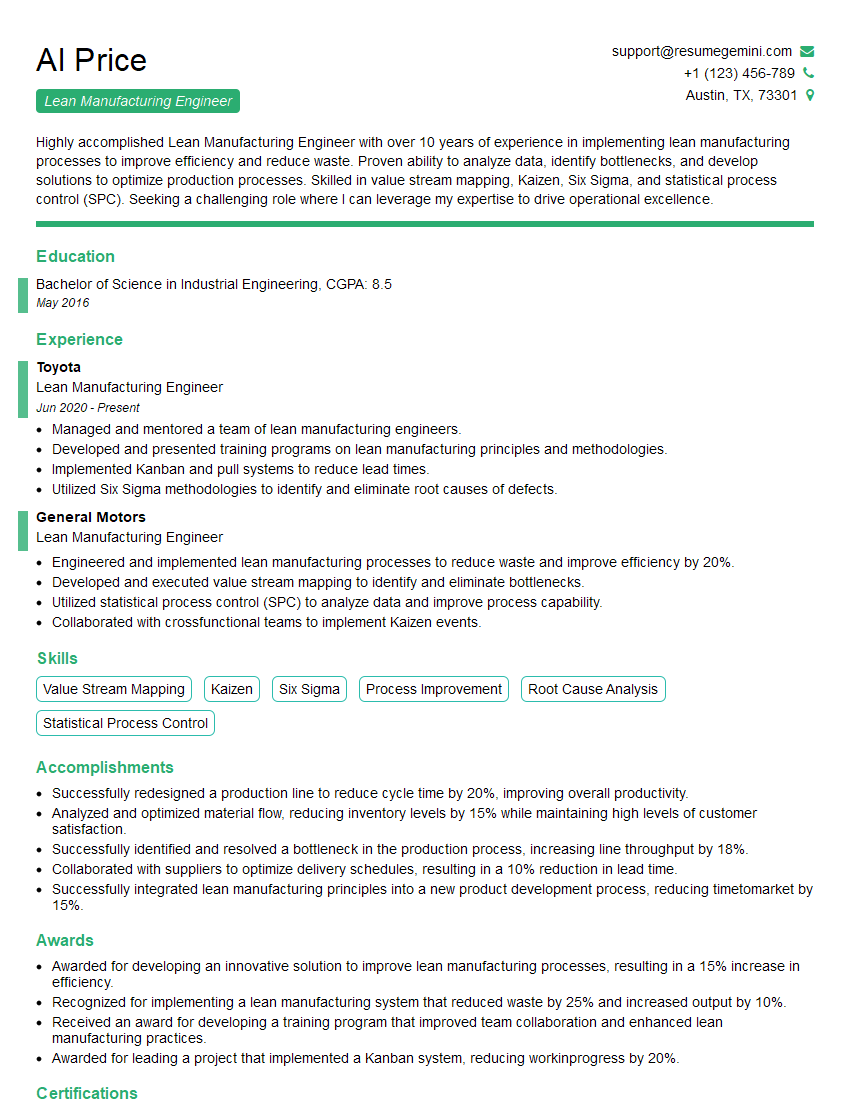
Lean Manufacturing Engineer Resume Sample
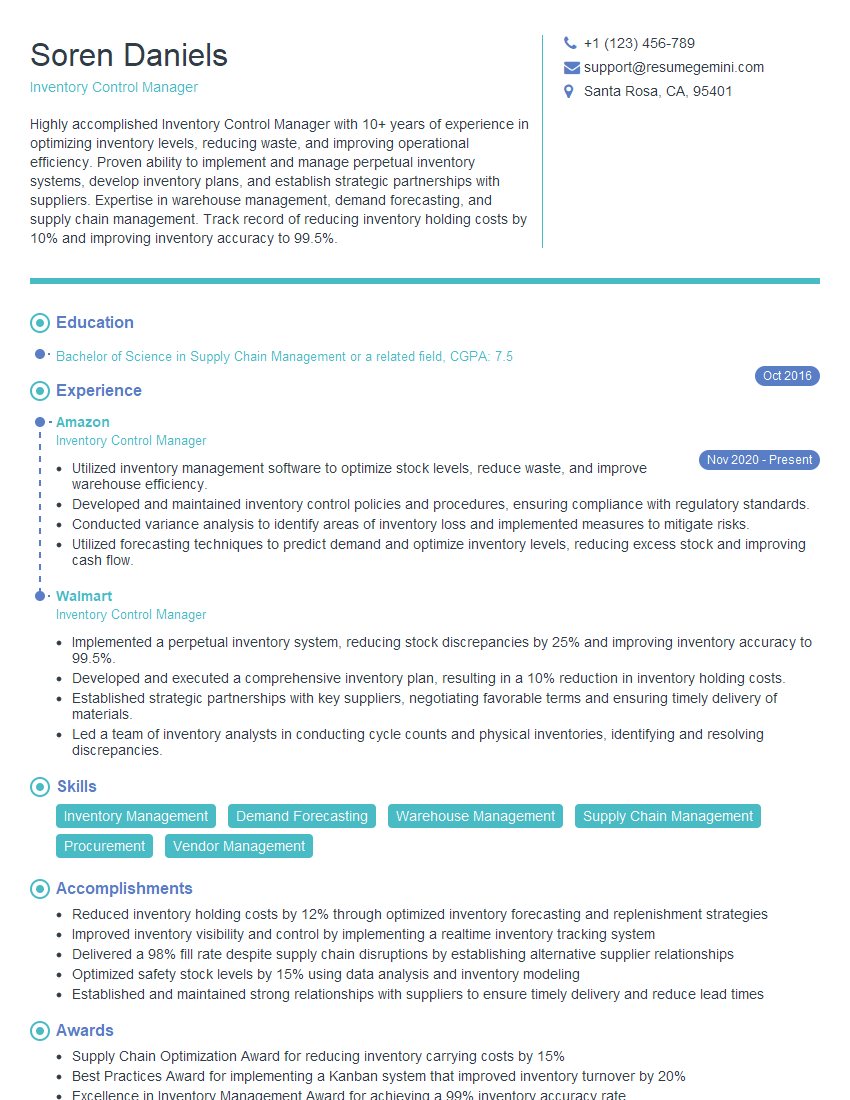
Inventory Control Manager Resume Sample
Explore more articles
Users Rating of Our Blogs
Share Your Experience
We value your feedback! Please rate our content and share your thoughts (optional).
What Readers Say About Our Blog
Really detailed insights and content, thank you for writing this detailed article.
IT gave me an insight and words to use and be able to think of examples