Every successful interview starts with knowing what to expect. In this blog, we’ll take you through the top Weld Fixture Design interview questions, breaking them down with expert tips to help you deliver impactful answers. Step into your next interview fully prepared and ready to succeed.
Questions Asked in Weld Fixture Design Interview
Q 1. Explain the different types of weld fixtures.
Weld fixtures are categorized based on their design, application, and the welding process employed. Broadly, they fall into these categories:
- Stationary Fixtures: These are robust, typically large fixtures designed for high-volume production runs. They remain fixed in position throughout the welding process. Think of a large, heavy-duty fixture used in an automotive assembly line for welding car bodies.
- Rotary Fixtures: These fixtures rotate to present different weld joints to the welding head. This is highly efficient for parts requiring welds at multiple locations. Imagine a fixture holding a pipe section, rotating to weld a seam around its circumference.
- Indexing Fixtures: These fixtures move in discrete steps to present various weld locations to the welder. They’re suitable for parts with complex geometry and a sequence of weld points. This could be useful for assembling a metal chair frame.
- Modular Fixtures: These fixtures are built using interchangeable components, allowing for adaptability to different parts. This is cost-effective for producing different variants of a product or smaller batch sizes. Think of a toolkit of fixture elements that can be combined to fit different workpieces.
- Jig Fixtures: These fixtures primarily hold parts in position, guiding the welder rather than directly clamping. These are often less complex than full weld fixtures.
The choice of fixture type depends heavily on factors like production volume, part complexity, welding process (MIG, TIG, spot welding, etc.), and budget constraints.
Q 2. Describe your experience with various clamping mechanisms used in weld fixtures.
My experience encompasses a wide range of clamping mechanisms, chosen to balance holding force, workpiece accessibility, and ease of operation. Common examples include:
- Toggle Clamps: These offer high clamping force with a compact design, excellent for quick setup and release. I’ve used them extensively in smaller fixtures where precise positioning is critical.
- Pneumatic Clamps: These provide fast, consistent clamping action, ideal for high-volume automated systems. Their versatility is a major advantage, allowing for easy integration into robotic welding cells. In one project, I integrated pneumatic clamps to reduce cycle time significantly.
- Hydraulic Clamps: Providing the highest clamping forces, these are suited for large, heavy workpieces requiring significant holding power. However, they tend to be more complex and expensive than other options.
- Cam Clamps: Simple yet effective, these are often used in simpler fixtures for their robustness and ease of operation. I find them particularly suitable for manual applications.
- Magnetic Clamps: Best for ferrous materials, these offer quick and tool-less clamping, though their holding force can be impacted by part geometry.
The selection of clamping mechanism is a critical design decision and requires careful consideration of workpiece material, size, shape, and the overall fixture design.
Q 3. How do you ensure the accuracy and repeatability of a weld fixture?
Accuracy and repeatability are paramount in weld fixture design. We achieve this through several key strategies:
- Precise Machining and Tolerances: Employing tight tolerances in the fixture’s manufacturing process ensures consistent workpiece placement. Using high-precision CNC machining is crucial here.
- Robust Design and Material Selection: Selecting appropriate materials (e.g., hardened steel for wear-resistant surfaces) minimizes fixture deformation under load. A robust design prevents bending or shifting during clamping and welding.
- Redundant Locating Pins and Bushings: Multiple locating points provide redundancy and improved workpiece registration. This is essential for minimizing errors caused by minor workpiece variations.
- Calibration and Verification: Regularly calibrating the fixture using Coordinate Measuring Machines (CMMs) or other inspection tools verifies accuracy and identifies potential issues before production.
- Finite Element Analysis (FEA): FEA simulations can predict fixture behavior under load, identifying potential weak points and optimizing the design for improved accuracy and stiffness.
By implementing these methods, we ensure the fixture produces consistent weld quality and minimizes variations in the final product.
Q 4. What software do you use for weld fixture design?
My experience encompasses several software packages for weld fixture design. My preference lies in SolidWorks and Autodesk Inventor due to their robust capabilities in 3D modeling, finite element analysis (FEA), and simulation. These programs facilitate creating detailed models, generating drawings, and conducting thorough analysis to ensure fixture integrity and optimal performance. I also have experience with Creo Parametric and other CAD/CAM software.
Beyond the primary CAD software, I utilize simulation software like ANSYS for FEA to optimize fixture stiffness and strength, and CAM software to generate CNC machining programs for manufacturing the fixture.
Q 5. How do you design for accessibility during welding and post-weld operations?
Designing for accessibility is crucial for efficient welding and post-weld operations. This involves:
- Clearance for Welding Torch/Gun: Sufficient space around the weld joint must be provided for the welding torch to move freely without interference from the fixture.
- Access for Weld Inspection: The design should allow for easy visual inspection of the weld seam after welding, possibly incorporating windows or removable sections.
- Ease of Part Loading and Unloading: The fixture should allow for simple and quick loading and unloading of parts, minimizing downtime. This could involve quick-release mechanisms or ergonomic designs.
- Consideration of Operator Ergonomics: The fixture’s design must be ergonomic, facilitating comfortable and safe operation. This includes proper positioning of controls and minimizing operator strain.
In one project involving a complex automotive part, I incorporated a swing-away section of the fixture to provide clear access for post-weld inspection. This significantly improved the efficiency of the quality control process.
Q 6. Describe your experience with designing fixtures for robotic welding.
Designing fixtures for robotic welding presents unique challenges and opportunities. Key considerations include:
- Robot Reach and Workspace: The fixture must be designed to accommodate the robot’s reach and avoid collisions. This often involves careful placement of the fixture within the robot’s workspace.
- Accessibility for Welding Tooling: The fixture must provide unobstructed access for the robot’s welding torch. This often requires careful planning of the clamping mechanisms and fixture geometry.
- Part Presentation and Orientation: The fixture must consistently present the workpiece in the correct orientation and position for the robot to execute the weld path accurately.
- Integration with Robot Programming Software: The fixture’s design must be compatible with the robot’s programming software, allowing for accurate definition of the weld path and robot movements.
In a recent project, I designed a fixture for robotic MIG welding of a complex chassis component. I employed FEA to optimize the fixture’s rigidity and ensure accurate part presentation for consistent weld quality. The design incorporated easily accessible sensors to provide feedback to the robot’s control system.
Q 7. How do you incorporate safety considerations into weld fixture design?
Safety is a top priority in weld fixture design. Key considerations include:
- Protection from Weld Spatter and Fumes: The fixture should incorporate features to protect the operator from weld spatter and harmful fumes. This could include shielding, ventilation, or specialized materials.
- Pinch Points and Entrapment Hazards: The design must eliminate or minimize pinch points and entrapment hazards to prevent operator injuries. This requires careful consideration of moving parts and clamping mechanisms.
- Electrical Safety: The fixture must be designed to prevent electrical shocks and short circuits. Proper grounding and insulation are essential.
- Ergonomic Design for Safety: An ergonomically designed fixture reduces strain and fatigue, which in turn minimizes the risk of accidents. This encompasses factors like proper handle placement, comfortable reach, and reduced physical exertion.
- Emergency Stops and Safety Interlocks: Incorporating emergency stops and safety interlocks provides protection in case of malfunction or unexpected events.
Every fixture design undergoes a thorough safety review to ensure compliance with relevant safety standards and regulations. This ensures operator safety and prevents potential accidents.
Q 8. How do you handle tolerance stack-up analysis in weld fixture design?
Tolerance stack-up analysis in weld fixture design is crucial for ensuring the final weldment meets dimensional specifications. It’s essentially predicting how the variations in individual component dimensions and the fixture itself will accumulate to affect the final product. We can’t just hope everything fits; we need to quantify the potential errors.
My process involves using a combination of methods:
- Worst-case analysis: This conservative approach adds up the maximum tolerances of all parts in the same direction. It’s simple but might lead to over-designed fixtures.
- Root-sum-square (RSS) analysis: This statistical method assumes tolerances are randomly distributed. It gives a more realistic estimate of the overall variation, but requires understanding the statistical distribution of component tolerances. The formula is:
√(Σ(ti²) )wheretirepresents the individual tolerance. - Monte Carlo simulation: For complex assemblies, Monte Carlo simulation randomly samples from the tolerance distributions of each component and simulates the assembly many times. This provides a probability distribution of the final dimension, revealing the likelihood of exceeding the acceptable limits. This is particularly valuable when dealing with a large number of parts or complex interactions.
For example, consider a simple fixture holding two parts to be welded. Each part has a ±0.1mm tolerance in its critical dimension. Worst-case analysis would yield a maximum deviation of ±0.2mm. RSS analysis would provide a smaller value, suggesting that the probability of the deviation exceeding ±0.2mm is relatively low. Monte Carlo simulation could further refine this by considering other variables and the distributions of the tolerances.
Q 9. Explain your experience with different materials used in weld fixture construction.
Material selection for weld fixtures is a critical decision impacting durability, cost, and fixture performance. My experience covers a wide range of materials:
- Mild Steel: Common due to its low cost and weldability. Suitable for many applications, especially when high strength isn’t paramount.
- Cast Iron: Excellent for damping vibrations, making it ideal for high-speed welding applications. However, it’s less rigid than steel and more challenging to machine.
- Aluminum: Lightweight and offers good corrosion resistance, suitable where weight is a concern or when dealing with aluminum weldments. Requires specialized welding techniques.
- Tool Steel: Provides high hardness and wear resistance, excellent for high-volume applications with abrasive wear. However, it is more expensive and difficult to machine.
- Steel Alloys (e.g., high-strength low-alloy steels): Offer improved strength-to-weight ratios compared to mild steel. They are preferred for fixtures that need to withstand significant clamping forces or support heavy parts.
The choice depends on the specific application. For instance, a high-speed spot welding fixture might benefit from the damping properties of cast iron, while a fixture for a low-volume, high-precision TIG welding application might necessitate the use of tool steel for precise location and wear resistance.
Q 10. Describe your process for selecting appropriate clamping forces for a weld fixture.
Determining appropriate clamping forces is critical to prevent part movement during welding without causing damage. It’s a balance between sufficient holding power and avoiding distortion. My process typically involves these steps:
- Analyze the part geometry and material properties: Parts with complex shapes or weak sections require more careful consideration. The material’s yield strength influences the maximum allowable clamping pressure.
- Consider the welding process: Different welding processes generate different levels of force. MIG welding, for instance, often produces more force than TIG welding.
- Calculate the required clamping force: This often involves considering the forces acting to displace the part during the welding process (e.g., weld shrinkage, heat distortion). I frequently utilize finite element analysis (FEA) software to simulate these forces and optimize clamping locations.
- Experimentation and iterative design: Practical testing is essential. I start with a conservative clamping force and gradually increase it while monitoring part distortion using measuring tools. The goal is to find the sweet spot that provides secure clamping without damage.
For example, when designing a fixture for welding sheet metal, I might start with a low clamping force and progressively increase it until the parts are held firmly without any noticeable deformation. This iterative process ensures the selection of the optimum clamping force.
Q 11. How do you ensure the rigidity and stability of a weld fixture?
Rigidity and stability are paramount for accurate welding. A flexible fixture will lead to inconsistent weld quality and potentially damage to the parts. I achieve this through several strategies:
- Robust design principles: I prioritize stiffness by using thick sections and strategically placed reinforcements. A good rule of thumb is to avoid slender or long unsupported members.
- Finite element analysis (FEA): FEA allows for simulation of the fixture’s response to forces and moments encountered during welding. This helps identify potential weak points and optimize the design for maximum stiffness.
- Optimized clamping system: The clamping system needs to be rigid and apply even force across the part. Multiple clamping points are frequently used to distribute the clamping force and minimize distortion.
- Material selection: Higher-strength materials like tool steel or high-strength low-alloy steels offer greater rigidity. Casting can also provide excellent rigidity in certain geometries.
- Proper support structure: The fixture needs to be adequately supported to prevent deflection during welding. This often involves attaching the fixture to a sturdy welding table or using a robust base plate.
For example, I recently designed a fixture for welding large, heavy parts. FEA identified a potential weak point in the support structure, and a redesign with additional bracing significantly improved rigidity. The result was superior weld quality and reduced risk of part distortion.
Q 12. What are the common failure modes of weld fixtures and how do you mitigate them?
Common failure modes of weld fixtures include:
- Fixture deflection or distortion: Caused by insufficient rigidity or excessive clamping forces. This leads to inaccurate weld placement and part distortion.
- Clamping failures: Clamps can break or slip under excessive force, leading to part movement during welding.
- Wear and tear: Repeated use can cause wear and tear on the fixture’s surfaces, impacting accuracy and repeatability. This is especially common with high-volume applications.
- Corrosion: Fixtures exposed to moisture or corrosive substances can corrode, reducing their strength and accuracy.
Mitigation strategies:
- Overdesigning critical components: Using robust materials and increased cross-sectional areas can significantly enhance durability.
- Regular inspection and maintenance: Periodically checking the fixture for wear, damage, or corrosion helps prevent premature failures. Regular lubrication of moving parts is essential.
- Protective coatings: Applying coatings such as paint or plating can help protect against corrosion.
- Using hardened materials: Using hardened components in areas susceptible to wear, such as clamping surfaces, can extend the fixture’s lifespan.
A real-world example is the use of replaceable wear plates in high-volume fixtures to mitigate wear. These plates can be easily swapped out once they are worn, extending the fixture’s useful life.
Q 13. Describe your experience with fixture design for different welding processes (MIG, TIG, spot welding etc.)
Fixture design varies considerably across different welding processes:
- MIG (Gas Metal Arc Welding): Fixtures for MIG welding often need to accommodate the spatter produced by the process. They may require larger clearances and simpler designs to easily clean spatter away. The high heat input may require more robust materials.
- TIG (Gas Tungsten Arc Welding): TIG welding generally produces less spatter and allows for greater precision. Fixtures for TIG often need to allow precise positioning and access for the welding torch. Often used for high-precision applications.
- Spot Welding: Spot welding fixtures require precise alignment and strong clamping forces to ensure reliable weld formation. Electrodes need to be integrated into the design. Fixtures are often designed for very high cycle times and volumes. They must be capable of withstanding substantial repetitive loads.
- Resistance Welding (other than spot): Similar considerations to spot welding apply but fixture design can be more complex depending on the type of seam and process parameters.
- Laser Welding: Laser welding fixtures often require tight tolerances and may incorporate beam delivery systems. They also often need water cooling systems to dissipate heat.
For each process, I adjust my design considerations according to the specific welding parameters and the characteristics of the weld. For instance, the clamping force, part positioning, and access for the welding torch all vary significantly between MIG, TIG, and spot welding.
Q 14. How do you optimize a weld fixture for efficient production?
Optimizing a weld fixture for efficient production involves a multifaceted approach:
- Ease of loading and unloading: Designing for quick part changes reduces downtime. This can include the use of quick-release mechanisms and ergonomic features.
- Automation integration: Designing fixtures to be compatible with robotic welding systems maximizes throughput and consistency.
- Modular design: Using modular components allows the fixture to be adapted for different parts with minimal redesign. This is particularly advantageous for low-volume applications.
- Minimized setup time: Using simple, straightforward designs and readily available components reduces setup time.
- Durability and maintainability: A durable fixture with easily replaceable components minimizes downtime due to repairs.
- Cost-effectiveness: Balancing cost and performance is key. Sophisticated features might improve efficiency, but their cost must be justified.
For instance, implementing a quick-change system that allows parts to be loaded and unloaded in seconds can significantly improve production efficiency. Similarly, incorporating readily available standard components reduces lead time and cost.
Q 15. How do you perform stress analysis on a weld fixture?
Stress analysis on a weld fixture is crucial to ensure its structural integrity and prevent failure during operation. We typically employ a combination of methods, starting with a simplified hand calculation to get a preliminary understanding of the forces involved. This often involves considering the weld strength, clamping forces, and workpiece weight. However, for complex geometries or high-precision applications, Finite Element Analysis (FEA) becomes indispensable.
In FEA, we create a digital model of the fixture, defining material properties, boundary conditions (like clamping points and workpiece interactions), and loading scenarios (weld forces, clamping pressure, etc.). The software then solves for stress and strain distributions throughout the fixture, allowing us to identify potential weak points, areas of high stress concentration, and assess overall structural integrity. We can then use these results to optimize the design, potentially adding reinforcement or modifying the geometry to reduce stress levels below acceptable limits. For instance, in a recent project involving a large automotive component, FEA highlighted a potential stress concentration point in the fixture’s base. By slightly increasing the base thickness, we effectively mitigated the issue and ensured the fixture’s long-term reliability.
Career Expert Tips:
- Ace those interviews! Prepare effectively by reviewing the Top 50 Most Common Interview Questions on ResumeGemini.
- Navigate your job search with confidence! Explore a wide range of Career Tips on ResumeGemini. Learn about common challenges and recommendations to overcome them.
- Craft the perfect resume! Master the Art of Resume Writing with ResumeGemini’s guide. Showcase your unique qualifications and achievements effectively.
- Don’t miss out on holiday savings! Build your dream resume with ResumeGemini’s ATS optimized templates.
Q 16. Explain your process for documenting and communicating weld fixture designs.
Thorough documentation is paramount in weld fixture design. Our process begins with a detailed design specification document, outlining the requirements, objectives, and constraints of the project. This document acts as a blueprint for the entire process, guiding our design and manufacturing decisions.
- 3D CAD Models: We use sophisticated CAD software (like SolidWorks or Autodesk Inventor) to create detailed 3D models, including annotations, dimensions, and material specifications. This allows for clear visualization and facilitates communication across the team.
- Detailed Drawings: 2D manufacturing drawings are produced from the 3D models. These drawings contain all the information needed by the fabricators, including dimensions, tolerances, material specifications, surface finishes, and assembly instructions.
- Bill of Materials (BOM): A comprehensive BOM lists all the components, fasteners, and materials required for constructing the fixture. This is crucial for procurement and cost estimation.
- Weld Procedures: If welding is involved, detailed weld procedures are developed specifying the type of weld, electrode, current, and other critical parameters to ensure consistent weld quality.
- Assembly Instructions: Step-by-step assembly instructions, possibly including photos or videos, are crucial for ease of assembly and maintenance.
All these documents are stored in a centralized system (like a PLM software) which is accessible to all relevant team members ensuring easy collaboration and revision control. Clear communication is maintained through regular design reviews, where engineers, technicians, and even production personnel provide valuable input.
Q 17. How do you manage changes to a weld fixture design during the production process?
Managing design changes during production requires a robust change management system. Any modification, no matter how small, needs to be documented, approved, and communicated effectively.
- Change Request Form: We use a formal change request process. A change request form details the necessary modification, reason for the change, impact assessment (on cost, schedule, and functionality), and proposed solution. This form is reviewed and approved by the relevant stakeholders.
- Revision Control: Our CAD software and documentation system incorporate revision control, ensuring that everyone is working with the most up-to-date version. This makes tracking modifications simple and prevents confusion.
- Notification System: A clear communication plan is critical. Everyone involved in the production process is notified of any changes, and the impact of those changes is explained. This might involve email notifications, updated documentation, or even on-site briefings.
- Impact Assessment: Before implementing any design change, a thorough impact assessment is done, weighing the benefits against potential risks. This ensures that the change is truly beneficial and doesn’t compromise the fixture’s performance or safety.
For example, we once had to modify a fixture’s clamping mechanism due to a change in the workpiece dimensions. Following our change management process, we quickly evaluated the modification’s impact, documented it, secured approval, updated the drawings, and communicated the change to the production team, minimizing disruption to the production schedule.
Q 18. What are the key considerations for designing fixtures for high-volume production?
High-volume production necessitates fixtures that are robust, reliable, and easily maintainable. Key considerations include:
- Simplified Design: The fixture should be as simple as possible, reducing the number of parts and assembly steps. This minimizes manufacturing costs and downtime.
- Modular Design: Modular design allows for easy repair and replacement of individual components, minimizing downtime in case of failure. This is particularly important for large fixtures.
- Durability and Robustness: The materials and construction method should ensure that the fixture can withstand the rigors of high-volume production, including wear and tear, and potentially high temperatures from welding.
- Ease of Loading/Unloading: Efficient loading and unloading mechanisms are vital to maximize throughput. This might involve using quick-release mechanisms, robotic automation, or ergonomic designs that minimize operator fatigue.
- Maintainability: Easy access to critical components for maintenance and repair is crucial. This might involve incorporating easily accessible lubrication points or providing ample space for servicing.
- Automation Compatibility: Designing the fixture with automation in mind ensures seamless integration with robotic systems, optimizing production efficiency.
For example, in designing fixtures for an automotive client producing thousands of parts per day, we opted for a modular design with easily replaceable wear components and robotic integration, achieving exceptional uptime and consistency.
Q 19. How do you select appropriate material handling systems for use with weld fixtures?
Selecting appropriate material handling systems for weld fixtures depends on several factors including the size and weight of the workpieces, production volume, and available space.
- Conveyors: Roller conveyors, belt conveyors, or chain conveyors are suitable for moving workpieces to and from the fixture. The choice depends on the workpiece shape and weight.
- Robots: Robotic arms are ideal for automating the loading and unloading process, especially in high-volume applications. This significantly improves efficiency and reduces labor costs.
- AGVs (Automated Guided Vehicles): AGVs are useful for transporting larger or heavier assemblies between different workstations.
- Elevators/Lifts: For vertically stacked fixtures or those requiring elevation adjustments, lifts are necessary.
- Manual Handling Systems: In smaller-scale applications, manual systems (cranes, hoists) might suffice; however, ergonomics and safety must be prioritized.
The selection process involves evaluating the cost-effectiveness, safety, efficiency, and integration capabilities of each system to determine the best fit for the specific application. We always prioritize operator safety and ergonomics, considering factors such as lifting weights and potential hazards. For instance, in a recent project involving heavy components, we incorporated a robotic loading system to eliminate manual lifting, enhancing both efficiency and worker safety.
Q 20. Describe your experience with using Finite Element Analysis (FEA) in weld fixture design.
FEA is an integral part of my weld fixture design process, especially for critical applications where high precision and reliability are essential. I have extensive experience using FEA software packages such as ANSYS and Abaqus to analyze stress, strain, and displacement within fixture designs.
The process starts with building a detailed 3D CAD model of the fixture. This model is then imported into the FEA software, where we define material properties, apply boundary conditions (e.g., clamping forces, weld loads), and simulate various loading scenarios. The software then calculates stress, strain, and deflection at different points in the fixture. This data allows for the identification of potential failure points, areas of stress concentration, and overall structural integrity assessment. We use the results to refine the design, adjusting geometries, material selections, or reinforcement strategies to optimize the fixture for strength and durability, often reducing material usage and manufacturing costs.
For instance, in a recent project involving a complex aerospace component, FEA helped us identify a potential fatigue issue in a weld joint. By modifying the joint design and using a different welding technique, we successfully resolved the issue and ensured the fixture’s long-term performance under cyclic loading.
Q 21. How do you collaborate with other engineers and technicians during the design process?
Collaboration is key to successful weld fixture design. I actively engage with various engineering disciplines and technicians throughout the design process.
- Welding Engineers: Close collaboration with welding engineers is crucial to ensure that the fixture design accommodates the welding process, including access for the welding equipment and proper joint design.
- Manufacturing Engineers: Working with manufacturing engineers ensures that the design is manufacturable, considers cost-effective fabrication methods, and aligns with production capabilities.
- Quality Control Engineers: Early involvement of QC engineers facilitates the development of inspection plans, which are critical for ensuring that the fixture meets the required quality standards.
- Production Technicians: Input from production technicians, who will ultimately use the fixture, is invaluable for ensuring that the design is user-friendly, ergonomic, and efficient. They can identify potential issues or suggest improvements that might not be apparent to designers.
We typically use a combination of methods for collaboration, including regular design reviews, formal documentation sharing, and using collaborative design platforms. This ensures that everyone is on the same page and that valuable insights from different perspectives are incorporated into the final design. This collaborative approach has consistently resulted in higher quality, more efficient, and more reliable weld fixtures.
Q 22. How do you validate the design of a weld fixture?
Validating a weld fixture design is crucial to ensure it meets the required specifications and produces consistent, high-quality welds. This process involves a multi-step approach combining theoretical analysis and practical testing. First, we conduct a thorough Finite Element Analysis (FEA) simulation to assess the fixture’s structural integrity under load, predicting potential points of failure. This helps optimize the design for strength and rigidity, preventing deformation during welding. Second, we perform a tolerance analysis to ensure the fixture accurately positions and holds the components within the acceptable welding parameters. This often involves using GD&T (Geometric Dimensioning and Tolerancing) principles. Finally, we create a prototype and subject it to rigorous physical testing, including repeated welding cycles under various conditions. This verifies the fixture’s functionality, durability, and ease of use. Any issues identified during testing lead to iterative design improvements before final approval. For example, in a recent project involving the welding of a complex automotive chassis component, FEA revealed a stress concentration in a specific clamping point. By modifying the clamping design and material, we successfully eliminated this potential failure point, ensuring the fixture’s longevity and reliability.
Q 23. What quality control measures do you employ for weld fixtures?
Quality control for weld fixtures is paramount. We implement a comprehensive system starting from the initial design phase and extending throughout the manufacturing and deployment stages. This includes:
- Material inspection: Verifying the quality of materials used in fixture construction, ensuring they meet the required strength, durability, and corrosion resistance standards.
- Dimensional inspection: Precisely measuring fixture components to ensure they conform to the design specifications using CMM (Coordinate Measuring Machine) or other accurate measurement methods.
- Functional testing: Rigorous testing of the assembled fixture to verify its ability to accurately position and hold the weldments during the welding process. This might involve checking clamping force, alignment accuracy, and overall stability.
- Regular maintenance: Implementing a scheduled maintenance program to monitor the fixture’s condition, identify wear and tear, and perform necessary repairs or replacements. This proactive approach helps prevent unexpected failures and maintain consistent weld quality.
Q 24. How do you address the challenges of designing fixtures for complex weldments?
Designing fixtures for complex weldments presents unique challenges, primarily due to the intricate geometry and the need for precise part positioning. We tackle these challenges using a modular design approach, breaking down the complex weldment into smaller, manageable sub-assemblies. Each sub-assembly gets its own dedicated fixture, simplifying the design and manufacturing process. This modularity allows for easier adjustments and maintenance. Furthermore, we leverage advanced CAD/CAM software and simulation tools (like FEA) to virtually assemble and test the fixture before physical production, identifying and resolving potential interference issues early on. We also incorporate features like quick-release mechanisms and adjustable clamping systems to accommodate variations in part dimensions and to facilitate easier loading and unloading of parts. For example, during a project involving the manufacture of a large-scale industrial robotic arm, employing a modular fixture approach significantly reduced design complexity and production time. Each section of the robotic arm was securely held and welded separately before final assembly.
Q 25. Explain your experience with different types of welding jigs and positioners.
My experience encompasses a wide range of welding jigs and positioners, tailored to various welding processes and applications. I’ve worked extensively with:
- Simple clamping jigs: These are cost-effective for simpler weldments, offering straightforward part location and secure clamping. I’ve used these for smaller parts in high-volume production runs.
- Complex multi-axis jigs: These are essential for intricate weldments requiring precise positioning in multiple planes. I’ve designed these for aerospace components that demand tight tolerances.
- Rotary positioners: These increase welding efficiency by automatically rotating the weldment, allowing for easier access to different weld joints. I’ve used these extensively in automated welding cells.
- Turn-key robotic welding systems: I have experience integrating weld fixtures into automated systems using industrial robots, maximizing efficiency and consistency. This is critical for higher volume and more complex components.
The selection of a specific jig or positioner depends heavily on factors such as the complexity of the weldment, production volume, desired welding speed, and the budget. My approach prioritizes finding the most efficient and cost-effective solution for the specific application.
Q 26. Describe your experience with designing fixtures for automated guided vehicles (AGVs).
Designing fixtures for automated guided vehicles (AGVs) requires considering the dynamic nature of the system. The fixtures need to be robust enough to withstand the movement and vibrations associated with AGV operation, while simultaneously ensuring accurate and repeatable part positioning for welding. We address this by incorporating features like vibration dampeners, secure locking mechanisms, and robust mounting systems. The design must also account for the AGV’s operational constraints, such as its payload capacity, travel path, and speed. In one project, we designed a weld fixture integrated into an AGV for welding the chassis components of electric scooters. The fixture was carefully balanced to ensure the AGV’s stability and included sensors to monitor part location and alert the system to any misalignment. The system also featured a quick-change mechanism to enable rapid part swapping and increased throughput.
Q 27. How do you consider cost-effectiveness during the weld fixture design process?
Cost-effectiveness is a key consideration throughout the weld fixture design process. We begin by carefully analyzing the project’s requirements and identifying the most cost-effective materials and manufacturing methods. We strive to optimize the design for simplicity and manufacturability, minimizing the need for complex machining operations. We also consider the fixture’s lifecycle cost, including maintenance, repair, and potential replacement costs. For example, selecting a durable, readily available material might increase the initial cost but lead to long-term savings by reducing the need for frequent repairs. Value engineering is a crucial component. We explore alternative designs and materials, evaluating trade-offs between initial investment and long-term operational costs. This often involves collaboration with manufacturing engineers to find the optimal balance.
Q 28. How do you stay updated with the latest advancements in weld fixture design technologies?
Staying updated in this rapidly evolving field is essential. I actively participate in industry conferences and workshops, attending seminars and presentations on the latest advancements in welding technology and fixture design. I regularly review industry publications, including peer-reviewed journals and trade magazines, to remain aware of new materials, manufacturing processes, and design methodologies. Online resources, such as professional organizations’ websites and technical databases, provide access to the latest research and best practices. I also engage in continuous learning through online courses and training programs that focus on advanced CAD/CAM software and simulation tools. Maintaining a professional network through industry connections and collaborations is crucial for staying informed about current trends and innovations.
Key Topics to Learn for Weld Fixture Design Interview
- Fundamentals of Welding Processes: Understanding different welding methods (MIG, TIG, spot welding etc.) and their impact on fixture design is crucial. This includes knowledge of weld pool dynamics and heat affected zones.
- Fixture Design Principles: Mastering concepts like rigidity, clamping force, accessibility, and part distortion prevention. Consider the practical application of these principles in designing fixtures for various weld types and part geometries.
- Material Selection and Properties: Knowing the properties of different materials (steel, aluminum, etc.) and their suitability for fixture components is essential. This impacts fixture durability, cost, and overall performance.
- Tolerance Analysis and Compensation: Understanding how to account for manufacturing tolerances and variations in part dimensions when designing fixtures to ensure accurate and repeatable welds.
- Design for Manufacturing (DFM): Applying DFM principles to ensure the designed fixture is easily manufactured, assembled, and maintained. This includes considering aspects like cost-effectiveness and manufacturability.
- CAD Software Proficiency: Demonstrate your expertise in using relevant CAD software (SolidWorks, AutoCAD, etc.) for fixture design, including 3D modeling, simulation, and drafting.
- Finite Element Analysis (FEA): Understanding the application of FEA for fixture design optimization and stress analysis to ensure structural integrity and prevent failures.
- Troubleshooting and Problem-solving: Be prepared to discuss your approach to identifying and resolving issues related to fixture design, such as weld defects or fixture malfunctions. Showcase your analytical and critical thinking skills.
- Safety Considerations: Demonstrate an understanding of safety regulations and best practices related to fixture design and welding operations.
Next Steps
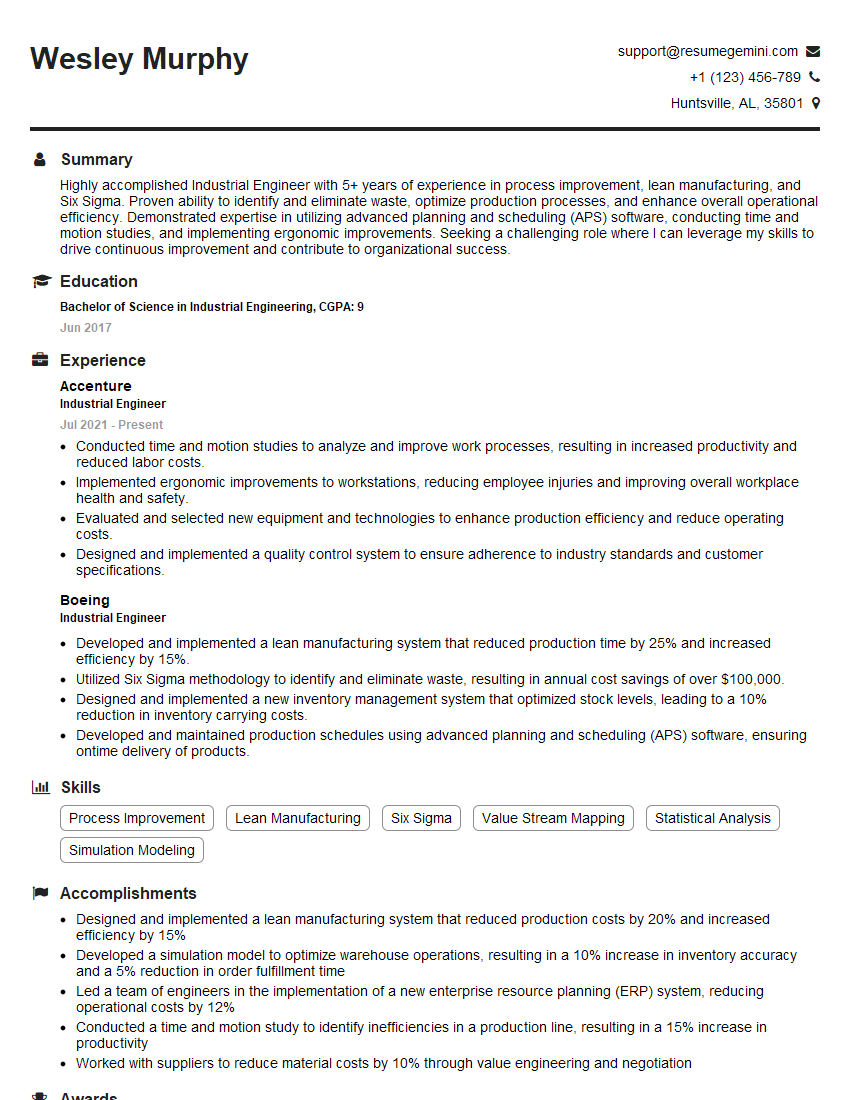
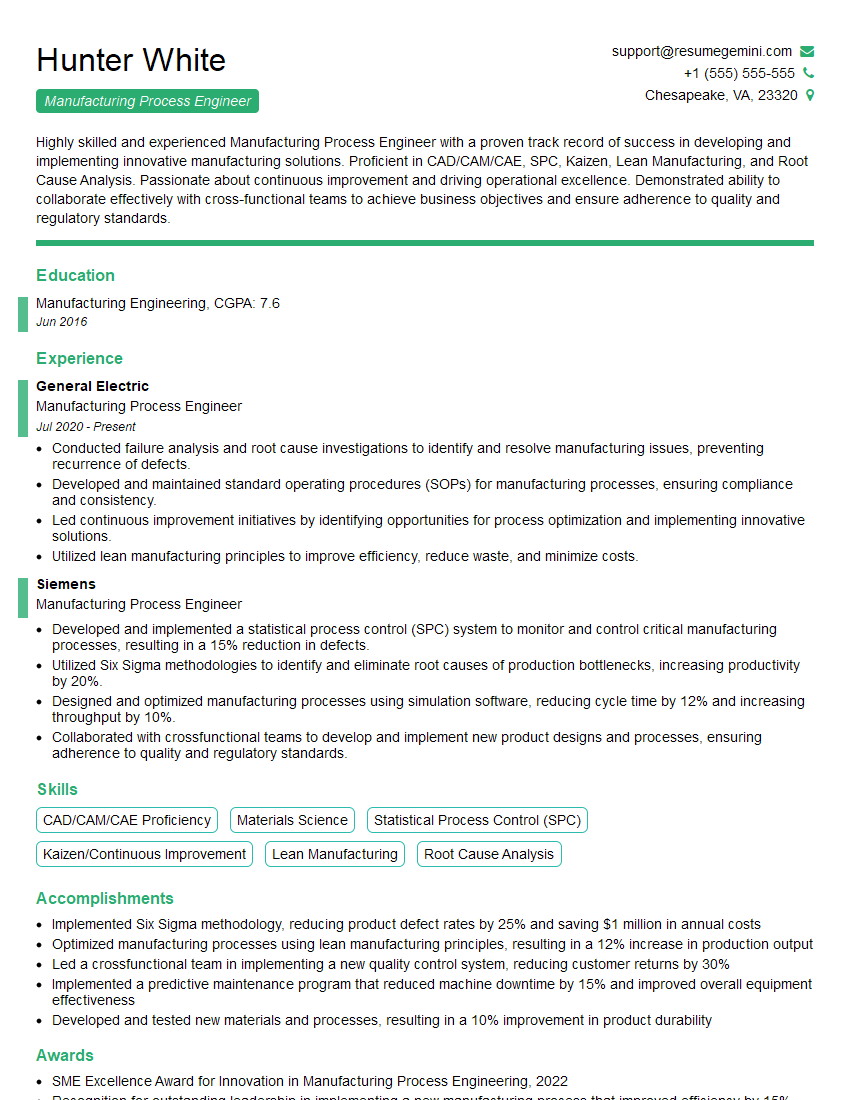
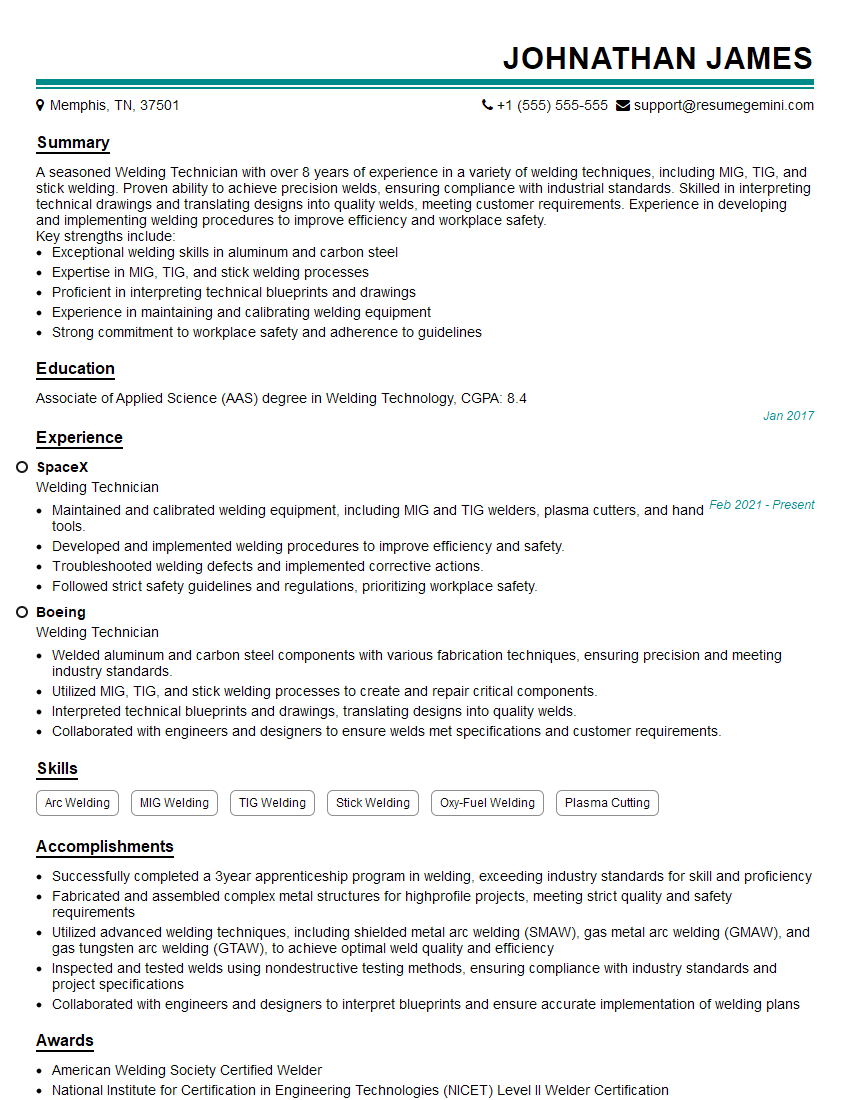
Mastering Weld Fixture Design opens doors to exciting career opportunities in manufacturing and automation. A strong understanding of these principles is highly sought after, leading to greater job security and higher earning potential. To enhance your job prospects, create an ATS-friendly resume that highlights your skills and experience effectively. ResumeGemini is a trusted resource that can help you build a professional and impactful resume. Examples of resumes tailored to Weld Fixture Design are available to guide you, ensuring your application stands out from the competition.
Explore more articles
Users Rating of Our Blogs
Share Your Experience
We value your feedback! Please rate our content and share your thoughts (optional).
What Readers Say About Our Blog
Really detailed insights and content, thank you for writing this detailed article.
IT gave me an insight and words to use and be able to think of examples