Preparation is the key to success in any interview. In this post, we’ll explore crucial Export Inspection Procedures interview questions and equip you with strategies to craft impactful answers. Whether you’re a beginner or a pro, these tips will elevate your preparation.
Questions Asked in Export Inspection Procedures Interview
Q 1. Explain the importance of pre-shipment inspection in international trade.
Pre-shipment inspection is crucial in international trade because it acts as a vital bridge between the buyer and seller, ensuring that goods meet agreed-upon quality standards and specifications before shipment. This process minimizes disputes, safeguards against financial losses, and builds trust between trading partners. Imagine ordering a large batch of electronics; a pre-shipment inspection ensures you aren’t receiving faulty units, saving you the cost and hassle of returns and replacements.
It’s like a final quality check before a big event – ensuring everything is in order before it’s too late to make adjustments. This proactive approach avoids costly and time-consuming problems down the line.
Q 2. Describe the different types of export inspections and their purposes.
Export inspections can be categorized into several types, each serving a specific purpose:
- Quality Inspection: This verifies that the goods conform to the agreed-upon quality standards and specifications outlined in the contract. This could involve testing materials, functionality, and physical dimensions.
- Quantity Inspection: Ensures the correct number of items are shipped, verifying the quantity matches the order. This is crucial for preventing short shipments or overcharges.
- Packaging Inspection: This checks the adequacy and safety of the packaging to protect goods during transit, preventing damage and spoilage. For example, fragile goods need specific packaging to withstand transportation.
- Weight and Measurement Inspection: This verifies that the weight and dimensions of the shipment conform to specifications. It’s important for proper freight calculation and to avoid discrepancies.
- Compliance Inspection: This confirms the goods comply with all relevant import regulations of the destination country, including safety, health, and environmental standards.
The type of inspection needed depends on the nature of the goods and the requirements of the buyer and the destination country.
Q 3. What are the key regulatory requirements for export inspections in your experience?
Regulatory requirements for export inspections vary significantly based on the country of export and import, the type of goods, and international treaties. However, some common elements include:
- Compliance with national and international standards: Goods must adhere to established quality, safety, and environmental standards (like ISO or specific industry norms).
- Licensing and permits: Certain goods require export licenses and permits before they can be inspected or shipped. This is particularly true for sensitive goods or those subject to trade restrictions.
- Documentation requirements: Accurate and complete documentation is crucial, including commercial invoices, packing lists, certificates of origin, and inspection reports. Missing or inaccurate documentation can lead to delays or rejection.
- Designated inspection bodies: Many countries mandate inspections to be carried out by authorized inspection bodies or agencies. Using unauthorized inspectors can invalidate the inspection process.
- Sanctions and trade restrictions: Inspections play a role in ensuring goods are not subject to sanctions or embargoes. This involves verifying the origin and nature of the goods.
Understanding these regulations is paramount for avoiding delays and potential penalties. Non-compliance can lead to significant financial and legal repercussions.
Q 4. How do you ensure the accuracy and reliability of export inspection reports?
Accuracy and reliability in export inspection reports are ensured through a multi-faceted approach:
- Qualified inspectors: Employing trained and certified inspectors with relevant expertise is crucial. This ensures the inspection is thorough and accurate.
- Standardized procedures: Following well-defined inspection procedures and checklists minimizes inconsistencies and human errors.
- Calibration and maintenance of equipment: Regularly calibrating and maintaining testing equipment is essential for obtaining precise and reliable measurements.
- Random sampling and statistical analysis: Where total inspection isn’t feasible, statistical sampling methods ensure a representative sample is inspected, yielding reliable results.
- Chain of custody: Maintaining a documented chain of custody from sample collection to report generation helps prevent tampering and disputes.
- Quality control mechanisms: Internal audits and independent reviews of inspection reports ensure accuracy and consistency.
A robust quality control system is the backbone of trust and confidence in the inspection process. Any deviation from these standards can compromise the report’s reliability and validity.
Q 5. What are the common challenges encountered during export inspections?
Common challenges encountered during export inspections include:
- Time constraints: Meeting deadlines can be challenging, especially with large shipments or complex inspection requirements.
- Accessibility and logistics: Reaching the inspection site and gaining access to goods can be difficult, particularly in remote locations or with poorly organized warehousing.
- Language barriers: Communication issues can arise between inspectors, exporters, and importers, leading to misunderstandings.
- Lack of documentation: Incomplete or inaccurate documentation can hinder the inspection process, leading to delays.
- Inconsistent quality: Dealing with goods that vary in quality can be problematic and require careful evaluation and documentation.
- Technical complexities: Inspecting complex machinery or highly specialized products may require advanced technical expertise.
Effective planning, communication, and experienced personnel are key to mitigating these challenges.
Q 6. How do you handle discrepancies found during an export inspection?
Discrepancies found during export inspection are handled systematically:
- Identification and documentation: Clearly document all discrepancies, including specific details like quantity, quality, or compliance issues. Photographs and videos are helpful.
- Verification and clarification: Verify the discrepancy with the exporter to understand the cause. This may involve additional testing or reviewing production records.
- Negotiation and resolution: Work with all parties to negotiate a solution, which could involve corrective actions, price adjustments, or other agreed-upon remedies.
- Report amendment: Update the inspection report to reflect the findings and the resolution reached. This ensures transparency and accurate record-keeping.
- Follow-up and communication: Maintain open communication with all stakeholders to ensure the agreed-upon solution is implemented.
Effective communication and collaboration are key to resolving discrepancies fairly and efficiently. Ignoring discrepancies can have severe consequences, leading to disputes and legal battles.
Q 7. Explain the process of documenting export inspection findings.
Export inspection findings are documented meticulously using a standardized format. A typical report includes:
- Header information: This includes details about the exporter, importer, goods, inspection date, and location.
- Inspection methods: Describes the methods used (visual inspection, testing, sampling).
- Inspection findings: A detailed and objective account of the inspection results, including any discrepancies or non-conformances.
- Photographs and videos: Visual evidence supporting the findings.
- Conclusions and recommendations: Summary of the overall inspection results and recommendations for addressing any issues.
- Inspector’s signature and credentials: Ensuring accountability and verification.
- Report date and version number: For easy tracking and version control.
The report should be clear, concise, and unambiguous, using precise language to avoid misinterpretations. It serves as a crucial legal document in international trade.
Q 8. How do you ensure compliance with international trade regulations during inspections?
Ensuring compliance with international trade regulations during export inspections is paramount. It’s a multi-faceted process involving meticulous attention to detail and a thorough understanding of the specific regulations governing the goods being exported and the countries involved. This includes understanding and adhering to rules regarding product safety, quality standards, labeling requirements, and sanitary and phytosanitary (SPS) regulations. For example, exporting food products to the EU requires strict adherence to their stringent food safety standards. My approach involves a detailed pre-inspection review of all relevant documentation, including the export license, certificates of origin, and any required testing certificates. During the inspection itself, I verify that the goods conform to the specifications outlined in these documents and meet all relevant international standards. Any discrepancies are documented meticulously, and corrective actions are discussed with the exporter to achieve compliance.
This also involves staying updated on evolving international regulations. I regularly consult resources like the World Trade Organization (WTO) website and relevant governmental agencies’ publications to maintain my knowledge of the latest updates. This proactive approach is crucial for preventing delays and potential penalties associated with non-compliance.
Q 9. What are the key elements of a successful export inspection program?
A successful export inspection program is built on several key pillars. Firstly, clear objectives and scope are essential. Defining precisely what goods will be inspected, the frequency of inspections, and the specific regulations to be checked streamlines the process and minimizes ambiguity. For instance, a program might focus on verifying the quality of textiles or the safety of electrical appliances exported from a specific factory. Secondly, competent and trained inspectors are vital. Inspectors must possess the technical expertise to evaluate the goods effectively and identify potential non-conformities. Regular training sessions on updated regulations and best practices are crucial for maintaining the quality of inspections.
Thirdly, effective documentation and reporting are critical for maintaining accountability and providing a clear audit trail. Each inspection should be meticulously documented, with detailed records of findings, non-conformities, and corrective actions taken. Finally, a robust quality control system is necessary to ensure that the inspection program itself operates effectively. This involves regular audits and reviews of the process to identify areas for improvement and maintain the program’s efficacy.
Q 10. Describe your experience with different inspection methods (visual, sampling, testing).
My experience encompasses a broad range of inspection methods. Visual inspection is frequently the first step, providing a quick overview of the goods’ condition and packaging. This involves checking for any obvious defects, damages, or inconsistencies. For example, checking for dents or rust on exported machinery or ensuring that packaging is intact and appropriately labeled. Sampling is used when inspecting large quantities of goods, where inspecting every item is impractical. Scientific sampling methods are employed to ensure the sample is representative of the whole shipment. This often involves statistical analysis to determine the required sample size and to extrapolate findings to the entire batch. I have experience using various sampling techniques, such as stratified sampling or random sampling, adapting the approach based on the nature of the goods and the inspection requirements.
Testing is often necessary to verify the goods’ compliance with specific standards. This might involve laboratory testing to check the chemical composition of materials, performance tests to verify functionality, or other specialized testing depending on the nature of the goods. For example, testing the tensile strength of fabrics or measuring the voltage output of electrical equipment. I’ve worked with numerous accredited laboratories and am proficient in interpreting test reports and assessing their implications for compliance.
Q 11. How do you manage and resolve conflicts with exporters during inspections?
Managing conflicts with exporters during inspections requires a diplomatic yet firm approach. The primary goal is to resolve disagreements fairly and efficiently, ensuring compliance with regulations while maintaining a positive working relationship. I always begin by clearly explaining the non-conformities identified during the inspection, providing detailed evidence and referencing the relevant regulations. I find it helpful to use a collaborative, problem-solving approach, working with the exporter to identify solutions. This might involve suggesting corrective actions, such as repairs, replacements, or re-labeling, to bring the goods into compliance. Open communication is key; I encourage dialogue and address concerns promptly.
In situations where disagreements persist, I escalate the issue through established channels, involving supervisory personnel if necessary. I maintain thorough records of all interactions and decisions. A clear, documented audit trail is crucial if further action, such as sanctions, becomes necessary. My approach prioritizes resolving issues efficiently and fairly, focusing on achieving compliance while minimizing disruption to the export process.
Q 12. What is your experience with different types of export documentation?
My experience with export documentation is extensive. I am familiar with a wide range of documents, including commercial invoices, packing lists, bills of lading (B/L), certificates of origin (COO), and various specialized certificates depending on the nature of the goods. For instance, phytosanitary certificates for agricultural products, health certificates for food products, or certificates of conformity for manufactured goods. I understand the importance of accurate and complete documentation for smooth customs clearance and compliance with international regulations. I can assess the validity and completeness of these documents, identify any discrepancies, and guide exporters on how to address them.
My experience includes verifying the accuracy of information contained in these documents against the physical goods during inspection. This ensures that the declared goods match the actual goods being exported. This attention to detail is vital in preventing delays and potential penalties.
Q 13. How familiar are you with Incoterms and their impact on export inspections?
I am very familiar with Incoterms (International Commercial Terms) and their significant impact on export inspections. Incoterms define the responsibilities of buyers and sellers regarding delivery, costs, and risks associated with the shipment of goods. This has direct implications for inspections, as the point at which responsibility for the goods transfers impacts where and how inspections are conducted. For example, under CIF (Cost, Insurance, and Freight), the seller retains responsibility for the goods until they are loaded onto the vessel; therefore, inspection needs to occur before loading. However, under EXW (Ex Works), the buyer assumes responsibility from the seller’s premises, and inspection might occur at the seller’s facility.
Understanding Incoterms is crucial for determining the appropriate inspection procedures, location, and timing. It influences who bears the costs of the inspection and who is responsible for ensuring compliance with regulations. Incorrect interpretation of Incoterms can lead to disputes and delays. My understanding ensures that inspections are aligned with the agreed-upon terms, minimizing potential misunderstandings and conflicts.
Q 14. Describe your experience with using inspection software or systems.
I have extensive experience utilizing various inspection software and systems. These systems typically manage inspection schedules, track inspection reports, maintain a database of inspection findings, and facilitate communication with exporters. They help streamline the inspection process, making it more efficient and organized. For instance, I have experience using software that allows for digital recording of inspection findings, including photographic evidence and detailed notes. This digital record-keeping improves the accuracy and accessibility of inspection reports. These systems also support the generation of reports which can be easily shared with all relevant stakeholders. Furthermore, I’m proficient in using systems that integrate with customs databases and other trade-related platforms, enabling efficient data sharing and compliance monitoring.
In addition to this, I’m comfortable with the data management and analytical capabilities of these systems, allowing me to identify trends in non-conformities and suggest improvements to export processes. This data-driven approach enhances the effectiveness of the overall inspection program and contributes to maintaining high standards in export quality control.
Q 15. How do you prioritize inspection tasks when dealing with multiple shipments?
Prioritizing inspection tasks with multiple shipments involves a strategic approach that balances urgency, risk, and resource allocation. I typically employ a system that considers several factors:
- Urgency of shipment: Shipments with tight deadlines or perishable goods are prioritized. For example, a shipment of fresh produce bound for a distant market would take precedence over a shipment of non-perishable manufactured goods.
- Risk assessment: Shipments of high-value goods or those with a history of non-compliance require more attention. A consignment of electronics, for instance, would need a more thorough inspection than a shipment of standard textiles.
- Resource availability: The number of inspectors, available equipment, and testing facilities all dictate the inspection schedule. We might prioritize inspections requiring specialized equipment or expertise to ensure efficient utilization of resources.
- Inspection type: Some inspections, such as pre-shipment inspections, might necessitate earlier completion compared to those performed at the port of exit.
I typically use a project management tool to track these factors and assign priorities, creating a clear and manageable workflow. This allows for efficient allocation of resources and ensures that the most critical shipments receive prompt attention.
Career Expert Tips:
- Ace those interviews! Prepare effectively by reviewing the Top 50 Most Common Interview Questions on ResumeGemini.
- Navigate your job search with confidence! Explore a wide range of Career Tips on ResumeGemini. Learn about common challenges and recommendations to overcome them.
- Craft the perfect resume! Master the Art of Resume Writing with ResumeGemini’s guide. Showcase your unique qualifications and achievements effectively.
- Don’t miss out on holiday savings! Build your dream resume with ResumeGemini’s ATS optimized templates.
Q 16. How do you ensure the timely completion of export inspections?
Ensuring timely completion of export inspections hinges on meticulous planning and efficient execution. Key strategies include:
- Clear communication: Maintaining open lines of communication with exporters, importers, and relevant authorities ensures that all parties are aware of deadlines and any potential delays. Regular updates are crucial.
- Efficient scheduling: A well-defined inspection schedule, taking into account factors like shipment arrival times and available resources, is essential. I use scheduling software to optimize workflow and minimize downtime.
- Proper resource allocation: Having the right number of trained inspectors and sufficient equipment readily available minimizes delays. Regular equipment maintenance is also critical to prevent unforeseen breakdowns.
- Standardized procedures: Following established, streamlined inspection procedures ensures consistency and efficiency. This also helps reduce errors and accelerates the process.
- Proactive problem-solving: Identifying and addressing potential bottlenecks proactively reduces the risk of delays. This might involve coordinating with port authorities or customs officials to expedite clearance procedures.
For example, if I foresee a potential backlog due to a surge in shipments, I proactively communicate with stakeholders, potentially requesting additional resources or adjusting the inspection schedule to prevent delays.
Q 17. Explain your understanding of product quality standards and their relevance to export inspections.
Product quality standards are the backbone of export inspections. They represent minimum acceptable quality levels for goods destined for export, ensuring compliance with international regulations and customer expectations. These standards vary greatly depending on the product, the importing country, and specific industry regulations (e.g., ISO, FDA, etc.).
Export inspections verify if the exported goods meet these standards. For example, a shipment of textiles might need to meet certain standards for fiber content, colorfastness, and dimensions, as defined in international standards or by the importing country’s regulations. A failure to meet these standards can lead to rejection of the shipment and significant financial losses for the exporter.
My understanding involves familiarity with various quality standards (e.g., ISO 9001, specific industry standards like those for food safety), and the ability to interpret and apply them during inspections. I use a combination of visual inspection, laboratory testing, and documentation review to assess product conformity with relevant standards.
Q 18. How do you manage and report non-conformances found during export inspections?
Managing and reporting non-conformances is a critical aspect of export inspections. When discrepancies are found, I follow a structured process:
- Detailed documentation: All non-conformances are meticulously documented, including photographs, precise descriptions of the defects, and the quantity of affected goods.
- Immediate notification: The exporter is immediately notified of the findings, providing a clear and detailed report of the non-conformances. This facilitates prompt corrective actions.
- Classification of severity: Non-conformances are classified based on their severity (minor, major, critical), determining the appropriate course of action. Minor issues might be acceptable with minor corrections, while critical non-conformances could lead to shipment rejection.
- Corrective actions: The exporter is given an opportunity to rectify the issues. The inspection process might continue after successful remediation.
- Formal report: A final report summarizing the inspection findings, including non-conformances and corrective actions taken (or not taken), is generated and distributed to all relevant stakeholders.
For instance, if a shipment of footwear contained a significant number of pairs with defective stitching, I would document this thoroughly with photos, and report it to the exporter. They might then choose to repair the shoes or remove them from the shipment. The final report will reflect the resolution.
Q 19. How do you maintain confidentiality and data security during inspections?
Maintaining confidentiality and data security during export inspections is paramount. I adhere to strict protocols to ensure sensitive information remains protected:
- Data encryption: All digital data collected during inspections, including photographs and reports, are encrypted using industry-standard encryption methods.
- Access control: Access to inspection reports and data is restricted to authorized personnel only. Access credentials are regularly reviewed and updated.
- Secure storage: Physical documents and data storage devices are kept in secure locations with restricted access.
- Confidentiality agreements: Confidentiality agreements are in place with all stakeholders to ensure that sensitive information is not disclosed to unauthorized parties.
- Data disposal: Secure methods are used to dispose of sensitive information once it’s no longer needed, in accordance with relevant data protection regulations.
For example, all inspection reports are password-protected and stored on a secure server accessible only to authorized personnel. We also shred physical documentation after a specified retention period.
Q 20. Describe your experience with different types of cargo and their specific inspection requirements.
My experience encompasses a wide range of cargo types, each with unique inspection requirements:
- Perishable goods (food, pharmaceuticals): Inspections focus on temperature control, packaging integrity, and adherence to food safety standards (e.g., HACCP). Specialized equipment and rapid testing methods might be employed.
- Manufactured goods (electronics, textiles): Inspections verify adherence to quality standards, proper labeling, and the absence of defects. This often involves visual inspection, testing for functionality, and comparing to specifications.
- Hazardous materials: These inspections require stringent safety protocols and compliance with international regulations (e.g., IMDG Code). Specialized training and safety equipment are essential. Documentation of proper packaging and labeling is crucial.
- Live animals: Inspections focus on animal health, compliance with quarantine regulations, and proper transport conditions. Veterinary expertise is often required.
Each cargo type necessitates a tailored approach. For instance, inspecting a shipment of live animals demands different expertise and equipment than inspecting electronic components, ensuring I adapt my methodology to the specific needs of each cargo.
Q 21. What is your understanding of export licensing and its role in export inspections?
Export licensing plays a crucial role in export inspections. Many goods require specific licenses or permits before they can be exported. The type of license depends on the nature of the goods and the destination country. For example, certain technologies or materials might require export licenses due to national security or international trade regulations.
Export inspections often verify that the goods being exported comply with the conditions stipulated in the export license. This involves checking that the goods match the description on the license, and that all necessary documentation is in order. A discrepancy between the license and the actual goods can lead to delays, penalties, or even the seizure of the shipment.
My understanding of export licensing involves knowing which goods require licenses, where to find relevant information, and how to verify compliance during inspections. This prevents legal complications and ensures smooth export processes.
Q 22. Explain your experience with communicating inspection results to various stakeholders.
Communicating inspection results effectively is crucial for maintaining transparency and trust with all stakeholders. This includes exporters, importers, government agencies, and internal teams. My approach involves a multi-faceted strategy focusing on clarity, timeliness, and appropriate channels.
Clear and Concise Reporting: I utilize standardized report templates that clearly outline the inspection findings, including any non-conformances, using plain language easily understood by both technical and non-technical audiences. I avoid jargon and technical terms unless absolutely necessary, and always provide a clear explanation if used.
Timely Dissemination: I understand the urgency in international trade and prioritize prompt delivery of reports through agreed-upon methods, be it email, secure online portals, or physical delivery. Delays are avoided unless absolutely unavoidable, and stakeholders are proactively informed of any anticipated delays.
Targeted Communication: I tailor my communication to the specific stakeholder’s needs and level of understanding. For example, a detailed technical report might be needed for government agencies, while a summary report might suffice for the exporter.
Proactive Engagement: I don’t just send reports; I actively engage in follow-up communication to answer questions, address concerns, and ensure complete understanding of the findings. This builds trust and strengthens relationships.
For example, in one instance, I discovered a significant discrepancy in labeling during a food export inspection. I immediately informed both the exporter and the importing country’s regulatory body, providing photographic evidence and clearly outlining the necessary corrective actions. This proactive communication prevented a potential product recall and maintained a positive relationship with all stakeholders.
Q 23. How do you stay updated on changes in international trade regulations and standards?
Staying updated on ever-changing international trade regulations and standards is paramount. My strategy involves a multi-pronged approach:
Subscription to Regulatory Updates: I subscribe to reputable organizations like the World Trade Organization (WTO), relevant national and international trade bodies, and industry-specific publications that provide timely updates on regulations and standards changes.
Networking and Professional Development: I actively participate in industry conferences, workshops, and seminars to learn from experts and network with professionals in the field. This provides invaluable insights into emerging trends and challenges.
Online Resources: I regularly monitor government websites and online databases for updates on international trade laws, import/export procedures, and technical standards. This includes utilizing databases maintained by organizations like the International Organization for Standardization (ISO).
Internal Knowledge Sharing: I contribute to internal knowledge sharing initiatives by documenting updates and presenting them to my colleagues. This ensures everyone remains well-informed and avoids duplication of effort.
Think of it like learning a new language – constant practice and exposure to new vocabulary (regulations) is essential to fluency (compliance).
Q 24. Describe your experience with conducting risk assessments related to export inspections.
Risk assessment is a critical aspect of export inspections. My approach utilizes a systematic methodology to identify potential hazards and vulnerabilities in the export process. This often involves:
Identifying Potential Risks: This includes considering factors like the type of goods being exported, the country of destination, the exporter’s history, and any known security concerns. For example, exporting perishable goods requires a different risk assessment than exporting manufactured products.
Assessing the Likelihood and Severity: Once potential risks are identified, I assess their likelihood of occurrence and the potential severity of the consequences. This helps prioritize risks and allocate inspection resources effectively.
Developing Mitigation Strategies: Based on the risk assessment, I develop appropriate mitigation strategies. These can range from increasing the frequency of inspections to requiring additional documentation or testing.
Documentation and Reporting: The entire risk assessment process is meticulously documented and included in the inspection report. This provides transparency and accountability.
For instance, when inspecting high-value electronics destined for a region known for counterfeiting, I would prioritize verifying authenticity and ensuring proper labeling to mitigate the risk of fraudulent activity.
Q 25. How do you handle situations where inspection delays or interruptions occur?
Inspection delays or interruptions are inevitable in international trade. My strategy for handling them involves:
Proactive Communication: Immediately inform all stakeholders about the delay or interruption, providing a clear explanation of the cause and an estimated timeline for resolution. Transparency is key to managing expectations.
Problem-Solving: Identify the root cause of the delay and implement solutions promptly. This may involve coordinating with relevant authorities, addressing logistical issues, or securing additional resources.
Contingency Planning: Where possible, I develop contingency plans to mitigate the impact of potential delays. This might involve having backup inspection teams or alternative testing facilities.
Documentation: Maintain detailed records of the delay, including communication with stakeholders and steps taken to resolve the issue. This is crucial for accountability and future planning.
For example, a customs delay once caused an unexpected disruption to an agricultural product inspection. I immediately contacted the exporter and the importer, explaining the situation and working with customs to expedite the process. By maintaining open communication and proactively seeking solutions, we minimized the impact of the delay.
Q 26. What are your strategies for improving the efficiency and effectiveness of export inspection procedures?
Improving the efficiency and effectiveness of export inspection procedures requires a holistic approach. My strategies include:
Process Optimization: Regularly review and streamline inspection processes to identify areas for improvement. This includes examining workflows, documentation processes, and communication channels.
Technology Adoption: Leveraging technology such as digital inspection tools, automated reporting systems, and secure data management platforms can significantly enhance efficiency and accuracy. This includes utilizing digital platforms for documentation and communication.
Training and Development: Ensuring that inspection staff have the necessary skills and knowledge to perform their duties effectively and efficiently is essential. This includes ongoing training on new regulations, technologies, and best practices.
Collaboration and Data Analysis: Collaborating with stakeholders to share information and data, and analyzing inspection data to identify trends and areas for improvement, leads to informed decision-making.
For instance, implementing a digital inspection system reduced paperwork, improved data accuracy, and shortened the inspection turnaround time by approximately 30% in one of my previous roles. This significantly improved efficiency and client satisfaction.
Q 27. How do you contribute to a positive and collaborative working relationship with exporters?
Building and maintaining positive and collaborative relationships with exporters is essential for effective export inspection. My approach focuses on:
Open Communication: Maintain clear, consistent, and proactive communication throughout the inspection process. This involves providing regular updates, promptly addressing concerns, and actively seeking feedback.
Transparency and Fairness: Ensure that inspection procedures are transparent and applied fairly to all exporters. This builds trust and prevents misunderstandings.
Proactive Assistance: Offer guidance and support to exporters in meeting inspection requirements. This may involve providing clarification on regulations, suggesting best practices, or offering training on compliance matters.
Respect and Professionalism: Always treat exporters with respect and professionalism. This fosters a positive and productive working relationship.
For example, I once helped an exporter understand a newly implemented regulation that was impacting their export shipments. By explaining the regulation clearly and offering practical solutions, I helped them adjust their processes and avoid costly delays. This proactive assistance cemented a strong and collaborative relationship.
Q 28. Describe a situation where you had to adapt your inspection approach to meet specific client requirements.
Adaptability is key in export inspection. One instance involved a client exporting specialized medical equipment with stringent regulatory requirements. The standard inspection approach was insufficient to meet the client’s specific needs, which included verifying the equipment’s compliance with unique sterilization protocols and specific performance parameters.
To address this, I adapted my inspection approach in several ways:
Collaborated with Experts: I consulted with biomedical engineers and sterilization specialists to ensure that the inspection covered all relevant aspects. This involved integrating their expertise into the inspection checklist and procedures.
Customized Inspection Plan: I developed a customized inspection plan that addressed the client’s unique requirements. This plan included detailed procedures for verifying sterilization, functional testing, and documentation review.
Enhanced Documentation: To meet enhanced regulatory needs, I implemented a more detailed documentation system, including photographic and video evidence of the testing and verification processes.
By adapting my approach, I ensured that the inspection process met the client’s stringent requirements and provided them with the necessary documentation for regulatory compliance. This resulted in a successful export and strengthened the client relationship.
Key Topics to Learn for Export Inspection Procedures Interview
- Pre-shipment Inspection: Understand the various stages involved, from initial contract review to final inspection report generation. Consider the different types of inspections (e.g., quality control, quantity verification) and their respective methodologies.
- International Standards and Regulations: Familiarize yourself with relevant international standards (e.g., ISO) and regulations governing export procedures in your target markets. Be prepared to discuss how these standards are applied in practical inspection scenarios.
- Documentation and Compliance: Master the intricacies of export documentation, including certificates of origin, bills of lading, and other required paperwork. Understand the penalties for non-compliance and how to ensure accurate and timely documentation.
- Risk Assessment and Mitigation: Discuss your understanding of risk assessment within the export inspection process. How would you identify potential risks (e.g., quality defects, non-compliance), and what mitigation strategies would you employ?
- Sampling Techniques and Statistical Analysis: Learn about different sampling methods used in export inspections and how to analyze the collected data to draw meaningful conclusions about the quality and quantity of goods. Consider the implications of different sample sizes and their effect on accuracy.
- Quality Control and Assurance: Understand the principles of quality control and assurance within the context of export inspections. How would you ensure the integrity and reliability of the inspection process and its findings?
- Technology and Automation in Export Inspections: Explore the role of technology (e.g., digital inspection reports, automated data analysis) in streamlining and improving the efficiency of export inspection procedures.
- Ethical Considerations and Best Practices: Be prepared to discuss the ethical responsibilities of an export inspector and adhere to best practices to ensure impartiality and integrity.
Next Steps
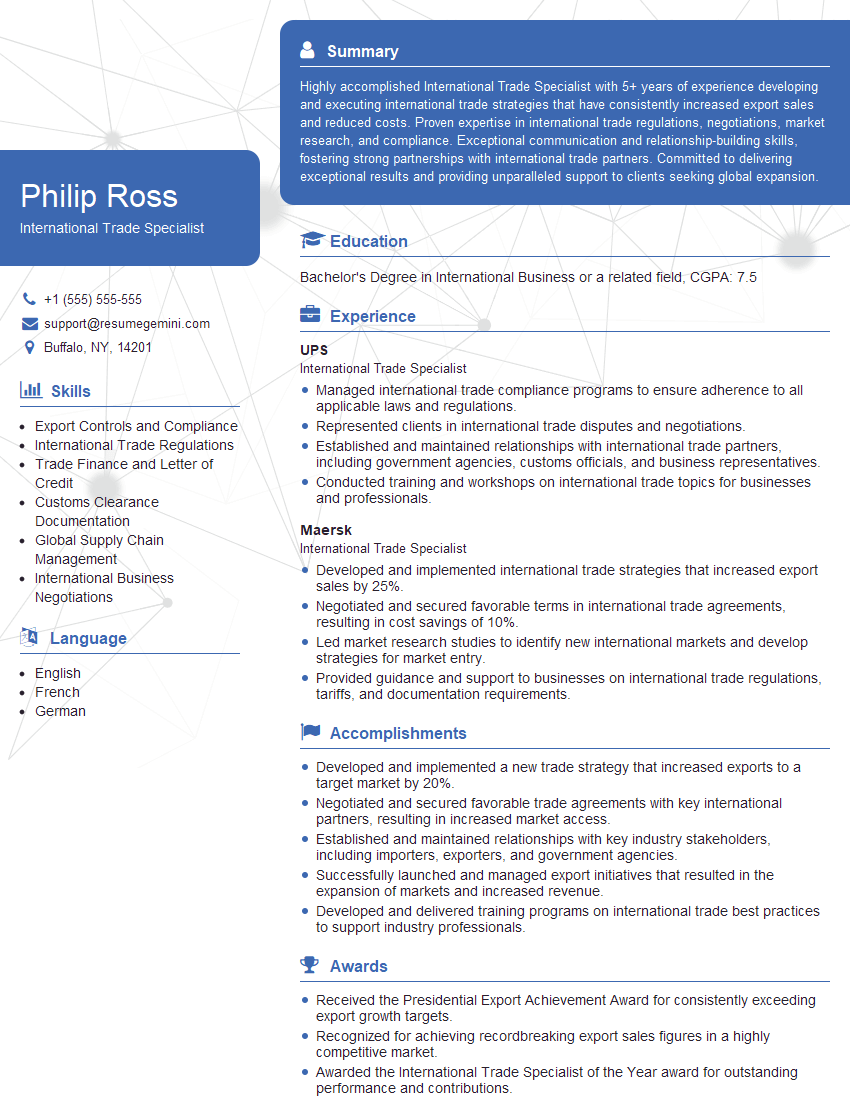
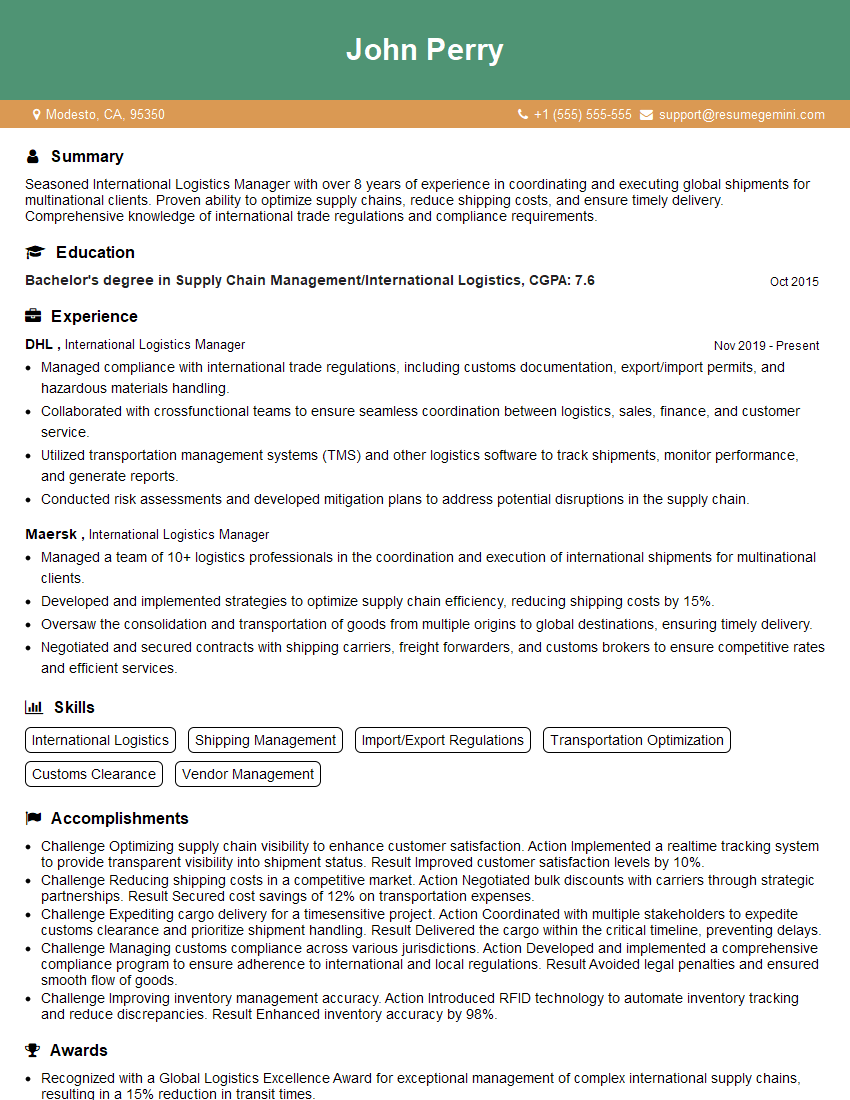
Mastering Export Inspection Procedures significantly enhances your career prospects in international trade and supply chain management, opening doors to diverse and rewarding roles. A well-crafted resume is crucial for showcasing your skills and experience to potential employers. Building an ATS-friendly resume is essential to ensure your application gets noticed. ResumeGemini is a trusted resource to help you create a professional and impactful resume that stands out. Examples of resumes tailored to Export Inspection Procedures are available to help guide your resume creation process.
Explore more articles
Users Rating of Our Blogs
Share Your Experience
We value your feedback! Please rate our content and share your thoughts (optional).
What Readers Say About Our Blog
Really detailed insights and content, thank you for writing this detailed article.
IT gave me an insight and words to use and be able to think of examples