The right preparation can turn an interview into an opportunity to showcase your expertise. This guide to Aircraft Instrumentation and Control Systems interview questions is your ultimate resource, providing key insights and tips to help you ace your responses and stand out as a top candidate.
Questions Asked in Aircraft Instrumentation and Control Systems Interview
Q 1. Explain the difference between analog and digital aircraft instrumentation.
Analog aircraft instrumentation uses continuous physical quantities to represent measured values. Think of a traditional speedometer needle smoothly moving across the dial – its position directly reflects the speed. Digital instrumentation, conversely, uses discrete numerical values represented electronically. A digital altimeter displays altitude as a precise number, not a continuous needle sweep.
- Analog Advantages: Simple design, generally less susceptible to electromagnetic interference (EMI), immediate visual representation.
- Analog Disadvantages: Lower accuracy, prone to wear and tear, difficult to integrate with modern avionics systems.
- Digital Advantages: Higher accuracy, easier integration with computers and other digital systems, allows for more complex data processing and presentation (e.g., trend analysis).
- Digital Disadvantages: More complex design, can be affected by EMI if not properly shielded, potential for digital glitches or failures.
Modern aircraft often use a hybrid approach, combining the strengths of both systems – for instance, essential parameters might have redundant analog backups in addition to primary digital displays.
Q 2. Describe the principles of flight control system stability and augmentation.
Flight control system stability refers to the aircraft’s ability to return to its original flight path after a disturbance. Imagine a bird – it doesn’t continuously overcorrect to stay level. Augmentation enhances the inherent stability and performance, making the aircraft easier and safer to fly.
Stability is achieved through careful design of the aircraft’s aerodynamics, weight distribution, and control surfaces. Augmentation systems, often electronic, improve stability and handling qualities by actively manipulating the control surfaces based on sensor inputs. For example, an autopilot actively adjusts the elevators to maintain altitude.
Key principles include:
- Static Stability: The tendency to return to its original attitude after a small disturbance.
- Dynamic Stability: How quickly and smoothly it returns to its original attitude.
- Control Augmentation Systems (CAS): These systems, often employing fly-by-wire technology, use sensors, computers, and actuators to enhance aircraft stability and performance (e.g., reducing pilot workload during turbulence).
Without sufficient stability and augmentation, an aircraft would be difficult to control, prone to oscillations, and potentially unsafe to fly.
Q 3. How do you troubleshoot a malfunctioning flight instrument?
Troubleshooting a malfunctioning flight instrument is a systematic process that involves a combination of logical deduction, understanding the instrument’s function, and using available diagnostic tools.
- Step 1: Identify the Problem: What instrument is malfunctioning? What is the nature of the malfunction (e.g., inaccurate reading, no reading, erratic behavior)?
- Step 2: Check for Obvious Issues: Is the instrument properly powered? Are there any visible signs of damage? Is there any interference from other systems?
- Step 3: Check for Sensor Issues: If the instrument is receiving its data from a sensor (e.g., airspeed indicator from a pitot tube), check the sensor’s functionality and integrity.
- Step 4: Review Maintenance Logs: Has the instrument undergone any recent maintenance? Are there any known issues or past maintenance discrepancies?
- Step 5: Use Built-in Test Equipment (BITE): Many modern aircraft have sophisticated BITE systems that can identify specific faults within the avionics systems.
- Step 6: Consult Technical Manuals: Refer to the aircraft’s technical manuals for detailed troubleshooting procedures and diagnostic information.
- Step 7: Ground Tests & Bench Testing: If possible and safe, conduct ground tests or bench testing of the instrument to isolate the problem.
The specific steps will depend heavily on the type of aircraft and the particular instrument. Always follow established safety procedures and consider seeking assistance from experienced maintenance personnel if the issue is complex or cannot be easily resolved.
Q 4. What are the common types of aircraft sensors and their applications?
Aircraft rely on a wide variety of sensors to provide critical data for navigation, flight control, and engine monitoring. Here are a few common examples:
- Pitot-Static System: Measures airspeed, altitude, and vertical speed. The pitot tube measures dynamic pressure, while static ports measure static pressure.
- Accelerometers and Gyroscopes: Measure aircraft acceleration and angular rates, crucial for inertial navigation and attitude control systems (e.g., Inertial Measurement Units or IMUs).
- Altimeters: Measure altitude, often using atmospheric pressure as a reference.
- Air Data Computers (ADCs): Process data from pitot-static systems and other sensors to compute key flight parameters.
- Magnetic Compass: Provides heading information.
- GPS Receivers: Provide precise position, velocity, and time information.
- Temperature Sensors: Monitor engine, oil, and air temperatures.
- Pressure Sensors: Monitor fuel tank pressure and other pressures within the aircraft’s systems.
The application of each sensor is specific to its role in providing vital data to the aircraft’s various systems.
Q 5. Explain the concept of redundancy in aircraft instrumentation and control systems.
Redundancy in aircraft instrumentation and control systems means having multiple independent systems or components performing the same function. This crucial safety feature ensures that if one system fails, another can take over, preventing catastrophic consequences. It’s like having a backup parachute – you hope you never need it, but it’s vital to have it.
Types of Redundancy:
- Triple Modular Redundancy (TMR): Three independent systems process the same information, with a majority voting system determining the correct output.
- Dual Redundancy: Two identical systems are used, with one acting as a backup to the other.
- Standby Redundancy: One system is active, while another is kept on standby, immediately taking over if the primary system fails.
Redundancy is critical in aircraft because a single point of failure can lead to serious accidents. By incorporating multiple independent systems, the probability of a complete system failure is dramatically reduced.
Q 6. Describe the role of a Flight Management System (FMS).
The Flight Management System (FMS) is a sophisticated computer system that integrates various aircraft systems, providing comprehensive flight planning, navigation, and performance management capabilities. It’s essentially the aircraft’s advanced flight planner and navigator.
Key Functions:
- Flight Planning: Creates and manages flight plans, including routes, altitudes, speeds, and fuel requirements.
- Navigation: Provides precise navigation guidance using GPS, inertial navigation, and other sources.
- Performance Management: Optimizes flight performance by calculating the most efficient flight path, considering factors like wind, fuel consumption, and aircraft limitations.
- Vertical Navigation: Controls the aircraft’s vertical profile (climb and descent rates).
- Data Display: Presents critical flight data on the primary flight displays.
The FMS reduces pilot workload, improves flight efficiency, and enhances overall safety by automating many aspects of flight operation.
Q 7. What are the safety implications of instrumentation failures?
Instrumentation failures can have severe safety implications, ranging from minor inconvenience to catastrophic accidents. The severity depends on the nature and extent of the failure, as well as the criticality of the affected instrument.
Examples of Implications:
- Loss of Situational Awareness: Failure of critical instruments like altimeters, airspeed indicators, or GPS receivers can result in loss of situational awareness, leading to spatial disorientation and potential collisions.
- Incorrect Flight Control: Malfunctions in flight control instrumentation can lead to inaccurate control inputs, resulting in instability or uncontrolled flight.
- Engine Failure: Failure of engine monitoring instruments can lead to undetected engine malfunctions, potentially resulting in engine failure.
- System Failures: Failures in instruments related to the aircraft’s electrical or hydraulic systems can trigger wider system failures.
To mitigate these risks, aircraft employ redundancy, rigorous maintenance procedures, and pilot training to handle instrument failures safely. The design philosophy places high importance on fail-safe mechanisms and redundancy to maintain flight safety even in the face of failures.
Q 8. How do you ensure the integrity of aircraft data acquisition systems?
Ensuring the integrity of aircraft data acquisition systems is paramount for safe and efficient flight operations. It involves a multi-layered approach focusing on hardware, software, and data validation.
Redundancy and Cross-checking: Critical sensors and data buses are often duplicated or triplicated. This allows for comparison and detection of discrepancies. For instance, an aircraft might have two independent airspeed sensors; if their readings diverge significantly, a fault is indicated.
Data Validation and Filtering: Raw sensor data is rarely used directly. Sophisticated algorithms filter out noise and outliers, ensuring the data is reliable. This often involves applying moving averages, Kalman filters (which predict future sensor values based on past data), or other advanced filtering techniques to smooth out inconsistencies.
Built-in Test Equipment (BITE): Modern systems incorporate self-diagnostic capabilities. BITE continuously monitors the health of the system and alerts the crew to potential faults. This proactive approach helps prevent catastrophic failures.
Regular Calibration and Maintenance: Sensors and data acquisition units need periodic calibration to maintain accuracy. This involves comparing their readings against known standards and adjusting them if necessary. Regular maintenance schedules are vital for keeping the system in optimal condition.
Data Recording and Analysis: Flight data recorders (FDRs) and quick access recorders (QARs) store vast amounts of data, allowing for post-flight analysis and investigation of any discrepancies or anomalies. This helps identify potential issues and improve the system’s reliability.
A real-world example would be the detection of a faulty altimeter. Redundant altimeters would provide different readings, triggering an alert and potentially allowing the pilot to rely on a different, accurate source of altitude information. The FDR would also log the event, allowing investigation and preventative maintenance to be scheduled.
Q 9. Explain your experience with aircraft communication systems (e.g., ADS-B).
My experience with aircraft communication systems, particularly ADS-B (Automatic Dependent Surveillance-Broadcast), is extensive. I’ve worked on projects involving the integration, testing, and troubleshooting of ADS-B systems in various aircraft types. ADS-B relies on GPS positioning and transponders to broadcast an aircraft’s position, velocity, and other information to ground stations and other aircraft.
Integration with other systems: I have experience integrating ADS-B with other systems like traffic collision avoidance systems (TCAS) to provide a more comprehensive situational awareness picture for pilots.
Data Link Protocols: I’m proficient in understanding and implementing the various data link protocols used in ADS-B, such as 1090 MHz Extended Squitter and UAT (Universal Access Transceiver).
Testing and Verification: I’ve participated in extensive testing and verification of ADS-B systems to ensure they meet regulatory requirements and perform reliably in various operational scenarios, including flight testing and simulation.
Troubleshooting and Problem Solving: I have a proven track record of identifying and resolving issues related to ADS-B performance and data integrity, ranging from antenna problems to software glitches.
For example, I once worked on a project where intermittent ADS-B transmissions were affecting the aircraft’s ability to receive traffic advisories. Through systematic investigation, we found a faulty antenna connection, which was easily resolved, preventing potential safety hazards.
Q 10. Describe your experience with aircraft navigation systems (e.g., GPS, INS).
Aircraft navigation systems rely on a combination of technologies to determine an aircraft’s position, velocity, and heading. I have hands-on experience with both GPS (Global Positioning System) and INS (Inertial Navigation System) technologies, and how they complement each other.
GPS: GPS provides accurate position information using signals from a constellation of satellites. However, it can be susceptible to signal blockage (e.g., in mountainous terrain or during atmospheric disturbances).
INS: INS uses accelerometers and gyroscopes to measure changes in velocity and orientation. It’s highly reliable but suffers from drift over time, meaning its accuracy degrades gradually. The drift is accumulated error that needs correction, typically done by using GPS data.
Integrated Systems: Modern aircraft often use integrated GPS/INS systems. GPS data corrects for INS drift, providing a highly accurate and reliable navigation solution, even in challenging environments.
Error Modelling and Compensation: Understanding and compensating for various error sources (e.g., GPS signal multipath, INS sensor biases) is crucial for achieving optimal navigation accuracy. Advanced filtering techniques, like Kalman filtering, are often employed to achieve this.
In a practical setting, I’ve worked on calibrating INS units and integrating them with GPS receivers to ensure seamless operation. Accurate navigation is vital for safe and efficient flight, and the integration of these systems is crucial for ensuring this accuracy.
Q 11. What are the different types of aircraft displays and their advantages/disadvantages?
Aircraft displays have evolved significantly, moving from basic analog instruments to sophisticated multi-function displays (MFDs).
Electromechanical (Analog): Traditional analog instruments, like those found in older aircraft, provide direct visual indication of parameters. Advantages include simplicity and ease of understanding. Disadvantages include limited information capacity and susceptibility to mechanical failure.
Electronic (CRT): Cathode Ray Tube (CRT) displays offered a move towards electronic displays with greater flexibility and information presentation. They are however, bulky, heavy, and have a limited lifespan.
Liquid Crystal Displays (LCD): LCDs are the most common type in modern aircraft. They are lightweight, compact, offer high resolution, and consume less power compared to CRTs. They offer excellent flexibility in information representation and customization.
Projected Displays: These use projectors to display information onto a transparent screen. This provides a large display area. However, they can be affected by ambient light conditions.
Head-Up Displays (HUDs): HUDs project flight information onto the windscreen, allowing pilots to keep their eyes outside the cockpit. This significantly enhances situational awareness. They are however, expensive.
The choice of display depends on factors such as aircraft type, cost, and operational requirements. Modern cockpits often incorporate a combination of MFDs and HUDs for optimal pilot information management.
Q 12. Explain the principles of air data computation.
Air data computation involves processing raw sensor data from various sources to determine crucial flight parameters. These parameters are critical for aircraft control and navigation. Key sensors include Pitot tubes (for airspeed), static ports (for static pressure), and temperature sensors.
Airspeed Calculation: Airspeed is calculated using the Pitot tube’s total pressure and the static port’s static pressure. The difference between these pressures is the dynamic pressure, which is directly related to airspeed. The calculation often involves correcting for air temperature and density altitude.
Altitude Calculation: Altitude is determined from static pressure using a pre-calibrated relationship. However, this requires correction for non-standard atmospheric conditions (temperature deviations). This is often done through barometric corrections.
Mach Number Calculation: Mach number (ratio of airspeed to the speed of sound) is calculated using airspeed and air temperature. The speed of sound varies with temperature.
Air Density Calculation: Air density is calculated using static pressure, temperature, and humidity. This parameter affects many aspects of aircraft performance.
Computation Techniques: Advanced algorithms and look-up tables are used to perform these calculations efficiently and accurately. These take into account factors like non-standard atmospheric conditions.
Inaccurate air data computation can lead to significant errors in flight parameters, potentially impacting flight safety and performance. Therefore, rigorous testing and validation of these computations are crucial.
Q 13. Describe your experience with aircraft engine instrumentation and monitoring.
My experience with aircraft engine instrumentation and monitoring encompasses various aspects of engine health management. I’ve worked with both analog and digital systems.
Sensor Integration: I have extensive experience in integrating various engine sensors, including those measuring temperature (exhaust gas temperature, oil temperature), pressure (oil pressure, fuel pressure), vibration, and fuel flow.
Data Acquisition and Processing: I have worked with various data acquisition systems and algorithms to collect, process, and present engine data in a clear and meaningful way to pilots and ground crews. This includes the use of advanced diagnostic techniques to identify potential engine problems.
Engine Health Monitoring Systems: I’m familiar with engine health monitoring (EHM) systems which use data analysis to predict potential engine problems and schedule maintenance proactively. These systems improve safety and reduce maintenance costs.
Failure Detection and Diagnosis: I’ve worked on developing and implementing algorithms for detecting anomalies and diagnosing faults in aircraft engines. This often involves pattern recognition, statistical analysis, and expert systems.
For example, I was once involved in a project that implemented a new EHM system on a fleet of commercial aircraft. This system significantly reduced the number of unscheduled engine maintenance events, improving operational efficiency and saving the airline considerable money.
Q 14. How do you handle discrepancies between different aircraft instruments?
Discrepancies between aircraft instruments are a serious concern. The approach to handling these depends on the magnitude of the discrepancy and the criticality of the affected parameter.
Identify the Source: The first step is to identify the source of the discrepancy. This may involve checking sensor calibration, examining data acquisition systems for faults, or investigating potential interference.
Cross-check with Redundant Systems: If redundant systems are available, cross-checking their readings can help pinpoint the faulty instrument. For instance, if one airspeed indicator differs substantially from another, the pilot should trust the reading from the redundant indicator.
Prioritize Reliable Sources: In cases where multiple instruments show discrepancies, the pilot needs to prioritize information from more reliable sources and follow established procedures for handling instrument malfunctions.
Consult Checklists and SOPs: Standard Operating Procedures (SOPs) often provide guidance on how to handle instrument discrepancies.
Investigate after landing: Following a flight with instrument discrepancies, a thorough investigation is needed to identify the root cause and prevent future occurrences. This will likely involve maintenance personnel conducting checks and repairs.
For example, if the altimeter and vertical speed indicator show conflicting information, the pilot may rely on radar altitude and external visual cues to determine altitude and vertical rate of descent. The discrepancy would be reported and thoroughly investigated post-flight.
Q 15. What are the challenges of integrating new avionics systems into existing aircraft?
Integrating new avionics systems into existing aircraft presents a multifaceted challenge. It’s not simply a matter of swapping out old parts for new ones; it requires careful consideration of weight, power, data bus compatibility, software integration, and certification.
- Weight and Balance: New systems often add weight, potentially impacting the aircraft’s center of gravity and requiring recalculations to ensure safe flight characteristics. For example, adding a heavy weather radar system to a smaller aircraft could necessitate ballast adjustments or even structural modifications.
- Power Requirements: Modern avionics are power-hungry. Integrating a new system may necessitate upgrading the aircraft’s electrical system or finding creative ways to manage power distribution. This could involve adding new generators, improving power bus architecture or implementing intelligent power management systems.
- Data Bus Compatibility: Avionics systems communicate via data buses, and ensuring compatibility between the new system and the existing ones is crucial. This often involves extensive software integration, testing, and potentially modifying existing software to accommodate new data formats or protocols. For instance, integrating a new flight management system might require rewriting portions of the existing autopilot software to ensure seamless data exchange.
- Certification: Meeting regulatory requirements for safety and airworthiness is paramount. This process is rigorous and time-consuming, often involving extensive testing and documentation to demonstrate that the new system operates as intended and doesn’t compromise the overall safety of the aircraft.
Successfully managing these challenges requires a deep understanding of aircraft systems, meticulous planning, and close collaboration between engineers, technicians, and regulatory authorities.
Career Expert Tips:
- Ace those interviews! Prepare effectively by reviewing the Top 50 Most Common Interview Questions on ResumeGemini.
- Navigate your job search with confidence! Explore a wide range of Career Tips on ResumeGemini. Learn about common challenges and recommendations to overcome them.
- Craft the perfect resume! Master the Art of Resume Writing with ResumeGemini’s guide. Showcase your unique qualifications and achievements effectively.
- Don’t miss out on holiday savings! Build your dream resume with ResumeGemini’s ATS optimized templates.
Q 16. Explain your understanding of ARINC standards.
ARINC standards are crucial for interoperability in the avionics industry. They define specifications for hardware and software interfaces, ensuring that different components from various manufacturers can communicate effectively. Think of them as the common language of the avionics world. ARINC specifications cover a wide range of areas, including:
- Data Buses: ARINC 629 and ARINC 429 define digital data bus protocols used to transmit information between avionics systems. This allows, for example, the flight management system to share navigation data with the autopilot.
- Communication Interfaces: ARINC standards also address communication between ground systems and aircraft, such as data transfer for flight planning and maintenance updates.
- Cabin Systems: Standards exist for in-flight entertainment systems and other passenger-related equipment.
- Electrical Power: ARINC specifications exist for various aspects of the aircraft’s power system including voltage levels, power distribution, and connections.
Adherence to ARINC standards simplifies the integration process and reduces the risk of incompatibility between components. It allows for greater flexibility in choosing avionics equipment from various suppliers, fostering competition and innovation within the industry. Non-compliance can result in significant integration problems and costly delays. For instance, if an improperly integrated system sends erroneous data, it can lead to flight safety issues.
Q 17. Describe your experience with aircraft testing and certification processes.
My experience in aircraft testing and certification encompasses various phases, from initial system-level testing to flight testing and final certification.
- System-Level Testing: This involves rigorous testing of individual components and subsystems in a controlled environment (lab setting) to verify their functionality and performance against specifications. This includes environmental testing like temperature and humidity variations to simulate real-world conditions.
- Integration Testing: After individual component testing, the integrated systems undergo testing to validate the interactions between the various components. This frequently utilizes simulation environments to recreate a realistic flight scenario.
- Flight Testing: This is a crucial phase, where the modified aircraft undergoes flight tests to validate the performance of the integrated systems in real flight conditions. This involves meticulously planned test flights to demonstrate compliance with the required safety standards.
- Certification: I’ve been involved in preparing the necessary documentation for submission to regulatory authorities (FAA, EASA). This includes comprehensive test reports, system design specifications, and safety analyses to demonstrate compliance with airworthiness standards. Working with the regulatory authorities requires precise and clear documentation, and thorough answers to any questions about your system’s design, testing, and safety.
Throughout the process, data acquisition and analysis play a vital role, and often involves the use of sophisticated flight test instrumentation. For example, we can measure and analyze performance data such as engine parameters, airspeed, and control surface movement.
Q 18. How do you ensure compliance with regulatory requirements (e.g., FAA, EASA)?
Compliance with regulatory requirements like those set by the FAA and EASA is paramount in aviation. It’s not just a matter of following rules; it’s about ensuring the safety of passengers and crew. My approach to compliance involves:
- Proactive Design: Incorporating regulatory requirements into the system design from the outset minimizes the risk of non-compliance later on. This involves careful review of all relevant regulations and standards before any design work begins.
- Rigorous Testing: Extensive testing throughout the development lifecycle ensures that the system meets all regulatory performance and safety requirements. This process needs to be documented thoroughly in various test reports and included in the certification application.
- Comprehensive Documentation: Meticulous documentation of all design choices, testing procedures, and results is essential for demonstrating compliance to the regulatory authorities. This documentation serves as the basis for the certification process.
- Continuous Monitoring: Even after certification, continuous monitoring for potential issues and timely implementation of any necessary corrective actions are vital to maintain compliance. This includes responding to any safety directives from regulatory authorities.
- Collaboration with Authorities: Open communication and proactive collaboration with regulatory bodies (FAA, EASA) throughout the development process are crucial for a smooth certification process. Early engagement allows for proactive addressing of potential concerns.
Non-compliance can lead to significant delays, financial penalties, and, most importantly, potential safety hazards. Therefore, a robust and proactive approach to compliance is crucial in this field.
Q 19. Explain your experience with aircraft maintenance procedures and documentation.
My experience with aircraft maintenance procedures and documentation includes both hands-on work and oversight of maintenance programs. I understand the importance of accurate and readily accessible information for maintaining aircraft systems and complying with safety regulations.
- Maintenance Manuals: I’ve worked extensively with aircraft maintenance manuals (AMM) – the bible of aircraft maintenance. These manuals provide detailed instructions for inspecting, troubleshooting, and repairing aircraft systems. Understanding their structure and content is crucial for efficient and effective maintenance.
- Computerized Maintenance Management Systems (CMMS): I have experience using CMMS software for tracking maintenance activities, scheduling inspections, and managing parts inventory. This software streamlines maintenance operations and ensures that all required tasks are completed on time.
- Troubleshooting and Repair: I have directly supported troubleshooting and repair activities on various aircraft systems, utilizing diagnostic tools and technical documentation to identify and resolve issues. Proper documentation of all actions is key.
- Airworthiness Directives (ADs): I have experience with implementing Airworthiness Directives (ADs) – mandatory actions required to address safety issues identified by regulatory authorities. Ensuring timely compliance with ADs is critical for maintaining the airworthiness of aircraft.
- Documentation Standards: Understanding and adherence to various documentation standards (e.g., ATA Spec 2000) to ensure the consistency and clarity of maintenance records are essential for traceability and regulatory compliance.
Effective maintenance procedures and documentation are pivotal for ensuring the continued airworthiness and safety of aircraft. This involves not only completing the tasks correctly but also documenting them meticulously to prove compliance with regulatory requirements.
Q 20. What are the different types of flight control actuators and their applications?
Flight control actuators are the muscles that move the control surfaces (ailerons, elevators, rudder) of an aircraft. They convert electrical or hydraulic signals from the flight control system into mechanical movement. There are several types:
- Hydraulic Actuators: These are the most common type, using pressurized hydraulic fluid to generate the force needed to move the control surfaces. They offer high power-to-weight ratio and are highly reliable. Variations include linear actuators (push/pull) and rotary actuators.
- Electromechanical Actuators (EMA): These use electric motors to directly drive the control surfaces. They are becoming increasingly popular due to their reduced weight, improved efficiency, and potential for better integration with fly-by-wire systems. EMAs often utilize gears or other mechanical elements for force multiplication.
- Electro-Hydraulic Actuators (EHA): These combine the benefits of both hydraulic and electric systems. An electric motor drives a hydraulic pump, which then provides the hydraulic power to the actuator. They can achieve high power density and also offer redundancy and improved fault tolerance compared to pure hydraulic systems.
The choice of actuator depends on various factors such as the aircraft’s size, performance requirements, and the overall flight control system architecture. Larger aircraft often rely heavily on hydraulic actuators due to the high forces involved, while smaller aircraft or those incorporating advanced fly-by-wire systems might utilize EMAs or EHAs. For example, a large airliner might use hydraulic actuators for primary flight controls, while a smaller business jet might use EMAs for secondary flight controls.
Q 21. Describe the function of a hydraulic power control unit in an aircraft.
The Hydraulic Power Control Unit (HPCU) is the heart of an aircraft’s hydraulic system, responsible for generating, controlling, and distributing the hydraulic power needed to operate various aircraft systems, including flight controls, landing gear, and brakes. Think of it as the power plant for the hydraulic network of the aircraft.
Its key functions include:
- Hydraulic Fluid Pumping: The HPCU houses one or more pumps that circulate hydraulic fluid under high pressure. This pressure is essential to power the various actuators and other hydraulic components throughout the aircraft.
- Pressure Regulation: It maintains a consistent hydraulic pressure within a safe operating range, despite fluctuating demand from various systems. Pressure relief valves prevent over pressurization.
- Fluid Filtering: The HPCU incorporates filters to remove contaminants from the hydraulic fluid, preventing damage to sensitive hydraulic components.
- Cooling: The hydraulic fluid generates heat under operation. The HPCU often includes mechanisms for cooling the fluid to maintain its operational properties and prevent overheating.
- System Monitoring: Modern HPCUs include sensors that monitor various parameters, such as pressure, temperature, and flow rate. This data is used for fault detection and health monitoring of the entire hydraulic system.
The HPCU is a critical component for safety and reliability. Its failure can have serious consequences, leading to loss of flight control or other critical system failures. Therefore, it’s designed with multiple layers of redundancy to improve its reliability and fault tolerance. For instance, many aircraft have two or more independent HPCUs to ensure fail-operational capabilities.
Q 22. Explain the concept of fly-by-wire systems.
Fly-by-wire (FBW) systems replace the traditional mechanical linkages between the pilot’s controls (stick, rudder pedals) and the control surfaces (ailerons, elevators, rudder) with an electronic system. Think of it like this: instead of directly moving the control surfaces, your inputs are translated into electronic signals that are processed by a computer and then sent to actuators that move the control surfaces. This allows for significant improvements in flight control and handling.
The system typically involves several key components: flight control computers (FCCs), sensors (measuring aircraft attitude, airspeed, etc.), actuators (moving control surfaces), and pilot interface (stick, pedals).
An example is the Airbus A320 family, where the FBW system actively manages stability augmentation, preventing unwanted oscillations and enhancing pilot control. The system provides feel, through artificial feedback to the pilot’s controls simulating the traditional feel of a mechanical linkage.
Q 23. What are the advantages and disadvantages of different types of flight control laws?
Different flight control laws dictate how the aircraft responds to pilot inputs and environmental disturbances. The choice of law depends on the aircraft type, mission, and desired handling qualities. Let’s compare two common types:
- Proportional-Integral-Derivative (PID) controllers: These are widely used for their simplicity and robustness. They consider the error (difference between desired and actual state), the rate of change of the error, and the accumulated error. However, they can be less optimal in handling complex situations.
- Modern control laws (e.g., Linear Quadratic Gaussian (LQG), H-infinity control): These sophisticated techniques offer better performance in complex scenarios but require more computational power and expertise in design and tuning. They’re often used in high-performance aircraft, where precise control is crucial.
Advantages and Disadvantages:
- PID: Advantage: Simple to implement and tune; Disadvantage: May not handle complex scenarios optimally.
- Modern: Advantage: Excellent performance in complex scenarios; Disadvantage: High computational demands, complex design and tuning.
The selection involves a trade-off between performance and complexity. For a general aviation aircraft, a PID controller might suffice, whereas a high-performance fighter jet would benefit from more advanced control laws.
Q 24. Describe your experience with fault detection and isolation (FDI) systems.
My experience with Fault Detection and Isolation (FDI) systems involves the design, implementation, and testing of algorithms that identify and locate malfunctions within avionics systems. I’ve worked on both hardware and software aspects, focusing on techniques like analytical redundancy, where multiple sensors provide redundant measurements to detect discrepancies, and signal processing techniques to isolate faulty sensors or components.
A specific example from my work involved developing an FDI system for a flight control actuator. We used a combination of sensor data (position, current, temperature), and model-based reasoning to detect failures like jammed linkages or short circuits. If a fault is detected, the system isolates the failed component and either switches to a redundant system or commands a safe state.
This requires a deep understanding of the system’s behavior in normal and faulty conditions, as well as the ability to develop algorithms that are reliable and computationally efficient enough for real-time operation.
Q 25. Explain the concept of system health monitoring in avionics.
System Health Monitoring (SHM) in avionics involves continuously assessing the status of various aircraft systems to ensure safe and reliable operation. It’s like a comprehensive check-up for your plane. The system collects data from various sources, processes this information, and provides alerts to the crew or ground support regarding potential problems.
This encompasses a range of functionalities, from simple threshold-based monitoring (e.g., alerting if an engine temperature exceeds a certain limit) to sophisticated algorithms detecting subtle anomalies indicative of incipient failures. This involves data fusion techniques that integrate information from multiple sensors to get a holistic picture of the system’s health. An SHM system may also predict potential failures, giving maintenance crews ample time to address the issue before it escalates into a more significant problem.
Q 26. How do you manage data communication and networking in aircraft systems?
Data communication and networking in aircraft systems are critical for exchanging information between different avionics units. This involves multiple protocols and technologies such as ARINC 664 (a high-speed data bus), AFDX (Avionics Full Duplex Switched Ethernet), and various other proprietary networks. The system design must ensure reliable data transfer, fault tolerance, and security, particularly given the stringent safety requirements of aircraft systems.
Managing data communication involves careful selection of protocols based on performance requirements (bandwidth, latency), network topology (star, ring, bus), and safety considerations. Efficient data routing and error detection/correction mechanisms are also crucial. I have extensive experience with network analysis tools, protocol conformance testing, and the development of software to handle data communication across these diverse networks.
Q 27. Describe your experience with real-time operating systems (RTOS) in avionics.
Real-Time Operating Systems (RTOS) are the backbone of modern avionics systems. They manage tasks and resources to ensure that critical processes are executed within strict deadlines. Unlike general-purpose operating systems, RTOSs prioritize determinism and predictability. This means that tasks must be completed within guaranteed time frames, avoiding delays that could compromise safety.
I’ve worked extensively with RTOSs like VxWorks and INTEGRITY, focusing on tasks such as scheduling algorithms, resource management, and inter-process communication. My experience includes designing and implementing software architectures that meet the stringent certification requirements (like DO-178C) for avionics applications. A key challenge in using RTOSs in avionics is optimizing system resource usage while ensuring the real-time performance requirements are met. Careful consideration is required for memory allocation, task prioritization, and interrupt handling.
Key Topics to Learn for Aircraft Instrumentation and Control Systems Interview
- Flight Instruments and Displays: Understanding the principles behind various flight instruments (airspeed indicator, altimeter, vertical speed indicator, etc.) and their integration into modern cockpit displays. Consider the implications of different display technologies and human-machine interface design.
- Flight Control Systems: Deep dive into the mechanics and principles of flight control systems, including both conventional and fly-by-wire systems. Analyze the role of sensors, actuators, and control algorithms in maintaining stability and maneuverability. Be prepared to discuss redundancy and fail-safe mechanisms.
- Engine Instrumentation and Control: Explore the instrumentation used to monitor engine performance (temperature, pressure, fuel flow, etc.) and the control systems that regulate engine parameters for optimal efficiency and safety. Consider the impact of different engine types (turboprop, turbofan, etc.) on instrumentation and control strategies.
- Environmental Control Systems: Understand the principles and components of aircraft environmental control systems, including air conditioning, pressurization, and oxygen supply. Discuss the importance of maintaining cabin comfort and safety.
- Integrated Systems and Data Acquisition: Explore the integration of various aircraft systems through data buses and networks. Discuss the role of data acquisition systems in monitoring aircraft health and providing critical information to pilots and maintenance personnel. Consider the use of ARINC standards and other relevant protocols.
- Troubleshooting and Diagnostics: Develop your problem-solving skills by practicing identifying faults within aircraft instrumentation and control systems. Be prepared to discuss fault isolation techniques and the use of diagnostic tools.
- Safety and Regulations: Familiarize yourself with relevant safety regulations and standards governing aircraft instrumentation and control systems. Understand the importance of certification and compliance.
Next Steps
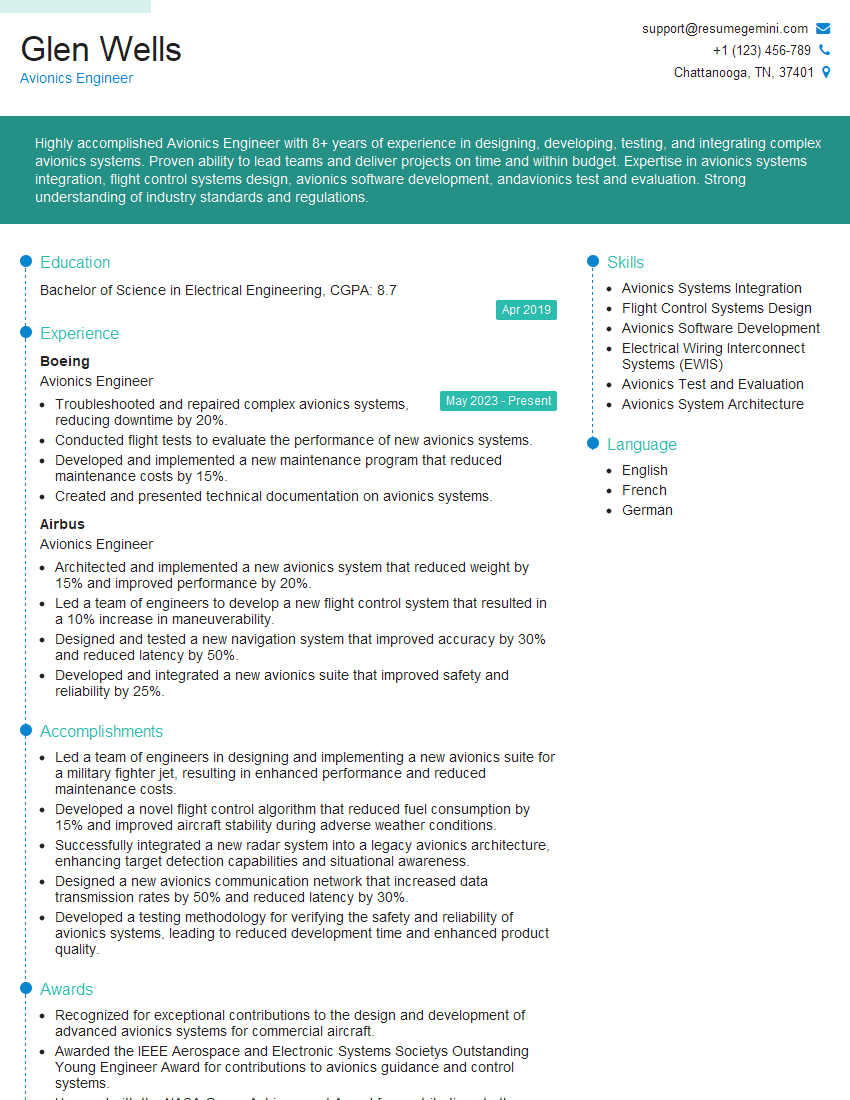
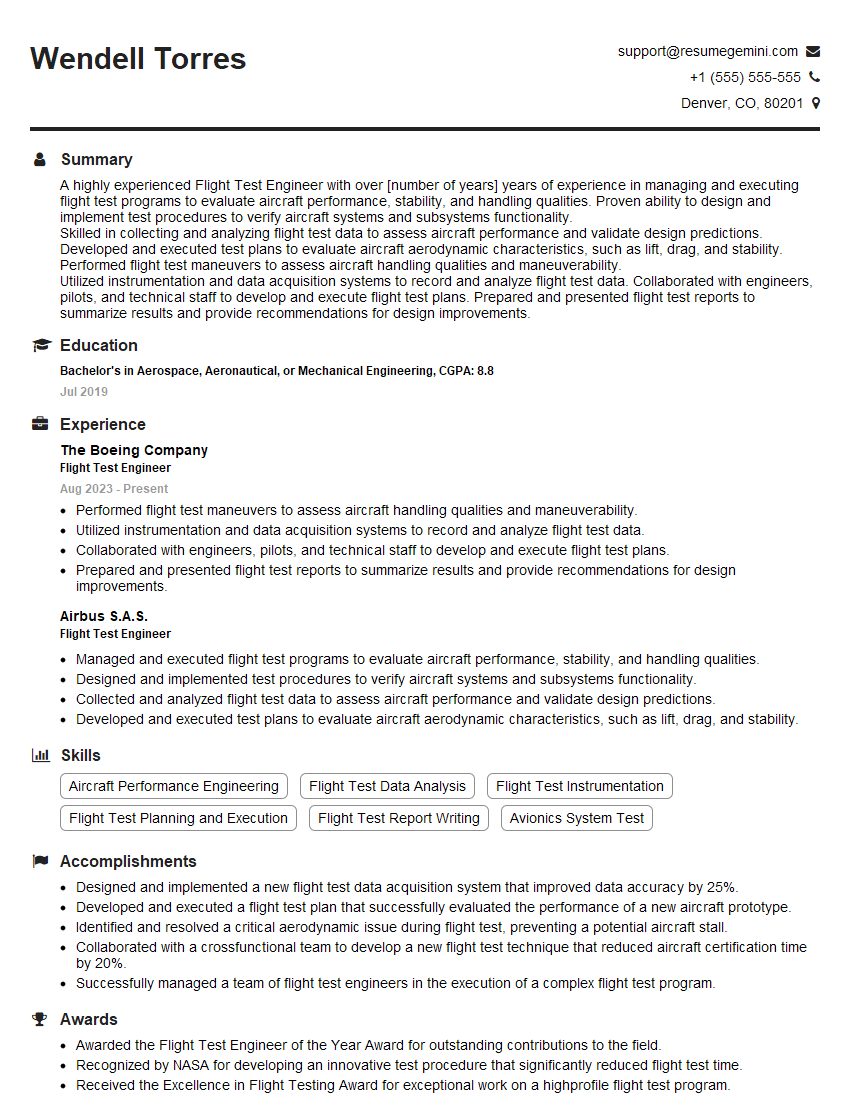
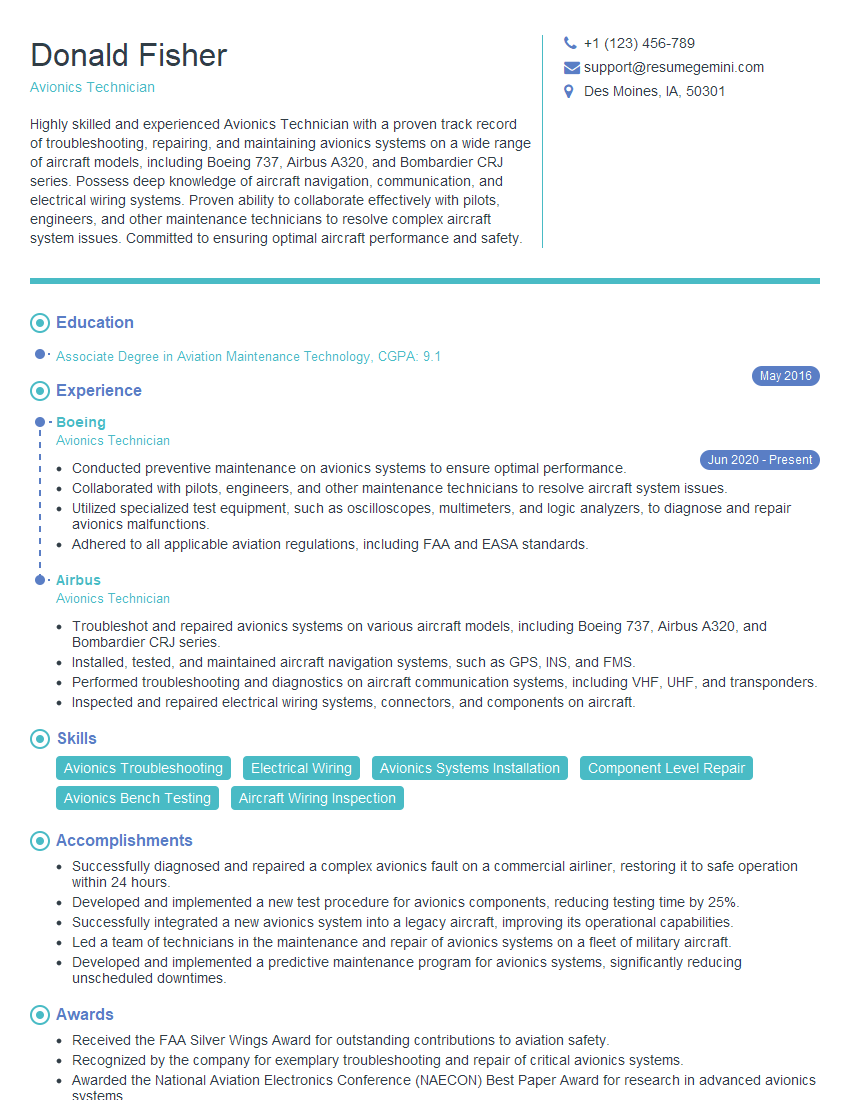
Mastering Aircraft Instrumentation and Control Systems is crucial for a successful and rewarding career in the aerospace industry. A strong understanding of these systems opens doors to exciting opportunities and positions you for advancement. To maximize your job prospects, it’s essential to present your skills and experience effectively. Creating an ATS-friendly resume is key to ensuring your application gets noticed by recruiters. ResumeGemini is a trusted resource that can help you build a professional and impactful resume that highlights your expertise in Aircraft Instrumentation and Control Systems. We provide examples of resumes tailored to this specific field to help guide you. Take the next step towards your dream career – build a resume that gets you noticed.
Explore more articles
Users Rating of Our Blogs
Share Your Experience
We value your feedback! Please rate our content and share your thoughts (optional).
What Readers Say About Our Blog
Really detailed insights and content, thank you for writing this detailed article.
IT gave me an insight and words to use and be able to think of examples