Interviews are more than just a Q&A session—they’re a chance to prove your worth. This blog dives into essential Aluminum Sheet Metal Working interview questions and expert tips to help you align your answers with what hiring managers are looking for. Start preparing to shine!
Questions Asked in Aluminum Sheet Metal Working Interview
Q 1. Explain the different types of aluminum alloys used in sheet metal work.
Aluminum alloys used in sheet metal work are categorized based on their properties, primarily strength, formability, and corrosion resistance. The most common alloy families include:
- 5000 series (Magnesium Alloys): Known for their excellent formability and moderate strength. 5052 is a popular choice for applications requiring high corrosion resistance, like marine environments. I’ve used 5052 extensively in projects involving chemical processing equipment where corrosion is a major concern.
- 6000 series (Magnesium and Silicon Alloys): Offer a good balance of strength, weldability, and formability. 6061 is a workhorse alloy, highly versatile and used in a broad range of applications from automotive parts to aerospace components. I’ve frequently utilized 6061 in projects requiring intricate bends and welds, such as custom enclosures.
- 3000 series (Manganese Alloys): These alloys are known for their high strength and good corrosion resistance, though they are less formable than 5000 series alloys. 3003 is often used in applications requiring strength and durability, such as truck bodies or heavy-duty shelving.
- 1000 series (Pure Aluminum): These are commercially pure aluminum alloys, offering excellent corrosion resistance and good formability but relatively low strength. They’re often used for decorative purposes or where high purity is needed.
The selection of the appropriate alloy depends heavily on the specific requirements of the project, taking into account factors such as the required strength, formability, corrosion resistance, weldability, and cost.
Q 2. Describe your experience with various sheet metal forming processes (e.g., bending, punching, shearing).
My experience encompasses a wide range of sheet metal forming processes. I’m proficient in:
- Bending: I’ve used press brakes of various sizes and tonnages to form intricate bends in aluminum sheets, utilizing different die configurations to achieve specific bend radii and angles. Accurate bend allowance calculations are crucial, and I have a strong understanding of springback compensation. For instance, a recent project involved bending a complex array of channels for a custom aircraft interior, requiring precise control of the bending process to maintain tolerances.
- Punching: I’m experienced in operating punch presses to create holes of various shapes and sizes in aluminum sheets. Proper die selection and adjustment are crucial to prevent tearing or deformation of the material. I’ve used this process repeatedly in creating custom panels with intricate cutouts, including ventilation slots and mounting holes.
- Shearing: I’m skilled in using shears, both mechanical and hydraulic, to cut aluminum sheets to precise dimensions. Proper blade alignment and shearing speed are crucial to produce clean, burr-free edges. This is vital for ensuring consistent quality in assembly. I recently managed a project where we used a CNC shear to cut hundreds of identical parts for a large-scale manufacturing order, emphasizing the importance of precision and efficiency.
My experience includes both manual and automated processes, enabling me to adapt to different production scales and project requirements.
Q 3. How do you determine the appropriate gauge of aluminum sheet for a specific application?
The appropriate gauge of aluminum sheet is determined by several factors:
- Required Strength: Thicker gauges (lower numbers) provide greater strength and stiffness. For instance, a structural component would need a thicker gauge than a decorative panel.
- Formability: Thinner gauges (higher numbers) are easier to form, bend, and punch, but they are more prone to damage during the process.
- Application Requirements: The intended application dictates the necessary strength, stiffness, and resistance to wear and tear. For instance, an automotive body panel requires significantly different gauge thickness compared to the skin of an airplane.
- Cost: Thicker gauges are generally more expensive. Balancing cost with performance is often a critical factor.
I typically use engineering handbooks and software to determine the appropriate gauge based on the specific application parameters. Detailed stress analysis might be required for complex components. For example, in designing a load-bearing component, finite element analysis (FEA) might be needed to ensure the chosen gauge adequately withstands the expected loads.
Q 4. What safety precautions are essential when working with aluminum sheet metal?
Safety is paramount when working with aluminum sheet metal. Essential precautions include:
- Eye Protection: Always wear safety glasses or a face shield to protect against flying debris during cutting, punching, or grinding.
- Hearing Protection: Loud machinery like shears and press brakes necessitate hearing protection to prevent noise-induced hearing loss.
- Hand Protection: Wear gloves to protect hands from cuts, abrasions, and sharp edges.
- Respiratory Protection: When working with certain processes such as welding or grinding, respiratory protection like a respirator is essential to prevent inhalation of harmful fumes or dust.
- Proper Clothing: Avoid loose clothing that could get caught in machinery. Close-toed shoes are mandatory.
- Machine Safeguards: Ensure all machinery is equipped with appropriate guards and safety interlocks to prevent accidental injury.
- Material Handling: Use proper lifting techniques to avoid back injuries, especially when handling large sheets of aluminum.
Regular safety training and adherence to established safety protocols are crucial to minimize risks in the workplace.
Q 5. Explain your experience with different types of welding techniques for aluminum.
My experience with aluminum welding encompasses several techniques:
- Gas Tungsten Arc Welding (GTAW or TIG): This method is widely used for high-quality, precision welds in aluminum. It provides excellent control over the weld bead, producing clean and aesthetically pleasing welds. I’ve extensively utilized TIG welding for projects requiring strong, leak-proof joints, such as in aerospace and chemical processing applications. Proper filler metal selection and precise control of the welding parameters are essential for success.
- Gas Metal Arc Welding (GMAW or MIG): GMAW is a faster method suitable for higher-volume production. It’s less precise than TIG welding but still capable of producing strong welds. Pulse MIG is particularly useful for thin aluminum sheets to minimize heat input and prevent warping. I’ve used this method in the production of automotive parts.
- Resistance Spot Welding: This is a common method for joining overlapping aluminum sheets, particularly in automotive body manufacturing. It’s a fast and efficient process suitable for mass production. However, it requires specialized equipment and careful planning to ensure consistent weld quality.
Proper surface preparation, including cleaning and degreasing, is critical for success with all aluminum welding techniques. The selection of the appropriate welding technique depends on factors such as the thickness of the aluminum sheet, the desired weld quality, and the production volume.
Q 6. How do you ensure the accuracy and precision of your sheet metal work?
Ensuring accuracy and precision in sheet metal work involves a multi-faceted approach:
- Precise Measurement and Layout: I use accurate measuring tools, such as calipers, micrometers, and rulers, to ensure the components are precisely dimensioned. Proper layout techniques using templates and marking tools are crucial for accurate cutting and bending.
- Proper Tooling and Equipment: Using well-maintained and calibrated tools, such as press brakes with accurate back gauges and shears with sharp blades, is essential for precise forming and cutting. Regular maintenance and calibration are critical.
- Quality Control Procedures: Regular inspection and quality control measures, including dimensional checks at various stages of the process, are vital for detecting and correcting errors early on. This might include using CMM (Coordinate Measuring Machines) for high precision applications.
- Process Optimization: Continuous improvement and optimization of the fabrication processes minimize variations and increase consistency in the final product. Techniques like Statistical Process Control (SPC) are valuable in this regard.
- Workmanship and Skill: Experienced and skilled technicians contribute to achieving high-quality results. Understanding material properties and process limitations is key.
A combination of careful planning, proper tooling, and meticulous execution ensures the accuracy and precision of the final product.
Q 7. Describe your experience with CAD/CAM software in the context of sheet metal fabrication.
I have extensive experience using CAD/CAM software for sheet metal fabrication. My expertise encompasses software such as AutoCAD, SolidWorks, and other industry-standard programs. I’m proficient in:
- 3D Modeling: Creating accurate 3D models of sheet metal components, incorporating features like bends, flanges, and cutouts. This allows for detailed visualization and analysis before fabrication.
- Flat Pattern Development: Generating flat patterns from 3D models, accounting for bend allowances and material thicknesses. This is crucial for efficient nesting and material utilization.
- CNC Programming: Generating CNC code for automated machining processes, including punching, shearing, and bending. This ensures precision and repeatability in manufacturing.
- Simulation and Analysis: Utilizing software capabilities to simulate the forming process and predict potential problems such as springback or wrinkling. This helps to optimize the design and process parameters before actual fabrication.
My skills in CAD/CAM enable me to efficiently design, develop, and manufacture complex sheet metal components, ensuring accuracy, efficiency, and cost-effectiveness. For example, using SolidWorks and a CAM module to generate the code for a CNC punch press allows for the precise creation of hundreds of identical parts with minimal human intervention, increasing speed and precision.
Q 8. How do you interpret and follow technical drawings and blueprints?
Interpreting technical drawings and blueprints for aluminum sheet metal work requires a keen eye for detail and a solid understanding of engineering conventions. I start by carefully reviewing the title block to understand the project’s scope, scale, and revision history. Then, I systematically analyze each view – orthographic projections (top, front, side), isometric views, and detailed sections – to understand the part’s geometry, dimensions, and tolerances. I pay close attention to annotation, including dimensions (linear, angular, radial), material specifications (aluminum alloy, thickness), surface finish requirements, and any special notes or callouts. For example, a note specifying a ‘radius’ at a corner dictates how that corner needs to be formed during the fabrication process. I utilize precision measuring instruments, like calipers and micrometers, to verify dimensions throughout the fabrication process, ensuring adherence to the blueprint specifications. If any ambiguity exists, I always consult with the engineering team for clarification before proceeding.
Understanding symbols is critical. For example, a symbol indicating a bend will denote the bend radius and the bend angle. I then use this information to program the CNC press brake, ensuring the accurate forming of the part. Furthermore, understanding the material specification is crucial. Different aluminum alloys exhibit different machinability and formability characteristics, influencing the choice of tools and processes.
Q 9. What are the common challenges encountered in aluminum sheet metal fabrication?
Aluminum sheet metal fabrication presents unique challenges. One major hurdle is work hardening. Aluminum alloys, while relatively soft, can harden during forming operations, making subsequent processes more difficult and potentially leading to cracking. This requires careful control of forming parameters, including the use of appropriate lubricants and intermediate annealing steps to relieve stress. Another challenge is springback, where the material returns to its original shape after being formed. This necessitates precise calculations and adjustments to compensate for springback during the design and manufacturing process.
Surface imperfections, like scratches and dents, are easily visible on aluminum and can affect the final product’s aesthetics and functionality. Therefore, careful handling and meticulous attention to detail throughout the manufacturing process are essential. Additionally, controlling the heat during welding or other heat-treating processes is vital as it can impact the material’s strength and structure. Finally, the selection of proper tooling is critical to avoid damaging the relatively soft aluminum sheet, especially during cutting and punching operations.
Q 10. How do you troubleshoot problems during the fabrication process?
Troubleshooting in aluminum sheet metal fabrication often involves a systematic approach. I first identify the problem precisely – is it a dimensional inaccuracy, a surface defect, or a structural failure? Then, I trace back the process to pinpoint the source. For example, inconsistent bends might point towards a problem with the press brake’s programming or tooling, while a surface scratch could indicate a handling issue. I rely heavily on visual inspection, but I also employ precision measuring tools like calipers and coordinate measuring machines (CMMs) to quantify deviations from specifications.
Once the root cause is identified, I address it accordingly. This could involve adjusting machine parameters, replacing worn tooling, refining the process sequence, or even reverting to a previous successful iteration of the process. Documentation is key; I maintain detailed records of each step, allowing me to track progress and identify recurring issues effectively. If the issue is complex, I always consult with experienced colleagues or manufacturers for further input.
Q 11. Explain your experience with different types of sheet metal finishing techniques.
My experience encompasses a range of sheet metal finishing techniques, each serving a specific purpose. Powder coating provides a durable, aesthetically pleasing, and protective finish, excellent for outdoor applications. Anodizing creates a hard, corrosion-resistant surface layer, enhancing durability and providing various color options. Electroplating allows for metallic finishes like chrome or nickel, improving aesthetics and wear resistance. Painting offers a cost-effective way to achieve a wide array of colors and textures. Finally, I’m also familiar with brushing and polishing, which enhance the natural beauty of aluminum by creating a smooth, reflective surface. The choice of finishing technique depends on factors such as the application, required durability, and aesthetic preferences.
Q 12. Describe your experience with CNC machining of aluminum.
I have extensive experience with CNC machining of aluminum, utilizing both milling and routing processes. I’m proficient in programming CNC machines using CAM software such as Mastercam or Fusion 360, generating toolpaths from 3D CAD models. This allows for precise and repeatable machining of complex shapes and features in aluminum sheet. My expertise includes selecting appropriate cutting tools and parameters based on the aluminum alloy and desired surface finish. For example, I understand the need for higher spindle speeds and lower feed rates for thinner aluminum sheets to prevent tear-out, while thicker sheets might require more aggressive cutting strategies.
I’m also experienced in optimizing CNC programs for efficiency, minimizing machining time, and maximizing tool life. This involves considering factors like toolpath strategy, cutting depth, and coolant usage. My experience also covers post-processing operations, such as deburring and surface finishing, to ensure a high-quality end product. For example, I will adapt the cutting strategy based on the type of feature being machined. A pocket will have a different toolpath strategy than a profile cut.
Q 13. How do you ensure the quality of your work meets industry standards?
Quality assurance is paramount in my work. I meticulously adhere to industry standards and customer specifications throughout the fabrication process. This starts with verifying material quality upon arrival, checking for proper alloy composition and surface condition. I employ regular inspections at each stage of manufacturing, using measuring tools to verify dimensions and surface finishes. Additionally, I implement statistical process control (SPC) techniques to monitor process parameters and identify potential variations before they lead to defects.
For example, I frequently check the tolerances of my parts using calibrated measuring equipment and compare them to the blueprint specifications. In addition to dimensional control, I’m always mindful of the surface finish requirements, ensuring it meets the standards defined in the blueprint. Finally, random sample testing for strength and corrosion resistance may also be conducted depending on the specifications and importance of the project.
Q 14. What are your experiences with different types of aluminum sheet metal joining methods?
My experience includes various aluminum sheet metal joining methods, each suited to different applications. Welding, such as TIG (Tungsten Inert Gas) or MIG (Metal Inert Gas), provides strong, permanent joints but requires careful control to avoid warping or melting the aluminum. Riveting is a simple and effective method for joining thinner sheets, often used in aerospace applications. Bolting and screwing are versatile options, allowing for easy disassembly and maintenance. Adhesives offer a strong, lightweight, and cost-effective solution for certain applications, particularly when aesthetics are crucial.
Finally, mechanical fastening techniques, such as clinching or self-piercing riveting, provide robust and efficient methods for joining sheet metal, especially in high-volume production environments. The choice of joining method depends on factors like the desired strength, the complexity of the joint, and the cost-effectiveness of each approach.
Q 15. How do you handle material waste reduction in your work?
Material waste reduction is paramount in aluminum sheet metal working, both for economic and environmental reasons. We employ several strategies to minimize waste. Firstly, nesting software is crucial. This software optimizes the placement of parts on the sheet to minimize material usage. Think of it like a sophisticated jigsaw puzzle solver, ensuring minimal leftover scraps. Secondly, we meticulously plan our projects. This includes carefully reviewing designs and choosing the most efficient cutting methods. For example, we might opt for laser cutting for intricate shapes where waterjet cutting would generate more waste. Thirdly, we diligently track and analyze our waste. Regular monitoring helps us identify areas for improvement and refine our processes. We might discover, for instance, that a particular part’s design could be tweaked to fit better within the sheet, reducing scrap. Lastly, we actively explore opportunities to repurpose scrap. Smaller pieces might be used for smaller projects or even sold to other metalworking facilities.
Career Expert Tips:
- Ace those interviews! Prepare effectively by reviewing the Top 50 Most Common Interview Questions on ResumeGemini.
- Navigate your job search with confidence! Explore a wide range of Career Tips on ResumeGemini. Learn about common challenges and recommendations to overcome them.
- Craft the perfect resume! Master the Art of Resume Writing with ResumeGemini’s guide. Showcase your unique qualifications and achievements effectively.
- Don’t miss out on holiday savings! Build your dream resume with ResumeGemini’s ATS optimized templates.
Q 16. Describe your experience with different types of presses used in sheet metal fabrication.
My experience encompasses a wide range of presses, each suited to different tasks. I’ve worked extensively with mechanical presses, which use a crank or eccentric to generate force. These are reliable for high-volume production of simpler parts. I’m also proficient with hydraulic presses, which offer greater flexibility in terms of force and stroke length, ideal for more complex forming operations and larger parts. Furthermore, I’ve utilized pneumatic presses for lighter-duty applications. For example, a pneumatic press might be suitable for shallow embossing or light stamping. Choosing the right press is essential; selecting a press with insufficient tonnage can lead to part failure, while an overly powerful press can damage delicate tooling. My experience ensures I choose the right tool for the job, enhancing efficiency and quality.
Q 17. How do you measure and inspect the dimensions of fabricated parts?
Accurate dimensional inspection is critical. We employ a combination of methods. Vernier calipers and micrometers are used for precise measurements of linear dimensions. For more complex shapes, we utilize coordinate measuring machines (CMMs). These provide highly accurate, three-dimensional measurements and are invaluable for checking intricate features. Beyond basic dimensions, we also check for surface flatness using straight edges and surface plates. Further, visual inspection plays a crucial role, particularly in identifying surface imperfections or any signs of damage. Proper documentation of all measurements is vital, ensuring traceability throughout the manufacturing process. If deviations are detected, we immediately investigate the root cause and implement corrective actions to prevent future recurrence.
Q 18. What are your experiences with various types of tooling used in sheet metal fabrication?
My experience with tooling is extensive, ranging from simple to highly specialized tools. For cutting, we use punches and dies for simple shapes, laser cutting heads for intricate designs, and waterjet cutting nozzles for thicker materials or those requiring fine details. For forming, we employ a variety of bending dies and embossing dies tailored to specific part geometries. We also utilize specialized tools for specific applications like draw dies for deep drawing processes. Tool maintenance is paramount; regular sharpening, cleaning, and inspection prevent damage and ensure consistent, high-quality results. A well-maintained toolset directly translates into improved part quality and reduced downtime.
Q 19. Explain your knowledge of different types of aluminum sheet metal finishes.
Aluminum sheet metal boasts a variety of finishes, each impacting its appearance and properties. Mill finish is the standard, as-rolled surface. Anodizing provides a hard, corrosion-resistant coating with various color options. Powder coating offers excellent durability and a wide range of colors and textures. Painting offers another versatile approach, allowing for customized colors and designs. Electro-polishing produces a highly reflective, smooth finish, ideal for aesthetic applications. The choice of finish depends heavily on the application’s demands. For example, anodizing might be preferred for outdoor applications requiring corrosion resistance, while a powder coat is suitable for applications demanding high durability. We ensure that the selected finish complements the functional requirements and aesthetic expectations of the final product.
Q 20. How do you maintain and clean your equipment?
Equipment maintenance is an integral part of our workflow. We follow rigorous cleaning procedures after each use. Presses, for example, require thorough cleaning of tooling and working surfaces to remove any aluminum shavings or debris. This prevents damage to equipment and maintains product quality. Regular lubrication of moving parts is also crucial to ensure smooth operation and prolong the lifespan of the equipment. We implement a preventative maintenance schedule that involves regular inspections and servicing. This schedule includes checks for wear and tear, adjustments, and potential replacements of parts. For example, laser cutting heads need periodic alignment and nozzle cleaning. A well-maintained machine translates into higher productivity, longer lifespan, and ultimately, a higher quality product. Proper documentation of maintenance tasks is vital for tracking performance and identifying potential issues.
Q 21. Describe your experience with different types of sheet metal cutting techniques.
Sheet metal cutting techniques vary based on material thickness and desired accuracy. Shearing is a common method for straight cuts, using a guillotine shear. Punching is ideal for creating holes or simple shapes using a punch press. Laser cutting offers high precision and intricate designs, particularly suited for thin materials. Waterjet cutting is suitable for thicker materials and various metals, providing high accuracy and minimal heat-affected zones. Plasma cutting is effective for thicker materials but requires more powerful equipment. The selection of a cutting technique is not simply about cutting the material; factors like edge quality, speed, material waste, and cost-effectiveness are equally vital. The choice depends on factors like material thickness, required precision, and the overall project’s budget. Choosing the right method directly affects efficiency and end-product quality.
Q 22. Explain your knowledge of different types of sheet metal bending techniques.
Sheet metal bending is a crucial process in aluminum fabrication, and several techniques exist, each suited for different situations and material thicknesses. The choice depends on factors like the desired bend radius, material properties, and production volume.
- Air Bending: This is the most common method. A punch pushes the sheet metal against a die, causing it to bend. The angle is controlled by the punch and die geometry. It’s simple, relatively inexpensive, and produces consistent bends for thinner materials. Think of it like folding a piece of paper – you press it against a surface to create the fold.
- Bottom Bending: The punch presses the sheet metal against the bottom of the die, creating a sharper bend with a tighter radius. This is often used for thicker materials or when a very precise bend is needed. This technique is comparable to using a ruler to create a crisp fold.
- Coining: This method involves using a very precise punch and die to create a highly accurate and detailed bend with a very small radius. It’s used for intricate parts and features requiring tight tolerances. Think of it like stamping a design into metal, but the design includes a bend.
- V-bending: The sheet metal is bent in a ‘V’ shaped die, creating a sharper, more defined bend than air bending. This is good for thicker materials where a more robust bend is necessary. This is similar to folding a thicker piece of cardboard along a pre-creased line.
- Roll Bending: Instead of a single bend, roll bending uses rollers to gradually bend the sheet metal along its length, creating a curve. This is ideal for forming large radius bends and cylindrical shapes. Imagine bending a long, flexible metal strip around a cylinder.
Choosing the right bending technique is paramount for achieving the desired quality and precision.
Q 23. How do you calculate material costs for a project?
Calculating material costs for a sheet metal project requires a methodical approach. It goes beyond simply multiplying the sheet’s area by its price per unit. Several factors need to be considered:
- Material cost per unit area: This is the base price of the aluminum sheet, usually expressed as $/sq ft or $/sq m. The type of aluminum alloy significantly impacts this price, with higher-strength alloys costing more.
- Sheet size and waste: Sheet metal is usually purchased in standard sizes. You need to account for the material that’s wasted during cutting and bending. The amount of waste depends on the design’s complexity and nesting efficiency (optimizing the layout of parts on the sheet to minimize scrap).
- Cutting and bending allowances: You should account for additional material consumed during cutting and bending operations. These allowances are needed to prevent tearing or cracking of the material.
- Finishing processes: Costs for surface treatments such as powder coating, anodizing, or painting should be added. These finishing techniques enhance the product’s appearance and durability.
- Transportation and handling: Include the costs of transporting the materials to the fabrication facility and any handling charges.
For example: If aluminum costs $2/sq ft, you need 10 sq ft for your parts, and you anticipate 20% waste, your material cost would be: (10 sq ft / (1-0.20)) * $2/sq ft = $25. This calculation then needs to have finishing costs and handling costs added.
Q 24. Describe your experience with quality control procedures in sheet metal fabrication.
Quality control is an absolute necessity in sheet metal fabrication. My experience involves implementing and maintaining rigorous procedures throughout the process:
- Incoming material inspection: Checking the aluminum sheets for surface defects, dimensions, and compliance with specifications.
- Process monitoring: Regularly checking the machine settings, tooling, and bending parameters to ensure consistency. This often involves using measuring instruments and gauges to verify the accuracy of bends and cuts.
- Dimensional inspection: Using tools such as calipers, micrometers, and coordinate measuring machines (CMMs) to measure the final product’s dimensions and tolerances.
- Visual inspection: Checking for surface imperfections, scratches, dents, or any signs of damage. This is often done at multiple stages of the process.
- Statistical Process Control (SPC): Employing SPC techniques to track and analyze process variations, helping to identify and correct potential problems proactively.
- Documentation: Maintaining detailed records of all inspections, measurements, and corrective actions.
For instance, I once noticed a recurring pattern of slightly off-angle bends. By analyzing the data from our SPC charts, we identified a problem with the die’s alignment, leading to a timely fix and preventing a batch of defective products.
Q 25. How do you work effectively as part of a team?
Effective teamwork is fundamental in a sheet metal fabrication environment. My approach involves:
- Clear communication: Openly communicating project requirements, progress updates, and any potential challenges to team members. I prioritize active listening and seeking clarification when needed.
- Collaboration: Actively collaborating with designers, engineers, and other technicians to ensure a smooth workflow and to leverage everyone’s expertise.
- Respectful interaction: Treating all team members with respect, valuing their input and contributions. Constructive feedback is vital to improve our collective performance.
- Problem-solving: Working collaboratively to find solutions for obstacles and challenges. I encourage brainstorming sessions to explore different approaches.
- Shared responsibility: Understanding that teamwork is about collective responsibility for achieving project goals. I am always willing to help others and share my knowledge.
A recent example is when a complex project required us to redesign a component due to unforeseen difficulties. Through open communication and collaborative problem-solving, we found a workable alternative, meeting the deadline while maintaining quality.
Q 26. Explain your understanding of work safety regulations related to sheet metal fabrication.
Work safety is paramount in sheet metal fabrication. My understanding of regulations encompasses:
- Personal Protective Equipment (PPE): Consistent use of safety glasses, hearing protection, gloves, and steel-toe shoes is essential. Specific PPE needs depend on the task and machinery used.
- Machine guarding: Ensuring all machinery is properly guarded to prevent accidental contact with moving parts. Regular machine inspections are crucial.
- Lockout/Tagout procedures: Following established procedures to lock out and tag out machinery before performing maintenance or repairs, preventing accidental start-ups.
- Material handling safety: Using proper lifting techniques, equipment, and procedures to prevent injuries related to handling sheet metal and other heavy materials.
- Housekeeping: Maintaining a clean and organized workspace to minimize tripping hazards and prevent accidents.
- Emergency procedures: Understanding and following emergency procedures in case of accidents or equipment malfunctions. This includes knowledge of first aid and emergency contact information.
Compliance with OSHA (or equivalent) regulations is fundamental to our safety protocols. Regular safety training and awareness programs reinforce safe working practices.
Q 27. How do you adapt to changing project requirements and deadlines?
Adaptability is critical in this industry, as project requirements and deadlines frequently change. My approach includes:
- Flexible planning: Developing flexible plans that can accommodate unforeseen changes or delays.
- Prioritization: Identifying and prioritizing tasks based on their urgency and impact on project goals.
- Communication: Keeping stakeholders informed about any changes and their potential impact.
- Problem-solving: Quickly identifying and addressing problems that may impede progress.
- Resource allocation: Effectively allocating resources to handle changes and meet new deadlines.
Once, a client requested a significant design change midway through a project, which impacted our initial timeline. By prioritizing tasks, communicating clearly with the client and the team, and adjusting resource allocation, we successfully completed the project with minimal delay.
Q 28. Describe a time you had to solve a challenging problem during sheet metal fabrication.
I encountered a challenging problem during the fabrication of a complex enclosure with numerous tight-tolerance bends and cutouts. The initial bending sequence resulted in significant distortion, rendering many parts unusable.
To solve this, I followed these steps:
- Problem analysis: I thoroughly analyzed the design and the bending sequence, identifying potential areas contributing to the distortion. This involved reviewing the material properties, bending radius, and the order of operations.
- Alternative methods: I explored different bending techniques, such as changing the order of bends or employing a different die set. I also investigated the use of springback compensation techniques to account for the metal’s elasticity.
- Prototyping: I created prototypes using different bending strategies and material to test the effectiveness of the different solutions.
- Simulation: I utilized finite element analysis (FEA) software to simulate the bending process and predict the potential for distortion. This allowed for virtual testing of different bending sequences before committing to any physical changes.
- Implementation and verification: Based on the simulation results and prototype testing, I adjusted the bending sequence and tooling. I carefully monitored the process and verified the dimensional accuracy of the final parts.
By systematically analyzing the problem and employing a range of problem-solving techniques, including simulation and prototyping, we successfully addressed the distortion issue and completed the project to the client’s specifications.
Key Topics to Learn for Your Aluminum Sheet Metal Working Interview
- Material Properties: Understanding the characteristics of different aluminum alloys (e.g., strength, workability, corrosion resistance) and their suitability for specific applications.
- Sheet Metal Forming Processes: Familiarity with various forming techniques such as bending, drawing, stamping, and spinning, including their limitations and advantages.
- Tooling and Equipment: Knowledge of common tools and machinery used in aluminum sheet metal working, including presses, shears, brakes, and welding equipment. Understanding their operation and maintenance is crucial.
- Design and Engineering Principles: Ability to interpret blueprints, technical drawings, and specifications. Understanding tolerances, dimensions, and material allowances.
- Fabrication Techniques: Practical experience with joining methods such as welding (MIG, TIG, spot welding), riveting, and adhesive bonding. Understanding the strengths and weaknesses of each method.
- Quality Control and Inspection: Knowledge of quality control procedures, inspection techniques, and common quality issues in aluminum sheet metal fabrication. Experience with quality control documentation is beneficial.
- Safety Procedures: Understanding and adhering to safety regulations and best practices in the workshop environment. This is paramount for any successful applicant.
- Problem-Solving and Troubleshooting: Ability to identify and resolve issues related to material defects, process inefficiencies, and equipment malfunctions. Practical experience is highly valued.
- Lean Manufacturing Principles (Optional): Familiarity with lean manufacturing principles, such as waste reduction and process optimization, is a significant advantage for many employers.
Next Steps
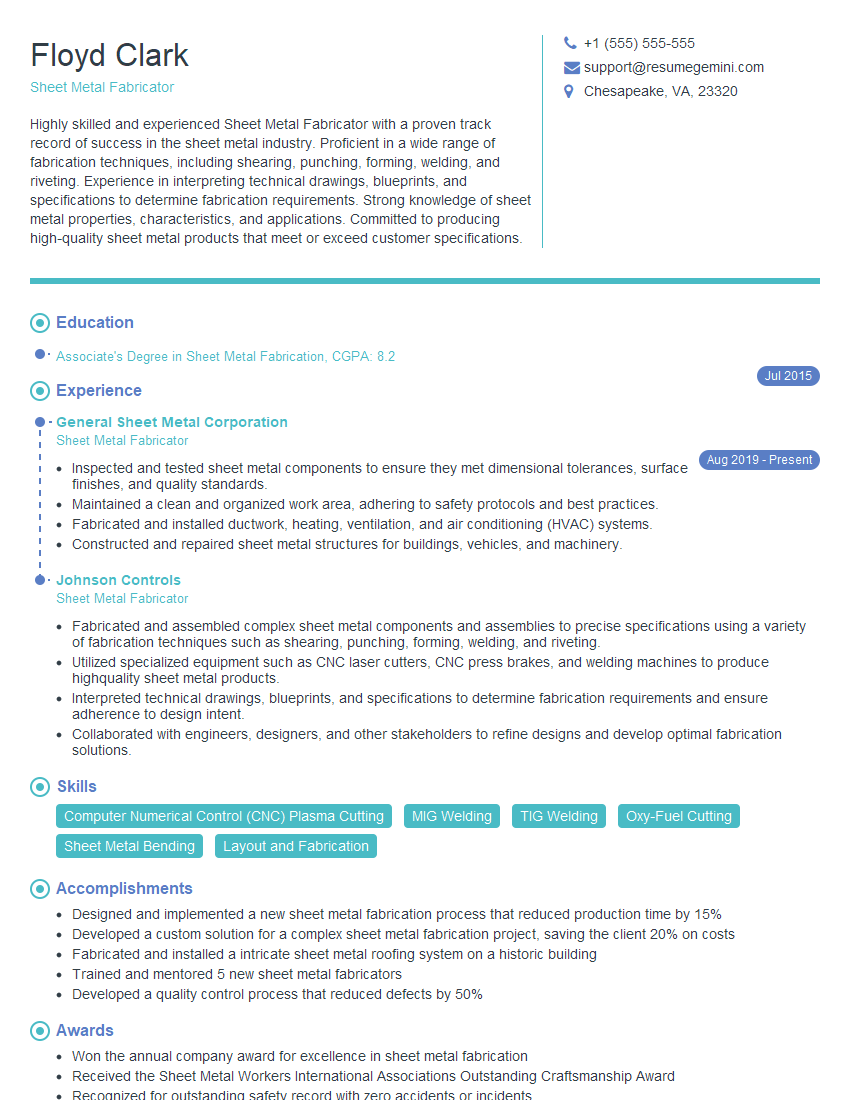
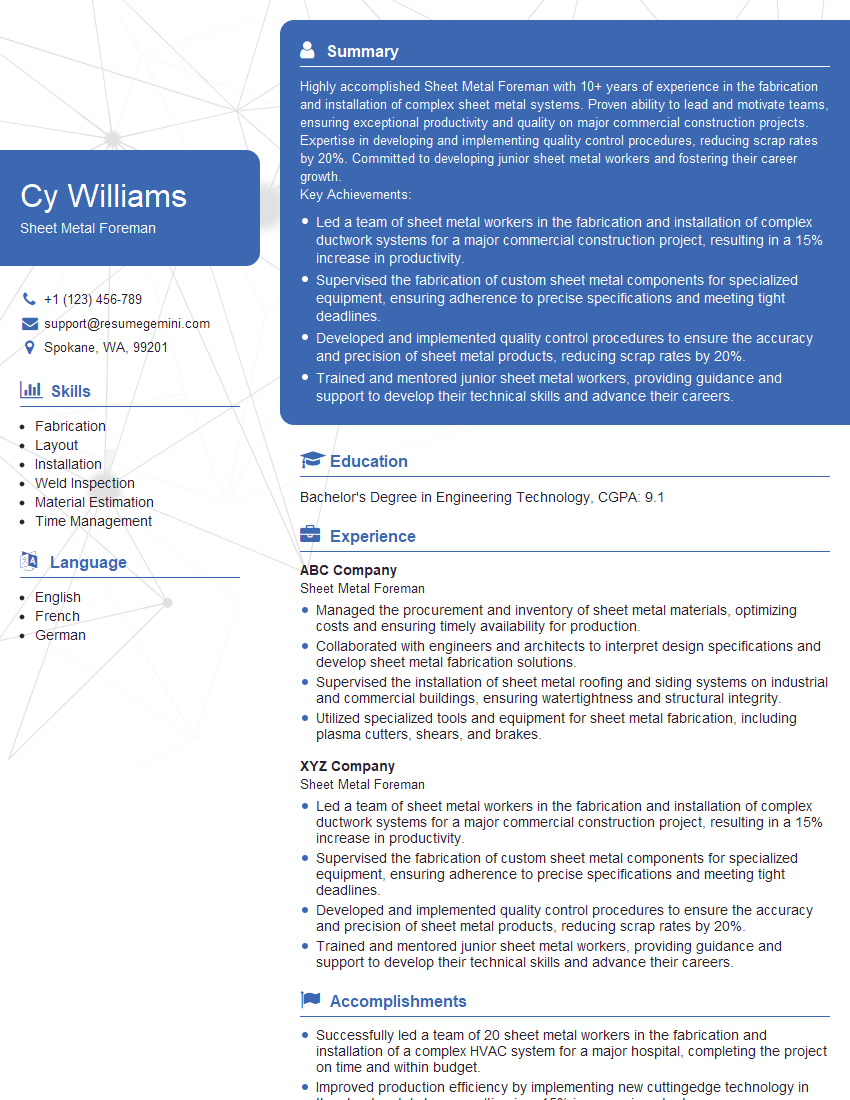
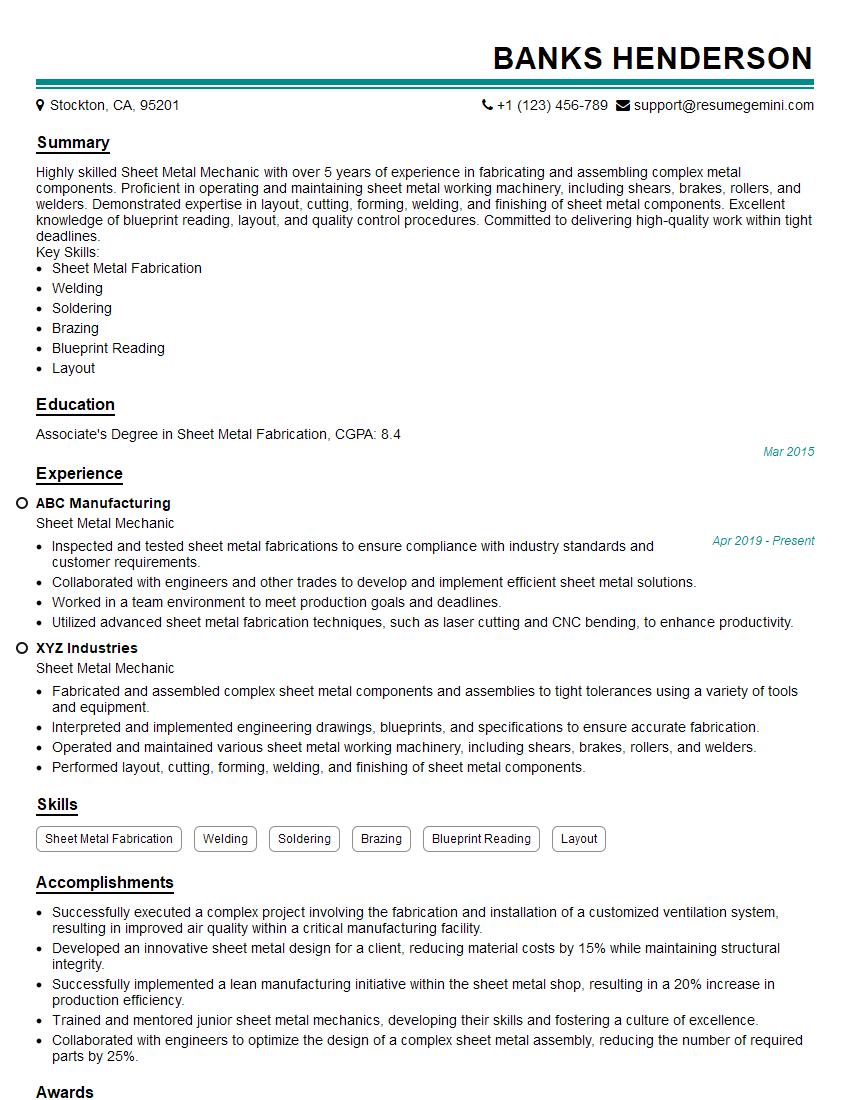
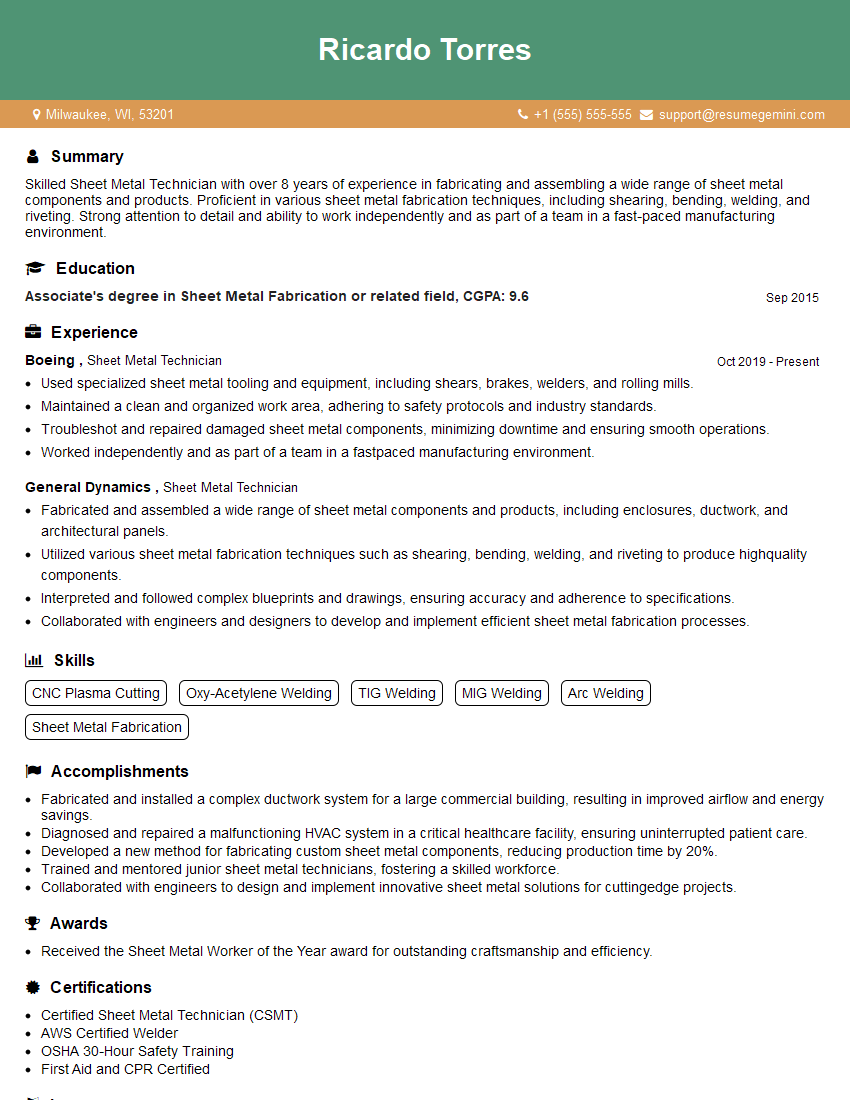
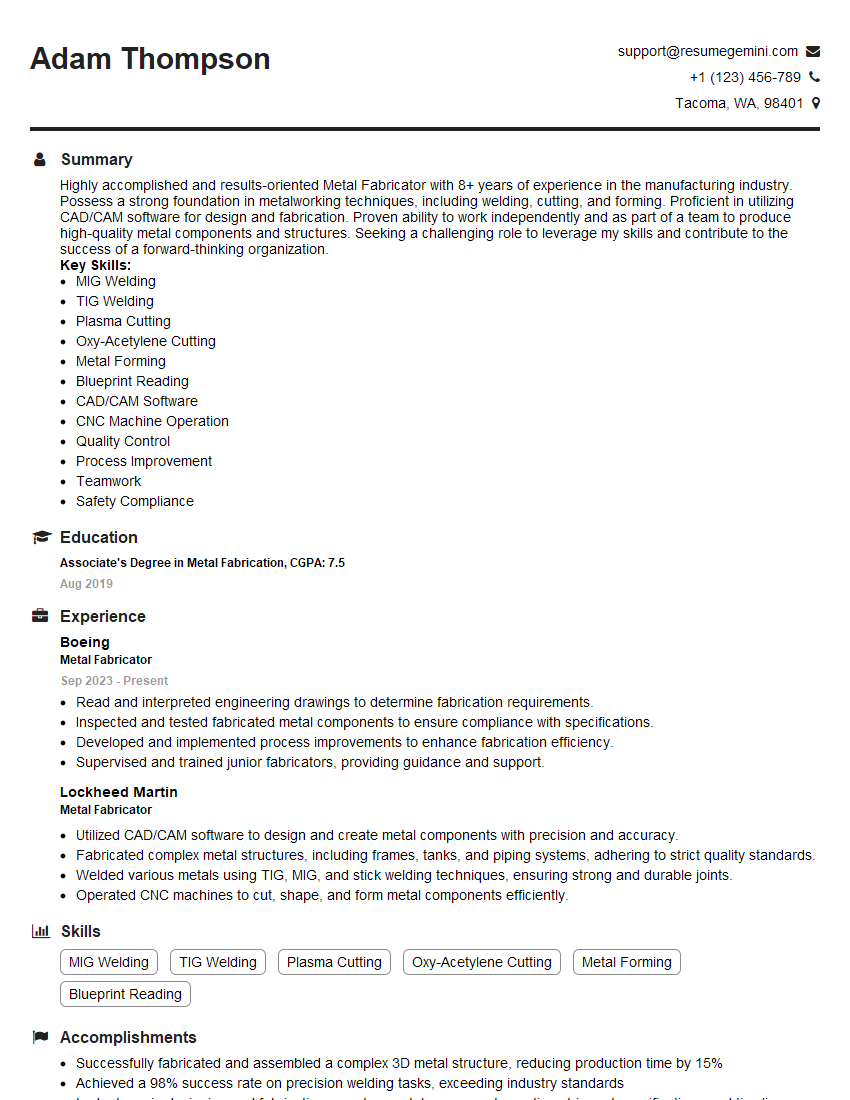
Mastering aluminum sheet metal working opens doors to diverse and rewarding career opportunities, offering potential for advancement and specialization. To significantly increase your chances of landing your dream job, crafting an ATS-friendly resume is paramount. A well-structured resume that highlights your skills and experience will help you stand out from the competition. We highly recommend using ResumeGemini, a trusted resource, to build a professional and effective resume tailored to the aluminum sheet metal working industry. ResumeGemini offers examples of resumes specifically designed for this field, providing you with a head start in creating a compelling application.
Explore more articles
Users Rating of Our Blogs
Share Your Experience
We value your feedback! Please rate our content and share your thoughts (optional).
What Readers Say About Our Blog
Really detailed insights and content, thank you for writing this detailed article.
IT gave me an insight and words to use and be able to think of examples