Cracking a skill-specific interview, like one for Archiving and Preserving Musical Materials, requires understanding the nuances of the role. In this blog, we present the questions you’re most likely to encounter, along with insights into how to answer them effectively. Let’s ensure you’re ready to make a strong impression.
Questions Asked in Archiving and Preserving Musical Materials Interview
Q 1. Describe your experience with various audio file formats (WAV, AIFF, FLAC, MP3) and their suitability for archival purposes.
Understanding the nuances of different audio file formats is crucial for archiving. Each format offers a trade-off between file size, audio quality, and accessibility. Let’s examine WAV, AIFF, FLAC, and MP3 in the context of archival preservation.
- WAV (Waveform Audio File Format): A lossless format, meaning no audio data is discarded during encoding. It’s a widely supported format, making it a good choice for preservation masters. However, its large file size can be a drawback.
- AIFF (Audio Interchange File Format): Another lossless format similar to WAV, primarily used on Apple systems. Its suitability for archiving mirrors that of WAV.
- FLAC (Free Lossless Audio Codec): A popular lossless format known for its excellent compression, resulting in smaller file sizes than WAV or AIFF while maintaining high fidelity. It’s an excellent choice for long-term archiving.
- MP3 (MPEG Audio Layer III): A lossy format, meaning data is discarded during compression to reduce file size. While MP3 is convenient for distribution, it’s not suitable for archival purposes because repeated encoding/decoding introduces generation loss, gradually degrading the audio quality over time. For example, imagine repeatedly photocopying a document; each copy loses a little detail. The same is true for MP3.
In summary, for archival masters, lossless formats like FLAC, WAV, and AIFF are preferred due to their ability to preserve the original audio without any generational loss. MP3 should be used only for access copies, not for long-term preservation.
Q 2. Explain the process of creating a preservation master for an audio recording.
Creating a preservation master involves meticulous steps to ensure the highest possible audio fidelity and long-term accessibility. The process starts long before the actual digitization.
- Assessment: Examine the source material (tape, vinyl, etc.) and note its condition. This helps inform cleaning, repair, and restoration processes before digitization.
- Cleaning and Repair (if necessary): Carefully clean and repair damaged media. This might involve demagnetizing tapes or cleaning vinyl records. Remember to always use archival-safe cleaning materials.
- Digitization: Use a high-quality audio interface and professional-grade analog-to-digital converter (ADC). Calibration is crucial to ensure accuracy. Different ADCs have different capabilities and the selection needs to be appropriate for the material.
- Editing (Minimal): Only essential edits like removing clicks and pops should be done using archival-safe techniques. Extensive editing should be kept separate and clearly documented.
- Format Selection: Encode the digitized audio into a lossless format (FLAC, WAV, or AIFF) to ensure no information is lost. Think of it like creating a perfect copy of a valuable document for safekeeping.
- Quality Control: Thoroughly check the preservation master for any errors or anomalies. Listen carefully and compare against the original, if possible.
- Metadata Creation: Add detailed metadata (using standards like Dublin Core or MARC) describing the recording, its creator, date, and any relevant information.
- Storage: Store the preservation master on a reliable and durable storage medium (hard drives in a RAID configuration are a good option, with periodic backups). The storage needs to meet archival standards.
This multi-stage approach guarantees a faithful representation of the original recording suitable for the long-term preservation needs of the archival collection.
Q 3. What are the key considerations for migrating audio recordings from obsolete formats to current standards?
Migrating audio from obsolete formats presents challenges, but a well-planned approach is key. The process involves several considerations:
- Format Identification: Precisely identify the obsolete format to find the appropriate playback equipment.
- Equipment Acquisition/Calibration: Obtain high-quality playback equipment and meticulously calibrate it to ensure accurate signal transfer. This might involve specialized equipment for rare formats.
- Signal Degradation: Understand that some degradation is unavoidable. However, using high-quality equipment and careful handling minimizes this. Always document any known issues.
- Restoration and Noise Reduction: Apply minimal, archival-safe noise reduction techniques during the digitization process to improve audio clarity. Excessive manipulation should be avoided.
- Quality Control: Rigorously compare the migrated audio to the original. This helps assess the success of the migration. Any anomalies should be documented.
- Storage and Backup: Store the migrated files in a suitable lossless format, following best practices for digital preservation.
- Metadata: Transfer or create accurate metadata relevant to the audio files, ensuring consistency across all media.
Migrating from obsolete formats is not a simple task and requires significant expertise. Each format might demand a slightly different approach, especially if dealing with early technologies like magnetic wire recordings.
Q 4. How do you assess the condition of deteriorating audio tapes or vinyl records?
Assessing the condition of deteriorating audio tapes or vinyl records requires careful observation and specialized equipment. Visual inspection is often the first step.
- Visual Inspection: Check for physical damage like cracks, scratches, warping (vinyl), sticky shed (tape), or mold. These issues can impact audio quality.
- Audio Playback and Analysis: Play the recording and listen for distortions, dropouts, noise, or other abnormalities. Specialized software can analyze the audio signal to quantify the level of degradation.
- Tape Inspection (for magnetic tapes): Use a tape deck with a built-in tape inspection mechanism to look for physical defects on the tape. Professional tape cleaning may also be advisable.
- Vinyl Inspection: Use a bright light to inspect the grooves for scratches, dust, or other imperfections. A professional record cleaning may improve the sound quality.
Documentation is key. Carefully document the condition of each item and any observed deterioration. This informs preservation strategies and ensures that future users know the quality limitations of the material.
In some cases, a professional audio restoration specialist can offer insights beyond what is possible through a visual inspection alone. The specialist will assess the best option for preservation and restoration based on the condition of the original medium.
Q 5. What are the best practices for storing and handling physical music materials?
Storing and handling physical music materials requires adherence to strict best practices to prevent degradation and damage.
- Environmental Control: Maintain a stable temperature and humidity level to minimize degradation. This typically involves a cool, dry, and dark environment. Temperature should be kept low and even, and relative humidity should be around 40-50%.
- Proper Storage Containers: Use acid-free boxes, sleeves, and folders made from archival-quality materials to protect the media from dust, light, and harmful gases. Avoid plastic unless it is specifically designed for archival use.
- Careful Handling: Always handle materials gently. Avoid touching the recording surface of vinyl records or tapes. Use cotton gloves to prevent transferring oils from your hands to the media.
- Vertical Storage for Vinyl: Store vinyl records upright to minimize warping and prevent uneven pressure on the grooves.
- Regular Inspection: Periodically inspect your collection for signs of damage or deterioration and take appropriate action.
- Pest Control: Ensure proper pest control to prevent damage from insects or rodents.
Imagine storing a rare painting in direct sunlight; it would fade rapidly. The same principle applies to audio and other musical materials. Maintaining the proper environment is critical for long-term preservation.
Q 6. Explain your understanding of metadata schemas relevant to music archiving (e.g., Dublin Core, MARC).
Metadata schemas are essential for organizing and describing music archives, facilitating discoverability and access. Two prominent schemas are Dublin Core and MARC.
- Dublin Core: A simple and widely adopted metadata standard. It provides a set of fifteen elements, including title, creator, subject, description, and date, that can describe almost any digital object, including audio recordings. Its simplicity makes it easy to implement across a wide variety of systems. For example, you might use Dublin Core to describe a recording’s title, the composer, the performers, and the date of recording.
- MARC (Machine-Readable Cataloging): A more complex and comprehensive metadata standard, traditionally used in library catalogs. It provides a detailed framework for describing various aspects of a music recording, including its physical characteristics (e.g. number of tracks, duration) and its musical content (e.g. genre, instrumentation, key). MARC is extremely detailed but can be complex to learn and implement.
Choosing the right schema depends on your needs. Dublin Core is great for quick indexing and broad descriptions, while MARC offers a richer level of detail suitable for specialized catalogs or databases. Often, a hybrid approach combining aspects of both is employed.
Properly applied metadata is the key to making your archive usable. Without metadata, valuable recordings would be difficult to locate and utilize.
Q 7. How do you ensure the long-term accessibility of digital music collections?
Ensuring the long-term accessibility of digital music collections demands a proactive and multi-faceted approach.
- Format Migration: Regularly migrate files to current, well-supported formats. Lossless formats are crucial. This means keeping up with changes in file formats and storage media. It also implies regular file transfers to new media.
- Redundancy and Backup: Implement robust backup strategies using multiple storage locations. RAID (Redundant Array of Independent Disks) systems, cloud storage, and off-site backups provide redundancy against data loss.
- Hardware and Software Compatibility: Ensure that playback and editing software are compatible with both current and future systems. Virtualization can help maintain the playback environment. The use of emulation may be necessary for older media formats.
- Metadata Preservation: Metadata must be carefully preserved, and ideally made self-describing to ensure that the information will be understandable even if the original system is lost. The adoption of well-established metadata schemas helps with this.
- Regular Audits and Checks: Periodically check the integrity of your digital collections using checksums and other verification tools. These audits help identify potential issues early on. This step is crucial for identifying data corruption or loss before it is too late.
- Collaboration: Collaborate with other institutions and archives to share best practices and resources. This is critical for maintaining long-term access to collections.
Digital preservation is an ongoing process, not a one-time task. Continuous attention and proactive management are essential for safeguarding the future of your music collections.
Q 8. Describe your experience with digital preservation strategies such as checksum verification and bit-level replication.
Digital preservation hinges on ensuring long-term accessibility and integrity of digital musical materials. Checksum verification and bit-level replication are crucial strategies in this process. Checksum verification involves generating a unique ‘fingerprint’ (a checksum) for a digital file. This fingerprint is then compared against the checksum of the same file at a later date; any discrepancies indicate data corruption. Think of it like a digital signature for your file, guaranteeing its authenticity. Bit-level replication, on the other hand, creates an exact, byte-by-byte copy of the original file. This ensures multiple identical copies exist, safeguarding against data loss from hardware failure or accidental deletion. In my experience, I’ve used SHA-256 checksums extensively, and I’ve implemented bit-level replication using RAID systems and cloud-based storage solutions with geographically dispersed servers. For example, when preserving a rare recording of a traditional folk song, generating SHA-256 checksums and storing multiple bit-level replicates across different storage locations provided the highest assurance against data loss.
Q 9. How do you manage copyright issues related to music collections?
Copyright management in music archiving is complex, requiring a careful and meticulous approach. Before acquiring any material, I thoroughly investigate copyright ownership. This involves researching the composer, performer, record label, and any relevant licensing agreements. Public domain works are straightforward, but copyrighted materials necessitate obtaining permission for archival purposes from copyright holders or their designated representatives. We often obtain written agreements that specify the terms of use, including restrictions on access and reproduction. For instance, we might secure a license permitting archival storage and limited research access, while restricting public distribution. In cases where copyright ownership is unclear or challenging to trace, we might proceed with limited access, clearly documenting the uncertainty and our efforts to identify the copyright holders. We maintain detailed records of all copyright permissions obtained and any limitations imposed. Failure to properly manage copyright can lead to legal complications and ethical breaches.
Q 10. What are your experiences with different archival storage solutions?
My experience encompasses a range of archival storage solutions, each with its strengths and limitations. I’ve worked with traditional physical storage, such as climate-controlled vaults for master tapes and CDs, which offer robust security but are limited in scalability. We also utilize cloud-based storage platforms offering redundancy and scalability, allowing for geographically dispersed backups. These cloud solutions often incorporate robust security features such as encryption and access control. Furthermore, we employ local network-attached storage (NAS) and storage area networks (SAN) for more immediate access to frequently used materials. The choice of storage solution depends on the specific needs of the collection, budgetary constraints, and the long-term preservation goals. For example, extremely fragile and unique acetate recordings require climate-controlled physical storage, while digitized versions of these recordings can be safely stored in a cloud environment with backups.
Q 11. Explain your approach to documenting and managing archival acquisitions.
Documenting and managing archival acquisitions is crucial for maintaining the integrity and discoverability of the collection. Our approach begins with a detailed accessioning process. This involves creating a comprehensive record for each acquisition, including a description of the material (genre, performers, recording date, etc.), provenance information (how and from whom it was acquired), condition assessment, and any associated metadata. We use a dedicated database system to manage this information, allowing for easy searching and retrieval. Each item receives a unique identifier to track its movement and handling within the archive. We also maintain detailed logs of all processing steps, including cleaning, digitization, and storage. For example, when acquiring a collection of vinyl records, we document each record individually, noting its condition, recording details, and provenance, then scan any accompanying documentation (liner notes, etc.).
Q 12. How do you handle requests for access to archived musical materials?
Requests for access to archived musical materials are handled through a well-defined process emphasizing both preservation and accessibility. Researchers and the public can submit requests through a designated portal or directly to the archive. Each request is evaluated based on factors such as the fragility of the material, copyright restrictions, and the researcher’s credentials. Access may be granted for on-site research or via digital copies, depending on the material and its preservation needs. We provide controlled access spaces for on-site research to minimize the risk of damage. Digital copies are often provided in lower-resolution formats to ensure the preservation of master recordings. For example, a high-resolution master tape of a classical symphony might be accessible only for limited research purposes, while a lower-resolution digital copy is available for public use. We maintain a detailed log of all access requests and the materials accessed.
Q 13. What are the ethical considerations related to preserving and accessing culturally sensitive musical recordings?
Preserving and accessing culturally sensitive musical recordings involves significant ethical considerations. Respect for the cultural heritage of the recordings is paramount. This includes obtaining informed consent from relevant communities or individuals before acquiring or making materials available. It’s also vital to avoid misrepresentation or appropriation of cultural practices. We collaborate with Indigenous communities or cultural groups to develop ethical guidelines for accessing and sharing recordings of their cultural traditions, which might include establishing community-based access protocols and developing culturally appropriate dissemination strategies. For instance, before archiving recordings of traditional songs of a particular Indigenous community, we would consult with representatives of that community to determine their preferences for how those recordings might be accessed, shared, and preserved. This might involve gaining community consent or establishing a collaborative agreement to ensure ethical considerations are appropriately met.
Q 14. Describe your experience working with diverse music genres and formats.
Throughout my career, I’ve had the privilege of working with an incredibly diverse range of music genres and formats. From classical orchestral scores and opera recordings to jazz improvisations, folk music traditions, and contemporary electronic compositions, I’ve encountered a vast spectrum of musical expressions. The formats have also been equally diverse – ranging from fragile shellac 78s and magnetic tapes to high-resolution digital audio files and born-digital compositions. Each genre and format presents unique preservation challenges and opportunities. For example, the preservation of magnetic tapes requires specialized handling and equipment due to their susceptibility to magnetic degradation, while the preservation of digital audio files necessitates careful attention to file formats and metadata standards to ensure long-term accessibility. This diverse experience has sharpened my understanding of the specific needs of different genres and formats, allowing me to tailor my preservation strategies accordingly.
Q 15. What software and hardware are you familiar with for audio restoration and preservation?
Audio restoration and preservation require a suite of specialized software and hardware. My experience spans several platforms. For software, I’m proficient in Audacity (a free, open-source option ideal for basic cleaning and noise reduction), Adobe Audition (a professional-grade tool with advanced features like spectral editing and restoration), and iZotope RX (renowned for its sophisticated algorithms in tackling clicks, pops, and other audio artifacts). I also have experience with specialized software for archival metadata creation and management, such as Archival Pro.
On the hardware side, I’m comfortable working with professional-grade audio interfaces (e.g., Focusrite Scarlett, RME interfaces) that ensure high-fidelity capture and minimize noise during the digitization process. High-quality headphones and studio monitors are essential for accurate listening during restoration. Finally, reliable storage solutions, including RAID systems and network-attached storage (NAS), are crucial for preserving the restored audio files securely.
For example, I recently used iZotope RX to repair a severely damaged 78 rpm recording of a rare blues performance. The record had significant surface noise and crackle, but RX’s spectral repair tools allowed me to significantly improve the audio quality without compromising its authentic character.
Career Expert Tips:
- Ace those interviews! Prepare effectively by reviewing the Top 50 Most Common Interview Questions on ResumeGemini.
- Navigate your job search with confidence! Explore a wide range of Career Tips on ResumeGemini. Learn about common challenges and recommendations to overcome them.
- Craft the perfect resume! Master the Art of Resume Writing with ResumeGemini’s guide. Showcase your unique qualifications and achievements effectively.
- Don’t miss out on holiday savings! Build your dream resume with ResumeGemini’s ATS optimized templates.
Q 16. What is your experience with cataloging and indexing musical materials?
Cataloging and indexing musical materials is fundamental to their accessibility and preservation. My experience involves creating detailed descriptions of musical works, including composer, title, date of composition, instrumentation, and any associated textual materials like program notes or dedications. I adhere to established metadata standards (more on this later) to ensure consistency and interoperability. My approach includes:
- Descriptive Cataloging: Creating comprehensive descriptions based on the physical item and its contents, using controlled vocabularies where possible.
- Subject Indexing: Assigning subject headings that reflect the musical genre, style, cultural context, and any relevant themes.
- Name Authority Control: Using standardized names for composers, performers, and other individuals associated with the musical materials to ensure consistency across the archive.
For instance, I recently cataloged a collection of early 20th-century American folk songs, creating detailed descriptions of each song’s melody, lyrics, and any accompanying information. This involved careful attention to transcription, analysis of musical style and cultural context, and cross-referencing information from various sources. I utilized a relational database to ensure efficient searching and retrieval.
Q 17. How do you maintain a preservation plan for a music collection?
A preservation plan for a music collection is a comprehensive document outlining strategies to ensure its long-term accessibility and integrity. It’s a living document that needs regular review and updates. My approach involves:
- Environmental Monitoring: Regularly checking temperature, humidity, and light levels in the storage area to minimize the risk of deterioration. This includes using data loggers to record environmental conditions continuously.
- Format Management: Identifying the different formats (e.g., vinyl records, cassette tapes, digital audio files) and planning for their preservation, including migration to newer formats when necessary. This might involve creating digital surrogates of fragile analog recordings.
- Storage and Handling: Implementing appropriate storage methods, such as using acid-free boxes and sleeves, to protect the materials from physical damage. Establishing strict handling procedures to minimize wear and tear.
- Preservation Treatments: Identifying and implementing appropriate conservation treatments (carried out by qualified professionals) for items that require specialized attention.
- Disaster Preparedness: Developing a plan to mitigate and recover from disasters like floods, fires, or earthquakes (discussed further in the next answer).
The preservation plan should also define roles and responsibilities, specify the budget required, and establish a schedule for regular review and update.
Q 18. Explain your experience with disaster preparedness and recovery strategies for archived materials.
Disaster preparedness is paramount for any archive. My experience includes developing and implementing comprehensive disaster preparedness and recovery plans that address a range of potential threats. These plans typically involve:
- Risk Assessment: Identifying potential hazards and assessing their likelihood and potential impact on the collection.
- Emergency Procedures: Establishing clear protocols for responding to various disasters, including evacuation plans, procedures for securing the collection, and communication protocols.
- Offsite Storage: Creating backups of digital materials and storing duplicates of important physical items in a secure, climate-controlled location geographically separate from the main archive.
- Data Backup and Recovery: Implementing robust backup and recovery procedures for all digital materials, using multiple backup strategies (e.g., cloud storage, external hard drives).
- Preservation of metadata: Ensuring that metadata is stored securely and redundantly.
- Insurance and Contingency Planning: Securing appropriate insurance coverage and developing contingency plans to ensure the continuity of operations following a disaster.
A recent project involved creating a detailed disaster response plan for a regional music archive. This involved simulating various scenarios and testing our procedures to ensure that we are well-prepared to protect the collection in the event of an emergency.
Q 19. Describe a time you had to deal with a damaged or corrupted musical archive.
I once encountered a severely water-damaged collection of acetate recordings from a local radio station. Many of the discs were warped, and the acetate surfaces were visibly deteriorated. The initial assessment involved carefully documenting the extent of the damage, including photography and detailed notes. We then consulted with a specialist in audio archival conservation. Their recommendations included a slow, controlled drying process to prevent further deterioration, followed by careful cleaning and repair of the damaged surfaces, to the extent possible. The audio was then carefully digitized using a specialized transfer system that minimized further damage during the process. Although some information was irretrievably lost, a significant portion of the collection was preserved.
This experience highlighted the importance of environmental controls, regular inspection, and proactive measures like creating digital surrogates of valuable analog materials.
Q 20. What are your experience with different metadata standards used in library and archive settings?
My experience with metadata standards in library and archive settings is extensive. I’m familiar with several standards, including:
- MARC (Machine-Readable Cataloging): A widely used standard for cataloging bibliographic information. It’s crucial for creating searchable records for library materials.
- Dublin Core: A simpler, more flexible metadata standard suitable for web-based resources and digital objects. It provides a basic set of descriptive elements.
- EAD (Encoded Archival Description): Specifically designed for describing archival materials, including finding aids. It provides a structured way to describe the contents and organization of an archive.
- METS (Metadata Encoding & Transmission Standard): Often used for describing digital collections, allowing for complex structural descriptions of digital objects and linking to other metadata schemas.
Selecting the appropriate standard depends on the context. For example, I might use MARC for cataloging commercially produced musical scores, Dublin Core for simple descriptions of online audio files, and EAD for creating a finding aid for a newly acquired music archive.
Q 21. How would you approach the task of creating a finding aid for a newly acquired music collection?
Creating a finding aid for a newly acquired music collection is a crucial step in making it accessible to researchers. My approach begins with a thorough examination of the collection’s contents, including a detailed inventory of each item. Then, I use a structured approach, typically following EAD guidelines:
- Collection Overview: Providing a general description of the collection, its scope, and its historical context.
- Biographical/Historical Note: Including information about the creators or donors of the materials and their relationship to the music.
- Arrangement: Describing how the collection is organized, including any series or sub-series.
- Container List: Creating a detailed list of the containers (e.g., boxes, folders) used to house the materials.
- Descriptive Entries: Providing detailed descriptions of individual items or groups of items, including titles, composers, dates, instrumentation, and any other relevant information.
- Controlled Vocabulary: Using standardized subject headings and name authorities to improve search capabilities.
I’d use specialized software, such as Archivists’ Toolkit, to manage the metadata and create the finding aid. The final product would be a clear, concise, and comprehensive guide allowing researchers to easily navigate and discover the materials within the collection.
Q 22. Explain your experience with different digital preservation methods like emulation and migration.
Digital preservation of musical materials hinges on effectively managing format obsolescence. Emulation and migration are two key strategies. Emulation involves creating a software environment that mimics the original hardware or software required to access a digital object. Think of it like running an old video game on a modern computer using an emulator. For audio, this might involve using software that emulates older digital audio workstations (DAWs) or file formats. Migration, on the other hand, involves converting a digital object from one format to another, generally a more current and widely supported format. This is like upgrading your music from a cassette tape to a digital file, or converting a WAV file to FLAC.
In my experience, I’ve used emulation extensively for preserving collections of early digital recordings made on obsolete hardware. We often faced challenges with proprietary formats and drivers, requiring careful research and testing. For instance, I worked on a project preserving a unique collection of recordings made on a very early digital audio tape (DAT) machine. By carefully researching and acquiring the necessary software and hardware emulators, we successfully converted the material into a lossless digital format that is readily accessible to researchers today. Migration, I’ve used to ensure our collection of MP3s were regularly updated to better formats like FLAC. Successful digital preservation often requires a strategy combining both, as some formats may not have appropriate migration pathways but can be accessed through emulation.
Q 23. What are your skills in using database management systems relevant to archives (e.g., Access, SQL)?
Database management is crucial for effective archival management. My expertise spans various systems, including Access and SQL. I’m proficient in designing and implementing relational databases to catalog, manage metadata, and track access to archival materials. For example, I’ve used Access to build a local database for smaller collections, streamlining metadata entry and simplifying searches. This database tracked the physical location of materials, copyright information, and other relevant details. For larger, more complex collections, I prefer SQL. Its power enables robust querying and data manipulation, vital for managing metadata associated with thousands of audio files and their associated documentation. I’ve used SQL to develop complex queries allowing researchers to pinpoint very specific audio files, based on genre, composer, instrumentation, recording date, and many other aspects. Beyond basic data entry and retrieval, I understand database normalization, query optimization, and data integrity checks. This ensures our databases are reliable, scalable, and easily maintained over time.
Q 24. What is your understanding of archival appraisal and selection practices?
Archival appraisal and selection are critical processes to ensure the long-term preservation of valuable materials while managing resources effectively. It’s about making informed decisions about which materials to keep and which to discard or otherwise manage. This involves evaluating the materials’ significance based on factors such as historical value, cultural significance, authenticity, and research potential. My approach integrates best practices from the Society of American Archivists (SAA) and involves careful consideration of the collection’s context. This includes understanding the creator, the creation process, and the intended audience. For example, when assessing a personal collection of home recordings, I would consider not only the musical quality but also the social and historical context represented by the recordings, potentially offering invaluable insight into the lives and experiences of the individuals involved. This holistic approach prevents the unintentional loss of important cultural heritage, while also being mindful of storage space, resources, and budget limitations.
Q 25. How familiar are you with standards and best practices set by organizations like the Library of Congress or IASA?
I am very familiar with the standards and best practices established by organizations like the Library of Congress and the International Association of Sound and Audiovisual Archives (IASA). I regularly consult their guidelines for metadata creation, digital preservation, and storage management. The Library of Congress’s standards, particularly RDA (Resource Description and Access), are essential for creating consistent and interoperable metadata records, facilitating efficient information retrieval across archives. IASA’s guidelines provide invaluable insights into the preservation of audio materials, covering aspects from storage media to digital preservation strategies. For instance, I’ve used IASA’s recommendations on best practices for digital preservation when selecting appropriate formats for long-term preservation, ensuring the longevity of valuable recordings. I am well versed in the concepts of digital preservation, and consistently review and adapt our processes to ensure we meet the standards and best practices from these organizations.
Q 26. What are your experiences with the preservation of born-digital audio files?
Preserving born-digital audio files requires a proactive and multi-faceted approach. The biggest challenges involve format obsolescence and bit rot (data corruption over time). My experience includes employing a strategy of regular file format migration to currently supported and widely used formats. For example, migrating from less stable formats like MP3 to FLAC or WAV, which offer better lossless compression and less susceptibility to degradation. I also conduct regular checksum verification to detect bit rot at an early stage. This involves creating a digital fingerprint of the file and periodically checking that fingerprint against the original. Any discrepancy indicates data corruption, and steps can be taken to restore from a backup. Beyond file format and integrity, preserving metadata is equally crucial. Metadata, that is data about data, details the context of the audio, and its loss significantly reduces the value and usability of the recording. Therefore, robust and standardized metadata schemas are paramount in preserving the value of born-digital audio files.
Q 27. Explain your understanding of different storage media and their longevity.
Understanding storage media longevity is essential for long-term preservation. Different media have vastly different lifespans. Magnetic tapes, for example, while commonly used for archival storage, have a limited lifespan and require careful environmental control (temperature and humidity) and regular migration to newer tapes. Optical media like CDs and DVDs are also prone to degradation over time, although their lifespan can be extended through proper handling and storage. Solid-state drives (SSDs) and hard disk drives (HDDs) offer shorter lifespans compared to properly cared for magnetic tape. However, their technological evolution makes them candidates for regular migration strategies. Cloud storage offers a distinct set of considerations, primarily relying on the reliability and long-term viability of the service provider. For long-term preservation, a tiered approach is often necessary, combining different storage media to ensure redundancy and minimize risks. This can involve using cloud storage for access copies and robust offline storage, possibly magnetic tape, for a master copy. Regular checks and migrations between these tiers are essential to ensure data longevity.
Q 28. Describe your experience with managing intellectual property rights related to music archives.
Managing intellectual property rights (IPR) in music archives is complex, requiring careful attention to detail and legal considerations. My experience involves working closely with rights holders, researchers, and legal counsel to establish clear permissions and licensing agreements. This includes verifying copyright status, obtaining necessary permissions for reproduction and distribution, and documenting all relevant licensing agreements within the archival metadata. For example, before making any recordings publicly accessible, I will first verify copyright and secure necessary permissions or exemptions. Additionally, I develop and implement clear procedures for researchers accessing materials that are subject to copyright restrictions, ensuring compliance with legal and ethical standards. This includes providing researchers with information on copyright laws and outlining appropriate usage practices. The entire process aims to strike a balance between providing access to valuable archival materials and protecting the IPR of creators.
Key Topics to Learn for Archiving and Preserving Musical Materials Interview
- Metadata and Cataloging: Understanding various metadata schemas (e.g., Dublin Core, RDA) and their application to musical materials (scores, recordings, instruments). Practical application: Demonstrate your ability to accurately describe and categorize diverse musical items for efficient retrieval and access.
- Digital Preservation Strategies: Exploring file formats, digital asset management systems, and long-term preservation planning for audio and video recordings, digital scores, and other digital musical artifacts. Practical application: Discuss your experience or knowledge of migrating digital files to ensure long-term accessibility and integrity.
- Preservation of Physical Materials: Understanding environmental controls, proper handling techniques, and conservation methods for various musical materials (e.g., paper scores, vinyl records, instruments). Practical application: Describe scenarios where you’ve applied preservation techniques to prevent deterioration or damage.
- Copyright and Intellectual Property: Navigating copyright laws and permissions related to musical materials. Practical application: Discuss strategies for obtaining necessary permissions and ensuring compliance with copyright regulations.
- Collection Management and Appraisal: Developing collection management policies, assessing the value and significance of musical materials for acquisition and deaccessioning. Practical application: Explain how you would evaluate a collection’s strengths and weaknesses, and justify decisions regarding acquisitions or disposal.
- Disaster Preparedness and Recovery: Developing and implementing disaster preparedness plans for protecting musical materials from environmental hazards and theft. Practical application: Discuss your experience creating or contributing to disaster recovery plans and procedures.
- Access and Outreach: Strategies for providing access to musical collections through online databases, exhibitions, and other outreach initiatives. Practical application: Describe your experience with public engagement and creating effective user interfaces for archival materials.
Next Steps
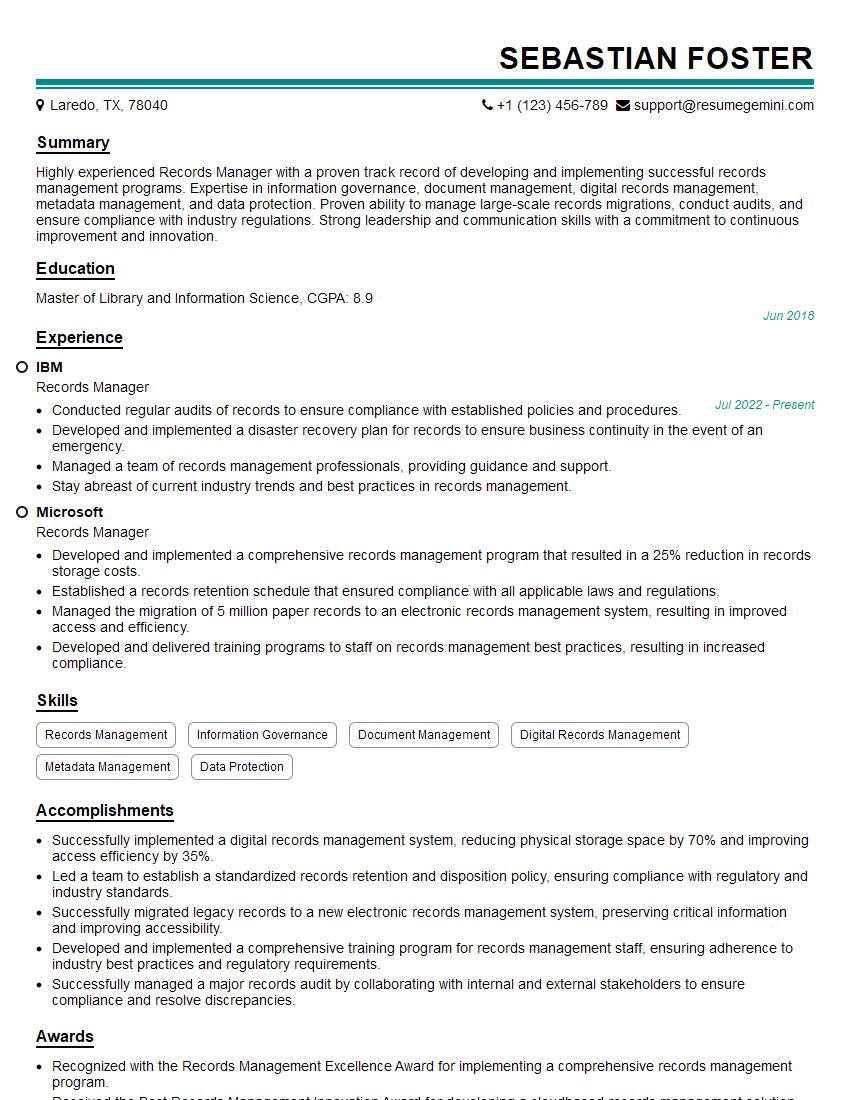
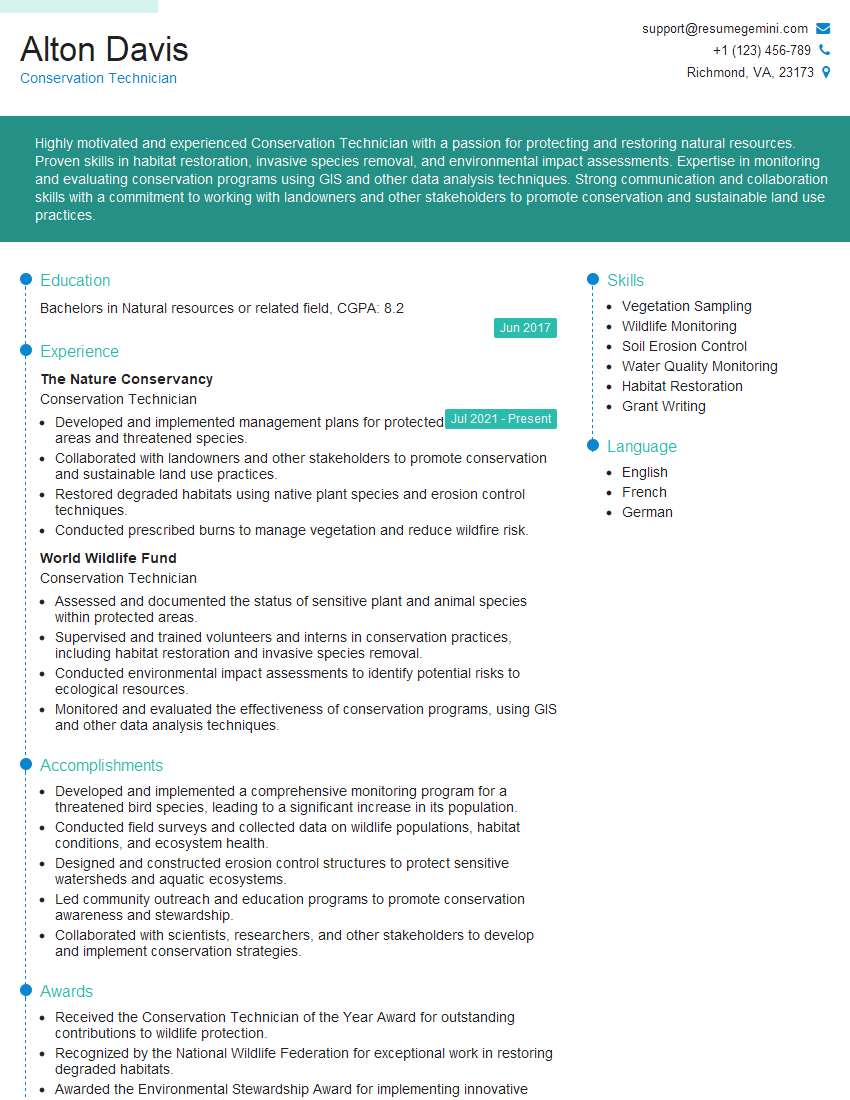
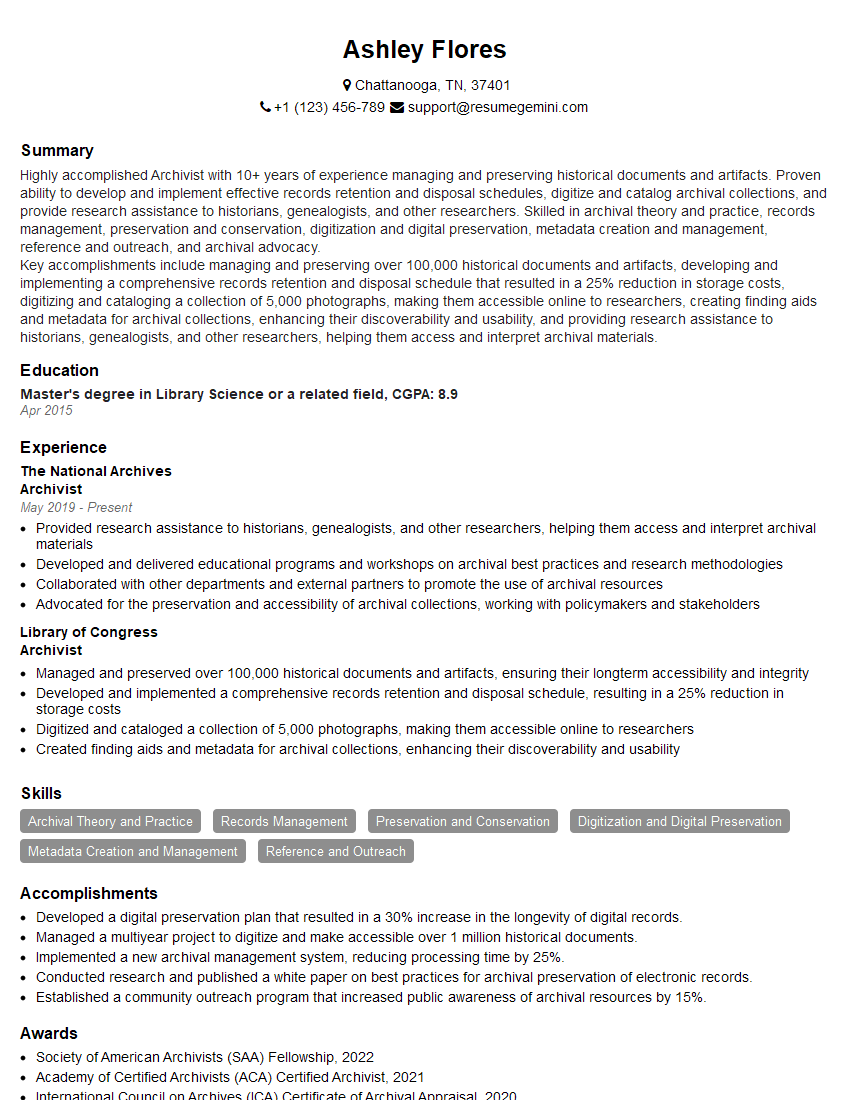
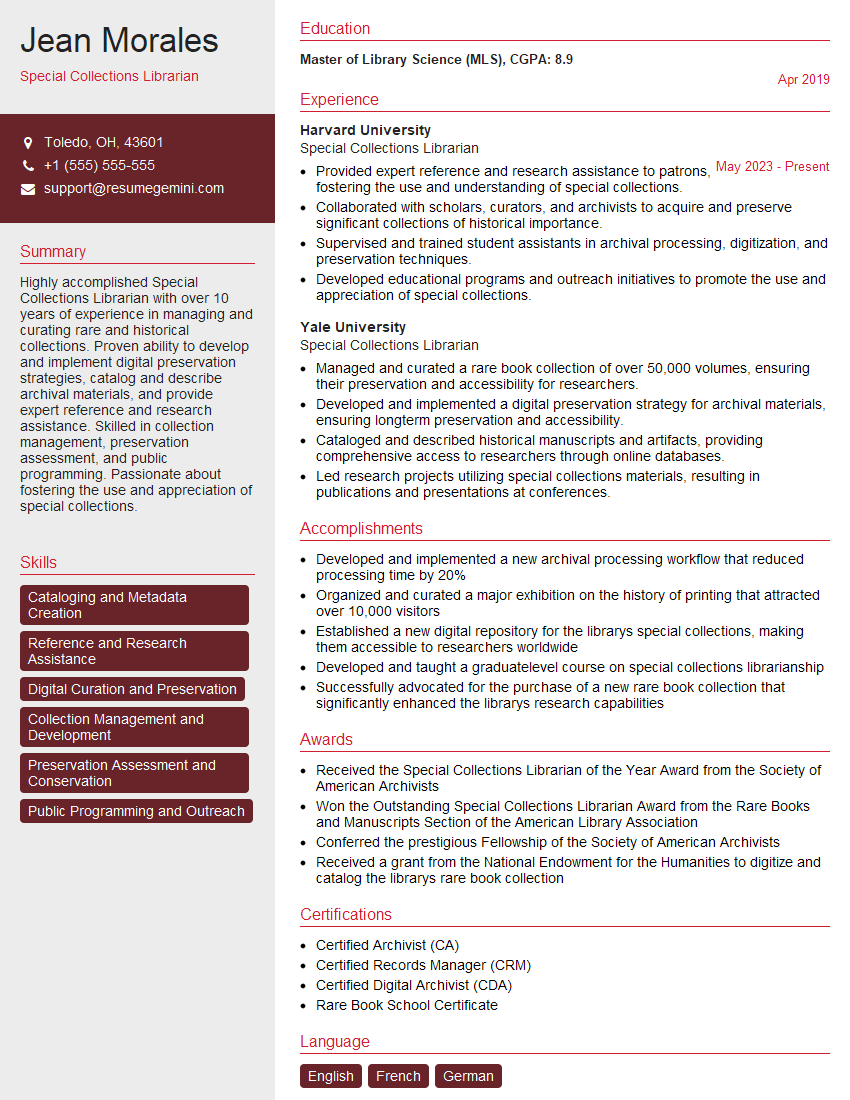
Mastering the art of archiving and preserving musical materials opens doors to rewarding careers in cultural heritage institutions, libraries, archives, and museums. To significantly boost your job prospects, crafting an ATS-friendly resume is crucial. ResumeGemini is a trusted resource that can help you create a professional and impactful resume. ResumeGemini provides examples of resumes tailored to Archiving and Preserving Musical Materials, ensuring your qualifications shine brightly. Take the next step towards your dream career – build a compelling resume today!
Explore more articles
Users Rating of Our Blogs
Share Your Experience
We value your feedback! Please rate our content and share your thoughts (optional).
What Readers Say About Our Blog
Really detailed insights and content, thank you for writing this detailed article.
IT gave me an insight and words to use and be able to think of examples