Preparation is the key to success in any interview. In this post, we’ll explore crucial Assessing and evaluating ESOL student progress interview questions and equip you with strategies to craft impactful answers. Whether you’re a beginner or a pro, these tips will elevate your preparation.
Questions Asked in Assessing and evaluating ESOL student progress Interview
Q 1. Explain different ESOL assessment methods and their appropriateness for various proficiency levels.
Assessing ESOL (English to Speakers of Other Languages) students requires a multifaceted approach, employing various methods tailored to their proficiency levels. We need assessments that can accurately gauge their understanding across all four language domains: listening, speaking, reading, and writing. The choice of assessment depends heavily on the student’s current level and the specific learning objective.
- Placement Tests: These are typically standardized tests used initially to gauge a student’s overall English language proficiency. They help place students into appropriate classes and provide a baseline for tracking progress. Examples include the TOEFL or IELTS, though many schools create their own.
- Diagnostic Assessments: These pinpoint specific areas of strength and weakness within each language domain. They often involve tasks like cloze exercises, dictation, or short writing samples. They are crucial for individualized instruction.
- Formative Assessments: Ongoing assessments throughout the learning process, like quizzes, class discussions, and informal observation, help track progress in real-time and adjust instruction accordingly. Examples include exit tickets, quick writes, and peer assessments.
- Summative Assessments: These evaluate overall learning at the end of a unit or term, such as larger projects, essays, or formal presentations. They provide a comprehensive picture of student achievement.
- Portfolio Assessments: Students collect samples of their work over time, showcasing their growth and development in English. This holistic approach offers valuable insights into a student’s learning journey.
For example, a beginner ESOL student might benefit from primarily oral assessments focusing on basic vocabulary and sentence structure. Conversely, an advanced student could be assessed through more complex writing tasks or presentations. The key is selecting assessments that appropriately challenge each student while providing accurate data.
Q 2. Describe your experience using diagnostic assessments to identify student learning needs.
My experience with diagnostic assessments has been pivotal in effectively tailoring instruction to individual student needs. I use a combination of standardized diagnostic tests and my own teacher-created assessments. For instance, I might use a standardized test to get an initial overview of the student’s strengths and weaknesses. Then, I supplement this with my own tasks targeting specific skills.
For example, if a diagnostic reveals a student struggles with verb tenses, I’ll create focused exercises on that specific grammar point. This could involve interactive activities, personalized worksheets, or even one-on-one tutoring sessions. I always ensure that the diagnostic assessments I use are aligned with the curriculum and learning objectives.
The analysis of results isn’t just about identifying weaknesses; it’s about understanding *why* a student is struggling. Is it due to a lack of vocabulary? Difficulties with pronunciation? Cultural differences in communication styles? By carefully analyzing data and observing student work, I can paint a clearer picture of their learning challenges.
Q 3. How do you differentiate instruction based on ESOL student assessment data?
Assessment data is the cornerstone of differentiated instruction for ESOL students. I use data to group students based on their needs, create individualized learning plans, and adapt teaching methods.
For example, if assessment data shows that a group of students struggles with reading comprehension, I might implement strategies such as pre-teaching vocabulary, using graphic organizers, and providing guided reading support. For those who excel, I can introduce more challenging texts and encourage critical analysis. Similarly, if students demonstrate different strengths and weaknesses in writing, I might provide different prompts and levels of support, tailoring the task’s complexity and length to their capabilities.
This data-driven approach is not static. I continuously monitor student progress through formative assessments and adjust instruction as needed. Regular feedback loops ensure the instruction remains relevant and effective for every student.
Q 4. What are some common challenges in assessing ESOL students, and how do you address them?
Assessing ESOL students presents unique challenges. One significant hurdle is accurately assessing their language proficiency without inadvertently penalizing them for their lack of English fluency. Other challenges include:
- Cultural factors: Communication styles and learning preferences vary significantly across cultures. An assessment that works well for one culture might not be appropriate for another.
- Prior education: Students’ prior educational experiences and learning styles significantly influence their performance on assessments.
- Test anxiety: The pressure of taking a test in a second language can increase anxiety and affect performance, especially for students who lack confidence in their English abilities.
- Limited literacy in their native language: This can impact transfer of skills and comprehension of instructions.
To address these challenges, I utilize several strategies: I incorporate culturally relevant materials into assessments, provide clear and concise instructions, offer multiple assessment formats (oral, written, performance-based), and create a supportive and low-stakes testing environment. I also allow for students to use dictionaries or translators where appropriate to assess their knowledge rather than their English proficiency. Finally, I ensure that assessments are aligned to the learning objectives and reflect the student’s actual language capabilities, not just their test-taking skills.
Q 5. How do you interpret standardized ESOL test scores and use them to inform instruction?
Standardized ESOL test scores provide a valuable snapshot of a student’s overall English proficiency, but they shouldn’t be interpreted in isolation. I view these scores as one piece of the puzzle, supplementing them with other qualitative data from classroom observations, formative assessments, and informal interactions.
For example, a student might score below average on a standardized test but demonstrate exceptional oral communication skills in class. This discrepancy suggests a need to focus on improving reading and writing skills while reinforcing their already-strong oral proficiency. I also consider the test’s specific sub-scores (e.g., reading, writing, listening, speaking) to pinpoint areas needing attention. I use this granular data to personalize learning plans, focusing on specific skill deficits identified through both standardized and classroom-based assessments.
Q 6. Discuss the importance of formative assessment in ESOL instruction.
Formative assessment is crucial in ESOL instruction because it provides continuous feedback, allowing for adjustments to teaching methods and pacing. Instead of waiting for a summative assessment to reveal learning gaps, formative assessment provides ongoing insights into student understanding, enabling timely interventions. This is particularly vital for ESOL learners who might require more support and scaffolding.
Examples of formative assessments include quick checks, exit tickets, short writing tasks, and informal observation of student work during class activities. These assessments provide valuable information on what students are grasping and where they need further assistance. I frequently use these formative assessments to adjust my lesson plans, provide targeted feedback, and differentiate instruction to meet the diverse needs of my students.
Q 7. How do you incorporate authentic assessment tasks into your ESOL classroom?
Authentic assessment tasks mirror real-world language use, providing a more meaningful and engaging assessment experience for ESOL students. Instead of relying solely on traditional tests, I incorporate authentic tasks that allow students to demonstrate their language skills in relevant and practical contexts.
For instance, instead of a typical essay, students might create a travel brochure, write a restaurant review, or design a presentation about a cultural topic. These tasks encourage creativity, critical thinking, and collaboration while assessing their language skills in a context that is both engaging and relevant. The feedback process is equally important, providing opportunities for self-reflection and improvement based on real-world applications of their learning. This approach makes the assessment process feel less like a test and more like an opportunity to showcase their growing language abilities.
Q 8. Describe your experience using portfolio assessment with ESOL students.
Portfolio assessment is a powerful tool for tracking ESOL student progress because it provides a holistic view of their language development. Instead of relying solely on standardized tests, which can be anxiety-inducing and don’t always reflect true ability, portfolios showcase a range of student work over time. This allows for a more nuanced understanding of their strengths, weaknesses, and overall growth.
In my experience, I’ve used portfolios with ESOL students to collect samples of their writing (essays, journals, creative writing), speaking (audio recordings of presentations or conversations), and listening/reading comprehension activities (notes, summaries, annotated texts). I work collaboratively with students to select the most representative pieces, encouraging self-reflection and goal setting. For example, a student might include a piece of writing that demonstrates improvement in grammar, paired with a reflection on their learning process. This approach fosters student agency and ownership of their learning.
The portfolio then becomes a dynamic document, updated regularly to reflect their ongoing progress. This allows for more frequent and constructive feedback, fostering a sense of accomplishment and motivating students to continue improving.
Q 9. Explain how you would adapt assessments for students with diverse learning styles and needs (within ESOL context).
Adapting assessments for diverse learning styles and needs within the ESOL context is crucial for ensuring accurate measurement of student understanding. I believe in employing a multi-faceted approach that caters to visual, auditory, kinesthetic, and other learning preferences.
- Visual Learners: I use graphic organizers, mind maps, and visual aids in assessments. For example, instead of solely relying on written responses, I might incorporate diagrams or charts to help students organize their thoughts.
- Auditory Learners: I incorporate oral presentations, discussions, and audio recordings. Role-playing activities or interviews can be excellent ways to assess speaking skills in a low-pressure setting.
- Kinesthetic Learners: I incorporate hands-on activities, simulations, and role-playing. For example, creating a skit to demonstrate understanding of a story or building a model to represent a concept.
- Students with IEPs or 504 plans: I carefully review and incorporate the accommodations outlined in their plans, which might include extended time, alternative formats, or assistive technology.
Beyond learning styles, I consider students’ individual proficiency levels, providing tiered assessments where necessary. This ensures that students are challenged appropriately without being overwhelmed. Regular informal assessments, such as observations during class activities, help me gauge students’ understanding and provide ongoing support.
Q 10. How do you ensure assessment fairness and cultural responsiveness in your ESOL classroom?
Ensuring assessment fairness and cultural responsiveness is paramount in the ESOL classroom. It involves recognizing that students’ cultural backgrounds, experiences, and prior knowledge significantly impact their learning and assessment performance. Bias can creep into assessments in subtle ways, so proactive measures are needed.
- Content: I ensure assessment materials are culturally relevant and free from bias, avoiding references or scenarios unfamiliar to students. I might incorporate examples from diverse cultures to create a more inclusive learning environment.
- Language: I use clear, straightforward language avoiding jargon or idioms that might be difficult for ESOL students to understand. I carefully check for vocabulary complexity.
- Format: I offer assessments in various formats to cater to different learning preferences and address potential language barriers. This might involve providing visual aids or offering oral responses as an alternative to written ones.
- Grading: I focus on assessing students’ understanding of concepts rather than penalizing grammatical errors. I provide feedback that is constructive, focusing on strengths and areas for improvement.
Furthermore, I actively seek feedback from students and their families to gain insights into their cultural backgrounds and learning preferences. Building strong relationships with students and their families creates trust and helps me design assessments that are not only fair but also culturally responsive.
Q 11. What are the key components of a comprehensive ESOL assessment plan?
A comprehensive ESOL assessment plan involves a multifaceted approach that goes beyond a single test. It should incorporate a variety of assessment methods to gain a complete picture of a student’s language proficiency.
- Initial Assessment: This involves determining a student’s initial English language proficiency using standardized tests (like the WIDA or TOEFL) and informal assessments like observation and conversation.
- Ongoing Monitoring: Regular formative assessments, like quizzes, classwork, and projects, track student progress throughout the year. This provides valuable data for adjustments in teaching and support.
- Summative Assessments: These are larger-scale assessments, such as mid-term and final exams, which measure overall learning outcomes.
- Portfolio Assessment (as previously discussed): This provides a holistic view of student progress over time.
- Performance-Based Assessments: These assessments involve tasks that require students to demonstrate their skills in real-world contexts, such as presentations or role-playing.
The plan should also clearly define the assessment goals, aligning them with curriculum standards and learning objectives. It’s crucial to regularly review and revise the plan to ensure it effectively addresses the needs of the students.
Q 12. How do you communicate assessment results effectively to students, parents, and administrators?
Communicating assessment results effectively is crucial for student success and parental/administrative engagement. I employ several strategies to ensure clear and accessible communication.
- Student Communication: I provide constructive feedback on student work, highlighting strengths and suggesting areas for improvement in a language the student understands, using both oral and written feedback.
- Parent Communication: I use a combination of parent-teacher conferences, email, and progress reports that are translated into the parent’s native language if needed. Reports are clear, concise, and focus on student progress rather than just grades.
- Administrator Communication: I maintain detailed records of student assessment data, which I regularly share with administrators through reports that summarize student performance and highlight trends. I’m proactive in communicating any significant concerns or successes.
I prioritize using easily understandable language, avoiding educational jargon, and providing examples of student work to illustrate progress. I create opportunities for dialogue and questions to ensure everyone understands the results and implications.
Q 13. Describe your experience using technology to support ESOL assessment.
Technology plays a significant role in supporting ESOL assessment, enhancing both efficiency and the quality of feedback. I use various technological tools to diversify assessment methods and make them more engaging.
- Online Assessment Platforms: Platforms like Google Classroom allow for the creation and distribution of quizzes, assignments, and tests. They also provide automated grading for certain types of assessments freeing up time for providing personalized feedback.
- Language Learning Apps: Apps like Duolingo or Babbel provide supplementary practice and can inform my understanding of students’ independent learning habits.
- Audio and Video Recording Software: These tools allow students to record presentations and conversations, which can be used for self-assessment and feedback. This helps students monitor their own progress and identify areas for improvement.
- Digital Portfolio Platforms: Platforms like Google Drive allow students to create and manage their portfolios electronically. This makes it easy to share work with teachers and parents.
The ethical considerations surrounding data privacy are paramount, and I always ensure that student data is handled responsibly and securely, complying with all relevant regulations.
Q 14. How do you maintain accurate records of student assessment data?
Maintaining accurate records of student assessment data is essential for tracking progress, identifying areas needing improvement, and demonstrating accountability. I use a combination of digital and physical methods to ensure accurate record-keeping.
- Digital Record-Keeping: I utilize school-provided learning management systems (LMS) and spreadsheets to track assessment scores, feedback, and student progress. These digital platforms allow for easy data analysis and reporting.
- Physical Record-Keeping: I maintain physical copies of student work, particularly portfolios, which provides a backup and allows for easy access to detailed work samples.
- Data Security: I adhere to all school and district policies regarding data privacy and security. Student information is kept confidential and stored securely both digitally and physically.
- Regular Backups: I regularly back up both digital and physical data to prevent data loss.
Consistent and organized record-keeping is a cornerstone of effective teaching and helps me provide the best possible support for my ESOL students.
Q 15. What are the ethical considerations related to ESOL assessment?
Ethical considerations in ESOL assessment are paramount, ensuring fairness, equity, and respect for all students. We must avoid bias in assessment design and selection, recognizing that cultural background, prior learning experiences, and linguistic differences can significantly influence test performance. This means carefully selecting assessments that are culturally appropriate and minimize linguistic complexities that might unfairly disadvantage students. For instance, using standardized tests designed for native English speakers without careful adaptation would be ethically problematic. We must also guarantee that assessments accurately measure a student’s actual language proficiency rather than their test-taking skills or familiarity with specific cultural contexts. This includes considering the format of the assessment—avoiding those that rely too heavily on specific test-taking strategies or cultural knowledge. Finally, results must be interpreted cautiously, avoiding generalizations about a student’s overall ability based on a single assessment.
Furthermore, transparency in the assessment process is crucial. Students should understand the purpose of the assessment, the criteria used for evaluation, and how the results will be used. This builds trust and reduces anxiety, ensuring students can perform to the best of their ability. Confidentiality of results is also vital, maintaining student privacy and protecting them from potential discrimination.
Career Expert Tips:
- Ace those interviews! Prepare effectively by reviewing the Top 50 Most Common Interview Questions on ResumeGemini.
- Navigate your job search with confidence! Explore a wide range of Career Tips on ResumeGemini. Learn about common challenges and recommendations to overcome them.
- Craft the perfect resume! Master the Art of Resume Writing with ResumeGemini’s guide. Showcase your unique qualifications and achievements effectively.
- Don’t miss out on holiday savings! Build your dream resume with ResumeGemini’s ATS optimized templates.
Q 16. How do you ensure data privacy and security when assessing ESOL students?
Data privacy and security are central to responsible ESOL assessment. All student data must be stored securely, following relevant data protection regulations (like FERPA in the US or GDPR in Europe). This involves using secure digital platforms and physical storage, limiting access to authorized personnel only, and implementing robust password protection. For example, I ensure that all assessment data is encrypted both in transit and at rest. Anonymizing data whenever possible is also crucial—removing identifying information while still allowing analysis of performance trends. Data should be used solely for the intended purpose—improving instruction and monitoring student progress—never for purposes unrelated to education.
Furthermore, I make sure all students and parents/guardians are fully informed about how their data will be collected, used, and protected. This often involves providing written consent forms which explicitly outline data storage, usage, and retention policies. In addition to technical safeguards, clear procedures are essential for managing access to assessment data, ensuring accountability and preventing unauthorized disclosure.
Q 17. Describe your process for selecting appropriate assessment tools for different ESOL proficiency levels.
Selecting appropriate assessment tools is a crucial aspect of effective ESOL instruction. My process begins with a thorough understanding of the student’s proficiency level. This might involve using a pre-assessment, such as a placement test, to gain an initial understanding. Once I have a baseline, I select assessments that are aligned with the student’s capabilities, avoiding tools that are either too easy or too difficult. If the assessment is too easy, it won’t provide valuable insights into areas needing improvement; if it’s too hard, it might cause unnecessary frustration and lead to inaccurate results. For example, a beginning-level student shouldn’t be given a high-stakes exam designed for advanced learners.
The assessment should also target specific skills and language domains I want to measure, such as reading, writing, listening, and speaking. I consider the assessment’s format—multiple-choice, essay, oral interview, etc.—choosing methods suitable to the student’s skills and comfort level. I also prefer assessments that are authentic, mirroring real-world language use, rather than purely testing grammatical knowledge in isolation. Finally, I look for assessments with established validity and reliability, ensuring that they accurately measure what they are supposed to measure and produce consistent results. I might use a combination of formal and informal assessments, like standardized tests combined with classroom observations and portfolio assessments, for a comprehensive picture of student progress.
Q 18. How familiar are you with various ESOL proficiency frameworks (e.g., CEFR, ACTFL)?
I am very familiar with various ESOL proficiency frameworks, including the Common European Framework of Reference for Languages (CEFR) and the American Council on the Teaching of Foreign Languages (ACTFL) proficiency guidelines. Both frameworks offer detailed descriptions of language abilities at different proficiency levels, providing a common standard for assessing and reporting student progress. The CEFR uses descriptors such as A1 (Beginner), A2 (Elementary), B1 (Intermediate), B2 (Upper-Intermediate), C1 (Advanced), and C2 (Proficient), while ACTFL uses similar descriptors ranging from Novice to Superior. I regularly use these frameworks to select appropriate assessment materials, interpret assessment results, and set realistic learning goals for my students. Understanding these frameworks allows me to communicate effectively with colleagues, parents, and universities about student proficiency.
For example, when working with a university placement office, referencing a student’s CEFR level (e.g., B2) provides a clear and internationally recognized measure of their language ability, making the transition to university studies smoother and more efficient. Similarly, using ACTFL proficiency levels allows me to tailor my teaching to specific student needs based on their current level and future goals.
Q 19. Explain how you use assessment data to track student progress and inform instructional decisions.
Assessment data is crucial for tracking student progress and informing instructional decisions. I use a variety of methods to collect data, including formal assessments (tests, quizzes), informal assessments (observations, classroom work), and portfolio assessments (student work samples). This multifaceted approach ensures a comprehensive picture of each student’s development. I then analyze this data regularly, looking for trends and patterns in student performance. For instance, if multiple students struggle with a particular grammatical structure, it signals a need to revisit that topic in instruction.
To track progress visually, I often use graphs or charts to represent student performance over time. These visual representations clearly show growth, areas of strength, and areas needing further attention. This data-driven approach allows me to adapt my instruction to address individual student needs, ensuring that all students are challenged appropriately and receive the support they need to succeed.
Q 20. How do you differentiate instruction for students at different proficiency levels based on assessment data?
Differentiating instruction based on assessment data is essential for maximizing student learning. Once I’ve analyzed assessment results, I group students based on their proficiency levels and specific needs. This might involve creating small groups or individual learning plans. For lower-level learners, I might focus on foundational skills like vocabulary and basic sentence structure, using simpler materials and more explicit instruction. For intermediate learners, I incorporate more complex texts and activities, focusing on advanced grammar and fluency development. Advanced learners might engage in more critical thinking and analysis, working on complex writing tasks or engaging in debates.
The key is to tailor instruction to meet individual learning styles and needs. For example, some students might benefit from more hands-on activities, while others might learn better through independent study. The assessment data helps me identify these preferences and adapt my teaching accordingly. Regular reassessment is crucial to monitor the effectiveness of differentiated instruction and make adjustments as needed. This cyclical process of assessment, analysis, and adaptation is vital for optimal student growth.
Q 21. Describe a time you had to adapt an assessment for a student with specific learning needs within an ESOL context.
I once had a student, Maria, with dyslexia who struggled significantly with traditional reading and writing assessments. While Maria demonstrated a strong understanding of English grammar and vocabulary in conversations, her written work was often illegible and filled with spelling errors. Using a standard written test would have given a misleading and inaccurate picture of her overall proficiency. To address this, I adapted the assessment to accommodate her learning needs. I allowed her to use text-to-speech software for reading passages, and I provided her with a scribe for writing tasks, focusing on oral assessments to capture her spoken language capabilities. For writing, I incorporated shorter writing tasks with opportunities for revision and editing, allowing for focused practice in smaller chunks.
This adapted assessment provided a much more accurate reflection of Maria’s abilities. The results revealed her true level of English proficiency, leading to targeted support and ultimately, improved academic outcomes. This experience highlighted the importance of flexibility and creativity in adapting assessment methods to meet the unique needs of diverse learners, always striving for fairness and accurate evaluation.
Q 22. What strategies do you use to engage students in the assessment process?
Engaging ESOL students in the assessment process is crucial for accurate evaluation and fostering a positive learning environment. I employ several strategies to achieve this. First, I emphasize the purpose of the assessment, explaining clearly how the results will help them improve. This transparency builds trust and reduces anxiety. Second, I use a variety of assessment methods, including games, role-playing, and collaborative projects, to make the process more interactive and less intimidating. For example, instead of a traditional written essay, I might have students create a short video or participate in a mock debate demonstrating their language skills. Third, I provide ample opportunities for students to ask questions and clarify any confusion. I ensure the language used in instructions and tasks is clear and accessible, and I offer support in their native language when needed. Finally, I provide regular feedback, focusing on both strengths and areas for improvement, framing the feedback constructively to encourage continued effort.
For example, with a younger class, I might use picture cards and simple sentence completion tasks to assess vocabulary and sentence structure. With older students, I might use more complex tasks like writing summaries of texts or creating presentations.
Q 23. How do you use informal assessment to monitor student learning on a daily basis?
Informal assessment is a cornerstone of my daily practice. It involves continuous monitoring of student learning through observation, questioning, and quick, low-stakes activities. I use observation to note students’ participation in class discussions, their accuracy in completing tasks, and their overall engagement. I incorporate frequent questioning, both orally and in writing, to check for comprehension and identify areas needing clarification. For instance, I might conduct quick polls using exit tickets or use simple quizzes to gauge understanding of key concepts. I also use student work samples, such as drafts of essays or short presentations, to monitor progress. These informal assessments inform my lesson planning, allowing me to adjust my instruction based on immediate student needs. For example, if I notice many students struggling with a particular grammar point, I can allocate more time to address it. This approach is vital in ESOL because it provides immediate insights into challenges and allows for personalized support.
Q 24. How do you ensure that assessments align with curriculum standards and learning objectives?
Alignment between assessments and curriculum standards is paramount. I ensure this alignment by carefully reviewing the relevant learning objectives and standards before designing any assessment. I make sure the assessment tasks directly measure the knowledge and skills specified in these objectives. For instance, if a learning objective is to write a well-structured paragraph, my assessment would require students to write a paragraph, not just answer multiple-choice questions about paragraph structure. I also use assessment blueprints, which are essentially tables outlining the assessment’s specifications, including the learning objectives being assessed, the assessment type, and the weighting of different aspects. This detailed planning helps to ensure that the assessment accurately reflects the curriculum goals. This process is especially critical in ESOL, where diverse learners require targeted evaluation matching their specific learning goals.
Q 25. Describe your experience with using different types of assessment (e.g., summative, formative, diagnostic).
My experience encompasses all three assessment types: diagnostic, formative, and summative. Diagnostic assessments are used at the beginning of a course or unit to identify students’ pre-existing knowledge and skills. This helps me tailor my instruction to meet individual needs. Formative assessments, such as quizzes, short writing assignments, and classroom discussions, are regularly integrated to monitor student progress and provide feedback. Summative assessments, like mid-term and final exams, provide a comprehensive evaluation of student learning at the end of a unit or course. These assessments may involve more formal tasks like essays, presentations, or larger projects. I use a balanced approach, combining all three to paint a complete picture of each student’s progress and understanding. For instance, I might use a diagnostic test to gauge students’ reading levels before assigning them a complex reading comprehension task. Regular formative assessments help me adjust my teaching approach before a summative test which allows me to provide targeted feedback for improvement.
Q 26. What are some common misconceptions about assessing ESOL students?
Several misconceptions surround the assessment of ESOL students. One common misconception is that assessing English language proficiency is sufficient. However, it’s crucial to remember that ESOL students have varying levels of prior education and experiences, which should also be considered. Another misconception is that all ESOL students are at the same level; assessments need to consider individual learning styles, backgrounds and progress. Another frequently encountered misconception is the belief that only standardized tests can accurately assess ESOL students, disregarding the value of alternative assessment strategies like performance-based tasks and portfolios that show deeper understanding. Finally, some believe that ESOL students should be compared only to other ESOL students, ignoring their potential when compared to native speakers at the same level. A balanced approach acknowledging individual strengths, needs, and potential is necessary for fair and accurate assessment.
Q 27. How do you ensure that assessments are valid and reliable?
Ensuring assessment validity and reliability is crucial. Validity refers to whether the assessment actually measures what it intends to measure. I achieve this by ensuring that the assessment tasks align directly with the learning objectives. Reliability refers to the consistency of the assessment. I ensure reliability by using well-defined assessment criteria, clear scoring rubrics, and minimizing bias in the assessment process. For example, using multiple raters for tasks involving subjective judgment, such as essays, helps ensure consistency and fairness. Employing standardized tests with proven reliability scores also contributes significantly. Furthermore, using a combination of assessment methods further enhances the validity and reliability of the overall evaluation, creating a more robust and accurate picture of student proficiency. This multifaceted approach allows for a more comprehensive understanding of a student’s capabilities, mitigating potential biases or limitations inherent in any single assessment method.
Q 28. How do you adapt your assessment strategies based on the specific needs of your student population?
Adapting assessment strategies to meet diverse needs is paramount. I consider factors such as students’ native language, prior education, learning styles, and any special needs when designing and implementing assessments. This involves offering assessments in multiple formats, including oral, written, visual, and kinesthetic options to cater to diverse learning preferences. I might provide additional time, simplified instructions, or alternative assessment tasks for students with specific needs. For example, a student with a learning disability might be allowed to use assistive technology during an assessment, or a student with limited literacy skills might be assessed primarily through oral tasks. Furthermore, providing assessments in the student’s native language, where appropriate, helps to reduce anxiety and accurately reflect their abilities. This approach is essential for creating a fair and inclusive assessment environment that promotes equitable learning opportunities for all students. It also requires ongoing reflection and refinement based on observed student responses to assess whether adjustments further enhance the assessment process and its outcome.
Key Topics to Learn for Assessing and Evaluating ESOL Student Progress Interview
- Understanding Different Assessment Methods: Explore various assessment techniques like formative and summative assessments, standardized tests (e.g., TOEFL, IELTS), portfolio assessments, and informal observations. Consider the strengths and weaknesses of each method and their suitability for different learning contexts and student needs.
- Interpreting Assessment Data: Learn how to analyze data from different assessment tools to accurately gauge student progress in all four language skills (reading, writing, listening, speaking). Practice identifying areas of strength and weakness and translating this data into actionable insights for instructional planning.
- Developing Appropriate Assessment Tasks: Gain proficiency in designing assessments that are culturally sensitive, fair, and aligned with curriculum standards and learning objectives. Explore techniques for creating valid and reliable assessment materials suitable for diverse learners.
- Using Technology in Assessment: Familiarize yourself with technology-based assessment tools and platforms. Understand how to utilize these tools effectively to gather data, track progress, and provide feedback to students.
- Providing Effective Feedback: Master the art of providing constructive and actionable feedback to students. Learn how to communicate assessment results clearly and help students understand areas for improvement and set realistic goals.
- Differentiation and Inclusion: Explore strategies for adapting assessment methods and materials to meet the diverse needs of ESOL learners, including students with disabilities or learning differences. Understand how to create inclusive assessment environments.
- Legal and Ethical Considerations: Become familiar with relevant laws and ethical guidelines related to assessment and evaluation of ESOL learners, including issues of confidentiality and data privacy.
- Collaboration and Communication: Practice articulating your assessment strategies and findings clearly and effectively to parents, colleagues, and administrators.
Next Steps
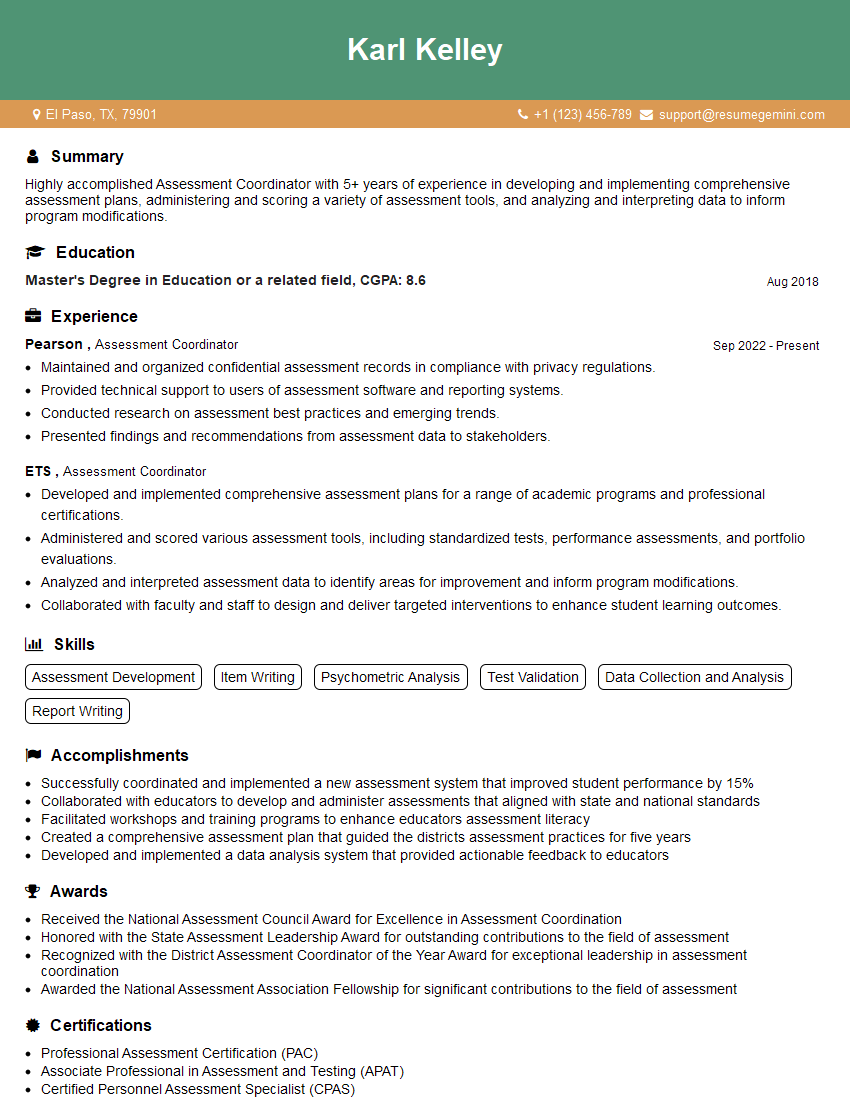
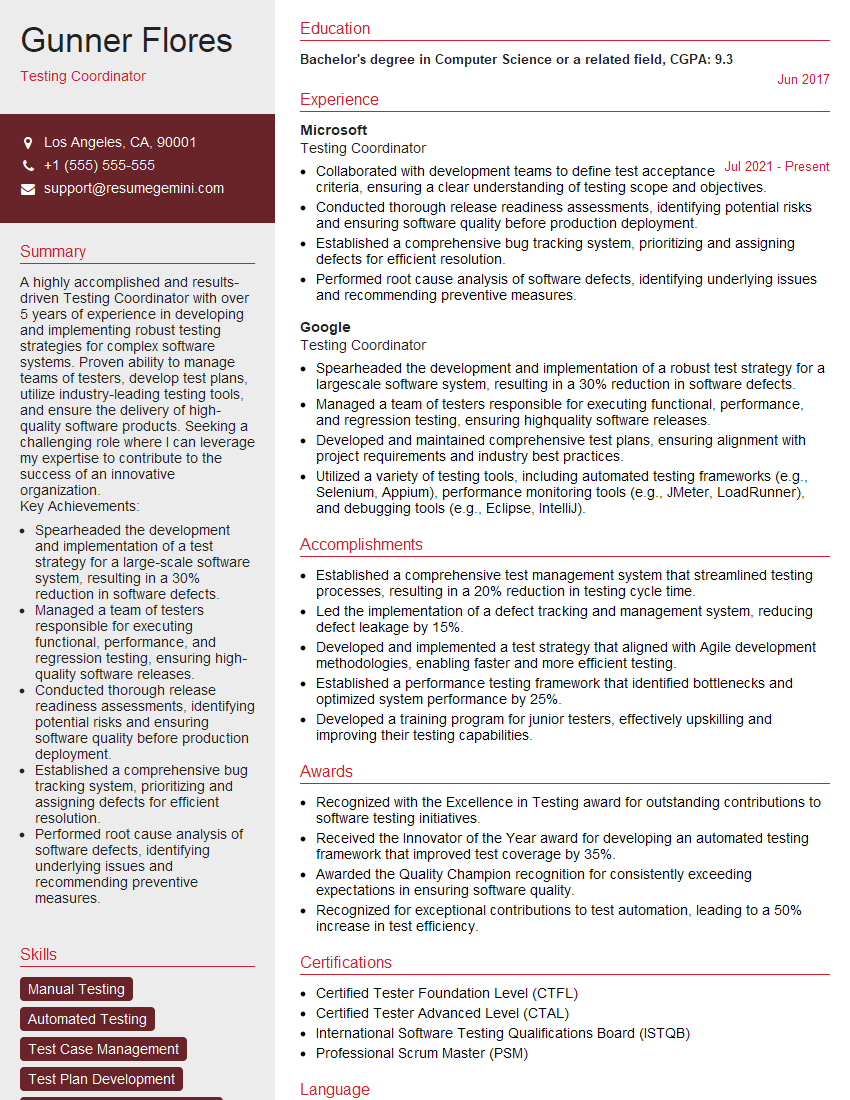
Mastering the art of assessing and evaluating ESOL student progress is crucial for career advancement in education. Demonstrating this expertise through a well-crafted resume is key to unlocking exciting opportunities. Building an ATS-friendly resume significantly increases your chances of getting your application noticed. We strongly encourage you to leverage ResumeGemini, a trusted resource for creating professional and impactful resumes. ResumeGemini provides examples of resumes tailored to Assessing and Evaluating ESOL student progress, helping you showcase your skills and experience effectively. This will help you stand out from other candidates and secure your dream role.
Explore more articles
Users Rating of Our Blogs
Share Your Experience
We value your feedback! Please rate our content and share your thoughts (optional).
What Readers Say About Our Blog
Really detailed insights and content, thank you for writing this detailed article.
IT gave me an insight and words to use and be able to think of examples