Preparation is the key to success in any interview. In this post, we’ll explore crucial Profile Gage Inspection interview questions and equip you with strategies to craft impactful answers. Whether you’re a beginner or a pro, these tips will elevate your preparation.
Questions Asked in Profile Gage Inspection Interview
Q 1. Explain the principle of operation of a profile gage.
A profile gage operates on the principle of comparison. It’s essentially a master template of the desired profile shape. The part being inspected is placed against the gage, and the fit (or lack thereof) indicates whether the part conforms to the specified profile. If the part fits perfectly within the gage’s defined boundaries, it’s considered acceptable. Any deviation indicates a discrepancy between the part’s profile and the specified profile.
Think of it like a cookie cutter: the cutter is the profile gage, and the cookie dough is the part. If the cookie fits perfectly into the cutter’s shape, it’s the right form. If it’s too big or too small, it’s rejected.
Q 2. What types of profile gages are you familiar with?
I’m familiar with several types of profile gages, each suited for different applications and levels of precision. These include:
- Fixed or Go/No-Go Gages: These are simple and inexpensive, allowing a quick pass/fail determination. They have two parts – a ‘Go’ part that should easily fit over a conforming part, and a ‘No-Go’ part that shouldn’t fit. They don’t provide detailed measurement data.
- Variable Gages: These allow for more precise measurements than simple Go/No-Go gages, usually by using dial indicators or other measuring devices to determine the distance between the gage and the part. They provide quantitative data on profile deviations.
- Optical Comparators: These use a projected image of the part superimposed on the master profile to provide a visual comparison and measurement of deviations. They offer high accuracy and detailed analysis.
- Coordinate Measuring Machines (CMMs): While not strictly a ‘gage’ in the traditional sense, CMMs are commonly used for very precise profile inspection. They use probes to measure multiple points on the part’s surface, creating a digital representation of the profile which can then be compared to the CAD model.
Q 3. Describe the different methods used for profile gage calibration.
Profile gage calibration methods depend on the type of gage used. Common methods include:
- Comparison with Master Gages: This involves comparing the gage to a known accurate master gage with traceable certification. This is a primary method for fixed gages.
- Using a CMM: CMMs with calibrated probes can be used to accurately measure the profile of the gage itself, providing precise dimensional data for calibration.
- Optical Comparators and Interferometry: For high precision gages, optical methods provide very high accuracy. Interferometry, for example, uses light waves to measure minute variations in surface profile.
- Calibration Laboratories: Sending your gages to accredited calibration laboratories ensures traceability to national standards. This is best practice for critical applications.
Calibration frequency is determined by the gage’s criticality, usage frequency, and the potential impact of measurement errors.
Q 4. How do you ensure the accuracy of profile gage measurements?
Ensuring accuracy involves a multi-pronged approach:
- Regular Calibration: As mentioned before, frequent calibration against traceable standards is crucial.
- Proper Handling and Storage: Gages should be handled carefully to prevent damage. Appropriate storage minimizes wear and tear and environmental influences.
- Environmental Control: Temperature and humidity fluctuations can affect gage accuracy. Maintaining a stable environment is essential.
- Operator Training: Properly trained inspectors are key to minimizing human error during measurement.
- Statistical Process Control (SPC): Using SPC charts to track gage performance over time helps to identify potential drift or degradation early on.
Q 5. What are the common sources of error in profile gage inspection?
Common sources of error include:
- Wear and Tear: Repeated use can wear down the gage, leading to inaccurate measurements.
- Improper Handling: Dropping or mishandling the gage can cause damage and inaccuracy.
- Environmental Factors: Changes in temperature and humidity can impact the gage’s dimensions.
- Operator Error: Incorrect application of the gage, improper reading of the measuring device, or inadequate training can lead to significant errors.
- Calibration Drift: Gages gradually lose accuracy over time if not regularly calibrated.
- Defective Gages: Manufacturing defects can render a gage inaccurate from the start.
Q 6. How do you interpret profile gage readings?
Interpretation depends heavily on the type of gage used. For Go/No-Go gages, a simple pass/fail result is obtained. For variable gages, the reading from the measuring device directly indicates the deviation from the nominal profile. For optical comparators, the overlay of the part’s image on the master profile allows for visual identification of deviations, along with quantitative measurements using the comparator’s scale.
Understanding the tolerance limits defined in the drawings is critical to interpretation. A deviation that falls within the acceptable tolerance range is considered acceptable, while a deviation outside the limits indicates a non-conforming part.
Q 7. Explain the significance of GD&T (Geometric Dimensioning and Tolerancing) in profile gage inspection.
GD&T (Geometric Dimensioning and Tolerancing) is crucial because it precisely defines the acceptable variations in the part’s profile. Profile gage inspection verifies whether the part conforms to these GD&T specifications. The drawings will specify tolerance zones for the profile, and the gage’s design must incorporate these tolerance zones to ensure it accurately assesses part conformance.
For example, a drawing might specify a profile tolerance zone using a profile of a surface symbol with a specific tolerance value. The profile gage would be designed to accommodate this tolerance zone, allowing parts within the tolerance zone to pass inspection and those outside to fail.
Q 8. How do you handle discrepancies found during profile gage inspection?
Discrepancies during profile gage inspection are handled systematically. First, I verify the gage’s calibration and ensure it’s within tolerance. A discrepancy could stem from several sources: a faulty gage, incorrect measurement technique, or an out-of-spec part. I carefully re-inspect the part using the same gage, noting the exact deviation. If the discrepancy persists, I’ll use a second calibrated gage to confirm the reading. If the problem still exists, I analyze the potential sources of error, including environmental factors like temperature and humidity, which can affect measurement accuracy. I meticulously document all readings and observations. Finally, I communicate the findings to the appropriate personnel, suggesting corrective actions, such as part rework or gage recalibration, depending on the root cause. For instance, if the repeated measurements consistently show a part is out of spec, I’d recommend investigating the manufacturing process to identify and fix the problem.
Q 9. Describe your experience with different types of surface finishes and their impact on profile gage readings.
Surface finish significantly impacts profile gage readings. Rough surfaces can lead to inconsistent contact between the gage and the part, resulting in inaccurate readings. Highly polished surfaces, on the other hand, can cause slippage or increased friction. I’ve worked with various surface finishes, including Ra (average roughness) values ranging from highly polished (Ra < 0.1 µm) to moderately rough (Ra > 6.3 µm). For highly polished surfaces, I might need to use specialized gage styles or apply appropriate lubricants to ensure proper contact and repeatability. Conversely, for rough surfaces, I may need to adjust the measurement force carefully and consider using a gage with a higher tolerance to accommodate surface irregularities. In practice, understanding the surface finish specifications is crucial for selecting the correct gage and interpreting the measurements accurately. This involves considering the material, the manufacturing process, and the intended function of the part.
Q 10. What are the limitations of profile gage inspection?
While profile gages are valuable tools, they have limitations. They only measure a specific cross-section of a part and may not capture the full three-dimensional geometry. The accuracy is also dependent on the gage’s design and calibration, as well as the operator’s skill. Additionally, profile gages are generally not suitable for measuring complex, free-form surfaces accurately; their applications are primarily limited to simpler profiles. Another limitation is that they are less efficient than some other methods (e.g., CMM) for large-scale inspections. For example, if a part has intricate internal features, a profile gage would be unsuitable, and a more comprehensive approach like Coordinate Measuring Machine (CMM) inspection would be necessary. Also, the gage might not detect subtle variations in profile that fall within its tolerance.
Q 11. How do you select the appropriate profile gage for a specific application?
Selecting the appropriate profile gage involves several factors. First, I must understand the part’s geometry and the required tolerance. The gage’s size and shape must match the part’s profile precisely. The tolerance of the gage should be appropriately smaller than the acceptable part tolerance to ensure accurate measurements. The material of the gage also matters. For example, a hardened steel gage is more durable than a softer material but can also damage more delicate parts. I also consider whether the part requires a fixed or adjustable gage. Fixed gages offer higher repeatability for mass production, while adjustable gages provide more flexibility for multiple part variations. Ultimately, the choice of the profile gage is a balance between accuracy, repeatability, cost, and the ease of use. The selection process should be documented and justified.
Q 12. Explain the process of setting up and using a profile gage.
Setting up and using a profile gage involves several steps. First, I verify the gage’s calibration and ensure it’s within acceptable tolerances. Next, I securely mount the part on the gage, ensuring proper alignment and contact between the part and the gage’s measuring elements. For adjustable gages, I would carefully adjust them according to the part’s specifications. I then apply consistent and appropriate pressure to ensure consistent contact, typically using a standardized force gauge to avoid damage or misalignment. Then, I take the reading, ensuring I’m looking at the right indicators or scale markings. Multiple readings are taken to ensure consistency and repeatability. The readings are carefully recorded along with the part ID, gage ID, and any relevant notes on the part’s condition or the testing environment. Finally, I compare the readings against the specifications to determine whether the part conforms to the requirements.
Q 13. What are the safety precautions you take when using profile gages?
Safety is paramount when using profile gages. I always ensure the workplace is clean and free from obstructions to prevent accidental slips or falls. I carefully handle the gage to avoid damage and maintain its accuracy. Depending on the application, appropriate personal protective equipment (PPE) like safety glasses may be required to protect my eyes from potential debris. When using power tools for mounting the part or preparing the gage, I always follow the manufacturer’s safety instructions carefully. Furthermore, I always work within the gage’s operational limits and avoid applying excessive force which might damage the gage or the part being measured. Regular safety checks and awareness training are vital for preventing accidents in the workplace.
Q 14. How do you maintain and clean profile gages?
Maintaining and cleaning profile gages is crucial for their accuracy and longevity. After each use, I thoroughly clean the gage using a soft brush and a suitable cleaning agent to remove any debris or contaminants that might affect measurements. I then carefully inspect the gage for any signs of damage, wear, or corrosion. I store the gage in a clean, dry, and controlled environment, protected from dust, moisture, and extreme temperatures. Regular calibration checks, preferably at specified intervals or after a significant number of uses, are essential to maintain the gage’s accuracy. I maintain a detailed log of the gage’s usage, cleaning, and calibration history to ensure compliance with quality control standards. A well-maintained gage ensures reliable and accurate measurements, contributing to the overall quality and efficiency of the inspection process.
Q 15. What software or systems are you familiar with for recording and analyzing profile gage data?
For recording and analyzing profile gage data, I’m proficient in several software and systems. My experience includes using dedicated metrology software packages like PolyWorks and Geomagic Control X, which offer powerful capabilities for importing point cloud data from CMMs (Coordinate Measuring Machines) or optical scanners, then comparing it to CAD models for detailed dimensional analysis. This allows for comprehensive analysis of form, profile, and positional tolerances. I’m also familiar with using spreadsheet software like Microsoft Excel or Google Sheets for basic data recording, statistical analysis (using built-in functions or add-ins), and generating simple reports. Finally, I’ve worked with custom-developed software solutions specific to certain clients’ needs and manufacturing execution systems (MES) for data integration and traceability in a production environment.
For example, in a recent project involving the inspection of complex automotive parts, we utilized PolyWorks to analyze the profile of a stamped steel component. The software’s advanced algorithms allowed us to quickly identify deviations from the CAD model and quantify the discrepancies, ultimately leading to process improvements.
Career Expert Tips:
- Ace those interviews! Prepare effectively by reviewing the Top 50 Most Common Interview Questions on ResumeGemini.
- Navigate your job search with confidence! Explore a wide range of Career Tips on ResumeGemini. Learn about common challenges and recommendations to overcome them.
- Craft the perfect resume! Master the Art of Resume Writing with ResumeGemini’s guide. Showcase your unique qualifications and achievements effectively.
- Don’t miss out on holiday savings! Build your dream resume with ResumeGemini’s ATS optimized templates.
Q 16. Describe your experience with statistical process control (SPC) in relation to profile gage inspection.
Statistical Process Control (SPC) is fundamental to effective profile gage inspection. My experience involves implementing and interpreting control charts, primarily X-bar and R charts and individual and moving range (I-MR) charts, to monitor the process capability of the profile gage itself and the manufacturing process that generates the parts being inspected. This ensures the gage is performing consistently and accurately, and allows us to identify trends or shifts indicating potential problems before they lead to widespread defects. We use control charts to track key profile characteristics like maximum deviation or waviness.
For instance, if we notice an upward trend in the average deviation on an X-bar chart, it suggests the process may be drifting out of specification. We then investigate potential root causes, such as tool wear, material variations, or environmental factors, to correct the problem. SPC also allows us to calculate process capability indices like Cp and Cpk to determine if the process is consistently producing parts within the specified tolerance limits.
Q 17. How do you document and report the results of profile gage inspection?
Documenting and reporting profile gage inspection results involves a meticulous approach. We typically create comprehensive reports that include the following elements:
- Part Identification: Part number, revision level, and batch/lot number.
- Inspection Date and Time: Ensuring traceability and allowing for trend analysis.
- Gage Identification: Serial number and calibration status of the profile gage used.
- Measurement Data: Detailed tabulated data from the inspection software, including deviations from nominal, maximum and minimum deviations, and other relevant parameters.
- Graphical Representations: Charts and graphs visualizing the profile deviations to aid in interpretation.
- Statistical Analysis: Calculations of process capability indices, averages, standard deviations, and other statistical metrics.
- Conclusion and Recommendations: Summary of findings, evaluation of process capability, and suggestions for corrective actions if necessary.
- Inspector Signature and Approval: Ensuring accountability and quality control.
The format of the report can vary based on client requirements or industry standards (e.g., ISO 9001), but adherence to a standardized format ensures consistency and clarity.
Q 18. Explain your understanding of different measurement uncertainties.
Understanding measurement uncertainties is crucial for accurate interpretation of profile gage inspection results. These uncertainties stem from various sources, and acknowledging them is essential for ensuring the validity of the measurements. Key types of uncertainties include:
- Gage Repeatability and Reproducibility (R&R): This accounts for variations in measurements taken by different operators using the same gage or by the same operator using the gage multiple times. A Gage R&R study helps quantify this uncertainty.
- Calibration Uncertainty: This refers to the uncertainty associated with the calibration of the gage itself. Calibration certificates provide information on this uncertainty.
- Environmental Factors: Temperature, humidity, and vibrations can all influence measurements. Control of the environment helps minimize this uncertainty.
- Material Properties: The material’s elasticity, surface finish, and other properties can influence the measurements. This is particularly relevant for soft or elastic materials.
- Operator Skill: Variations in operator technique can introduce errors, which can be mitigated through proper training and standardized procedures.
The overall uncertainty is usually determined by combining these individual uncertainties using statistical methods. A clear understanding of these uncertainties is crucial for making informed decisions based on the inspection results.
Q 19. Describe your experience with different types of material and their impact on profile gage measurements.
Different materials exhibit varying responses to profile gage measurements, requiring careful consideration. For instance, soft materials like rubber or plastics can deform under the contact pressure of the gage stylus, leading to inaccurate readings. Hard materials, such as steel or ceramics, might exhibit less deformation, but surface roughness can still affect the measurement. The material’s elasticity influences the ability to accurately capture the profile. A rigid material provides consistent results, whereas elastic material will be more prone to deformation under pressure.
My experience includes adapting inspection techniques to account for these material variations. For soft materials, techniques like low-force probing or non-contact optical scanning are preferred. For rough surfaces, appropriate stylus radius and surface treatment (deburring) may be necessary to obtain accurate and repeatable data. Material properties can significantly impact the uncertainty calculation. A thorough understanding of the material being inspected is critical for successful profile gage measurements.
Q 20. How do you troubleshoot common problems encountered during profile gage inspection?
Troubleshooting profile gage inspection problems requires a systematic approach. Common problems include:
- Inconsistent Measurements: This could indicate a problem with the gage itself (calibration, damage, or wear), inconsistencies in the test procedure, or variations in environmental factors. Performing a Gage R&R study helps isolate the source of the problem.
- Unexpected Deviations: Significant deviations from expected values could point to issues with the part’s manufacturing process, such as tool wear or improper material handling.
- Software Errors: Data import errors or software glitches can lead to incorrect results. Careful data verification and software validation are crucial.
- Calibration Issues: Outdated or improperly performed calibration can lead to inaccurate measurements. Regular calibration is essential.
My approach to troubleshooting involves carefully reviewing the measurement data, checking the gage’s calibration status, analyzing the inspection process, and examining environmental conditions. Often, a combination of these factors is involved. Root cause analysis techniques are employed to pinpoint the problem and implement appropriate corrective actions.
Q 21. Explain your experience with using various magnification tools in conjunction with profile gages.
Magnification tools are frequently used in conjunction with profile gages, especially when inspecting features with intricate details or small dimensions. I’m experienced in utilizing various magnification systems, including:
- Optical Microscopes: These provide visual magnification for examining surface features and identifying potential sources of measurement errors. They are particularly useful for detecting small imperfections or inconsistencies.
- Video Measurement Systems: These systems integrate a microscope with a camera and software for capturing and analyzing high-resolution images. This allows for precise measurements and detailed analysis of the profile.
- Digital Microscopes: These offer similar capabilities to video measurement systems, often with more portability and user-friendliness.
The choice of magnification tool depends on the specific application and the level of detail required. For example, when inspecting a micro-machined part, a high-magnification video measurement system would be crucial to accurately capture the profile. For larger parts, a simpler optical microscope might suffice. Using magnification tools enhances accuracy and allows for a more thorough inspection.
Q 22. What is your experience with CMM (Coordinate Measuring Machine) and its relation to profile gage inspection?
CMMs, or Coordinate Measuring Machines, are incredibly versatile tools used for precise 3D measurements. In the context of profile gage inspection, they act as a powerful verification tool. While a profile gage provides a quick go/no-go assessment of a part’s profile against a master, a CMM allows for detailed, point-by-point analysis of the same profile, revealing deviations from the ideal shape with high accuracy. This detailed information helps us understand the *why* behind a go/no-go result from the profile gage. For instance, a profile gage might indicate a part is out of spec, but the CMM can pinpoint exactly where the deviation occurs—whether it’s a localized bump, consistent curvature variation, or something else. This deeper understanding is crucial for corrective actions in the manufacturing process. My experience involves using CMMs to confirm profile gage measurements, especially when investigating root causes of rejected parts or validating the accuracy of the profile gage itself. I’m proficient in various CMM software packages, capable of programming complex measurement routines and analyzing the resulting data to generate detailed reports.
Q 23. Describe a time you had to solve a challenging measurement problem using a profile gage.
I once faced a challenge with a complex, free-form cam profile. The profile gage, while initially indicating acceptable parts, started producing inconsistent results. Some parts passed while visually showing subtle defects, leading to functional issues in the assembled product. The problem was the gage’s relatively simplistic design, which couldn’t adequately capture the nuances of the intricate profile. My solution involved a two-pronged approach: First, I used a CMM to perform a detailed scan of both the master profile gage and several representative parts. This gave precise, 3D coordinates for each point along the profiles. Then, I used specialized software to compare these point clouds. This highlighted the discrepancies between the acceptable and rejected parts and revealed that the issue wasn’t a simple size or form deviation, but rather the minute variations in the curvature of the cam’s working surface. Armed with this data, I worked with the design and manufacturing teams to refine the profile gage design, incorporating more detailed features to capture these nuances, thus solving the inconsistency.
Q 24. How do you ensure traceability in your profile gage measurements?
Traceability in profile gage measurements is paramount for ensuring data integrity and reliability. We achieve this through a multi-layered approach. First, all profile gages are calibrated regularly against certified master gages, which themselves are traceable to national or international standards (like NIST in the US). We maintain detailed calibration records, including dates, results, and the identification of the calibration equipment. Second, our measurement process is documented rigorously. This includes detailed procedures for using the gages, recording measurements, and handling the parts. Finally, all data is electronically recorded and stored securely. This ensures that every measurement can be traced back to its origin, the calibration standards, and the methodologies used, providing complete auditability. Think of it like a family tree for your measurements; every measurement can be traced back to its ‘ancestors’, assuring confidence in their validity.
Q 25. What is your understanding of the ISO standards related to dimensional metrology?
My understanding of ISO standards related to dimensional metrology is extensive. I’m familiar with ISO 10012 (Quality management systems – Requirements for measurement processes and measuring equipment), which provides a framework for managing measurement processes to ensure accuracy and reliability. I’m also well-versed in ISO/IEC 17025 (General requirements for the competence of testing and calibration laboratories), critical for ensuring the competence of laboratories performing calibration and testing. Furthermore, I have practical experience with various specific standards related to different measurement techniques. This understanding informs my daily work, ensuring compliance and enabling accurate and traceable results. In essence, these standards ensure our measurement data is credible and comparable across different organizations and geographic locations.
Q 26. How familiar are you with different types of profile gage software?
I’m experienced with several profile gage software packages, each offering distinct functionalities. These range from simple data acquisition software, providing basic pass/fail results, to sophisticated packages with advanced analysis capabilities. For example, I’ve used software that allows for statistical process control (SPC) charting, enabling real-time monitoring of gage performance and part variation. I am also familiar with software packages capable of importing and analyzing CMM data, providing a comprehensive comparison between profile gage and CMM measurements. My familiarity extends to software that allows for the creation and modification of profile gage programs, as well as the generation of detailed reports including graphical representations of measurement results. This diversity of experience allows me to select the most appropriate software for the specific requirements of any given project.
Q 27. Describe your experience with automated profile gage inspection systems.
I have significant experience with automated profile gage inspection systems, which greatly enhance efficiency and reduce human error. These systems typically involve integrating profile gages with automated part handling and robotic systems. This allows for high-throughput inspection with minimal operator intervention. My experience includes working with systems that incorporate vision systems to automatically locate and orient parts, ensuring consistent and reliable measurements. Furthermore, I’m proficient in configuring and troubleshooting these automated systems, optimizing their performance to meet the demands of high-volume production lines. The advantages of automation are substantial: increased throughput, reduced variability in measurements, and the ability to perform inspections 24/7, leading to significant improvements in overall quality control and cost-effectiveness.
Key Topics to Learn for Profile Gage Inspection Interview
- Understanding Profile Gage Principles: Grasp the fundamental concepts behind profile gage inspection, including its purpose, applications, and limitations. Understand the different types of profile gages and their respective strengths and weaknesses.
- Calibration and Maintenance: Learn about proper calibration procedures for profile gages, including the use of standards and verification techniques. Understand routine maintenance practices to ensure accuracy and longevity.
- Data Interpretation and Analysis: Develop skills in interpreting data generated by profile gage inspections. Learn how to identify deviations, analyze trends, and report findings effectively using appropriate documentation methods.
- Practical Application in Manufacturing: Explore real-world examples of how profile gage inspection is used in various manufacturing processes. Understand how inspection results inform decisions related to quality control and process improvement.
- Problem-Solving and Troubleshooting: Develop your ability to troubleshoot issues encountered during profile gage inspection. Learn to identify potential sources of error, and implement corrective actions to maintain inspection accuracy and efficiency.
- Statistical Process Control (SPC) and its relevance to Profile Gage Inspection: Understand how SPC principles are applied in conjunction with profile gage inspection to monitor and control manufacturing processes effectively.
- Different Gage Types and their Specific Applications: Explore the nuances of various profile gage types, such as mechanical, optical, and electronic gages, and when to apply each appropriately.
- Geometric Dimensioning and Tolerancing (GD&T) and its relation to Profile Gage Inspection: Understand how GD&T specifications are used to define acceptable tolerances and how profile gage inspection contributes to verification.
Next Steps
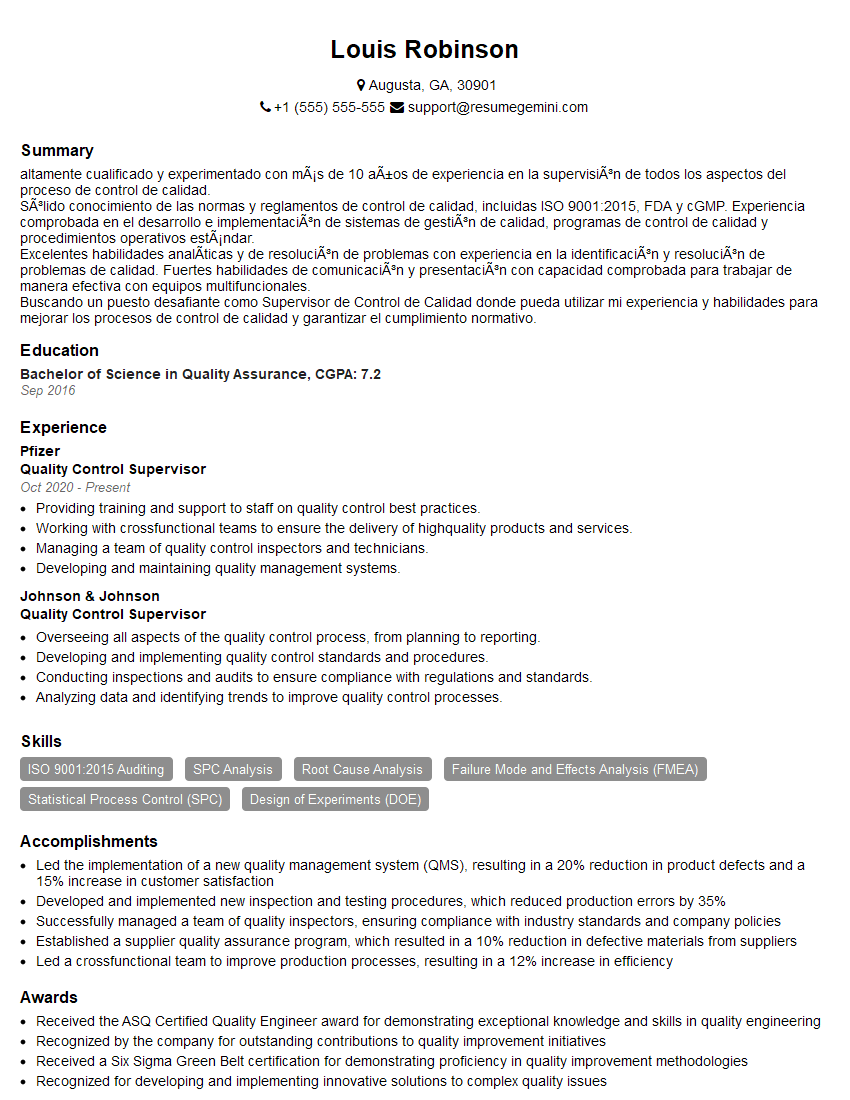
Mastering Profile Gage Inspection opens doors to rewarding careers in quality control and manufacturing. Demonstrating a strong understanding of these concepts is crucial for securing your desired role. To maximize your chances of landing your dream job, creating an ATS-friendly resume is essential. ResumeGemini is a trusted resource that can help you build a professional and impactful resume. Examples of resumes tailored to Profile Gage Inspection are available to guide you. Take the next step towards a successful career—build a resume that showcases your skills and experience effectively with ResumeGemini.

Explore more articles
Users Rating of Our Blogs
Share Your Experience
We value your feedback! Please rate our content and share your thoughts (optional).
What Readers Say About Our Blog
Really detailed insights and content, thank you for writing this detailed article.
IT gave me an insight and words to use and be able to think of examples