Are you ready to stand out in your next interview? Understanding and preparing for Binding and Finishing interview questions is a game-changer. In this blog, we’ve compiled key questions and expert advice to help you showcase your skills with confidence and precision. Let’s get started on your journey to acing the interview.
Questions Asked in Binding and Finishing Interview
Q 1. Explain the difference between perfect binding and saddle stitching.
Perfect binding and saddle stitching are two common methods for binding printed materials, each suited for different types of projects. Perfect binding, often seen in paperback books, involves gluing the edges of the pages together to create a smooth spine. The spine is then often covered with a paper or fabric cover. Think of your favorite paperback novel – that’s likely perfect binding. Saddle stitching, on the other hand, is a simpler method where folded pages are secured with wire staples along the spine. This is ideal for magazines, brochures, or booklets with a lower page count, as it’s more cost-effective for shorter documents. The key difference lies in the method of binding: glue for perfect binding and staples for saddle stitching, resulting in vastly different finishes and appropriate uses.
Q 2. Describe the process of case binding.
Case binding is a more robust and sophisticated binding method typically used for hardback books, high-quality journals, and other premium publications. It involves several intricate steps:
- Gathering and Sewing: The printed sections (signatures) are gathered and sewn together, often using different methods like side stitching or Smyth sewing, creating a durable spine.
- Adhesive Binding: Once sewn, the spine is often prepared with an adhesive to add strength.
- Case Making: Separately, a rigid cover (the case) is made using sturdy boards covered with cloth, leather, or other materials. This case provides robust protection.
- Attaching the Cover: The glued and prepared text block is then precisely attached to the case.
- Finishing Touches: This may involve headbands (decorative cloth at the top and bottom of the spine), endpapers (decorative pages between the cover and text block), and gold leaf or other embellishments.
Case binding is a labor-intensive process, requiring specialized equipment and skilled personnel. The result, however, is a high-quality, long-lasting bound product.
Q 3. What are the common types of finishing techniques used after printing?
Finishing techniques applied after printing greatly enhance the presentation and functionality of a printed product. Common types include:
- Cutting & Trimming: Precisely cutting pages to the required size and removing excess material.
- Folding: Folding pages to create leaflets, brochures, or booklets.
- Perforating: Creating perforations for easy tearing, often seen in coupons or tickets.
- Scoring: Creating a crease line in the paper to facilitate folding without cracking the paper.
- Embossing/Debossing: Creating raised (embossing) or indented (debossing) designs on the paper for texture and visual appeal.
- Die Cutting: Cutting intricate shapes or patterns into the paper, creating unique designs.
- Laminating: Applying a protective plastic film to enhance durability and water resistance.
- Varnishing: Applying a protective coating to enhance the vibrancy of colors and provide a glossy or matte finish.
The choice of finishing technique depends on the project’s specifications, budget, and desired aesthetic appeal.
Q 4. How do you troubleshoot common problems encountered in a bindery?
Troubleshooting in a bindery involves systematic problem-solving. Here’s a general approach:
- Identify the Problem: Carefully examine the faulty product to pinpoint the exact issue (e.g., misaligned pages, poor glue adhesion, crooked spine).
- Analyze the Cause: Consider the source of the problem. Is it a machine malfunction, incorrect settings, poor-quality materials, or operator error?
- Isolate the Variable: If possible, run a test with a smaller batch to pinpoint the cause of the problem by methodically changing one parameter at a time.
- Implement the Solution: Once the root cause is identified, adjust machine settings, replace faulty parts, or retrain personnel.
- Prevent Recurrence: Implement preventive maintenance, update processes, or improve quality control measures to avoid repeating the issue.
For example, if pages are misaligned, check the feeder settings, ensure proper paper handling, and recalibrate the cutting and folding machinery.
Q 5. What are the safety precautions you take when operating bindery equipment?
Safety is paramount in a bindery environment. Precautions include:
- Personal Protective Equipment (PPE): Always wear appropriate safety glasses, gloves, and hearing protection.
- Machine Guards: Ensure all machine guards are in place and functioning correctly before operation.
- Lockout/Tagout Procedures: Follow strict procedures when performing maintenance or repairs on machinery to prevent accidental start-ups.
- Proper Training: All personnel should receive comprehensive training on the safe operation of bindery equipment and emergency procedures.
- Housekeeping: Maintain a clean and organized workspace to prevent slips, trips, and falls.
- Emergency Procedures: Be familiar with emergency procedures and know the location of fire extinguishers, first-aid kits, and emergency exits.
Regular safety inspections and adherence to safety protocols are essential for a safe working environment.
Q 6. Explain the importance of quality control in the binding and finishing process.
Quality control is critical in binding and finishing as it directly impacts the final product’s quality, brand reputation, and customer satisfaction. A robust quality control system involves:
- Incoming Material Inspection: Checking the quality of paper, boards, and other materials before they enter the production process.
- In-Process Monitoring: Regularly inspecting work-in-progress to catch errors early, saving time and resources.
- Final Product Inspection: A thorough examination of the finished product to ensure it meets specifications and quality standards.
- Statistical Process Control (SPC): Utilizing statistical methods to monitor and control the process, identifying trends and potential problems.
- Documentation and Record Keeping: Maintaining detailed records of inspections and corrective actions taken.
A strong quality control program helps minimize waste, improve efficiency, and ensure consistent high-quality output.
Q 7. What types of materials are commonly used in different binding methods?
The materials used in binding vary considerably depending on the method and desired outcome:
- Perfect Binding: Typically uses adhesive (PUR, EVA), cover stock (paperboard or coated paper), and often endpapers.
- Saddle Stitching: Primarily uses wire staples and paper.
- Case Binding: Employs various materials such as book cloth (for covering the case), boards (typically chipboard or binder board), headbands (cloth or paper), and adhesives.
- Spiral Binding: Uses plastic or metal combs.
- Wire-O Binding: Uses double-loop wire.
Material selection is crucial for durability, aesthetics, and cost-effectiveness. For instance, using high-quality book cloth in case binding ensures longevity, while selecting appropriate adhesives ensures strong binding.
Q 8. How do you determine the appropriate binding method for a specific project?
Selecting the right binding method is crucial for a project’s success, impacting its durability, aesthetics, and cost. The choice depends on several factors: the document’s length and thickness, the desired look and feel, the budget, and the intended use.
- For short documents (under 50 pages): Saddle stitch (stapling) is often the most economical and quickest option. Perfect binding is suitable for slightly thicker documents needing a more professional finish.
- For longer documents (50-250 pages): Perfect binding remains a popular choice, while case binding (hardcover) provides superior durability for high-value items like textbooks or annual reports. Wire-O or coil binding works well for documents requiring lay-flat functionality, such as calendars or notebooks.
- For very large documents (over 250 pages): Case binding is almost always preferred due to its strength and longevity. Spiral binding can be considered for reference manuals needing to lay flat.
For example, a short brochure would benefit from saddle stitch, while a lengthy thesis would require perfect or case binding. Always consider the client’s needs and the project’s overall purpose.
Q 9. Describe your experience with different types of folding machines.
My experience encompasses a wide range of folding machines, from simple hand-fed folders to high-speed automated systems. I’ve worked extensively with:
- Single-knife folders: These are great for straightforward jobs, but their speed is limited. Perfect for smaller runs or when precise control is needed.
- Multiple-knife folders: These offer higher throughput, capable of performing various folds simultaneously (e.g., letter fold, gate fold). Ideal for larger print runs and complex folding requirements.
- Rotary folders: These high-speed machines are suitable for large volumes and can handle diverse paper stocks and weights. They often require more setup and maintenance, though.
- Inserters/Folders: These sophisticated machines combine folding and inserting capabilities, automating the entire process and increasing efficiency. Useful for creating complex mail pieces.
Understanding the capabilities of each machine type allows me to choose the most efficient and cost-effective option for each project. I also possess the skill to troubleshoot and maintain these machines to minimize downtime.
Q 10. How do you ensure the accuracy and consistency of cuts using a cutting machine?
Maintaining accuracy and consistency in cuts is paramount. It involves a combination of proper machine setup, regular maintenance, and careful operation.
- Blade sharpness: Dull blades lead to inaccurate cuts and frayed edges. Regular sharpening or replacement is essential.
- Machine calibration: Cutting machines must be calibrated precisely to ensure cuts are made at the correct dimensions. This involves checking and adjusting the guides and registration marks.
- Paper handling: Careful feeding of the paper is vital. Proper alignment and consistent pressure prevents misfeeds and inaccurate cuts. Using appropriate paper stock for the machine also helps.
- Regular checks: Periodically checking the cuts against a template confirms accuracy. Any inconsistencies should be addressed immediately.
For example, if cuts are consistently off by a fraction of an inch, we would check the blade sharpness, calibrate the machine’s guides, and examine the paper handling process for any bottlenecks.
Q 11. What are the advantages and disadvantages of using different types of adhesives in binding?
Different adhesives have distinct advantages and disadvantages in binding:
- Hot melt adhesives: Fast drying, cost-effective, and offer strong bonds. However, they can be messy and may require specific application equipment.
- PUR (Polyurethane Reactive) adhesives: Provide superior flexibility and adhesion, making them ideal for a wide range of paper types. They have a longer drying time and are more expensive.
- EVA (Ethylene Vinyl Acetate) adhesives: Offer a good balance of cost and performance. They are less durable than PUR but more versatile than hot melt.
- Casein (Protein-based) adhesives: Traditional, eco-friendly option but with limitations in flexibility and speed.
The choice depends on factors like budget, required bond strength, drying time constraints, and the type of paper being used. For instance, a high-volume paperback book might use hot melt for speed, whereas a high-quality photo book might use PUR for superior adhesion and lay-flat capability.
Q 12. How do you handle a jam in a high-speed binding machine?
Handling a jam in a high-speed binding machine requires a methodical approach, prioritizing safety and efficiency. First, always turn off the machine and lock it out to prevent accidental restarting. Then:
- Identify the jam: Carefully inspect the machine to locate the exact point of the jam. Use the machine’s access points to check for obstructions.
- Clear the jam: Gently remove the jammed materials, avoiding any forceful movements that could damage the machine. Consult the machine’s manual for instructions specific to that model.
- Check for damage: Once the jam is cleared, inspect the machine for any damage to components caused by the blockage.
- Restart the machine: After ensuring everything is clear and undamaged, restart the machine and monitor it closely for signs of further problems.
- Preventive Maintenance: Regularly schedule maintenance to prevent future jams. Ensure paper is properly fed and check for worn parts.
Experience teaches you to quickly identify the cause, whether it’s a paper misfeed, a broken component, or another issue. It is important to follow the manufacturer’s guidelines for maintenance and safety procedures to avoid more significant complications.
Q 13. What is your experience with die-cutting and embossing techniques?
My experience with die-cutting and embossing is extensive. I’m proficient in operating both manual and automated machines, and I understand the intricacies of die creation and setup.
- Die-cutting: I can create custom dies to cut intricate shapes and designs in paper, cardstock, and other materials. I understand the importance of proper die construction to ensure sharp, clean cuts.
- Embossing: I’m experienced in creating both blind (no color added) and registered (with foil or ink) embossing effects, adding texture and dimension to the final product. I can work with different embossing tools and foils to achieve the desired look.
- Combined Techniques: I often combine die-cutting and embossing in a single process to create complex designs. For example, I might die-cut a shape and then emboss it with a textured pattern.
For example, I once created custom die-cuts for a wedding invitation suite, incorporating intricate floral patterns and elegant lettering. Using embossing, we added subtle textural details to enhance their appearance.
Q 14. Explain the process of preparing a job for finishing, including pre-flighting.
Preparing a job for finishing involves several critical steps, ensuring a smooth and efficient workflow. Pre-flighting is an essential part of this process.
- Pre-flighting: This crucial step involves verifying the digital file’s accuracy and consistency before it goes to print. This includes checking the color profiles, image resolution, fonts, bleeds, and overall design. I utilize software specifically designed for preflighting to identify potential issues.
- Imposition: This step organizes pages for printing and binding. It helps optimize the use of paper by arranging pages efficiently onto larger sheets.
- Proofing: A physical or digital proof should be reviewed and approved by the client to ensure accuracy of colors and design before proceeding with the bulk run.
- Material Selection: The correct paper stock, thickness, and finish must be chosen, ensuring compatibility with the chosen binding method and the design’s requirements.
- Cutting and Folding instructions: Creating accurate cutting and folding guidelines that are easy for the finishing staff to follow is an essential part of the preparation.
If problems are detected during pre-flighting, corrections can be made before proceeding to the print stage which saves time and costs significantly. Think of pre-flighting as a quality control checkpoint before entering the finishing stage.
Q 15. How do you manage deadlines and prioritize tasks in a busy bindery environment?
Managing deadlines and prioritizing tasks in a busy bindery is all about effective planning and execution. I utilize several key strategies. First, I employ project management software to meticulously track all incoming jobs, their deadlines, and individual tasks involved. This allows for a clear overview and identification of potential bottlenecks. Second, I prioritize tasks based on urgency and impact, utilizing methods like the Eisenhower Matrix (urgent/important) to ensure that the most critical jobs are addressed first. Third, I regularly communicate with the team to ensure everyone understands their responsibilities and potential roadblocks are addressed proactively. For example, if a particular job requires a specialized finishing technique and we’re short-staffed, I’ll immediately re-allocate resources or consider outsourcing that specific part. Finally, I consistently monitor progress and adjust priorities as needed, always keeping the clients informed about any delays and providing alternative solutions if necessary.
Career Expert Tips:
- Ace those interviews! Prepare effectively by reviewing the Top 50 Most Common Interview Questions on ResumeGemini.
- Navigate your job search with confidence! Explore a wide range of Career Tips on ResumeGemini. Learn about common challenges and recommendations to overcome them.
- Craft the perfect resume! Master the Art of Resume Writing with ResumeGemini’s guide. Showcase your unique qualifications and achievements effectively.
- Don’t miss out on holiday savings! Build your dream resume with ResumeGemini’s ATS optimized templates.
Q 16. Describe your experience with different types of paper and their suitability for various binding methods.
My experience encompasses a wide range of papers, from lightweight coated stocks ideal for brochures to heavier uncoated papers suited for book production. The choice of paper is critical as it dictates the binding method’s feasibility and final product quality. For instance, thin papers are better suited for saddle-stitch binding, where pages are folded and stapled in the center. Heavier papers, on the other hand, are better for perfect binding, which involves gluing the pages together at the spine and then applying a cover. Consider this: a flimsy paper like newsprint would be unsuitable for a hardback book requiring a durable binding method like case binding, while thick cardstock would be unsuitable for delicate techniques such as spiral binding. I always consider the paper’s weight, texture, and finish in relation to the desired binding method, consulting paper specifications and conducting sample runs to ensure optimal results. I’m also experienced working with specialty papers, including recycled, textured, and even metallic papers, choosing each based on its unique characteristics and its interaction with different finishing processes.
Q 17. What are the common issues related to paper handling in the finishing process?
Paper handling presents several challenges in finishing. Common issues include:
- Paper jams: Caused by misaligned paper feeders, incorrect paper settings, or damaged paper. Troubleshooting usually involves checking the feeder guides, adjusting settings, and inspecting paper for creases or tears.
- Creasing and wrinkling: Often caused by improper feeding, excessive tension, or handling of damp or too-dry paper. Solutions include adjusting feeding mechanisms, reducing pressure, and properly conditioning paper.
- Paper scuffing and scratching: This can result from rough rollers or improper handling. Regular cleaning and maintenance of equipment, as well as proper handling techniques, are key preventative measures.
- Paper breaks: Due to thin or brittle paper, or excessive tension during processing. Careful selection of appropriate paper and adjusting machine tension helps to minimize this.
- Static electricity: Static cling can cause sheets to stick together or misfeed. Using anti-static solutions and controlling humidity are effective countermeasures.
Proper training, preventive maintenance of equipment, and adhering to best practices in paper handling are crucial for minimizing these issues and maintaining efficient workflow.
Q 18. How familiar are you with different types of cover stock and their applications?
Cover stock selection is crucial for the overall presentation and durability of a finished product. My experience includes working with various types, including:
- Cardboard: Used for sturdy covers, particularly in hardback books, offering robustness and protection.
- Chipboard: Provides a solid base for book covers, often used as the foundation for case binding.
- Book cloth: A cloth-like material offering various textures and colors, often chosen for its aesthetic appeal and durability.
- Laminated cover stock: Provides a protective and glossy or matte finish, enhancing the visual appeal and safeguarding the cover from wear.
The choice of cover stock depends on factors such as the final product’s intended use, its design, and the budget. For example, a high-end coffee table book would likely use a luxurious book cloth with embossing, while a paperback novel might use a more cost-effective, yet durable, laminated cover stock. I always consider the print method, as some stocks work better with specific printing techniques. For instance, uncoated stock might be suitable for screen printing, whereas coated stock is best for offset printing.
Q 19. What is your experience with automated binding systems?
I possess extensive experience operating and managing various automated binding systems, including perfect binding machines, saddle-stitchers, wire-o and coil binding machines. My expertise extends to programming these systems, troubleshooting malfunctions, and optimizing their performance to maximize efficiency and minimize waste. For instance, I’ve worked with high-speed perfect binding machines capable of producing hundreds of books per hour, requiring precise programming and regular maintenance to ensure consistent quality. I am comfortable with both digital and mechanical settings, adapting my approach depending on the machinery and the specific requirements of the job.
Beyond technical proficiency, I have a deep understanding of the limitations and capabilities of each system. This enables me to choose the optimal machinery for a given task, maximizing efficiency and minimizing errors. I also understand the need for regular preventative maintenance and can efficiently troubleshoot issues to minimize downtime.
Q 20. How do you maintain and troubleshoot binding equipment?
Maintaining and troubleshooting binding equipment requires a proactive and systematic approach. My experience involves performing regular preventative maintenance, including cleaning, lubricating, and inspecting components for wear and tear. I follow manufacturer guidelines and keep detailed records of all maintenance tasks. This proactive approach significantly reduces the likelihood of major breakdowns. When troubleshooting, I use a structured approach, starting with visual inspections, then checking for common issues like paper jams or power supply problems. I’m proficient in using diagnostic tools to identify more complex issues. For instance, if a perfect binding machine isn’t gluing properly, I’d systematically check the glue temperature, the glue application mechanism, and the pressure rollers. I’m adept at replacing worn parts and making minor repairs myself, and I know when to call in a qualified technician for major repairs. My goal is always to minimize downtime and maintain consistent production.
Q 21. What is your experience with different types of finishing materials, such as laminates and coatings?
My experience includes working with a wide array of finishing materials, encompassing various laminates and coatings. Laminates provide a protective layer and can enhance the visual appeal. I’m familiar with different types, such as gloss, matte, and soft-touch laminates, each offering distinct properties. For instance, a gloss laminate gives a shiny finish, ideal for brochures or catalogs, while a matte laminate offers a subtler, less reflective finish that can be preferable for certain types of publications. Soft-touch laminates provide a luxurious, velvety feel, adding a high-end touch to the finished product.
Coatings, on the other hand, add a protective layer and can improve the print’s durability and color vibrancy. I have experience with aqueous coatings (water-based) and UV coatings (ultraviolet-cured). Aqueous coatings offer a more environmentally friendly option, while UV coatings provide a more durable, scratch-resistant finish. The choice of laminate or coating depends on the product’s requirements and desired aesthetic effect. I consider factors like cost, durability, environmental impact, and aesthetic preferences when selecting the best material for the job.
Q 22. How do you ensure the consistent quality of the finished product?
Ensuring consistent quality in the finished product is paramount. It’s a multi-faceted process starting long before the binding stage. We begin with rigorous quality checks at each stage of production – from verifying the print quality against the client’s specifications to meticulously inspecting paper stock for defects.
In the bindery itself, consistent quality is achieved through standardized operating procedures (SOPs). This includes carefully calibrated machinery, regular maintenance schedules, and operator training programs focused on precision and attention to detail. We implement statistical process control (SPC) techniques, tracking key metrics such as binding strength, page alignment, and cover adhesion. Any deviation from the established standards triggers an immediate investigation and corrective action. For example, if we consistently see misaligned pages in a particular type of binding, we’d examine the machine settings, the paper stock, and operator technique to pinpoint and rectify the cause. Finally, a thorough final inspection of a sample from each batch ensures everything meets the highest quality standard before release to the client. This multi-layered approach minimizes variations and ensures consistent product quality.
Q 23. Describe your experience with various types of spiral and wire-o binding.
I have extensive experience with various spiral and wire-o binding methods. Spiral binding, also known as coil binding, is excellent for documents that need to lay flat, such as calendars or notebooks. I’m proficient with different coil sizes and colors, understanding the implications of each for the final product’s look and feel. For instance, choosing a larger coil diameter allows for thicker documents to lay flatter. Similarly, color selection can enhance the aesthetic appeal.
Wire-o binding, on the other hand, offers a more professional and durable finish, often preferred for high-end presentations, manuals, or journals. My experience encompasses both single-loop and double-loop wire-o, each suited for different thicknesses and requiring distinct machine settings for optimal results. I understand the importance of proper punch alignment for a seamless and aesthetically pleasing final product. I’ve also worked extensively with different wire gauges and material types, adjusting the settings on our binding machines to ensure proper crimping and a secure bind.
Moreover, I am familiar with troubleshooting common issues such as misaligned punches, broken coils, and inconsistent wire-o closure. This knowledge enables me to address problems quickly and efficiently, minimizing downtime and maximizing output.
Q 24. How do you calculate the cost of different binding and finishing processes?
Calculating the cost of different binding and finishing processes involves a comprehensive breakdown of various factors. First, we consider the material costs: this includes the price of the binding elements (coils, wire-o, adhesives, etc.), the cover stock, and any additional materials like laminates or embellishments.
Next, we estimate the labor costs. This depends on the complexity of the process, the volume of work, and the hourly rate of the operators. More intricate binding methods, such as case binding, demand more time and expertise, thereby increasing the labor costs.
We then factor in machine operating costs, which includes power consumption, maintenance, and potential depreciation of the equipment. Overhead costs, encompassing rent, utilities, and administrative expenses, are also allocated proportionally to the binding and finishing processes.
Finally, a profit margin is added. The final cost is calculated by summing up all these components. We utilize sophisticated software to streamline this calculation process, allowing for quick and accurate cost estimations for a wide variety of binding and finishing options, ensuring competitive pricing and optimal profitability.
Q 25. What software are you familiar with for prepress and postpress tasks?
My software proficiency spans both prepress and postpress applications. In prepress, I’m highly adept at using Adobe Acrobat Pro for PDF manipulation, including creating imposition layouts for efficient printing and verifying preflight checks to avoid costly errors. I’m also experienced with other design and layout software such as Adobe InDesign and QuarkXPress to make necessary adjustments and prepare files for optimal results in the bindery.
For postpress, I utilize specialized bindery software for managing job tickets, scheduling production, and tracking costs. This allows for efficient job management and reduces potential bottlenecks. Furthermore, I am familiar with database systems for inventory management of consumables such as paper stock, binding materials, and other supplies.
Q 26. How do you handle customer complaints or discrepancies in the finished product?
Addressing customer complaints is a crucial aspect of my role. When a discrepancy in the finished product arises, my first step is to actively listen to the client’s concerns and gather all the necessary details. We then conduct a thorough investigation, tracing the job back through every stage of the production process. This may involve inspecting the original print files, reviewing the bindery production records, and carefully examining the finished product.
Once the root cause is identified, we determine an appropriate resolution. This might range from reprinting affected sections to offering a partial or full refund depending on the severity of the problem and the client’s satisfaction. Transparency is key; we clearly communicate our findings and the planned corrective action to the customer. We view each complaint as an opportunity to learn and improve our processes. We thoroughly document all complaints and corrective actions to prevent similar issues from reoccurring in the future. This proactive approach builds client trust and ensures long-term customer satisfaction.
Q 27. Explain your understanding of waste reduction strategies in the bindery.
Waste reduction is a critical aspect of environmentally responsible bindery operations. Our strategies focus on several key areas. Firstly, we optimize cutting and trimming processes to minimize paper waste. This involves careful planning of imposition layouts during prepress to maximize the use of each sheet. Secondly, we implement rigorous quality control measures to reduce spoilage during production. Regular maintenance of machinery, and well-trained operators minimize errors that lead to unusable finished products.
We carefully manage our inventory, ordering materials only as needed, preventing unnecessary storage and potential spoilage. We recycle all possible waste materials, from scrap paper and cardboard to plastic packaging, adhering strictly to local recycling guidelines. Finally, we actively pursue eco-friendly binding and finishing supplies, such as recycled paper and biodegradable adhesives, wherever feasible. We continuously evaluate and update our waste reduction strategies to improve our environmental performance. The reduction in waste material translates to both environmental and economic benefits.
Q 28. Describe your experience working within a team in a fast-paced bindery environment.
I thrive in the fast-paced environment of a bindery. My experience includes working within tightly knit teams, where seamless collaboration is crucial to meeting tight deadlines. I am adept at communicating effectively with colleagues, sharing information, and coordinating tasks to ensure efficient workflow. For example, during peak seasons, we often have multiple projects running concurrently, requiring close coordination between the printing, finishing and binding teams.
I value teamwork and understand the importance of mutual support. I’m comfortable assisting colleagues when needed and proactively identify potential bottlenecks or challenges, suggesting solutions to maintain smooth operations. In such a high-pressure environment, problem-solving skills and a collaborative spirit are essential for success. I consistently demonstrate the ability to adapt to changing priorities and contribute positively to a productive and cohesive team environment.
Key Topics to Learn for Your Binding and Finishing Interview
- Book Binding Methods: Understanding the various binding methods (e.g., perfect binding, saddle stitch, case binding, spiral binding) including their strengths, weaknesses, and appropriate applications for different projects. Consider the materials used in each method and their impact on the final product.
- Finishing Techniques: Explore various finishing options such as cutting, trimming, embossing, foil stamping, die-cutting, and lamination. Understand the impact of each technique on the final product’s appearance, durability, and cost.
- Pre-Press and Post-Press Processes: Gain a solid understanding of how binding and finishing integrates with the overall printing process. This includes understanding pre-press considerations (e.g., file preparation, imposition) and the workflow involved in post-press operations.
- Quality Control and Troubleshooting: Learn about identifying and resolving common issues that can arise during the binding and finishing process, including misalignment, binding defects, and quality inconsistencies. Developing problem-solving skills is crucial.
- Equipment and Machinery: Familiarize yourself with common binding and finishing equipment (e.g., folding machines, cutting machines, stitching machines, laminators). Understanding their functionality and limitations is essential.
- Materials and Specifications: Develop a strong understanding of different paper types, board stocks, and other materials used in binding and finishing, along with their properties and suitability for various projects. Learn how to interpret specifications and technical drawings.
- Production Planning and Efficiency: Understand the importance of efficient workflow and production planning in a binding and finishing environment. Consider factors such as job scheduling, material management, and cost optimization.
Next Steps
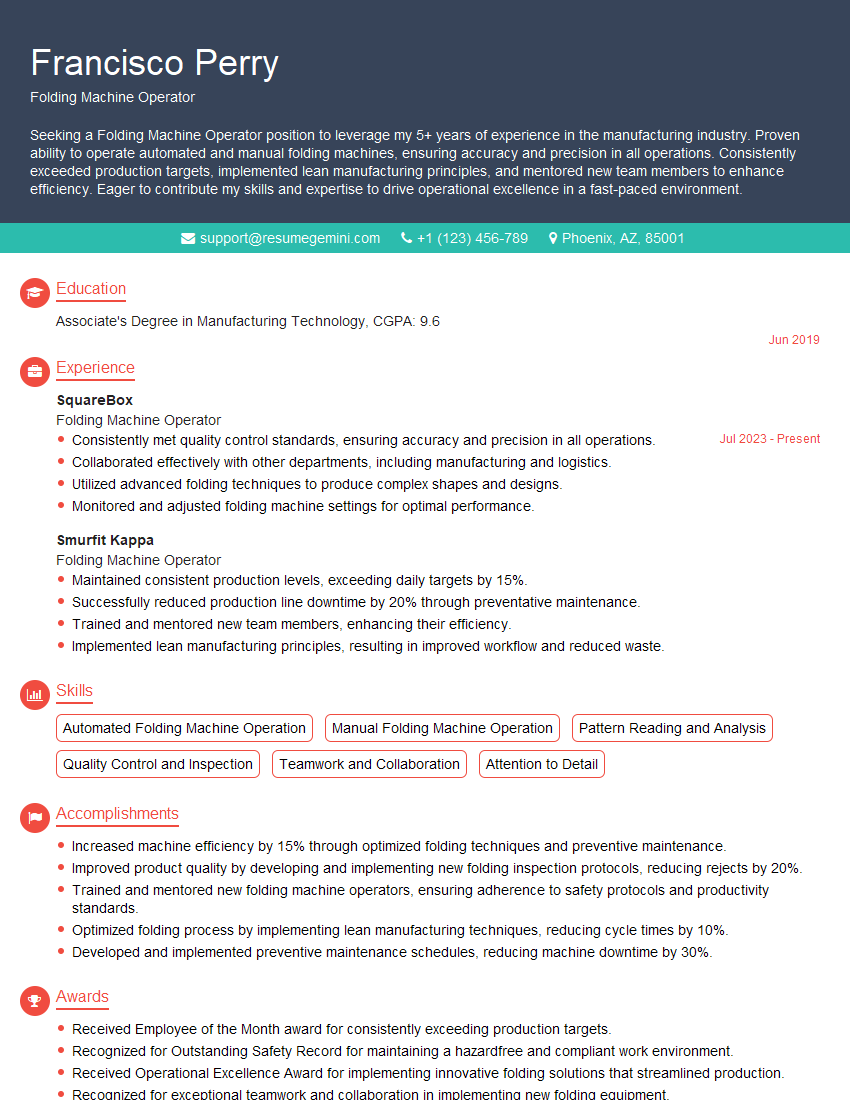
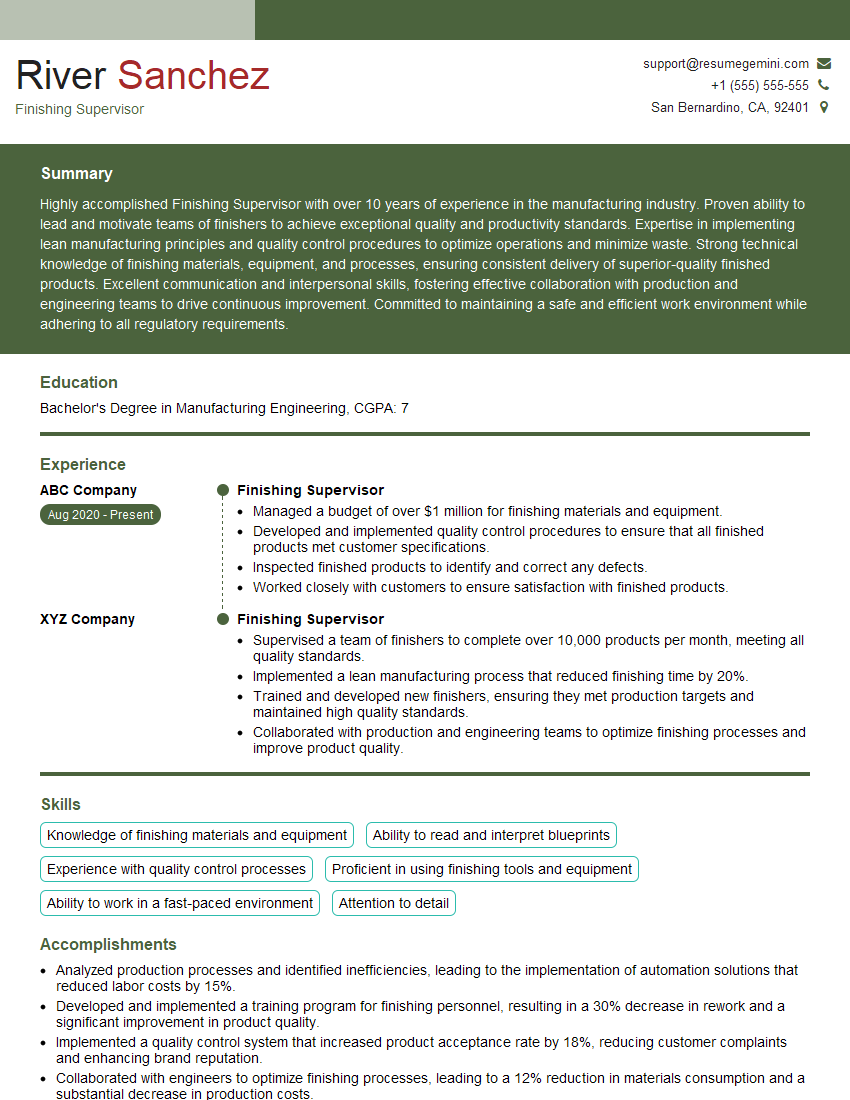
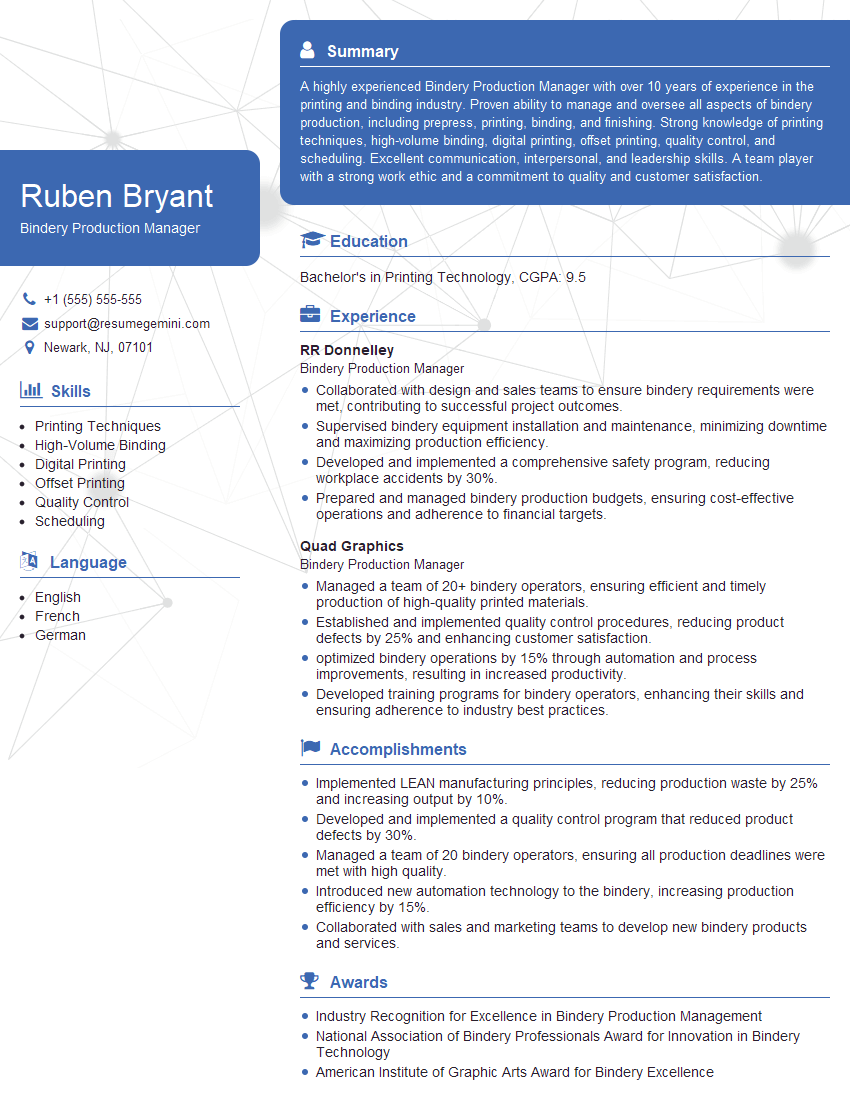
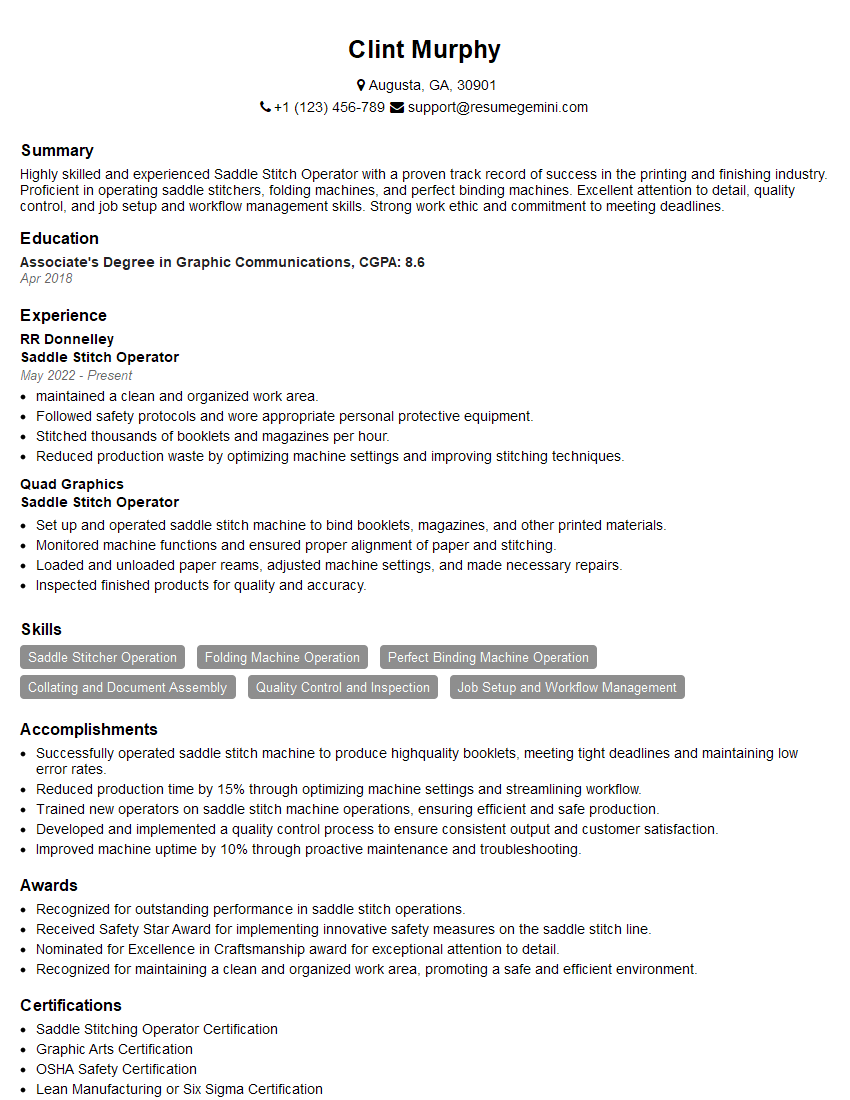
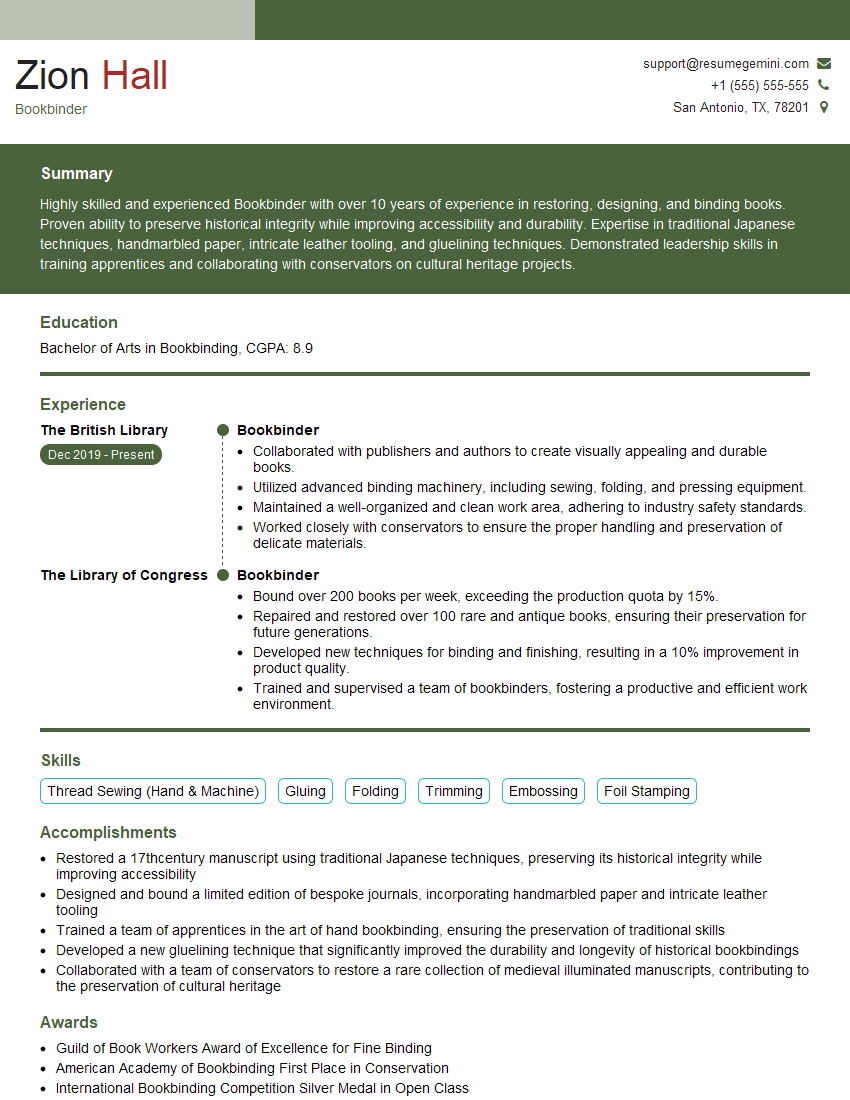
Mastering Binding and Finishing opens doors to exciting career opportunities and advancements within the printing and publishing industries. A strong understanding of these processes significantly enhances your value to potential employers. To increase your chances of landing your dream role, crafting an ATS-friendly resume is paramount. ResumeGemini is a trusted resource to help you build a professional and impactful resume that showcases your skills and experience effectively. We provide examples of resumes tailored to the Binding and Finishing field to help you get started.

Explore more articles
Users Rating of Our Blogs
Share Your Experience
We value your feedback! Please rate our content and share your thoughts (optional).
What Readers Say About Our Blog
Really detailed insights and content, thank you for writing this detailed article.
IT gave me an insight and words to use and be able to think of examples