Every successful interview starts with knowing what to expect. In this blog, we’ll take you through the top Boiler Steam Generation interview questions, breaking them down with expert tips to help you deliver impactful answers. Step into your next interview fully prepared and ready to succeed.
Questions Asked in Boiler Steam Generation Interview
Q 1. Explain the principle of steam generation in a boiler.
Steam generation in a boiler is fundamentally about transferring heat from a fuel source to water, causing it to evaporate and form steam. Think of it like a giant, controlled kettle. The process relies on the principle of heat transfer, where heat energy is transferred from the hot combustion gases (produced by burning fuel) to the water within the boiler tubes or shell. This heat energy increases the water’s temperature, eventually causing it to reach its boiling point and turn into steam. The steam is then collected and used for various industrial applications, such as power generation or process heating.
The efficiency of steam generation depends on several factors, including the design of the boiler, the type of fuel used, and the effectiveness of heat transfer. For example, a well-designed boiler will maximize the surface area of the tubes or shell in contact with the combustion gases to improve heat transfer.
Q 2. Describe different types of boilers (e.g., firetube, watertube).
Boilers are broadly categorized into two main types: firetube and watertube. In firetube boilers, hot gases from combustion pass through tubes surrounded by water. Imagine a bundle of pipes filled with hot gases surrounded by water; the heat transfers from the gases to the water. These are generally simpler and less expensive but are limited in steam production capacity and operating pressure. A common example is a horizontal return tubular (HRT) boiler often seen in smaller industrial settings.
Watertube boilers, on the other hand, have water circulating inside tubes that are surrounded by hot combustion gases. This design allows for much higher steam pressures and capacities because the water is directly exposed to the heat source, leading to quicker heating and more efficient steam generation. Large power plants often use watertube boilers due to their superior performance characteristics. There are various subtypes of watertube boilers, including D-type, O-type, and straight-tube boilers.
Q 3. What are the safety precautions associated with boiler operation?
Boiler operation necessitates stringent safety precautions to prevent accidents. Regular inspections are paramount, focusing on boiler pressure vessels, safety valves, water level indicators, and associated piping. The safety valves must be regularly tested to ensure they operate correctly, preventing dangerous pressure build-ups. Appropriate safety devices, like pressure gauges and high and low water level alarms, are essential monitoring tools. Operators must be adequately trained to respond effectively to emergencies and follow strict operational procedures. Furthermore, regular maintenance, including cleaning, and inspections are crucial for preventing malfunctions and ensuring safe operation.
Lockout/Tagout procedures are critical during maintenance to prevent accidental start-up. Protective equipment, such as heat-resistant gloves and clothing, are required to prevent burns during operation and maintenance. Finally, a detailed understanding of the boiler’s operation and potential hazards is crucial for all personnel.
Q 4. How do you monitor boiler water level and pressure?
Boiler water level and pressure are continuously monitored using several instruments. Water level is monitored using water gauges (glass or electronic) that directly show the level of water inside the boiler drum. These gauges need regular maintenance to ensure accuracy. Low water level alarms are crucial safety devices. Pressure is monitored using pressure gauges, providing a visual reading of the steam pressure within the boiler. These gauges should be regularly calibrated to ensure accuracy. High-pressure alarms and safety valves are also employed to prevent dangerously high pressures.
Modern boilers often incorporate advanced control systems that provide continuous monitoring and automated control of both water level and pressure. These systems often include data logging capabilities to help in trend analysis and predictive maintenance.
Q 5. Explain the role of feedwater treatment in boiler operation.
Feedwater treatment is crucial for efficient and safe boiler operation. Raw water often contains impurities like dissolved solids (salts, minerals), suspended solids, and dissolved gases (oxygen, carbon dioxide). These impurities can cause scaling, corrosion, and foaming in the boiler, leading to reduced efficiency, tube failures, and even boiler explosions. Feedwater treatment aims to remove or reduce these impurities to an acceptable level.
Treatment methods include chemical conditioning (using chemicals to soften water, remove oxygen, or control pH), filtration (removing suspended solids), and demineralization (removing dissolved solids using ion exchange). The specific treatment will depend on the water’s quality and the boiler’s operating conditions. Regular water testing is crucial to monitor the effectiveness of the treatment and adjust as needed. Poor feedwater treatment is a leading cause of boiler problems and premature failure.
Q 6. Describe the process of boiler blowdown and its purpose.
Boiler blowdown is the controlled process of removing a portion of boiler water to maintain water purity and prevent the accumulation of dissolved and suspended solids. These impurities concentrate over time as water evaporates, leading to problems like scaling and corrosion. Blowdown is typically performed periodically, either continuously (continuous blowdown) or intermittently (intermittent blowdown).
Continuous blowdown removes a small, continuous stream of water, maintaining a constant level of impurities. Intermittent blowdown involves periodically opening a valve to rapidly remove a larger volume of water. The frequency and amount of blowdown depend on the boiler’s operating conditions and the quality of the feedwater. Improper blowdown can lead to significant water and energy losses, while insufficient blowdown can cause serious boiler problems.
Q 7. What are the common causes of boiler tube leaks?
Boiler tube leaks are a serious issue, often requiring immediate attention to prevent further damage and ensure safety. Several factors can contribute to these leaks:
- Corrosion: This is a major cause. Internal corrosion (caused by impurities in the water) and external corrosion (caused by gases or chemicals outside the tubes) can weaken the tube material, leading to leaks.
- Erosion: High-velocity water or steam flow can erode the tube material over time, creating thin spots and potential leaks. This is especially prevalent in areas with sharp bends or restrictions.
- Scaling: The buildup of mineral deposits (scale) on the inside of the tubes can restrict flow, leading to overheating and eventual tube failure.
- Overheating: Inadequate water flow or excessive heat input can cause overheating of the tubes, leading to weakening and failure. Low water levels can have a devastating effect.
- Fatigue: Repeated thermal stress due to start-up and shutdown cycles can lead to fatigue cracking and eventual tube failure.
- External factors: External corrosion, improper installation, or mechanical damage during operation can also contribute to leaks.
Regular inspections, proper water treatment, and adherence to operating procedures are crucial to minimizing the risk of boiler tube leaks.
Q 8. How do you troubleshoot a low steam pressure situation?
Troubleshooting low steam pressure involves a systematic approach. Think of it like diagnosing a car problem – you need to check several systems before pinpointing the cause. First, we check the fuel supply: Is there enough fuel? Is the fuel properly combusting? Next, we examine the water level: Is it low? A low water level is a major safety hazard and needs immediate attention. Then we assess the boiler’s efficiency: Are the tubes clean (scale buildup reduces efficiency and heat transfer)? Is there sufficient airflow for proper combustion? We also check the boiler’s safety valves to ensure they aren’t stuck. Finally, we look at the steam demand: Is there an unusually high demand from the system? A methodical approach, using gauges and sensors to monitor pressure, water level, and fuel flow, is essential. We use this information to systematically eliminate possibilities, starting with the most likely culprits. For instance, a sudden drop in pressure might point to a leak, requiring a thorough visual inspection. A gradual decrease might indicate scaling or a problem with the fuel supply.
Q 9. Explain the importance of boiler efficiency and how it’s measured.
Boiler efficiency is crucial because it directly impacts operating costs. A more efficient boiler means less fuel consumption for the same amount of steam production, saving money and reducing environmental impact. Boiler efficiency is measured as the ratio of the heat transferred to the water to the heat input from the fuel. It’s usually expressed as a percentage. Think of it like this: if you put 100 units of energy into a boiler and get 80 units of usable steam, your efficiency is 80%. Measuring boiler efficiency requires monitoring several parameters, including fuel consumption rate, steam production rate, steam temperature, and feedwater temperature. Specialized instruments like oxygen analyzers and flue gas analyzers are used to precisely measure the heat loss in the flue gases, contributing to the overall efficiency calculation. Improving efficiency can involve measures like regular cleaning to remove scale buildup, optimizing combustion air control, and regular maintenance of boiler components.
Q 10. What are the different types of boiler fuel?
Boilers can use various fuels, each with its own advantages and disadvantages. Common types include:
- Natural Gas: Clean burning, readily available, and relatively easy to manage. It’s a popular choice for many industrial and commercial applications.
- Fuel Oil: Offers higher energy density than natural gas but produces more emissions. Different grades of fuel oil are available, depending on sulfur content and viscosity.
- Coal: Historically a major fuel source for large power plants. It’s relatively inexpensive but produces significant emissions and requires extensive handling infrastructure.
- Biomass: Renewable fuels derived from organic matter, such as wood chips or agricultural residues. It’s a sustainable option but requires careful handling and storage.
- Waste-Derived Fuels: Refuse-derived fuels or RDF, composed of processed municipal solid waste, offer a way to utilize waste materials but need careful management to avoid environmental problems.
The choice of fuel depends on factors such as availability, cost, environmental regulations, and the specific application requirements.
Q 11. Describe the function of boiler safety valves and pressure relief systems.
Boiler safety valves and pressure relief systems are critical for preventing catastrophic failures. These systems are designed to release excess pressure if the boiler pressure exceeds a preset limit. Imagine a pressure cooker – the safety valve releases steam to prevent explosions. Boiler safety valves are spring-loaded and set to open at a specific pressure, preventing dangerous overpressure. They’re rigorously tested and inspected to ensure reliable operation. In addition to safety valves, other pressure relief systems might include rupture discs (which burst at a specific pressure) and pressure-reducing valves, which control the pressure downstream of the boiler.
Q 12. How do you interpret boiler performance indicators?
Interpreting boiler performance indicators requires understanding their significance. Key indicators include:
- Steam Pressure: Indicates the boiler’s ability to meet the demand.
- Steam Temperature: Affects the efficiency of downstream processes. Too low and you may not have enough energy for your processes, too high and you risk damage to equipment.
- Fuel Consumption: Provides a direct measure of operating costs.
- Water Level: Crucial for safe and efficient operation; low water levels can lead to overheating and damage.
- Flue Gas Temperature and Composition: Analyze the efficiency of the combustion process; high flue gas temperatures indicate heat loss.
- Boiler Efficiency: The overall measure of how effectively the boiler converts fuel energy to steam.
By analyzing these indicators over time, we can identify trends, diagnose potential problems, and optimize boiler operation. Regular monitoring and analysis are vital for proactive maintenance and efficient operation.
Q 13. Explain the role of combustion controls in optimizing boiler operation.
Combustion controls are automated systems designed to optimize the combustion process, ensuring efficient fuel utilization and minimizing emissions. Think of it as a sophisticated recipe for burning fuel optimally. These systems precisely regulate the fuel and air mixture, ensuring the correct air-to-fuel ratio for complete combustion. They also monitor and adjust the combustion process based on feedback from sensors such as oxygen analyzers and temperature sensors. Advanced combustion controls can utilize techniques like lambda control, which adjusts fuel input based on oxygen levels in the flue gas, minimizing energy waste and emissions. Efficient combustion controls lead to significant fuel savings, lower operating costs, and reduced environmental impact by ensuring complete combustion and minimizing emissions such as NOx and CO.
Q 14. What is the significance of water chemistry in boiler operation?
Water chemistry is paramount in boiler operation, as it directly impacts boiler efficiency, lifespan, and safety. Impurities in the water, like dissolved solids and minerals, can cause scale buildup on the boiler tubes, reducing heat transfer and efficiency. This scale acts as an insulator, leading to overheating and potential tube failures. Moreover, impurities can cause corrosion and pitting, degrading the boiler’s structural integrity. Water treatment is crucial; it involves removing impurities like hardness salts (calcium and magnesium) through processes such as softening, demineralization, and filtration. Regular water testing is performed to monitor the water’s purity and adjust the treatment as needed. This prevents scale formation and corrosion, extending the boiler’s lifespan and ensuring safe operation. Poor water chemistry can lead to costly repairs, unplanned downtime, and potentially dangerous situations. Regular monitoring and meticulous water treatment are essential parts of effective boiler management.
Q 15. Describe the procedures for boiler start-up and shutdown.
Boiler start-up and shutdown procedures are critical for safety and equipment longevity. They involve a careful, stepwise approach to avoid thermal shock and ensure efficient operation.
Start-up: Typically begins with a thorough inspection of the boiler and its auxiliary systems, checking water levels, fuel supply, and safety devices. Then, the boiler is slowly filled with treated water, purging any air to prevent overheating. The burner is ignited at a low setting, gradually increasing the heat input as the water temperature rises. This controlled heating prevents thermal stress on the boiler’s metal components. Instruments are continuously monitored to ensure the pressure and temperature are within safe operating parameters. Finally, the boiler reaches its operating pressure and temperature, ready for steam production.
Shutdown: The process is equally deliberate. The fuel supply is gradually reduced, allowing the boiler to cool down slowly. This prevents sudden pressure drops, which could damage the boiler. The boiler pressure is reduced to atmospheric pressure under careful control. Once the pressure is safe, the water level is checked and the boiler is drained according to established procedures. A post-shutdown inspection is crucial to identify any issues that may have arisen during operation.
Imagine starting a car – you don’t just slam the pedal to the metal; you slowly accelerate to avoid damage. Similarly, gradual heating and cooling are essential for boiler operation.
Career Expert Tips:
- Ace those interviews! Prepare effectively by reviewing the Top 50 Most Common Interview Questions on ResumeGemini.
- Navigate your job search with confidence! Explore a wide range of Career Tips on ResumeGemini. Learn about common challenges and recommendations to overcome them.
- Craft the perfect resume! Master the Art of Resume Writing with ResumeGemini’s guide. Showcase your unique qualifications and achievements effectively.
- Don’t miss out on holiday savings! Build your dream resume with ResumeGemini’s ATS optimized templates.
Q 16. How do you handle boiler emergencies (e.g., fire, water leak)?
Boiler emergencies require swift and decisive action. Effective emergency response relies on established procedures, proper training, and readily available emergency equipment.
- Fire: Immediately activate the fire alarm and emergency shutdown procedures. Attempt to extinguish the fire using appropriate fire extinguishers while evacuating personnel from the immediate area. Contact the fire department immediately.
- Water Leak: The severity dictates the response. Minor leaks can sometimes be addressed with minor repairs, whilst major leaks necessitate immediate shutdown to prevent damage from overheating or water loss. Isolation valves should be used to contain the leak before attempting repairs. Assess the source and severity of the leak.
Regular drills are crucial for preparing your team to handle emergencies. Having a detailed emergency response plan, clearly outlining roles and responsibilities, is paramount. This ensures that everyone knows what to do in various emergency situations.
Q 17. Explain the concept of superheated steam and its applications.
Superheated steam is steam heated beyond its saturation temperature at a given pressure. In simpler terms, it’s steam that’s hotter than it would normally be at that pressure. This extra heat provides significant advantages in various industrial processes.
Applications: Superheated steam is extensively used where high temperatures and efficient heat transfer are needed. Common applications include:
- Power Generation: Used in steam turbines for electricity production, where its higher temperature leads to improved efficiency and greater power output.
- Industrial Processes: Used in various industrial processes such as sterilization, drying, and heating in chemical plants, refineries, and food processing.
- Steam Heating Systems: Offers higher heat transfer, requiring less steam to achieve the desired temperature in heating systems.
Consider a cup of boiling water versus a jet of high-pressure superheated steam. The latter carries much more heat and can perform tasks that the former cannot, such as cutting through metal.
Q 18. What are the different methods for boiler water treatment?
Boiler water treatment is crucial for preventing scale formation, corrosion, and other problems that reduce boiler efficiency and lifespan. Various methods are employed, often in combination:
- Chemical Treatment: This involves adding chemicals to the boiler water to soften the water, prevent scale and corrosion, and control alkalinity. Commonly used chemicals include phosphates, chelating agents, and oxygen scavengers.
- Physical Treatment: This includes processes like filtration and softening to remove suspended solids, hardness minerals, and other impurities from the water before it enters the boiler.
- External Treatment (Pre-treatment): This involves treating the water source externally before it enters the boiler. This may include reverse osmosis, ion exchange, or other water purification techniques.
The specific treatment method depends on the water’s quality and the boiler’s type and operating conditions. Regular water testing is essential to adjust chemical treatment as needed.
Q 19. Describe the maintenance schedule for a typical boiler system.
A typical boiler maintenance schedule depends on factors like boiler size, type, and operating conditions. However, a general schedule would include:
- Daily Checks: Water level, pressure, temperature, fuel supply, safety devices.
- Weekly Checks: Blowdown procedures, chemical treatments, inspection of external components.
- Monthly Checks: More thorough internal inspection of water quality and internal components (if possible).
- Annual Inspections: Complete internal and external inspection, including cleaning, testing of safety valves, and overall system review. Professional boiler inspectors often conduct annual checks.
- Multi-year Inspections: Major overhauls and replacements of components may be required after several years depending on usage and condition.
Think of a car’s maintenance – regular oil changes, tire rotations, and inspections prevent major breakdowns. Boiler maintenance follows a similar principle, preventing unexpected failures and ensuring long-term operational reliability.
Q 20. Explain the importance of regular boiler inspections.
Regular boiler inspections are critical for safety and efficiency. They allow for early detection of potential problems, preventing costly repairs and ensuring safe operation. Inspections ensure compliance with safety regulations and optimize boiler performance.
- Safety: Inspections identify potential safety hazards like leaks, corrosion, or malfunctioning safety devices, preventing accidents and protecting personnel.
- Efficiency: Inspections help detect issues like scale buildup, which can reduce boiler efficiency and fuel consumption. Early detection enables timely cleaning and maintenance.
- Compliance: Regular inspections help ensure compliance with relevant safety regulations and industry standards.
- Longevity: Preventative maintenance identified during inspections extends the boiler’s lifespan by addressing small issues before they escalate into major problems.
Imagine a doctor’s checkup – regular check-ups catch health issues early. Similarly, boiler inspections are preventative measures that save money and improve safety.
Q 21. What are the common causes of boiler scale formation?
Boiler scale formation is primarily caused by the deposition of mineral salts present in hard water. These salts precipitate out of solution as the water evaporates in the boiler, forming a hard, insulating layer on the boiler’s internal surfaces.
- Water Hardness: High concentrations of calcium and magnesium salts in the water are the primary culprits.
- High Water Temperature and Pressure: Elevated temperatures and pressures within the boiler accelerate the precipitation of these salts.
- Alkalinity: High boiler water alkalinity can also contribute to scale formation.
- Poor Water Treatment: Inadequate or ineffective water treatment allows minerals to precipitate and form scale.
Think of a kettle – if you don’t descale it regularly, a hard layer of minerals forms on the bottom. Similarly, boilers need appropriate water treatment to prevent scale build-up. Scale reduces heat transfer efficiency, ultimately leading to higher energy costs and potential damage.
Q 22. How do you identify and address boiler corrosion?
Boiler corrosion is a significant concern, leading to reduced efficiency, safety hazards, and costly repairs. Identifying it involves a multi-pronged approach. We begin with regular visual inspections, looking for pitting, scaling, or general deterioration. Chemical analysis of the boiler water is crucial; high levels of dissolved oxygen, chlorides, or sulfates are strong indicators of corrosion. We also analyze the boiler’s blowdown samples to monitor the concentration of corrosive substances. Further diagnostic tools include metallurgical analysis of corroded samples to determine the type of corrosion (e.g., pitting, crevice corrosion) and its root cause. Addressing corrosion involves several strategies, depending on the type and severity. These include:
- Water Treatment: Implementing a robust water treatment program is paramount. This involves using chemicals like oxygen scavengers, corrosion inhibitors, and filming amines to control the water chemistry and prevent corrosion.
- Material Selection: Choosing the right materials for boiler construction is critical. Stainless steels and other corrosion-resistant alloys are often used in high-temperature and high-pressure areas.
- Operational Practices: Proper boiler operation, including maintaining correct water levels and avoiding rapid temperature changes, minimizes stress on the system and reduces the risk of corrosion.
- Regular Maintenance: Scheduled inspections, cleaning, and repairs are essential. This includes removing sludge and deposits which can accelerate corrosion.
For example, in one plant, we discovered severe pitting corrosion in the economizer due to high chloride concentration in the feedwater. By implementing a more effective water treatment program and installing a chloride monitoring system, we successfully mitigated the corrosion and extended the economizer’s lifespan.
Q 23. Explain the impact of boiler efficiency on operating costs.
Boiler efficiency directly impacts operating costs. A more efficient boiler requires less fuel to produce the same amount of steam, resulting in significant savings. Think of it like this: a less efficient boiler is like a leaky bucket – you’re constantly pouring in more fuel to compensate for the losses. Let’s say a boiler’s efficiency improves by just 5%. For a plant consuming a large amount of fuel annually, this seemingly small improvement can translate into substantial cost reductions, potentially amounting to thousands or even millions of dollars depending on the scale of the operation. This translates to lower energy bills, decreased carbon footprint and increased profitability.
We regularly monitor boiler efficiency using instruments such as gas analyzers (measuring CO2, O2, and CO levels) and flow meters (measuring fuel and steam flow rates). We also analyze the heat transfer efficiency of the boiler system, checking for any areas of heat loss or fouling. Improvements in efficiency can be achieved through actions like optimizing combustion parameters, regular cleaning, and implementing advanced control systems.
Q 24. Describe the different types of boiler instrumentation and their function.
Boiler instrumentation is crucial for safe and efficient operation. It provides real-time data on critical parameters, allowing for monitoring and control. Different types include:
- Pressure Gauges: Measure steam pressure at various points in the system. Essential for safety and efficient operation.
- Temperature Sensors (Thermocouples, RTDs): Monitor steam temperature, feedwater temperature, and flue gas temperature to optimize heat transfer and ensure safety.
- Level Indicators: Indicate water level in the boiler drum to prevent low water conditions, a major safety hazard.
- Flow Meters: Measure fuel, air, steam, and feedwater flow rates for precise control and efficiency monitoring.
- Gas Analyzers: Analyze the composition of flue gases to optimize combustion and minimize emissions. This helps to ensure we are getting the maximum output from fuel while reducing pollution.
- Safety Valves and Pressure Relief Valves: These are safety devices that automatically release pressure should it exceed safe limits, preventing dangerous explosions.
The data from these instruments is often integrated into a central control system (like a PLC or DCS) for automated monitoring and control. For example, if the steam pressure drops below a set point, the PLC will automatically increase the fuel input to restore the pressure to the desired level.
Q 25. How do you maintain boiler logs and records?
Maintaining accurate and detailed boiler logs and records is essential for compliance, troubleshooting, and optimization. We typically maintain daily logs documenting operational parameters such as steam pressure, water level, fuel consumption, chemical treatments, and any maintenance activities. These logs also record any unusual occurrences, alarms triggered, or maintenance issues. We use a combination of paper logs and digital systems to maintain this data. Digital systems allow us for easier data analysis and trend identification over longer periods. Long-term records include:
- Maintenance Logs: detailing all inspections, repairs, and replacements.
- Water Treatment Records: documenting chemical additions and water quality analyses.
- Emission Data: reflecting the results of stack testing and emissions monitoring.
- Performance Data: including efficiency metrics, fuel consumption, and steam production.
These records are crucial for compliance with regulatory requirements and help us identify trends and potential problems before they escalate. For instance, tracking daily fuel consumption can reveal gradual efficiency degradation, prompting us to schedule maintenance to address the issue. Proper documentation serves as a history of the boiler’s performance and maintenance, facilitating effective decision-making and problem-solving.
Q 26. What are the environmental regulations related to boiler emissions?
Environmental regulations concerning boiler emissions are stringent and vary by location. They primarily focus on minimizing pollutants such as nitrogen oxides (NOx), sulfur dioxide (SO2), particulate matter (PM), and carbon monoxide (CO). Regulations often specify emission limits, requiring regular stack testing to ensure compliance. In many jurisdictions, permits are required to operate boilers, and these permits frequently include emission limits and monitoring requirements. Failure to comply can result in significant penalties. Meeting these regulations requires employing various strategies, including:
- Low NOx Burners: These burners are designed to minimize NOx formation during combustion.
- Selective Catalytic Reduction (SCR): This technology injects ammonia into the flue gas to chemically reduce NOx.
- Selective Non-Catalytic Reduction (SNCR): Similar to SCR, but without a catalyst, making it a less expensive option.
- Air Pollution Control Devices: Particulate matter can be controlled using electrostatic precipitators or fabric filters.
- Fuel Selection: Using low-sulfur fuels reduces SO2 emissions.
Staying up-to-date on the specific regulations for our operating location is critical. We regularly review updates to ensure ongoing compliance. For example, recent tightening of NOx limits required us to retrofit our boilers with SCR technology.
Q 27. Explain your experience with different types of boiler controls (e.g., PLC, DCS).
I have extensive experience with both Programmable Logic Controllers (PLCs) and Distributed Control Systems (DCS) for boiler control. PLCs are well-suited for smaller, simpler boiler systems, offering reliable and cost-effective automation. I’ve used PLCs to control various boiler parameters such as fuel flow, air-fuel ratio, and water level. My experience includes programming PLCs using ladder logic and configuring input/output modules for seamless integration with the boiler system. For larger, more complex systems or those requiring a high level of redundancy, DCS offers superior advantages. I’ve worked extensively with DCS systems for larger industrial boilers, managing complex control strategies, optimizing energy efficiency, and ensuring safe and reliable operation. These systems allow centralized monitoring and control of multiple boilers and associated equipment. This includes sophisticated control algorithms for optimizing fuel consumption and emissions while ensuring safe operation. I’m proficient in configuring and troubleshooting DCS systems, and familiar with various vendor-specific platforms. The choice between PLC and DCS depends on the specific requirements of the boiler system, considering factors such as size, complexity, and budget.
Q 28. Describe your experience with boiler troubleshooting and repair.
Boiler troubleshooting and repair require a systematic approach. I begin by gathering information, including operational logs, alarm history, and any observations made by the operators. This initial assessment helps identify potential areas of concern. Then, I utilize diagnostic tools such as pressure gauges, temperature sensors, and gas analyzers to pinpoint the problem. For instance, if the boiler is producing less steam than expected, I would investigate factors like fuel supply, air-fuel ratio, water quality, and boiler fouling. My experience encompasses a wide range of repairs, from minor adjustments and component replacements to major overhauls. This includes addressing issues such as burner malfunctions, leaky tubes, and control system failures. I have a strong understanding of boiler design, construction, and operating principles, enabling me to diagnose and resolve complex issues efficiently. For example, I once resolved a recurring low-steam production issue by identifying a gradual buildup of scale in the boiler tubes, necessitating chemical cleaning and adjustments to the water treatment process. Safety is paramount in any repair work. All repair tasks are performed according to strict safety protocols, ensuring the well-being of personnel and the integrity of the equipment.
Key Topics to Learn for Boiler Steam Generation Interview
- Fundamentals of Thermodynamics: Understanding thermodynamic principles like enthalpy, entropy, and the Rankine cycle is crucial for comprehending boiler operation.
- Boiler Types and Components: Familiarize yourself with various boiler types (e.g., fire-tube, water-tube, HRSG) and their key components (e.g., burners, superheaters, economizers, feedwater pumps).
- Combustion and Fuel Efficiency: Master the principles of combustion, including stoichiometry, air-fuel ratio, and methods for optimizing fuel efficiency and minimizing emissions.
- Water Treatment and Chemistry: Understand the importance of water treatment in preventing scaling, corrosion, and other issues that can impact boiler efficiency and lifespan.
- Boiler Controls and Instrumentation: Learn about the different control systems used to maintain optimal boiler operation, including safety interlocks and monitoring equipment.
- Troubleshooting and Maintenance: Develop your ability to diagnose common boiler problems, perform preventative maintenance, and understand safety procedures.
- Steam Distribution and Usage: Understand how steam is distributed throughout a facility and its applications in various industrial processes.
- Safety Regulations and Compliance: Be aware of relevant safety regulations and compliance requirements related to boiler operation and maintenance.
- Practical Problem Solving: Practice applying your theoretical knowledge to solve real-world scenarios related to boiler operation and maintenance. Consider case studies and simulations.
Next Steps
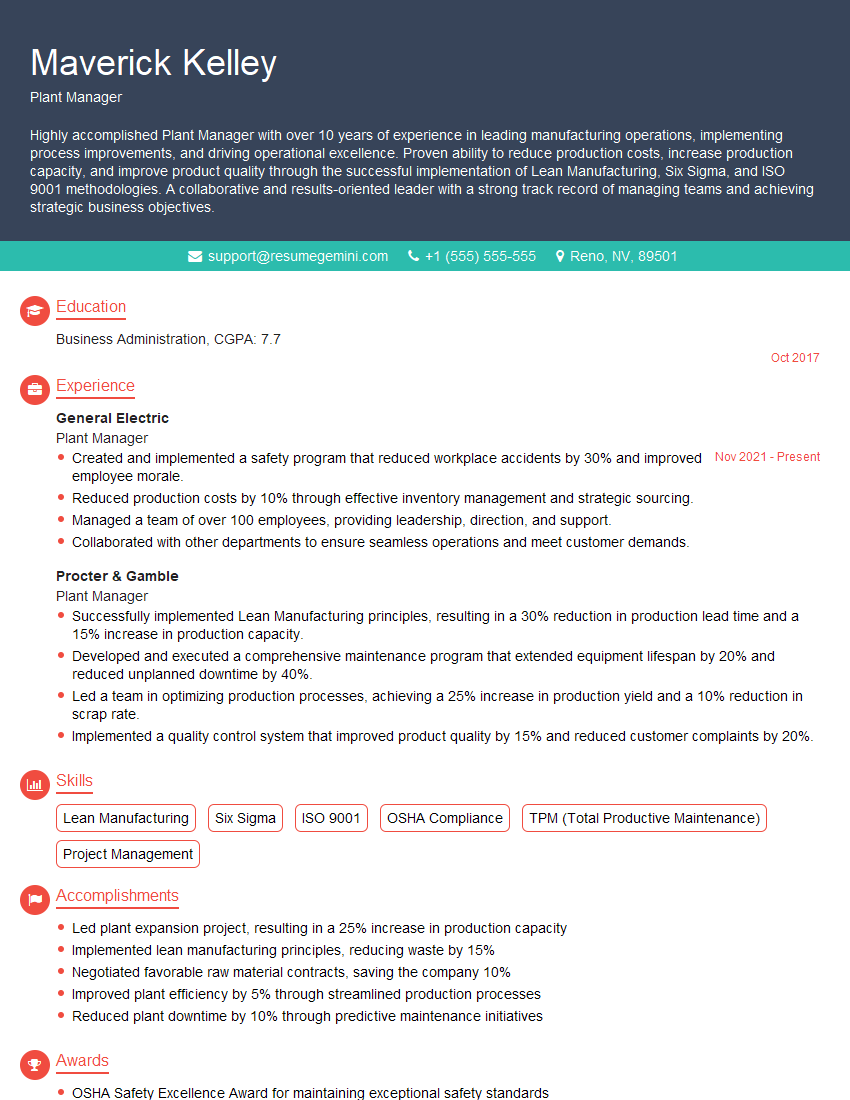
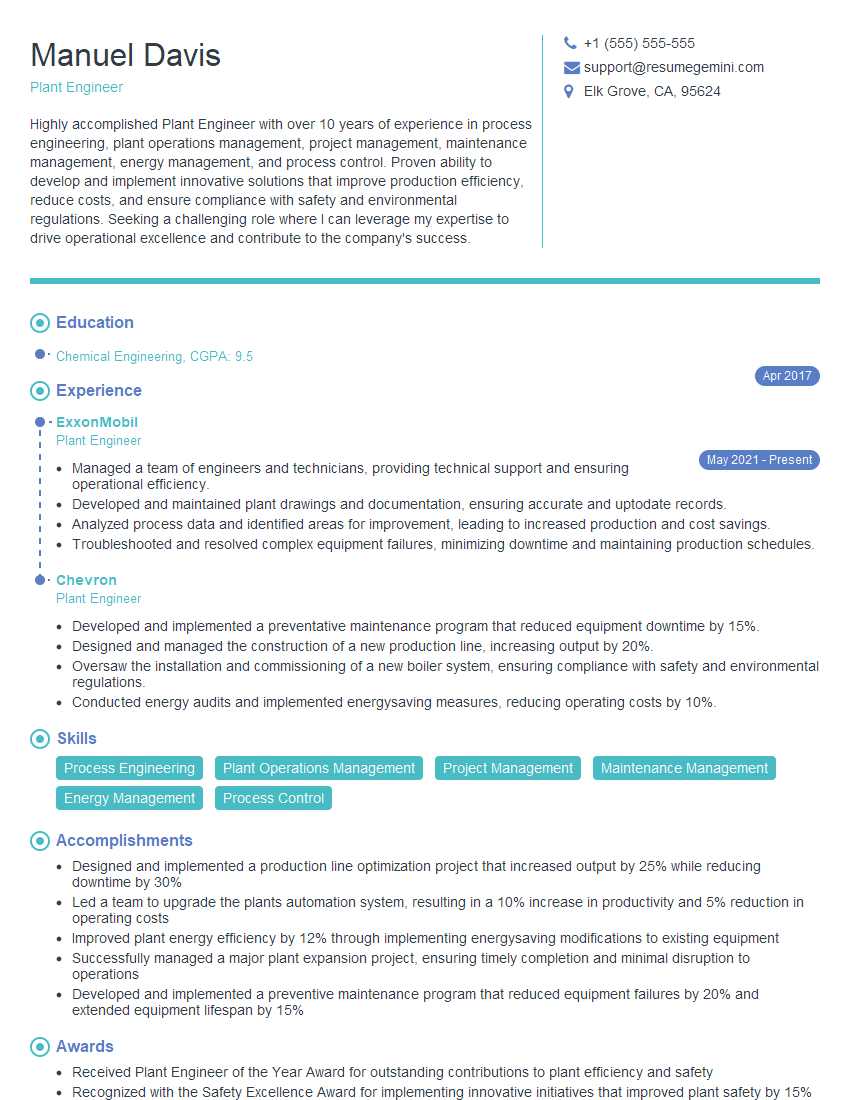
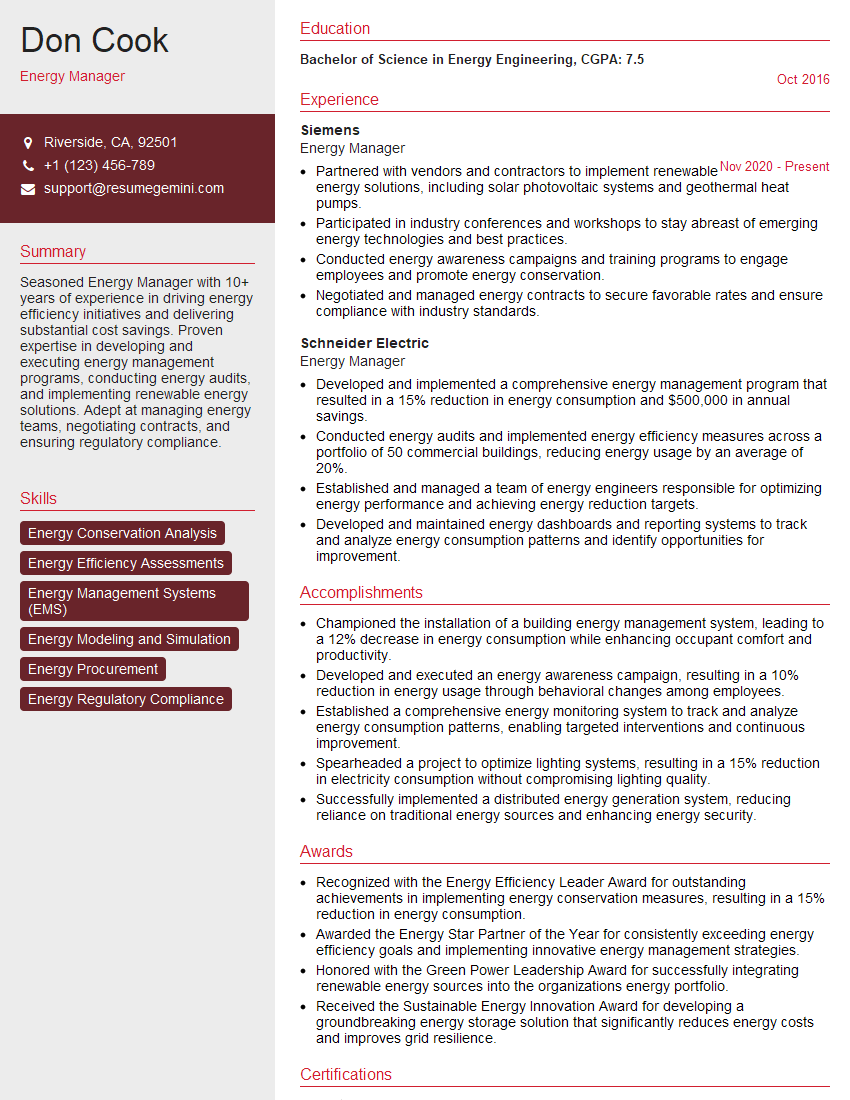
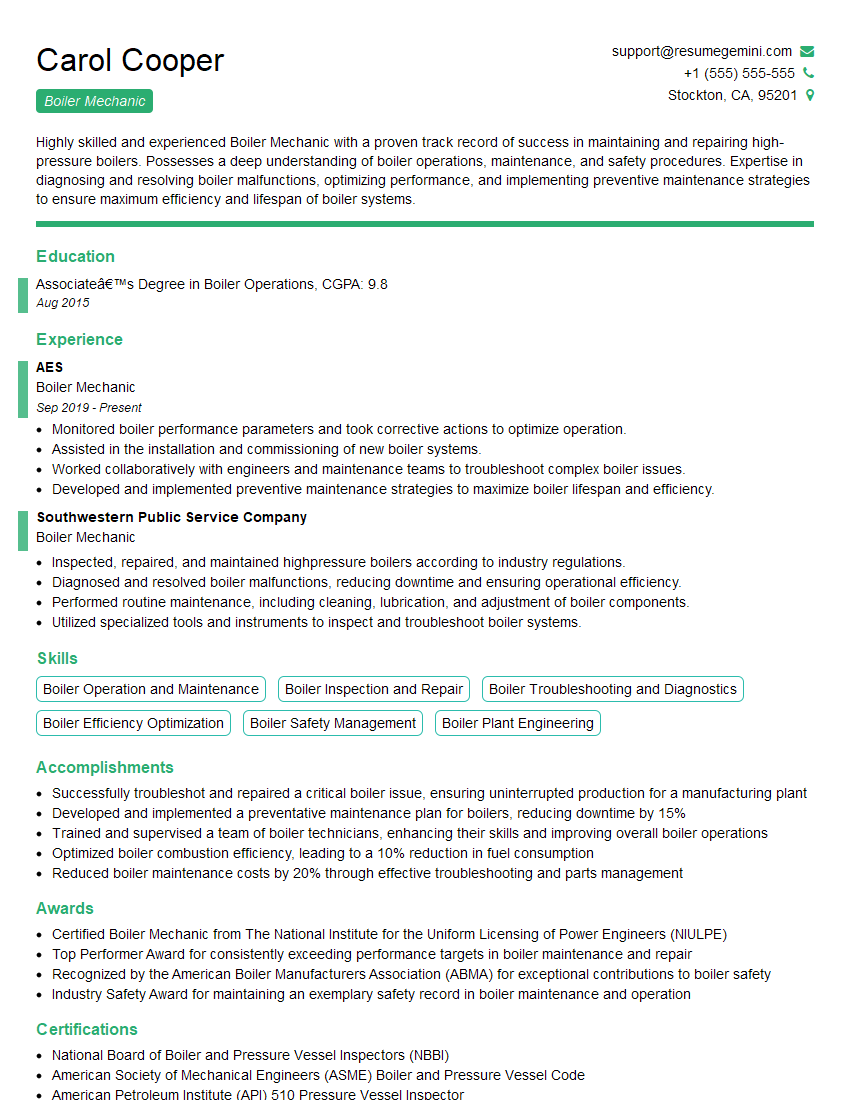
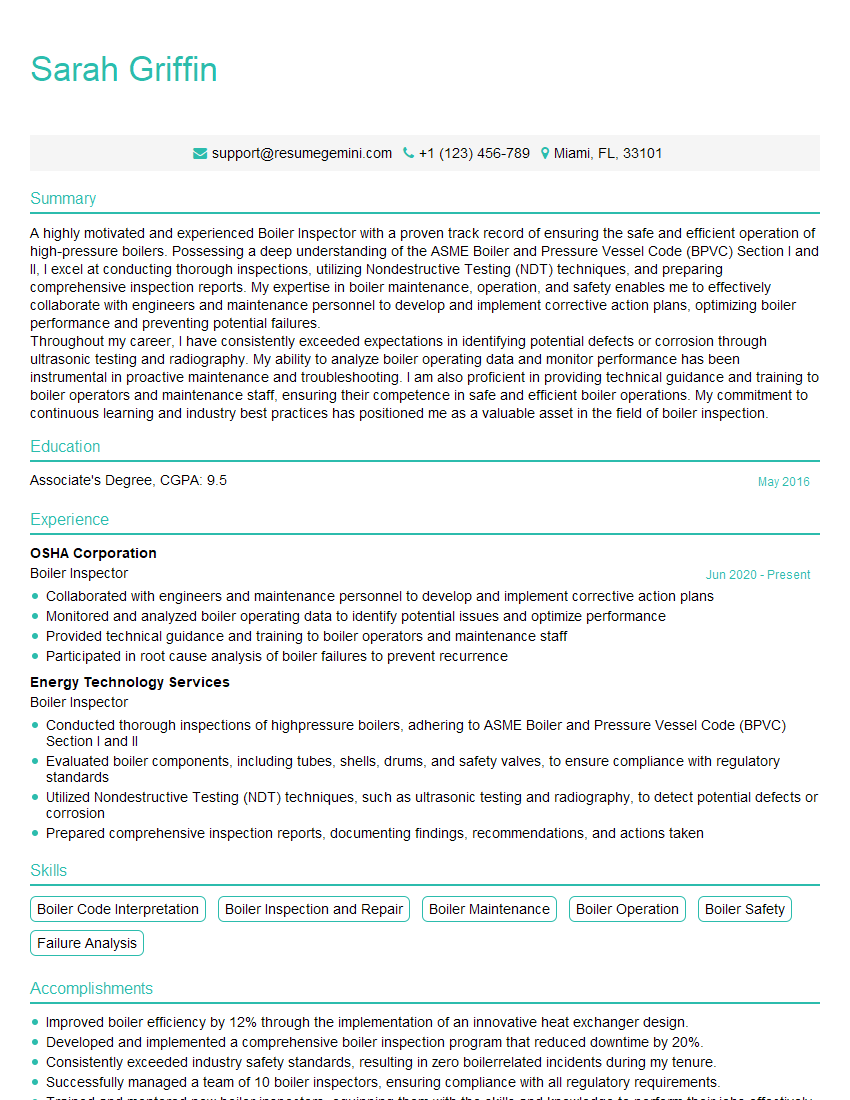
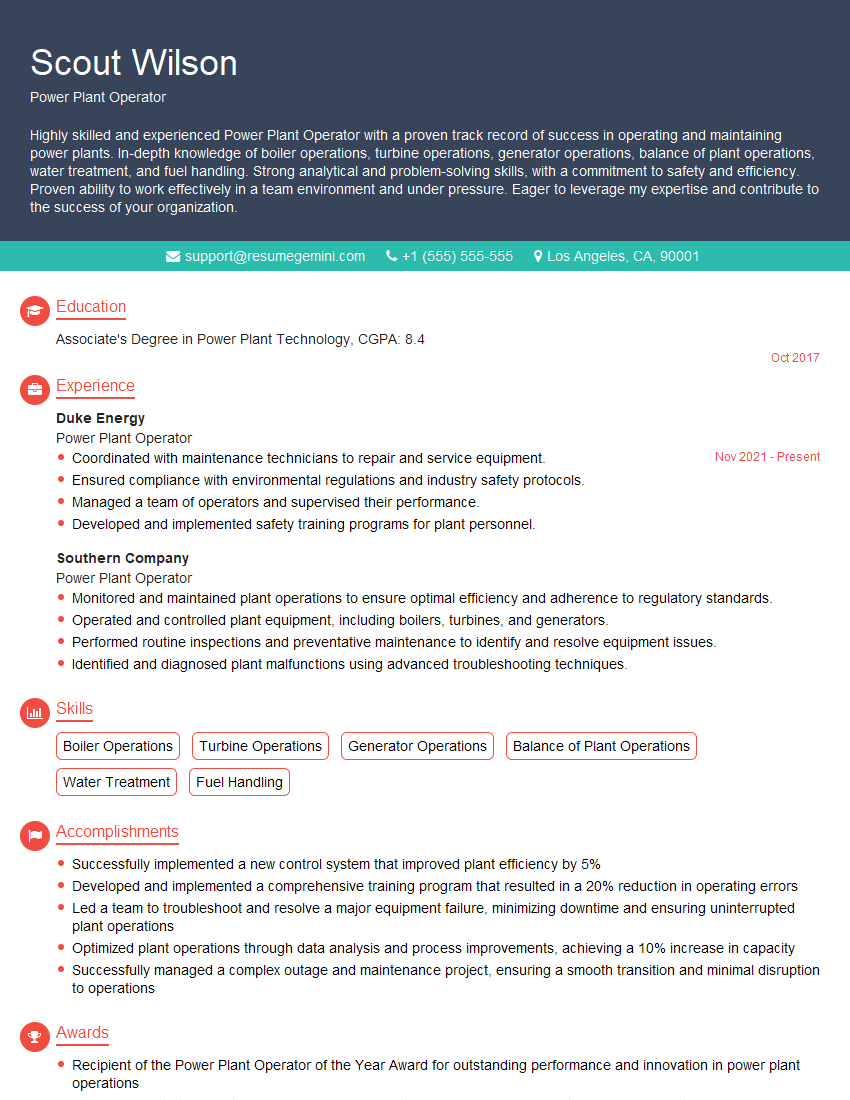
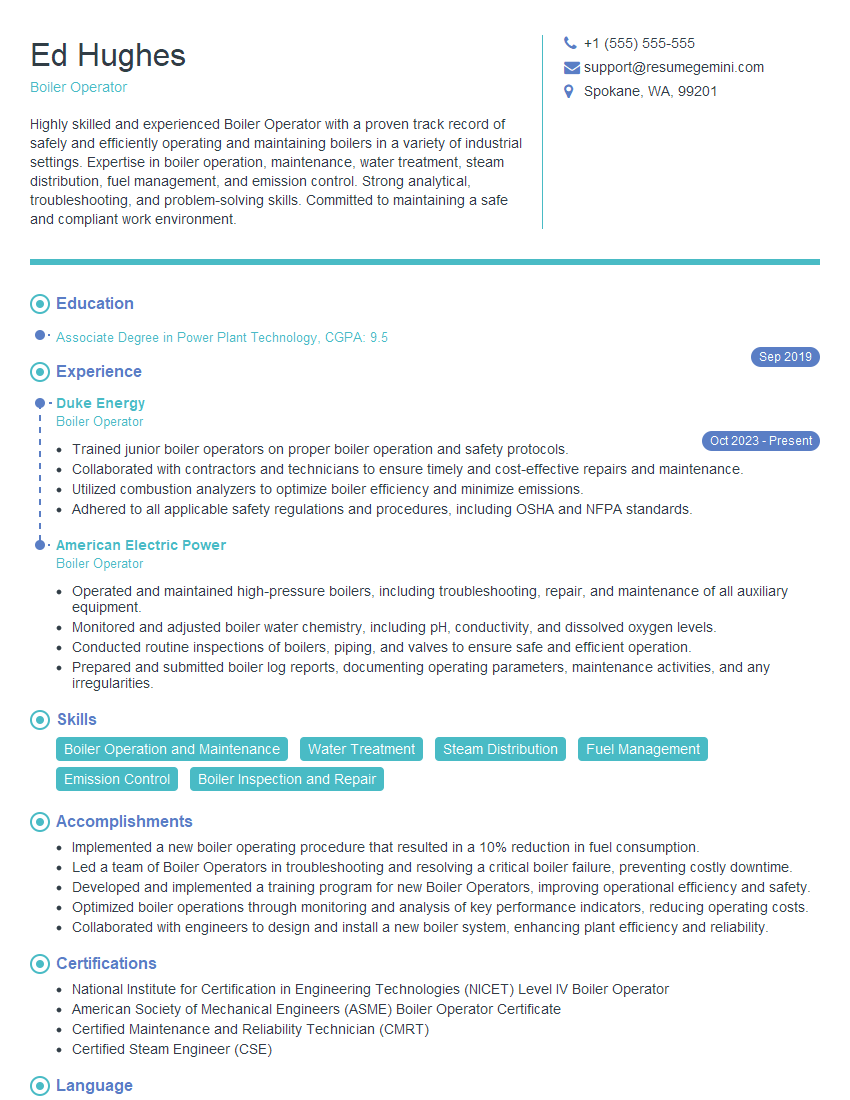
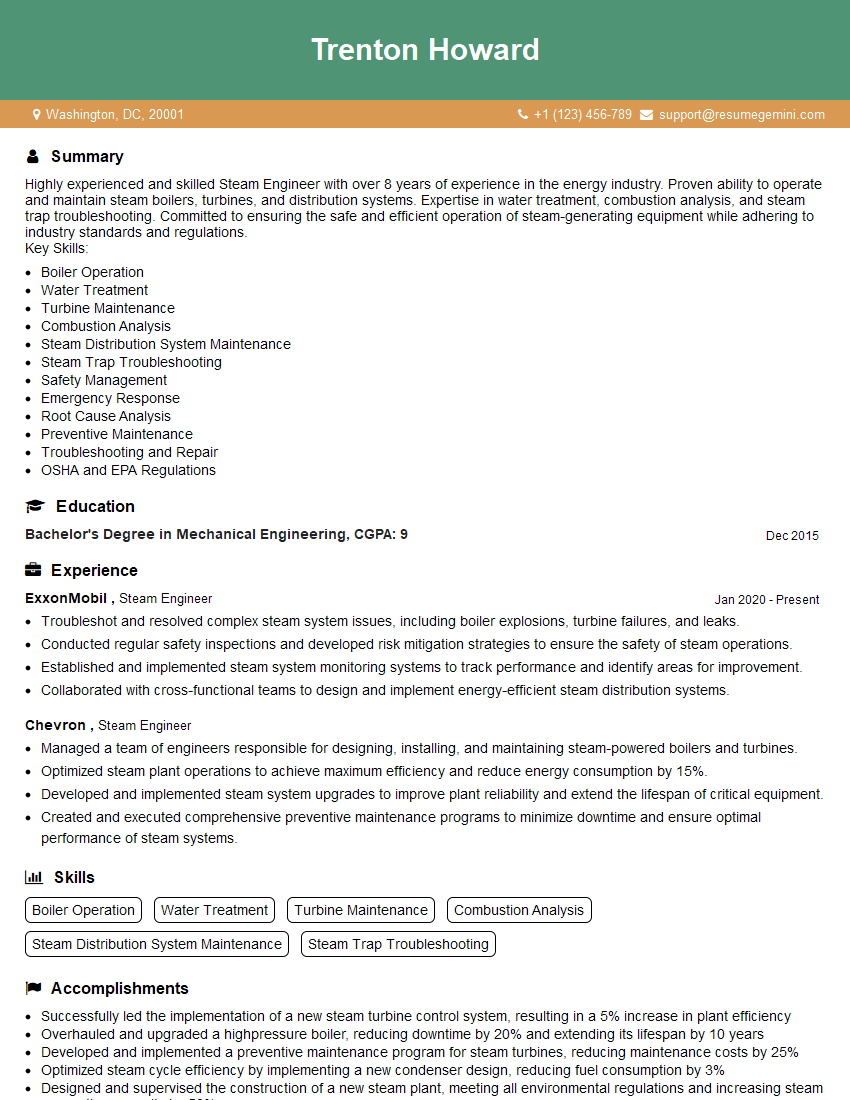
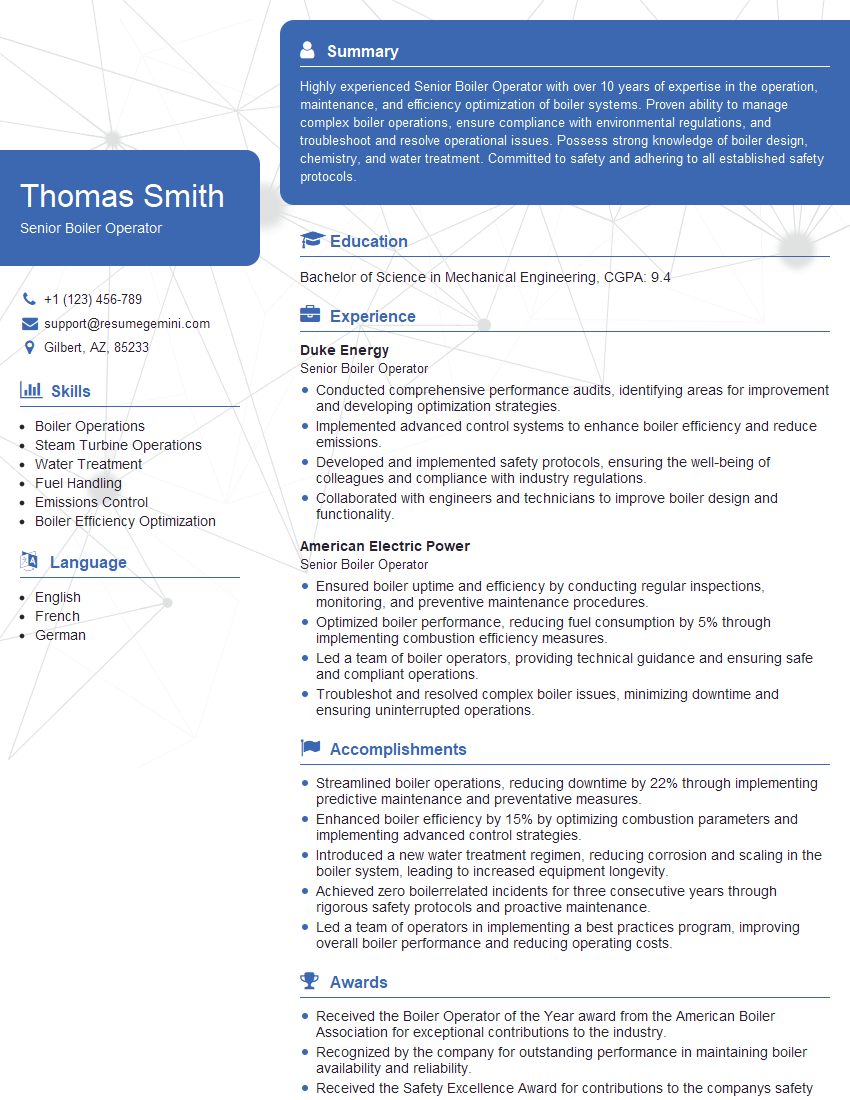
Mastering Boiler Steam Generation opens doors to exciting and rewarding careers in power generation, manufacturing, and process industries. To maximize your job prospects, a well-crafted, ATS-friendly resume is essential. This is where ResumeGemini can help. ResumeGemini provides a trusted platform to build a professional resume that highlights your skills and experience effectively. We even offer examples of resumes tailored specifically to the Boiler Steam Generation field to help you get started. Invest in your future – create a resume that showcases your expertise and gets you noticed.
Explore more articles
Users Rating of Our Blogs
Share Your Experience
We value your feedback! Please rate our content and share your thoughts (optional).
What Readers Say About Our Blog
Really detailed insights and content, thank you for writing this detailed article.
IT gave me an insight and words to use and be able to think of examples