The thought of an interview can be nerve-wracking, but the right preparation can make all the difference. Explore this comprehensive guide to Industry Standards Compliance interview questions and gain the confidence you need to showcase your abilities and secure the role.
Questions Asked in Industry Standards Compliance Interview
Q 1. Explain your understanding of ISO 9001.
ISO 9001 is an internationally recognized standard that outlines requirements for a quality management system (QMS). It’s not about achieving a specific quality level, but rather about establishing a framework to consistently meet customer and regulatory requirements. Think of it as a blueprint for how an organization manages its processes to ensure the quality of its products or services.
A key aspect is its focus on continuous improvement. Organizations using ISO 9001 are expected to regularly review and update their processes to enhance efficiency and quality. This is often done through a process called the Plan-Do-Check-Act (PDCA) cycle.
- Plan: Establish objectives and processes.
- Do: Implement the processes.
- Check: Monitor and measure processes against objectives.
- Act: Take corrective or preventive actions as needed.
For example, a manufacturing company might use ISO 9001 to standardize its production processes, ensuring consistent product quality. A software development company might use it to manage the lifecycle of its software projects, including requirements gathering, design, testing, and deployment.
Q 2. Describe your experience with HIPAA compliance.
My experience with HIPAA compliance spans several years, focusing on both the technical and administrative safeguards required to protect Protected Health Information (PHI). I’ve worked with organizations to implement and maintain HIPAA-compliant systems, including conducting risk assessments, developing policies and procedures, and implementing security measures.
One significant project involved migrating a client’s electronic health records (EHR) system to a cloud-based platform. This required careful consideration of data encryption, access controls, and business associate agreements (BAAs). We meticulously documented all procedures, conducted regular security audits, and trained employees on HIPAA regulations to ensure compliance.
Understanding the nuances of HIPAA, such as the differences between covered entities and business associates, and the various penalties for non-compliance, is critical. A key aspect is understanding the complexities of data breach notification procedures and how to mitigate the impact of a potential breach.
Q 3. How familiar are you with GDPR regulations?
I’m very familiar with the General Data Protection Regulation (GDPR), the EU’s regulation on data protection and privacy for all individuals within the European Union (EU) and the European Economic Area (EEA). It focuses on giving individuals more control over their personal data and places significant responsibilities on organizations that process that data.
My understanding covers key concepts like data minimization, purpose limitation, data subject rights (right to access, rectification, erasure, etc.), and the implications of data breaches. I have experience in conducting data protection impact assessments (DPIAs) to identify and mitigate risks associated with data processing activities.
For example, I’ve assisted organizations in implementing GDPR-compliant consent mechanisms, ensuring transparency and providing individuals with clear and concise information about how their data is being used. This involves carefully reviewing data processing activities and ensuring compliance with all relevant articles of the GDPR.
Q 4. What is your experience with SOC 2 compliance?
My experience with SOC 2 compliance centers around helping organizations demonstrate that their systems are securely managed and meet specific trust service criteria. SOC 2 audits focus on five key trust service principles: security, availability, processing integrity, confidentiality, and privacy. It’s not a single standard but rather a framework, and the specific controls implemented depend on the organization’s risk profile and the trust services criteria they choose to address.
In practice, this involves working with clients to map their existing controls to the SOC 2 framework, identifying gaps, and implementing necessary remediation actions. This often includes reviewing security policies, access controls, data encryption, and incident response plans. The process culminates in a SOC 2 report that provides assurance to stakeholders about the organization’s security posture.
For instance, a recent project involved assisting a SaaS provider in achieving a SOC 2 Type II report. This required a comprehensive assessment of their security controls over a six-month period, including continuous monitoring and testing.
Q 5. Explain the importance of Sarbanes-Oxley (SOX) compliance.
Sarbanes-Oxley (SOX) compliance is crucial for publicly traded companies in the United States. It’s designed to protect investors by improving the accuracy and reliability of corporate disclosures. SOX mandates strong internal controls over financial reporting, including documentation, testing, and regular audits.
The importance lies in building trust and confidence in the financial statements. Non-compliance can lead to significant financial penalties, reputational damage, and even criminal charges. Companies must demonstrate that their financial reporting processes are accurate, reliable, and free from material misstatements.
Compliance often involves implementing robust internal controls, such as segregation of duties, regular reconciliations, and detailed audit trails. It’s not just about financial data; it’s about the entire process of collecting, processing, and reporting that data. SOX requires a comprehensive approach to risk management and control oversight.
Q 6. Describe your approach to identifying and mitigating compliance risks.
My approach to identifying and mitigating compliance risks is systematic and risk-based. It begins with a comprehensive assessment of the organization’s operations, identifying potential vulnerabilities and exposures related to relevant regulations and standards (e.g., ISO 27001, GDPR, HIPAA, etc.).
This involves:
- Risk Assessment: Identifying potential threats and vulnerabilities and assessing their likelihood and potential impact.
- Control Mapping: Identifying existing controls and mapping them to relevant requirements.
- Gap Analysis: Identifying any gaps in controls and developing remediation plans.
- Implementation and Monitoring: Implementing new controls and regularly monitoring their effectiveness.
- Documentation: Maintaining detailed documentation of all processes, controls, and findings.
This iterative process allows for continuous improvement and adaptation to changing risks. I use various techniques, including threat modeling and vulnerability scanning, to enhance the effectiveness of the risk assessment process. The approach is tailored to the specific context and risks faced by the organization.
Q 7. How do you stay updated on changes in industry standards and regulations?
Staying updated on changes in industry standards and regulations is critical. My approach is multi-faceted:
- Subscription to Professional Organizations: I maintain memberships with relevant professional organizations (e.g., ISACA, IIA) that provide access to regular updates, publications, and educational resources.
- Following Regulatory Bodies: I closely monitor websites and publications from regulatory bodies like the FTC, HIPAA, GDPR, and others, paying close attention to announcements, guidance, and updates.
- Industry News and Publications: I regularly read industry news and publications to stay informed about emerging trends and best practices. This includes attending webinars and conferences.
- Networking with Peers: I actively network with other compliance professionals to share knowledge and insights.
This combination of formal and informal methods ensures I maintain a comprehensive understanding of the current regulatory landscape and can effectively advise clients on compliance matters.
Q 8. What is your experience with internal audits and compliance reviews?
Internal audits and compliance reviews are crucial for ensuring an organization adheres to its internal policies and external regulations. My experience spans over [Number] years, encompassing various industries including [Mention Industries]. I’ve led and participated in numerous audits, focusing on areas such as data security, financial controls, and regulatory compliance (e.g., GDPR, HIPAA, SOX). This involves developing audit plans, conducting walkthroughs, reviewing documentation, interviewing staff, identifying gaps and recommending corrective actions. For instance, in a recent audit of a healthcare provider, I identified a weakness in their patient data access controls, leading to the implementation of multi-factor authentication and improved access logs, directly enhancing their HIPAA compliance.
- Planning & Scoping: Defining the audit objective, scope, and methodology.
- Execution: Performing tests, collecting evidence, and interviewing personnel.
- Reporting: Documenting findings, highlighting risks and recommending improvements.
- Follow-up: Monitoring the implementation of corrective actions.
Q 9. Explain your understanding of data privacy regulations.
Data privacy regulations are designed to protect individuals’ personal information. My understanding encompasses a broad range of international and regional laws, including GDPR (General Data Protection Regulation) in Europe, CCPA (California Consumer Privacy Act) in the US, and PIPEDA (Personal Information Protection and Electronic Documents Act) in Canada. These regulations outline principles such as data minimization, purpose limitation, transparency, accountability, and individual rights (e.g., the right to access, rectify, and erase personal data). Understanding these regulations requires a nuanced approach, considering data subject rights, cross-border data transfers, and the specific requirements depending on the industry and location. For example, GDPR mandates stringent consent requirements for processing personal data, while CCPA gives consumers the right to opt-out of the sale of their personal information. A key challenge is keeping up-to-date with evolving regulations and adapting compliance practices accordingly.
Q 10. Describe your experience with conducting compliance training.
I have extensive experience designing and delivering compliance training programs, tailoring them to different audiences and regulatory requirements. My approach combines interactive sessions, engaging case studies, and practical exercises to ensure knowledge retention and application. I’ve developed and delivered training on topics such as data security best practices, anti-bribery and corruption policies, and regulatory compliance (e.g., HIPAA, GDPR). For example, for a financial institution, I developed a tailored training program incorporating interactive modules and quizzes to ensure employees understood anti-money laundering regulations. The program included real-world scenarios to enhance engagement and learning. Post-training assessments are critical to evaluating the program’s effectiveness and identifying any knowledge gaps needing further attention.
Q 11. How would you handle a situation where a non-compliance issue is discovered?
Discovering a non-compliance issue requires a prompt, methodical, and transparent response. My approach follows a structured process:
- Immediate Containment: First priority is to contain the issue to prevent further damage or non-compliance. This may involve restricting access to affected systems or data.
- Investigation: Thoroughly investigate the root cause, scope, and impact of the non-compliance. This involves collecting evidence and interviewing relevant personnel.
- Remediation: Develop and implement corrective actions to address the root cause and prevent recurrence. This may include policy updates, system upgrades, or staff retraining.
- Reporting & Documentation: Document all findings, actions taken, and lessons learned. Report the issue to relevant stakeholders (e.g., management, regulatory bodies).
- Monitoring & Prevention: Implement monitoring mechanisms to ensure the effectiveness of the corrective actions and prevent future occurrences. Regularly review and update compliance policies and procedures.
For example, if a data breach is discovered, immediate steps would include isolating the affected systems, notifying relevant authorities, and initiating a forensic investigation. Following the investigation, corrective actions might involve implementing stronger security controls, enhancing employee training, and improving incident response procedures.
Q 12. What are the key elements of a robust compliance program?
A robust compliance program is built on several key elements:
- Leadership Commitment: Strong support from senior management is essential to establish a culture of compliance.
- Risk Assessment: Regularly identifying and assessing potential compliance risks.
- Policies & Procedures: Clear, comprehensive, and readily accessible policies and procedures that align with applicable regulations.
- Training & Awareness: Regular training programs to educate employees on compliance requirements.
- Monitoring & Auditing: Ongoing monitoring and periodic audits to identify and address compliance gaps.
- Enforcement & Discipline: Consistent enforcement of compliance policies and appropriate disciplinary actions for violations.
- Continuous Improvement: Regularly reviewing and improving the compliance program based on audit findings, regulatory changes, and best practices.
Think of it as a three-legged stool: Leadership, Policies, and Monitoring. If any leg is weak, the entire program is unstable.
Q 13. Explain your experience with implementing and maintaining compliance management systems.
Implementing and maintaining compliance management systems (CMS) involves a structured approach. My experience includes selecting, configuring, and customizing CMS software to meet specific organizational needs. This includes defining roles and responsibilities, configuring workflows, integrating with other systems, and establishing key performance indicators (KPIs). I’ve worked with various CMS platforms, leveraging their features for risk management, policy management, audit scheduling, and reporting. For example, in a previous role, I implemented a CMS that automated the process of risk assessments, policy updates, and compliance training, significantly improving efficiency and reducing the risk of non-compliance. Maintaining the system involves regular updates, configuration changes, and user training to ensure its effectiveness and alignment with evolving regulations and business needs.
Q 14. How do you measure the effectiveness of a compliance program?
Measuring the effectiveness of a compliance program requires a multi-faceted approach. Key metrics include:
- Compliance Audit Results: The number and severity of non-compliance findings identified during internal and external audits.
- Incident Rates: The frequency of compliance-related incidents (e.g., data breaches, violations of policies).
- Employee Training Completion Rates: The percentage of employees who have completed required compliance training.
- Policy & Procedure Adherence: The extent to which employees follow established policies and procedures.
- Risk Assessment Scores: The level of risk identified through regular risk assessments.
- Cost of Non-Compliance: The financial and reputational costs associated with compliance failures.
Regularly analyzing these metrics helps to identify areas for improvement and demonstrate the overall effectiveness of the compliance program. Data visualization tools and dashboards can provide a clear picture of compliance performance over time, aiding decision-making and resource allocation.
Q 15. Describe your experience with developing and implementing compliance policies and procedures.
Developing and implementing compliance policies and procedures involves a systematic approach that ensures an organization adheres to relevant laws, regulations, and industry best practices. This process typically begins with a thorough risk assessment to identify potential compliance gaps. I’ve been involved in this process numerous times, from crafting policies around data privacy (like GDPR or CCPA) to establishing robust cybersecurity frameworks (like ISO 27001).
My approach involves:
- Risk Assessment: Identifying potential areas of non-compliance, assessing the likelihood and impact of violations.
- Policy Development: Creating clear, concise, and easily understood policies that address identified risks. This includes defining roles, responsibilities, and procedures.
- Procedure Creation: Developing step-by-step instructions on how to comply with the established policies. This often involves creating workflows and checklists.
- Training and Communication: Educating employees on the new policies and procedures through various methods (e.g., online modules, workshops, and regular updates).
- Monitoring and Auditing: Regularly monitoring compliance and conducting audits to ensure effectiveness. This includes using compliance management software and key performance indicators (KPIs).
- Corrective Actions: Developing and implementing corrective actions to address any identified non-compliance issues.
For example, in a previous role, I led the development and implementation of a new data security policy in response to a growing number of cyber threats. This involved creating detailed procedures for data encryption, access control, and incident response, along with comprehensive employee training. The result was a significant reduction in security incidents and improved overall data protection.
Career Expert Tips:
- Ace those interviews! Prepare effectively by reviewing the Top 50 Most Common Interview Questions on ResumeGemini.
- Navigate your job search with confidence! Explore a wide range of Career Tips on ResumeGemini. Learn about common challenges and recommendations to overcome them.
- Craft the perfect resume! Master the Art of Resume Writing with ResumeGemini’s guide. Showcase your unique qualifications and achievements effectively.
- Don’t miss out on holiday savings! Build your dream resume with ResumeGemini’s ATS optimized templates.
Q 16. What are some common challenges in maintaining industry standards compliance?
Maintaining industry standards compliance presents several ongoing challenges. One key issue is the constantly evolving regulatory landscape. New laws and regulations are frequently introduced, requiring organizations to adapt quickly. This can lead to significant costs in updating policies, procedures, and technology.
Other common challenges include:
- Keeping up with updates: Regulations are dynamic. Staying abreast of changes and implementing necessary adaptations can be resource-intensive.
- Technology advancements: New technologies often introduce new compliance considerations. For example, the use of AI necessitates addressing ethical and data privacy concerns.
- Global compliance: Operating across multiple jurisdictions increases the complexity of compliance, as different regions have diverse legal requirements.
- Human error: Accidental non-compliance due to employee negligence or lack of awareness is a common problem.
- Lack of resources: Sufficient funding and personnel are crucial for effective compliance, yet many organizations face resource constraints.
- Integration with existing systems: Implementing new compliance measures might need seamless integration with legacy systems which can be a technical hurdle.
Imagine a company expanding internationally. They must ensure their data handling practices comply with GDPR in Europe, CCPA in California, and other regional regulations, a significant undertaking that requires a well-structured approach and dedicated resources.
Q 17. How do you prioritize compliance activities based on risk levels?
Prioritizing compliance activities based on risk levels is crucial for effective compliance management. This involves a structured approach that focuses resources on the most critical areas.
My approach involves:
- Risk Assessment and Scoring: Using a framework to assess the likelihood and impact of potential non-compliance events. This might involve assigning numerical scores to risks (e.g., high, medium, low).
- Risk Matrix: Visualizing the risks on a matrix, allowing for easy identification of high-priority areas.
- Resource Allocation: Allocating resources (budget, personnel, time) proportionate to the risk level. High-risk areas receive more attention.
- Regular Review and Adjustment: Regularly reviewing the risk assessments and adjusting priorities based on changes in the regulatory environment or internal processes.
For instance, a financial institution would likely prioritize compliance related to anti-money laundering (AML) regulations and data security over less critical areas, reflecting the potentially severe consequences of non-compliance in these domains.
Q 18. Describe your experience working with regulatory bodies.
I have extensive experience working with various regulatory bodies, including [mention specific bodies relevant to your experience, e.g., the FTC, SEC, HIPAA]. This experience encompasses regular interactions, audits, and responding to inquiries.
My approach includes:
- Proactive Engagement: Regularly monitoring regulatory updates and proactively addressing any potential compliance issues.
- Maintaining Documentation: Keeping meticulous records of compliance activities to demonstrate adherence to regulations.
- Responding to Audits: Collaborating effectively with auditors to provide necessary documentation and addressing any identified deficiencies.
- Building Relationships: Establishing positive working relationships with regulatory bodies to foster open communication and facilitate smooth interactions.
In one instance, I worked closely with the [mention a specific regulatory body] during an audit. By providing thorough documentation and promptly addressing their concerns, we successfully completed the audit without any significant findings.
Q 19. What is your experience with using compliance management software?
I’ve worked extensively with various compliance management software solutions, including [mention specific software, e.g., Archer, ServiceNow, MetricStream]. These tools play a vital role in streamlining compliance processes and enhancing overall effectiveness.
My experience includes:
- System Implementation: Assisting in the selection, implementation, and configuration of compliance management software.
- Data Management: Managing and maintaining data within the system to track compliance activities and generate reports.
- Workflow Automation: Automating compliance tasks and workflows to increase efficiency and reduce manual effort.
- Reporting and Analytics: Using the software to generate reports that demonstrate compliance status and identify areas for improvement.
For example, in a previous role, I implemented a compliance management system that automated the process of tracking regulatory changes and sending alerts to relevant personnel. This significantly improved our responsiveness to regulatory updates and reduced the risk of non-compliance.
Q 20. How do you communicate compliance requirements to employees?
Communicating compliance requirements effectively to employees is crucial for fostering a culture of compliance. This requires a multifaceted approach that ensures information is readily accessible and understood.
My strategies include:
- Multi-Channel Communication: Utilizing various communication channels, including email, intranet, training modules, and team meetings, to reach all employees.
- Tailored Messaging: Presenting information in a clear, concise, and engaging manner, tailored to the specific audience and their roles.
- Interactive Training: Providing interactive training sessions and online modules to ensure employee comprehension and engagement.
- Regular Updates: Keeping employees informed about updates to policies and procedures through regular newsletters, updates, and refresher training.
- Feedback Mechanisms: Establishing mechanisms for employees to provide feedback and ask questions, fostering open communication and ensuring clarity.
For instance, we created a gamified online training module for a new data privacy policy, making learning engaging and increasing employee knowledge retention significantly.
Q 21. Explain your understanding of the difference between legal and regulatory compliance.
Legal compliance refers to adherence to laws and statutes enacted by legislative bodies, while regulatory compliance focuses on rules, guidelines, and standards set by government agencies and other regulatory bodies. Essentially, laws are the foundation, while regulations provide the detailed implementation and enforcement mechanisms.
Legal Compliance: This involves adhering to laws passed by legislatures at the local, state, or federal level. Violation can result in legal penalties, including fines, lawsuits, and even criminal charges. Examples include tax laws, employment laws, and contract laws.
Regulatory Compliance: This entails meeting specific requirements and standards set by regulatory bodies. While violations might not always lead to criminal prosecution, they can still result in significant penalties, such as fines, suspension of licenses, or reputational damage. Examples include HIPAA for healthcare, SOX for financial reporting, and environmental regulations.
The difference is often subtle but significant. A company might legally comply with a law requiring data protection, but still fail to meet regulatory requirements set by a data protection agency, leading to penalties. Think of it like this: the law sets the general speed limit, while the regulatory body might set specific speed limits for different road types. Both must be followed to be fully compliant.
Q 22. Describe a time when you had to deal with a challenging compliance issue.
One particularly challenging compliance issue involved a legacy system within a previous organization that didn’t fully comply with newly implemented GDPR regulations. The system processed sensitive customer data, and updating it required significant resources and careful planning. We faced a tight deadline and significant technical hurdles.
My approach involved a multi-stage process. First, we conducted a thorough gap analysis to identify all non-compliant aspects of the system. This included reviewing data flow, access controls, and data retention policies. Second, we prioritized the fixes based on risk assessment, tackling the most critical vulnerabilities first. We also created a detailed project plan, involving various stakeholders, including IT, legal, and data protection teams. This ensured transparency and accountability. Third, we implemented robust testing procedures to validate the efficacy of the implemented changes. Regular monitoring and audits post-implementation were also key to ensure long-term compliance.
This experience highlighted the importance of proactive compliance management, regular audits, and close collaboration across departments. The successful resolution demonstrated my ability to manage complex technical and legal challenges under pressure, ultimately preventing potential regulatory fines and reputational damage.
Q 23. How do you ensure compliance with evolving industry standards?
Ensuring compliance with evolving industry standards requires a proactive and multi-faceted approach. It’s not enough to simply react to new regulations; we need to anticipate changes and adapt proactively.
- Continuous Monitoring: I utilize industry-specific news sources, regulatory agency websites, and professional organizations to stay informed about updates and changes to relevant standards. This includes subscribing to relevant newsletters and attending industry conferences and webinars.
- Regular Audits and Assessments: Periodic internal and external audits help identify gaps in current compliance practices. These assessments allow for prompt remediation and improvement.
- Collaboration with Legal and Compliance Teams: Maintaining close communication with legal and compliance experts is critical for understanding complex changes and interpreting their implications on our systems and processes.
- Implementation of a robust compliance management system (CMS): This system helps streamline compliance procedures, document processes, and manage risk effectively.
- Training and Awareness Programs: Keeping employees updated on the latest standards through training and awareness programs ensures everyone understands their roles and responsibilities in achieving compliance.
For example, staying informed about changes to PCI DSS (Payment Card Industry Data Security Standard) involves continuous monitoring of the PCI SSC website, participation in industry forums, and ensuring our systems are regularly tested to meet the latest requirements.
Q 24. What is your approach to building a strong compliance culture within an organization?
Building a strong compliance culture involves more than just policies; it’s about embedding compliance into the fabric of the organization. It’s about making compliance not just a responsibility, but a shared value.
- Leadership Commitment: Visible and vocal support from leadership is paramount. Leaders must demonstrate their commitment to compliance through actions and resources allocated.
- Clear Communication and Training: Regular training programs are necessary, not just to inform employees about policies, but to encourage questions and open dialogue. Clear, concise communication avoids confusion and ensures understanding.
- Incentivize Compliance: Rewards and recognition for compliance achievements, coupled with consequences for non-compliance, foster a culture of accountability.
- Open and Honest Communication: Creating a safe space for employees to report concerns without fear of retribution is crucial. This encourages proactive identification and resolution of compliance issues.
- Continuous Improvement: Regularly reviewing and updating processes based on feedback, audit findings, and evolving standards demonstrates a commitment to continuous improvement.
Using the analogy of a garden, building a compliance culture is like cultivating a garden. You need the right seeds (policies and procedures), fertile soil (employee engagement), and consistent tending (monitoring and review) to cultivate a healthy and thriving garden of compliance.
Q 25. Explain your understanding of ethical considerations in compliance.
Ethical considerations are integral to compliance. Compliance isn’t just about avoiding penalties; it’s about doing the right thing. Ethical compliance ensures fairness, transparency, and accountability in all operations.
Some key ethical considerations in compliance include:
- Data Privacy and Security: Handling sensitive data responsibly, protecting it from unauthorized access and misuse, and respecting individuals’ privacy rights.
- Transparency and Honesty: Being upfront and honest in all dealings with customers, partners, and regulators.
- Fairness and Equity: Ensuring equitable treatment of all stakeholders, avoiding discrimination and bias.
- Conflict of Interest: Identifying and managing potential conflicts of interest to avoid bias and ensure impartiality.
- Whistleblower Protection: Creating a safe environment for employees to report ethical violations without fear of retaliation.
An ethical breach, even if not legally actionable, can severely damage an organization’s reputation and erode trust with stakeholders.
Q 26. Describe your experience with due diligence and third-party risk assessments.
Due diligence and third-party risk assessments are critical to mitigating risks associated with external vendors and partners. It’s about understanding the risks inherent in relying on external parties for crucial business functions.
My experience includes conducting thorough due diligence, which typically involves:
- Identifying Third-Party Risks: This involves reviewing contracts, assessing the vendor’s security posture, and understanding their business practices.
- Risk Assessment: Using a risk assessment framework to identify and evaluate potential risks associated with the third party, considering factors such as data security, financial stability, and regulatory compliance.
- Data Security Assessment: Examining the third-party’s data security controls, including their policies, procedures, and technologies.
- Contractual Safeguards: Negotiating appropriate contractual clauses to address risks, including data protection, liability, and termination clauses.
- Ongoing Monitoring: Regularly monitoring the third party’s performance and compliance to ensure continued alignment with our risk tolerance.
For example, before engaging a cloud service provider, I would conduct a thorough assessment of their security controls, review their certifications (like SOC 2), and negotiate clauses in the contract ensuring they meet our data privacy and security requirements.
Q 27. How would you address resistance to compliance initiatives?
Resistance to compliance initiatives can stem from various sources, including lack of understanding, perceived inconvenience, or resource constraints. Addressing this resistance requires a thoughtful and strategic approach.
- Understanding the Root Cause: First, identify the reasons behind the resistance through open communication and dialogue. This helps tailor solutions to address specific concerns.
- Education and Training: Provide clear and concise explanations of the ‘why’ behind the compliance initiative. Show how compliance benefits the organization and the individuals involved.
- Collaboration and Engagement: Involve stakeholders in the design and implementation of compliance processes. This fosters buy-in and ownership.
- Addressing Concerns: Actively address any concerns regarding resources, time, or workload. Explore ways to mitigate these challenges, perhaps through automation or streamlined processes.
- Demonstrating Value: Highlight successful compliance implementations and the positive outcomes achieved. Showcase tangible benefits to change attitudes.
- Leadership Support: Secure visible and vocal support from senior management to reinforce the importance of compliance.
It’s crucial to approach resistance with empathy and understanding. Remember, often, resistance isn’t about defiance but about genuine concerns that need to be addressed.
Q 28. How do you stay current with evolving best practices in industry standards compliance?
Staying current with evolving best practices requires a commitment to continuous learning and professional development. This involves a diverse set of activities.
- Professional Organizations: Membership in relevant professional organizations (like ISACA, IIA) provides access to resources, publications, and networking opportunities that keep me abreast of the latest trends and best practices.
- Industry Publications and Journals: Regularly reviewing industry-specific publications and journals helps to stay informed about new regulations, technologies, and approaches to compliance.
- Conferences and Webinars: Attending industry conferences and webinars offers opportunities to learn from experts and network with other compliance professionals.
- Online Courses and Certifications: Enrolling in online courses and pursuing relevant certifications helps build and maintain expertise in specific areas.
- Regulatory Agency Websites: Regularly reviewing regulatory agency websites (like the FTC, SEC, etc.) keeps me informed about changes to relevant regulations.
- Networking: Networking with colleagues, attending industry events, and participating in online forums helps share best practices and gain insights from others in the field.
Continuous learning is not just a choice; it’s a necessity in the dynamic landscape of industry standards compliance.
Key Topics to Learn for Industry Standards Compliance Interview
- Understanding Regulatory Frameworks: Grasp the core principles and application of relevant industry standards (e.g., ISO 27001, HIPAA, GDPR, etc.) Familiarize yourself with the specific regulations applicable to your target roles.
- Risk Management and Assessment: Learn how to identify, assess, and mitigate risks related to non-compliance. Practice applying risk management methodologies and frameworks in practical scenarios.
- Auditing and Compliance Monitoring: Understand the processes involved in conducting internal and external audits. Be prepared to discuss strategies for ongoing compliance monitoring and reporting.
- Incident Response and Remediation: Develop a clear understanding of how to respond to and remediate compliance incidents effectively and efficiently. Practice outlining incident response plans and procedures.
- Data Privacy and Security: Master the principles of data privacy and security as they relate to industry standards. Be prepared to discuss data protection measures and best practices.
- Policy and Procedure Development: Understand how to create and implement effective compliance policies and procedures. Practice creating clear, concise, and actionable documentation.
- Communication and Collaboration: Demonstrate your ability to effectively communicate compliance requirements and collaborate with cross-functional teams to achieve compliance goals. This includes effective reporting and stakeholder management.
Next Steps
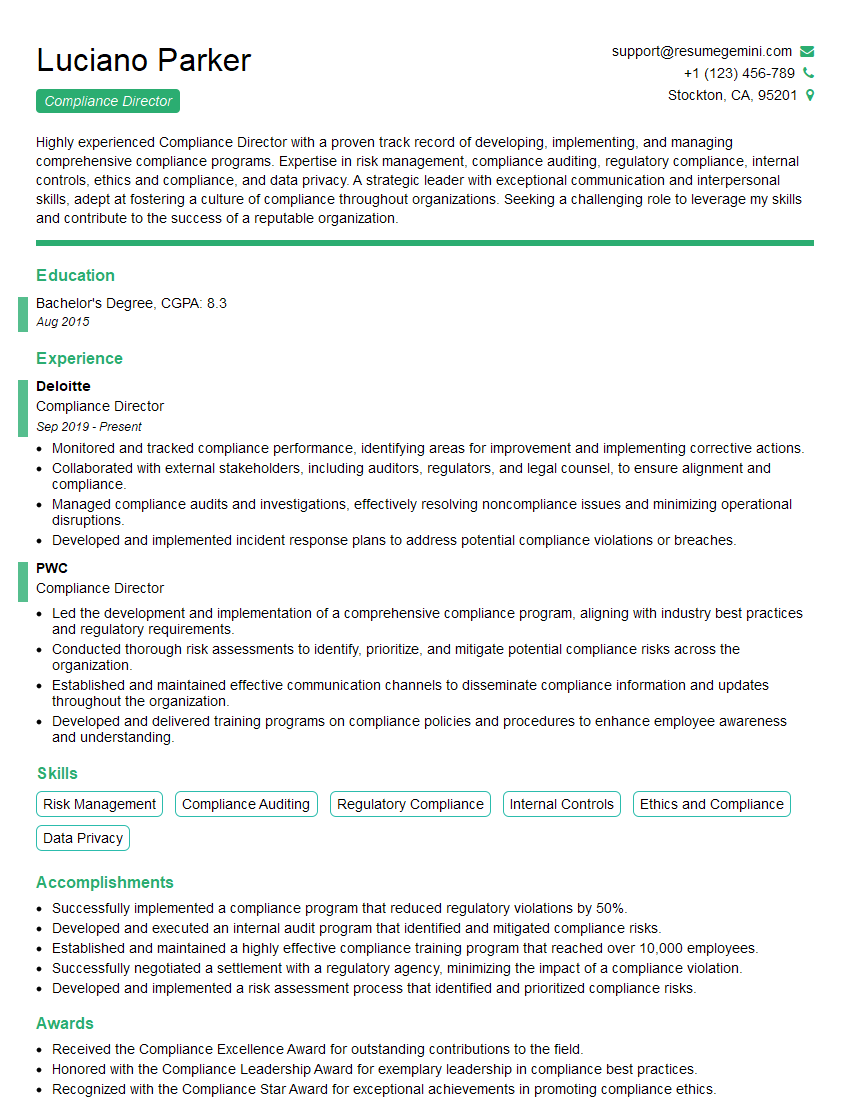
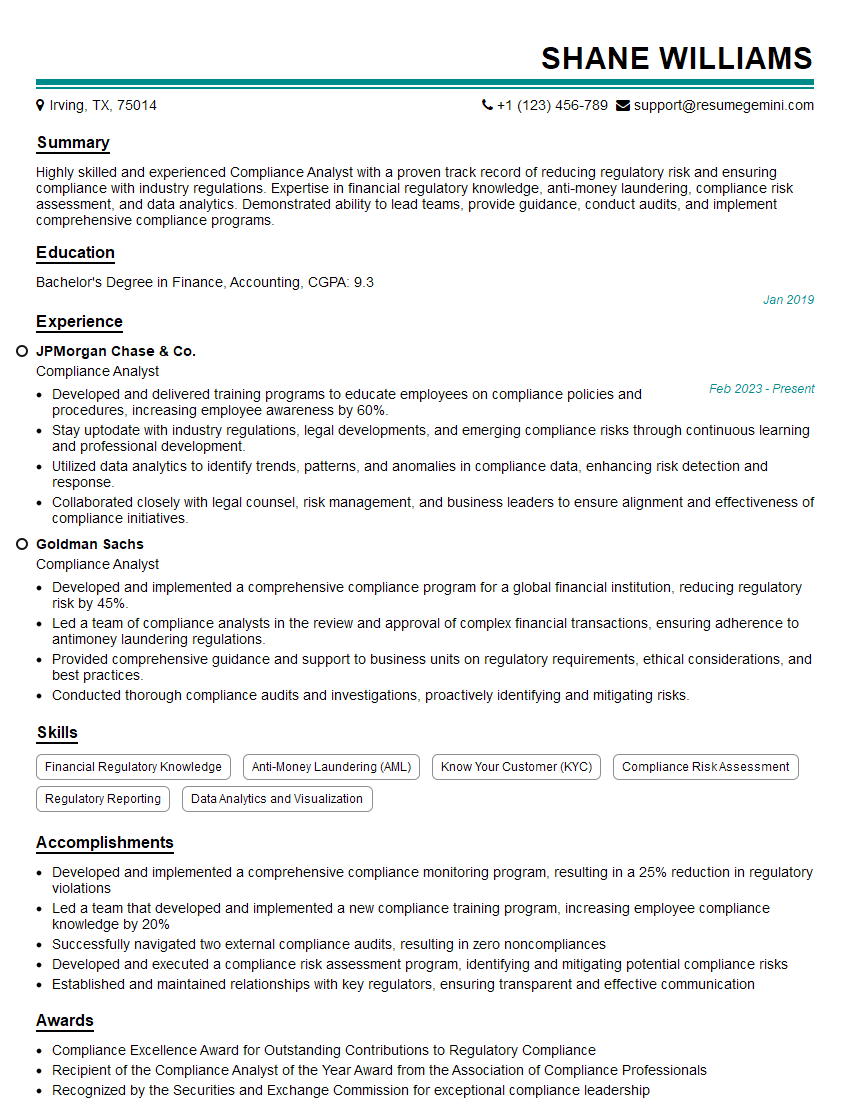
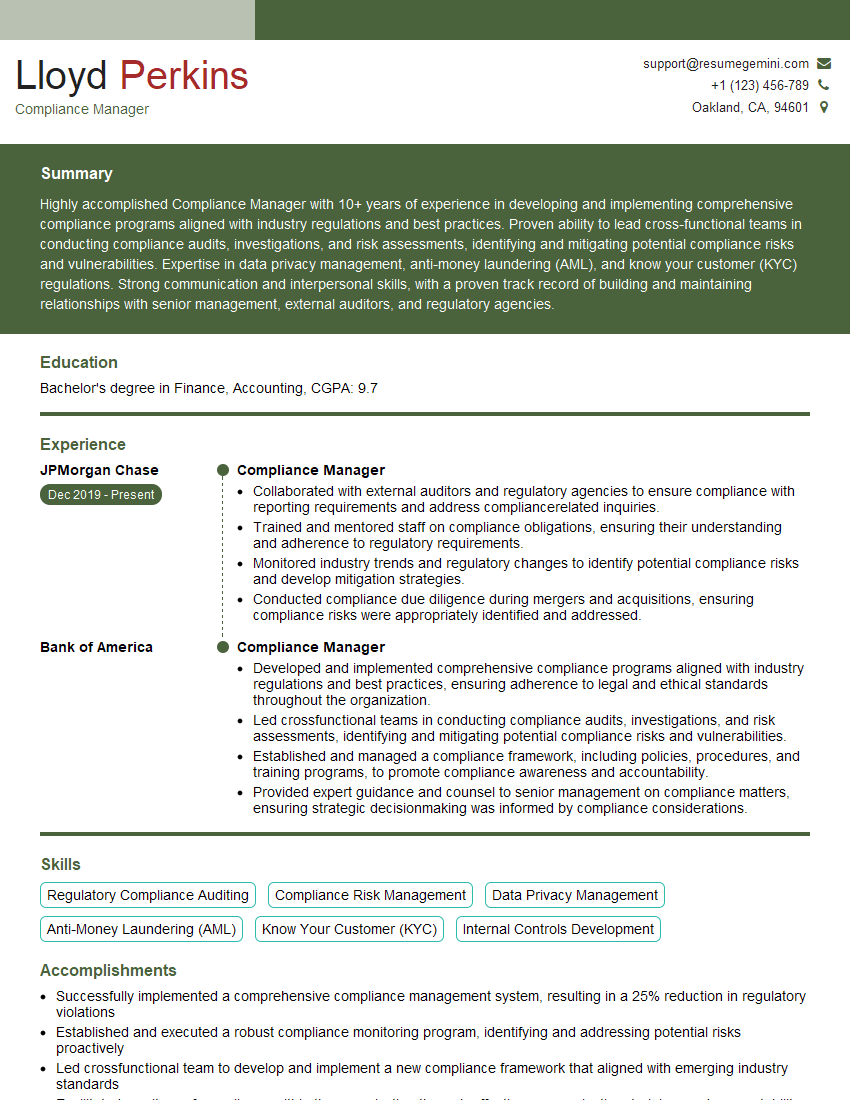
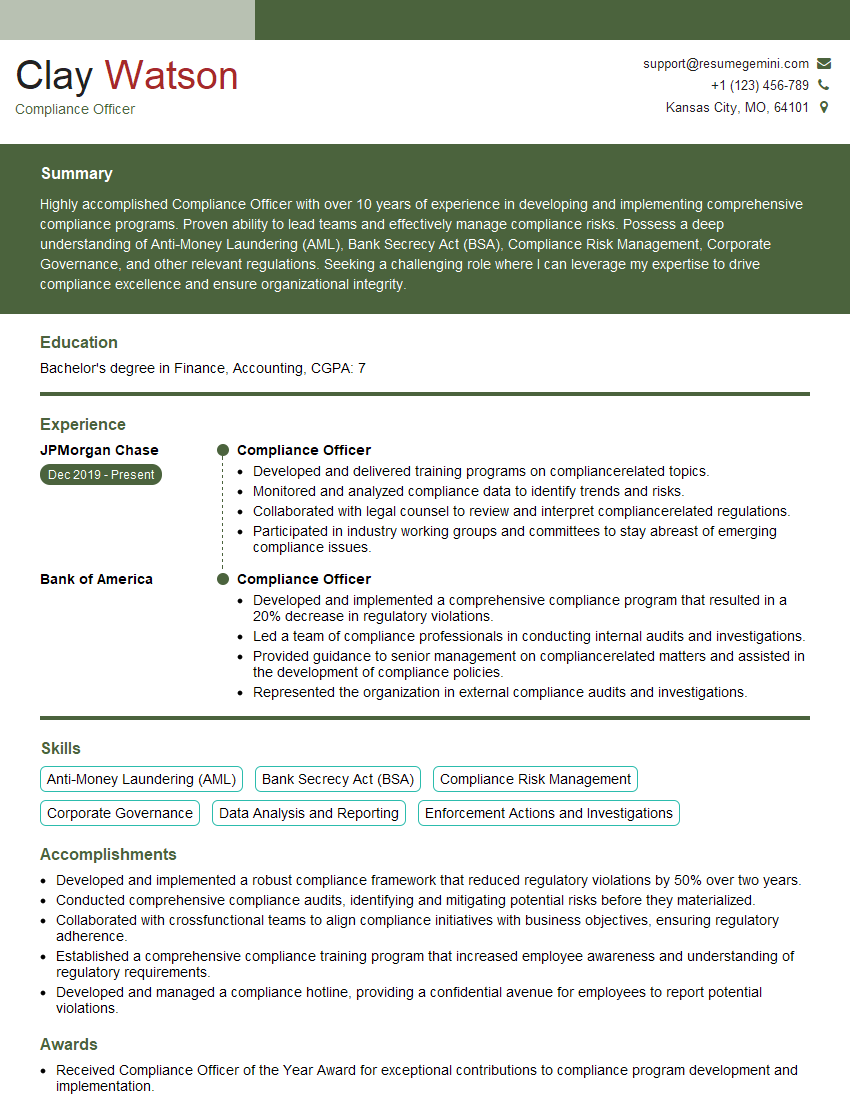
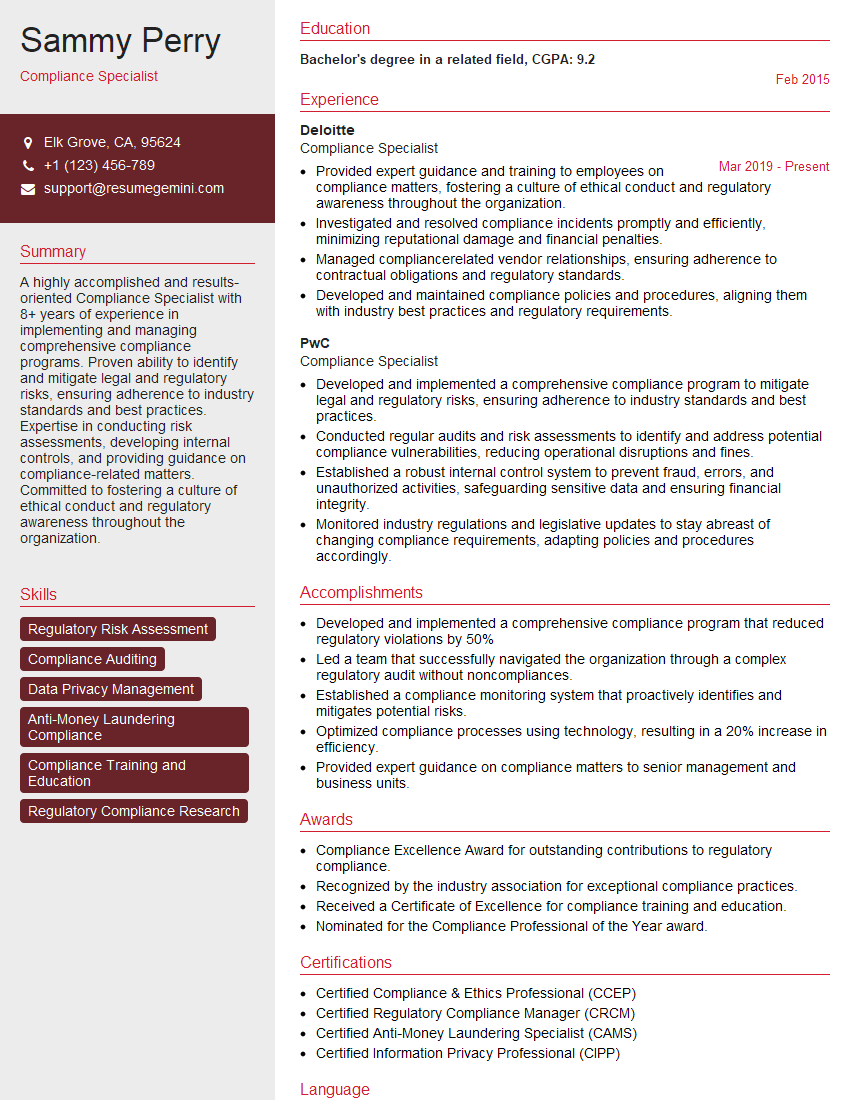
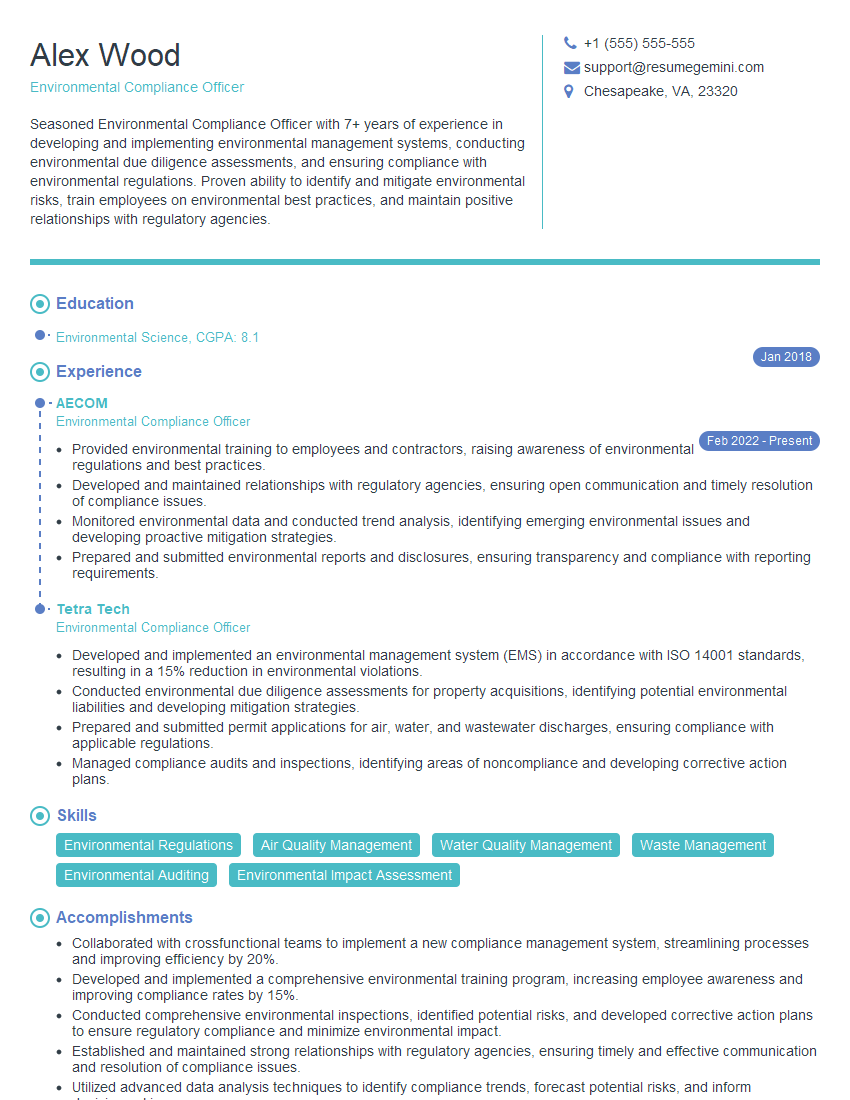
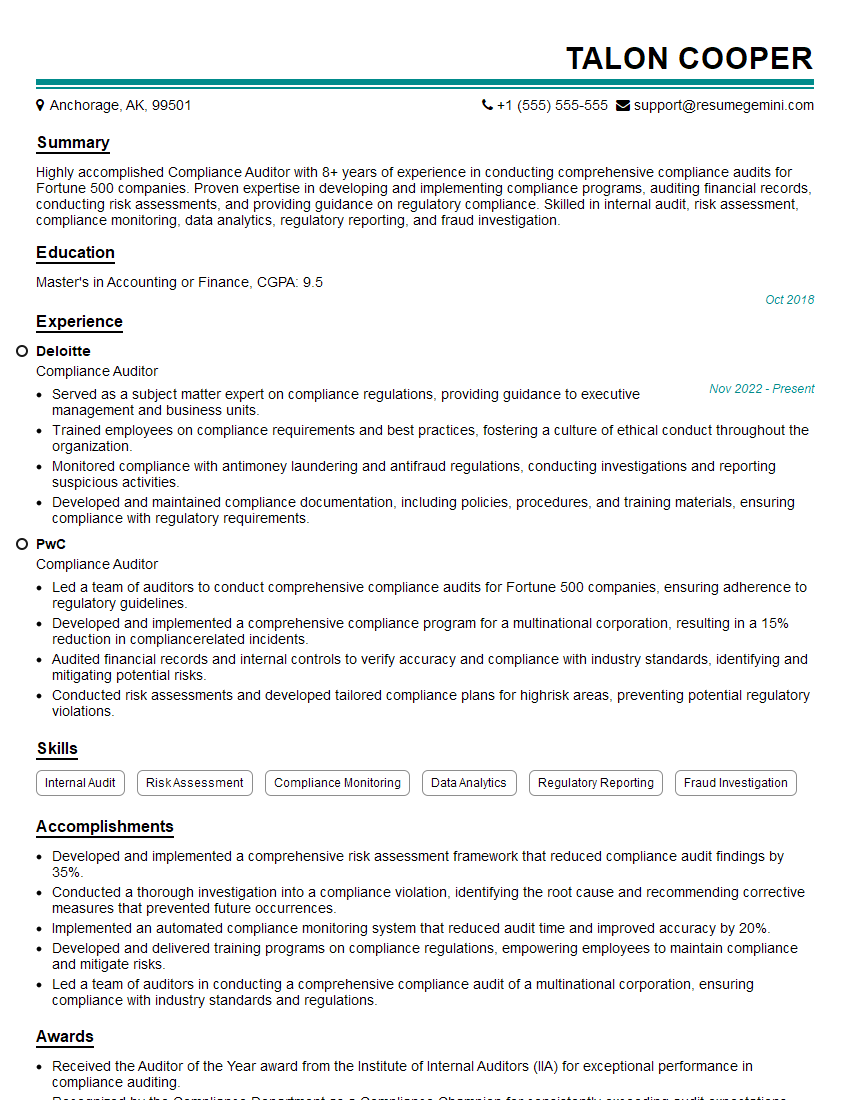
Mastering Industry Standards Compliance is crucial for career advancement in today’s regulated landscape. It demonstrates your commitment to ethical practices, risk mitigation, and organizational responsibility – highly valued attributes by employers. To significantly boost your job prospects, focus on crafting an ATS-friendly resume that effectively showcases your skills and experience. ResumeGemini can be a trusted resource in this process, helping you create a compelling resume that stands out. Examples of resumes tailored to Industry Standards Compliance are available to help you build your own compelling narrative.
Explore more articles
Users Rating of Our Blogs
Share Your Experience
We value your feedback! Please rate our content and share your thoughts (optional).
What Readers Say About Our Blog
Really detailed insights and content, thank you for writing this detailed article.
IT gave me an insight and words to use and be able to think of examples