Every successful interview starts with knowing what to expect. In this blog, we’ll take you through the top Boiler Tube Inspection interview questions, breaking them down with expert tips to help you deliver impactful answers. Step into your next interview fully prepared and ready to succeed.
Questions Asked in Boiler Tube Inspection Interview
Q 1. Explain the different NDT methods used for boiler tube inspection.
Several Non-Destructive Testing (NDT) methods are employed for boiler tube inspection, each offering unique advantages depending on the type of defect being sought. These methods allow us to assess the integrity of the tubes without causing damage.
- Ultrasonic Testing (UT): This method uses high-frequency sound waves to detect internal flaws like cracks, pitting, and wall thinning. It’s excellent for assessing the overall condition of the tube wall.
- Eddy Current Testing (ECT): ECT uses electromagnetic induction to detect surface and near-surface flaws such as cracks, pitting, and corrosion. It’s particularly useful for identifying subtle defects quickly.
- Radiographic Testing (RT): RT utilizes X-rays or gamma rays to penetrate the tube wall and create an image revealing internal defects. While effective, it’s more time-consuming and requires specialized safety precautions.
- Magnetic Particle Testing (MT): MT is used to detect surface and near-surface flaws in ferromagnetic materials (those that are attracted to magnets). It’s less commonly used for boiler tubes unless specific circumstances warrant its application.
- Visual Inspection (VI): Although not strictly an NDT method in the traditional sense, visual inspection is crucial for detecting obvious damage such as bulges, leaks, or external corrosion. It is often the first step in any inspection.
The choice of NDT method often depends on factors such as tube material, accessibility, the type of defect suspected, and budget constraints. Often, a combination of methods is used for a comprehensive assessment.
Q 2. Describe the process of ultrasonic testing (UT) for boiler tubes.
Ultrasonic testing (UT) for boiler tubes involves using a transducer to transmit high-frequency sound waves into the tube wall. These waves travel through the material and reflect back when they encounter a discontinuity or a change in material properties, such as a crack or corrosion.
The process typically involves:
- Preparation: The tube surface is cleaned to ensure good coupling between the transducer and the tube.
- Transducer Selection: Appropriate transducers are chosen based on the tube’s material and wall thickness.
- Scanning: The transducer is moved along the tube’s surface, systematically scanning its entire length and circumference. This may involve manual scanning or automated systems depending on the setup and accessibility.
- Signal Interpretation: The reflected sound waves are received by the transducer and converted into an electrical signal. This signal is displayed on a screen, showing the location and size of any defects. A skilled technician interprets these signals, taking into account the material properties and expected signal characteristics.
- Data Analysis & Reporting: The results of the UT inspection, including the location, size, and type of defects, are documented in a detailed report.
Imagine it like using sonar to map the ocean floor—the sound waves bounce off objects, revealing their location and size. UT provides a precise and detailed picture of the tube’s internal structure.
Q 3. What are the common causes of boiler tube failures?
Boiler tube failures can stem from a variety of causes, often a combination of factors working in synergy. Understanding these causes is critical for preventative maintenance.
- Corrosion: This is arguably the most prevalent cause. Different types of corrosion, such as pitting, erosion-corrosion, and stress corrosion cracking, attack the tube material, weakening its structure.
- Overheating: Excessive heat, often due to insufficient water flow or deposits on the tube’s surface, can weaken the tube material and lead to failure.
- Erosion: The high-velocity flow of water and steam can erode the tube’s inner surface, especially at bends and constrictions.
- Vibration and Fatigue: Repeated vibrations can cause fatigue cracks to develop in the tube material, eventually leading to failure.
- Scale and Deposits: Build-up of scale and deposits on the tube’s surface hinders heat transfer, leading to overheating and potential failure. This also promotes corrosion underneath the deposits.
- Manufacturing Defects: Imperfections in the tube’s manufacturing process can lead to weakened areas prone to failure.
- External Corrosion: This can result from exposure to air, moisture, and chemicals in the surrounding environment.
Identifying the root cause of a failure is crucial for implementing effective preventative measures and avoiding similar incidents in the future. A thorough investigation, often involving multiple NDT techniques and metallurgical analysis, is usually necessary.
Q 4. How do you identify and assess corrosion in boiler tubes?
Corrosion in boiler tubes is identified and assessed using a combination of visual inspection and NDT methods. Visual inspection can reveal obvious signs of corrosion like pitting, scaling, and rust. However, more subtle forms of corrosion may require advanced techniques.
NDT methods for assessing corrosion include:
- Ultrasonic Testing (UT): UT can measure wall thickness accurately, enabling the quantification of corrosion-induced thinning.
- Eddy Current Testing (ECT): ECT is highly sensitive to surface and near-surface corrosion, providing rapid detection of even minor defects.
- Radiographic Testing (RT): While less commonly used for routine corrosion assessment, RT can be valuable in detecting internal corrosion that may not be visible using other methods.
The severity of corrosion is assessed based on the depth and extent of the corrosion, as well as the remaining wall thickness. Industry standards and codes provide guidelines for acceptable corrosion levels. If corrosion is found beyond acceptable limits, repairs or tube replacement are necessary.
For example, pitting corrosion might be assessed by measuring the depth of the deepest pits and comparing that to the acceptable depth limits defined in the relevant standards. Uniform wall thinning due to corrosion would be assessed by comparing the measured wall thickness to the minimum acceptable thickness.
Q 5. What are the indications of water wall tube failure?
Water wall tube failures can have several readily identifiable indications, often leading to immediate operational concerns.
- Water Leakage: This is a primary and often immediate indication. Water leakage can manifest as dripping, steaming, or a significant water plume from the boiler wall area. This often requires immediate shutdown.
- Sudden Drop in Water Level: A significant and rapid reduction in the boiler water level points towards a major leak, likely from a water wall tube failure.
- Increased Boiler Pressure Drop: A sudden drop in boiler pressure might indicate a leak of steam, a common consequence of a water wall tube rupture.
- Abnormal Noise: A loud bang or hissing sound from the boiler area often signals a catastrophic tube failure.
- Changes in Flame Pattern: The flame pattern may change dramatically due to the loss of water and steam from the affected tube area.
- Increased Furnace Pressure: A pressure spike might indicate a sudden rupture of the tube.
Upon observing any of these signs, the boiler should be shut down immediately to prevent further damage and potential injury. A thorough investigation will be needed to pinpoint the failed tube and assess the extent of the damage.
Q 6. What is the significance of boiler tube material selection?
Boiler tube material selection is paramount for ensuring safe and efficient operation. The choice of material directly impacts the tube’s resistance to corrosion, creep, fatigue, and overheating. Incorrect material selection can lead to premature failure, costly repairs, and potential safety hazards.
Factors considered in material selection include:
- Operating Temperature and Pressure: The material must withstand the high temperatures and pressures within the boiler without creep or significant weakening.
- Corrosion Resistance: The material must be resistant to the corrosive effects of water, steam, and any chemicals present in the boiler system.
- Strength and Ductility: Sufficient strength is needed to withstand operating stresses, while ductility ensures some degree of deformation before fracture.
- Cost: Material cost is a significant factor, and a balance must be struck between cost and performance.
- Weldability: The material must be readily weldable to facilitate repair and manufacturing.
Common boiler tube materials include various grades of carbon steel, alloy steel (chromium-molybdenum steels, etc.), and stainless steel. The specific grade is chosen based on the boiler’s operating conditions and the expected lifespan.
For example, high-chromium stainless steel alloys are often preferred for high-temperature applications due to their superior corrosion resistance, while certain alloy steels provide a balance of strength and corrosion resistance at moderate temperatures.
Q 7. Explain the importance of eddy current testing (ECT) in boiler tube inspection.
Eddy Current Testing (ECT) plays a vital role in boiler tube inspection due to its speed, sensitivity, and ability to detect a wide range of defects. It’s particularly useful for detecting surface and near-surface flaws that are often the precursors to major failures.
The importance of ECT in boiler tube inspection stems from its capability to:
- Rapidly Inspect Large Numbers of Tubes: ECT systems can scan tubes quickly, making it efficient for large-scale inspections.
- Detect Surface and Near-Surface Flaws: ECT excels at detecting cracks, pitting, corrosion, and other defects that affect the surface integrity of the tubes.
- Assess Wall Thickness: ECT can indirectly assess wall thickness, helping identify areas of thinning due to corrosion or erosion.
- Automate Inspection Processes: ECT systems can be integrated into automated inspection lines, significantly improving efficiency and reducing inspection time.
- Provide Quantitative Data: ECT can provide quantitative data about defect size and location, which aids in making informed repair or replacement decisions.
Imagine it like a metal detector for boiler tubes – but instead of detecting metal objects, it detects tiny changes in the tube’s electrical conductivity that signal defects. This makes it a powerful and efficient tool for preventative maintenance.
Q 8. How do you interpret UT scan results?
Interpreting UT (Ultrasonic Testing) scan results requires a thorough understanding of the equipment used and the specific materials being inspected. Essentially, we’re looking for anomalies in the sound waves that reflect back from the tube’s material. These anomalies indicate potential flaws.
A typical UT scan display shows a waveform graph, where the horizontal axis represents the distance along the tube and the vertical axis represents the amplitude (strength) of the reflected sound wave. A smooth, even waveform indicates a sound material.
Interpreting Anomalies: Reflections that show a sharp peak, a change in the baseline, or an area of reduced amplitude represent possible flaws. These can include:
- Pipe thinning: A gradual reduction in amplitude indicates thinning, suggesting corrosion or erosion.
- Pitting: Sharp, high amplitude spikes often signify pits on the tube’s inner or outer surface.
- Cracks: These usually manifest as backscatter noise or significant signal loss. The type and extent of a crack is hard to ascertain precisely from UT alone.
- Laminations: These internal weaknesses in the tube’s material show up as irregular reflections.
Calibration and Standards: Crucially, interpreting UT results requires careful calibration of the equipment and referencing established industry standards (like ASME codes). We compare the measured flaw sizes against acceptance criteria to determine whether the tube requires repair or replacement.
Example: During a recent inspection, a sudden drop in the UT signal was observed, indicating significant wall thinning in a section of the boiler tube. This prompted further investigation, which confirmed significant corrosion and the need for immediate tube replacement to prevent catastrophic failure.
Q 9. What are the safety precautions when performing boiler tube inspection?
Safety is paramount during boiler tube inspection. The environment is inherently hazardous, involving high temperatures, high pressures, confined spaces, and potentially hazardous substances. Our safety protocols incorporate several key elements:
- Lockout/Tagout Procedures: Complete isolation of the boiler system is essential before commencing any inspection. This includes lockout/tagout procedures to prevent accidental energization.
- Personal Protective Equipment (PPE): Appropriate PPE is crucial, including heat-resistant gloves, safety glasses, protective clothing, respirators (in case of asbestos or other hazardous materials), and fall protection gear for elevated work.
- Confined Space Entry Procedures: Strict adherence to confined space entry protocols is required if internal inspections are necessary. This entails air quality monitoring, ventilation, and the presence of a designated standby person.
- Hazard Identification and Risk Assessment: A thorough risk assessment should be conducted before any inspection to identify potential hazards and implement appropriate control measures.
- Emergency Response Plan: A comprehensive emergency response plan should be in place, outlining procedures in case of accidents or incidents.
- Training and Competency: Inspectors must be trained and competent in performing the inspection safely and accurately.
Example: Before entering a boiler drum for an internal inspection, we ensure the boiler is depressurized, the appropriate gas detection is performed, and the confined space permit is issued, all to ensure the safety of the inspection team.
Q 10. Describe the different types of boiler tube damage.
Boiler tubes can suffer from various types of damage, broadly categorized as:
- Corrosion: This is the most common type of damage, caused by chemical reactions between the tube material and the boiler water or flue gases. It can manifest as general corrosion (uniform thinning), pitting (localized corrosion), or stress corrosion cracking (cracks caused by a combination of stress and corrosion).
- Erosion: This is caused by the abrasive action of high-velocity fluids, often near bends or changes in direction in the tubes. It results in localized thinning and material loss.
- Scaling and Fouling: These are deposits that build up on the tube’s inner surface, reducing heat transfer efficiency and potentially causing overheating and damage.
- Mechanical Damage: This can include tube vibration (resulting in fatigue cracks), dents, and deformation from external forces.
- Fireside Corrosion: High-temperature corrosion on the exterior surface of tubes, often due to ash or other components of the combustion process.
- Waterside Corrosion: Corrosion due to chemical impurities in the boiler water.
Example: Pitting corrosion can lead to localized weakening of the tube wall, even if the overall thickness appears adequate. This can lead to sudden, catastrophic failures.
Q 11. How do you document your findings during a boiler tube inspection?
Documentation is a critical aspect of boiler tube inspection. Our documentation process typically includes:
- Inspection Report: A formal report detailing the inspection scope, methods used, findings, and recommendations. This includes diagrams, photographs, and numerical data such as tube wall thicknesses.
- Data Sheets: Detailed records of each tube’s measurements, including locations and types of anomalies detected.
- Photographs and Videos: Visual evidence documenting the inspection process and the observed damage.
- UT Scan Data: Raw data and interpreted results from the ultrasonic testing, including wave forms and defect measurements.
- Repair/Replacement Recommendations: Clear recommendations regarding any needed repairs or replacements, including justifications.
- Inspection Checklist: Confirmation of the completion of all required procedures.
All documentation is meticulously maintained, usually in a digital format, for future reference and compliance purposes. A clear and concise report ensures proper communication and facilitates informed decision-making.
Q 12. What are the legal and regulatory requirements for boiler tube inspection?
Legal and regulatory requirements for boiler tube inspection vary based on location and the type of boiler. However, commonalities include adherence to safety standards (like OSHA in the US or equivalent regulations elsewhere), and specific codes and standards relating to boiler operation and maintenance. This often includes:
- ASME Boiler and Pressure Vessel Code (Section I, VIII, IX): This widely adopted code sets design, fabrication, inspection, and testing standards. Different sections apply to different aspects of boiler construction and operation.
- Local and National Regulations: Numerous regulations address boiler operation, maintenance, and inspection, including licensing requirements for boiler operators and inspectors.
- Insurance Requirements: Insurance companies often mandate regular inspections as a condition of coverage.
These regulations aim to prevent boiler failures, ensuring public safety and preventing economic losses. Regular inspections are often mandatory, and detailed records must be kept.
Example: In many jurisdictions, failure to comply with ASME codes or local regulations can result in significant fines and potential legal action.
Q 13. What is the role of a Boiler Inspector in a power plant?
A Boiler Inspector in a power plant plays a vital role in ensuring the safe and efficient operation of the plant’s boilers. Their responsibilities include:
- Regular Inspections: Conducting routine inspections of boiler tubes, drums, and other components to identify potential problems.
- Non-Destructive Testing (NDT): Performing NDT techniques like UT, radiography, or magnetic particle inspection to detect internal flaws.
- Reporting and Documentation: Creating detailed reports summarizing findings and providing recommendations for repairs or replacements.
- Compliance with Regulations: Ensuring compliance with all relevant safety codes and regulations.
- Troubleshooting: Helping to identify and diagnose boiler problems.
- Repair Oversight: Overseeing repairs and ensuring that they meet the required standards.
- Training and Supervision: Possibly training other personnel in boiler inspection techniques.
Essentially, they are the guardians of boiler safety and integrity, contributing significantly to the plant’s reliability and preventing potentially catastrophic failures.
Q 14. Explain the difference between internal and external boiler tube inspection.
Internal and external boiler tube inspections differ in their scope and methods. Both are essential for complete assessment of tube condition.
- Internal Inspection: This involves inspecting the inner surface of the tubes, which is crucial for detecting scaling, fouling, corrosion, and erosion that may occur from the boiler water. Internal inspections often require specialized tools and techniques, such as borescopes or remotely operated vehicles (ROVs), and may need confined space entry procedures.
- External Inspection: This involves inspecting the outer surface of the tubes and other components. It typically focuses on detecting fireside corrosion, tube sagging or bulging, and mechanical damage. External inspection may be conducted visually, using mirrors and other tools.
Difference in access and techniques: Internal inspection requires access to the inside of the tube which may need specialized equipment and procedures while external inspection can often be performed without needing specialized access. The type of non-destructive testing may also vary: internal inspections could utilize specialized internal probes for UT, while external inspections could make use of surface-mounted probes.
Combined approach: Ideally, both internal and external inspections should be conducted as part of a comprehensive boiler tube inspection program to obtain a complete picture of the tube’s condition and ensure operational safety.
Q 15. How do you determine the remaining life of a boiler tube?
Determining the remaining life of a boiler tube involves a multifaceted approach combining non-destructive testing (NDT) data with operational history and engineering judgment. We don’t simply rely on a single measurement; instead, we consider the tube’s material properties, the extent of any degradation (corrosion, erosion, wastage), and the operating conditions of the boiler.
The process typically starts with a thorough visual inspection, followed by NDT methods like ultrasonic testing (UT) to measure wall thickness. We compare the measured thickness to the original tube thickness and allowable minimum thickness specified by the boiler manufacturer or relevant codes (like ASME Section I). This gives us a quantitative measure of material loss. We then consider the rate of degradation observed over past inspections. This helps us project how much longer the tube can withstand the operational stresses before reaching its critical limit. Furthermore, we incorporate factors like the boiler’s operating pressure and temperature, the aggressiveness of the boiler water chemistry, and the presence of any localized defects (like pits or cracks) that might accelerate failure.
Imagine it like checking the tread on a tire. We measure the remaining tread depth and know the rate at which it wears. Combining this with our knowledge of road conditions (boiler operation), we can estimate how many miles (operational hours) are left before the tire (tube) needs replacement.
Career Expert Tips:
- Ace those interviews! Prepare effectively by reviewing the Top 50 Most Common Interview Questions on ResumeGemini.
- Navigate your job search with confidence! Explore a wide range of Career Tips on ResumeGemini. Learn about common challenges and recommendations to overcome them.
- Craft the perfect resume! Master the Art of Resume Writing with ResumeGemini’s guide. Showcase your unique qualifications and achievements effectively.
- Don’t miss out on holiday savings! Build your dream resume with ResumeGemini’s ATS optimized templates.
Q 16. Describe the process of repairing or replacing a damaged boiler tube.
Repairing or replacing a damaged boiler tube is a complex procedure requiring specialized skills and safety protocols. The specific method depends on the type and extent of damage, the boiler’s design, and the operational constraints.
Minor damage, such as small pits or shallow corrosion, might be addressed through localized repairs. This could involve machining out the defect and applying a weld overlay to restore the tube’s wall thickness. However, significant damage, such as extensive corrosion or a crack, necessitates tube replacement. This process often involves removing the damaged tube using specialized equipment (like tube expanders or cutting tools), carefully cleaning the tube holes, and inserting a new tube. The new tube is then expanded into place using specialized tooling, ensuring a proper seal to prevent leakage. After the replacement, a thorough inspection is conducted to confirm the integrity of the repair.
The entire process must follow stringent safety guidelines, particularly considering the high pressure and temperature within the boiler. The work area needs to be properly isolated, and all personnel involved must adhere to established safety procedures. Any welding or cutting operations require qualified personnel.
Q 17. What are the limitations of different NDT methods?
Non-destructive testing (NDT) methods, while essential for boiler tube inspection, have inherent limitations. The choice of method depends heavily on the type of defect we expect to find and the tube material and access.
- Ultrasonic Testing (UT): Excellent for measuring wall thickness and detecting internal flaws, but it can be affected by surface roughness and the presence of welds, leading to inaccurate readings.
- Radiographic Testing (RT): Useful for detecting internal defects, such as cracks and corrosion, but has limitations in detecting defects perpendicular to the radiation beam. Moreover, safety precautions related to radiation exposure need careful consideration.
- Eddy Current Testing (ECT): Effective for detecting surface and near-surface defects, but limited in its ability to penetrate thick walls or detect deep internal flaws. It’s highly sensitive to changes in the tube material properties.
- Visual Inspection: A simple and cost-effective method but is only effective in detecting visible external defects and can miss subtle internal problems.
A comprehensive inspection program will frequently utilize a combination of NDT methods to compensate for the limitations of any single technique, ensuring thorough evaluation.
Q 18. How do you manage and report inspection findings?
Managing and reporting inspection findings is critical for maintaining boiler safety and compliance. We use a structured approach that starts with data collection during the inspection, followed by detailed analysis and reporting.
All NDT readings, visual observations, and other relevant data are meticulously recorded in a detailed inspection report. This report is often standardized, containing boiler identification, date of inspection, inspection methods used, specific locations of defects (if any), their severity, and any recommendations for repair or replacement. The report often includes high-resolution images or videos from the inspection process. Digital data management systems can also enhance the efficiency and accuracy of this process.
These findings are then communicated to relevant stakeholders, including boiler operators, maintenance personnel, and engineering management. The report forms the basis for decision-making related to boiler maintenance, repairs, or even shutdown for critical issues. A clear and concise reporting system ensures everyone is informed and the safety of the system is maintained.
Q 19. Explain the concept of boiler tube wastage.
Boiler tube wastage refers to the thinning of the tube wall due to a combination of corrosion and erosion processes. Unlike localized corrosion, wastage is a more generalized thinning across a larger area of the tube. It’s a gradual process, but significant wastage can significantly compromise tube integrity and eventually lead to failure.
Several factors contribute to boiler tube wastage, including: high-velocity water flow (erosion), corrosive boiler water chemistry (corrosion), and the presence of abrasive particles in the water. The rate of wastage is influenced by operating conditions, such as pressure, temperature, and water chemistry. Regular inspection using techniques like UT is crucial to monitor wastage and to predict the remaining life of the affected tubes.
Think of it like a river slowly eroding the banks over time. The constant flow of water (water/steam) gradually wears away the material (tube wall) leading to a thinning of the overall structure.
Q 20. How do you identify and differentiate between different types of corrosion (e.g., pitting, erosion)?
Identifying and differentiating various types of corrosion is critical in boiler tube inspection, as each type requires a different approach to mitigation and repair.
- Pitting Corrosion: Characterized by localized, deep pits or cavities on the tube surface. It often appears as small, isolated holes and is typically caused by localized electrochemical reactions. Visual inspection and potentially microscopic examination can be used to confirm it.
- Erosion Corrosion: Results from a combination of fluid flow and chemical attack. It often manifests as grooves, valleys, or thinning of the tube wall in areas of high-velocity water or steam flow. The direction of the flow can often be identified by the pattern of the erosion.
- Stress Corrosion Cracking (SCC): Occurs when a metal is subjected to a corrosive environment and tensile stress, leading to crack formation. These cracks can be difficult to detect visually and may require more advanced NDT methods like UT.
Experienced inspectors use a combination of visual observation, NDT techniques, and knowledge of the boiler’s operating conditions to distinguish between these corrosion types. The morphology of the degradation pattern – the shape and distribution of the damage – is key to correct identification. Detailed documentation with images and sketches helps in record keeping and accurate analysis.
Q 21. What is the significance of tube support structures in boiler tube integrity?
Tube support structures play a crucial role in maintaining the integrity of boiler tubes. These structures, including hangers, baffles, and supports, prevent excessive vibration and sagging of the tubes, which could lead to fatigue failure and premature wear. Improper support can also contribute to tube damage due to increased stress concentration in certain areas.
The design and proper placement of support structures are critical for ensuring uniform tube loading and preventing localized stress. Without adequate support, tubes can become susceptible to damage from vibration, thermal expansion and contraction, or even accidental impacts during maintenance. Regular inspection of the support structures themselves is also essential to identify any loosening, deformation, or corrosion that might impair their function, ultimately affecting the tubes’ overall integrity.
Imagine a bridge; its structural integrity depends on its supports. Similarly, boiler tubes rely on their support system to withstand operating stresses and maintain long-term operation.
Q 22. Describe the process of preparing a boiler for internal inspection.
Preparing a boiler for internal inspection is a crucial safety-first process. It involves several steps to ensure the safety of personnel and the integrity of the inspection. First, the boiler must be completely shut down and depressurized, allowing sufficient time for the boiler to cool down to a safe temperature. This prevents burns and minimizes the risk of thermal shock to the tubes. Then, access points, such as handholes and manways, are opened, ensuring proper ventilation within the boiler drum and tubes to eliminate any hazardous gases. All internal surfaces must be thoroughly cleaned to remove any scale, sludge, or debris that might obscure the view during the inspection. This cleaning could involve water washing, chemical cleaning, or even mechanical cleaning depending on the severity of fouling. Finally, appropriate lighting and potentially specialized equipment are deployed within the boiler to allow for optimal visibility during the inspection itself.
Imagine preparing a car for a thorough mechanical inspection – you would want to clean the engine compartment before allowing the mechanic to check everything. Preparing a boiler for inspection is similarly crucial for achieving accurate results.
Q 23. What are the common standards and codes related to boiler tube inspection?
Boiler tube inspection adheres to several important standards and codes, depending on the boiler’s location and application. These codes ensure safety and consistent practice. Some of the most commonly referenced include:
- ASME Boiler and Pressure Vessel Code, Section I: This is a widely recognized standard for the design, fabrication, and inspection of power boilers. It provides detailed guidance on various aspects, including the materials, construction, and inspection techniques for boiler tubes.
- ASME Boiler and Pressure Vessel Code, Section V: This section focuses on the nondestructive examination (NDE) methods used in boiler tube inspections, including radiography, ultrasonic testing, and magnetic particle testing.
- API Standards: The American Petroleum Institute publishes standards relevant to boilers used in the petroleum and chemical industries. These standards often include specific requirements for inspection and maintenance.
- National and Regional Codes: Many countries and regions have their own codes and regulations related to boiler safety and inspections, which often complement or supplement international standards like ASME.
Compliance with these standards is not simply a formality; it’s crucial for ensuring the safe and reliable operation of the boiler and preventing catastrophic failures. Failure to adhere can lead to severe legal repercussions and safety hazards.
Q 24. How do you handle discrepancies or conflicting results from different inspection methods?
Discrepancies between different inspection methods are not uncommon. The key is a methodical approach, prioritizing accuracy and safety. First, we must validate the accuracy and reliability of each inspection method used. Are the instruments calibrated correctly? Were the inspection procedures followed precisely? Then, a careful evaluation of the conflicting results is done, considering the strengths and limitations of each technique. For instance, ultrasonic testing might reveal subtle internal flaws not visible with visual inspection. Radiography might show the overall extent of a crack more clearly. We would then correlate the findings, often relying on the most sensitive and reliable method for the specific type of damage suspected. In cases of significant disagreement, a third independent inspection method might be used for confirmation or further investigation.
Imagine comparing the diagnostic reports from several doctors. The best approach is to consolidate those findings, understanding the different specialties and tools each doctor used.
Q 25. What are the environmental concerns related to boiler tube failures?
Boiler tube failures have significant environmental consequences. The most immediate concern is the release of hazardous substances into the environment. If the boiler is used for energy generation in a power plant, the sudden failure can lead to the release of steam and potentially other chemicals, depending on the nature of the boiler’s feedwater. This can cause air and water pollution. Further, the failure itself can release heavy metals or other toxic substances into the soil and water table. In addition to direct contamination, a boiler tube rupture can result in a loss of thermal efficiency, leading to increased energy consumption and higher greenhouse gas emissions from the power plant in the long run. Therefore, regular and thorough inspection, and prompt repair of damaged tubes are vital for mitigating environmental risks.
Think about the environmental catastrophe that could result from a chemical plant’s leak; boiler tube failures, though different in scale, present similar environmental concerns on a potentially smaller but still significant level.
Q 26. Explain the impact of water chemistry on boiler tube integrity.
Water chemistry plays a critical role in maintaining boiler tube integrity. Impurities in the boiler water, such as dissolved salts, silica, and oxygen, can lead to various forms of corrosion and scaling. Scaling reduces heat transfer efficiency and can cause localized overheating, leading to tube failure. Oxygen corrosion can cause pitting and general corrosion, weakening the tubes. Caustic corrosion can occur at high pH levels and can cause severe damage. To mitigate these issues, proper water treatment is essential. This typically involves chemical treatment to soften water, remove dissolved oxygen, and control pH. Regular water chemistry monitoring is also crucial to ensure the treatment is effective. Failure to maintain proper water chemistry leads to significantly reduced boiler lifespan and increased risk of catastrophic failure.
Imagine a car engine operating without proper lubrication. The components would wear down rapidly and eventually fail. Similarly, poor water chemistry in a boiler accelerates the deterioration of the tubes.
Q 27. What are the latest advancements in boiler tube inspection technologies?
Recent advancements in boiler tube inspection technologies are focused on improving accuracy, efficiency, and safety. These include:
- Advanced NDE Techniques: Improved ultrasonic testing (UT) systems with phased array technology provide more detailed images and better defect characterization. Automated UT systems can scan tubes more quickly and consistently than manual methods.
- Robotics and Remote Inspection: Robotic crawlers and remotely operated vehicles (ROVs) can access difficult-to-reach areas within the boiler, reducing the need for manual entry into confined spaces, thus enhancing safety.
- Data Analytics and AI: Advanced software can analyze inspection data from various sources to identify patterns, predict potential failures, and optimize maintenance schedules.
- 3D Imaging and Modeling: Techniques like 3D laser scanning and photogrammetry allow for the creation of detailed 3D models of the boiler tubes, facilitating better visualization of damage and improved repair planning.
These advancements provide more comprehensive and timely assessments of boiler tube condition, reducing the risk of failure and enhancing overall boiler reliability.
Q 28. How would you prioritize repairs based on the severity of boiler tube damage?
Prioritizing boiler tube repairs involves a risk-based approach, considering the severity of the damage and the potential consequences of failure. A standardized risk assessment matrix is often employed. This typically takes into account factors such as the size and location of the damage, the material properties of the tube, the operating pressure and temperature of the boiler, and the potential impact of failure on plant operations. Repairs are prioritized based on a combination of these factors, with critical repairs (e.g., large cracks or significant thinning) taking precedence over less severe issues.
Imagine a doctor prioritizing emergency surgeries over routine checkups. The same principle is applied in boiler tube repair prioritization – immediate risks are addressed before less critical issues.
Key Topics to Learn for Boiler Tube Inspection Interview
- Boiler Tube Materials and Properties: Understanding the different materials used in boiler tubes (e.g., carbon steel, stainless steel) and their respective strengths, weaknesses, and susceptibility to corrosion and degradation is crucial. This includes knowledge of material specifications and standards.
- Inspection Methods and Technologies: Become familiar with various inspection techniques, including visual inspection, magnetic particle testing (MPT), ultrasonic testing (UT), eddy current testing (ECT), and radiographic testing (RT). Understand the advantages and limitations of each method and their applications in different boiler tube scenarios.
- Defect Identification and Classification: Mastering the ability to identify and classify common boiler tube defects such as pitting, erosion, corrosion, cracking, and bulging is essential. Knowing the severity levels and potential consequences of each defect type will demonstrate your expertise.
- Data Interpretation and Reporting: Learn how to accurately interpret inspection data from various methods and create clear, concise, and professional inspection reports. This includes understanding relevant industry standards and reporting formats.
- Safety Procedures and Regulations: Demonstrate a strong understanding of safety regulations and procedures related to boiler tube inspection, including personal protective equipment (PPE) requirements and confined space entry protocols. This showcases your commitment to workplace safety.
- Preventive Maintenance and Predictive Analysis: Understanding the role of boiler tube inspection in preventive maintenance programs and how inspection data can be used for predictive analysis to prevent future failures will highlight your forward-thinking approach.
- Troubleshooting and Problem-Solving: Be prepared to discuss scenarios where you’ve encountered challenging inspections or identified unusual defects. Demonstrating your ability to troubleshoot problems and develop effective solutions is highly valued.
Next Steps
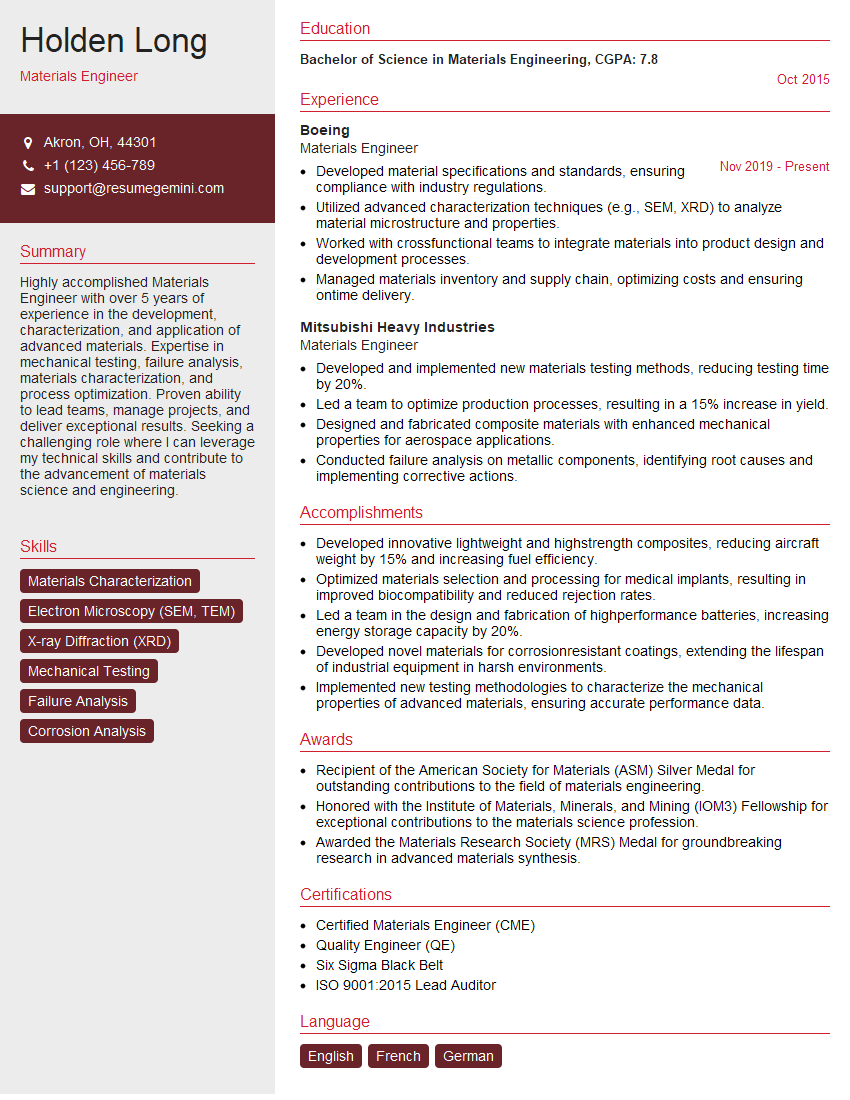
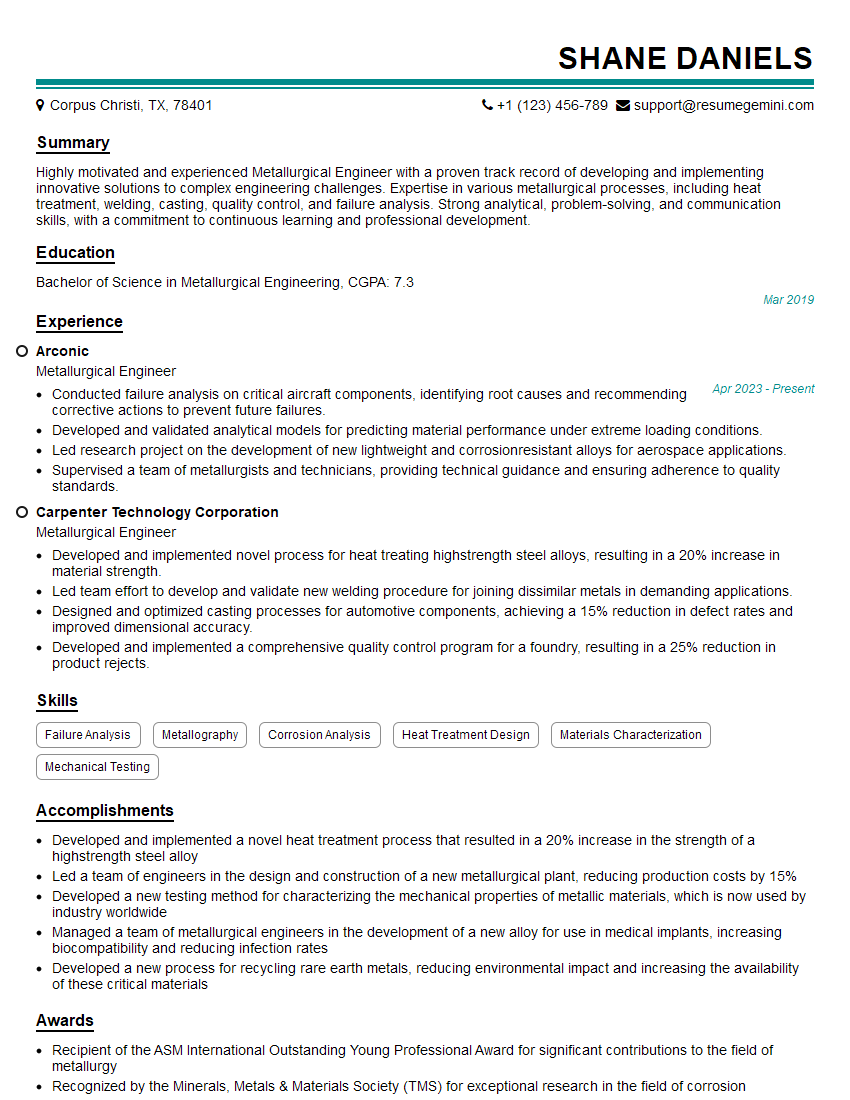
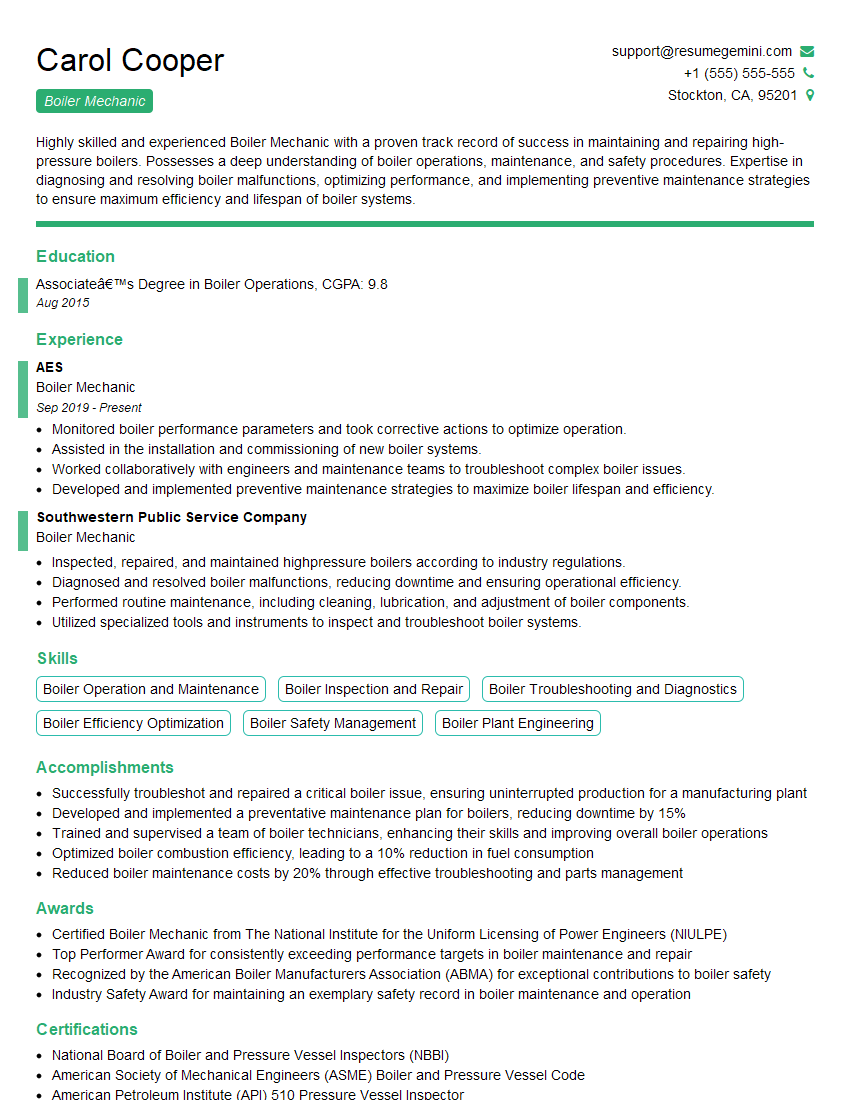
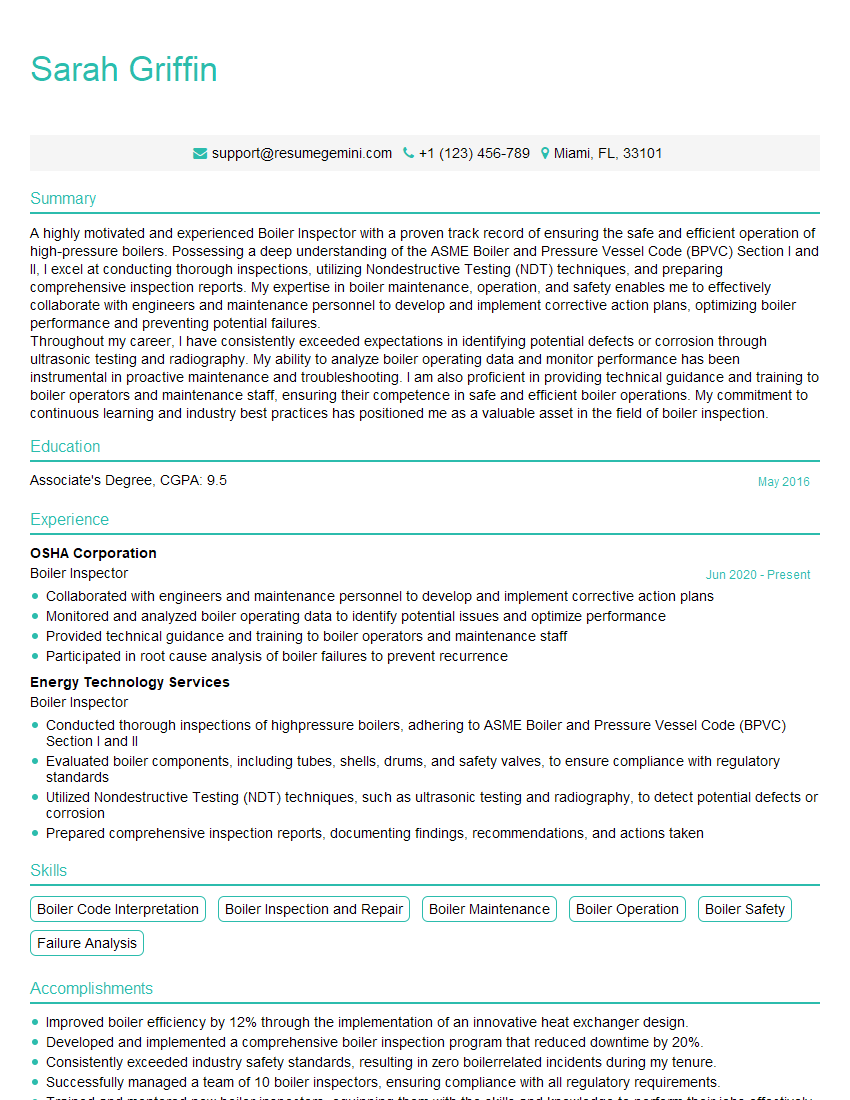
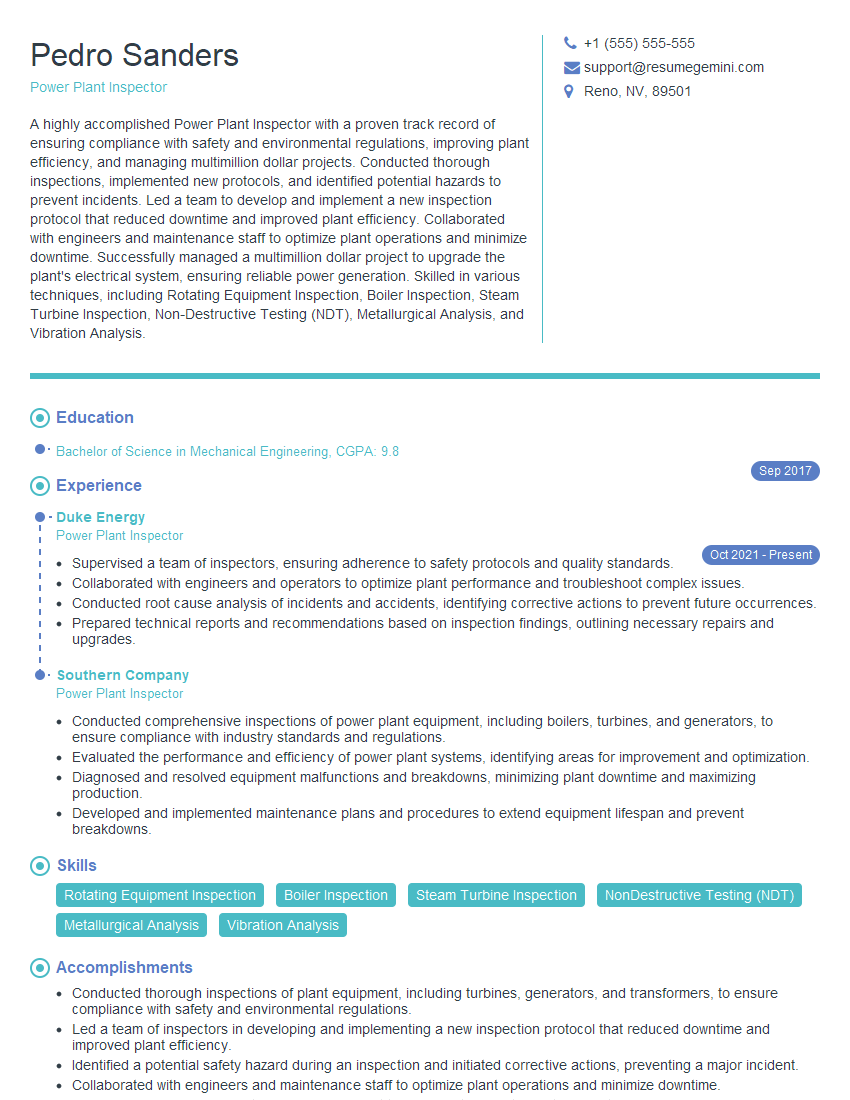
Mastering boiler tube inspection opens doors to rewarding and high-demand roles within the power generation, petrochemical, and manufacturing industries. Your expertise in this field is highly sought after, leading to excellent career growth opportunities. To maximize your chances of landing your dream job, focus on creating a compelling and ATS-friendly resume that effectively showcases your skills and experience. ResumeGemini is a trusted resource that can significantly enhance your resume-building experience, ensuring your qualifications are presented in the most impactful way possible. Examples of resumes tailored to Boiler Tube Inspection are available to help guide you through this process.
Explore more articles
Users Rating of Our Blogs
Share Your Experience
We value your feedback! Please rate our content and share your thoughts (optional).
What Readers Say About Our Blog
Really detailed insights and content, thank you for writing this detailed article.
IT gave me an insight and words to use and be able to think of examples